Review

Homocysteine and Age-Related Central Nervous System Diseases: Role of Inflammation

by
Amany Tawfik
1,2,3,4,5,*,
Nehal M. Elsherbiny
1,2,6,
Yusra Zaidi
1,2 and
Pragya Rajpurohit
1,2
1
Department of Oral Biology and Diagnostic Sciences, Dental College of Georgia, Augusta University, Augusta, GA 30912, USA
2
James and Jean Culver Vision Discovery Institute, MCG, Augusta University, Augusta, GA 30912, USA
3
Department of Cellular Biology and Anatomy, Medical College of Georgia (MCG), Augusta University, Augusta, GA 30912, USA
4
Department of Ophthalmology, MCG, Augusta University, Augusta, GA 30912, USA
5
Eye Research Institue, Oakland University, Rochester, MI 48309, USA
6
Department of Biochemistry, Faculty of Pharmacy, Mansoura University, Mansoura 35516, Egypt
*
Author to whom correspondence should be addressed.
Int. J. Mol. Sci. 2021, 22(12), 6259; https://doi.org/10.3390/ijms22126259
Submission received: 22 April 2021 / Revised: 2 June 2021 / Accepted: 7 June 2021 / Published: 10 June 2021
(This article belongs to the Special Issue Infections, Inflammation and Neurodegeneration in Alzheimer's Disease)

Abstract

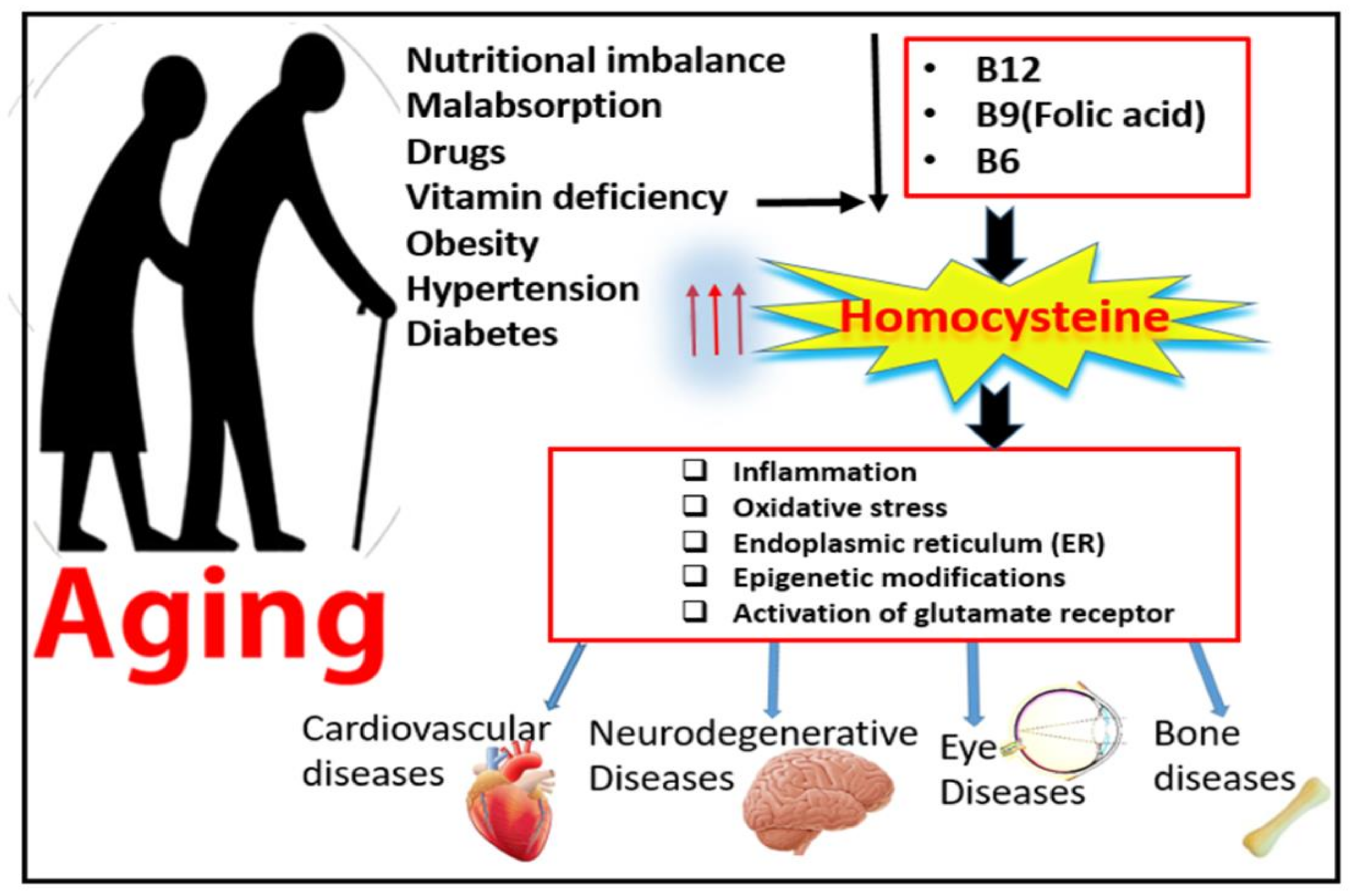
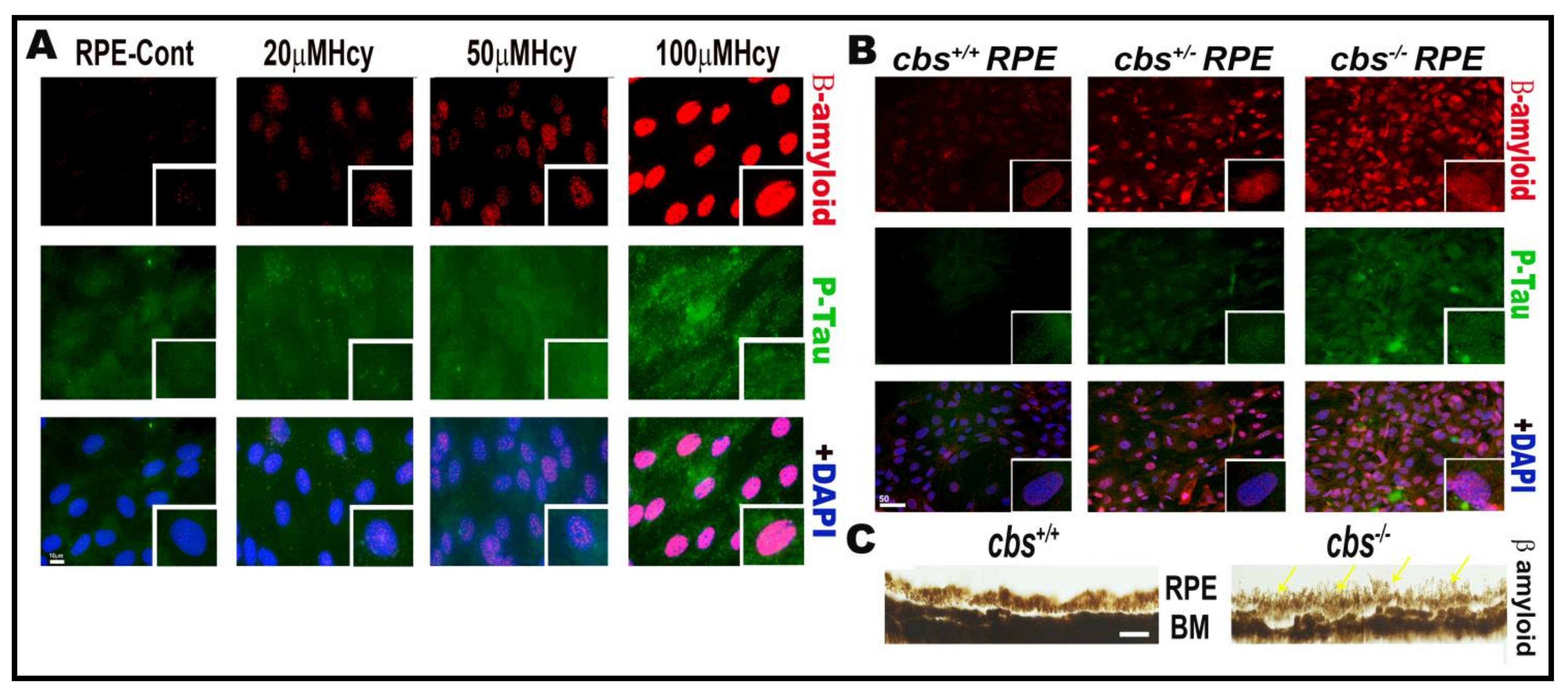
Hyperhomocysteinemia (HHcy) is remarkably common among the aging population. The relation between HHcy and the development of neurodegenerative diseases, such as Alzheimer’s disease (AD) and eye diseases, and age-related macular degeneration (AMD) and diabetic retinopathy (DR) in elderly people, has been established. Disruption of the blood barrier function of the brain and retina is one of the most important underlying mechanisms associated with HHcy-induced neurodegenerative and retinal disorders. Impairment of the barrier function triggers inflammatory events that worsen disease pathology. Studies have shown that AD patients also suffer from visual impairments. As an extension of the central nervous system, the retina has been suggested as a prominent site of AD pathology. This review highlights inflammation as a possible underlying mechanism of HHcy-induced barrier dysfunction and neurovascular injury in aging diseases accompanied by HHcy, focusing on AD.
Keywords: hyperhomocysteinemia; Alzheimer’s disease; age-related macular degeneration; diabetic retinopathy; inflammation hyperhomocysteinemia; Alzheimer’s disease; age-related macular degeneration; diabetic retinopathy; inflammation