Communication

Novel Chemically Modified Curcumin (CMC) Analogs Exhibit Anti-Melanogenic Activity in Primary Human Melanocytes

by
Shilpi Goenka
1,* and
Sanford R. Simon
1,2,3
1
Department of Biomedical Engineering, Stony Brook University, Stony Brook, NY 11794-5281, USA
2
Department of Biochemistry and Cellular Biology, Stony Brook University, Stony Brook, NY 11794-5215, USA
3
Department of Pathology, Stony Brook University, Stony Brook, NY 11794, USA
*
Author to whom correspondence should be addressed.
Int. J. Mol. Sci. 2021, 22(11), 6043; https://doi.org/10.3390/ijms22116043
Submission received: 7 May 2021 / Revised: 28 May 2021 / Accepted: 31 May 2021 / Published: 3 June 2021
(This article belongs to the Special Issue Melanosome Transport/Transfer and Melanin Pigmentation in the Skin)

Abstract

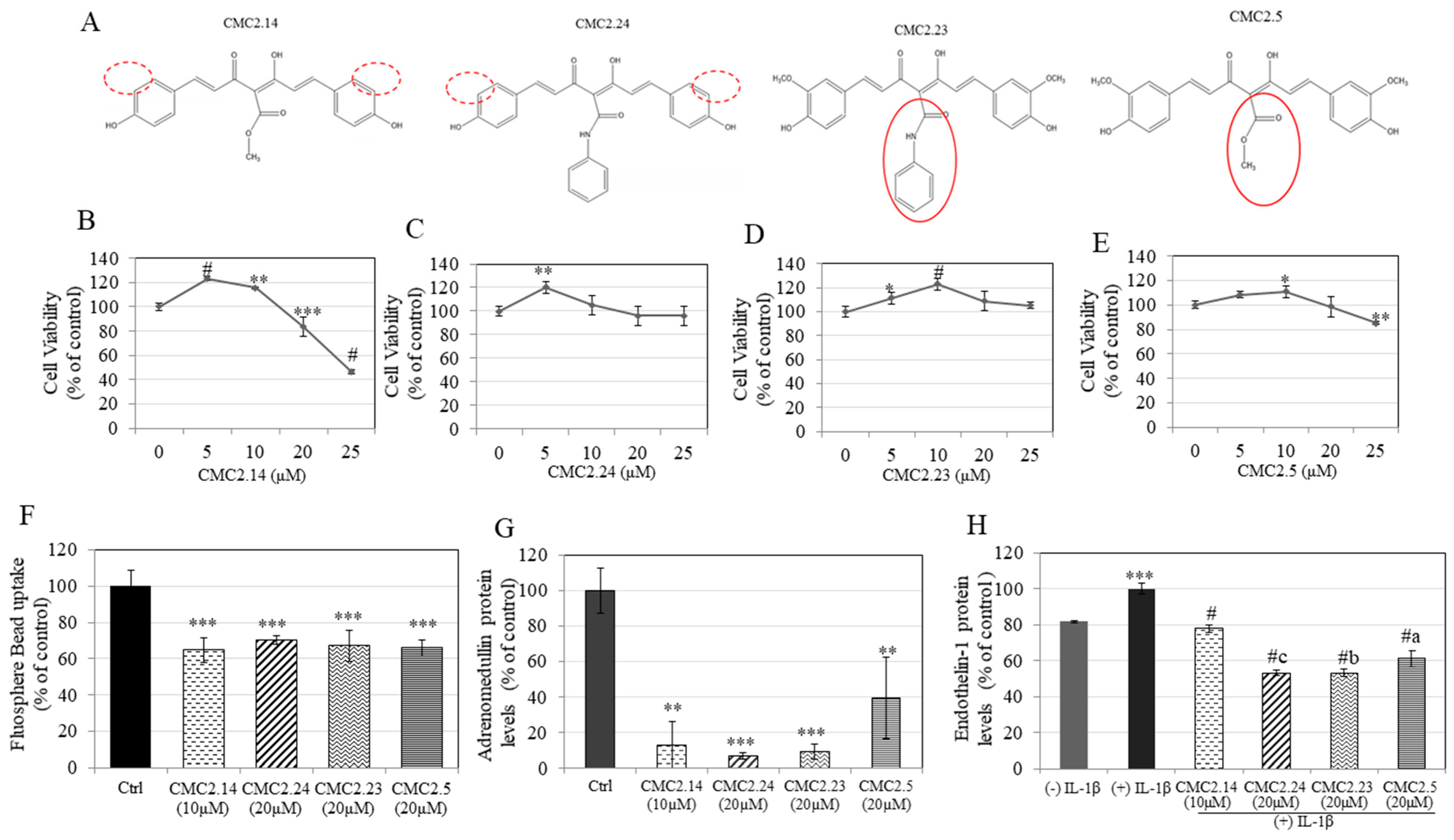
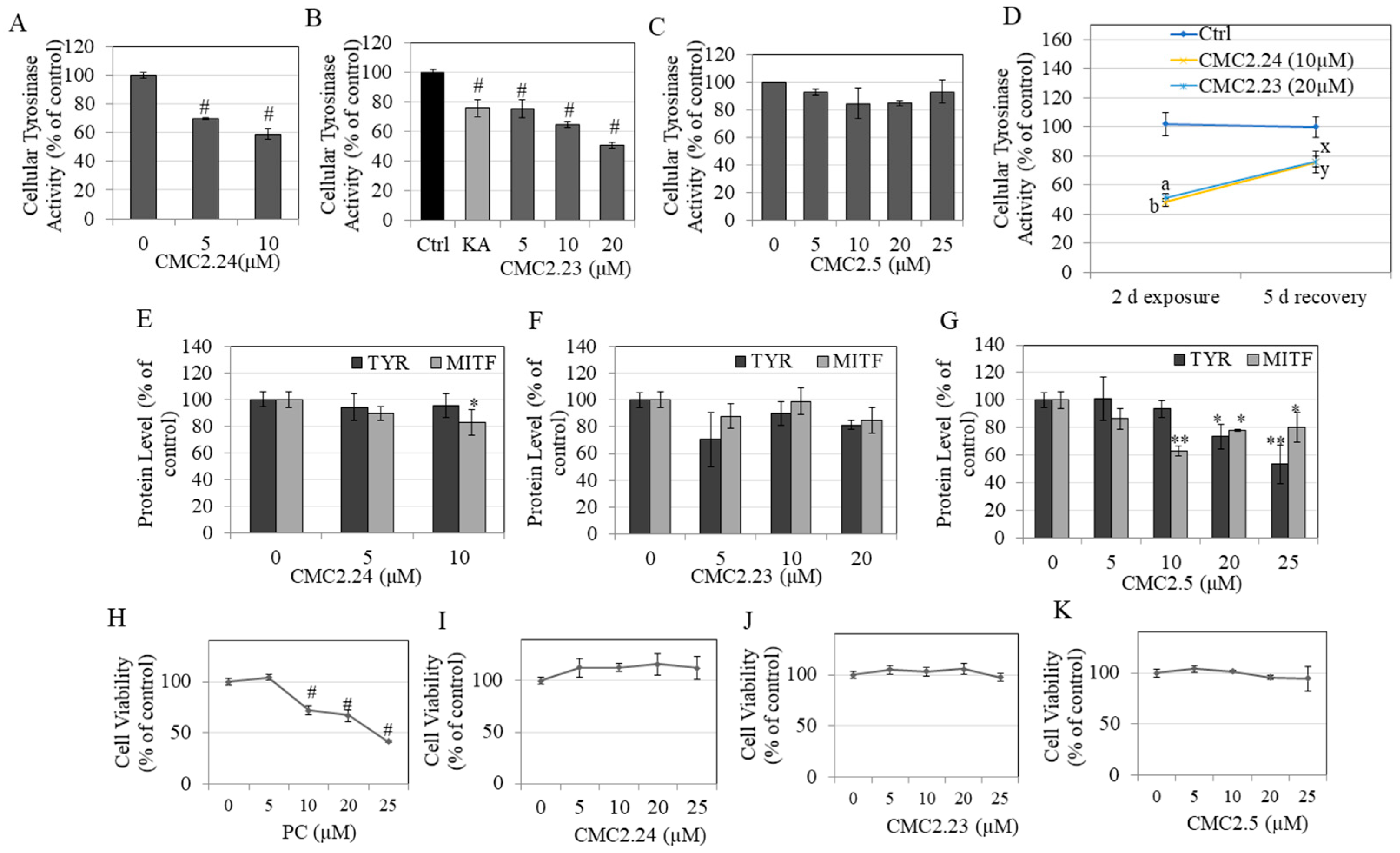
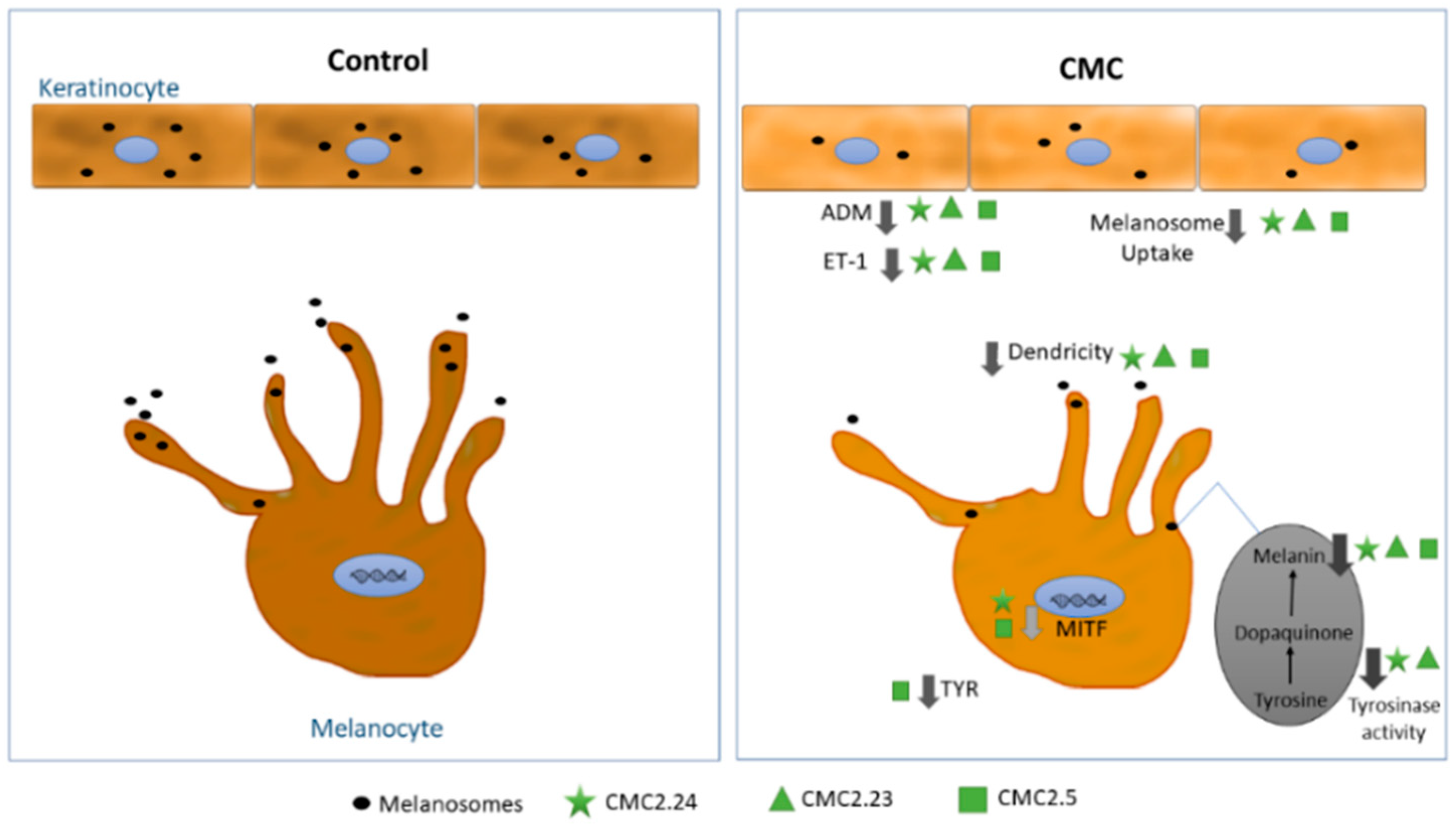
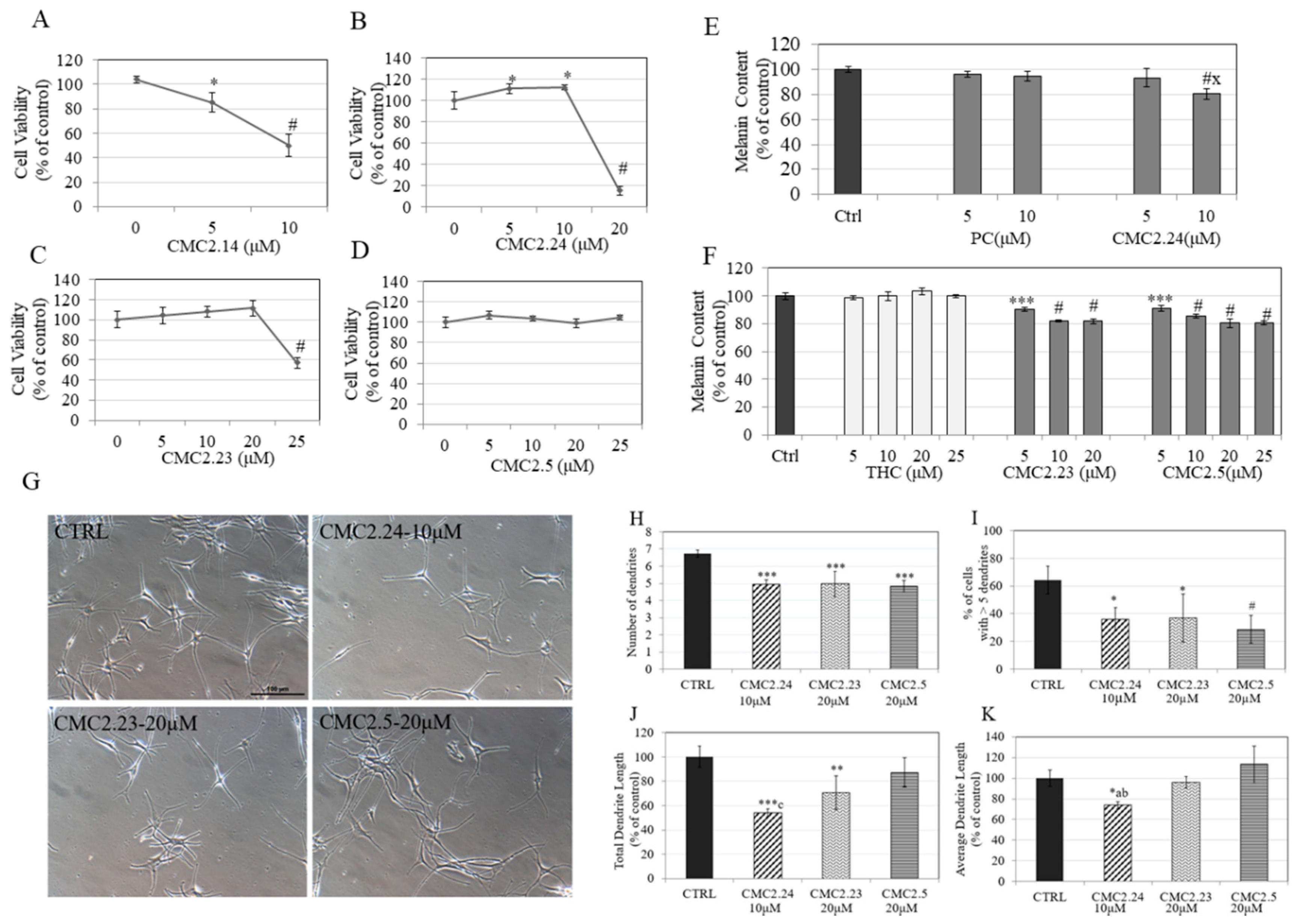
Hyperpigmentation is a dermatological condition characterized by the overaccumulation and/or oversecretion of melanin pigment. The efficacy of curcumin as an anti-melanogenic therapeutic has been recognized, but the poor stability and solubility that have limited its use have inspired the synthesis of novel curcumin analogs. We have previously reported on comparisons of the anti-melanogenic activity of four novel chemically modified curcumin (CMC) analogs, CMC2.14, CMC2.5, CMC2.23 and CMC2.24, with that of parent curcumin (PC), using a B16F10 mouse melanoma cell model, and we have investigated mechanisms of inhibition. In the current study, we have extended our findings using normal human melanocytes from a darkly pigmented donor (HEMn-DP) and we have begun to study aspects of melanosome export to human keratinocytes. Our results showed that all the CMCs downregulated the protein levels of melanogenic paracrine mediators, endothelin-1 (ET-1) and adrenomedullin (ADM) in HaCaT cells and suppressed the phagocytosis of FluoSphere beads that are considered to be melanosome mimics. All the three CMCs were similarly potent (except CMC2.14, which was highly cytotoxic) in inhibiting melanin production; furthermore, they suppressed dendricity in HEMn-DP cells. CMC2.24 and CMC2.23 robustly suppressed cellular tyrosinase activity but did not alter tyrosinase protein levels, while CMC2.5 did not suppress tyrosinase activity but significantly downregulated tyrosinase protein levels, indicative of a distinctive mode of action for the two structurally related CMCs. Moreover, HEMn-DP cells treated with CMC2.24 or CMC2.23 partially recovered their suppressed tyrosinase activity after cessation of the treatment. All the three CMCs were nontoxic to human dermal fibroblasts while PC was highly cytotoxic. Our results provide a proof-of-principle for the novel use of the CMCs for skin depigmentation, since at low concentrations, ranging from 5 to 25 µM, the CMCs (CMC2.24, CMC2.23 and CMC2.5) were more potent anti-melanogenic agents than PC and tetrahydrocurcumin (THC), both of which were ineffective at melanogenesis at similar doses, as tested in HEMn-DP cells (with PC being highly toxic in dermal fibroblasts and keratinocytes). Further studies to evaluate the efficacy of CMCs in human skin tissue and in vivo studies are warranted.
Keywords: chemically modified curcumins; HaCaT cells; melanosome uptake; HEMn-DP cells; melanogenesis; tyrosinase; dendricity chemically modified curcumins; HaCaT cells; melanosome uptake; HEMn-DP cells; melanogenesis; tyrosinase; dendricity