Article

Added Value of Clinical Sequencing: WGS-Based Profiling of Pharmacogenes


1
Center for Cardiovascular Genetics and Gene Diagnostics, Foundation for People with Rare Diseases, 8952 Schlieren-Zurich, Switzerland
2
Laboratory of Translational Nutrition Biology, Department of Health Sciences and Technology, ETH Zurich, 8603 Schwerzenbach, Switzerland
3
Zurich Center for Integrative Human Physiology, University of Zurich, 8057 Zurich, Switzerland
*
Author to whom correspondence should be addressed.
Int. J. Mol. Sci. 2020, 21(7), 2308; https://doi.org/10.3390/ijms21072308
Submission received: 7 February 2020 / Revised: 23 March 2020 / Accepted: 24 March 2020 / Published: 26 March 2020
(This article belongs to the Special Issue Pharmacogenetics and Personalized Medicine 2.0)

Abstract

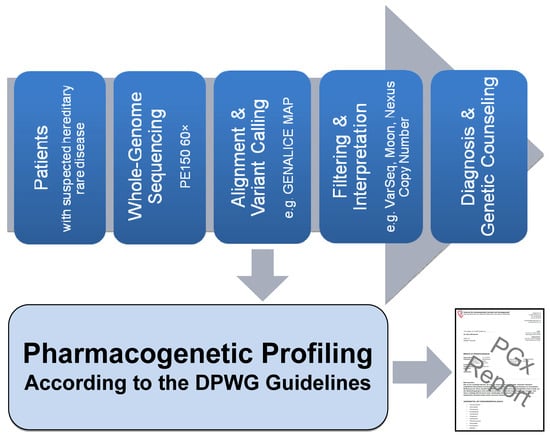
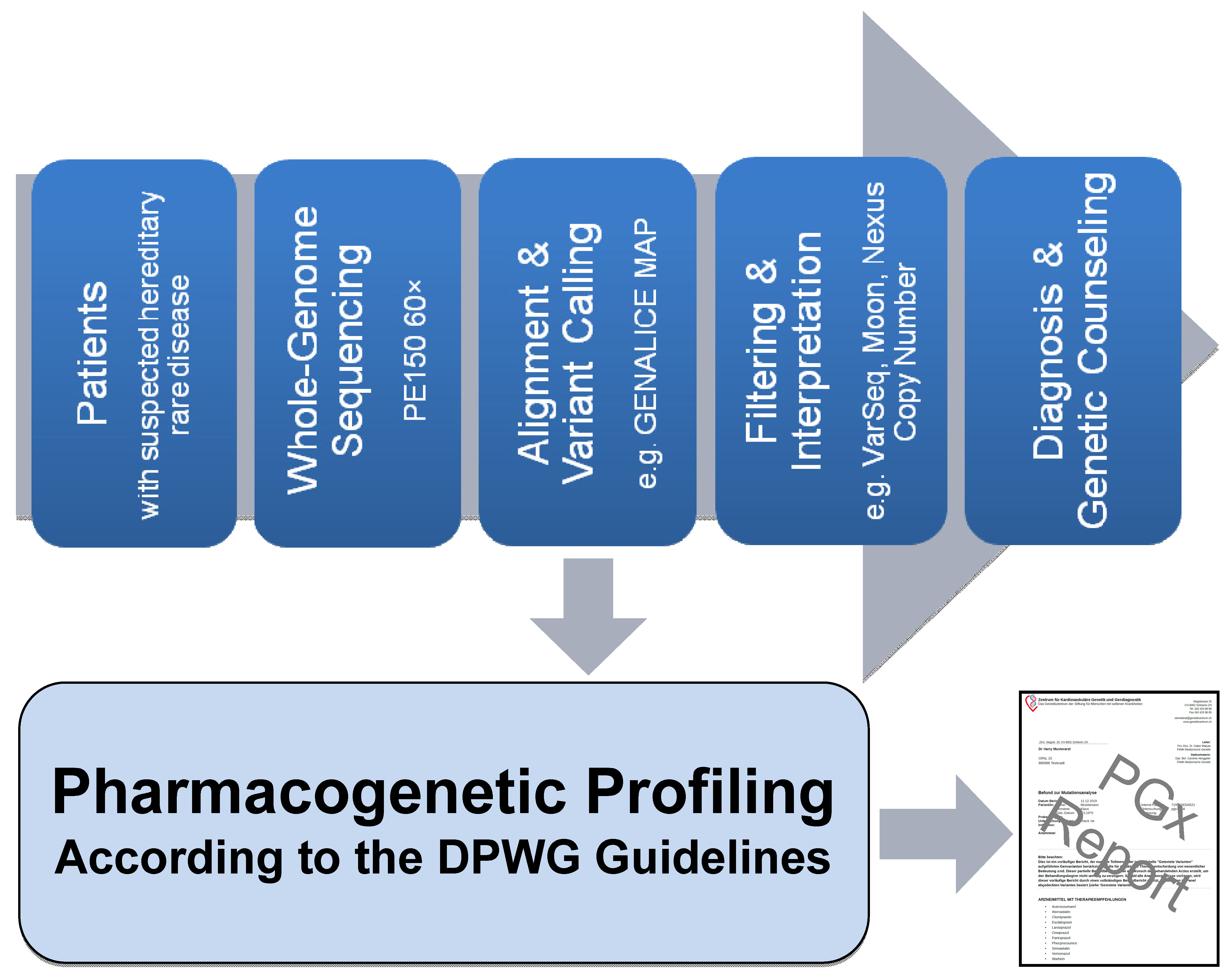
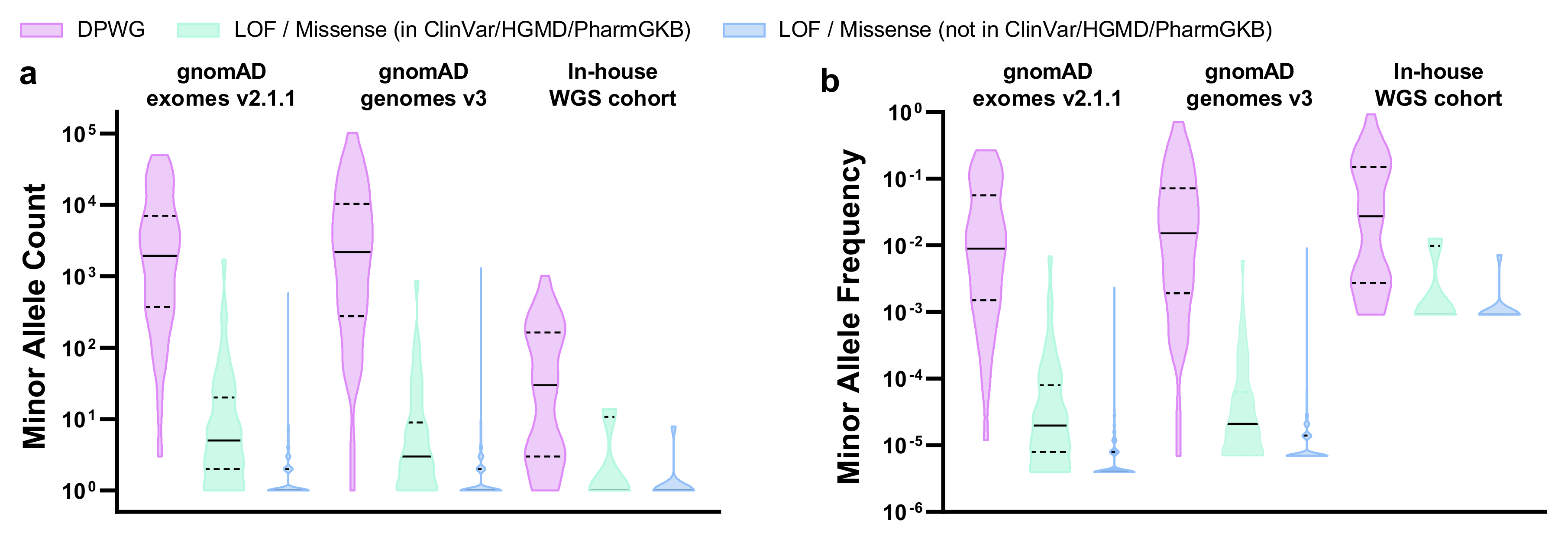
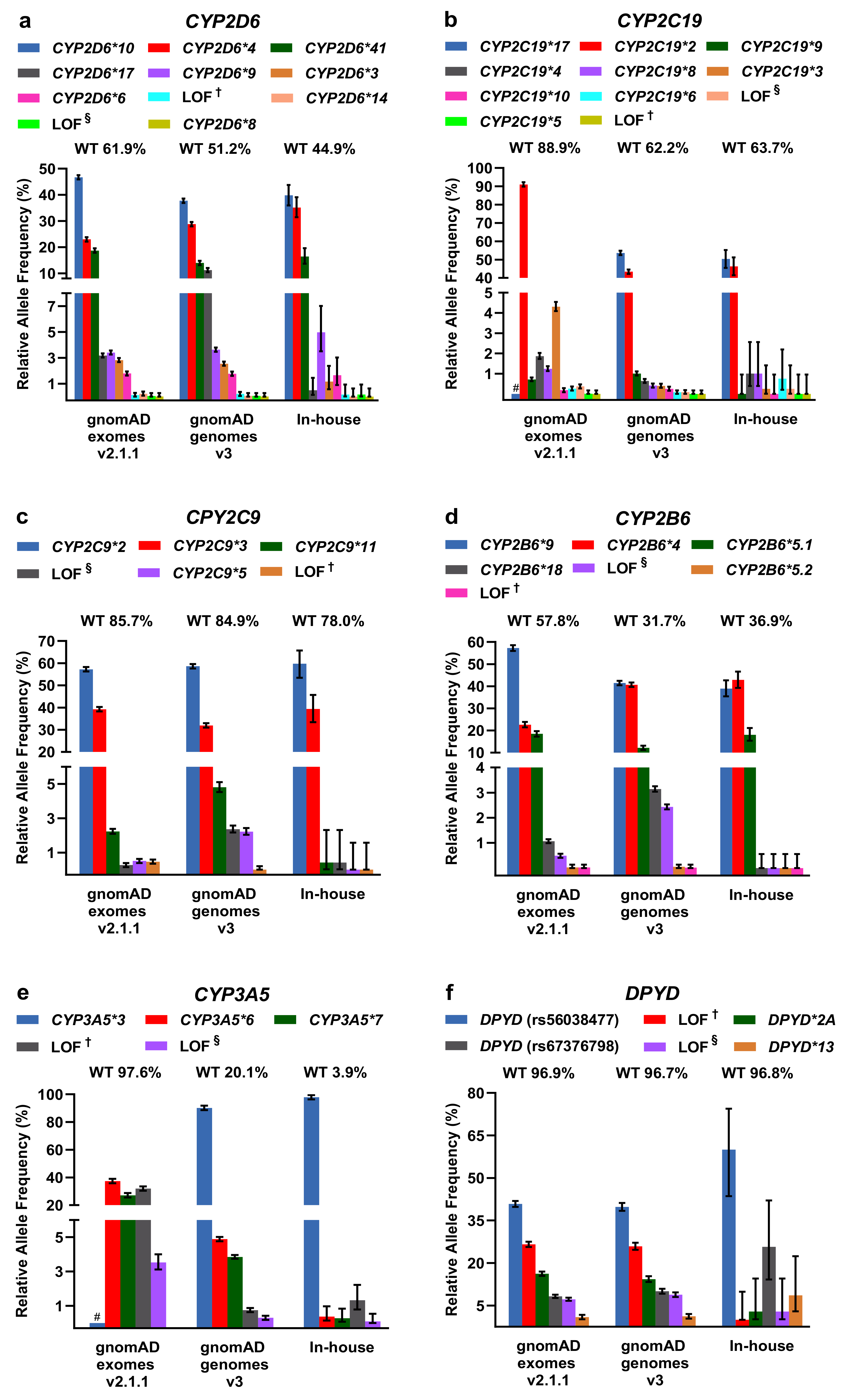
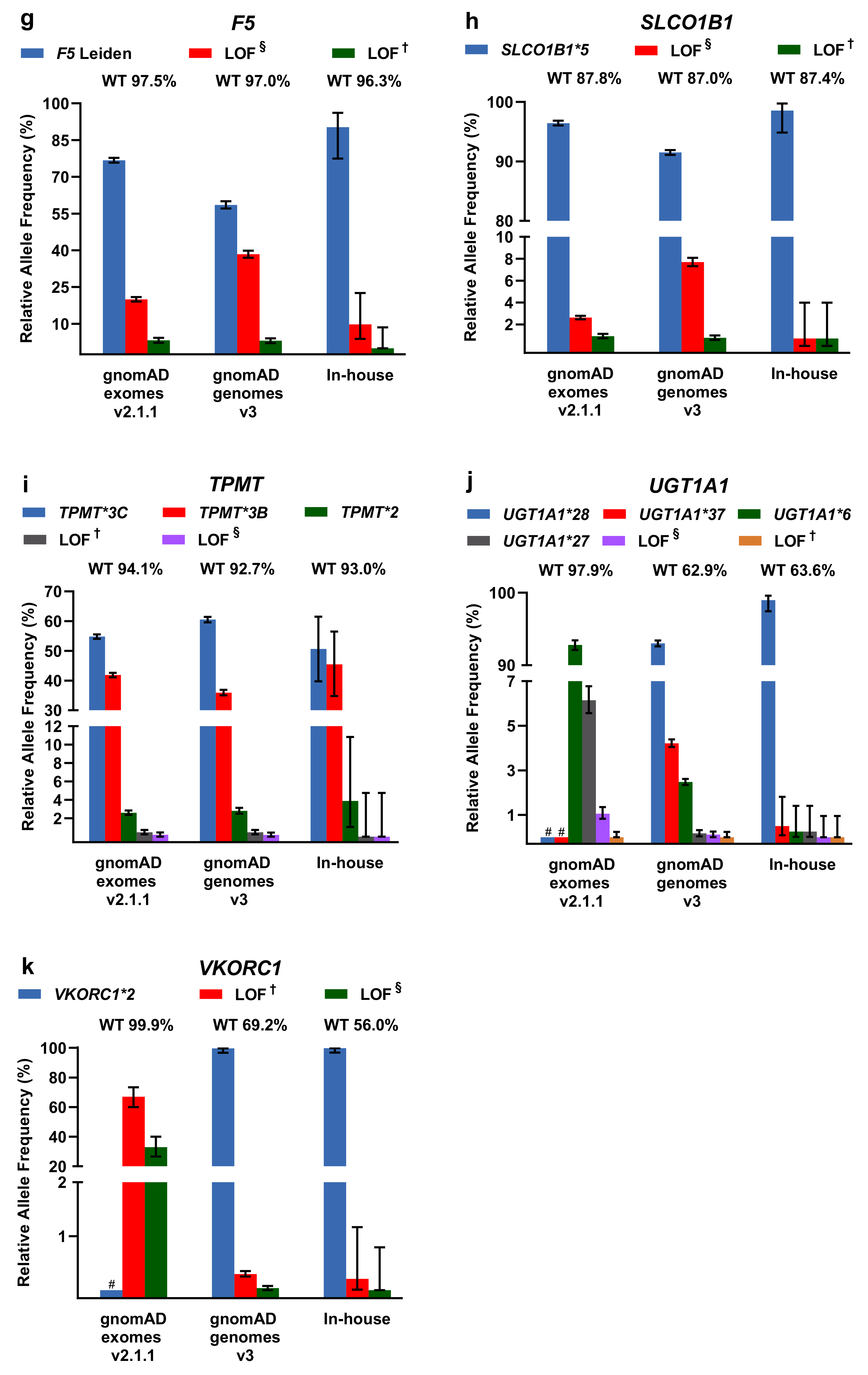
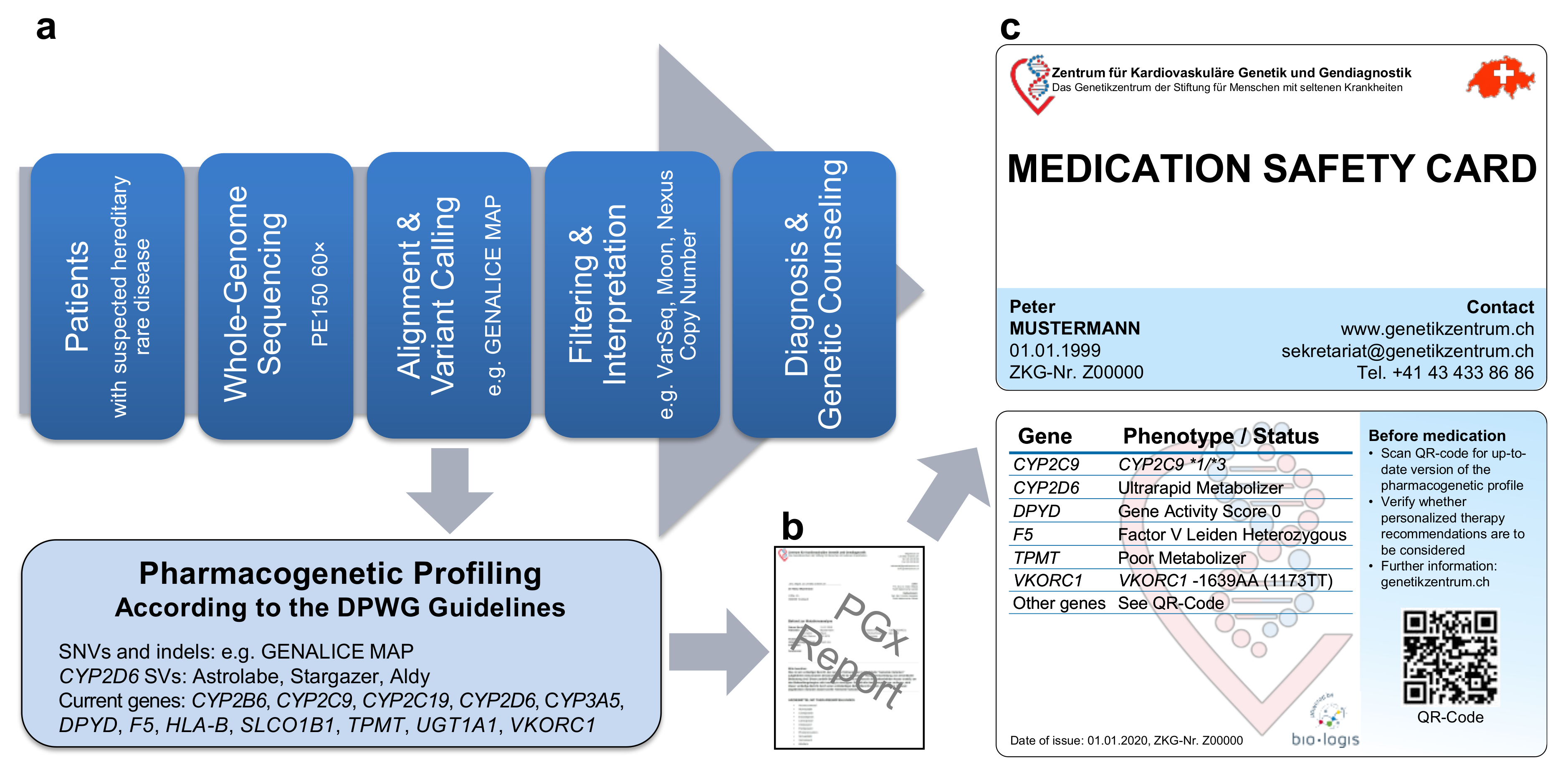
Although several pharmacogenetic (PGx) predispositions affecting drug efficacy and safety are well established, drug selection and dosing as well as clinical trials are often performed in a non-pharmacogenetically-stratified manner, ultimately burdening healthcare systems. Pre-emptive PGx testing offers a solution which is often performed using microarrays or targeted gene panels, testing for common/known PGx variants. However, as an added value, whole-genome sequencing (WGS) could detect not only disease-causing but also pharmacogenetically-relevant variants in a single assay. Here, we present our WGS-based pipeline that extends the genetic testing of Mendelian diseases with PGx profiling, enabling the detection of rare/novel PGx variants as well. From our in-house WGS (PCR-free 60× PE150) data of 547 individuals we extracted PGx variants with drug-dosing recommendations of the Dutch Pharmacogenetics Working Group (DPWG). Furthermore, we explored the landscape of DPWG pharmacogenes in gnomAD and our in-house cohort as well as compared bioinformatic tools for WGS-based structural variant detection in CYP2D6. We show that although common/known PGx variants comprise the vast majority of detected DPWG pharmacogene alleles, for better precision medicine, PGx testing should move towards WGS-based approaches. Indeed, WGS-based PGx profiling is not only feasible and future-oriented but also the most comprehensive all-in-one approach without generating significant additional costs.
Keywords: CYP2D6; DPWG; gnomAD; next-generation sequencing; precision medicine; pharmacogenetics; PGx; whole-genome sequencing CYP2D6; DPWG; gnomAD; next-generation sequencing; precision medicine; pharmacogenetics; PGx; whole-genome sequencing
Graphical Abstract