Article

Dietary Protein and Fat Intake Affects Diabetes Risk with CDKAL1 Genetic Variants in Korean Adults


1
Department of Food and Nutrition, Inha University, 100 Inha-ro, Michuhol-gu, Incheon 22212, Korea
2
Department of Biomedical Laboratory Science, College of Life and Health Sciences, Hoseo University, Asan, Chungnam 31499, Korea
*
Author to whom correspondence should be addressed.
Int. J. Mol. Sci. 2020, 21(16), 5607; https://doi.org/10.3390/ijms21165607
Submission received: 15 June 2020 / Revised: 23 July 2020 / Accepted: 29 July 2020 / Published: 5 August 2020
(This article belongs to the Section Molecular Pathology, Diagnostics, and Therapeutics)

Abstract

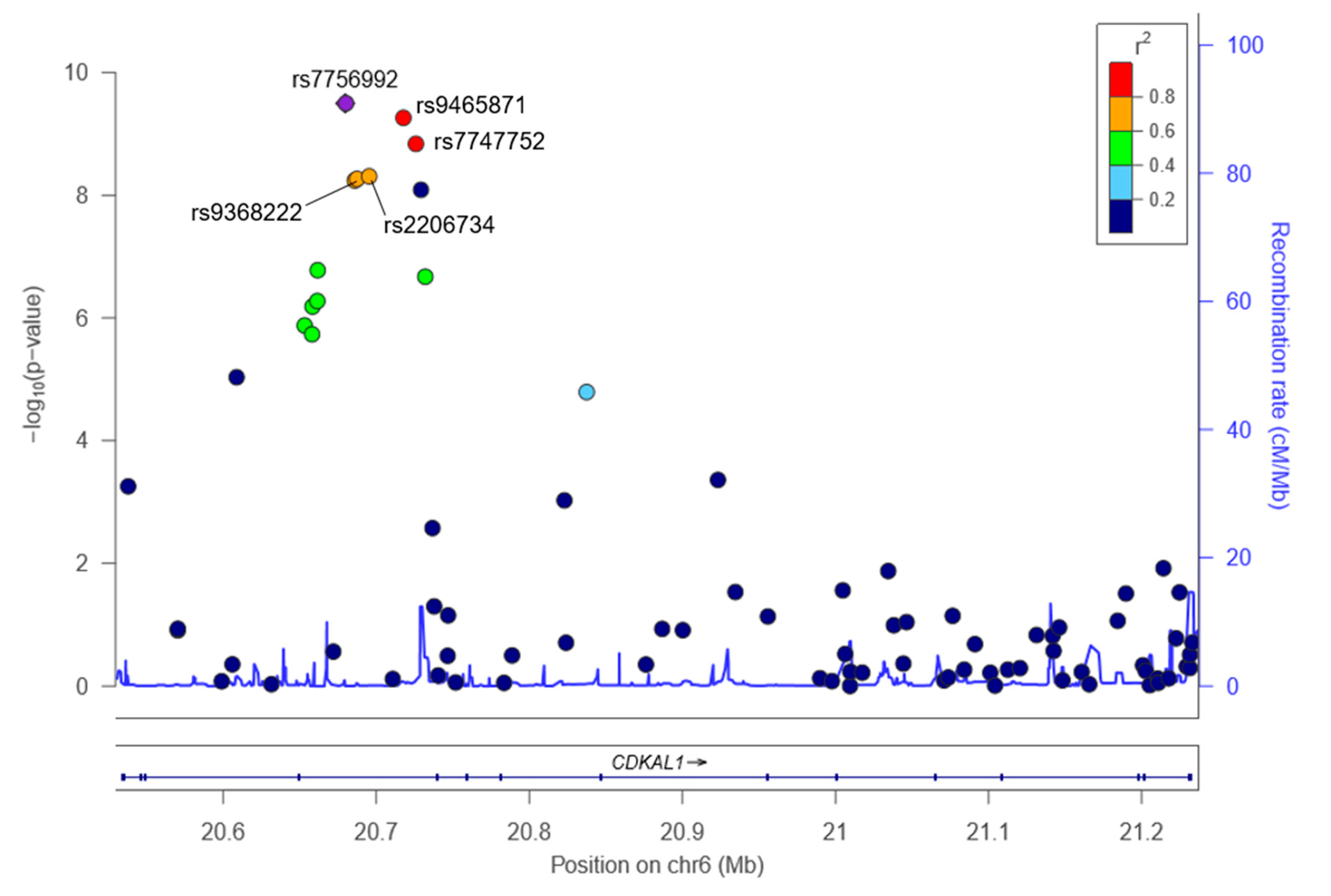
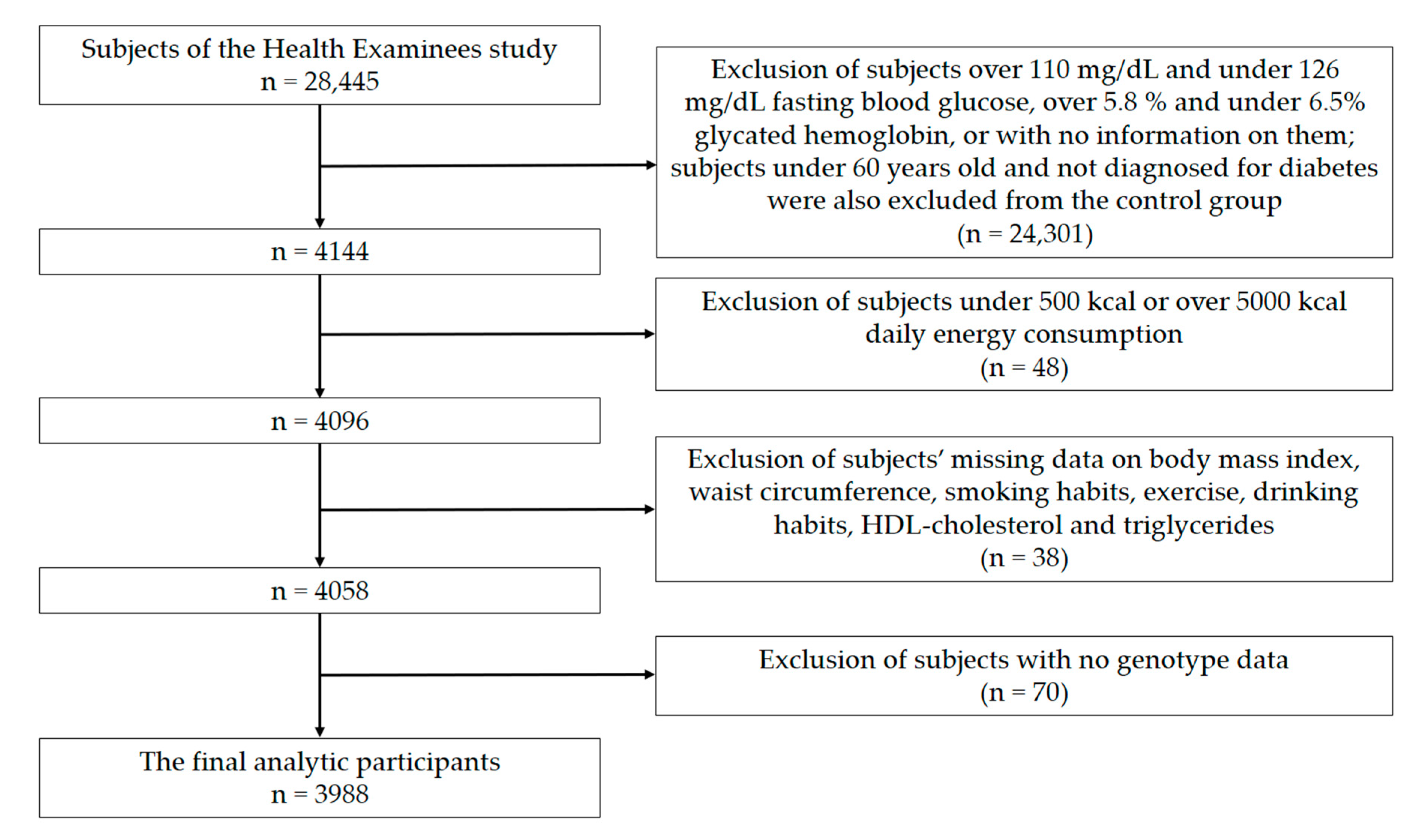
Cyclin-dependent kinase 5 regulatory subunit-associated protein 1-like 1 (CDKAL1) is one of the strongest diabetes loci identified to date; evidence suggests that it plays an important role in insulin secretion. Dietary factors that affect insulin demand might enhance the risk of diabetes associated with CDKAL1 variants. Our aim was to examine the interactions between dietary protein and fat intake and CDKAL1 genetic variants in relation to the risk of diabetes in Korean adults. Single nucleotide polymorphisms (SNPs) were selected with a genome-wide association study (GWAS) for diabetes after adjustment for age, gender, and examination site. Using data from the Health Examinees (HEXA) Study of the Korean Genome and Epidemiology Study (KoGES), 3988 middle-aged Korean adults between 40–76 years of age (2034 men and 1954 women) were included in the study. Finally, rs7756992 located within the CDKAL1 gene region was selected from GWAS (p-value < 5 × 10⁻⁸). Multivariable logistic regression models were used to evaluate the interactions between genotypes and dietary protein and fat intake in relation to diabetes risk after adjustment for age, gender, BMI, waist circumference, physical activity, smoking status, drinking habits, and examination site. Significant interactions between CDKAL1 rs7756992 and dietary protein and fat intake for the risk of diabetes were observed in men (p-value < 0.05). In women, significant interactions between dietary protein and fat intake and CDKAL1 variants (rs7756992) were associated with increased risk of diabetes (p-value < 0.05). Dietary protein and fat intake interacted differently with CDKAL1 variants in relation to the risk of diabetes in Korean adults of both genders. These findings indicate that CDKAL1 variants play a significant role in diabetes and that dietary protein and fat intake could affect these associations.
Keywords: CDKAL1 variants; single nucleotide polymorphisms; diabetes; Korean Genome and Epidemiology Study (KoGES) CDKAL1 variants; single nucleotide polymorphisms; diabetes; Korean Genome and Epidemiology Study (KoGES)