Article

The Roles of Electrostatic Interactions in Capsid Assembly Mechanisms of Giant Viruses

1
Department of Chemistry, University of Texas, 500 West University Ave, El Paso, TX 79902, USA
2
Department of Physics, University of Texas, 500 West University Ave, El Paso, TX 79902, USA
*
Authors to whom correspondence should be addressed.
Both authors contributed equally to this work.
Int. J. Mol. Sci. 2019, 20(8), 1876; https://doi.org/10.3390/ijms20081876
Submission received: 20 March 2019 / Revised: 12 April 2019 / Accepted: 12 April 2019 / Published: 16 April 2019
(This article belongs to the Special Issue Recent Advances in Biomolecular Recognition)

Abstract

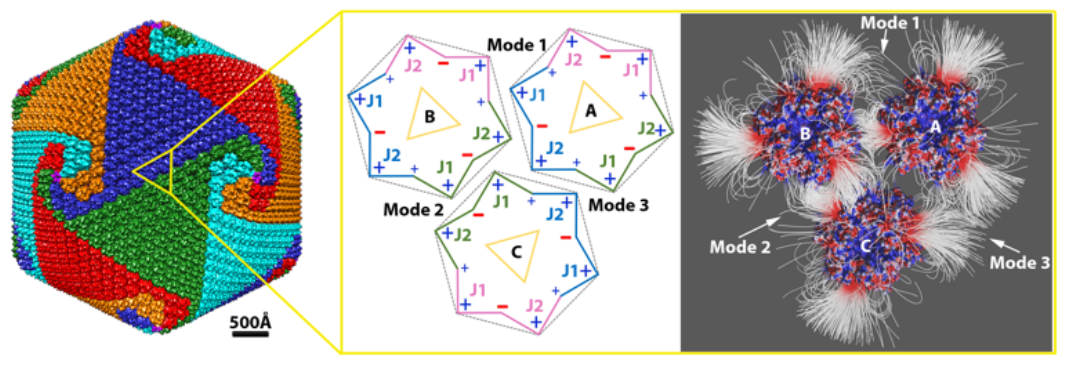
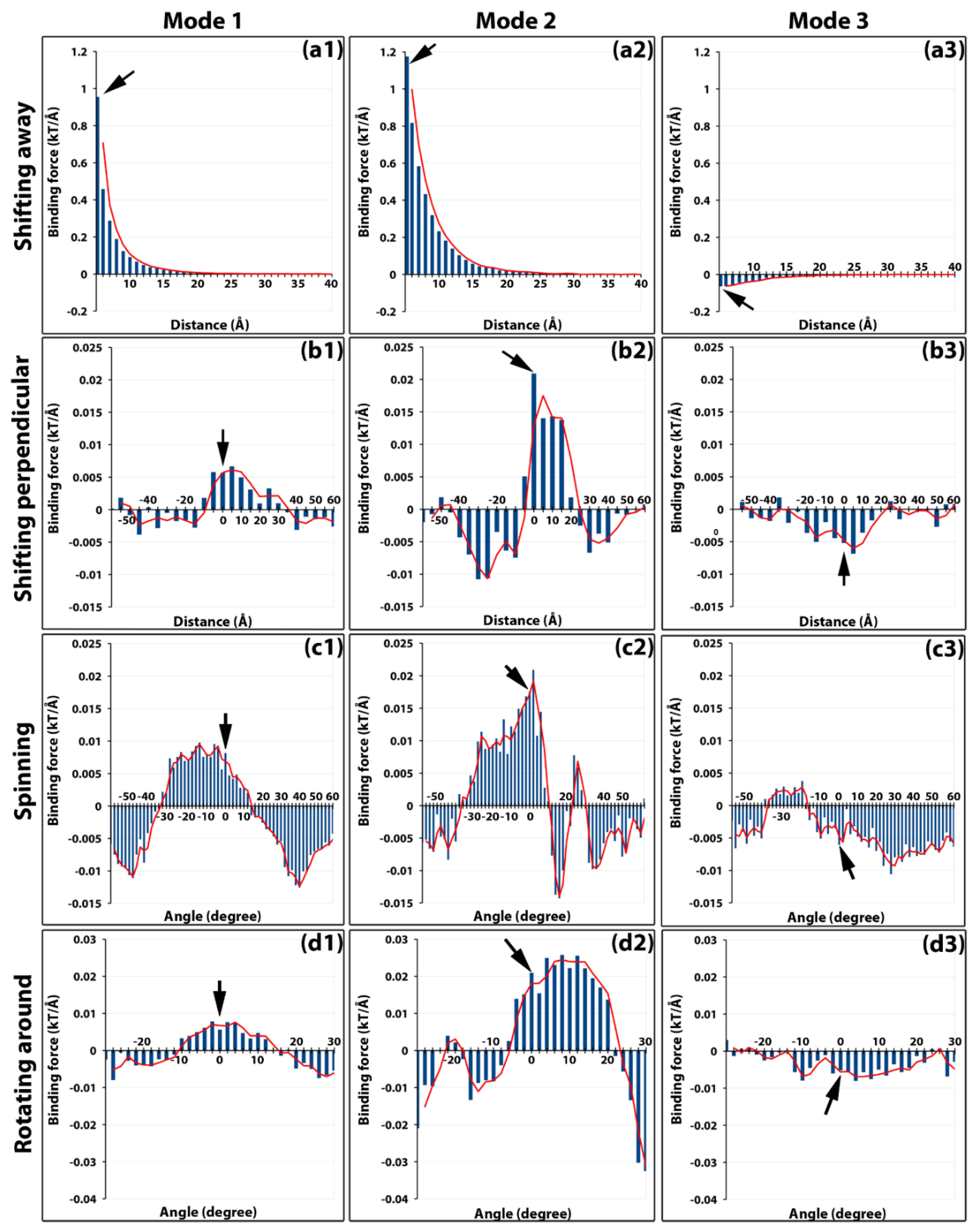
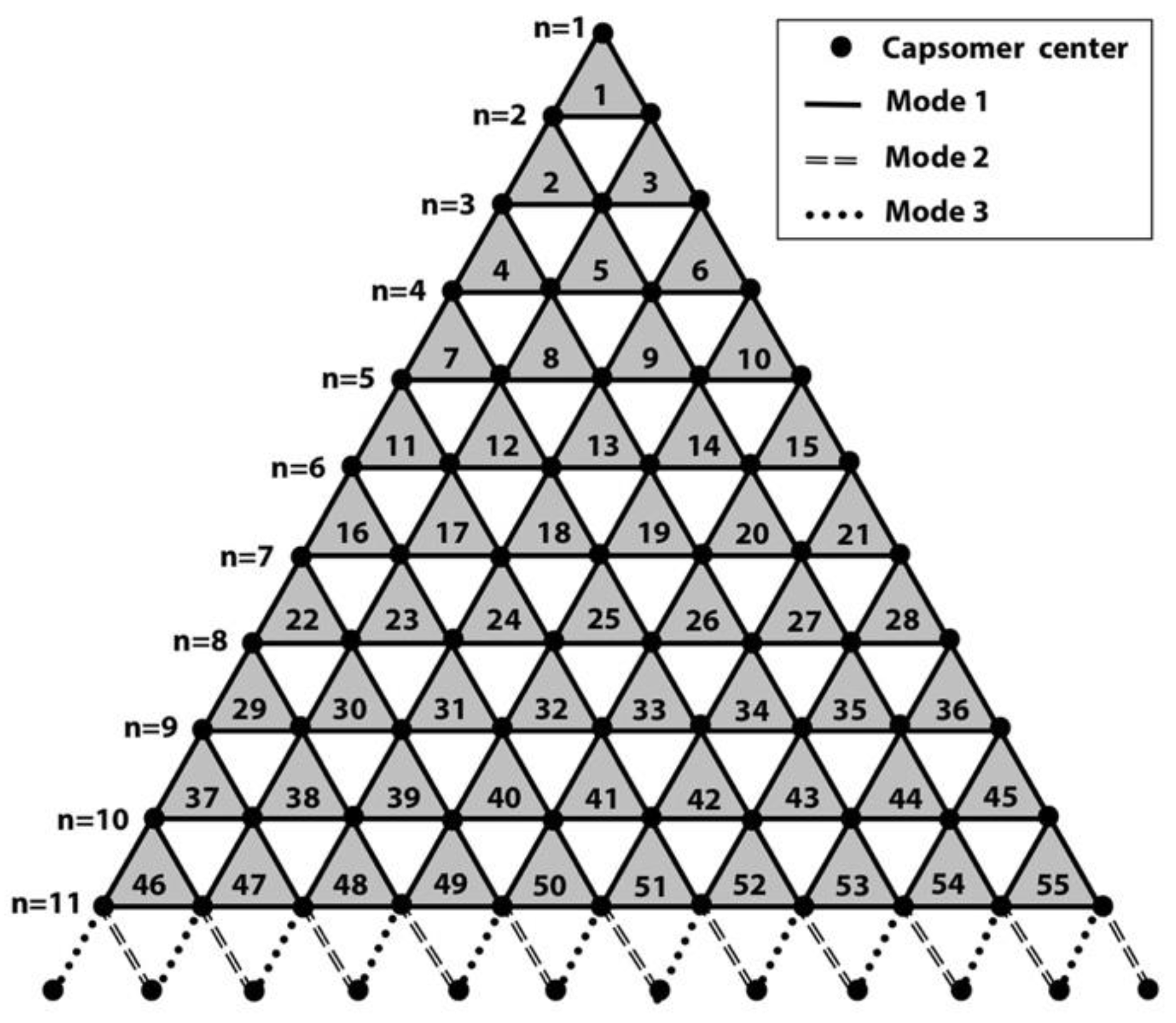
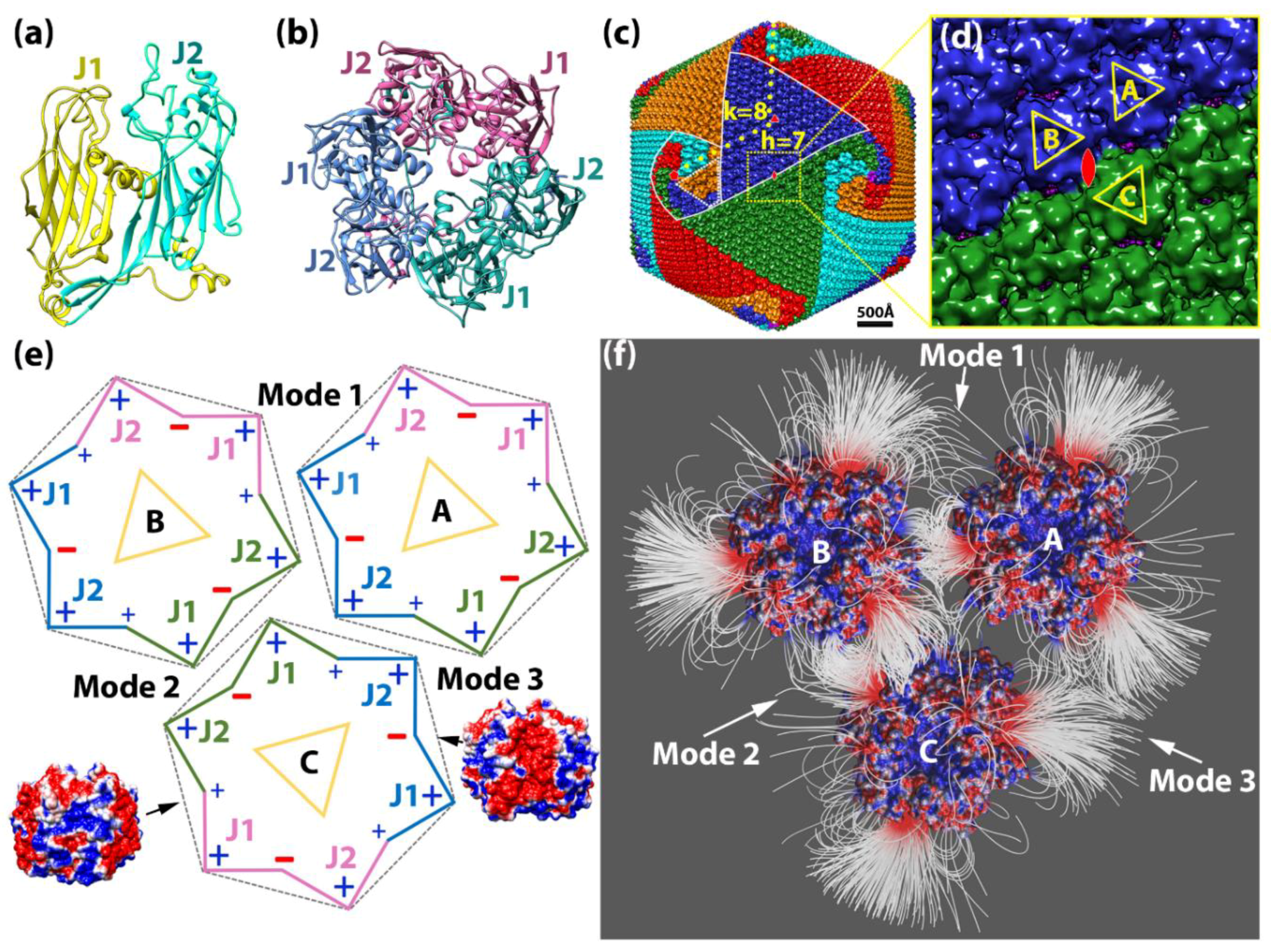
In the last three decades, many giant DNA viruses have been discovered. Giant viruses present a unique and essential research frontier for studies of self-assembly and regulation of supramolecular assemblies. The question on how these giant DNA viruses assemble thousands of proteins so accurately to form their protein shells, the capsids, remains largely unanswered. Revealing the mechanisms of giant virus assembly will help to discover the mysteries of many self-assembly biology problems. Paramecium bursaria Chlorella virus-1 (PBCV-1) is one of the most intensively studied giant viruses. Here, we implemented a multi-scale approach to investigate the interactions among PBCV-1 capsid building units called capsomers. Three binding modes with different strengths are found between capsomers around the relatively flat area of the virion surface at the icosahedral 2-fold axis. Furthermore, a capsomer structure manipulation package is developed to simulate the capsid assembly process. Using these tools, binding forces among capsomers were investigated and binding funnels were observed that were consistent with the final assembled capsid. In addition, total binding free energies of each binding mode were calculated. The results helped to explain previous experimental observations. Results and tools generated in this work established an initial computational approach to answer current unresolved questions regarding giant virus assembly mechanisms. Results will pave the way for studying more complicated process in other biomolecular structures.
Keywords: electrostatic interaction; giant virus; PBCV-1; assembly; DelPhi; binding energy; binding funnel electrostatic interaction; giant virus; PBCV-1; assembly; DelPhi; binding energy; binding funnel
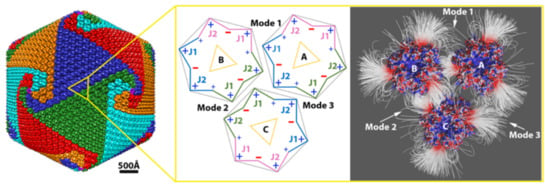
Graphical Abstract