Article

Three-Source Partitioning of Methane Emissions from Paddy Soil: Linkage to Methanogenic Community Structure


1
School of Agriculture and Biology, Shanghai Jiao Tong University, 800 Dongchuan Road, Shanghai 200240, China
2
Institute of Soil and Water Resources and Environmental Science, College of Environmental and Resource Sciences, Zhejiang University, Hangzhou 310058, China
*
Author to whom correspondence should be addressed.
Int. J. Mol. Sci. 2019, 20(7), 1586; https://doi.org/10.3390/ijms20071586
Submission received: 20 February 2019 / Revised: 21 March 2019 / Accepted: 25 March 2019 / Published: 29 March 2019
(This article belongs to the Section Molecular Microbiology)

Abstract

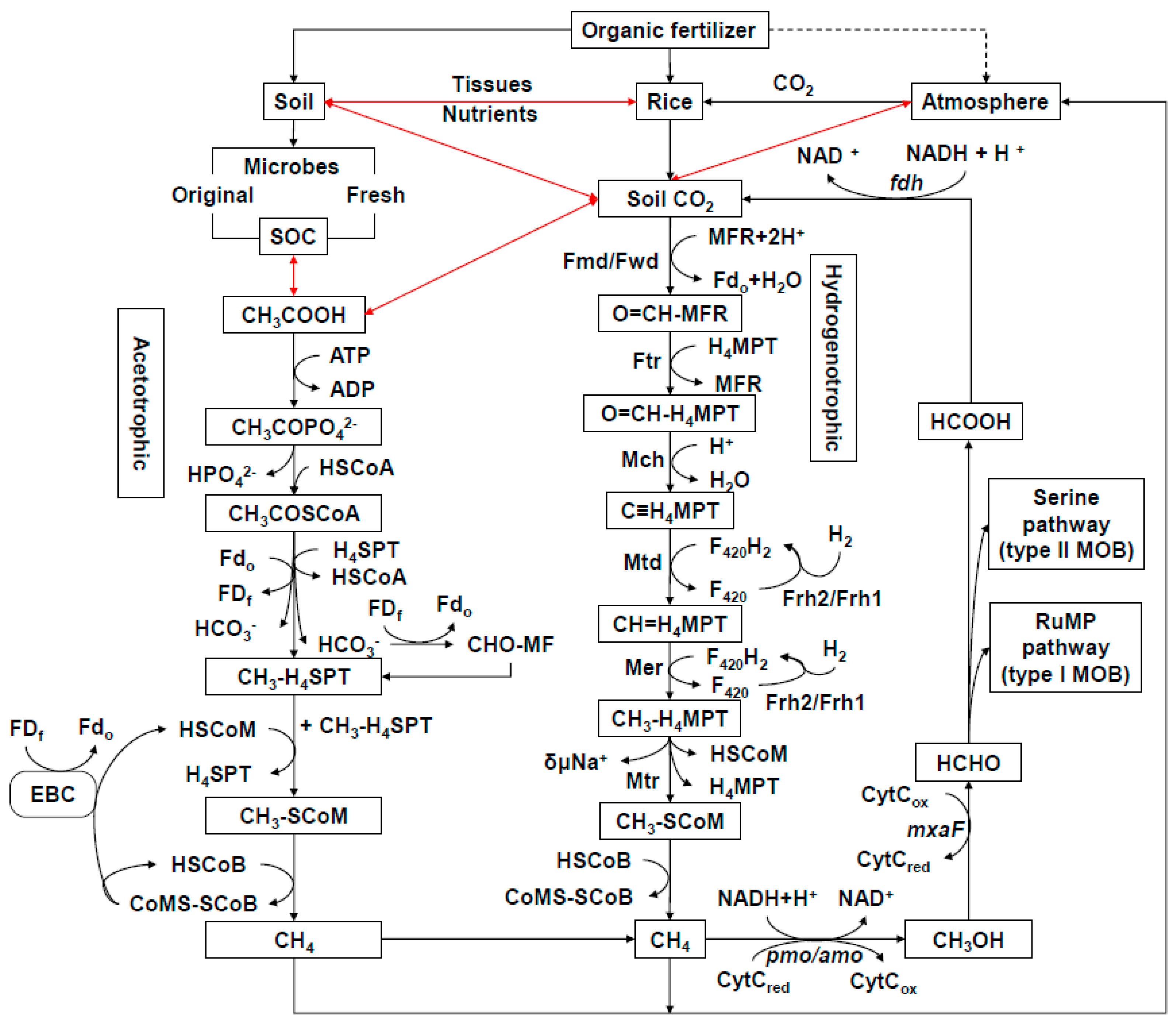
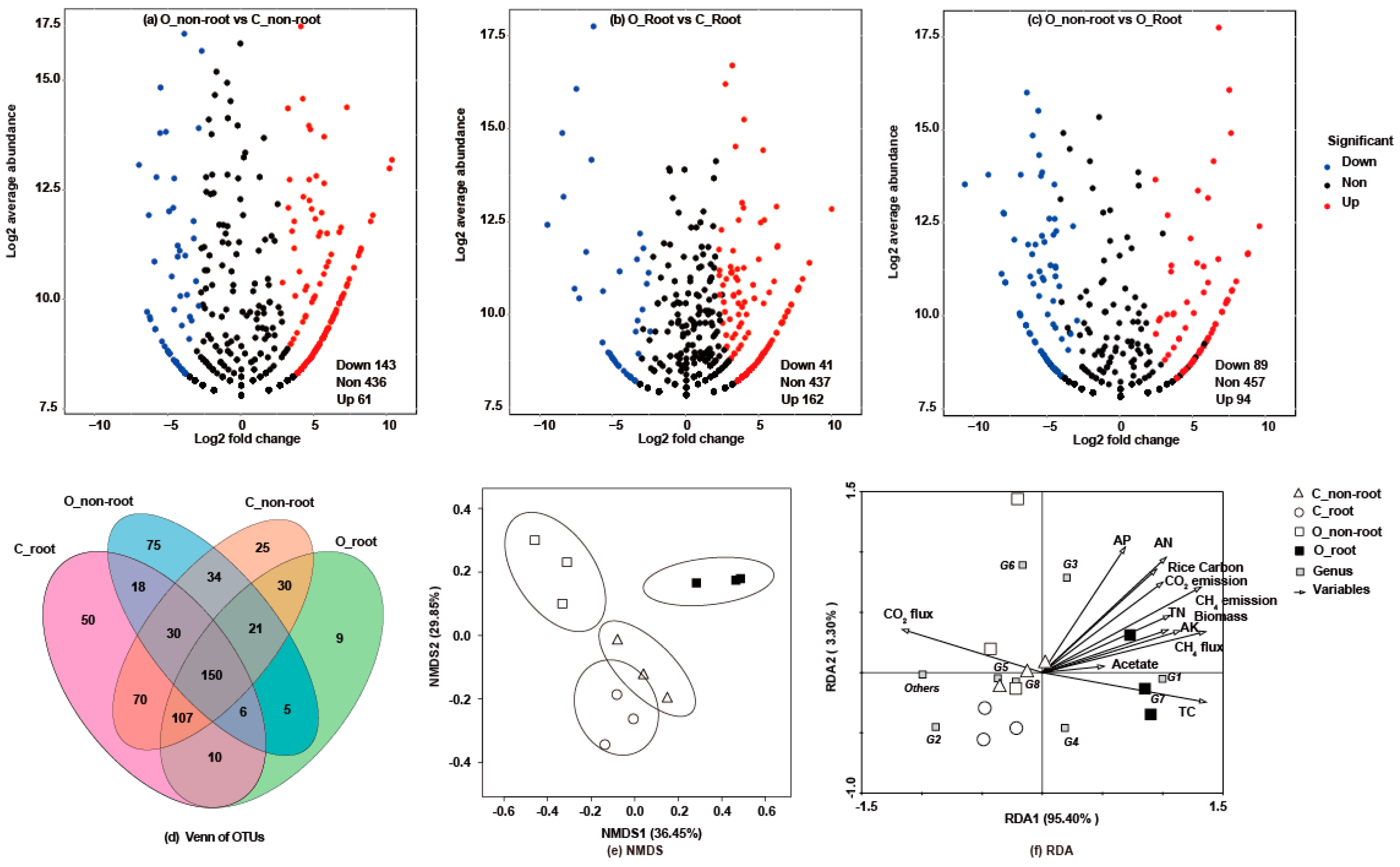
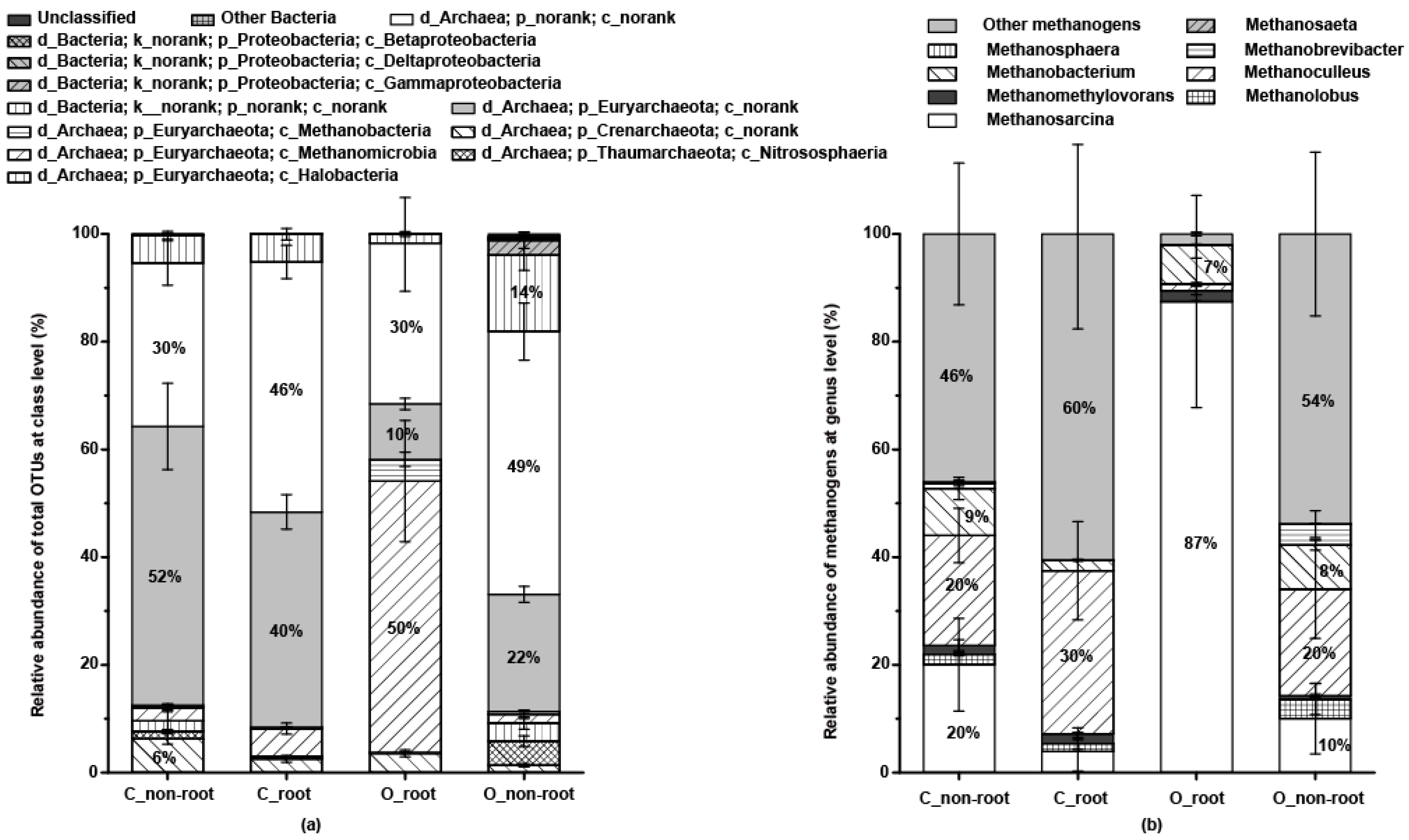
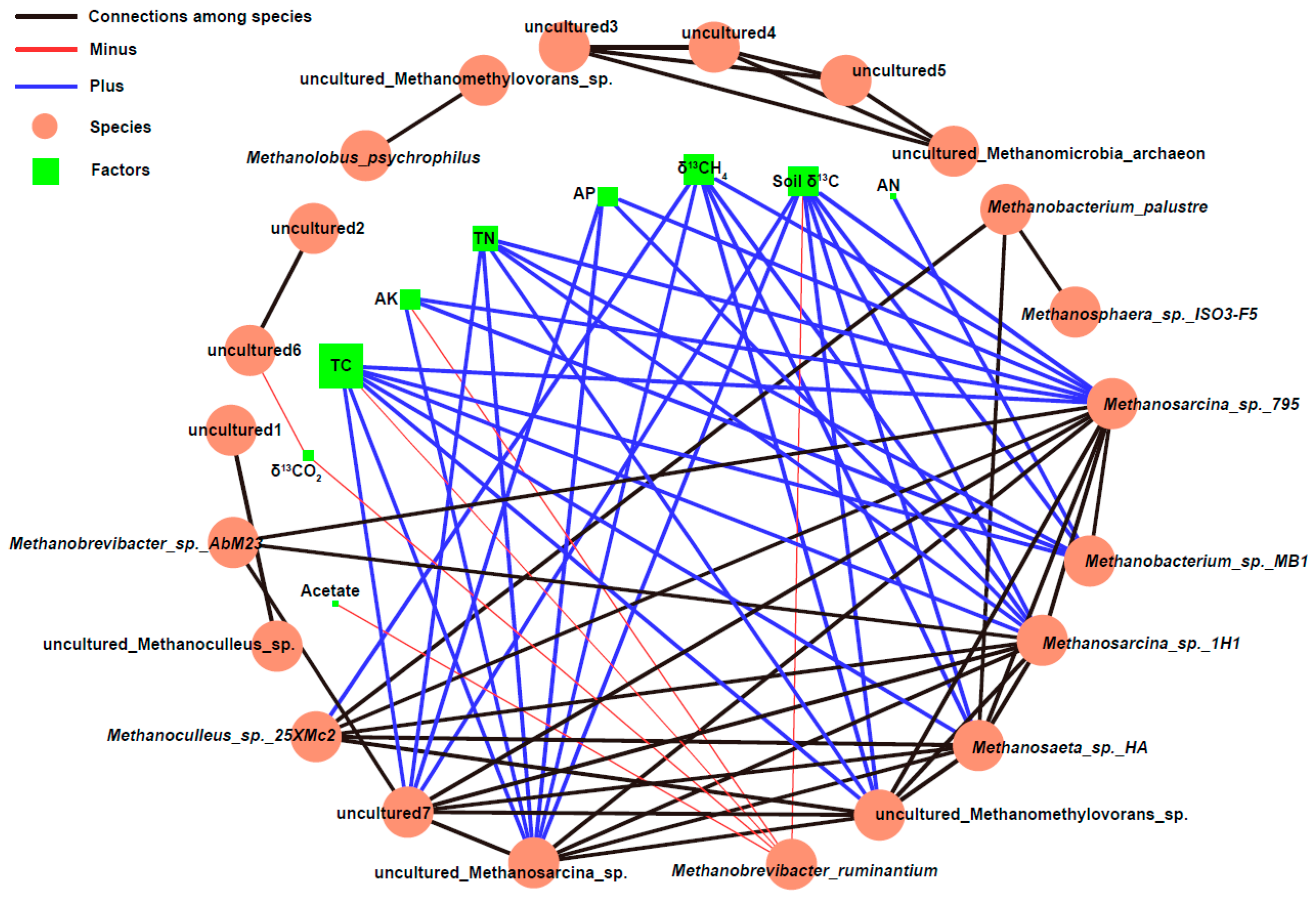
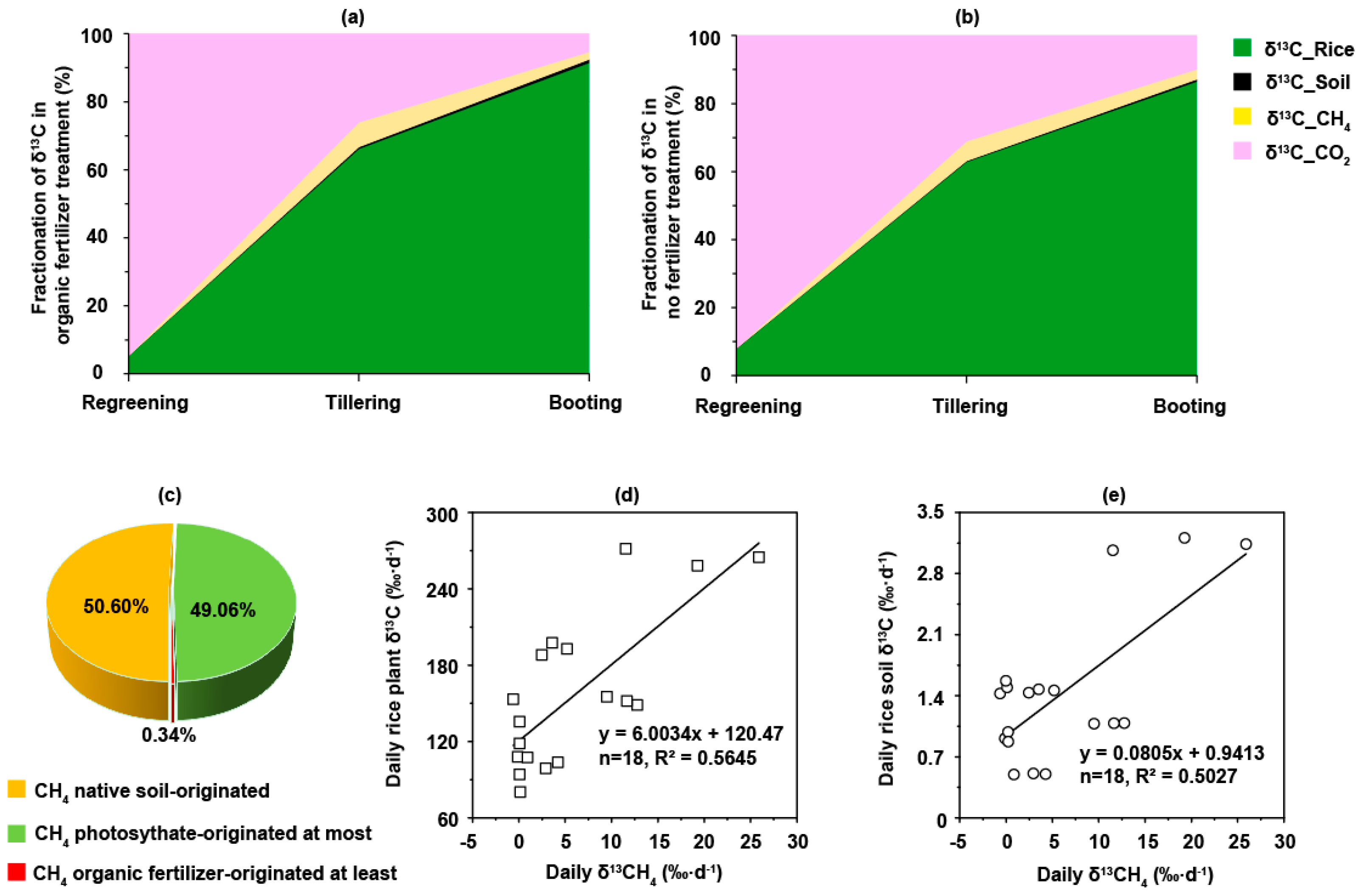
Identification of the carbon (C) sources of methane (CH4) and methanogenic community structures after organic fertilization may provide a better understanding of the mechanism that regulate CH4 emissions from paddy soils. Based on our previous field study, a pot experiment with isotopic 13C labelling was designed in this study. The objective was to investigate the main C sources for CH4 emissions and the key environmental factor with the application of organic fertilizer in paddies. Results indicated that 28.6%, 64.5%, 0.4%, and 6.5% of 13C was respectively distributed in CO2, the plants, soil, and CH4 at the rice tillering stage. In total, organically fertilized paddy soil emitted 3.51 kg·CH4 ha−1 vs. 2.00 kg·CH4 ha−1 for the no fertilizer treatment. Maximum CH4 fluxes from organically fertilized (0.46 mg·m−2·h−1) and non-fertilized (0.16 mg·m−2·h−1) soils occurred on day 30 (tillering stage). The total percentage of CH4 emissions derived from rice photosynthesis C was 49%, organic fertilizer C < 0.34%, and native soil C > 51%. Therefore, the increased CH4 emissions from paddy soil after organic fertilization were mainly derived from native soil and photosynthesis. The 16S rRNA sequencing showed Methanosarcina (64%) was the dominant methanogen in paddy soil. Organic fertilization increased the relative abundance of Methanosarcina, especially in rhizosphere. Additionally, Methanosarcina sp. 795 and Methanosarcina sp. 1H1 co-occurred with Methanobrevibacter sp. AbM23, Methanoculleus sp. 25XMc2, Methanosaeta sp. HA, and Methanobacterium sp. MB1. The increased CH4 fluxes and labile methanogenic community structure in organically fertilized rice soil were primarily due to the increased soil C, nitrogen, potassium, phosphate, and acetate. These results highlight the contributions of native soil- and photosynthesis-derived C in paddy soil CH4 emissions, and provide basis for more complex investigations of the pathways involved in ecosystem CH4 processes.
Keywords: organic fertilizer; methane; methanogen; paddy; 13C organic fertilizer; methane; methanogen; paddy; 13C