Review

Regenerative Effects of Heme Oxygenase Metabolites on Neuroinflammatory Diseases


Department of Integrative Bioscience and Biotechnology, Konkuk University, Seoul 05029, Korea
*
Author to whom correspondence should be addressed.
Int. J. Mol. Sci. 2019, 20(1), 78; https://doi.org/10.3390/ijms20010078
Submission received: 13 November 2018 / Revised: 20 December 2018 / Accepted: 21 December 2018 / Published: 25 December 2018
(This article belongs to the Section Bioinorganic Chemistry)

Abstract

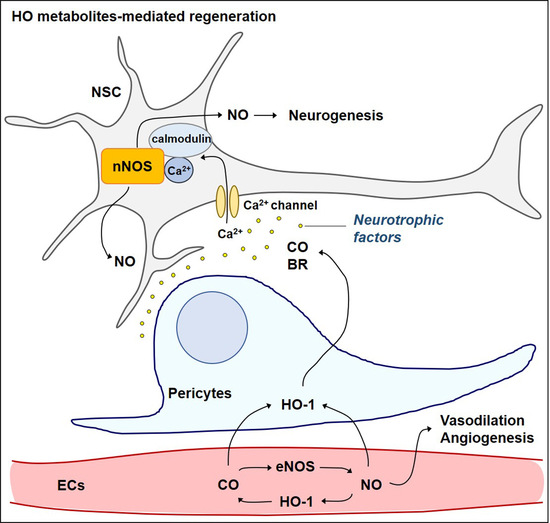
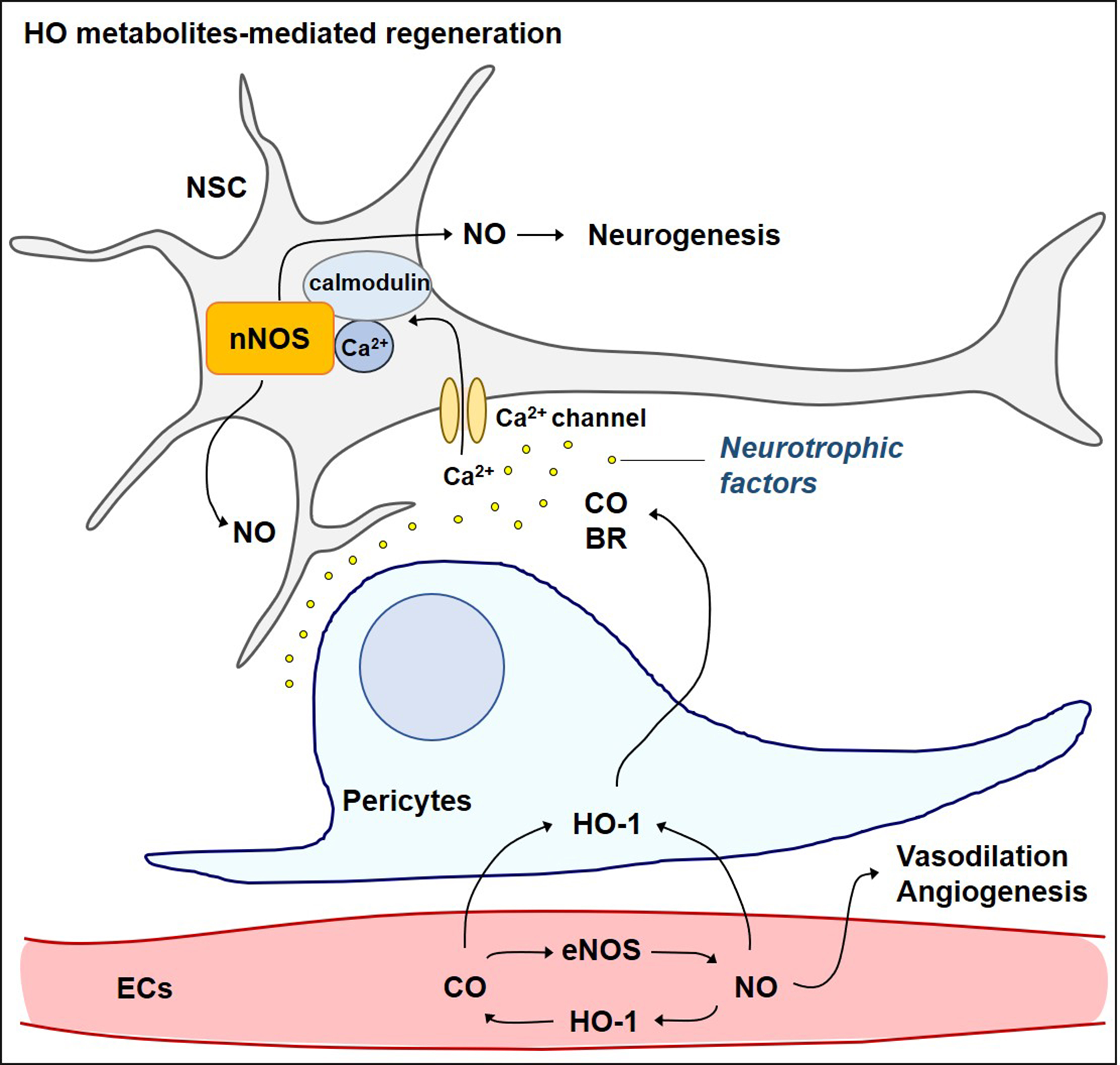
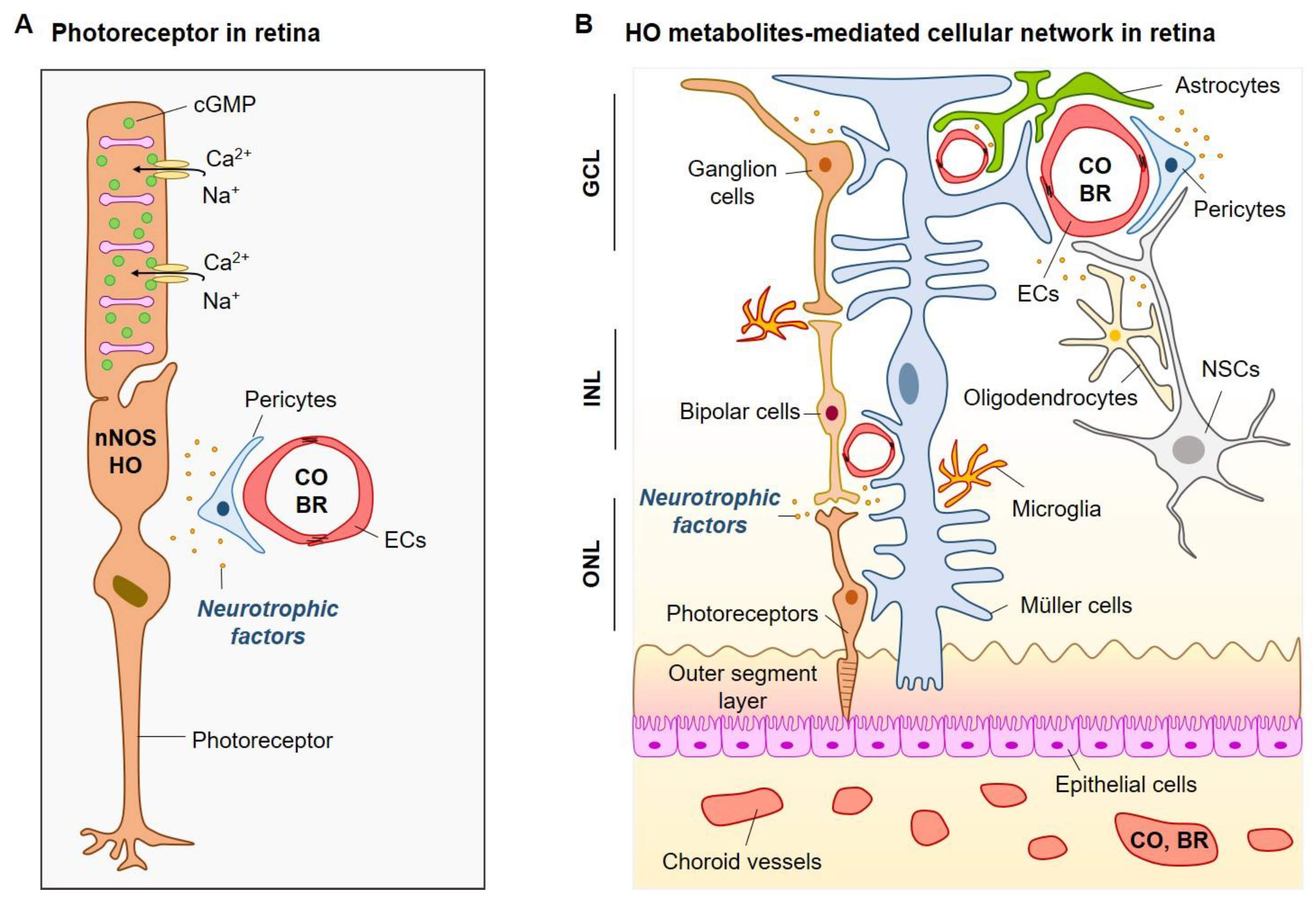
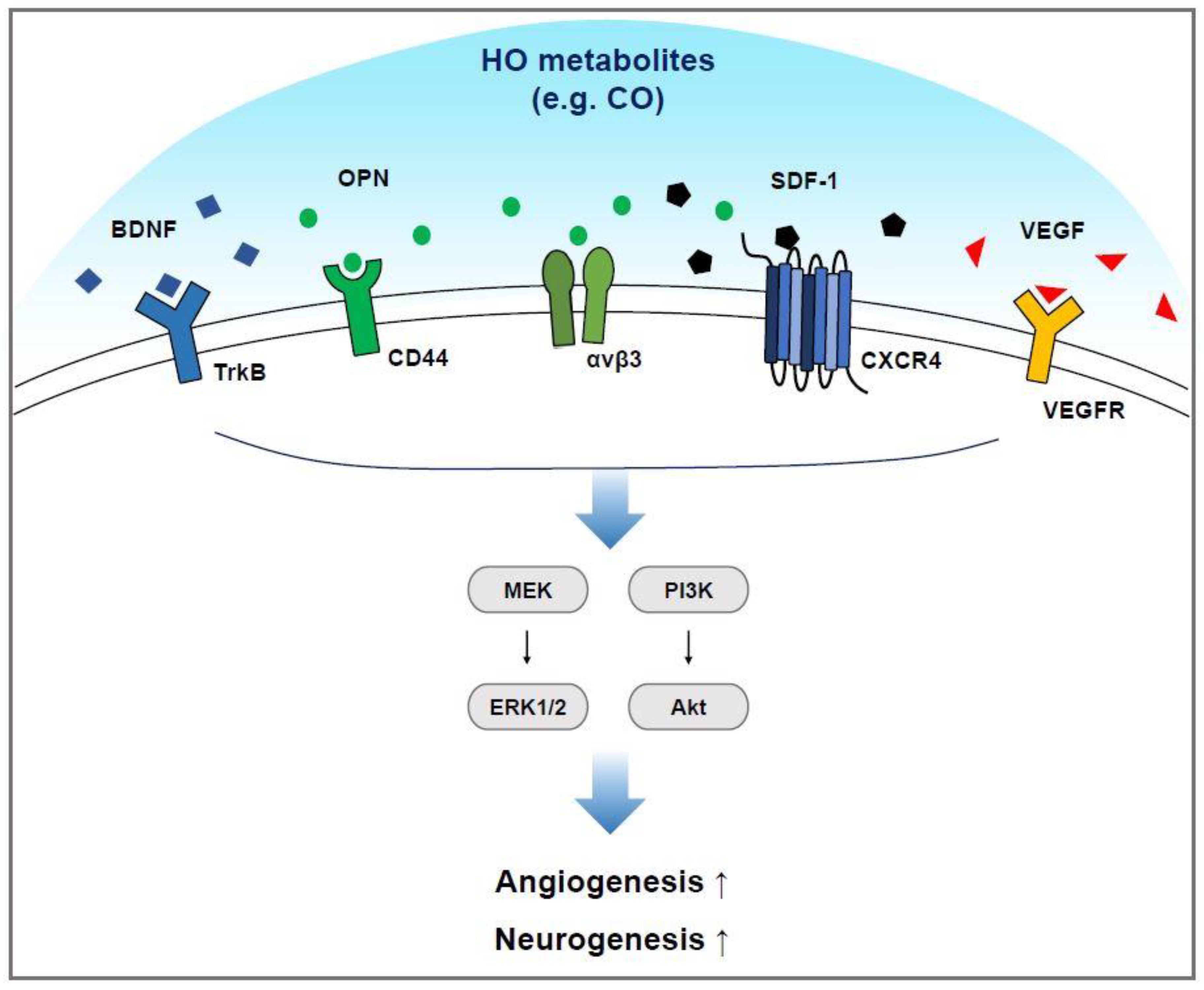
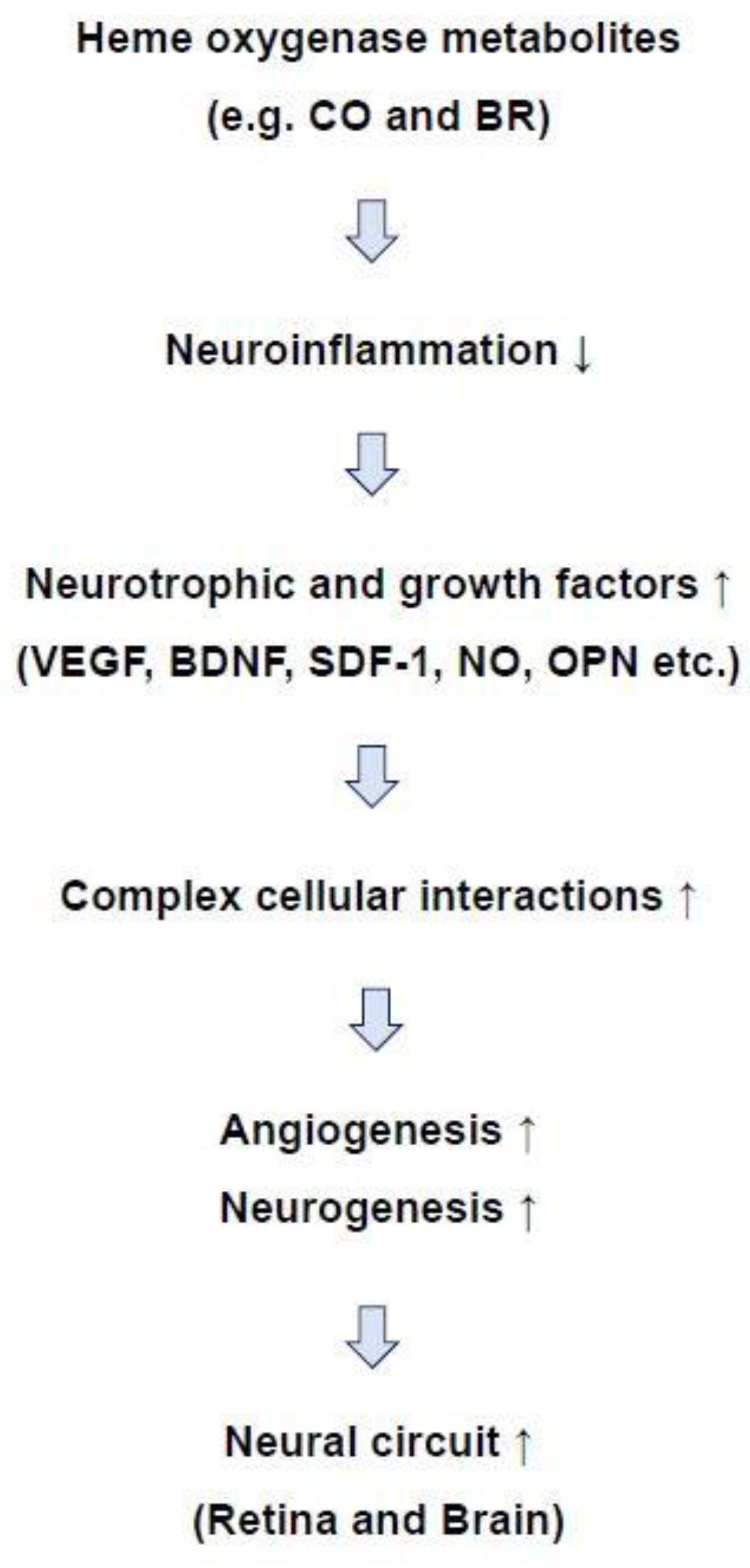
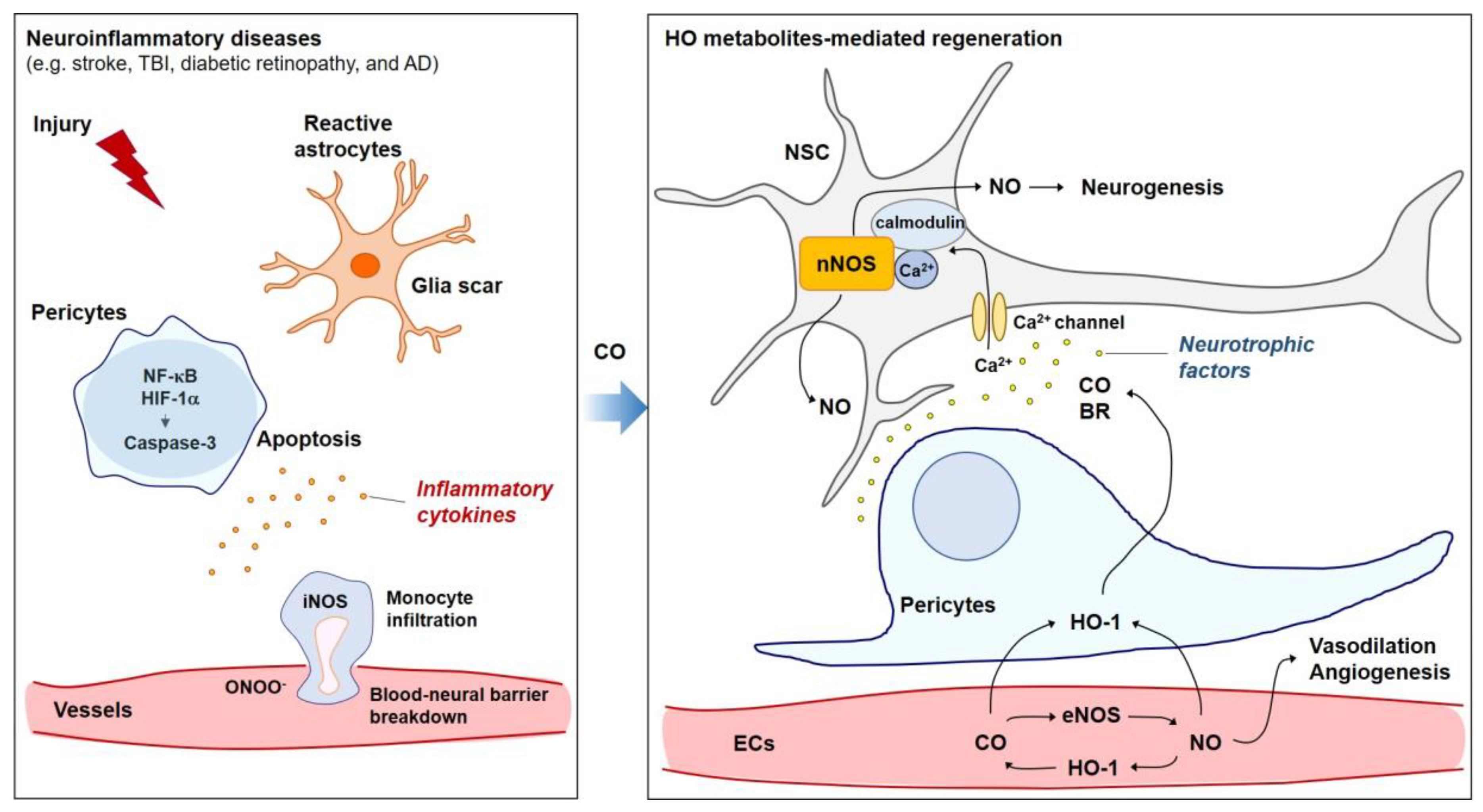
Heme oxygenase (HO) catabolizes heme to produce HO metabolites, such as carbon monoxide (CO) and bilirubin (BR), which have gained recognition as biological signal transduction effectors. The neurovascular unit refers to a highly evolved network among endothelial cells, pericytes, astrocytes, microglia, neurons, and neural stem cells in the central nervous system (CNS). Proper communication and functional circuitry in these diverse cell types is essential for effective CNS homeostasis. Neuroinflammation is associated with the vascular pathogenesis of many CNS disorders. CNS injury elicits responses from activated glia (e.g., astrocytes, oligodendrocytes, and microglia) and from damaged perivascular cells (e.g., pericytes and endothelial cells). Most brain lesions cause extensive proliferation and growth of existing glial cells around the site of injury, leading to reactions causing glial scarring, which may act as a major barrier to neuronal regrowth in the CNS. In addition, damaged perivascular cells lead to the breakdown of the blood-neural barrier, and an increase in immune activation, activated glia, and neuroinflammation. The present review discusses the regenerative role of HO metabolites, such as CO and BR, in various vascular diseases of the CNS such as stroke, traumatic brain injury, diabetic retinopathy, and Alzheimer’s disease, and the role of several other signaling molecules.
Keywords: heme oxygenase; carbon monoxide; bilirubin; neuroinflammation; regeneration heme oxygenase; carbon monoxide; bilirubin; neuroinflammation; regeneration
Graphical Abstract