Article

Population Genetics Revealed a New Locus That Underwent Positive Selection in Barley


Institute of Crop Science and Resource Conservation, Plant Breeding, University of Bonn, Katzenburgweg 5, 53115 Bonn, Germany
*
Author to whom correspondence should be addressed.
Current address: Ecology and Evolutionary Biology, University of Colorado, 1900 Pleasant Street, Boulder, CO 80302, USA.
Current address: Institute of Crop Science and Resource Conservation, Crop Functional Genomics, University of Bonn, Friedrich-Ebert-Allee 144, 53113 Bonn, Germany.
Int. J. Mol. Sci. 2019, 20(1), 202; https://doi.org/10.3390/ijms20010202
Submission received: 29 November 2018 / Revised: 28 December 2018 / Accepted: 30 December 2018 / Published: 8 January 2019
(This article belongs to the Section Molecular Genetics and Genomics)

Abstract

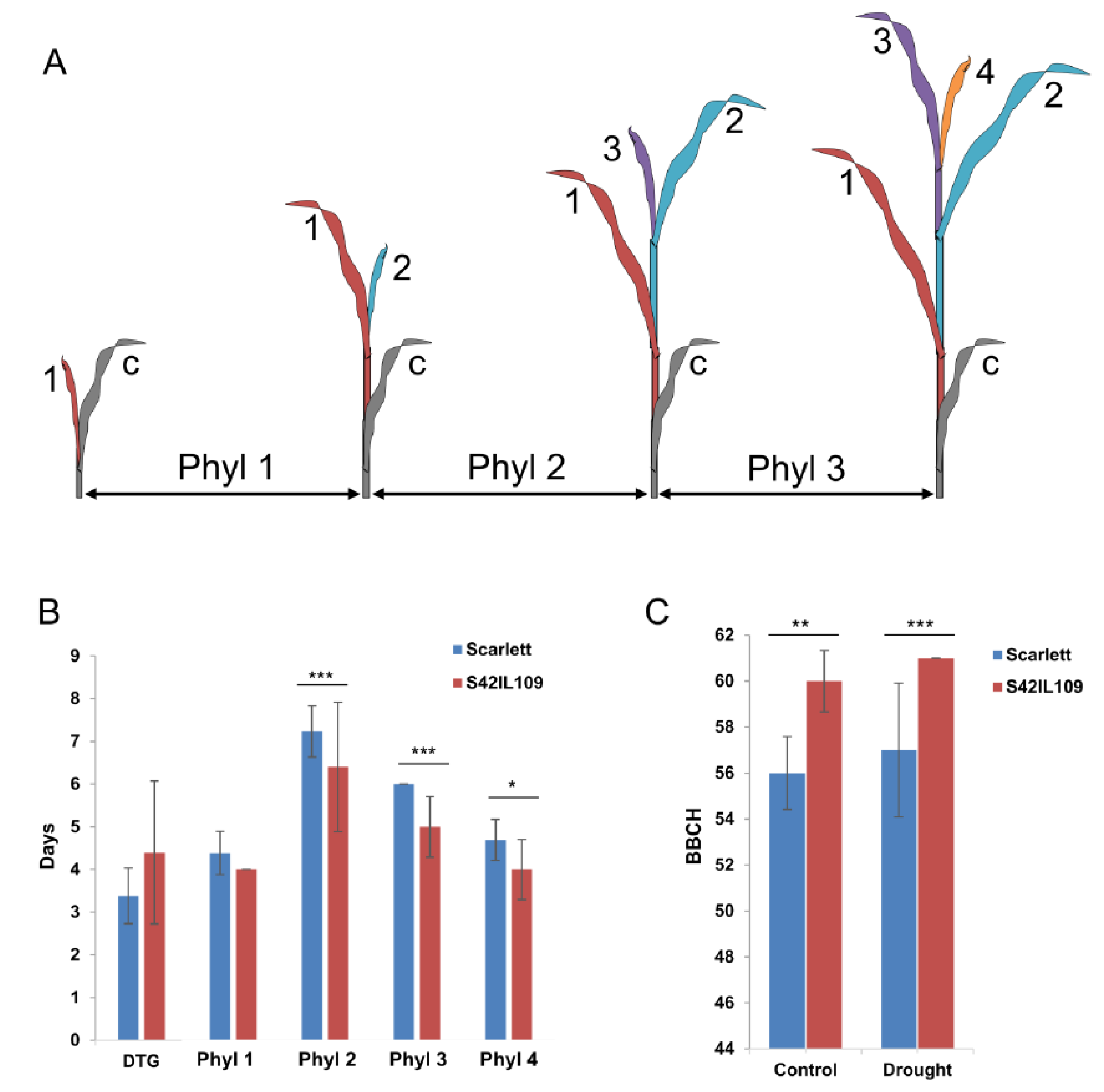
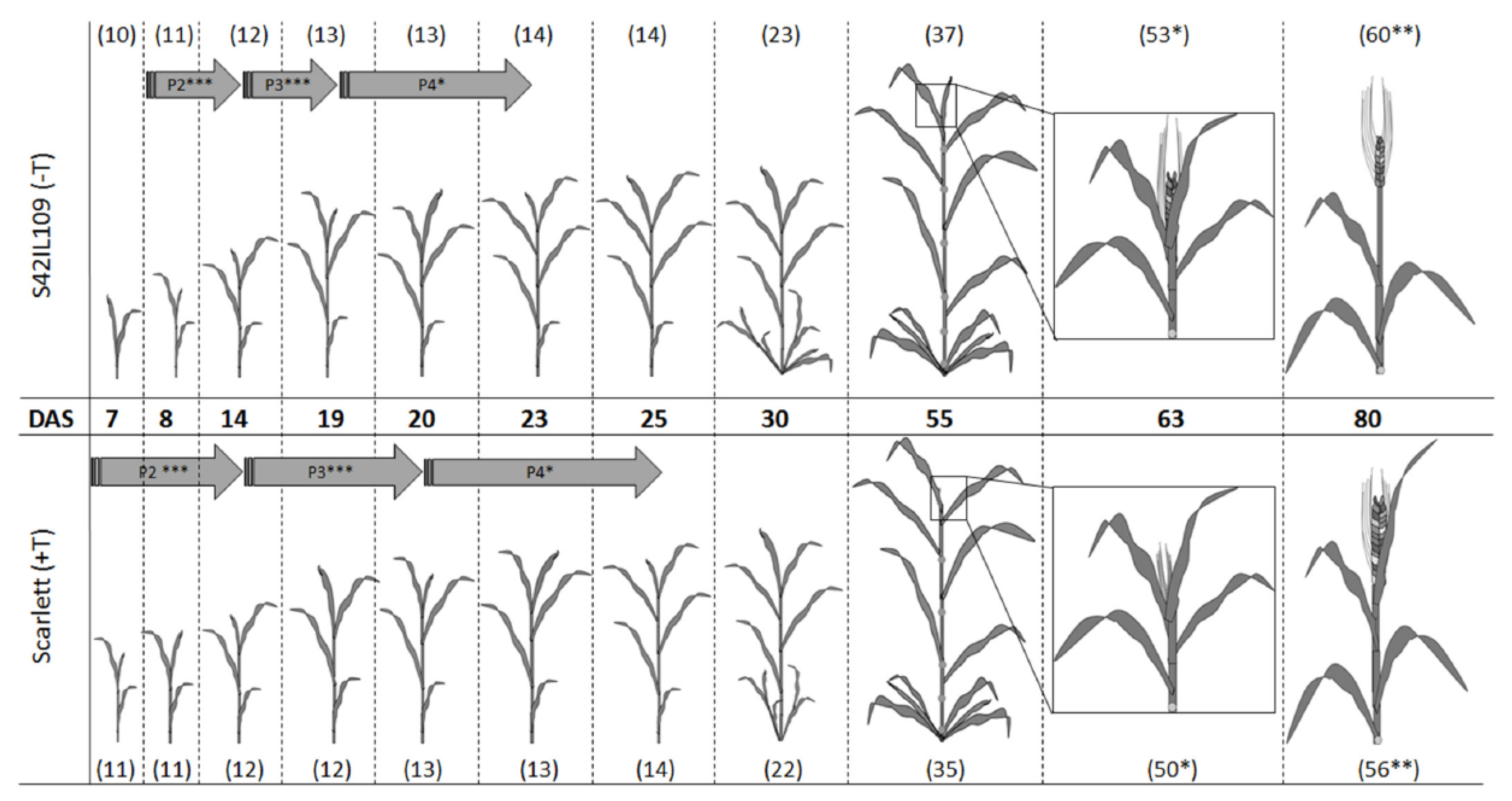
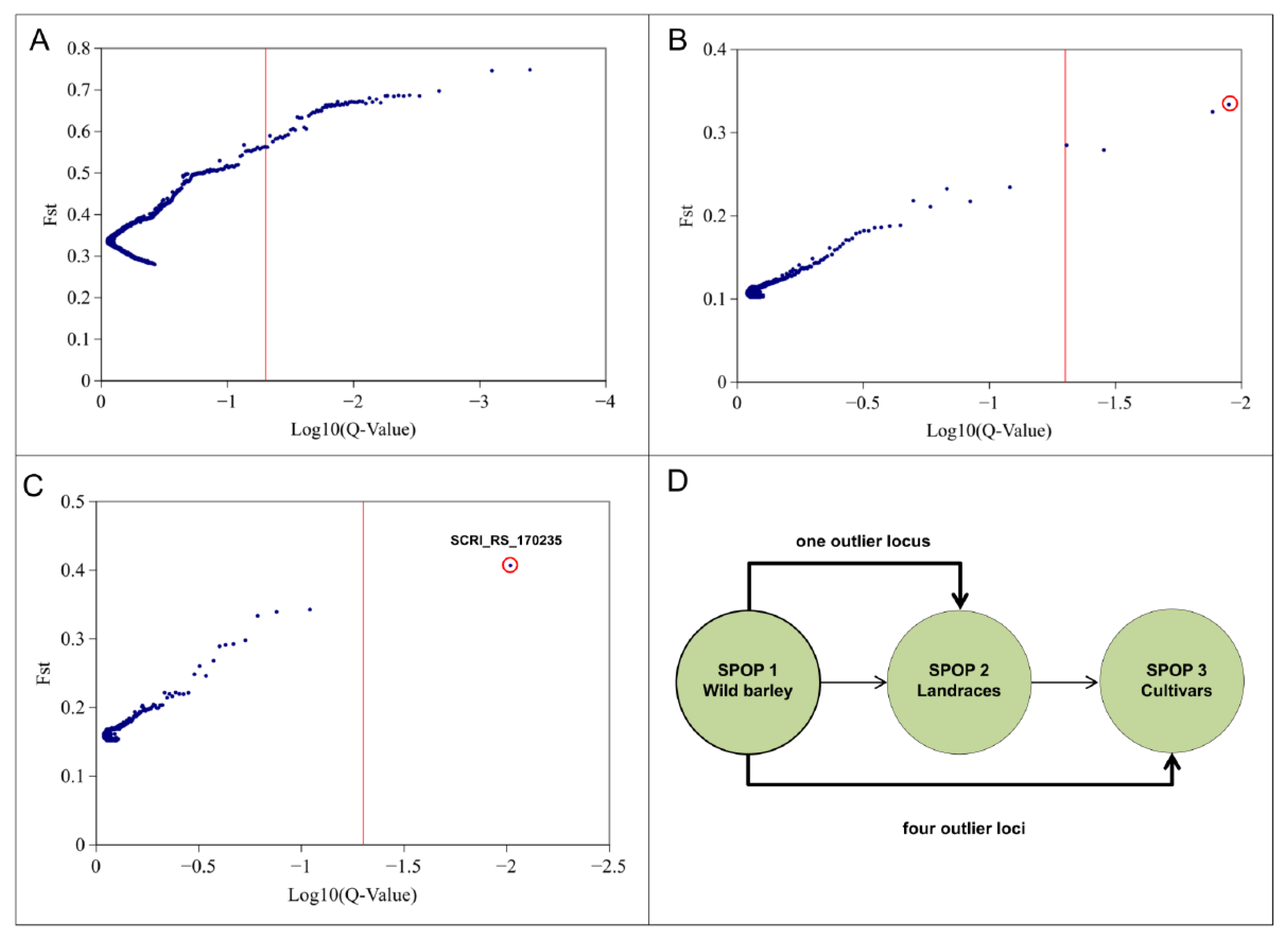
Trait variation among natural populations and their cultivated relatives occurs due to evolutionary forces, including selection and drift. In the present study, we analyzed these forces at the locus level in a global barley diversity set using population genetics analysis. Genome-wide outlier loci detection found a locus on chromosome 2H at which a common single nucleotide polymorphism (SNP) marker SCRI_RS_170235 accounted for the highest diversity index (Fst) values between cultivars and landraces and between cultivars and wild accessions. For a population wide genetic analysis, we developed a Polymerase Chain Reaction (PCR)-based cleaved amplified polymorphic marker at the identified locus. Marker genotyping of 115 genotypes identified a characteristic distribution of polymorphisms among the cultivated, landraces, and wild barley accessions. Using this marker, we screened a library of wild barley introgression lines (IL) and selected IL S42IL-109 that carried the wild introgression of the outlier locus in cultivar ‘Scarlett’ background. A plethora of phenotypic evaluation was performed between the S42IL109 and ‘Scarlett’ to dissect the putative effect of the identified outlier locus. Comparison of S42IL109 and ‘Scarlett’ revealed significant difference in the development of phyllochron two (Phyl-2), phyllochron three (Phyl-3), and phyllochron four (Phyl-4). Across the three phyllochrons, it was consistently observed that S42IL109 developed successive leaves in a shorter time span, by one to two days, compared to ‘Scarlett’. These data suggest that outlier locus may influence phyllochron variation which underwent positive selection in barley.
Keywords: population genomics; outlier loci; positive selection; barley; phylolochron population genomics; outlier loci; positive selection; barley; phylolochron