Review

The Enzyme-Mediated Direct Reversal of a Dithymine Photoproduct in Germinating Endospores

1
Department of Chemistry and Chemical Biology, Indiana University-Purdue University Indianapolis (IUPUI), 402 N Blackford Street, Indianapolis, IN 46202, USA
2
Department of Biochemistry and Molecular Biology, Indiana University School of Medicine (IUSM), 635 Barnhill Drive, Indianapolis, IN 46202, USA
*
Author to whom correspondence should be addressed.
Int. J. Mol. Sci. 2013, 14(7), 13137-13153; https://doi.org/10.3390/ijms140713137
Submission received: 2 May 2013 / Revised: 4 June 2013 / Accepted: 7 June 2013 / Published: 25 June 2013
(This article belongs to the Special Issue Molecular Cut and Paste)

Abstract

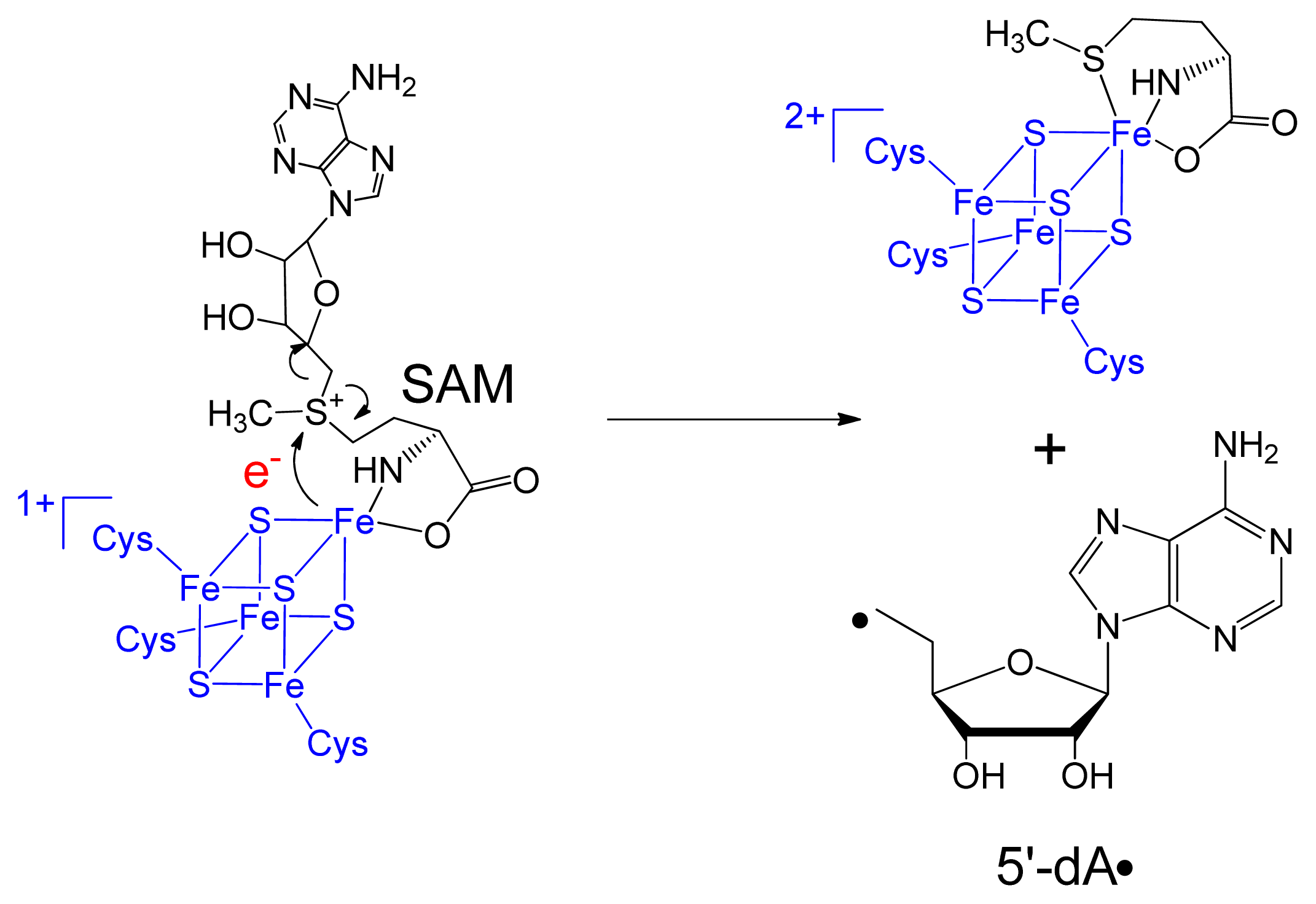
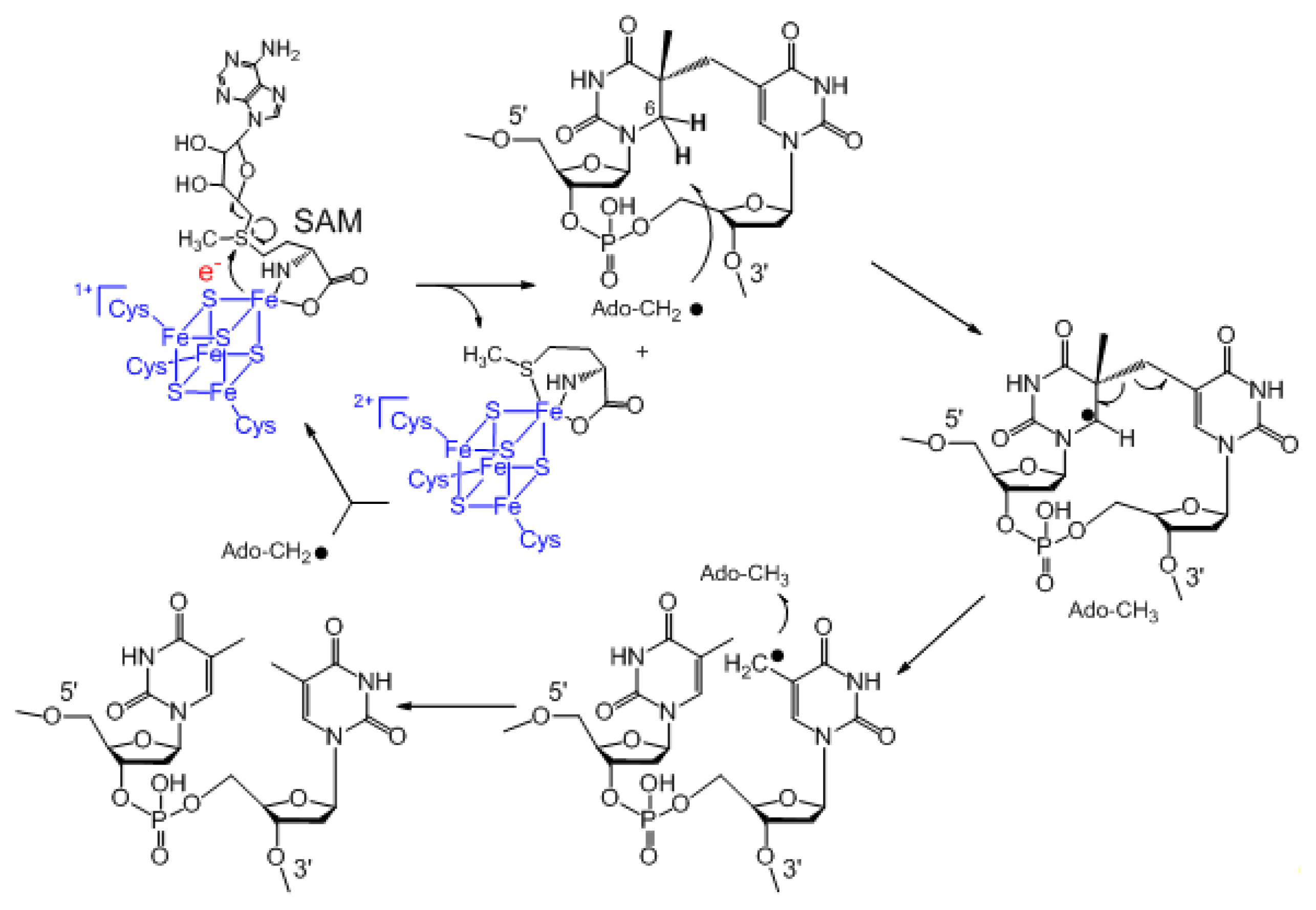
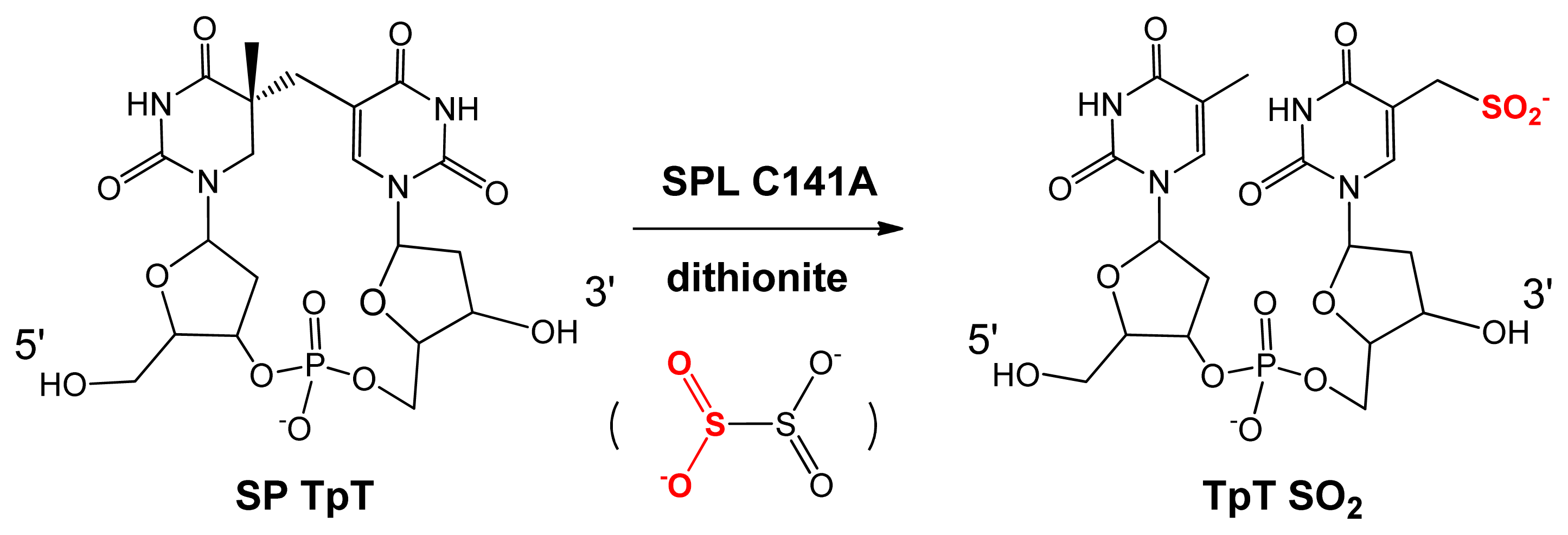
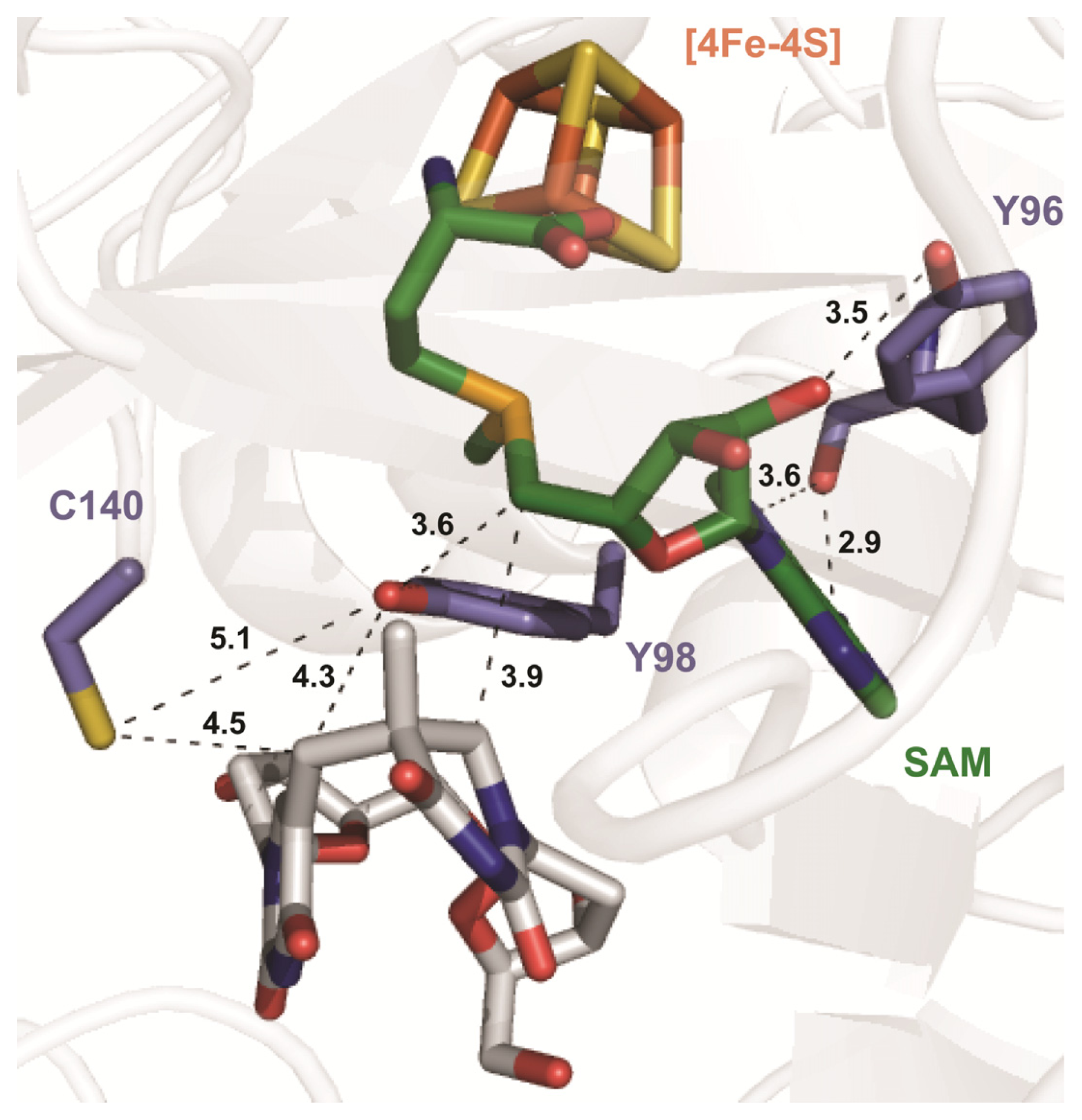
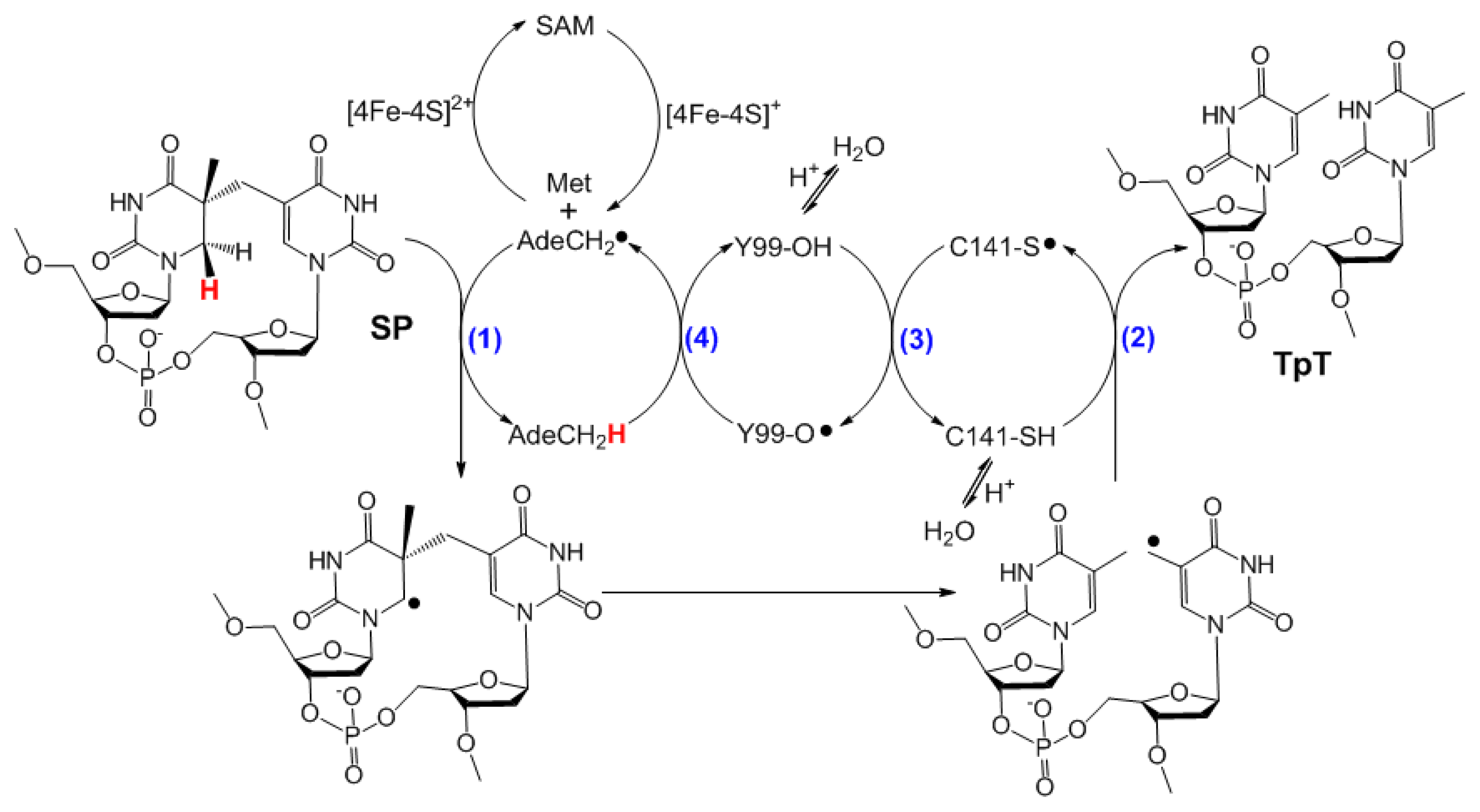
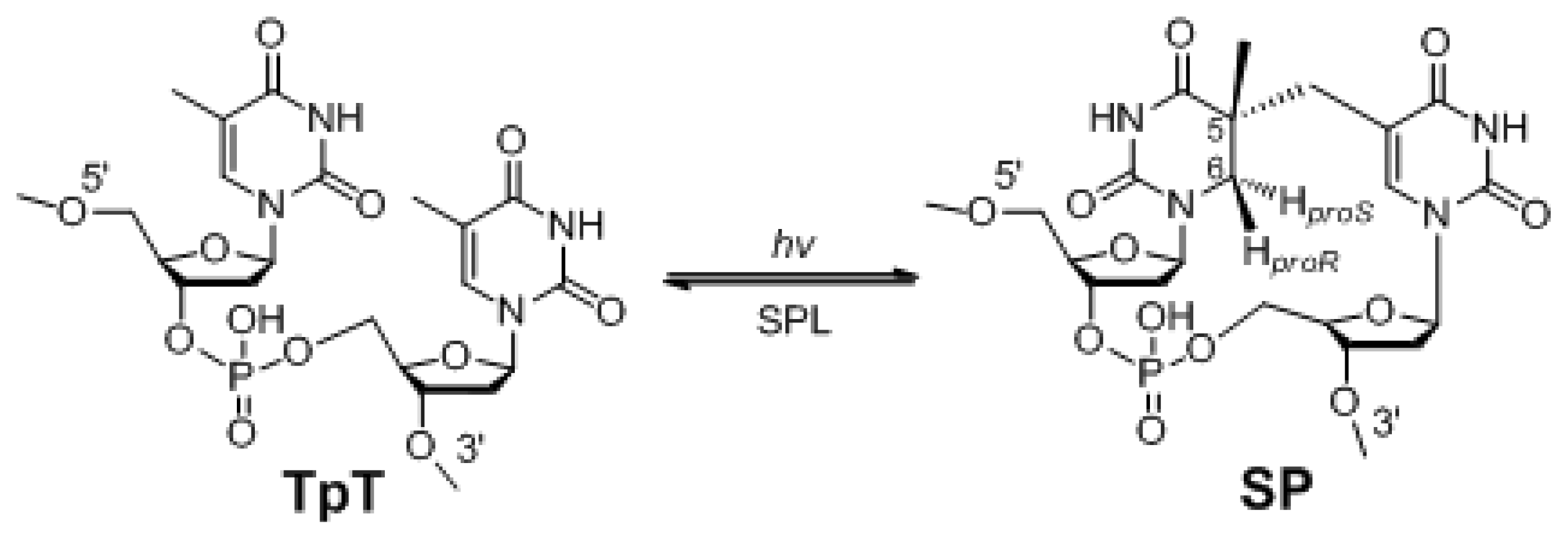
Spore photoproduct lyase (SPL) repairs a special thymine dimer, 5-thyminyl-5,6-dihydrothymine, which is commonly called spore photoproduct, or SP, in germinating endospores. SP is the exclusive DNA photo-damaging product found in endospores; its generation and swift repair by SPL are responsible for the spores’ extremely high UV resistance. Early in vivo studies suggested that SPL utilizes a direct reversal strategy to repair SP in the absence of light. Recently, it has been established that SPL belongs to the radical S-adenosylmethionine (SAM) superfamily. The enzymes in this superfamily utilize a tri-cysteine CXXXCXXC motif to bind a [4Fe-4S] cluster. The cluster provides an electron to the S-adenosylmethionine (SAM) to reductively cleave its C5'-S bond, generating a reactive 5'-deoxyadenosyl (5'-dA) radical. This 5'-dA radical abstracts the proR hydrogen atom from the C6 carbon of SP to initiate the repair process; the resulting SP radical subsequently fragments to generate a putative thymine methyl radical, which accepts a back-donated H atom to yield the repaired TpT. The H atom donor is suggested to be a conserved cysteine141 in B. subtilis SPL; the resulting thiyl radical likely interacts with a neighboring tyrosine99 before oxidizing the 5'-dA to 5'-dA radical and, subsequently, regenerating SAM. These findings suggest SPL to be the first enzyme in the large radical SAM superfamily (>44,000 members) to utilize a radical transfer pathway for catalysis; its study should shed light on the mechanistic understanding of the SAM regeneration process in other members of the superfamily.
Keywords: thymine dimer; DNA damage; DNA damage repair; radical; transfer pathway thymine dimer; DNA damage; DNA damage repair; radical; transfer pathway