2.1. Characterization of the Cathode Material
The elemental composition of the spent cathode material was determined by ICP-OES analysis. The measured contents were 7.81 wt% Li, 29.54 wt% Ni, 20.03 wt% Co, and 21.97 wt% Mn. The presence of Ni, Co, and Mn as dominant transition metals is consistent with the composition of Li-Ni-Co-Mn (NMC) lithium-ion battery cathode materials. Variations in the relative proportions of transition metals are commonly observed for cathode materials recovered from batteries produced by different manufacturers and subjected to different service histories [
11,
12,
39]. The remaining mass fraction is primarily attributed to oxygen, which is not quantified by ICP-OES.
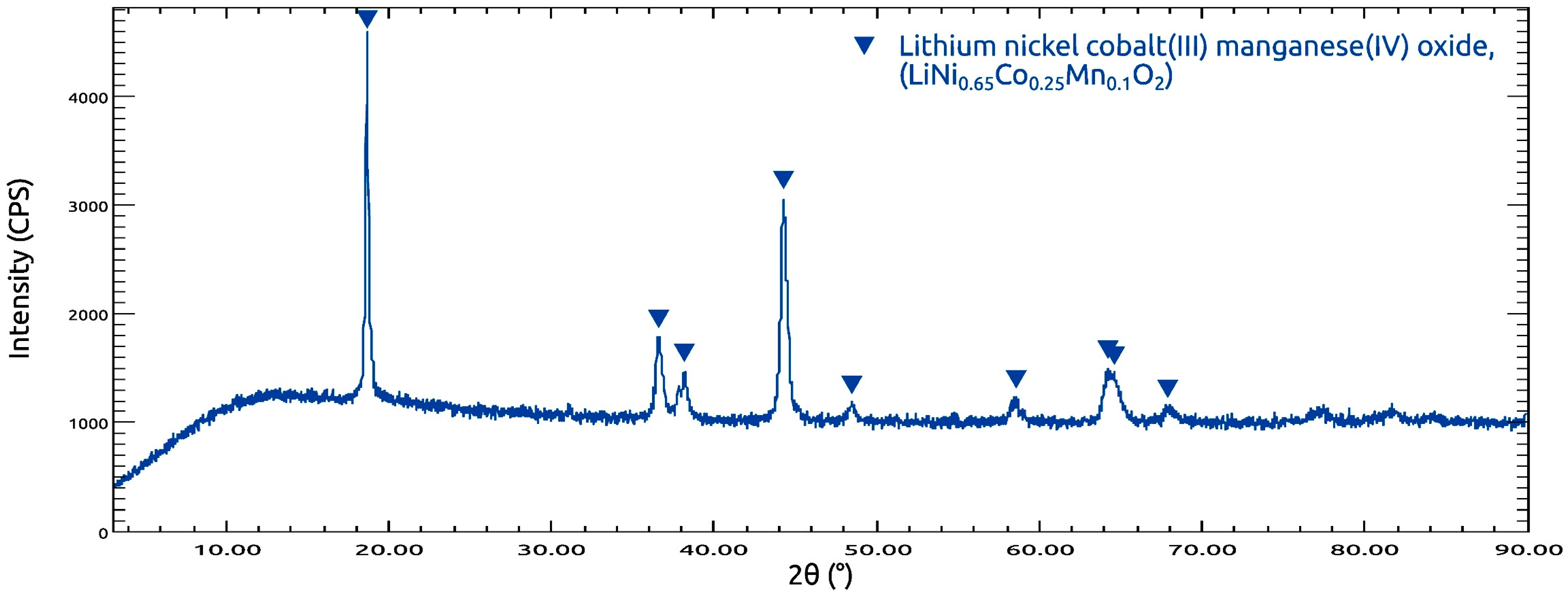
The XRD pattern of the investigated cathode material (
Figure 1) exhibits well-defined diffraction peaks characteristic of layered lithium transition-metal oxides. The most intense reflection observed at approximately 2θ ≈ 18.7° corresponds to the (003) plane, which is a typical feature of layered Li(Ni,Co,Mn)O
2-type cathodes and reflects the ordered stacking of lithium and transition metal layers. Additional reflections located in the regions of ~36–38°, ~44–45°, ~48–49°, ~58–59°, and ~64–66° are also characteristic of a crystalline layered structure. The overall diffraction profile is consistent with a hexagonal α-NaFeO
2-type structure (space group
), in which lithium and transition metal ions occupy alternating octahedral layers within a close-packed oxygen framework. Such a structural arrangement is widely reported for layered Li(Ni,Co,Mn)O
2 cathode materials [
40,
41]. No additional diffraction peaks attributable to secondary crystalline phases were observed within the detection limits of the measurement, suggesting that the material predominantly consists of a layered phase.
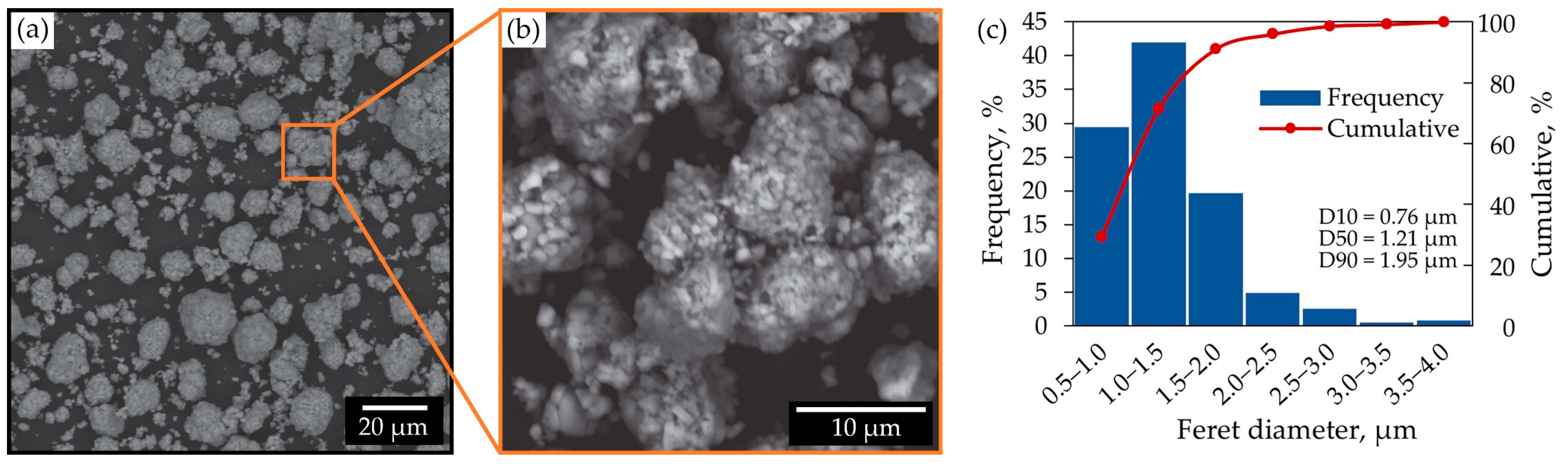
The morphology of the initial cathode material is presented in
Figure 2. The SEM microphotograph (
Figure 2a) reveals that the material consists predominantly of irregularly shaped particles forming agglomerated structures. A higher-magnification image (
Figure 2b) shows that these agglomerates are composed of fine primary particles, indicating a complex microstructure typical of cathode materials.
The particle size distribution, determined using ImageJ software (version 1.54g) based on the Feret diameter (
Figure 2c), shows a relatively narrow distribution with D10 = 0.76 μm, D50 = 1.21 μm, and D90 = 1.95 μm, with a representative analysis example shown in
Supplementary Figure S1. These results indicate that the majority of particles are within the micrometer range, which is favorable for leaching due to the increased specific surface area.
In addition, the average agglomerate size was estimated to be approximately 9 μm based on SEM microphotograph analysis (
Supplementary Figure S2).
The observed agglomeration suggests that, although primary particles are fine, their clustering may influence mass transfer and dissolution kinetics during the leaching process.
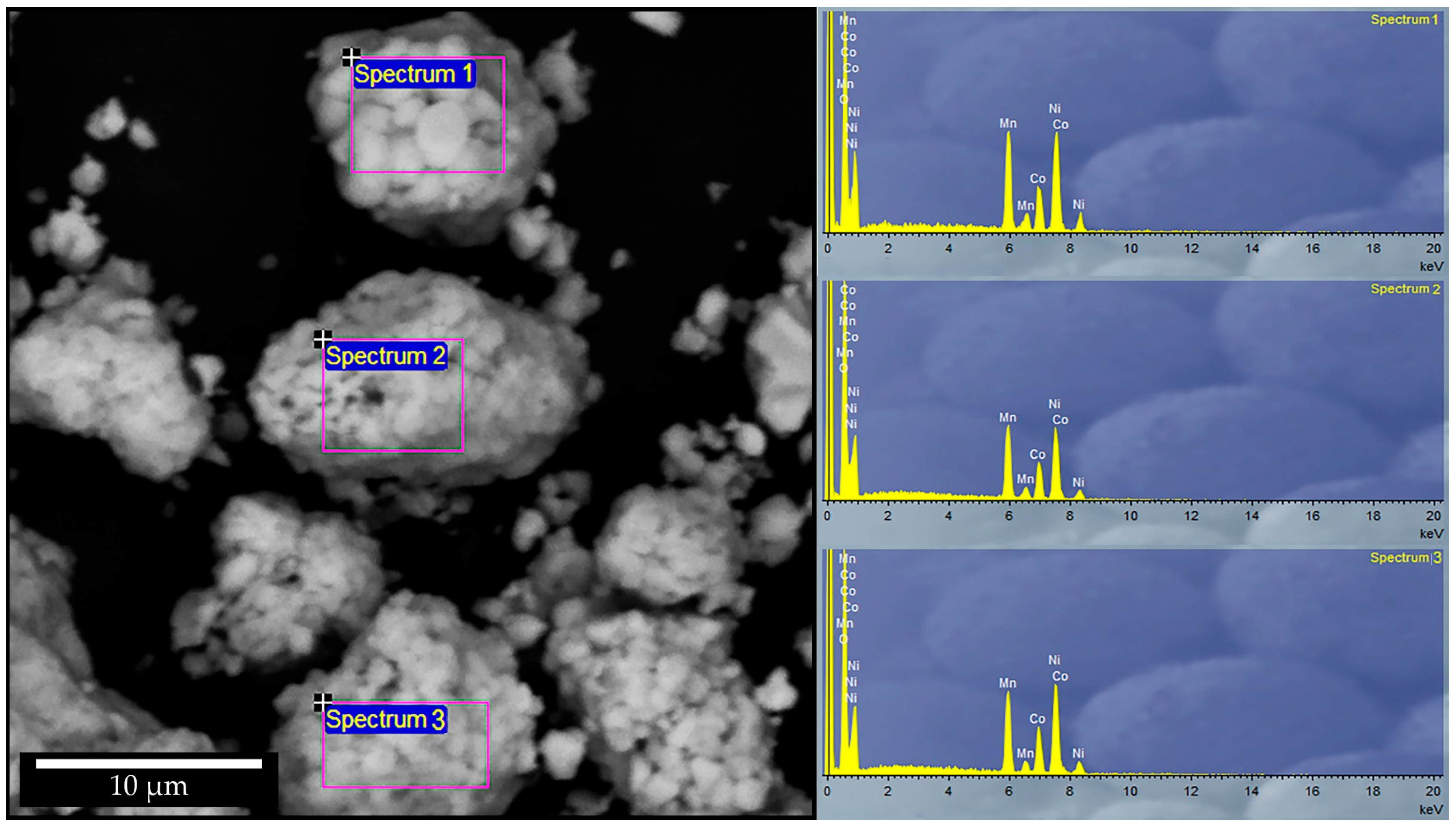
SEM-EDS analysis of the initial cathode material (
Figure 3) confirms a homogeneous distribution of transition metals within the agglomerates. The EDS spectra collected from different regions (Spectrum 1–3) consistently show the presence of Ni, Co, and Mn as the dominant elements, along with oxygen, indicating a typical Ni-Co-Mn oxide cathode composition.
No significant compositional variations between the analyzed regions were observed, indicating a chemically uniform distribution of elements within the agglomerates. This homogeneity is important for ensuring consistent leaching behavior of all active components.
The uniform distribution of Ni, Co, and Mn within the agglomerates indicates that all active phases are readily accessible for leaching, without pronounced elemental segregation that could hinder dissolution kinetics.
2.2. Thermodynamic Analysis and Speciation of the Leaching System
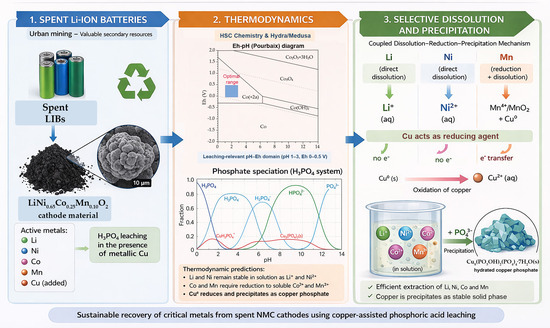
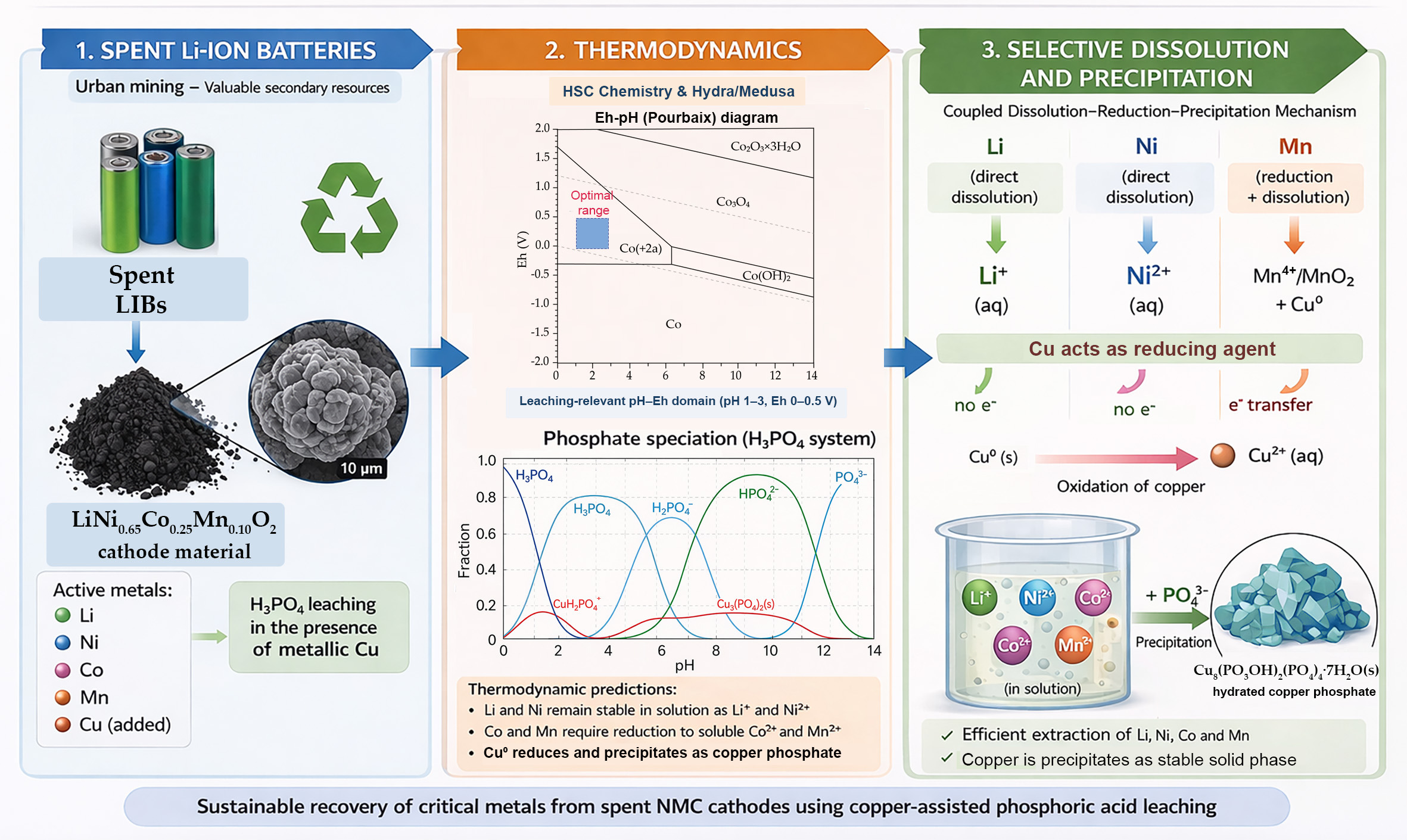
To provide a thermodynamic interpretation for the investigated leaching system, a set of representative reactions was defined to describe the key processes, including the dissolution of metal oxides, redox transformations, and the formation of copper phosphate. These reactions were selected to represent the dominant chemical pathways governing metal behavior under the applied conditions, namely proton-assisted dissolution, reduction by metallic copper, and subsequent precipitation of a stable metal-phosphate phase.
Thermodynamic parameters (ΔH
θ, ΔS
θ, ΔG
θ, and equilibrium constant, log K) were calculated for each reaction using the Reaction Equations module in HSC Chemistry over the temperature range of 0–100 °C. For clarity and relevance to experimental conditions, selected values at 0, 35, 60, 80, and 100 °C are presented in
Table 1. These temperatures correspond to the key intervals used in the experimental study and enable direct comparison between thermodynamic predictions and observed leaching behavior.
The calculated thermodynamic parameters (ΔH
θ, ΔS
θ, ΔG
θ, and log K) for the selected reactions clearly indicate that the dissolution of lithium and nickel oxides in acidic media is thermodynamically favorable over the entire investigated temperature range. The strongly negative ΔG
θ values for reaction (1) confirm that Li
2O readily dissolves to form Li
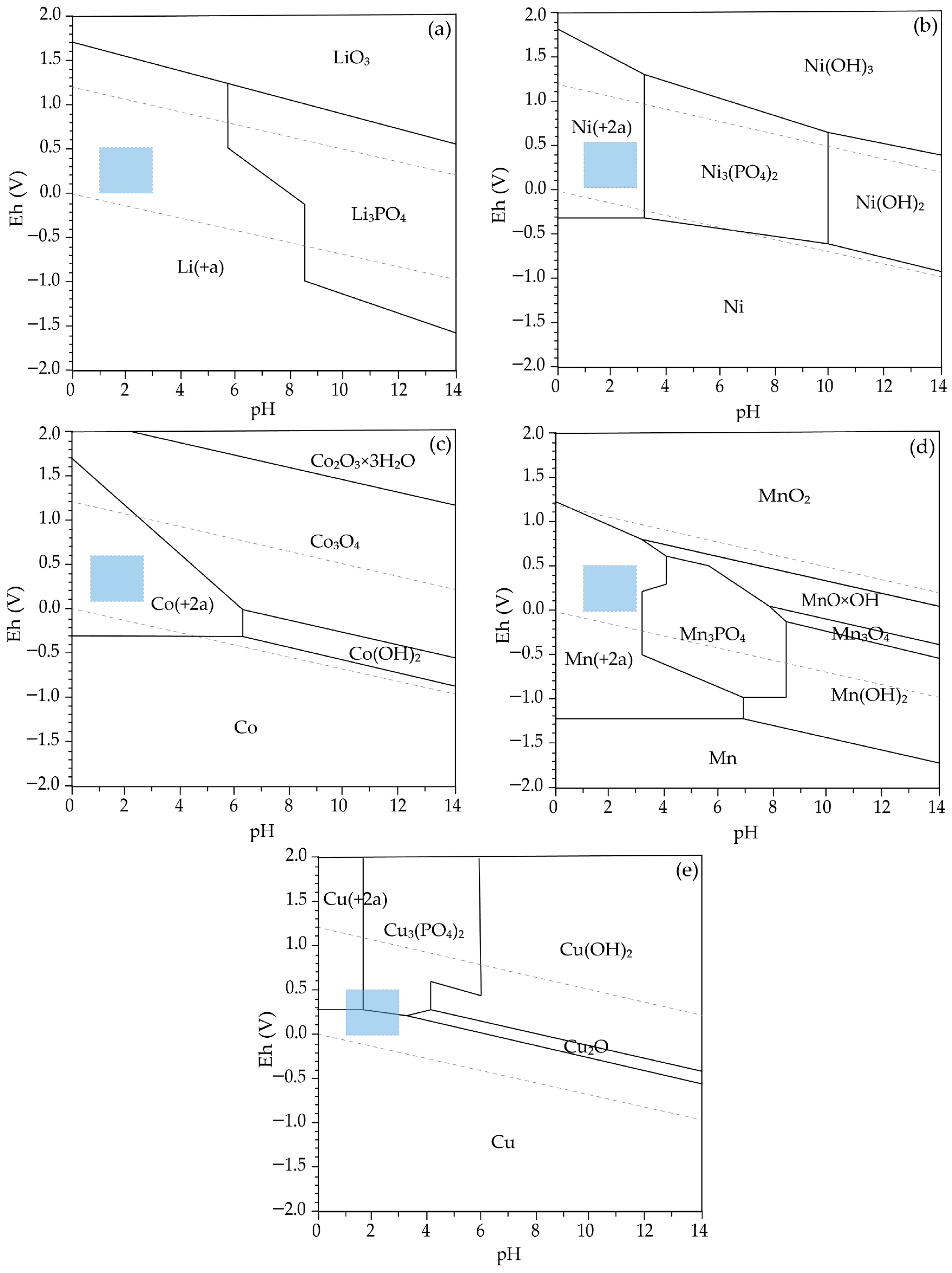
+, which is consistent with the Pourbaix diagram (
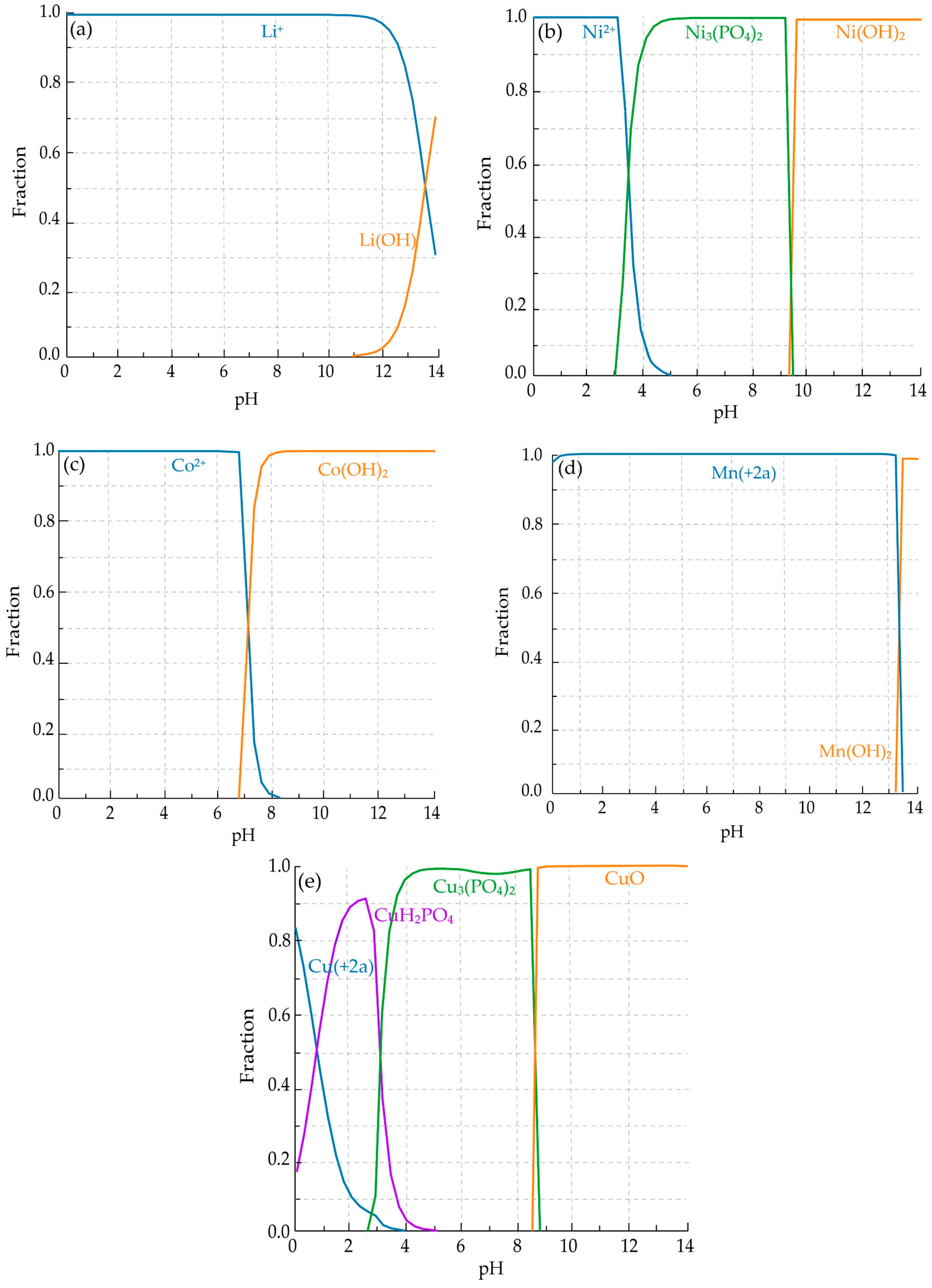
Figure 4a) where lithium exists exclusively as a dissolved ionic form across the relevant pH range. This behavior is further supported by the species distribution diagram (
Figure 5a), showing complete dominance of Li
+ without formation of secondary phases.
Similarly, the negative ΔG
θ values for reaction (2) indicate spontaneous dissolution of NiO. The corresponding Pourbaix diagram (
Figure 4b) confirms that Ni
2+ is the stable species under acidic conditions, while the species distribution diagram (
Figure 5b) shows that nickel remains predominantly in solution, with only minor formation of solid phases at higher pH values.
In contrast, the dissolution of cobalt strongly depends on the redox conditions of the system. Reaction (3), describing the dissolution of Co
3O
4 without a reducing agent, exhibits positive ΔG
θ values, indicating that this process is not thermodynamically favored. However, in the presence of metallic copper, reaction (4) becomes highly favorable, as reflected by the strongly negative ΔG
θ values and high log K. This transition is consistent with the Pourbaix diagram (
Figure 4c), which shows that Co
3+-containing phases are stable under oxidizing conditions, while Co
2+ is stabilized only under reducing conditions. The corresponding species distribution diagram (
Figure 5c) confirms that cobalt is present as Co
2+ in the acidic region relevant to the leaching process.
A similar behavior is observed for manganese. The reduction of MnO
2 to Mn
2+, represented by reactions (5) and (6), is thermodynamically favorable, as indicated by negative ΔG
θ values. However, the Pourbaix diagram (
Figure 4d) indicates that Mn
2+ is stable only under sufficiently reducing conditions, whereas Mn(IV) oxides remain stable in oxidizing environments. The species distribution diagram (
Figure 5d) further confirms that Mn
2+ dominates only within the acidic and reducing region, explaining the experimentally observed dependence of manganese leaching efficiency on the presence of copper.
Copper exhibits a dual role in the system. Initially, it acts as a reducing agent, facilitating the dissolution of cobalt and manganese while being oxidized to Cu2+.
The Pourbaix diagram (
Figure 4e) indicates the stability of Cu
2+ under acidic conditions; however, it does not account for the presence of phosphate species. In contrast, the species distribution diagram (
Figure 5e) demonstrates that Cu
2+ is progressively converted into phosphate complexes and ultimately precipitates as Cu
3(PO
4)
2. This behavior is consistent with the strongly negative ΔG values of reaction (7), confirming the thermodynamic favorability of copper phosphate formation. These results indicate that, although Cu
2+ is formed as an intermediate during copper oxidation, it is thermodynamically unstable in the presence of phosphate ions and is rapidly removed from the solution through precipitation, leading to the formation of solid copper phosphate phases under the investigated conditions.
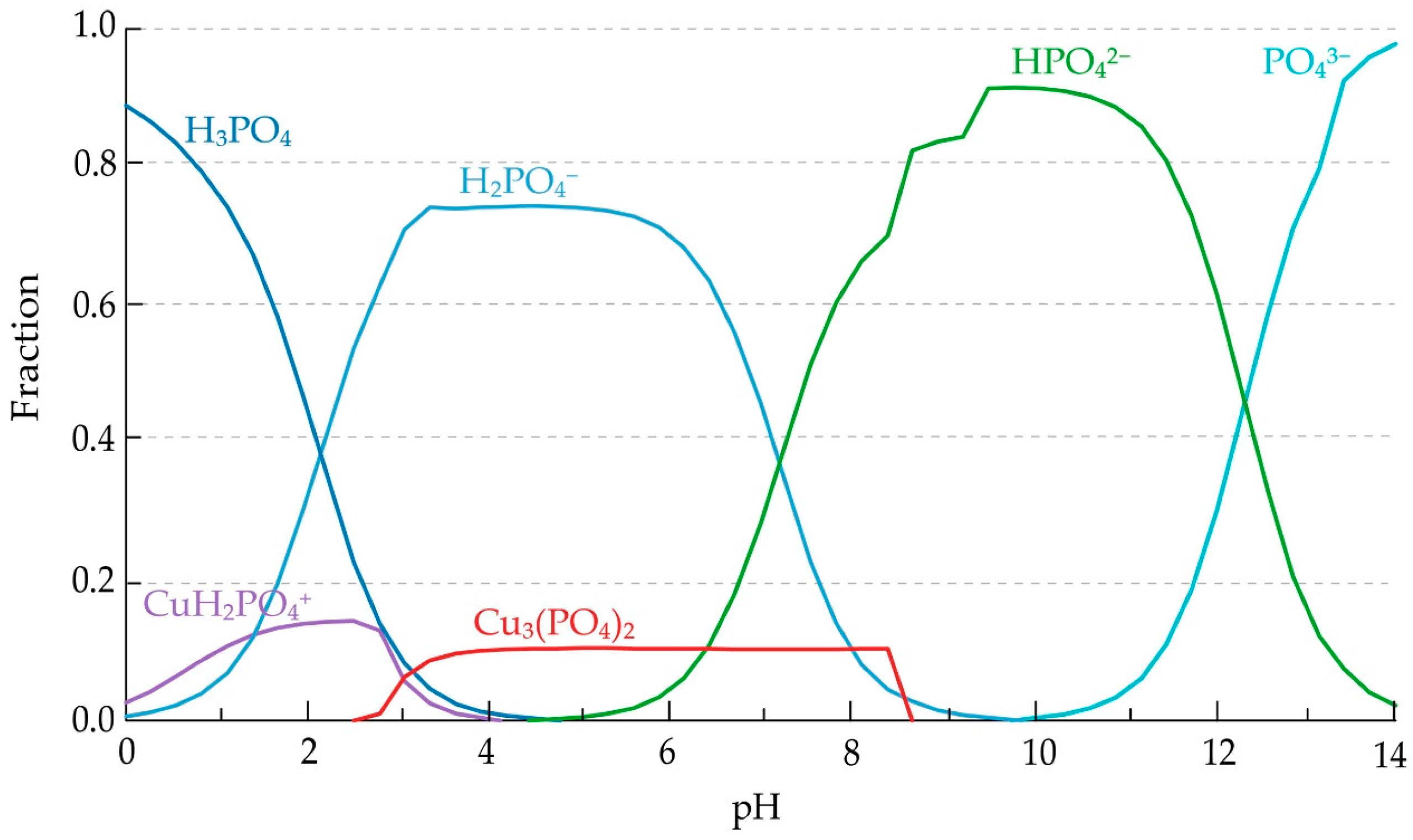
The dissociation equilibria of phosphoric acid, described by reactions (8)–(10), play a crucial role in controlling the availability of phosphate species. The corresponding species distribution diagram (
Figure 6) shows that H
3PO
4 and H
2PO
4− dominate under strongly acidic conditions, while HPO
42− and PO
43− become significant at higher pH values. This speciation governs the formation of copper phosphate species, facilitating the transition from dissolved Cu
2+ to solid phosphate phases during leaching.
It should be noted that the thermodynamic analysis is based on idealized, well-defined phases available in the database, such as Cu3(PO4)2. However, under real aqueous conditions, the formation of copper phosphate phases is strongly influenced by pH, phosphate speciation, and hydration effects. As a result, the precipitated phases may differ in structure and composition from the idealized phases used in thermodynamic modeling, often appearing as hydrated or protonated forms. Therefore, the thermodynamic calculations should be interpreted as indicating a general tendency for copper phosphate formation, while the exact phase composition depends on solution chemistry and crystallization conditions.
The combined interpretation of Pourbaix diagrams (
Figure 4a–e) and species distribution diagrams (
Figure 5a–e) provides a comprehensive understanding of the system. While Pourbaix diagrams define the thermodynamic stability domains as a function of pH and redox potential, species distribution diagrams quantify the relative abundance of individual species and reveal transformation pathways that are not visible in Eh-pH diagrams.
Overall, the thermodynamic analysis indicates that acidic and reducing conditions represent the optimal region for leaching. This region, highlighted in the Pourbaix diagrams (
Figure 4), corresponds to an approximate pH range of 1–3 and Eh values between 0 and +0.5 V, where Li
+, Ni
2+, Co
2+, and Mn
2+ are stable in solution, while copper undergoes transformation from a metallic reductant to dissolved Cu
2+ and finally to stable phosphate phases (
Figure 5e). The consistency between ΔG calculations, equilibrium constants, Pourbaix diagrams, and species distribution diagrams reflects their common thermodynamic basis and supports the internal coherence of the model. Importantly, these predictions are in good agreement with the experimentally observed leaching behavior.
The speciation of phosphoric acid, presented in
Figure 6, provides a detailed insight into the distribution of phosphate species as a function of pH under the investigated conditions. It can be observed that H
3PO
4 and H
2PO
4− dominate in the strongly acidic region relevant to the leaching process, while HPO
42− and PO
43− become significant only at higher pH values. The predominance of H
2PO
4− in the leaching-relevant domain indicates limited availability of free PO
43− ions, suggesting that phosphate precipitation processes are strongly governed by local chemical conditions and metal-ligand interactions. This behavior directly influences the formation of copper phosphate and explains the progressive transformation of Cu
2+ species observed during leaching.
The thermodynamic analysis presented above provides a consistent thermodynamic basis for understanding the behavior of lithium, nickel, cobalt, and manganese in the H3PO4-Cu system, indicating that acidic and reducing conditions favor the dissolution of all investigated metals while promoting the transformation of copper into stable phosphate phases.
To verify these predictions and to determine the optimal operating conditions, a series of leaching experiments was conducted under controlled conditions. The following subsections examine the influence of key process parameters, including the presence of a reducing agent (copper), phosphoric acid concentration, solid-to-liquid ratio, stirring rate, and temperature, on the leaching efficiency of the investigated metals.
2.3. Optimal Leaching of Waste Cathode Material
2.3.1. Effect of Copper Powder on the Leaching Efficiencies of Li, Ni, Co, and Mn
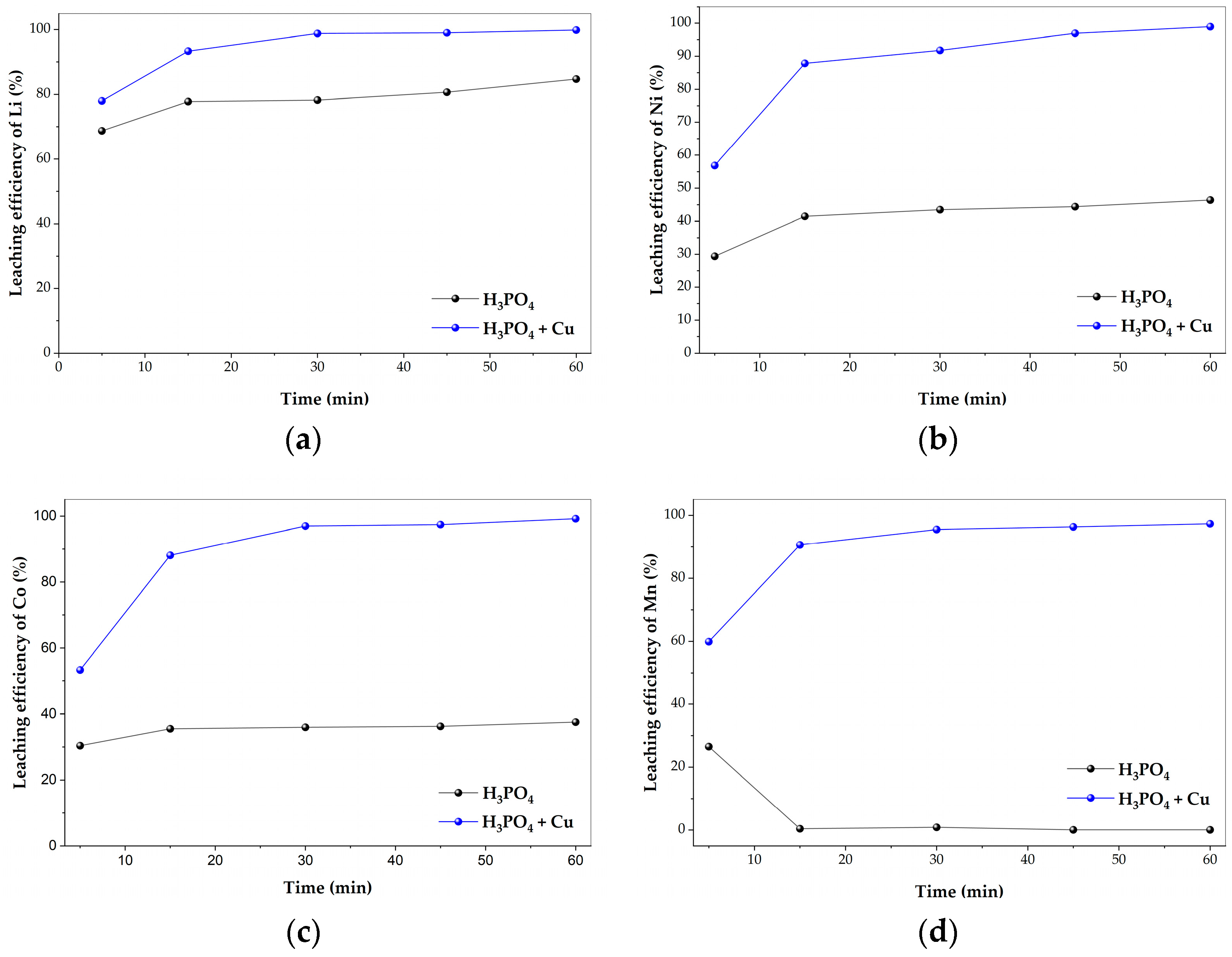
To evaluate the influence of metallic copper as a reducing agent, comparative leaching experiments were conducted in 50 mL of 0.4 mol·L
−1 H
3PO
4 at 80 °C using 0.4 g of cathode material and a stirring speed of 600 rpm, with and without the addition of 0.2 g Cu. The obtained results are presented in
Figure 7.
Lithium exhibited substantial dissolution even in the absence of copper, reaching approximately 85% after 60 min. The addition of copper significantly enhanced lithium extraction, achieving nearly complete dissolution (~99.8%) under the same conditions. In the presence of copper, lithium extraction increased rapidly during the initial stage, reaching approximately 98.7% within 30 min, after which the system approached equilibrium. Although lithium is present in the +1 oxidation state and does not require reductive transformation before dissolution, the pronounced effect of copper suggests a possible indirect mechanism related to structural destabilization of the cathode material induced by enhanced transition metal dissolution.
In contrast, a pronounced effect of copper was observed for transition metals. In the absence of copper, cobalt and nickel extraction remained limited, reaching approximately 38% and 47%, respectively, after 60 min. However, in the presence of copper powder, both metals dissolved rapidly, exceeding ~88% within the first 15 min and approaching nearly complete extraction (~99%) after 45–60 min.
The most pronounced effect was observed for manganese. Without copper, manganese dissolution remained negligible throughout the experiment, staying below 1% after 60 min. Interestingly, a transient increase in manganese concentration (~27%) was observed at 5 min, followed by a sharp decrease at longer times. This behavior suggests that manganese may initially dissolve but could subsequently undergo reprecipitation or reoxidation into less soluble forms, such as Mn(III/IV) oxides or phosphate-containing phases. In contrast, in the presence of copper, manganese appears to be more efficiently leached, reaching approximately 97% after 60 min, with more than 90% extraction achieved within 15 min. These experimental observations are consistent with thermodynamic predictions.
The dissolution of Ni is favorable in acidic media even without a reducing agent, which explains its partial extraction. However, the incomplete recovery indicates that nickel dissolution is influenced by structural constraints and kinetic limitations rather than thermodynamic restrictions. In contrast, cobalt dissolution is not thermodynamically favored under non-reducing conditions but becomes highly favorable in the presence of copper, confirming the key role of Cu as a reducing agent. A similar trend is observed for manganese: although the reduction of MnO2 to Mn2+ is thermodynamically favorable, the absence of a reducing environment may limit its stability in solution, potentially leading to reoxidation or reprecipitation. The presence of copper ensures a continuous electron supply, stabilizing Mn2+ and enabling efficient leaching.
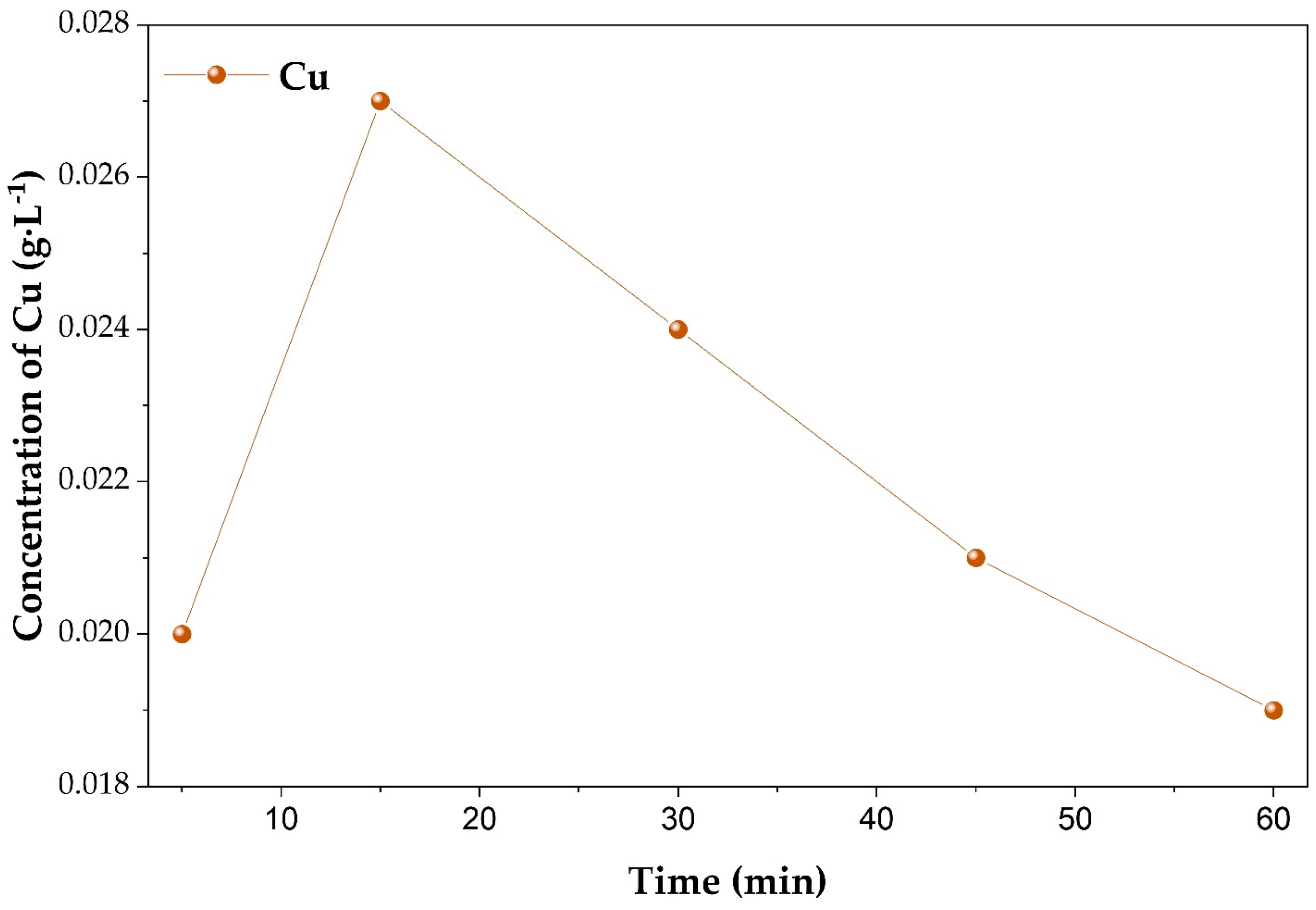
The concentration of dissolved copper during leaching (
Figure 8) increased from 0.020 g·L
−1 after 5 min to a maximum of 0.027 g·L
−1 at 15 min, followed by a gradual decrease to 0.019 g·L
−1 after 60 min. This trend confirms that copper actively participates in the reaction system rather than acting as an inert solid additive. The initial increase indicates oxidation of metallic Cu to Cu
2+, whereas the subsequent decrease suggests further redox transformations and subsequent precipitation of copper phosphate phases in the phosphoric acid medium, which is consistent with the formation of copper phosphate phases identified by XRD analysis.
The enhanced dissolution of transition metals in the presence of copper can be attributed to reductive destabilization of high-valence species within the layered NMC structure. In these materials, cobalt and manganese are partially present in higher oxidation states (Co
3+ and Mn
4+), which are stabilized by strong metal-oxygen bonds within the oxide lattice. This stabilization reduces the thermodynamic driving force for proton-assisted dissolution in acidic media, resulting in limited solubility under non-reducing conditions [
42,
43,
44].
Reduction to the divalent state (Co2+ and Mn2+) weakens the metal-oxygen bonds, disrupts the layered oxide framework, and facilitates metal release into solution. The negligible dissolution of manganese in the absence of copper, together with its rapid extraction under reductive conditions, strongly supports the necessity of a reduction pathway for efficient Mn leaching. The presence of metallic copper promotes electron transfer reactions that convert Co3+ and Mn4+ into their more soluble divalent forms, thereby significantly enhancing overall leaching efficiency.
These findings indicate that copper functions as both a reductant and a redox mediator in the H
3PO
4 system. Under non-reductive conditions, high oxidation states remain stable and limit metal dissolution, whereas the introduction of metallic Cu shifts the redox environment toward more favorable reduction potentials, enabling efficient transition metal extraction. A similar copper-assisted effect has been reported in the leaching of LiCoO
2 in phosphoric acid systems, where metallic Cu promotes cobalt reduction and significantly improves extraction efficiency [
35]. The present results extend this concept to the more complex LiNi
0.65Co
0.25Mn
0.1O
2 system, demonstrating that the role of copper becomes even more critical for enabling manganese dissolution in multi-component cathode materials. Overall, the results confirm that reductive assistance is essential for efficient transition metal extraction in H
3PO
4 media. Metallic copper, therefore, represents a viable and effective alternative to conventional reducing agents and provides a simplified and effective strategy in phosphate-based hydrometallurgical systems. Based on these findings, copper powder was employed in all subsequent experiments.
2.3.2. Effect of Phosphoric Acid Concentration on the Leaching Efficiencies of Li, Ni, Co, and Mn
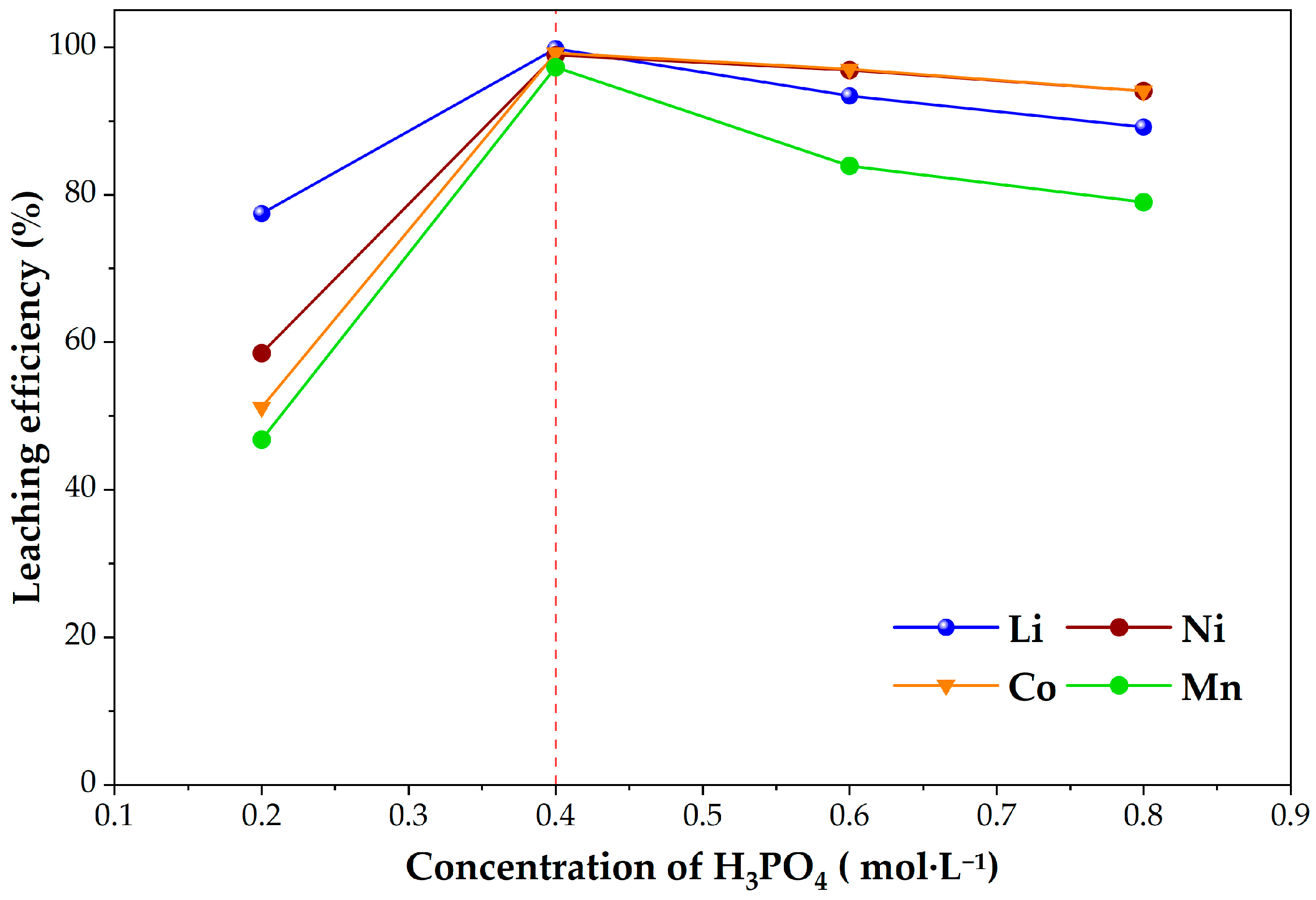
The influence of phosphoric acid concentration on metal extraction was evaluated at 80 °C in the presence of 0.2 g Cu, maintaining a stirring speed of 600 rpm, after 60 min of leaching. The H
3PO
4 concentration was varied from 0.2 to 0.8 mol·L
−1. The obtained results are presented in
Figure 9.
Increasing the acid concentration from 0.2 to 0.4 mol·L−1 resulted in a pronounced improvement in the leaching efficiencies of all investigated metals. Lithium extraction increased from 77% at 0.2 mol·L−1 to 99% at 0.4 mol·L−1. A similar trend was observed for transition metals: nickel extraction increased from 58% to 98%, cobalt from 51% to 99%, and manganese from 46% to 97%.
However, further increase in acid concentration to 0.6 and 0.8 mol·L−1 did not lead to additional improvement. In the case of Ni and Co, extraction efficiencies remained high but showed a slight decrease (approximately 96–94% for Ni and 97–94% for Co). For Li and Mn, a more noticeable decline was observed, with lithium extraction decreasing to about 93% and 89% and manganese to approximately 84% and 79% at 0.6 and 0.8 mol·L−1, respectively.
These results indicate that 0.4 mol·L
−1 H
3PO
4 provides sufficiently high extraction efficiencies for all investigated metals without the need for higher acid concentration. The absence of further improvement at elevated acid concentrations suggests that excessive proton availability does not enhance dissolution under the applied conditions. Instead, the observed decrease in leaching efficiency at higher H
3PO
4 concentrations can be attributed to several coupled effects. First, the increased availability of phosphate species promotes the formation of aqueous metal-phosphate complexes, which modify metal speciation and reduce the activity of free metal ions, thereby decreasing the effective driving force for dissolution [
45]. Second, the higher ionic strength of more concentrated phosphoric acid solutions can modify the activity coefficients of dissolved species and alter the effective proton activity and interfacial reaction environment [
46]. In addition, in the presence of metallic copper, elevated phosphate concentrations favor the formation of secondary copper phosphate phases on or near reactive surfaces. The accumulation of such phosphate-rich layers decreases the available copper surface for electron transfer and leads to partial passivation of the solid–liquid interface, thereby hindering Cu-mediated reductive dissolution of transition metals [
35]. This interpretation is further supported by the XRD results obtained in this study, which confirm the progressive formation and dominance of copper phosphate phases in the solid residues. Therefore, 0.4 mol·L
−1 H
3PO
4 was selected as the optimal concentration for subsequent experiments.
2.3.3. Effect of Cathode Material Mass on the Leaching Efficiencies of Li, Ni, Co, and Mn
The influence of cathode material mass on metal extraction was investigated in 50 mL of 0.4 mol·L
−1 H
3PO
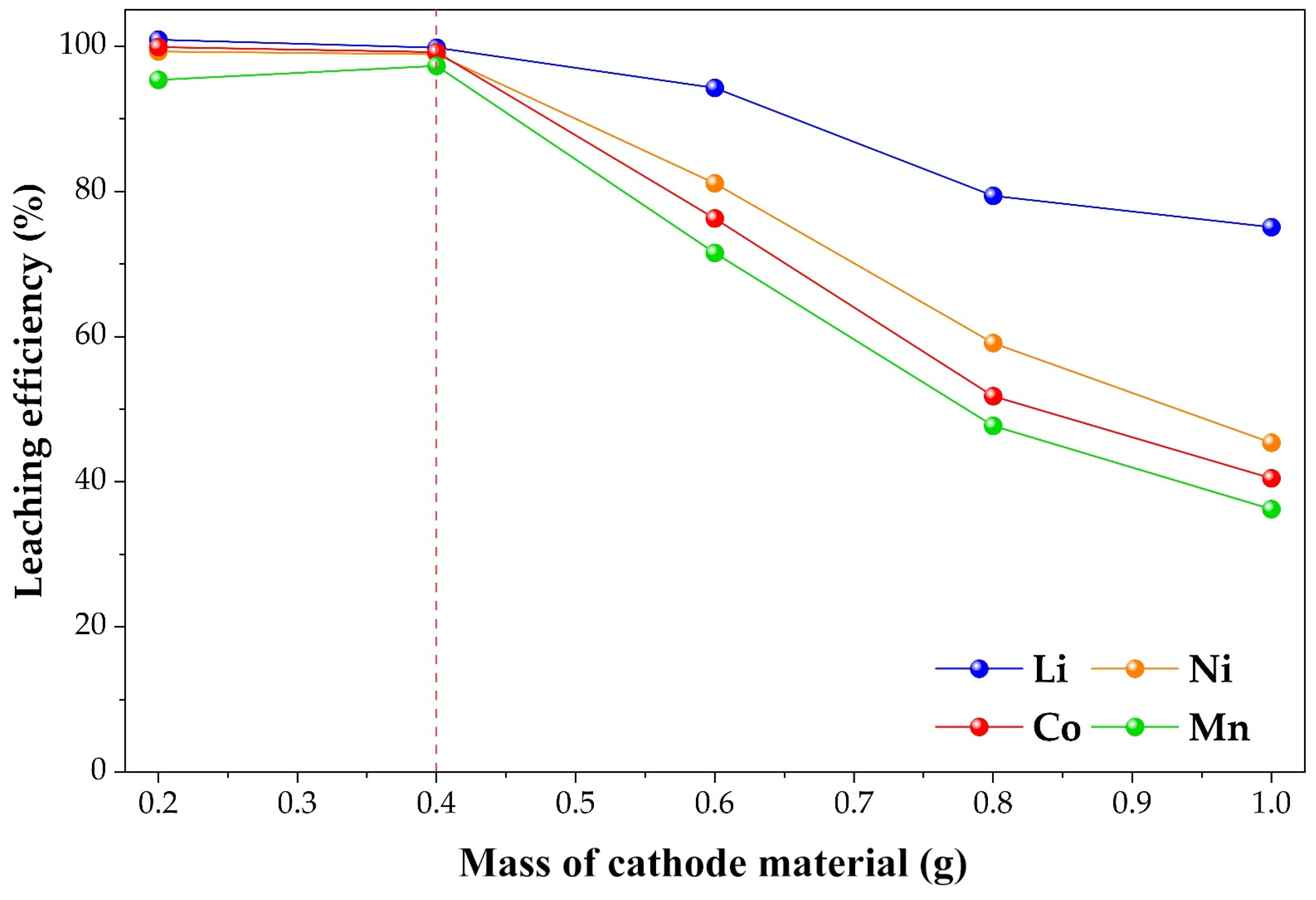
4 at 80 °C, in the presence of 0.2 g Cu and at a stirring speed of 600 rpm for 60 min. The mass of cathode material was varied from 0.2 to 1.0 g. The results are presented in
Figure 10.
An overall decreasing trend in leaching efficiency was observed with increasing cathode mass, although the extent of this effect differed among the investigated elements. Lithium extraction remained nearly quantitative at lower solid loadings (≈100% at 0.2 and 0.4 g), followed by a gradual decrease to 94%, 79%, and 75% at 0.6, 0.8, and 1.0 g, respectively. This behavior suggests that Li dissolution is relatively less sensitive to increasing solid concentration compared to transition metals.
In contrast, a more pronounced decline was observed for Ni, Co, and Mn. Nickel extraction decreased from approximately 99% at 0.2–0.4 g to 81%, 59%, and 45% at higher masses. A similar trend was noted for cobalt, with extraction decreasing from about 99.9% and 99.2% at 0.2 and 0.4 g to 76%, 52%, and 40%, respectively. Manganese showed high extraction efficiency at low solid loadings (95–97% at 0.2–0.4 g), followed by a more significant drop to 72%, 48%, and 36% as the cathode mass increased further.
The observed decrease in leaching efficiency may not be attributed solely to the change in the solid-to-liquid ratio. Although increasing the mass of cathode material at constant solution volume reduces the availability of acid per unit mass of solid, the magnitude of the decline, particularly for transition metals, suggests that additional factors could be involved.
One possible explanation is related to the fixed amount of metallic copper used as a reducing agent. As the cathode mass increases, the relative amount of reducible species (such as Co3+ and Mn4+) also increases, while the electron-donating capacity of copper remains constant. This may lead to a gradual decrease in the effective reducing power per unit mass of solid, potentially resulting in incomplete reduction and lower dissolution efficiencies, especially for redox-sensitive elements.
This interpretation is consistent with the more pronounced decrease observed for Co and Mn, whose dissolution is strongly dependent on reduction to lower oxidation states. However, it should be noted that other factors may also contribute to the observed behavior. For example, higher solid loadings could promote the formation of surface layers, such as copper phosphate phases, which may partially hinder further leaching. In addition, increased particle concentration may introduce local mass transfer limitations or affect the dispersion of solid particles in the solution.
A similar dependence of extraction efficiency on solid loading has been reported in Cu-assisted leaching systems, where a fixed reductant dosage may become insufficient at higher solid concentrations. Such behavior was also observed in our previous study on the LiCoO
2 system [
35], where a decrease in Co extraction was noted with increasing cathode mass at a constant copper dosage. In the present multi-component LiNi
0.65Co
0.25Mn
0.1O
2 system, this effect may be even more pronounced due to the simultaneous presence of multiple redox-active metals.
Considering both extraction efficiency and reagent utilization, a cathode material mass of 0.4 g per 50 mL solution was selected as a suitable operating condition for subsequent experiments.
2.3.4. Effect of Stirring Speed on the Leaching Efficiencies of Li, Ni, Co, and Mn
The influence of stirring speed on metal extraction was evaluated in 50 mL of 0.4 mol·L
−1 H
3PO
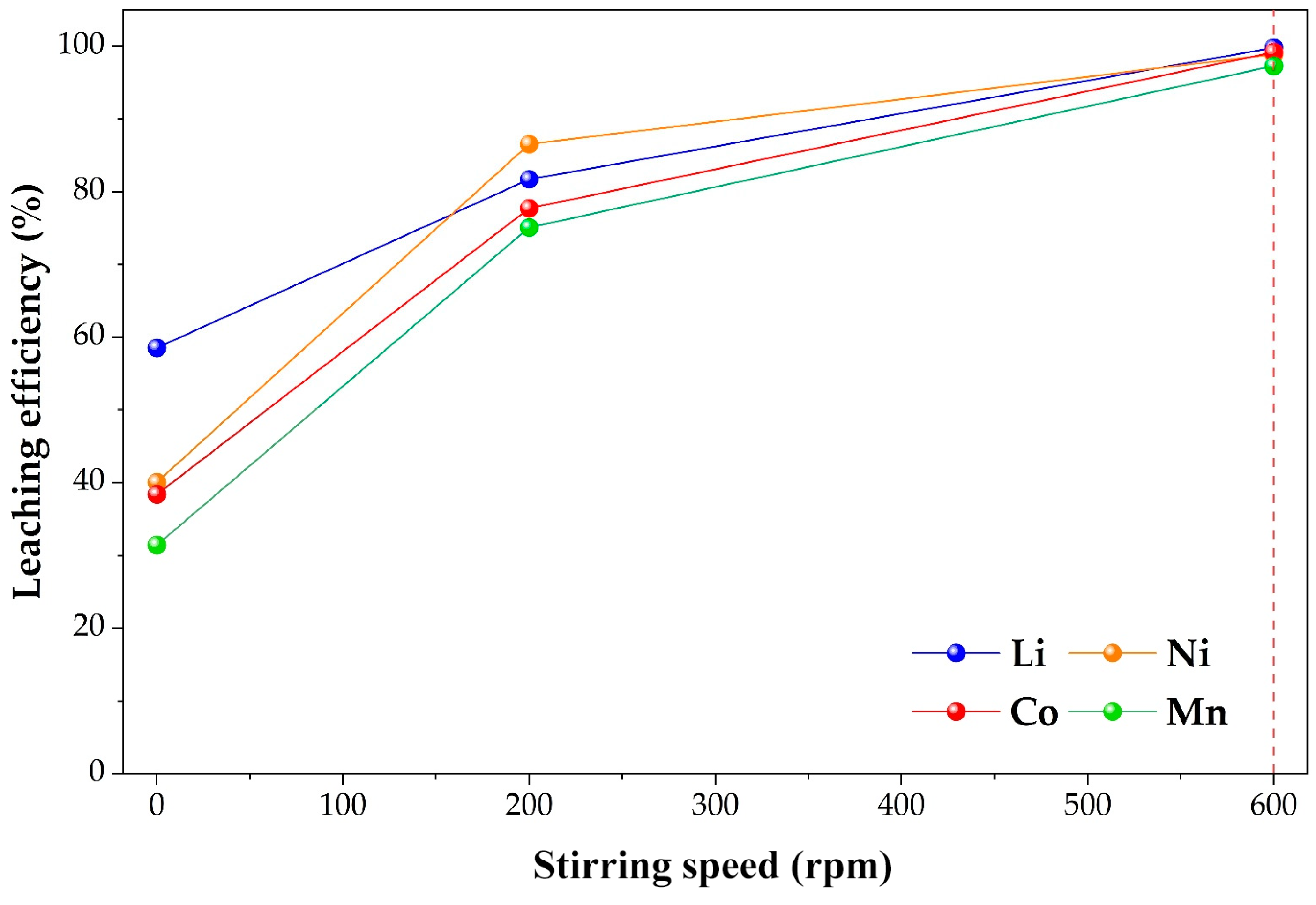
4 at 80 °C, using 0.4 g of cathode material and 0.2 g Cu for 60 min. The stirring rate was varied between static conditions (0 rpm), 200 rpm, and 600 rpm. The results are shown in
Figure 11.
A significant enhancement in metal extraction was observed with increasing agitation intensity. Under static conditions, dissolution efficiencies were relatively low, with lithium, nickel, cobalt, and manganese reaching approximately 59%, 40%, 38%, and 31%, respectively, indicating that mass transfer limitations may restrict the overall process in the absence of stirring.
Introducing moderate stirring at 200 rpm led to a substantial increase in metal recovery, with lithium, nickel, cobalt, and manganese reaching approximately 82%, 87%, 78%, and 75%, respectively. This improvement may be attributed to enhanced mixing and a reduction in the thickness of the liquid boundary layer, which facilitates the transport of reactive species between the solid surface and the bulk solution.
Further increasing the stirring speed to 600 rpm resulted in near-complete extraction of all investigated metals, with lithium, nickel, cobalt, and manganese reaching approximately 100%, 99%, 99%, and 97%, respectively. The pronounced increase between 0 and 200 rpm, followed by a smaller improvement between 200 and 600 rpm, may indicate a gradual reduction in external mass transfer limitations with increasing agitation intensity.
These observations are consistent with literature reports, where increased stirring reduces the thickness of the liquid boundary layer and enhances mass transfer across the solid–liquid interface. Similar behavior has been reported for LiNi
0.5Co
0.2Mn
0.3O
2 systems, where metal extraction increases significantly at low to moderate stirring rates, while further increases in agitation have only a limited effect. This suggests that, beyond a certain stirring speed, diffusion resistance in the liquid film surrounding the particles becomes sufficiently low and no longer dominates the overall process. Under such conditions, the leaching behavior may be governed by a combination of reaction and structural factors [
32,
44].
At higher stirring speeds, improved hydrodynamic conditions likely reduce external diffusion resistance and allow the leaching process to proceed more efficiently. Based on these observations, a stirring speed of 600 rpm was selected as an appropriate operating condition for subsequent experiments.
2.3.5. Effect of Temperature and Time on the Leaching Efficiencies of Li, Ni, Co, and Mn
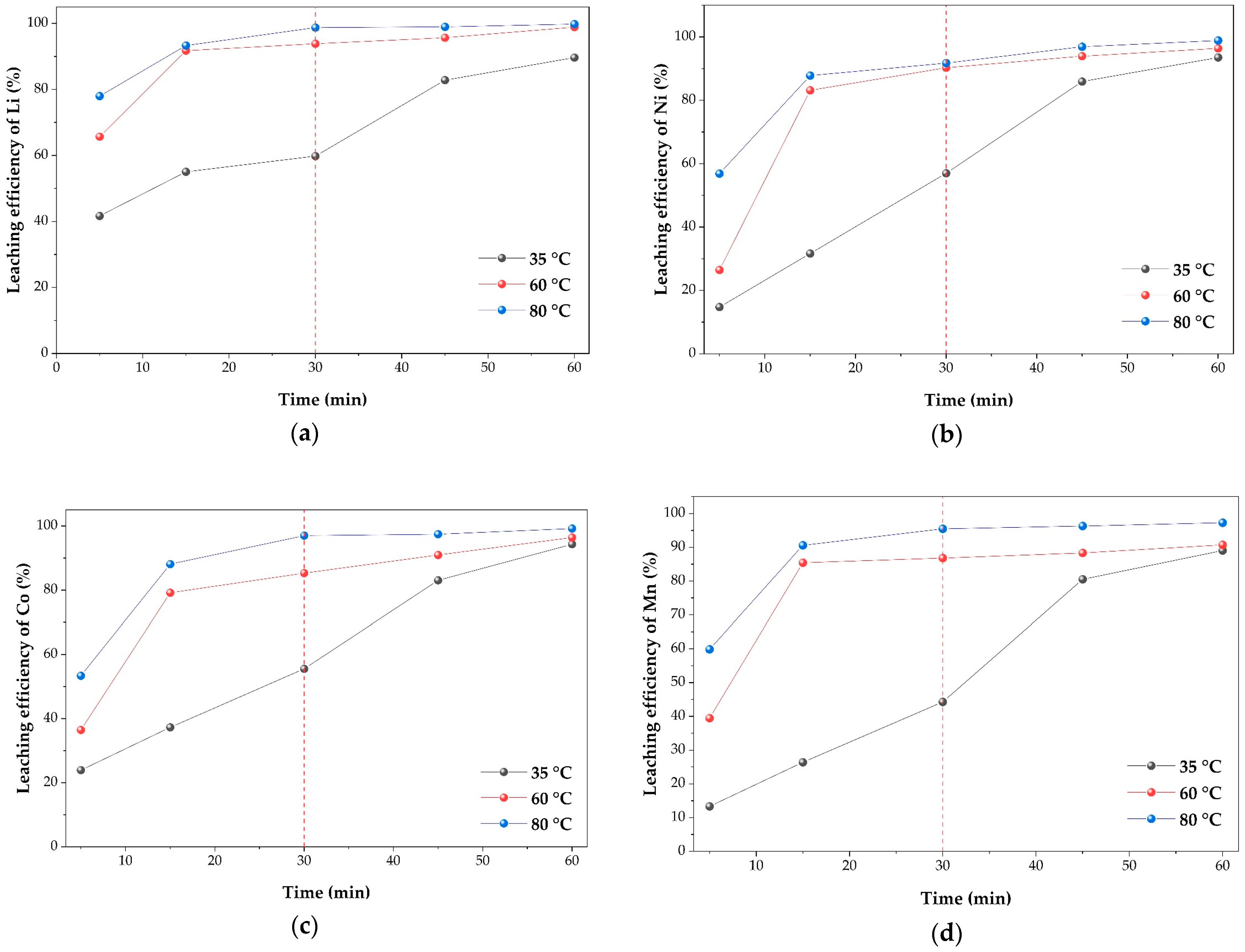
The effect of temperature on the time-dependent leaching behavior of Li, Ni, Co, and Mn was investigated under optimal conditions (0.4 mol·L
−1 H
3PO
4, 0.4 g cathode material, 0.2 g Cu, 600 rpm) at 35, 60, and 80 °C (
Figure 12).
A pronounced temperature-dependent acceleration of metal dissolution was observed for all investigated elements, particularly during the initial stage (0–15 min). Increasing the temperature from 35 to 60 °C significantly enhanced the leaching rates, while at 80 °C most of the extraction occurred within the first 15–30 min.
Lithium exhibited a clear temperature dependence in both dissolution rate and final extraction. At 35 °C, extraction gradually increased to ~90% after 60 min, whereas at 60 and 80 °C, near-complete extraction (>99%) was achieved, with most of the dissolution occurring within the first 15–30 min. Although thermodynamic analysis indicates that lithium dissolution is highly favorable over the entire temperature range (ΔG < −260 kJ·mol−1), the observed behavior suggests that lithium release is not thermodynamically limited but rather governed by kinetic factors and the structural stability of the layered material.
Nickel dissolution is thermodynamically favorable at all temperatures (ΔG ≈ −70 to −66 kJ·mol−1), indicating that its dissolution is not limited by thermodynamic constraints. However, the strong temperature dependence observed experimentally suggests that nickel release is controlled by kinetic factors and structural constraints within the cathode material.
Cobalt and manganese exhibited a strong dependence on both temperature and time. For both elements, extraction increased rapidly with temperature, particularly during the initial stage, while the differences in final extraction between 60 and 80 °C remained relatively limited. Thermodynamic analysis confirms that cobalt dissolution becomes favorable only in the presence of Cu, whereas manganese reduction to Mn2+ is thermodynamically favorable even in acidic conditions (negative ΔG), but Mn2+ is stable only under sufficiently reducing conditions. Therefore, the observed temperature dependence indicates that temperature mainly accelerates the kinetics of Cu-mediated redox reactions, stabilizing Mn2+ in solution and preventing its reoxidation or precipitation, as well as promoting structural destabilization of the cathode material.
Despite the clear temperature dependence, detailed kinetic modeling was not feasible. The leaching curves are characterized by a very rapid increase in extraction within the first 15–30 min, followed by a plateau, especially at higher temperatures. This results in a limited number of experimental points in the region where the reaction rate is most informative. In addition, the variation in curve shape with temperature suggests that different mechanisms may dominate under different conditions. Consequently, although reasonable fits could be obtained under specific conditions (e.g., at lower temperatures), no single kinetic model provided a consistent and reliable description of the entire dataset, as reflected by low correlation coefficients when all data points were considered.
Thermodynamic analysis further indicates that increasing temperature does not significantly change the driving force for metal dissolution (ΔG remains negative) but primarily accelerates reaction kinetics. At the same time, higher temperatures favor the formation of copper phosphate phases (more negative ΔG), which may influence the concentration of Cu2+ in solution and consequently affect the redox equilibrium.
From a practical perspective, most metals reach high extraction levels within 30 min at 80 °C, suggesting that prolonged leaching does not significantly improve recovery. Therefore, 80 °C and 30 min can be considered sufficient operating conditions for efficient metal extraction.
Importantly, the combined kinetic and thermodynamic behavior suggests that the leaching process is likely governed by multiple coupled steps rather than a single dominant rate-controlling mechanism (e.g., diffusion or surface reaction control). The rapid initial extraction followed by a plateau, together with the temperature-dependent changes in curve shape, indicates that several mechanisms contribute to the overall kinetics. This indicates that the rate-controlling step is not constant but evolves during leaching, which explains why no single kinetic model can adequately describe the entire process. In the initial stage, proton-assisted dissolution promotes rapid lithium extraction and partial release of transition metals from the surface of the cathode material. At the same time, metallic copper acts as an electron donor, enabling the reduction of higher-valence species such as Co3+ and Mn4+ to their soluble divalent forms. As the process progresses, the layered NMC structure can undergo reconstruction into spinel-like intermediate phases, which subsequently dissolve, contributing to the observed decrease in reaction rate. In parallel, copper is oxidized and transformed into copper phosphate phases through precipitation reactions, which may modify both the available copper surface and the local redox conditions. Therefore, the overall leaching kinetics may be interpreted as a superposition of surface reaction, redox-controlled dissolution, structural transformation, and precipitation processes, rather than a single rate-controlling mechanism. This interpretation is further supported by the phase evolution and morphological changes observed in the solid residues, as discussed in the following section.
2.4. Structural Evolution of the Leaching Residue
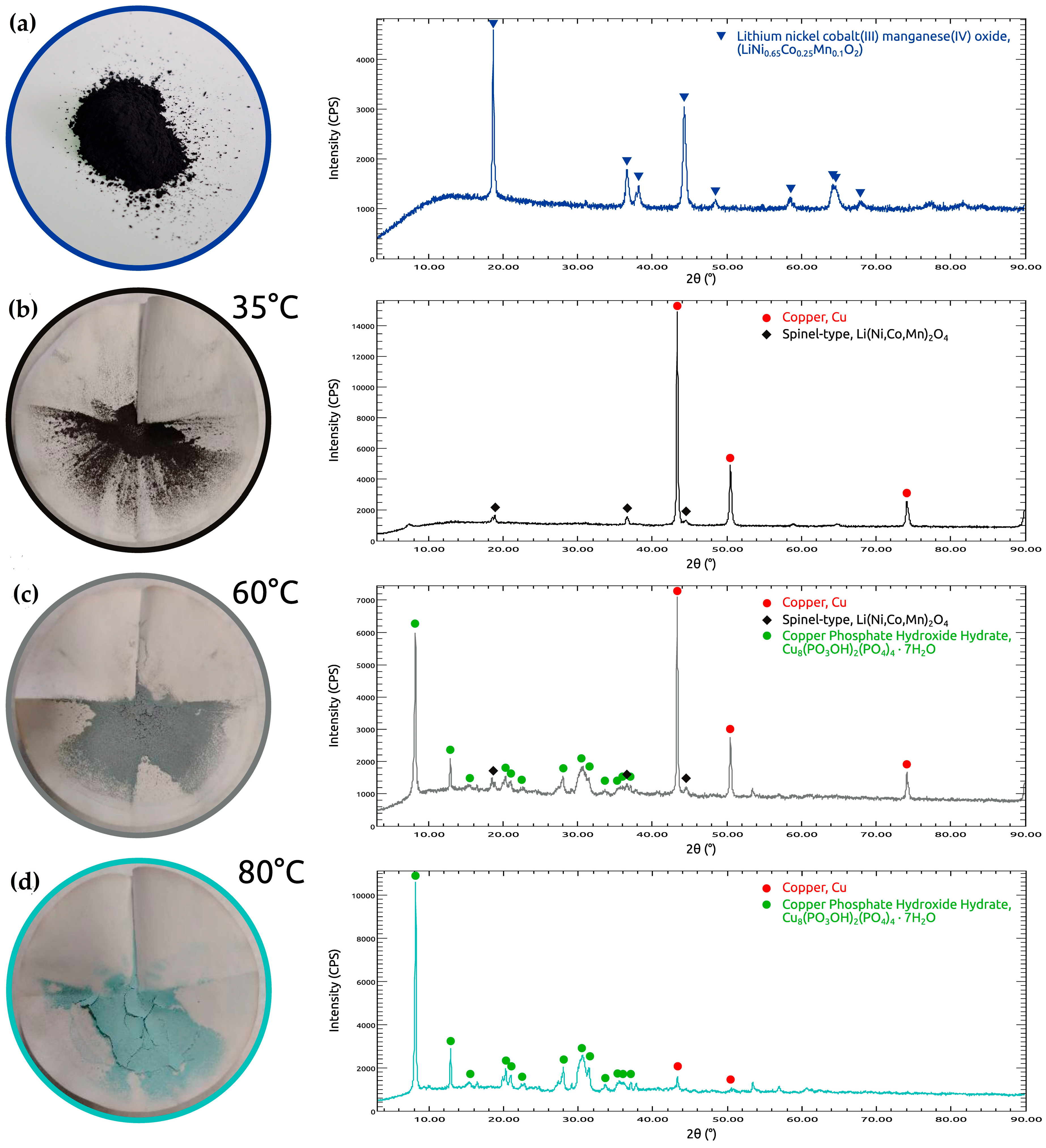
The crystalline structure of the pristine cathode material and the solid residues obtained after leaching at different temperatures were investigated by XRD (
Figure 13). The diffraction pattern of the initial sample shows only reflections corresponding to layered LiNi
0.65Co
0.25Mn
0.1O
2, indicating that the starting material predominantly consists of a layered NCM phase.
After leaching in phosphoric acid in the presence of copper powder, significant changes in phase composition were observed, consistent with the temperature-dependent leaching behavior discussed in the previous section. In the residue obtained at 35 °C, the layered phase is no longer detected, and the solid consists mainly of metallic Cu together with a spinel-type lithium transition-metal oxide belonging to the Li(Ni,Co,Mn)2O4 structural family. The appearance of this phase suggests that the original layered structure undergoes destabilization and reconstruction during the early stage of leaching, indicating that dissolution may proceed via the formation of an intermediate oxide phase rather than direct decomposition.
At 60 °C, the phase composition becomes more complex. In addition to metallic Cu and the spinel-type Li(Ni,Co,Mn)2O4 phase, new diffraction peaks assigned to copper phosphate hydroxide hydrate, Cu8(PO3OH)2(PO4)4·7H2O, appear in the residue. This observation suggests that two processes occur in parallel: structural transformation of the cathode material and progressive oxidation of copper, followed by precipitation of copper phosphate phases. This behavior is in agreement with thermodynamic predictions, which indicate that the formation of copper phosphates becomes increasingly favorable with temperature.
At 80 °C, the spinel-type Li(Ni,Co,Mn)2O4 phase is no longer detected, and the residue is dominated by Cu8(PO3OH)2(PO4)4·7H2O together with residual metallic Cu. This indicates that the reconstructed oxide phase is likely a metastable transient intermediate, which is further dissolved as leaching proceeds under more severe conditions. The persistence of metallic Cu suggests that copper participates progressively in redox reactions rather than being consumed instantaneously.
To further support the structural evolution of the residue, semi-quantitative phase analysis was performed using the reference intensity ratio (RIR) method. The results are summarized in
Table 2.
The pristine material consists entirely of the layered LiNi0.65Co0.25Mn0.1O2 phase. After leaching at 35 °C, the layered structure is completely decomposed, and the residue is composed predominantly of metallic copper (89%) and a spinel-type phase (11%). At 60 °C, a transition regime is observed, characterized by the formation of copper phosphate hydroxide hydrate (45%), together with metallic copper (47%) and a minor fraction of spinel (8%). At 80 °C, the residue is dominated by copper phosphate (92%), while only a small fraction of metallic copper (8%) remains, and the spinel phase is no longer detected. These results clearly demonstrate a temperature-dependent phase evolution involving the complete breakdown of the layered structure, the formation of a transient spinel-type intermediate, and its subsequent transformation into a stable copper phosphate phase. The reported values should be considered as approximate phase proportions rather than absolute quantitative values, as the RIR method provides semi-quantitative estimates and is associated with inherent uncertainties, particularly in multi-phase systems with overlapping diffraction peaks; however, it reliably captures the relative trends in phase evolution.
Taken together, the qualitative XRD observations and semi-quantitative RIR analysis indicate that the phase evolution follows a temperature-dependent sequence. The disappearance of the layered LiNi
0.65Co
0.25Mn
0.1O
2 phase at low temperature is consistent with previous reports showing that acid attack on NCM materials typically begins with lithium extraction and destabilization of the layered framework [
3,
47]. Delithiation of Ni-rich layered oxides is known to induce transition-metal migration and structural rearrangement, frequently leading to the formation of spinel-like structures [
48,
49,
50]. Similar layered-to-spinel transformations have been widely reported in related NCM materials under conditions of delithiation, electrochemical cycling, or thermal degradation [
51,
52].
At higher temperatures, the disappearance of the intermediate spinel-like phase and the predominance of Cu
8(PO
3OH)
2(PO
4)
4·7H
2O suggest that the reconstructed oxide is not stable under the applied leaching conditions. This behavior is consistent with two-step dissolution mechanisms proposed for NCM materials, in which lithium extraction and structural reconstruction are followed by gradual dissolution of the transformed oxide framework [
3,
47].
It should be noted that the copper phosphate phase identified by XRD, Cu8(PO3OH)2(PO4)4·7H2O, differs from the simplified phase Cu3(PO4)2 used in the thermodynamic calculations. This difference arises from the fact that thermodynamic modeling typically relies on idealized, anhydrous reference compounds available in the database, whereas the actual precipitated phases in aqueous systems are often hydrated and structurally more complex.
The experimentally observed phase represents a hydrated and protonated form of copper phosphate, formed under specific pH and solution conditions, where phosphate speciation (H2PO4−/HPO42−) and water incorporation play a significant role. Therefore, Cu8(PO3OH)2(PO4)4·7H2O can be considered a structurally modified derivative of the thermodynamically predicted copper phosphate phase.
This confirms that the thermodynamic calculations correctly predict the tendency for copper phosphate formation, while the exact phase composition is governed by solution chemistry and crystallization conditions.
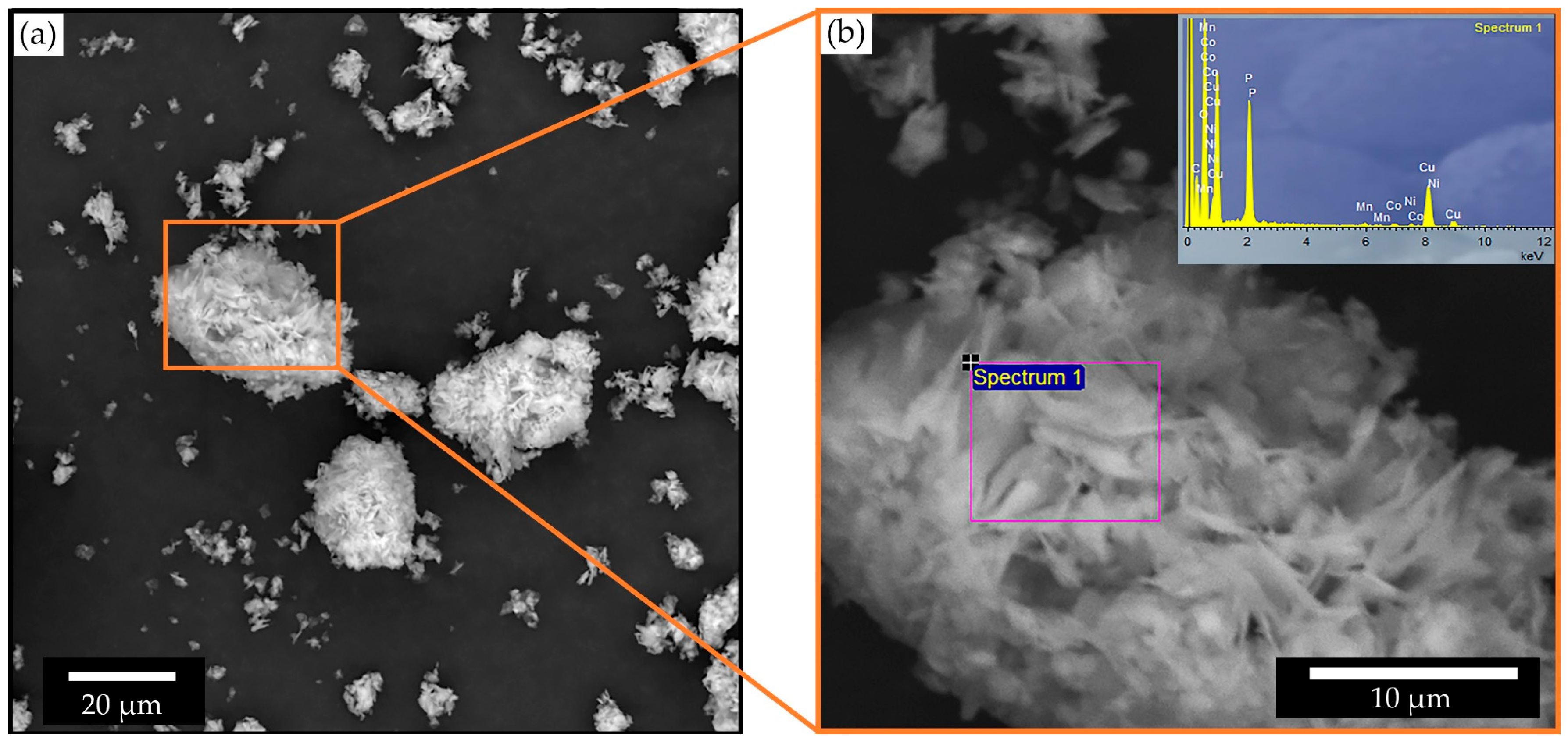
The chemical composition of the residue obtained at 80 °C was further examined by SEM-EDS analysis (
Figure 14). The EDS results show that the solid is mainly composed of O (53.18 at.%), Cu (29.94 at.%), and P (14.63 at.%), while Mn (0.52 at.%), Co (0.96 at.%), and Ni (0.78 at.%) are present only in trace amounts. This confirms that most transition metals were transferred into the leach solution, consistent with the high leaching efficiencies observed experimentally.
SEM observations further support the structural evolution revealed by XRD. The pristine cathode material consists of compact agglomerates of fine primary particles, typical for NCM powders. After leaching at 80 °C, the residue exhibits a strongly altered morphology with irregular agglomerates and fragmented particles, indicating substantial degradation of the original structure. This transformation may be attributed to the dissolution of the transition-metal oxide framework combined with the formation of copper phosphate-rich phases.
Additional insight into the agglomerate size of the leaching residue is provided in
Figure S4 (Supplementary Materials), showing that agglomerates are predominantly in the range of approximately 10–80 µm, with noticeable variation in size.
Overall, the combined XRD, SEM, and EDS results suggest that the leaching process proceeds through temperature-dependent structural transformation of the cathode material, coupled with Cu-mediated redox reactions and precipitation of copper phosphate phases, rather than simple direct dissolution of the original layered oxide.
2.5. Material Balance and Element Distribution
The distribution of elements between the leach solution and the solid residue was evaluated in order to establish the mass balance of the system under optimized conditions.
As shown in
Table 3, the initial masses of Li, Ni, Co, and Mn in the cathode material were 31.2400 mg, 118.1600 mg, 80.1200 mg, and 87.8800 mg, respectively. After leaching in 50 mL of solution, most of the metals were transferred into the liquid phase, with recoveries exceeding 97% for all elements.
Only trace amounts of metals remained in the solid phase, indicating that the cathode material was nearly completely dissolved. The total mass of the leach residue was approximately 0.4412 g. The copper concentration in the leach solution was 19.16 mg·L−1, corresponding to approximately 0.96 mg of Cu, which indicates that more than 99% of copper remained in the solid phase.
In agreement with the phase composition discussed in the previous section, the solid residue is predominantly composed of the copper phosphate phase Cu8(PO3OH)2(PO4)4·7H2O, with only a very small fraction of residual metallic copper. The negligible amounts of Ni, Co, and Mn in the residue further confirm that the solid phase is not dominated by undissolved cathode material, but rather by the formation of this secondary copper phosphate phase during the leaching process.
Overall, the leaching process is governed by a coupled dissolution-reduction-precipitation mechanism, in which metallic copper enables the reduction of transition metals while simultaneously undergoing oxidation and subsequent precipitation as copper phosphate.
From a process perspective, the formation of copper phosphate does not represent an irreversible sink for copper, but rather an intermediate phase that can be further processed. Thermodynamic analysis of the Cu-H
3PO
4-H
2O system indicates that copper phosphate phases are in equilibrium with dissolved copper species. Under acidic conditions and in the presence of phosphate ligands, the solubility of copper is enhanced due to the formation of aqueous copper-phosphate complexes, shifting the equilibrium toward dissolved species and enabling the re-dissolution of copper [
45]. Furthermore, it has been demonstrated that phosphate ligands form stable complexes with Cu(II), reducing the concentration of free Cu
2+ in solution and thus limiting its availability for electrochemical reduction, although electrodeposition can still proceed via the remaining free Cu
2+ fraction, reflecting a dynamic equilibrium between complexed and electrochemically active copper species [
53].
In addition, copper can be recovered from phosphate-containing electrolytes by electrochemical reduction to metallic Cu, even when present in complexed forms [
54]. Although direct experimental regeneration was not performed in this study, the thermodynamic analysis and literature evidence strongly support the feasibility of copper recovery and reuse. These considerations indicate that the copper phosphate residue should be regarded as a temporary storage form of copper rather than a final waste phase, supporting the concept of copper acting as a recyclable reductant within the process. These findings further emphasize the role of copper as an effective reductant with potential for recovery and reuse. To place these results in a broader context, a comparison with previously reported leaching systems is presented in the following section.
2.6. Comparison with Conventional Reductive Leaching Systems
The performance of phosphoric acid-based leaching systems for NMC cathodes is strongly influenced by the type of reducing agent, which determines whether the process remains selective or enables complete metal dissolution.
To provide a systematic comparison, representative phosphoric acid-based reductive leaching systems reported in the literature are summarized in
Table 4.
As shown in
Table 4, systems based on H
3PO
4 combined with hydrogen peroxide typically achieve high lithium extraction under mild conditions, while the dissolution of transition metals such as Co, Ni, and Mn remains limited. This selective behavior is associated with the formation of stable phosphate-containing residues, resulting in predominantly lithium recovery rather than complete metal dissolution [
36].
Similarly, systems employing oxalic acid as a reductant exhibit selective dissolution behavior, with high nickel extraction but significantly lower recovery of cobalt and manganese. Furthermore, lithium recovery is not integrated within the same process, requiring additional separation steps [
37].
In contrast, systems based on citric acid enable simultaneous dissolution of Li, Ni, Co, and Mn with high extraction efficiencies. This behavior is attributed to the combined reduction-complexation mechanism, where citric acid acts both as a reductant and a complexing agent. However, the formation of stable metal–organic complexes increases solution complexity and may complicate downstream processing [
44].
Another approach involves reduction roasting with graphite, where cathode materials are converted into more soluble low-valent phases prior to phosphoric acid leaching. Although this method enables near-complete metal extraction, it requires high-temperature calcination (~650 °C) and introduces additional processing steps, increasing overall energy consumption and operational costs [
55].
In contrast, the H
3PO
4-Cu system developed in this study enables direct reductive leaching under mild conditions, achieving near-complete extraction of Li, Ni, Co, and Mn without the addition of external liquid reductants. Importantly, the copper used in this study was sourced from spent lithium-ion batteries (current collectors), rather than introduced as an external reagent. During the process, copper acts as both an electron donor and a redox mediator and is subsequently transformed into a copper phosphate phase, which can be further processed, with potential for recovery and reuse, as discussed in
Section 2.5.
Overall, the comparison highlights that the proposed system combines high extraction efficiency with reduced reagent consumption and simplified process design. In contrast to other approaches, it avoids the use of external liquid reductants, minimizes the formation of complex organic species, and eliminates the need for energy-intensive pretreatment steps. These features contribute to improved process efficiency and support the potential for more sustainable and circular recycling of NMC cathode materials.



 ,
,