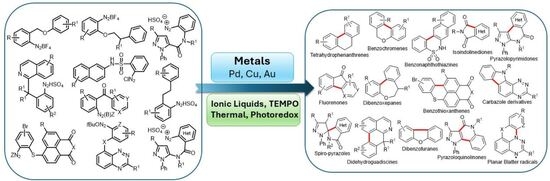
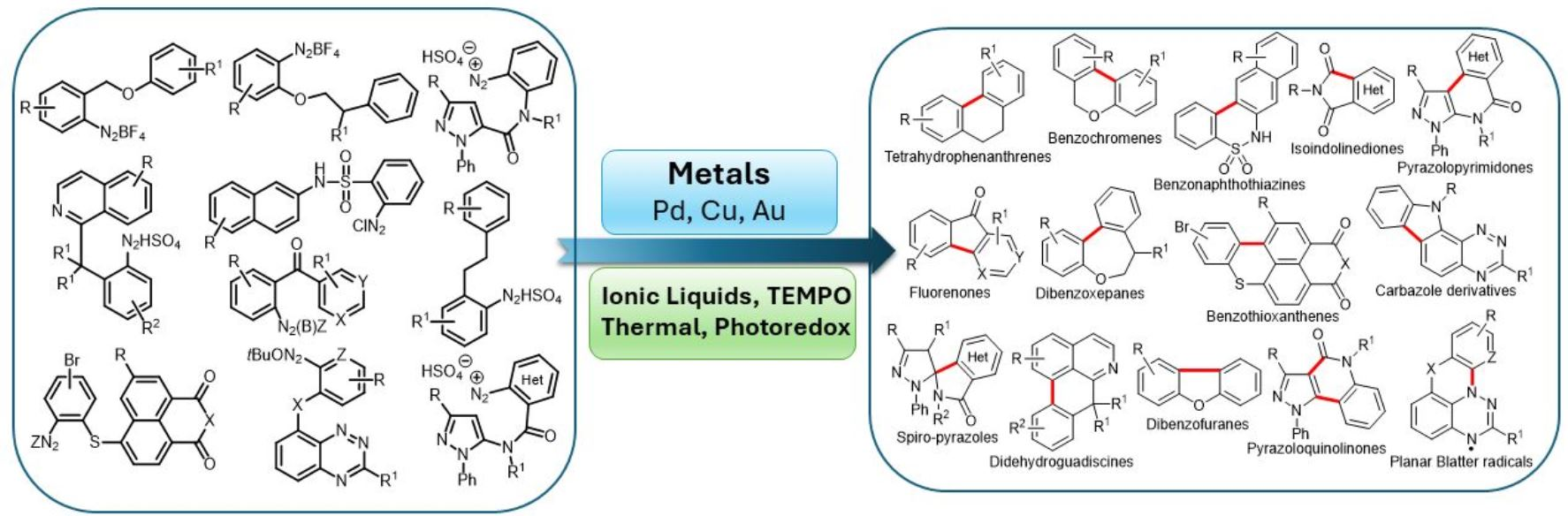
Scheme 1.
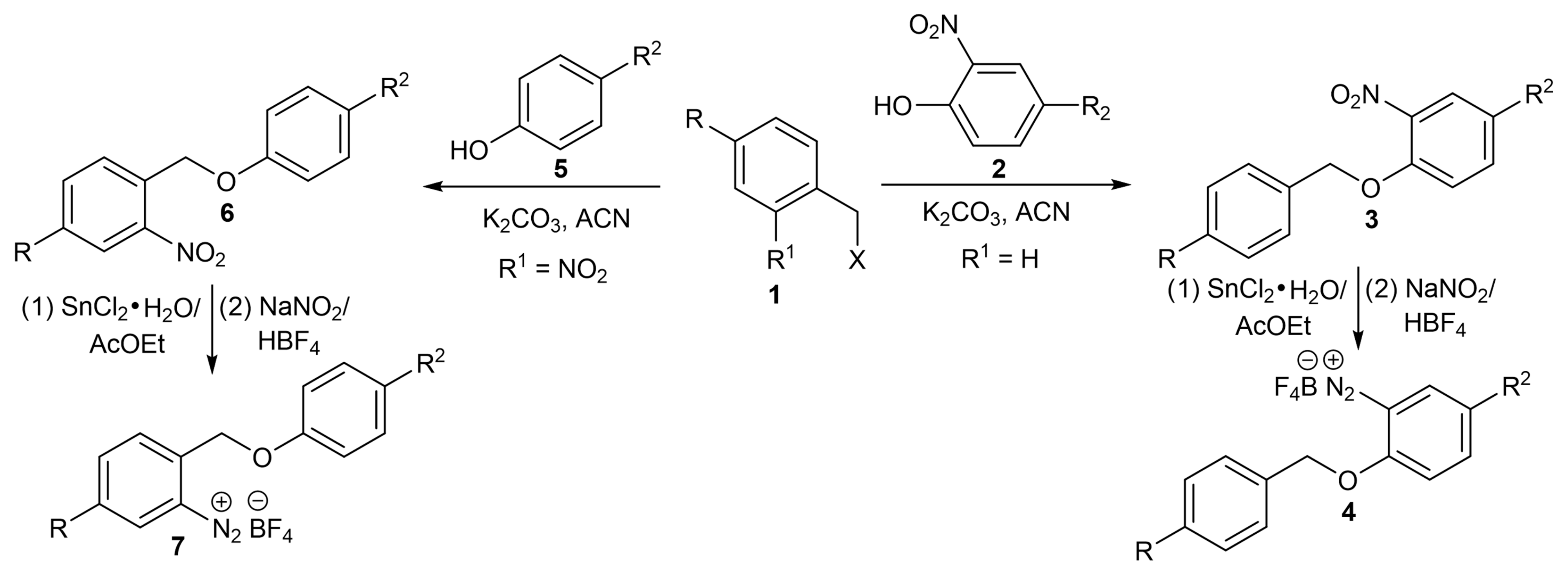
Synthetic approaches for the synthesis of the key diazonium salts 4 and 7.
Scheme 1.
Synthetic approaches for the synthesis of the key diazonium salts 4 and 7.
Scheme 2.
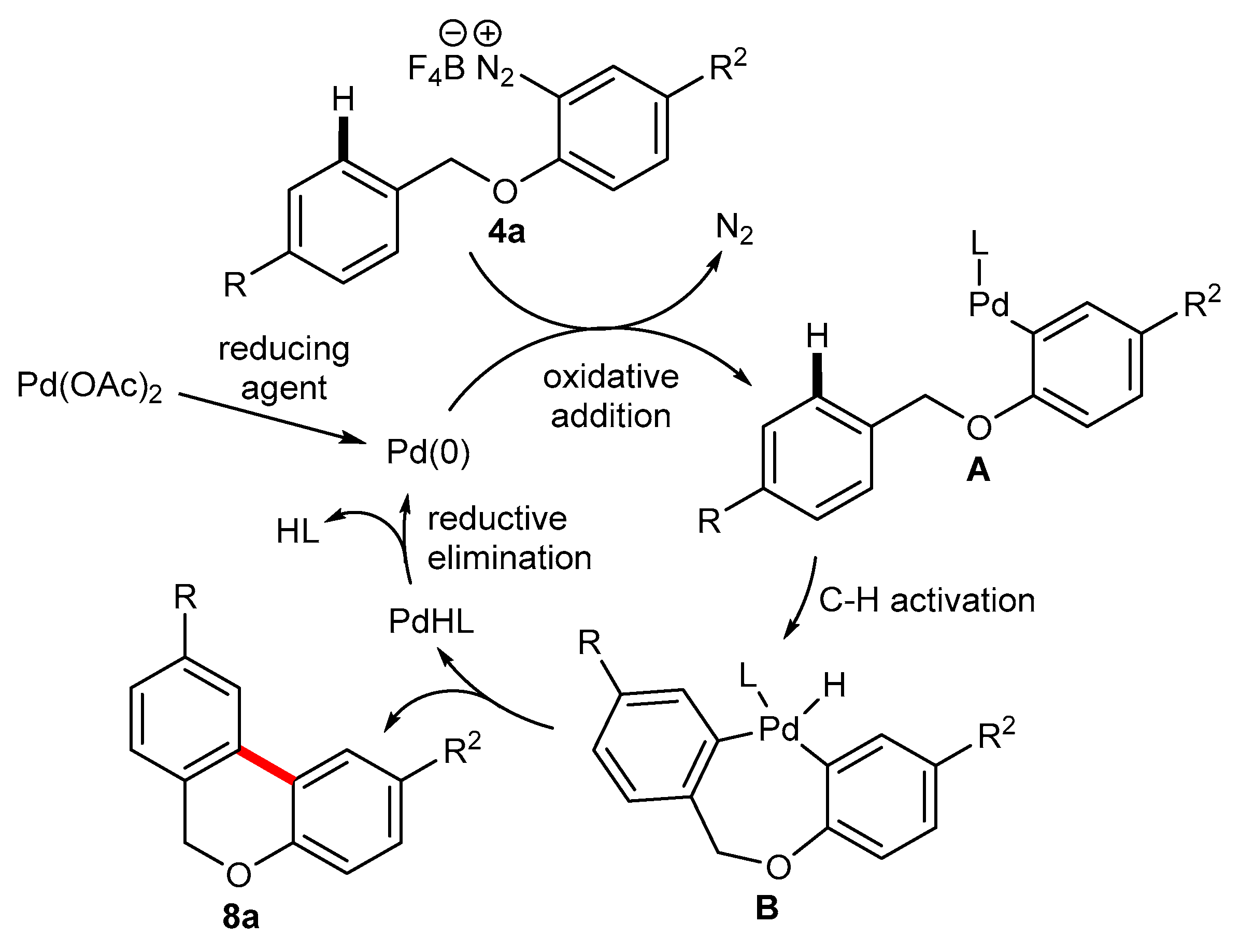
Plausible mechanism for the Pd-mediated intramolecular cyclization of the diazonium salt 4a via Pschorr reaction.
Scheme 2.
Plausible mechanism for the Pd-mediated intramolecular cyclization of the diazonium salt 4a via Pschorr reaction.
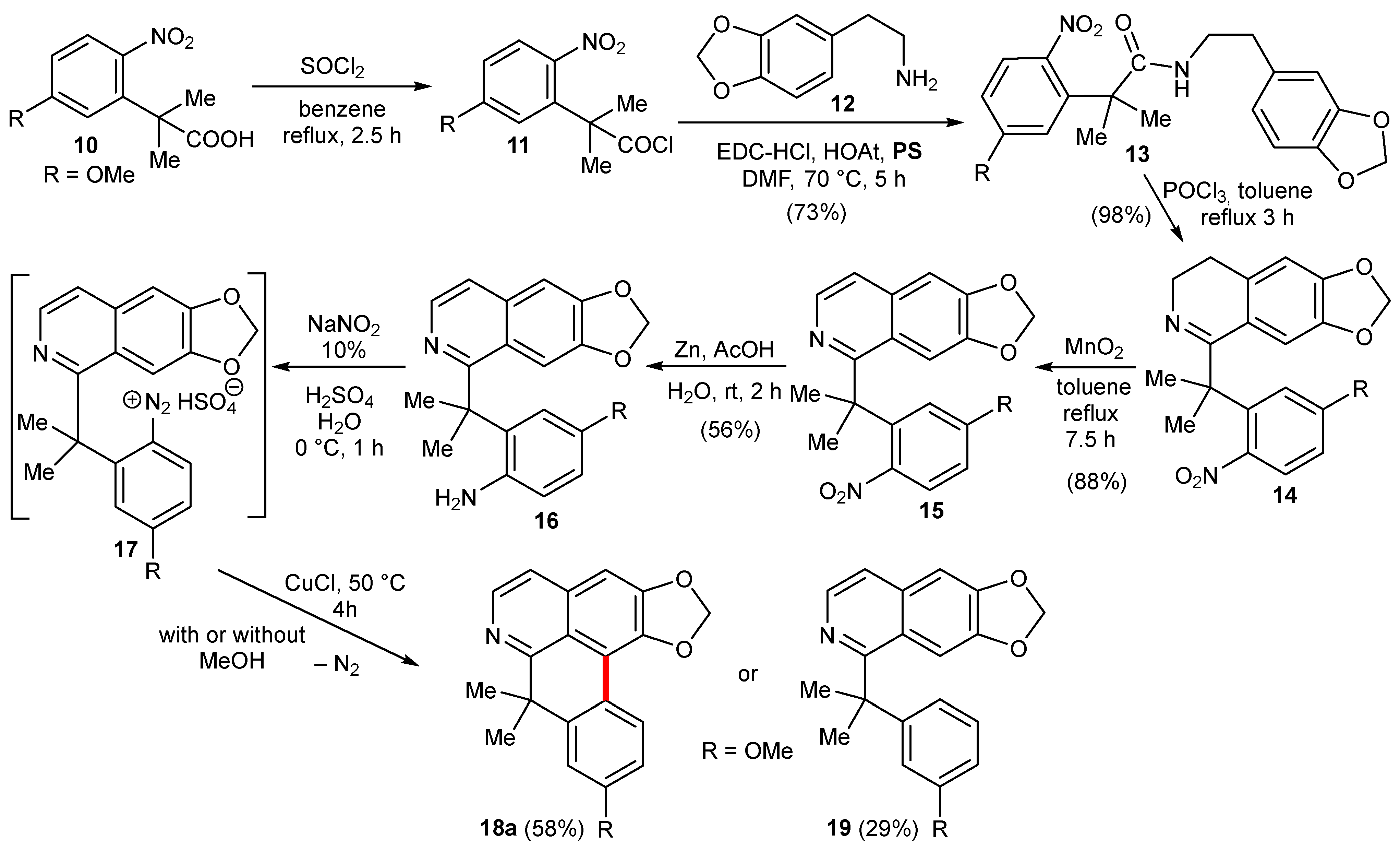
Scheme 3.
Total synthesis of the 4,5-didehydroguadiscine 18a from the aniline precursor 16, via a Cu-catalyzed Pschorr cyclization.
Scheme 3.
Total synthesis of the 4,5-didehydroguadiscine 18a from the aniline precursor 16, via a Cu-catalyzed Pschorr cyclization.
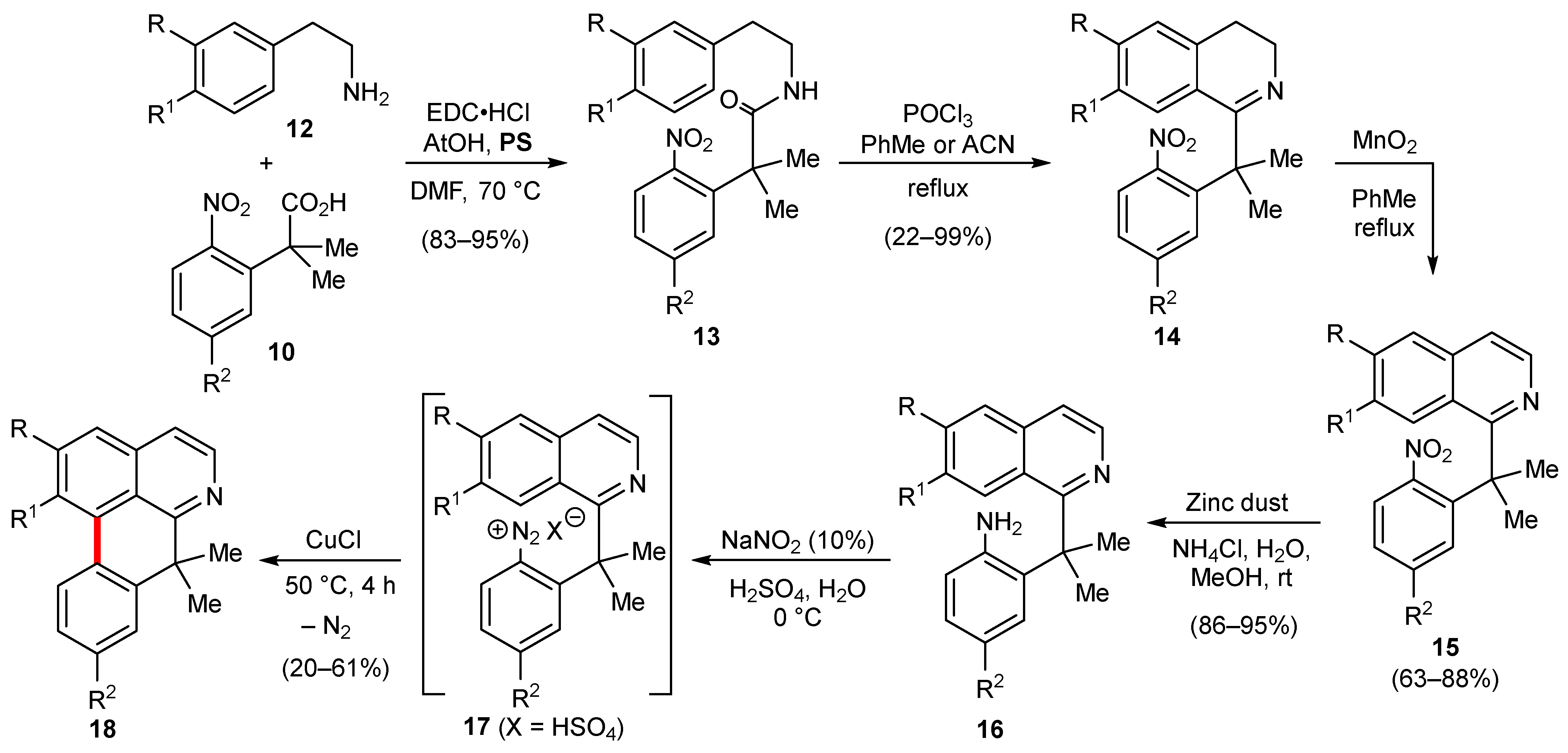
Scheme 4.
Synthesis of 4,5-didehydroguadiscines 18 via a CuCl-catalyzed Pschorr reaction from the aniline precursor 16.
Scheme 4.
Synthesis of 4,5-didehydroguadiscines 18 via a CuCl-catalyzed Pschorr reaction from the aniline precursor 16.
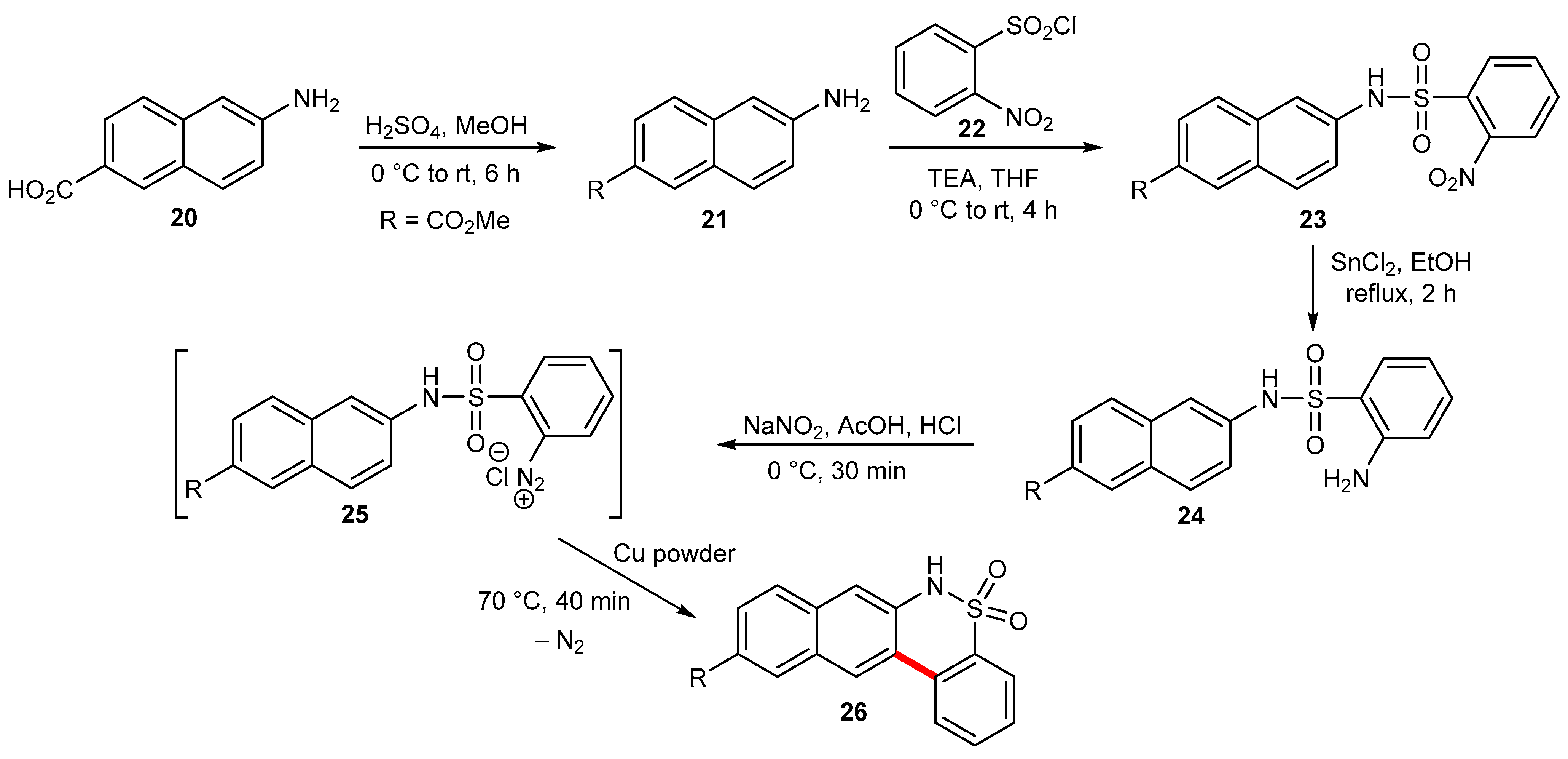
Scheme 5.
Synthesis of the methyl 6H-benzo[e]naphtho[2,3-c][1,2]thiazine-10-carboxylate 5,5-dioxide 26 via a copper-catalyzed Pschorr reaction from the key aniline precursor 24.
Scheme 5.
Synthesis of the methyl 6H-benzo[e]naphtho[2,3-c][1,2]thiazine-10-carboxylate 5,5-dioxide 26 via a copper-catalyzed Pschorr reaction from the key aniline precursor 24.
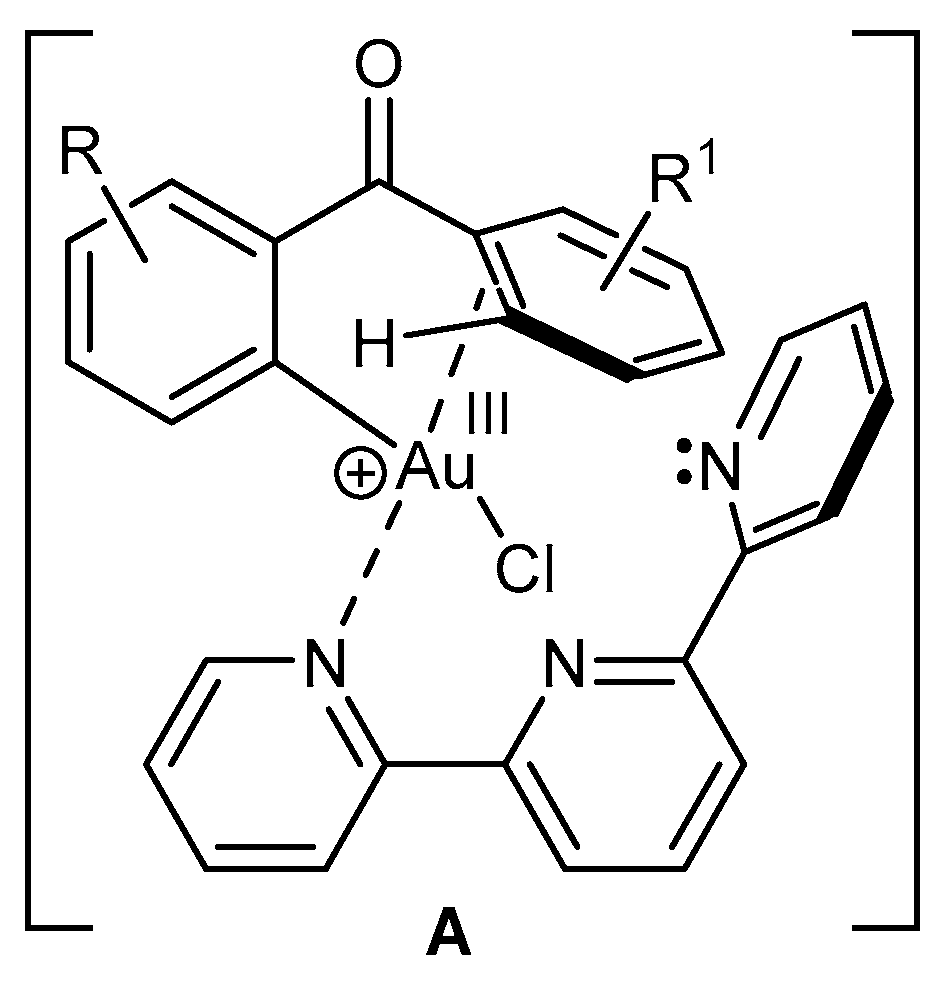
Figure 1.
Structure of the Au(III) arene π-complex A proposed as the key species in the formation of the fluorenones 31 via a SEAr pathway.
Figure 1.
Structure of the Au(III) arene π-complex A proposed as the key species in the formation of the fluorenones 31 via a SEAr pathway.
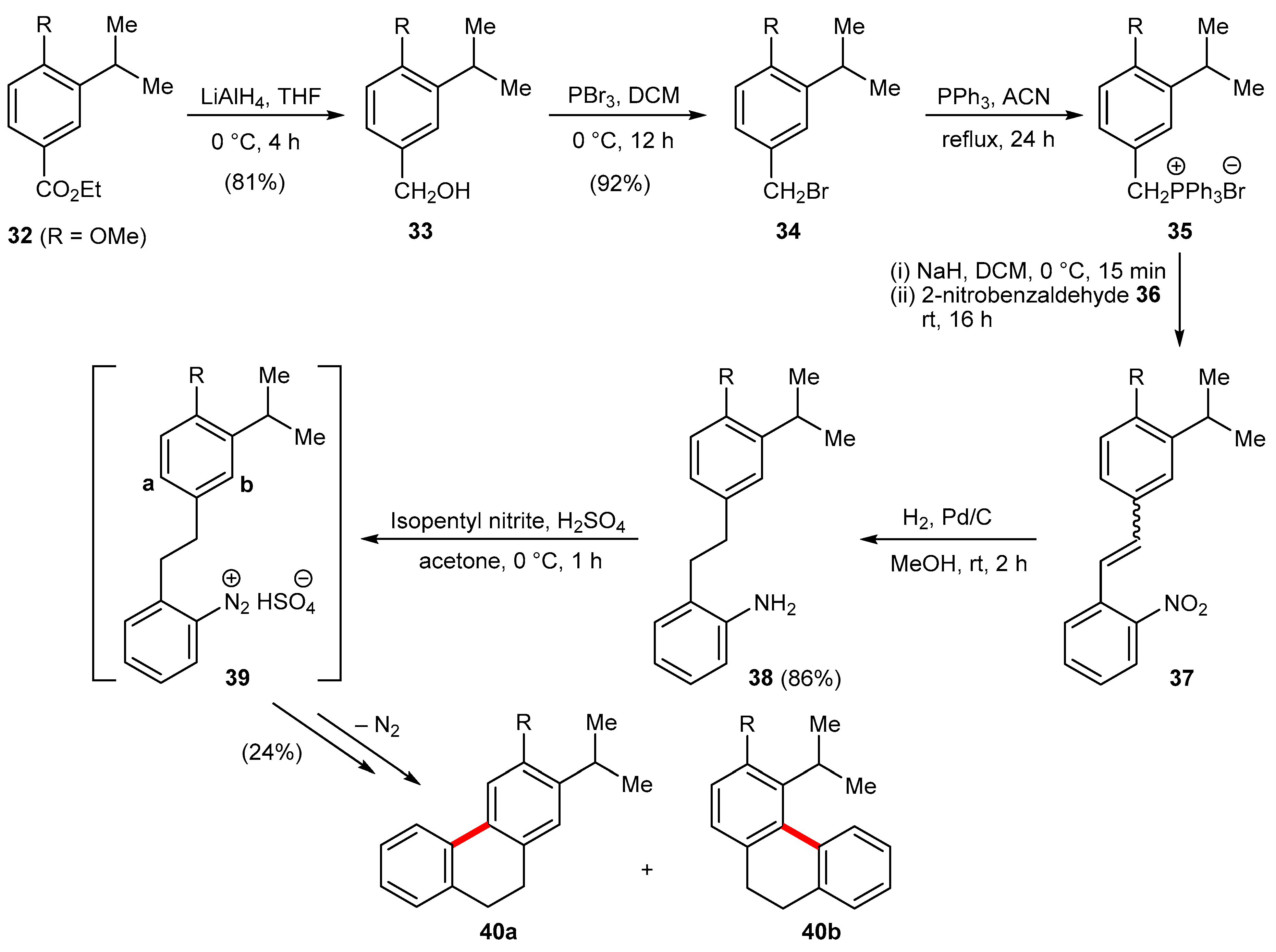
Scheme 6.
Synthesis of the phenanthrene derivatives 40a/40b via a H2SO4-catalyzed Pschorr cyclization of the diazonium salt 39.
Scheme 6.
Synthesis of the phenanthrene derivatives 40a/40b via a H2SO4-catalyzed Pschorr cyclization of the diazonium salt 39.
Scheme 7.
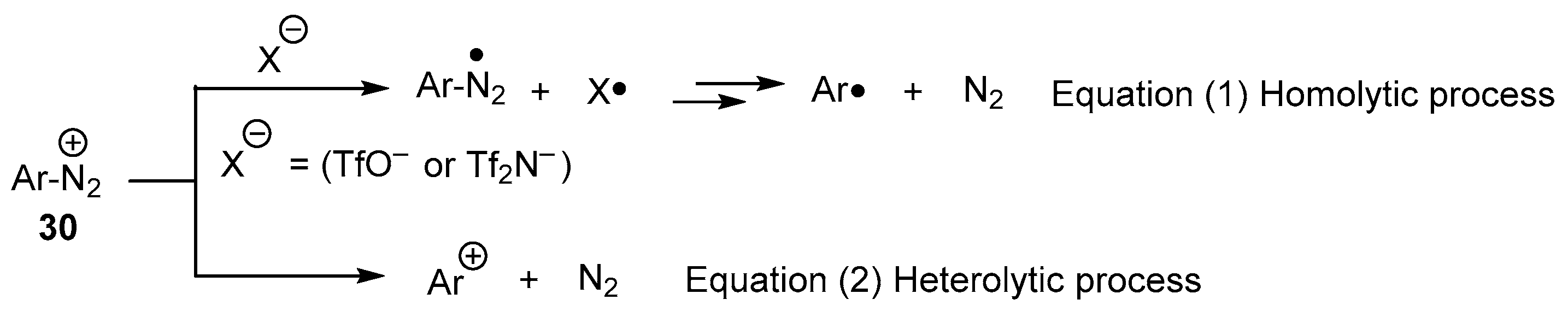
Proposed mechanistic sequence for homolytic and heterolytic dediazoniation of ArN2⊕ ions from salts 30 and analogs.
Scheme 7.
Proposed mechanistic sequence for homolytic and heterolytic dediazoniation of ArN2⊕ ions from salts 30 and analogs.
Scheme 8.
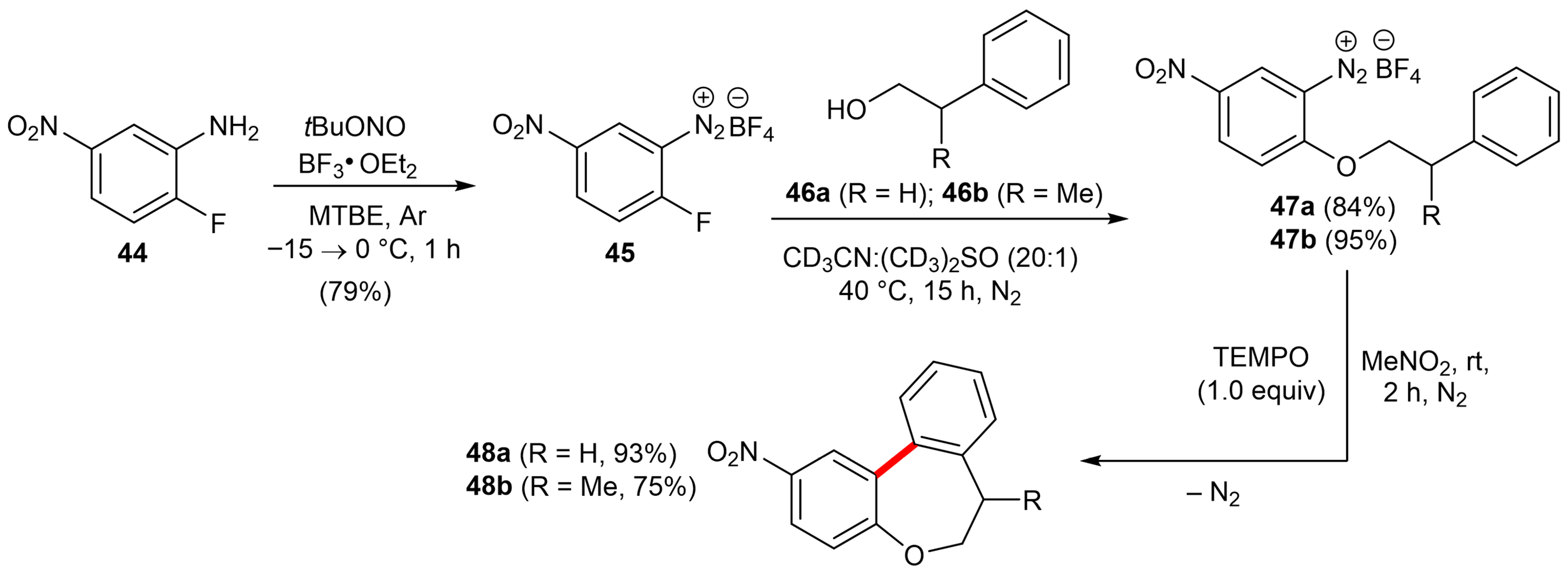
Synthesis of tricyclic dibenzoxepanes 48 via a TEMPO-promoted Pschorr reaction from functionalized aryl–alkyl diazonium ethers 47.
Scheme 8.
Synthesis of tricyclic dibenzoxepanes 48 via a TEMPO-promoted Pschorr reaction from functionalized aryl–alkyl diazonium ethers 47.
Scheme 9.
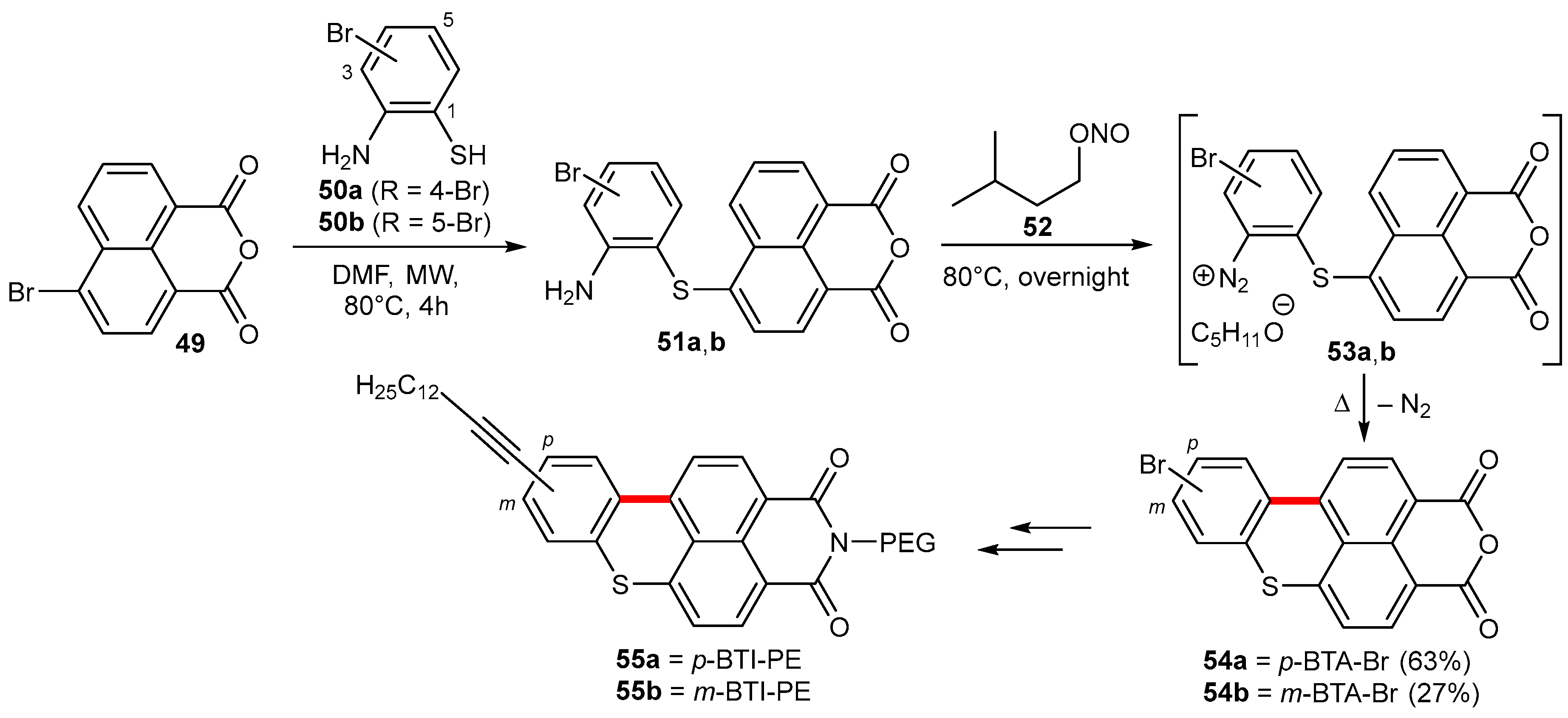
Synthesis of the brominated benzothioxanthene anhydride intermediates 54, via a Pschorr cyclization, from aniline–thioether precursors 51.
Scheme 9.
Synthesis of the brominated benzothioxanthene anhydride intermediates 54, via a Pschorr cyclization, from aniline–thioether precursors 51.
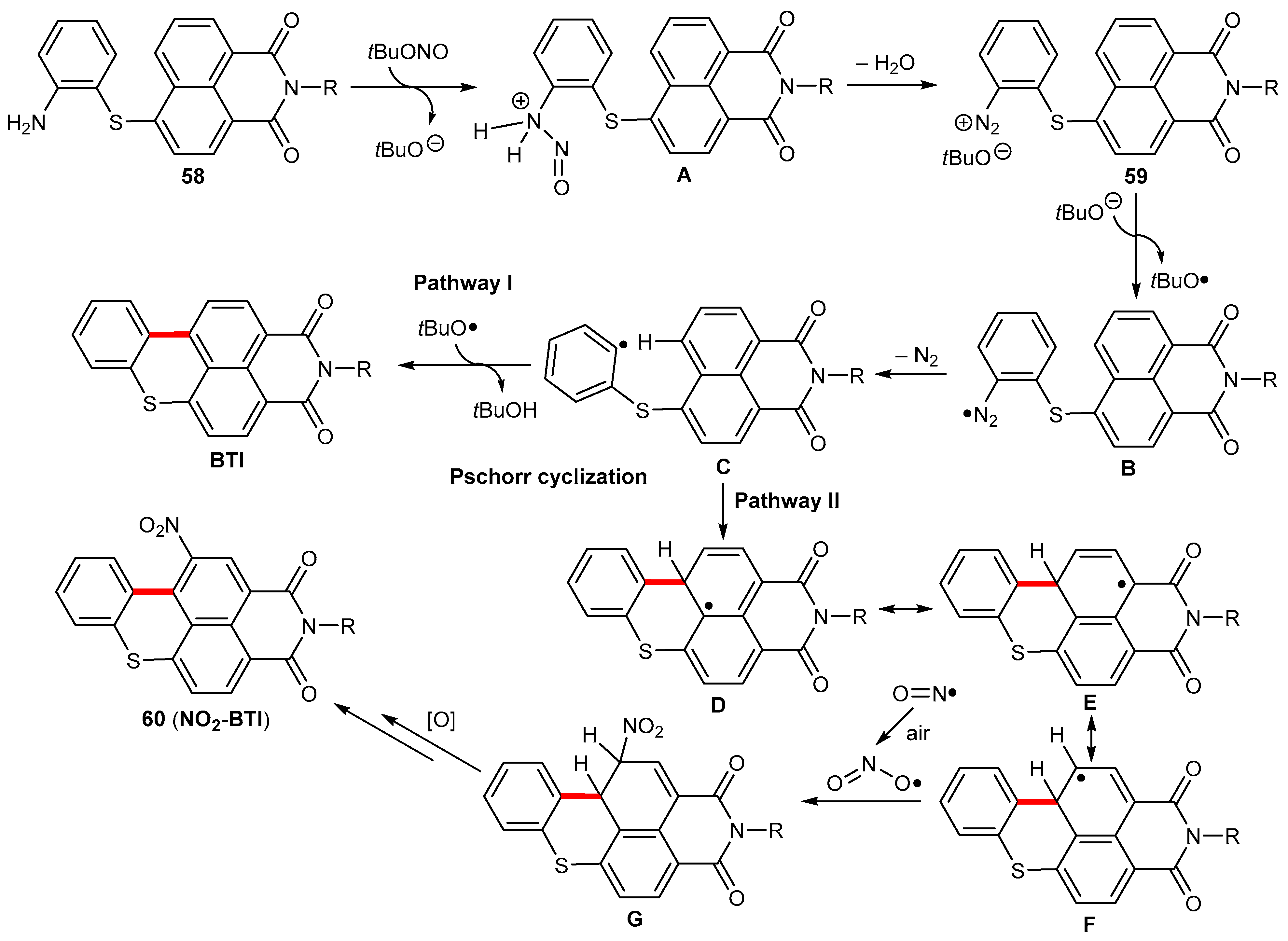
Scheme 10.
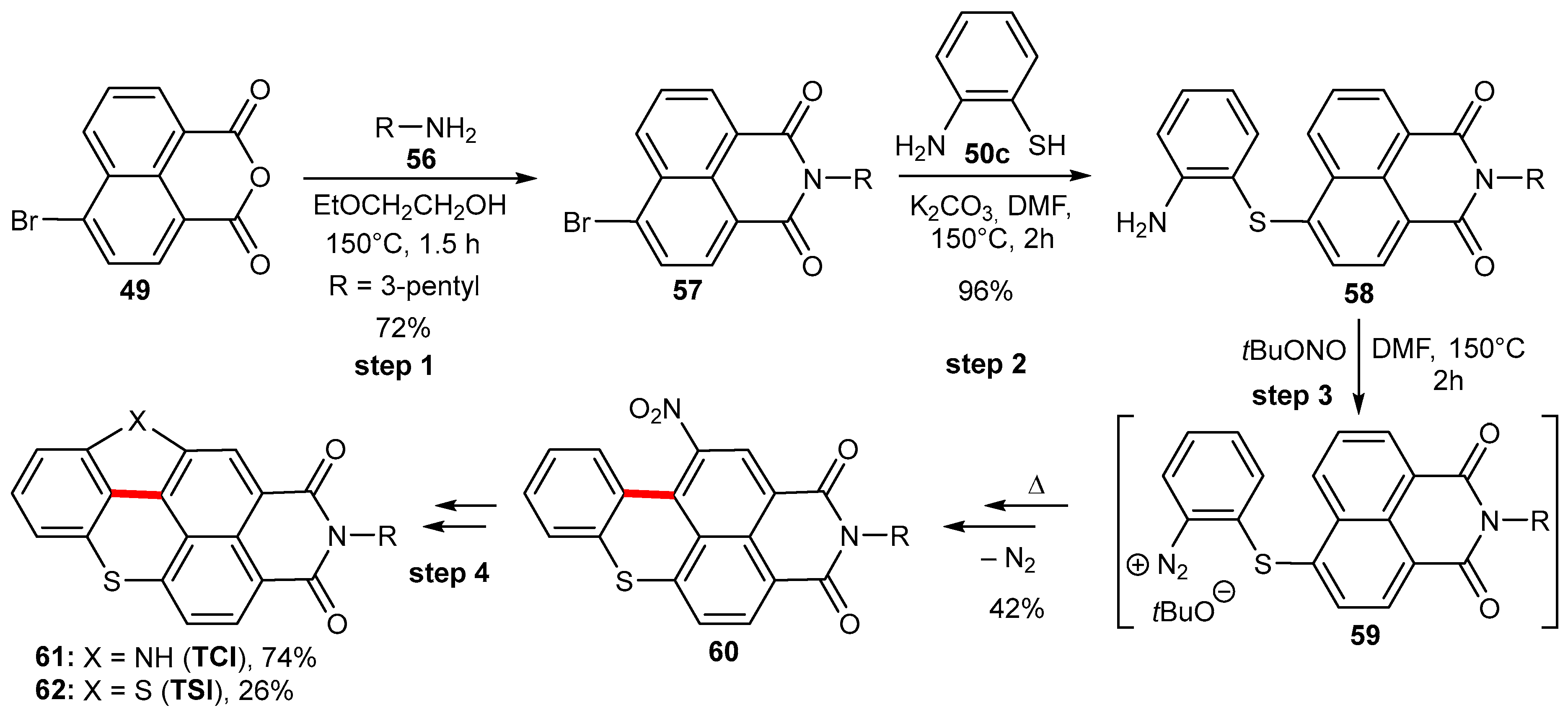
One-pot synthesis of the nitro-benzothioxanthene derivative 60 (NO2-BTI) mediated by a Pschorr cyclization, from the aniline–thioether precursor 58.
Scheme 10.
One-pot synthesis of the nitro-benzothioxanthene derivative 60 (NO2-BTI) mediated by a Pschorr cyclization, from the aniline–thioether precursor 58.
Scheme 11.
Plausible route to NO2-BTI during the thermal Pschorr cyclization of aniline–imidothioether 58, promoted by tBuONO.
Scheme 11.
Plausible route to NO2-BTI during the thermal Pschorr cyclization of aniline–imidothioether 58, promoted by tBuONO.
Scheme 12.
Synthesis of 6H-benzo[c]chromenes 9c,g via eosin Y-promoted photoredox Pschorr reaction from diazonium salts 7c,g.
Scheme 12.
Synthesis of 6H-benzo[c]chromenes 9c,g via eosin Y-promoted photoredox Pschorr reaction from diazonium salts 7c,g.
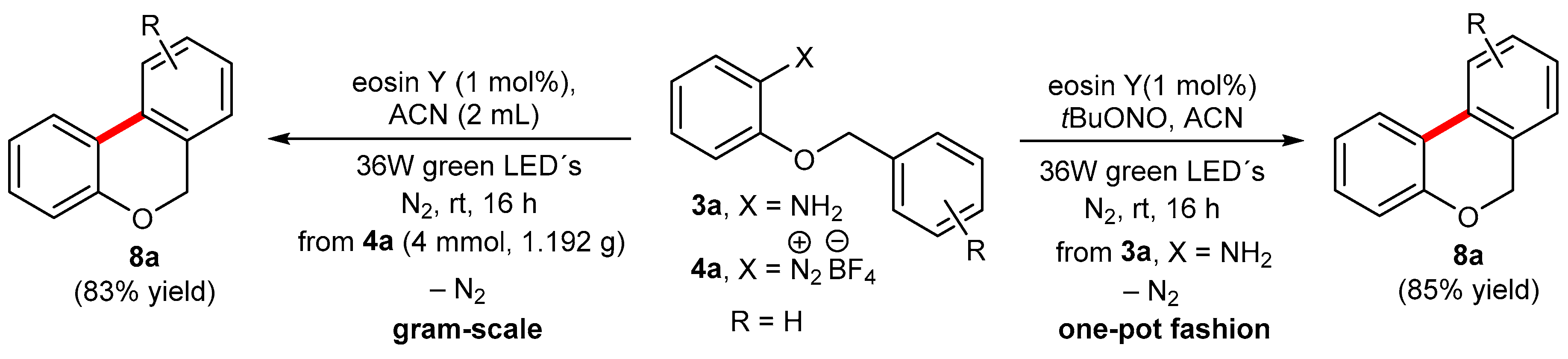
Scheme 13.
Synthesis of 6H-benzo[c]chromene 8a both in gram scale and in a one-pot fashion via eosin Y-promoted photoredox Pschorr reaction.
Scheme 13.
Synthesis of 6H-benzo[c]chromene 8a both in gram scale and in a one-pot fashion via eosin Y-promoted photoredox Pschorr reaction.
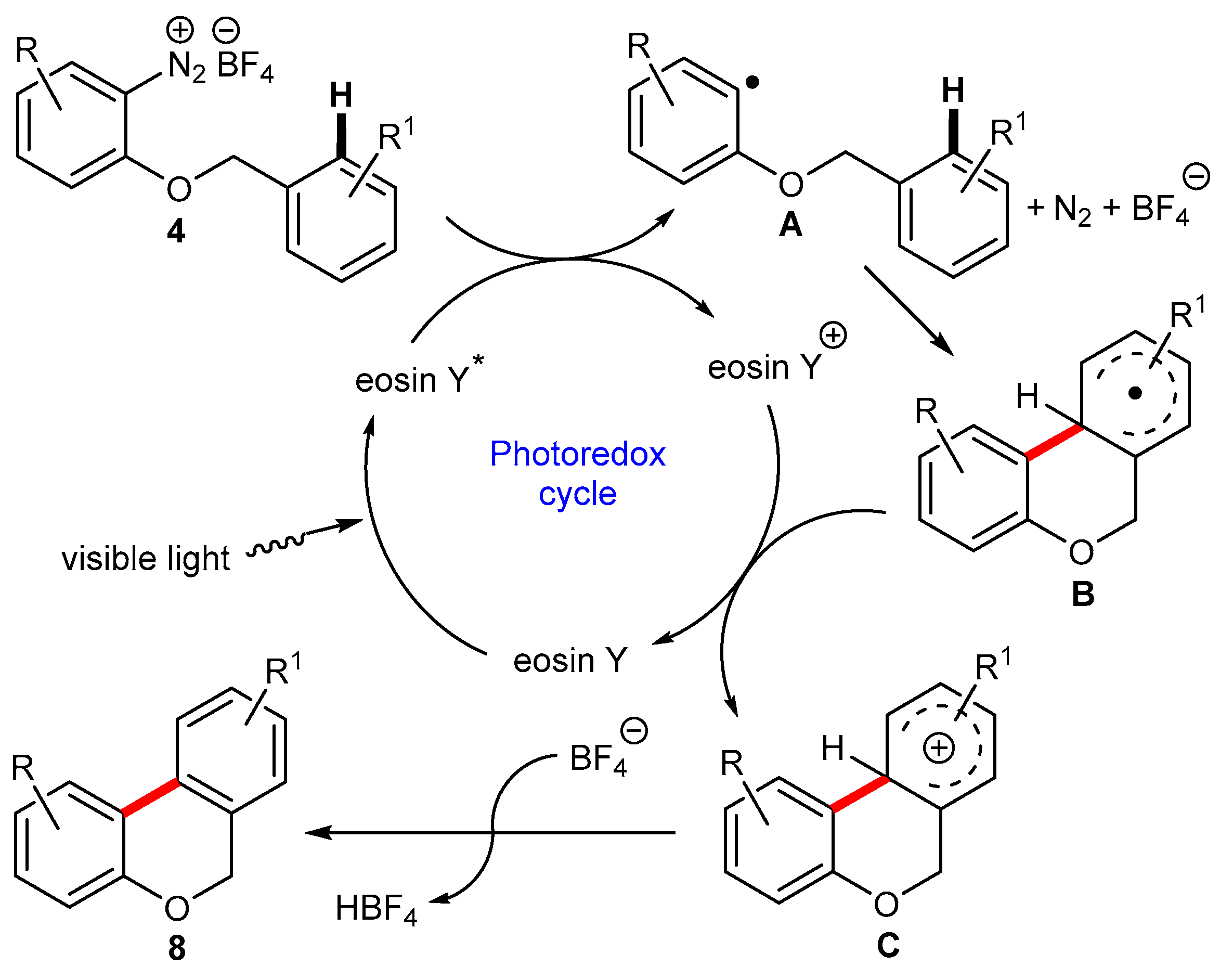
Scheme 14.
Plausible mechanism for the intramolecular photoredox Pschorr cyclization of the diazonium salts 4.
Scheme 14.
Plausible mechanism for the intramolecular photoredox Pschorr cyclization of the diazonium salts 4.
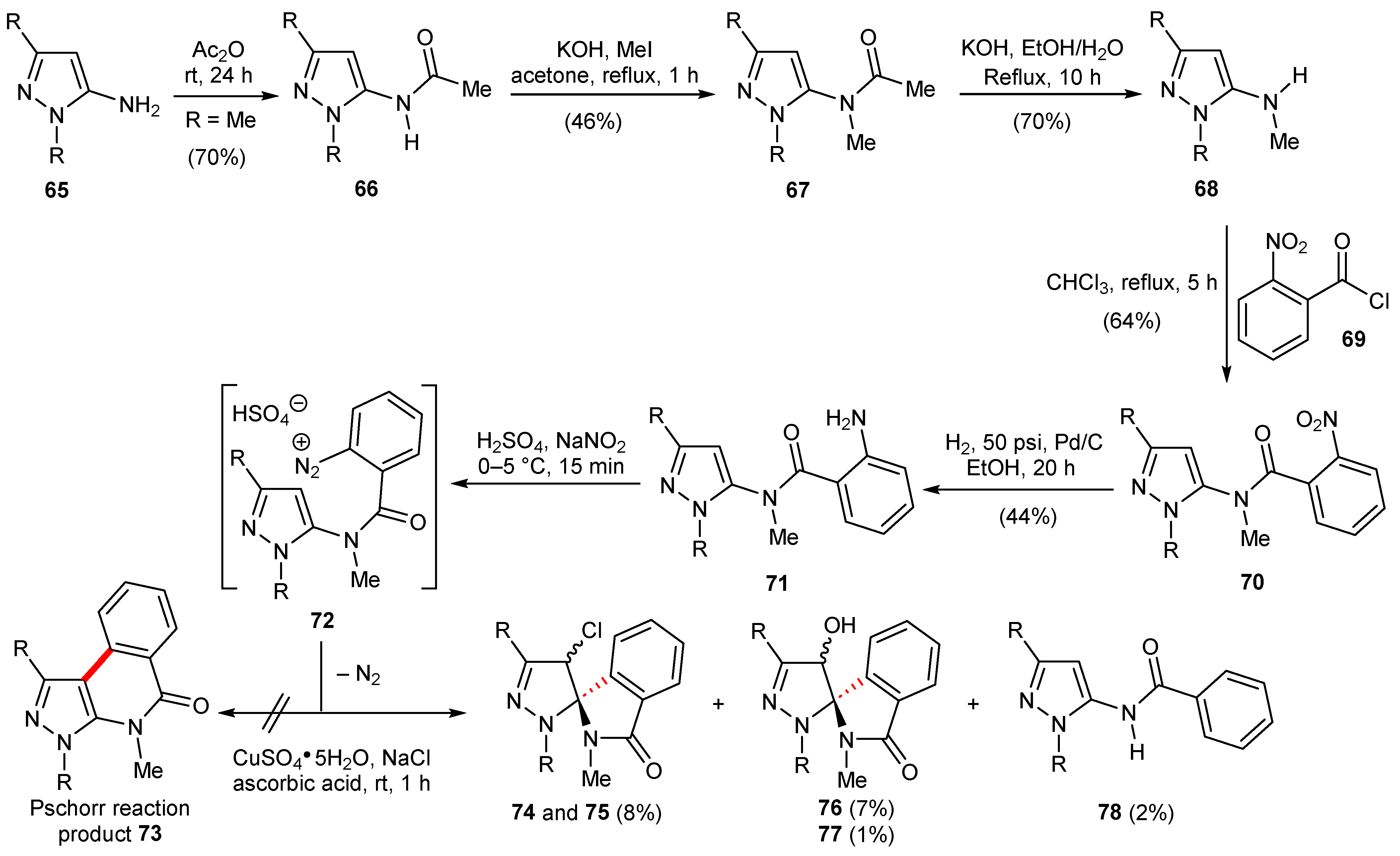
Scheme 15.
Synthesis of spirocyclic chlorinated and hydroxylated pyrazole derivatives 74–77 from the aniline precursor 71 by a Cu-catalyzed cyclization.
Scheme 15.
Synthesis of spirocyclic chlorinated and hydroxylated pyrazole derivatives 74–77 from the aniline precursor 71 by a Cu-catalyzed cyclization.
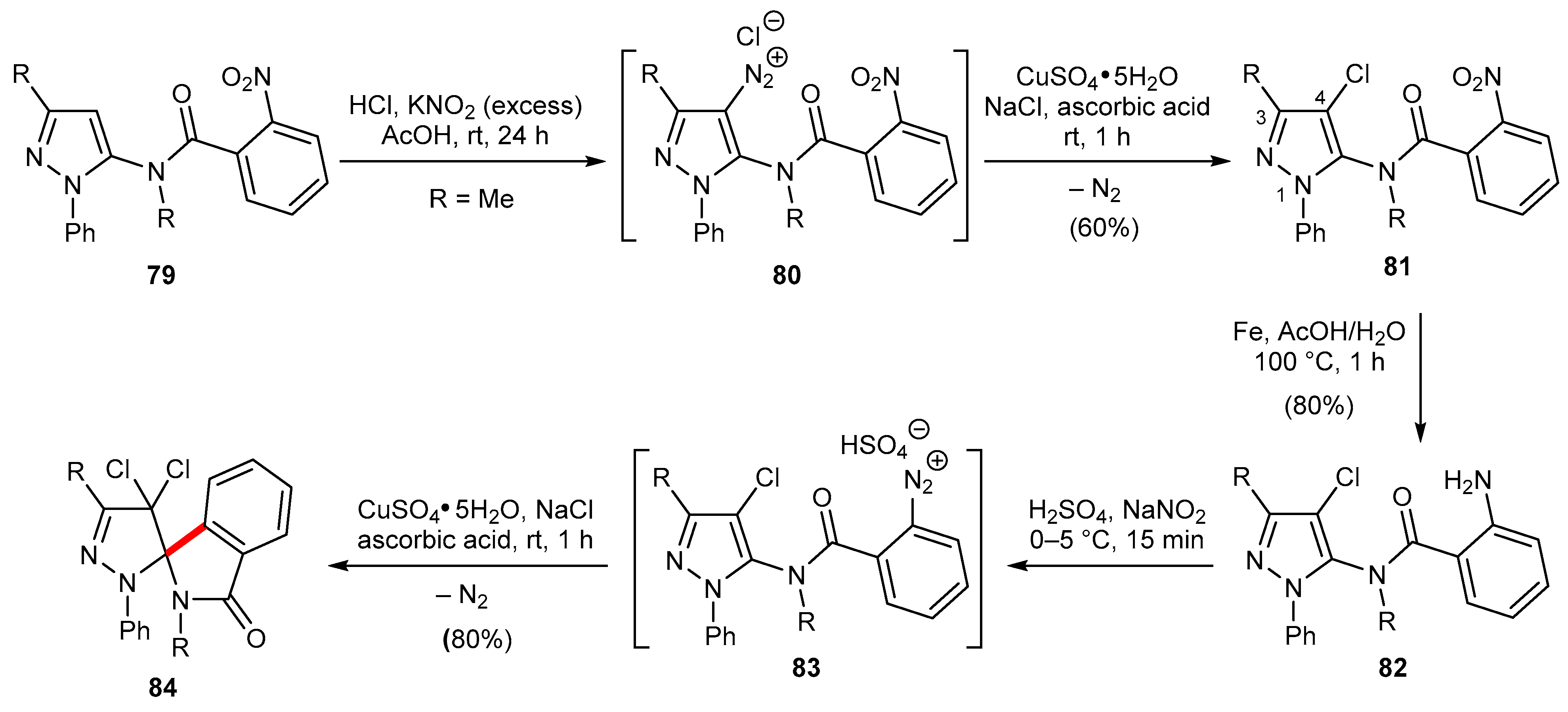
Scheme 16.
Synthesis of spirocyclic pyrazole derivative 84 from the aniline precursor 82 via a Cu-catalyzed Pschorr-type cyclization.
Scheme 16.
Synthesis of spirocyclic pyrazole derivative 84 from the aniline precursor 82 via a Cu-catalyzed Pschorr-type cyclization.
Scheme 17.
Plausible mechanism for the synthesis of the spirocyclic pyrazole derivative 84 via a Cu(II)-mediated Pschorr-type cyclization.
Scheme 17.
Plausible mechanism for the synthesis of the spirocyclic pyrazole derivative 84 via a Cu(II)-mediated Pschorr-type cyclization.
Scheme 18.
Cu(II)-mediated Pschorr-type cyclization for the synthesis of pyrazole derivatives 87 and 88 from the amino-precursor 85.
Scheme 18.
Cu(II)-mediated Pschorr-type cyclization for the synthesis of pyrazole derivatives 87 and 88 from the amino-precursor 85.
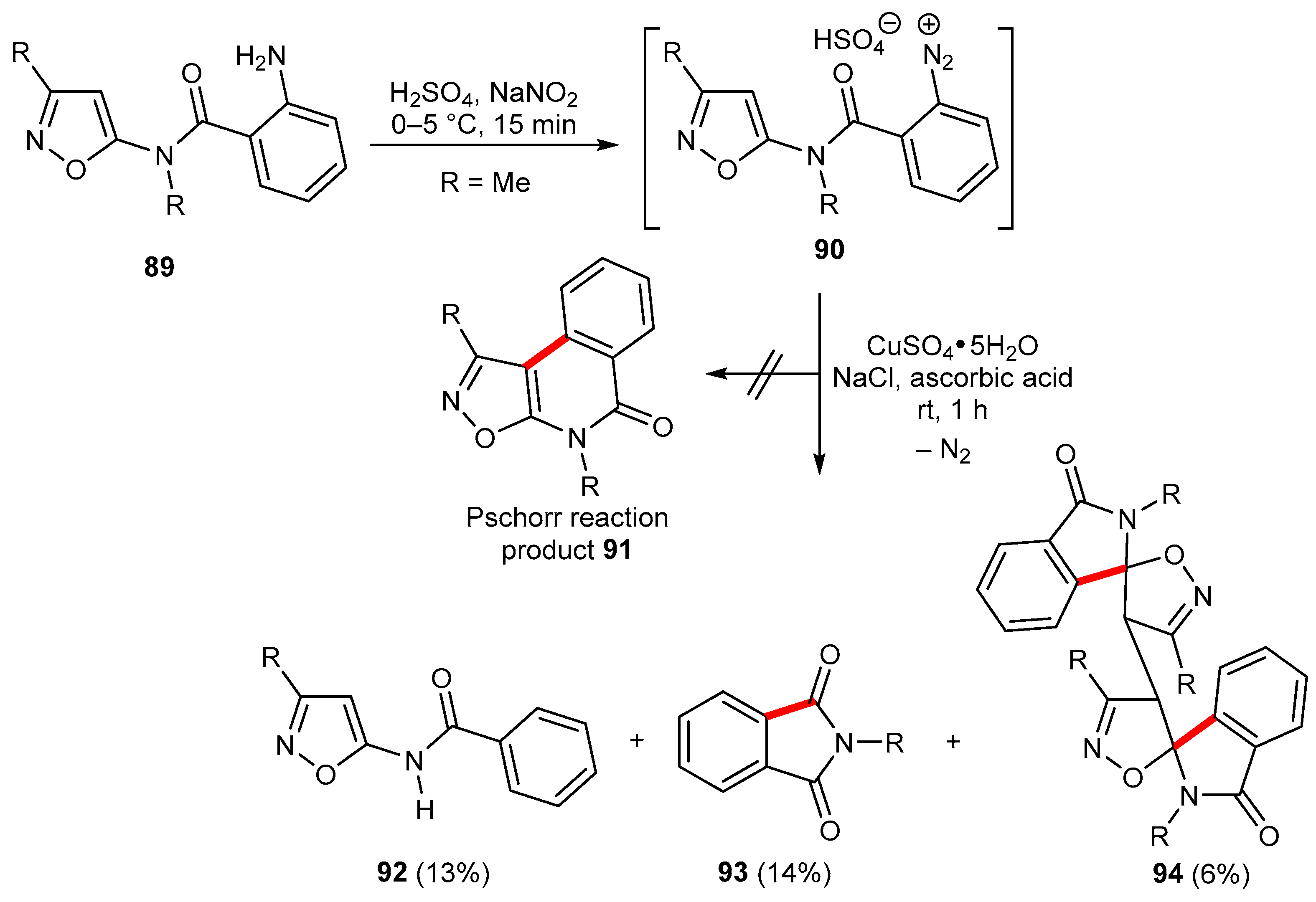
Scheme 19.
Cu(II)-mediated Pschorr-type cyclization leading to isoindoline-1,3-dione 93 (R = Me) and isoxazole derivative 94 (R = Me) from the aniline precursor 89.
Scheme 19.
Cu(II)-mediated Pschorr-type cyclization leading to isoindoline-1,3-dione 93 (R = Me) and isoxazole derivative 94 (R = Me) from the aniline precursor 89.
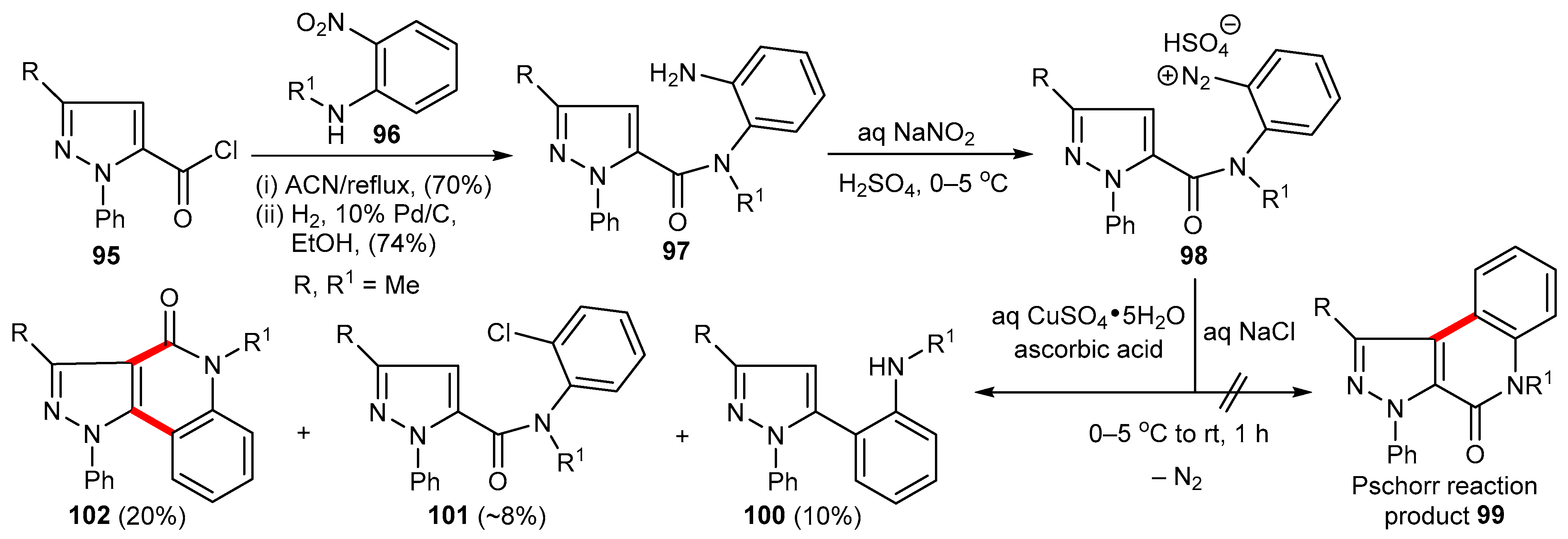
Scheme 20.
Cu(II)-mediated Pschorr-type cyclization forming the tricyclic dihydro-4H-pyrazolo[4,3-c]quinolin-4-one 102 (R,R1 = Me), from the aniline precursor 97.
Scheme 20.
Cu(II)-mediated Pschorr-type cyclization forming the tricyclic dihydro-4H-pyrazolo[4,3-c]quinolin-4-one 102 (R,R1 = Me), from the aniline precursor 97.
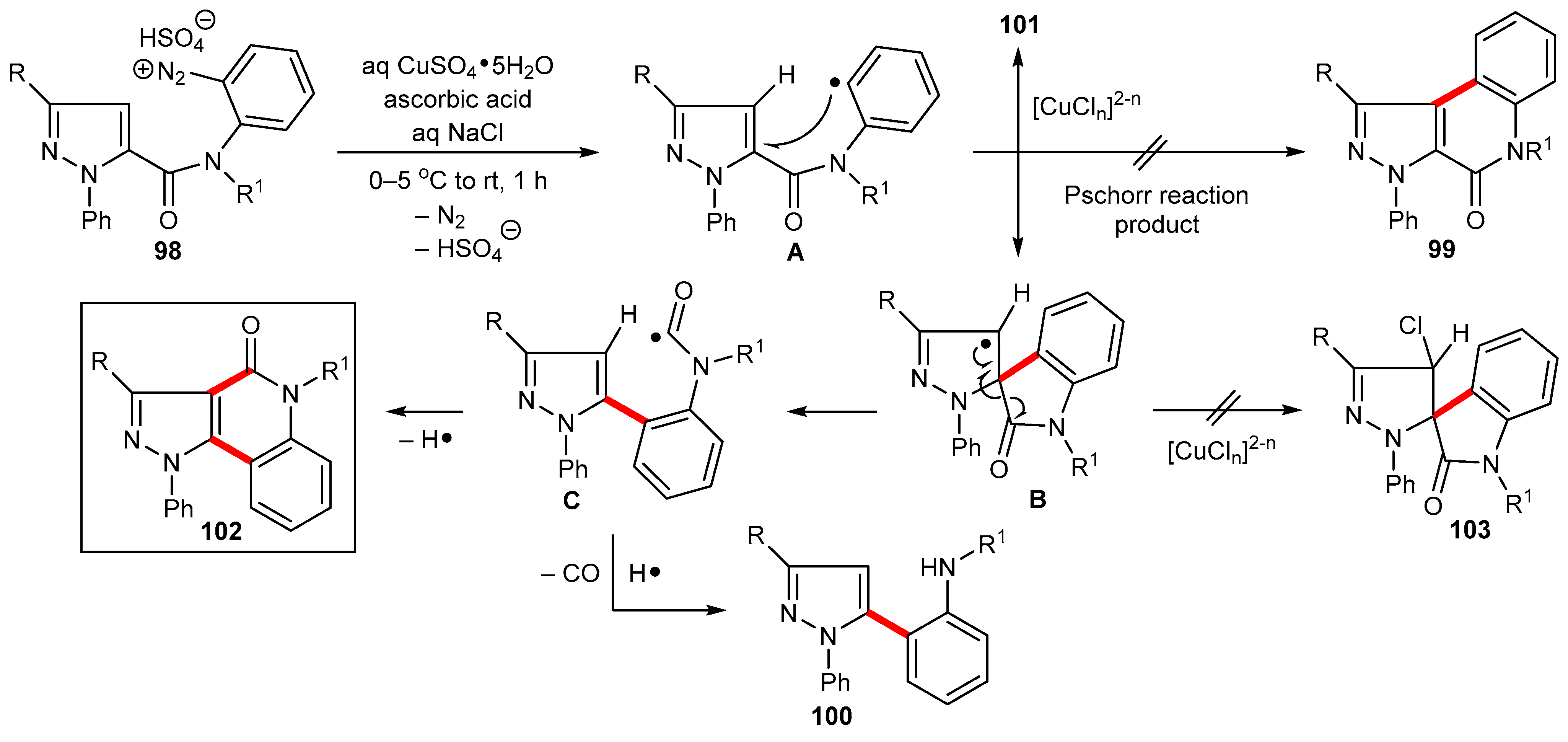
Scheme 21.
Plausible mechanism for the Cu(II)-mediated Pschorr-type cyclization affording a mixture of products including pyrazolo[4,3-c]quinolin-4-one 102 as the main component.
Scheme 21.
Plausible mechanism for the Cu(II)-mediated Pschorr-type cyclization affording a mixture of products including pyrazolo[4,3-c]quinolin-4-one 102 as the main component.
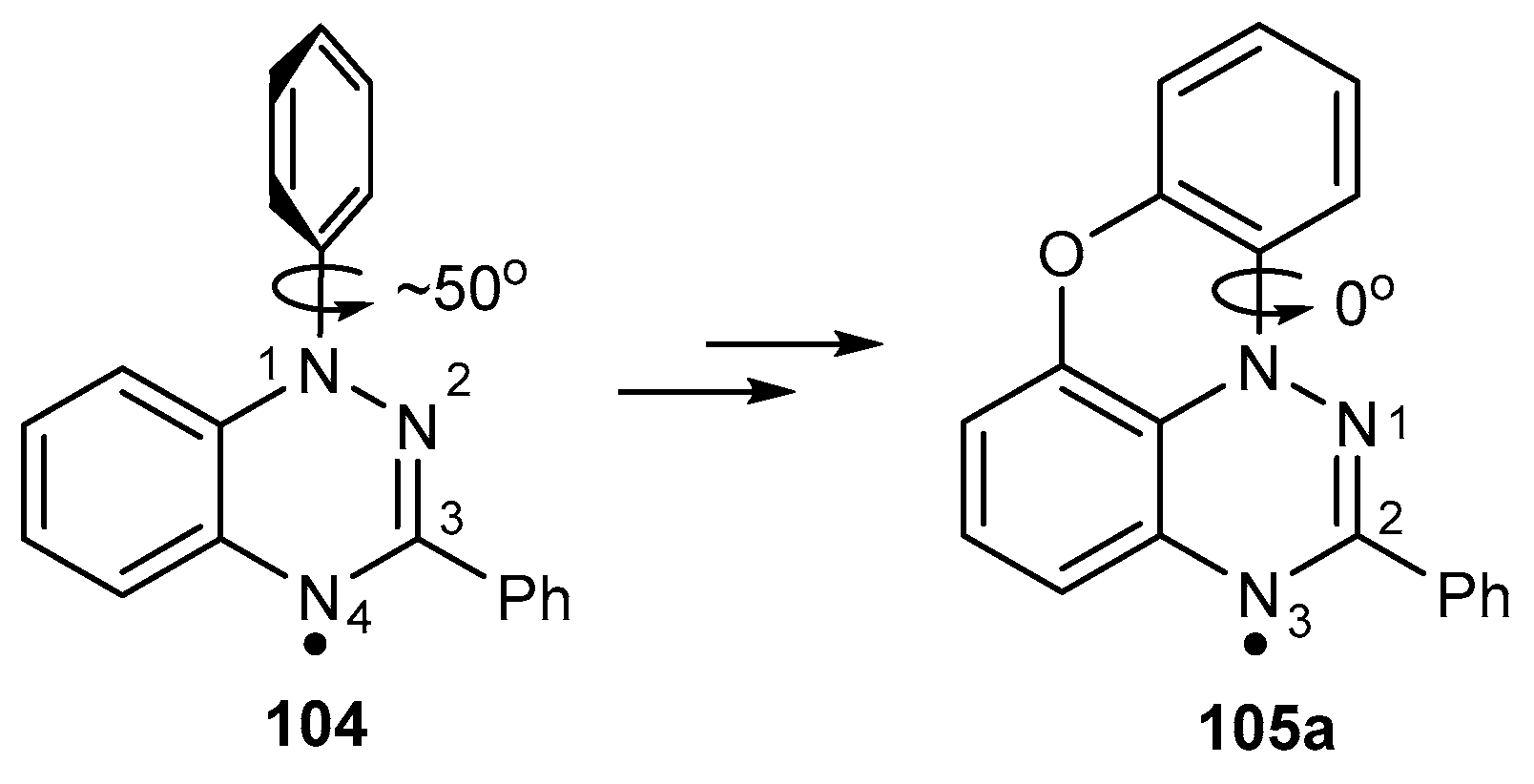
Figure 2.
The non-planar N-centered Blatter radical 104 and its planar Blatter analog 105a.
Figure 2.
The non-planar N-centered Blatter radical 104 and its planar Blatter analog 105a.
Figure 3.
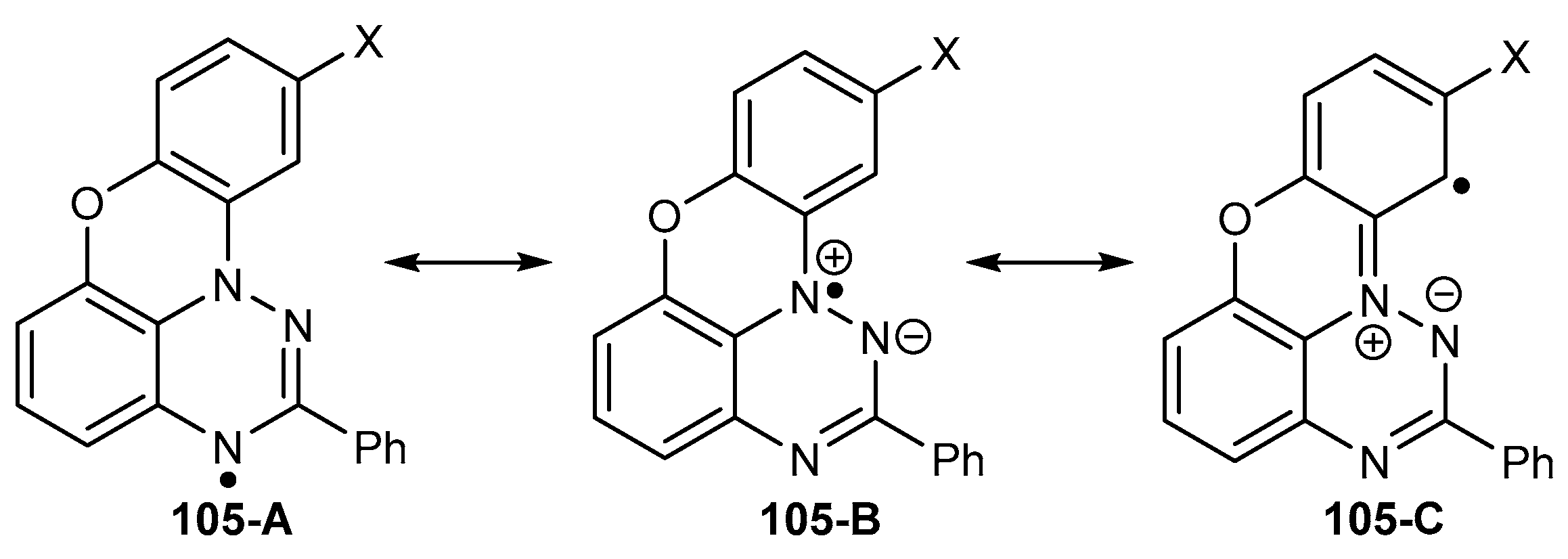
Three resonance forms of the planar Blatter radicals 105. The polar form 105-B is responsible for spin delocalization into the “upper” benzene ring.
Figure 3.
Three resonance forms of the planar Blatter radicals 105. The polar form 105-B is responsible for spin delocalization into the “upper” benzene ring.
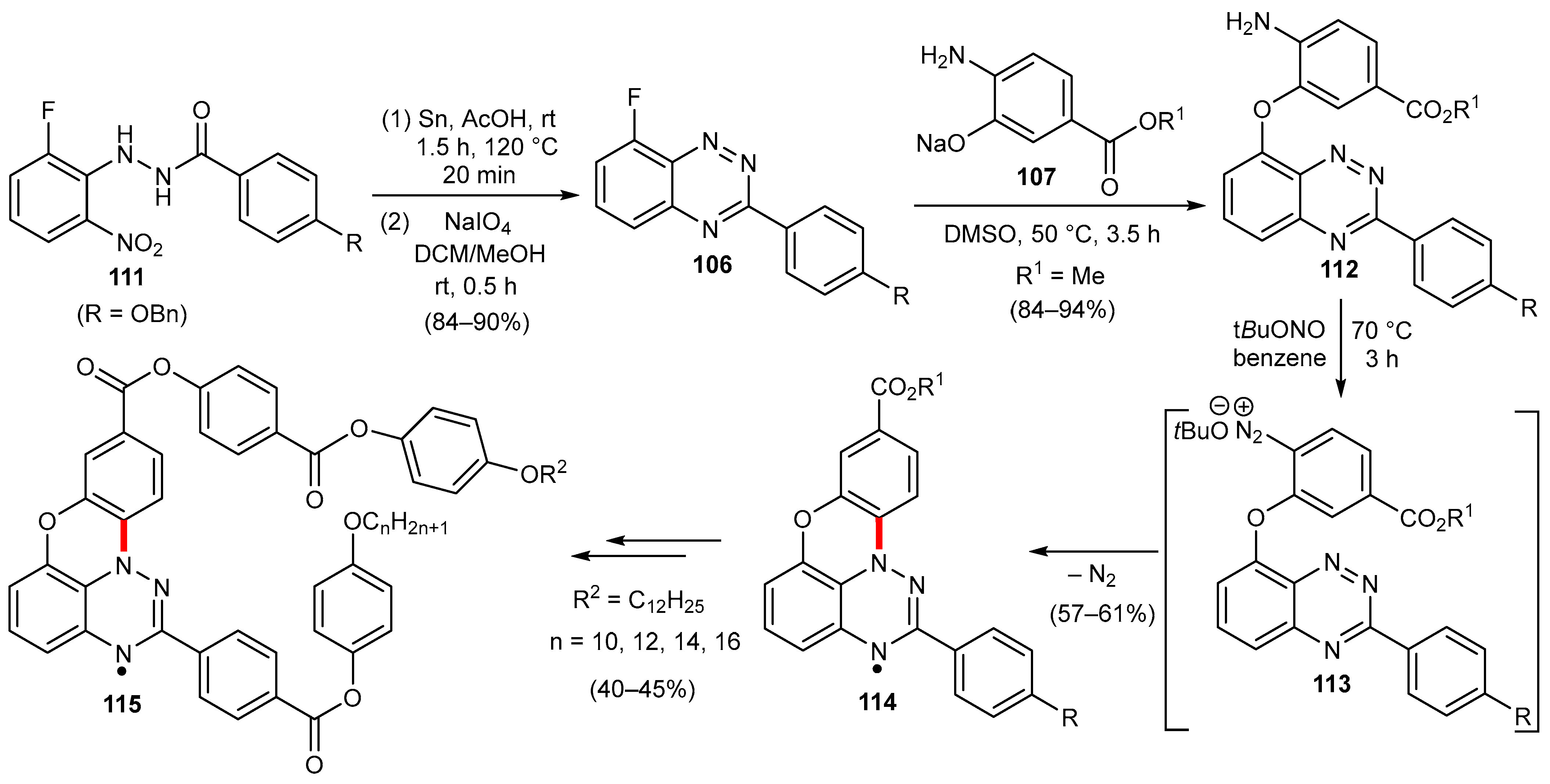
Scheme 22.
Synthesis of the planar radical intermediate 114 via a thermal aza-Pschorr-type cyclization from triazolo-aniline precursor 112.
Scheme 22.
Synthesis of the planar radical intermediate 114 via a thermal aza-Pschorr-type cyclization from triazolo-aniline precursor 112.
Figure 4.
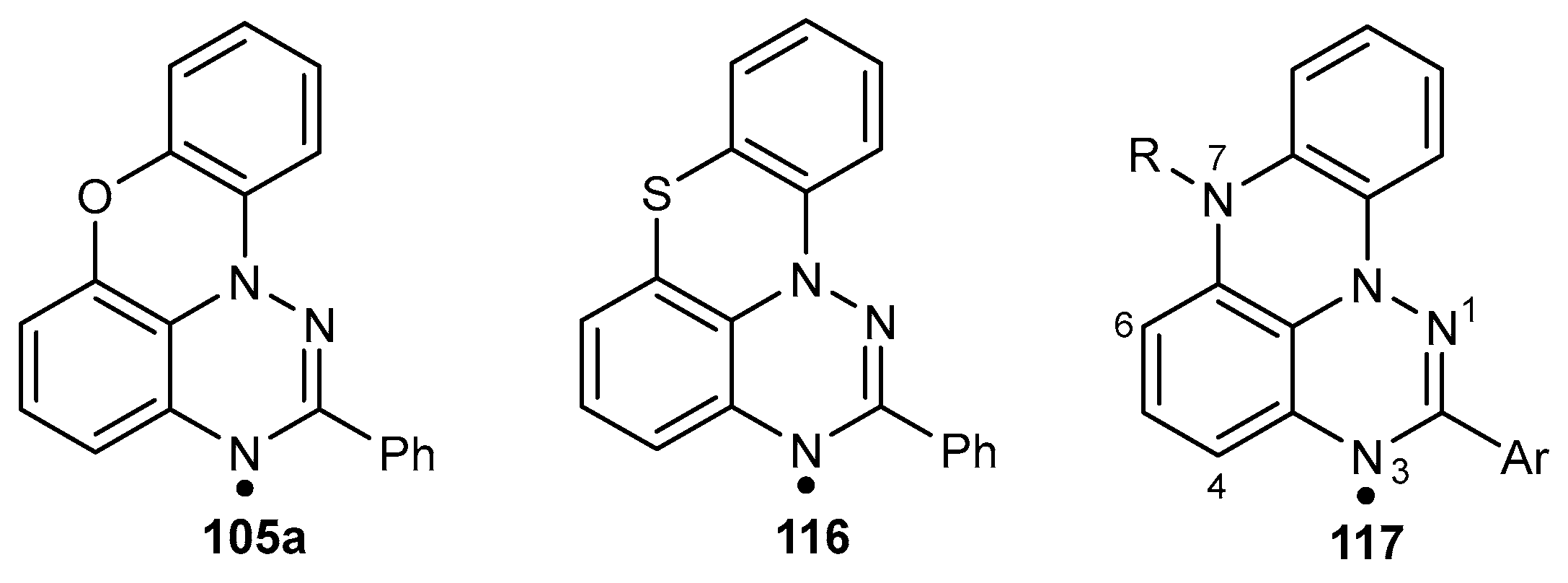
Structures of the N-centered O-, S- and N-peri-annulated planar Blatter radicals 105a, 116 and 117, respectively.
Figure 4.
Structures of the N-centered O-, S- and N-peri-annulated planar Blatter radicals 105a, 116 and 117, respectively.
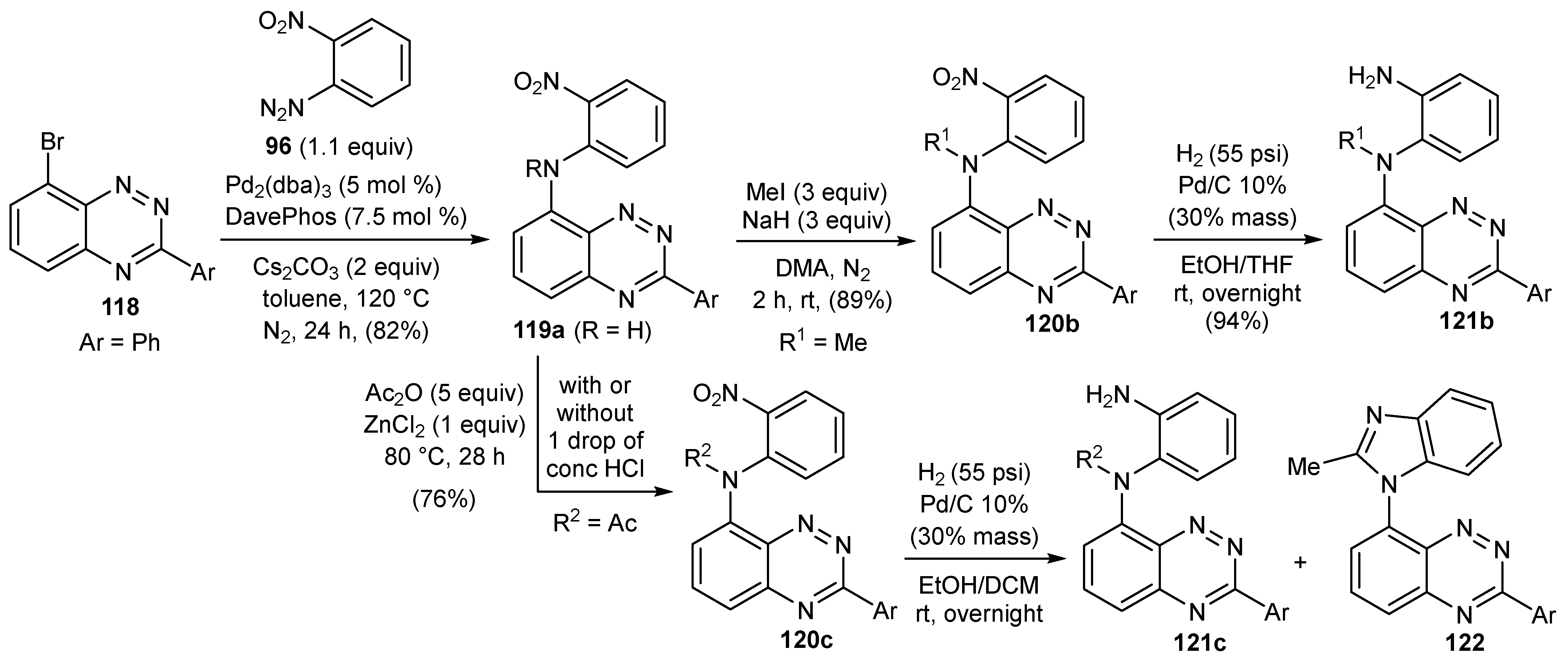
Scheme 23.
Synthesis of the N-methylaniline-derivative 121b as precursor for the N-peri-annulated planar radical 117b via an aza-Pschorr-type cyclization.
Scheme 23.
Synthesis of the N-methylaniline-derivative 121b as precursor for the N-peri-annulated planar radical 117b via an aza-Pschorr-type cyclization.
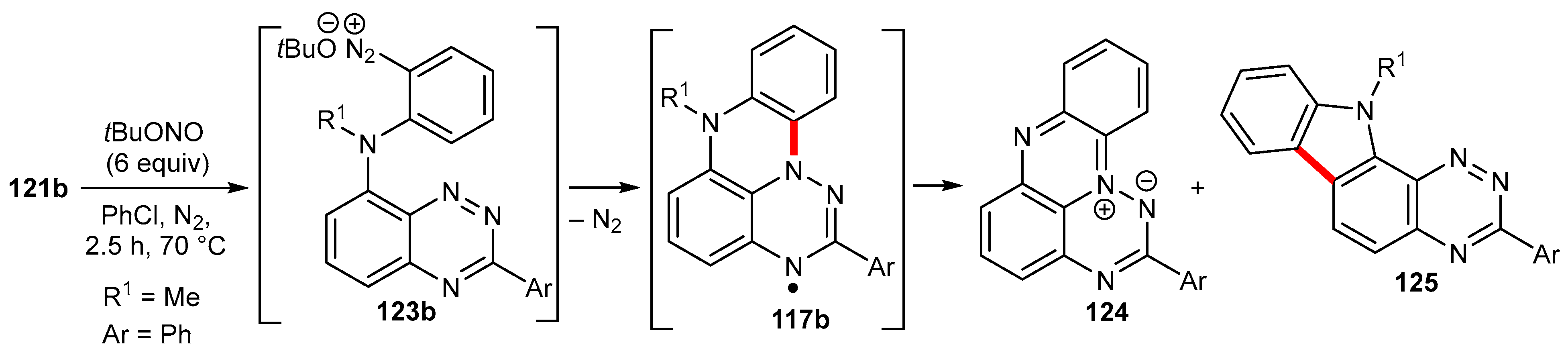
Scheme 24.
Reaction products 124 and 125 isolated from the thermal aza-Pschorr-type cyclization of the N-methylamino-radical precursor 121b.
Scheme 24.
Reaction products 124 and 125 isolated from the thermal aza-Pschorr-type cyclization of the N-methylamino-radical precursor 121b.
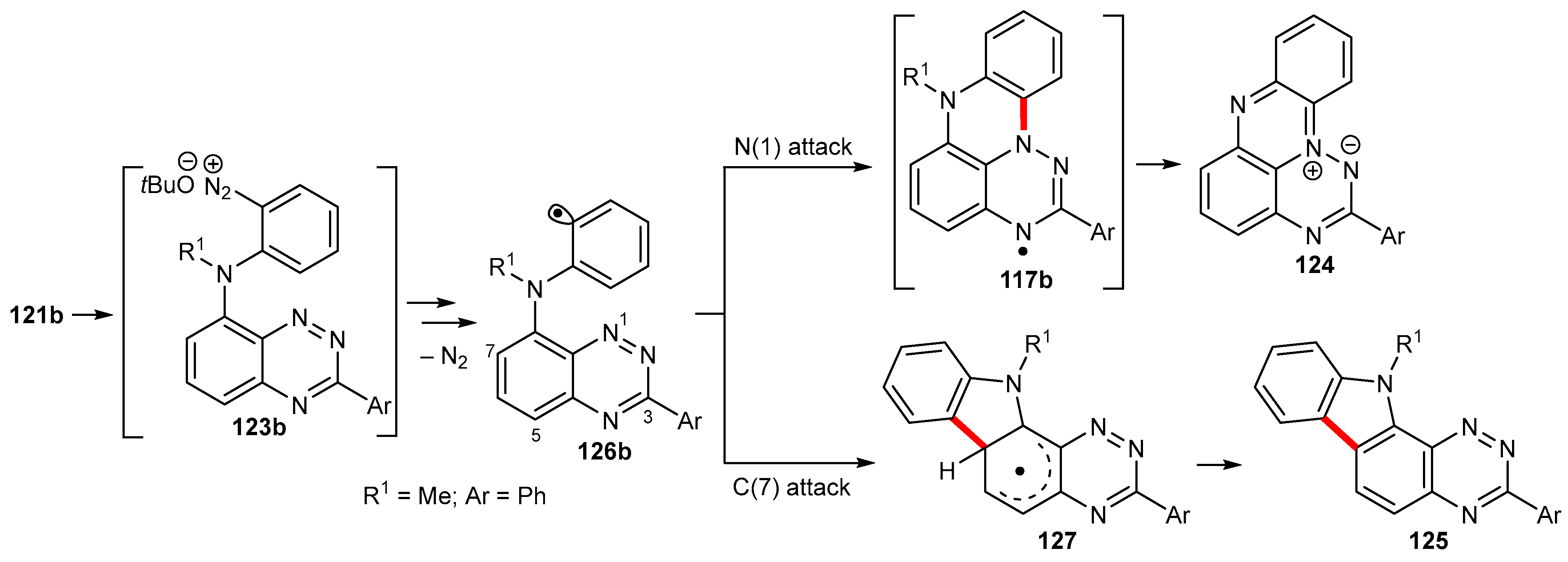
Scheme 25.
Proposed mechanistic sequence for the formation of the zwitterionic species 124 and fused carbazole derivative 125, via aza-Pschorr-type cyclizations.
Scheme 25.
Proposed mechanistic sequence for the formation of the zwitterionic species 124 and fused carbazole derivative 125, via aza-Pschorr-type cyclizations.
Scheme 26.
Alternative synthetic route for fluorenones 31 employing o-formyl pinacol boronate ester 132.
Scheme 26.
Alternative synthetic route for fluorenones 31 employing o-formyl pinacol boronate ester 132.
Table 1.
Synthesis of 6H-benzo[c]chromenes 8 via a Pd(OAc)2-catalyzed Pschorr reaction from diazonium salts 4.
Table 1.
Synthesis of 6H-benzo[c]chromenes 8 via a Pd(OAc)2-catalyzed Pschorr reaction from diazonium salts 4.
 |
| Entry | Compound | R | R2 | Yield (%) |
| 1 | 8a | H | H | 75 |
| 2 | 8b | Br | H | 68 |
| 3 | 8c | Cl | H | 70 |
| 4 | 8d | Me | H | 76 |
| 5 | 8e | H | Me | 75 |
| 6 | 8f | Me | Me | 80 |
| 7 | 8g | Cl | Me | 72 |
| 8 | 8h | Br | Me | 71 |
| 9 | 8i | H | tBu | 78 |
| 10 | 8j | Me | tBu | 83 |
| 11 | 8k | Cl | tBu | 76 |
| 12 | 8l | Br | tBu | 72 |
| 13 | 8m | OMe | H | 48 |
| 14 | 8n | H | CO2Et | 83 |
Table 2.
Synthesis of 6H-benzo[c]chromenes 9 via a Pd(OAc)2-catalyzed Pschorr reaction from diazonium salts 7.
Table 2.
Synthesis of 6H-benzo[c]chromenes 9 via a Pd(OAc)2-catalyzed Pschorr reaction from diazonium salts 7.
 |
| Entry | Compound | R2 | Yield (%) |
| 1 | 9a | H | 65 |
| 2 | 9b | 4-F | 52 |
| 3 | 9c | 4-Cl | 50 |
| 4 | 9d | 4-Br | 68 |
| 5 | 9e | 4-Me | 58 |
| 6 | 9f | 2-Me | 57 |
Table 3.
Synthesis and anti-melanogenic activity of 4,5-didehydroguadiscines 18 against B16 melanoma 4A5 cells through a CuCl-catalyzed Pschorr reaction.
Table 3.
Synthesis and anti-melanogenic activity of 4,5-didehydroguadiscines 18 against B16 melanoma 4A5 cells through a CuCl-catalyzed Pschorr reaction.
| Entry | Compound | R | R1 | R2 | Yield from 16 (%) | IC50 (µM) a |
|---|
| 1 | 18a | OCH2O | MeO | -- | 4.9 |
| 2 | 18b | OCH2O | H | 25 | 6.7 |
| 3 | 18c | MeO | H | H | 30 | 5.0 |
| 4 | 18d | H | MeO | H | 20 | 4.0 |
| 5 | 18e | H | H | H | 29 | 3.1 |
| 6 | 18f | MeO | H | MeO | 61 | 7.5 |
| | Arbutin | -- | -- | -- | -- | 174 |
Table 4.
Synthesis of fluorenone derivatives 31 via a gold-catalyzed Pschorr cyclization using diazonium salts 30.
Table 5.
Antimycobacterial activity of the mixture of phenanthrene compounds 40a/40b.
Table 5.
Antimycobacterial activity of the mixture of phenanthrene compounds 40a/40b.
| Entry | Strain | 40a/40b (MIC µM) | Streptomycin (MIC µM) |
|---|
| 1 | M. smegmatis | >991.50 | 2.68 |
| 2 | M. bovis | 991.50 | 0.67 |
| 3 | M. szulgai | >991.50 | 1.30 |
| 4 | M. gastri | >991.50 | 0.17 |
| 5 | M. simiae | >991.50 | 2.68 |
| 6 | M. tuberculosis (H37Ra) | >991.50 | 0.84 |
Table 6.
Product distribution resulting from both Pschorr and dediazoniation reactions of diazonium salts 30 in the presence of [BMIM][TfO].
Table 6.
Product distribution resulting from both Pschorr and dediazoniation reactions of diazonium salts 30 in the presence of [BMIM][TfO].
 |
| Entry | R | T (°C) | Time (h) | Yield Ratio a | Total Yield of 31 and 41 (%) a |
| 1 | H | 50 | 6 | 31a:41a (66:34) | 79 |
| 2 | Me | 80 | 1.5 | 31b:41b (58:42) | 84 |
| 3 | MeO | 80 | 2 | 31c:41c (53:47) | 78 |
| 4 | Cl | 80 | 1 | 31d:41d (42:58) | 74 |
Table 7.
Product distribution from dediazoniation of salts 30 in [BMIM][Tf2N].
Table 7.
Product distribution from dediazoniation of salts 30 in [BMIM][Tf2N].
 |
| Entry | R | Temp (°C) | Time (h) | Yield Ratio a | Total Yield of 31, 42, and 43 (%) a |
| 1 | H | 50 | 6 | 31a:42a:43a (85:15:<1) | 91 |
| 2 | Me | 80 | 1.5 | 31b:42b:43b (75:24:1) | 94 |
| 3 | MeO | 80 | 2 | 31c:42c:43c (72:27:1) | 84 |
| 4 | Cl | 80 | 1 | 31d:42d:43d (78:22:<1) | 72 |
Table 8.
Synthesis of 6H-benzo[c]chromenes 8 via an eosin Y-promoted photoredox Pschorr reaction from 2-(benzyloxy)benzenediazonium tetrafluoroborates 4.
Table 8.
Synthesis of 6H-benzo[c]chromenes 8 via an eosin Y-promoted photoredox Pschorr reaction from 2-(benzyloxy)benzenediazonium tetrafluoroborates 4.
 |
| Entry | Compound | R | R1 | Yield from 63 (%) |
| 1 | 8a | H | H | 90 |
| 2 | 8b | H | 5-Me | 95 |
| 3 | 8c | H | 3-Me | 48 |
| 4 | 8d + 8′-d | H | 4-Me + 6-Me | (49:51) 98 |
| 5 | 8e + 8′-e | H | 4-MeO + 6-MeO | (22:78) 73 |
| 6 | 8f | H | 5-Cl | 30 |
| 7 | 8g | 8-Me | 5-Me | 88 |
| 8 | 8h | 8-Me | H | 90 |
| 9 | 8i | 8-Me | 3-Me | 64 |
| 10 | 8j + 8′-j | 8-Me | 4-Me + 6-Me | (50:50) 77 |
| 11 | 8k + 8′-k | 8-Me | 4-MeO + 6-MeO | (24:76) 73 |
| 12 | 8l | 8-Cl | H | 72 |
| 13 | 8m | 8-Cl | 5-Me | 57 |
| 14 | 8n | 9-F | H | 80 |
| 15 | 8o | 8-NO2 | H | 29 |
Table 9.
Synthesis of planar Blatter radicals 105/110 via a thermal aza-Pschorr-type cyclization from diazonium salts 109.
Table 9.
Synthesis of planar Blatter radicals 105/110 via a thermal aza-Pschorr-type cyclization from diazonium salts 109.
 |
| Entry | Compound | X | Yield from 108 (%) |
| 1 | 105a | H | 57–64 |
| 2 | 105b | CO2Me | 57–64 |
| 3 | 105c | CN | 68 |
| 4 | 105d | NO2 | 40–55 |
| 5 | 110 | H | 50–60 |
Table 10.
Synthesis of diversely C(10)-substituted planar Blatter radicals 105 via aza-Pschorr-type cyclizations and comparison with other cyclization methods starting from radical precursors 108.
Table 10.
Synthesis of diversely C(10)-substituted planar Blatter radicals 105 via aza-Pschorr-type cyclizations and comparison with other cyclization methods starting from radical precursors 108.
 |
| Entry | Compound | X | Method | Yield (%) |
| 1 | 105a | H | A (B) | 57–64 (64–80) |
| 2 | 105b | CO2Me | A (B) | 48–55 (64−80) |
| 3 | 105c | CN | A (B) | 68 (60) |
| 4 | 105d | NO2 | A | 40–55 |
| 5 | 105e | CF3 | A | 62 |
| 6 | 105f | OMe | A | 52 |
| 7 | 105g | F | A | 45 |
| 8 | 105h | Cl | A | 55 |
| 9 | 105i | Br | A | 18 |
| 10 | 105j | COMe | D | 47–52 |
| 11 | 105k | CO2H | From 105b | 90–95 |
| 12 | 105l | NH2 | From 105d | 82 |
| 13 | 105m | NHAc | From 105l | 85 |
| 14 | 105n | I | A | 42–47 |
| 15 | 105o | OBn | A (C) | 29 (35–49) |
| 16 | 105p | Ph | From 105n | 61 |
| 17 | 105q | 2-thienyl | From 105n | 53 |
| 18 | 105r | C≡CPh | From 105n | 50 |
| 19 | 105s | OAc | From 105j | 15 |
| 20 | 105t | NHCOCF3 | From 1051 | 73 |
| 21 | 105u | NHCO2Me | From 105l | 68 |
Table 11.
Synthesis of substituted fluorenones 31 from trifluoroborates 130 via an AgNO3/K2S2O8-catalyzed borono-Pschorr-type cyclization.
Table 11.
Synthesis of substituted fluorenones 31 from trifluoroborates 130 via an AgNO3/K2S2O8-catalyzed borono-Pschorr-type cyclization.
 |
| Entry | Compound | R | X | Y | Yield from 130 (%) |
| 1 | 31a | H | CH | CH | 41 |
| 2 | 31b | 3-CN | CH | CH | 55 |
| 3 | 31c | 3-F | CH | CH | 50 |
| 4 | 31d | 3-OMe | CH | CH | 43 |
| 5 | 31e | 3-CO2Me | CH | CH | 67 |
| 6 | 31f | 1,3-diCF3 | CH | CH | 61 |
| 7 | 31g | 2,3,4-tri-F | CH | CH | 71 |
| 8 | 31h | H | N | CH | 64
(1.4:1; 31h:31i) |
| 9 | 31i | H | CH | N |
Table 12.
Synthesis of substituted dibenzofurans 136 from organoboronic acids 135 via AgNO3/K2S2O8-catalyzed Pschorr-type cyclization.
Table 12.
Synthesis of substituted dibenzofurans 136 from organoboronic acids 135 via AgNO3/K2S2O8-catalyzed Pschorr-type cyclization.
 |
| Entry | Compound | R | Yield (%) |
| 1 | 136a | 2-CF3 | 73 |
| 2 | 136b | 2-F | 69 |
| 3 | 136c | 2-CO2Me | 57 |
| 4 | 136d | H | 65 |
| 5 | 136e | 1-OMe | 41 (1:5; 136e:136f) |
| 6 | 136f | 3-OMe |