Impact of Monofloral Pollen Diets on the Development of Hypopharyngeal Glands and Modulation of Enzymatic, Non-Enzymatic, and Ionic Biomarker Activities in Selected Fat Body Segments and Hemolymph of Apis mellifera Workers

 , , and
Abstract
1. Introduction

| Minerals [mg/g Dry Weight] | Literature | |||
|---|---|---|---|---|
| P | Ca | Mg | ||
| Pinus sp. | 3.06 | 0.37 | 1.09 | [44] |
| Corylus sp. | No literature data available | |||
| Brassica napus | 6.76 | 2.82 | 1.41 | [21] |
| Phacelia sp. | 6.04 | 1.07 | 0.55 | [19] |
| Asteraceae (Helianthus sp.) | 2.59 | 1.72 | 0.57 | [21] |
| Fagopyrum sp. | 6.62 | 2.08 | 2.80 | [21] |
2. Results
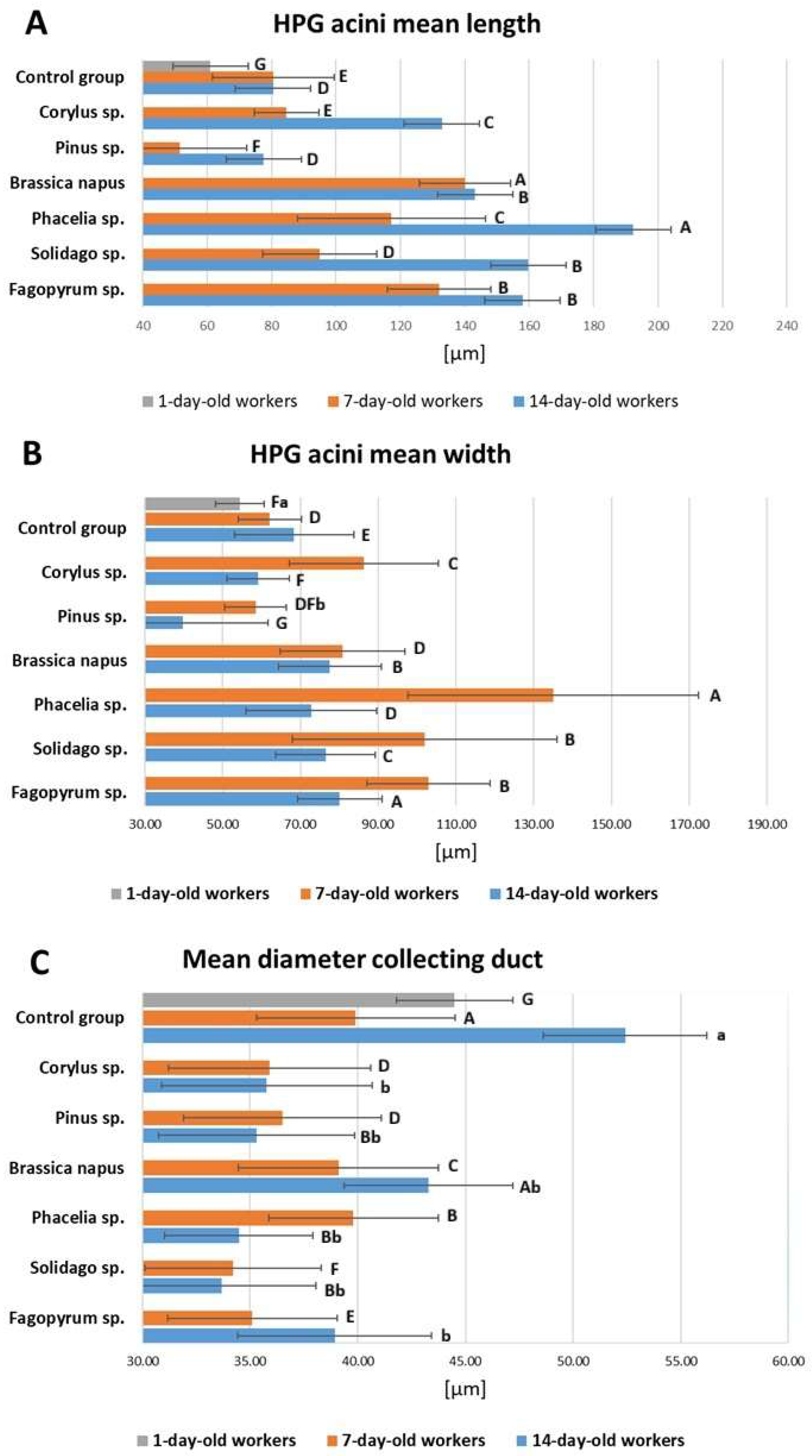
2.1. Acini Length
2.2. Acini Width
2.3. Diameter of the Collecting Duct
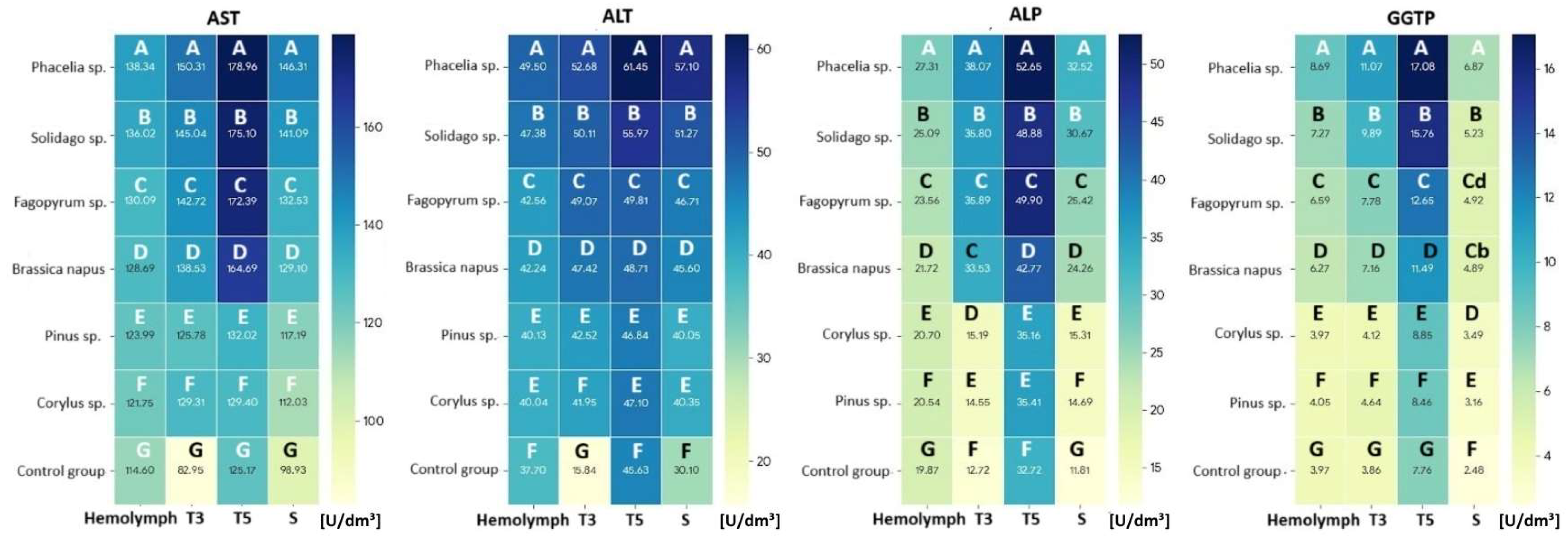
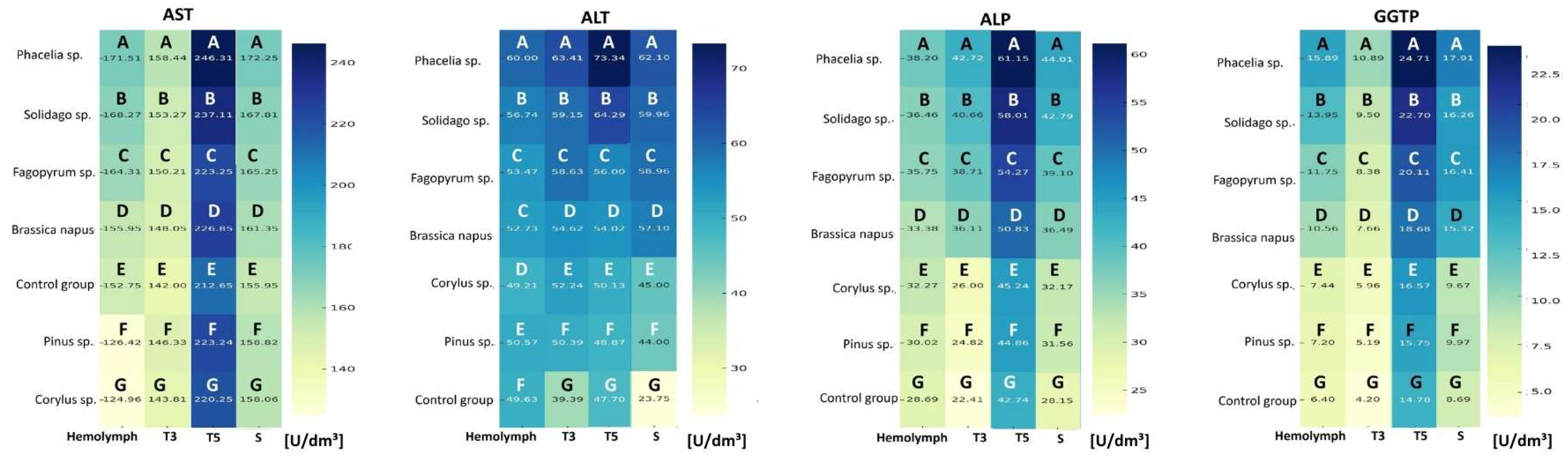
2.4. Enzymatic Biomarker Activities
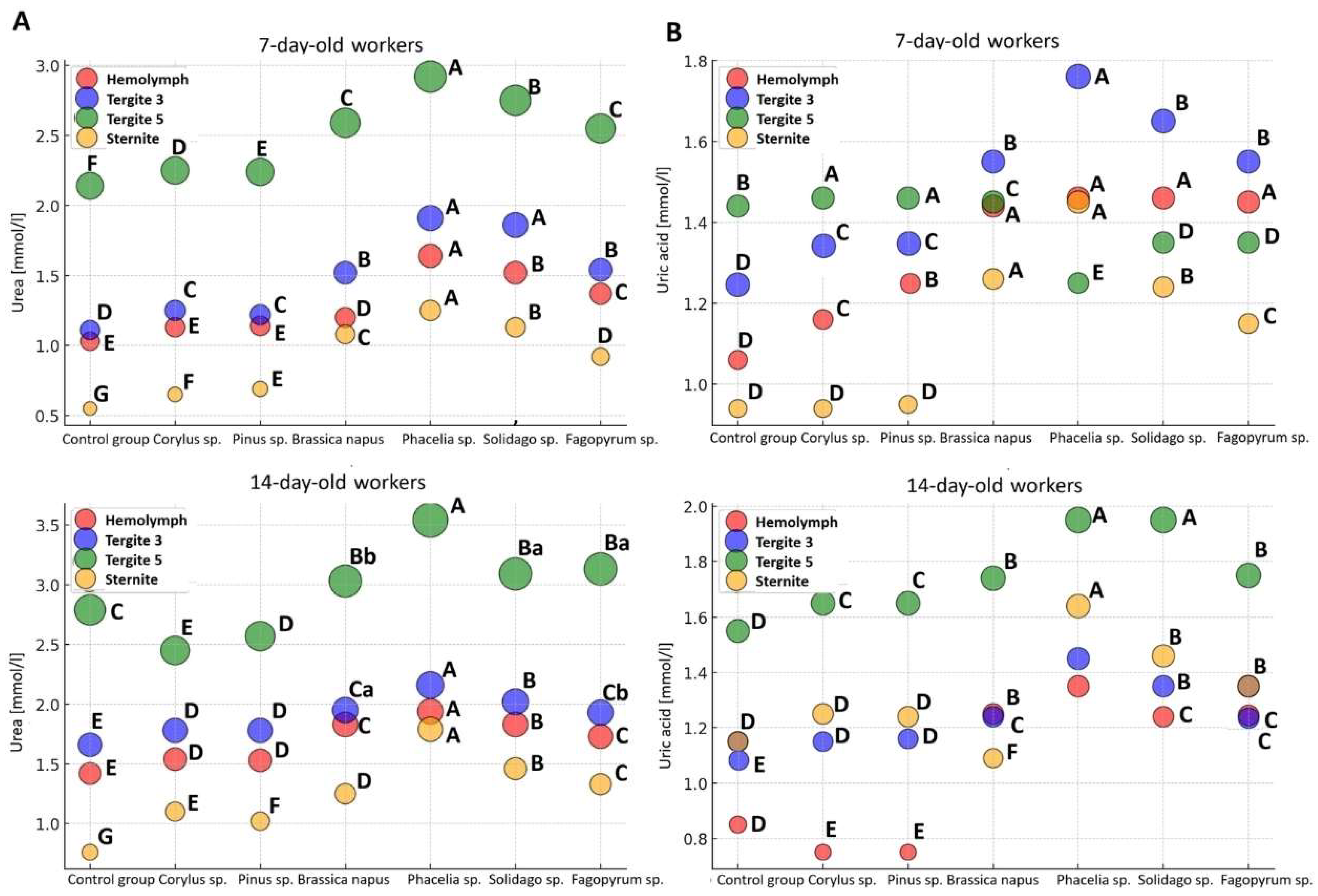
2.5. Non-Enzymatic Biomarker Activities
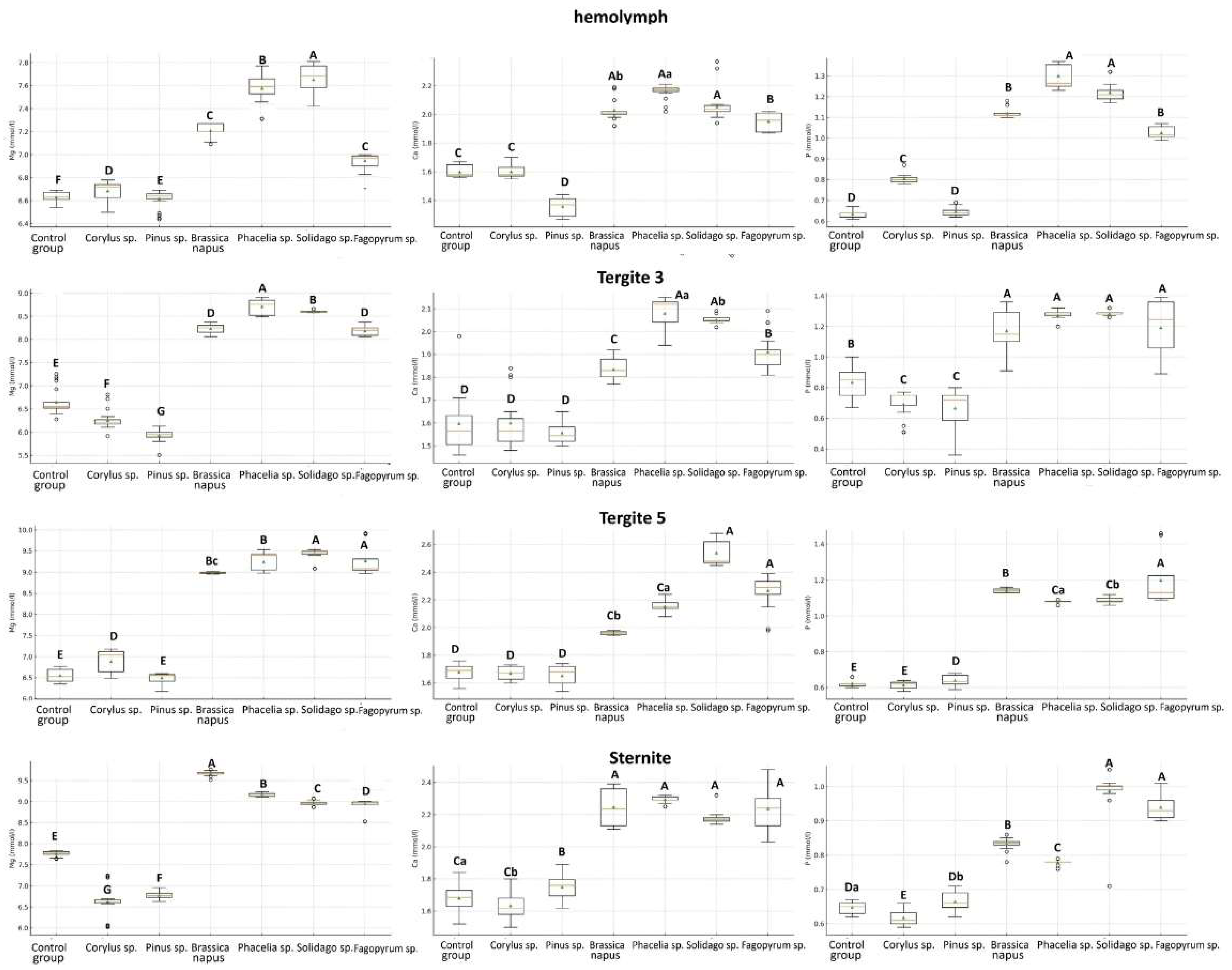
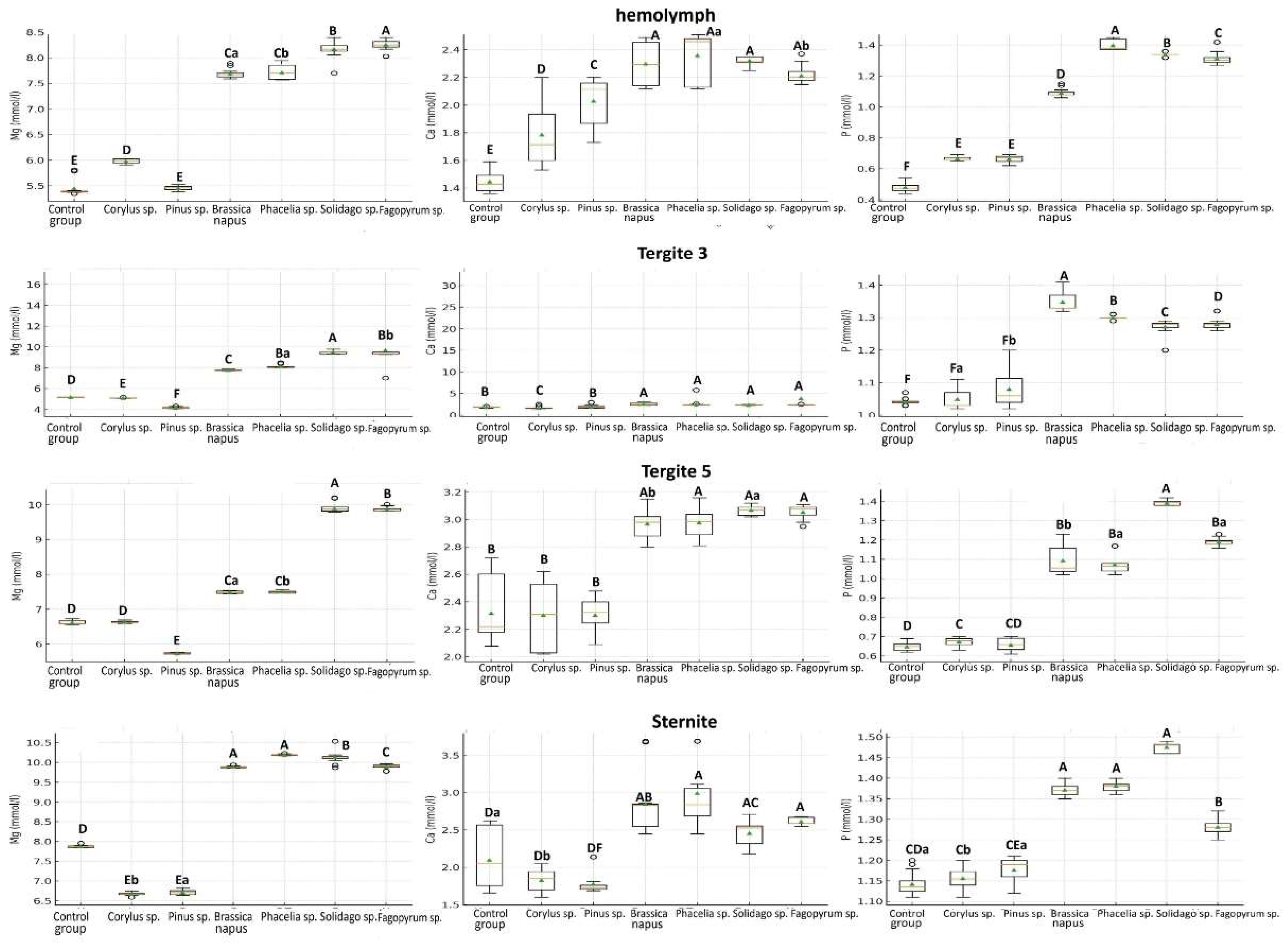
2.6. Ion Concentrations
3. Discussion
4. Materials and Methods
4.1. Fresh Pollen Collection and Preparation of Sugar Candy with Various Pollen Additions
- -
- Control group—no pollen was added, fed sugar candy only;
- -
- Experimental groups—10% of one type of pollen, hazel (Corylus sp.), pine (Pinus sylvestris L.), rapeseed (Brassica napus L.), phacelia (Phacelia tanacetifolia Benth), goldenrod (Solidago sp.), or buckwheat (Fagopyrum esculentum Moench), was added to the remaining groups of sugar candy.
4.2. Cage Tests
4.3. Hypopharyngeal Gland Measurements
4.4. Hemolymph Collection
4.5. Fat Body Collection
4.6. Sample Preparation for Biochemical Analyses
4.7. Metabolic Markers
4.8. Enzymatic Biomarker Activities
4.9. Non-Enzymatic Biomarker Activities
4.10. Ion Concentration
4.11. Statistical Analysis
5. Conclusions
Supplementary Materials
Author Contributions
Funding
Data Availability Statement
Acknowledgments
Conflicts of Interest
References
- Vaudo, A.D.; Dyer, L.A.; Leonard, A.S. Pollen Nutrition Structures Bee and Plant Community Interactions. Proc. Natl. Acad. Sci. USA 2024, 121, e2317228120. [Google Scholar] [CrossRef]
- Tsuruda, J.M.; Chakrabarti, P.; Sagili, R.R. Honey Bee Nutrition. Vet. Clin. N. Am.-Food Anim. Pract. 2021, 37, 505–519. [Google Scholar] [CrossRef] [PubMed]
- Shanahan, M. Honey Bees and Industrial Agriculture: What Researchers Are Missing, and Why It’s a Problem. J. Insect Sci. 2022, 22, 14. [Google Scholar] [CrossRef] [PubMed]
- Blettler, D.C.; Biurrun-Manresa, J.A.; Fagúndez, G.A. A Review of the Effects of Agricultural Intensification and the Use of Pesticides on Honey Bees and Their Products and Possible Palliatives. Span. J. Agric. Res. 2022, 20, e03R02. [Google Scholar] [CrossRef]
- Tlak Gajger, I.; Mutinelli, F. Impact of Environmental Factors and Management Practices on Bee Health. Insects 2024, 15, 996. [Google Scholar] [CrossRef]
- Alaux, C.; Allier, F.; Decourtye, A.; Odoux, J.F.; Tamic, T.; Chabirand, M.; Delestra, E.; Decugis, F.; Le Conte, Y.; Henry, M. A ‘Landscape Physiology’ Approach for Assessing Bee Health Highlights the Benefits of Floral Landscape Enrichment and Semi-Natural Habitats. Sci. Rep. 2017, 7, 40568. [Google Scholar] [CrossRef]
- Ansaloni, L.S.; Kristl, J.; Domingues, C.E.C.; Gregorc, A. An Overview of the Nutritional Requirements of Honey Bees (Apis mellifera Linnaeus, 1758). Insects 2025, 16, 97. [Google Scholar] [CrossRef]
- Chang, H.; Ding, G.; Jia, G.; Feng, M.; Huang, J. Hemolymph Metabolism Analysis of Honey Bee (Apis mellifera L.) Response to Different Bee Pollens. Insects 2023, 14, 37. [Google Scholar] [CrossRef]
- Smart, M.; Pettis, J.; Rice, N.; Browning, Z.; Spivak, M. Linking Measures of Colony and Individual Honey Bee Health to Survival among Apiaries Exposed to Varying Agricultural Land Use. PLoS ONE 2016, 11, e0152685. [Google Scholar] [CrossRef]
- Bryś, M.S.; Staniec, B.; Strachecka, A. The Effect of Pollen Monodiets on Fat Body Morphology Parameters and Energy Substrate Levels in the Fat Body and Hemolymph of Apis mellifera L. Workers. Sci. Rep. 2024, 14, 15177. [Google Scholar] [CrossRef]
- Zeng, Q.; Zong, D.; Li, X.; Zhang, Z.; Qiu, J. Lipidomics Reveals Dietary Alpha Linolenic Acid Facilitates Metabolism Related to Division of Labor in Honeybee Workers. Agriculture 2025, 15, 272. [Google Scholar] [CrossRef]
- Bryś, M.S. Analysis of Panels of Chemical Biomarkers in the Honeybee in Hemolymph and Fat Body in Response to Physiological and Environmental Factors. Metabolites 2025, 15, 743. [Google Scholar] [CrossRef] [PubMed]
- Quinlan, G.M.; Grozinger, C.M. Honey Bee Nutritional Ecology: From Physiology to Landscapes. Adv. Insect Phys. 2023, 64, 289–345. [Google Scholar]
- Naug, D. Nutritional Stress Due to Habitat Loss May Explain Recent Honeybee Colony Collapses. Biol. Conserv. 2009, 142, 2369–2372. [Google Scholar] [CrossRef]
- Bryś, M.S.; Strachecka, A. The Key Role of Amino Acids in Pollen Quality and Honey Bee Physiology—A Review. Molecules 2024, 29, 2605. [Google Scholar] [CrossRef]
- Di Pasquale, G.; Salignon, M.; Le Conte, Y.; Belzunces, L.P.; Decourtye, A.; Kretzschmar, A.; Suchail, S.; Brunet, J.L.; Alaux, C. Influence of Pollen Nutrition on Honey Bee Health: Do Pollen Quality and Diversity Matter? PLoS ONE 2013, 8, e72016. [Google Scholar] [CrossRef]
- Stabler, D.; Al-Esawy, M.; Chennells, J.A.; Perri, G.; Robinson, A.; Wright, G.A. Regulation of Dietary Intake of Protein and Lipid by Nurse-Age Adult Worker Honeybees. J. Exp. Biol. 2021, 224, jeb230615. [Google Scholar] [CrossRef]
- DeGrandi-Hoffman, G.; Gage, S.L.; Corby-Harris, V.; Carroll, M.; Chambers, M.; Graham, H.; Watkins deJong, E.; Hidalgo, G.; Calle, S.; Azzouz-Olden, F.; et al. Connecting the Nutrient Composition of Seasonal Pollens with Changing Nutritional Needs of Honey Bee (Apis mellifera L.) Colonies. J. Insect Physiol. 2018, 109, 114–124. [Google Scholar] [CrossRef]
- Vergun, O. Nutritional Composition of Phacelia tanacetifolia Benth. Bee Pollen and Inflorescences. Agrobiodivers. Improv. Nutr. Health Life Qual. 2023, 7, 95–104. [Google Scholar] [CrossRef]
- Jachuła, J.; Denisow, B.; Strzałkowska-Abramek, M. Does an Invader Have a Bright Side? Floral Reward in Two Solidago Species. J. Apic. Res. 2020, 59, 599–608. [Google Scholar] [CrossRef]
- Yang, K.; Wu, D.; Ye, X.; Liu, D.; Chen, J.; Sun, P. Characterization of Chemical Composition of Bee Pollen in China. J. Agric. Food Chem. 2013, 61, 708–718. [Google Scholar] [CrossRef] [PubMed]
- Bożek, M.; Denisow, B.; Strzałkowska-Abramek, M.; Chrzanowska, E.; Winiarczyk, K. Non-Forest Woody Vegetation: A Critical Resource for Pollinators in Agricultural Landscapes—A Review. Sustainability 2023, 15, 8751. [Google Scholar] [CrossRef]
- Borański, M.; Jachuła, J.; Pustkowiak, S.; Celary, W.; Splitt, A. Solitary Bees (Osmiabicornis) Avoid Creating Single-Component Pollen Provisions from Mass Flowering Crops in Favor of Trees’ Pollen. Arthropod. Plant. Interact. 2025, 19, 32. [Google Scholar] [CrossRef]
- Jachuła, J.; Denisow, B.; Wrzesień, M.; Ziółkowska, E. The Need for Weeds: Man-Made, Non-Cropped Habitats Complement Crops and Natural Habitats in Providing Honey Bees and Bumble Bees with Pollen Resources. Sci. Total Environ. 2022, 840, 156551. [Google Scholar] [CrossRef]
- Splitt, A.; Skórka, P.; Strachecka, A.; Borański, M.; Teper, D. Keep Trees for Bees: Pollen Collection by Osmia bicornis along the Urbanization Gradient. Urban For. Urban Green. 2021, 64, 127250. [Google Scholar] [CrossRef]
- Beekman, M.; Preece, K.; Schaerf, T.M. Dancing for Their Supper: Do Honeybees Adjust Their Recruitment Dance in Response to the Protein Content of Pollen? Insectes Soc. 2016, 63, 117–126. [Google Scholar] [CrossRef]
- Roulston, T.; Cane, J. The Effect of Pollen Protein Concentration on Body Size in the Sweat Bee Lasioglossum zephyrum (Hymenoptera: Apiformes). Evol. Ecol. 2002, 16, 49–65. [Google Scholar] [CrossRef]
- Fewell, J.H.; Winston, M.L. Colony State and Regulation of Pollen Foraging in the Honey Bee, Apis mellifera L. Behav. Ecol. Sociobiol. 1992, 30, 387–393. [Google Scholar] [CrossRef]
- Toprak, U.; Musselman, L.P. From Cellular Biochemistry to Systems Physiology: New Insights into Insect Lipid Metabolism. Insect Biochem. Mol. Biol. 2021, 133, 103585. [Google Scholar] [CrossRef]
- Chan, Q.W.T.; Mutti, N.S.; Foster, L.J.; Kocher, S.D.; Amdam, G.V.; Wolschin, F. The Worker Honeybee Fat Body Proteome Is Extensively Remodeled Preceding a Major Life-History Transition. PLoS ONE 2011, 6, e24794. [Google Scholar] [CrossRef]
- Micheu, S.; Crailsheim, K.; Leonhard, B. Importance of Proline and Other Amino Acids during Honeybee Flight (Apis mellifera Carnica POLLMANN). Amino Acids 2000, 18, 157–175. [Google Scholar] [CrossRef] [PubMed]
- Noor-ul-Ane, M.; Jung, C. Effect of Non-Essential Amino Acids (Proline and Glutamic Acid) and Sugar Polyol (Sorbitol) on Brood of Honey Bees. Front. Ecol. Evol. 2022, 10, 1009670. [Google Scholar] [CrossRef]
- Ma, L.; Wang, Y.; Zhang, W.; Wang, H.; Liu, Z.; Xu, B. Alterations in Protein and Amino Acid Metabolism in Honeybees (Apis mellifera) Fed Different L-Leucine Diets during the Larval Stage. J. Asia-Pac. Entomol. 2016, 19, 769–774. [Google Scholar] [CrossRef]
- Negri, P.; Ramirez, L.; Quintana, S.; Szawarski, N.; Maggi, M.; Le Conte, Y.; Lamattina, L.; Eguaras, M. Dietary Supplementation of Honey Bee Larvae with Arginine and Abscisic Acid Enhances Nitric Oxide and Granulocyte Immune Responses after Trauma. Insects 2017, 8, 85. [Google Scholar] [CrossRef]
- Brejcha, M.; Prušáková, D.; Sábová, M.; Peska, V.; Černý, J.; Kodrík, D.; Konopová, B.; Frydrychová, R.Č. Seasonal Changes in Ultrastructure and Gene Expression in the Fat Body of Worker Honey Bees. J. Insect Physiol. 2023, 146, 104504. [Google Scholar] [CrossRef]
- Filipiak, M.; Kuszewska, K.; Asselman, M.; Denisow, B.; Stawiarz, E.; Woyciechowski, M.; Weiner, J. Ecological Stoichiometry of the Honeybee: Pollen Diversity and Adequate Species Composition Are Needed to Mitigate Limitations Imposed on the Growth and Development of Bees by Pollen Quality. PLoS ONE 2017, 12, e0183236. [Google Scholar] [CrossRef]
- De Sousa, R.T.; Darnell, R.; Wright, G.A. Behavioural Regulation of Mineral Salt Intake in Honeybees: A Self-Selection Approach. Philos. Trans. R. Soc. B Biol. Sci. 2022, 377, 20210169. [Google Scholar] [CrossRef]
- Kim, H.J.; Seo, G.-B.; Ullah, Z.; Kwon, H.-W. Nutrition for Honey Bee to Prevent Colony Collapse. J. Apic. 2022, 37, 397–404. [Google Scholar] [CrossRef]
- Atmowidjojo, A.H.; Erickson, E.H.; Wheeler, D.E.; Cohen, A.C. Regulation of Hemolymph Osmolality in Feral and Domestic Honeybees, Apis mellifera L. (Hymenoptera: Apidae). Comp. Biochem. Physiol. Part A Mol. Integr. Physiol. 1999, 122, 227–233. [Google Scholar] [CrossRef]
- Zibaee, A.; Zibaee, I.; Jalali Sendi, J. A Juvenile Hormone Analog, Pyriproxifen, Affects Some Biochemical Components in the Hemolymph and Fat Bodies of Eurygaster integriceps Puton (Hemiptera: Scutelleridae). Pestic. Biochem. Physiol. 2011, 100, 289–298. [Google Scholar] [CrossRef]
- Łoś, A.; Strachecka, A. Fast and Cost-Effective Biochemical Spectrophotometric Analysis of Solution of Insect “Blood” and Body Surface Elution. Sensors 2018, 18, 1494. [Google Scholar] [CrossRef]
- Strachecka, A.; Kuszewska, K.; Olszewski, K.; Skowronek, P.; Grzybek, M.; Grabowski, M.; Paleolog, J.; Woyciechowski, M. Activities of Antioxidant and Proteolytic Systems and Biomarkers in the Fat Body and Hemolymph of Young Apis mellifera Females. Animals 2022, 12, 1121. [Google Scholar] [CrossRef]
- Zhang, H.; Forman, H.J. Redox Regulation of γ-Glutamyl Transpeptidase. Am. J. Respir. Cell Mol. Biol. 2009, 41, 509–515. [Google Scholar] [CrossRef]
- Cheng, Y.; Wang, Z.; Quan, W.; Xue, C.; Qu, T.; Wang, T.; Chen, Q.; Wang, Z.; Zeng, M.; Qin, F.; et al. Pine Pollen: A Review of Its Chemical Composition, Health Effects, Processing, and Food Applications. Trends Food Sci. Technol. 2023, 138, 599–614. [Google Scholar] [CrossRef]
- Feng, M.; Ramadan, H.; Han, B.; Fang, Y.; Li, J. Hemolymph Proteome Changes during Worker Brood Development Match the Biological Divergences between Western Honey Bees (Apis mellifera) and Eastern Honey Bees (Apis cerana). BMC Genom. 2014, 15, 563. [Google Scholar] [CrossRef] [PubMed]
- Strachecka, A.; Olszewski, K.; Kuszewska, K.; Chobotow, J.; Wójcik, Ł.; Paleolog, J.; Woyciechowski, M. Segmentation of the Subcuticular Fat Body in Apis mellifera Females with Different Reproductive Potentials. Sci. Rep. 2021, 11, 13887. [Google Scholar] [CrossRef] [PubMed]
- Omar, E.; Abd-Ella, A.A.; Khodairy, M.M.; Moosbeckhofer, R.; Crailsheim, K.; Brodschneider, R. Influence of Different Pollen Diets on the Development of Hypopharyngeal Glands and Size of Acid Gland Sacs in Caged Honey Bees (Apis mellifera). Apidologie 2017, 48, 425–436. [Google Scholar] [CrossRef]
- Ueno, T.; Takeuchi, H.; Kawasaki, K.; Kubo, T. Changes in the Gene Expression Profiles of the Hypopharyngeal Gland of Worker Honeybees in Association with Worker Behavior and Hormonal Factors. PLoS ONE 2015, 10, e0130206. [Google Scholar] [CrossRef]
- Winston, M.L. The Biology of the Honey Bee; Harvard University Press: Cambridge, MA, USA, 1991. [Google Scholar]
- Shakeel, M.; Ahmad, S.; Ali, H.; Al-Kahtani, S.N.; Ghramh, H.A.; Khan, K.A. Seasonal Impact and Comparative Analysis of Hypopharyngeal Glands in Worker and Forager Honey Bees of Two Different Species: Apis mellifera and A. cerana. Fresenius Environ. Bull. 2020, 29, 9024–9030. [Google Scholar]
- Richter, K.N.; Rolke, D.; Blenau, W.; Baumann, O. Secretory cells in honeybee hypopharyngeal gland: Polarized organization and age-dependent dynamics of plasma membrane. Cell Tissue Res. 2016, 366, 163–174. [Google Scholar] [CrossRef]
- Ahmad, S.; Khan, S.A.; Khan, K.A.; Li, J. Novel Insight Into the Development and Function of Hypopharyngeal Glands in Honey Bees. Front. Physiol. 2021, 11, 615830. [Google Scholar] [CrossRef]
- Crailsheim, K.; Stolberg, E. Influence of Diet, Age and Colony Condition upon Intestinal Proteolytic Activity and Size of the Hypopharyngeal Glands in the Honeybee (Apis mellifera L.). J. Insect Physiol. 1989, 35, 595–602. [Google Scholar] [CrossRef]
- Ara Begum, H.; Idrees, A.; Afzal, A.; Iqbal, J.; Qadir, Z.A.; Shahzad, M.F.; Li, Z.; Salah Shebl Ibrahim, S.; Alkahtani, J.; Li, J. Impact of Different Pollen Protein Diets on the Physiology of Apis mellifera L. (Hymenoptera: Apidae) Workers from Essential Plant Sources. J. King Saud Univ. Sci. 2023, 35, 102511. [Google Scholar] [CrossRef]
- Al-Ghamdi, A.A.K.; Al-Khaibari, A.M.; Omar, M.O. Consumption Rate of Some Proteinic Diets Affecting Hypopharyngeal Glands Development in Honeybee Workers. Saudi J. Biol. Sci. 2011, 18, 73–77. [Google Scholar] [CrossRef] [PubMed]
- Corby-Harris, V.; Snyder, L.; Meador, C. Fat Body Lipolysis Connects Poor Nutrition to Hypopharyngeal Gland Degradation in Apis mellifera. J. Insect Physiol. 2019, 116, 1–9. [Google Scholar] [CrossRef]
- Smodiš Škerl, M.I.; Gregorc, A. Characteristics of Hypopharyngeal Glands in Honeybees (Apis mellifera Carnica) from a Nurse Colony. Slov. Vet. Res. 2015, 52, 67–74. [Google Scholar] [CrossRef]
- Darvishzadeh, A.; Nehzati, G.; Nowzari, J.; Hosseininaveh, V.; Nozari, J. Effect of Proline as a Nutrient on Hypopharyngeal Glands during Development of Apis mellifera (Hymenoptera: Apidae). Arthropods 2015, 4, 137. [Google Scholar]
- DeGrandi-Hoffman, G.; Chen, Y.; Huang, E.; Huang, M.H. The Effect of Diet on Protein Concentration, Hypopharyngeal Gland Development and Virus Load in Worker Honey Bees (Apis mellifera L.). J. Insect Physiol. 2010, 56, 1184–1191. [Google Scholar] [CrossRef]
- Lee, M.R.; Choi, Y.S.; Kim, D.W.; Lee, M.Y. Age-Dependent Hypopharyngeal Gland Development and Morphometric Characteristics in the Cross-Bred Lineage of Honeybees Reared for High Royal Jelly Production. J. Asia-Pac. Entomol. 2019, 22, 699–704. [Google Scholar] [CrossRef]
- Rojek, W.; Kuszewska, K.; Szentgyörgyi, H.; Woyciechowski, M. Asymmetry in the Ovarioles, Mandibular Glands and Hypopharyngeal Glands of Honeybee (Apis mellifera) Workers Developing in Queenright or Queenless Colonies. Apidologie 2022, 53, 43. [Google Scholar] [CrossRef]
- Musila, J.; Přidal, A. Seasonal Changes in Hemolymph Protein Level and Hypopharyngeal Gland Size Depending on Age and In-Nest Location of Honeybee Workers. Animals 2024, 14, 512. [Google Scholar] [CrossRef]
- Dziechciarz, P.; Gregorc, A.; Strachecka, A.; Borsuk, G.; Olszewski, K. Honeybee Workers Reared in Stand-ard-Cell Combs Have Larger Hypopharyngeal Glands. Animal 2026, 20, 101733. [Google Scholar] [CrossRef]
- Al-Esawy, M.T. Honey Bee Immunity and Physiology Are Enhanced by Consuming High-Fat Diets. J. Plant Prot. Res. 2023, 63, 185–195. [Google Scholar] [CrossRef]
- DeGrandi-Hoffman, G.; Chen, Y. Nutrition, Immunity and Viral Infections in Honey Bees. Curr. Opin. Insect Sci. 2015, 10, 170–176. [Google Scholar] [CrossRef] [PubMed]
- Negri, P.; Villalobos, E.; Szawarski, N.; Damiani, N.; Gende, L.; Garrido, M.; Maggi, M.; Quintana, S.; Lamattina, L.; Eguaras, M. Towards Precision Nutrition: A Novel Concept Linking Phytochemicals, Immune Response and Honey Bee Health. Insects 2019, 10, 401. [Google Scholar] [CrossRef] [PubMed]
- Alaux, C.; Dantec, C.; Parrinello, H.; Le Conte, Y. Nutrigenomics in Honey Bees: Digital Gene Expression Analysis of Pollen’s Nutritive Effects on Healthy and Varroa-Parasitized Bees. BMC Genom. 2011, 12, 496. [Google Scholar] [CrossRef] [PubMed]
- Quinlan, G.; Döke, M.A.; Ortiz-Alvarado, Y.; Rodriguez-Gomez, N.; Koru, Y.B.; Underwood, R. Carbohydrate Nutrition Associated with Health of Overwintering Honey Bees. J. Insect Sci. 2023, 23, 16. [Google Scholar] [CrossRef]
- Nicolson, S.W.; Da Silva Das Neves, S.; Human, H.; Pirk, C.W.W. Digestibility and Nutritional Value of Fresh and Stored Pollen for Honey Bees (Apis mellifera Scutellata). J. Insect Physiol. 2018, 107, 302–308. [Google Scholar] [CrossRef]
- Alaux, C.; Ducloz, F.; Crauser, D.; Le Conte, Y. Diet Effects on Honeybee Immunocompetence. Biol. Lett. 2010, 6, 562–565. [Google Scholar] [CrossRef]
- Jack, C.J.; Prouty, C.; Mendonça, G.A.; Dai, P.L.; Bloomquist, J.R.; Ellis, J.D. A New Cage Design to Test Pesticide Impacts on Honey Bees via Toxicant Exposure through Sucrose, Pollen and Beeswax Simultaneously. Environ. Res. 2025, 284, 122234. [Google Scholar] [CrossRef]
- Bryś, M.S.; Olszewski, K.; Strachecka, A. The Relationship between Pollen Monodiets and the Activities of Proteolytic Systems in the Fat Body and Hemolymph of Honeybee Workers. PLoS ONE 2025, 20, e0326175. [Google Scholar] [CrossRef]
- Braglia, C.; Rudelli, C.; Tinti, A.; Bocquet, M.; Isani, G.; Bulet, P.; Giacomelli, A.; Di Gioia, D.; Alberoni, D. Unravelling Pollen Diet and Microbiome Influence on Honey Bee Health. Sci. Rep. 2025, 15, 13474. [Google Scholar] [CrossRef] [PubMed]
- Frias, B.E.D.; Barbosa, C.D.; Lourenço, A.P. Pollen Nutrition in Honey Bees (Apis mellifera): Impact on Adult Health. Apidologie 2016, 47, 15–25. [Google Scholar] [CrossRef]
- Bryś, M.S.; Skowronek, P.; Strachecka, A. Pollen Diet—Properties and Impact on a Bee Colony. Insects 2021, 12, 798. [Google Scholar] [CrossRef] [PubMed]
- Basualdo, M.; Barragán, S.; Vanagas, L.; García, C.; Solana, H.; Rodríguez, E.; Bedascarrasbure, E. Conversion of High and Low Pollen Protein Diets into Protein in Worker Honey Bees (Hymenoptera: Apidae). J. Econ. Entomol. 2013, 106, 1553–1558. [Google Scholar] [CrossRef] [PubMed]
- Crailsheim, K. The Protein Balance of the Honey Bee Worker. Apidologie 1990, 21, 417–429. [Google Scholar] [CrossRef]
- Degrandi-Hoffman, G.; Corby-Harris, V.; Carroll, M.; Toth, A.L.; Gage, S.; Dejong, E.W.; Graham, H.; Chambers, M.; Meador, C.; Obernesser, B. The Importance of Time and Place: Nutrient Composition and Utilization of Seasonal Pollens by European Honey Bees (Apis mellifera L.). Insects 2021, 12, 235. [Google Scholar] [CrossRef]
- Somerville, D.C.; Nicol, H.I. Crude Protein and Amino Acid Composition of Honey Bee-Collected Pollen Pellets from South-East Australia and a Note on Laboratory Disparity. Aust. J. Exp. Agric. 2006, 46, 141–149. [Google Scholar] [CrossRef]
- Pirk, C.W.W. Honeybee Evolution: Royal Jelly Proteins Help Queen Larvae to Stay on Top. Curr. Biol. 2018, 28, R350–R351. [Google Scholar] [CrossRef]
- Lee, K.-H.; Kim, A.-J.; Choi, E.-M. Antioxidant Activity of Pine Pollen Extract In Vitro 41 Antioxidant and Antiinflammatory Activity of Pine Pollen Extract in Vitro. Phytother. Res 2009, 23, 41–48. [Google Scholar] [CrossRef]
- Klose, S.P.; Rolke, D.; Baumann, O. Morphogenesis of Honeybee Hypopharyngeal Gland during Pupal Development. Front. Zool. 2017, 14, 22. [Google Scholar] [CrossRef]
- Kheyri, H.; Cribb, B.W.; Reinhard, J.; Claudianos, C.; Merritt, D.J. Novel Actin Rings within the Secretory Cells of Honeybee Royal Jelly Glands. Cytoskeleton 2012, 69, 1032–1039. [Google Scholar] [CrossRef] [PubMed]
- Hrassnigg, N.; Crailsheim, K. Adaptation of Hypopharyngeal Gland Development to the Brood Status of Honeybee (Apis mellifera L.) Colonies. J. Insect Physiol. 1998, 44, 929–939. [Google Scholar] [CrossRef] [PubMed]
- Foster, S.P.; Casas, J. How Insect Exocrine Glands Work. Annu. Rev. Entomol. 2025, 70, 65–82. [Google Scholar] [CrossRef] [PubMed]
- Peng, Z.-W.; Hung, Y.-T.; Wu, M.-C. Mechanistic Exploration of Royal Jelly Production in Caged Honey Bees (Apis mellifera). Sci. Rep. 2024, 14, 30277. [Google Scholar] [CrossRef]
- Ghosh, S.; Jeon, H.; Jung, C. Foraging Behaviour and Preference of Pollen Sources by Honey Bee (Apis mellifera) Relative to Protein Contents. J. Ecol. Environ. 2020, 44, 4. [Google Scholar] [CrossRef]
- Wisse, E. Fixation Methods for Electron Microscopy of Human and Other Liver. World J. Gastroenterol. 2010, 16, 2851. [Google Scholar] [CrossRef]
- Ihle, K.E.; Baker, N.A.; Amdam, G.V. Insulin-like Peptide Response to Nutritional Input in Honey Bee Workers. J. Insect Physiol. 2014, 69, 49–55. [Google Scholar] [CrossRef]
- Ahmed, A.A.; Dong, H.; Liu, H.-Y.; Cai, D. Editorial: Integrated Role of Nutrition and Digestive Physiology for Animal Health. Front. Vet. Sci. 2022, 9, 1109703. [Google Scholar]
- Tahir, F.; Goblirsch, M.; Adamczyk, J.; Karim, S.; Alburaki, M. Honey Bee Apis mellifera L. Responses to Oxidative Stress Induced by Pharmacological and Pesticidal Compounds. Front. Bee Sci. 2023, 1, 1275862. [Google Scholar] [CrossRef]
- Plotnik, M.; Bieńkowski, P.; Berbeć, E.; Murawska, A.; Latarowski, K.; Migdał, P. Influence of Electromagnetic Field with Frequency of 50 Hz in Form of Doses on Selected Biochemical Markers of Honey Bee. J. Apic. Sci. 2023, 67, 27–36. [Google Scholar] [CrossRef]
- Kunat-Budzyńska, M.; Staniszewska, P.; Olszewski, K.; Cytryńska, M.; Strachecka, A. The Efficiency of the Krebs Cycle and the Respiratory Chain in Physiologically and Prematurely Aging Bees (Apis mellifera). Int. J. Mol. Sci. 2025, 26, 7294. [Google Scholar] [CrossRef] [PubMed]
- Bryś, M.S.; Olszewski, K.; Bartoń, M.; Strachecka, A. Changes in the Activities of Antioxidant Enzymes in the Fat Body and Hemolymph of Apis mellifera L. Due to Pollen Monodiets. Antioxidants 2025, 14, 69. [Google Scholar] [CrossRef] [PubMed]
- Strachecka, A.; Olszewski, K.; Paleolog, J.; Borsuk, G.; Bajda, M.; Krauze, M.; Merska, M.; Chobotow, J. Coenzyme Q10 Treatments Influence the Lifespan and Key Biochemical Resistance Systems in the Honeybee, Apis mellifera. Arch. Insect Biochem. Physiol. 2014, 86, 165–179. [Google Scholar] [CrossRef]
- Strachecka, A.J.; Olszewski, K.; Paleolog, J. Curcumin Stimulates Biochemical Mechanisms of Apis mellifera Resistance and Extends the Apian Life-Span. J. Apic. Sci. 2015, 59, 129–141. [Google Scholar] [CrossRef]
- Paleolog, J.; Wilde, J.; Gancarz, M.; Strachecka, A. Imidacloprid Decreases Energy Production in the Hemolymph and Fat Body of Western Honeybees Even Though, in Sublethal Doses, It Increased the Values of Six of the Nine Compounds in the Respiratory and Citric Cycle. PLoS ONE 2025, 20, e0320168. [Google Scholar] [CrossRef]
- Bajda, M.; Łoś, A.; Merska, M. Effect of Amphotericin B on the Biochemical Markers in the Haemolymph of Honey Bees. Med. Weter. 2014, 70, 766–769. [Google Scholar]
- Migdał, P.; Murawska, A.; Bieńkowski, P.; Strachecka, A.; Roman, A. Effect of E-Field at Frequency 50 Hz on Protein, Glucose, and Triglycerides Concentration in Honeybee Hemolymph. Eur. Zool. J. 2021, 88, 1170–1176. [Google Scholar] [CrossRef]
- Kunat-Budzyńska, M.; Staniszewska, P.; Olszewski, K.; Strachecka, A. Antioxidant Activities in the Hemolymph and Fat Body of Physiologically and Prematurely Aging Bees (Apis mellifera). Antioxidants 2025, 14, 373. [Google Scholar] [CrossRef]
- Di Pasquale, G.; Alaux, C.; Le Conte, Y.; Odoux, J.F.; Pioz, M.; Vaissière, B.E.; Belzunces, L.P.; Decourtye, A. Variations in the Availability of Pollen Resources Affect Honey Bee Health. PLoS ONE 2016, 11, e0162818. [Google Scholar] [CrossRef]
- Crailsheim, K.; Leonhard, B. Amino Acids in Honeybee Worker Haemolymph. Amino Acids 1997, 13, 141–153. [Google Scholar] [CrossRef]
- Omar, E.M.; Darwish, H.Y.A.; Othman, A.A.; El-Seedi, H.R.; Al Naggar, Y. Crushing Corn Pollen Grains Increased Diet Digestibility and Hemolymph Protein Content While Decreasing Honey Bee Consumption. Apidologie 2022, 53, 52. [Google Scholar] [CrossRef]
- Bursell, E. The Excretion of Nitrogen in Insects. Adv. Insect Physiol. 1967, 4, 33–67. [Google Scholar]
- Skowronek, P.; Wójcik, Ł.; Strachecka, A. CBD Supplementation Has a Positive Effect on the Activity of the Proteolytic System and Biochemical Markers of Honey Bees (Apis mellifera) in the Apiary. Animals 2022, 12, 2313. [Google Scholar] [CrossRef]
- Kunat-Budzyńska, M.; Staniszewska, P.; Olszewski, K.; Strachecka, A. Changes in Proteolytic System Activity Due to Varroa Destructor Infestation in Apis Mellifera Workers. Agriculture 2025, 15, 1942. [Google Scholar] [CrossRef]
- Hu, X.; Zhang, B.; Zheng, X.; Ji, H.; Feng, K.; Hu, X.; Gul, I.; Abbas, M.N.; Cui, H.; Zhu, Y. Molecular Characterization of Two Genes Encoding Novel Ca2+-Independent Phospholipase A2s from the Silkworm, Bombyx mori. Curr. Issues Mol. Biol. 2022, 44, 777–790. [Google Scholar] [CrossRef]
- Altaye, S.Z.; Pirk, C.W.W.; Crewe, R.M.; Nicolson, S.W. Convergence of Carbohydrate-Biased Intake Targets in Caged Worker Honeybees Fed Different Protein Sources. J. Exp. Biol. 2010, 213, 3311–3318. [Google Scholar] [CrossRef] [PubMed]


| Biomarkers Activities/Concentrations | |||||||||
| Tissue/Location | AST [U/dm3] | ALT [U/dm3] | ALP [U/dm3] | GGTP [U/dm3] | Urea [mmol/L] | Urea Acid [mmol/L] | Mg [mmol/L] | Ca [mmol/L] | P [mmol/L] |
| Hemolymph | 30.33 A (±3.21) | 20.65 A (±5.55) | 4.82 A (±0.10) | 1.65 A (±0.37) | 0.44 B (±0.01) | 1.41 A (±0.01) | 7.52 B (±1.73) | 1.83 A (±0.83) | 0.95 A (±0.22) |
| Tergite 3 | 5.60 C (±0.01) | 6.54 C (±0.05) | 0.52 C (±0.01) | 0.48 C (±0.02) | 0.13 D (±0.01) | 0.23 D (±0.01) | 6.62 C (±1.22) | 1.61 Bb (±0.64) | 0.63 B (±0.01) |
| Tergite 5 | 10.47 B (±0.01) | 7.73 B (±0.11) | 1.51 B (±0.23) | 0.80 B (±0.01) | 0.74 A (±0.01) | 0.44 B (±0.01) | 6.54 C (±1.73) | 1.45 C (±1.13) | 0.56 C (±0.01) |
| Sternite | 3.21 D (±0.12) | 5.40 D (±0.05) | 0.21 D (±0.01) | 0.30 D (±0.01) | 0.35 C (±0.0) | 0.35 C (±0.01) | 8.19 A (±2.68) | 1.65 Ba (±0.99) | 0.58 C (±0.01) |
Disclaimer/Publisher’s Note: The statements, opinions and data contained in all publications are solely those of the individual author(s) and contributor(s) and not of MDPI and/or the editor(s). MDPI and/or the editor(s) disclaim responsibility for any injury to people or property resulting from any ideas, methods, instructions or products referred to in the content. |
© 2026 by the authors. Licensee MDPI, Basel, Switzerland. This article is an open access article distributed under the terms and conditions of the Creative Commons Attribution (CC BY) license.
Share and Cite
Bryś, M.S.; Olszewski, K.; Staniec, B.; Staniszewska, P.; Strachecka, A. Impact of Monofloral Pollen Diets on the Development of Hypopharyngeal Glands and Modulation of Enzymatic, Non-Enzymatic, and Ionic Biomarker Activities in Selected Fat Body Segments and Hemolymph of Apis mellifera Workers. Molecules 2026, 31, 1315. https://doi.org/10.3390/molecules31081315
Bryś MS, Olszewski K, Staniec B, Staniszewska P, Strachecka A. Impact of Monofloral Pollen Diets on the Development of Hypopharyngeal Glands and Modulation of Enzymatic, Non-Enzymatic, and Ionic Biomarker Activities in Selected Fat Body Segments and Hemolymph of Apis mellifera Workers. Molecules. 2026; 31(8):1315. https://doi.org/10.3390/molecules31081315
Chicago/Turabian StyleBryś, Maciej Sylwester, Krzysztof Olszewski, Bernard Staniec, Patrycja Staniszewska, and Aneta Strachecka. 2026. "Impact of Monofloral Pollen Diets on the Development of Hypopharyngeal Glands and Modulation of Enzymatic, Non-Enzymatic, and Ionic Biomarker Activities in Selected Fat Body Segments and Hemolymph of Apis mellifera Workers" Molecules 31, no. 8: 1315. https://doi.org/10.3390/molecules31081315
APA StyleBryś, M. S., Olszewski, K., Staniec, B., Staniszewska, P., & Strachecka, A. (2026). Impact of Monofloral Pollen Diets on the Development of Hypopharyngeal Glands and Modulation of Enzymatic, Non-Enzymatic, and Ionic Biomarker Activities in Selected Fat Body Segments and Hemolymph of Apis mellifera Workers. Molecules, 31(8), 1315. https://doi.org/10.3390/molecules31081315