Characterization and Performance of Non-Activated Apricot Stone Powder for the Remediation of Zn2+-Rich Galvanizing Effluents

 ,
,  ,
, 
 ,
,
Abstract
1. Introduction
2. Materials and Methods
2.1. Characterization of Apricot Stone Powder
2.2. Sorption of Zinc Ions
2.3. Ecotoxicity
3. Results and Discussion
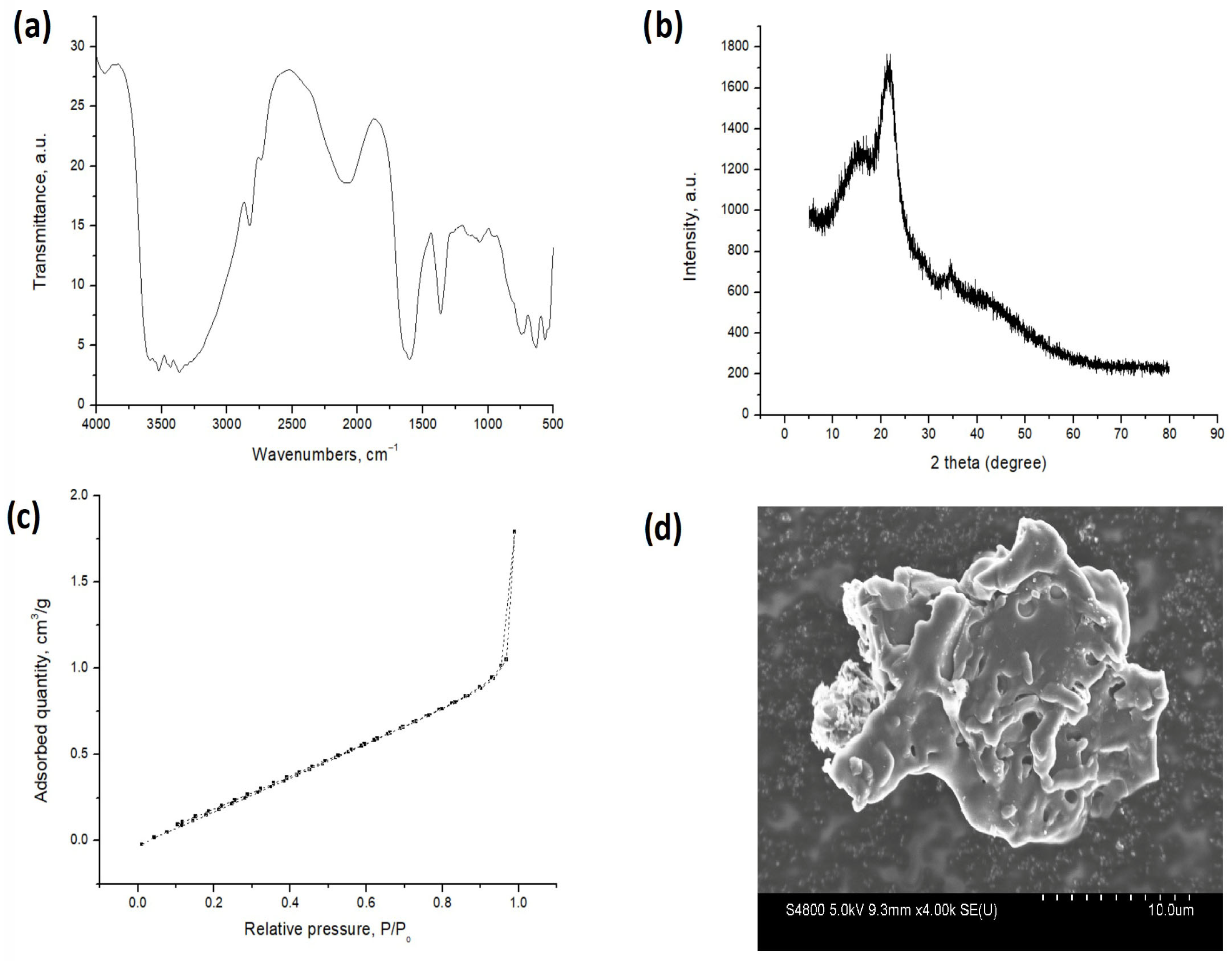
3.1. Biosorbent Characteristics

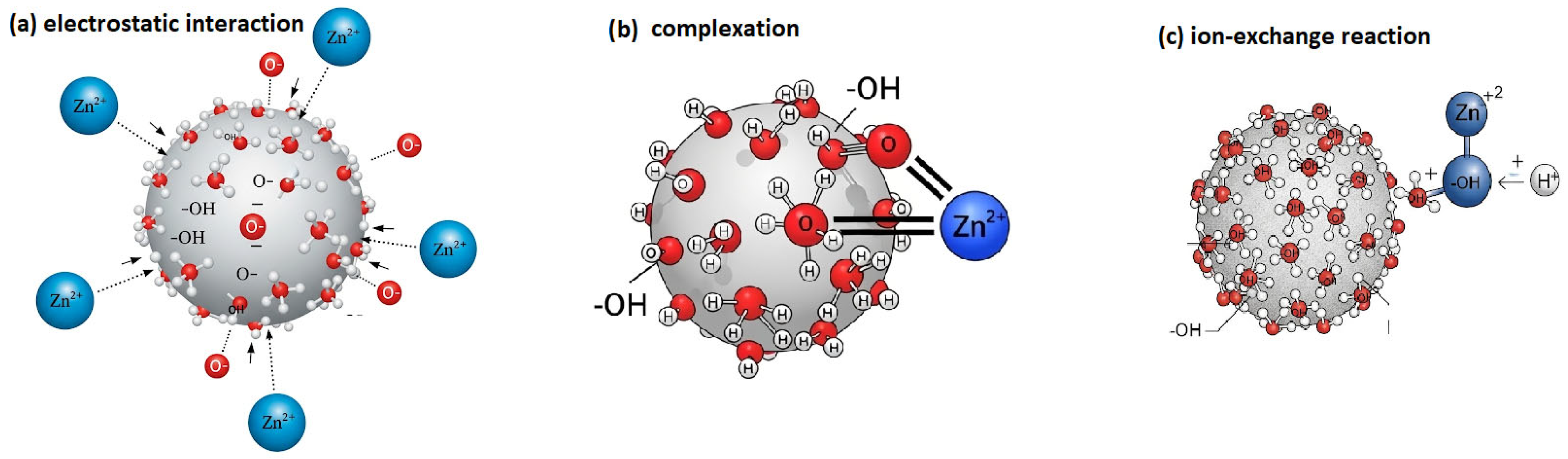
3.2. Zinc Removal from Water
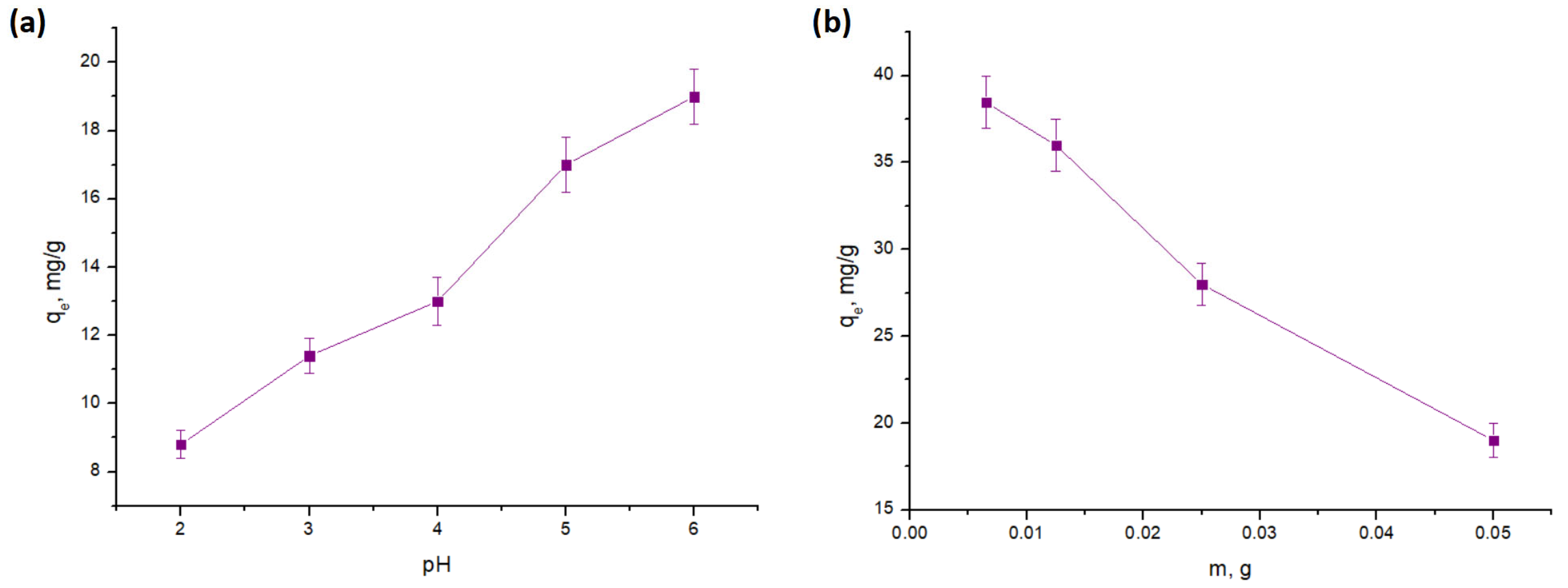
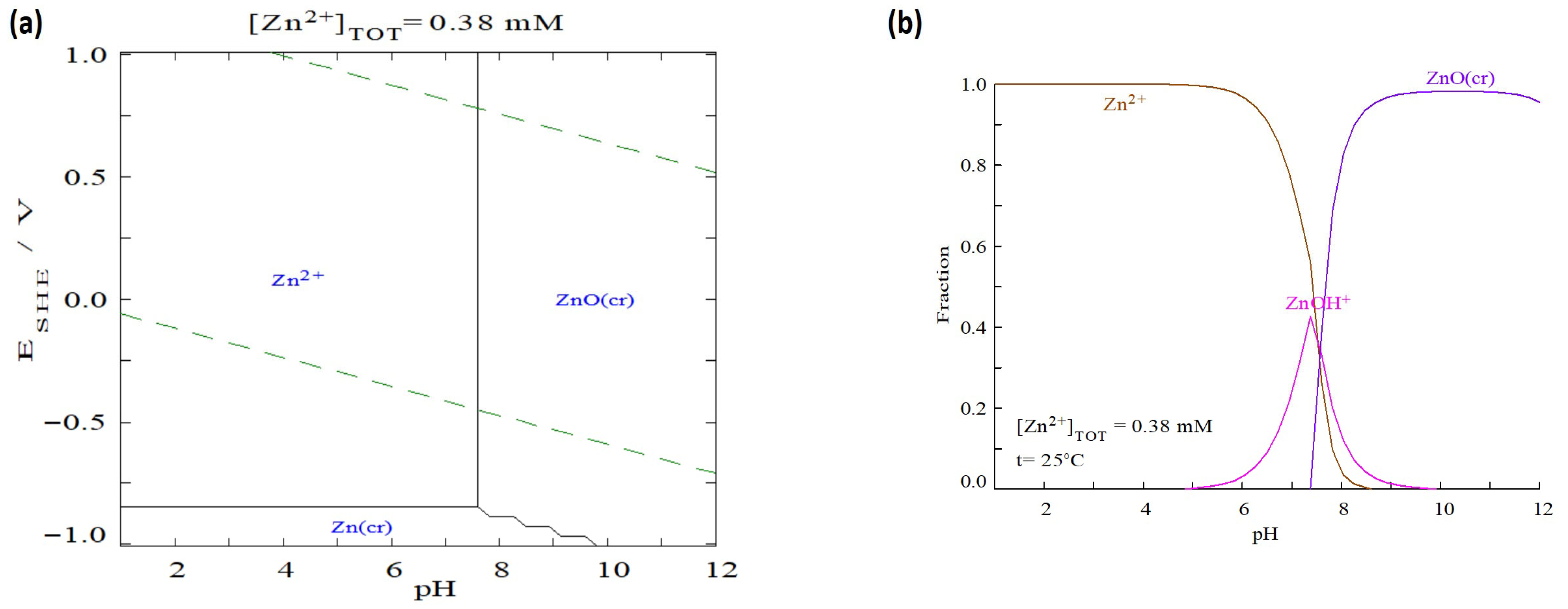
3.2.1. The Influence of pH and Biosorbent Mass
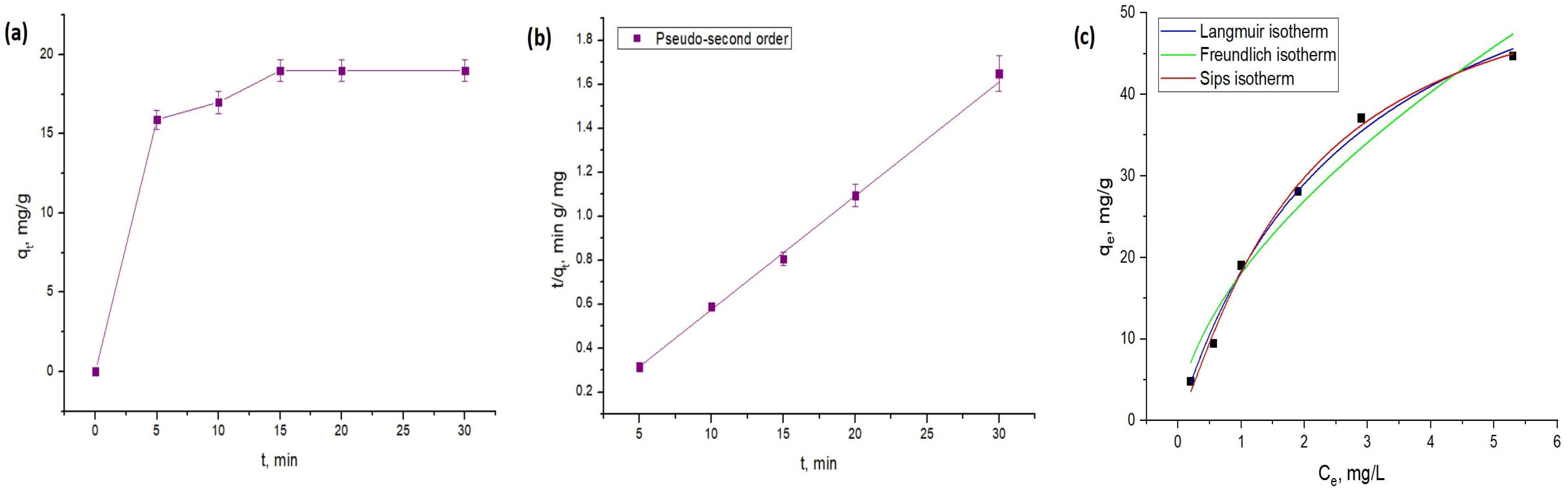
3.2.2. Kinetic and Isotherm Models
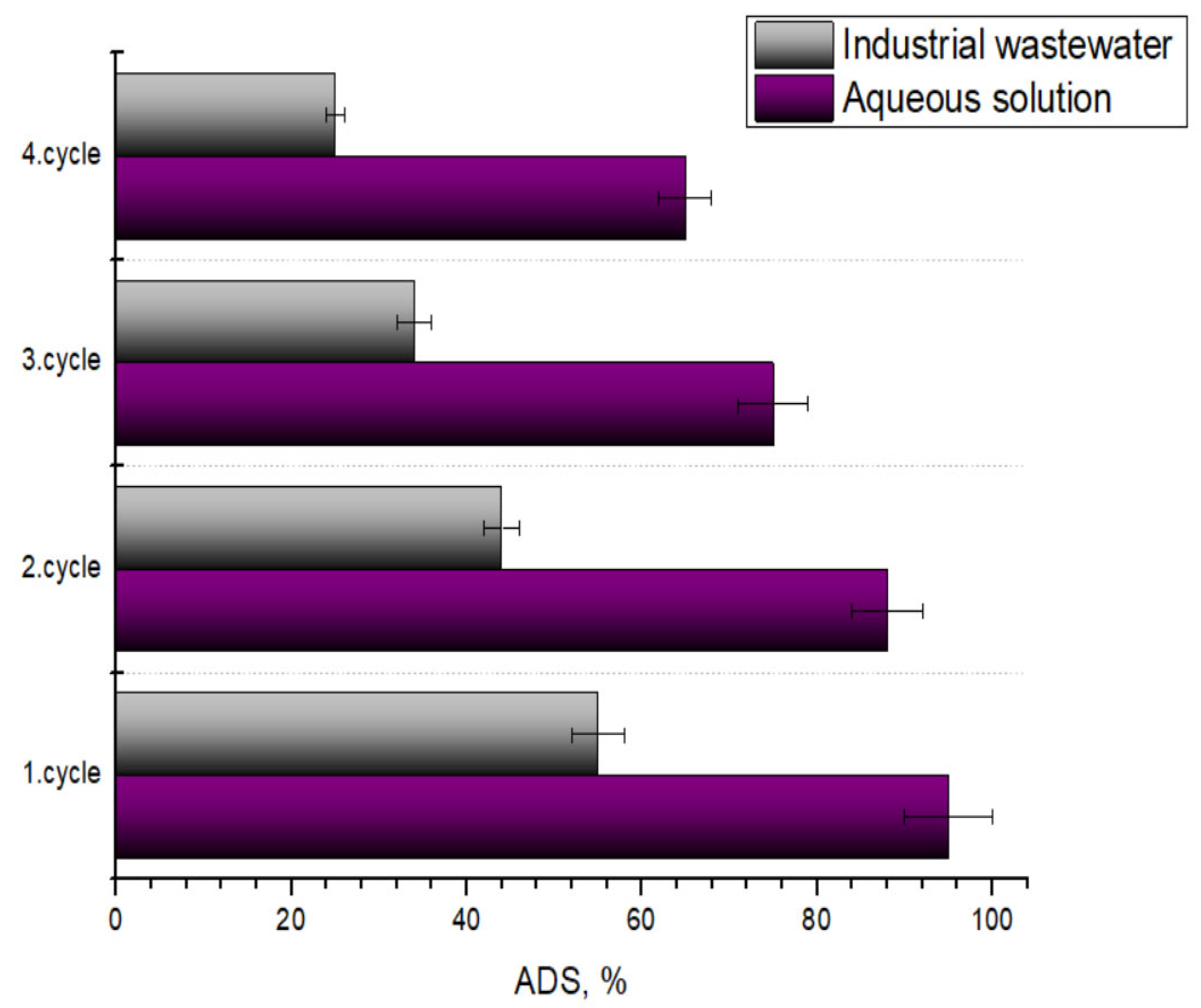
3.2.3. Test with Industrial Wastewater and Reusability
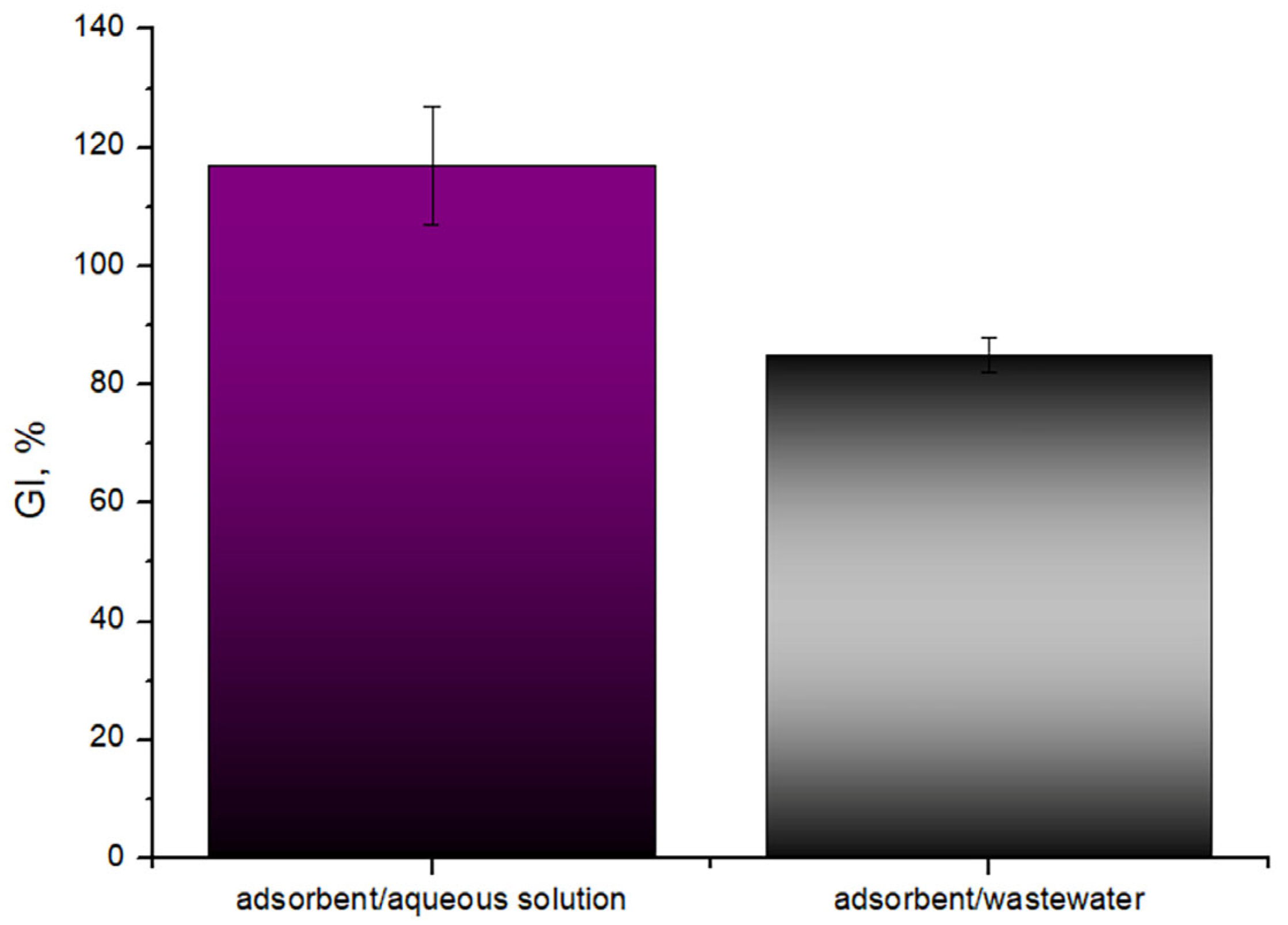
3.2.4. Ecotoxicity
3.2.5. Comparison with Literature
4. Conclusions
Author Contributions
Funding
Institutional Review Board Statement
Informed Consent Statement
Data Availability Statement
Conflicts of Interest
References
- Paduraru, C.; Tofan, L.; Teodosiu, C.; Bunia, I.; Tudorachi, N.; Toma, O. Biosorption of zinc(II) on rapeseed waste: Equilibrium studies and thermogravimetric investigations. Process Saf. Environ. Prot. 2015, 94, 18–28. [Google Scholar] [CrossRef]
- Purkayastha, D.; Mishra, U.; Biswas, S. A comprehensive review on Cd(II) removal from aqueous solution. J. Water Process Eng. 2014, 2, 105–128. [Google Scholar] [CrossRef]
- Fu, F.; Wang, Q. Removal of heavy metal ions from wastewaters: A review. J. Environ. Manag. 2011, 92, 407–418. [Google Scholar] [CrossRef] [PubMed]
- Raval, N.P.; Shah, P.U.; Shah, N.K. Adsorptive removal of nickel(II) ions from aqueous environment: A review. J. Environ. Manag. 2016, 179, 1–20. [Google Scholar] [CrossRef]
- Villen-Guzman, M.; Cerrillo-Gonzalez, M.M.; Paz-Garcia, J.M.; Rodriguez-Maroto, J.M.; Arhoun, B. Valorization of lemon peel waste as biosorbent for the simultaneous removal of nickel and cadmium from industrial effluents. Environ. Technol. Innov. 2021, 21, 101380. [Google Scholar] [CrossRef]
- Lima, J.Z.; Nauerth, I.M.R.; da Silva, E.F.; Pejon, O.J.; Rodrigues, V.G.S. Competitive sorption and desorption of cadmium, lead, and zinc onto peat, compost, and biochar. J. Environ. Manag. 2023, 344, 118515. [Google Scholar] [CrossRef]
- El-Zawahry, M.M.; Hassabo, A.G.; Mohamed, A.L. Preparation of cellulose gel extracted from rice straw and its application for metal ion removal from aqueous solutions. Int. J. Biol. Macromol. 2023, 248, 125940. [Google Scholar] [CrossRef]
- Dabrowska, M.; Retka, J.; Uhrynowski, W.; Drewniak, L. Use of lignocellulosic waste materials in the passive treatment of highly alkaline wastewater contaminated with sulfates and metals—From a laboratory study to pilot scale. J. Environ. Manag. 2022, 321, 115967. [Google Scholar] [CrossRef]
- Naik, R.L.; Kumar, M.R.; Narsaiah, T.B. Removal of heavy metals (Cu & Ni) from wastewater using rice husk and orange peel as adsorbents. Mater. Today Proc. 2023, 72, 92–98. [Google Scholar] [CrossRef]
- Iftikhar, L.; Ahmad, I.; Saleem, M.; Rasheed, A.; Waseem, A. Exploring the chemistry of waste eggshells and its diverse applications. Waste Manag. 2024, 189, 348–363. [Google Scholar] [CrossRef]
- Abdolali, A.; Guo, W.S.; Ngo, H.H.; Chen, S.S.; Nguyen, N.C.; Tung, K.L. Typical lignocellulosic wastes and by-products for biosorption process in water and wastewater treatment: A critical review. Bioresour. Technol. 2014, 160, 57–66. [Google Scholar] [CrossRef] [PubMed]
- Bhatnagar, A.; Sillanpää, M.; Witek-Krowiak, A. Agricultural waste peels as versatile biomass for water purification—A review. Chem. Eng. J. 2015, 270, 244–271. [Google Scholar] [CrossRef]
- Thakur, V.; Sharma, E.; Guleria, A.; Sangar, S.; Singh, K. Modification and management of lignocellulosic waste as an ecofriendly biosorbent for the application of heavy metal ions sorption. Mater. Today Proc. 2020, 32, 608–619. [Google Scholar] [CrossRef]
- Apricot (Prunus armeniaca). Available online: https://www.teslaagrar.rs/en/apricot-prunus-armeniaca/ (accessed on 26 March 2026).
- Roussos, P.A.; Denaxa, N.-K.; Tsafouros, A.; Efstathios, N.; Intidhar, B. Apricot (Prunus armeniaca L.). In Nutritional Composition of Fruit Cultivars; Elsevier: Amsterdam, The Netherlands, 2016; pp. 19–48. [Google Scholar] [CrossRef]
- Ritika; Rizwana; Shukla, S.; Sondhi, A.; Tripathi, A.D.; Lee, J.-K.; Patel, S.K.S.; Agarwal, A. Valorisation of fruit waste for harnessing the bioactive compounds and its therapeutic application. Trends Food Sci. Technol. 2024, 144, 104302. [Google Scholar] [CrossRef]
- Kobya, M.; Demirbas, E.; Senturk, E.; Ince, M. Adsorption of heavy metal ions from aqueous solutions by activated carbon prepared from apricot stone. Bioresour. Technol. 2005, 96, 1518–1521. [Google Scholar] [CrossRef]
- Erdoğan, S.; Önal, Y.; Akmil-Başar, C.; Bilmez-Erdemoğlu, S.; Sarıcı-Özdemir, Ç.; Köseoğlu, E.; İçduygu, G. Optimization of nickel adsorption from aqueous solution by using activated carbon prepared from waste apricot by chemical activation. Appl. Surf. Sci. 2005, 252, 1324–1331. [Google Scholar] [CrossRef]
- El-Saharty, A. Effect of Apricot Stone Activated Carbon Adsorbent on the Removal of Toxic Heavy Metals Ions from Aqueous Solutions. Int. J. Ecotoxicol. Ecobiol. 2018, 3, 51. [Google Scholar] [CrossRef]
- Djilani, C.; Zaghdoudi, R.; Djazi, F.; Bouchekima, B.; Lallam, A.; Modarressi, A.; Rogalski, M. Adsorption of dyes on activated carbon prepared from apricot stones and commercial activated carbon. J. Taiwan Inst. Chem. Eng. 2015, 53, 112–121. [Google Scholar] [CrossRef]
- Radovanović, M.P.; Dučić, M.J.; Anićijević, D.V.; Dodevski, V.; Živković, S.; Pavićević, V.; Janković, B. Activated Carbons from Apricot Kernel Shells for Wastewater Treatment: Adsorption of Pb2+ and Rhodamine B with Equilibrium, Kinetics, Thermodynamics, and DFT Analysis. Processes 2025, 13, 1715. [Google Scholar] [CrossRef]
- Šoštarić, T.; Petrović, M.; Milojković, J.; Lačnjevac, Č.; Ćosović, A.; Stanojević, M.; Stojanović, M. Application of apricot stone waste from fruit processing industry in environmental cleanup: Copper biosorption study. Fruits 2015, 70, 271–280. [Google Scholar] [CrossRef]
- Elsheref, M.; Ahmed, A.; Elmelegy, E.; Tarr, M.A.; Hammad, W.; Darweesh, M.A. Adsorptive potential of apricot (Prunus armeniaca) stone in the removal of Cr (VI) and Fe (II) ions from Aquatic Systems: Kinetic and isothermal investigations. J. Hazard. Mater. Adv. 2024, 16, 100498. [Google Scholar] [CrossRef]
- Maksin, D.; Kljajevic, S.; Djolic, M.; Markovic, J.; Ekmescic, B.; Onjia, A.; Nastasovic, A. Kinetic modeling of heavy metal sorption by vinyl pyridine based copolymer. Hem. Ind. 2012, 66, 795–804. [Google Scholar] [CrossRef]
- Test No. 208: Terrestrial Plant Test: Seedling Emergence and Seedling Growth Test, OECD. 2006. Available online: https://www.oecd.org/en/publications/test-no-208-terrestrial-plant-test-seedling-emergence-and-seedling-growth-test_9789264070066-en.html (accessed on 26 March 2026).
- ISO 11269-2:1995; Soil Quality—Determination of the Effects of Pollutants on Soil Flora. Part 2: Effects of Chemicals on the Emergence of Higher Plants. ISO: International Organization for Standardization: Geneva, Switzerland, 1995.
- Gorgievski, M.; Božić, D.; Stanković, V.; Štrbac, N.; Šerbula, S. Kinetics, equilibrium and mechanism of Cu2+, Ni2+ and Zn2+ ions biosorption using wheat straw. Ecol. Eng. 2013, 58, 113–122. [Google Scholar] [CrossRef]
- Nesic, A.; Panic, V.; Ostojic, S.; Micic, D.; Pajic-Lijakovic, I.; Onjia, A.; Velickovic, S. Physical-chemical behavior of novel copolymers composed of methacrylic acid and 2-acrylamido-2-methylpropane sulfonic acid. Mater. Chem. Phys. 2016, 174, 156–163. [Google Scholar] [CrossRef]
- Muhammad, N.; Ge, L.; Chan, W.P.; Khan, A.; Nafees, M.; Lisak, G. Impacts of pyrolysis temperatures on physicochemical and structural properties of green waste derived biochars for adsorption of potentially toxic elements. J. Environ. Manag. 2022, 317, 115385. [Google Scholar] [CrossRef]
- Neris, J.B.; Luzardo, F.H.M.; da Silva, E.G.P.; Velasco, F.G. Evaluation of adsorption processes of metal ions in multi-element aqueous systems by lignocellulosic adsorbents applying different isotherms: A critical review. Chem. Eng. J. 2019, 357, 404–420. [Google Scholar] [CrossRef]
- Aggelopoulos, C.A.; Moschopoulou, E.; Klepetsanis, P.G.; Tsakiroglou, C.D. Valorization of fruit wastes (pistachio shells) as adsorbent for the removal of Zn from aqueous solutions under adverse acidic conditions. Desalin. Water Treat. 2017, 74, 174–183. [Google Scholar] [CrossRef]
- Idowu, A.A.; Temilade, F.A.; Peter, A.; Vahidhabanu, S.; Babu, B.R. Agro waste material as ecofriendly adsorbent for the removal of Zn(II): Isotherm, kinetic, thermodynamic and optimization studies. Desalin. Water Treat. 2019, 155, 250–258. [Google Scholar] [CrossRef]
- Schwantes, D.; Gonçalves, A.C., Jr.; Miola, A.J.; Coelho, G.F.; Santos, M.G.D.; Leismann, E.A.V. Removal of Cu (II) and Zn (II) from water with natural adsorbents from cassava agroindustry residues. Acta Sci. Technol. 2015, 37, 409. [Google Scholar] [CrossRef]
- Momčilović, M.Z.; Bojić, D.; Nešić, A.; Meseldžija, S.; Chen, S.; Dong, H.; Bojić, A.L. Assessing performance of atenolol removal from contaminated water using zero-valent iron impregnated apricot stone biochar. J. Contam. Hydrol. 2026, 276, 104777. [Google Scholar] [CrossRef]
- Ngabura, M.; Hussain, S.A.; Ghani, W.A.W.A.; Jami, M.S.; Tan, Y.P. Utilization of renewable durian peels for biosorption of zinc from wastewater. J. Environ. Chem. Eng. 2018, 6, 2528–2539. [Google Scholar] [CrossRef]
- Correa-Murrieta, M.A.; López-Cervantes, J.; Sánchez-Machado, D.I.; Sánchez-Duarte, R.G.; Rodríguez-Núñez, J.R.; Núñez-Gastélum, J.A. Fe(II) and Fe(III) adsorption by chitosan-tripolyphosphate beads: Kinetic and equilibrium studies. J. Water Supply Res. Technol. 2012, 61, 331–341. [Google Scholar] [CrossRef]
- Kılıç, Z.; Atakol, O.; Aras, S.; Cansaran-Duman, D.; Emregul, E. Biosorption properties of zinc(II) from aqueous solutions by Pseudevernia furfuracea (L.) Zopf. J. Air Waste Manag. Assoc. 2014, 64, 1112–1121. [Google Scholar] [CrossRef]
- Meseldzija, S.; Petrovic, J.; Onjia, A.; Volkov-Husovic, T.; Nesic, A.; Vukelic, N. Utilization of agro-industrial waste for removal of copper ions from aqueous solutions and mining-wastewater. J. Ind. Eng. Chem. 2019, 75, 246–252. [Google Scholar] [CrossRef]
- Meseldzija, S.; Petrovic, J.; Onjia, A.; Volkov-Husovic, T.; Nesic, A.; Vukelic, N. Removal of Fe2+, Zn2+ and Mn2+ ions from the mining wastewater by lemon peel waste. J. Serbian Chem. Soc. 2020, 85, 1371–1382. [Google Scholar] [CrossRef]
- Wang, X.; Qin, Y.; Li, Z. Biosorption of Zinc from Aqueous Solutions by Rice Bran: Kinetics and Equilibrium Studies. Sep. Sci. Technol. 2006, 41, 747–756. [Google Scholar] [CrossRef]
- Liang, S.; Guo, X.; Tian, Q. Adsorption of Pb2+ and Zn2+ from aqueous solutions by sulfured orange peel. Desalination 2011, 275, 212–216. [Google Scholar] [CrossRef]
- Taib, N.I.; Rosli, N.A.; Rejab, M.M.; Rosdi, N.A.F.M.; Aziz, N.A.A.; Halim, S.N.A. Kinetic and equilibrium modeling of low-cost adsorbent of untreated watermelon peel for adsorption of zinc(II). Desalin. Water Treat. 2023, 306, 122–130. [Google Scholar] [CrossRef]
- Tahiruddin, N.S.M.; Aziz, R.A.; Ali, R.; Taib, N.I. Potential of using jackfruit peel (Artocarpus heterophyllus) as green solution for removal of copper (II) and zinc (II) from aqueous solution: Adsorption kinetics, isotherm and thermodynamic studies. J. Environ. Chem. Eng. 2023, 11, 109953. [Google Scholar] [CrossRef]
- Milani, P.A.; Debs, K.B.; Labuto, G.; Neide, E.; Martins, V. Agricultural solid waste for sorption of metal ions: Part I—Characterization and use of lettuce roots and sugarcane bagasse for Cu (II), Fe (II), Zn (II), and Mn (II) sorption from aqueous medium. Environ. Sci. Pollut. Res. 2018, 25, 35895–35905. [Google Scholar] [CrossRef]
- Annadural, G.; Juang, R.S.; Lee, D.J. Adsorption of heavy metals from water using banana and orange peels. Water Sci. Technol. 2002, 47, 185–190. [Google Scholar] [CrossRef]
- Raimondi, I.M.; Vieira, E.M.; Vaz, L.A.A.; Rodrigues, V.G.S. Comparison of sugarcane pressmud with traditional low-cost materials for adsorption of lead and zinc in mining areas. Int. J. Environ. Sci. Technol. 2022, 19, 4627–4644. [Google Scholar] [CrossRef]
- Guo, X.; Zhang, S.; Shan, X. Adsorption of metal ions on lignin. J. Hazard. Mater. 2008, 151, 134–142. [Google Scholar] [CrossRef] [PubMed]
- Paradelo, R.; Moldes, A.B.; Rodríguez, M.; Barral, M.T. Relationship between heavy metals and phytotoxicity in composts relación entre metales pesados y fitotoxicidad en composts. Cienc. Tecnol. Aliment. 2008, 6, 143–151. [Google Scholar] [CrossRef][Green Version]
- Rashad, F.M.; Saleh, W.D.; Moselhy, M.A. Bioconversion of rice straw and certain agro-industrial wastes to amendments for organic farming systems: 1. Composting, quality, stability and maturity indices. Bioresour. Technol. 2010, 101, 5952–5960. [Google Scholar] [CrossRef]
- Noulas, C.; Tziouvalekas, M.; Karyotis, T. Zinc in soils, water and food crops. J. Trace Elem. Med. Biol. 2018, 49, 252–260. [Google Scholar] [CrossRef]
- Liu, C.; Ngo, H.H.; Guo, W. Watermelon Rind: Agro-waste or Superior Biosorbent? Appl. Biochem. Biotechnol. 2012, 167, 1699–1715. [Google Scholar] [CrossRef]
- Alhogbi, B.G.; Al-Enazi, Z.F. Retention Profile of Zn2+ and Ni2+ Ions from Wastewater onto Coffee Husk: Kinetics and Thermodynamic Study. J. Encapsulation Adsorpt. Sci. 2018, 8, 1–17. [Google Scholar] [CrossRef]
- Naiya, T.K.; Chowdhury, P.; Bhattacharya, A.K.; Das, S.K. Saw dust and neem bark as low-cost natural biosorbent for adsorptive removal of Zn(II) and Cd(II) ions from aqueous solutions. Chem. Eng. J. 2009, 148, 68–79. [Google Scholar] [CrossRef]



| pH | 6.5 |
| Cations | mg/L |
| K | 160 |
| Ca | 111 |
| Na | 62.7 |
| Mg | 25.6 |
| Zn | 25 |
| Co | 0.24 |
| Ni | 0.069 |
| Mn | 0.045 |
| Anions | mg/L |
| Cl− | 18.3 |
| SO42− | 11.2 |
| NO3− | 0.88 |
| BET, m2/g | 1.72 |
| Vtot, cm3/g | 0.0027 |
| D, nm | 6.5 |
| C, % | 45.8 |
| H, % | 4.79 |
| N, % | 0.05 |
| O, % | 49.4 |
| PZC | 5.5 |
| Pseudo-first kinetic model | |
| R2 | 0.73 |
| k1, 1/min | 0.12 ± 0.005 |
| qe,cal, mg/g | 7.96 ± 0.3 |
| RMSE | 10.91 |
| Pseudo-second kinetic model | |
| R2 | 0.99 |
| k2, g/mg min | 0.07 ± 0.004 |
| qe,cal, mg/g | 18.9 ± 0.8 |
| RMSE | 0.03 |
| Langmuir isotherm model | |
| R2 | 0.99 |
| Χ2 | 2.17 |
| Qmax, mg/g | 69.6 ± 2 |
| KL (L/mg) | 0.359 ± 0.02 |
| Freundlich isotherm model | |
| R2 | 0.956 |
| Χ2 | 10.67 |
| n | 1.83 ± 0.09 |
| KF, (mg/g) (L/mg)1/n | 18 ± 0.9 |
| Sips isotherm model | |
| R2 | 0.99 |
| Χ2 | 1.79 |
| n | 1.2 ± 0.05 |
| KF, (mg/g) (L/mg)1/n | 0.455 ± 0.02 |
| Qmax, mg/g | 58.2 ± 2.5 |
| Sorbent | qe, mg/g | Time, min | Reference |
|---|---|---|---|
| Natural Sugarcane bagasse | 0.40 | 120 | [44] |
| Wheat straw | 3.25 | 30 | [27] |
| Lemon peel | 5.03 | 15 | [39] |
| Cassava bagasse | 5.65 | 300 | [33] |
| Banana peel | 5.8 | 1440 | [45] |
| Peat | 5.84 | 240 | [6] |
| Watermelon rind | 6.85 | 60 | [51] |
| Jackfruit peel | 9.37 | 350 | [43] |
| Coffee husk | 11.11 | 30 | [52] |
| Neem bark | 13.29 | 300 | [53] |
| Rapeseed waste | 13.86 | 400 | [1] |
| Apricot stone | 58.2 | 15–30 | This work |
Disclaimer/Publisher’s Note: The statements, opinions and data contained in all publications are solely those of the individual author(s) and contributor(s) and not of MDPI and/or the editor(s). MDPI and/or the editor(s) disclaim responsibility for any injury to people or property resulting from any ideas, methods, instructions or products referred to in the content. |
© 2026 by the authors. Licensee MDPI, Basel, Switzerland. This article is an open access article distributed under the terms and conditions of the Creative Commons Attribution (CC BY) license.
Share and Cite
Nesic, A.; Onjia, A.; Momcilovic, M.; Maletaskic, J.; Dong, H.; Chen, S. Characterization and Performance of Non-Activated Apricot Stone Powder for the Remediation of Zn2+-Rich Galvanizing Effluents. Molecules 2026, 31, 1143. https://doi.org/10.3390/molecules31071143
Nesic A, Onjia A, Momcilovic M, Maletaskic J, Dong H, Chen S. Characterization and Performance of Non-Activated Apricot Stone Powder for the Remediation of Zn2+-Rich Galvanizing Effluents. Molecules. 2026; 31(7):1143. https://doi.org/10.3390/molecules31071143
Chicago/Turabian StyleNesic, Aleksandra, Antonije Onjia, Milan Momcilovic, Jelena Maletaskic, Hao Dong, and Shuai Chen. 2026. "Characterization and Performance of Non-Activated Apricot Stone Powder for the Remediation of Zn2+-Rich Galvanizing Effluents" Molecules 31, no. 7: 1143. https://doi.org/10.3390/molecules31071143
APA StyleNesic, A., Onjia, A., Momcilovic, M., Maletaskic, J., Dong, H., & Chen, S. (2026). Characterization and Performance of Non-Activated Apricot Stone Powder for the Remediation of Zn2+-Rich Galvanizing Effluents. Molecules, 31(7), 1143. https://doi.org/10.3390/molecules31071143