Silk Fibroin for Biomedical Applications with Emphasis on Bioimaging, Biosensing and Regenerative Systems: A Review

Abstract
1. Introduction
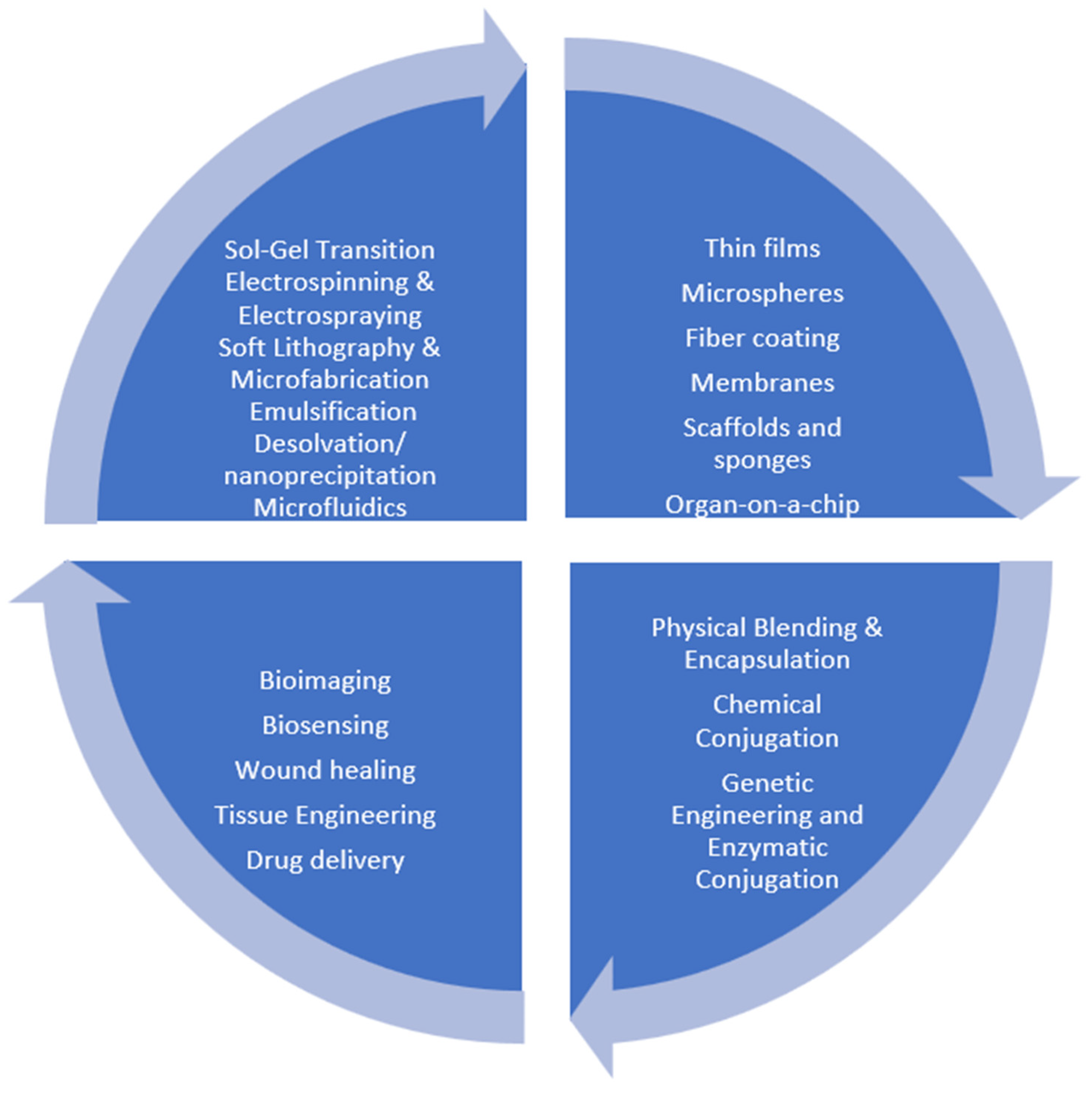
2. Fabrication and Functionalization
2.1. Sol–Gel Processing and Cryogelation (Hydrogels and Porous Sponges)
2.2. Electrospinning and Electrospraying (Fibres and Fibrous Mats)
2.3. Photolithography and Soft Lithography for Microstructured Silk Devices
2.4. Fabrication of Nanoparticles and Microspheres (Particulate Systems)
2.4.1. Emulsification
2.4.2. Desolvation/Nanoprecipitation
2.4.3. Microfluidic Fabrication
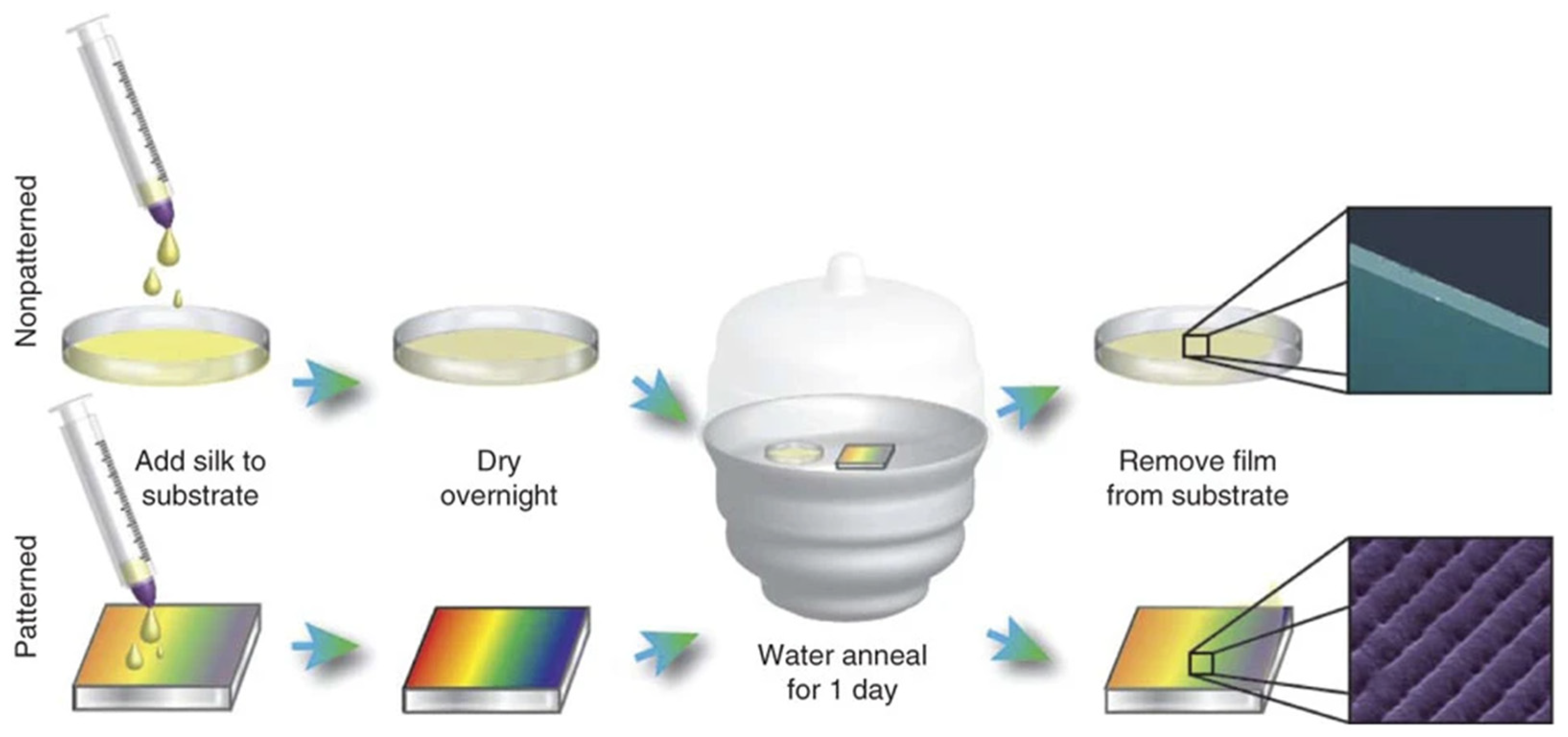
2.5. Casting and Spin-Coating (For Thin Films and Surface Coatings)
2.6. Functionalization of Silk Fibroin
2.6.1. Physical Blending and Encapsulation
2.6.2. Chemical Conjugation
2.6.3. Genetic Engineering and Enzymatic Conjugation Strategies

| Morphology | Processing Method | Application |
|---|---|---|
| Fibres and fibrous mats (micro- and nanofibres, non-woven meshes) | Electrospinning/electrospraying | Wound dressings and skin substitutes; tissue engineering scaffolds for skin, nerve, vascular and tendon repair; fibrous carriers for surface or implantable biosensors [52,55,56,57,58,59]. |
| 3D porous scaffolds and sponges (including cryogels) | Cryogelation and freeze-drying | Bone and cartilage regeneration; soft-tissue and dermal scaffolds; volumetric defect filling; 3D in vitro cell culture models and guided tissue regeneration [58,60,61,62]. |
| Bulk hydrogels (transparent or opaque gels) | Triggered sol–gel transition | Injectable and in situ-forming scaffolds; cartilage and soft-tissue repair; cell encapsulation matrices; local and sustained delivery depots for drugs, proteins, or cells [2,47,49,54]. |
| Particles and capsules (nanoparticles, microspheres, microcapsules) | Emulsification or desolvation/nanoprecipitation; microfluidics | Controlled and sustained drug delivery; encapsulation and release of bioactive molecules and vaccines; targeted and responsive delivery systems; multifunctional imaging and theranostic carriers [24,41,42]. |
| Thin films and coatings (planar or conformal) | Casting or spin-coating; annealing | Implant and device coatings (orthopaedic, dental, vascular); wound dressings and skin repair matrices; optical and photonic platforms for bioimaging and biosensing; protective biocompatible coatings on nanoparticles and sensors [18,23,63]. |
| Microstructured and lithographically patterned silk devices | Photolithography and soft lithography | Organ-on-a-chip and microfluidic systems; microstructured scaffolds that guide cell alignment and anisotropic tissue growth; all-silk optical elements (waveguides, gratings, resonators) and integrated biosensing devices [23,64]. |
3. Applications of Silk Fibroin in Biomedicine: From Fundamental Platforms to Integrated Theranostics
3.1. Bioimaging
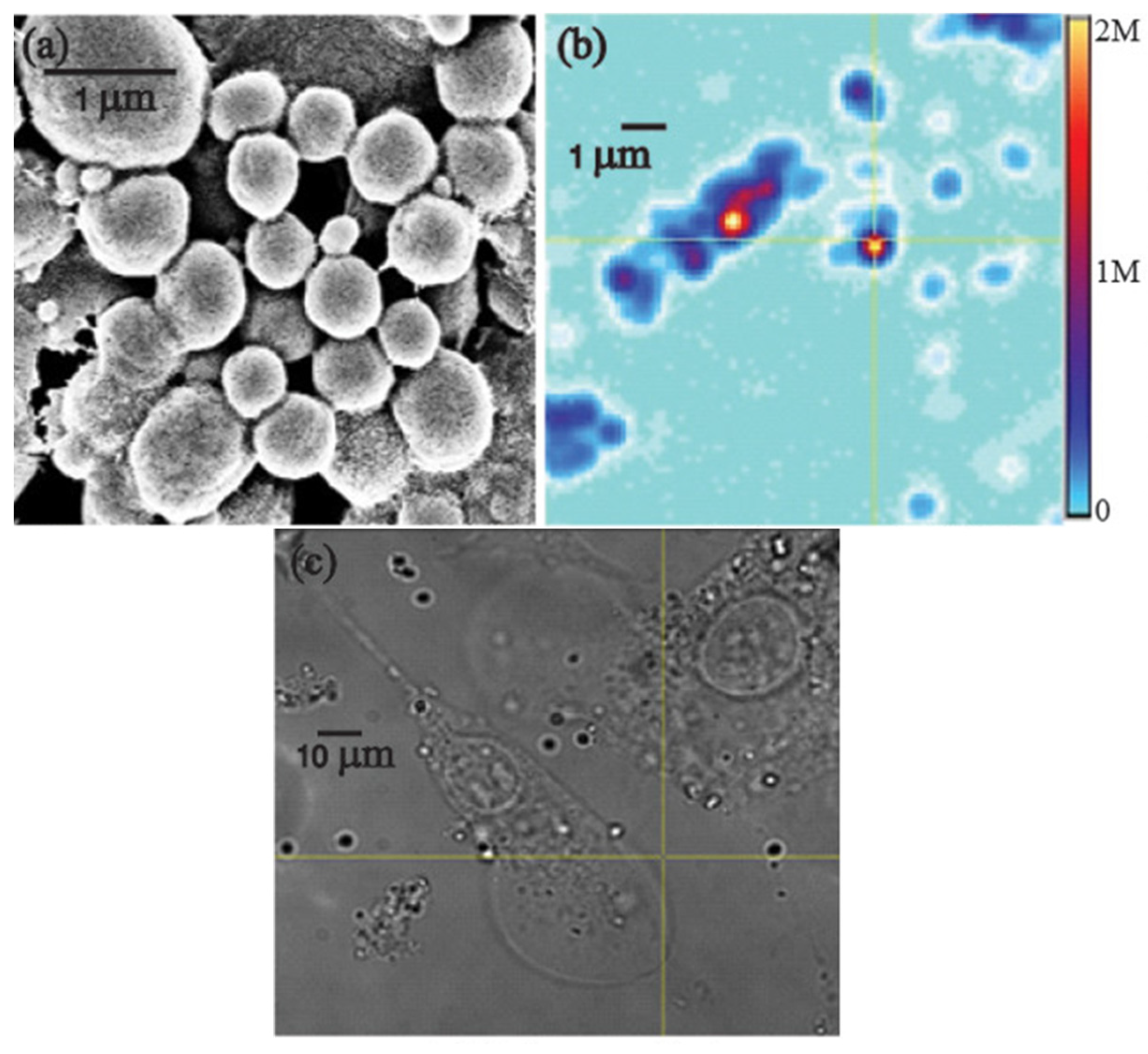
3.1.1. Silk Fibroin–Nanodiamond Hybrid for Bioimaging
3.1.2. Silk–Quantum Dot and Carbon Dot Fluorescent Probes
3.2. Biosensing
3.2.1. Optical Fibre-Based Sensing with Silk Fibroin
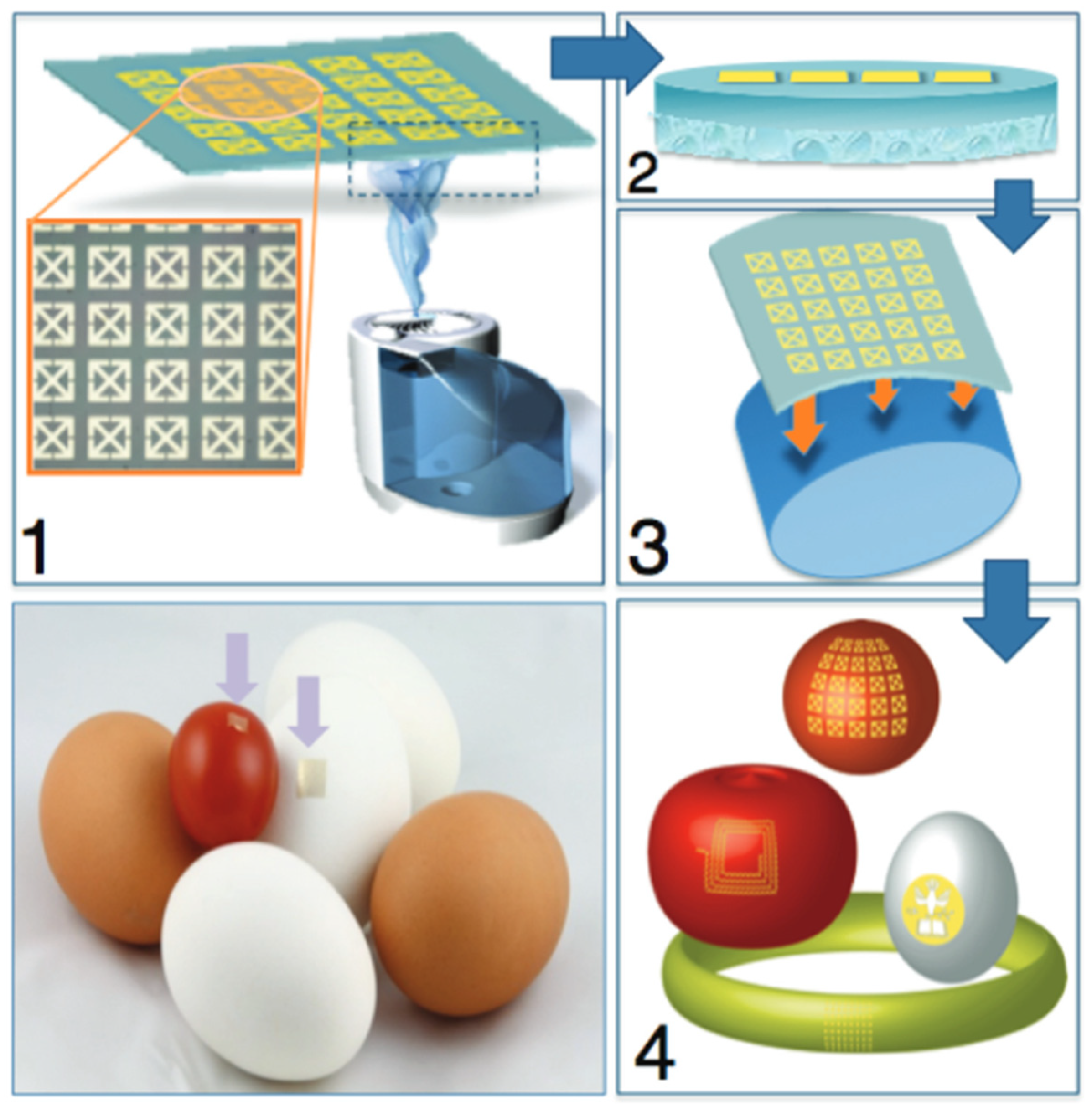
3.2.2. Silk-Based Conformal, Adhesive, Edible Food Sensors
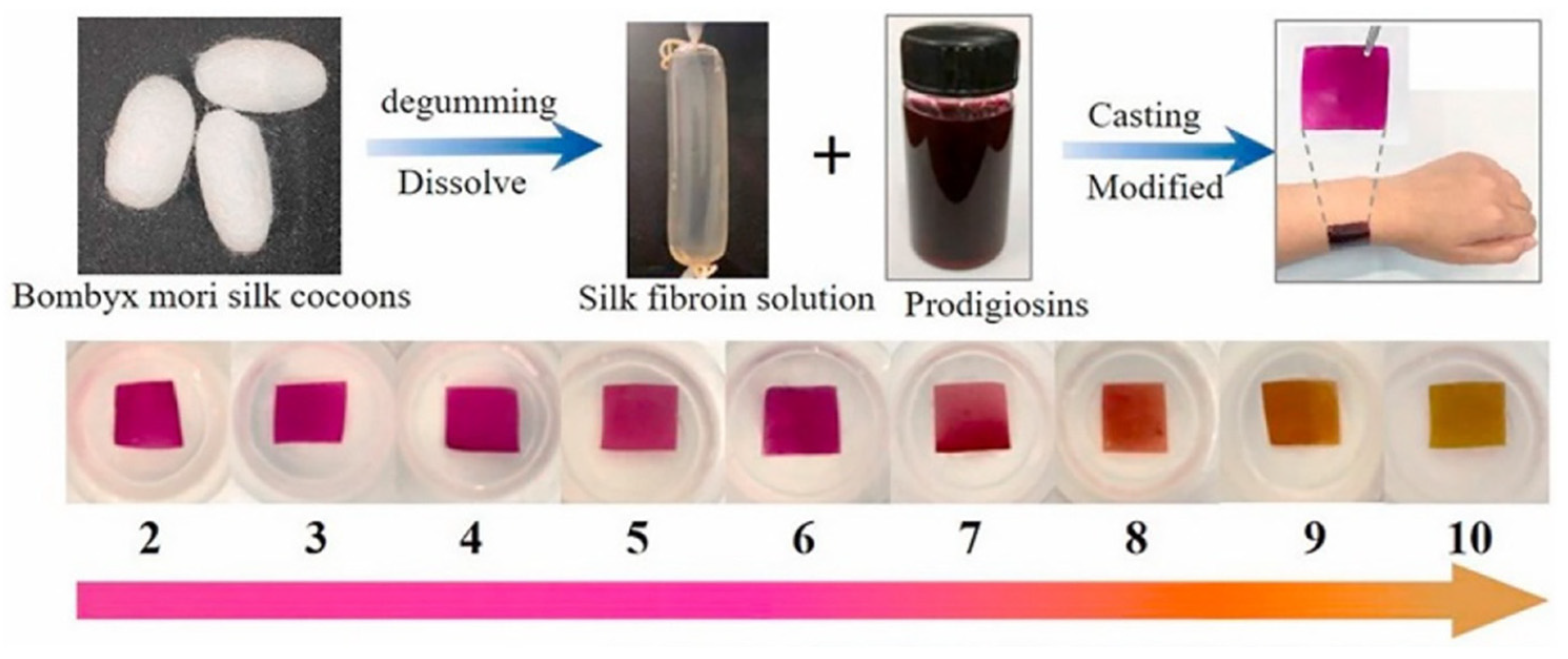
3.2.3. Silk Fibroin-Based Wearable and Smart Clothing Sensors
3.2.4. Reusable Colorimetric Biosensors on Sustainable Silk-Based Platforms
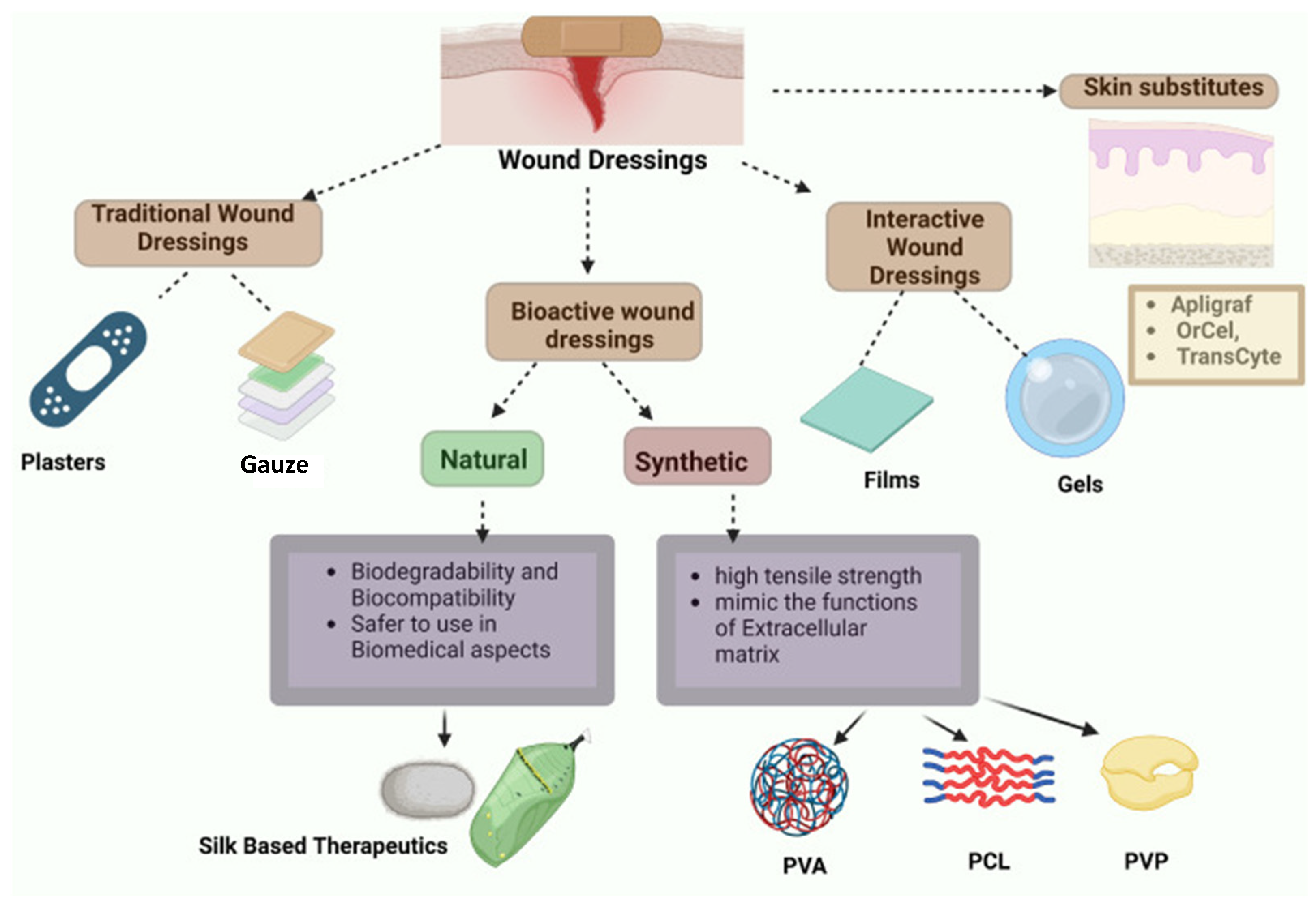
3.3. Silk Fibroin in Wound Healing, Wound-Sensing and Local Drug Delivery
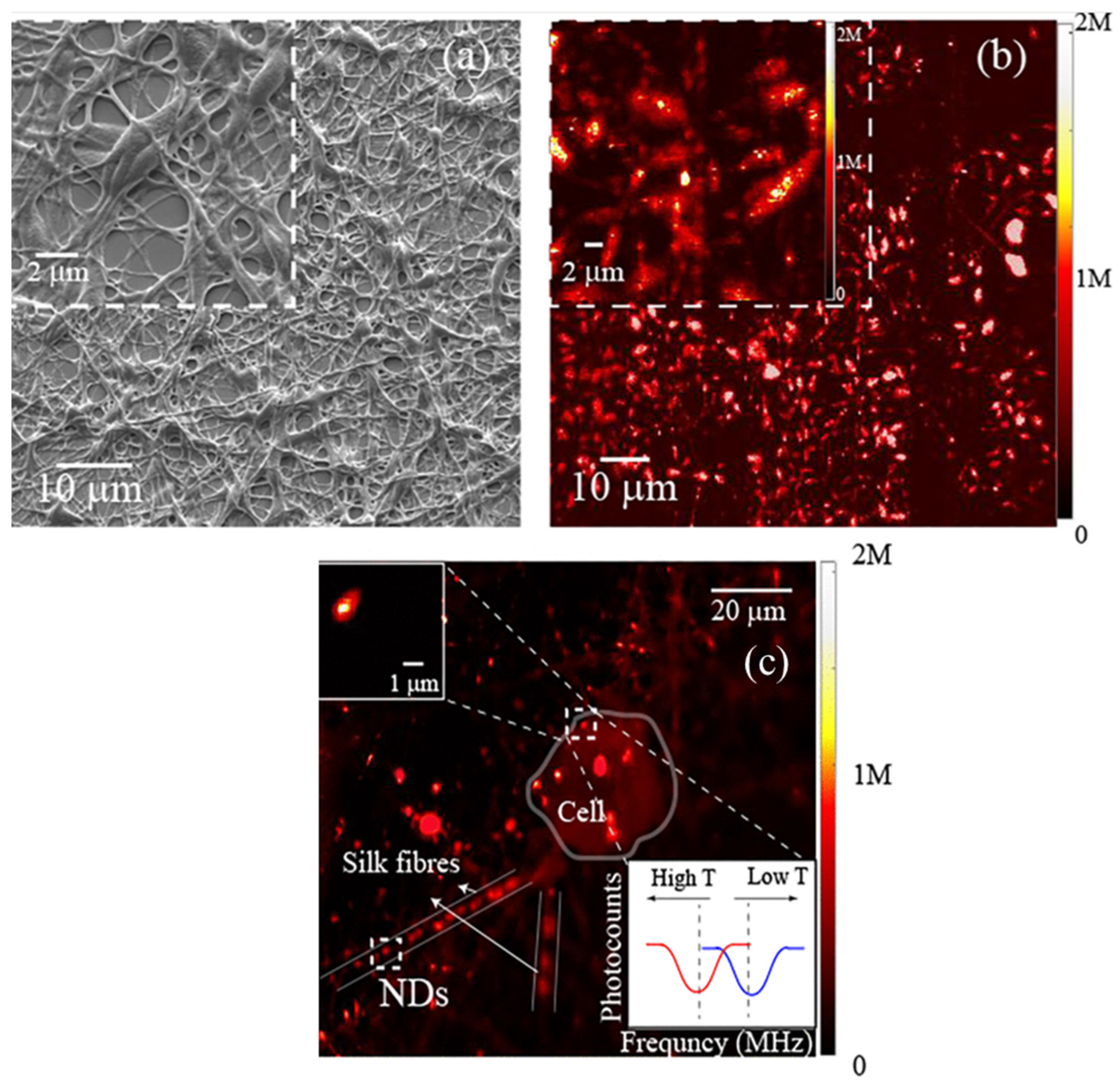
3.3.1. Nanodiamond–Silk Electrospun Membranes as Theranostic Wound Dressings
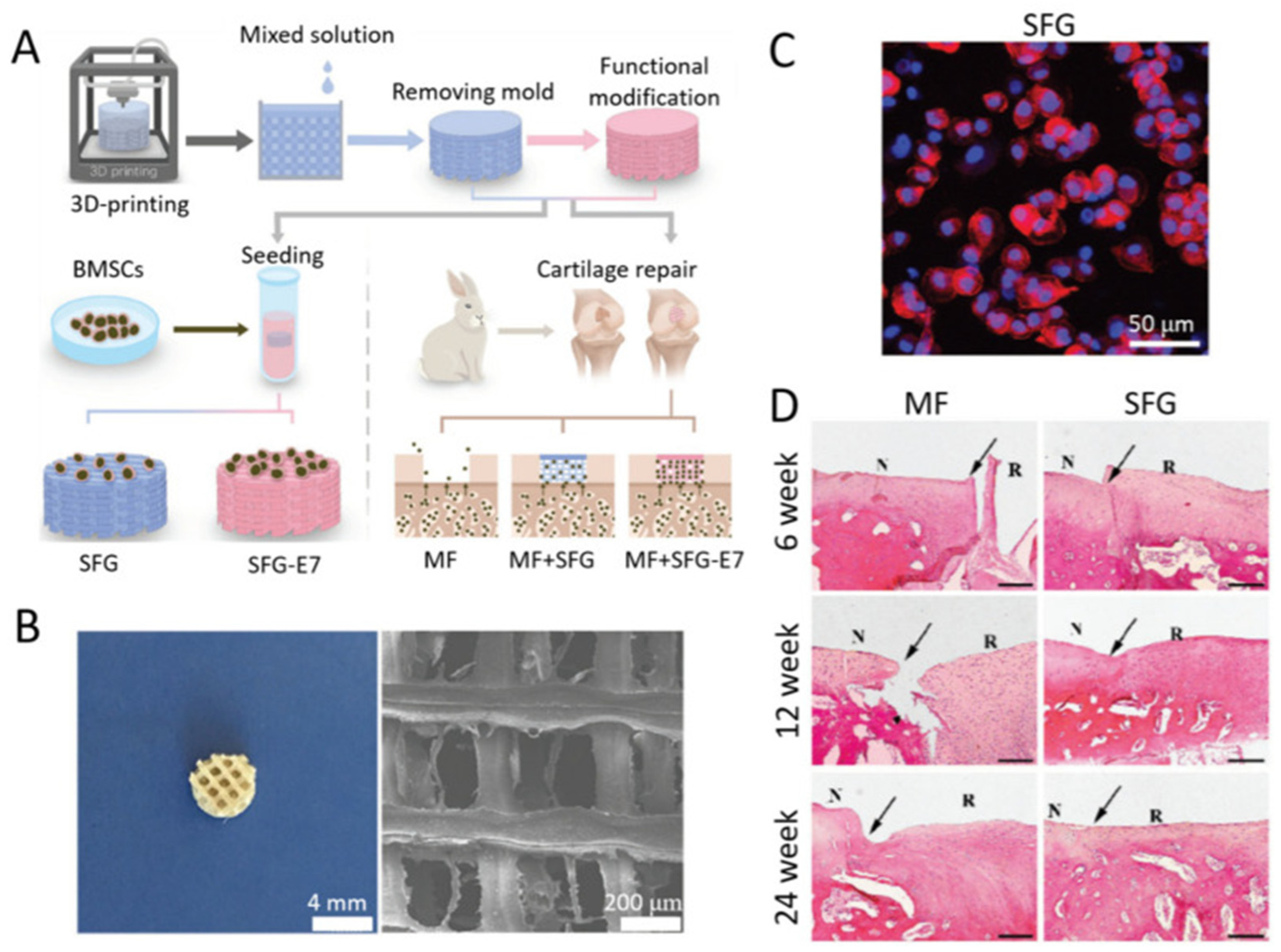
3.3.2. Silk Fibroin Dressings for Accelerated Wound Healing
3.3.3. Antibacterial and Immunomodulatory Silk Fibroin Composites
3.3.4. Towards Smart and Responsive Silk Fibroin Wound Dressings
3.4. Silk Fibroin in Tissue Engineering, Regenerative Medicine and Drug Delivery
3.4.1. Additional Composite and Tissue-Specific Regenerative Platforms
3.4.2. Growth Factor Delivery, Neuroregeneration and Advanced Porous Architectures
4. Discussion and Outlook
Author Contributions
Funding
Institutional Review Board Statement
Informed Consent Statement
Data Availability Statement
Conflicts of Interest
Abbreviations
| ABTS | 2,2′-azino-bis(3-ethylbenzothiazoline-6-sulfonic acid) |
| BMSC(s) | Bone marrow-derived mesenchymal stem cell(s) |
| BMP-2 | Bone morphogenetic protein-2 |
| COOH | Carboxylic acid groups |
| ECG | Electrocardiogram |
| EDC | 1-ethyl-3-(3-dimethylaminopropyl)carbodiimide |
| EMG | Electromyography |
| FGF-1 | Fibroblast growth factor-1 |
| GAG | Glycosaminoglycan |
| GAGAGS | Glycine–alanine–glycine–alanine–glycine–serine |
| GOx | Glucose oxidase |
| H&E | Hematoxylin and eosin |
| HFIP | Hexafluoroisopropanol |
| HIF | Hypoxia-inducible factor |
| HRP | Horseradish peroxidase |
| IKVAV | Ile-Lys-Val-Ala-Val |
| IR | Infrared |
| LC | Inductor capacitor resonant circuit |
| NHS | N-hydroxysuccinimide |
| NV | Nitrogen vacancy |
| ND | Nanodiamond |
| PLA | Polylactic acid |
| QD | Quantum dot |
| RGD | Arginine–glycine–aspartic acid |
| RSF | Regenerated silk fibroin |
| SEM | Scanning electron microscopy |
| SNARF | Seminaphthorhodafluor (pH indicator dye) |
| SF | Silk fibroin |
| TGF | Transforming growth factor |
| VEGF | Vascular endothelial growth factor |
References
- Wang, H. Biomaterials in Medical Applications. Polymers 2023, 15, 847. [Google Scholar] [CrossRef]
- Wang, X.; Kluge, J.A.; Leisk, G.G.; Kaplan, D.L. Sonication-induced gelation of silk fibroin for cell encapsulation. Biomaterials 2008, 29, 1054–1064. [Google Scholar] [CrossRef] [PubMed]
- Pritchard, E.M.; Dennis, P.B.; Omenetto, F.; Naik, R.R.; Kaplan, D.L. Review physical and chemical aspects of stabilization of compounds in silk. Biopolymers 2012, 97, 479–498. [Google Scholar] [CrossRef] [PubMed]
- Reizabal, A.; Costa, C.M.; Pérez-Álvarez, L.; Vilas-Vilela, J.L.; Lanceros-Méndez, S. Silk Fibroin as Sustainable Advanced Material: Material Properties and Characteristics, Processing, and Applications. Adv. Funct. Mater. 2023, 33, 2210764. [Google Scholar] [CrossRef]
- Indrakumar, S.; Dash, T.K.; Mishra, V.; Tandon, B.; Chatterjee, K. Silk Fibroin and Its Nanocomposites for Wound Care: A Comprehensive Review. ACS Polym. Au 2024, 4, 168–188. [Google Scholar] [CrossRef]
- Cao, Y.; Wang, B. Biodegradation of silk biomaterials. Int. J. Mol. Sci. 2009, 10, 1514–1524. [Google Scholar] [CrossRef]
- Thurber, A.E.; Omenetto, F.G.; Kaplan, D.L. In vivo bioresponses to silk proteins. Biomaterials 2015, 71, 145–157. [Google Scholar] [CrossRef]
- Wang, X.; Yucel, T.; Lu, Q.; Hu, X.; Kaplan, D.L. Silk nanospheres and microspheres from silk/pva blend films for drug delivery. Biomaterials 2010, 31, 1025–1035. [Google Scholar] [CrossRef]
- Qi, Y.; Wang, H.; Wei, K.; Yang, Y.; Zheng, R.Y.; Kim, I.S.; Zhang, K.Q. A Review of Structure Construction of Silk Fibroin Biomaterials from Single Structures to Multi-Level Structures. Int. J. Mol. Sci. 2017, 18, 237. [Google Scholar] [CrossRef]
- Rockwood, D.N.; Preda, R.C.; Yücel, T.; Wang, X.; Lovett, M.L.; Kaplan, D.L. Materials fabrication from Bombyx mori silk fibroin. Nat. Protoc. 2011, 6, 1612–1631. [Google Scholar] [CrossRef]
- Meyer, M. Processing of collagen based biomaterials and the resulting materials properties. Biomed. Eng. Online 2019, 18, 24. [Google Scholar] [CrossRef]
- Johari, N.; Moroni, L.; Samadikuchaksaraei, A. Tuning the conformation and mechanical properties of silk fibroin hydrogels. Eur. Polym. J. 2020, 134, 109842. [Google Scholar] [CrossRef]
- Grabska-Zielińska, S.; Sionkowska, A. How to Improve Physico-Chemical Properties of Silk Fibroin Materials for Biomedical Applications?-Blending and Cross-Linking of Silk Fibroin—A Review. Materials 2021, 14, 1510. [Google Scholar] [CrossRef] [PubMed]
- Tulachan, B.; Meena, S.K.; Rai, R.K.; Mallick, C.; Kusurkar, T.S.; Teotia, A.K.; Sethy, N.K.; Bhargava, K.; Bhattacharya, S.; Kumar, A.; et al. Electricity from the silk cocoon membrane. Sci. Rep. 2014, 4, 5434. [Google Scholar] [CrossRef]
- Zhao, M.; Qi, Z.; Tao, X.; Newkirk, C.; Hu, X.; Lu, S. Chemical, Thermal, Time, and Enzymatic Stability of Silk Materials with Silk I Structure. Int. J. Mol. Sci. 2021, 22, 4136. [Google Scholar] [CrossRef] [PubMed]
- Narayanan, S.; Gokuldas, M. Influence of organic solvents on the structural and thermal characteristics of silk protein from the web of Orthaga exvinacea Hampson (Lepidoptera: Pyralidae). J. Chem. Biol. 2016, 9, 121–125. [Google Scholar] [CrossRef]
- Omenetto, F.G.; Kaplan, D.L. A new route for silk. Nat. Photonics 2008, 2, 641–643. [Google Scholar] [CrossRef]
- Khalid, A.; Lodin, R.; Domachuk, P.; Tao, H.; Moreau, J.E.; Kaplan, D.L.; Omenetto, F.G.; Gibson, B.C.; Tomljenovic-Hanic, S. Synthesis and characterization of biocompatible nanodiamond-silk hybrid material. Biomed. Opt. Express 2014, 5, 596–608. [Google Scholar] [CrossRef]
- Perotto, G.; Zhang, Y.; Naskar, D.; Patel, N.; Kaplan, D.L.; Kundu, S.C.; Omenetto, F.G. The optical properties of regenerated silk fibroin films obtained from different sources. Appl. Phys. Lett. 2017, 111, 103702. [Google Scholar] [CrossRef]
- Wu, R.; Ma, L.; Liu, X.Y. From Mesoscopic Functionalization of Silk Fibroin to Smart Fiber Devices for Textile Electronics and Photonics. Adv. Sci. 2022, 9, 2103981. [Google Scholar] [CrossRef]
- Prajzler, V.; Arif, S.; Min, K.; Kim, S.; Nekvindová, P. All-polymer silk-fibroin optical planar waveguides. Opt. Mater. 2021, 114, 110932. [Google Scholar] [CrossRef]
- Parker, S.T.; Domachuk, P.; Amsden, J.; Bressner, J.; Lewis, J.A.; Kaplan, D.L.; Omenetto, F.G. Biocompatible Silk Printed Optical Waveguides. Adv. Mater. 2009, 21, 2411–2415. [Google Scholar] [CrossRef]
- Zhou, Z.; Shi, Z.; Cai, X.; Zhang, S.; Corder, S.G.; Li, X.; Zhang, Y.; Zhang, G.; Chen, L.; Liu, M.; et al. The Use of Functionalized Silk Fibroin Films as a Platform for Optical Diffraction-Based Sensing Applications. Adv. Mater. 2017, 29, 1605471. [Google Scholar] [CrossRef] [PubMed]
- Mitropoulos, A.N.; Perotto, G.; Kim, S.; Marelli, B.; Kaplan, D.L.; Omenetto, F.G. Synthesis of Silk Fibroin Micro- and Submicron Spheres Using a Co-Flow Capillary Device. Adv. Mater. 2014, 26, 1105–1110. [Google Scholar] [CrossRef]
- Gu, J.; Li, Q.; Chen, B.; Xu, C.; Zheng, H.; Zhou, Y.; Peng, Z.; Hu, Z.; Wang, B. Species identification of Bombyx mori and Antheraea pernyi silk via immunology and proteomics. Sci. Rep. 2019, 9, 9381. [Google Scholar] [CrossRef]
- Minoura, N.; Aiba, S.I.; Higuchi, M.; Gotoh, Y.; Tsukada, M.; Imai, Y. Attachment and Growth of Fibroblast Cells on Silk Fibroin. Biochem. Biophys. Res. Commun. 1995, 208, 511–516. [Google Scholar] [CrossRef]
- Talukdar, S.; Mandal, M.; Hutmacher, D.W.; Russell, P.J.; Soekmadji, C.; Kundu, S.C. Engineered silk fibroin protein 3D matrices for in vitro tumor model. Biomaterials 2011, 32, 2149–2159. [Google Scholar] [CrossRef]
- Zhang, Y.; Roohani, I. Recent Advances in Silk Fibroin Derived from Bombyx mori for Regenerative Medicine. J. Funct. Biomater. 2025, 17, 12. [Google Scholar] [CrossRef]
- Huang, L.; Shi, J.; Zhou, W.; Zhang, Q. Advances in Preparation and Properties of Regenerated Silk Fibroin. Int. J. Mol. Sci. 2023, 24, 13153. [Google Scholar] [CrossRef]
- Carriero, V.C.; Di Muzio, L.; Petralito, S.; Casadei, M.A.; Paolicelli, P. Cryogel Scaffolds for Tissue-Engineering: Advances and Challenges for Effective Bone and Cartilage Regeneration. Gels 2023, 9, 979. [Google Scholar] [CrossRef]
- Khalid, A.; Bai, D.; Abraham, A.N.; Jadhav, A.; Linklater, D.; Matusica, A.; Nguyen, D.; Murdoch, B.J.; Zakhartchouk, N.; Dekiwadia, C.; et al. Electrospun Nanodiamond-Silk Fibroin Membranes: A Multifunctional Platform for Biosensing and Wound-Healing Applications. ACS Appl. Mater. Interfaces 2020, 12, 48408–48419. [Google Scholar] [CrossRef]
- Kurland, N.E.; Dey, T.; Kundu, S.C.; Yadavalli, V.K. Precise patterning of silk microstructures using photolithography. Adv. Mater. 2013, 25, 6207–6212. [Google Scholar] [CrossRef]
- Liu, W.; Zhou, Z.; Zhang, S.; Shi, Z.; Tabarini, J.; Lee, W.; Zhang, Y.; Gilbert Corder, S.N.; Li, X.; Dong, F.; et al. Precise Protein Photolithography (P3): High Performance Biopatterning Using Silk Fibroin Light Chain as the Resist. Adv. Sci. 2017, 4, 1700191. [Google Scholar] [CrossRef] [PubMed]
- Bettinger, C.J.; Cyr, K.M.; Matsumoto, A.; Langer, R.; Borenstein, J.T.; Kaplan, D.L. Silk Fibroin Microfluidic Devices. Adv. Mater. 2007, 19, 2847–2850. [Google Scholar] [CrossRef] [PubMed]
- Wenk, E.; Merkle, H.P.; Meinel, L. Silk fibroin as a vehicle for drug delivery applications. J. Control. Release 2011, 150, 128–141. [Google Scholar] [CrossRef] [PubMed]
- Numata, K.; Kaplan, D.L. Silk-based delivery systems of bioactive molecules. Adv. Drug Deliv. Rev. 2010, 62, 1497–1508. [Google Scholar] [CrossRef]
- Lv, S. Silk Fibroin-Based Materials for Catalyst Immobilization. Molecules 2020, 25, 4929. [Google Scholar] [CrossRef]
- Zhang, Y.-Q.; Shen, W.-D.; Xiang, R.-L.; Zhuge, L.-J.; Gao, W.-J.; Wang, W.-B. Formation of silk fibroin nanoparticles in water-miscible organic solvent and their characterization. J. Nanopart. Res. 2007, 9, 885–900. [Google Scholar] [CrossRef]
- Giri, T.K. 20—Alginate Containing Nanoarchitectonics for Improved Cancer Therapy. In Nanoarchitectonics for Smart Delivery and Drug Targeting; Holban, A.M., Grumezescu, A.M., Eds.; William Andrew Publishing: Norwich, NY, USA, 2016; pp. 565–588. [Google Scholar]
- Subia, B.; Kundu, S.C. Drug loading and release on tumor cells using silk fibroin-albumin nanoparticles as carriers. Nanotechnology 2013, 24, 035103. [Google Scholar] [CrossRef]
- Khalid, A.; Mitropoulos, A.N.; Marelli, B.; Simpson, D.A.; Tran, P.A.; Omenetto, F.G.; Tomljenovic-Hanic, S. Fluorescent Nanodiamond Silk Fibroin Spheres: Advanced Nanoscale Bioimaging Tool. ACS Biomater. Sci. Eng. 2015, 1, 1104–1113. [Google Scholar] [CrossRef]
- Khalid, A.; Mitropoulos, A.N.; Marelli, B.; Tomljenovic-Hanic, S.; Omenetto, F.G. Doxorubicin loaded nanodiamond-silk spheres for fluorescence tracking and controlled drug release. Biomed. Opt. Express 2016, 7, 132–147. [Google Scholar] [CrossRef] [PubMed]
- Khalid, A.; Peng, L.; Arman, A.; Warren-Smith, S.C.; Schartner, E.P.; Sylvia, G.M.; Hutchinson, M.R.; Ebendorff-Heidepriem, H.; McLaughlin, R.A.; Gibson, B.C.; et al. Silk: A bio-derived coating for optical fiber sensing applications. Sens. Actuators B Chem. 2020, 311, 127864. [Google Scholar] [CrossRef]
- Yucel, T.; Lovett, M.L.; Kaplan, D.L. Silk-based biomaterials for sustained drug delivery. J. Control. Release 2014, 190, 381–397. [Google Scholar] [CrossRef] [PubMed]
- Capon, P.K.; Horsfall, A.J.; Li, J.; Schartner, E.P.; Khalid, A.; Purdey, M.S.; McLaughlin, R.A.; Abell, A.D. Protein detection enabled using functionalised silk-binding peptides on a silk-coated optical fibre. RSC Adv. 2021, 11, 22334–22342. [Google Scholar] [CrossRef]
- Hofmann, S.; Foo, C.T.; Rossetti, F.; Textor, M.; Vunjak-Novakovic, G.; Kaplan, D.L.; Merkle, H.P.; Meinel, L. Silk fibroin as an organic polymer for controlled drug delivery. J. Control. Release 2006, 111, 219–227. [Google Scholar] [CrossRef]
- Motta, A.; Migliaresi, C.; Faccioni, F.; Torricelli, P.; Fini, M.; Giardino, R. Fibroin hydrogels for biomedical applications: Preparation, characterization and in vitro cell culture studies. J. Biomater. Sci. Polym. Ed. 2004, 15, 851–864. [Google Scholar] [CrossRef]
- Matthew, S.A.L.; Seib, F.P. Silk Bioconjugates: From Chemistry and Concept to Application. ACS Biomater. Sci. Eng. 2024, 10, 12–28. [Google Scholar] [CrossRef]
- Liu, J.; Sun, H.; Peng, Y.; Chen, L.; Xu, W.; Shao, R. Preparation and Characterization of Natural Silk Fibroin Hydrogel for Protein Drug Delivery. Molecules 2022, 27, 3418. [Google Scholar] [CrossRef]
- Wang, L.; Li, C. Preparation and physicochemical properties of a novel hydroxyapatite/chitosan–silk fibroin composite. Carbohydr. Polym. 2007, 68, 740–745. [Google Scholar] [CrossRef]
- Aigner, T.B.; DeSimone, E.; Scheibel, T. Biomedical Applications of Recombinant Silk-Based Materials. Adv. Mater. 2018, 30, 1704636. [Google Scholar] [CrossRef]
- Kundu, S.C.; Reis, R.L. (Eds.) Silk-Based Biomaterials for Tissue Engineering, Regenerative and Precision Medicine, 2nd ed.; Woodhead Publishing: Cambridge, MA, USA, 2024. [Google Scholar]
- Freddi, G.; Anghileri, A.; Sampaio, S.; Buchert, J.; Monti, P.; Taddei, P. Tyrosinase-catalyzed modification of Bombyx mori silk fibroin: Grafting of chitosan under heterogeneous reaction conditions. J. Biotechnol. 2006, 125, 281–294. [Google Scholar] [CrossRef] [PubMed]
- Hasturk, O.; Jordan, K.E.; Choi, J.; Kaplan, D.L. Enzymatically crosslinked silk and silk-gelatin hydrogels with tunable gelation kinetics, mechanical properties and bioactivity for cell culture and encapsulation. Biomaterials 2020, 232, 119720. [Google Scholar] [CrossRef] [PubMed]
- Altman, G.H.; Horan, R.L.; Lu, H.H.; Moreau, J.; Martin, I.; Richmond, J.C.; Kaplan, D.L. Silk matrix for tissue engineered anterior cruciate ligaments. Biomaterials 2002, 23, 4131–4141. [Google Scholar] [CrossRef]
- Kundu, B.; Rajkhowa, R.; Kundu, S.C.; Wang, X. Silk fibroin biomaterials for tissue regenerations. Adv. Drug Deliv. Rev. 2013, 65, 457–470. [Google Scholar] [CrossRef] [PubMed]
- Lovett, M.; Eng, G.; Kluge, J.A.; Cannizzaro, C.; Vunjak-Novakovic, G.; Kaplan, D.L. Tubular silk scaffolds for small diameter vascular grafts. Organogenesis 2010, 6, 217–224. [Google Scholar] [CrossRef]
- Oliveira, A.L.; Sun, L.; Kim, H.J.; Hu, X.; Rice, W.; Kluge, J.; Reis, R.L.; Kaplan, D.L. Aligned silk-based 3-D architectures for contact guidance in tissue engineering. Acta Biomater. 2012, 8, 1530–1542. [Google Scholar] [CrossRef]
- Semmler, L.; Naghilou, A.; Millesi, F.; Wolf, S.; Mann, A.; Stadlmayr, S.; Mero, S.; Ploszczanski, L.; Greutter, L.; Woehrer, A.; et al. Silk-in-Silk Nerve Guidance Conduits Enhance Regeneration in a Rat Sciatic Nerve Injury Model. Adv. Healthc. Mater. 2023, 12, e2203237. [Google Scholar] [CrossRef]
- Mauney, J.R.; Nguyen, T.; Gillen, K.; Kirker-Head, C.; Gimble, J.M.; Kaplan, D.L. Engineering adipose-like tissue in vitro and in vivo utilizing human bone marrow and adipose-derived mesenchymal stem cells with silk fibroin 3D scaffolds. Biomaterials 2007, 28, 5280–5290. [Google Scholar] [CrossRef]
- Mandal, B.B.; Grinberg, A.; Gil, E.S.; Panilaitis, B.; Kaplan, D.L. High-strength silk protein scaffolds for bone repair. Proc. Natl. Acad. Sci. USA 2012, 109, 7699–7704. [Google Scholar] [CrossRef]
- Wang, Y.; Kim, U.-J.; Blasioli, D.J.; Kim, H.-J.; Kaplan, D.L. In vitro cartilage tissue engineering with 3D porous aqueous-derived silk scaffolds and mesenchymal stem cells. Biomaterials 2005, 26, 7082–7094. [Google Scholar] [CrossRef]
- Márquez, A.; Santiago, S.; dos Santos, M.V.; Aznar-Cervantes, S.D.; Domínguez, C.; Omenetto, F.G.; Guirado, G.; Muñoz-Berbel, X. Reusable Colorimetric Biosensors on Sustainable Silk-Based Platforms. ACS Appl. Bio Mater. 2024, 7, 853–862. [Google Scholar] [CrossRef]
- Park, J.; Lee, S.-G.; Marelli, B.; Lee, M.; Kim, T.; Oh, H.-K.; Jeon, H.; Omenetto, F.G.; Kim, S. Eco-friendly photolithography using water-developable pure silk fibroin. RSC Adv. 2016, 6, 39330–39334. [Google Scholar] [CrossRef]
- Colusso, E.; Cicerchia, L.; Rigon, M.; Gomes, V.; Martucci, A. Photoluminescence properties of silk–carbon quantum dots composites. J. Sol-Gel Sci. Technol. 2023, 107, 170–177. [Google Scholar] [CrossRef]
- Gravier, J.; Navarro, F.P.; Delmas, T.; Mittler, F.; Couffin, A.C.; Vinet, F.; Texier, I. Lipidots: Competitive organic alternative to quantum dots for in vivo fluorescence imaging. J. Biomed. Opt. 2011, 16, 096013. [Google Scholar] [CrossRef] [PubMed]
- Osman, A.I.; Zhang, Y.; Farghali, M.; Rashwan, A.K.; Eltaweil, A.S.; Abd El-Monaem, E.M.; Mohamed, I.M.A.; Badr, M.M.; Ihara, I.; Rooney, D.W.; et al. Synthesis of green nanoparticles for energy, biomedical, environmental, agricultural, and food applications: A review. Environ. Chem. Lett. 2024, 22, 841–887. [Google Scholar] [CrossRef]
- Capon, P.K.; Li, J.; Horsfall, A.J.; Yagoub, S.; Schartner, E.P.; Khalid, A.; Kirk, R.W.; Purdey, M.S.; Dunning, K.R.; McLaughlin, R.A.; et al. A Silk-Based Functionalization Architecture for Single Fiber Imaging and Sensing. Adv. Funct. Mater. 2022, 32, 2010713. [Google Scholar] [CrossRef]
- Fu, C.-C.; Lee, H.-Y.; Chen, K.; Lim, T.-S.; Wu, H.-Y.; Lin, P.-K.; Wei, P.-K.; Tsao, P.-H.; Chang, H.-C.; Fann, W. Characterization and application of single fluorescent nanodiamonds as cellular biomarkers. Proc. Natl. Acad. Sci. USA 2007, 104, 727–732. [Google Scholar] [CrossRef]
- Niu, L.; Shi, M.; Feng, Y.; Sun, X.; Wang, Y.; Cheng, Z.; Li, M. The Interactions of Quantum Dot-Labeled Silk Fibroin Micro/Nanoparticles with Cells. Materials 2020, 13, 3372. [Google Scholar] [CrossRef]
- Tegafaw, T.; Liu, S.; Ahmad, M.Y.; Ali Al Saidi, A.K.; Zhao, D.; Liu, Y.; Yue, H.; Nam, S.-W.; Chang, Y.; Lee, G.H. Production, surface modification, physicochemical properties, biocompatibility, and bioimaging applications of nanodiamonds. RSC Adv. 2023, 13, 32381–32397. [Google Scholar] [CrossRef]
- Benson, V.; Amini, A. Why nanodiamond carriers manage to overcome drug resistance in cancer. Cancer Drug Resist. 2020, 3, 854–866. [Google Scholar] [CrossRef]
- Mane, P.; Chaudhari, R.; Qureshi, N.; Shinde, M.; Kim, T.; Amalnerkar, D. Silver Nanoparticles-Silk Fibroin Nanocomposite Based Colorimetric Bio-Interfacial Sensor for On-Site Ultra-Trace Impurity Detection of Mercury Ions. J. Nanosci. Nanotechnol. 2020, 20, 2122–2129. [Google Scholar] [CrossRef] [PubMed]
- Tao, H.; Brenckle, M.A.; Yang, M.; Zhang, J.; Liu, M.; Siebert, S.M.; Averitt, R.D.; Mannoor, M.S.; McAlpine, M.C.; Rogers, J.A.; et al. Silk-Based Conformal, Adhesive, Edible Food Sensors. Adv. Mater. 2012, 24, 1067–1072. [Google Scholar] [CrossRef] [PubMed]
- Márquez, A.; Santos, M.V.; Guirado, G.; Moreno, A.; Aznar-Cervantes, S.D.; Cenis, J.L.; Santagneli, S.H.; Domínguez, C.; Omenetto, F.G.; Muñoz-Berbel, X. Nanoporous silk films with capillary action and size-exclusion capacity for sensitive glucose determination in whole blood. Lab. Chip 2021, 21, 608–615. [Google Scholar] [CrossRef] [PubMed]
- Kim, D.; Cao, Y.; Mariappan, D.; Bono, M.S., Jr.; Hart, A.J.; Marelli, B. A Microneedle Technology for Sampling and Sensing Bacteria in the Food Supply Chain. Adv. Funct. Mater. 2021, 31, 2005370. [Google Scholar] [CrossRef]
- Wang, J.-Y.; Chen, L.-J.; Zhao, X.; Yan, X.-P. Silk fibroin-based colorimetric microneedle patch for rapid detection of spoilage in packaged salmon samples. Food Chem. 2023, 406, 135039. [Google Scholar] [CrossRef]
- Wen, D.-L.; Pang, Y.-X.; Huang, P.; Wang, Y.-L.; Zhang, X.-R.; Deng, H.-T.; Zhang, X.-S. Silk Fibroin-Based Wearable All-Fiber Multifunctional Sensor for Smart Clothing. Adv. Fiber Mater. 2022, 4, 873–884. [Google Scholar] [CrossRef]
- Meng, G.; Long, F.; Zeng, Z.; Kong, L.; Zhao, B.; Yan, J.; Yang, L.; Yang, Y.; Liu, X.-Y.; Yan, Z.; et al. Silk fibroin based wearable electrochemical sensors with biomimetic enzyme-like activity constructed for durable and on-site health monitoring. Biosens. Bioelectron. 2023, 228, 115198. [Google Scholar] [CrossRef]
- Liu, X.; Zhang, W.; Lin, Z.; Meng, Z.; Shi, C.; Xu, Z.; Yang, L.; Liu, X.Y. Coupling of Silk Fibroin Nanofibrils Enzymatic Membrane with Ultra-Thin PtNPs/Graphene Film to Acquire Long and Stable On-Skin Sweat Glucose and Lactate Sensing. Small Methods 2021, 5, 2000926. [Google Scholar] [CrossRef]
- Liu, J.; Yang, M.; Tan, J.; Yin, Y.; Yang, Y.; Wang, C. pH-responsive discoloration silk fibroin films based on prodigiosin from microbial fermentation. Dye. Pigment. 2022, 198, 109994. [Google Scholar] [CrossRef]
- Song, Y.; Hu, C.; Wang, Z.; Wang, L. Silk-based wearable devices for health monitoring and medical treatment. iScience 2024, 27, 109604. [Google Scholar] [CrossRef]
- Sanjeevappa, H.K.; Nilogal, P.; Rayaraddy, R.; Martis, L.J.; Osman, S.M.; Badiadka, N.; Yallappa, S. Biosynthesized unmodified silver nanoparticles: A colorimetric optical sensor for detection of Hg2+ ions in aqueous solution. Results Chem. 2022, 4, 100507. [Google Scholar] [CrossRef]
- González-Restrepo, D.; Zuluaga-Vélez, A.; Orozco, L.M.; Sepúlveda-Arias, J.C. Silk fibroin-based dressings with antibacterial and anti-inflammatory properties. Eur. J. Pharm. Sci. 2024, 195, 106710. [Google Scholar] [CrossRef] [PubMed]
- Aldahish, A.; Shanmugasundaram, N.; Vasudevan, R.; Alqahtani, T.; Alqahtani, S.; Mohammad Asiri, A.; Devanandan, P.; Thamaraikani, T.; Vellapandian, C.; Jayasankar, N. Silk Fibroin Nanofibers: Advancements in Bioactive Dressings through Electrospinning Technology for Diabetic Wound Healing. Pharmaceuticals 2024, 17, 1305. [Google Scholar] [CrossRef] [PubMed]
- Naik, J.T.; Rudrakshi, C.; Prabhuji, M.L.V. A New Horizon in Biocompatible Membrane: The Role of Collagen and Silk Fibroin in Tissue Regeneration-Case series. J. Biol. Med. 2024, 8, 18–24. [Google Scholar] [CrossRef]
- He, S.; Shi, D.; Han, Z.; Dong, Z.; Xie, Y.; Zhang, F.; Zeng, W.; Yi, Q. Heparinized silk fibroin hydrogels loading FGF1 promote the wound healing in rats with full-thickness skin excision. Biomed. Eng. Online 2019, 18, 97. [Google Scholar] [CrossRef]
- Su, L.; Jia, Y.; Fu, L.; Guo, K.; Xie, S. The emerging progress on wound dressings and their application in clinic wound management. Heliyon 2023, 9, e22520. [Google Scholar] [CrossRef]
- Du, P.; Chen, X.; Chen, Y.; Li, J.; Lu, Y.; Li, X.; Hu, K.; Chen, J.; Lv, G. In vivo and in vitro studies of a propolis-enriched silk fibroin-gelatin composite nanofiber wound dressing. Heliyon 2023, 9, e13506. [Google Scholar] [CrossRef]
- Yang, P.; Wang, D.; Shi, Y.; Li, M.; Gao, M.; Yu, T.; Liu, D.; Zhang, J.; Wang, J.; Zhang, X.; et al. Insulin-Containing Wound Dressing Promotes Diabetic Wound Healing Through Stabilizing HIF-1α. Front. Bioeng. Biotechnol. 2020, 8, 592833. [Google Scholar] [CrossRef]
- Shao, J.; Cui, Y.; Liang, Y.; Liu, H.; Ma, B.; Ge, S. Unilateral Silver-Loaded Silk Fibroin Difunctional Membranes as Antibacterial Wound Dressings. ACS Omega 2021, 6, 17555–17565. [Google Scholar] [CrossRef]
- Yan, S.; Xu, S.; Wang, Y.; You, J.; Guo, C.; Wu, X. A Hydrogel Dressing Comprised of Silk Fibroin, Ag Nanoparticles, and Reduced Graphene Oxide for NIR Photothermal-Enhanced Antibacterial Efficiency and Skin Regeneration. Adv. Healthc. Mater. 2024, 13, e2400884. [Google Scholar] [CrossRef]
- Li, S.; Renick, P.; Senkowsky, J.; Nair, A.; Tang, L. Diagnostics for Wound Infections. Adv. Wound Care 2021, 10, 317–327. [Google Scholar] [CrossRef]
- Rennie, M.Y.; Dunham, D.; Lindvere-Teene, L.; Raizman, R.; Hill, R.; Linden, R. Understanding Real-Time Fluorescence Signals from Bacteria and Wound Tissues Observed with the MolecuLight i:X(TM). Diagnostics 2019, 9, 22. [Google Scholar] [CrossRef]
- Safonova, L.; Bobrova, M.; Efimov, A.; Davydova, L.; Tenchurin, T.; Bogush, V.; Agapova, O.; Agapov, I. Silk Fibroin/Spidroin Electrospun Scaffolds for Full-Thickness Skin Wound Healing in Rats. Pharmaceutics 2021, 13, 1704. [Google Scholar] [CrossRef] [PubMed]
- Khalid, A.; Zhang, L.; Tetienne, J.-P.; Abraham, A.N.; Poddar, A.; Shukla, R.; Shen, W.; Tomljenovic-Hanic, S. Intrinsic fluorescence from cellulose nanofibers and nanoparticles at cell friendly wavelengths. APL Photonics 2019, 4, 020803. [Google Scholar] [CrossRef]
- Tang, J.; Li, X.; Wang, H.; Mai, R.; Xie, M.; Tang, Y.; Huang, W.; Zhao, D.; Xiang, L. Application and Prospects of Smart Dressings in Wound Healing. ACS Appl. Mater. Interfaces 2025, 17, 55808–55832. [Google Scholar] [CrossRef] [PubMed]
- Chou, K.C.; Chen, C.T.; Cherng, J.H.; Li, M.C.; Wen, C.C.; Hu, S.I.; Wang, Y.W. Cutaneous Regeneration Mechanism of β-Sheet Silk Fibroin in a Rat Burn Wound Healing Model. Polymers 2021, 13, 3537. [Google Scholar] [CrossRef]
- Li, Z.; Wu, N.; Cheng, J.; Sun, M.; Yang, P.; Zhao, F.; Zhang, J.; Duan, X.; Fu, X.; Zhang, J.; et al. Biomechanically, structurally and functionally meticulously tailored polycaprolactone/silk fibroin scaffold for meniscus regeneration. Theranostics 2020, 10, 5090–5106. [Google Scholar] [CrossRef]
- Bhattacharjee, P.; Kundu, B.; Naskar, D.; Kim, H.-W.; Maiti, T.K.; Bhattacharya, D.; Kundu, S.C. Silk scaffolds in bone tissue engineering: An overview. Acta Biomater. 2017, 63, 1–17. [Google Scholar] [CrossRef]
- Yang, Q.; Teng, B.H.; Wang, L.N.; Li, K.; Xu, C.; Ma, X.L.; Zhang, Y.; Kong, D.L.; Wang, L.Y.; Zhao, Y.H. Silk fibroin/cartilage extracellular matrix scaffolds with sequential delivery of TGF-β3 for chondrogenic differentiation of adipose-derived stem cells. Int. J. Nanomed. 2017, 12, 6721–6733. [Google Scholar] [CrossRef]
- Sun, W.; Gregory, D.A.; Tomeh, M.A.; Zhao, X. Silk Fibroin as a Functional Biomaterial for Tissue Engineering. Int. J. Mol. Sci. 2021, 22, 1499. [Google Scholar] [CrossRef]
- Kiritani, S.; Kaneko, J.; Ito, D.; Morito, M.; Ishizawa, T.; Akamatsu, N.; Tanaka, M.; Iida, T.; Tanaka, T.; Tanaka, R.; et al. Silk fibroin vascular graft: A promising tissue-engineered scaffold material for abdominal venous system replacement. Sci. Rep. 2020, 10, 21041. [Google Scholar] [CrossRef]
- Lawrence, B.D.; Marchant, J.K.; Pindrus, M.A.; Omenetto, F.G.; Kaplan, D.L. Silk film biomaterials for cornea tissue engineering. Biomaterials 2009, 30, 1299–1308. [Google Scholar] [CrossRef] [PubMed]
- Shabbirahmed, A.M.; Sekar, R.; Gomez, L.A.; Sekhar, M.R.; Hiruthyaswamy, S.P.; Basavegowda, N.; Somu, P. Recent Developments of Silk-Based Scaffolds for Tissue Engineering and Regenerative Medicine Applications: A Special Focus on the Advancement of 3D Printing. Biomimetics 2023, 8, 16. [Google Scholar] [CrossRef]
- Pashutin, A.; Podbolotova, E.; Kirsanova, L.; Dosi, O.; Efimov, A.E.; Agapova, O.; Agapov, I. Silk Fibroin Microparticle/Carboxymethyl Cellulose Composite Gel for Wound Healing Applications. Biomimetics 2025, 10, 434. [Google Scholar] [CrossRef]
- Chaala, M.; Sebba, F.Z.; Fuster, M.G.; Moulefera, I.; Montalbán, M.G.; Carissimi, G.; Víllora, G. Accelerated Simple Preparation of Curcumin-Loaded Silk Fibroin/Hyaluronic Acid Hydrogels for Biomedical Applications. Polymers 2023, 15, 504. [Google Scholar] [CrossRef] [PubMed]
- Forbes-Jackson, L. The Role of Spider Silk in Peripheral Nerve Regeneration. 2021. Available online: https://scholarworks.wm.edu/entities/publication/11a28ef4-5173-441e-a8e9-eaff24a065de (accessed on 15 March 2026).
- Uebersax, L.; Mattotti, M.; Papaloïzos, M.; Merkle, H.P.; Gander, B.; Meinel, L. Silk fibroin matrices for the controlled release of nerve growth factor (NGF). Biomaterials 2007, 28, 4449–4460. [Google Scholar] [CrossRef]
- Mallepally, R.R.; Marin, M.A.; Surampudi, V.; Subia, B.; Rao, R.R.; Kundu, S.C.; McHugh, M.A. Silk fibroin aerogels: Potential scaffolds for tissue engineering applications. Biomed. Mater. 2015, 10, 035002. [Google Scholar] [CrossRef]
- Dei Rossi, G.; Buccino, F.; Longo, E.; Tromba, G.; Vergani, L.M. Sustainable silk fibroin scaffolds for bone repair: Assessing their osteogenic potential via AI-enhanced synchrotron imaging workflow. Biomater. Adv. 2026, 181, 214658. [Google Scholar] [CrossRef] [PubMed]




Disclaimer/Publisher’s Note: The statements, opinions and data contained in all publications are solely those of the individual author(s) and contributor(s) and not of MDPI and/or the editor(s). MDPI and/or the editor(s) disclaim responsibility for any injury to people or property resulting from any ideas, methods, instructions or products referred to in the content. |
© 2026 by the authors. Licensee MDPI, Basel, Switzerland. This article is an open access article distributed under the terms and conditions of the Creative Commons Attribution (CC BY) license.
Share and Cite
Tomljenovic-Hanic, S.; Khalid, A. Silk Fibroin for Biomedical Applications with Emphasis on Bioimaging, Biosensing and Regenerative Systems: A Review. Molecules 2026, 31, 1142. https://doi.org/10.3390/molecules31071142
Tomljenovic-Hanic S, Khalid A. Silk Fibroin for Biomedical Applications with Emphasis on Bioimaging, Biosensing and Regenerative Systems: A Review. Molecules. 2026; 31(7):1142. https://doi.org/10.3390/molecules31071142
Chicago/Turabian StyleTomljenovic-Hanic, Snjezana, and Asma Khalid. 2026. "Silk Fibroin for Biomedical Applications with Emphasis on Bioimaging, Biosensing and Regenerative Systems: A Review" Molecules 31, no. 7: 1142. https://doi.org/10.3390/molecules31071142
APA StyleTomljenovic-Hanic, S., & Khalid, A. (2026). Silk Fibroin for Biomedical Applications with Emphasis on Bioimaging, Biosensing and Regenerative Systems: A Review. Molecules, 31(7), 1142. https://doi.org/10.3390/molecules31071142