Exploiting Methyl Triazenes as Attractive Alternatives to Temozolomide and Dacarbazine for Cancer Therapy

 ,
,  , , and
Abstract
1. Introduction
2. Specific Methyl Triazene Prodrugs
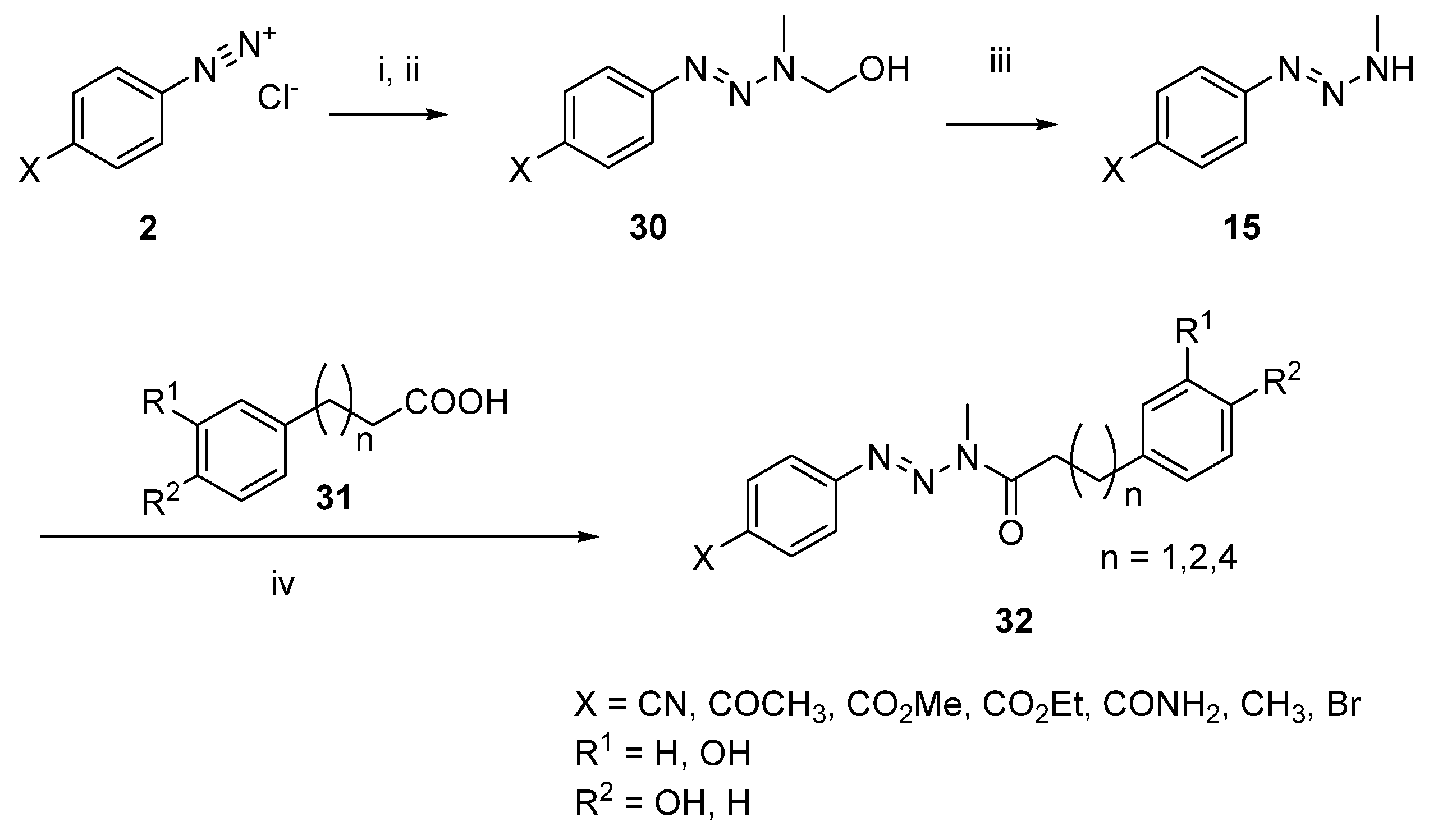
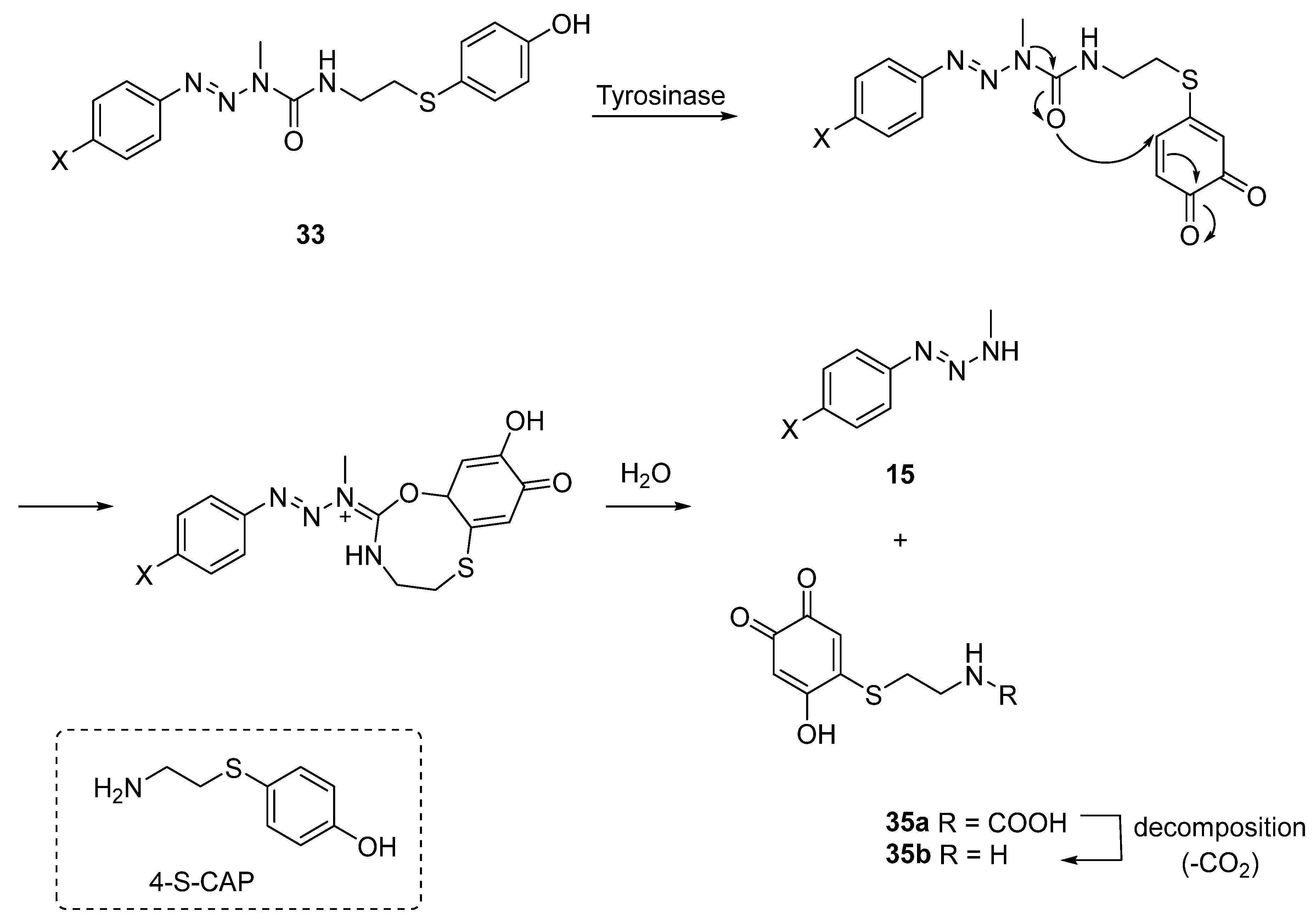
2.1. Targeting Tyrosinase
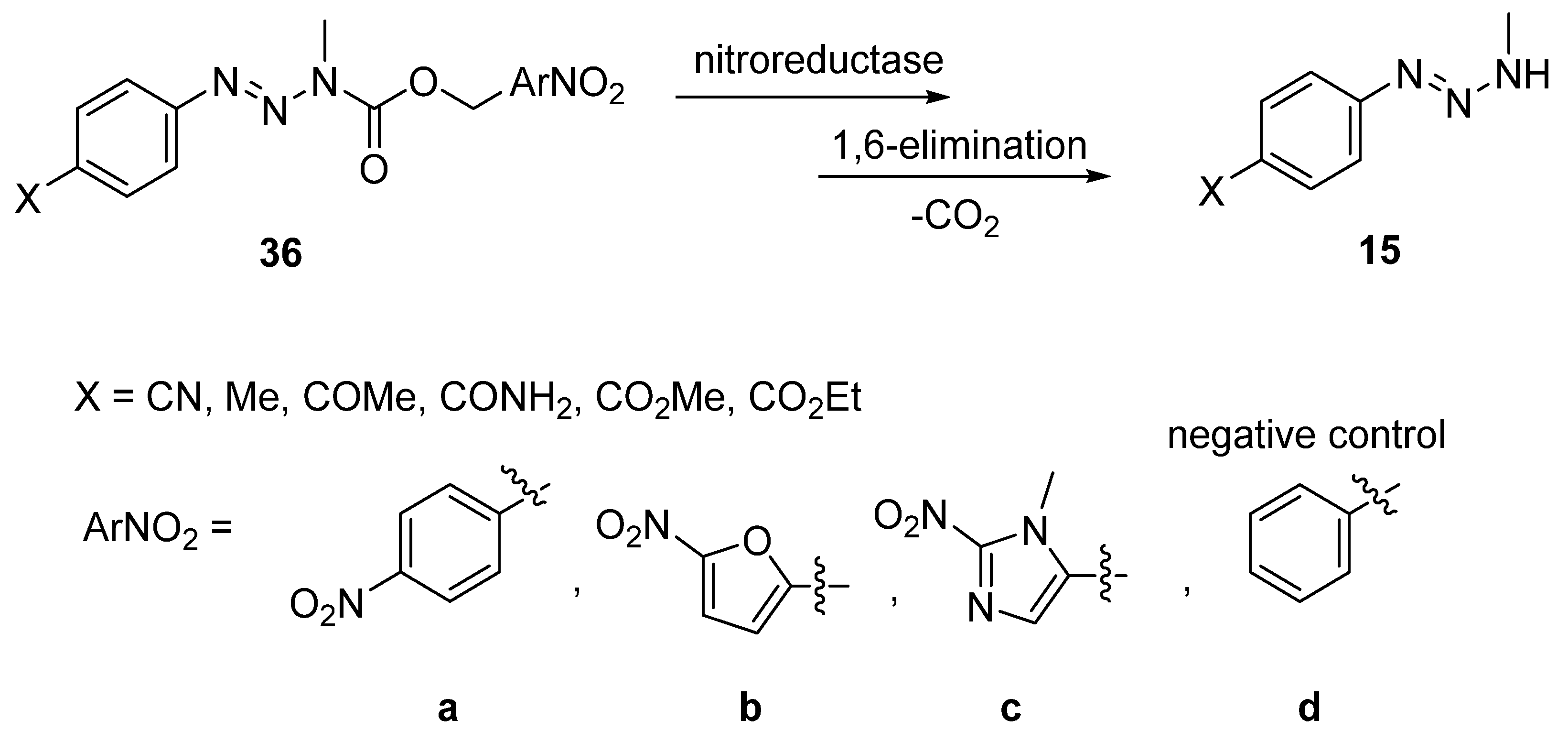
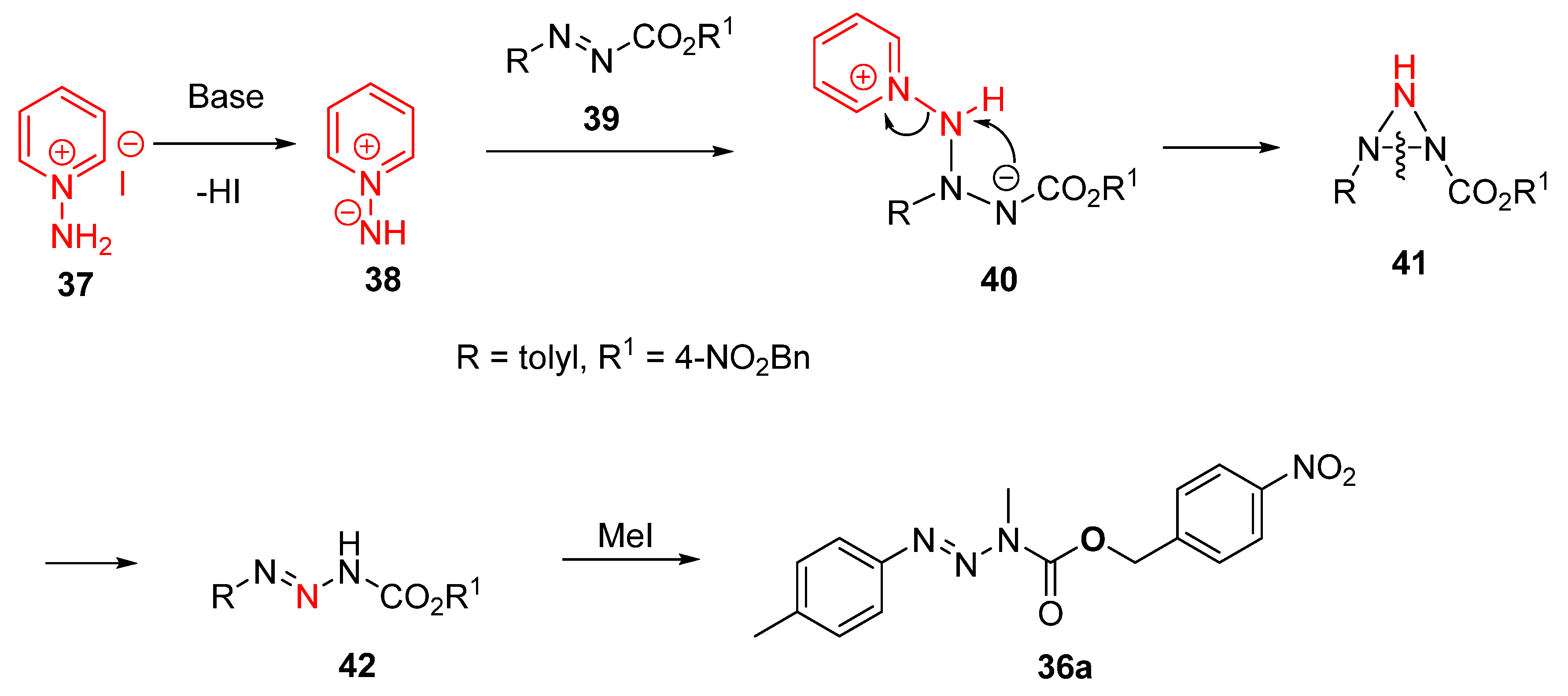
2.2. Targeting Nitroreductase
3. Triazene Hybrids

4. Conclusions
Funding
Institutional Review Board Statement
Informed Consent Statement
Data Availability Statement
Acknowledgments
Conflicts of Interest
References
- Meer, L.; Janzer, R.C.; Kleihues, P.; Kolar, G.F. In vivo metabolism and reaction with dna of the cytostatic agent, 5-(3,3-dimethyl-1-triazeno)imidazole-4-carboxamide (DTIC). Biochem. Pharmacol. 1986, 35, 3243–3247. [Google Scholar] [CrossRef] [PubMed]
- Stevens, M.F.G.; Hickman, J.A.; Langdon, S.P.; Chubb, D.; Vickers, L.; Stone, R.; Baig, G.; Goddard, C.; Gibson, N.W.; Slack, J.A.; et al. Antitumor activity and pharmacokinetics in mice of 8-carbamoyl-3-methyl-imidazo[5,1-d]-1,2,3,5-tetrazin-4(3H)-one (CCRG 81045; M & B 39831), a novel drug with potential as an alternative to dacarbazine. Cancer Res. 1987, 47, 5846–5852. [Google Scholar] [PubMed]
- Marchesi, F.; Turriziani, M.; Tortorelli, G.; Avvisati, G.; Torino, F.; De Vecchis, L. Triazene compounds: Mechanism of action and related DNA repair systems. Pharmacol. Res. 2007, 56, 275–287. [Google Scholar] [CrossRef] [PubMed]
- Legha, S.S. Current therapy for malignant melanoma. Semin. Oncol. 1989, 16, 34–44. [Google Scholar]
- Szklener, K.; Mazurek, M.; Wieteska, M.; Wacławska, M.; Bilski, M.; Mańdziuk, S. New Directions in the Therapy of Glioblastoma. Cancers 2022, 14, 5377. [Google Scholar] [CrossRef]
- Somers, R.; Santoro, A.; Verweij, J.; Lucas, P.; Rouëssé, J.; Kok, T.; Casali, A.; Seynaeve, C.; Thomas, D. Phase II study of mitozolomide in advanced soft tissue sarcoma of adults: The EORTC Soft Tissue and Bone Sarcoma Group. Eur. J. Cancer 1992, 28, 855–857. [Google Scholar] [CrossRef]
- Singhal, N.; Selva-Nayagam, S.; Brown, M.P. Prolonged and severe myelosuppression in two patients after low-dose temozolomide treatment- case study and review of literature. J. Neuro-Oncol. 2007, 85, 229–230. [Google Scholar] [CrossRef]
- Takayama, S.; Nagai, Y.; Sugiyama, T.; Ito, F.; Miyazaki, J. Photodegradation of dacarbazine irradiated by common lighting sources: An examination of the differences between light-emitting diode (LED) and fluorescent light. J. Pharm. Sci. 2026, 115, 104148. [Google Scholar] [CrossRef]
- Reid, J.M.; Kuffel, M.J.; Miller, J.K.; Rios, R.; Ames, M.M. Metabolic Activation of Dacarbazine by Human Cytochromes P450: The Role of CYP1A1, CYP1A2, and CYP2E1. Clin. Cancer Res. 1999, 5, 2192–2197. [Google Scholar]
- Gerulath, A.H.; Loo, T.L. Mechanism of action of 5-(3,3-dimethyl-1-triazeno)imidazole-4-caboxamide in mammalian cells in culture. Biochem. Pharmacol. 1972, 21, 2335–2343. [Google Scholar] [CrossRef]
- Newlands, E.S.; Blackledge, G.R.P.; Slack, J.A.; Rustin, G.J.; Smith, D.B.; Stuart, N.S.; Quarterman, C.P.; Hoffman, R.; Stevens, M.F.G.; Brampton, M.H.; et al. Phase I trial of temozolomide (CCRG 81045: M&B 39831: NSC 362856). Br. J. Cancer 1992, 65, 287–291. [Google Scholar] [CrossRef] [PubMed]
- Connors, T.A.; Goddard, P.M.; Merai, K.; Ross, W.C.J.; Wilman, D.E.V. Tumour inhibitory triazenes: Structural requirements for an active metabolite. Biochem. Pharmacol. 1976, 25, 241–246. [Google Scholar] [CrossRef] [PubMed]
- Ahern, T.P.; Fong, H.; Vaughan, K. Open-chain nitrogen compounds. Part II. Preparation, characterization, and degradation of 1(3)-Aryl-3(1)-methyltriazenes; the effect of substituents on the reaction of diazonium salts with methylamine. Can. J. Chem. 1977, 55, 1701–1709. [Google Scholar] [CrossRef]
- Ullrich, R.; Grewer, T. Decomposition of aromatic diazonium compounds. Thermochim. Acta 1993, 225, 201–211. [Google Scholar] [CrossRef]
- Doyle, M.P.; Bryker, W.J. Alkyl nitrite-metal halide deamination reactions. 6. Direct synthesis of arenediazonium tetrafluoroborate salts from aromatic amines, tert-butyl nitrite, and boron trifluoride etherate in anhydrous media. J. Org. Chem. 1979, 44, 1572–1574. [Google Scholar] [CrossRef]
- Kiefer, G.; Riedel, T.; Dyson, P.J.; Scopelliti, R.; Severin, K. Synthesis of Triazenes with Nitrous Oxide. Angew. Chem. Int. Ed. 2015, 54, 302–305. [Google Scholar] [CrossRef]
- Suleymanov, A.A.; Scopelliti, R.; Fadaei Tirani, F.; Severin, K. One-Pot Synthesis of Trisubstituted Triazenes from Grignard Reagents and Organic Azides. Org. Lett. 2018, 20, 3323–3326. [Google Scholar] [CrossRef]
- Zhang, Z.; Wang, R.; Xu, Z.; Zhang, X.; Liu, E.; Liang, H.; Zhao, Y. Base-Promoted Synthesis of Triazenes via Formal Substitution of Arylazo Sulfones with Amines. Org. Lett. 2025, 27, 10471–10476. [Google Scholar] [CrossRef]
- Kice, J.L.; Gabrielsen, R.S. Thermal decomposition of benzenediazo sulfones. II. Benzyl benzenediazo sulfone. J. Org. Chem. 1970, 35, 1010–1015. [Google Scholar] [CrossRef]
- Iley, J.; Fernandes, L.; Rosa, E. Triazene drug metabolites. Part 12. Base catalysed formation of 3-alkyl-1-aryltriazenes from 3-alkyl-3-hydroxymethyl-1-aryltriazenes. J. Chem. Soc. Perkin Trans. 2 1992, 2, 223–227. [Google Scholar] [CrossRef]
- Fernandes, L.; Francisco, A.P.; Iley, J.; Rosa, E. Triazene drug metabolites. Part 14. Kinetics and mechanism of the acid-catalysed hydrolysis of 3-alkoxymethyl-3-alkyl-1-aryltriazenes. J. Chem. Soc. Perkin Trans. 2 1994, 2313–2317. [Google Scholar] [CrossRef]
- Carvalho, E.; Francisco, A.P.; Iley, J.; Rosa, E. The Mechanism of Hydrolysis of Aryl Ether Derivatives of3-Hydroxymethyltriazenes. Eur. J. Org. Chem. 2005, 2005, 2056–2063. [Google Scholar] [CrossRef]
- Iley, J.; Moreira, R.; Rosa, E. Triazene drug metabolites. Part 11. Synthesis of S-cysteinyl and related derivatives of N-hydroxymethyltriazenes. J. Chem. Soc. Perkin Trans. 1 1991, 3241–3244. [Google Scholar] [CrossRef]
- Hemens, C.M.; Manning, H.W.; Vaughan, K.; LaFrance, R.J.; Tang, Y. Open-chain nitrogen compounds. Part V. Hydroxymethyltriazenes: Synthesis of some new alkyl homologues of the anti-tumour 3-methyl-3-hydroxymethyltriazenes and preparation of the derived acetoxymethyl-, benzoyloxymethyl-, and methoxymethyltriazenes. Can. J. Chem. 1984, 62, 741–748. [Google Scholar] [CrossRef]
- Vanghan, K.; Manning, H.W.; Merrin, M.P.; Hooper, D.L. Open chain nitrogen compounds. XIII: 1-Aryl-3-arylthiomethyl-3-methyltriazenes and 3-(arylazo)-1,3-thiazolidines. Can. J. Chem. 1988, 66, 2487–2491. [Google Scholar] [CrossRef]
- Merrin, M.P.; Hooper, D.L.; LaFrance, R.J.; Snooks, R.; Vaughan, K. Open-chain nitrogen compounds. Part XIV. Synthesis of 1-aryl-3-aryloxymethyl-3-methyltriazenes and 1-aryl-3-(hydroxyaryl)methyl-3-methyltriazenes. Can. J. Chem. 1992, 70, 144–150. [Google Scholar] [CrossRef]
- Carvalho, E.; Iley, J.; Rosa, E. Triazene drug metabolites. Part 13. The decomposition of 3-acyl-3-alkyl-1-aryltriazenes in aqueous sulfuric acid. J. Chem. Soc. Perkin Trans. 2 1993, 865–870. [Google Scholar] [CrossRef]
- Iley, J.N.; Moreira, R.; Rosa, E. Triazene drug metabolites. Part 4. Kinetics and mechanism of the decomposition of 1-aryl-3-benzoyloxymethyl-3-methyltriazenes in mixed aqueous–organic solvents. J. Chem. Soc. Perkin Trans. 2 1987, 1503–1508. [Google Scholar] [CrossRef]
- Perry, M.d.J.; Carvalho, E.; Rosa, E.; Iley, J. Towards an efficient prodrug of the alkylating metabolite monomethyltriazene: Synthesis and stability of N-acylamino acid derivatives of triazenes. Eur. J. Med. Chem. 2009, 44, 1049–1056. [Google Scholar] [CrossRef]
- Carvalho, E.; Iley, J.; Perry, M.d.J.; Rosa, E. Triazene Drug Metabolites: Part 15. Synthesis and Plasma Hydrolysis of Anticancer Triazenes Containing Amino Acid Carriers. Pharm. Res. 1998, 15, 931–935. [Google Scholar] [CrossRef]
- Carvalho, E.; Francisco, A.P.; Iley, J.; Rosa, E. Triazene drug metabolites. Part 17: Synthesis and plasma hydrolysis of acyloxymethyl carbamate derivatives of antitumour triazenes. Bioorg. Med. Chem. 2000, 8, 1719–1725. [Google Scholar] [CrossRef]
- Jordan, A.M.; Khan, T.H.; Malkin, H.; Osborn, H.M.I.; Photiou, A.; Riley, P.A. Melanocyte-Directed enzyme prodrug therapy (MDEPT): Development of second generation prodrugs for targeted treatment of malignant melanoma. Bioorg. Med. Chem. 2001, 9, 1549–1558. [Google Scholar] [CrossRef] [PubMed]
- Rooseboom, M.; Commandeur, J.N.M.; Vermeulen, N.P.E. Enzyme-Catalyzed Activation of Anticancer Prodrugs. Pharmacol. Rev. 2004, 56, 53–102. [Google Scholar] [CrossRef] [PubMed]
- Perry, M.J.; Mendes, E.; Simplício, A.L.; Coelho, A.; Soares, R.V.; Iley, J.; Moreira, R.; Francisco, A.P. Dopamine- and tyramine-based derivatives of triazenes: Activation by tyrosinase and implications for prodrug design. Eur. J. Med. Chem. 2009, 44, 3228–3234. [Google Scholar] [CrossRef] [PubMed]
- Monteiro, A.S.; Almeida, J.; Cabral, G.; Severino, P.; Videira, P.A.; Sousa, A.; Nunes, R.; Pereira, J.D.; Francisco, A.P.; Perry, M.J.; et al. Synthesis and evaluation of N-acylamino acids derivatives of triazenes. Activation by tyrosinase in human melanoma cell lines. Eur. J. Med. Chem. 2013, 70, 1–9. [Google Scholar] [CrossRef]
- Sousa, A.; Santos, F.; Gaspar, M.M.; Calado, S.; Pereira, J.D.; Mendes, E.; Francisco, A.P.; Perry, M.J. The selective cytotoxicity of new triazene compounds to human melanoma cells. Bioorg. Med. Chem. 2017, 25, 3900–3910. [Google Scholar] [CrossRef]
- Cheng, S.; Iley, J. Synthesis of 1-aryl-3-methyltriazenes by base-promoted decomposition of 1-aryl-3-hydroxymethyl3-methyltriazenes. J. Chem. Res. 1983, 320–321. [Google Scholar]
- Granada, M.; Mendes, E.; Perry, M.J.; Penetra, M.J.; Gaspar, M.M.; Pinho, J.O.; Serra, S.; António, C.T.; Francisco, A.P. Sulfur Analogues of Tyrosine in the Development of Triazene Hybrid Compounds: A New Strategy against Melanoma. ACS Med. Chem. Lett. 2021, 12, 1669–1677. [Google Scholar] [CrossRef]
- Shosuke, I.; Toshiaki, K.; Kiichi, I.; Tsutomu, K.; Kowichi, J. Mechanism of selective toxicity of 4-S-cysteinylphenol and 4-S-cysteaminylphenol to melanocytes. Biochem. Pharmacol. 1987, 36, 2007–2011. [Google Scholar] [CrossRef]
- Jimbow, K.; Iwashina, T.; Alena, F.; Yamada, K.; Pankovich, J.; Umemura, T. Exploitation of Pigment Biosynthesis Pathway as a Selective Chemotherapeutic Approach for Malignant Melanoma. J. Investig. Dermatol. 1993, 100, S231–S238. [Google Scholar] [CrossRef]
- Le Calvez, K.; Mauricaite, R.; Treasure, P.; Booth, T.C.; Price, S.J.; Brodbelt, A.; Gregory, J.J.; Dadhania, S.; Pakzad-Shahabi, L.; Dumba, M.; et al. Adult glioblastoma in England: Incidence, treatment, and outcomes with novel population-based strata. Cancer Epidemiol. 2025, 97, 102811. [Google Scholar] [CrossRef] [PubMed]
- Jezierzański, M.; Nafalska, N.; Stopyra, M.; Furgoł, T.; Miciak, M.; Kabut, J.; Gisterek-Grocholska, I. Temozolomide (TMZ) in the treatment of glioblastoma multiforme-a literature review and clinical outcomes. Curr. Oncol. 2024, 31, 3994–4002. [Google Scholar] [CrossRef] [PubMed]
- Stéphanou, A.; Ballesta, A. pH as a potential therapeutic target to improve temozolomide antitumor efficacy: A mechanistic modeling study. Pharmacol. Res. Perspect. 2019, 7, e00454. [Google Scholar] [CrossRef] [PubMed]
- Beppu, T.; Kamada, K.; Yoshida, Y.; Arai, H.; Ogasawara, K.; Ogawa, A. Change of Oxygen Pressure in Glioblastoma Tissue Under Various Conditions. J. Neuro-Oncol. 2002, 58, 47–52. [Google Scholar] [CrossRef]
- Braga, C.; Ferreira-Silva, M.; Corvo, M.L.; Moreira, R.; Fernandes, A.R.; Vaz, J.; Perry, M.J. Nitroaromatic-based triazene prodrugs to target the hypoxic microenvironment in glioblastoma. RSC Med. Chem. 2025, 16, 1350–1362. [Google Scholar] [CrossRef]
- Rampling, R.; Cruickshank, G.; Lewis, A.D.; Fitzsimmons, S.A.; Workman, P. Direct measurement of pO2 distribution and bioreductive enzymes in human malignant brain tumors. Int. J. Radiat. Oncol. Biol. Phys. 1994, 29, 427–431. [Google Scholar] [CrossRef]
- Wager, T.T.; Hou, X.; Verhoest, P.R.; Villalobos, A. Central Nervous System Multiparameter Optimization Desirability: Application in Drug Discovery. ACS Chem. Neurosci. 2016, 7, 767–775. [Google Scholar] [CrossRef]
- Kumar, P.; Kant, R.; Rastogi, N. Nitrogen atom insertion into N=N double bonds: Straightforward access to triazenes. Chem. Commun. 2025, 61, 16632–16635. [Google Scholar] [CrossRef]
- Viegas-Junior, C.; Danuello, A.; da Silva Bolzani, V.; Barreir, E.J.; Fraga, C.A.M. Molecular hybridization: A useful tool in the design of new drug prototypes. Curr. Med. Chem. 2007, 14, 1829–1852. [Google Scholar] [CrossRef]
- Gediya, L.K.; Njar, V.C. Promise and challenges in drug discovery and development of hybrid anticancer drugs. Expert Opin. Drug Discov. 2009, 4, 1099−1111. [Google Scholar] [CrossRef]
- Sigismund, S.; Avanzato, D.; Lanzetti, L. Emerging functions of the EGFR in cancer. Mol. Oncol. 2018, 12, 3–20. [Google Scholar] [CrossRef] [PubMed]
- Abourehab, M.A.S.; Alqahtani, A.M.; Youssif, B.G.M.; Gouda, A.M. Globally Approved EGFR Inhibitors: Insights into Their Syntheses, Target Kinases, Biological Activities, Receptor Interactions, and Metabolism. Molecules 2021, 26, 6677. [Google Scholar] [CrossRef] [PubMed]
- Matheson, S.L.; McNamee, J.; Jean-Claude, B.J. Design of a chimeric 3-methyl-1,2,3-triazene with mixed receptor tyrosine kinase and DNA damaging properties: A novel tumor targeting strategy. J. Pharmacol. Exp. Ther. 2001, 296, 832–840. [Google Scholar] [CrossRef] [PubMed]
- Brahimi, F.; Matheson, S.L.; Dudouit, F.; Mcnamee, J.P.; Tari, A.M.; Jean-Claude, B.J. Inhibition of Epidermal Growth Factor Receptor-Mediated Signaling by “Combi-Triazene” BJ2000, a New Probe for Combi-Targeting Postulates. J. Pharmacol. Exp. Ther. 2002, 303, 238–246. [Google Scholar] [CrossRef]
- Rewcastle, G.W.; Denny, W.A.; Bridges, A.J.; Zhou, H.; Cody, D.R.; McMichael, A.; Fry, D.W. Tyrosine kinase inhibitors. 5. Synthesis and structure-activity relationships for 4-[(phenylmethyl)amino]- and 4-(phenylamino)quinazolines as potent adenosine 5′-triphosphate binding site inhibitors of the tyrosine kinase domain of the epidermal growth factor receptor. J. Med. Chem. 1995, 38, 3482–3487. [Google Scholar] [CrossRef]
- Matheson, S.L.; Mzengeza, S.; Jean-Claude, B.J. Synthesis of 1-[4-(m-tolyl)amino-6-quinazolinyl]-3-[14C]-methyl triazene: A radiolabeled probe for the combi-targeting concept. J. Label. Compd. Radiopharm. 2003, 46, 729–735. [Google Scholar] [CrossRef]
- Matheson, S.L.; Brahimi, F.; Jean-Claude, B.J. The combi-targeting concept: Intracellular fragmentation of the binary epidermal growth factor (EGFR)/DNA targeting “combi-triazene” SMA41. Biochem. Pharmacol. 2004, 67, 1131–1138. [Google Scholar] [CrossRef]
- Matheson, S.L.; McNamee, J.P.; Jean-Claude, B.J. Differential responses of EGFR-/AGT-expressing cells to the “combi-triazene” SMA41. Cancer Chemother. Pharmacol. 2003, 51, 11–20. [Google Scholar] [CrossRef]
- Banerjee, R.; Rachid, Z.; McNamee, J.; Jean-Claude, B.J. Synthesis of a Prodrug Designed To Release Multiple Inhibitors of the Epidermal Growth Factor Receptor Tyrosine Kinase and an Alkylating Agent: A Novel Tumor Targeting Concept. J. Med. Chem. 2003, 46, 5546–5551. [Google Scholar] [CrossRef]
- Rewcastle, G.W.; Murray, D.K.; Elliott, W.L.; Fry, D.W.; Howard, C.T.; Nelson, J.M.; Roberts, B.J.; Vincent, P.W.; Hollis Showalter, H.D.; Winters, R.T.; et al. Tyrosine Kinase Inhibitors. 14. Structure−Activity Relationships for Methyl- amino-Substituted Derivatives of 4-[(3-Bromophenyl)amino]-6-(methylamino)- pyrido[3,4-d]pyrimidine (PD 158780), a Potent and Specific Inhibitor of the Tyrosine Kinase Activity of Receptors for the EGF Family of Growth Factors. J. Med. Chem. 1998, 41, 742–751. [Google Scholar] [CrossRef]
- Banerjee, R.; Rachid, Z.; Qiu, Q.; McNamee, J.P.; Tari, A.M.; Jean-Claude, B.J. Sustained antiproliferative mechanisms by RB24, a targeted precursor of multiple inhibitors of epidermal growth factor receptor and a DNA alkylating agent in the A431 epidermal carcinoma of the vulva cell line. Br. J. Cancer 2004, 91, 1066–1073. [Google Scholar] [CrossRef] [PubMed][Green Version]
- Rachid, Z.; Brahimi, F.; Katsoulas, A.; Teoh, N.; Jean-Claude, B.J. The Combi-Targeting Concept: Chemical Dissection of the Dual Targeting Properties of a Series of “Combi-Triazenes”. J. Med. Chem. 2003, 46, 4313–4321. [Google Scholar] [CrossRef] [PubMed]
- Hemens, C.M.; Vaughan, K. Kinetic study of the solvolysis reactions of 1-aryl-3-acetoxymethyl-3-alkyltriazenes: Evidence for iminium ion intermediates and the SN1 mechanism. J. Chem. Soc. Perkin Trans. 2 1986, 11–15. [Google Scholar] [CrossRef]
- Qiu, Q.; Larroque, A.L.; Gibbs, B.; Fang, Y.; Lakhrissi, Y.; Soucy, J.P.; Mzengeza, S.; Rachid, Z.; Jean-Claude, B.J. Molecular analysis of the in vivo metabolism and biodistribution of metabolically and non-metabolically activated combi-molecules of the triazene class. Drug Metab. Lett. 2009, 3, 1–9. [Google Scholar] [CrossRef]
- Rachid, Z.; MacPhee, M.; Williams, C.; Todorova, M.; Jean-Claude, B.J. Design and synthesis of new stabilized combi-triazenes for targeting solid tumors expressing the epidermal growth factor receptor (EGFR) or its closest homologue HER2. Bioorg. Med. Chem. Lett. 2009, 19, 5505–5509. [Google Scholar] [CrossRef]
- Golabi, N.; Rachid, Z.; Qiu, Q.; Huang, Y.; Jean-Claude, B.J. In vitro and in vivo biodistribution of ZRS1, a stabilized type I N-acetoxymethyl carbamate-containing combi-molecule. Drug Metab. Lett. 2011, 5, 141–149. [Google Scholar] [CrossRef]
- Matheson, S.L.; McNamee, J.P.; Wang, T.; Alaoui-Jamali, M.A.; Tari, A.M.; Jean-Claude, B.J. The Combi-Targeting Concept: Dissection of the Binary Mechanism of Action of the Combi-Triazene SMA41 in Vitro and Antitumor Activity in Vivo. J. Pharmacol. Exp. Ther. 2004, 311, 1163–1170. [Google Scholar] [CrossRef]
- Brahimi, F.; Rachid, Z.; McNamee, J.P.; Alaoui-Jamali, M.A.; Tari, A.M.; Jean-Claude, B.J. Mechanism of action of a novel “combi-triazene” engineered to possess a polar functional group on the alkylating moiety: Evidence for enhancement of potency. Biochem. Pharmacol. 2005, 70, 511–519. [Google Scholar] [CrossRef]
- Rachid, Z.; Brahimi, F.; Domarkas, J.; Jean-Claude, B.J. Synthesis of half-mustard combi-molecules with fluorescence properties: Correlation with EGFR status. Bioorg. Med. Chem. Lett. 2005, 15, 1135–1138. [Google Scholar] [CrossRef]
- Warren, J.J.; Forsberg, L.J.; Beese, L.S. The structural basis for the mutagenicity of O6-methyl-guanine lesions. Proc. Natl. Acad. Sci. USA 2006, 103, 19701–19706. [Google Scholar] [CrossRef]
- Brahimi, F.; Rachid, Z.; Qiu, Q.; McNamee, J.P.; Li, Y.J.; Tari, A.M.; Jean-Claude, B.J. Multiple mechanisms of action of ZR2002 in human breast cancer cells: A novel combi-molecule designed to block signaling mediated by the ERB family of oncogenes and to damage genomic DNA. Int. J. Cancer 2004, 112, 484–491. [Google Scholar] [CrossRef] [PubMed]
- Rachid, Z.; Brahimi, F.; Qiu, Q.; Williams, C.; Hartley, J.M.; Hartley, J.A.; Jean-Claude, B.J. Novel Nitrogen Mustard-Armed Combi-Molecules for the Selective Targeting of Epidermal Growth Factor Receptor Overexperessing Solid Tumors: Discovery of an Unusual Structure−Activity Relationship. J. Med. Chem. 2007, 50, 2605–2608. [Google Scholar] [CrossRef] [PubMed]
- Katsoulas, A.; Rachid, Z.; Brahimi, F.; McNamee, J.; Jean-Claude, B.J. Engineering 3-alkyltriazenes to block bcr-abl kinase: A novel strategy for the therapy of advanced bcr-abl expressing leukemias. Leuk. Res. 2005, 29, 693–700. [Google Scholar] [CrossRef] [PubMed]
- Massimino, M.; Manzella, L.; Stagno, F.; Consoli, M.L.; Fallica, M.; Aloisi, A.; Di Raimondo, F.; Messina, A.; Vigneri, P. BCR-ABL Tyrosine Kinase Activity Modulates the Phosphorylation, Localization and Function of Interferon Regulatory Factor 5 (irf-5) in Chronic Myeloid Leukemia (CML) Cells. Blood 2009, 114, 2165. [Google Scholar] [CrossRef]
- Kano, Y.; Akutsu, M.; Tsunoda, S.; Mano, H.; Sato, Y.; Honma, Y.; Furukawa, Y. In vitro cytotoxic effects of a tyrosine kinase inhibitor STI571 in combination with commonly used antileukemic agents. Blood 2001, 97, 1999–2007. [Google Scholar] [CrossRef]
- Katsoulas, A.; Rachid, Z.; McNamee, J.P.; Williams, C.; Jean-Claude, B.J. Combi-targeting concept: An optimized single-molecule dual-targeting model for the treatment of chronic myelogenous leukemia. Mol. Cancer Ther. 2008, 7, 1033–1043. [Google Scholar] [CrossRef]
- Del Rivero, J.; Perez, K.; Geyer, S.M.; Khalil, M.F.; Vijendran, A.; Kordaris-Corkill, A.; Shergill, A.; Spencer, K.R.; Soares, H.P.; Lopez, C.D.; et al. Alliance A021804: A prospective, multi-institutional phase II trial evaluating temozolomide versus temozolomide and olaparib for advanced pheochromocytoma and paraganglioma. J. Clin. Oncol. 2023, 41, TPS4191. [Google Scholar] [CrossRef]
- Senhaji Mouhri, Z.; Goodfellow, E.; Kelley, S.P.; Stein, R.S.; Rogers, R.D.; Jean-Claude, B.J. 15N-, 13C- and 1H-NMR Spectroscopy Characterization and Growth Inhibitory Potency of a Combi-Molecule Synthesized by Acetylation of an Unstable Monoalkyltriazene. Molecules 2017, 22, 1183. [Google Scholar] [CrossRef]
- Senhaji Mouhri, Z.; Goodfellow, E.; Jean-Claude, B. A type I combi-targeting approach for the design of molecules with enhanced potency against BRCA1/2 mutant- and O6-methylguanine-DNA methyltransferase (mgmt)- expressing tumour cells. BMC Cancer 2017, 17, 540. [Google Scholar] [CrossRef]
- Li, H.; Liu, Z.-Y.; Wu, N.; Chen, Y.-C.; Cheng, Q.; Wang, J. PARP inhibitor resistance: The underlying mechanisms and clinical implications. Mol. Cancer 2020, 19, 107–116. [Google Scholar] [CrossRef]
- Yu, W.; Zhang, L.; Wei, Q.; Shao, A. O6-Methylguanine-DNA Methyltransferase (MGMT): Challenges and New Opportunities in Glioma Chemotherapy. Front. Oncol. 2020, 9, 1547. [Google Scholar] [CrossRef] [PubMed]
- Wanner, M.J.; Koch, M.; Koomen, G.-J. Synthesis and Antitumor Activity of Methyltriazene Prodrugs Simultaneously Releasing DNA-Methylating Agents and the Antiresistance Drug O6-Benzylguanine. J. Med. Chem. 2004, 47, 6875–6883. [Google Scholar] [CrossRef] [PubMed]
- Wanner, M.J.; Koomen, G.J. A new synthesis of temozolomide. J. Chem. Soc. Perkin Trans. 1 2002, 1877–1880. [Google Scholar] [CrossRef]
- Beukers, M.W.; Wanner, M.J.; Von Frijtag Drabbe Künzel, J.K.; Klaasse, E.C.; Ijzerman, A.P.; Koomen, G.-J. N 6 -Cyclopentyl-2-(3-phenylaminocarbonyltriazene-1-yl)adenosine (TCPA), a Very Selective Agonist with High Affinity for the Human Adenosine A 1 Receptor. J. Med. Chem. 2003, 46, 1492–1503. [Google Scholar] [CrossRef]
- Thotala, D.; Karvas, R.M.; Engelbach, J.A.; Garbow, J.R.; Hallahan, A.N.; DeWees, T.A.; Laszlo, A.; Hallahan, D.E. Valproic acid enhances the efficacy of radiation therapy by protecting normal hippocampal neurons and sensitizing malignant glioblastoma cells. Oncotarget 2015, 6, 35004–35022. [Google Scholar] [CrossRef]
- Ryu, C.H.; Yoon, W.S.; Park, K.Y.; Kim, S.M.; Lim, J.Y.; Woo, J.S.; Jeong, C.H.; Hou, Y.; Jeun, S.-S. Valproic Acid Downregulates the Expression of MGMT and Sensitizes Temozolomide-Resistant Glioma Cells. J. Biomed. Biotechnol. 2012, 2012, 987495. [Google Scholar] [CrossRef]
- Pinheiro, R.; Braga, C.; Santos, G.; Bronze, M.R.; Perry, M.J.; Moreira, R.; Brites, D.; Falcão, A.S. Targeting Gliomas: Can a New Alkylating Hybrid Compound Make a Difference? ACS Chem. Neurosci. 2017, 8, 50–59. [Google Scholar] [CrossRef]
- Braga, C.; Vaz, A.R.; Oliveira, M.C.; Marques, M.M.; Moreira, R.; Brites, D.; Perry, M.J. Targeting gliomas with triazene-based hybrids: Structure-activity relationship, mechanistic study and stability. Eur. J. Med. Chem. 2019, 172, 16–25. [Google Scholar] [CrossRef]
- Walunj, D.; Egarmina, K.; Tuchinsky, H.; Shpilberg, O.; Hershkovitz-Rokah, O.; Grynszpan, F.; Gellerman, G. Expedient synthesis and anticancer evaluation of dual-action 9-anilinoacridine methyl triazene chimeras. Chem. Biol. Drug Des. 2021, 97, 237–252. [Google Scholar] [CrossRef]
- Prasher, P.; Sharma, M. Medicinal chemistry of acridine and its analogues. MedChemComm 2018, 9, 1589–1618. [Google Scholar] [CrossRef]
- Oyeyode, M.; Tempel, M.; Lakowski, T.M.; Davie, J.R. DNA intercalating drugs: Mechanisms of action in cancer treatment. Adv. Biol. Regul. 2025, 98, 101115. [Google Scholar] [CrossRef] [PubMed]
- Varakumar, P.; Rajagopal, K.; Aparna, B.; Raman, K.; Byran, G.; Lima, C.M.G.; Rashid, S.; Nafady, M.H.; Emran, T.B.; Wybraniec, S. Acridine as an Anti-Tumour Agent: A Critical Review. Molecules 2023, 28, 193. [Google Scholar] [CrossRef] [PubMed]
- Gilad, Y.; Tuchinsky, H.; Ben-David, G.; Minnes, R.; Gancz, A.; Senderowitz, H.; Luboshits, G.; Firer, M.A.; Gellerman, G. Discovery of potent molecular chimera (CM358) to treat human metastatic melanoma. Eur. J. Med. Chem. 2017, 138, 602–615. [Google Scholar] [CrossRef] [PubMed]
- Walunj, D.; Thankarajan, E.; Prasad, C.; Tuchinsky, H.; Baldan, S.; Sherman, M.Y.; Patsenker, L.; Gellerman, G. Targeted methylation facilitates DNA double strand breaks and enhances cancer suppression: A DNA intercalating/methylating dual-action chimera Amonafidazene. Eur. J. Med. Chem. 2021, 225, 113811. [Google Scholar] [CrossRef]
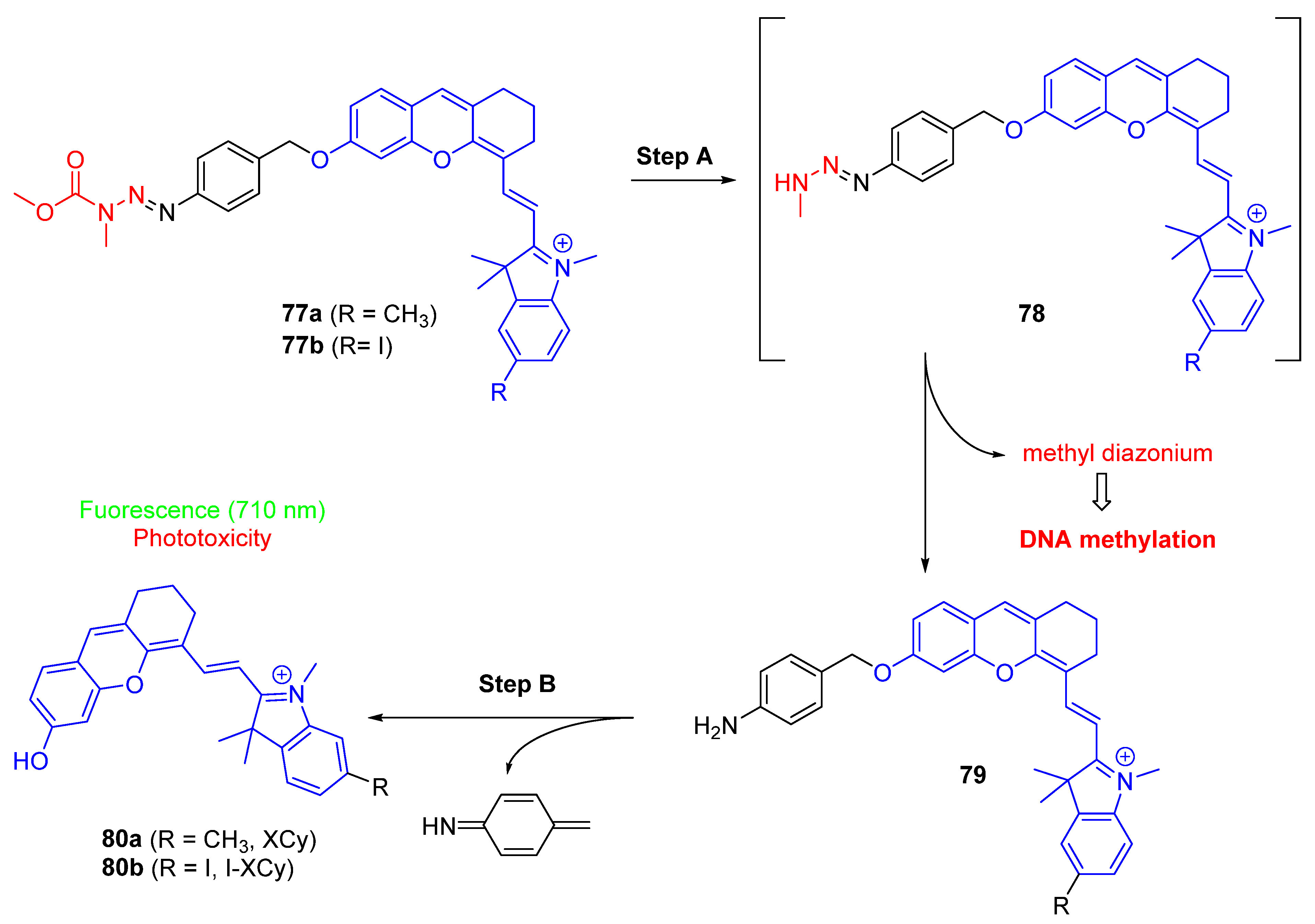
- Thankarajan, E.; Walunj, D.; Bazylevich, A.; Prasad, C.; Hesin, A.; Patsenker, L.; Gellerman, G. A novel, dual action chimera comprising DNA methylating agent and near-IR xanthene-cyanine photosensitizer for combined anticancer therapy. Photodiagn. Photodyn. Ther. 2022, 37, 102722. [Google Scholar] [CrossRef]
- Ebaston, T.M.; Rozovsky, A.; Zaporozhets, A.; Bazylevich, A.; Tuchinsky, H.; Marks, V.; Gellerman, G.; Patsenker, L.D. Peptide-Driven Targeted Drug-Delivery System Comprising Turn-On Near-Infrared Fluorescent Xanthene–Cyanine Reporter for Real-Time Monitoring of Drug Release. ChemMedChem 2019, 14, 1727–1734. [Google Scholar] [CrossRef]
- Yuan, B.; Wang, H.; Xu, J.-F.; Zhang, X. Activatable Photosensitizer for Smart Photodynamic Therapy Triggered by Reactive Oxygen Species in Tumor Cells. ACS Appl. Mater. Interfaces 2020, 12, 26982–26990. [Google Scholar] [CrossRef]
- Walunj, D.; Egarmina, K.; Zipin-Roitman, A.; Muddineni, S.S.N.A.; Tkachenko, I.; Mitra, P.; Tobi, D.; Bazylevich, A.; Shpilberg, O.; Milyavsky, M.; et al. Novel dual action chimera doxorubizen demonstrates superior efficacy to doxorubicin in acute leukemia. Sci. Rep. 2025, 15, 10607. [Google Scholar] [CrossRef]






| Activation | Promoeity | Linkage | Half-Life (t1/2) | Cytotoxicity |
|---|---|---|---|---|
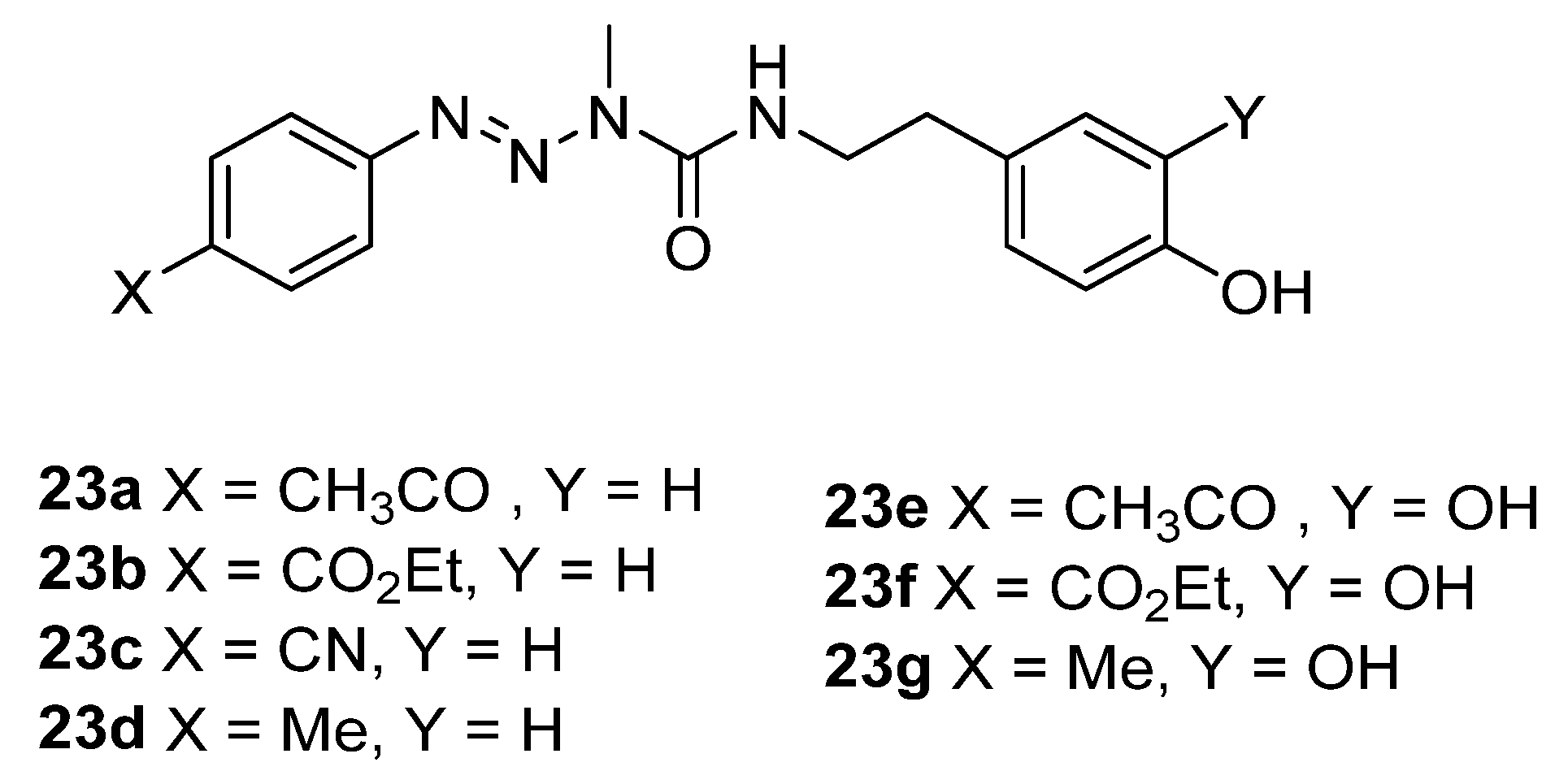
| Tyrosinase | Tyramine based | Urea | PBS pH 7.4 = 0.25–15 days; 80% human plasma = 0.4–2 days; tyrosinase = 2.1–2.3 min | No cytotoxicity observed because no methyl triazene was released |
| N-acyltyrosine based | Amide | PBS pH 7.4 = 42.2–72.2 h; 80% human plasma = 1.23–9.54 h; tyrosinase = 8.9–19.8 min | Showed limited cytotoxicity against MNT-1 cell line | |
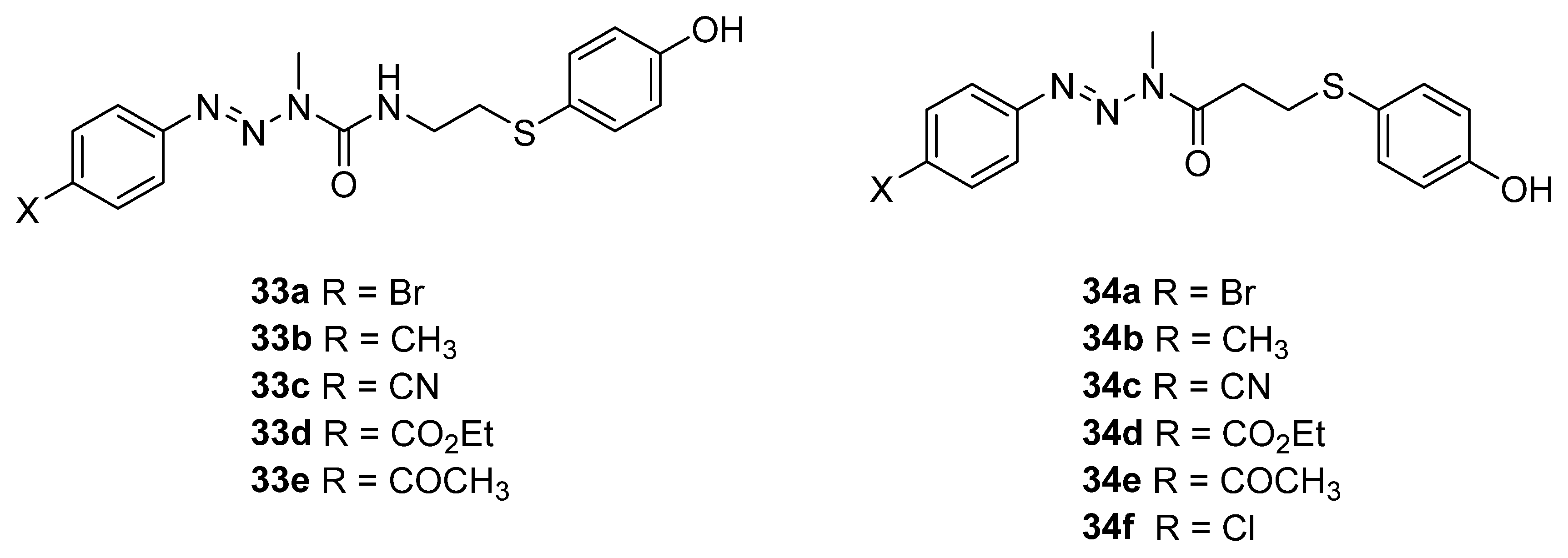
| cysteaminylphenol based | Amide | PBS pH 7.4 = 3.6–5.8 days; 80% human plasma = 2.9–8.7 h; tyrosinase = 2.1–2.3 min | Comparable cytotoxicity to TMZ in MNT-1 and BF16F10 cancer cell lines | |
| Urea | PBS pH 7.4 > 10 days; 80% human plasma = 30.5–105 h; tyrosinase = 0.5–3.7 min | Higher cytotoxicity than TMZ in MNT-1 and BF16F10 cancer cell lines | ||
| Hypoxia | Nitroaryl based | Carbamate | Cell culture media > 2.5 days; nitroreductase = 10 to >60 min | Higher cytotoxicity than TMZ against U-87 cancer cell line but no significant difference between hypoxic and normoxic conditions |
Disclaimer/Publisher’s Note: The statements, opinions and data contained in all publications are solely those of the individual author(s) and contributor(s) and not of MDPI and/or the editor(s). MDPI and/or the editor(s) disclaim responsibility for any injury to people or property resulting from any ideas, methods, instructions or products referred to in the content. |
© 2026 by the authors. Licensee MDPI, Basel, Switzerland. This article is an open access article distributed under the terms and conditions of the Creative Commons Attribution (CC BY) license.
Share and Cite
Ribeiro Morais, G.; Nwokolo, G.C.; Lamptey Mills, H.N.L.; Wheelhouse, R.T.; Falconer, R.A. Exploiting Methyl Triazenes as Attractive Alternatives to Temozolomide and Dacarbazine for Cancer Therapy. Molecules 2026, 31, 1103. https://doi.org/10.3390/molecules31071103
Ribeiro Morais G, Nwokolo GC, Lamptey Mills HNL, Wheelhouse RT, Falconer RA. Exploiting Methyl Triazenes as Attractive Alternatives to Temozolomide and Dacarbazine for Cancer Therapy. Molecules. 2026; 31(7):1103. https://doi.org/10.3390/molecules31071103
Chicago/Turabian StyleRibeiro Morais, Goreti, Gabriel C. Nwokolo, Harriet N. L. Lamptey Mills, Richard T. Wheelhouse, and Robert A. Falconer. 2026. "Exploiting Methyl Triazenes as Attractive Alternatives to Temozolomide and Dacarbazine for Cancer Therapy" Molecules 31, no. 7: 1103. https://doi.org/10.3390/molecules31071103
APA StyleRibeiro Morais, G., Nwokolo, G. C., Lamptey Mills, H. N. L., Wheelhouse, R. T., & Falconer, R. A. (2026). Exploiting Methyl Triazenes as Attractive Alternatives to Temozolomide and Dacarbazine for Cancer Therapy. Molecules, 31(7), 1103. https://doi.org/10.3390/molecules31071103