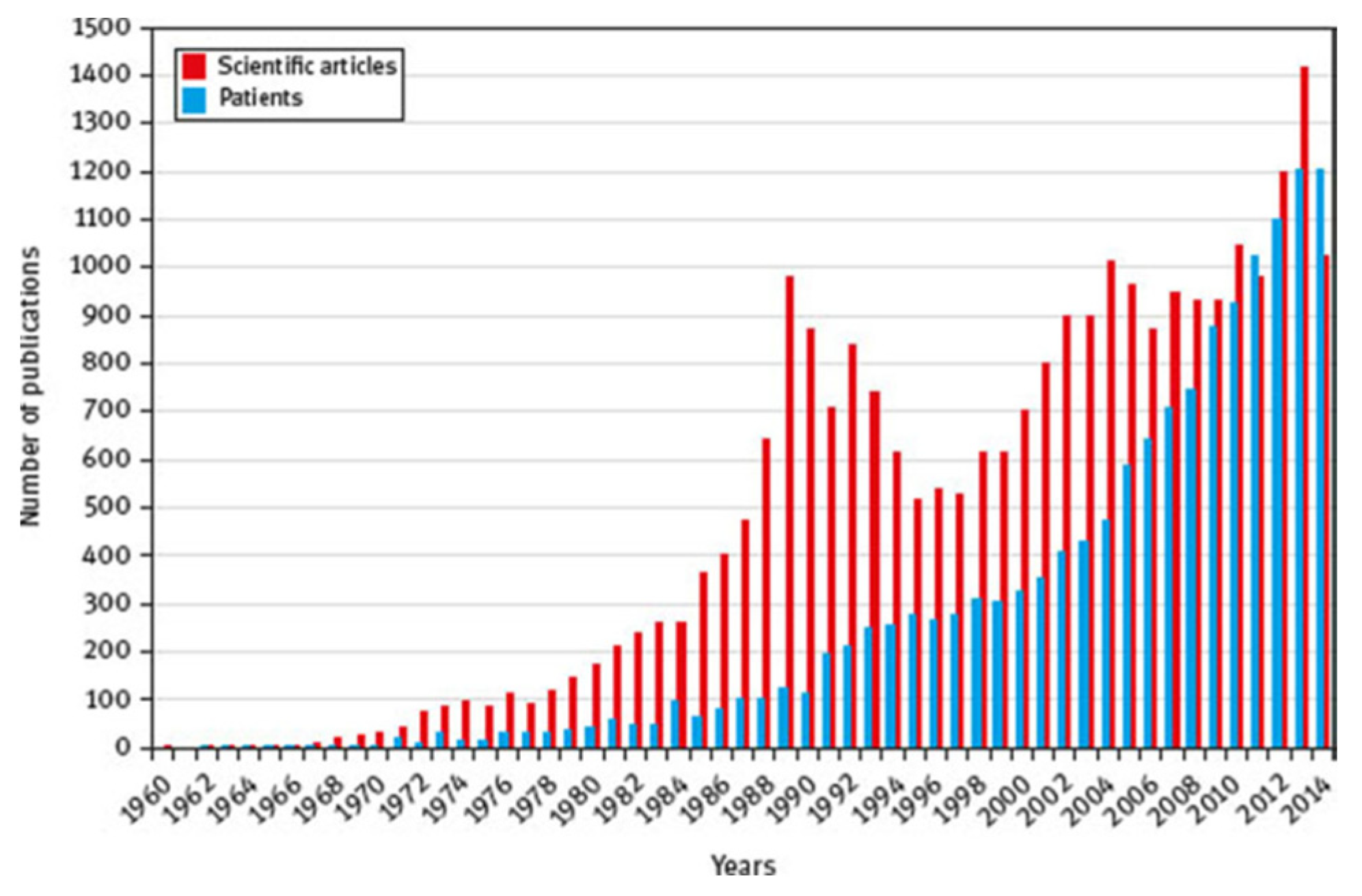
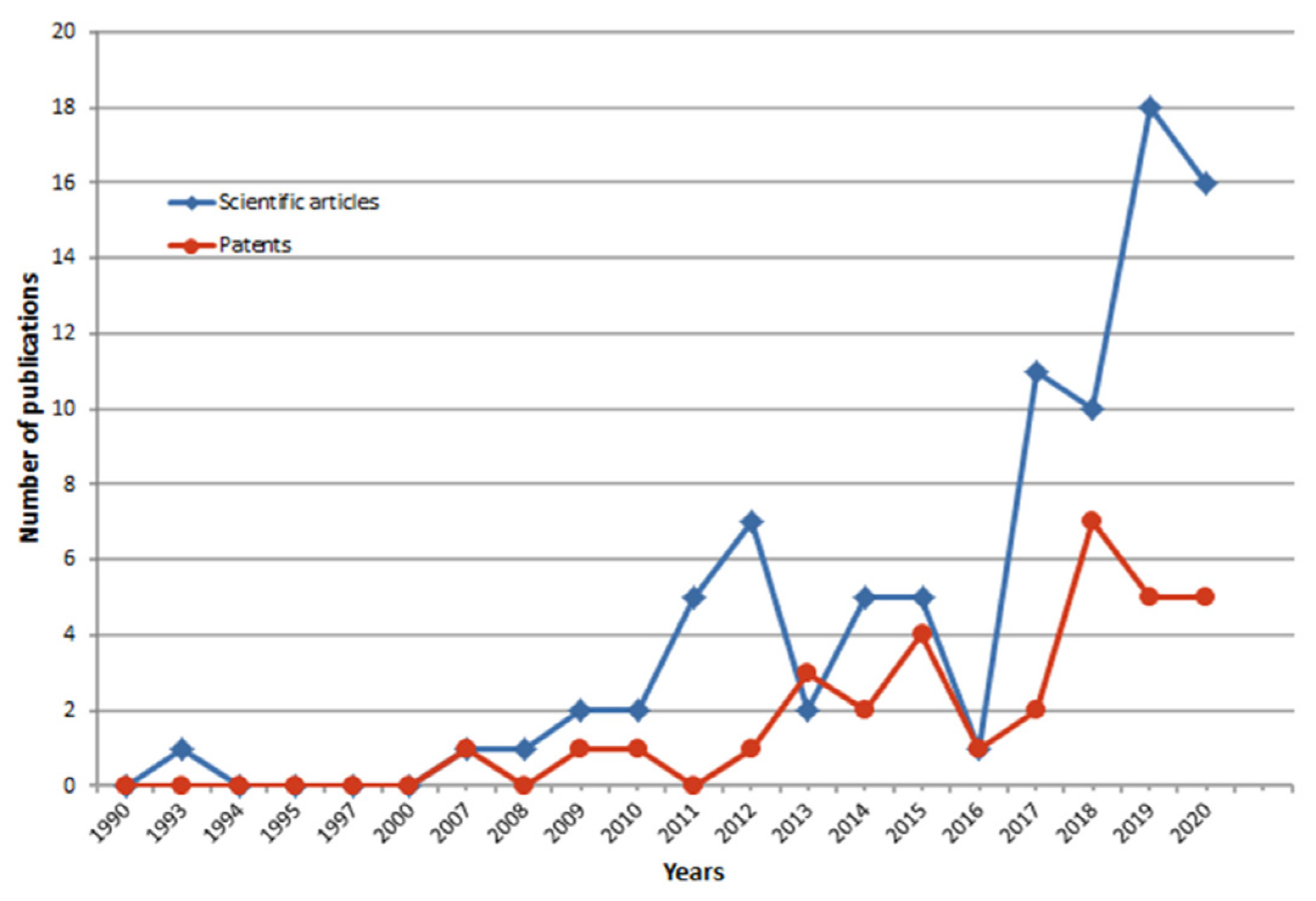
Essential Oils Applied to Textile Substrates with Emphasis on Antibacterial Properties: Review Article


Abstract
1. Introduction
2. Essential Oils: The Potential Candidates
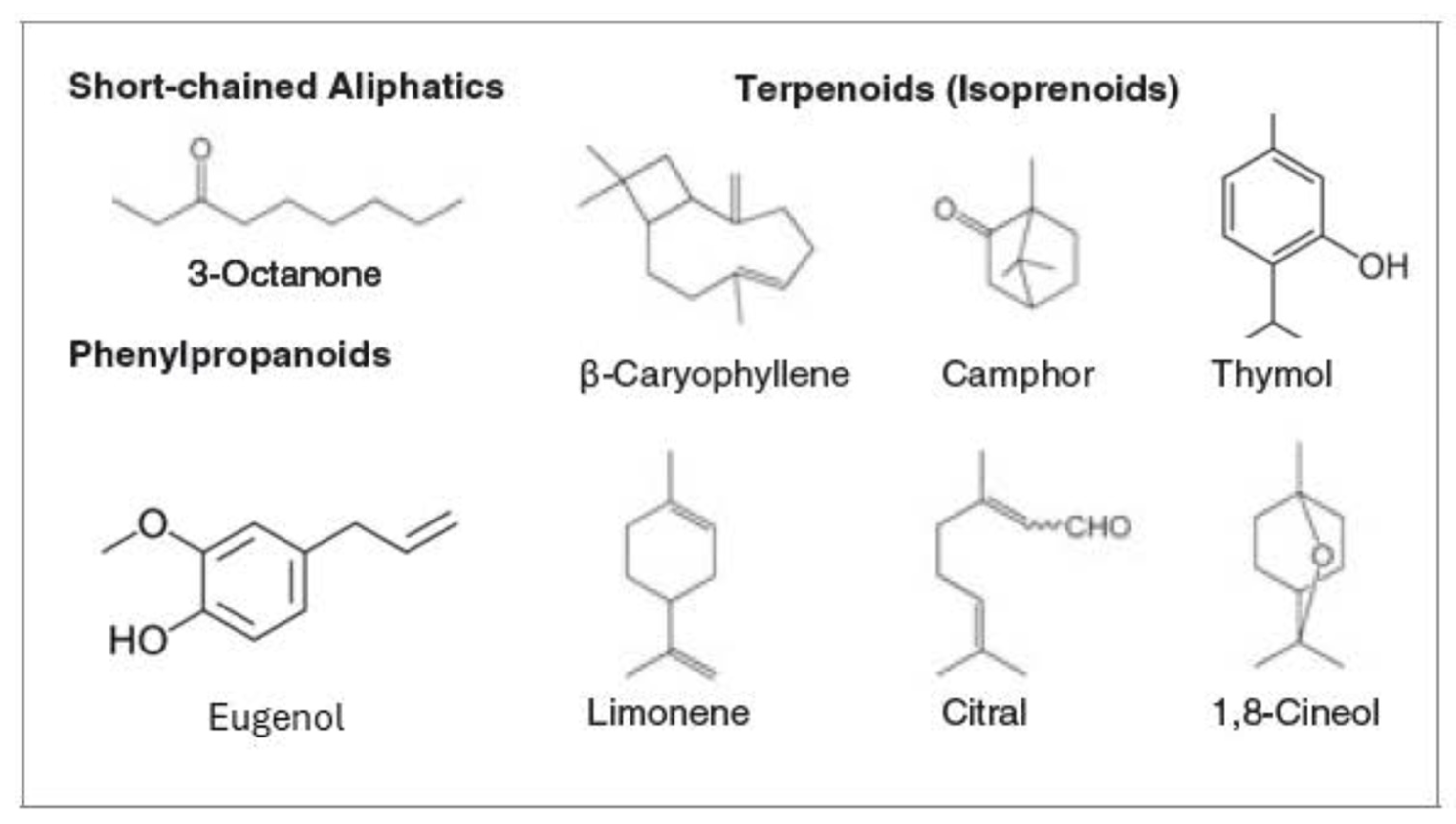
2.1. Chemistry of Essential Oils with Antibacterial Properties
2.2. Antibacterial Activity of Essential Oils
2.3. Essential Oils with Properties for Combating Micro-Organisms
2.3.1. Citronella Essential Oil
2.3.2. Clove Essential Oil
2.3.3. Cinnamon Essential Oil
2.3.4. Lavender Essential Oil
2.3.5. Eucalyptus Essential Oil
2.3.6. Thyme Essential Oil
2.3.7. Rosemary Essential Oil

| Type | Botanical Name | Functional Constituent(s) | Properties | Applications | Reference |
|---|---|---|---|---|---|
| Agarwood | Aquilaria malaccensis | Plyphenols | Antioxidant and antimicrobial | Food industry and pharmaceutical industry | Piah [75], M Zhou [76] |
| Black pepper | Piper nigrum L. | Piperine | Antioxidant and antimicrobial | Food preservatives, pharmaceutical industry | de Almeida [66], Bastos [77] |
| Cinnamon | Cinnamon zeylanicun | Cinnamaldehyde, camphor, eugenol | Antioxidant and antimicrobial | Textile and food industry | de Almeida [66], Ghayempour [16], Jiang [78], de Souza [79], Singh [80] |
| Citronela | Cymbopogon nardus | Citronellal, Geraniol, Citronellol | Antioxidant and antimicrobial | Personal care, household products, pharmaceutical, and Food Industry | Tariq [35], Specos [81], Lis Arias [82], Yingngam [36], Liu [83] |
| Clove | Syzygium aromaticum | Eugenol, carvacrol, thymol | Antioxidant, antimicrobial, and aroma | Cosmetic, food, and pharmaceutical industry | de Almeida [66], Ghayempour [16], El Molla [84] |
| Eucalyptus | Eucalyptus citriodora Hook | Citronellal | Antioxidant and aroma | Cosmetic and pharmaceutical industry | Kim [60], Elbhnsawi [85] |
| Garlic | Allium sativin L. | Sulfur | Antimicrobial and antioxidant | Food, medicine | C W Tsai [86], Chung [87], Park [88] |
| Lavender | Lavandula angustifolia | Camphor, Linalool, 1,8-cineole | Antifungal, antimicrobial, and antioxidant | Sedative, antidepressant, carminative | Ghayempour [16], El Molla [84], Golja [89], Wang [52] |
| Lemon Grass | Cymbopogon spp. | Citral | Frangrance, Aroma, Mosquito Repellent | Food industry, retard microbial activity | Miro Specos [90], Bhatt [91] |
| Lime | Citrus limon | Limone, Citral, Terpenes | Flavor (bioactive) antiseptic, antioxidant | Food, medicine, sedatives, and aromatic | Julaeha [92] |
| Neem | Azadirachta indica | Flavonoids, phenolics, steroids | Antimicrobial, anti-oxidant, immunostimulant | Acaricidol, Mosquito Repellent | Sayed [93] |
| Oregano | Origanum spp. | Thymol, carvacrol, p-cymene | Anti-microbial and anti-oxidant | Flavor, season agents (food industry) | Wu [94], de Almeida [66] |
| Rose | Rosa x damascene Mill | citronella, geraminol, nonadecane | Anti-oxidant and antimicrobial | Flavoring agents, pharmaceutical | Golja [89], Stan [17] |
| Thyme | Thymus vulgaris L. | Thymol and carvacrol | Anti-microbial and anti-oxidant | Food (beverages) and pharmaceutical | de Almeida [66], Ghayempour [16], El Molla [84] |
| African cardamon | Aframomum danielli | 1.8 cyneole, β-pinene, α-terpineol | Anti-oxidant and antibrowning | Food preservative (controlling microbial deterioration) | Martins [95], Adegoke [96] |
| Amazon Rosewood | Aniba rosaedora | Linalool, β-phelladrene | Anti-oxidant | Flavor and cosmetic industry | López [97], Belletti [98] |
| Angelica | Angelica glauca | Methyl-octane, limonene, trans-carcavol | Anti-oxidant, anti-microbial activity | Food and preservatives | Kandari [99] |
| Jasmine | Jasminun sambac | Linalool, (monoterpenoide alcohol), benzula | Anti-microbial and anti-oxidant | Food preservation and flavor agent | F Abdoul-Latif [100], E Hernandez [101] |
| PepperMint | Mentha spicata L. | Tepernoides (derivade from isoprene), carvone and cimonene | Anti-oxidant, anti-fungal and aroma | Pharmaceutical, perfumery, and food industry | L Ye [102] |
| Onion | Allium cepa | Sulfur (Dipropil dissulphyde) | Anti-microbial, sensorial and anti-oxidant | Food preservative, anti-rancidity | Benkeblia, N [103] |
| Rosemary | Rosimarinus officinalis | Canphor, 1.8 Lineol | Anti-microbial and anti-oxidant | Preservative food. | Golja [89] |
3. Methods to Immobilize the Essential Oil
3.1. Complex Formation by Synthetic Polymers
- Polyvinyl alcohol (PVA): often used as a stabilizing agent during the encapsulation process.
- Polylactic acid (PLA): biodegradable and suitable for controlled release applications.
- Polymethyl methacrylate (PMMA): provides good mechanical strength and stability.
- Polyurethanes: used for forming strong, stable capsules.
- Polycaprolactone (PCL): a biodegradable polymer used for long-term controlled release.
3.2. Complex Formation by Using Biopolymers: Chemical Methods
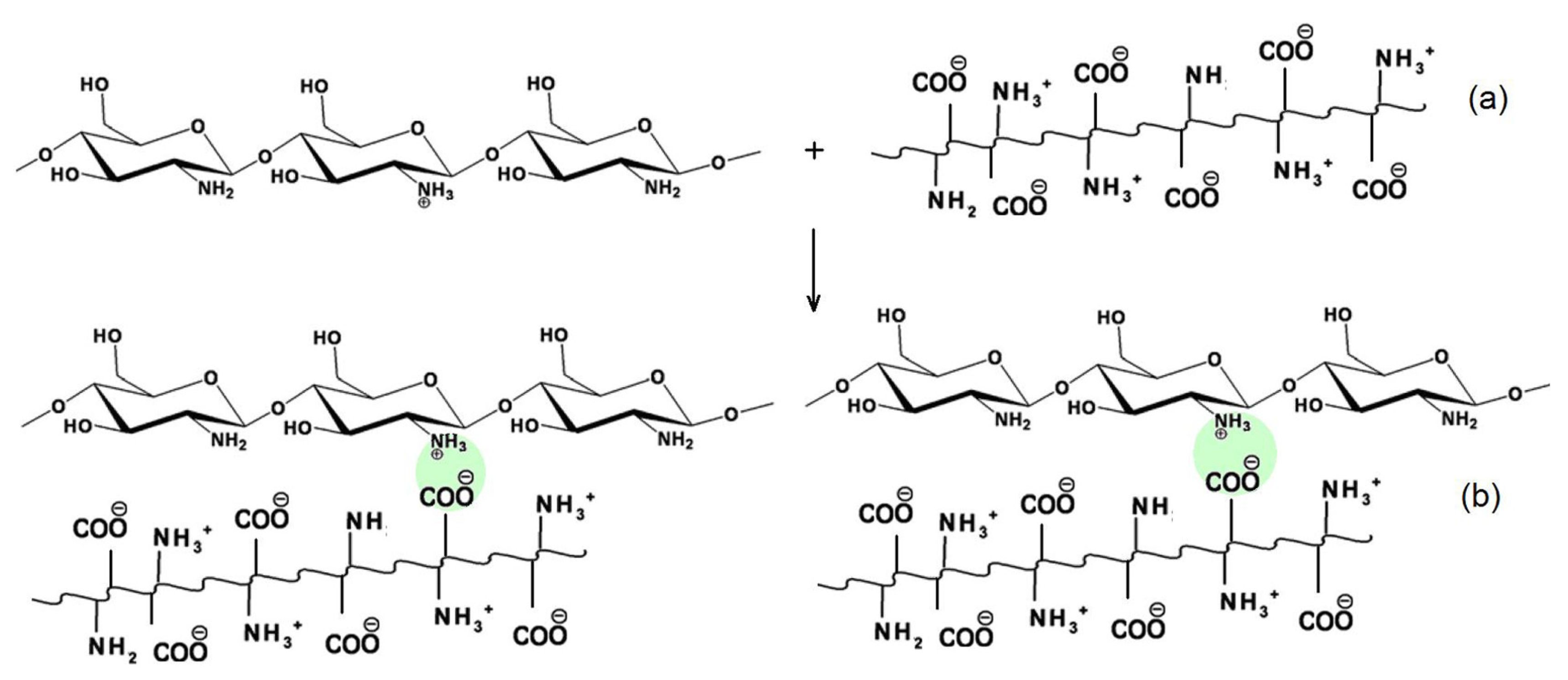
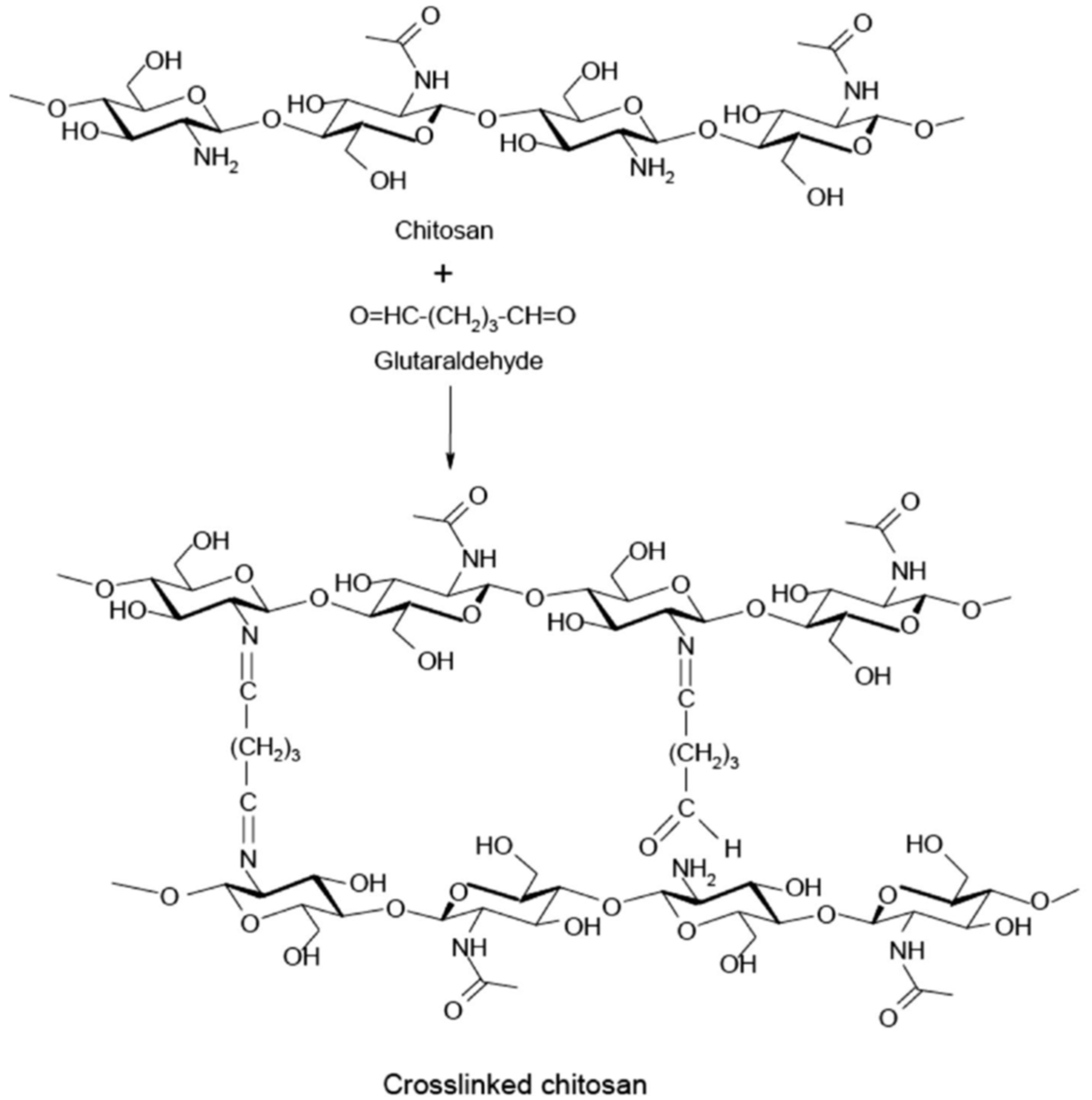
3.2.1. Chitosan
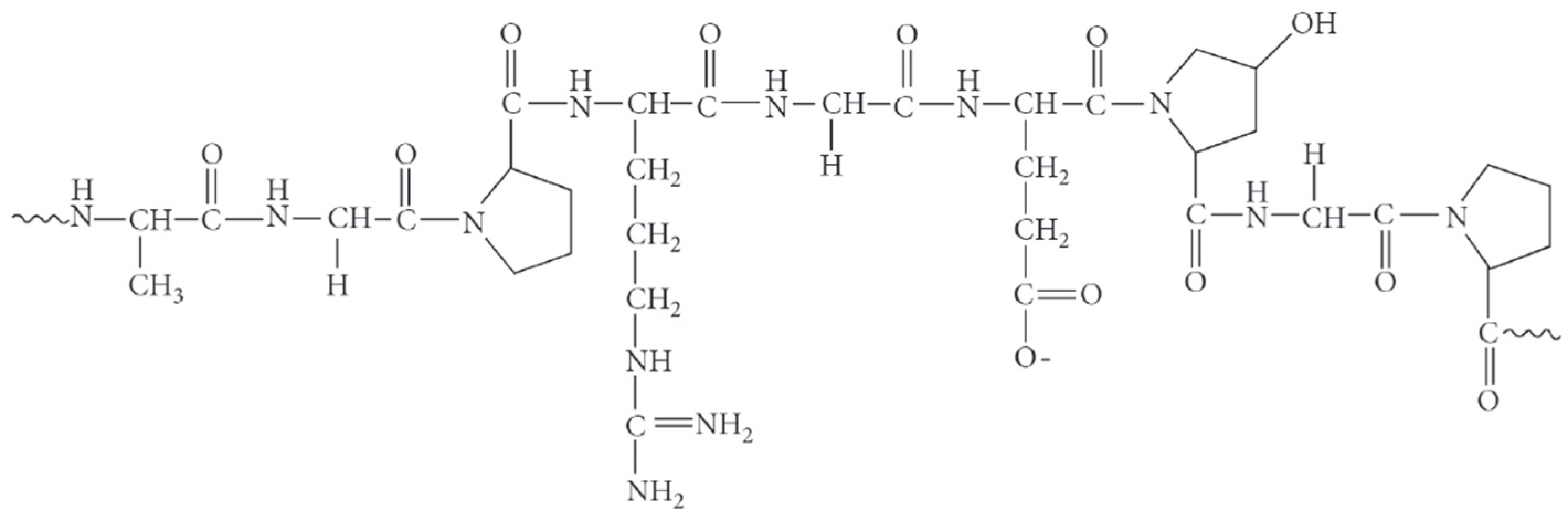
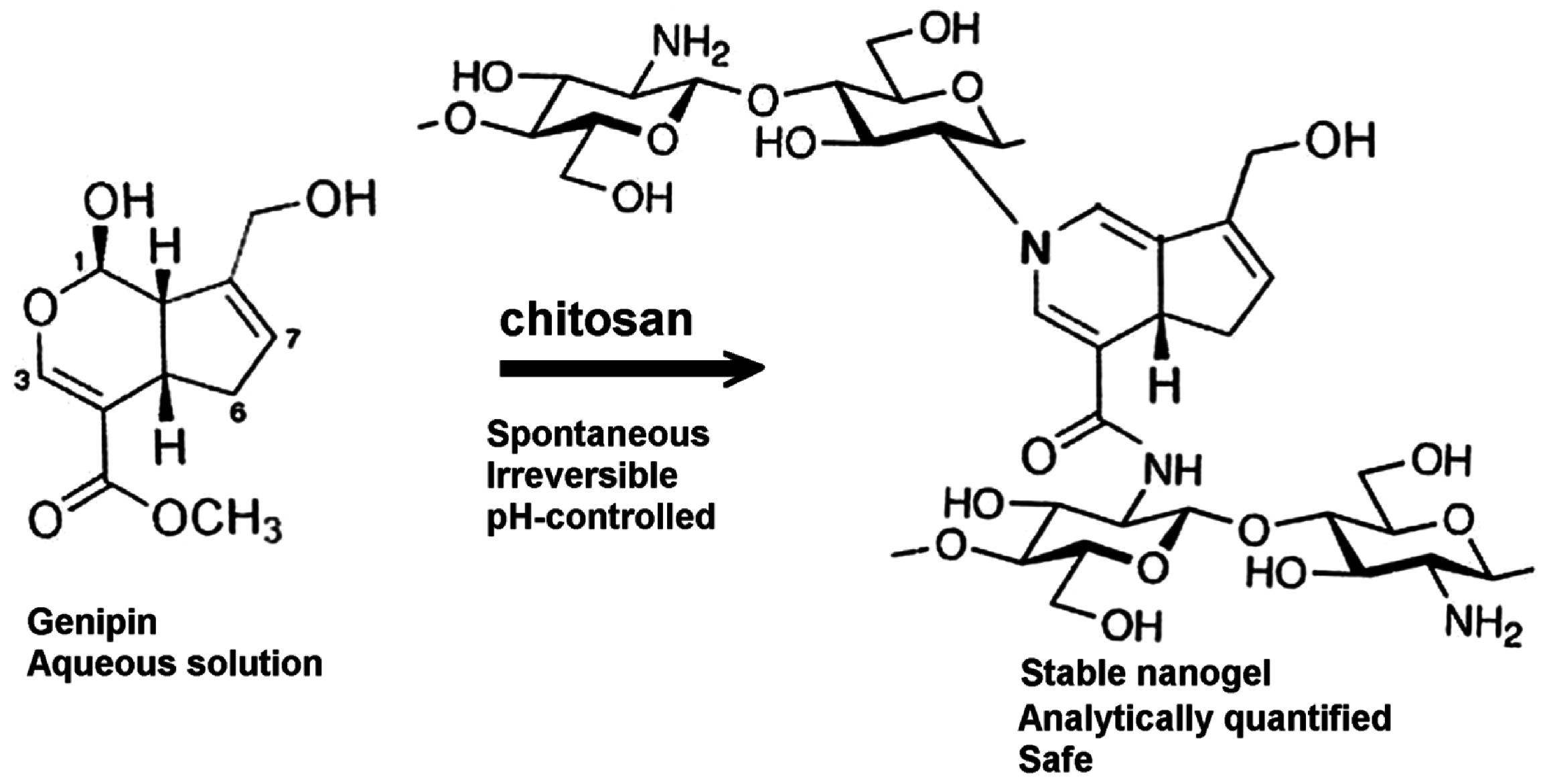
3.2.2. Gelatin-Based
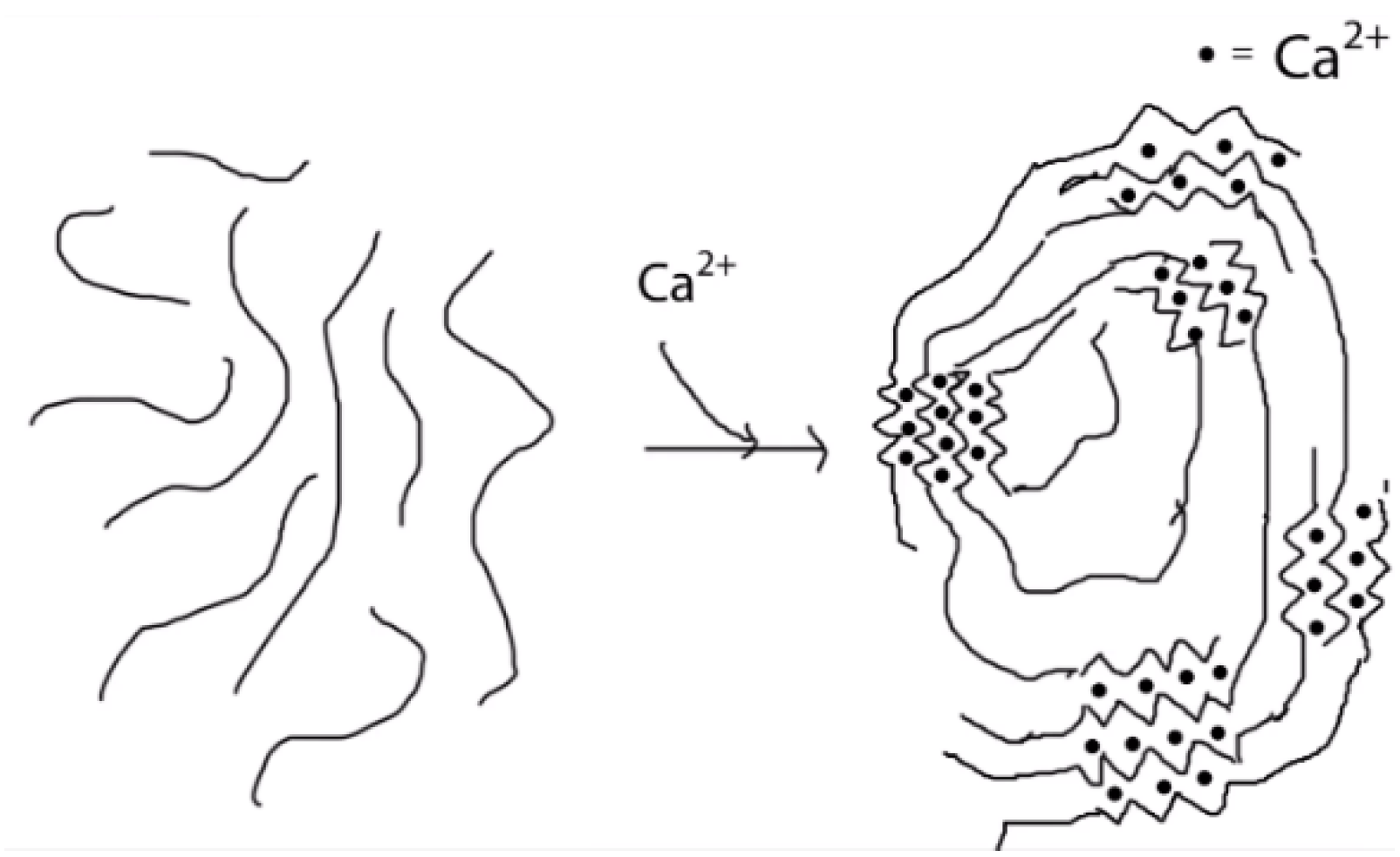
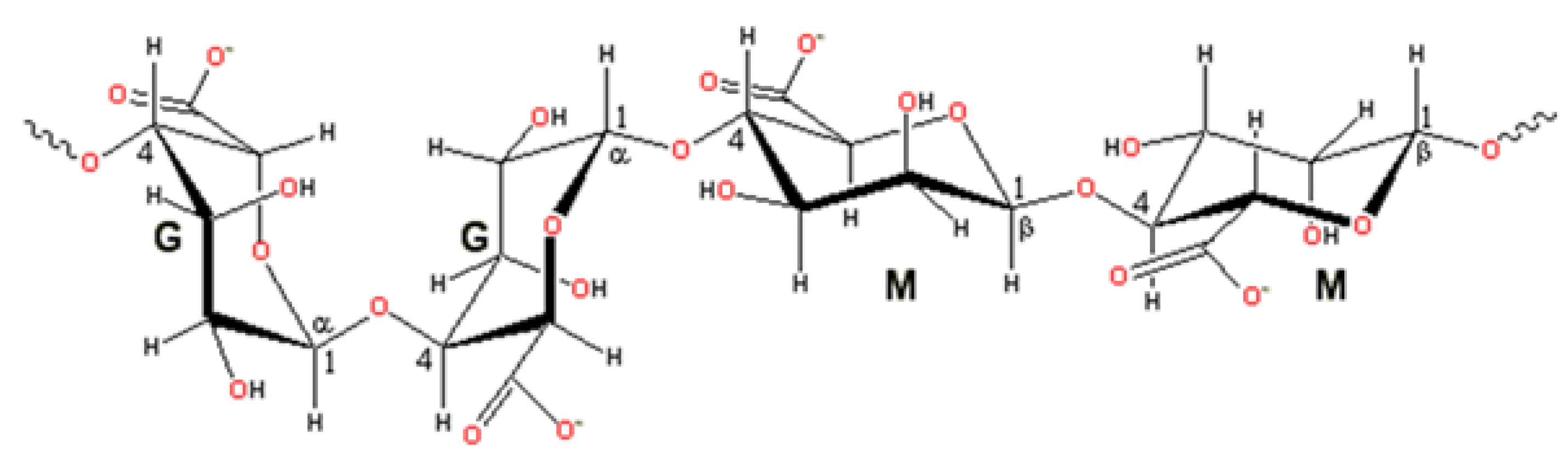
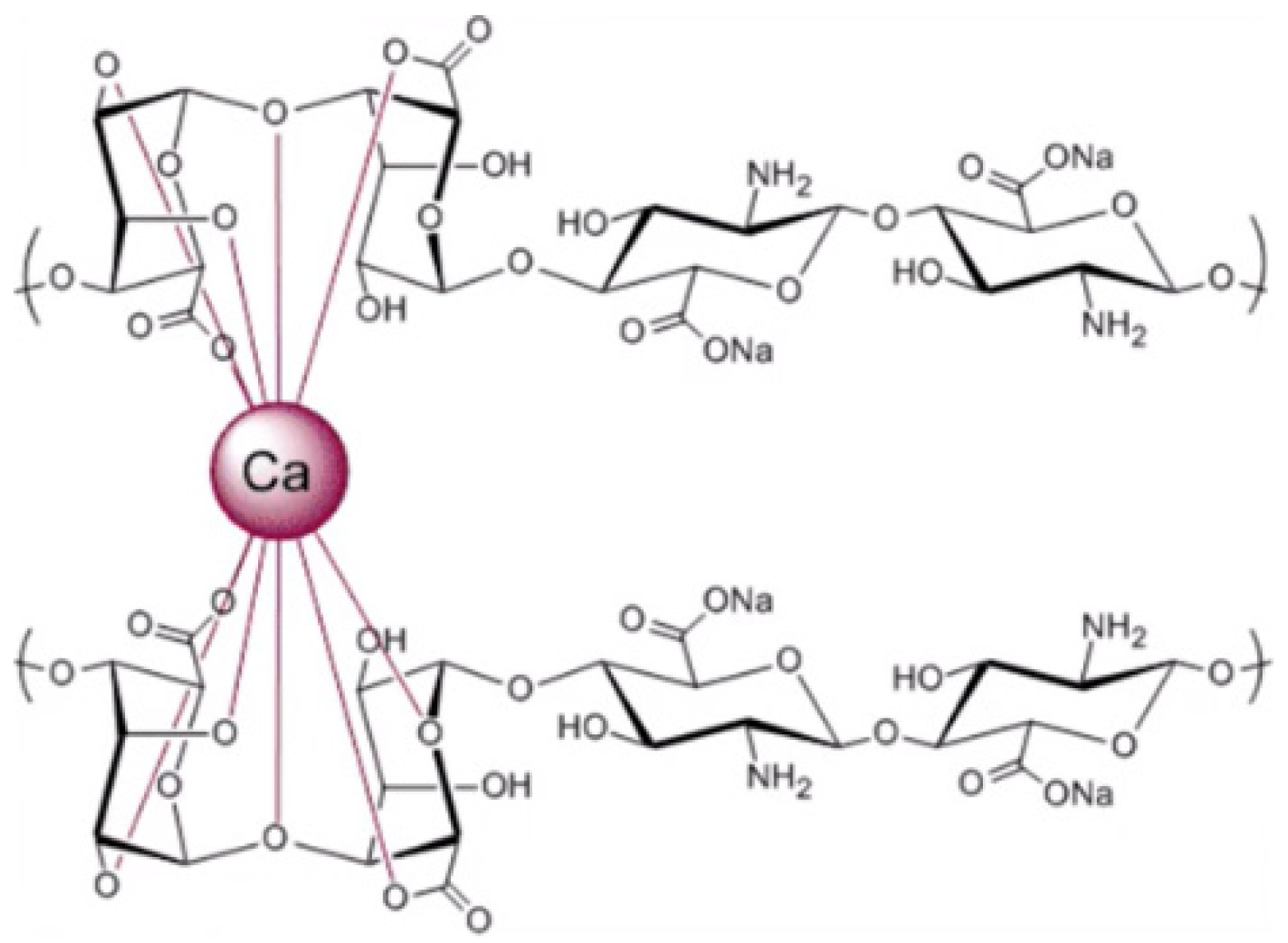
3.2.3. Alginate
3.2.4. Cellulose-Based Microencapsulation Textiles
3.2.5. Cyclodextrin Monomolecular Inclusion Complex
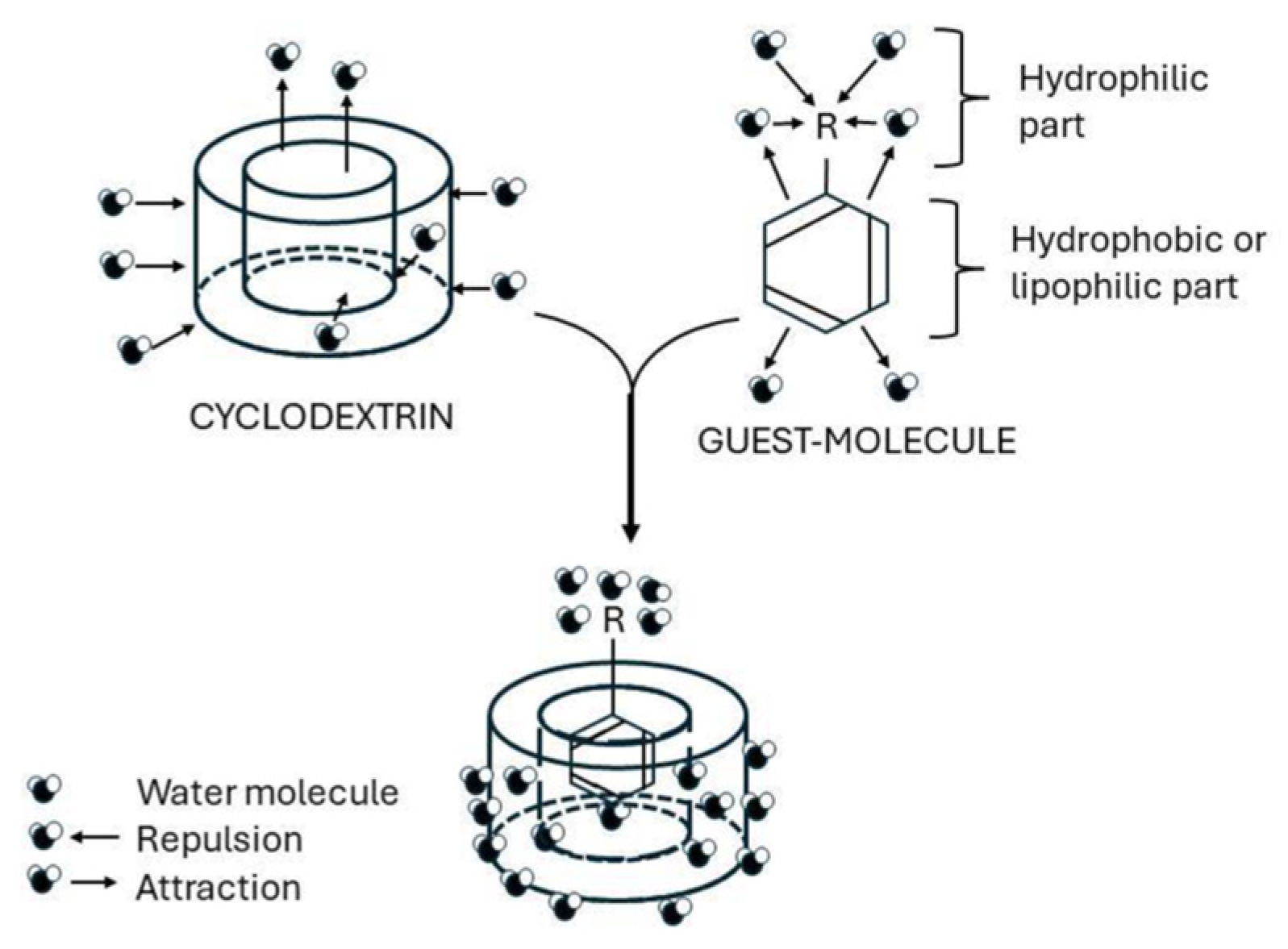
3.2.6. Liposome
4. Mechanical/Physical Process to Immobilize Essential Oils
4.1. Spray-Drying Microencapsulation
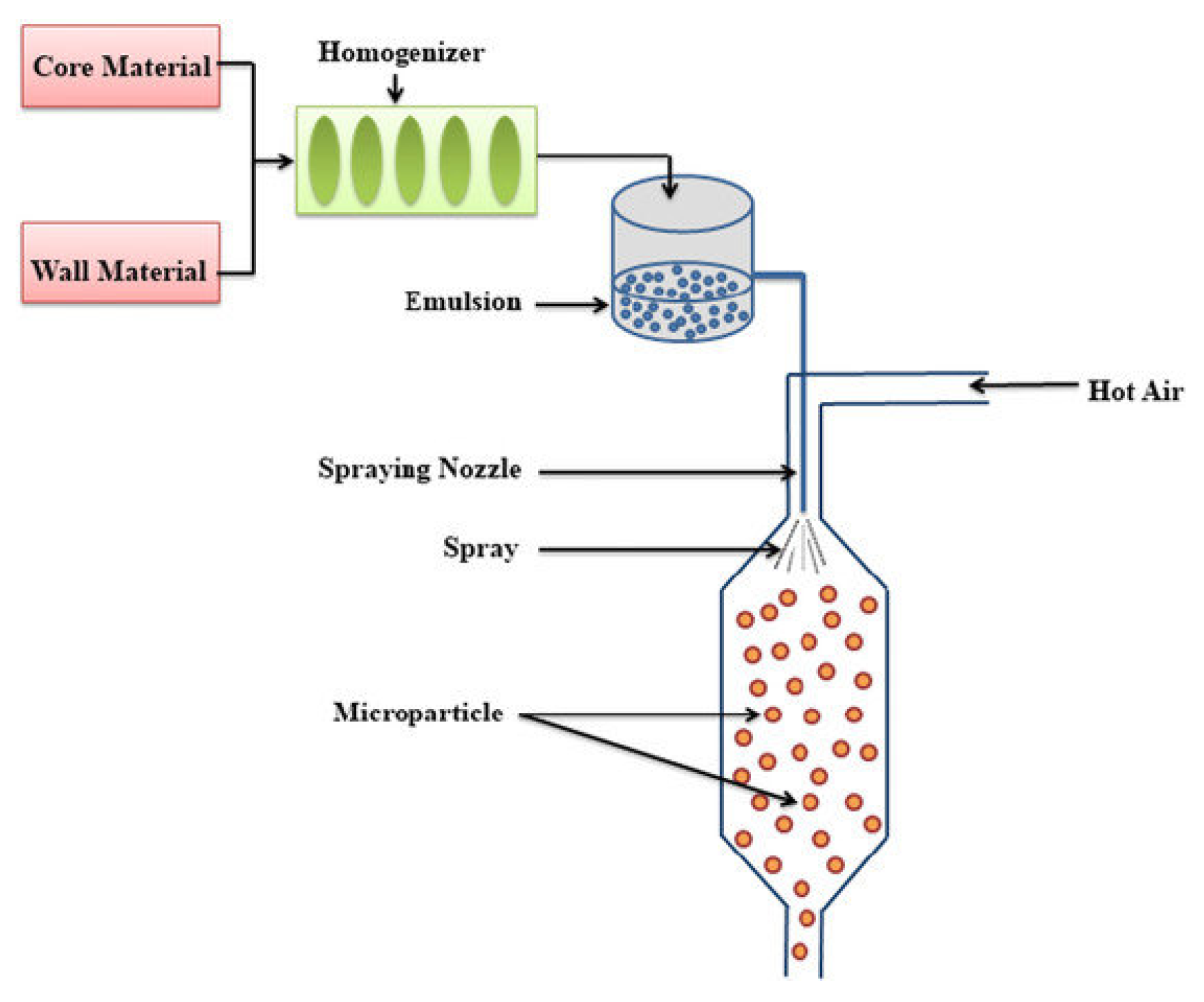
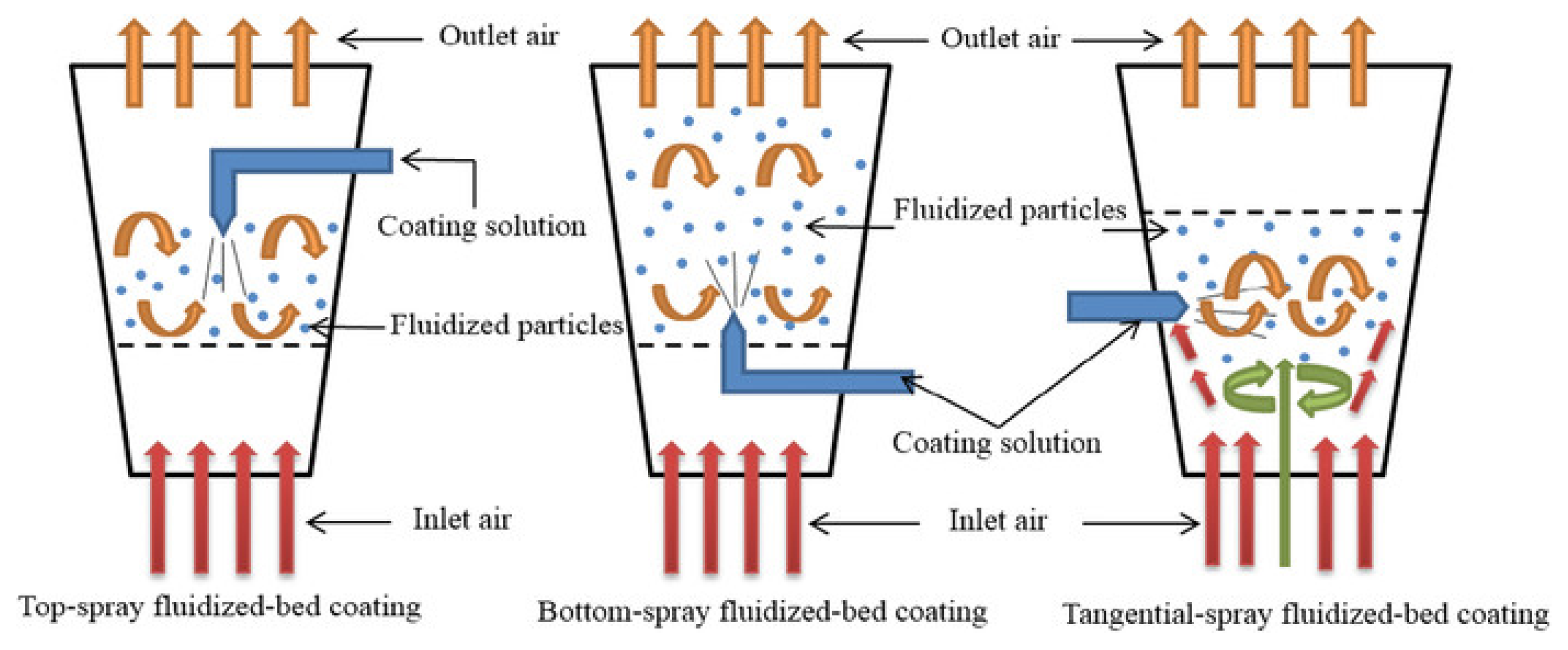
4.2. Fluidized-Bed Coating
- (a)
- Suspension of the core material
- (b)
- Application of the coating material
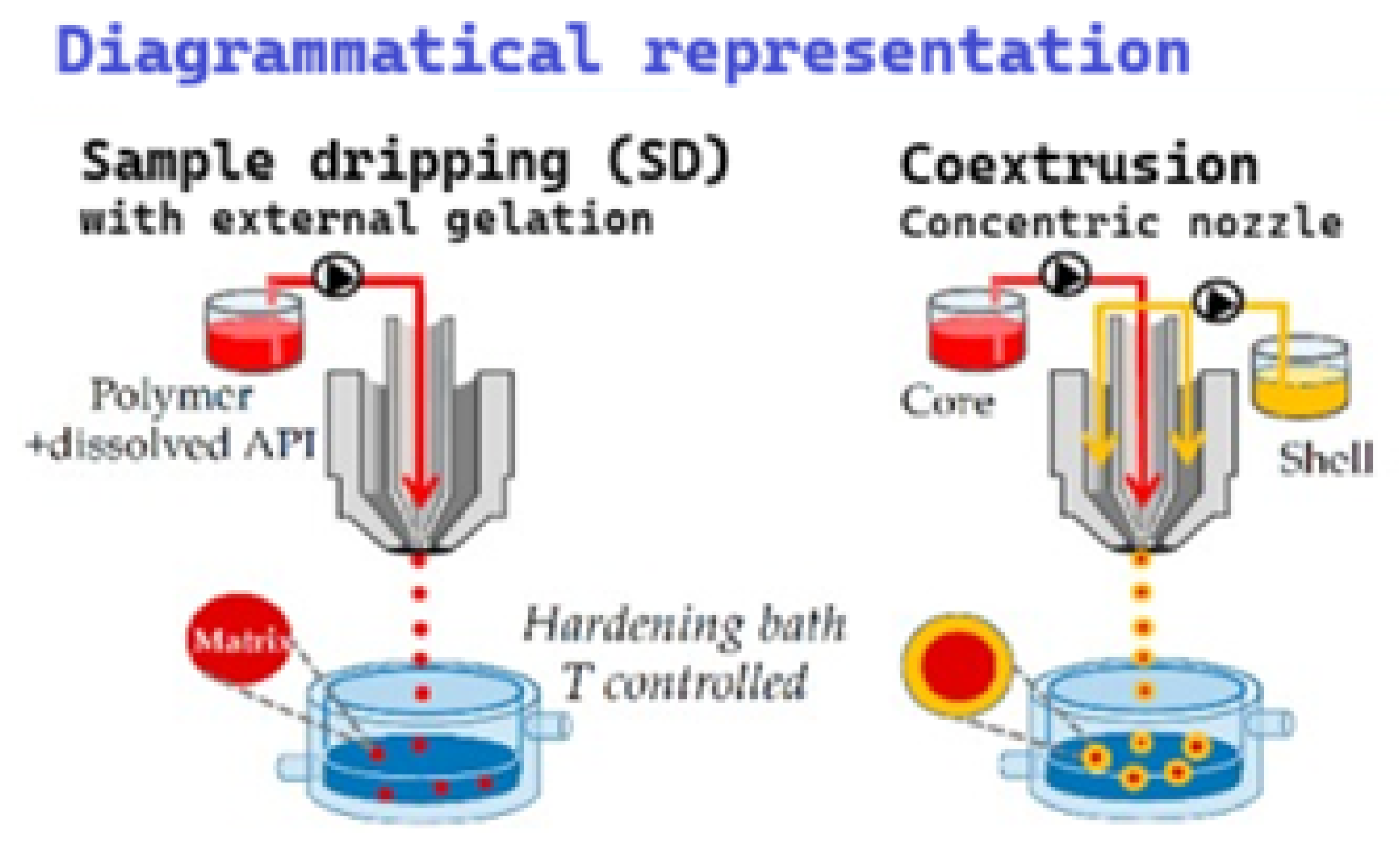
4.3. Extrusion
- (a)
- Concentric Nozzles (Figure 12)
- A non-solvent for the polymer (e.g., isopropanol);
- A crosslinking agent, which promotes rapid shell formation.
- Nozzle-to-bath distance;
- Viscosity of the polymer solution;
- Nozzle diameter;
- Surface tension;
- Concentration and type of crosslinker.
- (b)
- Sample Dripping (External Gelation) (Figure 12)
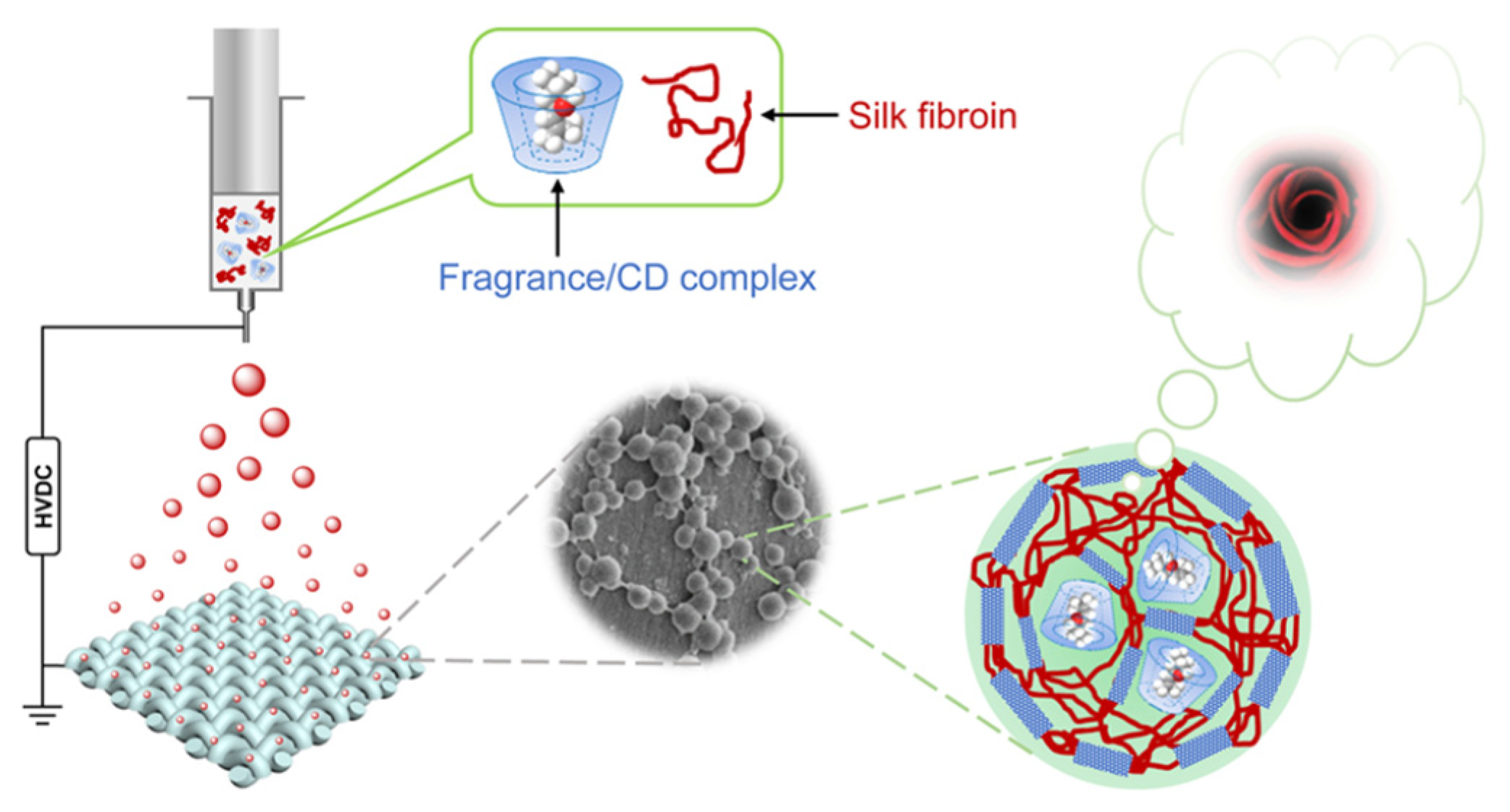
4.4. Electrohydrodynamic Approach
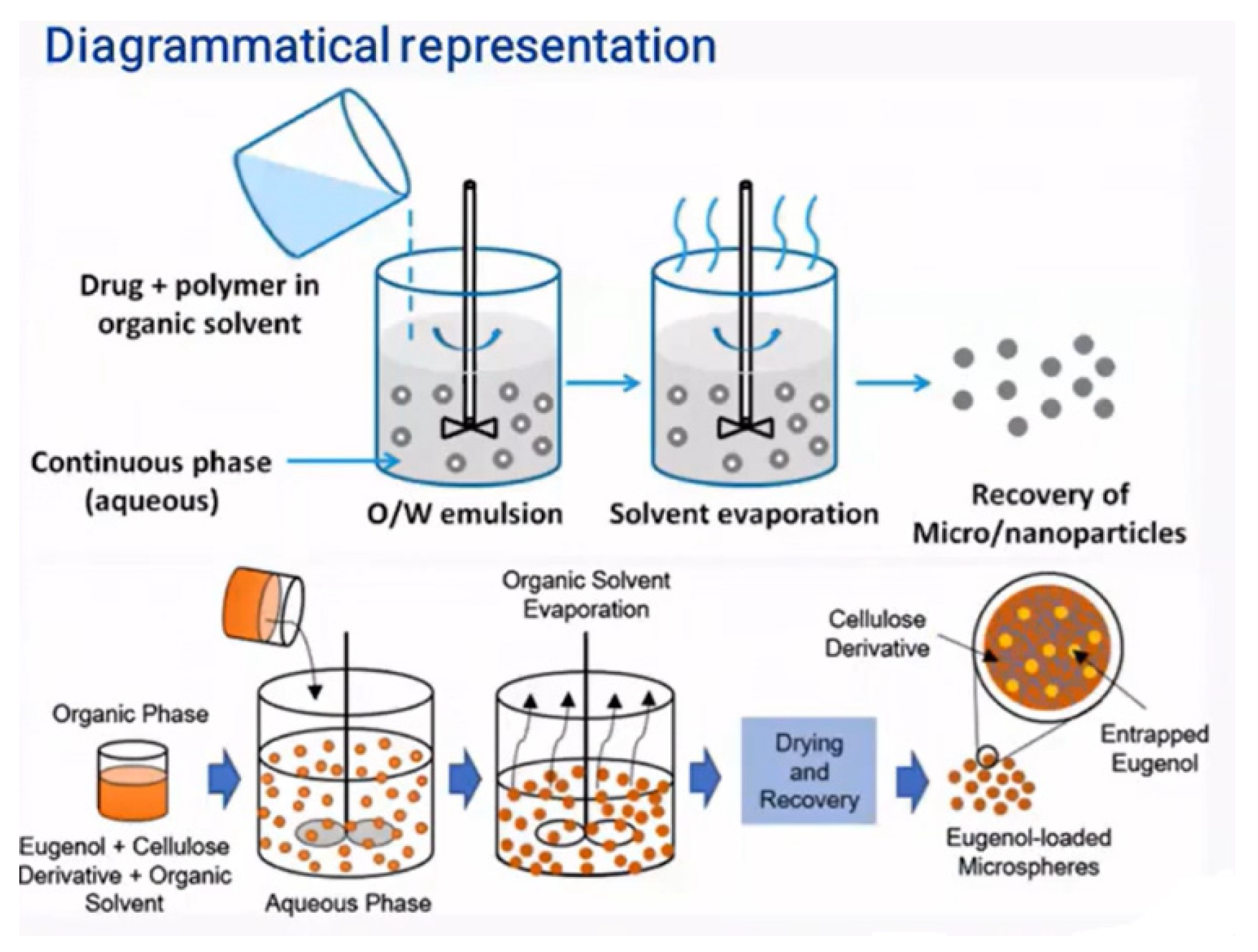
4.5. Emulsification/Solvent Evaporation
- Oil-in-Water (O/W): oil droplets dispersed in water.
- Water-in-Oil (W/O): water droplets dispersed in an oil phase.
- Oil-in-Water-in-Oil (O/W/O).
- Water-in-Oil-in-Water (W/O/W).
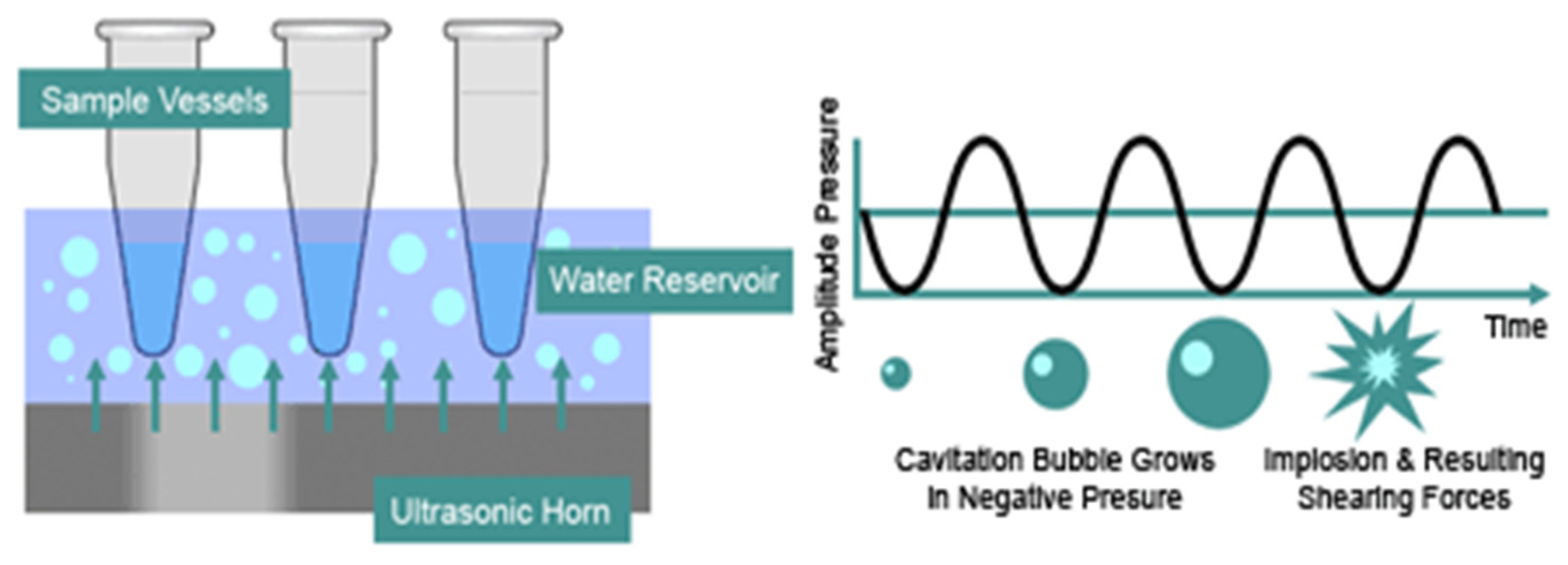
4.6. Ultrasonication
- Negative-pressure cavitation, which allows external compounds—such as essential oils—to enter the liposome core.
- Positive-pressure cavitation, which can expel internal components (e.g., proteins) from within the vesicle.
- Sample positioning: Sample vessels are arranged in the ultrasonication chamber or within direct contact with the ultrasonic probe.
- Sonication: The ultrasonic horn generates high-energy waves that disrupt the phospholipid chains, causing temporary membrane fractures and promoting molecular transport across the bilayer. During this process, water within oscillating bubbles undergoes hydrolysis, forming reactive H+ and OH− radicals. These radicals may interact with amino acids or enzymes involved in maintaining membrane stability [148].
4.7. Cyclodextrin Co-Precipitation Inclusion Complexes Method
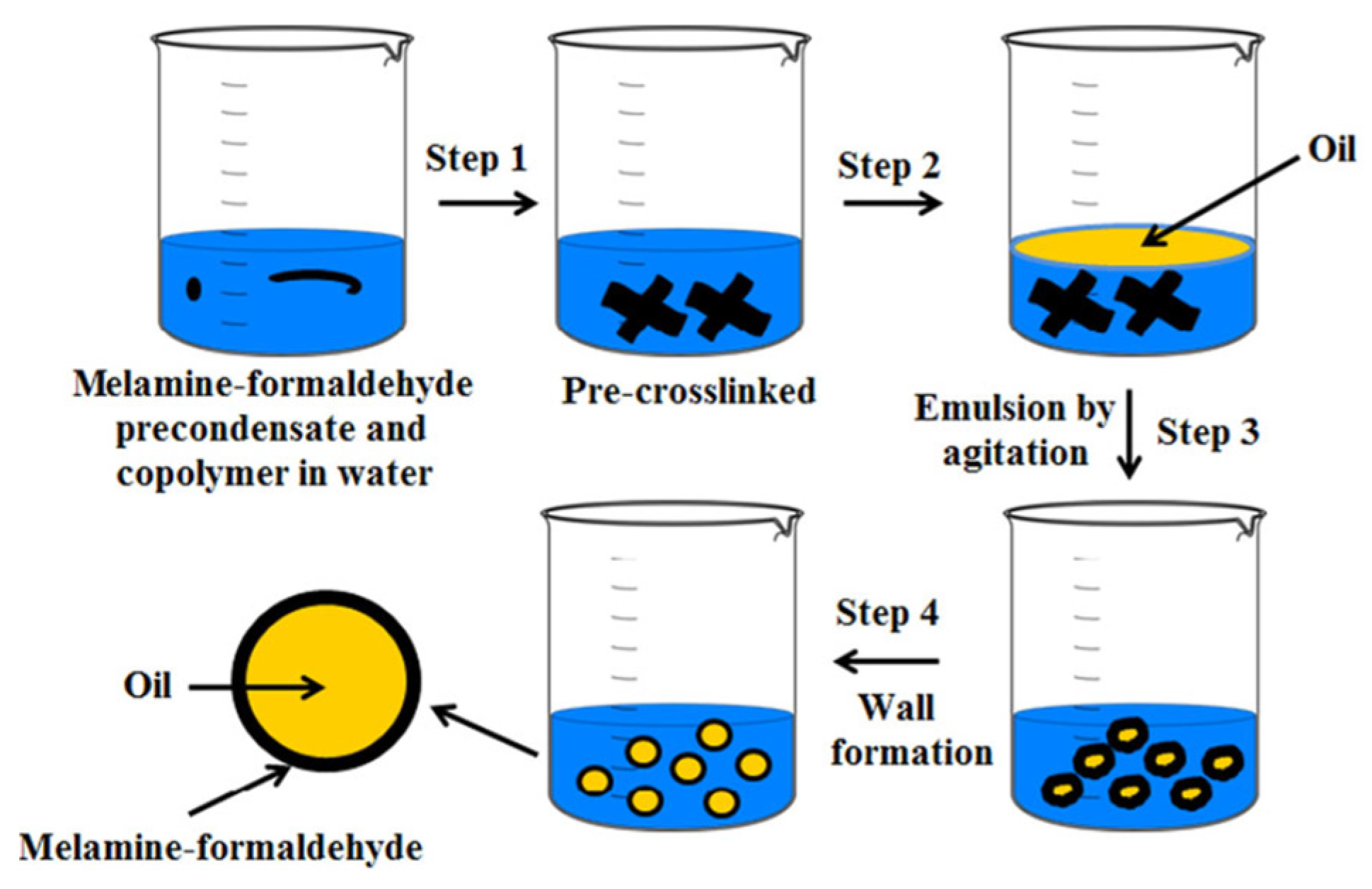
5. Polymerization Methods to Encapsulate Essential Oils
- (a)
- When the core is in solid form, polymerization can occur at either the solid–liquid or solid–gas interface.
- (b)
- When the core is dispersed as liquid droplets in the continuous phase, polymerization can occur at the liquid–liquid or liquid–gas interface.
5.1. In Situ Polymerization
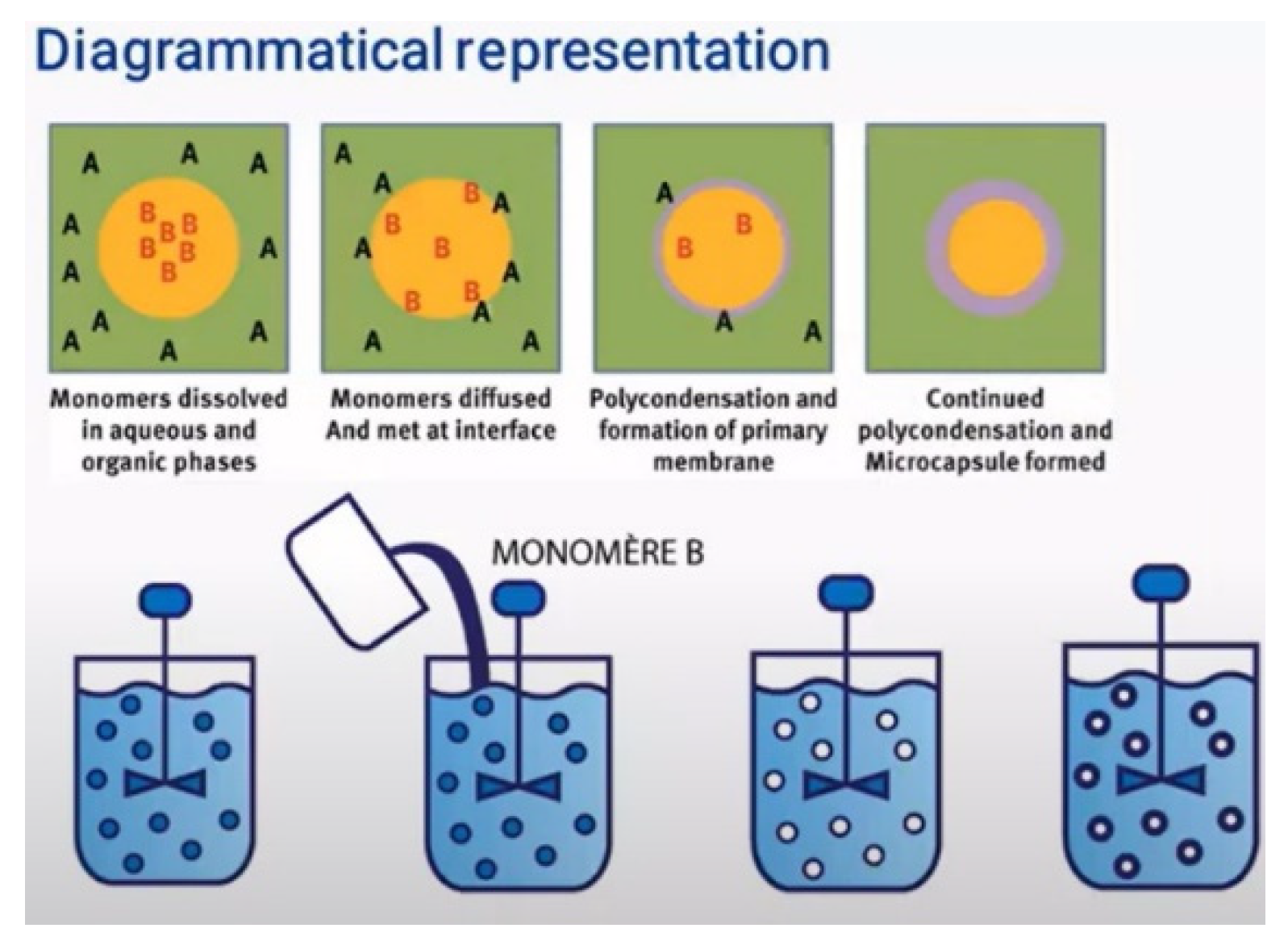
5.2. Interfacial Polymerization
6. Physical/Chemical Methods for the Retention of Essential Oils
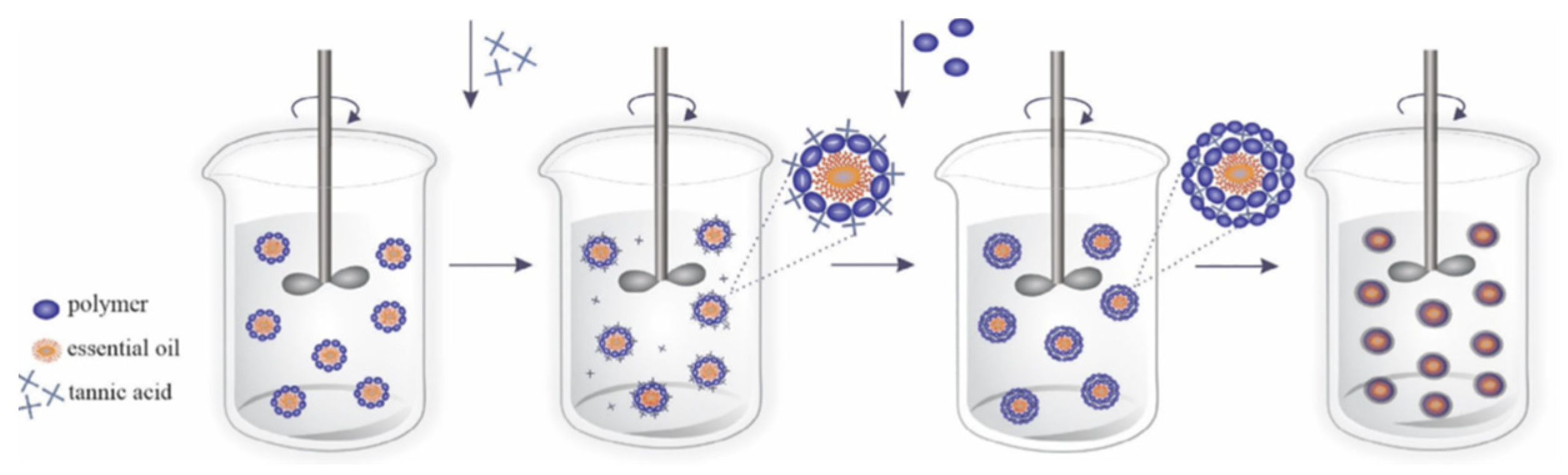
6.1. Layer-by-Layer
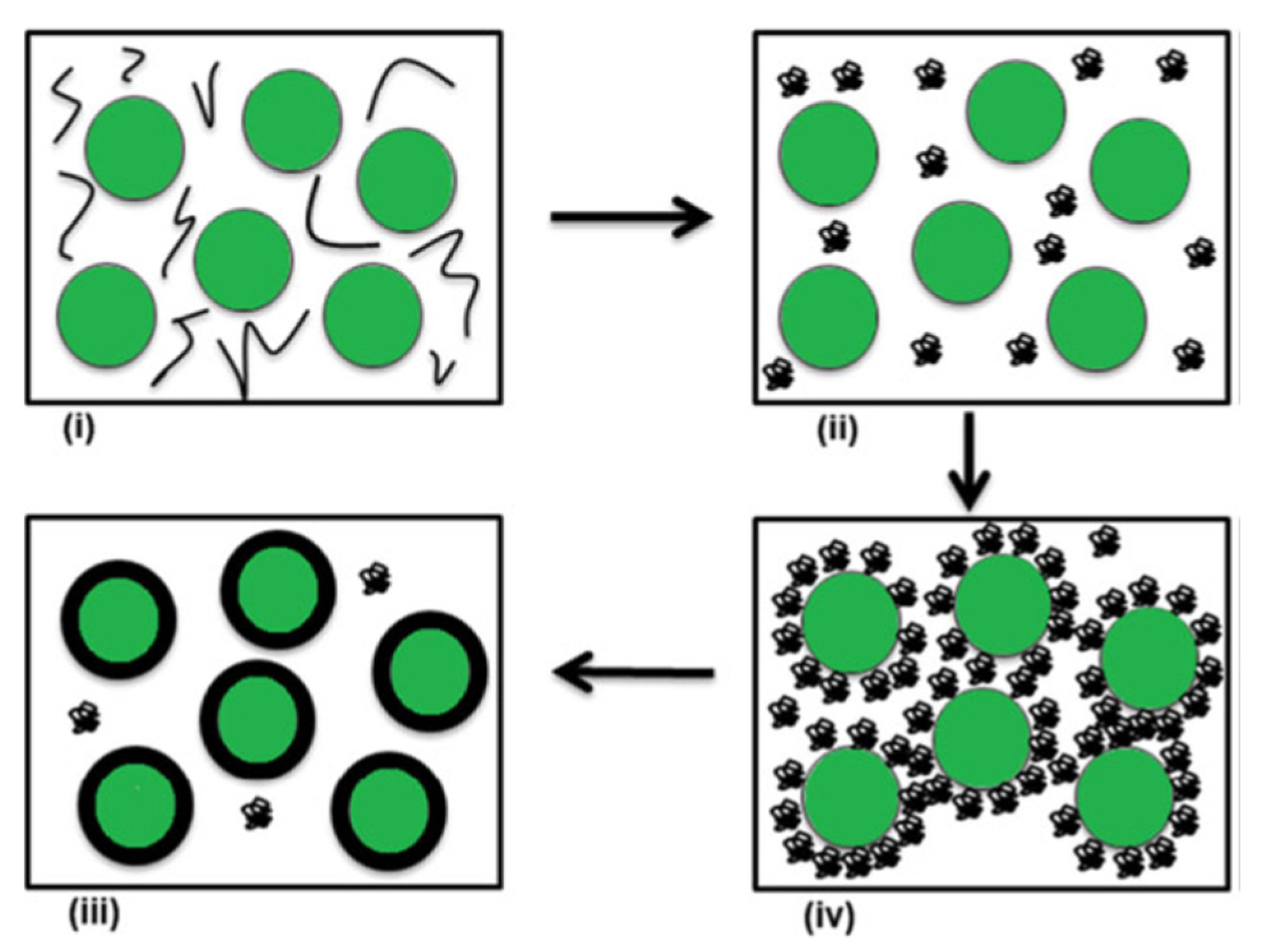
6.2. Coacervation
| Method | Advantages | Limitations | Textile Relevance | Key Ref. |
|---|---|---|---|---|
| Complex coacervation | High encapsulation efficiency for volatile terpenes, good protection | Requires crosslinkers (glutaraldehyde); sensitive to pH | Widely applied in antimicrobial via pad-dry-cure | Xiao [158] |
| β-cyclodextrin | Molecular stabilization of small EO molecules and wash durability | Lower loading capacity | Fragrance and moderate antimicrobial | Dai [159] |
| Spray-drying | Low-cost; scalable; protects EOs from evaporation during process | Lower encapsulation efficiency, weaker adhesion | Disposable textiles | Rosemberg [160] |
| Fluid-bed coating | Uniform EO-loaded coating; scalable; suitable for industrial textile finishing | Equipment cost | Textile microcapsules finishing via pad-dry-cure. | Srivastava [161] |
| Extrusion (melt extrusion) | Solvent-free; continuous processing; good encapsulation in thermoplastic matrices | High temperature may degrade volatile EO components | Functional synthetic fibers (e.g., PES, PP, PA) | Pargai [162] |
| Electrohydrodynamic techniques | Nanofiber encapsulation, high surface area, controlled release | Low productivity; scaling challenges | Advanced medical textiles and wound dressing | Rivero [163] |
| Ultrasonication | Produces stable EO nanoemulsions; improves emulsion stability; enhances encapsulation uniformity | Limited long-term stability without additional crosslinking | Pre-encapsulation step for textile coating system | Puntipa [164] |
| In situ polymerization | Strong mechanical stability | Synthetic polymer: possible toxicity concerns | Long-term durability | Patil [165] |
| Interfacial polymerization | Strong, dense polymer shells; high mechanical durability. | Synthetic monomers; potential toxicity concerns; regulatory issues | Long-term antimicrobial textile requires durability | Song [166] |
| Solvent-evaporation | Controlled release tuning | Solvent residues; processing complexity | Functional medical textiles. | Tiwari [167] |
| Layer-by-Layer | Precise nanoscale control; compatible with textiles | Multi-step process; cost | High-performance biomedical and smart textiles | Fan [168] |
7. Methods to Apply Essential Oils on the Textile Substrate
- −
- Direct Application of essential oil on the textile surface, where the EO is not immobilized [26].
- −
- Indirect Application (such as carriers) of essential oil on the textile surface, where the chemical compounds from EO are immobilized. They can protect chemical compounds from Essential oils against harsh environmental conditions. These processes can be divided into chemical, mechanical/physical, chemical/physical, and emulsion.
7.1. Application of Essential Oil Through the Direct Approach (Not Immobilized)
- Infusion method: A few drops of EO are applied onto a cotton ball and placed inside a container with the fabric to allow gradual fragrance absorption. This method is more suitable for natural fibers.
- Dropped method: A few drops of EO are applied directly onto the textile surface to achieve localized application. Care must be taken to prevent staining or damage to the fabric.
- Ironing method: A few drops of EO are added to water and sprayed onto the fabric prior to ironing. Heat activates the fragrance and enhances absorption.
- Roll-on method: EO is applied directly onto the textile using a roll-on applicator. This method is suitable for small, targeted areas (e.g., collars and cuffs) but may cause fabric damage.
- Immersion method: EO is added to fabric softeners or detergents during laundering, allowing fragrance infusion into the fabric.
- Spray method: EO diluted in water is sprayed onto technical fabrics such as curtains, upholstery, or carpets.
7.2. Application of Essential Oil Through the Indirect Approach (Immobilized Essential Oils)
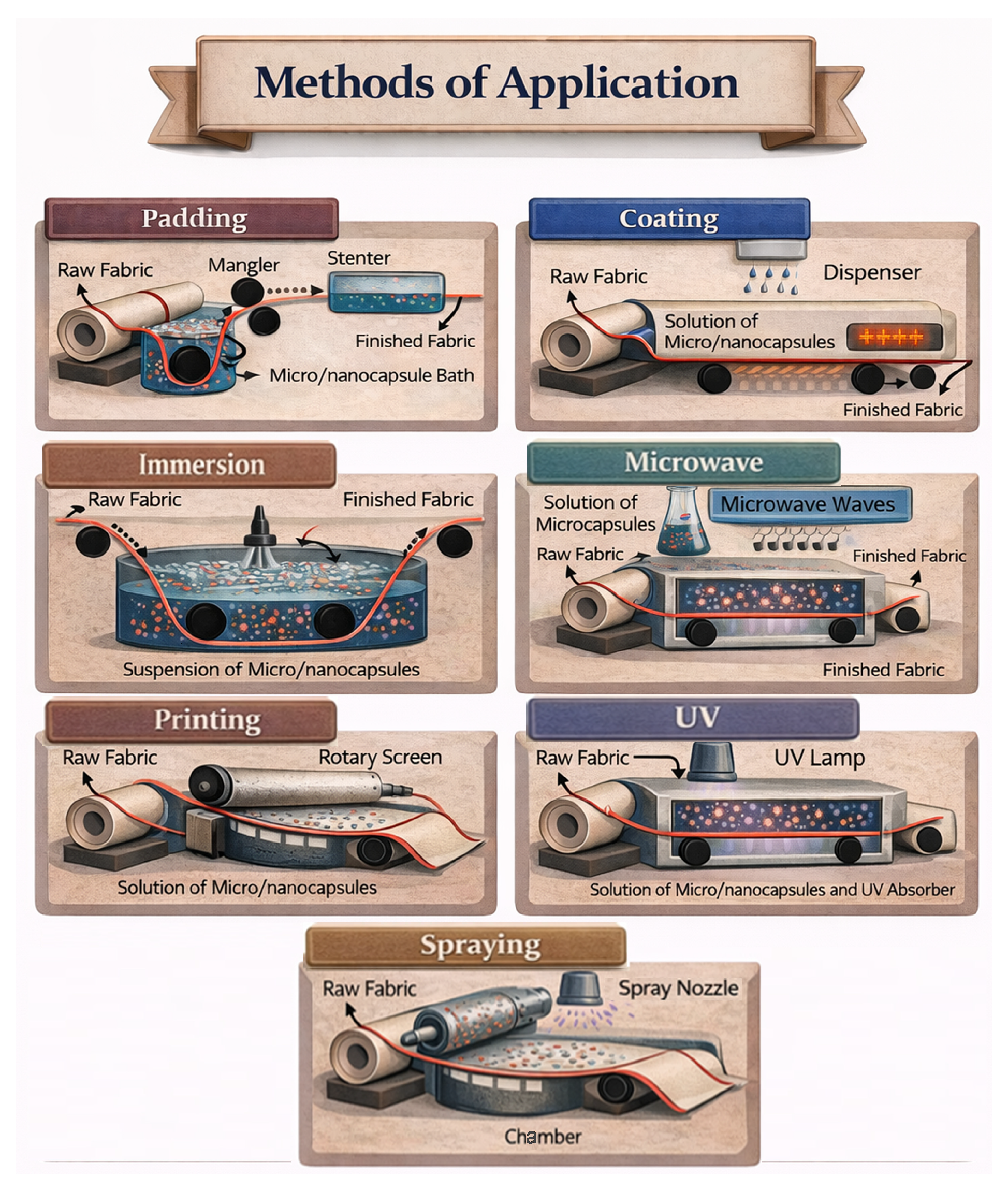
7.2.1. Padding
7.2.2. Spraying Method
7.2.3. Immersion/Exhaustion
7.2.4. Grafting
7.2.5. Coating Method/Screen Printed
8. The Market for Immobilized Essential Oils Applied to the Surface of Textiles

| Encapsulation Method | Shell Material | Crosslinking | Core Material | Preparation Method | Functional Textile | Ref. No. |
|---|---|---|---|---|---|---|
| Spray-drying | Chitosan | --- | Cinnamon | Pad-dry method | Antioxidant, antibacterial, and mosquito repellent | Singh, N. [80] |
| Spray-drying | Acacia gum | --- | Citronella | Exhaustion method | Skin reduces irritation | Yingngam [36] |
| Not informed | Melamylformaldehyde | Acrylic | Lavender | Exhaustion method | Wash durability | Bonet [184] |
| Simple coacervation | Chitosan | --- | Citrus | Exhaustion method | Antimicrobial woven cotton fabrics | Julaeha, E. [92] |
| Simple coacervation | Gelatin | --- | Eucalyptus | Pad-dry method | Antimicrobial (reduces asthma and allergy) | Kim, J. [60] |
| Simple coacervation | Cellulose acetate and Chitosan | --- | Eucalyptus | NA | Antimicrobial activity and Wound dressing | Elbhnsawi, N [85] |
| Simple coacervation | Xanthan Gum and Gelatin | --- | Lavender oil | NA | Skincare textile | Danila, A. [189] |
| Complex coacervation | Chitosan and Arabic gum | --- | Lime oil | Exhaustion method | Antibacterial activity | Wijesirigunawardana [190] |
| Emulsion | Arabic gum and Gelatin | --- | Propolis | Padding | Antibacterial activity | Yaman, T. [191] |
| Interfacial polymerization | Melamilformaldehyde | Acrylate-based | Sage and Rose | Padding | Antibacterial activity | Stan [17] |
| Emulsion | Chitosan/Sodium Alginate | --- | Lemmon grass | Grafting | Clinical treatment of atopic dermatitis | Chi, P. [192] |
| Complex coacervation | Chitosan and Arabic gum | Tannic acid | Limonene and vanillin | Grafting | Antibacterial cotton textiles | Sharkawy, IP. [193] |
| Simple coacervation | β-cyclodextrin | Resin | Citronella | Grafting | Insect repellent in textiles | Bouaziz, A. [185] |
| Co-precipitation | β-cyclodextrin | --- | Calamansi | Pad-dry-cure | Antibacterial properties | Farouk [194] |
| Co-precipitation | β-cyclodextrin | --- | Citronella oil | Pad-dry-cure Crosslinking | Repellent Agents | Lis [82] |
| Co-precipitation | MCT-βCD | --- | Eucalyptus, peppermint, lavender | Textiles were treated with an ethanol (ester binding) solution by spray | Fragrance | Khanna [195] |
| Co-precipitation | β-cyclodextrin | --- | Citronella | Grafting (covalent interaction with chemical groups from WO) | Repellent Agents | Bezerra [196] |
| Coacervation | Alginate/Chitosan | --- | Lime peel EO | Pad-dry with binder | Anti-bacterial | Indriyani [197] |
| Ionic Gelation | Alginate | --- | Neem Oil | Coating | Anti-bacterial efficacy | Khan [198] |
| Microemulsion | Alginate | --- | Pepper Mint | Spray-drying | Antibacterial | Ghayempour [199] |
| Electrospraying | HP-β-cyclodextrin | --- | Fragrance | Spray-drying | Aroma | Long Ye [102] |
| Solvent diffusion | Alginate | --- | Coconut Oil | Printing | Antibacterial and aroma finishes | Lopez [200] |
| Emulsion-based encapsulation | Alginate | --- | Various | Not specified | Anti-microbial and anti-fungal properties | Liakos [125] |
| Pickering emulsion | Chitosan | --- | Cinnamon | ---- | Anti-bacterial system | Yang [78] |
| Complex Coacervation | Chitosan/Gelatin | --- | Cinnamon | Padding | Anti-bacterial | Singh [80] |
| Complex Coacervation | Gelatin/Arabic-Gum | --- | Fragrance | Padding and coating | Fragrance | Miro Specos [90] |
| Coacervation | Gelatin/Arabic-Gum | --- | Fragrant Vetier | Pad-dry-cure | Fragrance | Rukhaya [201] |
| Emulsion solvent diffusion | Ethyl cellulose/silica hydrid | --- | Lavender | Coating | High UV-resistance and durable aroma | Chen [202] |
| Phase separation | Ethyl cellulose | --- | Rosemary and Lavender | Different techniques: Padding, spraying, impregnation, and exhaust | Durable fragrances, antibacterial agents, skin softeners, phase change material | Badulescu [203] |
| Emulsion | Chitosan | --- | Grapefruit seed | Exhaustion | Anti-bacterial | Alonso [187] |
| Inclusion Complex | MCT-β-cyclodextrin | --- | eucalyptus | Graft | Chemical compounds concentration fabric | Khanna [186] |
| in-situ polymerization | Melamilformaldehyde | --- | Rosemary, Sage, Lavender | Print screen | Optimal microcapsules conc. In the printing paste to textile functionalization: flame retardant/antibacterial/fragrance | Golja [89] |
9. Concluding Remarks and Further Research
Author Contributions
Funding
Institutional Review Board Statement
Informed Consent Statement
Data Availability Statement
Conflicts of Interest
References
- Hassid, A.; Salla, M.; Krayem, M.; Khaled, S.; Hassan, H.F.; El Khatib, S. A review on the versatile applications of plant-based essential oils in food flavoring, culinary uses and health benefits. Discov. Food 2025, 5, 130. [Google Scholar] [CrossRef] [Scilit]
- Khan, S.; Abdo, A.A.; Shu, Y.; Zhang, Z.; Liang, T. The extraction and impact of essential oils on bioactive films and food preservation, with emphasis on antioxidant and antibacterial activities—A review. Foods 2023, 12, 4169. [Google Scholar] [CrossRef] [Scilit]
- Gustavsson, J.; Cederberg, C.; Sonesson, U. Global Food Losses and Food Waste. In Save Food at Interpack Düsseldorf, Germany; FAO: Rome, Italy, 2011. [Google Scholar]
- Unicef. The State of Food Security and Nutrition in the World 2025: Addressing High Food Price Inflation for Food Security and Nutrition; Food & Agriculture Org.: Rome, Italy, 2025. [Google Scholar]
- Carpena, M.; Nuñez-Estevez, B.; Soria-Lopez, A.; Garcia-Oliveira, P.; Prieto, M.A. Essential oils and their application on active packaging systems: A review. Resources 2021, 10, 7. [Google Scholar] [CrossRef] [Scilit]
- Devi, L.S.; Das, B.; Dutta, D.; Kumar, S. Essential oils as functional agents in biopolymer-based sustainable food packaging system: A review. Sustain. Chem. Pharm. 2024, 39, 101563. [Google Scholar] [CrossRef] [Scilit]
- Sharmeen, J.B.; Mahomoodally, F.M.; Zengin, G.; Maggi, F. Essential oils as natural sources of fragrance compounds for cosmetics and cosmeceuticals. Molecules 2021, 26, 666. [Google Scholar] [CrossRef] [Scilit]
- Li, J.; Chen, W.; Liu, H.; Liu, H.; Xiang, S.; You, F.; Jiang, Y.; Lin, J.; Zhang, D.; Zheng, C. Pharmacologic effects approach of essential oils and their components on respiratory diseases. J. Ethnopharmacol. 2023, 304, 115962. [Google Scholar] [CrossRef] [Scilit]
- Khwaza, V.; Aderibigbe, B.A. Antibacterial activity of selected essential oil components and their derivatives: A review. Antibiotics 2025, 14, 68. [Google Scholar] [CrossRef] [Scilit]
- Murray, C.J.; Ikuta, K.S.; Sharara, F.; Swetschinski, L.; Aguilar, G.R.; Gray, A.; Han, C.; Bisignano, C.; Rao, P.; Wool, E. Global burden of bacterial antimicrobial resistance in 2019: A systematic analysis. Lancet 2022, 399, 629–655. [Google Scholar] [CrossRef] [Scilit]
- Hou, T.; Sana, S.S.; Li, H.; Xing, Y.; Nanda, A.; Netala, V.R.; Zhang, Z. Essential oils and its antibacterial, antifungal and anti-oxidant activity applications: A review. Food Biosci. 2022, 47, 101716. [Google Scholar] [CrossRef] [Scilit]
- Baser, K.H.C.; Buchbauer, G. Handbook of Essential Oils: Science, Technology, and Applications; CRC Press: Boca Raton, FL, USA, 2009. [Google Scholar]
- Choudhury, A.K.R. Principles of Textile Finishing; Woodhead Publishing: Cambridge, UK, 2017. [Google Scholar]
- Giamberini, M.; Fernandez Prieto, S.; Tylkowski, B. Microencapsulation: Innovative Applications; De Gruyter: Berlin, Germany, 2015. [Google Scholar]
- Mehta, S.; MacGillivray, M. Aromatherapy in textiles: A systematic review of studies examining textiles as a potential carrier for the therapeutic effects of essential oils. Textiles 2022, 2, 29–49. [Google Scholar] [CrossRef] [Scilit]
- Ghayempour, S.; Montazer, M. Micro/nanoencapsulation of essential oils and fragrances: Focus on perfumed, antimicrobial, mosquito-repellent and medical textiles. J. Microencapsul. 2016, 33, 497–510. [Google Scholar] [CrossRef] [Scilit]
- Stan, M.S.; Chirila, L.; Popescu, A.; Radulescu, D.M.; Radulescu, D.E.; Dinischiotu, A. Essential oil microcapsules immobilized on textiles and certain induced effects. Materials 2019, 12, 2029. [Google Scholar] [CrossRef] [Scilit]
- Lis Arias, M.J.; Coderch, L.; Martí, M.; Alonso, C.; García Carmona, O.; García Carmona, C.; Maesta, F. Vehiculation of active principles as a way to create smart and biofunctional textiles. Materials 2018, 11, 2152. [Google Scholar] [CrossRef] [Scilit]
- Hyldgaard, M.; Mygind, T.; Meyer, R.L. Essential oils in food preservation: Mode of action, synergies, and interactions with food matrix components. Front. Microbiol. 2012, 3, 12. [Google Scholar] [CrossRef] [Scilit]
- Ahmed, A.F.; Attia, F.A.; Liu, Z.; Li, C.; Wei, J.; Kang, W. Antioxidant activity and total phenolic content of essential oils and extracts of sweet basil (Ocimum basilicum L.) plants. Food Sci. Hum. Wellness 2019, 8, 299–305. [Google Scholar] [CrossRef] [Scilit]
- Lou, Z.; Chen, J.; Yu, F.; Wang, H.; Kou, X.; Ma, C.; Zhu, S. The antioxidant, antibacterial, antibiofilm activity of essential oil from Citrus medica L. var. sarcodactylis and its nanoemulsion. LWT 2017, 80, 371–377. [Google Scholar] [CrossRef] [Scilit]
- Marín, I.; Sayas-Barberá, E.; Viuda-Martos, M.; Navarro, C.; Sendra, E. Chemical composition, antioxidant and antimicrobial activity of essential oils from organic fennel, parsley, and lavender from Spain. Foods 2016, 5, 18. [Google Scholar] [CrossRef] [Scilit]
- Afoulous, S.; Ferhout, H.; Raoelison, E.G.; Valentin, A.; Moukarzel, B.; Couderc, F.; Bouajila, J. Chemical composition and anticancer, antiinflammatory, antioxidant and antimalarial activities of leaves essential oil of Cedrelopsis grevei. Food Chem. Toxicol. 2013, 56, 352–362. [Google Scholar] [CrossRef] [Scilit]
- Coté, H.; Boucher, M.-A.; Pichette, A.; Legault, J. Anti-inflammatory, antioxidant, antibiotic, and cytotoxic activities of Tanacetum vulgare L. essential oil and its constituents. Medicines 2017, 4, 34. [Google Scholar] [CrossRef] [Scilit]
- Schwanbeck, J.; Kubeczka, K. Application of HPLC for separation of volatile terpene hydrocarbons. Vorkommen Und Anal. Ätherischer Öle 1979, 72–76. [Google Scholar]
- Turek, C.; Stintzing, F.C. Stability of essential oils: A review. Compr. Rev. Food Sci. Food Saf. 2013, 12, 40–53. [Google Scholar] [CrossRef] [Scilit]
- Prabuseenivasan, S.; Jayakumar, M.; Ignacimuthu, S. In vitro antibacterial activity of some plant essential oils. BMC Complement. Altern. Med. 2006, 6, 39. [Google Scholar] [CrossRef] [Scilit]
- Chouhan, S.; Sharma, K.; Guleria, S. Antimicrobial activity of some essential oils—Present status and future perspectives. Medicines 2017, 4, 58. [Google Scholar] [CrossRef] [Scilit]
- Siugzdaite, J.; Rutkaite, R.; Bendoraitiene, J.; Saghrouchni, H.; Hamijo, T.; Lelesius, R. An evaluation of the antibacterial and cytotoxic activities of essential oils and their emulsions against nosocomial pathogens. Processes 2025, 13, 1531. [Google Scholar] [CrossRef] [Scilit]
- Amarante, J.F.; da Costa, M.M.; da Silva Almeida, J.R.G.; De Oliveira, H.P. Synergistic interaction of clove, cinnamon, and eucalyptus essential oils impregnated in cellulose acetate electrospun fibers as antibacterial agents against Staphylococcus aureus. Braz. J. Microbiol. 2023, 54, 1635–1643. [Google Scholar] [CrossRef] [Scilit]
- Wińska, K.; Mączka, W.; Łyczko, J.; Grabarczyk, M.; Czubaszek, A.; Szumny, A. Essential oils as antimicrobial agents—Myth or real alternative? Molecules 2019, 24, 2130. [Google Scholar] [CrossRef] [Scilit]
- Ács, K.; Balázs, V.L.; Kocsis, B.; Bencsik, T.; Böszörményi, A.; Horváth, G. Antibacterial activity evaluation of selected essential oils in liquid and vapor phase on respiratory tract pathogens. BMC Complement. Altern. Med. 2018, 18, 227. [Google Scholar] [CrossRef] [Scilit]
- Jyotsna, B.; Patil, S.; Prakash, Y.S.; Rathnagiri, P.; Kishor, P.K.; Jalaja, N. Essential oils from plant resources as potent insecticides and repellents: Current status and future perspectives. Biocatal. Agric. Biotechnol. 2024, 61, 103395. [Google Scholar] [CrossRef] [Scilit]
- Orasugh, J.T.; Temane, L.T.; Kesavan Pillai, S.; Ray, S.S. Advancements in antimicrobial textiles: Fabrication, mechanisms of action, and applications. ACS Omega 2025, 10, 12772–12816. [Google Scholar] [CrossRef] [Scilit]
- Tariq, Z.; Izhar, F.; Zulfiqar, A.; Malik, M.H.; Oneeb, M.; Khan, A. Fabrication of highly durable functional textile through microencapsulation of organic citronella oil. Ind. Crops Prod. 2022, 190, 115878. [Google Scholar] [CrossRef] [Scilit]
- Yingngam, B.; Kacha, W.; Rungseevijitprapa, W.; Sudta, P.; Prasitpuriprecha, C.; Brantner, A. Response surface optimization of spray-dried citronella oil microcapsules with reduced volatility and irritation for cosmetic textile uses. Powder Technol. 2019, 355, 372–385. [Google Scholar] [CrossRef] [Scilit]
- Omidbeygi, M.; Barzegar, M.; Hamidi, Z.; Naghdibadi, H. Antifungal activity of thyme, summer savory and clove essential oils against Aspergillus flavus in liquid medium and tomato paste. Food Control 2007, 18, 1518–1523. [Google Scholar] [CrossRef] [Scilit]
- Varma, K.; Srivastava, M. Antibacterial finishing of cotton fabric with clove oil microcapsules. Asian J. Home Sci. 2020, 15, 330–335. [Google Scholar] [CrossRef] [Scilit]
- Sharma, V.; Chakraborty, J. Application of chitosan encapsulated clove essential oil microcapsules on cotton fabrics for antibacterial finish. Indian J. Fibre Text. Res. (IJFTR) 2024, 49, 222–236. [Google Scholar]
- Cardoso-Ugarte, G.A.; López-Malo, A.; Sosa-Morales, M.E. Cinnamon (Cinnamomum zeylanicum) essential oils. In Essential Oils in Food Preservation, Flavor and Safety; Elsevier: Amsterdam, The Netherlands, 2016; pp. 339–347. [Google Scholar]
- Cheng, S.-S.; Liu, J.-Y.; Hsui, Y.-R.; Chang, S.-T. Chemical polymorphism and antifungal activity of essential oils from leaves of different provenances of indigenous cinnamon (Cinnamomum osmophloeum). Bioresour. Technol. 2006, 97, 306–312. [Google Scholar] [CrossRef] [Scilit]
- Xing, Y.; Li, X.; Xu, Q.; Yun, J.; Lu, Y. Antifungal activities of cinnamon oil against Rhizopus nigricans, Aspergillus flavus and Penicillium expansum in vitro and in vivo fruit test. Int. J. Food Sci. Technol. 2010, 45, 1837–1842. [Google Scholar] [CrossRef] [Scilit]
- Gao, Y.; Cranston, R. Recent advances in antimicrobial treatments of textiles. Text. Res. J. 2008, 78, 60–72. [Google Scholar] [CrossRef] [Scilit]
- Bakkali, F.; Averbeck, S.; Averbeck, D.; Idaomar, M. Biological effects of essential oils–A review. Food Chem. Toxicol. 2008, 46, 446–475. [Google Scholar] [CrossRef] [Scilit]
- Nerio, L.S.; Olivero-Verbel, J.; Stashenko, E. Repellent activity of essential oils: A review. Bioresour. Technol. 2010, 101, 372–378. [Google Scholar] [CrossRef] [Scilit]
- Singh, N.; Sheikh, J. Microencapsulation and its application in production of functional textiles. Indian J. Fibre Text. Res. 2020, 45, 495–509. [Google Scholar]
- Ma, Q.; Davidson, P.M.; Zhong, Q. Antimicrobial properties of microemulsions formulated with essential oils, soybean oil, and Tween 80. Int. J. Food Microbiol. 2016, 226, 20–25. [Google Scholar] [CrossRef] [Scilit]
- Vranová, E.; Coman, D.; Gruissem, W. Structure and dynamics of the isoprenoid pathway network. Mol. Plant 2012, 5, 318–333. [Google Scholar] [CrossRef] [Scilit]
- Imelouane, B.; Elbachiri, A.; Ankit, M.; Benzeid, H.; Khedid, K. Physico-chemical compositions and antimicrobial activity of essential oil of eastern Moroccan Lavandula dentata. Int. J. Agric. Biol 2009, 11, 113–118. [Google Scholar]
- Gómez-Estaca, J.; De Lacey, A.L.; López-Caballero, M.; Gómez-Guillén, M.d.C.; Montero, P. Biodegradable gelatin–chitosan films incorporated with essential oils as antimicrobial agents for fish preservation. Food Microbiol. 2010, 27, 889–896. [Google Scholar] [CrossRef] [Scilit]
- Valle, R.d.C.S.C.; Valle, J.A.B.; Bezerra, F.M.; Correia, J.; da Costa, C.; Martí, M.; Coderch, L.; López, A.; Arias, M.J.L. Application of lavender-oil microcapsules to functionalized PET fibers. Polymers 2023, 15, 917. [Google Scholar] [CrossRef] [Scilit]
- Wang, S.; Zhang, W.; Chen, Y.; Zhang, S.; Wang, W. The aromatic properties of polyurea-encapsulated lavender oil microcapsule and their application in cotton fabrics. J. Nanosci. Nanotechnol. 2019, 19, 4147–4153. [Google Scholar] [CrossRef] [Scilit]
- Balasubramanian, K.; Kodam, K.M. Encapsulation of therapeutic lavender oil in an electrolyte assisted polyacrylonitrile nanofibres for antibacterial applications. RSC Adv. 2014, 4, 54892–54901. [Google Scholar] [CrossRef] [Scilit]
- Upadhyay, R.; Andiappan, S. Characterization of various essential oil-loaded microcapsules on linen woven fabric for medical textiles. J. Ind. Text. 2025, 55, 15280837251325489. [Google Scholar] [CrossRef] [Scilit]
- Ramezani, H.; Singh, H.; Batish, D.; Kohli, R.; Dargan, J. Fungicidal effect of volatile oils from Eucalyptus citriodora and its major constituent citronellal. N. Z. Plant Prot. 2002, 55, 327–330. [Google Scholar] [CrossRef] [Scilit]
- Manzoor, F.; Naz, N.; Malik, S.A.; Arshad, S.; Siddiqui, B. Chemical Composition of Essential Oils Derived from Eucalyptus and Lemongrass and Their Antitermitic Activities Angainst Microtermes mycophagus (Desneux). Asian J. Chem. 2013, 25, 2405. [Google Scholar] [CrossRef] [Scilit]
- Akin-Osanaiye, B.; Agbaji, A.; Dakare, M. Antimicrobial activity of oils and extracts of Cymbopogon citratus (Lemon grass), Eucalyptus citriodora and Eucalyptus camaldulensis. CABI Databases 2007, 7, 694–697. [Google Scholar] [CrossRef] [Scilit]
- Elaissi, A.; Rouis, Z.; Salem, N.A.B.; Mabrouk, S.; ben Salem, Y.; Salah, K.B.H.; Aouni, M.; Farhat, F.; Chemli, R.; Harzallah-Skhiri, F. Chemical composition of 8 eucalyptus species’ essential oils and the evaluation of their antibacterial, antifungal and antiviral activities. BMC Complement. Altern. Med. 2012, 12, 81. [Google Scholar] [CrossRef] [Scilit]
- Mohammed, G.; Ayotunde, S.A.; Bashir, I.; Babakura, M.A.; Sule, M.A.; Mohammed, H. Comparative evaluation of ethno-medicinal use of two species of Eucalyptus plant as an antimicrobial agent. Int. J. Sci. Technol. 2012, 2, 548–550. [Google Scholar]
- Kim, J.R. Eucalyptus oil-loaded microcapsules grafted to cotton fabrics for acaricidal effect against Dermatophagoides farinae. J. Microencapsul. 2017, 34, 262–269. [Google Scholar] [CrossRef] [Scilit]
- Benas, J.-S.; Huang, C.-Y.; Yan, Z.-L.; Liang, F.-C.; Li, P.-Y.; Lee, C.-H.; Yu, Y.-Y.; Chen, C.-W.; Kuo, C.-C. Nanofiber-based odor-free medical mask fabrication using polyvinyl butyral and eucalyptus anti odor agent. Polymers 2022, 14, 4447. [Google Scholar] [CrossRef] [Scilit]
- ÖZGÜVEN, M.; Tansi, S. Drug yield and essential oil of Thymus vulgaris L. as in influenced by ecological and ontogenetical variation. Turk. J. Agric. For. 1998, 22, 537–542. [Google Scholar]
- Szczepaniak, S.; Polanska, M.; Van Assche, A.; Moloney, R.; Willems, K. The synergism of natural compounds in the pursuit of safe and healthier food. J. Ind. Microbiol. Biotechnol. 2011, 38, 215–220. [Google Scholar]
- Rai, M. Antibacterial activity of Thymus vulgaris essential oil alone and in combination with other essential oils. Nusant. Biosci. 2012, 4, 50–56. [Google Scholar]
- Indrie, L.; Affandi, N.D.N.; Díaz-García, P.; Haji, A.; Ilies, D.C.; Zlatev, Z.; Taghiyari, H.R.; Grama, V.; Farima, D. Mechanical and morphological properties of cellulosic fabrics treated with microencapsulated essential oils. Coatings 2022, 12, 1958. [Google Scholar] [CrossRef] [Scilit]
- de Almeida, J.M.; Crippa, B.L.; De Souza, V.V.M.A.; Alonso, V.P.P.; Júnior, E.d.M.S.; Picone, C.S.F.; Prata, A.S.; Silva, N.C.C. Antimicrobial action of Oregano, Thyme, Clove, Cinnamon and Black pepper essential oils free and encapsulated against foodborne pathogens. Food Control 2023, 144, 109356. [Google Scholar] [CrossRef] [Scilit]
- Rose, N.M.; Yadav, S.; Rukhaya, S. Utilization of Microencapsulated Thyme Essential Oil for Aroma Treatment of Wool Fabric. Int. J. Environ. Clim. Change 2023, 13, 1501–1516. [Google Scholar]
- Subair, S.; Singh, N.; Maru, M.; Prakash, S.; Hasanar, M. An Antimicrobial Fabric Using Nano-Herbal Encapsulation of Essential Oils. JoVE (J. Vis. Exp.) 2023, 194, e65187. [Google Scholar] [CrossRef] [Scilit]
- Wang, L.; Liu, F.; Jiang, Y.; Chai, Z.; Li, P.; Cheng, Y.; Jing, H.; Leng, X. Synergistic antimicrobial activities of natural essential oils with chitosan films. J. Agric. Food Chem. 2011, 59, 12411–12419. [Google Scholar] [CrossRef] [Scilit]
- Hernández, M.D.; Sotomayor, J.A.; Hernández, Á.; Jordán, M.J. Rosemary (Rosmarinus officinalis L.) oils. In Essential Oils in Food Preservation, Flavor and Safety; Elsevier: Amsterdam, The Netherlands, 2016; pp. 677–688. [Google Scholar]
- Napoli, E.M.; Curcuruto, G.; Ruberto, G. Screening of the essential oil composition of wild Sicilian rosemary. Biochem. Syst. Ecol. 2010, 38, 659–670. [Google Scholar] [CrossRef] [Scilit]
- Horváthová, E.; Slameňová, D.; Navarová, J. Administration of rosemary essential oil enhances resistance of rat hepatocytes against DNA-damaging oxidative agents. Food Chem. 2010, 123, 151–156. [Google Scholar] [CrossRef] [Scilit]
- Burt, S. Essential oils: Their antibacterial properties and potential applications in foods—A review. Int. J. Food Microbiol. 2004, 94, 223–253. [Google Scholar] [CrossRef] [Scilit]
- Singh, N.; Sheikh, J. Novel Chitosan-Gelatin microcapsules containing rosemary essential oil for the preparation of bioactive and protective linen. Ind. Crops Prod. 2022, 178, 114549. [Google Scholar] [CrossRef] [Scilit]
- Piah, H.M. Kitab Tib: Ilmu Perubatan Melayu; Perpustakaan Negara Malaysia: Kuala Lumpur, Malaysia, 2019. [Google Scholar]
- Zhou, M.; Wang, H.; Kou, J.; Yu, B. Antinociceptive and anti-inflammatory activities of Aquilaria sinensis (Lour.) Gilg. Leaves extract. J. Ethnopharmacol. 2008, 117, 345–350. [Google Scholar] [CrossRef] [Scilit]
- Bastos, L.P.H.; Vicente, J.; dos Santos, C.H.C.; de Carvalho, M.G.; Garcia-Rojas, E.E. Encapsulation of black pepper (Piper nigrum L.) essential oil with gelatin and sodium alginate by complex coacervation. Food Hydrocoll. 2020, 102, 105605. [Google Scholar] [CrossRef] [Scilit]
- Jiang, Y.; Wang, D.; Li, F.; Li, D.; Huang, Q. Cinnamon essential oil Pickering emulsion stabilized by zein-pectin composite nanoparticles: Characterization, antimicrobial effect and advantages in storage application. Int. J. Biol. Macromol. 2020, 148, 1280–1289. [Google Scholar] [CrossRef] [Scilit]
- de Souza, V.B.; Thomazini, M.; Chaves, I.E.; Ferro-Furtado, R.; Favaro-Trindade, C.S. Microencapsulation by complex coacervation as a tool to protect bioactive compounds and to reduce astringency and strong flavor of vegetable extracts. Food Hydrocoll. 2020, 98, 105244. [Google Scholar] [CrossRef] [Scilit]
- Singh, N.; Sheikh, J. Multifunctional linen fabric obtained through finishing with chitosan-gelatin microcapsules loaded with cinnamon oil. J. Nat. Fibers 2022, 19, 4780–4790. [Google Scholar] [CrossRef] [Scilit]
- Specos, M.M.; García, J.J.; Tornesello, J.; Marino, P.; Vecchia, M.D.; Tesoriero, M.D.; Hermida, L.G. Microencapsulated citronella oil for mosquito repellent finishing of cotton textiles. Trans. R. Soc. Trop. Med. Hyg. 2010, 104, 653–658. [Google Scholar] [CrossRef] [Scilit]
- Lis, M.J.; García Carmona, Ó.; García Carmona, C.; Maestá Bezerra, F. Inclusion complexes of citronella oil with β-cyclodextrin for controlled release in biofunctional textiles. Polymers 2018, 10, 1324. [Google Scholar] [CrossRef] [Scilit]
- Liu, C.; Liang, B.; Shi, G.; Li, Z.; Zheng, X.; Huang, Y.; Lin, L. Preparation and characteristics of nanocapsules containing essential oil for textile application. Flavour Fragr. J. 2015, 30, 295–301. [Google Scholar] [CrossRef] [Scilit]
- El-Molla, M.M.; El-Ghorab, A.H. Extraction of eco-friendly essential oils and their utilization in finishing polyester fabrics for fragrant and medical textiles. J. Eng. Fibers Fabr. 2022, 17, 15589250221104475. [Google Scholar] [CrossRef] [Scilit]
- Elbhnsawi, N.A.; Elwakil, B.H.; Hassanin, A.H.; Shehata, N.; Elshewemi, S.S.; Hagar, M.; Olama, Z.A. Nano-chitosan/eucalyptus oil/cellulose acetate nanofibers: Manufacturing, antibacterial and wound healing activities. Membranes 2023, 13, 604. [Google Scholar] [CrossRef] [Scilit]
- Tsai, C.-W.; Chen, H.-W.; Sheen, L.-Y.; Lii, C.-K. Garlic: Health benefits and actions. BioMedicine 2012, 2, 17–29. [Google Scholar] [CrossRef] [Scilit]
- Chung, I.; Kwon, S.; Shim, S.T.; Kyung, K. Synergistic antiyeast activity of garlic oil and allyl alcohol derived from alliin in garlic. J. Food Sci. 2007, 72, M437–M440. [Google Scholar] [CrossRef] [Scilit]
- Park, S.; Yoo, S.; Shim, J.; Chin, K. Physicochemical properties, and antioxidant and antimicrobial effects of garlic and onion powder in fresh pork belly and loin during refrigerated storage. J. Food Sci. 2008, 73, C577–C584. [Google Scholar] [CrossRef] [Scilit]
- Golja, B.; Tavčer, P.F. Textile Functionalisation by Printing Fragrant, Antimicrobial and Flame-Retardant Microcapsules. Tekstilec 2016, 59, 278. [Google Scholar] [CrossRef] [Scilit]
- Miro Specos, M.M.; Escobar, G.; Marino, P.; Puggia, C.; Defain Tesoriero, M.V.; Hermida, L. Aroma finishing of cotton fabrics by means of microencapsulation techniques. J. Ind. Text. 2010, 40, 13–32. [Google Scholar] [CrossRef] [Scilit]
- Bhatt, L.; Singh, S. Comparative analysis of lemongrass oil application on textile substrate through microencapsulation and exhaust method. Int. J. Adv. Res. Sci. Eng 2018, 7. [Google Scholar]
- Julaeha, E.; Puspita, S.; Eddy, D.R.; Wahyudi, T.; Nurzaman, M.; Nugraha, J.; Herlina, T.; Al Anshori, J. Microencapsulation of lime (Citrus aurantifolia) oil for antibacterial finishing of cotton fabric. RSC Adv. 2021, 11, 1743–1749. [Google Scholar] [CrossRef] [Scilit]
- Sayed, U.; Sharma, K.; Parte, S. Application of essential oils for finishing of textile substrates. J. Text Eng. Fash. Technol. 2017, 1, 42–47. [Google Scholar] [CrossRef] [Scilit]
- Wu, M.; Zhou, Z.; Yang, J.; Zhang, M.; Cai, F.; Lu, P. ZnO nanoparticles stabilized oregano essential oil Pickering emulsion for functional cellulose nanofibrils packaging films with antimicrobial and antioxidant activity. Int. J. Biol. Macromol. 2021, 190, 433–440. [Google Scholar] [CrossRef] [Scilit]
- Martins, A.; Salgueiro, L.; Goncalves, M.; Cunha, A.P.; Vila, R.; Canigueral, S.; Mazzoni, V.; Tomi, F.; Casanova, J. Essential oil composition and antimicrobial activity of three Zingiberaceae from S. Tome e Principe. Planta Medica 2001, 67, 580–584. [Google Scholar] [CrossRef] [Scilit]
- Adegoke, G.; Iwahashi, H.; Komatsu, Y.; Obuchi, K.; Iwahashi, Y. Inhibition of food spoilage yeasts and aflatoxigenic moulds by monoterpenes of the spice Aframomum danielli. Flavour Fragr. J. 2000, 15, 147–150. [Google Scholar] [CrossRef] [Scilit]
- López, M.D.; Jordán, M.J.; Pascual-Villalobos, M.J. Toxic compounds in essential oils of coriander, caraway and basil active against stored rice pests. J. Stored Prod. Res. 2008, 44, 273–278. [Google Scholar] [CrossRef] [Scilit]
- Belletti, N.; Kamdem, S.S.; Tabanelli, G.; Lanciotti, R.; Gardini, F. Modeling of combined effects of citral, linalool and β-pinene used against Saccharomyces cerevisiae in citrus-based beverages subjected to a mild heat treatment. Int. J. Food Microbiol. 2010, 136, 283–289. [Google Scholar] [CrossRef] [Scilit]
- Kandari, L.; Rao, K.; Chauhan, K.; Maikhuri, R.; Purohit, V.; Phondani, P.; Saxena, K. Effect of presowing treatments on the seed germination of two endangered medicinal herbs of the Himalaya (Angelica glauca Edgew and Pleurospermum angelicoides (Wall. ex DC.) Benth. ex CB Clarke). Proc.-Indian Natl. Sci. Acad. 2007, 73, 11. [Google Scholar]
- Abdoul-Latif, F.; Edou, P.; Eba, F.; Mohamed, N.; Ali, A.; Djama, S.; Obame, L.-C.; Bassolé, I.; Dicko, M. Antimicrobial and antioxidant activities of essential oil and methanol extract of Jasminum sambac from Djibouti. Afr. J. Plant Sci. 2010, 4, 38–43. [Google Scholar]
- Hernandez, E. Essential Oils|Distillation; Annual Report-Food Protein R&D; Texas A&M University: College Station, TX, USA, 2000. [Google Scholar]
- Ye, L.; Li, Z.; Niu, R.; Zhou, Z.; Shen, Y.; Jiang, L. All-aqueous direct deposition of fragrance-loaded nanoparticles onto fabric surfaces by electrospraying. ACS Appl. Polym. Mater. 2019, 1, 2590–2596. [Google Scholar] [CrossRef] [Scilit]
- Benkeblia, N. Antimicrobial activity of essential oil extracts of various onions (Allium cepa) and garlic (Allium sativum). LWT-Food Sci. Technol. 2004, 37, 263–268. [Google Scholar] [CrossRef] [Scilit]
- Radünz, M.; Helbig, E.; Borges, C.D.; Gandra, T.; Gandra, E. A mini-review on encapsulation of essential oils. J. Anal. Pharm. Res. 2018, 7, 00205. [Google Scholar] [CrossRef] [Scilit]
- Bhatia, S. Natural polymers vs. synthetic polymer. In Natural Polymer Drug Delivery Systems: Nanoparticles, Plants, and Algae; Springer: New York, NY, USA, 2016; pp. 95–118. [Google Scholar]
- Mai, Y.-W.; Yu, Z.-Z. Polymer Nanocomposites; Woohead Plublishing Limited: Cambridge, UK, 2006. [Google Scholar]
- Danso, D.; Chow, J.; Streit, W.R. Plastics: Environmental and biotechnological perspectives on microbial degradation. Appl. Environ. Microbiol. 2019, 85, e01095-19. [Google Scholar] [CrossRef] [Scilit]
- Razzaq, S.; Shahid, S.; Nawab, Y. Applications and environmental impact of biodegradable polymers in textile industry: A review. Int. J. Biol. Macromol. 2024, 282, 136791. [Google Scholar] [CrossRef] [Scilit] [PubMed]
- Bezerra, F.M.; Lis, M.J.; Firmino, H.B.; Dias da Silva, J.G.; Curto Valle, R.d.C.S.; Borges Valle, J.A.; Scacchetti, F.A.P.; Tessaro, A.L. The role of β-cyclodextrin in the textile industry. Molecules 2020, 25, 3624. [Google Scholar] [CrossRef] [Scilit]
- Boh Podgornik, B.; Šandrić, S.; Kert, M. Microencapsulation for functional textile coatings with emphasis on biodegradability—A systematic review. Coatings 2021, 11, 1371. [Google Scholar] [CrossRef] [Scilit]
- Massella, D.; Argenziano, M.; Ferri, A.; Guan, J.; Giraud, S.; Cavalli, R.; Barresi, A.A.; Salaün, F. Bio-functional textiles: Combining pharmaceutical nanocarriers with fibrous materials for innovative dermatological therapies. Pharmaceutics 2019, 11, 403. [Google Scholar] [CrossRef] [Scilit]
- Okolie, O.; Kumar, A.; Edwards, C.; Lawton, L.; Oke, A.; McDonald, S.; Thakur, V.; Njuguna, J. Bio-based sustainable polymers and materials: From processing to biodegradation. J. Compos. Sci. 2023, 7, 213. [Google Scholar] [CrossRef] [Scilit]
- Rosenboom, J.-G.; Langer, R.; Traverso, G. Bioplastics for a circular economy. Nat. Rev. Mater. 2022, 7, 117–137. [Google Scholar] [CrossRef] [Scilit]
- Rokhade, A.P.; Shelke, N.B.; Patil, S.A.; Aminabhavi, T.M. Novel interpenetrating polymer network microspheres of chitosan and methylcellulose for controlled release of theophylline. Carbohydr. Polym. 2007, 69, 678–687. [Google Scholar] [CrossRef] [Scilit]
- Yang, Z.; Song, B.; Li, Q.; Fan, H.; Ouyang, F. Effects of surfactant and acid type on preparation of chitosan microcapsules. China Particuology 2004, 2, 70–75. [Google Scholar] [CrossRef] [Scilit]
- Petros, S.; Tesfaye, T.; Ayele, M. A review on gelatin based hydrogels for medical textile applications. J. Eng. 2020, 2020, 8866582. [Google Scholar] [CrossRef] [Scilit]
- Samimi Gharaie, S.; Habibi, S.; Nazockdast, H. Fabrication and characterization of chitosan/gelatin/thermoplastic polyurethane blend nanofibers. J. Text. Fibrous Mater. 2018, 1, 251522111876932. [Google Scholar] [CrossRef] [Scilit]
- Pratiwi, L.; Eddy, D.R.; Al Anshori, J.; Harja, A.; Wahyudi, T.; Mulyawan, A.S.; Julaeha, E. Microencapsulation of Citrus aurantifolia essential oil with the optimized CaCl 2 crosslinker and its antibacterial study for cosmetic textiles. RSC Adv. 2022, 12, 30682–30690. [Google Scholar] [CrossRef] [Scilit]
- Maji, T.K.; Hussain, M.R. Microencapsulation of Zanthoxylum limonella oil (ZLO) in genipin crosslinked chitosan–gelatin complex for mosquito repellent application. J. Appl. Polym. Sci. 2009, 111, 779–785. [Google Scholar] [CrossRef] [Scilit]
- Muzzarelli, R.A. Genipin-crosslinked chitosan hydrogels as biomedical and pharmaceutical aids. Carbohydr. Polym. 2009, 77, 1–9. [Google Scholar] [CrossRef] [Scilit]
- Rungwasantisuk, A.; Raibhu, S. Application of encapsulating lavender essential oil in gelatin/gum-arabic complex coacervate and varnish screen-printing in making fragrant gift-wrapping paper. Prog. Org. Coat. 2020, 149, 105924. [Google Scholar] [CrossRef] [Scilit]
- Bennacef, C.; Desobry, S.; Jasniewski, J.; Leclerc, S.; Probst, L.; Desobry-Banon, S. Influence of alginate properties and calcium chloride concentration on alginate bead reticulation and size: A phenomenological approach. Polymers 2023, 15, 4163. [Google Scholar] [CrossRef] [Scilit]
- Rinaudo, M. Biomaterials based on a natural polysaccharide: Alginate. TIP. Rev. Espec. En Cienc. Químico-Biol. 2014, 17, 92–96. [Google Scholar] [CrossRef] [Scilit]
- Mishra, M.K.; Singh, A.; Patel, A.K.; Srivastava, R.; Kushwaha, K. Recently investigated polymeric natural gums and mucilages for various drug delivery system. WORLD 2020, 6, 050–072. [Google Scholar]
- Liakos, I.; Rizzello, L.; Scurr, D.J.; Pompa, P.P.; Bayer, I.S.; Athanassiou, A. All-natural composite wound dressing films of essential oils encapsulated in sodium alginate with antimicrobial properties. Int. J. Pharm. 2014, 463, 137–145. [Google Scholar] [CrossRef] [Scilit]
- Valle, J.A.B.; Valle, R.d.C.S.C.; Bierhalz, A.C.K.; Bezerra, F.M.; Hernandez, A.L.; Lis Arias, M.J. Chitosan microcapsules: Methods of the production and use in the textile finishing. J. Appl. Polym. Sci. 2021, 138, 50482. [Google Scholar] [CrossRef] [Scilit]
- Wunnoo, S.; Bilhman, S.; Waen-ngoen, T.; Yawaraya, S.; Paosen, S.; Lethongkam, S.; Kaewnopparat, N.; Voravuthikunchai, S.P. Thermosensitive hydrogel loaded with biosynthesized silver nanoparticles using Eucalyptus camaldulensis leaf extract as an alternative treatment for microbial biofilms and persistent cells in tissue infections. J. Drug Deliv. Sci. Technol. 2022, 74, 103588. [Google Scholar] [CrossRef] [Scilit]
- Misni, N. Formulation of a Repellent Lotion from Essential Oils of Alpinia Galanga, Citrus Grandis and Citrus Aurantifolia Against Mosquitoes Aedes Aegypti and Culex Quinquefasciatus. Ph.D. Thesis, University of Malaya (Malaysia), Kuala Lumpur, Malaysia, 2018. [Google Scholar]
- Liakos, I.L.; Holban, A.M.; Carzino, R.; Lauciello, S.; Grumezescu, A.M. Electrospun fiber pads of cellulose acetate and essential oils with antimicrobial activity. Nanomaterials 2017, 7, 84. [Google Scholar] [CrossRef] [Scilit]
- Hadžiabdić, J.; Elezović, A.; Rahić, O.; Mujezin, I. Effect of cyclodextrin complexation on the aqueous solubility of diazepam and nitrazepam: Phase-solubility analysis, thermodynamic properties. Am. J. Anal. Chem. 2012, 3, 811–819. [Google Scholar] [CrossRef]
- Lis, M.J.; Coderch Negra, M.L.; Martí, M.; Alonso, C.; García, O.; García Izquierdo, C.; Maesta, F. Smart and Biofunctional Textiles: An Alternative for Vehiculation of Active Principles; Avid Science: Philadelphia, PA, USA, 2019. [Google Scholar]
- Yammine, J.; Chihib, N.-E.; Gharsallaoui, A.; Ismail, A.; Karam, L. Advances in essential oils encapsulation: Development, characterization and release mechanisms. Polym. Bull. 2024, 81, 3837–3882. [Google Scholar] [CrossRef] [Scilit]
- Suvarna, V.; Chippa, S. Current overview of cyclodextrin inclusion complexes of volatile oils and their constituents. Curr. Drug Deliv. 2023, 20, 770–791. [Google Scholar] [CrossRef] [Scilit]
- Yan, L.; Chouw, N.; Jayaraman, K. Flax fibre and its composites—A review. Compos. Part B Eng. 2014, 56, 296–317. [Google Scholar] [CrossRef] [Scilit]
- Hsieh, Y. Polyester Fibers. Surf. Charact. Fibers Text. 2000, 94, 33. [Google Scholar]
- Pattni, B.S.; Chupin, V.V.; Torchilin, V.P. New developments in liposomal drug delivery. Chem. Rev. 2015, 115, 10938–10966. [Google Scholar] [CrossRef] [Scilit]
- Mishra, M. Handbook of Encapsulation and Controlled Release; CRC Press: Boca Raton, FL, USA, 2015. [Google Scholar]
- Sousa, V.I.; Parente, J.F.; Marques, J.F.; Forte, M.A.; Tavares, C.J. Microencapsulation of essential oils: A review. Polymers 2022, 14, 1730. [Google Scholar] [CrossRef] [Scilit] [PubMed]
- Sánchez-Osorno, D.M.; López-Jaramillo, M.C.; Caicedo Paz, A.V.; Villa, A.L.; Peresin, M.S.; Martínez-Galán, J.P. Recent advances in the microencapsulation of essential oils, lipids, and compound lipids through spray drying: A review. Pharmaceutics 2023, 15, 1490. [Google Scholar] [CrossRef] [Scilit] [PubMed]
- Mohammed, N.K.; Tan, C.P.; Manap, Y.A.; Muhialdin, B.J.; Hussin, A.S.M. Spray drying for the encapsulation of oils—A review. Molecules 2020, 25, 3873. [Google Scholar] [CrossRef] [Scilit] [PubMed]
- Pudžiuvelytė, L.; Petrauskaitė, E.; Stabrauskienė, J.; Bernatonienė, J. Spray-drying microencapsulation of natural bioactives: Advances in Sustainable Wall materials. Pharmaceuticals 2025, 18, 963. [Google Scholar] [CrossRef] [Scilit]
- Madene, A.; Jacquot, M.; Scher, J.; Desobry, S. Flavour encapsulation and controlled release—A review. Int. J. Food Sci. Technol. 2006, 41, 1–21. [Google Scholar] [CrossRef] [Scilit]
- Bakry, A.M.; Abbas, S.; Ali, B.; Majeed, H.; Abouelwafa, M.Y.; Mousa, A.; Liang, L. Microencapsulation of oils: A comprehensive review of benefits, techniques, and applications. Compr. Rev. Food Sci. Food Saf. 2016, 15, 143–182. [Google Scholar] [CrossRef] [Scilit]
- Lengyel, M.; Kállai-Szabó, N.; Antal, V.; Laki, A.J.; Antal, I. Microparticles, microspheres, and microcapsules for advanced drug delivery. Sci. Pharm. 2019, 87, 20. [Google Scholar] [CrossRef] [Scilit]
- Haider, S.; Haider, A.; Alghyamah, A.A.; Khan, R.; Almasry, W.A.; Khan, N. Electrohydrodynamic processes and their affecting parameters. In Electrospinning and Electrospraying-Techniques and Applications; IntechOpen: London, UK, 2019; pp. 3–21. [Google Scholar]
- Wang, Y.; Li, P.; Truong-Dinh Tran, T.; Zhang, J.; Kong, L. Manufacturing techniques and surface engineering of polymer based nanoparticles for targeted drug delivery to cancer. Nanomaterials 2016, 6, 26. [Google Scholar] [CrossRef] [Scilit]
- Simões, M.; Coimbra, P.; Carreira, A.; Figueiredo, M.; Gil, M.; Simões, P. Eugenol-loaded microspheres incorporated into textile substrates. Cellulose 2020, 27, 4109–4121. [Google Scholar] [CrossRef] [Scilit]
- Yetukuri, K.; Umashankar, M. Nanoformulation loaded with essential oils via Ultrasonication technique: Overview, challenges, and prospects. Nanotechnology 2022, 15, 2394. [Google Scholar]
- Wadhwa, G.; Kumar, S.; Chhabra, L.; Mahant, S.; Rao, R. Essential oil–cyclodextrin complexes: An updated review. J. Incl. Phenom. Macrocycl. Chem. 2017, 89, 39–58. [Google Scholar] [CrossRef] [Scilit]
- Hedges, A.R. Industrial applications of cyclodextrins. Chem. Rev. 1998, 98, 2035–2044. [Google Scholar] [CrossRef] [Scilit]
- Benita, S. Microencapsulation: Methods and Industrial Applications; CRC Press: Boca Raton, FL, USA, 2005. [Google Scholar]
- Anna, T.; Martyna, N.; Renata, J.; Karolina, W.; Joanna, W.; Justyna, W.-K.; Ricard, G.-V.; Bartosz, T.; Edgar, G.e.; Francesc, M. Polymer Engineering; Tylkowski, B., Wieszczycka, K., Jastrzab, R., Eds.; Walter de Gruyter GmbH & Co KG: Berlin, Germany, 2017. [Google Scholar]
- Scarfato, P.; Avallone, E.; Iannelli, P.; De Feo, V.; Acierno, D. Synthesis and characterization of polyurea microcapsules containing essential oils with antigerminative activity. J. Appl. Polym. Sci. 2007, 105, 3568–3577. [Google Scholar] [CrossRef] [Scilit]
- Liao, K.; Lu, F.; Liu, C.; Fu, D. Preparation and research of butylene fipronil microencapsulation by layer-by-layer polyelectrolyte self-assembly. J. Macromol. Sci. Part A 2015, 52, 374–380. [Google Scholar]
- Zhang, Z.; Zhang, S.; Su, R.; Xiong, D.; Feng, W.; Chen, J. Controlled release mechanism and antibacterial effect of layer-by-layer self-assembly thyme oil microcapsule. J. Food Sci. 2019, 84, 1427–1438. [Google Scholar] [PubMed]
- Rojas-Moreno, S.; Osorio-Revilla, G.; Gallardo-Velázquez, T.; Cárdenas-Bailón, F.; Meza-Márquez, G. Effect of the cross-linking agent and drying method on encapsulation efficiency of orange essential oil by complex coacervation using whey protein isolate with different polysaccharides. J. Microencapsul. 2018, 35, 165–180. [Google Scholar] [CrossRef] [Scilit]
- Ngampunwetchakul, L.; Toonkaew, S.; Supaphol, P.; Suwantong, O. Semi-solid poly(vinyl alcohol) hydrogels containing ginger essential oil encapsulated in chitosan nanoparticles for use in wound management. J. Polym. Res. 2019, 26, 224. [Google Scholar]
- Xiao, Z.; Liu, W.; Zhu, G.; Zhou, R.; Niu, Y. A review of the preparation and application of flavour and essential oils microcapsules based on complex coacervation technology. J. Sci. Food Agric. 2014, 94, 1482–1494. [Google Scholar] [CrossRef] [Scilit] [PubMed]
- Dai, J.; Hu, W.; Yang, H.; Li, C.; Cui, H.; Li, X.; Lin, L. Controlled release and antibacterial properties of PEO/casein nanofibers loaded with Thymol/β-cyclodextrin inclusion complexes in beef preservation. Food Chem. 2022, 382, 132369. [Google Scholar] [CrossRef] [Scilit]
- Rosenberg, M.; Kopelman, I.; Talmon, Y. Factors affecting retention in spray-drying microencapsulation of volatile materials. J. Agric. Food Chem. 1990, 38, 1288–1294. [Google Scholar] [CrossRef] [Scilit]
- Srivastava, S.; Mishra, G. Fluid bed technology: Overview and parameters for process selection. Int. J. Pharm. Sci. Drug Res. 2010, 2, 236–246. [Google Scholar] [CrossRef] [Scilit]
- Pargai, D.; Jahan, S. Application of Vitis vinifera microcapsules on cotton fabric: A potential to prevent UV-induced skin problems. J. Nat. Fibers 2020, 17, 412–426. [Google Scholar] [CrossRef] [Scilit]
- Rivero, P.J.; Urrutia, A.; Goicoechea, J.; Arregui, F.J. Nanomaterials for functional textiles and fibers. Nanoscale Res. Lett. 2015, 10, 501. [Google Scholar] [CrossRef] [Scilit]
- Pongsumpun, P.; Iwamoto, S.; Siripatrawan, U. Response surface methodology for optimization of cinnamon essential oil nanoemulsion with improved stability and antifungal activity. Ultrason. Sonochem. 2020, 60, 104604. [Google Scholar] [CrossRef] [Scilit] [PubMed]
- Patil, R.; Bendre, R. Preparation, characterization and controlled release study of poly(urea–formaldehyde) microcapsules enclosing Pretilachlor herbicide. Iran. Polym. J. 2022, 31, 691–704. [Google Scholar] [CrossRef] [Scilit]
- Song, Y.; Fan, J.-B.; Wang, S. Recent progress in interfacial polymerization. Mater. Chem. Front. 2017, 1, 1028–1040. [Google Scholar] [CrossRef] [Scilit]
- Tiwari, S.; Verma, P. Microencapsulation technique by solvent evaporation method (Study of effect of process variables). Int. J. Pharm. Life Sci. 2011, 2. [Google Scholar]
- Fan, Q.; Ma, J.; Xu, Q.; An, W.; Qiu, R. Multifunctional coatings crafted via layer-by-layer spraying method. Prog. Org. Coat. 2018, 125, 215–221. [Google Scholar] [CrossRef] [Scilit]
- Christensson, J.B.; Forsström, P.; Wennberg, A.M.; Karlberg, A.T.; Matura, M. Air oxidation increases skin irritation from fragrance terpenes. Contact Dermat. 2009, 60, 32–40. [Google Scholar] [CrossRef] [Scilit]
- Sadaf, S.; Saeed, A.; Hassan, K.; Ahmad, Z.; Waheed, A. Essential oil infusion for aroma-enhanced fabrics: Essential oil infusion for aroma-enhanced fabrics. J. Plant. 2024, 6. [Google Scholar]
- Srivastava, S.; Srivastava, S. A comparative study of aroma retention properties of wool, silk and cotton fabric using aromatherapy essential oil. Int. J. Home Sci. 2017, 3, 222–226. [Google Scholar]
- Reda, E.M.; Mosaad, M.M. Essential Oils in Medical Textile Finishing. J. Text. Color. Polym. Sci. 2025, 22, 211–217. [Google Scholar] [CrossRef] [Scilit]
- Vinayagamoorthy, P.; Senthilkumar, B.; Patchiyappan, K.; Kavitha, R. Microencapsulated lemongrass oil for mosquito repellent finishing of knitted cotton wear. Asian J. Pharm. Clin. Res. 2017, 10, 303–307. [Google Scholar] [CrossRef] [Scilit]
- Singh, N.; Ratnapandian, S.; Sheikh, J. Durable multifunctional finishing of cotton using β-cyclodextrin-grafted chitosan and lemongrass (Cymbopogon citratus) oil. Cellulose Chem. Technol. 2021, 55, 177–184. [Google Scholar] [CrossRef] [Scilit]
- Goel, A. Aroma therapeutic uses of microencapsulated textiles. J. Fibre Finish 2018, 57, 2–8. [Google Scholar]
- Gogoi, M.; Kadam, V.; Jose, S.; Shakyawar, D.; Kalita, B. Multifunctional finishing of woolens with lemongrass oil. J. Nat. Fibers 2022, 19, 1353–1365. [Google Scholar] [CrossRef] [Scilit]
- Zhao, D.; Jiao, X.; Zhang, M.; Ye, K.; Shi, X.; Lu, X.; Qiu, G.; Shea, K.J. Preparation of high encapsulation efficiency fragrance microcapsules and their application in textiles. RSC Adv. 2016, 6, 80924–80933. [Google Scholar] [CrossRef] [Scilit]
- Sfameni, S.; Hadhri, M.; Rando, G.; Drommi, D.; Rosace, G.; Trovato, V.; Plutino, M.R. Inorganic finishing for textile fabrics: Recent advances in wear-resistant, UV protection and antimicrobial treatments. Inorganics 2023, 11, 19. [Google Scholar] [CrossRef] [Scilit]
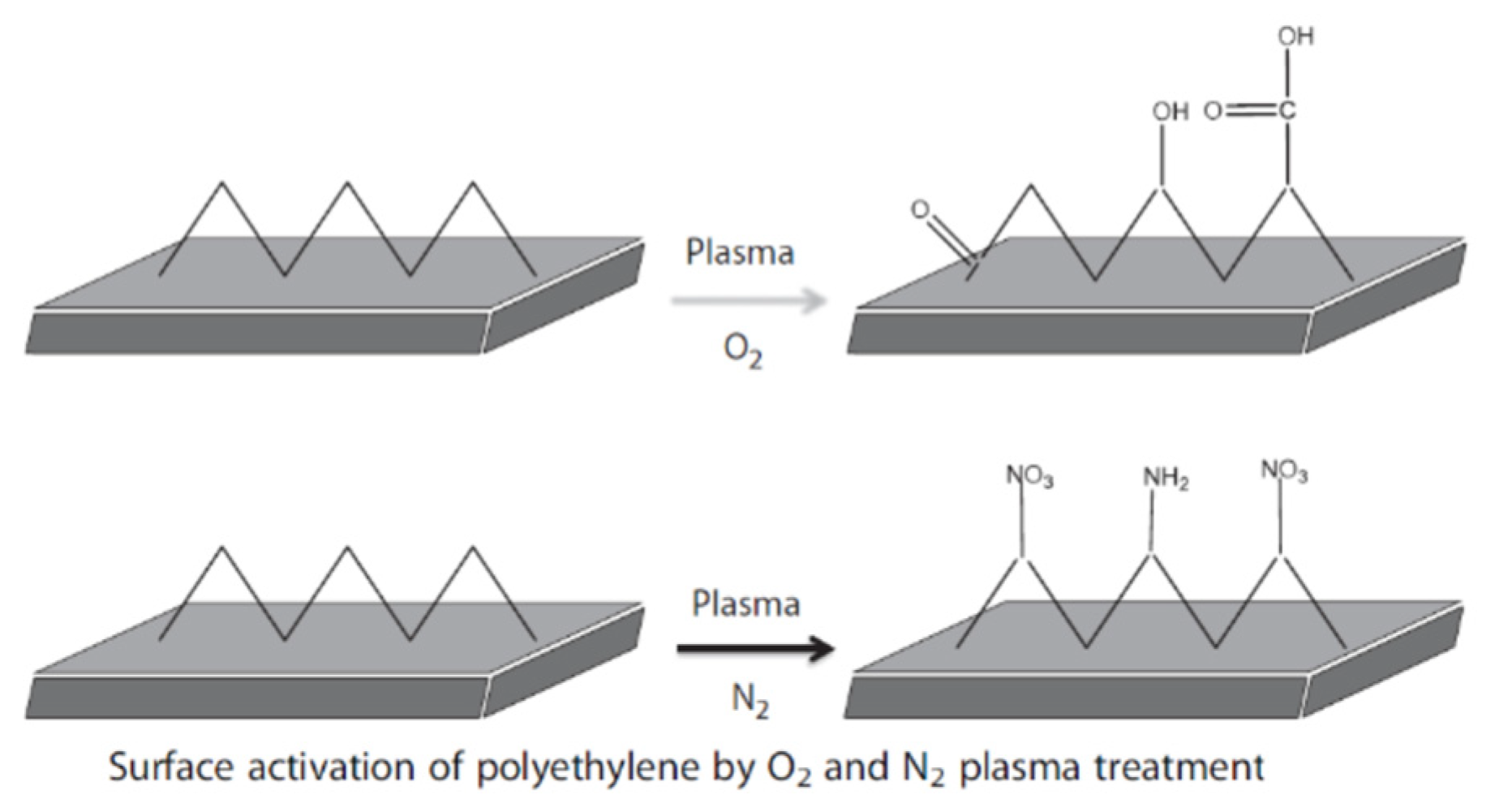
- Kert, M.; Forte Tavčer, P.; Hladnik, A.; Spasić, K.; Puač, N.; Petrović, Z.L.; Gorjanc, M. Application of fragrance microcapsules onto cotton fabric after treatment with oxygen and nitrogen plasma. Coatings 2021, 11, 1181. [Google Scholar] [CrossRef] [Scilit]
- Fei, B.; Xin, J.H. N, N-diethyl-m-toluamide–containing microcapsules for bio-cloth finishing. Am. J. Trop. Med. Hyg. 2007, 77, 52–57. [Google Scholar]
- Lam, P.; Li, L.; Yuen, C.; Gambari, R.; Wong, R.; Chui, C.; Lam, K. Effects of multiple washing on cotton fabrics containing berberine microcapsules with anti-Staphylococcus aureus activity. J. Microencapsul. 2013, 30, 143–150. [Google Scholar] [CrossRef] [Scilit]
- Yang, Z.; Zeng, Z.; Xiao, Z.; Ji, H. Preparation and controllable release of chitosan/vanillin microcapsules and their application to cotton fabric. Flavour Fragr. J. 2014, 29, 114–120. [Google Scholar] [CrossRef] [Scilit]
- Ali, S.W.; Rajendran, S.; Joshi, M. Synthesis and characterization of chitosan and silver loaded chitosan nanoparticles for bioactive polyester. Carbohydr. Polym. 2011, 83, 438–446. [Google Scholar] [CrossRef] [Scilit]
- Bonet, M.Á.; Capablanca, L.; Monllor, P.; Díaz, P.; Montava, I. Studying bath exhaustion as a method to apply microcapsules on fabrics. J. Text. Inst. 2012, 103, 629–635. [Google Scholar] [CrossRef] [Scilit]
- Bouaziz, A.; Dridi, D.; Gargoubi, S.; Zouari, A.; Majdoub, H.; Boudokhane, C.; Bartegi, A. Study on the grafting of chitosan-essential oil microcapsules onto cellulosic fibers to obtain bio functional material. Coatings 2021, 11, 637. [Google Scholar] [CrossRef] [Scilit]
- Khanna, S.; Chakraborty, J. Optimization of monochlorotriazine β-cyclodextrin grafting on cotton and assessment of release behavior of essential oils from functionalized fabric. Fash. Text. 2017, 4, 6. [Google Scholar] [CrossRef] [Scilit]
- Alonso, D.; Gimeno, M.; Sepúlveda-Sánchez, J.D.; Shirai, K. Chitosan-based microcapsules containing grapefruit seed extract grafted onto cellulose fibers by a non-toxic procedure. Carbohydr. Res. 2010, 345, 854–859. [Google Scholar] [PubMed]
- Clarivate. Trends in the Number of New Scientific Articles in the Web of Science Database. Web of Science 2025. Available online: https://clarivate.com/academia-government/scientific-and-academic-research/research-funding-analytics/incites-benchmarking-analytics/?utm_medium=Referral&utm_source=webofscience-clarivate-cn (accessed on 1 March 2026).
- Danila, A.; Ibanescu, S.-A.; Zaharia, C.; Muresan, E.I.; Popescu, A.; Danu, M.; Rotaru, V. Eco-friendly O/W emulsions with potential application in skincare products. Colloids Surf. A Physicochem. Eng. Asp. 2021, 612, 125969. [Google Scholar] [CrossRef] [Scilit]
- Wijesirigunawardana, P.; Perera, B. Development of a smart textile with medicinal properties using lime oil microcapsules. Acta Chim. Slov. 2017, 65, 150–159. [Google Scholar] [CrossRef] [Scilit]
- Yaman Turan, N.; Turker, E.; Insaatci, Ö. Microparticles loaded with propolis to make antibacterial cotton. Cellulose 2021, 28, 4469–4483. [Google Scholar] [CrossRef] [Scilit]
- Hui, P.C.-L.; Wang, W.-Y.; Kan, C.-W.; Ng, F.S.-F.; Wat, E.; Zhang, V.X.; Chan, C.-L.; Bik-San Lau, C.; Leung, P.-C. Microencapsulation of traditional Chinese herbs—PentaHerbs extracts and potential application in healthcare textiles. Colloids Surf. B Biointerfaces 2013, 111, 156–161. [Google Scholar] [CrossRef] [Scilit]
- Abbasnezhad, N.; Zirak, N.; Shirinbayan, M.; Kouidri, S.; Salahinejad, E.; Tcharkhtchi, A.; Bakir, F. Controlled release from polyurethane films: Drug release mechanisms. J. Appl. Polym. Sci. 2021, 138, 50083. [Google Scholar]
- Farouk, A.; Sharaf, S.; Refaie, R.; Abd El-Hady, M. Highly durable antibacterial properties of cellulosic fabric via β-cyclodextrin/essential oils inclusion complex. Polymers 2022, 14, 4899. [Google Scholar] [CrossRef] [Scilit]
- Khanna, S.; Sharma, S.; Chakraborty, J. Performance assessment of fragrance finished cotton with cyclodextrin assisted anchoring hosts. Fash. Text. 2015, 2, 19. [Google Scholar] [CrossRef] [Scilit]
- Bezerra, F.M.; García Carmona, Ó.; García Carmona, C.; Souza Plath, A.M.; Lis Arias, M.J. Biofunctional wool using ß-cyclodextrins as vehiculizer of citronella oil. Process Biochem. 2019, 77, 151–158. [Google Scholar] [CrossRef] [Scilit]
- Indriyani, N.N.; Al-Anshori, J.; Wahyudi, T.; Nurzaman, M.; Nurjanah, S.; Permadi, N.; Julaeha, E. An optimized chitosan/alginate-based microencapsulation of lime peel essential oil and its application as an antibacterial textile. J. Biomater. Sci. Polym. Ed. 2024, 35, 989–1007. [Google Scholar] [CrossRef] [Scilit]
- Khan, O.; Das, S.C.; Bedoura, S. Microencapsulation of Azadirachta indica oil and Tinospora cordifolia extracts blend for single-use applications. Heliyon 2024, 10, e39163. [Google Scholar] [CrossRef] [Scilit]
- Ghayempour, S.; Mortazavi, S.M. Microwave curing for applying polymeric nanocapsules containing essential oils on cotton fabric to produce antimicrobial and fragrant textiles. Cellulose 2015, 22, 4065–4075. [Google Scholar] [CrossRef] [Scilit]
- López Hernández, Ó.E. 100% Bio-based microencapsulated phase change materials as regulator of temperature of textile fabric. Master’s Thesis, Politechnika Łódzka, Łódź, Poland, 2018. [Google Scholar]
- Rukhaya, S.; Rose, N.M.; Yadav, S. Aroma Treatment of Wool Fabric with Microencapsulated Vetiver Essential Oil. Chem. Eng. 2021, 2, 105–117. [Google Scholar]
- Chen, K.; Xu, C.; Zhou, J.; Zhao, R.; Gao, Q.; Wang, C. Multifunctional fabric coatings with slow-releasing fragrance and UV resistant properties from ethyl cellulose/silica hybrid microcapsules. Carbohydr. Polym. 2020, 232, 115821. [Google Scholar] [CrossRef] [Scilit] [PubMed]
- Badulescu, R.; Vivod, V.; Jausovec, D.; Voncina, B. Treatment of cotton fabrics with ethyl cellulose microcapsules. In Medical and Healthcare Textiles; Elsevier: Amsterdam, The Netherlands, 2010; pp. 226–235. [Google Scholar]
- Coetzee, D.; Militky, J.; Venkataraman, M. Functional coatings by natural and synthetic agents for insect control and their applications. Coatings 2022, 12, 476. [Google Scholar] [CrossRef] [Scilit]
- Bojana, B.P.; Marica, S. Microencapsulation technology and applications in added-value functional textiles. Phys. Sci. Rev. 2016, 1, 20150003. [Google Scholar] [CrossRef] [Scilit]
- Javid, A.; Raza, Z.A.; Hussain, T.; Rehman, A. Chitosan microencapsulation of various essential oils to enhance the functional properties of cotton fabric. J. Microencapsul. 2014, 31, 461–468. [Google Scholar] [CrossRef] [Scilit]









| Major Org. Compound | Cinnamon | Clove | Lavender | Rosemary | Eucalyptus | Citronella | Chemical Class |
|---|---|---|---|---|---|---|---|
| Cinnamaldehyde | ✓ | Phenylpropanoid (aldehyde) | |||||
| Eugenol | ✓ | ✓ | Phenolic phenylpropanoid | ||||
| Linalool | ✓ | Monoterpene alcohol | |||||
| Linalyl acetate | ✓ | Monoterpene ester | |||||
| 1,8-Cineole (Eucalyptol) | ✓ | ✓ | Monoterpene oxide | ||||
| Camphor | ✓ | Monoterpene ketone | |||||
| α-Pinene | ✓ | ✓ | Monoterpene hydrocarbon | ||||
| Citronellal | ✓ | Monoterpene aldehyde | |||||
| Geraniol | ✓ | Monoterpene alcohol | |||||
| Citronellol | ✓ | Monoterpene alcohol |
| Essential Oil | Mechanism of Action | MIC vs. Gram+ (mg/mL) | MIC vs. Gram− (mg/mL) | Relative Potency |
|---|---|---|---|---|
| Cinnamomum zeylanicum (Cinnamon) | Disruption of the cell membrane inhibits key metabolic enzymes | 0.05–0.5 | 0.1–1.0 | Very High [28] |
| Syzygium aromaticum (Clove) | Membrane permeabilization, leakage of intracellular contents | 0.1–0.8 | 0.2–1.5 | Very High [27] |
| Thymus vulgaris (Thyme) | Disrupts lipid bilayer | 0.06–0.6 | 0.1–1.0 | Very High [28] |
| Rosmarinus officinalis (Rosemary) | Moderate membrane perturbation, oxidative stress induction | 0.5–5.0 | 1.0–8.0 | Moderate [27] |
| Cymbopogon nardus (Citronella) | Membrane destabilization, alteration of fatty acid composition | 0.2–2.0 | 0.5–3.0 | High [32] |
| Lavandula angustifolia (Lavender) | Disrupts membrane integrity, increases permeability, and mildly inhibits metabolic enzymes | 0.5–5.0 | 1.0–10.0 | Moderate [28] |
Disclaimer/Publisher’s Note: The statements, opinions and data contained in all publications are solely those of the individual author(s) and contributor(s) and not of MDPI and/or the editor(s). MDPI and/or the editor(s) disclaim responsibility for any injury to people or property resulting from any ideas, methods, instructions or products referred to in the content. |
© 2026 by the authors. Licensee MDPI, Basel, Switzerland. This article is an open access article distributed under the terms and conditions of the Creative Commons Attribution (CC BY) license.
Share and Cite
Lezeck, H.; Martí, M.; Saxena, S.; Lis, M.J. Essential Oils Applied to Textile Substrates with Emphasis on Antibacterial Properties: Review Article. Molecules 2026, 31, 1077. https://doi.org/10.3390/molecules31071077
Lezeck H, Martí M, Saxena S, Lis MJ. Essential Oils Applied to Textile Substrates with Emphasis on Antibacterial Properties: Review Article. Molecules. 2026; 31(7):1077. https://doi.org/10.3390/molecules31071077
Chicago/Turabian StyleLezeck, Hendrick, Meritxell Martí, Siddanth Saxena, and Manuel J. Lis. 2026. "Essential Oils Applied to Textile Substrates with Emphasis on Antibacterial Properties: Review Article" Molecules 31, no. 7: 1077. https://doi.org/10.3390/molecules31071077
APA StyleLezeck, H., Martí, M., Saxena, S., & Lis, M. J. (2026). Essential Oils Applied to Textile Substrates with Emphasis on Antibacterial Properties: Review Article. Molecules, 31(7), 1077. https://doi.org/10.3390/molecules31071077