Integrating Machine Learning and Microwave-Assisted Green Extraction: Total Colorimetric Response Assay-Based Optimization of Opuntia ficus-indica Seed Residues

 , ,
, ,  , ,
, ,  ,
,  ,
,  ,
,  and
and
Abstract
1. Introduction
2. Results
2.1. Independent Variables Screening
2.1.1. Solvent Types and Ethanol Concentration Effect
2.1.2. Microwave Power and Time Irradiation Effect
2.1.3. Liquid-to-Solid Ratio Effect
2.2. Modeling and Fitting the Models Using RSM
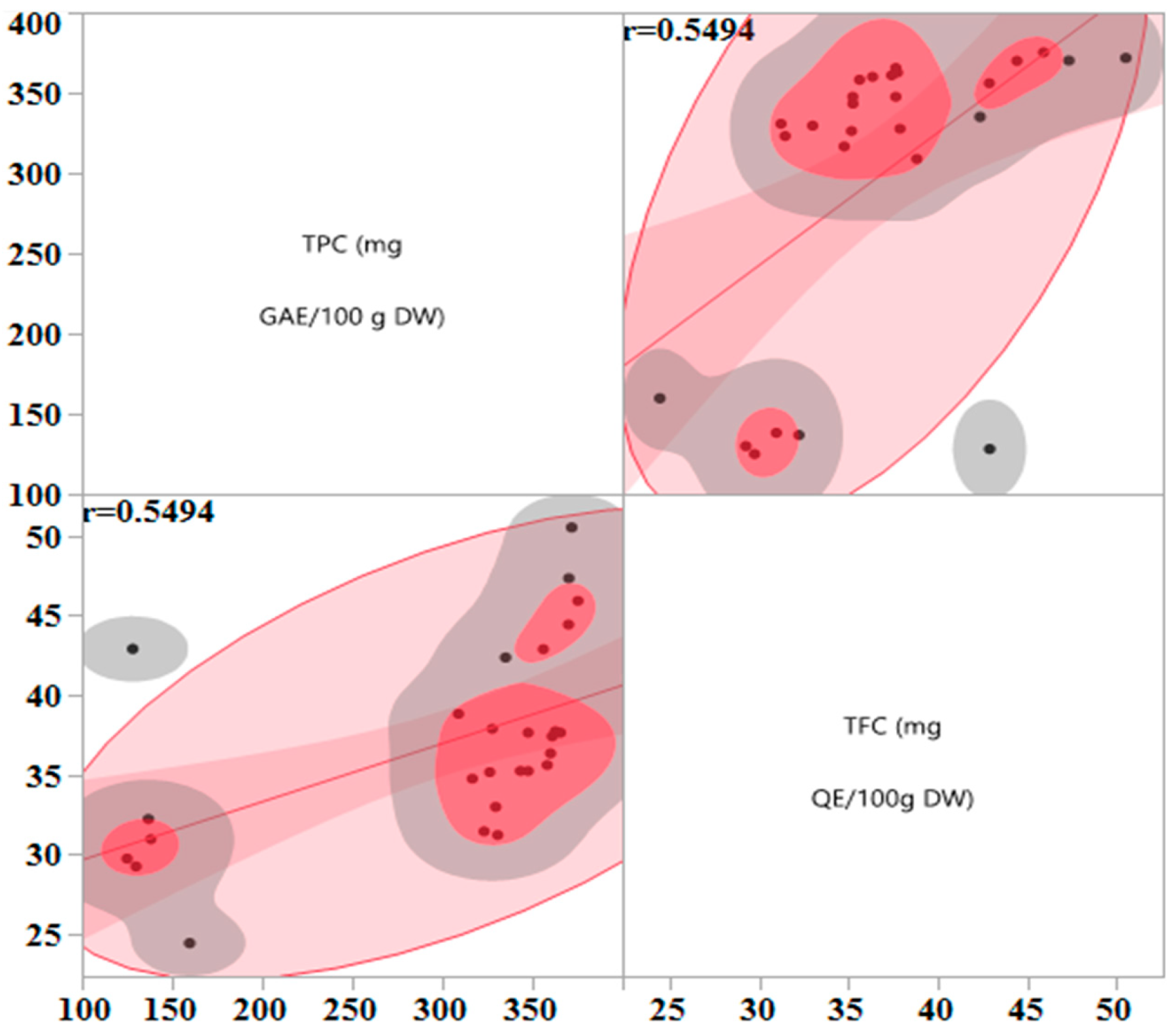
2.2.1. Analyzing Relationships Between FCRC and AlCl3 Complexation Response
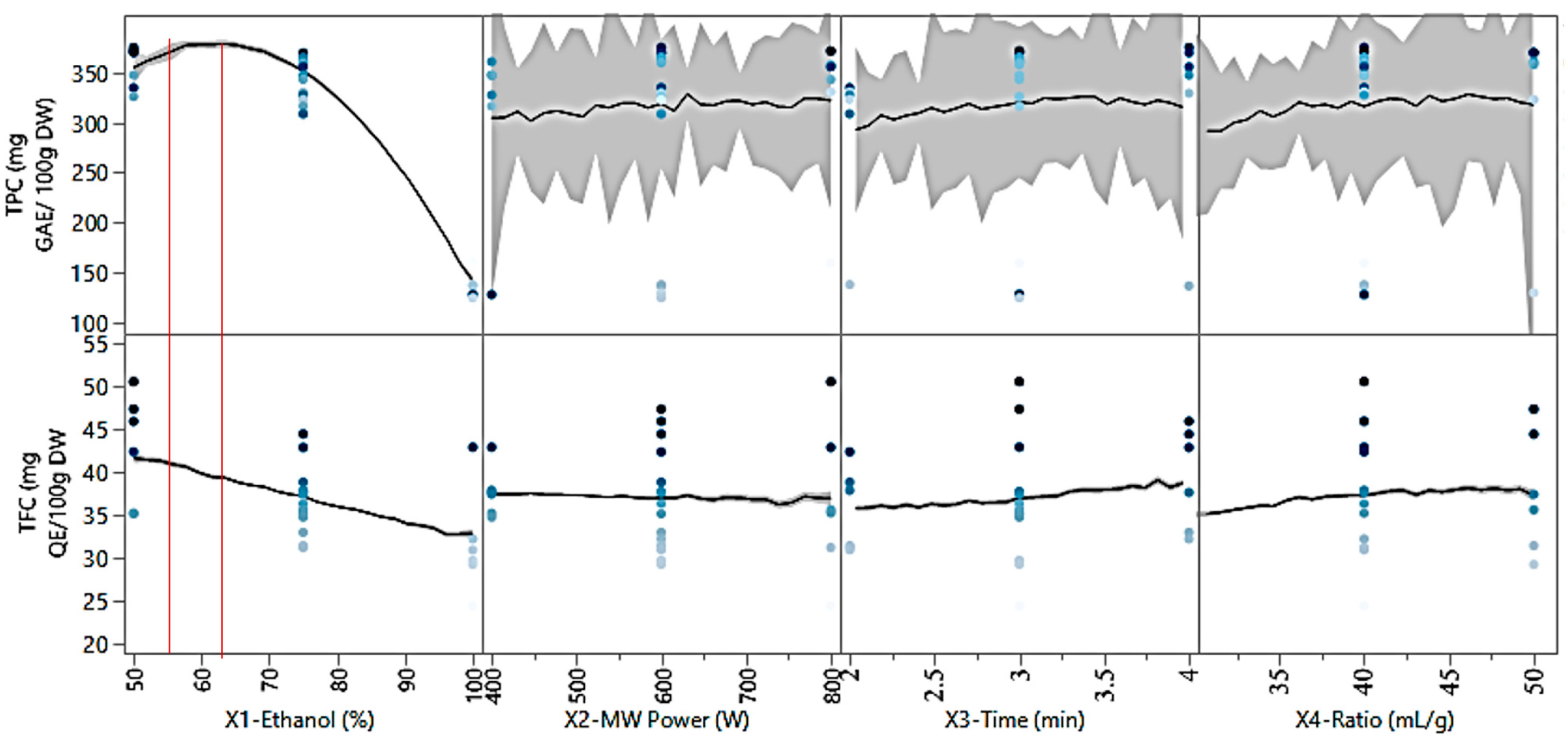
2.2.2. Experimental Design Analysis
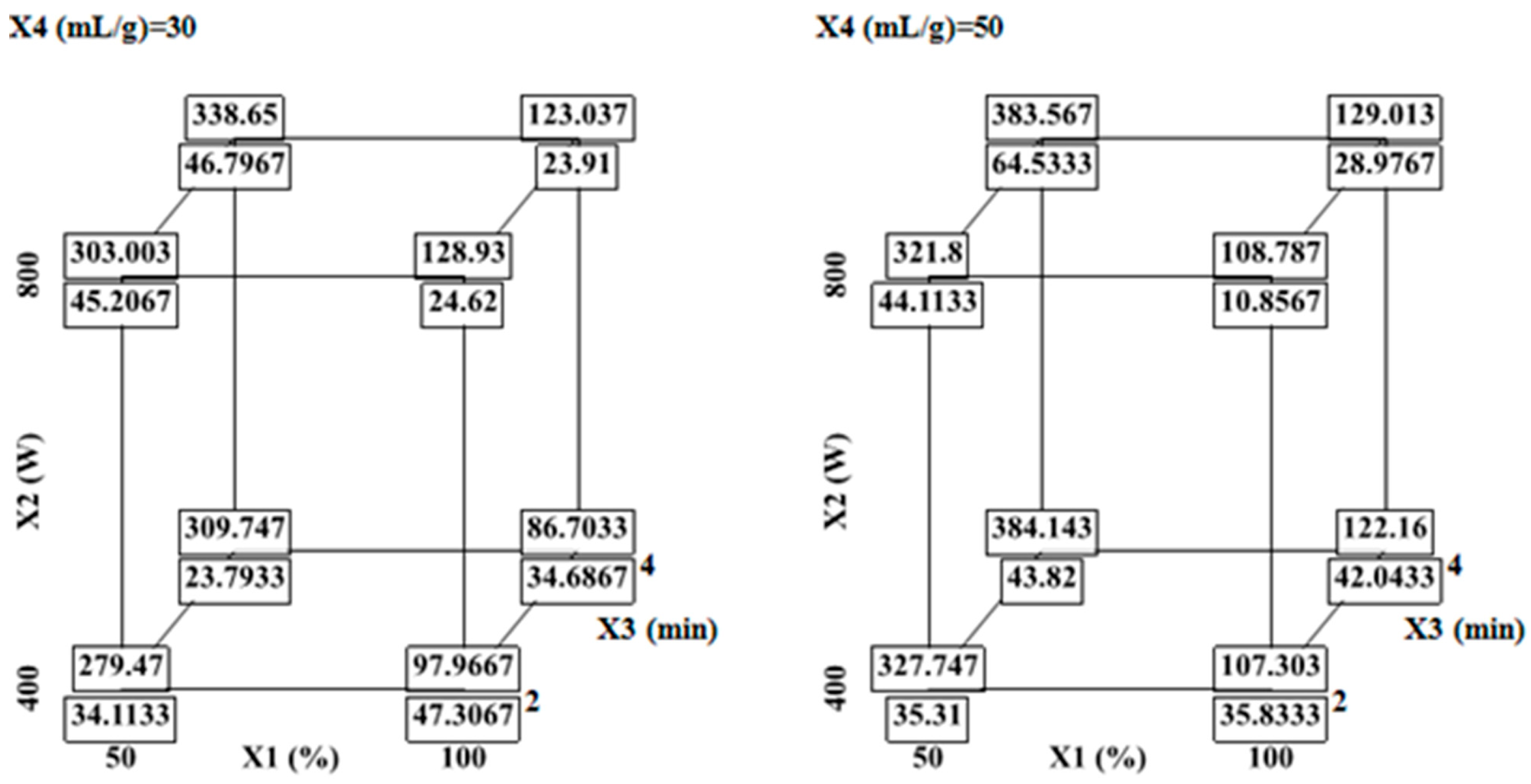
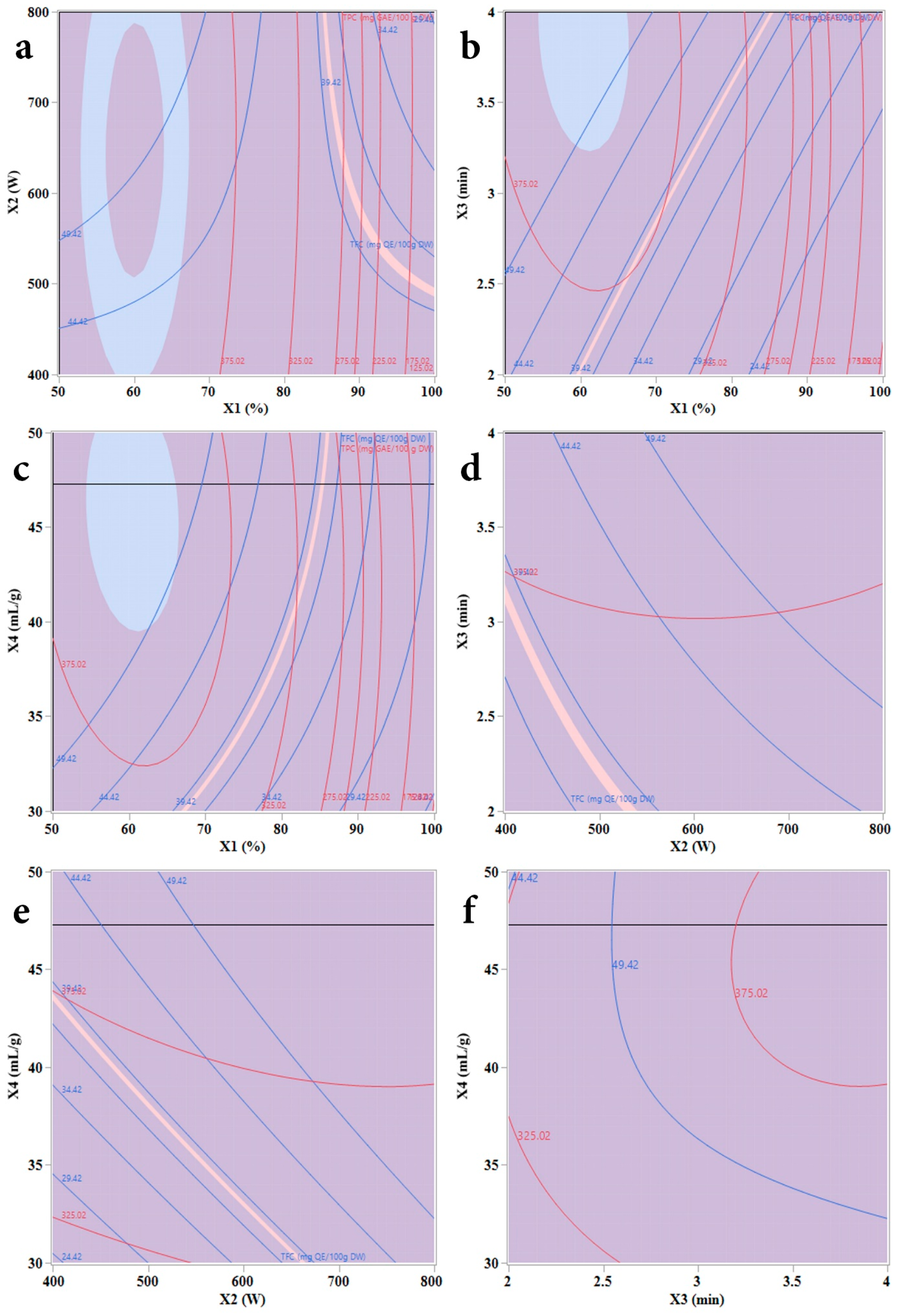
2.2.3. Analysis of the Contour Profiler Plots
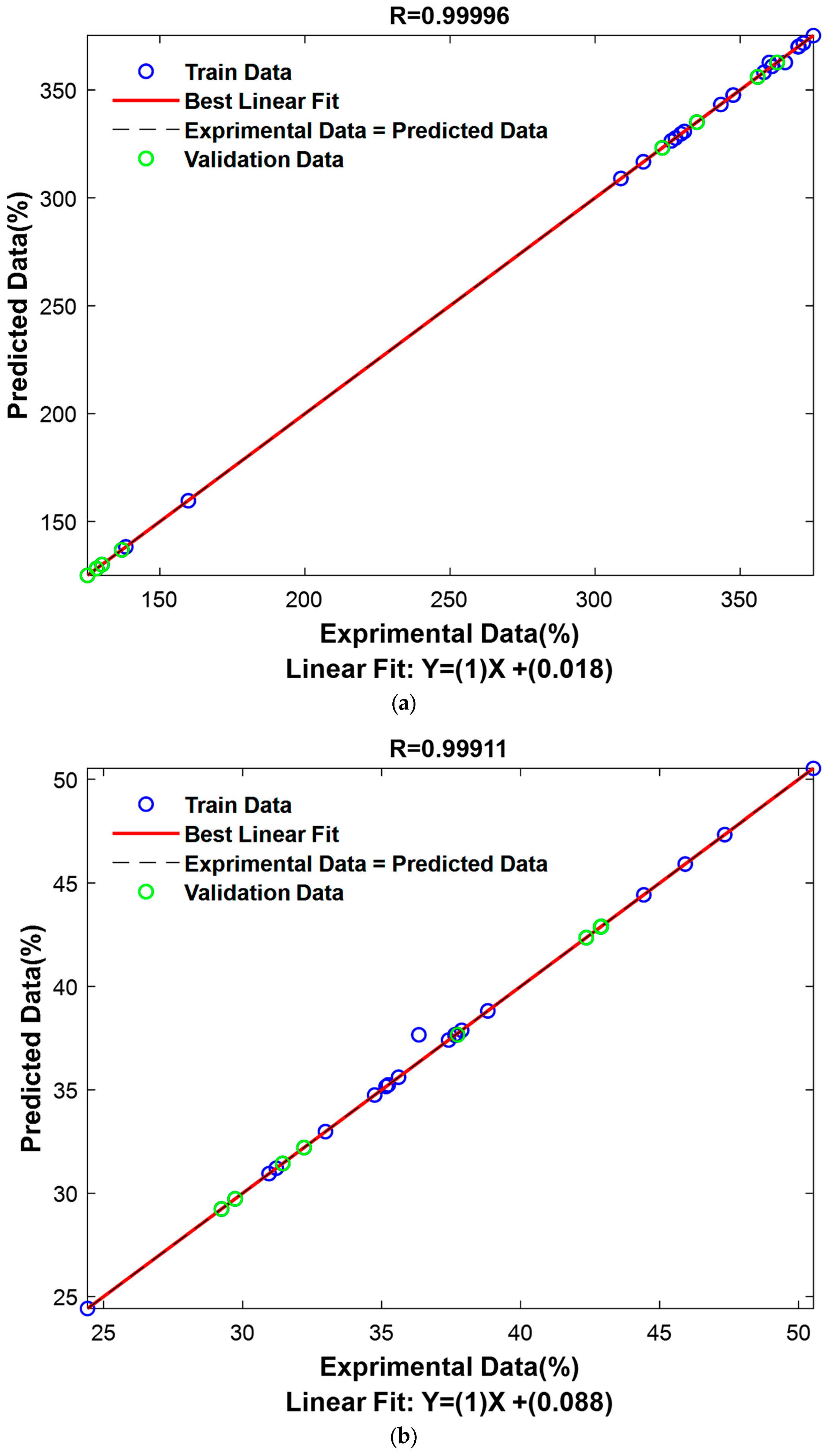
2.3. K-Nearest Neighbors Coupled with Dragonfly Algorithm
2.4. Optimization and Validation of the Optimum Conditions
2.5. Antioxidant Activity
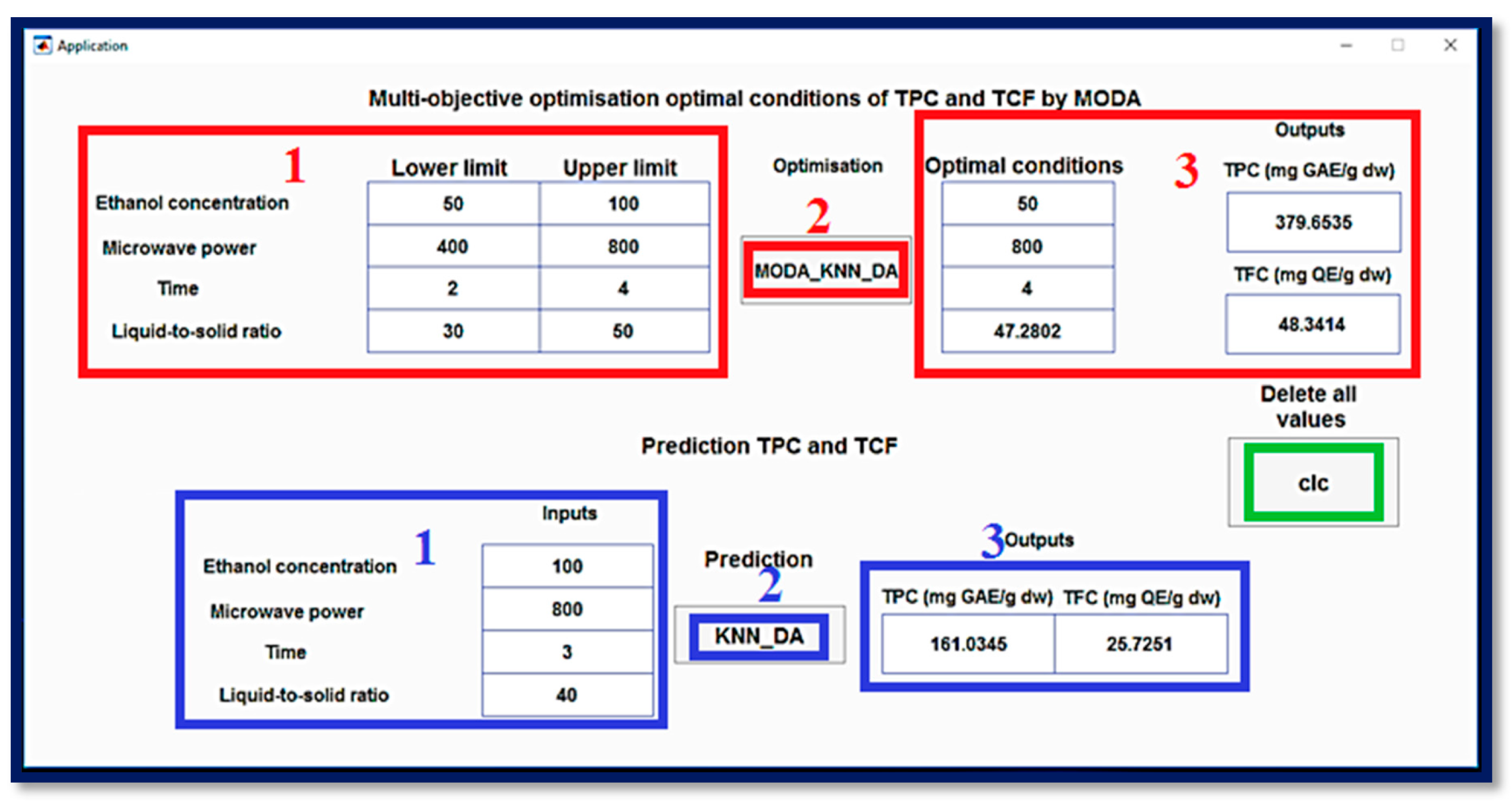
2.6. Interface for Optimization and Prediction
3. Materials and Methods
3.1. Chemical Reagents
3.2. Plant Material
3.3. Microwave-Assisted Extraction
3.4. Colorimetric Assays
3.4.1. Folin–Ciocalteu Reducing Capacity (FCRC)
3.4.2. ACl3 Complexation Response
3.5. Determination of Antioxidant Activity
3.5.1. Antiradical Activity (Radical DPPH)
3.5.2. Reducing Power Assay (RP)
3.6. Experimental Optimization
3.6.1. Preliminary Trials
3.6.2. Box–Behnken Experimental Design and Statistical Analyses
3.6.3. K-Nearest Neighbors Coupled with Dragonfly Algorithm
3.7. Statistical Analyses
4. Conclusions
Author Contributions
Funding
Data Availability Statement
Conflicts of Interest
Abbreviations
| MAE | Microwave-assisted extraction |
| BBD | Box–Behnken design |
| KNN_DA | K-nearest neighbors coupled with dragonfly algorithm |
| ANOVA | Analysis of variance |
| RMSE | Root mean square error |
| FCRC | Folin–Ciocalteu reducing capacity |
References
- El Kossori, R.L.; Villaume, C.; El Boustani, E.; Sauvaire, Y.; Méjean, L. Composition of pulp, skin and seeds of prickly pears fruit (Opuntia ficus indica sp.). Plant Foods Hum. Nutr. 1998, 52, 263–270. [Google Scholar] [CrossRef] [Scilit]
- Kuti, J.O. Antioxidant compounds from four Opuntia cactus pear fruit varieties. Food Chem. 2004, 85, 527–533. [Google Scholar] [CrossRef] [Scilit]
- Salim, N.; Abdelwaheb, C.; Rabah, C.; Ahcene, B. Chemical composition of Opuntia ficus-indica (L.) fruit. Afr. J. Biotechnol. 2009, 8, 1623–1624. [Google Scholar]
- Vignon, M.R.; Heux, L.; Malainine, M.E.; Mahrouz, M. Arabinan–cellulose composite in Opuntia ficus-indica prickly pear spines. Carbohydr. Res. 2004, 339, 123–131. [Google Scholar] [CrossRef] [Scilit]
- Abay, N.G. Cactus (Opuntia ficus-indica): Current utilization and future threats as cattle forage in Raya Azebo, Ethiopia. Environ. Manag. Sustain. Dev. 2018, 7, 1–3. [Google Scholar] [CrossRef] [Scilit]
- Inglese, P.; Saenz, C.; Mondragon, C.; Nefzaoui, A.; Louhaichi, M. Crop Ecology, Cultivation and Uses of Cactus Pear; FAO: Rome, Italy, 2017. [Google Scholar]
- Morales, P.; Ramírez-Moreno, E.; Sanchez-Mata, M.d.C.; Carvalho, A.M.; Ferreira, I.C.F.R. Nutritional and antioxidant properties of pulp and seeds of two xoconostle cultivars (Opuntia joconostle F.A.C. Weber ex Diguet and Opuntia matudae Scheinvar) of high consumption in Mexico. Food Res. Int. 2012, 46, 279–285. [Google Scholar] [CrossRef] [Scilit]
- El-Gharras, H.; Hasib, A.; Jaouad, A.; El-Bouadili, A. Chemical and physical characterization of three cultivars of moroccan yellow prickly pears (Opuntia ficus-indica) at three stages of maturity caracterización química y física de tres variedades de higos chumbos amarillas de marruecos (Opuntia ficus-indica) en tres etapas de madurez. Cienc. Tecnol. Aliment. 2006, 5, 93–99. [Google Scholar]
- Barba, F.J.; Putnik, P.; Kovačević, D.B.; Poojary, M.M.; Roohinejad, S.; Lorenzo, J.M.; Koubaa, M. Impact of conventional and non-conventional processing on prickly pear (Opuntia spp.) and their derived products: From preservation of beverages to valorization of by-products. Trends Food Sci. Technol. 2017, 67, 260–270. [Google Scholar] [CrossRef] [Scilit]
- Habibi, Y.; Mahrouz, M.; Vignon, M.R. Microfibrillated cellulose from the peel of prickly pear fruits. Food Chem. 2009, 115, 423–429. [Google Scholar] [CrossRef] [Scilit]
- Bensadon, S.; Hervert-Hernandez, D.; Sayago-Ayerdi, S.G.; Goni, I. By-products of Opuntia ficus-indica as a source of antioxidant dietary fiber. Plant Foods Hum. Nutr. 2010, 65, 210–216. [Google Scholar] [CrossRef] [Scilit] [PubMed]
- Terki, L.; Kujawski, W.; Kujawa, J.; Kurzawa, M.; Filipiak-Szok, A.; Chrzanowska, E.; Khaled, S.; Madani, K. Implementation of osmotic membrane distillation with various hydrophobic porous membranes for concentration of sugars solutions and preservation of the quality of cactus pear juice. J. Food Eng. 2018, 230, 28–38. [Google Scholar] [CrossRef] [Scilit]
- Habibi, Y. Contribution à L’étude Morphologique, Ultrastructurale et Chimique de la Figue de Barbarie. Les Polysaccharides Pariétaux: Charactérisation et Modification Chimique; Université Joseph-Fourier-Grenoble I: Grenoble, France, 2004. [Google Scholar]
- Habibi, Y.; Mahrouz, M.; Vignon, M.R. Isolation and structure of D-xylans from pericarp seeds of Opuntia ficus-indica prickly pear fruits. Carbohydr. Res. 2002, 337, 1593–1598. [Google Scholar] [CrossRef] [Scilit]
- Simopoulos, A.P. The importance of the ratio of omega-6/omega-3 essential fatty acids. Biomed. Pharmacother. 2002, 56, 365–379. [Google Scholar] [CrossRef] [Scilit] [PubMed]
- Osuna-Martínez, U.; Reyes-Esparza, J.; Rodríguez-Fragoso, L. Cactus (Opuntia ficus-indica): A review on its antioxidants properties and potential pharmacological use in chronic diseases. Nat. Prod. Chem. Res. 2014, 2, 153. [Google Scholar]
- Chaalal, M.; Louaileche, H.; Touati, N.; Bachir, M.B. Phytochemicals, in vitro antioxidant capacity and antiradical potential of whole and ground seeds of three prickly pear varieties: A comparative study. Ind. Crops Prod. 2013, 49, 386–391. [Google Scholar] [CrossRef] [Scilit]
- Chougui, N.; Tamendjari, A.; Hamidj, W.; Hallal, S.; Barras, A.; Richard, T.; Larbat, R. Oil composition and characterisation of phenolic compounds of Opuntia ficus-indica seeds. Food Chem. 2013, 139, 796–803. [Google Scholar] [CrossRef] [Scilit] [PubMed]
- Kaufmann, B.; Christen, P. Recent extraction techniques for natural products: Microwave-assisted extraction and pressurised solvent extraction. Phytochem. Anal. Int. J. Plant Chem. Biochem. Tech. 2002, 13, 105–113. [Google Scholar] [CrossRef] [Scilit] [PubMed]
- Rodríguez-Pérez, R.; Vogt, M.; Bajorath, J. Support vector machine classification and regression prioritize different structural features for binary compound activity and potency value prediction. ACS Omega 2017, 2, 6371–6379. [Google Scholar] [CrossRef] [Scilit] [PubMed]
- Chakraborty, S.; Das, M.; Ghosh, T.; Dash, K.K. Application of Artificial Neural Network (ANN) in Ultrasound-Assisted Extraction of Bioactive Compounds. J. Food Process Eng. 2025, 48, e70028. [Google Scholar] [CrossRef] [Scilit]
- Kunjiappan, S.; Ramasamy, L.K.; Kannan, S.; Pavadai, P.; Theivendren, P.; Palanisamy, P. Optimization of ultrasound-aided extraction of bioactive ingredients from Vitis vinifera seeds using RSM and ANFIS modeling with machine learning algorithm. Sci. Rep. 2024, 14, 1219. [Google Scholar] [CrossRef] [Scilit]
- Nugroho, A.; Khomeini, M.I.; Heraldi, R.J.S. Comparison of k-Nearest Neighbor and Support Vector Machine using Binary Dragonfly Algorithm Optimization. Sist. J. Sist. Inf. 2024, 13, 39–53. [Google Scholar] [CrossRef] [Scilit]
- Raouf, Z.T.; Abd, D.H. Feature Selection for Binary Dataset using Dragonfly Algorithm. In Proceedings of the 2023 16th International Conference on Developments in eSystems Engineering (DeSE), Istanbul, Turkey, 18–20 December 2023; pp. 480–485. [Google Scholar]
- Wu, T.; Yan, J.; Liu, R.; Marcone, M.F.; Aisa, H.A.; Tsao, R. Optimization of microwave-assisted extraction of phenolics from potato and its downstream waste using orthogonal array design. Food Chem. 2012, 133, 1292–1298. [Google Scholar] [CrossRef] [Scilit]
- Li, H.; Deng, Z.; Wu, T.; Liu, R.; Loewen, S.; Tsao, R. Microwave-assisted extraction of phenolics with maximal antioxidant activities in tomatoes. Food Chem. 2012, 130, 928–936. [Google Scholar] [CrossRef] [Scilit]
- Pan, X.; Niu, G.; Liu, H. Microwave-assisted extraction of tea polyphenols and tea caffeine from green tea leaves. Chem. Eng. Process. Process Intensif. 2003, 42, 129–133. [Google Scholar] [CrossRef] [Scilit]
- Yang, L.; Jiang, J.G.; Li, W.F.; Chen, J.; Wang, D.Y.; Zhu, L. Optimum extraction process of polyphenols from the bark of Phyllanthus emblica L. based on the response surface methodology. J. Sep. Sci. 2009, 32, 1437–1444. [Google Scholar] [CrossRef] [Scilit]
- Moussa, H.; Dahmoune, F.; Mroz, M.; Remini, H.; Kadri, N.; Hamid, S.; Kusznierewicz, B. Efficient optimization approaches for microwave assisted extraction of high-quality antioxidant compounds from Salvia officinalis L.: UHPLC-HRMS differential analysis of phenolic profiles obtained by ultrasound and microwave extraction. Sustain. Chem. Pharm. 2023, 35, 101194. [Google Scholar] [CrossRef] [Scilit]
- Chew, K.; Khoo, M.; Ng, S.; Thoo, Y.Y.; Aida, W.W.; Ho, C.W. Effect of ethanol concentration, extraction time and extraction temperature on the recovery of phenolic compounds and antioxidant capacity of Orthosiphon stamineus extracts. Int. Food Res. J. 2011, 18, 1427. [Google Scholar]
- Kappe, C.O.; Pieber, B.; Dallinger, D. Microwave effects in organic synthesis: Myth or reality? Angew. Chem. Int. Ed. 2013, 52, 1088–1094. [Google Scholar] [CrossRef] [Scilit]
- Zhang, S.; Li, X.; Zong, M.; Zhu, X.; Wang, R. Efficient kNN classification with different numbers of nearest neighbors. IEEE Trans. Neural Netw. Learn. Syst. 2017, 29, 1774–1785. [Google Scholar] [CrossRef] [Scilit]
- Quan, Y.; Ren, H.; Liu, S.; Zhao, X.; Hao, J. Identification and molecular mechanism of novel antioxidant peptides from tiger nut (Cyperus esculentus L.). Food Biosci. 2025, 63, 105738. [Google Scholar] [CrossRef] [Scilit]
- Su, M.; Tang, T.; Tang, W.; Long, Y.; Wang, L.; Liu, M. Astragalus improves intestinal barrier function and immunity by acting on intestinal microbiota to treat T2DM: A research review. Front. Immunol. 2023, 14, 1243834. [Google Scholar] [CrossRef] [Scilit]
- Bhuyan, D.J.; Van Vuong, Q.; Chalmers, A.C.; van Altena, I.A.; Bowyer, M.C.; Scarlett, C. Microwave-assisted extraction of Eucalyptus robusta leaf for the optimal yield of total phenolic compounds. Ind. Crops Prod. 2015, 69, 290–299. [Google Scholar] [CrossRef] [Scilit]
- Dahmoune, F.; Spigno, G.; Moussi, K.; Remini, H.; Cherbal, A.; Madani, K. Pistacia lentiscus leaves as a source of phenolic compounds: Microwave-assisted extraction optimized and compared with ultrasound-assisted and conventional solvent extraction. Ind. Crops Prod. 2014, 61, 31–40. [Google Scholar] [CrossRef] [Scilit]
- Lodi, R.S.; Jia, X.; Yang, P.; Peng, C.; Dong, X.; Han, J.; Liu, X.; Wan, L.; Peng, L. Whole genome sequencing and annotations of Trametes sanguinea ZHSJ. Sci. Data 2025, 12, 1460. [Google Scholar] [CrossRef] [Scilit]
- Karazhiyan, H.; Razavi, S.M.; Phillips, G.O. Extraction optimization of a hydrocolloid extract from cress seed (Lepidium sativum) using response surface methodology. Food Hydrocoll. 2011, 25, 915–920. [Google Scholar] [CrossRef] [Scilit]
- Lang, S.; Liu, L.; Li, Z.; Liu, S.; Liang, J.; Lu, L.; Wang, L. Untargeted metabolomics reveals phenolic compound dynamics during mung bean fermentation. Food Chem. X 2025, 31, 103189. [Google Scholar] [CrossRef] [Scilit] [PubMed]
- Guo, G.; Wang, H.; Bell, D.; Bi, Y.; Greer, K. KNN model-based approach in classification. In Proceedings of the OTM Confederated International Conferences” On the Move to Meaningful Internet Systems”, Catania, Italy, 3–7 November 2003; Springer: Berlin/Heidelberg, Germany, 2003; pp. 986–996. [Google Scholar]
- Djeridane, A.; Yousfi, M.; Nadjemi, B.; Boutassouna, D.; Stocker, P.; Vidal, N. Antioxidant activity of some Algerian medicinal plants extracts containing phenolic compounds. Food Chem. 2006, 97, 654–660. [Google Scholar] [CrossRef] [Scilit]
- Bouaouich, A.; Bouguerche, F.; Mahiaoui, H.; Peron, G.; Bendif, H. Phytochemical elucidation and antioxidant activity of seeds from three prickly pear (Opuntia ficus-indica L.) cultivars from Algeria. Appl. Sci. 2023, 13, 1444. [Google Scholar] [CrossRef] [Scilit]
- Singleton, V.; Rossi, J.A. Colorimetry of total phenolics with phosphomolybdic-phosphotungstic acid reagents. Am. J. Enol. Vitic. 1965, 16, 144–158. [Google Scholar] [CrossRef] [Scilit]
- Molyneux, P. The use of the stable free radical diphenylpicrylhydrazyl (DPPH) for estimating antioxidant activity. Songklanakarin J. Sci. Technol. 2004, 26, 211–219. [Google Scholar]
- Oyaizu, M. Studies on products of browning reaction. Jpn. J. Nutr. Diet. 1986, 44, 307–315. [Google Scholar] [CrossRef] [Scilit]
- Mansour, D.; Alblawi, E.; Alsukaibi, A.K.D.; Humaidi, J.; Tahraoui, H.; Shatat, M.; Teka, S.; Maisara, S.; Bellakhal, N.; Binous, H. Modeling and optimization of electrochemical advanced oxidation of clopidogrel using the doehlert experimental design combined with an improved grey wolf algorithm. Water 2024, 16, 1964. [Google Scholar] [CrossRef] [Scilit]
- Steinbach, M.; Tan, P.-N. kNN: K-nearest neighbors. In The Top Ten Algorithms in Data Mining; Chapman and Hall/CRC: London, UK, 2009; pp. 165–176. [Google Scholar]





| Press Residue | |||
|---|---|---|---|
| Parameter | FCRC (mg GAE/100 g DW) | AlCl3 Complexation Response (mg QE/100 g DW) | |
| Solvent nature (50%) | Pure water | 161.62 ± 0.88 a | 23.18 ± 0.51 b |
| Ethanol | 296.59 ± 2.32 c | 30.37 ± 0.96 c | |
| Acetone | 214.45 ± 1.31 b | 20.21 ± 0.55 a | |
| Methanol | 220.51 ± 3.48 ab | 21.77 ± 0.60 ab | |
| Ethanol concentration (%) | 30 | 257.92 ± 1.91 a | 24.60 ± 0.81 b |
| 50 | 300.90 ± 0.76 b | 36.35 ± 0.42 a | |
| 70 | 303.42 ± 1.16 b | 22.29 ± 0.64 c | |
| 100 | 138.52 ± 2.09 c | 20.62 ± 0.67 dc | |
| Microwave power (W) | 200 | 228.35 ± 1.16 a | 24.91 ± 0.87 b |
| 400 | 265.76 ± 2.87 b | 27.07 ± 0.16 c | |
| 500 | 303.42 ± 2.44 c | 32.57 ± 0.63 d | |
| 700 | 280.16 ± 1.58 d | 23.18 ± 0.51 a | |
| 800 | 220.77 ± 1.58 e | 26.07 ± 0.48 bc | |
| Extraction time (min) | 1 min | 243.26 ± 2.01 a | 27.91 ± 0.40 a |
| 1.5 min | 265.50 ± 2.44 b | 27.54 ± 0.72 a | |
| 2 min | 303.67 ± 2.32 c | 24.97 ± 0.51 b | |
| 3 min | 344.11 ± 1.52 d | 37.08 ± 0.79 c | |
| 4 min | 242.50 ± 1.31 a | 16.94 ± 0.55 d | |
| 5 min | 240.99 ± 0.76 a | 15.00 ± 0.48 e | |
| Liquid to solid (mL/g) | 10 | 193.97 ± 0.76 a | 33.57 ± 0.79 a |
| 20 | 344.11 ± 1.52 b | 43.22 ± 0.66 b | |
| 30 | 358.27 ± 1.16 c | 54.97 ± 0.48 c | |
| 40 | 379.00 ± 1.31 d | 59.38 ± 0.80 d | |
| 50 | 267.53 ± 3.48 e | 41.54 ± 0.32 e | |
| Run | Pattern X1 X2 X3 X4 | FCRC (mg GAE/100 g DW) | AlCl3 Complexation Response (mg QE/100 g DW) | ||
|---|---|---|---|---|---|
| Observed | Prediction | Observed | Prediction | ||
| 1 | +0+0 | 136.87 ± 0.47 | 136.40 | 32.21 ± 0.99 | 33.77 |
| 2 | +00− | 125.02 ± 1.42 | 128.23 | 29.73 ± 3.18 | 31.92 |
| 3 | 00−+ | 323.18 ± 3.32 | 327.34 | 31.44 ± 0.23 | 31.16 |
| 4 | +−00 | 128.18 ± 3.59 | 133.38 | 42.90 ± 1.38 | 40.95 |
| 5 | 0+−0 | 330.76 ± 3.59 | 337.34 | 31.21 ± 1.18 | 32.52 |
| 6 | 00−− | 308.91 ± 2.17 | 313.28 | 38.82 ± 0.60 | 37.44 |
| 7 | 00++ | 370.00 ± 2.74 | 365.65 | 44.43 ± 5.80 | 44.47 |
| 8 | 0000 | 365.56 ± 1.91 | 362.78 | 37.64 ± 0.45 | 37.24 |
| 9 | 0−0− | 316.65 ± 1.42 | 313.08 | 34.75 ± 0.23 | 34.23 |
| 10 | 0+0− | 343.35 ± 3.01 | 343.01 | 35.24 ± 1.38 | 34.39 |
| 11 | 0−0+ | 360.99 ± 0.72 | 354.95 | 37.41 ± 2.19 | 38.51 |
| 12 | ++00 | 159.78 ± 1.19 | 152.29 | 24.42 ± 0.60 | 23.07 |
| 13 | +0−0 | 138.24 ± 3.98 | 131.92 | 30.95 ± 1.64 | 31.01 |
| 14 | 0−+0 | 347.62 ± 0.72 | 347.40 | 37.64 ± 0.60 | 37.41 |
| 15 | −+00 | 371.79 ± 0.99 | 366.60 | 50.53 ± 1.77 | 51.15 |
| 16 | −00+ | 370.21 ± 2.43 | 373.37 | 47.34 ± 3.16 | 46.23 |
| 17 | 0++0 | 356.04 ± 1.66 | 365.28 | 42.88 ± 1.18 | 42.38 |
| 18 | −0+0 | 375.26 ± 1.71 | 375.20 | 45.92 ± 5.41 | 46.09 |
| 19 | −−00 | 347.62 ± 3.68 | 355.12 | 35.23 ± 2.19 | 35.24 |
| 20 | 0000 | 362.73 ± 0.27 | 362.78 | 37.73 ± 1.59 | 37.24 |
| 21 | 0+0+ | 358.21 ± 4.67 | 355.39 | 35.61 ± 2.75 | 36.38 |
| 22 | 00+− | 329.61 ± 3.28 | 322.46 | 32.98 ± 0.68 | 31.93 |
| 23 | 0000 | 360.05 ± 3.32 | 362.78 | 36.34 ± 3.87 | 37.24 |
| 24 | −0−0 | 335.09 ± 2.24 | 329.17 | 42.36 ± 1.20 | 41.05 |
| 25 | −00− | 326.29 ± 1.19 | 326.78 | 35.16 ± 0.39 | 36.77 |
| 26 | 0−−0 | 327.71 ± 2.61 | 324.84 | 37.88 ± 1.27 | 39.47 |
| 27 | +00+ | 130.00 ± 4.57 | 135.88 | 29.24 ± 0.68 | 28.72 |
| Coefficient | Press Residue | |||
|---|---|---|---|---|
| FCRC | AlCl3 Complexation Response | |||
| Estimate | Prob > [t] | Estimate | Prob > [t] | |
| β0 | 362.78 | <0.0001 * | 37.24 | <0.0001 * |
| β1 | −109.01 | <0.0001 * | −5.59 | <0.0001 * |
| β2 | 7.59 | 0.0026 * | −0.23 | 0.6484 |
| β3 | 12.63 | <0.0001 * | 1.69 | 0.0055 * |
| β4 | 13.56 | <0.0001 * | 1.57 | 0.0050 * |
| β12 | 1.86 | 0.6027 | −8.45 | <0.0001 * |
| β13 | −10.39 | 0.0113 * | −0.57 | 0.4758 |
| β14 | −9.74 | 0.0159 * | −3.17 | 0.0018 * |
| β23 | 1.342 | 0.7059 | 2.19 | 0.0472 * |
| β24 | −7.37 | 0.0552 | −0.57 | 0.4763 |
| β34 | 6.53 | 0.0844 | 4.71 | <0.0001 * |
| β11 | −105.74 | <0.0001 * | 0.07 | 0.9187 |
| β22 | −5.19 | 0.1097 | 0.43 | 0.5533 |
| β33 | −13.87 | 0.0006 * | 0.81 | 0.2752 |
| β44 | −15.98 | 0.0002 * | −1.66 | 0.0328 * |
| P of model >F | <0.0001 * | <0.0001 * | ||
| Lack of fit | 0.1246 | 0.1826 | ||
| R2 | 0.99 | 0.96 | ||
| R2Adj | 0.99 | 0.93 | ||
| DA: Max_iteration = 100, SearchAgents_no = 30 | ||||||||
|---|---|---|---|---|---|---|---|---|
| Distance | Distance Weight | Num Neighbors | R | RMSE | ||||
| Train | VAL | ALL | Train | VAL | ALL | |||
| Jaccard | Squared Inverse | 2 | 0.9999 | 0.9999 | 0.9999 | 0.8966 | 0.6381 | 0.7521 |
| AlCl3 complexation response | ||||||||
| Jaccard | Squared Inverse | 1 | 0.9988 | 0.9999 | 0.9991 | 0.3035 | 0.2381 | 0.2649 |
| BBD | |||
|---|---|---|---|
| X1 = 51.9800, X2 = 800.0000, X3 = 4.0000, and X4 = 48.1750 | |||
| FCRC | AlCl3 complexation response | FCRC + AlCl3 complexation response | |
| FCRC experimental values | 375.8514 ± 0.46 | 49.1563 ± 0.37 | 425,0077 ± 0.83 |
| FCRC predicted values | 407.2125 | 57.5826 | 464.7951 |
| Error | 31.3611 ± 0.46 | 8.4263 ± 0.37 | 39.7874 ± 0.83 |
| KNN_DA | |||
| X1 = 50.0000, X2 = 804, and X4 = 47.2802 | |||
| FCRC | AlCl3 complexation response | FCRC + AlCl3 complexation response | |
| FCRC experimental values | 376.8514 ± 0.23 | 49.1614 ± 0.33 | 425,0077 ± 0.60 |
| FCRC predicted values | 379.6535 | 48.3414 | 427.9949 |
| Error | 2.8021 ± 0.23 | 0.82 ± 0.33 | 2.9872 ± 0.60 |
| Antioxidant Activities | |
|---|---|
| DPPH• Assay (%) | Reducing Power (mg AAE/100 g DW) |
| 39.57% | 14.35 ± 0.24 |
| Factor | Level | ||
|---|---|---|---|
| −1 | 0 | +1 | |
| X1 | 50 | 75 | 100 |
| X2 | 400 | 600 | 800 |
| X3 | 2 | 3 | 4 |
| X4 | 30 | 40 | 50 |
Disclaimer/Publisher’s Note: The statements, opinions and data contained in all publications are solely those of the individual author(s) and contributor(s) and not of MDPI and/or the editor(s). MDPI and/or the editor(s) disclaim responsibility for any injury to people or property resulting from any ideas, methods, instructions or products referred to in the content. |
© 2026 by the authors. Licensee MDPI, Basel, Switzerland. This article is an open access article distributed under the terms and conditions of the Creative Commons Attribution (CC BY) license.
Share and Cite
Khaled, S.; Mahdeb, A.; Dahmoune, F.; Amrane-Abider, M.; Hamimeche, M.; Terki, L.; Moussa, H.; Tahraoui, H.; Kadri, N.; Remini, H.; et al. Integrating Machine Learning and Microwave-Assisted Green Extraction: Total Colorimetric Response Assay-Based Optimization of Opuntia ficus-indica Seed Residues. Molecules 2026, 31, 998. https://doi.org/10.3390/molecules31060998
Khaled S, Mahdeb A, Dahmoune F, Amrane-Abider M, Hamimeche M, Terki L, Moussa H, Tahraoui H, Kadri N, Remini H, et al. Integrating Machine Learning and Microwave-Assisted Green Extraction: Total Colorimetric Response Assay-Based Optimization of Opuntia ficus-indica Seed Residues. Molecules. 2026; 31(6):998. https://doi.org/10.3390/molecules31060998
Chicago/Turabian StyleKhaled, Souad, Amokrane Mahdeb, Farid Dahmoune, Meriem Amrane-Abider, Mohamed Hamimeche, Lydia Terki, Hamza Moussa, Hichem Tahraoui, Nabil Kadri, Hocine Remini, and et al. 2026. "Integrating Machine Learning and Microwave-Assisted Green Extraction: Total Colorimetric Response Assay-Based Optimization of Opuntia ficus-indica Seed Residues" Molecules 31, no. 6: 998. https://doi.org/10.3390/molecules31060998
APA StyleKhaled, S., Mahdeb, A., Dahmoune, F., Amrane-Abider, M., Hamimeche, M., Terki, L., Moussa, H., Tahraoui, H., Kadri, N., Remini, H., Rahman, M. H., Khezami, L., Fadhillah, F., Ali, F. A. A., Assadi, A. A., Zhang, J., Amrane, A., & Madani, K. (2026). Integrating Machine Learning and Microwave-Assisted Green Extraction: Total Colorimetric Response Assay-Based Optimization of Opuntia ficus-indica Seed Residues. Molecules, 31(6), 998. https://doi.org/10.3390/molecules31060998