Key Amino Acids Controlling pH Optima in Avian Chia Paralogs: Mechanistic Insights into Functional Divergence

 , , , and
Abstract
1. Introduction
2. Results
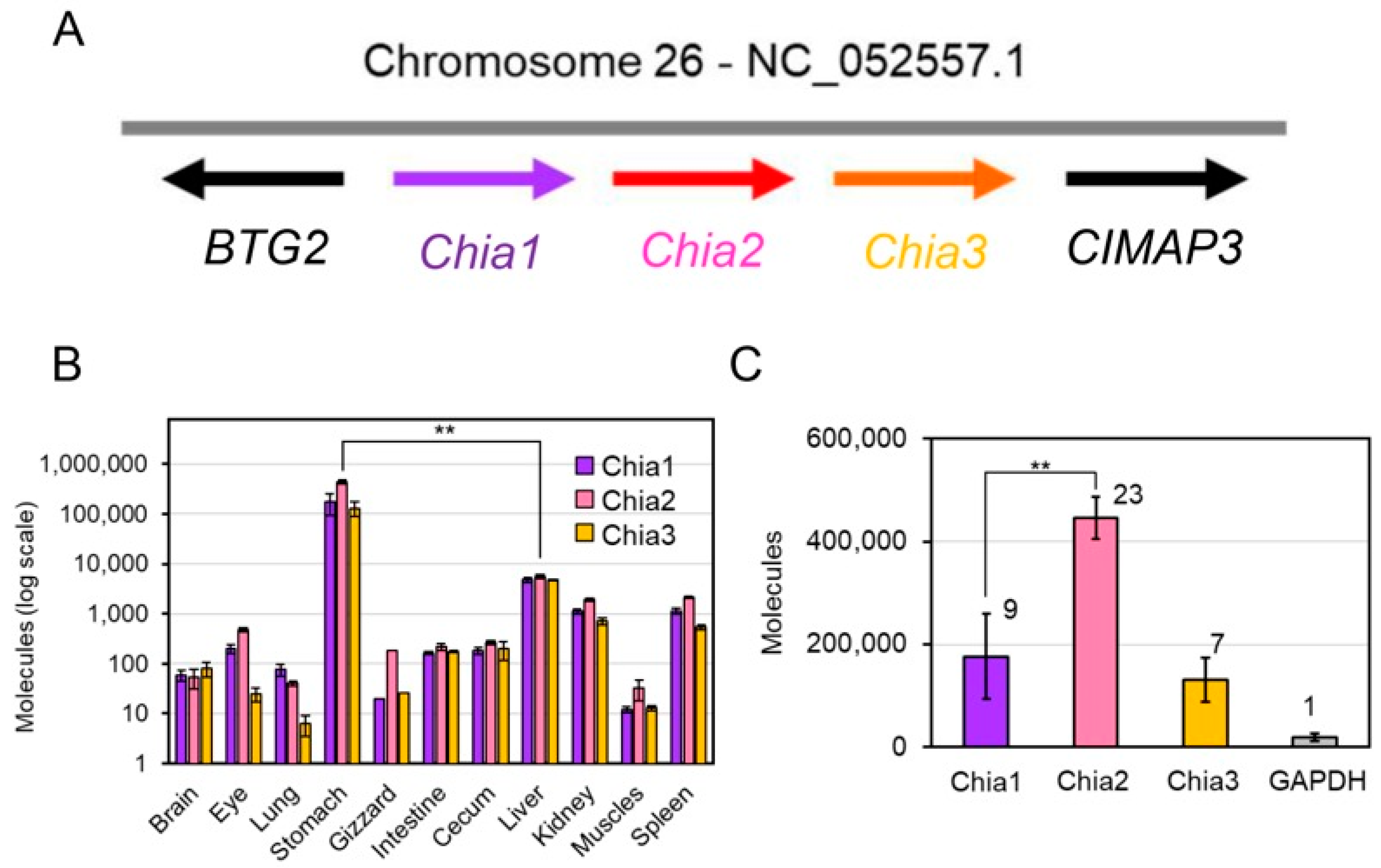
2.1. Chia Paralogs Are Primarily Expressed in the Glandular Stomach of the Chicken
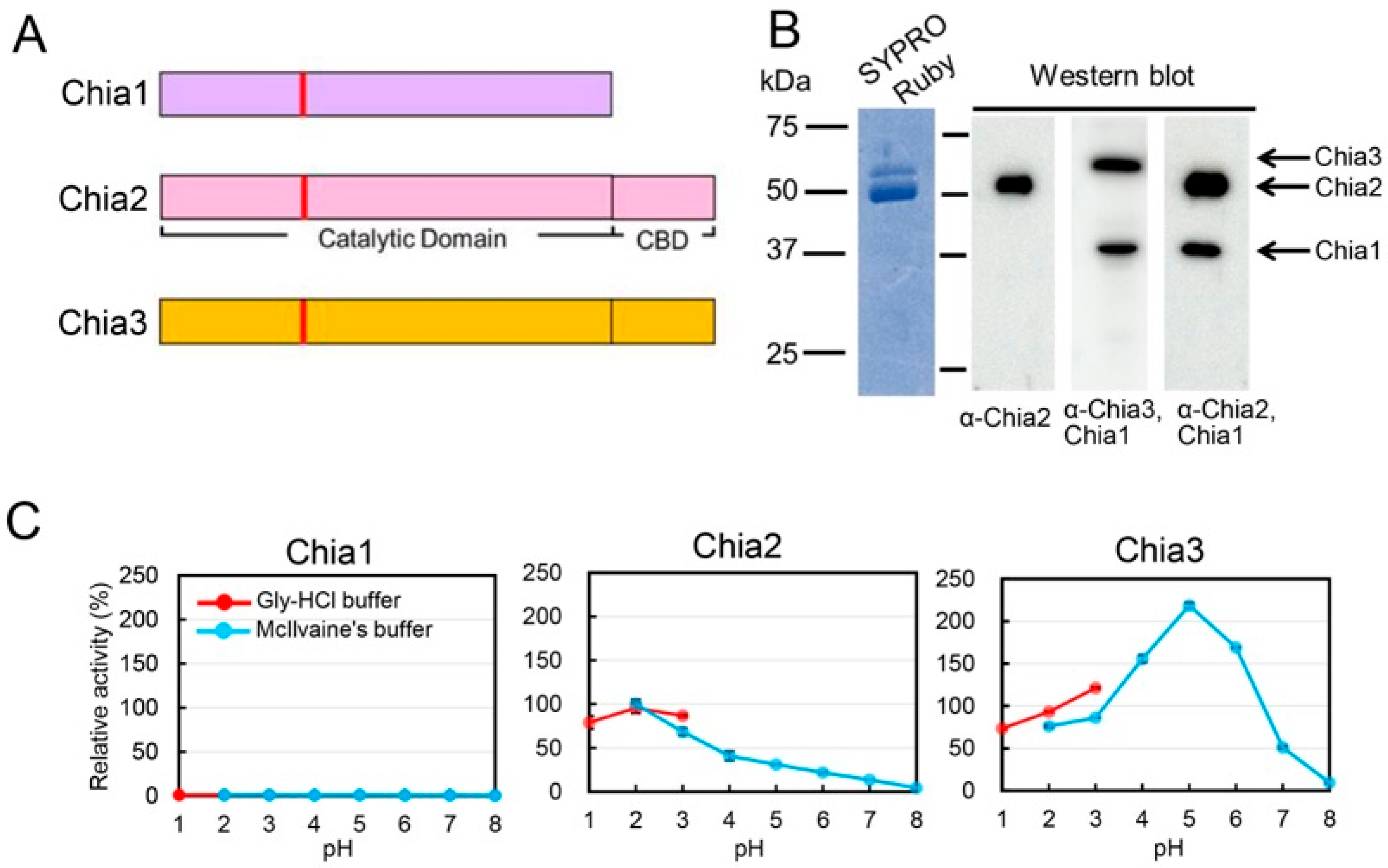
2.2. Divergent Enzymatic Properties and pH Optima of the Chicken Chia Paralogs
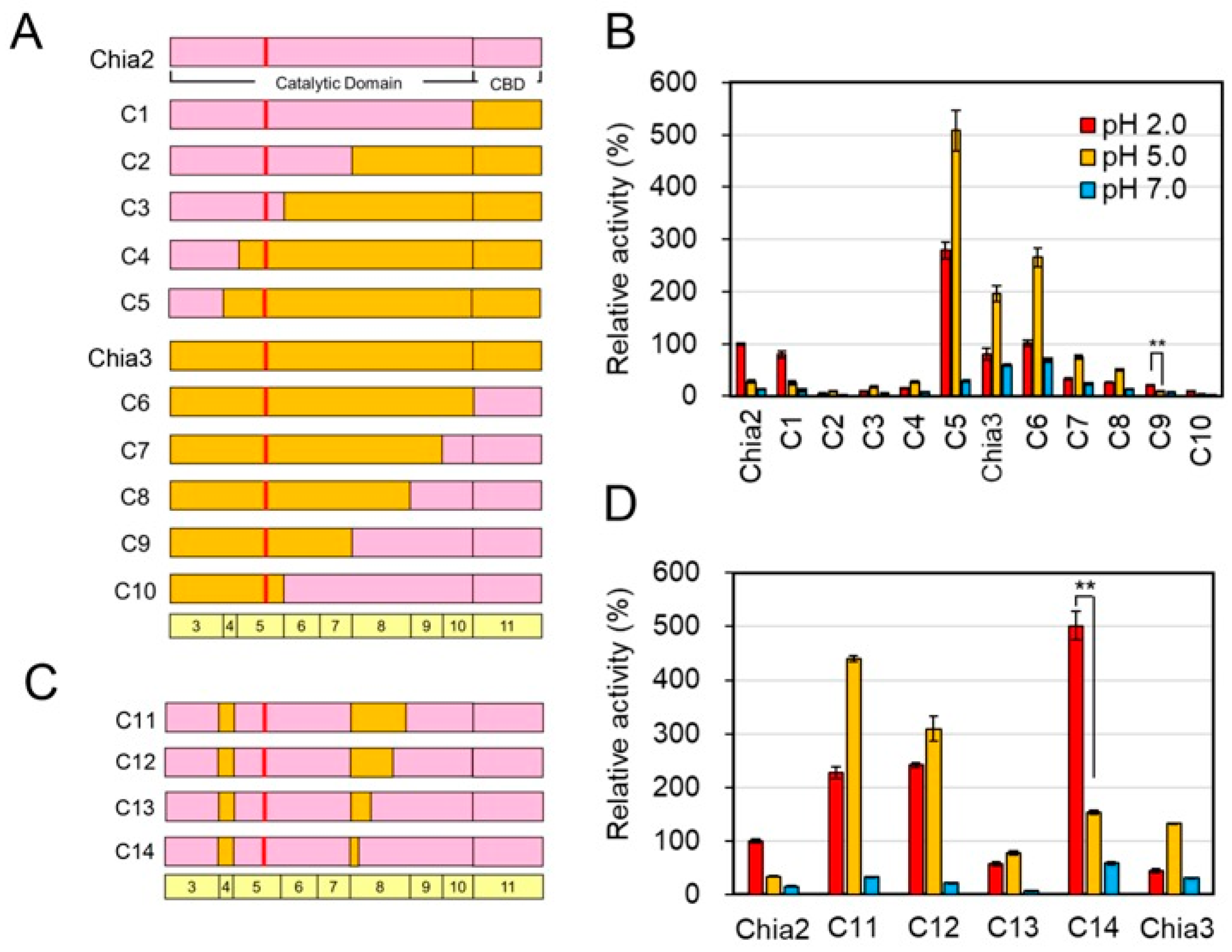
2.3. Exons 4 and 8 Govern the pH Optima of Chia2 and Chia3
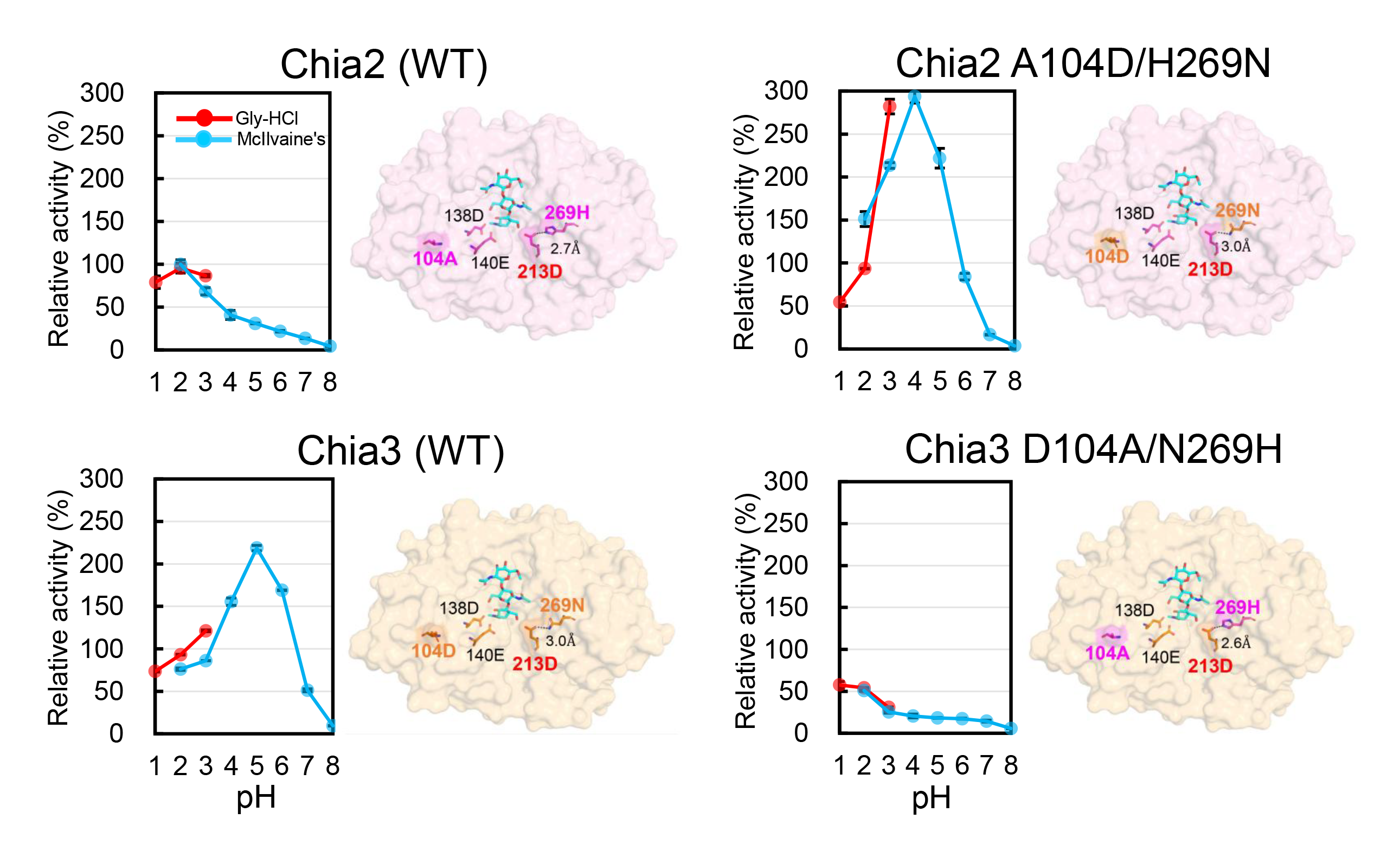
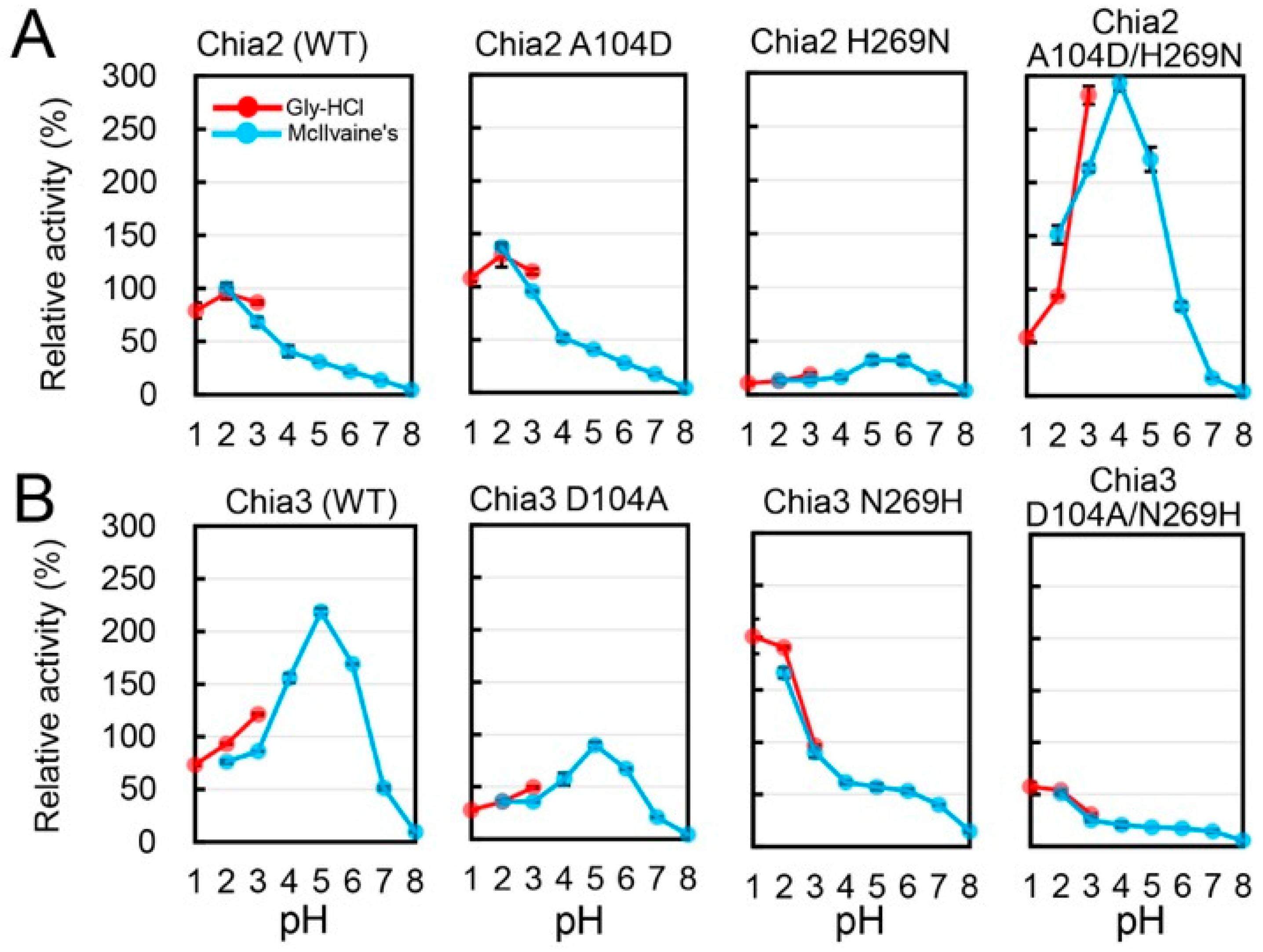
2.4. The Critical Role of Residues 104 and 269 in Determining pH Optima of Chia2 and Chia3
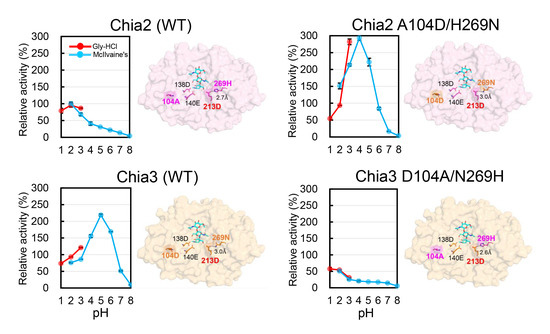
2.5. Mechanistic Basis for pH Tuning by Residues 104 and 269
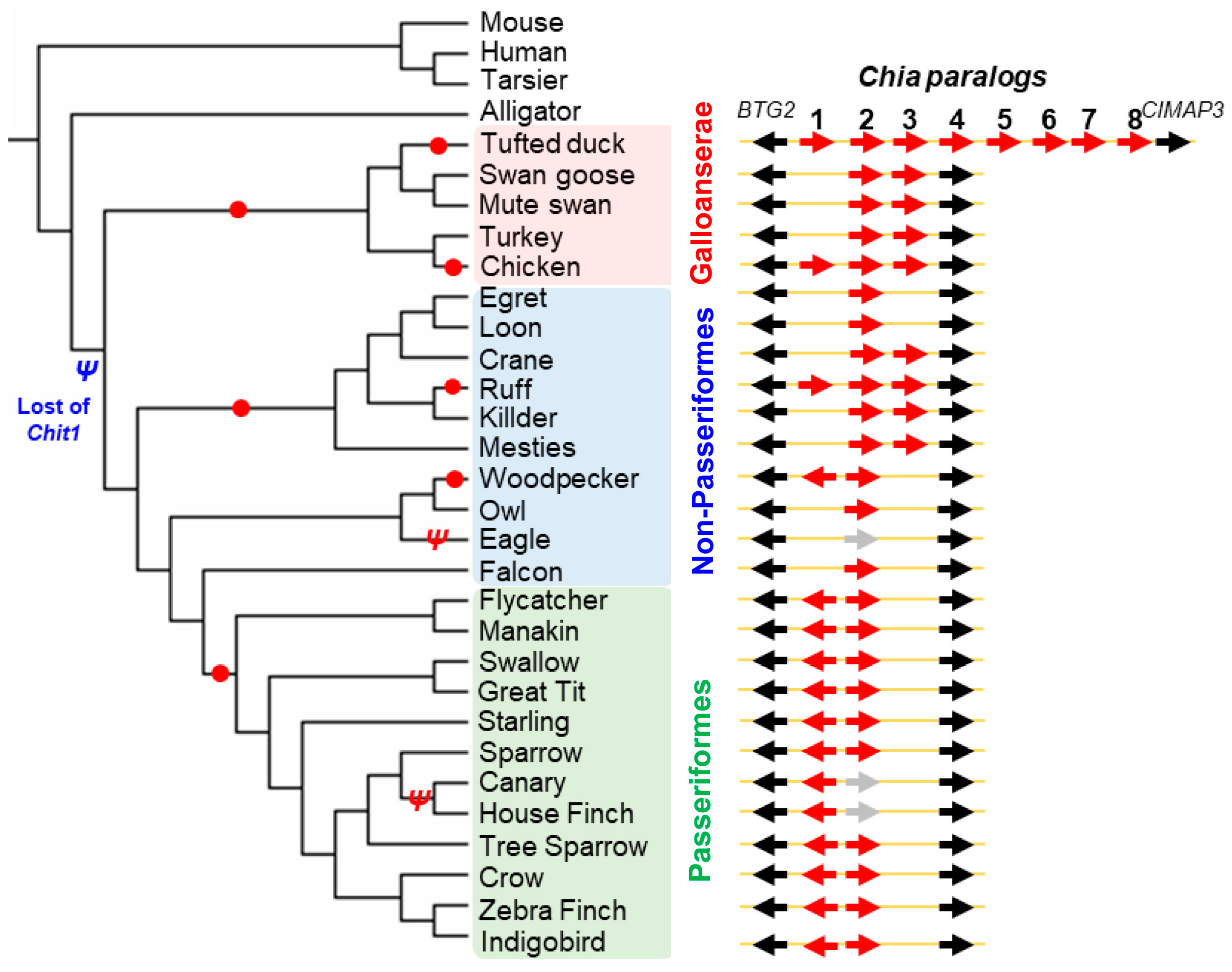
2.6. Molecular Evolution of Chia Paralog Genes in Birds
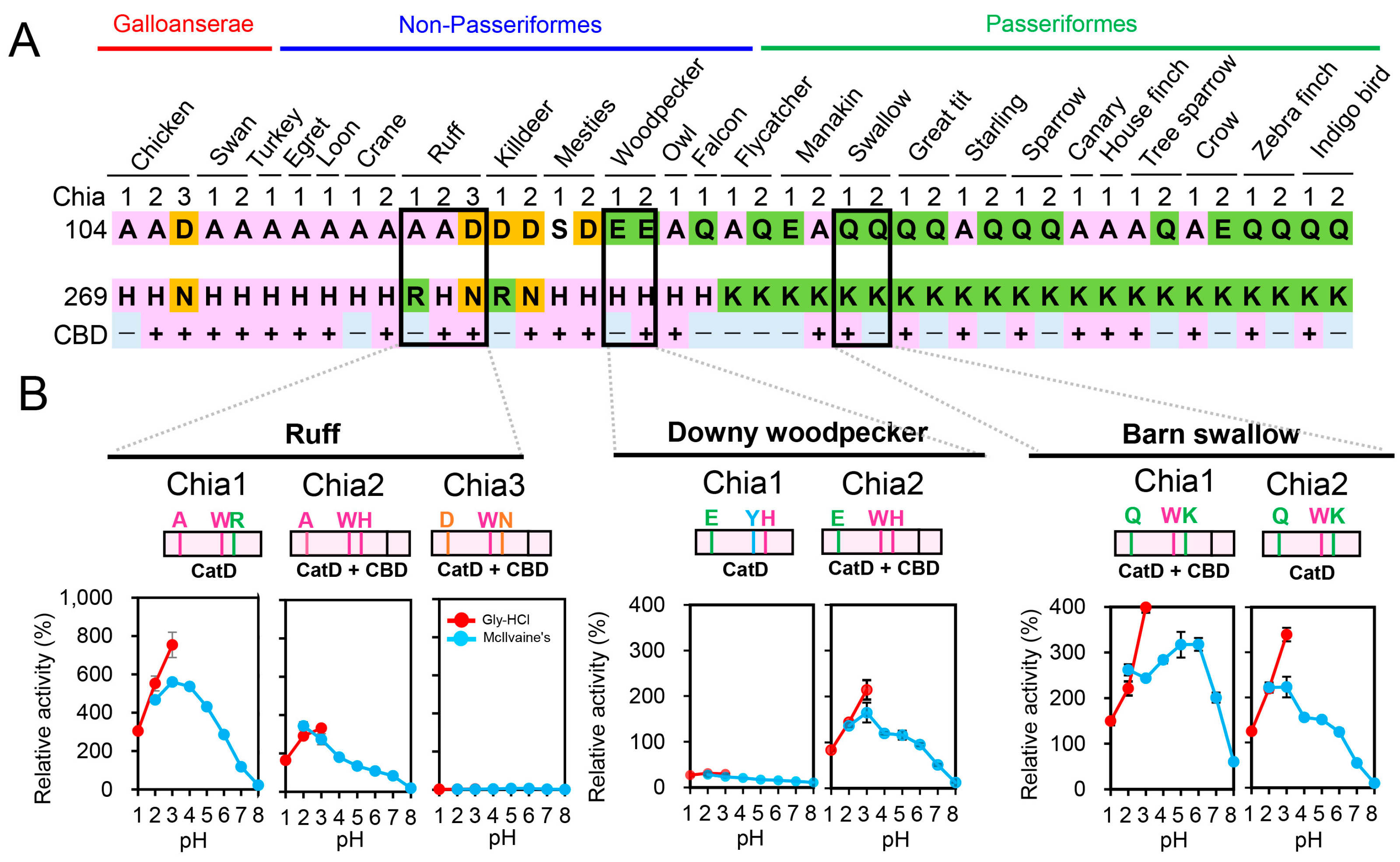
2.7. Functional Diversity of Chia Paralogs in Birds
3. Discussion
4. Materials and Methods
4.1. RNA and cDNA Preparation
4.2. Selection of Primer Pairs for qPCR
4.3. Construction of the DNA Standard and qPCR
4.4. Glandular Stomach Extract Preparation
4.5. Antibody Preparation
4.6. SDS-Polyacrylamide Gel Electrophoresis and Western Blotting
4.7. Construction of Chia Expression Vector
4.8. Construction of Expression Plasmids for Chimeric and Mutant Proteins and Preparation of Recombinant Proteins
4.9. Western Blot
4.10. Chitinase Enzymatic Assays
4.11. Statistical Analysis
4.12. Structure Prediction and pKa Estimation
4.13. Sequence Analysis
4.14. Construction of a Phylogenetic Tree
Supplementary Materials
Author Contributions
Funding
Institutional Review Board Statement
Informed Consent Statement
Data Availability Statement
Acknowledgments
Conflicts of Interest
References
- Bueter, C.L.; Specht, C.A.; Levitz, S.M. Innate sensing of chitin and chitosan. PLoS Pathog. 2013, 9, e1003080. [Google Scholar] [CrossRef] [Scilit]
- Wysokowski, M.; Petrenko, I.; Stelling, A.L.; Stawski, D.; Jesionowski, T.; Ehrlich, H. Poriferan chitin as a versatile template for extreme biomimetics. Polymers 2015, 7, 235–265. [Google Scholar] [CrossRef] [Scilit]
- Van Dyken, S.J.; Locksley, R.M. Chitins and chitinase activity in airway diseases. J. Allergy Clin. Immunol. 2018, 142, 364–369. [Google Scholar] [CrossRef] [Scilit] [PubMed]
- Hollak, C.E.; van Weely, S.; van Oers, M.H.; Aerts, J.M. Marked elevation of plasma chitotriosidase activity. A novel hallmark of Gaucher disease. J. Clin. Investig. 1994, 93, 1288–1292. [Google Scholar] [CrossRef] [Scilit] [PubMed]
- Renkema, G.H.; Boot, R.G.; Muijsers, A.O.; Donker-Koopman, W.E.; Aerts, J.M. Purification and characterization of human chitotriosidase, a novel member of the chitinase family of proteins. J. Biol. Chem. 1995, 270, 2198–2202. [Google Scholar] [CrossRef] [Scilit]
- Boot, R.G.; Renkema, G.H.; Strijland, A.; van Zonneveld, A.J.; Aerts, J.M. Cloning of a cDNA encoding chitotriosidase, a human chitinase produced by macrophages. J. Biol. Chem. 1995, 270, 26252–26256. [Google Scholar] [CrossRef] [Scilit] [PubMed]
- Boot, R.G.; Blommaart, E.F.; Swart, E.; Ghauharali-van der Vlugt, K.; Bijl, N.; Moe, C.; Place, A.; Aerts, J.M. Identification of a novel acidic mammalian chitinase distinct from chitotriosidase. J. Biol. Chem. 2001, 276, 6770–6778. [Google Scholar] [CrossRef] [Scilit]
- Henrissat, B. Aclassification of glycosyl hydrolases based on amino acid sequence similarities. Biochem. J. 1991, 280, 309–316. [Google Scholar] [CrossRef] [Scilit]
- Boot, R.G.; Bussink, A.P.; Verhoek, M.; de Boer, P.A.; Moorman, A.F.; Aerts, J.M. Marked differences in tissue-specific expression of chitinases in mouse and man. J. Histochem. Cytochem. 2005, 53, 1283–1292. [Google Scholar] [CrossRef] [Scilit]
- Ohno, M.; Tsuda, K.; Sakaguchi, M.; Sugahara, Y.; Oyama, F. Chitinase mRNA levels by quantitative PCR using the single standard DNA: Acidic mammalian chitinase is a major transcript in the mouse stomach. PLoS ONE 2012, 7, e50381. [Google Scholar] [CrossRef] [Scilit] [PubMed]
- Tjoelker, L.W.; Gosting, L.; Frey, S.; Hunter, C.L.; Trong, H.L.; Steiner, B.; Brammer, H.; Gray, P.W. Structural and functional definition of the human chitinase chitin-binding domain. J. Biol. Chem. 2000, 275, 514–520. [Google Scholar] [CrossRef] [Scilit] [PubMed]
- Watanabe, T.; Kobori, K.; Miyashita, K.; Fujii, T.; Sakai, H.; Uchida, M.; Tanaka, H. Identification of glutamic acid 204, aspartic acid 200 in chitinase A1 of Bacillus circulans WL-12 as essential residues for chitinase activity. J. Biol. Chem. 1993, 268, 18567–18572. [Google Scholar] [CrossRef] [Scilit] [PubMed]
- Bussink, A.P.; Speijer, D.; Aerts, J.M.; Boot, R.G. Evolution of mammalian chitinase(-like) members of family 18 glycosyl hydrolases. Genetics 2007, 177, 959–970. [Google Scholar] [CrossRef] [Scilit]
- Lee, C.G.; Da Silva, C.A.; Dela Cruz, C.S.; Ahangari, F.; Ma, B.; Kang, M.J.; He, C.H.; Takyar, S.; Elias, J.A. Role of chitin and chitinase/chitinase-like proteins in inflammation, tissue remodeling, and injury. Annu. Rev. Physiol. 2011, 73, 479–501. [Google Scholar] [CrossRef] [Scilit]
- Zhu, Z.; Zheng, T.; Homer, R.J.; Kim, Y.K.; Chen, N.Y.; Cohn, L.; Hamid, Q.; Elias, J.A. Acidic mammalian chitinase in asthmatic Th2 inflammation and IL-13 pathway activation. Science 2004, 304, 1678–1682. [Google Scholar] [CrossRef] [Scilit]
- Reese, T.A.; Liang, H.E.; Tager, A.M.; Luster, A.D.; Van Rooijen, N.; Voehringer, D.; Locksley, R.M. Chitin induces accumulation in tissue of innate immune cells associated with allergy. Nature 2007, 447, 92–96. [Google Scholar] [CrossRef] [Scilit] [PubMed]
- Bierbaum, S.; Nickel, R.; Koch, A.; Lau, S.; Deichmann, K.A.; Wahn, U.; Superti-Furga, A.; Heinzmann, A. Polymorphisms and haplotypes of acid mammalian chitinase are associated with bronchial asthma. Am. J. Respir. Crit. Care Med. 2005, 172, 1505–1509. [Google Scholar] [CrossRef] [Scilit]
- Seibold, M.A.; Reese, T.A.; Choudhry, S.; Salam, M.T.; Beckman, K.; Eng, C.; Atakilit, A.; Meade, K.; Lenoir, M.; Watson, H.G.; et al. Differential enzymatic activity of common haplotypic versions of the human acidic mammalian chitinase protein. J. Biol. Chem. 2009, 284, 19650–19658. [Google Scholar] [CrossRef] [Scilit]
- Okawa, K.; Ohno, M.; Kashimura, A.; Kimura, M.; Kobayashi, Y.; Sakaguchi, M.; Sugahara, Y.; Kamaya, M.; Kino, Y.; Bauer, P.O.; et al. Loss and gain of human acidic mammalian chitinase activity by nonsynonymous SNPs. Mol. Biol. Evol. 2016, 33, 3183–3193. [Google Scholar] [CrossRef] [Scilit]
- Fitz, L.J.; DeClercq, C.; Brooks, J.; Kuang, W.; Bates, B.; Demers, D.; Winkler, A.; Nocka, K.; Jiao, A.; Greco, R.M.; et al. Acidic mammalian chitinase is not a critical target for allergic airway disease. Am. J. Respir. Cell Mol. Biol. 2012, 46, 71–79. [Google Scholar] [CrossRef] [Scilit]
- Van Dyken, S.J.; Liang, H.E.; Naikawadi, R.P.; Woodruff, P.G.; Wolters, P.J.; Erle, D.J.; Locksley, R.M. Spontaneous chitin accumulation in airways and age-related fibrotic lung disease. Cell 2017, 169, 497–509.e13. [Google Scholar] [CrossRef] [Scilit]
- Jung, H.; Kim, D.H.; Diaz, R.E.; White, J.M.; Rucknagel, S.; Mosby, L.; Wang, Y.; Reddy, S.; Winkler, E.S.; Hassan, A.O.; et al. An ILC2-chitinase circuit restores lung homeostasis after epithelial injury. Sci. Immunol. 2024, 9, eadl2986. [Google Scholar] [CrossRef] [Scilit] [PubMed]
- Barad, B.A.; Liu, L.; Diaz, R.E.; Basilio, R.; Van Dyken, S.J.; Locksley, R.M.; Fraser, J.S. Differences in the chitinolytic activity of mammalian chitinases on soluble and insoluble substrates. Protein Sci. 2020, 29, 966–977. [Google Scholar] [CrossRef] [Scilit]
- Tabata, E.; Kashimura, A.; Kikuchi, A.; Masuda, H.; Miyahara, R.; Hiruma, Y.; Wakita, S.; Ohno, M.; Sakaguchi, M.; Sugahara, Y.; et al. Chitin digestibility is dependent on feeding behaviors, which determine acidic chitinase mRNA levels in mammalian and poultry stomachs. Sci. Rep. 2018, 8, 1461. [Google Scholar] [CrossRef] [Scilit] [PubMed]
- Tabata, E.; Itoigawa, A.; Koinuma, T.; Tayama, H.; Kashimura, A.; Sakaguchi, M.; Matoska, V.; Bauer, P.O.; Oyama, F. Noninsect-based diet leads to structural and functional changes of acidic chitinase in Carnivora. Mol. Biol. Evol. 2022, 39, msab331. [Google Scholar] [CrossRef] [Scilit]
- Tabata, E.; Kobayashi, I.; Morikawa, T.; Kashimura, A.; Bauer, P.O.; Oyama, F. Evolutionary activation of acidic chitinase in herbivores through the H128R mutation in ruminant livestock. iScience 2023, 26, 107254. [Google Scholar] [CrossRef] [Scilit]
- Kim, D.H.; Wang, Y.; Jung, H.; Field, R.L.; Zhang, X.; Liu, T.C.; Ma, C.; Fraser, J.S.; Brestoff, J.R.; Van Dyken, S.J. A type 2 immune circuit in the stomach controls mammalian adaptation to dietary chitin. Science 2023, 381, 1092–1098. [Google Scholar] [CrossRef] [Scilit]
- Emerling, C.A.; Delsuc, F.; Nachman, M.W. Chitinase genes (CHIAs) provide genomic footprints of a post-Cretaceous dietary radiation in placental mammals. Sci. Adv. 2018, 4, eaar6478. [Google Scholar] [CrossRef] [Scilit] [PubMed]
- Janiak, M.C.; Chaney, M.E.; Tosi, A.J. Evolution of acidic mammalian chitinase genes (CHIA) is related to body mass and insectivory in primates. Mol. Biol. Evol. 2018, 35, 607–622. [Google Scholar] [CrossRef] [Scilit] [PubMed]
- Tabata, E.; Kashimura, A.; Wakita, S.; Ohno, M.; Sakaguchi, M.; Sugahara, Y.; Kino, Y.; Matoska, V.; Bauer, P.O.; Oyama, F. Gastric and intestinal proteases resistance of chicken acidic chitinase nominates chitin-containing organisms for alternative whole edible diets for poultry. Sci. Rep. 2017, 7, 6662. [Google Scholar] [CrossRef] [Scilit]
- Jumper, J.; Evans, R.; Pritzel, A.; Green, T.; Figurnov, M.; Ronneberger, O.; Tunyasuvunakool, K.; Bates, R.; Zidek, A.; Potapenko, A.; et al. Highly accurate protein structure prediction with AlphaFold. Nature 2021, 596, 583–589. [Google Scholar] [CrossRef] [Scilit]
- Tunyasuvunakool, K.; Adler, J.; Wu, Z.; Green, T.; Zielinski, M.; Zidek, A.; Bridgland, A.; Cowie, A.; Meyer, C.; Laydon, A.; et al. Highly accurate protein structure prediction for the human proteome. Nature 2021, 596, 590–596. [Google Scholar] [CrossRef] [Scilit]
- Olsson, M.H.; Sondergaard, C.R.; Rostkowski, M.; Jensen, J.H. PROPKA3: Consistent treatment of internal and surface residues in empirical pKa predictions. J. Chem. Theory Comput. 2011, 7, 525–537. [Google Scholar] [CrossRef] [Scilit]
- Sondergaard, C.R.; Olsson, M.H.; Rostkowski, M.; Jensen, J.H. Improved treatment of ligands and coupling effects in empirical calculation and rationalization of pKa values. J. Chem. Theory Comput. 2011, 7, 2284–2295. [Google Scholar] [CrossRef] [Scilit]
- Abramson, J.; Adler, J.; Dunger, J.; Evans, R.; Green, T.; Pritzel, A.; Ronneberger, O.; Willmore, L.; Ballard, A.J.; Bambrick, J.; et al. Accurate structure prediction of biomolecular interactions with AlphaFold 3. Nature 2024, 630, 493–500. [Google Scholar] [CrossRef] [Scilit] [PubMed]
- Olland, A.M.; Strand, J.; Presman, E.; Czerwinski, R.; Joseph-McCarthy, D.; Krykbaev, R.; Schlingmann, G.; Chopra, R.; Lin, L.; Fleming, M.; et al. Triad of polar residues implicated in pH specificity of acidic mammalian chitinase. Protein Sci. 2009, 18, 569–578. [Google Scholar] [CrossRef] [Scilit]
- Strobel, S.; Roswag, A.; Becker, N.I.; Trenczek, T.E.; Encarnacao, J.A. Insectivorous bats digest chitin in the stomach using acidic mammalian chitinase. PLoS ONE 2013, 8, e72770. [Google Scholar] [CrossRef] [Scilit]
- Ohno, M.; Kimura, M.; Miyazaki, H.; Okawa, K.; Onuki, R.; Nemoto, C.; Tabata, E.; Wakita, S.; Kashimura, A.; Sakaguchi, M.; et al. Acidic mammalian chitinase is a proteases-resistant glycosidase in mouse digestive system. Sci. Rep. 2016, 6, 37756. [Google Scholar] [CrossRef] [Scilit] [PubMed]
- Diaz, R.E.; Ecker, A.K.; Correy, G.J.; Asthana, P.; Young, I.D.; Faust, B.; Thompson, M.C.; Seiple, I.B.; Van Dyken, S.; Locksley, R.M.; et al. Structural characterization of ligand binding and pH-specific enzymatic activity of mouse Acidic Mammalian Chitinase. Elife 2024, 12, RP89918. [Google Scholar] [CrossRef] [Scilit]
- Okawa, K.; Kijima, M.; Ishii, M.; Maeda, N.; Yasumura, Y.; Sakaguchi, M.; Kimura, M.; Uehara, M.; Tabata, E.; Bauer, P.O.; et al. Hyperactivation of human acidic chitinase (Chia) for potential medical use. J. Biol. Chem. 2025, 301, 108100. [Google Scholar] [CrossRef] [Scilit]
- Kumar, S.; Stecher, G.; Li, M.; Knyaz, C.; Tamura, K. MEGA X: Molecular evolutionary genetics analysis across computing platforms. Mol. Biol. Evol. 2018, 35, 1547–1549. [Google Scholar] [CrossRef] [Scilit] [PubMed]
- Edgar, R.C. MUSCLE: Multiple sequence alignment with high accuracy and high throughput. Nucleic Acids Res. 2004, 32, 1792–1797. [Google Scholar] [CrossRef] [Scilit] [PubMed]
- Tamura, K.; Nei, M. Estimation of the number of nucleotide substitutions in the control region of mitochondrial DNA in humans and chimpanzees. Mol. Biol. Evol. 1993, 10, 512–526. [Google Scholar] [CrossRef] [Scilit] [PubMed]
- Tamura, K.; Stecher, G.; Kumar, S. MEGA11: Molecular evolutionary genetics analysis version 11. Mol. Biol. Evol. 2021, 38, 3022–3027. [Google Scholar] [CrossRef] [Scilit]



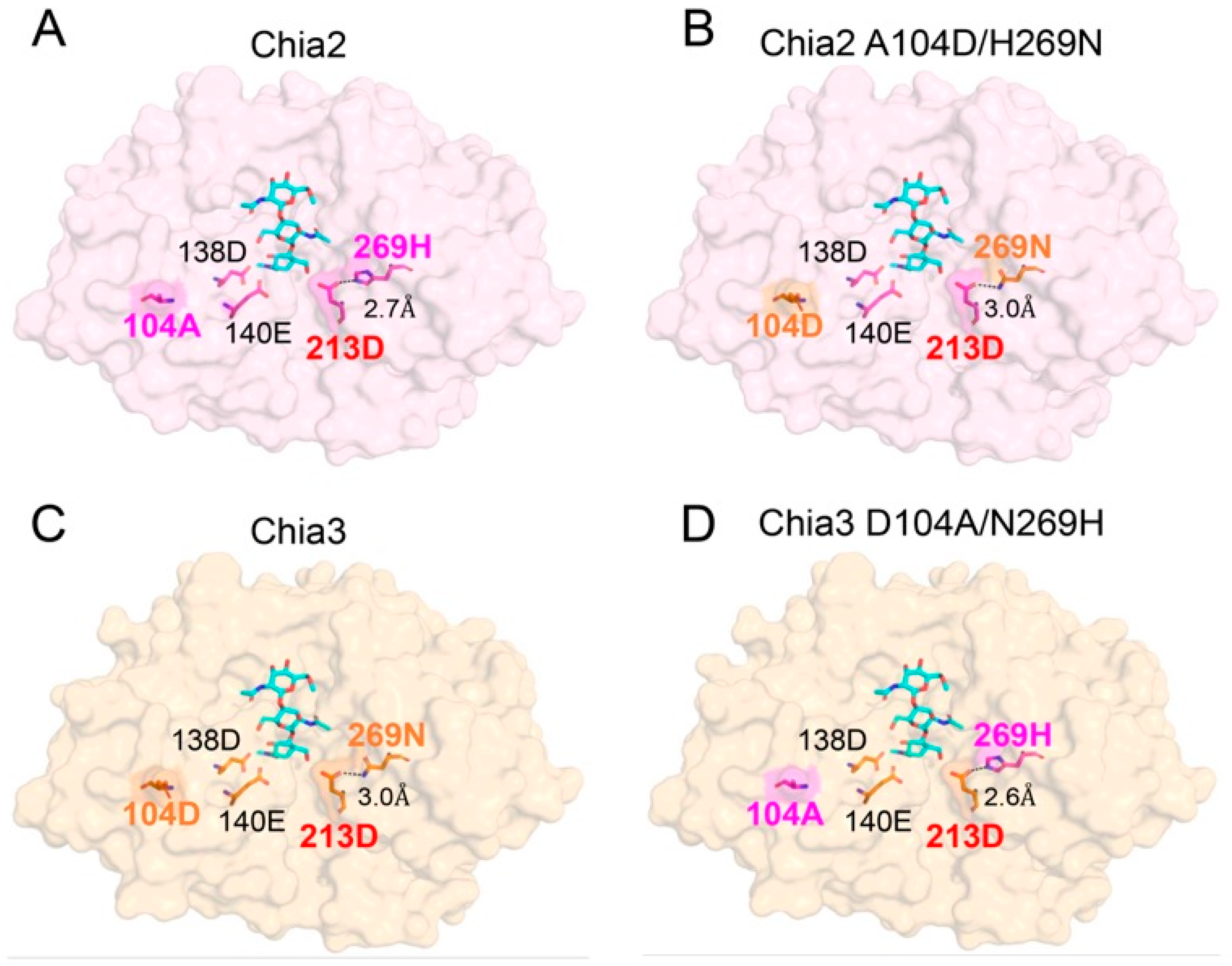



| Chia2 Wild-Type | Chia2 A104N/H269N | Chia3 Wild-Type | Chia3 D104A/N269H | |
|---|---|---|---|---|
| TYR 34 | 13.88 | 13.89 | 13.00 | 13.01 |
| ARG 35 | 14.55 | 14.57 | 13.81 | 13.81 |
| ASP 52 | 4.73 | 4.63 | ||
| TYR 56 | 18.29 | 18.20 | 16.87 | 16.89 |
| TYR 70 | 6.63 | 6.58 | 5.69 | 5.70 |
| TYR 77 | 15.67 | 15.64 | 14.62 | 14.64 |
| GLU 114 | 3.62 | 3.78 | 3.76 | 3.60 |
| ASP 133 | 3.11 | 3.12 | 3.21 | 3.24 |
| ASP 136 | 2.98 | 2.92 | 2.57 | 2.57 |
| ASP 138 | 7.88 | 8.00 | 8.13 | 8.12 |
| GLU 140 | 8.75 | 8.83 | 8.84 | 8.94 |
| TYR 141 | 16.49 | 16.40 | 15.25 | 15.26 |
| LYS 145 | 8.46 | 8.88 | ||
| ARG 177 | 13.61 | 13.56 | 13.67 | 13.67 |
| HIS 208 | 6.32 | 6.34 | 6.24 | 6.23 |
| ASP 213 | 2.98 | 5.25 | 5.14 | 2.85 |
| TYR 267 | 18.05 | 17.79 | 17.74 | 18.00 |
| TYR 269 | 7.30 | 7.63 | ||
| ARG 296 | 11.71 | 11.70 | ||
| GLU 297 | 5.76 | 5.54 | ||
| TYR 303 | 13.06 | 13.03 | 12.62 | 12.66 |
| GLU 305 | 5.06 | 5.05 | 4.53 | 4.58 |
| ASP 319 | 5.79 | 5.83 | 6.07 | 6.10 |
| TYR 336 | 12.50 | 12.40 | 13.75 | 13.77 |
| LYS 450 | 10.49 | 10.49 | 10.49 | 10.51 |
Disclaimer/Publisher’s Note: The statements, opinions and data contained in all publications are solely those of the individual author(s) and contributor(s) and not of MDPI and/or the editor(s). MDPI and/or the editor(s) disclaim responsibility for any injury to people or property resulting from any ideas, methods, instructions or products referred to in the content. |
© 2026 by the authors. Licensee MDPI, Basel, Switzerland. This article is an open access article distributed under the terms and conditions of the Creative Commons Attribution (CC BY) license.
Share and Cite
Tabata, E.; Suzuki, K.; Suzuki, Y.; Okawa, K.; Usui, Y.; Kashimura, A.; Bauer, P.O.; Oyama, F. Key Amino Acids Controlling pH Optima in Avian Chia Paralogs: Mechanistic Insights into Functional Divergence. Molecules 2026, 31, 999. https://doi.org/10.3390/molecules31060999
Tabata E, Suzuki K, Suzuki Y, Okawa K, Usui Y, Kashimura A, Bauer PO, Oyama F. Key Amino Acids Controlling pH Optima in Avian Chia Paralogs: Mechanistic Insights into Functional Divergence. Molecules. 2026; 31(6):999. https://doi.org/10.3390/molecules31060999
Chicago/Turabian StyleTabata, Eri, Keita Suzuki, Yuki Suzuki, Kazuaki Okawa, Yuri Usui, Akinori Kashimura, Peter O. Bauer, and Fumitaka Oyama. 2026. "Key Amino Acids Controlling pH Optima in Avian Chia Paralogs: Mechanistic Insights into Functional Divergence" Molecules 31, no. 6: 999. https://doi.org/10.3390/molecules31060999
APA StyleTabata, E., Suzuki, K., Suzuki, Y., Okawa, K., Usui, Y., Kashimura, A., Bauer, P. O., & Oyama, F. (2026). Key Amino Acids Controlling pH Optima in Avian Chia Paralogs: Mechanistic Insights into Functional Divergence. Molecules, 31(6), 999. https://doi.org/10.3390/molecules31060999