Pyrene-Chromone Schiff Base Molecules with Tunable Fluorescence: Structure–Property Relationships and Substituent Effects

Abstract
1. Introduction
2. Results and Discussion
2.1. Structural Characterization
2.1.1. FT-IR Spectra
2.1.2. 1H-NMR Spectra
2.1.3. Mass Spectra
2.2. Photophysical Characterization of Schiff Bases
3. Materials and Methods
Synthesis of Pyrene-Based Schiff Bases
4. Conclusions
Supplementary Materials
Funding
Institutional Review Board Statement
Informed Consent Statement
Data Availability Statement
Conflicts of Interest
Abbreviations
| OLEDs | organic light-emitting diodes |
| OFETs | organic field-effect transistors |
| DSSCs | dye-sensitized solar cells |
| HOMO | highest occupied molecular orbital |
| LUMO | lowest unoccupied molecular orbital |
References
- Devi, J.; Yadav, M.; Kumar, D.; Naik, L.S.; Jindal, D.K. Some Divalent Metal(II) Complexes of Salicylaldehyde-derived Schiff Bases: Synthesis, Spectroscopic Characterization, Antimicrobial and in Vitro Anticancer Studies. Appl. Organomet. Chem. 2019, 33, e4693. [Google Scholar] [CrossRef]
- Harathi, J.; Thenmozhi, K. AIE-Active Schiff Base Compounds as Fluorescent Probes for the Highly Sensitive and Selective Detection of Fe3+ Ions. Mater. Chem. Front. 2020, 4, 1471–1482. [Google Scholar] [CrossRef]
- Nidhi; Siddharam; Rao, D.P.; Gautam, A.K.; Verma, A.; Gautam, Y. Schiff Bases and Their Possible Therapeutic Applications: A Review. Results Chem. 2025, 13, 101941. [Google Scholar] [CrossRef]
- Zurnacı, M.; Şener, İ.; Gür, M.; Şener, N. Organic Fluorescent Compounds Based on Phenanthroimidazole: A Review of Highlight Studies. Luminescence 2023, 38, 1690–1701. [Google Scholar] [CrossRef]
- Shafie, A.; Ashour, A.A. Recent Advances in Schiff Bases and Cu(II) Complexes: Applications in Fluorescence Imaging and Anticancer Therapy (2020–2024). J. Inorg. Biochem. 2025, 268, 112909. [Google Scholar] [CrossRef]
- Najare, M.S.; Patil, M.K.; Garbhagudi, M.; Yaseen, M.; Inamdar, S.R.; Khazi, I.A.M. Design, Synthesis and Characterization of π-Conjugated 2,5-Diphenylsubstituted-1,3,4-Oxadiazole-Based D-π-A-π’-D′ Form of Efficient Deep Blue Functional Materials: Photophysical Properties and Fluorescence “Turn-off” Chemsensors Approach. J. Mol. Liq. 2021, 328, 115443. [Google Scholar] [CrossRef]
- Mdluli, S.B.; Ramoroka, M.E.; Yussuf, S.T.; Modibane, K.D.; John-Denk, V.S.; Iwuoha, E.I. π-Conjugated Polymers and Their Application in Organic and Hybrid Organic-Silicon Solar Cells. Polymers 2022, 14, 716. [Google Scholar] [CrossRef] [PubMed]
- Rashamuse, T.J.; Jijana, A.N.; Moloto, W.; Magwa, N.P. Exploring Tunable Optical and Electrochemical Properties of Donor–π–Acceptor Imidazole Derivatives for Organic Electronics. Results Chem. 2026, 21, 103061. [Google Scholar] [CrossRef]
- Onah, E.H.; Lethole, N.L.; Mukumba, P. Luminescent Materials for Dye-Sensitized Solar Cells: Advances and Directions. Appl. Sci. 2024, 14, 9202. [Google Scholar] [CrossRef]
- Thakur, S.; Jaryal, A.; Bhalla, A. Recent Advances in Biological and Medicinal Profile of Schiff Bases and Their Metal Complexes: An Updated Version (2018–2023). Results Chem. 2024, 7, 101350. [Google Scholar] [CrossRef]
- Qin, W.; Long, S.; Panunzio, M.; Biondi, S. Schiff Bases: A Short Survey on an Evergreen Chemistry Tool. Molecules 2013, 18, 12264–12289. [Google Scholar] [CrossRef] [PubMed]
- Chiacchio, M.A.; Campisi, A.; Iannazzo, D.; Giofrè, S.V.; Legnani, L. Design of New Schiff Bases and Their Heavy Metal Ion Complexes for Environmental Applications: A Molecular Dynamics and Density Function Theory Study. Int. J. Mol. Sci. 2024, 25, 4159. [Google Scholar] [CrossRef]
- Batouti, M.E.; El-Mossalamy, E.; Sayed, H.; Aldesouky, J.M.; Khashaba, M.A.; Fetouh, H.A. Facile Preparation of the New Organic Ligands, Schiff Bases and Metal Complexes in Well. BMC Chem. 2025, 19, 231. [Google Scholar] [CrossRef] [PubMed]
- Li, X.; Wang, Q.; Song, L.; Zhao, J.; Jin, B. Effects of Substitution and Conjugation on ESIPT Behavior of Schiff Base Derivatives. Spectrochim. Acta Part A Mol. Biomol. Spectrosc. 2022, 279, 121377. [Google Scholar] [CrossRef]
- Wang, J.; Meng, Q.; Yang, Y.; Zhong, S.; Zhang, R.; Fang, Y.; Gao, Y.; Cui, X. Schiff Base Aggregation-Induced Emission Luminogens for Sensing Applications: A Review. ACS Sens. 2022, 7, 2521–2536. [Google Scholar] [CrossRef]
- Kang, Y.; Liao, Z.; Wu, M.; Li, S.; Fang, D.-C.; Zheng, X.-J.; Jin, L.-P. Photophysical Properties of a D–π-A Schiff Base and Its Applications in the Detection of Metal Ions. Dalton Trans. 2018, 47, 13730–13738. [Google Scholar] [CrossRef]
- Liu, L.; Yang, G.; Duan, Y.; Geng, Y.; Wu, Y.; Su, Z. The Relationship between Intermolecular Interactions and Charge Transport Properties of Trifluoromethylated Polycyclic Aromatic Hydrocarbons. Org. Electron. 2014, 15, 1896–1905. [Google Scholar] [CrossRef]
- Islam, K.; Narjinari, H.; Kumar, A. Polycyclic Aromatic Hydrocarbons Bearing Polyethynyl Bridges: Synthesis, Photophysical Properties, and Their Applications. Asian J. Org. Chem. 2021, 10, 1544–1566. [Google Scholar] [CrossRef]
- Barros, H.L.; Esteves, M.A.; Brites, M.J. Synthesis, Photophysical and Electrochemical Properties of π-Conjugated Pyrene Based down-Shifting Molecules with Fluorinated Aryl Groups. Dye. Pigment. 2023, 213, 111103. [Google Scholar] [CrossRef]
- Prabakaran, G.; David, C.I.; Nandhakumar, R. A Review on Pyrene Based Chemosensors for the Specific Detection on D-Transition Metal Ions and Their Various Applications. J. Environ. Chem. Eng. 2023, 11, 109701. [Google Scholar] [CrossRef]
- Aazam, E.S.; Majrashi, M.A. Novel Schiff Base Derived from Amino Pyrene: Synthesis, Characterization, Crystal Structure Determination, and Anticancer Applications of the Ligand and Its Metal Complexes. Molecules 2023, 28, 7352. [Google Scholar] [CrossRef]
- Schäferling, M.; Ondrus, V. The Art of Fluorescence Imaging with Chemical Sensors: The Next Decade 2012–2022. Chemosensors 2024, 12, 31. [Google Scholar] [CrossRef]
- Prasad, K.S.; Pillai, R.R.; Armaković, S.; Armaković, S.J. Photophysical Properties and Theoretical Investigations of Newly Synthesized Pyrene-Naphthalene Based Schiff Base Ligand and Its Copper(II) Complexes. Inorganica Chim. Acta 2019, 486, 698–703. [Google Scholar] [CrossRef]
- Kathiravan, A.; Sundaravel, K.; Jaccob, M.; Dhinagaran, G.; Rameshkumar, A.; Arul Ananth, D.; Sivasudha, T. Pyrene Schiff Base: Photophysics, Aggregation Induced Emission, and Antimicrobial Properties. J. Phys. Chem. B 2014, 118, 13573–13581. [Google Scholar] [CrossRef] [PubMed]
- Figueira-Duarte, T.M.; Müllen, K. Pyrene-Based Materials for Organic Electronics. Chem. Rev. 2011, 111, 7260–7314. [Google Scholar] [CrossRef] [PubMed]
- Mandal, N.K.; Arya, P.; Raghav, N.; Chowdhury, S.; Naskar, J.P. Design, Synthesis, Crystal Structure, Photophysical Behavior and Aggregation-Induced Emission of a Novel Pyrene Scaffold Multifunctional Schiff Base Ligand: Inhibition of Digestive Enzymes and Docking Studies. New J. Chem. 2023, 47, 14551–14568. [Google Scholar] [CrossRef]
- Feng, X.; Wang, X.; Redshaw, C.; Tang, B.Z. Aggregation Behaviour of Pyrene-Based Luminescent Materials, from Molecular Design and Optical Properties to Application. Chem. Soc. Rev. 2023, 52, 6715–6753. [Google Scholar] [CrossRef]
- Srivastava, A.; Mishra, G.; Pathak, A.K.; Pandey, S.; Awasthi, C.; Pandey, M.D.; Behera, K. Pyrene-Appended Luminescent Probes for Selective Detection of Toxic Heavy Metals and Live Cell Applications. ChemistrySelect 2024, 9, e202303914. [Google Scholar] [CrossRef]
- Bhagya, R.S.; Muthamma, K.; Sunil, D.; Shetty, P.; Kulkarni, S.D. Pyrene-Naphthalimide Schiff Base as a Fluorescent Pigment in Water-Based Security Ink. Chem. Pap. 2023, 77, 4905–4912. [Google Scholar] [CrossRef]
- Shellaiah, M.; Wu, Y.-H.; Singh, A.; Ramakrishnam Raju, M.V.; Lin, H.-C. Novel Pyrene- and Anthracene-Based Schiff Base Derivatives as Cu2+ and Fe3+ Fluorescence Turn-on Sensors and for Aggregation Induced Emissions. J. Mater. Chem. A 2013, 1, 1310–1318. [Google Scholar] [CrossRef]
- Singh Rana, V.; Anand, V.; Shekhar Sarkar, S.; Sandhu, N.; Verma, M.; Naidu, S.; Kumar, K.; Yadav, R.K.; Shrivastava, R.; Singh, A.P. A Novel Pyrene-Based Aggregation Induced Enhanced Emission Active Schiff Base Fluorophore as a Selective “Turn-on” Sensor for Sn2+ Ions and Its Application in Lung Adenocarcinoma Cells. J. Photochem. Photobiol. A Chem. 2023, 436, 114409. [Google Scholar] [CrossRef]
- Ayyavoo, K.; Velusamy, P. Pyrene Based Materials as Fluorescent Probes in Chemical and Biological Fields. New J. Chem. 2021, 45, 10997–11017. [Google Scholar] [CrossRef]
- Islam, M.M.; Hu, Z.; Wang, Q.; Redshaw, C.; Feng, X. Pyrene-Based Aggregation-Induced Emission Luminogens and Their Applications. Mater. Chem. Front. 2019, 3, 762–781. [Google Scholar] [CrossRef]
- Bhorge, Y.R.; Tsai, H.-T.; Huang, K.-F.; Pape, A.J.; Janaki, S.N.; Yen, Y.-P. A New Pyrene-Based Schiff-Base: A Selective Colorimetric and Fluorescent Chemosensor for Detection of Cu(II) and Fe(III). Spectrochim. Acta Part A Mol. Biomol. Spectrosc. 2014, 130, 7–12. [Google Scholar] [CrossRef]
- Pandey, A.; Kumar, D.; Dutta, S.; Manna, S.; Choudhury, S.M.; Sharma, V.; Manna, A.K.; Patra, G.K. A Pyrene Based Novel Di-Schiff Base Colorimetric and Turn-on Fluorescent-Chemosensor for Selective and Sensitive Detection of Hg2+ Ion: Biological, Logic Gate and Real Sample Applications. Spectrochim. Acta Part A Mol. Biomol. Spectrosc. 2025, 337, 126104. [Google Scholar] [CrossRef]
- Homocianu, M.; Perju, E. Photophysical Properties and Metal Ion Sensing of a Pyrene-Based Liquid Crystalline Dimer. Int. J. Mol. Sci. 2025, 26, 2566. [Google Scholar] [CrossRef] [PubMed]
- Ma, L.-J.; Liang, Q.; Feng, R.; Lv, Z.; Cui, F.; Li, L.; Yang, L.; Liu, H.; Sun, F. A Pyrene-Containing Schiff Base Fluorescent Ratiometric Probe for the Detection of Cu2+ in Aqueous Solutions and in Cells. J. Photochem. Photobiol. A Chem. 2021, 408, 113086. [Google Scholar] [CrossRef]
- Dziewulska-Kułaczkowska, A.; Mazur, L. Structural Studies and Characterization of 3-Formylchromone and Products of Its Reactions with Chosen Primary Aromatic Amines. J. Mol. Struct. 2011, 985, 233–242. [Google Scholar] [CrossRef]
- Kouser, R.; Rehman, A.; Abidi, S.M.A.; Arjmand, F.; Tabassum, S. A Chromone-Based Colorimetric Fluorescence Sensor for Selective Detection of Cu2+ ions, and Its Application for in-Situ Imaging. J. Mol. Struct. 2022, 1256, 132533. [Google Scholar] [CrossRef]
- Gu, Y.; Qin, W.; Xu, H.; Liu, Y. A Simple Chromone-Derived Fluorescent “Turn–on” Probe for Accurate Detection of Al3+ Ions: Applications in Food Analysis, Test Strips and Bioimaging. Spectrochim. Acta Part A Mol. Biomol. Spectrosc. 2025, 329, 125583. [Google Scholar] [CrossRef]
- Chourasia, J.; Tohora, N.; Sultana, T.; Mahato, M.; Maiti, A.; Ahamed, S.; Das, S.K. A Pyrene-Based Chromo-Fluorogenic Probe for Specific Detection of Sarin Gas Mimic, Diethylchlorophosphate. Luminescence 2024, 39, e4731. [Google Scholar] [CrossRef]
- Grabowski, Z.R.; Rotkiewicz, K.; Rettig, W. Structural Changes Accompanying Intramolecular Electron Transfer: Focus on Twisted Intramolecular Charge-Transfer States and Structures. Chem. Rev. 2003, 103, 3899–4032. [Google Scholar] [CrossRef]
- Zhao, J.; Ji, S.; Chen, Y.; Guo, H.; Yang, P. Excited State Intramolecular Proton Transfer (ESIPT): From Principal Photophysics to the Development of New Chromophores and Applications in Fluorescent Molecular Probes and Luminescent Materials. Phys. Chem. Chem. Phys. 2012, 14, 8803–8817. [Google Scholar] [CrossRef]
- Mitra, P.K.; Shamil, R.; Lakshmanna, Y.A. Excited-State Intramolecular Charge Transfer Dynamics in 4-Methoxy-4′-Nitrostilbene: Excitation Wavelength and Solvent Dependence. RSC Adv. 2026, 16, 6288–6298. [Google Scholar] [CrossRef]
- Ritter, J.R.; Caldas, M.J.; da Silva, T.J.; Calzolari, A.; McCluskey, M.D. Surface Effects on Pyrene Luminescence Excitation. ACS Appl. Electron. Mater. 2020, 2, 2806–2812. [Google Scholar] [CrossRef]
- Borges, I.; Guimarães, R.M.P.O.; Monteiro-de-Castro, G.; Rosa, N.M.P.; Nieman, R.; Lischka, H.; Aquino, A.J.A. A Comprehensive Analysis of Charge Transfer Effects on Donor-pyrene (Bridge)-acceptor Systems Using Different Substituents. J. Comput. Chem. 2023, 44, 2424–2436. [Google Scholar] [CrossRef]
- Merz, J.; Dietz, M.; Vonhausen, Y.; Wöber, F.; Friedrich, A.; Sieh, D.; Krummenacher, I.; Braunschweig, H.; Moos, M.; Holzapfel, M.; et al. Synthesis, Photophysical and Electronic Properties of New Red-to-NIR Emitting Donor–Acceptor Pyrene Derivatives. Chem.—A Eur. J. 2020, 26, 438–453. [Google Scholar] [CrossRef] [PubMed]
- Mahata, S.; Janani, G.; Mandal, B.B.; Manivannan, V. A Coumarin Based Visual and Fluorometric Probe for Selective Detection of Al(III), Cr(III) and Fe(III) Ions through “Turn-on” Response and Its Biological Application. J. Photochem. Photobiol. A Chem. 2021, 417, 113340. [Google Scholar] [CrossRef]
- Chethanakumar; Budri, M.; Gudasi, K.B.; Vadavi, R.S.; Bhat, S.S. Luminescent Pyrene-Based Schiff Base Receptor for Hazardous Mercury(II) Detection Demonstrated by Cell Imaging and Test Strip. J. Fluoresc. 2023, 33, 539–551. [Google Scholar] [CrossRef]
- Wani, M.A.; Singh, P.K.; Pandey, R.; Pandey, M.D. Coumarin-Pyrene Conjugate: Synthesis, Structure and Cu-Selective Fluorescent Sensing in Mammalian Kidney Cells. J. Lumin. 2016, 171, 159–165. [Google Scholar] [CrossRef]
- Gouda, N.; Pradhan, R.N. Pyrene Based Schiff Base Ligand: A Highly Selective Fluorescence Chemosensor for the Detection of Cu2+ Ions. J. Indian Chem. Soc. 2023, 100, 100985. [Google Scholar] [CrossRef]




| Molecular Structures | Molecular Formula | Molecular Weight | M.P. (°C) | Yield (%) |
|---|---|---|---|---|
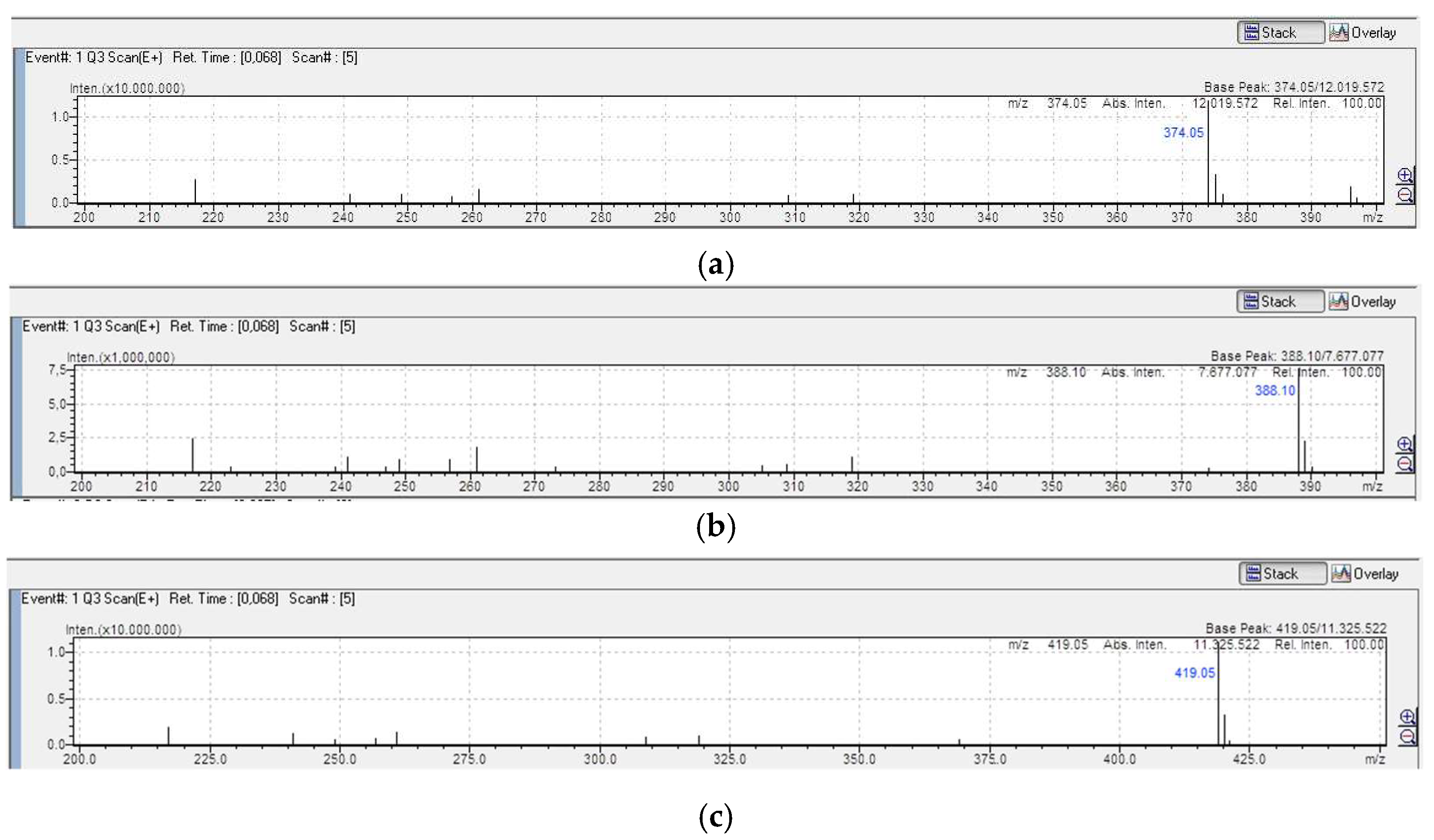
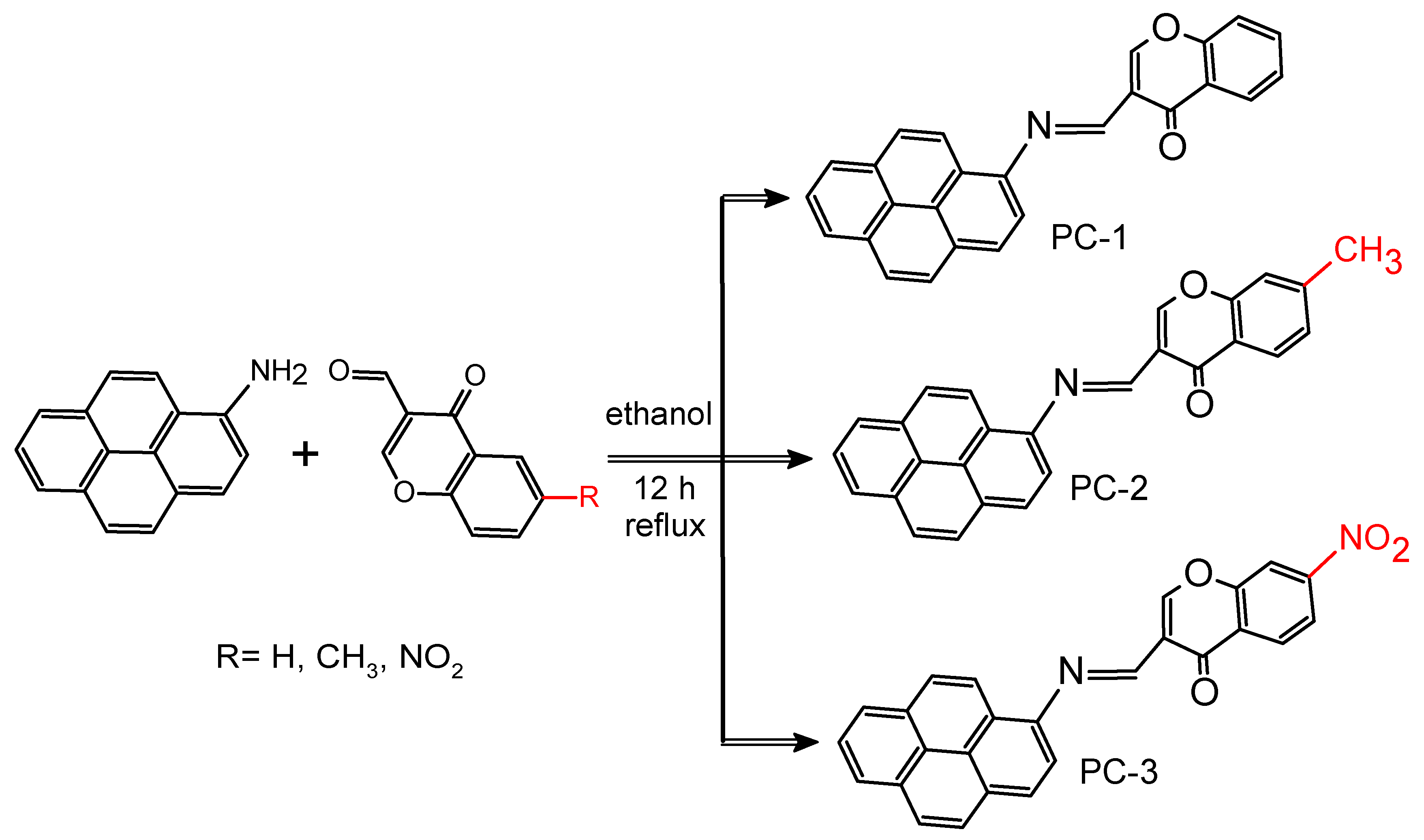
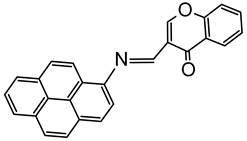 N-(pyren-1-yl-imino)-3-formyl chromone (PC-1) N-(pyren-1-yl-imino)-3-formyl chromone (PC-1) | C26H15NO2 | 373.40 | 176 | 81 |
 N-(pyren-1-yl-imino)-3-formyl-6-methylchromone (PC-2) N-(pyren-1-yl-imino)-3-formyl-6-methylchromone (PC-2) | C27H17NO2 | 387.42 | 260 | 78 |
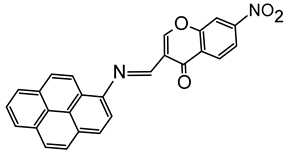 N-(pyren-1-yl-imino)-3-formyl-6-nitrochromone (PC-3) N-(pyren-1-yl-imino)-3-formyl-6-nitrochromone (PC-3) | C26H14N2O4 | 418.40 | >300 | 79 |
| Compounds | Substituent | ν (C=N) (cm−1) | Δν (Compared to PC-1) |
|---|---|---|---|
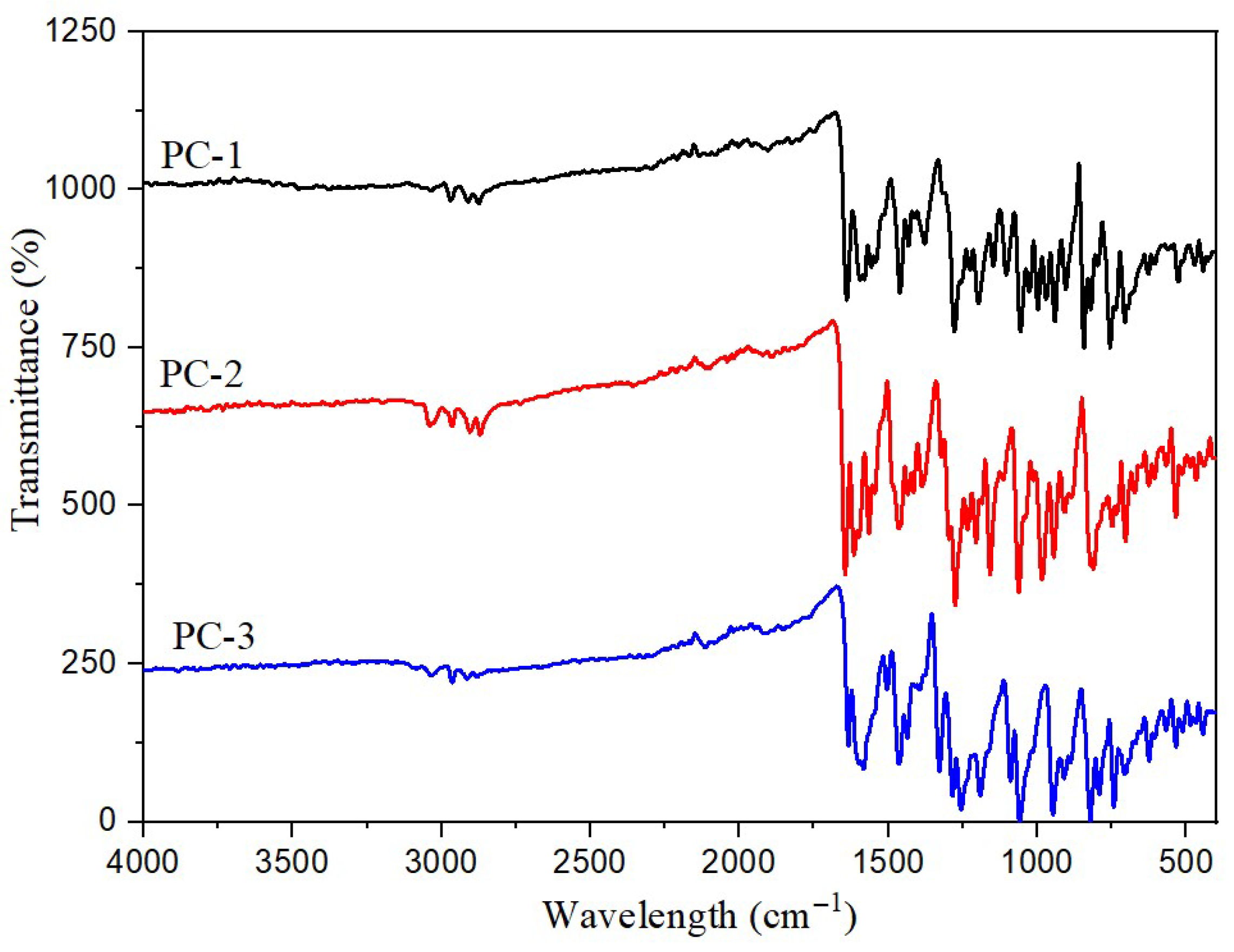
| PC-1 | –H | 1593.23 | – |
| PC-2 | –CH3 | 1614.53 | +21.30 |
| PC-3 | –NO2 | 1582.77 | −10.46 |
 |  | ||
| PC-1 | PC-2 | ||
 | |||
| PC-3 | |||
| 1H-NMR | |||
| PC-1 δ (ppm) Multiplicity (J, Hz) * | PC-2 δ (ppm) Multiplicity (J, Hz) * | PC-3 δ (ppm) Multiplicity (J, Hz) * | |
| H1 | 8.28 (s, 1H) | 8.28 (s, 1H) | 8.32 (s, 1H) |
| H2 | 6.07 (s, 1H) | 6.02 (s, 1H) | 6.25 (s, 1H) |
| H3 | 7.96 (d, J = 7.7, 1H) | 7.75 (s, 1H) | 8.72 (m, 1H) |
| H4 | 7.17 (t, J = 7.7, 1H) | - | - |
| H5 | 7.55 (t, J = 7.7, 1H) | 7.35 (d, J = 8.1, 1H) | 8.72 (m, 1H) |
| H6 | 7.11 (d, J = 8.1, 1H) | 7.00 (d, J = 8.2, 1H) | 7.37 (d, J = 8.8, 1H) |
| H7 | 8.23–8.27 (m, 1H) | 8.23–8.27 (m, 1H) | 8.26–8.30 (m, 1H) |
| H8 | 8.55–8.62 (m, 1H) | 8.58–8.62 (m, 1H) | 8.40–8.43 (m, 1H) |
| H9 | 8.34–8.40 (m, 1H) | 8.34–8.40 (m, 1H) | 8.28–8.33 (m, 1H) |
| H10 | 8.26–8.31 (m, 1H) | 8.26–8.31 (m, 1H) | 8.29–8.35 (m, 1H) |
| H11 | 8.06–8.12 (m, 1H) | 8.06–8.12 (m, 1H) | 8.13–8.19 (m, 1H) |
| H12 | 8.05–8.15 (m, 1H) | 8.10–8.16 (m, 1H) | 8.08–8.12 (m, 1H) |
| H13 | 8.06–8.12 (m, 1H) | 8.06–8.12 (m, 1H) | 8.13–8.19 (m, 1H) |
| H14 | 8.26–8.31 (m, 1H) | 8.26–8.31 (m, 1H) | 8.29–8.35 (m, 1H) |
| H15 | 8.34–8.40 (m, 1H) | 8.34–8.40 (m, 1H) | 8.28–8.33 (m, 1H) |
| H16 | – | 2.33 (s, 3H) | – |
| Compounds | Substituent | Absorption λmax (nm) | Spectral Effect | Optic Band Gap (Eg) |
|---|---|---|---|---|
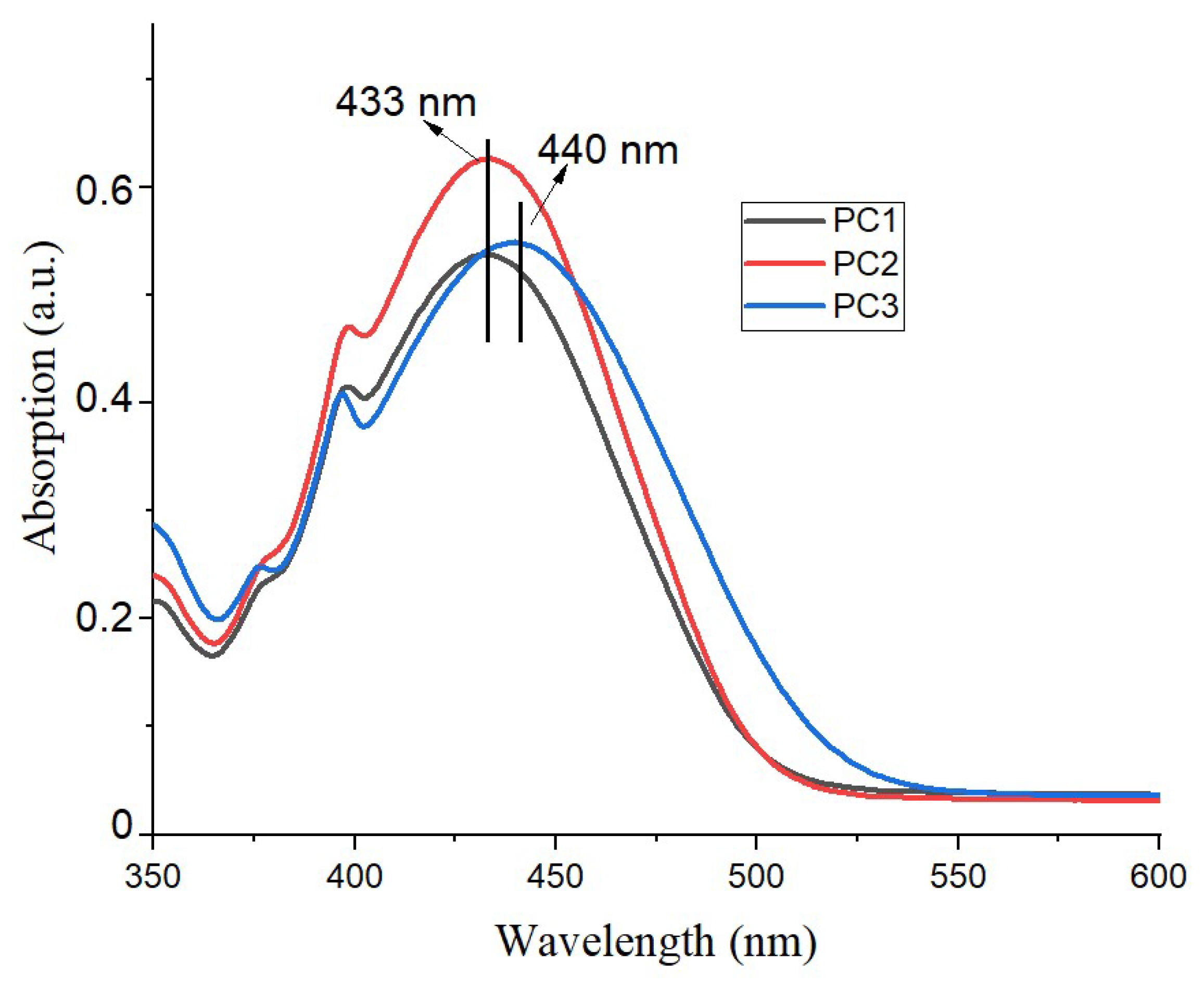
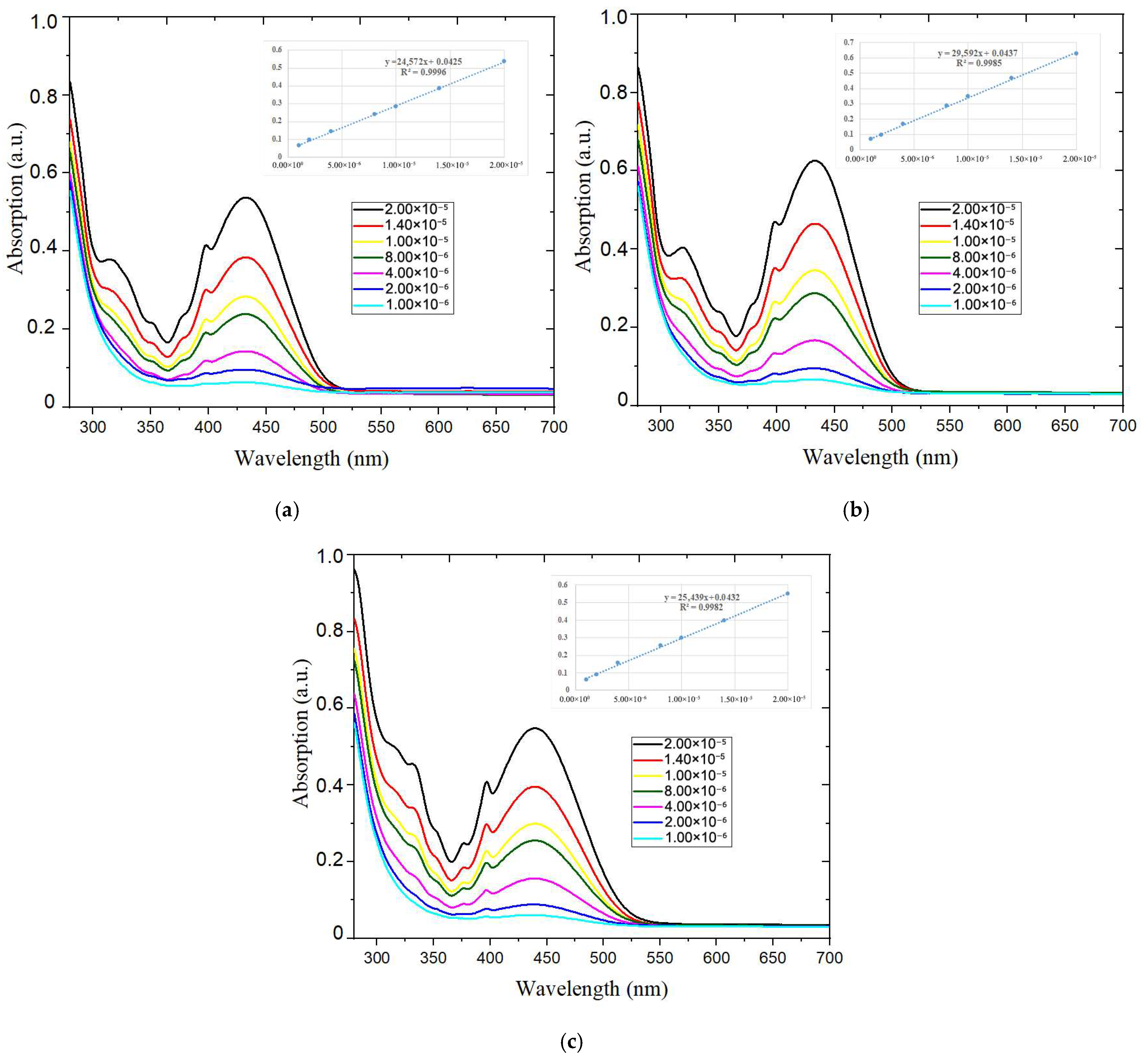
| PC1 | –H | 432 | Basic π–π * | 2.87 |
| PC2 | –CH3 | 433 | Slightly bathochromic | 2.86 |
| PC3 | –NO2 | 440 | Prominent bathochromic | 2.82 |
| Compounds | Absorption (nm) | Emission (nm) | Emission Intensity (cps) | Stokes Shifts (nm) |
|---|---|---|---|---|
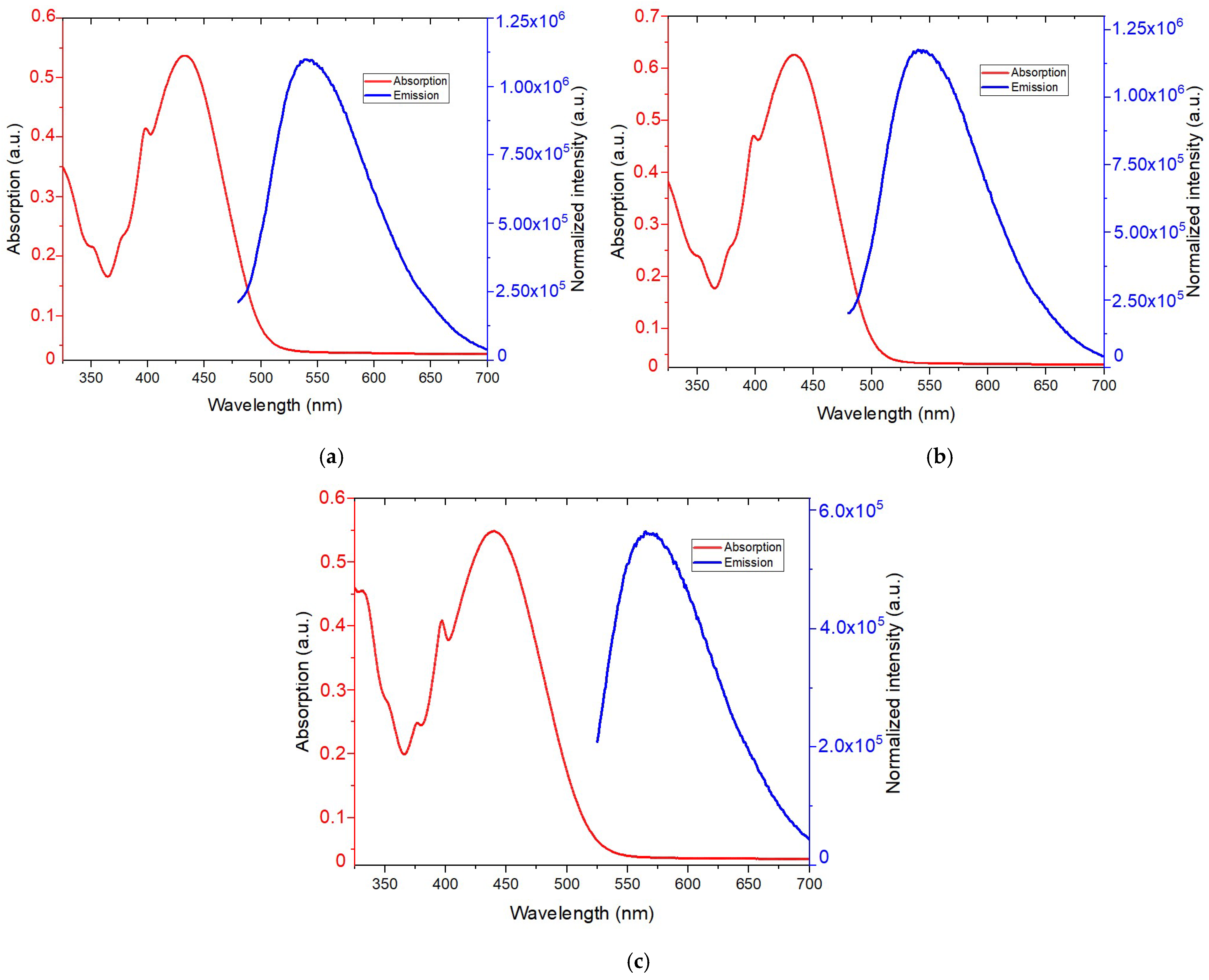
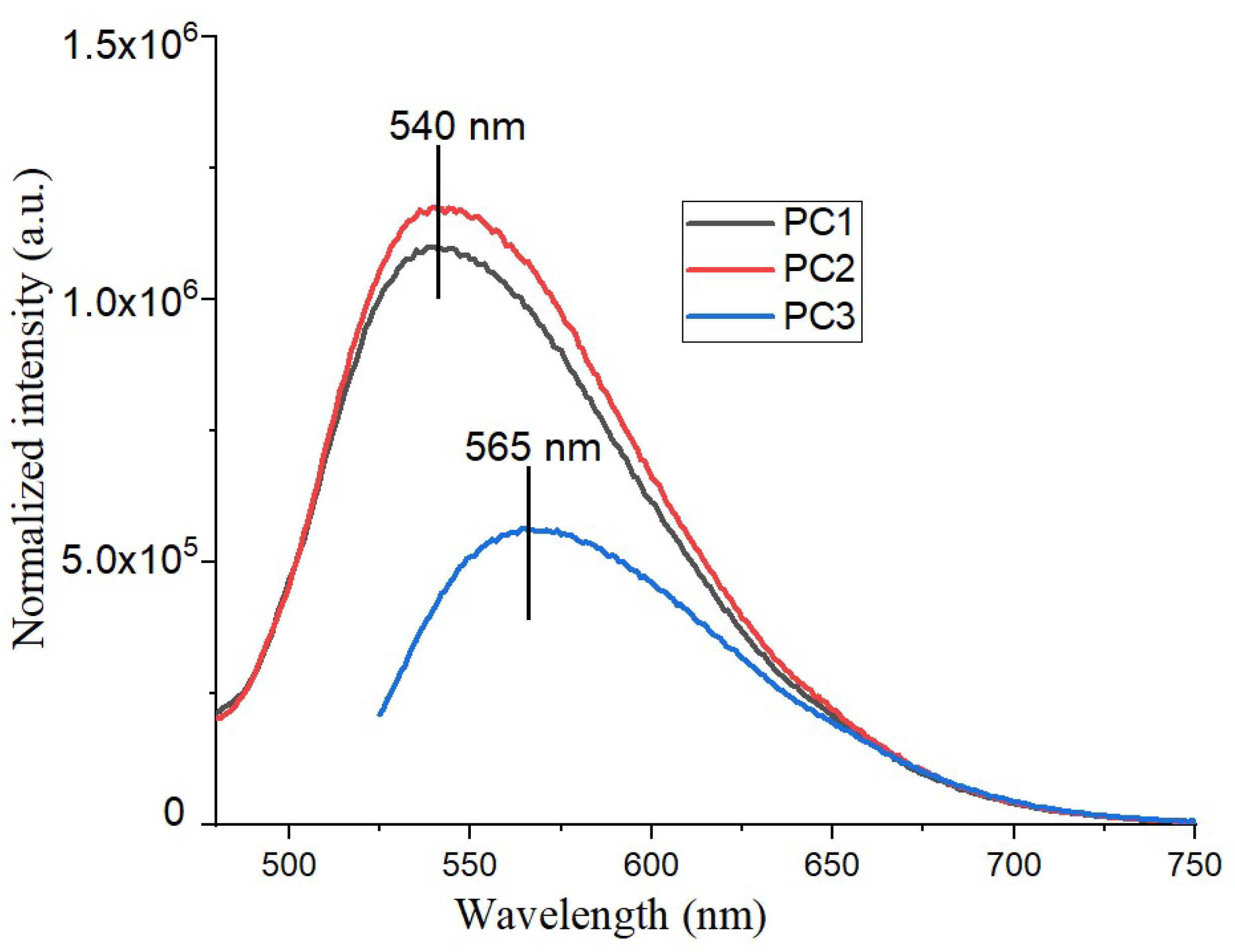
| PC-1 | 432 | 540 | 1.17 × 10⁶ | 108 |
| PC-2 | 433 | 540 | 1.09 × 10⁶ | 107 |
| PC-3 | 440 | 565 | 5.59 × 10⁵ | 125 |
| Structure of Schiff Bases | Absorption (nm) | Emission (nm) | Properties | References |
|---|---|---|---|---|
 | 328, 343, 405 | 458 | Fluorometric probe and biological application | [48] |
 | 394 | 440 | Photophysics and antimicrobial properties | [24] |
 | 430 | 443 | Detection of sarin gas mimic, diethylchlorophosphate | [41] |
 | 392 | 549 | Fluorescent pigment | [29] |
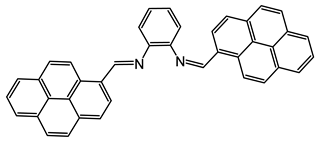 | 355 | 410, 428 | Cell imaging and test strip | [49] |
 | 281, 358, 430 | 435 | Cu-selective fluorescent sensing | [50] |
 | 365 | 460 | Fluorescence chemosensor for the detection of Cu2+ ions | [51] |
| Current study (PC-1, PC-2, and PC-3) | 432–440 | 540–565 | Photophysical properties |
Disclaimer/Publisher’s Note: The statements, opinions and data contained in all publications are solely those of the individual author(s) and contributor(s) and not of MDPI and/or the editor(s). MDPI and/or the editor(s) disclaim responsibility for any injury to people or property resulting from any ideas, methods, instructions or products referred to in the content. |
© 2026 by the author. Licensee MDPI, Basel, Switzerland. This article is an open access article distributed under the terms and conditions of the Creative Commons Attribution (CC BY) license.
Share and Cite
Zurnacı, M. Pyrene-Chromone Schiff Base Molecules with Tunable Fluorescence: Structure–Property Relationships and Substituent Effects. Molecules 2026, 31, 1059. https://doi.org/10.3390/molecules31061059
Zurnacı M. Pyrene-Chromone Schiff Base Molecules with Tunable Fluorescence: Structure–Property Relationships and Substituent Effects. Molecules. 2026; 31(6):1059. https://doi.org/10.3390/molecules31061059
Chicago/Turabian StyleZurnacı, Merve. 2026. "Pyrene-Chromone Schiff Base Molecules with Tunable Fluorescence: Structure–Property Relationships and Substituent Effects" Molecules 31, no. 6: 1059. https://doi.org/10.3390/molecules31061059
APA StyleZurnacı, M. (2026). Pyrene-Chromone Schiff Base Molecules with Tunable Fluorescence: Structure–Property Relationships and Substituent Effects. Molecules, 31(6), 1059. https://doi.org/10.3390/molecules31061059