Chronic Wound Healing: Research Advances from Pathological Mechanisms to Natural Herbal Active Ingredients and Material Delivery Systems


Abstract
1. Introduction
2. Stages of Wound Repair
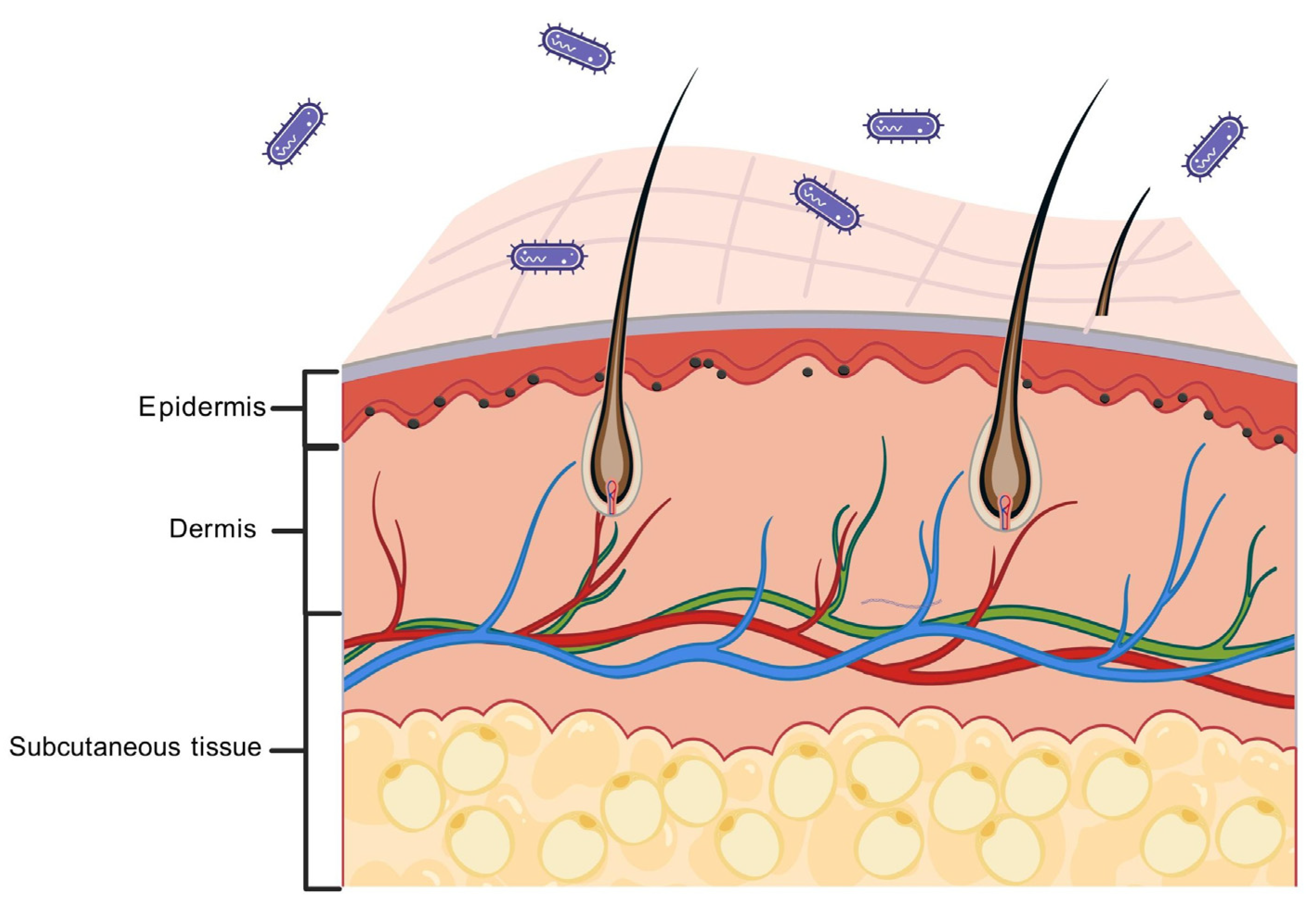
2.1. Normal Skin Structure and Function
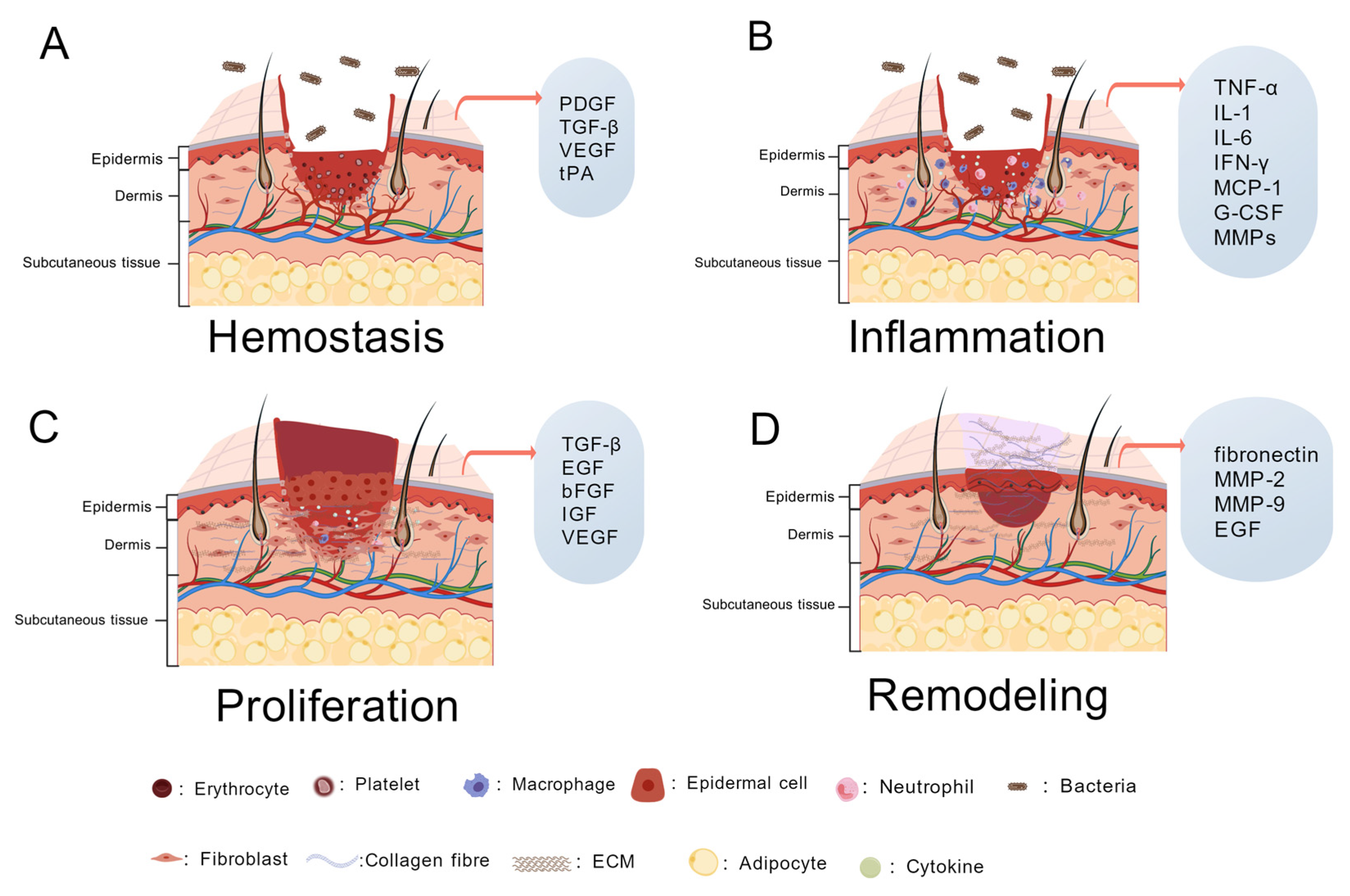
2.2. Physiological Wound Healing
2.2.1. Hemostasis
2.2.2. Inflammatory
2.2.3. Proliferation
2.2.4. Remodeling
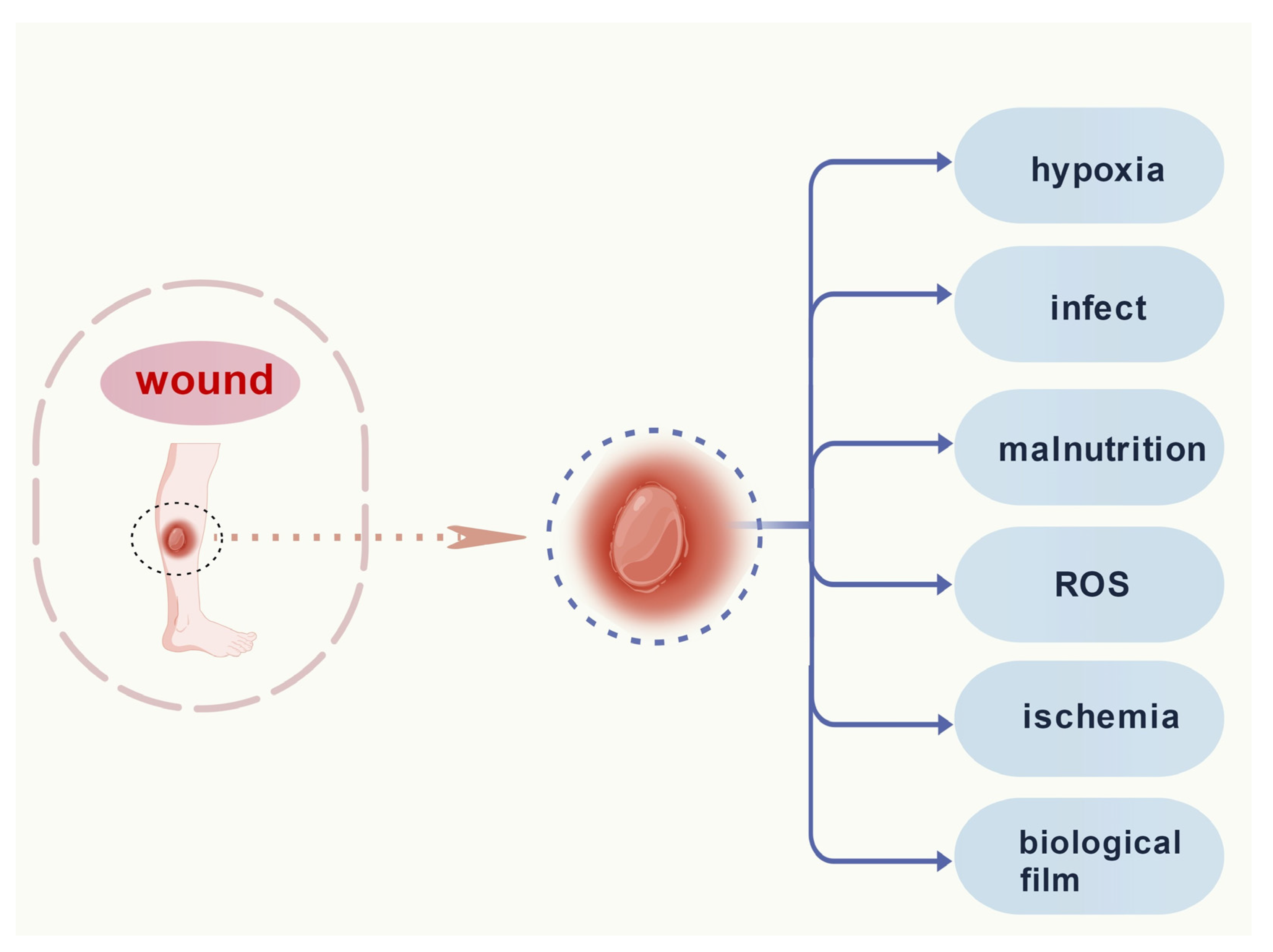
2.3. Chronic Wound Healing
3. Factors Affecting Wound Healing
3.1. Infections and Biofilms
3.2. Hypoxia-Ischemia and Excess Reactive Oxygen Species (ROS)
3.3. Ischemia
3.4. Poor Nutritional Status
4. Treatment
4.1. Traditional Methods
4.1.1. Debridement
4.1.2. Gauze
4.2. Moisturizing Dressings

| Dressing | Description | Advantages | Disadvantages | Examples |
|---|---|---|---|---|
| Hydrogels | Crosslinked hydrophilic polymers with three-dimensional networks [137,138] | High water content; excellent biocompatibility; facilitates autolytic debridement [139] | Poor mechanical properties; low viscosity | Purilon® Gel (Coloplast, DK); Intrasite Gel (Smith & Nephew, UK) |
| Foams | A porous foam structure primarily composed of polyurethane [140] | Strongly absorbs wound exudate to maintain the wound microenvironment; highly flexible, conforms to the shape of the wound [141,142] | Adhesion to dry wounds with minimal exudate may cause secondary injury | Biatain Silicone (Coloplast, DK); Aquacel™ Ag Foam (ConvaTec, UK); Mepilex® (Mölnlycke Health Care, SE) |
| Hydrocolloids | The primary component is carboxymethyl cellulose, composed of polymeric hydrogel and other viscous materials [143] | Maintain a moist wound environment to promote granulation tissue formation; high patient comfort [144] | Limited absorbency makes it unsuitable for wounds with heavy exudate | DuoDERM® (ConvaTec, UK); Comfeel® Plus Transparent (Coloplast, DK) |
| Films | A transparent polymer film coated with an adhesive, typically made of polyurethane [145] | Excellent breathability; isolates bacteria to prevent infection; facilitates observation of wound condition [146] | Poor absorption capacity leads to fluid retention; low elasticity | Tegaderm™ (3M Health Care, Minnesota, USA); Opsite Flexigrid (Smith & Nephew, UK); Mepore® Film (Mölnlycke Health Care, SE) |
| Alginates | Natural polysaccharides extracted from brown algae [147,148] | Easily gelatinizes; excellent biodegradability; high moisture absorption; hemostatic function [148] | Not suitable for dry wounds or wounds with persistent bleeding; when changing dressings, be mindful of residual dressing fibers | Aquacel™ Extra™ (ConvaTec, UK); Biatain® Alginate (Coloplast, DK) |
4.2.1. Hydrogels
4.2.2. Foams
4.2.3. Hydrocolloids
4.2.4. Films
4.2.5. Alginates
4.3. Delivery Systems of Biologicals
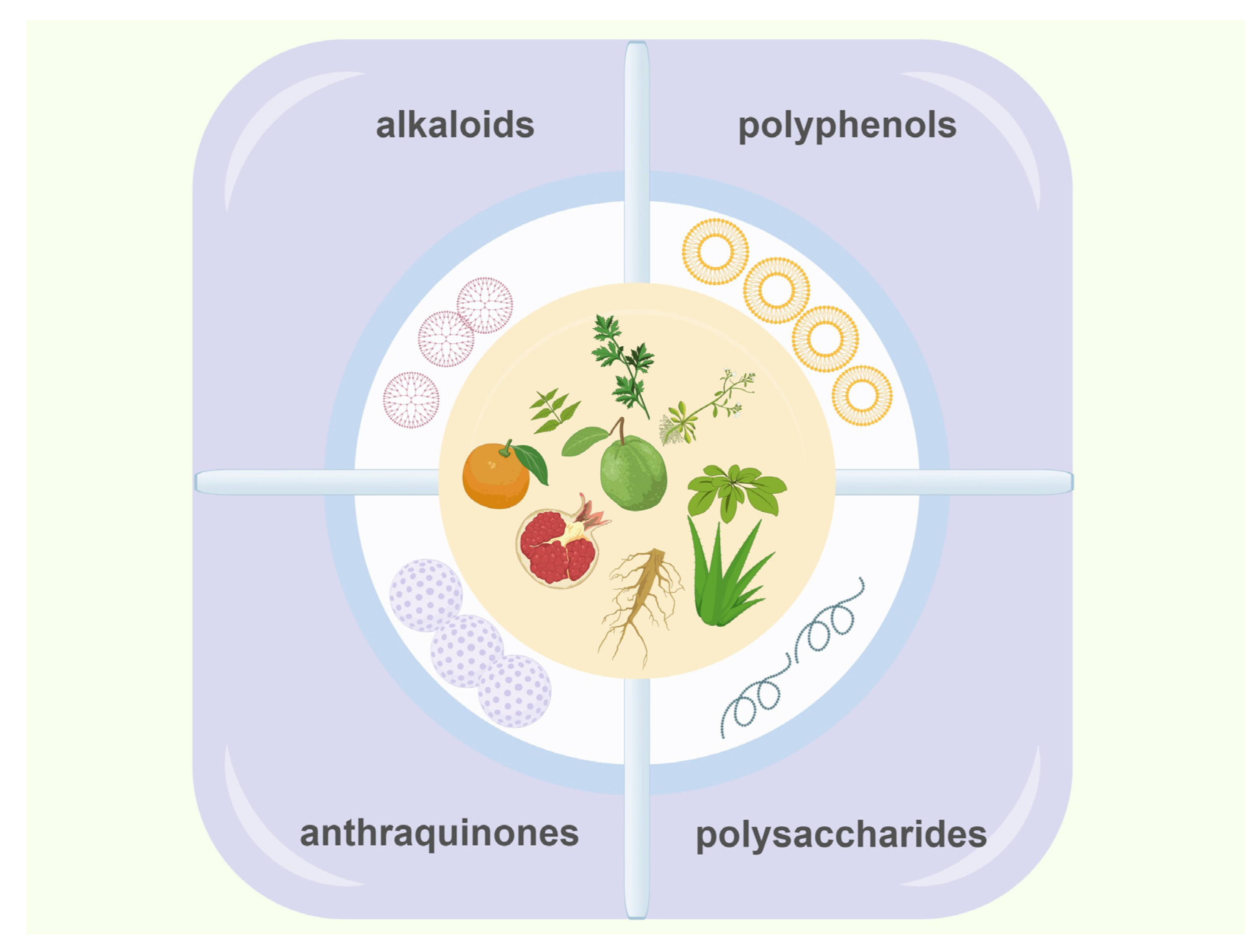
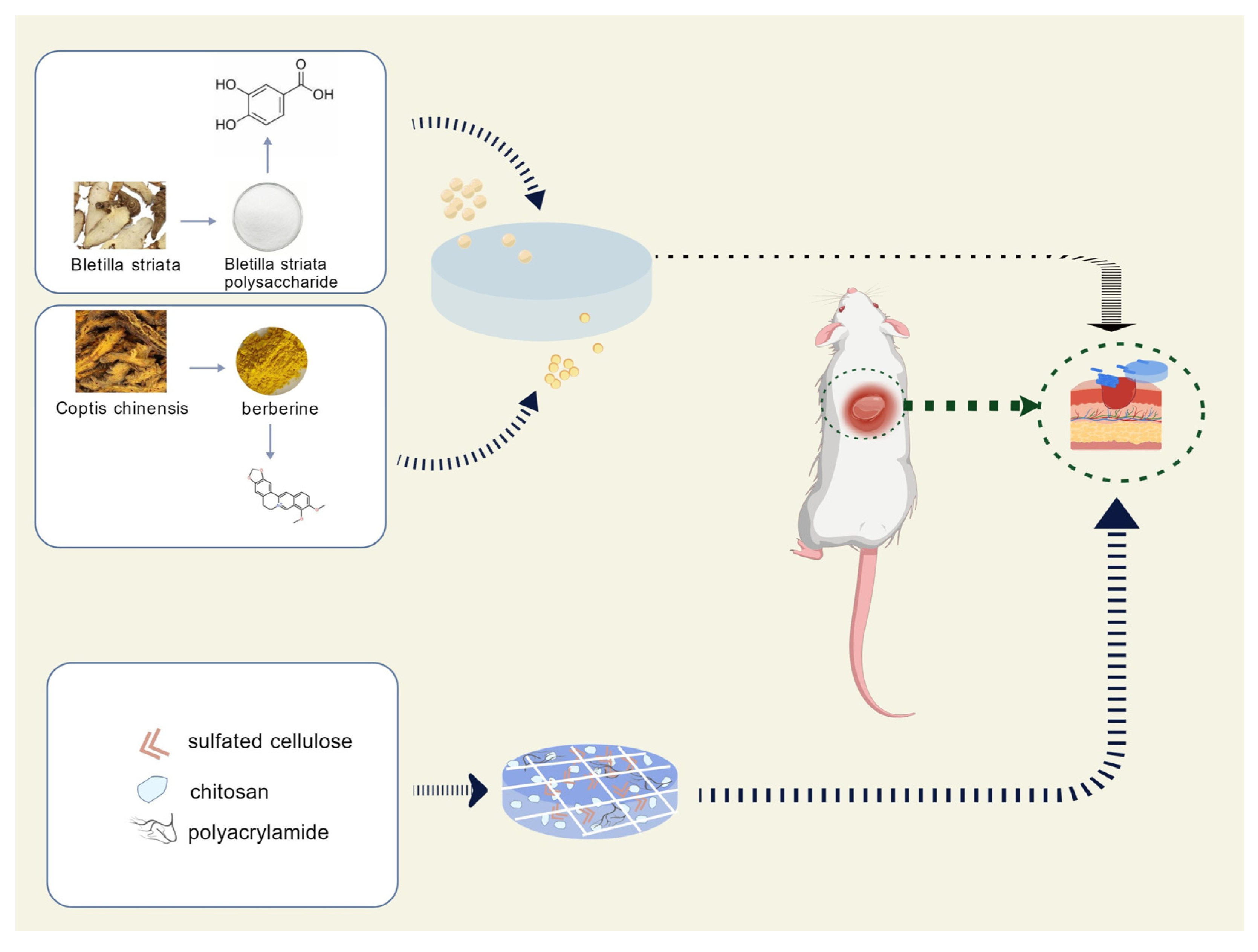
4.4. The Active Components of Herbal Medicine and Their Combination with Materials
4.4.1. Alkaloids
4.4.2. Polyphenols
4.4.3. Anthraquinones
4.4.4. Polysaccharides
5. Conclusions
Author Contributions
Funding
Data Availability Statement
Acknowledgments
Conflicts of Interest
References
- Klein, T.M.; Andrees, V.; Kirsten, N.; Protz, K.; Augustin, M.; Blome, C. Social Participation of People with Chronic Wounds: A Systematic Review. Int. Wound J. 2021, 18, 287–311. [Google Scholar] [CrossRef] [PubMed]
- Tan, M.L.L.; Chin, J.S.; Madden, L.; Becker, D.L. Challenges Faced in Developing an Ideal Chronic Wound Model. Expert Opin. Drug Discov. 2022, 18, 99–114. [Google Scholar] [CrossRef] [PubMed]
- Krizanova, O.; Penesova, A.; Hokynkova, A.; Pokorna, A.; Samadian, A.; Babula, P. Chronic Venous Insufficiency and Venous Leg Ulcers: Aetiology, on the Pathophysiology-Based Treatment. Int. Wound J. 2024, 21, e14405. [Google Scholar] [CrossRef] [PubMed]
- Kelechi, T.J.; Johnson, J.J.; Yates, S. Chronic Venous Disease and Venous Leg Ulcers: An Evidence-Based Update. J. Vasc. Nurs. 2015, 33, 36–46. [Google Scholar] [CrossRef]
- Broderick, C.; Pagnamenta, F.; Forster, R. Dressings and Topical Agents for Arterial Leg Ulcers. Cochrane Database Syst. Rev. 2020, 2020, CD001836. [Google Scholar] [CrossRef]
- Gilligan, G.; Panico, R.; Di Tada, C.; Piemonte, E.; Brunotto, M. Clinical and Immunohistochemical Epithelial Profile of Non-Healing Chronic Traumatic Ulcers. Med. Oral Patol. Oral Cir. Bucal 2020, 25, e706–e713. [Google Scholar] [CrossRef]
- Burgess, J.L.; Wyant, W.A.; Abujamra, B.A.; Kirsner, R.S.; Jozic, I. Diabetic Wound-Healing Science. Medicina 2021, 57, 1072. [Google Scholar] [CrossRef]
- Carter, M.J.; DaVanzo, J.; Haught, R.; Nusgart, M.; Cartwright, D.; Fife, C.E. Chronic Wound Prevalence and the Associated Cost of Treatment in Medicare Beneficiaries: Changes between 2014 and 2019. J. Med. Econ. 2023, 26, 894–901. [Google Scholar] [CrossRef]
- Skórka, M.; Bazaliński, D.; Więch, P.; Kłęk, S.; Kozieł, D.; Sierżantowicz, R. Nutritional Status in a Group of Patients with Wounds Due to Diabetic Foot Disease and Chronic Venous Insufficiency. J. Clin. Med. 2025, 14, 43. [Google Scholar] [CrossRef]
- Ceran, F.; Bozkurt, M.; Karakol, P. Effectiveness of the Combined Therapy in the Treatment of Chronic Non-Healing Wounds in Patients with Autoimmune Diseases. J. Plast. Reconstr. Aesthet. Surg. 2025, 101, 126–133. [Google Scholar] [CrossRef]
- Ghaffar, A.; Ali, J. Delayed Wound Healing in Autoimmune Vasculitis: A Histopathological Study. J. Biol. Life Sci. 2025, 2, 14–26. [Google Scholar]
- Upputuri, B.; Srikantam, A.; Mamidi, R.S. Associated with Non-Healing of Plantar Ulcers in Leprosy Patients. PLoS Negl. Trop. Dis. 2020, 14, e0008393. [Google Scholar] [CrossRef] [PubMed]
- Hofer, S.O.P.; Shrayer, D.; Reichner, J.S.; Hoekstra, H.J.; Wanebo, H.J. Wound-Induced Tumor Progression: A Probable Role in Recurrence After Tumor Resection. Arch. Surg. 1998, 133, 383–389. [Google Scholar] [CrossRef] [PubMed]
- Padula, W.V.; Delarmente, B.A. The National Cost of Hospital-Acquired Pressure Injuries in the United States. Int. Wound J. 2019, 16, 634–640. [Google Scholar] [CrossRef] [PubMed]
- Bennett, G.; Dealey, C.; Posnett, J. The Cost of Pressure Ulcers in the UK. Age Ageing 2004, 33, 230–235. [Google Scholar] [CrossRef]
- Ahn, H.; Stechmiller, J.; Fillingim, R.; Lyon, D.; Garvan, C. Bodily Pain Intensity in Nursing Home Residents with Pressure Ulcers: Analysis of National Minimum Data Set 3.0. Res. Nurs. Health 2015, 38, 207–212. [Google Scholar] [CrossRef]
- Jackson, D.; Durrant, L.; Bishop, E.; Walthall, H.; Betteridge, R.; Gardner, S.; Coulton, W.; Hutchinson, M.; Neville, S.; Davidson, P.M.; et al. Pain Associated with Pressure Injury: A Qualitative Study of Community-Based, Home-Dwelling Individuals. J. Adv. Nurs. 2017, 73, 3061–3069. [Google Scholar] [CrossRef]
- Armstrong, D.G.; Tan, T.-W.; Boulton, A.J.M.; Bus, S.A. Diabetic Foot Ulcers: A Review. JAMA 2023, 330, 62–75. [Google Scholar] [CrossRef]
- Chen, L.; Sun, S.; Gao, Y.; Ran, X. Global Mortality of Diabetic Foot Ulcer: A Systematic Review and Meta-Analysis of Observational Studies. Diabetes Obes. Metab. 2023, 25, 36–45. [Google Scholar] [CrossRef]
- Gould, L.; Abadir, P.; Brem, H.; Carter, M.; Conner-Kerr, T.; Davidson, J.; DiPietro, L.; Falanga, V.; Fife, C.; Gardner, S.; et al. Chronic Wound Repair and Healing in Older Adults: Current Status and Future Research. Wound Repair Regen. 2015, 23, 1–13. [Google Scholar] [CrossRef]
- Agrawal, R.; Hu, A.; Bollag, W.B. The Skin and Inflamm-Aging. Biology 2023, 12, 1396. [Google Scholar] [CrossRef] [PubMed]
- Jiao, Q.; Zhi, L.; You, B.; Wang, G.; Wu, N.; Jia, Y. Skin Homeostasis: Mechanism and Influencing Factors. J. Cosmet. Dermatol. 2024, 23, 1518–1526. [Google Scholar] [CrossRef] [PubMed]
- Rodrigues, M.; Kosaric, N.; Bonham, C.A.; Gurtner, G.C. Wound Healing: A Cellular Perspective. Physiol. Rev. 2019, 99, 665–706. [Google Scholar] [CrossRef] [PubMed]
- Tottoli, E.M.; Dorati, R.; Genta, I.; Chiesa, E.; Pisani, S.; Conti, B. Skin Wound Healing Process and New Emerging Technologies for Skin Wound Care and Regeneration. Pharmaceutics 2020, 12, 735. [Google Scholar] [CrossRef]
- Singer, A.J.; Clark, R.A. Cutaneous Wound Healing. N. Engl. J. Med. 1999, 341, 738–746. [Google Scholar] [CrossRef]
- Xue, M.; Zhao, R.; Lin, H.; Jackson, C. Delivery Systems of Current Biologicals for the Treatment of Chronic Cutaneous Wounds and Severe Burns. Adv. Drug Deliv. Rev. 2018, 129, 219–241. [Google Scholar] [CrossRef]
- Minutti, C.M.; Knipper, J.A.; Allen, J.E.; Zaiss, D.M.W. Tissue-Specific Contribution of Macrophages to Wound Healing. Semin. Cell Dev. Biol. 2017, 61, 3–11. [Google Scholar] [CrossRef]
- Heras, K.L.; Igartua, M.; Santos-Vizcaino, E.; Hernandez, R.M. Chronic Wounds: Current Status, Available Strategies and Emerging Therapeutic Solutions. J. Control. Release 2020, 328, 532–550. [Google Scholar] [CrossRef]
- Rousselle, P.; Braye, F.; Dayan, G. Re-Epithelialization of Adult Skin Wounds: Cellular Mechanisms and Therapeutic Strategies. Adv. Drug Deliv. Rev. 2019, 146, 344–365. [Google Scholar] [CrossRef]
- Schnittert, J.; Bansal, R.; Storm, G.; Prakash, J. Integrins in Wound Healing, Fibrosis and Tumor Stroma: High Potential Targets for Therapeutics and Drug Delivery. Adv. Drug Deliv. Rev. 2018, 129, 37–53. [Google Scholar] [CrossRef]
- Bonnans, C.; Chou, J.; Werb, Z. Remodelling the Extracellular Matrix in Development and Disease. Nat. Rev. Mol. Cell Biol. 2014, 15, 786–801. [Google Scholar] [CrossRef] [PubMed]
- Franklin, R.A. Fibroblasts and Macrophages: Collaborators in Tissue Homeostasis. Immunol. Rev. 2021, 302, 86–103. [Google Scholar] [CrossRef] [PubMed]
- Gurtner, G.C.; Werner, S.; Barrandon, Y.; Longaker, M.T. Wound Repair and Regeneration. Nature 2008, 453, 314–321. [Google Scholar] [CrossRef] [PubMed]
- Stappenbeck, T.S.; Miyoshi, H. The Role of Stromal Stem Cells in Tissue Regeneration and Wound Repair. Science 2009, 324, 1666–1669. [Google Scholar] [CrossRef]
- Guo, S.; DiPietro, L.A. Factors Affecting Wound Healing. J. Dent. Res. 2010, 89, 219–229. [Google Scholar] [CrossRef]
- Wild, T.; Rahbarnia, A.; Kellner, M.; Sobotka, L.; Eberlein, T. Basics in Nutrition and Wound Healing. Nutrition 2010, 26, 862–866. [Google Scholar] [CrossRef]
- Berndt, M.C.; Metharom, P.; Andrews, R.K. Primary Haemostasis: Newer Insights. Haemophilia 2014, 20, 15–22. [Google Scholar] [CrossRef]
- Smyth, S.S.; Mcever, R.P.; Weyrich, A.S.; Morrell, C.N.; Hoffman, M.R.; Arepally, G.M.; French, P.A.; Dauerman, H.L.; Becker, R.C. Platelet Functions beyond Hemostasis. J. Thromb. Haemost. 2009, 7, 1759–1766. [Google Scholar] [CrossRef]
- Özbek, S.; Balasubramanian, P.G.; Chiquet-Ehrismann, R.; Tucker, R.P.; Adams, J.C. The Evolution of Extracellular Matrix. Mol. Biol. Cell 2010, 21, 4300–4305. [Google Scholar] [CrossRef]
- Hynes, R.O. The Extracellular Matrix: Not Just Pretty Fibrils. Science 2009, 326, 1216–1219. [Google Scholar] [CrossRef]
- Masson-Meyers, D.S.; Andrade, T.A.M.; Caetano, G.F.; Guimaraes, F.R.; Leite, M.N.; Leite, S.N.; Frade, M.A.C. Experimental Models and Methods for Cutaneous Wound Healing Assessment. Int. J. Exp. Pathol. 2020, 101, 21–37. [Google Scholar] [CrossRef] [PubMed]
- Diller, R.B.; Tabor, A.J. The Role of the Extracellular Matrix (ECM) in Wound Healing: A Review. Biomimetics 2022, 7, 87. [Google Scholar] [CrossRef] [PubMed]
- Miron, R.J.; Fujioka-Kobayashi, M.; Sculean, A.; Zhang, Y. Optimization of Platelet-rich Fibrin. Periodontol. 2023, 94, 79–91. [Google Scholar] [CrossRef] [PubMed]
- Young, A.; McNaught, C.-E. The Physiology of Wound Healing. Surg. Oxf. 2011, 29, 475–479. [Google Scholar] [CrossRef]
- Hawiger, J. Formation and Regulation of Platelet and Fibrin Hemostatic Plug. Hum. Pathol. 1987, 18, 111–122. [Google Scholar] [CrossRef]
- Garraud, O.; Hozzein, W.N.; Badr, G. Wound Healing: Time to Look for Intelligent, ‘Natural’ Immunological Approaches? BMC Immunol. 2017, 18, 23. [Google Scholar] [CrossRef]
- Gefen, A. How Medical Engineering Has Changed Our Understanding of Chronic Wounds and Future Prospects. Med. Eng. Phys. 2019, 72, 13–18. [Google Scholar] [CrossRef]
- Lacy, P. Mechanisms of Degranulation in Neutrophils. Allergy Asthma Clin. Immunol. 2006, 2, 98. [Google Scholar] [CrossRef]
- Raziyeva, K.; Kim, Y.; Zharkinbekov, Z.; Kassymbek, K.; Jimi, S.; Saparov, A. Immunology of Acute and Chronic Wound Healing. Biomolecules 2021, 11, 700. [Google Scholar] [CrossRef]
- Ferrante, C.J.; Leibovich, S.J. Regulation of Macrophage Polarization and Wound Healing. Adv. Wound Care 2012, 1, 10–16. [Google Scholar] [CrossRef]
- Zheng, H.; Cheng, X.; Jin, L.; Shan, S.; Yang, J.; Zhou, J. Recent Advances in Strategies to Target the Behavior of Macrophages in Wound Healing. Biomed. Pharmacother. 2023, 165, 115199. [Google Scholar] [CrossRef] [PubMed]
- Zaiss, D.M.; Minutti, C.M.; Knipper, J.A. Immune- and Non-immune-mediated Roles of Regulatory T-cells during Wound Healing. Immunology 2019, 157, 190–197. [Google Scholar] [CrossRef] [PubMed]
- Hofmann, U.; Frantz, S. Role of Lymphocytes in Myocardial Injury, Healing, and Remodeling After Myocardial Infarction. Circ. Res. 2015, 116, 354–367. [Google Scholar] [CrossRef] [PubMed]
- Borg, N.; Alter, C.; Görldt, N.; Jacoby, C.; Ding, Z.; Steckel, B.; Quast, C.; Bönner, F.; Friebe, D.; Temme, S.; et al. CD73 on T Cells Orchestrates Cardiac Wound Healing After Myocardial Infarction by Purinergic Metabolic Reprogramming. Circulation 2017, 136, 297–313. [Google Scholar] [CrossRef]
- Brubaker, A.L.; Schneider, D.F.; Kovacs, E.J. Neutrophils and Natural Killer T Cells as Negative Regulators of Wound Healing. Expert Rev. Dermatol. 2011, 6, 5–8. [Google Scholar] [CrossRef]
- Schneider, D.F.; Palmer, J.L.; Tulley, J.M.; Speicher, J.T.; Kovacs, E.J.; Gamelli, R.L.; Faunce, D.E. A Novel Role for NKT Cells in Cutaneous Wound Repair. J. Surg. Res. 2011, 168, 325–333.e1. [Google Scholar] [CrossRef]
- Davis, P.A.; Corless, D.J.; Aspinall, R.; Wastell, C. Effect of CD4+ and CD8+ Cell Depletion on Wound Healing. Br. J. Surg. 2002, 88, 298–304. [Google Scholar] [CrossRef]
- McLoughlin, R.M.; Solinga, R.M.; Rich, J.; Zaleski, K.J.; Cocchiaro, J.L.; Risley, A.; Tzianabos, A.O.; Lee, J.C. CD4+ T Cells and CXC Chemokines Modulate the Pathogenesis of Staphylococcus Aureus Wound Infections. Proc. Natl. Acad. Sci. USA 2006, 103, 10408–10413. [Google Scholar] [CrossRef]
- Pfisterer, K.; Shaw, L.E.; Symmank, D.; Weninger, W. The Extracellular Matrix in Skin Inflammation and Infection. Front. Cell Dev. Biol. 2021, 9, 682414. [Google Scholar] [CrossRef]
- Beck, L.S.; Deguzman, L.; Lee, W.P.; Xu, Y.; McFatridge, L.A.; Amento, E.P. TGF-β1 Accelerates Wound Healing: Reversal of Steroid-Impaired Healing in Rats and Rabbits. Growth Factors 1991, 5, 295–304. [Google Scholar] [CrossRef]
- Assoian, R.K.; Fleurdelys, E.B.; Stevenson, H.C.; Miller, P.J.; Madtes, D.K.; Raines, E.W.; Ross, R.; Sporn, M.B. Expression and Secretion of Type Beta Transforming Growth Factor by Activated Human Macrophages. Proc. Natl. Acad. Sci. USA 1987, 84, 6020–6024. [Google Scholar] [CrossRef] [PubMed]
- O’Kane, S.; Ferguson, M.W. Transforming Growth Factor βs and Wound Healing. Int. J. Biochem. Cell Biol. 1997, 29, 63–78. [Google Scholar] [CrossRef] [PubMed]
- Shah, M.; Revis, D.; Herrick, S.; Baillie, R.; Thorgeirson, S.; Ferguson, M.; Roberts, A. Role of Elevated Plasma Transforming Growth Factor-β1 Levels in Wound Healing. Am. J. Pathol. 1999, 154, 1115–1124. [Google Scholar] [CrossRef]
- Sorokin, L. The Impact of the Extracellular Matrix on Inflammation. Nat. Rev. Immunol. 2010, 10, 712–723. [Google Scholar] [CrossRef] [PubMed]
- Si, Y.-L.; Zhao, Y.-L.; Hao, H.-J.; Fu, X.-B.; Han, W.-D. MSCs: Biological Characteristics, Clinical Applications and Their Outstanding Concerns. Ageing Res. Rev. 2011, 10, 93–103. [Google Scholar] [CrossRef]
- Prockop, D.J.; Youn Oh, J. Mesenchymal Stem/Stromal Cells (MSCs): Role as Guardians of Inflammation. Mol. Ther. 2012, 20, 14–20. [Google Scholar] [CrossRef]
- Bielefeld, K.A.; Amini-Nik, S.; Alman, B.A. Cutaneous Wound Healing: Recruiting Developmental Pathways for Regeneration. Cell. Mol. Life Sci. 2013, 70, 2059–2081. [Google Scholar] [CrossRef]
- Javerzat, S.; Auguste, P.; Bikfalvi, A. The Role of Fibroblast Growth Factors in Vascular Development. Trends Mol. Med. 2002, 8, 483–489. [Google Scholar] [CrossRef]
- Ben Amar, M.; Wu, M. Re-Epithelialization: Advancing Epithelium Frontier during Wound Healing. J. R. Soc. Interface 2014, 11, 20131038. [Google Scholar] [CrossRef]
- Pastar, I.; Stojadinovic, O.; Yin, N.C.; Ramirez, H.; Nusbaum, A.G.; Sawaya, A.; Patel, S.B.; Khalid, L.; Isseroff, R.R.; Tomic-Canic, M. Epithelialization in Wound Healing: A Comprehensive Review. Adv. Wound Care 2014, 3, 445–464. [Google Scholar] [CrossRef]
- El Ghalbzouri, A.; Hensbergen, P.; Gibbs, S.; Kempenaar, J.; van der Schors, R.; Ponec, M. Facilitate Re-Epithelialization in Wounded Human Skin Equivalents. Lab. Investig. 2004, 84, 102–112. [Google Scholar] [CrossRef]
- Garlick, J.; Parks, W.; Welgus, H.; Taichman, L. Re-Epithelialization of Human Oral Keratinocytes In Vitro. J. Dent. Res. 1996, 75, 912–918. [Google Scholar] [CrossRef]
- Garlick, J.A.; Taichman, L.B. Effect of TGF-β1 on Re-Epithelialization of Human Keratinocytes In Vitro: An Organotypic Model. J. Investig. Dermatol. 1994, 103, 554–559. [Google Scholar] [CrossRef] [PubMed]
- Gailit, J.; Clark, R.A.F.; Welch, M.P. TGF-β1 Stimulates Expression of Keratinocyte Integrins During Re-Epithelialization of Cutaneous Wounds. J. Investig. Dermatol. 1994, 103, 221–227. [Google Scholar] [CrossRef] [PubMed]
- Meng, F.; Cheng, X.; Yang, L.; Hou, N.; Yang, X.; Meng, A. Accelerated Re-Epithelialization in Dpr2-Deficient Mice Is Associated with Enhanced Response to TGFβ Signaling. J. Cell Sci. 2008, 121, 2904–2912. [Google Scholar] [CrossRef] [PubMed]
- Su, D.; Tsai, H.-I.; Xu, Z.; Yan, F.; Wu, Y.; Xiao, Y.; Liu, X.; Wu, Y.; Parvanian, S.; Zhu, W.; et al. Exosomal PD-L1 Functions as an Immunosuppressant to Promote Wound Healing. J. Extracell. Vesicles 2020, 9, 1709262. [Google Scholar] [CrossRef]
- Tanzer, M.L. Current Concepts of Extracellular Matrix. J. Orthop. Sci. 2006, 11, 326–331. [Google Scholar] [CrossRef]
- Tsang, K.Y.; Cheung, M.C.H.; Chan, D.; Cheah, K.S.E. The Developmental Roles of the Extracellular Matrix: Beyond Structure to Regulation. Cell Tissue Res. 2010, 339, 93–110. [Google Scholar] [CrossRef]
- Werner, S.; Krieg, T.; Smola, H. Keratinocyte–Fibroblast Interactions in Wound Healing. J. Investig. Dermatol. 2007, 127, 998–1008. [Google Scholar] [CrossRef]
- Ågren, M.S. Matrix Metalloproteinases (MMPs) Are Required for Re-Epithelialization of Cutaneous Wounds. Arch. Dermatol. Res. 1999, 291, 583–590. [Google Scholar] [CrossRef]
- Karamanos, N.K.; Theocharis, A.D.; Piperigkou, Z.; Manou, D.; Passi, A.; Skandalis, S.S.; Vynios, D.H.; Orian-Rousseau, V.; Ricard-Blum, S.; Schmelzer, C.E.; et al. A Guide to the Composition and Functions of the Extracellular Matrix. FEBS J. 2021, 288, 6850–6912. [Google Scholar] [CrossRef]
- Rousselle, P.; Montmasson, M.; Garnier, C. Extracellular Matrix Contribution to Skin Wound Re-Epithelialization. Matrix Biol. 2019, 75–76, 12–26. [Google Scholar] [CrossRef] [PubMed]
- Ricard-Blum, S.; Ballut, L. Matricryptins Derived from Collagens and Proteoglycans. Front. Biosci. 2011, 16, 674. [Google Scholar] [CrossRef] [PubMed]
- Mathew-Steiner, S.S.; Roy, S.; Sen, C.K. Collagen in Wound Healing. Bioengineering 2021, 8, 63. [Google Scholar] [CrossRef] [PubMed]
- Taipale, J.; Keski-Oja, J. Growth Factors in the Extracellular Matrix. FASEB J. 1997, 11, 51–59. [Google Scholar] [CrossRef]
- Jackson-Boeters, L.; Wen, W.; Hamilton, D.W. Periostin Localizes to Cells in Normal Skin, but Is Associated with the Extracellular Matrix during Wound Repair. J. Cell Commun. Signal. 2009, 3, 125–133. [Google Scholar] [CrossRef]
- Peng, X.; Huang, Y.; Genin, G.M. The Fibrous Character of Pericellular Matrix Mediates Cell Mechanotransduction. J. Mech. Phys. Solids 2023, 180, 105423. [Google Scholar] [CrossRef]
- Macri, L.; Silverstein, D.; Clark, R. Growth Factor Binding to the Pericellular Matrix and Its Importance in Tissue Engineering. Adv. Drug Deliv. Rev. 2007, 59, 1366–1381. [Google Scholar] [CrossRef]
- Ehrlich, H.P.; Hunt, T.K. Collagen Organization Critical Role in Wound Contraction. Adv. Wound Care 2012, 1, 3–9. [Google Scholar] [CrossRef]
- Baum, C.L.; Arpey, C.J. Normal Cutaneous Wound Healing: Clinical Correlation with Cellular and Molecular Events. Dermatol. Surg. 2006, 31, 674–686. [Google Scholar] [CrossRef]
- McDougall, S.; Dallon, J.; Sherratt, J.; Maini, P. Fibroblast Migration and Collagen Deposition during Dermal Wound Healing: Mathematical Modelling and Clinical Implications. Philos. Trans. R. Soc. Math. Phys. Eng. Sci. 2006, 364, 1385–1405. [Google Scholar] [CrossRef]
- Zeng, R.; Lin, C.; Lin, Z.; Chen, H.; Lu, W.; Lin, C.; Li, H. Approaches to Cutaneous Wound Healing: Basics and Future Directions. Cell Tissue Res. 2018, 374, 217–232. [Google Scholar] [CrossRef] [PubMed]
- Yamaguchi, Y.; Yoshikawa, K. Cutaneous Wound Healing: An Update. J. Dermatol. 2001, 28, 521–534. [Google Scholar] [CrossRef] [PubMed]
- Eming, S.A.; Martin, P.; Tomic-Canic, M. Wound Repair and Regeneration: Mechanisms, Signaling, and Translation. Sci. Transl. Med. 2014, 6, 265sr6. [Google Scholar] [CrossRef] [PubMed]
- Bang, F.S.; Leeberg, V.; Ding, M.; Dreyer, C.H. The Effect of VEGF Stimulation in Diabetic Foot Ulcers: A Systematic Review. Wound Repair Regen. 2024, 32, 384–392. [Google Scholar] [CrossRef]
- Ozawa, K.; Kondo, T.; Hori, O.; Kitao, Y.; Stern, D.M.; Eisenmenger, W.; Ogawa, S.; Ohshima, T. Expression of the Oxygen-Regulated Protein ORP150 Accelerates Wound Healing by Modulating Intracellular VEGF Transport. J. Clin. Investig. 2001, 108, 41–50. [Google Scholar] [CrossRef][Green Version]
- Mervis, J.S.; Phillips, T.J. Pressure Ulcers: Pathophysiology, Epidemiology, Risk Factors, and Presentation. J. Am. Acad. Dermatol. 2019, 81, 881–890. [Google Scholar] [CrossRef]
- Lin, Z.-Q.; Kondo, T.; Ishida, Y.; Takayasu, T.; Mukaida, N. Essential Involvement of IL-6 in the Skin Wound-Healing Process as Evidenced by Delayed Wound Healing in IL-6-Deficient Mice. J. Leukoc. Biol. 2003, 73, 713–721. [Google Scholar] [CrossRef]
- Ellis, S.; Lin, E.J.; Tartar, D. The Basic Science of Wound Healing: Plastic and Reconstructive Surgery. Curr. Dermatol. Rep. 2018, 7, 350–358. [Google Scholar] [CrossRef]
- Wang, X.-J.; Han, G.; Owens, P.; Siddiqui, Y.; Li, A.G. Role of TGFβ-Mediated Inflammation in Cutaneous Wound Healing. J. Investig. Dermatol. Symp. Proc. 2006, 11, 112–117. [Google Scholar] [CrossRef]
- Blakytny, R.; Jude, E. The Molecular Biology of Chronic Wounds and Delayed Healing in Diabetes. Diabet. Med. 2006, 23, 594–608. [Google Scholar] [CrossRef] [PubMed]
- Schultz, G.S.; Wysocki, A. Interactions between Extracellular Matrix and Growth Factors in Wound Healing. Wound Repair Regen. 2009, 17, 153–162. [Google Scholar] [CrossRef] [PubMed]
- Jacobsen, J.N.; Steffensen, B.; Häkkinen, L.; Krogfelt, K.A.; Larjava, H.S. Skin Wound Healing in Diabetic β6 Integrin-deficient Mice. APMIS 2010, 118, 753–764. [Google Scholar] [CrossRef] [PubMed]
- Dabiri, G.; Damstetter, E.; Phillips, T. Choosing a Wound Dressing Based on Common Wound Characteristics. Adv. Wound Care 2016, 5, 32–41. [Google Scholar] [CrossRef]
- Larouche, J.; Sheoran, S.; Maruyama, K.; Martino, M.M. Immune Regulation of Skin Wound Healing: Mechanisms and Novel Therapeutic Targets. Adv. Wound Care 2018, 7, 209–231. [Google Scholar] [CrossRef]
- Zhao, G.; Usui, M.L.; Lippman, S.I.; James, G.A.; Stewart, P.S.; Fleckman, P.; Olerud, J.E. Biofilms and Inflammation in Chronic Wounds. Adv. Wound Care 2013, 2, 389–399. [Google Scholar] [CrossRef]
- Misic, A.M.; Gardner, S.E.; Grice, E.A. The Wound Microbiome: Modern Approaches to Examining the Role of Microorganisms in Impaired Chronic Wound Healing. Adv. Wound Care 2014, 3, 502–510. [Google Scholar] [CrossRef]
- Attinger, C.; Wolcott, R. Clinically Addressing Biofilm in Chronic Wounds. Adv. Wound Care 2012, 1, 127–132. [Google Scholar] [CrossRef]
- Kirketerp-Møller, K.; Jensen, P.Ø.; Fazli, M.; Madsen, K.G.; Pedersen, J.; Moser, C.; Tolker-Nielsen, T.; Høiby, N.; Givskov, M.; Bjarnsholt, T. Distribution, Organization, and Ecology of Bacteria in Chronic Wounds. J. Clin. Microbiol. 2008, 46, 2717–2722. [Google Scholar] [CrossRef]
- Schreml, S.; Szeimies, R.; Prantl, L.; Karrer, S.; Landthaler, M.; Babilas, P. Oxygen in Acute and Chronic Wound Healing. Br. J. Dermatol. 2010, 163, 257–268. [Google Scholar] [CrossRef]
- Li, W.; Dasgeb, B.; Phillips, T.; Li, Y.; Chen, M.; Garner, W.; Woodley, D.T. Wound-Healing Perspectives. Dermatol. Clin. 2005, 23, 181–192. [Google Scholar] [CrossRef] [PubMed]
- Xu, Z.; Han, S.; Gu, Z.; Wu, J. Advances and Impact of Antioxidant Hydrogel in Chronic Wound Healing. Adv. Healthc. Mater. 2020, 9, 1901502. [Google Scholar] [CrossRef] [PubMed]
- Chin, J.S.; Madden, L.; Chew, S.Y.; Becker, D.L. Drug Therapies and Delivery Mechanisms to Treat Perturbed Skin Wound Healing. Adv. Drug Deliv. Rev. 2019, 149–150, 2–18. [Google Scholar] [CrossRef] [PubMed]
- Eming, S.A.; Krieg, T.; Davidson, J.M. Inflammation in Wound Repair: Molecular and Cellular Mechanisms. J. Investig. Dermatol. 2007, 127, 514–525. [Google Scholar] [CrossRef]
- Hofmann, A.T.; Slezak, P.; Neumann, S.; Ferguson, J.; Redl, H.; Mittermayr, R. Ischemia Impaired Wound Healing Model in the Rat—Demonstrating Its Ability to Test Proangiogenic Factors. Biomedicines 2023, 11, 1043. [Google Scholar] [CrossRef]
- Cho, C.-H.; Sung, H.-K.; Kim, K.-T.; Cheon, H.G.; Oh, G.T.; Hong, H.J.; Yoo, O.-J.; Koh, G.Y. COMP-Angiopoietin-1 Promotes Wound Healing Through Enhanced Angiogenesis, Lymphangiogenesis, and Blood Flow in a Diabetic Mouse Model. Proc. Natl. Acad. Sci. USA 2006, 103, 4946–4951. [Google Scholar] [CrossRef]
- Ahn, S.T.; Mustoe, T.A. Effects of Ischemia on Ulcer Wound Healing: A New Model in the Rabbit Ear. Ann. Plast. Surg. 1990, 24, 17. [Google Scholar] [CrossRef]
- Kuo, Y.; Wang, C.; Wang, F.; Chiang, Y.; Wang, C. Extracorporeal Shock-Wave Therapy Enhanced Wound Healing via Increasing Topical Blood Perfusion and Tissue Regeneration in a Rat Model of STZ-Induced Diabetes. Wound Repair Regen. 2009, 17, 522–530. [Google Scholar] [CrossRef]
- Wu, L.; Mustoe, T.A. Effect of Ischemia on Growth Factor Enhancement of Incisional Wound Healing. Surgery 1995, 117, 570–576. [Google Scholar] [CrossRef]
- Stadelmann, W.K.; Digenis, A.G.; Tobin, G.R. Impediments to Wound Healing. Am. J. Surg. 1998, 176, 39S–47S. [Google Scholar] [CrossRef]
- Temple, W.J.; Voitk, A.J.; Snelling, C.F.T.; Crispin, J.S. Effect of Nutrition, Diet and Suture Material on Long Term Wound Healing. Ann. Surg. 1975, 182, 93–97. [Google Scholar] [CrossRef]
- Garrow, J.S. Protein Nutrition and Wound Healing. Proc. Nutr. Soc. 1969, 28, 242–248. [Google Scholar] [CrossRef] [PubMed]
- Chow, O.; Barbul, A. Immunonutrition: Role in Wound Healing and Tissue Regeneration. Adv. Wound Care 2014, 3, 46–53. [Google Scholar] [CrossRef] [PubMed]
- Attinger, C.; Bulan, E. Débridement: The Key Initial First Step in Wound Healing. Foot Ankle Clin. 2001, 6, 627–660. [Google Scholar] [CrossRef] [PubMed]
- Granick, M.; Boykin, J.; Gamelli, R.; Schultz, G.; Tenenhaus, M. Toward a Common Language: Surgical Wound Bed Preparation and Debridement. Wound Repair Regen. 2006, 14, S1–S10. [Google Scholar] [CrossRef]
- Diefenbeck, M.; Haustedt, N.; Schmidt, H.G. Surgical Debridement to Optimise Wound Conditions and Healing. Int. Wound J. 2013, 10, 43–47. [Google Scholar] [CrossRef]
- Schiffman, J.; Golinko, M.S.; Yan, A.; Flattau, A.; Tomic-Canic, M.; Brem, H. Operative Debridement of Pressure Ulcers. World J. Surg. 2009, 33, 1396–1402. [Google Scholar] [CrossRef]
- Caputo, W.J.; Beggs, D.J.; DeFede, J.L.; Simm, L.; Dharma, H. A Prospective Randomised Controlled Clinical Trial Comparing Hydrosurgery Debridement with Conventional Surgical Debridement in Lower Extremity Ulcers. Int. Wound J. 2008, 5, 288–294. [Google Scholar] [CrossRef]
- Wilkins, R.G.; Unverdorben, M. Wound Cleaning and Wound Healing: A Concise Review. Adv. Skin Wound Care 2013, 26, 160. [Google Scholar] [CrossRef]
- Han, G.; Ceilley, R. Chronic Wound Healing: A Review of Current Management and Treatments. Adv. Ther. 2017, 34, 599–610. [Google Scholar] [CrossRef]
- Hart, C.E.; Loewen-Rodriguez, A.; Lessem, J. Dermagraft: Use in the Treatment of Chronic Wounds. Adv. Wound Care 2012, 1, 138–141. [Google Scholar] [CrossRef] [PubMed]
- Powers, J.G.; Higham, C.; Broussard, K.; Phillips, T.J. Wound Healing and Treating Wounds: Chronic Wound Care and Management. J. Am. Acad. Dermatol. 2016, 74, 607–625. [Google Scholar] [CrossRef] [PubMed]
- Powers, J.G.; Morton, L.M.; Phillips, T.J. Dressings for Chronic Wounds. Dermatol. Ther. 2013, 26, 197–206. [Google Scholar] [CrossRef] [PubMed]
- Nuutila, K.; Eriksson, E. Moist Wound Healing with Commonly Available Dressings. Adv. Wound Care 2021, 10, 685–698. [Google Scholar] [CrossRef]
- Dumville, J.C.; Deshpande, S.; O’Meara, S.; Speak, K. Foam Dressings for Healing Diabetic Foot Ulcers. Cochrane Database Syst. Rev. 2013, 2013, CD009111. [Google Scholar] [CrossRef]
- Ovington, L.G. Advances in Wound Dressings. Clin. Dermatol. 2007, 25, 33–38. [Google Scholar] [CrossRef]
- Sun, G.; Shen, Y.; Harmon, J.W. Engineering Pro-Regenerative Hydrogels for Scarless Wound Healing. Adv. Healthc. Mater. 2018, 7, 1800016. [Google Scholar] [CrossRef]
- Lu, Y.; Aimetti, A.A.; Langer, R.; Gu, Z. Bioresponsive Materials. Nat. Rev. Mater. 2016, 2, 16075. [Google Scholar] [CrossRef]
- Vermonden, T.; Censi, R.; Hennink, W.E. Hydrogels for Protein Delivery. Chem. Rev. 2012, 112, 2853–2888. [Google Scholar] [CrossRef]
- Skórkowska-Telichowska, K.; Czemplik, M.; Kulma, A.; Szopa, J. The Local Treatment and Available Dressings Designed for Chronic Wounds. J. Am. Acad. Dermatol. 2013, 68, e117–e126. [Google Scholar] [CrossRef]
- Gefen, A.; Alves, P.; Beeckman, D.; Lázaro-Martínez, J.L.; Lev-Tov, H.; Najafi, B.; Swanson, T.; Woo, K. Mechanical and Contact Characteristics of Foam Materials Within Wound Dressings: Theoretical and Practical Considerations in Treatment. Int. Wound J. 2023, 20, 1960–1978. [Google Scholar] [CrossRef] [PubMed]
- Gefen, A.; Alves, P.; Beeckman, D.; Cullen, B.; Lázaro-Martínez, J.L.; Lev-Tov, H.; Santamaria, N.; Swanson, T.; Woo, K.; Söderström, B.; et al. Fluid Handling by Foam Wound Dressings: From Engineering Theory to Advanced Laboratory Performance Evaluations. Int. Wound J. 2024, 21, e14674. [Google Scholar] [CrossRef] [PubMed]
- Weller, C.D.; Team, V.; Sussman, G. First-Line Interactive Wound Dressing Update: A Comprehensive Review of the Evidence. Front. Pharmacol. 2020, 11, 155. [Google Scholar] [CrossRef] [PubMed]
- Jones, A.; Miguel, L.S. Are Modern Wound Dressings a Clinical and Cost-Effective Alternative to the Use of Gauze? J. Wound Care 2013, 15, 65–69. [Google Scholar] [CrossRef]
- Queen, D.; Orsted, H.; Sanada, H.; Sussman, G. A Dressing History. Int. Wound J. 2004, 1, 59–77. [Google Scholar] [CrossRef]
- Yusof, N.L.B.M.; Wee, A.; Lim, L.Y.; Khor, E. Flexible Chitin Films as Potential Wound-Dressing Materials: Wound Model Studies. J. Biomed. Mater. Res. A 2003, 66, 224–232. [Google Scholar] [CrossRef]
- Raus, R.A.; Nawawi, W.M.F.W.; Nasaruddin, R.R. Alginate and Alginate Composites for Biomedical Applications. Asian J. Pharm. Sci. 2021, 16, 280–306. [Google Scholar] [CrossRef]
- Tønnesen, H.H.; Karlsen, J. Alginate in Drug Delivery Systems. Drug Dev. Ind. Pharm. 2002, 28, 621–630. [Google Scholar] [CrossRef]
- Ulijn, R.V.; Bibi, N.; Jayawarna, V.; Thornton, P.D.; Todd, S.J.; Mart, R.J.; Smith, A.M.; Gough, J.E. Bioresponsive Hydrogels. Mater. Today 2007, 10, 40–48. [Google Scholar] [CrossRef]
- Correa, S.; Grosskopf, A.K.; Hernandez, H.L.; Chan, D.; Yu, A.C.; Stapleton, L.M.; Appel, E.A. Translational Applications of Hydrogels. Chem. Rev. 2021, 121, 11385–11457. [Google Scholar] [CrossRef]
- Mourya, V.; Inamdar, N.N. Chitosan-Modifications and Applications: Opportunities Galore. React. Funct. Polym. 2008, 68, 1013–1051. [Google Scholar] [CrossRef]
- Lu, B.; Han, X.; Zou, D.; Luo, X.; Liu, L.; Wang, J.; Maitz, M.F.; Yang, P.; Huang, N.; Zhao, A. Catechol-Chitosan/Polyacrylamide Hydrogel Wound Dressing for Regulating Local Inflammation. Mater. Today Bio 2022, 16, 100392. [Google Scholar] [CrossRef] [PubMed]
- Kang, Y.; Xu, L.; Dong, J.; Yuan, X.; Ye, J.; Fan, Y.; Liu, B.; Xie, J.; Ji, X. Programmed Microalgae-Gel Promotes Chronic Wound Healing in Diabetes. Nat. Commun. 2024, 15, 1042. [Google Scholar] [CrossRef] [PubMed]
- Pranantyo, D.; Yeo, C.K.; Wu, Y.; Fan, C.; Xu, X.; Yip, Y.S.; Vos, M.I.G.; Mahadevegowda, S.H.; Lim, P.L.K.; Yang, L.; et al. Hydrogel Dressings with Intrinsic Antibiofilm and Antioxidative Dual Functionalities Accelerate Infected Diabetic Wound Healing. Nat. Commun. 2024, 15, 1–19. [Google Scholar] [CrossRef] [PubMed]
- Xin, P.; Han, S.; Huang, J.; Zhou, C.; Zhang, J.; You, X.; Wu, J. Natural Okra-Based Hydrogel for Chronic Diabetic Wound Healing. Chin. Chem. Lett. 2023, 34, 108125. [Google Scholar] [CrossRef]
- Lu, C.; Sun, Q.; Li, Z.; Wei, Y.; Yu, J.; Li, S.; Wang, Y.; Li, K.; Tang, C.; Cao, H.; et al. Injectable Glycyrrhizinate-Pectin Hydrogel Wound Dressing Based on Natural Ingredients. Carbohydr. Polym. 2025, 359, 123562. [Google Scholar] [CrossRef]
- Lee, S.M.; Park, I.K.; Kim, Y.S.; Kim, H.J.; Moon, H.; Mueller, S.; Jeong, Y.-I. Physical, Morphological, and Wound Healing Properties of a Polyurethane Foam-Film Dressing. Biomater. Res. 2016, 20, 15. [Google Scholar] [CrossRef]
- Liu, X.; Niu, Y.; Chen, K.C.; Chen, S. Rapid Hemostatic and Mild Polyurethane-Urea Foam Wound Dressing for Promoting Wound Healing. Mater. Sci. Eng. C 2017, 71, 289–297. [Google Scholar] [CrossRef]
- Tran, P.L.; Hamood, A.N.; de Souza, A.; Schultz, G.; Liesenfeld, B.; Mehta, D.; Reid, T.W. A Study on the Ability of Quaternary Ammonium Groups Attached to a Polyurethane Foam Wound Dressing to Inhibit Bacterial Attachment and Biofilm Formation. Wound Repair Regen. 2015, 23, 74–81. [Google Scholar] [CrossRef]
- Lundin, J.G.; McGann, C.L.; Daniels, G.C.; Streifel, B.C.; Wynne, J.H. Hemostatic Kaolin-Polyurethane Foam Composites for Multifunctional Wound Dressing Applications. Mater. Sci. Eng. C 2017, 79, 702–709. [Google Scholar] [CrossRef]
- Santamaria, N.; Gerdtz, M.; Sage, S.; McCann, J.; Freeman, A.; Vassiliou, T.; De Vincentis, S.; Ng, A.W.; Manias, E.; Liu, W.; et al. A Randomised Controlled Trial of the Effectiveness of Soft Silicone Multi-Layered Foam Dressings in the Prevention of Sacral and Heel Pressure Ulcers in Trauma and Critically Ill Patients: The Border Trial. Int. Wound J. 2015, 12, 302–308. [Google Scholar] [CrossRef]
- Patil, P.; Russo, K.A.; McCune, J.T.; Pollins, A.C.; Cottam, M.A.; Dollinger, B.R.; DeJulius, C.R.; Gupta, M.K.; D’aRcy, R.; Colazo, J.M.; et al. Reactive Oxygen Species–Degradable Polythioketal Urethane Foam Dressings to Promote Porcine Skin Wound Repair. Sci. Transl. Med. 2022, 14, eabm6586. [Google Scholar] [CrossRef] [PubMed]
- Namuiriyachote, N.; Lipipun, V.; Althhatuattananglzul, Y.; Charoonrut, P.; Ritthidej, G.C. Development of Polyurethane Foam Dressing Containing Silver and Asiaticoside for Healing of Dermal Wound. Asian J. Pharm. Sci. 2019, 14, 63–77. [Google Scholar] [CrossRef] [PubMed]
- Namviriyachote, N.; Muangman, P.; Chinaroonchai, K.; Chuntrasakul, C.; Ritthidej, G.C. Polyurethane-Biomacromolecule Combined Foam Dressing Containing Asiaticoside: Fabrication, Characterization and Clinical Efficacy for Traumatic Dermal Wound Treatment. Int. J. Biol. Macromol. 2020, 143, 510–520. [Google Scholar] [CrossRef] [PubMed]
- Thomas, S. Hydrocolloid Dressings in the Management of Acute Wounds: A Review of the Literature. Int. Wound J. 2008, 5, 602–613. [Google Scholar] [CrossRef]
- Lee, O.J.; Kim, J.-H.; Moon, B.M.; Chao, J.R.; Yoon, J.; Ju, H.W.; Lee, J.M.; Park, H.J.; Kim, D.W.; Kim, S.J.; et al. Fabrication and Characterization of Hydrocolloid Dressing with Silk Fibroin Nanoparticles for Wound Healing. Tissue Eng. Regen. Med. 2016, 13, 218–226. [Google Scholar] [CrossRef]
- Thu, H.-E.; Zulfakar, M.H.; Ng, S.-F. Alginate Based Bilayer Hydrocolloid Films as Potential Slow-Release Modern Wound Dressing. Int. J. Pharm. 2012, 434, 375–383. [Google Scholar] [CrossRef]
- Chin, C.-Y.; Ng, P.-Y.; Ng, S.-F. Moringa Oleifera Standardised Aqueous Leaf Extract-Loaded Hydrocolloid Film Dressing: In Vivo Dermal Safety and Wound Healing Evaluation in STZ/HFD Diabetic Rat Model. Drug Deliv. Transl. Res. 2019, 9, 453–468. [Google Scholar] [CrossRef]
- Savencu, I.; Iurian, S.; Porfire, A.; Bogdan, C.; Tomuță, I. Review of Advances in Polymeric Wound Dressing Films. React. Funct. Polym. 2021, 168, 105059. [Google Scholar] [CrossRef]
- Zhao, Y.; Huang, L.; Lin, G.; Tong, M.; Xie, Y.; Pan, H.; Shangguan, J.; Yao, Q.; Xu, S.; Xu, H. Skin-Adaptive Film Dressing with Smart-Release of Growth Factors Accelerated Diabetic Wound Healing. Int. J. Biol. Macromol. 2022, 222, 2729–2743. [Google Scholar] [CrossRef]
- Ezzelarab, M.H.; Nouh, O.; Ahmed, A.N.; Anany, M.G.; El Rachidi, N.G.; Salem, A.S. A Randomized Control Trial Comparing Transparent Film Dressings and Conventional Occlusive Dressings for Elective Surgical Procedures. Open Access Maced. J. Med. Sci. 2019, 7, 2844–2850. [Google Scholar] [CrossRef] [PubMed]
- Li, C.; Chang, F.; Gao, F.; Wang, Y.; Sun, Z.; Zhao, L.; Yang, Y.; Wang, H.; Dong, L.; Zheng, X.; et al. Chitosan-Based Composite Film Dressings with Efficient Self-Diagnosis and Synergistically Inflammation Resolution for Accelerating Diabetic Wound Healing. Appl. Surf. Sci. 2024, 642, 158578. [Google Scholar] [CrossRef]
- Altiok, D.; Altiok, E.; Tihminlioglu, F. Physical, Antibacterial and Antioxidant Properties of Chitosan Films Incorporated with Thyme Oil for Potential Wound Healing Applications. J. Mater. Sci. Mater. Med. 2010, 21, 2227–2236. [Google Scholar] [CrossRef] [PubMed]
- Ranjbar, R.; Yousefi, A. Effects of Aloe Vera and Chitosan Nanoparticle Thin-Film Membranes on Wound Healing in Full Thickness Infected Wounds with Methicillin Resistant Staphylococcus aureus. Bull. Emerg. Trauma 2018, 6, 8–15. [Google Scholar] [CrossRef]
- Gombotz, W.R.; Wee, S.F. Protein Release from Alginate Matrices. Adv. Drug Deliv. Rev. 2012, 64, 194–205. [Google Scholar] [CrossRef]
- Rajan, D.K.; Zhang, L.; Li, H.; Li, J.; Di, X.; Zhang, S. Purification and Characterization of Alginate Extracted from Sargassum Hemiphyllum and Its Antioxidant and Wound Healing Efficacy. Food Biosci. 2024, 62, 105228. [Google Scholar] [CrossRef]
- Theocharidis, G.; Rahmani, S.; Lee, S.; Li, Z.; Lobao, A.; Kounas, K.; Katopodi, X.-L.; Wang, P.; Moon, S.; Vlachos, I.S.; et al. Murine Macrophages or Their Secretome Delivered in Alginate Dressings Enhance Impaired Wound Healing in Diabetic Mice. Biomaterials 2022, 288, 121692. [Google Scholar] [CrossRef]
- Cheng, J.; Wang, H.; Gao, J.; Liu, X.; Li, M.; Wu, D.; Liu, J.; Wang, X.; Wang, Z.; Tang, P. First-Aid Hydrogel Wound Dressing with Reliable Hemostatic and Antibacterial Capability for Traumatic Injuries. Adv. Healthc. Mater. 2023, 12, 2300312. [Google Scholar] [CrossRef]
- Min, K.; Tae, G. Cellular Infiltration in an Injectable Sulfated Cellulose Nanocrystal Hydrogel and Efficient Angiogenesis by VEGF Loading. Biomater. Res. 2023, 27, 28. [Google Scholar] [CrossRef]
- Yang, X.; Mo, W.; Shi, Y.; Fang, X.; Xu, Y.; He, X.; Xu, Y. Fumaria Officinalis-Loaded Chitosan Nanoparticles Dispersed in an Alginate Hydrogel Promote Diabetic Wounds Healing by Upregulating VEGF, TGF-β, and b-FGF Genes: A Preclinical Investigation. Heliyon 2023, 9, e17704. [Google Scholar] [CrossRef]
- Shao, Z.; Yin, T.; Jiang, J.; He, Y.; Xiang, T.; Zhou, S. Wound Microenvironment Self-Adaptive Hydrogel with Efficient Angiogenesis for Promoting Diabetic Wound Healing. Bioact. Mater. 2023, 20, 561–573. [Google Scholar] [CrossRef] [PubMed]
- Jiang, T.; Li, Q.; Qiu, J.; Chen, J.; Du, S.; Xu, X.; Wu, Z.; Yang, X.; Chen, Z.; Chen, T. Nanobiotechnology: Applications in Chronic Wound Healing. Int. J. Nanomed. 2022, 17, 3125–3145. [Google Scholar] [CrossRef] [PubMed]
- Rajendran, N.K.; Kumar, S.S.D.; Houreld, N.N.; Abrahamse, H. A Review on Nanoparticle Based Treatment for Wound Healing. J. Drug Deliv. Sci. Technol. 2018, 44, 421–430. [Google Scholar] [CrossRef]
- Wu, J.; Luo, Y.; Deng, D.; Su, S.; Li, S.; Xiang, L.; Hu, Y.; Wang, P.; Meng, X. Coptisine from Coptis Chinensis Exerts Diverse Beneficial Properties: A Concise Review. J. Cell. Mol. Med. 2019, 23, 7946–7960. [Google Scholar] [CrossRef]
- Jang, M.H.; Kim, H.Y.; Kang, K.S.; Yokozawa, T.; Park, J.H. Hydroxyl Radical Scavenging Activities of Isoquinoline Alkaloids Isolated from Coptis Chinensis. Arch. Pharm. Res. 2009, 32, 341–345. [Google Scholar] [CrossRef]
- Zhou, R.; Xiang, C.; Cao, G.; Xu, H.; Zhang, Y.; Yang, H.; Zhang, J. Berberine Accelerated Wound Healing by Restoring TrxR1/JNK in Diabetes. Clin. Sci. 2021, 135, 613–627. [Google Scholar] [CrossRef]
- Samadian, H.; Zamiri, S.; Ehterami, A.; Farzamfar, S.; Vaez, A.; Khastar, H.; Alam, M.; Ai, A.; Derakhshankhah, H.; Allahyari, Z.; et al. Electrospun Cellulose Acetate/Gelatin Nanofibrous Wound Dressing Containing Berberine for Diabetic Foot Ulcer Healing: In Vitro and in Vivo Studies. Sci. Rep. 2020, 10, 8312. [Google Scholar] [CrossRef]
- Hu, H.; Luo, F.; Zhang, Q.; Xu, M.; Chen, X.; Liu, Z.; Xu, H.; Wang, L.; Ye, F.; Zhang, K.; et al. Berberine Coated Biocomposite Hemostatic Film Based Alginate as Absorbable Biomaterial for Wound Healing. Int. J. Biol. Macromol. 2022, 209, 1731–1744. [Google Scholar] [CrossRef]
- Guimarães, I.; Baptista-Silva, S.; Pintado, M.; Oliveira, A.L. Polyphenols: A Promising Avenue in Therapeutic Solutions for Wound Care. Appl. Sci. 2021, 11, 1230. [Google Scholar] [CrossRef]
- Utpal, B.K.; Sutradhar, B.; Zehravi, M.; Sweilam, S.H.; Panigrahy, U.P.; Urs, D.; Fatima, A.F.; Nallasivan, P.K.; Chhabra, G.S.; Sayeed, M.; et al. Polyphenols in Wound Healing: Unlocking Prospects with Clinical Applications. Naunyn. Schmiedebergs Arch. Pharmacol. 2025, 398, 2459–2485. [Google Scholar] [CrossRef]
- Johnson, J.B.; Broszczak, A.D.; Mani, J.S.; Anesi, J.; Naiker, M. A Cut above the Rest: Oxidative Stress in Chronic Wounds and the Potential Role of Polyphenols as Therapeutics. J. Pharm. Pharmacol. 2022, 74, 485–502. [Google Scholar] [CrossRef] [PubMed]
- Zhao, H.; Lou, Z.; Chen, Y.; Cheng, J.; Wu, Y.; Li, B.; He, P.; Tu, Y.; Liu, J. Tea Polyphenols (TPP) as a Promising Wound Healing Agent: TPP Exerts Multiple and Distinct Mechanisms at Different Phases of Wound Healing in a Mouse Model. Biomed. Pharmacother. 2023, 166, 115437. [Google Scholar] [CrossRef] [PubMed]
- Tajammal, S.A.; Coffey, A.; Tan, S.P. Green Tea Polyphenols in Wound Healing: Therapeutic Mechanisms, Potential Applications and Challenges in Commercial Use for Diabetic Wound Healing. Processes 2025, 13, 653. [Google Scholar] [CrossRef]
- Chen, G.; He, L.; Zhang, P.; Zhang, J.; Mei, X.; Wang, D.; Zhang, Y.; Ren, X.; Chen, Z. Encapsulation of Green Tea Polyphenol Nanospheres in PVA/Alginate Hydrogel for Promoting Wound Healing of Diabetic Rats by Regulating PI3K/AKT Pathway. Mater. Sci. Eng. C 2020, 110, 110686. [Google Scholar] [CrossRef]
- Bilal, K.; Mehboob, F.; Akhtar, N.; Mirza, I.A.; Okla, M.K.; Dar, M.J.; Saleh, I.A.; Zomot, N.; Fatima, H. Wound Healing, Antioxidant and Antibacterial Activities of Polyphenols of Psidium guajava L. Leaves. S. Afr. J. Bot. 2024, 165, 538–551. [Google Scholar] [CrossRef]
- Hu, B.; Gao, M.; Boakye-Yiadom, K.O.; Ho, W.; Yu, W.; Xu, X.; Zhang, X.-Q. An Intrinsically Bioactive Hydrogel with On-Demand Drug Release Behaviors for Diabetic Wound Healing. Bioact. Mater. 2021, 6, 4592–4606. [Google Scholar] [CrossRef]
- Yu, R.; Yang, Y.; He, J.; Li, M.; Guo, B. Novel Supramolecular Self-Healing Silk Fibroin-Based Hydrogel via Host–Guest Interaction as Wound Dressing to Enhance Wound Healing. Chem. Eng. J. 2021, 417, 128278. [Google Scholar] [CrossRef]
- Wei, Q.; Zhao, Y.; Wei, Y.; Wang, Y.; Jin, Z.; Ma, G.; Jiang, Y.; Zhang, W.; Hu, Z. Facile Preparation of Polyphenol-Crosslinked Chitosan-Based Hydrogels for Cutaneous Wound Repair. Int. J. Biol. Macromol. 2023, 228, 99–110. [Google Scholar] [CrossRef]
- Quan, L.; Xin, Y.; Zhang, H.; Wu, X.; Li, X.; Zhou, C.; Ao, Q. Polyphenol Enhances the Functionality of Borate Hydrogel in Wound Repair by Regulating the Wound Microenvironment. Colloids Surf. B Biointerfaces 2025, 247, 114390. [Google Scholar] [CrossRef]
- Cao, Y.-J.; Pu, Z.-J.; Tang, Y.-P.; Shen, J.; Chen, Y.-Y.; Kang, A.; Zhou, G.-S.; Duan, J.-A. Advances in Bio-Active Constituents, Pharmacology and Clinical Applications of Rhubarb. Chin. Med. 2017, 12, 36. [Google Scholar] [CrossRef]
- Wang, S.; Zhang, Y.; Shi, Y.; He, Q.; Tan, Q.; Peng, Z.; Liu, Y.; Li, D.; Li, X.; Ke, D.; et al. Rhubarb Charcoal-Crosslinked Chitosan/Silk Fibroin Sponge Scaffold with Efficient Hemostasis, Inflammation, and Angiogenesis for Promoting Diabetic Wound Healing. Int. J. Biol. Macromol. 2023, 253, 126796. [Google Scholar] [CrossRef]
- Tan, Q.; He, Q.; Peng, Z.; Zeng, X.; Liu, Y.; Li, D.; Wang, S.; Wang, J. Topical Rhubarb Charcoal-Crosslinked Chitosan/Silk Fibroin Sponge Scaffold for the Repair of Diabetic Ulcers Improves Hepatic Lipid Deposition in Db/Db Mice via the AMPK Signalling Pathway. Lipids Health Dis. 2024, 23, 52. [Google Scholar] [CrossRef]
- Liu, C. Inhibition of Mechanical Stress-Induced Hypertrophic Scar Inflammation by Emodin. Mol. Med. Rep. 2015, 11, 4087–4092. [Google Scholar] [CrossRef] [PubMed]
- Guan, R.; Wang, X.; Zhao, X.; Song, N.; Zhu, J.; Wang, J.; Wang, J.; Xia, C.; Chen, Y.; Zhu, D.; et al. Emodin Ameliorates Bleomycin-Induced Pulmonary Fibrosis in Rats by Suppressing Epithelial-Mesenchymal Transition and Fibroblast Activation. Sci. Rep. 2016, 6, 35696. [Google Scholar] [CrossRef] [PubMed]
- Yang, W.-T.; Ke, C.-Y.; Wu, W.-T.; Tseng, Y.-H.; Lee, R.-P. Antimicrobial and Anti-Inflammatory Potential of Angelica Dahurica and Rheum Officinale Extract Accelerates Wound Healing in Staphylococcus Aureus-Infected Wounds. Sci. Rep. 2020, 10, 5596. [Google Scholar] [CrossRef] [PubMed]
- Yang, W.-T.; Ke, C.-Y.; Wu, W.-T.; Harn, H.-J.; Tseng, Y.-H.; Lee, R.-P. Effects of Angelica dahurica and Rheum officinale Extracts on Excisional Wound Healing in Rats. Evid. Based Complement Alternat. Med. 2017, 2017, 1583031. [Google Scholar] [CrossRef]
- Aduba, D.C.; Yang, H. Polysaccharide Fabrication Platforms and Biocompatibility Assessment as Candidate Wound Dressing Materials. Bioengineering 2017, 4, 1. [Google Scholar] [CrossRef]
- Gong, H.; Li, W.; Sun, J.; Jia, L.; Guan, Q.; Guo, Y.; Wang, Y. A Review on Plant Polysaccharide Based on Drug Delivery System for Construction and Application, with Emphasis on Traditional Chinese Medicine Polysaccharide. Int. J. Biol. Macromol. 2022, 211, 711–728. [Google Scholar] [CrossRef]
- He, X.; Wang, X.; Fang, J.; Zhao, Z.; Huang, L.; Guo, H.; Zheng, X. Bletilla striata: Medicinal Uses, Phytochemistry and Pharmacological Activities. J. Ethnopharmacol. 2017, 195, 20–38. [Google Scholar] [CrossRef]
- Xu, D.; Pan, Y.; Chen, J. Chemical Constituents, Pharmacologic Properties, and Clinical Applications of Bletilla striata. Front. Pharmacol. 2019, 10, 1168. [Google Scholar] [CrossRef]
- Chen, H.; Zeng, J.; Wang, B.; Cheng, Z.; Xu, J.; Gao, W.; Chen, K. Structural Characterization and Antioxidant Activities of Bletilla striata Polysaccharide Extracted by Different Methods. Carbohydr. Polym. 2021, 266, 118149. [Google Scholar] [CrossRef]
- Zhang, H.-Y.; Wang, K.-T.; Zhang, Y.; Cui, Y.-L.; Wang, Q. A Self-Healing Hydrogel Wound Dressing Based on Oxidized Bletilla striata Polysaccharide and Cationic Gelatin for Skin Trauma Treatment. Int. J. Biol. Macromol. 2023, 253, 127189. [Google Scholar] [CrossRef]
- Zhang, Q.; Qi, C.; Wang, H.; Xiao, X.; Zhuang, Y.; Gu, S.; Zhou, Y.; Wang, L.; Yang, H.; Xu, W. Biocompatible and Degradable Bletilla striata Polysaccharide Hemostasis Sponges Constructed from Natural Medicinal Herb Bletilla Striata. Carbohydr. Polym. 2019, 226, 115304. [Google Scholar] [CrossRef]
- He, X.; Liu, L.; Gu, F.; Huang, R.; Liu, L.; Nian, Y.; Zhang, Y.; Song, C. Exploration of the Anti-Inflammatory, Analgesic, and Wound Healing Activities of Bletilla striata Polysaccharide. Int. J. Biol. Macromol. 2024, 261, 129874. [Google Scholar] [CrossRef]


| Phase | Events |
|---|---|
| Hemostasis [23,24,25] | Blood vessels constrict |
| Platelets aggregate to form a clot | |
| The fibrin network stabilizes the clot | |
| Minimal cellular activity, mostly platelets and fibrin mesh | |
| Inflammation [27,28] | Blood vessels dilate |
| Neutrophils and macrophages invade the wound site | |
| The area becomes red and swollen due to the increased blood flow and immune cell activity | |
| Proliferation [29,30] | Fibroblasts are actively producing collagen |
| New blood vessels form (angiogenesis) | |
| Keratinocytes migrate to cover the wound | |
| Granulation tissue, a red and bumpy tissue, starts forming | |
| Remodeling [31,32] | Collagen fibers realign |
| Fibroblasts decrease in number | |
| Scar tissue forms and matures | |
| The wound contracts and becomes less red as the blood vessels decrease |
Disclaimer/Publisher’s Note: The statements, opinions and data contained in all publications are solely those of the individual author(s) and contributor(s) and not of MDPI and/or the editor(s). MDPI and/or the editor(s) disclaim responsibility for any injury to people or property resulting from any ideas, methods, instructions or products referred to in the content. |
© 2026 by the authors. Licensee MDPI, Basel, Switzerland. This article is an open access article distributed under the terms and conditions of the Creative Commons Attribution (CC BY) license.
Share and Cite
Yuan, M.; Liu, Y.; Peng, X.; Li, Z.; Lei, M. Chronic Wound Healing: Research Advances from Pathological Mechanisms to Natural Herbal Active Ingredients and Material Delivery Systems. Molecules 2026, 31, 1024. https://doi.org/10.3390/molecules31061024
Yuan M, Liu Y, Peng X, Li Z, Lei M. Chronic Wound Healing: Research Advances from Pathological Mechanisms to Natural Herbal Active Ingredients and Material Delivery Systems. Molecules. 2026; 31(6):1024. https://doi.org/10.3390/molecules31061024
Chicago/Turabian StyleYuan, Mengqing, Yufeng Liu, Xiaoyin Peng, Zhenjun Li, and Mingsheng Lei. 2026. "Chronic Wound Healing: Research Advances from Pathological Mechanisms to Natural Herbal Active Ingredients and Material Delivery Systems" Molecules 31, no. 6: 1024. https://doi.org/10.3390/molecules31061024
APA StyleYuan, M., Liu, Y., Peng, X., Li, Z., & Lei, M. (2026). Chronic Wound Healing: Research Advances from Pathological Mechanisms to Natural Herbal Active Ingredients and Material Delivery Systems. Molecules, 31(6), 1024. https://doi.org/10.3390/molecules31061024