


Recent Advances in Organocatalytic Kinetic Resolution for the Synthesis of Axially Chiral Compounds
Abstract
1. Introduction
2. Organocatalytic Kinetic Resolution of C-C Biaryl Axially Chiral Molecules
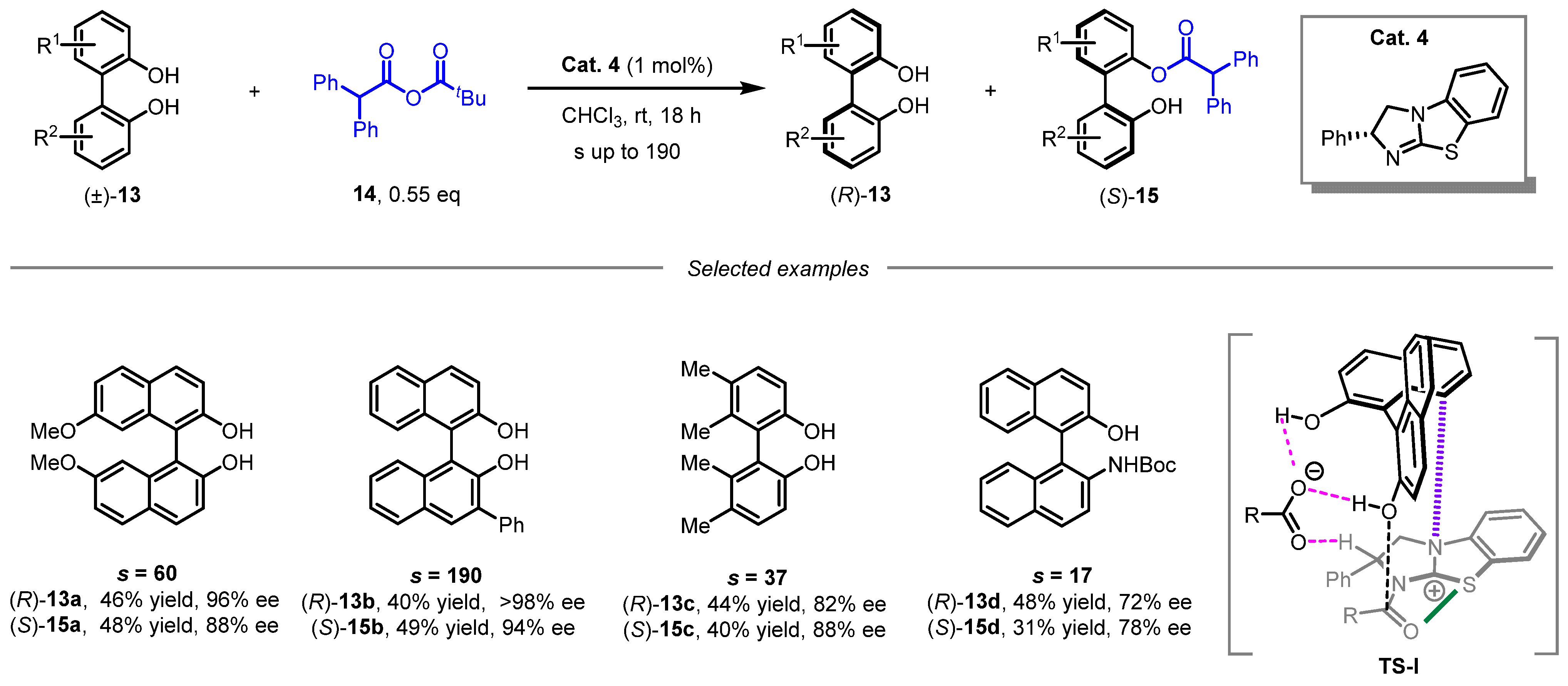
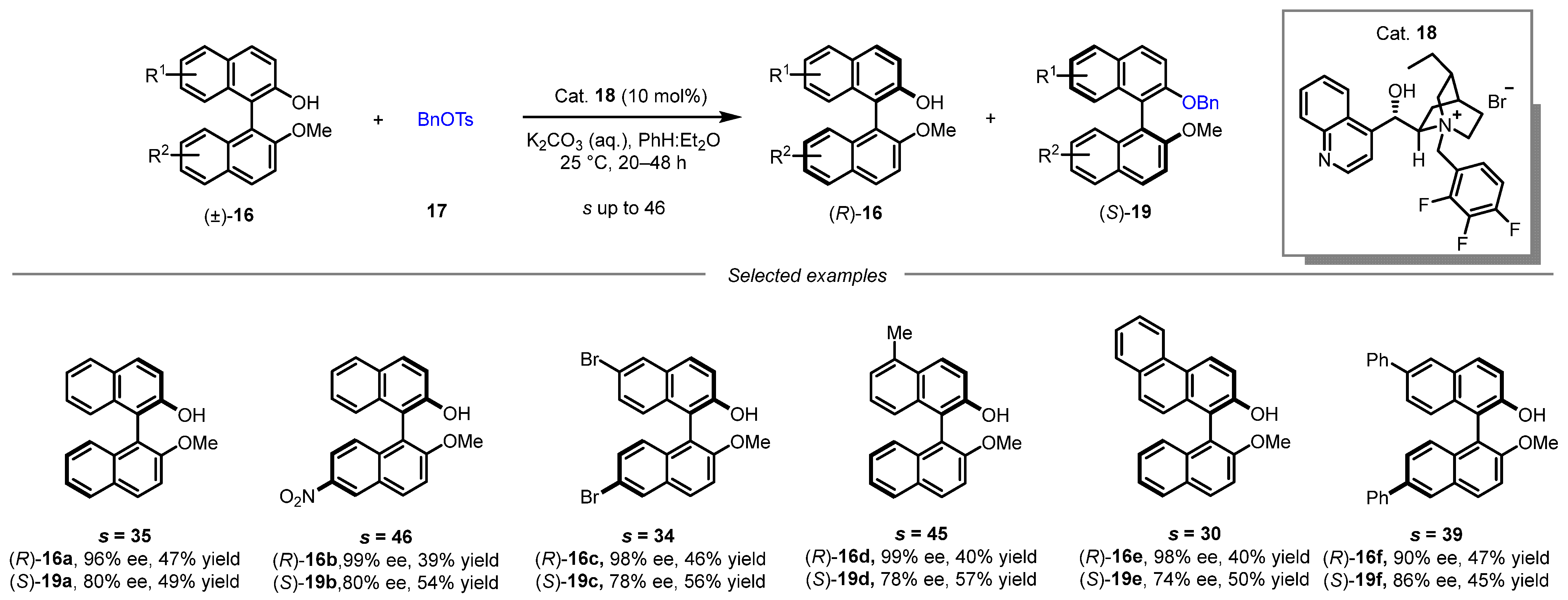
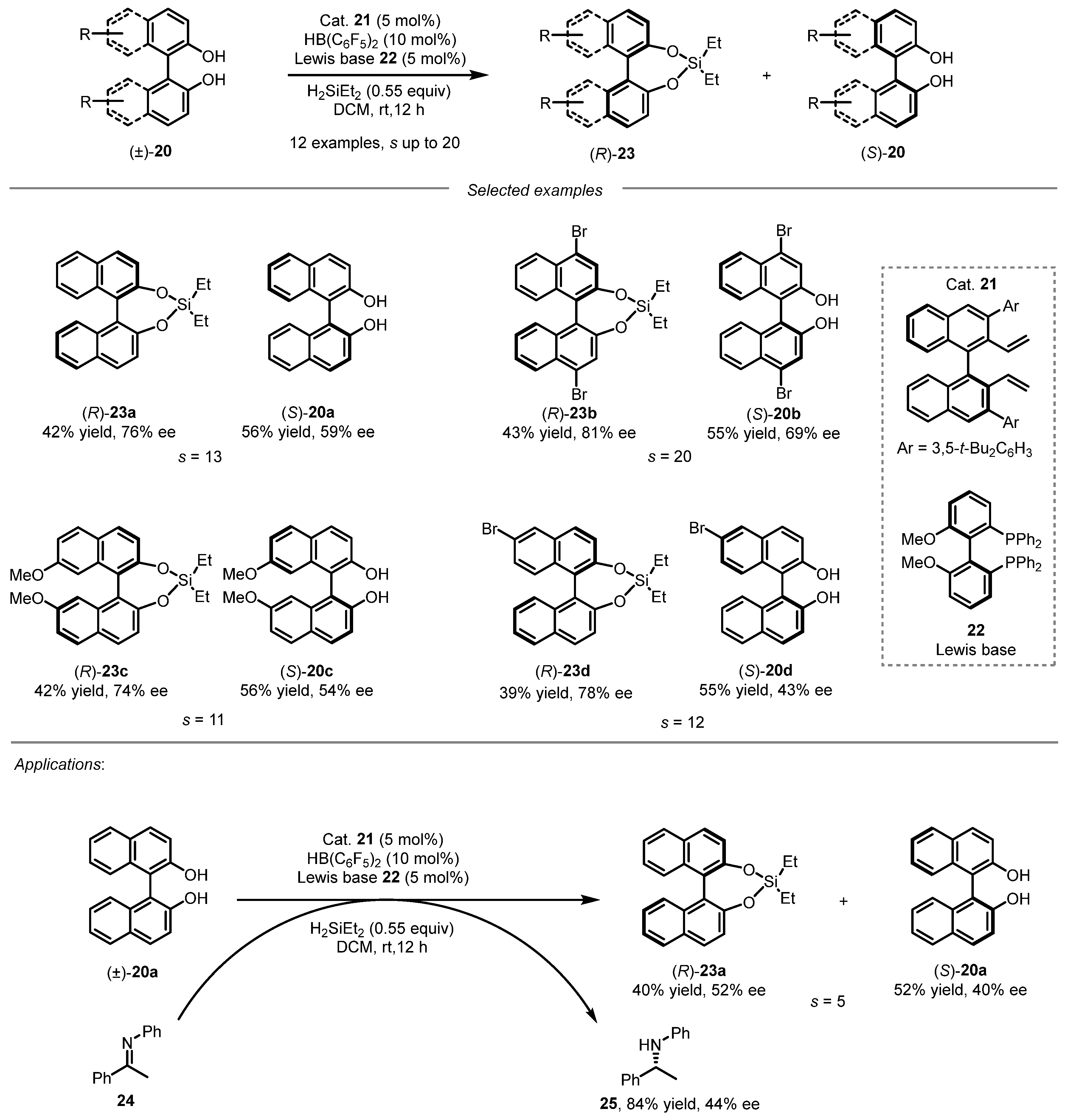
2.1. Organocatalytic Kinetic Resolution of Axially Chiral Biaryl Diols
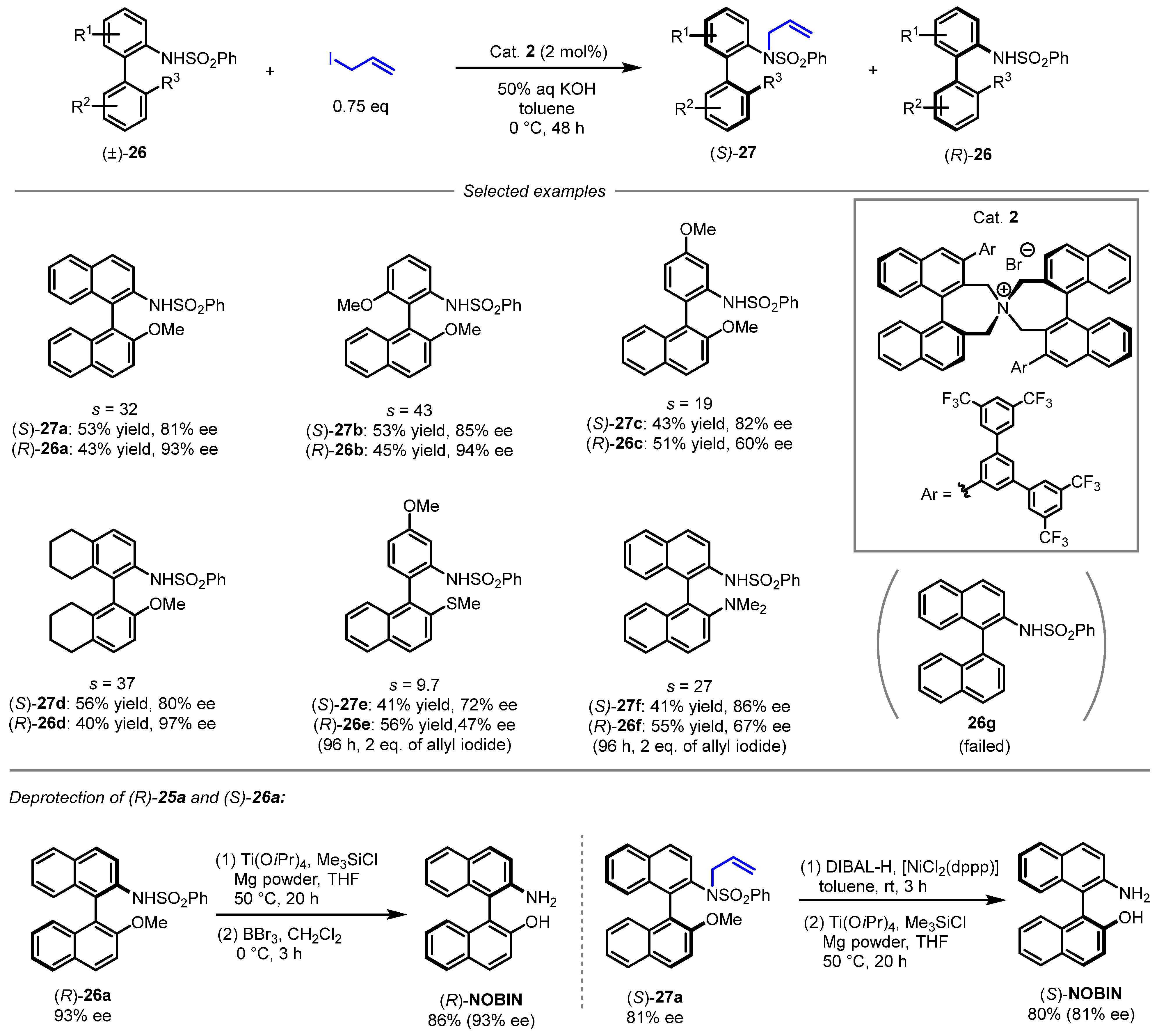
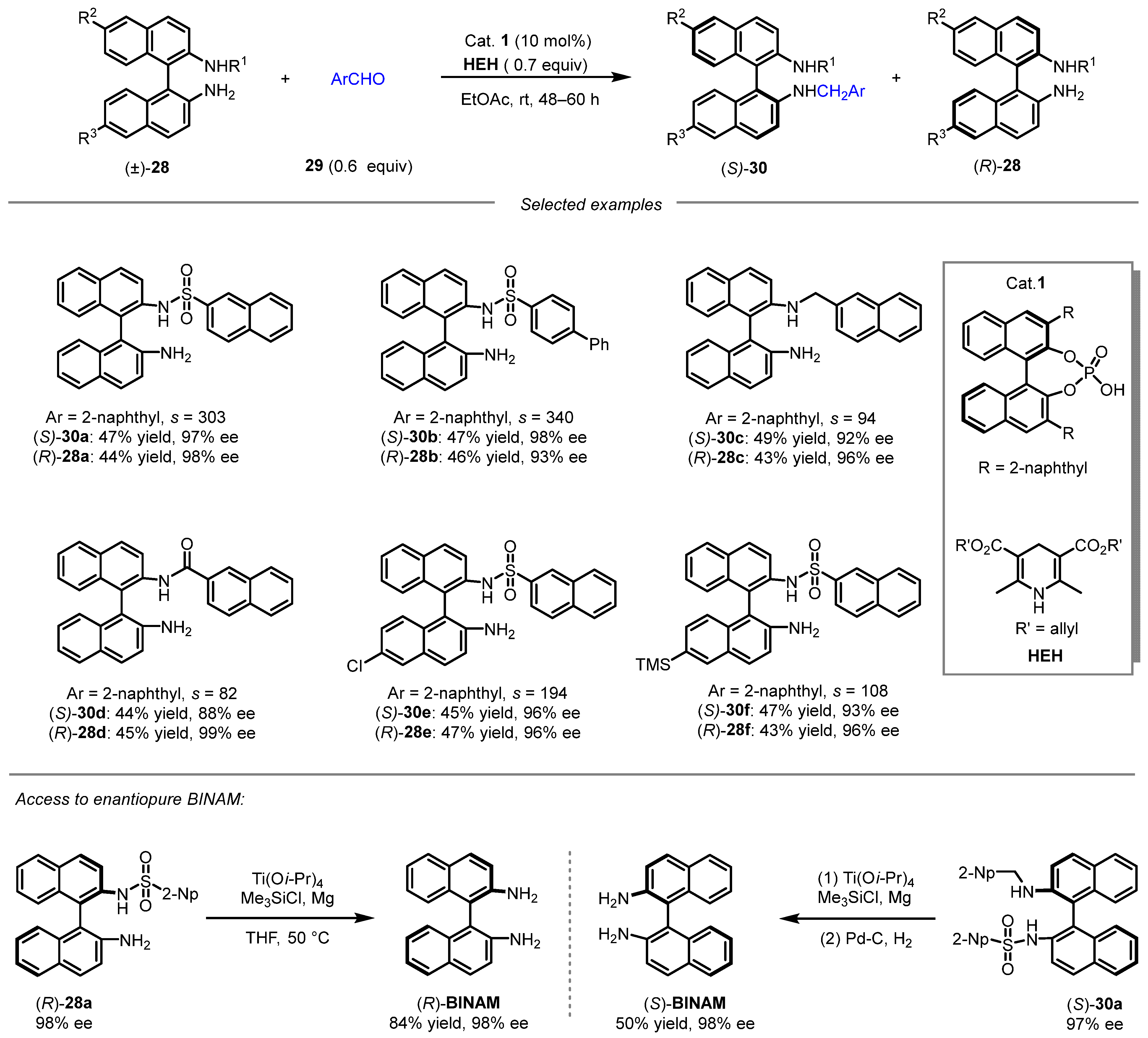
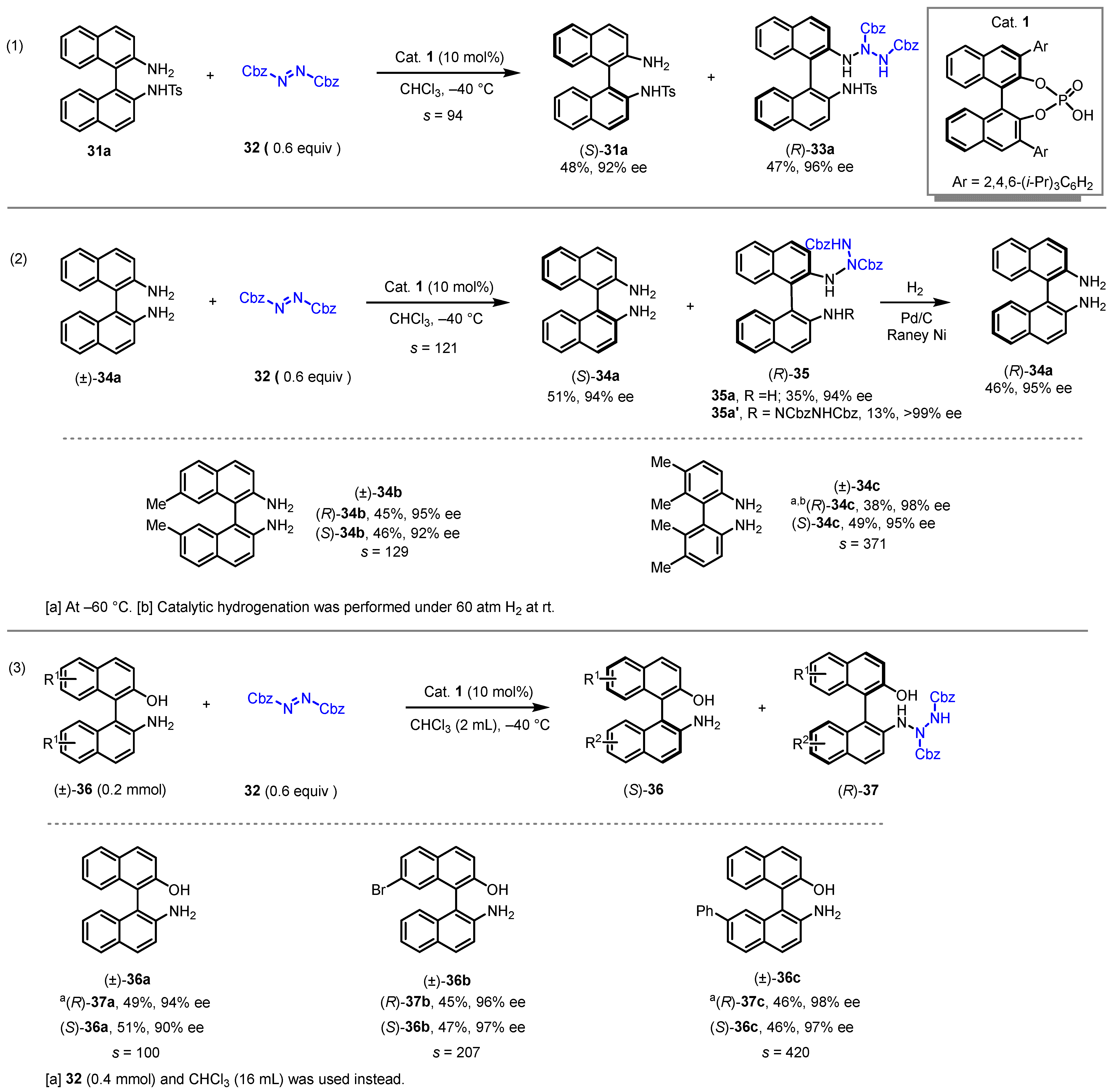
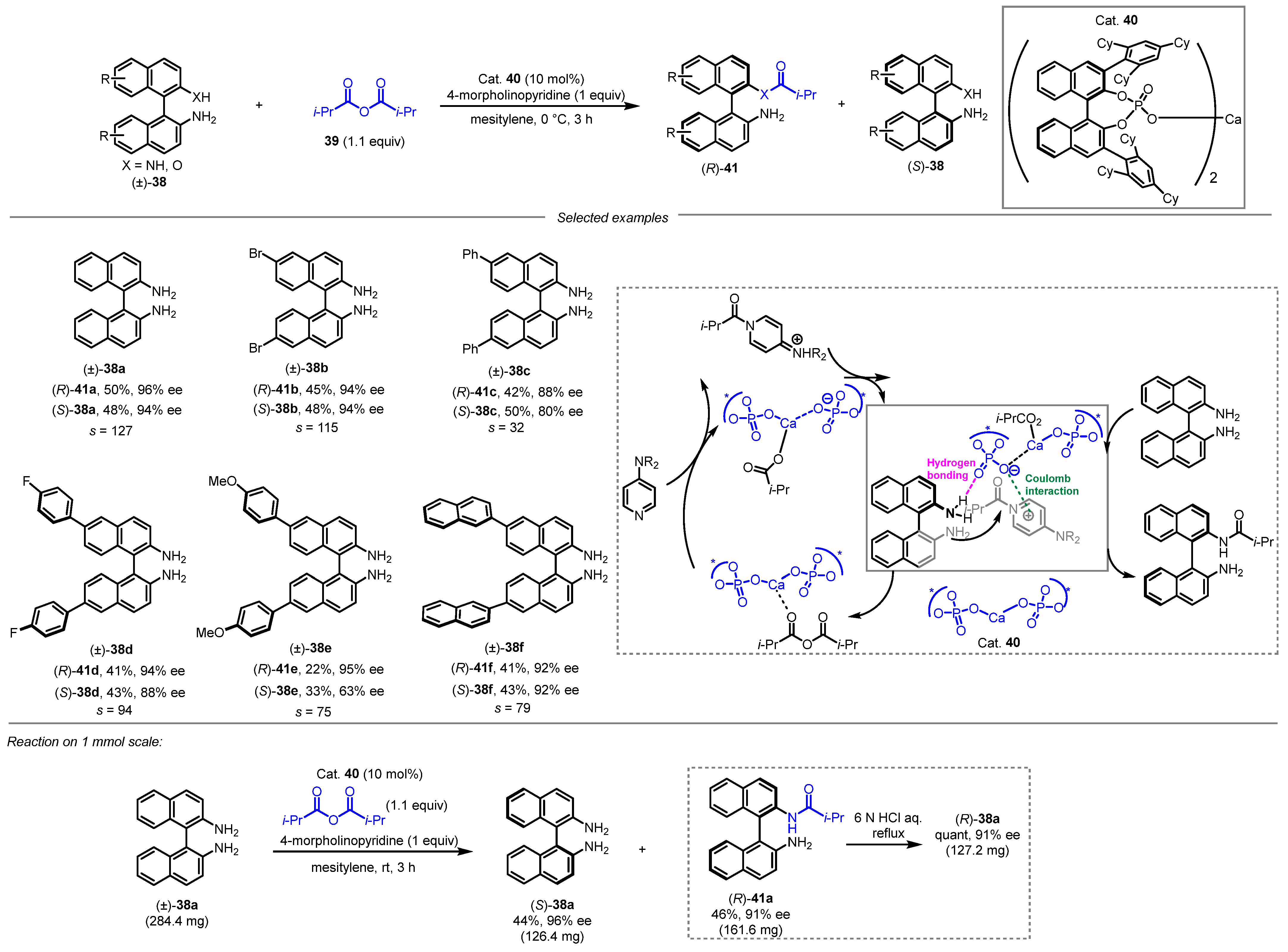
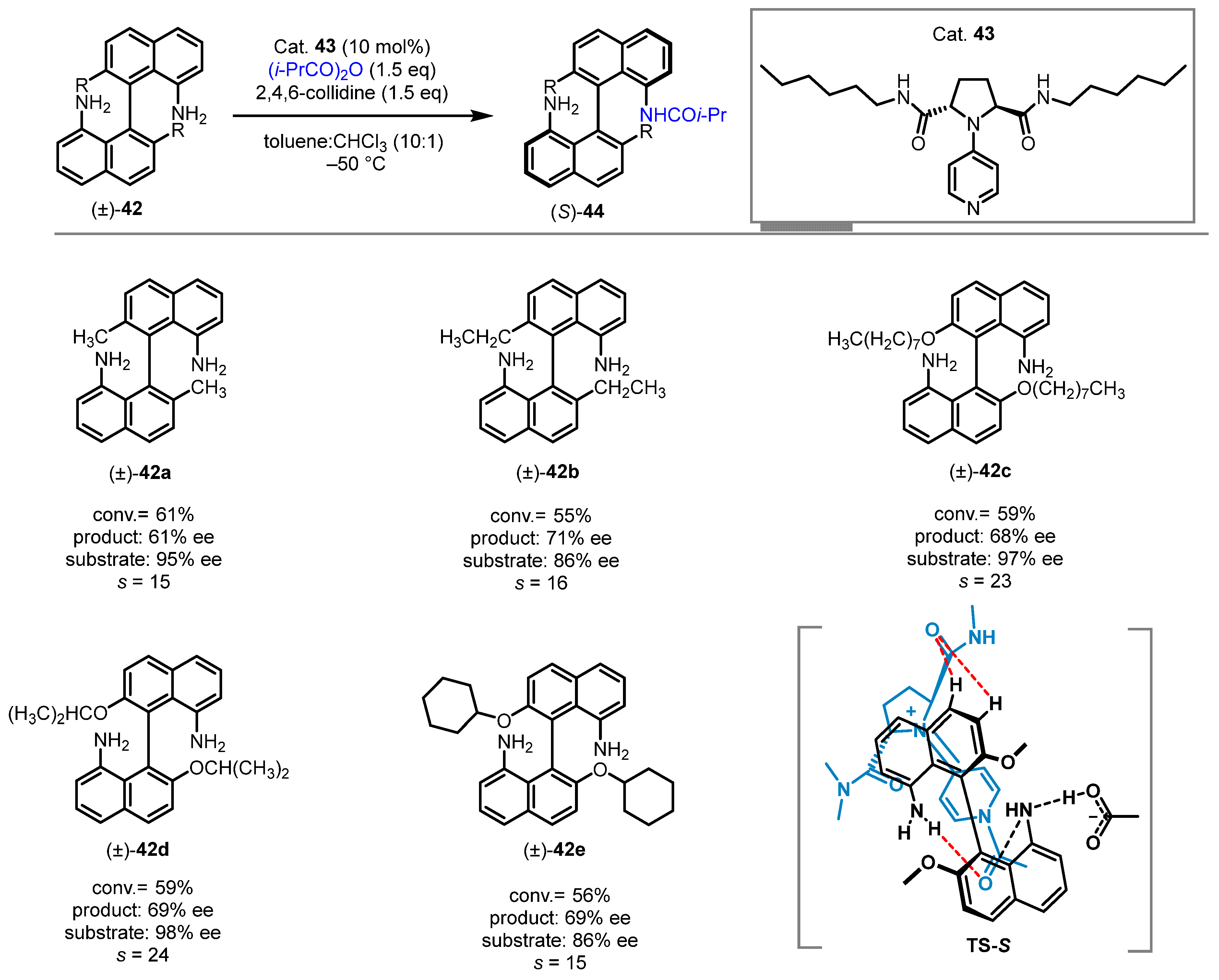
2.2. Organocatalytic Kinetic Resolution of Axially Chiral Biaryl Amines
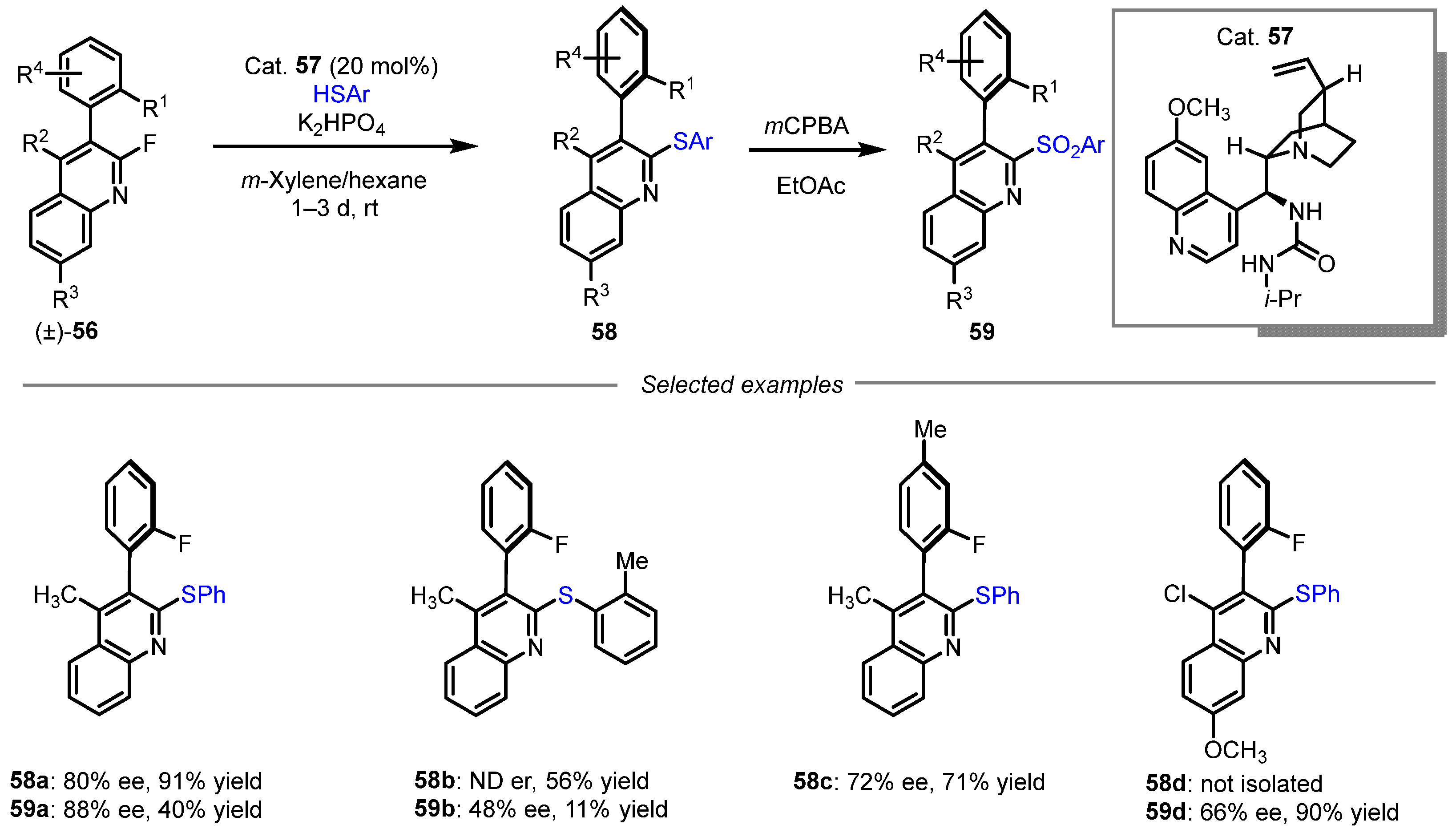
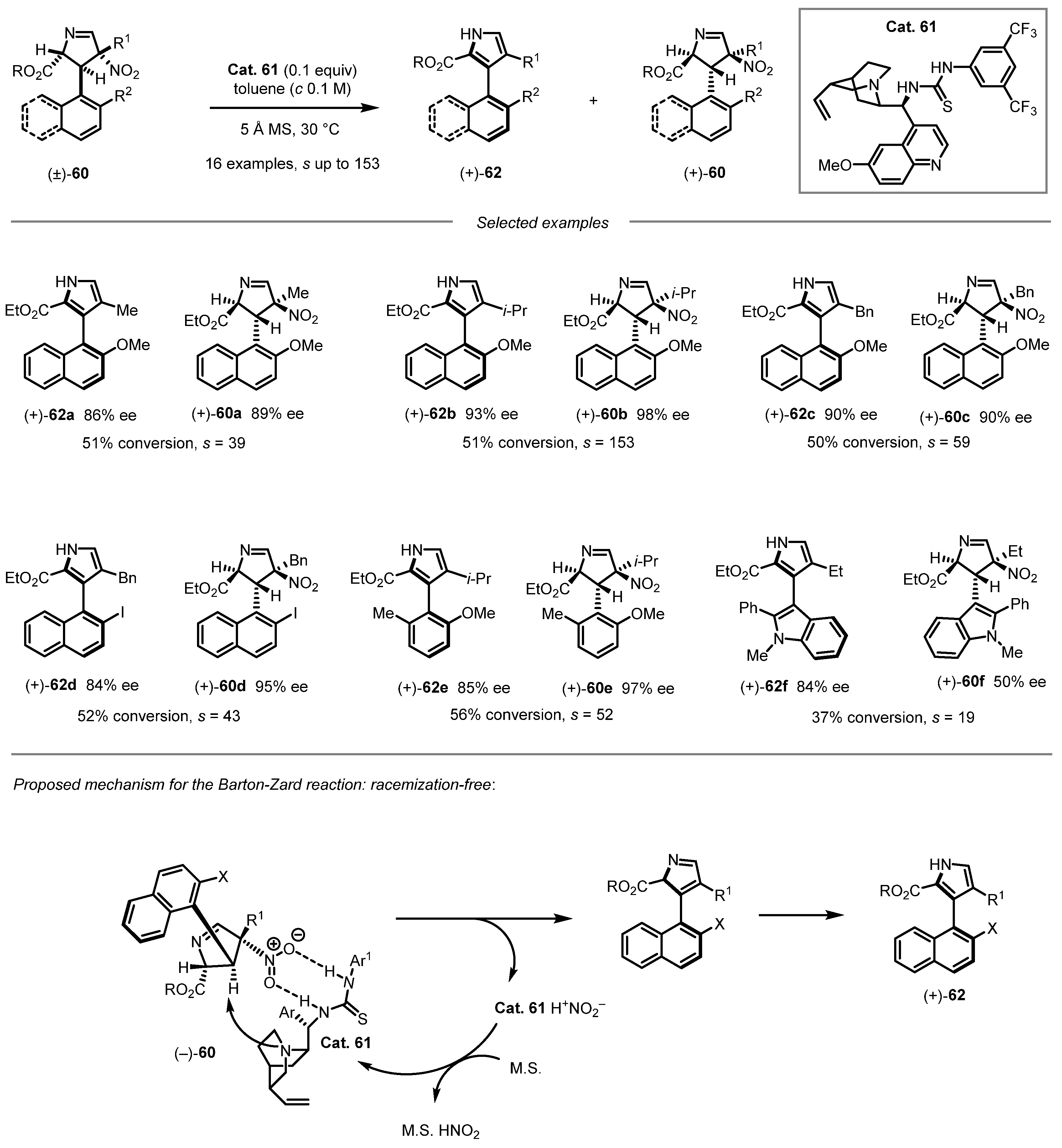
2.3. Organocatalytic Kinetic Resolution of Axially Chiral Heteroaryls
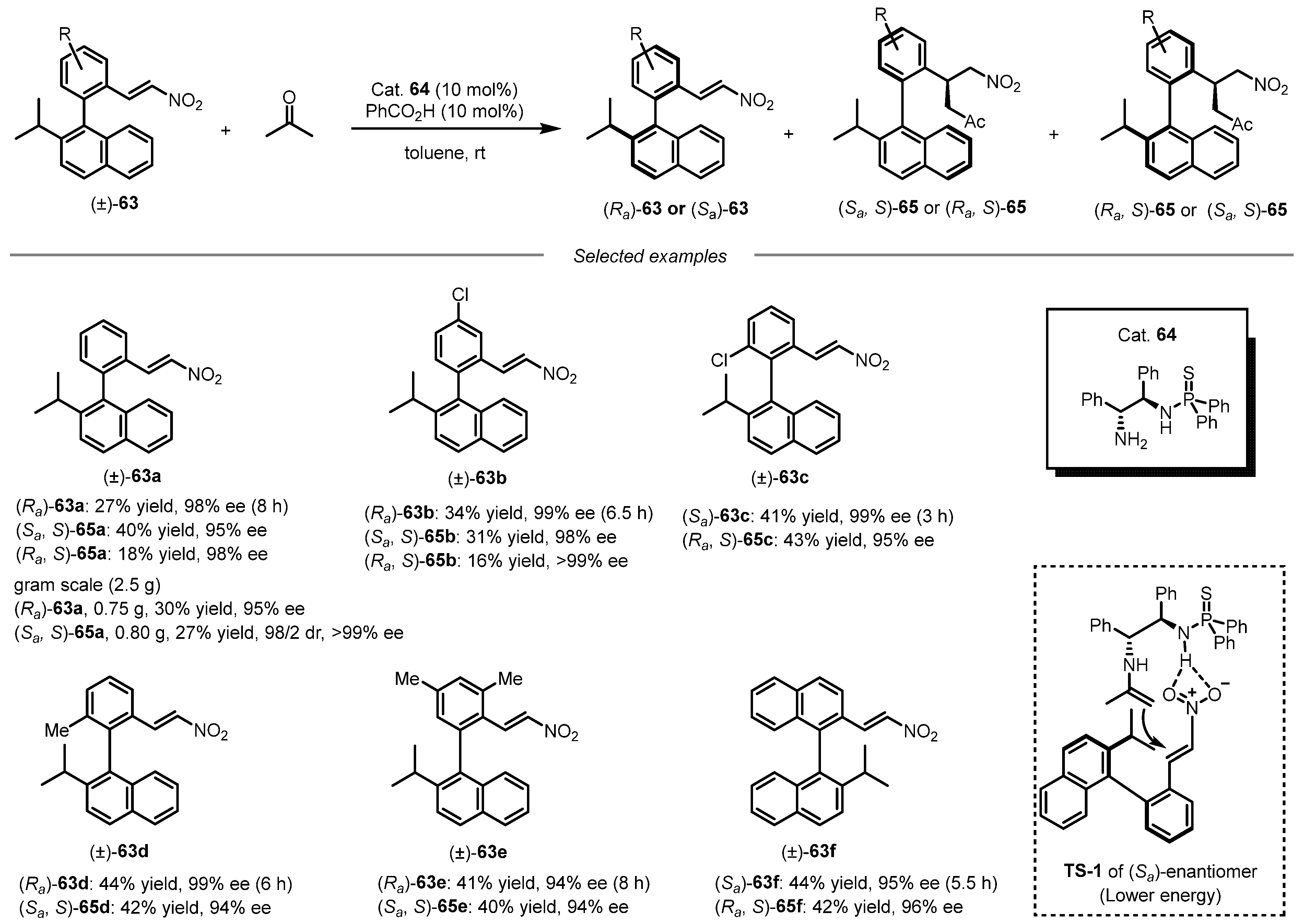
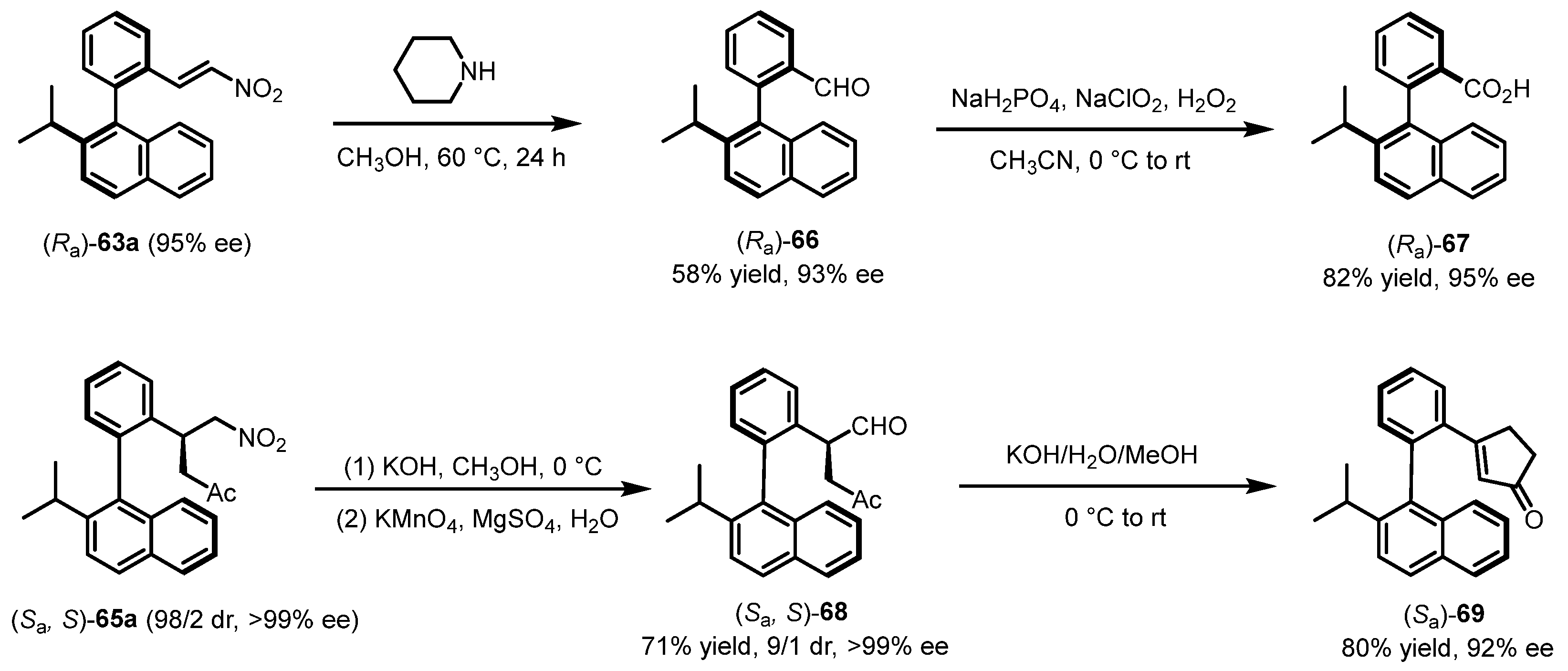
2.4. Organocatalytic Kinetic Resolution of Biaryl Compounds with Axial and Central Chirality
3. Organocatalytic Kinetic Resolution of C-N Axially Chiral Molecules
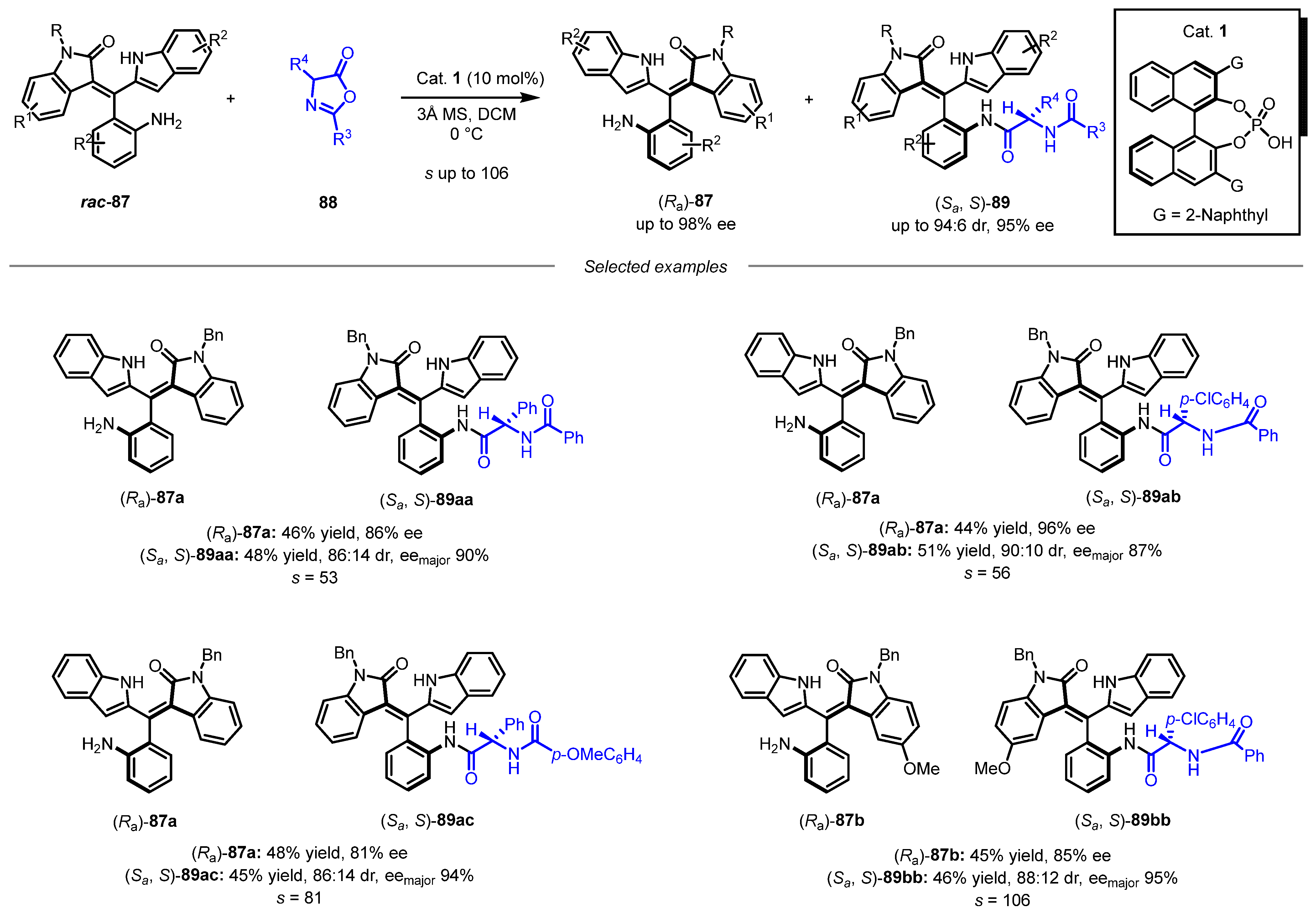
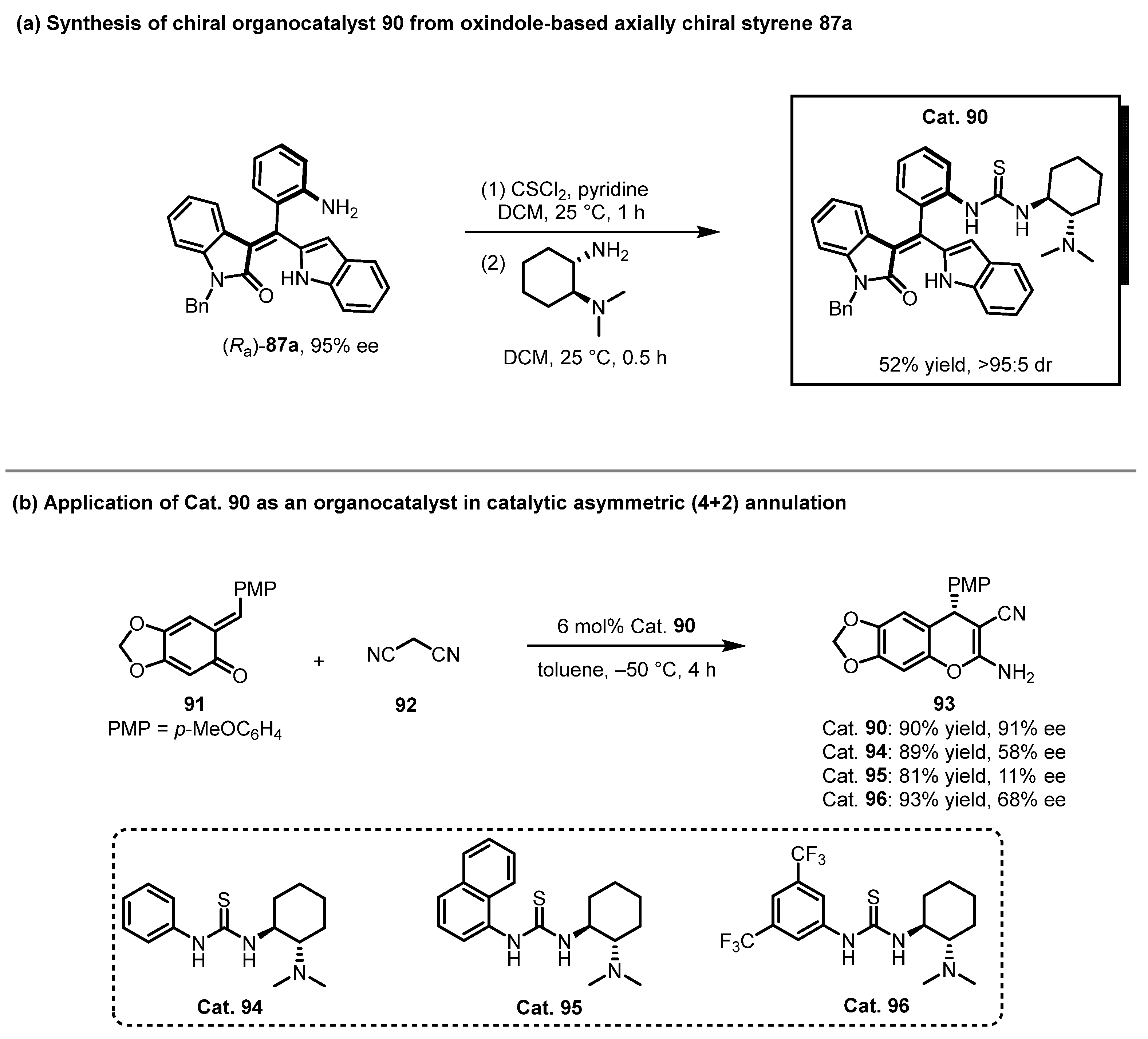
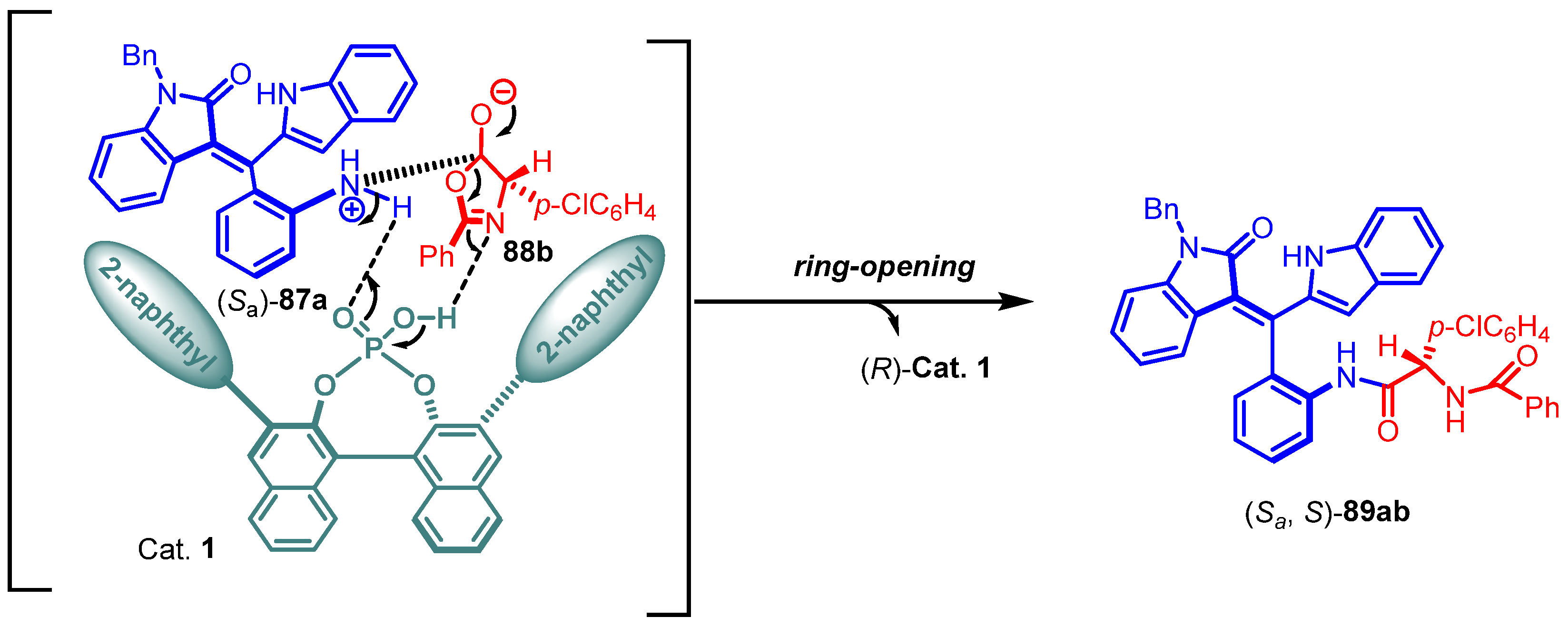
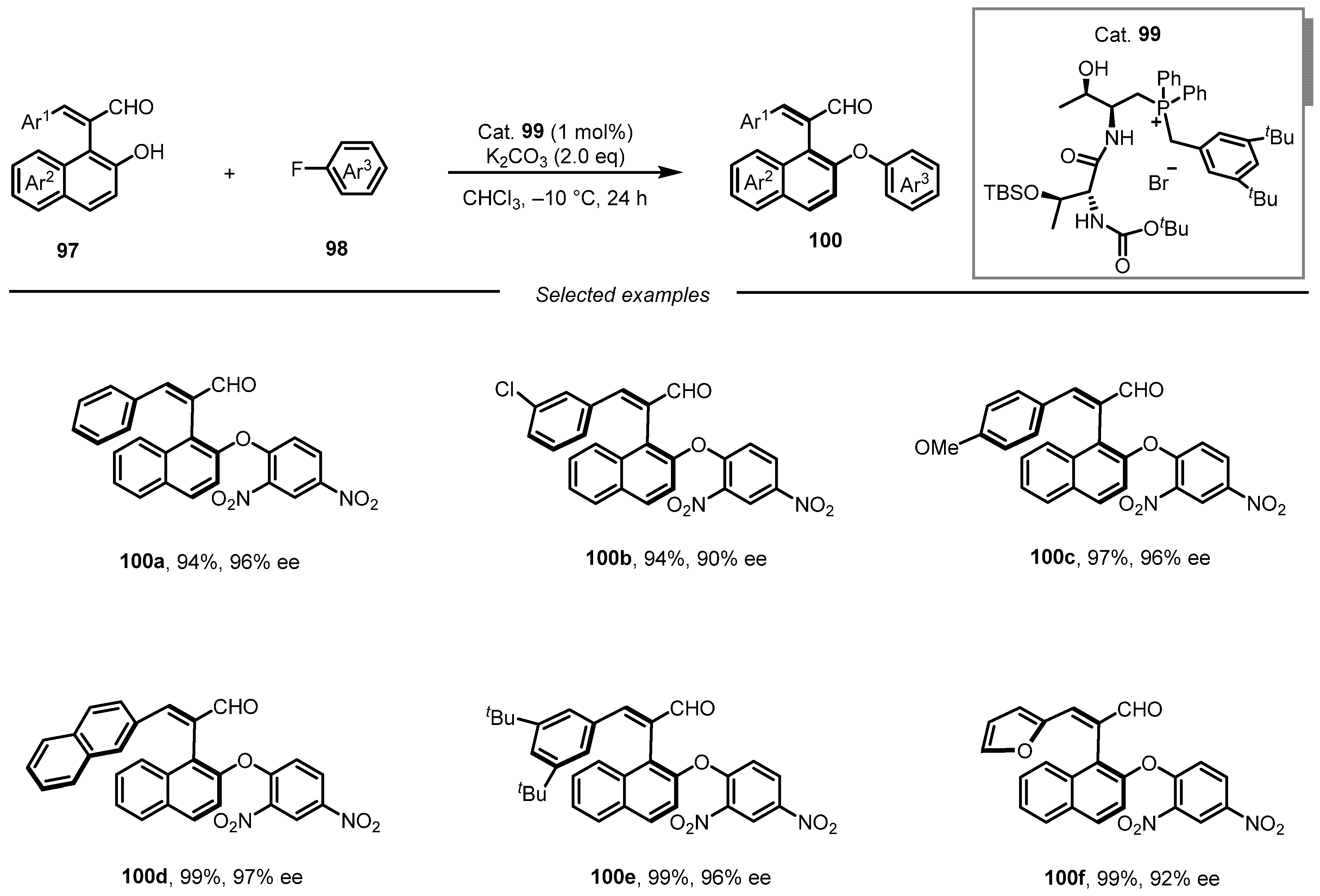
4. Organocatalytic Kinetic Resolution of Axially Chiral Styrenes
5. Conclusions
- (1)
- Expanding the substrate universe: The current methodologies often excel with specific, privileged scaffolds but struggle with more exotic or functionally dense architectures. Future catalyst design must prioritize broad-spectrum selectivity, capable of resolving substrates with multiple polar functionalities, sterically encumbered environments, or sensitive groups without the need for protective-group manipulations. The successful resolution of protecting-group-free BINAMs and amino alcohols points the way forward.
- (2)
- Predictive catalyst design and mechanistic elucidation: While many systems operate with high efficiency, the design of new catalysts for unmet challenges remains largely empirical. A deeper, quantitative understanding of the non-covalent interaction networks governing enantioselectivity is crucial. The integration of advanced computational tools (e.g., DFT, machine learning), coupled with in situ spectroscopic and kinetic studies, will enable the transition from discovery-driven to rational design-driven catalyst development. This will be essential for tackling substrates with minimal steric differentiation.
- (3)
- Pursuing ideal efficiency: The fundamental 50% yield limit of classical KR remains a significant practical constraint. The future lies in intelligently merging OKR with DKR and catalytic deracemization protocols. As exemplified by recent work on labile heterobiaryls, designing systems where substrate racemization is efficiently catalyzed under resolution conditions can theoretically deliver the 100% yield of a single enantiomer. Developing mild, organocatalytic racemization pathways compatible with resolution steps is a paramount goal for enhancing synthetic economy.
- (4)
- Toward application: The ultimate value of these chiral scaffolds lies in their utility. Future research must bridge the gap between resolution and application by demonstrating gram-to-kilogram scalability under practical conditions (low catalyst loading, benign solvents, simple workups) and focusing on the direct synthesis of application-ready molecules, such as chiral ligands, organocatalysts, or bioactive compound cores, with minimal downstream modification.
- (5)
- Advancing sustainability: The inherent “green” credentials of organocatalysis, metal-free and often air- and moisture-tolerant, should be further amplified. Research should aim for catalyst recyclability, the use of biorenewable solvents, and the development of catalytic systems powered by light or other sustainable energy inputs.
Author Contributions
Funding
Institutional Review Board Statement
Informed Consent Statement
Data Availability Statement
Conflicts of Interest
References
- Chen, Y.; Yekta, S.; Yudin, A.K. Modified BINOL Ligands in Asymmetric Catalysis. Chem. Rev. 2003, 103, 3155–3212. [Google Scholar] [CrossRef] [PubMed]
- Tang, W.; Zhang, X. New Chiral Phosphorus Ligands for Enantioselective Hydrogenation. Chem. Rev. 2003, 103, 3029–3070. [Google Scholar] [CrossRef] [PubMed]
- Akiyama, T. Stronger Brønsted Acids. Chem. Rev. 2007, 107, 5744–5758. [Google Scholar] [CrossRef] [PubMed]
- Li, Y.-M.; Kwong, F.-Y.; Yu, W.-Y.; Chan, A.S.C. Recent advances in developing new axially chiral phosphine ligands for asymmetric catalysis. Coord. Chem. Rev. 2007, 251, 2119–2144. [Google Scholar] [CrossRef]
- Parmar, D.; Sugiono, E.; Raja, S.; Rueping, M. Complete Field Guide to Asymmetric BINOL-Phosphate Derived Brønsted Acid and Metal Catalysis: History and Classification by Mode of Activation; Brønsted Acidity, Hydrogen Bonding, Ion Pairing, and Metal Phosphates. Chem. Rev. 2014, 114, 9047–9153. [Google Scholar] [CrossRef]
- Liu, C.-X.; Yin, S.-Y.; Zhao, F.; Yang, H.; Feng, Z.; Gu, Q.; You, S.-L. Rhodium-Catalyzed Asymmetric C–H Functionalization Reactions. Chem. Rev. 2023, 123, 10079–10134. [Google Scholar] [CrossRef]
- Kumarasamy, E.; Raghunathan, R.; Sibi, M.P.; Sivaguru, J. Nonbiaryl and Heterobiaryl Atropisomers: Molecular Templates with Promise for Atropselective Chemical Transformations. Chem. Rev. 2015, 115, 11239−11300. [Google Scholar] [CrossRef]
- Wen, K.; Yu, S.; Huang, Z.; Chen, L.; Xiao, M.; Yu, X.; Pu, L. Rational Design of a Fluorescent Sensor to Simultaneously Determine Both the Enantiomeric Composition and the Concentration of Chiral Functional Amines. J. Am. Chem. Soc. 2015, 137, 4517–4524. [Google Scholar] [CrossRef]
- Peng, X.; Rahim, A.; Peng, W.; Jiang, F.; Gu, Z.; Wen, S. Recent Progress in Cyclic Aryliodonium Chemistry: Syntheses and Applications. Chem. Rev. 2023, 123, 1364–1416. [Google Scholar] [CrossRef]
- Kozlowski, M.C.; Morgan, B.J.; Linton, E.C. Total synthesis of chiral biaryl natural products by asymmetric biaryl coupling. Chem. Soc. Rev. 2009, 38, 3193–3207. [Google Scholar] [CrossRef]
- Clayden, J.; Moran, W.J.; Edwards, P.J.; LaPlante, S.R. The Challenge of Atropisomerism in Drug Discovery. Angew. Chem. Int. Ed. 2009, 48, 6398–6401. [Google Scholar] [CrossRef] [PubMed]
- LaPlante, S.R.; Fader, L.D.; Fandrick, K.R.; Fandrick, D.R.; Hucke, O.; Kemper, R.; Miller, S.P.F.; Edwards, P.J. Assessing Atropisomer Axial Chirality in Drug Discovery and Development. J. Med. Chem. 2011, 54, 7005–7022. [Google Scholar] [CrossRef] [PubMed]
- Cho, H.; Choi, M.-K.; Cho, D.-Y.; Yeo, C.-W.; Jeong, H.-E.; Shon, J.-H.; Lee, J.-Y.; Shin, J.-S.; Cho, M.; Kim, D.-Y.; et al. Effect of CYP2C19 Genetic Polymorphism on Pharmacokinetics and Pharmacodynamics and Pharmacodynamics of a New Proton Pump Inhibitor, Ilaprazole. J. Clin. Pharmacol. 2012, 52, 976–984. [Google Scholar] [CrossRef] [PubMed]
- Smyth, J.E.; Butler, N.M.; Keller, P.A. A twist of nature—The significance of atropisomers in biological systems. Nat. Prod. Rep. 2015, 32, 1562–1583. [Google Scholar] [CrossRef]
- Glunz, P.W. Recent encounters with atropisomerism in drug discovery. Bioorg. Med. Chem. Lett. 2018, 28, 53–60. [Google Scholar] [CrossRef]
- Gallagher, P.R.; Savoini, A.; Saady, A.; Maynard, J.R.J.; Butler, P.W.V.; Tizzard, G.J.; Goldup, S.M. Facial Selectivity in Mechanical Bond Formation: Axially Chiral Enantiomers and Geometric Isomers from a Simple Prochiral Macrocycle. J. Am. Chem. Soc. 2024, 146, 9134–9141. [Google Scholar] [CrossRef]
- Kawashima, H.; Tauchi, D.; Sakura, M.; Tsubaki, K.; Hasegawa, M. Chiroptical Properties of Chiral Macrocycles Composed of Axially Chiral Binaphthyl and Bithiophene. Chem. Asian J. 2025, 20, e202401920. [Google Scholar] [CrossRef]
- Peng, L.; Chang, Y.; Tong, S.; Qin, W.; Cera, G.; Yan, H. Enantioselective Synthesis of Inherently Chiral Calix [4] arenes via Catalytic Asymmetric Lower-Rim Functionalization. Angew. Chem. Int. Ed. 2025, 64, e202518659. [Google Scholar] [CrossRef]
- Li, S.; Li, R.; Zhang, Y.-K.; Wang, S.; Ma, B.; Zhang, B.; An, P. BINOL-like atropisomeric chiral nanographene. Chem. Sci. 2023, 14, 3286–3292. [Google Scholar] [CrossRef]
- Wirtanen, T.; Muuronen, M.; Hurmalainen, J.; Tuononen, H.M.; Nieger, M.; Helaja, J. Intermolecular oxidative dehydrogenative 3,3′-coupling of benzo [b] furans and benzo [b] thiophenes promoted by DDQ/H+: Total synthesis of shandougenine B. Org. Chem. Front. 2016, 3, 1738–1745. [Google Scholar] [CrossRef]
- Liao, G.; Zhou, T.; Yao, Q.-J.; Shi, B.-F. Recent advances in the synthesis of axially chiral biaryls via transition metal-catalysed asymmetric C–H functionalization. Chem. Commun. 2019, 55, 8514–8523. [Google Scholar] [CrossRef] [PubMed]
- Cheng, J.K.; Xiang, S.-H.; Li, S.; Ye, L.; Tan, B. Recent Advances in Catalytic Asymmetric Construction of Atropisomers. Chem. Rev. 2021, 121, 4805–4902. [Google Scholar] [CrossRef] [PubMed]
- Luo, W.; Zhang, Y.; Ming, M.; Zhang, L. Recent advances in the catalytic asymmetric construction of axially chiral azole-based frameworks. Org. Chem. Front. 2024, 11, 6819–6849. [Google Scholar] [CrossRef]
- Dong, Y.; Wang, T. Gold-Catalyzed Enantioselective Synthesis of Axially Chiral Compounds. Adv. Synth. Catal. 2025, 367, e70139. [Google Scholar] [CrossRef]
- Yang, H.; Chen, J.; Zhou, L. Construction of Axially Chiral Compounds via Central-to-Axial Chirality Conversion. Asian J. Org. Chem. 2020, 15, 2939–2951. [Google Scholar] [CrossRef]
- Feng, K.; Yao, C.; Xu, H. Biaxially chiral compounds: Research and development of synthesis. Chem. Commun. 2025, 61, 2217–2234. [Google Scholar] [CrossRef]
- Zhao, Q.; Peng, C.; Wang, Y.-T.; Zhan, G.; Han, B. Recent progress on the construction of axial chirality through transition-metal-catalyzed benzannulation. Org. Chem. Front. 2021, 8, 2772–2785. [Google Scholar] [CrossRef]
- Zhang, Z.; Dai, L. Construction of axially chiral molecules enabled by photoinduced enantioselective reactions. Chem. Sci. 2024, 15, 12636–12643. [Google Scholar] [CrossRef]
- Perveen, S.; Zhang, G.; Li, P. Recent advancements in the Ullmann homocoupling reaction for the synthesis of biaryl compounds. Org. Biomol. Chem. 2025, 23, 4006–4023. [Google Scholar] [CrossRef]
- List, B. Introduction: Organocatalysis. Chem. Rev. 2007, 107, 5413–5415. [Google Scholar] [CrossRef]
- Akiyama, T.; Mori, K. Stronger Brønsted Acids: Recent Progress. Chem. Rev. 2015, 115, 9277–9306. [Google Scholar] [CrossRef] [PubMed]
- Xiang, S.-H.; Tan, B. Advances in asymmetric organocatalysis over the last 10 years. Nat. Commun. 2020, 11, 3786. [Google Scholar] [CrossRef] [PubMed]
- Han, B.; He, X.-H.; Liu, Y.-Q.; He, G.; Peng, C.; Li, J.-L. Asymmetric organocatalysis: An enabling technology for medicinal chemistry. Chem. Soc. Rev. 2021, 50, 1522–1586. [Google Scholar] [CrossRef] [PubMed]
- Woldegiorgis, A.G.; Lin, X. Recent advances in the asymmetric phosphoric acid-catalyzed synthesis of axially chiral compounds. Beilstein J. Org. Chem. 2021, 17, 2729–2764. [Google Scholar] [CrossRef]
- Mancheño, O.G.; Waser, M. Recent Developments and Trends in Asymmetric Organocatalysis. Eur. J. Org. Chem. 2023, 26, e202200950. [Google Scholar] [CrossRef]
- Szabados, H.; Šebesta, R. Recent advances in organocatalytic atroposelective reactions. Beilstein J. Org. Chem. 2025, 21, 55–121. [Google Scholar] [CrossRef]
- Zhang, H.-H.; Shi, F. Organocatalytic Atroposelective Synthesis of Indole Derivatives Bearing Axial Chirality: Strategies and Applications. Acc. Chem. Res. 2022, 55, 2562–2580. [Google Scholar] [CrossRef]
- Gurubrahamam, R.; Cheng, Y.-S.; Huang, W.-Y.; Chen, K. Recent Advances in Organocatalytic Kinetic Resolution for the Synthesis of Functionalized Products. ChemCatChem 2016, 8, 86–96. [Google Scholar] [CrossRef]
- Ma, G.; Sibi, M.P. Catalytic Kinetic Resolution of Biaryl Compounds. Chem. Eur. J. 2015, 21, 11644–11657. [Google Scholar] [CrossRef]
- Kagan, H.B.; Fiaud, J.C. Kinetic Resolution. Top. Stereochem. 1988, 18, 249–330. [Google Scholar]
- Unni, A.K.; Takenaka, N.; Yamamoto, H.; Rawal, V.H. Axially Chiral Biaryl Diols Catalyze Highly Enantioselective Hetero-Diels−Alder Reactions through Hydrogen Bonding. J. Am. Chem. Soc. 2005, 127, 1336–1337. [Google Scholar] [CrossRef] [PubMed]
- Nguyen, T.N.; Chen, P.-A.; Setthakarn, K.; May, J.A. Chiral Diol-Based Organocatalysts in Enantioselective Reactions. Molecules 2018, 23, 2317. [Google Scholar] [CrossRef] [PubMed]
- Zhang, P.; Yu, J.; Peng, F.; Wu, X.; Jie, J.; Liu, C.; Tian, H.; Yang, H.; Fu, H. Development of Axially Chiral Cyclo-Biaryldiol Ligands with Adjustable Dihedral Angles. Chem. Eur. J. 2016, 22, 17477–17484. [Google Scholar] [CrossRef] [PubMed]
- Brunel, J.M. BINOL: A Versatile Chiral Reagent. Chem. Rev. 2005, 105, 857–898. [Google Scholar] [CrossRef]
- Lu, S.; Poh, S.B.; Siau, W.-Y.; Zhao, Y. Kinetic Resolution of Tertiary Alcohols: Highly Enantioselective Access to 3-Hydroxy-3-Substituted Oxindoles. Angew. Chem. Int. Ed. 2013, 52, 1731–1734. [Google Scholar] [CrossRef]
- Lu, S.; Poh, S.B.; Zhao, Y. Kinetic Resolution of 1,1′-Biaryl-2,2′-Diols and Amino Alcohols through NHC-Catalyzed Atroposelective Acylation. Angew. Chem. Int. Ed. 2014, 53, 11041–11045. [Google Scholar] [CrossRef]
- Ma, G.; Deng, J.; Sibi, M.P. Fluxionally Chiral DMAP Catalysts: Kinetic Resolution of Axially Chiral Biaryl Compounds. Angew. Chem. Int. Ed. 2014, 53, 11818–11821. [Google Scholar] [CrossRef]
- Qu, S.; Greenhalgh, M.D.; Smith, A.D. Isothiourea-Catalysed Regioselective Acylative Kinetic Resolution of Axially Chiral Biaryl Diols. Chem. Eur. J. 2019, 25, 2816–2823. [Google Scholar] [CrossRef]
- Jolliffe, J.D.; Armstrong, R.J.; Smith, M.D. Catalytic enantioselective synthesis of atropisomeric biaryls by a cation-directed O-alkylation. Nat. Chem. 2017, 9, 558–562. [Google Scholar] [CrossRef]
- Jones, B.A.; Balan, T.; Jolliffe, J.D.; Campbell, C.D.; Smith, M.D. Practical and Scalable Kinetic Resolution of BINOLs Mediated by a Chiral Counterion. Angew. Chem. Int. Ed. 2019, 58, 4596–4600. [Google Scholar] [CrossRef]
- Zhang, Z.; Feng, X.; Du, H. Kinetic resolution of binols and biphenols via dehydrogenative coupling with hydrosilanes catalyzed by chiral FLPs. Org. Biomol. Chem. 2025, 23, 4344–4348. [Google Scholar] [CrossRef] [PubMed]
- Telfer, S.G.; Kuroda, R. 1,1′-Binaphthyl-2,2′-diol and 2,2′-diamino-1,1′-binaphthyl: Versatile frameworks for chiral ligands in coordination and metallosupramolecular chemistry. Coord. Chem. Rev. 2003, 242, 33–46. [Google Scholar] [CrossRef]
- Shirakawa, S.; Wu, X.; Maruoka, K. Kinetic Resolution of Axially Chiral 2-Amino-1,1′-Biaryls by Phase-Transfer-Catalyzed N-Allylation. Angew. Chem. Int. Ed. 2013, 52, 14200–14203. [Google Scholar] [CrossRef] [PubMed]
- Cheng, D.-J.; Yan, L.; Tian, S.-K.; Wu, M.-Y.; Wang, L.-X.; Fan, Z.-L.; Zheng, S.-C.; Liu, X.-Y.; Tan, B. Highly Enantioselective Kinetic Resolution of Axially Chiral BINAM Derivatives Catalyzed by a Brønsted Acid. Angew. Chem. Int. Ed. 2014, 53, 3684–3687. [Google Scholar] [CrossRef]
- Liu, W.; Jiang, Q.; Yang, X. A Versatile Method for Kinetic Resolution of Protecting-Group-Free BINAMs and NOBINs through Chiral Phosphoric Acid Catalyzed Triazane Formation. Angew. Chem. Int. Ed. 2020, 59, 23598–23602. [Google Scholar] [CrossRef]
- Uchikura, T.; Kanno, Y.; Fukuda, Y.; Sato, M.; Akiyama, T. Kinetic resolution of 1,1′-binaphthyl-2,2′-diamine derivatives by chiral calcium phosphate-catalyzed acylation. Org. Biomol. Chem. 2024, 22, 3444–3447. [Google Scholar] [CrossRef]
- Reddy, V.K.; Kan, K.; Sokeirik, Y.S.A.-K.; Yoshida, K.; Hirata, A.; Yamanaka, M.; Ueda, Y.; Kawabata, T. Acylative kinetic resolution of 1,1′-binaphthyl-8,8′-diamines by organocatalysis. Tetrahedron 2022, 103, 132539–132549. [Google Scholar] [CrossRef]
- Carmona, J.A.; Rodríguez-Franco, C.; Fernández, R.; Hornillos, V.; Lassaletta, J.M. Atroposelective transformation of axially chiral (hetero)biaryls. From desymmetrization to modern resolution strategies. Chem. Soc. Rev. 2021, 50, 2968–2983. [Google Scholar] [CrossRef]
- Wang, Z.-S.; Zhu, L.-J.; Li, C.-T.; Liu, B.-Y.; Hong, X.; Ye, L.-W. Synthesis of Axially Chiral N-Arylindoles via Atroposelective Cyclization of Ynamides Catalyzed by Chiral Brønsted Acids. Angew. Chem. Int. Ed. 2022, 61, e202201436. [Google Scholar] [CrossRef]
- Wang, J.; Chen, M.-W.; Ji, Y.; Hu, S.-B.; Zhou, Y.-G. Kinetic Resolution of Axially Chiral 5- or 8-Substituted Quinolines via Asymmetric Transfer Hydrogenation. J. Am. Chem. Soc. 2016, 138, 10413–10416. [Google Scholar] [CrossRef]
- Fernandez, E.; Maeda, K.; Hooper, M.W.; Brown, J.M. Catalytic Asymmetric Hydroboration/Amination and Alkylamination with Rhodium Complexes of 1,1′-(2-Diarylphosphino-1-naphthyl)isoquinoline. Chem. Eur. J. 2000, 6, 1840–1846. [Google Scholar] [CrossRef]
- Koradin, C.; Polborn, K.; Knochel, P. Enantioselective Synthesis of Propargylamines by Copper-Catalyzed Addition of Alkynes to Enamines. Angew. Chem. Int. Ed. 2002, 41, 2535–2538. [Google Scholar] [CrossRef]
- Jiang, P.-Y.; Wu, S.; Wang, G.-J.; Xiang, S.-H.; Tan, B. Synthesis of Axially Chiral QUINAP Derivatives by Ketone-Catalyzed Enantioselective Oxidation. Angew. Chem. Int. Ed. 2023, 62, e202309272. [Google Scholar] [CrossRef] [PubMed]
- Smith, D.E.; Marquez, I.; Lokensgard, M.E.; Rheingold, A.L.; Hecht, D.A.; Gustafson, J.L. Exploiting Atropisomerism to Increase the Target Selectivity of Kinase Inhibitors. Angew. Chem. Int. Ed. 2015, 54, 11754–11759. [Google Scholar] [CrossRef] [PubMed]
- Cardenas, M.M.; Toenjes, S.T.; Nalbandian, C.J.; Gustafson, J.L. Enantioselective Synthesis of Pyrrolopyrimidine Scaffolds through Cation-Directed Nucleophilic Aromatic Substitution. Org. Lett. 2018, 20, 2037–2041. [Google Scholar] [CrossRef]
- Cardenas, M.M.; Saputra, M.A.; Gordon, D.A.; Sanchez, A.N.; Yamamoto, N.; Gustafson, J.L. Catalytic atroposelective dynamic kinetic resolutions and kinetic resolutions towards 3-arylquinolines via SNAr. Chem. Commun. 2021, 57, 10087–10090. [Google Scholar] [CrossRef]
- Zheng, S.-C.; Wang, Q.; Zhu, J. Catalytic Kinetic Resolution by Enantioselective Aromatization: Conversion of Racemic Intermediates of the Barton–Zard Reaction into Enantioenriched 3-Arylpyrroles. Angew. Chem. Int. Ed. 2019, 58, 9215–9219. [Google Scholar] [CrossRef]
- Cui, L.; Wang, Y.; Fan, Z.; Li, Z.; Zhou, Z. Kinetic Resolution of Axially Chiral 2-Nitrovinyl Biaryls Catalyzed by a Bifunctional Thiophosphinamide. Adv. Synth. Catal. 2019, 361, 3575–3581. [Google Scholar] [CrossRef]
- Lu, A.; Liu, T.; Wu, R.; Wang, Y.; Zhou, Z.; Wu, G.; Fang, J.; Tang, C. Highly Enantioselective Michael Addition of Acetone to Nitro Olefins Catalyzed by Chiral Bifunctional Primary Amine-Thiophosphoramide Catalyst. Eur. J. Org. Chem. 2010, 2010, 5777–5781. [Google Scholar] [CrossRef]
- Lu, A.; Liu, T.; Wu, R.; Wang, Y.; Wu, G.; Zhou, Z.; Fang, J.; Tang, C. A Recyclable Organocatalyst for Asymmetric Michael Addition of Acetone to Nitroolefins. J. Org. Chem. 2011, 76, 3872–3879. [Google Scholar] [CrossRef]
- Pan, J.; Wang, Y.; Chen, S.; Zhang, X.; Wang, Y.; Zhou, Z. Stereocontrolled construction of 2-(3-indolyl)chromane scaffolds via organocatalyzed cascade Michael addition-hemiketalization followed by Friedel–Crafts alkylation reaction. Tetrahedron 2016, 72, 240–246. [Google Scholar] [CrossRef]
- Zhang, H.; Wang, Y.; Zhou, Z. Bifunctional thiophosphinamide catalyzed highly enantioselective Michael addition of acetone to (E)-2-azido β-nitrostyrenes and the subsequent reductive cyclization. Tetrahedron 2018, 74, 6071–6077. [Google Scholar] [CrossRef]
- Wen, W.; Yang, C.-L.; Wu, Z.-L.; Xiao, D.-R.; Guo, Q.-X. Bifunctional Squaramide-Catalyzed Oxidative Kinetic Resolution: Simultaneous Access to Axially Chiral Thioether and Sulfoxide. Adv. Sci. 2024, 11, 2402429. [Google Scholar] [CrossRef] [PubMed]
- Frey, J.; Malekafzali, A.; Delso, I.; Choppin, S.; Colobert, F.; Wencel-Delord, J. Enantioselective Synthesis of N–C Axially Chiral Compounds by Cu-Catalyzed Atroposelective Aryl Amination. Angew. Chem. Int. Ed. 2020, 59, 8844–8848. [Google Scholar] [CrossRef] [PubMed]
- Li, Y.; Liou, Y.-C.; Chen, X.; Ackermann, L. Thioether-enabled palladium-catalyzed atroposelective C–H olefination for N–C and C–C axial chirality. Chem. Sci. 2022, 13, 4088–4094. [Google Scholar] [CrossRef]
- Li, H.; Yan, X.; Zhang, J.; Guo, W.; Jiang, J.; Wang, J. Enantioselective Synthesis of C-N Axially Chiral N-Aryloxindoles by Asymmetric Rhodium-Catalyzed Dual C-H Activation. Angew. Chem. Int. Ed. 2019, 58, 6732–6736. [Google Scholar] [CrossRef]
- Guo, Y.; Fang, S.; Zhu, L.; Song, J.; Che, J.; Xiang, H.; Wang, T. Stereodivergent Access to C-N Atropisomers via Phosphonium Salt-Enabled Desymmetrizing Remote Cyclization/Aromatization Cascade. Angew. Chem. Int. Ed. 2026, 65, e18310. [Google Scholar] [CrossRef]
- Barik, S.; Das, R.C.; Balanna, K.; Biju, A.T. Kinetic Resolution Approach to the Synthesis of C–N Axially Chiral N-Aryl Aminomaleimides via NHC-Catalyzed [3 + 3] Annulation. Org. Lett. 2022, 24, 5456–5461. [Google Scholar] [CrossRef]
- Guan, Y.-Q.; Ma, K.-G.; Wang, D.-C.; Guo, H.-M. Asymmetric Olefin Isomerization via Phase-Transfer-Catalyzed [1,3]-Hydrogen Transfer for Access to Axially Chiral Furan-Benzimidazoles. Org. Lett. 2025, 27, 5094–5100. [Google Scholar] [CrossRef]
- Xu, J.; Xu, H.; Xu, Y.; Peng, Z.; Zhang, W.; Li, X. Chiral phosphoric acid catalyzed asymmetric synthesis of C–N axially chiral uracils with antitumor activity through kinetic resolution strategy. Org. Chem. Front. 2025, 12, 4764–4772. [Google Scholar] [CrossRef]
- Zheng, S.-C.; Wu, S.; Zhou, Q.; Chung, L.W.; Ye, L.; Tan, B. Organocatalytic atroposelective synthesis of axially chiral styrenes. Nat. Commun. 2017, 8, 15238–15245. [Google Scholar] [CrossRef]
- Wang, Y.-B.; Yu, P.; Zhou, Z.-P.; Zhang, J.; Wang, J.; Luo, S.-H.; Gu, Q.-S.; Houk, K.N.; Tan, B. Rational design, enantioselective synthesis and catalytic applications of axially chiral EBINOLs. Nat. Catal. 2019, 2, 504–513. [Google Scholar] [CrossRef]
- Feng, J.; Li, B.; He, Y.; Gu, Z. Enantioselective synthesis of atropisomeric vinyl arene compounds by palladium catalysis: A carbene strategy. Angew. Chem. Int. Ed. 2016, 55, 2186–2190. [Google Scholar] [CrossRef]
- Sun, Q.-Y.; Ma, W.-Y.; Yang, K.-F.; Cao, J.; Zheng, Z.-J.; Xu, Z.; Cui, Y.-M.; Xu, L.-W. Enantioselective synthesis of axially chiral vinyl arenes through palladium-catalyzed C-H olefination. Chem. Commun. 2018, 54, 10706–10709. [Google Scholar] [CrossRef] [PubMed]
- Ma, C.; Sheng, F.-T.; Wang, H.-Q.; Deng, S.; Zhang, Y.-C.; Jiao, Y.; Tan, W.; Shi, F. Atroposelective Access to Oxindole-Based Axially Chiral Styrenes via the Strategy of Catalytic Kinetic Resolution. J. Am. Chem. Soc. 2020, 142, 15686–15696. [Google Scholar] [CrossRef]
- Guo, F.; Fang, S.; He, J.; Su, Z.; Wang, T. Enantioselective organocatalytic synthesis of axially chiral aldehyde-containing styrenes via SNAr reaction-guided dynamic kinetic resolution. Nat. Comm. 2023, 14, 5050. [Google Scholar] [CrossRef]
Disclaimer/Publisher’s Note: The statements, opinions and data contained in all publications are solely those of the individual author(s) and contributor(s) and not of MDPI and/or the editor(s). MDPI and/or the editor(s) disclaim responsibility for any injury to people or property resulting from any ideas, methods, instructions or products referred to in the content. |
© 2026 by the authors. Licensee MDPI, Basel, Switzerland. This article is an open access article distributed under the terms and conditions of the Creative Commons Attribution (CC BY) license.
Share and Cite
Cui, L.; Zheng, Y. Recent Advances in Organocatalytic Kinetic Resolution for the Synthesis of Axially Chiral Compounds. Molecules 2026, 31, 786. https://doi.org/10.3390/molecules31050786
Cui L, Zheng Y. Recent Advances in Organocatalytic Kinetic Resolution for the Synthesis of Axially Chiral Compounds. Molecules. 2026; 31(5):786. https://doi.org/10.3390/molecules31050786
Chicago/Turabian StyleCui, Liying, and Yin Zheng. 2026. "Recent Advances in Organocatalytic Kinetic Resolution for the Synthesis of Axially Chiral Compounds" Molecules 31, no. 5: 786. https://doi.org/10.3390/molecules31050786
APA StyleCui, L., & Zheng, Y. (2026). Recent Advances in Organocatalytic Kinetic Resolution for the Synthesis of Axially Chiral Compounds. Molecules, 31(5), 786. https://doi.org/10.3390/molecules31050786

