
Heterocycles in Medicinal Chemistry III


1
Department of Chemical Biology, Faculty of Science, Palacky University Olomouc, Slechtitelu 27, 779 00 Olomouc, Czech Republic
2
Institute of Chemistry, University of Silesia, Szkolna 9, 40-007 Katowice, Poland
Molecules 2026, 31(4), 661; https://doi.org/10.3390/molecules31040661
Submission received: 26 January 2026
/
Accepted: 12 February 2026
/
Published: 14 February 2026
(This article belongs to the Special Issue Heterocycles in Medicinal Chemistry III)
The rapid development of organic chemistry in the early 19th century also saw the development of heterocyclic chemistry [1]. Heterocyclic compounds are cyclic organic molecules in which one or more carbon atoms in the ring are replaced by a heteroatom [1,2,3]. The most common heteroatoms are nitrogen, oxygen, and sulfur [4,5]. However, other heteroatoms such as phosphorus and silicon can also occur, as well as more exotic heteroatoms such as selenium, arsenic, germanium, tin, antimony, tellurium, lead, or bismuth [6,7,8].
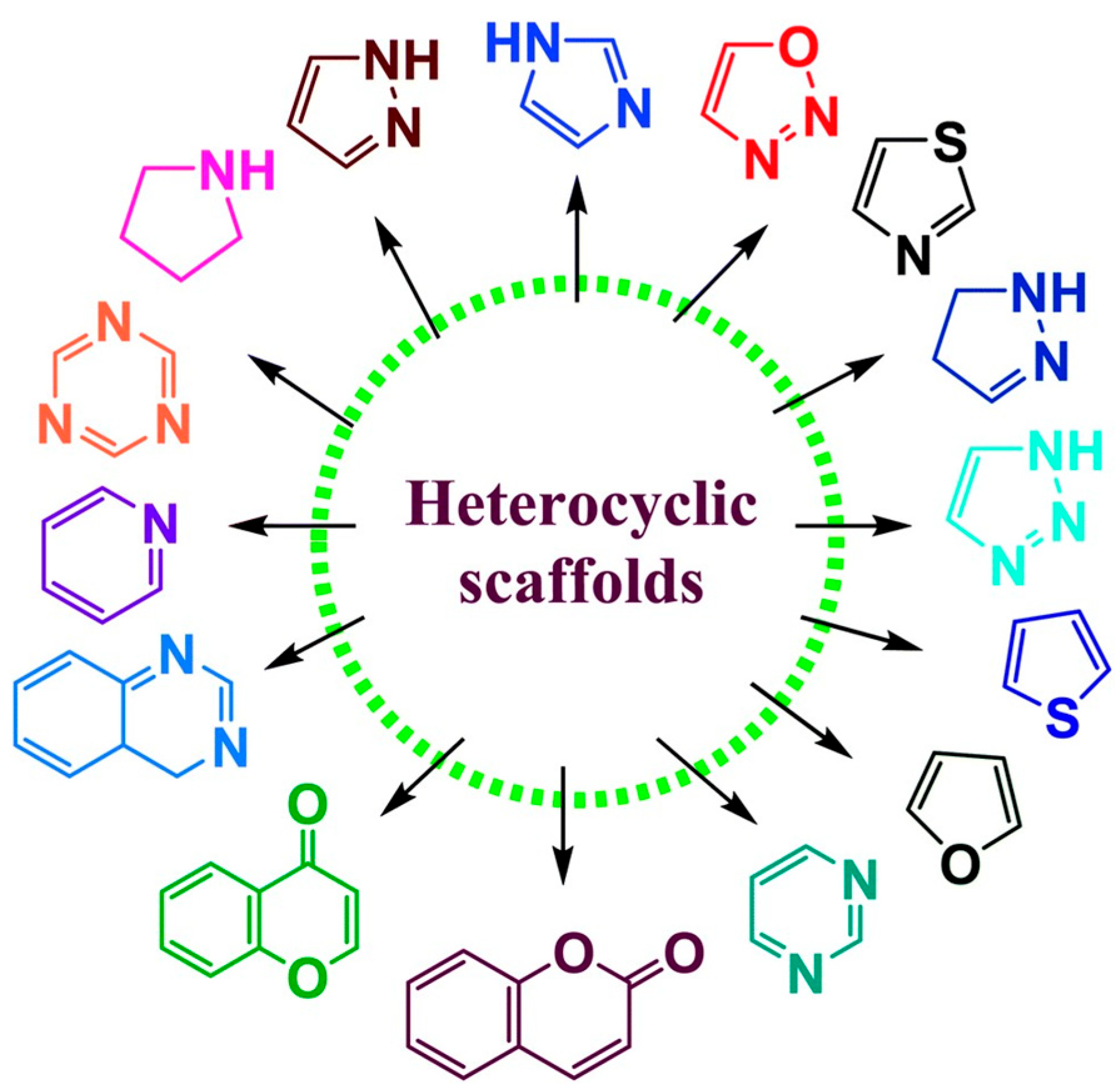
The basic classification of heterocycles is based on the heteroatoms and their number (monovalent, divalent and polyvalent), the ring size (5-, 6-, 7-, 8-membered) and the degree of their (un)saturation, i.e., saturated organic heterocycles behave as acyclic derivatives, while unsaturated ones, which meet the Hückel condition for aromaticity (4n + 2 π-electrons in the system, where n ≥ 0), behave as aromatic systems. In a heterocycle, a heteroatom often contributes its lone electron pair to the aromatic π-system, depending on the type/number of heteroatoms and the ring size, nitrogen-containing heterocycles can be strongly basic, because the lone electron pair is not part of the aromatic sextet. A large class of organic so-called fused heterocycles is formed by combining a heterocycle with benzene or another aromatic heterocycle as illustrated in Figure 1. In addition to the “classical” organic heterocycles, there are also “rare” heterocycles that can be called inorganic because they do not contain any carbons in their structure; examples include cyclic borazine (B3N3), hexachlorophosphazene (P3N3), and trithiazyl trichloride (S3N3) [3,4,5,8,9,10,11,12,13,14,15,16].
The nomenclature of heterocycles is as follows: (i) trivial—the oldest and used mainly for five- and six-membered heterocycles and their derivatives; (ii) replacement/substitution—derived from the name of the carbocycle by replacing the carbon atom with a prefix indicating the heteroatom, e.g., aza, oxa, and thia; and (iii) the universal Hantzsch-Widman system—allowing the creation of names for 3- to 10-membered heterocycles using prefixes for heteroatoms and a stem expressing the number of members and the saturation of the cycle [3,4,5,8].
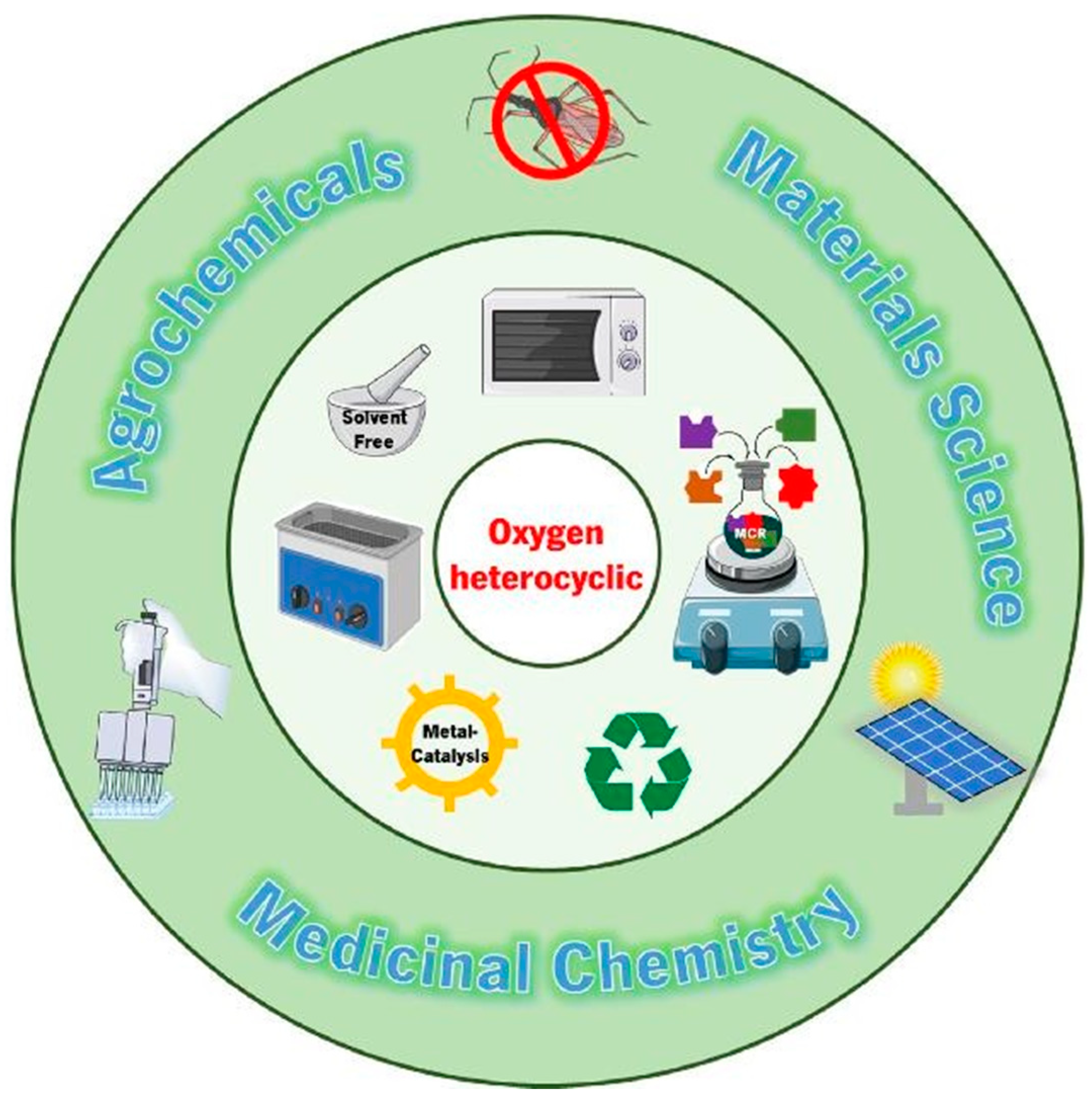
Essentially, any carbocyclic compound, regardless of structure and functionalization, can in principle be converted into a set of heterocyclic isosteres/analogues by replacing one or more carbon atoms in the ring with another element [3,4,5,8,18]. Organic heterocycles thus constitute the largest and most diverse group of organic compounds with a wide range of uses/applications; see Figure 2. This diversity is achieved by varying the presence and number of heteroatoms, their position/arrangement of these heteroatoms, and aromaticity [19,20,21,22,23]. For example, >85% of bioactive compounds contain at least one nitrogen atom in their structure [24,25,26,27,28,29] and >75% of heterocyclic clinically used drugs contain at least two heteroatoms [20,21,22,30], with the most commonly used building blocks being triazoles, tetrazoles, imidazoles/benzimidazoles/benzothiazoles, pyrimidines, and azanaphthalenes [1,2,31,32,33,34,35,36,37,38,39,40,41,42,43,44,45].
Differences in the structure of bioactive heterocycles have a significant impact on the physicochemical properties and the possibilities of construction/synthesis of heterocyclic systems [47,48,49,50,51,52,53]. In addition, heterocycles can be further functionalized to further modify/optimize their properties and, in the case of bioactive compounds (drug candidates), their bioavailability can be influenced (to achieve the most favourable ADME/Tox profile) [51,54,55,56,57,58]. Bioisosteric replacement of functional groups with heterocyclic fragments can optimize the efficacy and selectivity [53,59,60,61,62,63]. It should be mentioned that many natural substances (including secondary metabolites) are composed of heterocycles and many heterocyclic systems (nucleic acids, carbohydrates, and proteins) are essential for life [2,64,65,66]. Heterocyclic compounds have attracted much attention due to their numerous important biological effects, whether as agrochemicals (pesticides, herbicides, and growth-promoting molecules) [23,67,68,69,70,71,72,73,74,75] or as pharmaceutically important compounds (human or veterinary drugs or as drug carriers) [1,2,76,77,78,79,80,81,82,83]. Many natural heterocyclic biomolecules of plant, microbial or animal origin have served as a source of inspiration (model compounds) for the subsequent development of synthetic modifications that have become drugs. Heterocycles are found in more than 90% of new drugs and often form the basic scaffold [20,21,29,84]. Their structural diversity and versatility make them attractive building blocks for drug design.
Heterocyclic compounds are found in all classes of drugs [20,21,76,77,78,85] or agrochemicals [23,67,68,69,70,71,72,73]. They have antibacterial, antifungal, antiviral, antiparasitic, anthelmintic effects, are used as antineoplastics, antiemetics, antipyretics, antihistamines/antiallergics, have anti-inflammatory, antioxidant, anticonvulsant, antihypertensive and antihyperlipidemic activities, and all drugs that affect the central nervous system in any way (i.e., antipsychotics, antiepileptics, antiparkinsonians, anxiolytics, antidepressants, and hypnotics/sedatives) are also heterocyclic [20,21,24,32,33,34,37,38,39,40,41,42,43,44,45,76,77,78,84,85,86,87].
This Special Issue, which contains nine research articles and four review papers, aims to highlight some of the recent advances in the exciting field of heterocyclic chemistry by gathering the latest findings from research on bioactive heterocyclic compounds.
Four review articles discuss new synthetic approaches (contribution 1), analyze the benefits of natural triazole and pyrazole derivatives as potential compounds for cancer treatment (contribution 2), discuss versatile therapeutic applications (contribution 3), and even the modern reuse of heterocycles in pharmaceuticals (contribution 4). In recent years, advances in the synthesis and rational design of new drugs resulted in the optimization of heterocyclic compounds with enhanced biological activity due to a deeper understanding of structure–activity relationships. Examples include nitrogen-containing heterocyclic multifunctional compounds with the potential to control plant pathogens (contribution 5), pyrrolocarbazoles (contribution 6), indenoquinolines (contribution 7), quinolines (contribution 8) as potential antineoplastic drugs, or quinazolines (contribution 9) with neuroprotective potential. Chromone derivatives (contribution 10) and phenoxazine (contribution 11) expressed antifungal activity. On the other hand, thiazoles have been proposed as oxidative stress neutralizers (contribution 12) or tyrosinase inhibitors (contribution 13).
It can be stated that the synergy between medicinal chemists, pharmacologists and computer scientists has significantly accelerated the development of new drugs based on heterocyclic scaffolds. The use of advanced technologies allows scientists to overcome the limits of molecular design, opening the way to new therapeutic strategies. Heterocycles thus represent a key tool of modern medicine in the search for drugs for pathologies that are still difficult to treat.
Funding
This contribution was sponsored by APVV-24-0341.
Acknowledgments
The guest editor wishes to thank all the authors for their contributions to this Special Issue, all the reviewers for their work in evaluating the submitted articles.
Conflicts of Interest
The author declares no conflicts of interest.
List of Contributions
- Keydel, T.; Link, A. Synthetic approaches, properties, and applications of acylals in preparative and medicinal chemistry. Molecules 2024, 29, 4451. https://doi.org/10.3390/molecules29184451.
- Fermo, A.D.; Bisi, A.; Orioli, R.; Gobbi, S.; Belluti, F. Triazole and pyrazole hybrids of electrophilic natural products as promising anticancer agents. Molecules 2026, 31, 355. https://doi.org/10.3390/molecules31020355.
- Mo, X.; Rao, D.P.; Kaur, K.; Hassan, R.; Abdel-Samea, A.S.; Farhan, S.M.; Brase, S.; Hashem, H. Indole derivatives: A versatile scaffold in modern drug discovery—An updated review on their multifaceted therapeutic applications (2020–2024). Molecules 2024, 29, 4770. https://doi.org/10.3390/molecules29194770.
- Zolotareva, D.; Zazybin, A.; Belyankova, Y.; Bayazit, S.; Dauletbakov, A.; Seilkhanov, T.; Kemelbekov, U.; Aydemir, M. Heterocyclic antidepressants with antimicrobial and fungicide activity. Molecules 2025, 30, 1102. https://doi.org/10.3390/molecules30051102.
- Szlauzys, M.; Ostrowski, K.; Nowak, D.; Prukała, W.; Starzyk, J.; Jasiewicz, B.; Mrowczynska, L. Hybrid uracil derivatives with caffeine and gramine obtained via click chemistry as potential antioxidants and inhibitors of plant pathogens. Molecules 2025, 30, 2714. https://doi.org/10.3390/molecules30132714.
- Kroger, L.; Borgert, S.; Lauwers, M.; Steinkrüger, M.; Jose, J.; Pietsch, M.; Wunsch, B. Structure–activity relationship studies of tetracyclic pyrrolocarbazoles inhibiting heterotetrameric protein kinase CK2. Molecules 2025, 30, 63. https://doi.org/10.3390/molecules30010063.
- Rodriguez-Paniagua, A.; Tesauro, C.; Knudsen, B.R.; Fuertes, M.; Alonso, C. Phosphine oxide indenoquinoline derivatives: synthesis and biological evaluation as topoisomerase I inhibitors and antiproliferative agents. Molecules 2024, 29, 5992. https://doi.org/10.3390/molecules29245992.
- Zieba, A.; Pindjakova, D.; Latocha, M.; Plonka-Czerw, J.; Kusmierz, D.; Cizek, A.; Jampilek, J. Design, synthesis, and anticancer and antibacterial activities of quinoline-5-sulfonamides. Molecules 2024, 29, 4044. https://doi.org/10.3390/molecules29174044.
- Laversin, A.; Dufossez, R.; Bolteau, R.; Duroux, R.; Ravez, S.; Hernandez-Tapia, S.; Fossart, M.; Coevoet, M.; Liberelle, M.; Yous, S.; et al. Novel quinazoline derivatives as highly effective a2a adenosine receptor antagonists. Molecules 2024, 29, 3847. https://doi.org/10.3390/molecules29163847.
- Bonvicini, F.; Menegaldo, L.; Orioli, R.; Belluti, F.; Gentilomi, G.A.; Gobbi, S.; Bisi, A. Extended antimicrobial profile of chromone–butenafine hybrids. Molecules 2025, 30, 2973. https://doi.org/10.3390/molecules30142973.
- Pacheco, M.I.; Guimarães, B.; Pereira-Silva, P.; Costa-Barbosa, A.; Goncalves, M.S.T.; Sousa, M.J.; Sampaio, P. Combining fluconazole with benzo[a]phenoxazine derivatives as a promising strategy against fluconazole-resistant Candida species. Molecules 2024, 29, 5197. https://doi.org/10.3390/molecules29215197.
- Cornea, A.C.; Marc, G.; Ionuț, I.; Moldovan, C.; Stana, A.; Oniga, S.D.; Pirnau, A.; Vlase, L.; Oniga, I.; Oniga, O. Synthesis, characterization, and antioxidant activity evaluation of new N-methyl substituted thiazole-derived polyphenolic compounds. Molecules 2025, 30, 1345. https://doi.org/10.3390/molecules30061345.
- Park, H.S.; Jung, H.J.; Park, H.S.; Kim, H.J.; Noh, S.G.; Park, Y.; Chun, P.; Chung, H.Y.; Moon, H.R. Design and synthesis of novel 6-(substituted phenyl)-[1,3]dioxolo[4′,5′:4,5]benzo[1,2-d]thiazole compounds as tyrosinase inhibitors: In vitro and in vivo insights. Molecules 2025, 30, 1535. https://doi.org/10.3390/molecules30071535.
References
- Seema, K.; Shruti, K.; Sakshi, K.; Tejashree, K.; Supriya, S. The importance of heterocycles in drug discovery: From biological activity to pharmaceutical applications. Int. J. Sci. Res. Technol. 2025, 2, 55–64. [Google Scholar] [CrossRef]
- Kabir, E.; Uzzaman, M. A review on biological and medicinal impact of heterocyclic compounds. Results Chem. 2022, 4, 100606. [Google Scholar] [CrossRef]
- Virtual Textbook of Organic Chemistry-Heterocyclic Compounds. Available online: https://www2.chemistry.msu.edu/faculty/reusch/virttxtjml/heterocy.htm (accessed on 23 January 2026).
- Joule, J.A.; Mills, K. Heterocyclic Chemistry; Wiley-Blackwell: Chichester, UK, 2010. [Google Scholar]
- Eicher, T.; Hauptmann, S.; Speicher, A. The Chemistry of Heterocycles; Wiley-VCH: Weinheim, Germany, 2012. [Google Scholar]
- Rousseau, G.; Blanco, L. Heterocyclic compounds with a silicon atom and another non-adjacent different heteroatom. Tetrahedron 2006, 62, 7951–7993. [Google Scholar] [CrossRef]
- Kumar, R.; Dohi, T.; Zhdankin, V.V. Organohypervalent heterocycles. Chem. Soc. Rev. 2024, 53, 4786–4827. [Google Scholar] [CrossRef] [PubMed]
- Katritzky, A.R.; Denisko, O.V. “Heterocyclic Compound”. Encyclopedia Britannica. Available online: https://www.britannica.com/science/heterocyclic-compound (accessed on 23 January 2026).
- Chivers, T.; Laitinen, R.S. Insights into the formation of inorganic heterocycles via cyclocondensation of primary amines with group 15 and 16 halides. Dalton Trans. 2017, 46, 1357–1367. [Google Scholar] [CrossRef]
- Volkov, V.V.; Myakishev, K.G.; Ilinchik, E.A. Borazine and its derivatives: Synthesis, mechanochemical synthesis reactions and outlooks for technological applications. Chem. Sustain. Dev. 2009, 17, 225–234. [Google Scholar]
- Edin, S.; Sandoval-Pauker, C.; Yutronkie, N.J.; Takacs, Z.; Wilhelm, F.; Rogalev, A.; Pinter, B.; Pedersen, K.S.; Reinholdt, A. Unleashing phosphorus mononitride. Nat. Commun. 2025, 16, 5596. [Google Scholar] [CrossRef]
- Higham, L.J.; Allen, D.W. Organophosphorus Chemistry; Royal Society of Chemistry: Croydon, UK, 2024; Volume 52. [Google Scholar]
- Yildiz Gul, E.; Tiryaki, B.; Kose, B.; Ozturk, N.; Okutan, E.; Dedeoglu, B.; Tanriverdi Ecik, E. Design, synthesis and in vitro evaluations of new cyclotriphosphazenes as safe drug candidates. RSC Med. Chem. 2025, 16, 2061–2077. [Google Scholar] [CrossRef]
- Zibarov, A.; Oukhrib, A.; Aujard Catot, J.; Turrin, C.O.; Caminade, A.M. AB5 Derivatives of cyclotriphosphazene for the synthesis of dendrons and their applications. Molecules 2021, 26, 4017. [Google Scholar] [CrossRef] [PubMed]
- Passmore, J.; Schriver, M.J. Investigation into the nature and chemistry of thiazyl chloride monomer and trimer (NSCL)n (n = 1,3) in solution using nitrogen-14 NMR spectroscopy, a useful routine tool for the characterization of small sulfur-nitrogen-containing compounds. Inorg. Chem. 1988, 27, 2749–2751. [Google Scholar] [CrossRef]
- Duan, X.G.; Duan, X.L.; Rees, C.W.; Yue, T.Y. Organic chemistry of trithiazyl trichloride. J. Het. Chem. 1996, 33, 1419–1427. [Google Scholar] [CrossRef]
- Obaid, R.J.; Naeem, N.; Mughal, E.U.; Al-Rooqi, M.M.; Sadiq, A.; Jassas, R.S.; Moussa, Z.; Ahmed, S.A. Inhibitory potential of nitrogen, oxygen and sulfur containing heterocyclic scaffolds against acetylcholinesterase and butyrylcholinesterase. RSC Adv. 2022, 12, 19764. [Google Scholar] [CrossRef]
- Sharma, R.; Arisawa, M.; Takizawa, S.; Salem, M.S.H. Remodelling molecular frameworks via atom-level surgery: Recent advances in skeletal editing of (hetero)cycles. Org. Chem. Front. 2025, 12, 1633–1670. [Google Scholar] [CrossRef]
- Favi, G. Modern strategies for heterocycle synthesis. Molecules 2020, 25, 2476. [Google Scholar] [CrossRef]
- Vitaku, E.; Smith, D.T.; Njardarson, J.T. Analysis of the structural diversity, substitution patterns, and frequency of nitrogen heterocycles among U.S. FDA approved pharmaceuticals. J. Med. Chem. 2014, 57, 10257–10274. [Google Scholar] [CrossRef] [PubMed]
- Marshall, C.M.; Federice, J.G.; Bell, C.N.; Cox, P.B.; Njardarson, J.T. An update on the nitrogen heterocycle compositions and properties of U.S. FDA-approved pharmaceuticals (2013–2023). J. Med. Chem. 2024, 67, 11622–11655. [Google Scholar] [CrossRef] [PubMed]
- Li Petri, G.; Holl, R.; Spano, V.; Barreca, M.; Sardo, I.; Raimondi, M.V. Emerging heterocycles as bioactive compounds. Front. Chem. 2023, 11, 1202192. [Google Scholar] [CrossRef]
- Lamberth, C. Isosteric ring exchange as a useful scaffold hopping tool in agrochemistry. J. Agric. Food Chem. 2023, 71, 18123–18132. [Google Scholar] [CrossRef]
- Heravi, M.M.; Zadsirjan, V. Prescribed drugs containing nitrogen heterocycles: An overview. RSC Adv. 2020, 10, 44247–44311. [Google Scholar] [CrossRef] [PubMed]
- Kumari, S.; Carmona, A.V.; Tiwari, A.K.; Trippier, P.C. Amide bond bioisosteres: Strategies, synthesis, and successes. J. Med. Chem. 2020, 63, 12290–12358. [Google Scholar] [CrossRef]
- La Monica, G.; Bono, A.; Alamia, F.; Lauria, A.; Martorana, A. Bioisosteric heterocyclic analogues of natural bioactive flavonoids by scaffold-hopping approaches: State-of-the-art and perspectives in medicinal chemistry. Bioorg. Med. Chem. 2024, 109, 117791. [Google Scholar] [CrossRef]
- Ballatore, C.; Huryn, D.M.; Smith, A.B. Carboxylic acid (bio)isosteres in drug design. ChemMedChem 2013, 8, 385–395. [Google Scholar] [CrossRef]
- Bredael, K.; Geurs, S.; Clarisse, D.; De Bosscher, K.; D’Hooghe, M. Carboxylic acid bioisosteres in medicinal chemistry: Synthesis and properties. J. Chem. 2022, 2022, 2164558. [Google Scholar] [CrossRef]
- Qadir, T.; Amin, A.; Kumar Sharma, P.; Jeelani, I.; Abe, H. A review on medicinally important heterocyclic compounds. Open Med. Chem. J. 2022, 16, e187410452202280. [Google Scholar] [CrossRef]
- Sharma, S.; Kumar, D.; Singh, G.; Monga, V.; Kumar, B. Recent advancements in the development of heterocyclic anti-inflammatory agents. Eur. J. Med. Chem. 2020, 200, 112438. [Google Scholar] [CrossRef] [PubMed]
- Pibiri, I. Recent advances: Heterocycles in drugs and drug discovery. Int. J. Mol. Sci. 2024, 25, 9503. [Google Scholar] [CrossRef] [PubMed]
- Brase, S. Privileged Scaffolds in Medicinal Chemistry: Design, Synthesis, Evaluation; RSC Publishing: London, UK, 2015. [Google Scholar]
- Skorenski, M.; Sienczyk, M. The Fellowship of privileged scaffolds—One structure to inhibit them all. Pharmaceuticals 2021, 14, 1164. [Google Scholar] [CrossRef] [PubMed]
- Yu, B.; Li, N.; Fu, C. Privileged Scaffolds in Drug Discovery; Academic Press & Elsevier: London, UK, 2023. [Google Scholar]
- Frank, E.; Szollosi, G. Nitrogen-containing heterocycles as significant molecular scaffolds for medicinal and other applications. Molecules 2021, 26, 4617. [Google Scholar] [CrossRef]
- Ebenezer, O.; Jordaan, M.A.; Carena, G.; Bono, T.; Shapi, M.; Tuszynski, J.A. An overview of the biological evaluation of selected nitrogen-containing heterocycle medicinal chemistry compounds. Int. J. Mol. Sci. 2022, 23, 8117. [Google Scholar] [CrossRef]
- Nitulescu, G.M. Quantitative and qualitative analysis of the anti-proliferative potential of the pyrazole scaffold in the design of anticancer agents. Molecules 2022, 27, 3300. [Google Scholar] [CrossRef]
- Murtazaeva, Z.; Nasrullaev, A.; Buronov, A.; Gaybullaev, S.; Nie, L.; Numonov, S.; Khushnazarov, Z.; Turgunov, D.; Kuryazov, R.; Zhao, J.; et al. Imidazole hybrids: A privileged class of heterocycles in medicinal chemistry with new insights into anticancer activity. Molecules 2025, 30, 2245. [Google Scholar] [CrossRef]
- Imramovsky, A.; Pejchal, V.; Stepankova, S.; Vorcakova, K.; Jampilek, J.; Vanco, J.; Simunek, P.; Kralovec, K.; Bruckova, L.; Mandikova, J.; et al. Synthesis and in vitro evaluation of new derivatives of 2-substituted-6-fluorobenzo[d]thiazoles as cholinesterase inhibitors. Bioorg. Med. Chem. 2013, 21, 1735–1748. [Google Scholar] [CrossRef] [PubMed]
- Polanski, J.; Kurczyk, A.; Bak, A.; Musiol, R. Privileged structures—Dream or reality: Preferential organization of azanaphthalene scaffold. Curr. Med. Chem. 2012, 19, 1921–1945. [Google Scholar] [CrossRef]
- Musiol, R. An overview of quinoline as a privileged scaffold in cancer drug discovery. Expert Opin. Drug Discov. 2017, 12, 583–597. [Google Scholar] [CrossRef] [PubMed]
- Jampilek, J.; Dolezal, M.; Opletalova, V.; Hartl, J. 5-Lipoxygenase, leukotrienes biosynthesis and potential antileukotrienic agents. Curr. Med. Chem. 2006, 13, 117–129. [Google Scholar] [CrossRef]
- Musiol, R.; Jampilek, J.; Nycz, J.E.; Pesko, M.; Carroll, J.; Kralova, K.; Vejsova, M.; O’Mahony, J.; Coffey, A.; Mrozek, A.; et al. Investigating the activity spectrum for ring-substituted 8-hydroxyquinolines. Molecules 2010, 15, 288–304. [Google Scholar] [CrossRef] [PubMed]
- Mrozek-Wilczkiewicz, A.; Kalinowski, D.S.; Musiol, R.; Finster, J.; Szurko, A.; Serafin, K.; Knas, M.; Kamalapuram, S.K.; Kovacevic, Z.; Jampilek, J.; et al. Investigating the anti-proliferative activity of styrylazanaphthalenes and azanaphthalenediones. Bioorg. Med. Chem. 2010, 18, 2664–2671. [Google Scholar] [CrossRef]
- Kos, J.; Ku, C.F.; Kapustikova, I.; Oravec, M.; Zhang, H.; Jampilek, J. 8-Hydroxyquinoline-2-carboxanilides as antiviral agents against avian influenza virus. ChemistrySelect 2019, 4, 4582–4587. [Google Scholar] [CrossRef]
- Proenca, F.; Marinho, E.M.R. Oxygen-containing heterocyclic compounds: Recent advances in chemistry. Chemistry 2026. Available online: https://www.mdpi.com/journal/chemistry/special_issues/7H8DM320B9 (accessed on 23 January 2026).
- De, S.K. Applied Organic Chemistry: Reaction Mechanisms and Experimental Procedures in Medicinal Chemistry; Wiley-VCH: Weinheim, Germany, 2021. [Google Scholar]
- Taylor, A.P.; Robinson, R.P.; Fobian, Y.M.; Blakemore, D.C.; Jones, L.H.; Fadeyi, O. Modern advances in heterocyclic chemistry in drug discovery. Org. Biomol. Chem. 2016, 14, 6611–6637. [Google Scholar] [CrossRef]
- Budnikov, A.S.; Krylov, I.B.; Mulina, O.M.; Lapshin, D.A.; Terentev, A.O. CH-Functionalization of heterocycles with the formation of C–O, C–N, C–S/Se, and C–P bonds by intermolecular addition of heteroatom-centered radicals. Adv. Synth. Catal. 2023, 365, 1714–1755. [Google Scholar] [CrossRef]
- Sivaraja, N.; Sakthivela, K.; Kikushima, K.; Kostic, M.D.; Dohi, T.; Singh, F.V. Recent advances in non-conventional synthesis of N-heterocyclic compounds: Emerging strategies and biological perspectives. RSC Adv. 2025, 15, 35509–35531. [Google Scholar] [CrossRef]
- Rotella, D.P. Heterocycles in drug discovery: Properties and preparation. In Advances in Heterocyclic Chemistry; Meanwell, N.A., Lolli, M.L., Eds.; Academic Press & Elsevier: Cambridge, MA, USA, 2021; pp. 149–183. [Google Scholar]
- Di Martino, S.; Amico, P.; De Rosa, M. Applications of bridgehead heterocycles in drug design and medicinal chemistry. Top. Curr. Chem. 2025, 383, 16. [Google Scholar] [CrossRef]
- Nadal Rodriguez, P.; Ghashghaei, O.; Bagan, A.; Escolano, C.; Lavilla, R. Heterocycle-based multicomponent reactions in drug discovery: From hit finding to rational design. Biomedicines 2022, 10, 1488. [Google Scholar] [CrossRef]
- Culen, M.; Rezacova, A.; Jampilek, J.; Dohnal, J. Designing a dynamic dissolution method: A review of instrumental options and corresponding physiology of stomach and small intestine. J. Pharm. Sci. 2013, 102, 2995–3017. [Google Scholar] [CrossRef]
- Dalvie, D.; Kang, P.; Loi, C.M.; Goulet, L.; Nair, S. Influence of heteroaromatic rings on ADME properties of drugs check access. In Metabolism, Pharmacokinetics and Toxicity of Functional Groups: Impact of the Building Blocks of Medicinal Chemistry on ADMET; Smith, D.A., Ed.; RSC Publishing: London, UK, 2010; pp. 328–369. [Google Scholar]
- Abbaoui, Z.; Khibech, O.; Karci, H.; Alghibiwi, M. Synthesis, characterization, and anticancer evaluation of N-heterocyclic entities: ADME profiling and in silico predictions. Toxicol. Rep. 2026, 16, 102184. [Google Scholar] [CrossRef]
- Jednacak, T.; Stepanic, V.; Habinovec, I.; Mikulandra, I.; Smokrovic, K.; Cipcic Paljetak, H.; Bukvic, M.; Parlov Vukovic, J.; Grgicevic, I.; Divjak, L.; et al. Anti-infective macrozones: Design, biological evaluation and structure-activity relationships. ADMET DMPK 2026, 14, 3139. [Google Scholar] [CrossRef]
- Venkataraman, M.; Rao, G.C.; Madavareddi, J.K.; Maddi, S.R. Leveraging machine learning models in evaluating ADMET properties for drug discovery and development. ADMET DMPK 2025, 13, 2772. [Google Scholar] [CrossRef] [PubMed]
- Poulie, C.B.; Bunch, L. Heterocycles as nonclassical bioisosteres of α-amino acids. ChemMedChem 2013, 8, 205–215. [Google Scholar] [CrossRef] [PubMed]
- Karthikeyan, S.; Grishina, M.; Kandasamy, S.; Mangaiyarkarasi, R.; Ramamoorthi, A.; Chinnathambi, S.; Pandian, G.N.; Kennedy, J.L. A review on medicinally important heterocyclic compounds and importance of biophysical approach of underlying the insight mechanism in biological environment. J. Biomol. Struct. Dyn. 2023, 41, 14599–14619. [Google Scholar] [CrossRef]
- Natho, P.; Colella, M.; Luisi, R. Strained spiro heterocycles as potential bioisosteres: An update on the synthesis of heteroatom-containing spiro[2.3]hexanes and spiro[3.3]heptanes. Chem. Commun. 2025, 61, 6579–6594. [Google Scholar] [CrossRef] [PubMed]
- Cruz, N. Drug design: Influence of heterocyclic structure as bioisosteres. J. Med. Org. Chem. 2022, 5, 113–117. [Google Scholar]
- Martis, G.J.; Mugali, P.S.; Gaonkar, S.L. Recent progress in the synthesis, functionalization, and biological outlook of pyrimidines. ACS Omega 2025, 10, 46248–46271. [Google Scholar] [CrossRef] [PubMed]
- Dewick, P.M. Medicinal Natural Products: A Biosynthetic Approach, 3rd ed.; John Wiley & Sons: Chichester, UK, 2009. [Google Scholar]
- Shah, B.; Seth, A.K. Textbook of Pharmacognosy and Phytochemistry; Elsevier: New Delhi, India, 2010. [Google Scholar]
- Osbourn, A.E.; Lanzotti, V. Plant-Derived Natural Products: Synthesis, Function, and Application; Springer Science + Business Media: New York, NY, USA, 2009. [Google Scholar]
- Melnikov, N.N. Chemistry of Pesticides; Gunther, F.A., Gunther, J.D., Eds.; Springer: New York, NY, USA, 1971. [Google Scholar]
- Lamberth, C. Heterocyclic chemistry in crop protection. Pest. Manag. Sci. 2013, 69, 1106–1114. [Google Scholar] [CrossRef]
- FRAC Code List©. 2025. Available online: https://www.frac.info/media/ljsi3qrv/frac-code-list-2025.pdf (accessed on 23 January 2026).
- Amin, A.; Qadir, T.; Kumar Sharma, P.; Jeelani, I.; Abe, H. A review on the medicinal and industrial applications of N-containing heterocycles. Open Med. Chem. J. 2022, 16, e187410452209010. [Google Scholar] [CrossRef]
- Wu, X.; Yang, Z.; Bu, M.; Duan, J.; Zhang, A. Design, synthesis and bioactivity evaluation of heterocycle-containing mono- and bisphosphonic acid compounds. Molecules 2023, 28, 7509. [Google Scholar] [CrossRef]
- Kulkarni, S.; Akolkar, H.; Khedkar, V.M.; Haghi, A.K. S-Heterocycles: Retrospect, Prospects, and Biological Applications; RSC Publishing: London, UK, 2024. [Google Scholar]
- Quiroga, D.; Rodriguez, D.; Coy-Barrera, E. Recent advances in the synthesis and applications of 1,2,3/1,2,5-thiadiazole- and benzo[c][1,2,5/1,2,3]thiadiazole-type compounds. Molecules 2025, 30, 4373. [Google Scholar] [CrossRef] [PubMed]
- El Sabagh, A.; Islam, M.S.; Hossain, A.; Iqbal, M.A.; Mubeen, M.; Waleed, M.; Reginato, M.; Battaglia, M.; Ahmed, S.; Rehman, A.; et al. Phytohormones as growth regulators during abiotic stress tolerance in plants. Front. Agron. 2022, 4, 765068. [Google Scholar] [CrossRef]
- Zheng, Y.; Wang, X.; Cui, X.; Wang, K.; Wang, Y.; He, Y. Phytohormones regulate the abiotic stress: An overview of physiological, biochemical, and molecular responses in horticultural crops. Front. Plant. Sci. 2023, 13, 1095363. [Google Scholar] [CrossRef]
- Wermuth, C.G.; Aldous, D.; Raboisson, P.; Rognan, D. The Practice of Medicinal Chemistry, 4th ed.; Academic Press & Elsevier: Oxford, UK, 2015. [Google Scholar]
- Harrold, M.W.; Beck, K.; Roche, V.F.; Zito, S.W.; Lemke, T.L.; Williams, D.A. Foye’s Principles of Medicinal Chemistry, 9th ed.; Lippincott Williams & Wilkins, Wolters Kluwer: Baltimore, MD, USA, 2025. [Google Scholar]
- Brunton, L.L.; Knollman, B.C. Goodman and Gilman’s: The Pharmacological Basis of Therapeutics, 14th ed.; MGraw Hill Medical: New York, NY, USA, 2023. [Google Scholar]
- Alajely, M.S. Polymer and heterocyclic compounds their utility and application as drug. Open Access J. Sci. 2019, 3, 41–45. [Google Scholar] [CrossRef]
- Duskey, J.T.; Baraldi, C.; Gamberini, M.C.; Ottonelli, I.; Da Ros, F.; Tosi, G.; Forni, F.; Vandelli, M.A.; Ruozi, B. Investigating novel syntheses of a series of unique hybrid PLGA-chitosan polymers for potential therapeutic delivery applications. Polymers 2020, 12, 823. [Google Scholar] [CrossRef]
- Pontillo, A.R.N.; Konstanteli, E.; Bairaktari, M.M.; Detsi, A. Encapsulation of the natural product tyrosol in carbohydrate nanosystems and study of their binding with ctDNA. Polymers 2021, 13, 87. [Google Scholar] [CrossRef] [PubMed]
- Alsolami, E.S.; Alorfi, H.S.; Alamry, K.A.; Hussein, M.A. One-pot multicomponent polymerization towards heterocyclic polymers: A mini review. RSC Adv. 2024, 14, 1757–1781. [Google Scholar] [CrossRef] [PubMed]
- Li, T.T.; Zong, Y.; Chen, Z.; Luo, J.; Liu, N.; Wu, Z.Q. Helical polymers as drug delivery carriers. Chem. Asian J. 2025, 20, e202401635. [Google Scholar] [CrossRef] [PubMed]
- Ahmad, G.; Sohail, M.; Bilal, M.; Rasool, N.; Qamar, M.U.; Ciurea, C.; Marceanu, L.G.; Misarca, C. N-Heterocycles as promising antiviral agents: A comprehensive overview. Molecules 2024, 29, 2232. [Google Scholar] [CrossRef]
- Ward, M.; O’Boyle, N.M. Analysis of the structural diversity of heterocycles amongst European Medicines Agency approved pharmaceuticals (2014–2023). RSC Med. Chem. 2025, 16, 4540–4570. [Google Scholar] [CrossRef]
- Musiol, R.; Kowalczyk, W. Azole antimycotics—A highway to new drugs or a dead end? Curr. Med. Chem. 2012, 19, 1378–1388. [Google Scholar] [CrossRef]
- Musiol, R.; Malecki, P.; Pacholczyk, M.; Mularski, J. Terpyridines as promising antitumor agents: An overview of their discovery and development. Expert Opin. Drug Discov. 2022, 17, 259–271. [Google Scholar] [CrossRef]
Figure 1.
Various heterocyclic scaffolds. Adapted from [17]. Copyright 2020, Royal Society of Chemistry.
Figure 1.
Various heterocyclic scaffolds. Adapted from [17]. Copyright 2020, Royal Society of Chemistry.

Figure 2.
Methods of preparation and use of heterocycles. Modified by [46]. Copyright 2026, MDPI.
Figure 2.
Methods of preparation and use of heterocycles. Modified by [46]. Copyright 2026, MDPI.

Disclaimer/Publisher’s Note: The statements, opinions and data contained in all publications are solely those of the individual author(s) and contributor(s) and not of MDPI and/or the editor(s). MDPI and/or the editor(s) disclaim responsibility for any injury to people or property resulting from any ideas, methods, instructions or products referred to in the content. |
© 2026 by the author. Licensee MDPI, Basel, Switzerland. This article is an open access article distributed under the terms and conditions of the Creative Commons Attribution (CC BY) license.
Share and Cite
MDPI and ACS Style
Jampilek, J. Heterocycles in Medicinal Chemistry III. Molecules 2026, 31, 661. https://doi.org/10.3390/molecules31040661
AMA Style
Jampilek J. Heterocycles in Medicinal Chemistry III. Molecules. 2026; 31(4):661. https://doi.org/10.3390/molecules31040661
Chicago/Turabian StyleJampilek, Josef. 2026. "Heterocycles in Medicinal Chemistry III" Molecules 31, no. 4: 661. https://doi.org/10.3390/molecules31040661
APA StyleJampilek, J. (2026). Heterocycles in Medicinal Chemistry III. Molecules, 31(4), 661. https://doi.org/10.3390/molecules31040661