Ibogaine: Therapeutic Potential, Cardiac Safety, and Translational Perspectives in the Treatment of Substance Use Disorders—A Scoping Review




Abstract
1. Introduction
2. Results
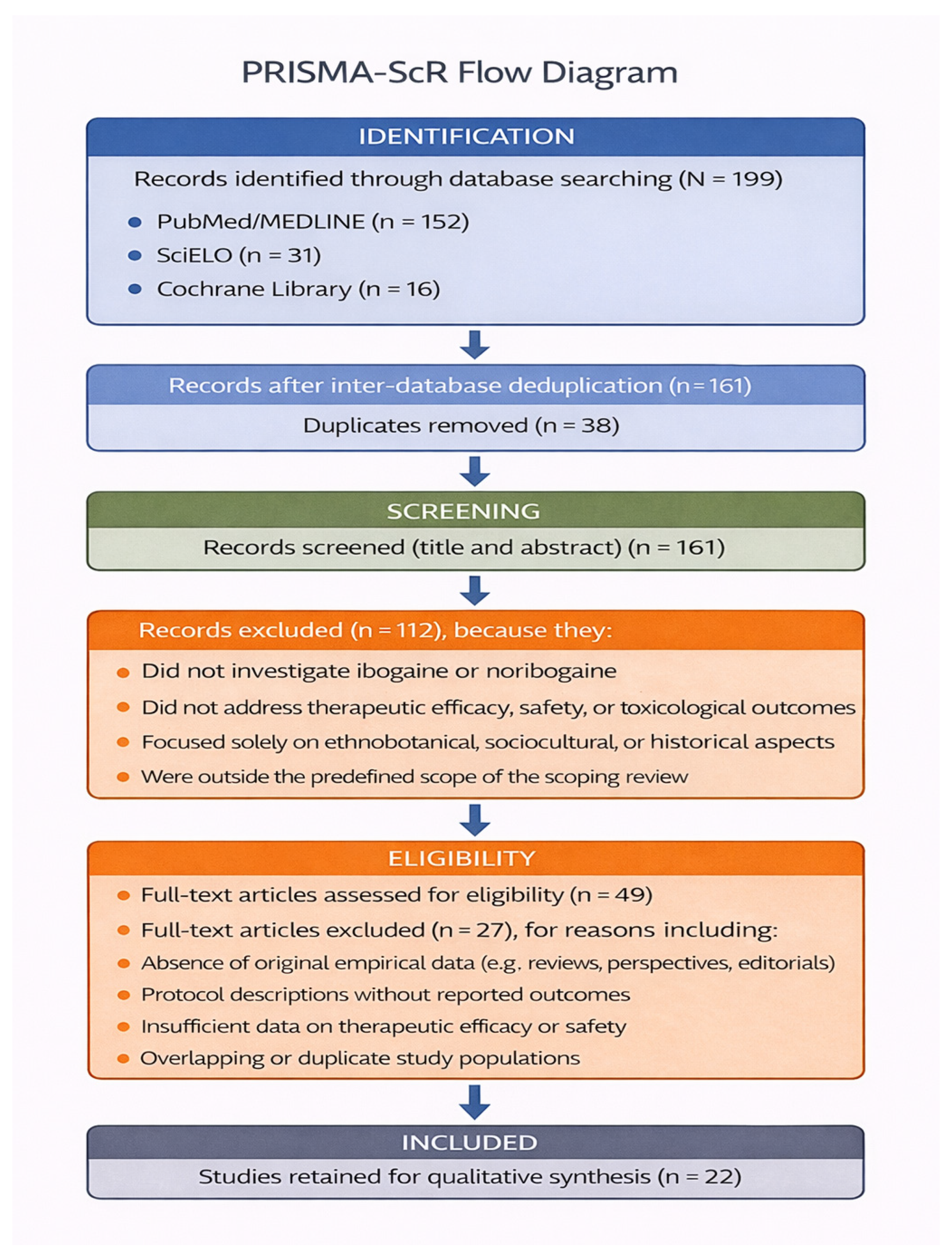
2.1. Overview and Characterization of the Evidence on the Therapeutic Use and Safety of Ibogaine in SUD
2.2. Human Observational Evidence
2.3. Human Safety and Toxicological Evidence
2.4. Pre-Clinical and Experimental Evidence
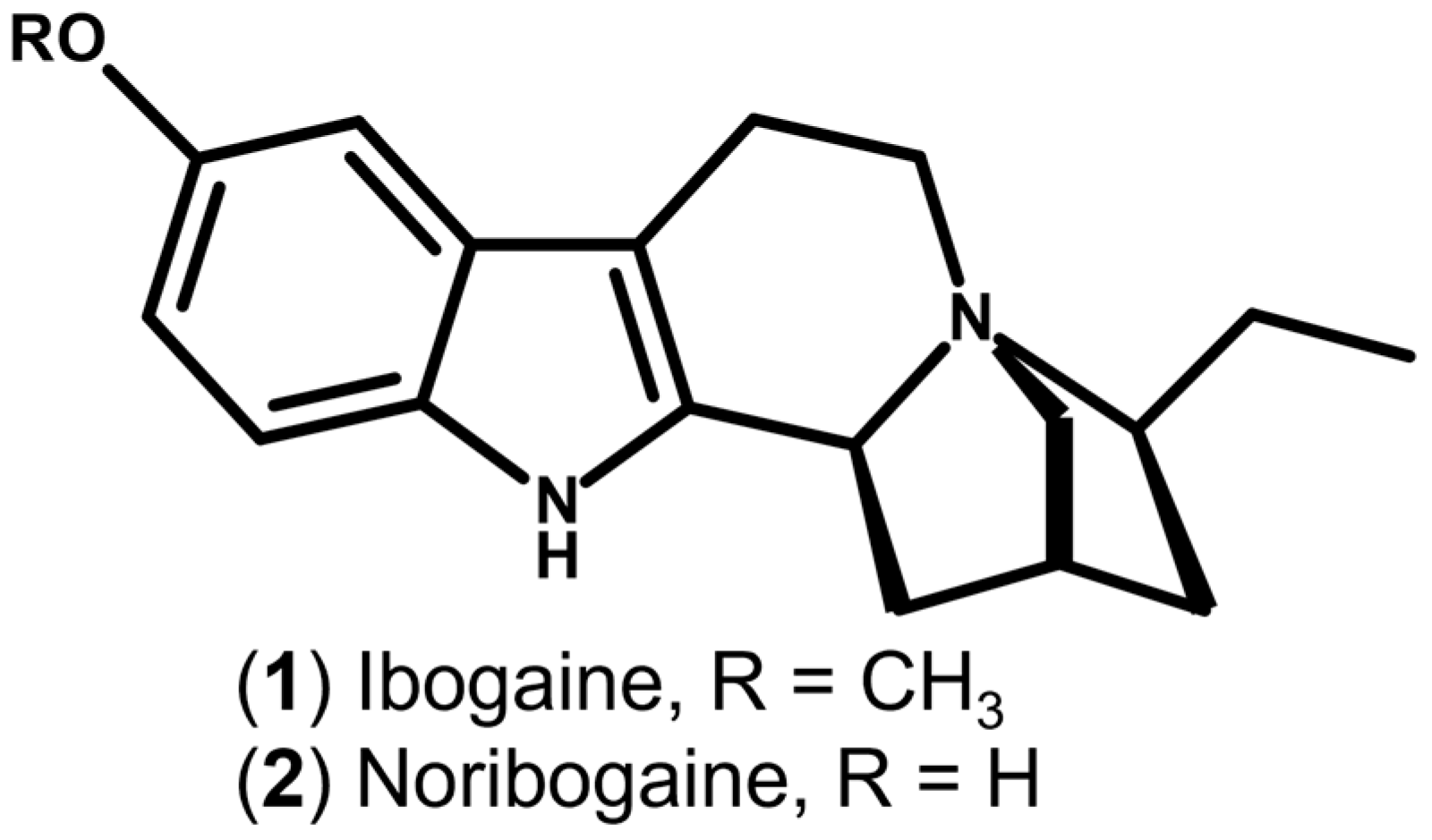
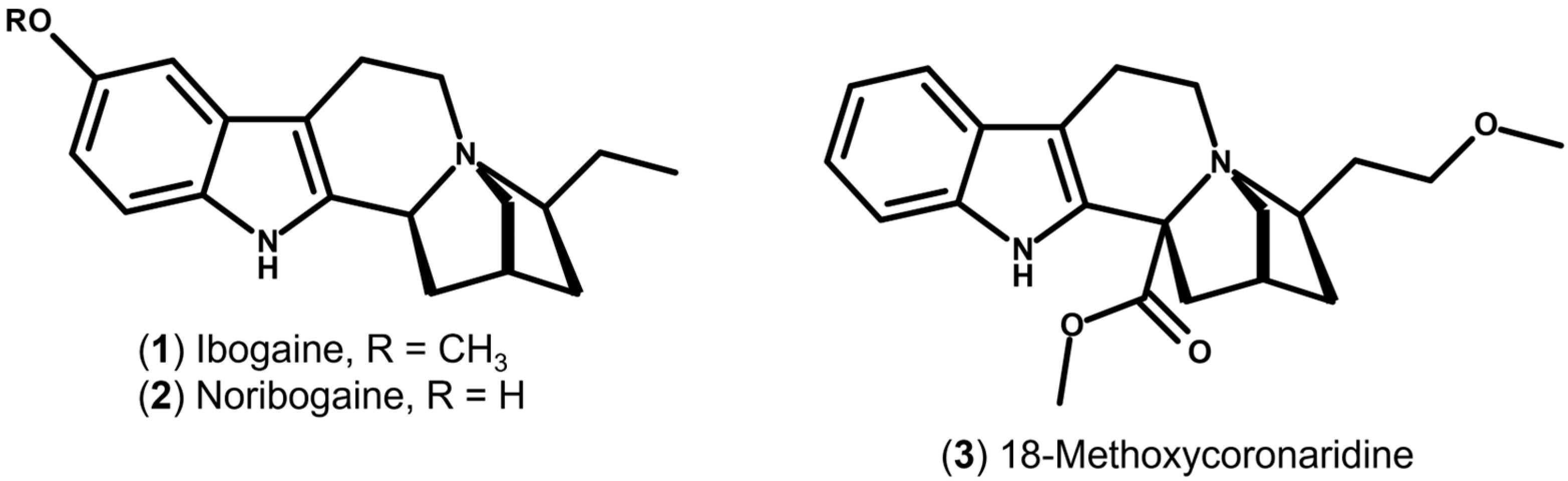
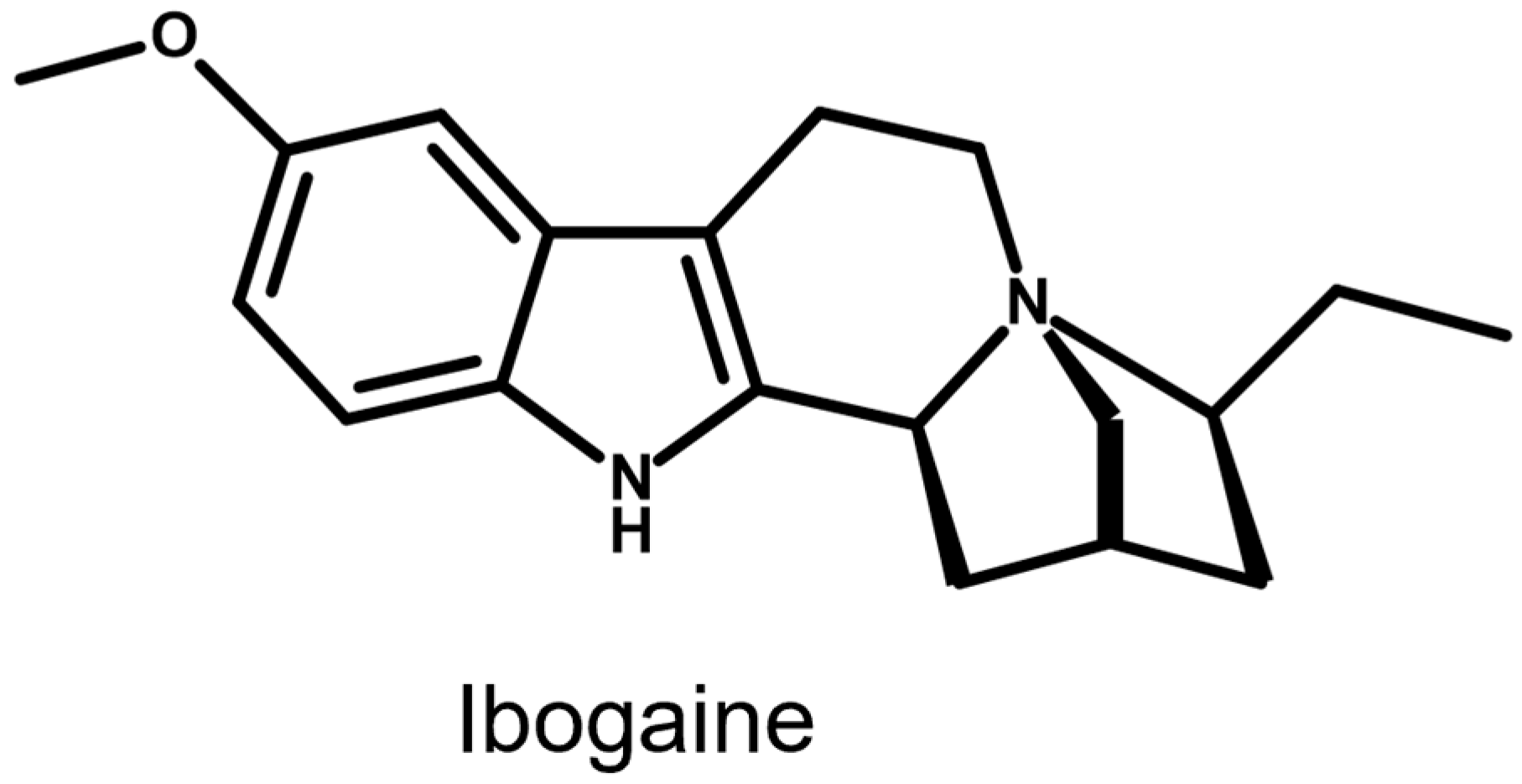
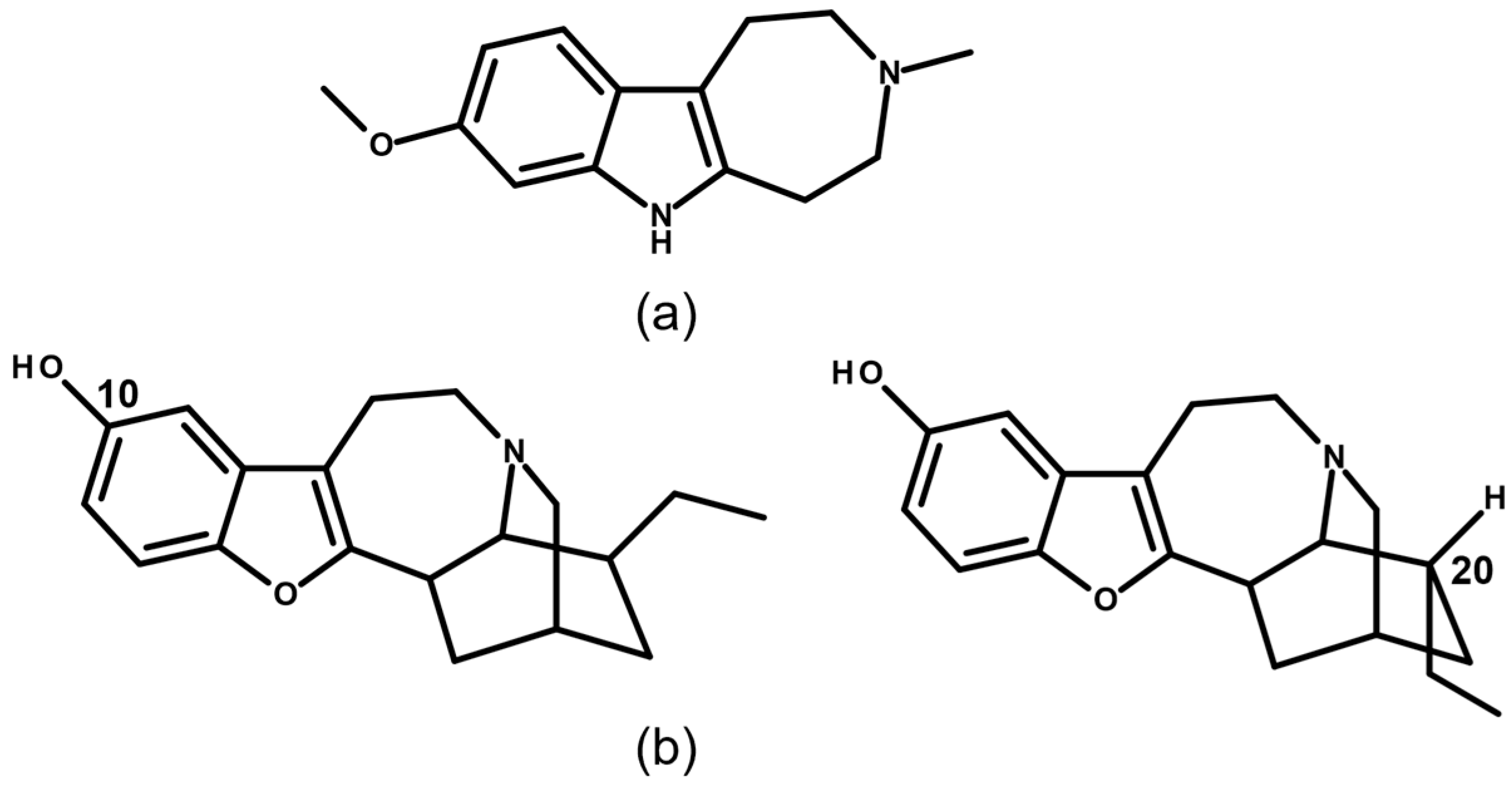
2.5. Chemical and Structural Characterization of Ibogaine and Iboga-Type Alkaloids
2.6. Pharmacodynamic Mechanisms of Ibogaine
2.7. Mechanistic Basis of Ibogaine-Associated Cardiotoxicity and Prolonged Risk Window
3. Discussion
4. Materials and Methods
4.1. Study Design
4.2. Search Strategy
4.3. Eligibility Criteria
4.4. Study Selection
4.5. Data Extraction
4.6. Data Synthesis
4.7. Data Availability
4.8. Use of Generative Artificial Intelligence
5. Conclusions
Author Contributions
Funding
Data Availability Statement
Acknowledgments
Conflicts of Interest
Abbreviations
| 18-MC | 18-Methoxycoronaridine |
| AE | Adverse event |
| α | Level of statistical significance |
| AMPA | α-Amino-3-hydroxy-5-methyl-4-isoxazolepropionic acid receptor (AMPA) |
| BDNF | Brain-derived neurotrophic factor |
| cAMP | Cyclic adenosine monophosphate |
| CDT | Comissão de Dissuasão da Toxicodependência (Drug Addiction Dissuasion Commission) |
| CID-11 | Classificação Estatística Internacional de Doenças e Problemas Relacionados com a Saúde, 11.ª edição (International Classification of Diseases, 11th Revision—ICD-11) |
| CoA | Certificate of Analysis |
| CREB | cAMP response element-binding protein |
| DA | Dopamine |
| DAT | Dopamine transporter |
| DMN | Default mode network |
| D2 | Dopamine D2 receptor |
| DSM-5 | Diagnostic and Statistical Manual of Mental Disorders |
| EAG | Serious adverse event |
| ECG | Electrocardiogram |
| EMA | European Medicines Agency |
| EMCDDA | European Monitoring Centre for Drugs and Drug Addiction |
| ENLCD | Estratégia Nacional de Luta Contra a Droga (National Drug Strategy) |
| FDA | Food and Drug Administration |
| FFUC | Faculdade de Farmácia da Universidade de Coimbra (Faculty of Pharmacy, University of Coimbra) |
| GABA | Gamma-aminobutyric acid |
| GABA-A | Gamma-aminobutyric acid receptor A |
| GCP | Good Clinical Practice |
| GDNF | Glial cell line-derived neurotrophic factor |
| GITA | Global Ibogaine Therapy Alliance |
| HCl | Ibogaine hydrochloride |
| ICH | International Council for Harmonisation |
| IPN | Interpeduncular nucleus |
| ISRS | Inibidores seletivos da recaptação da serotonina (Selective serotonin reuptake inhibitors—SSRIs) |
| ITT | Intention-To-Treat |
| Ki | Inhibition constant |
| KOR | κ-Opioid receptor |
| MAPK/ERK | Mitogen-activated protein kinase/Extracellular signal-regulated kinase |
| MHb | Medial habenula |
| MOR | µ-Opioid receptor |
| mTOR | Mammalian target of rapamycin (Alvo da rapamicina em mamíferos) |
| NAc | Nucleus accumbens |
| nAChR | Nicotinic acetylcholine receptor |
| NMDA | N-Methyl-D-aspartate receptor |
| NSP | Novas substâncias psicoativas (New psychoactive substances—NPS) |
| OMS | Organização Mundial da Saúde (World Health Organization—WHO) |
| PFC | Prefrontal cortex |
| PI3K/Akt | Phosphatidylinositol 3-kinase/Protein kinase B |
| PLCγ | Phospholipase C gamma |
| PPS | Per-Protocol Set |
| PTA | Purified total alkaloid extract |
| RGPD | Regulamento Geral de Proteção de Dados (General Data Protection Regulation—EU 2016/679) |
| RRMD | Redução de riscos e minimização de danos (Risk Reduction and Harm Minimization) |
| SERT | Serotonin transporter |
| SNc | Substantia nigra pars compacta |
| SS | Safety Set |
| STROBE | Strengthening the Reporting of Observational Studies in Epidemiology |
| SUD | Substance Use Disorder |
| TA | Total alkaloid extract |
| TUS | Transtorno por Uso de Substâncias (Substance Use Disorder) |
| UNODC | United Nations Office on Drugs and Crime |
| VTA | Ventral tegmental area |
| WDR | World Drug Report |
| WHO | World Health Organization |
References
- United Nations Office on Drugs and Crime (UNODC). World Drug Report 2025; UNODC: Vienna, Austria, 2025. [Google Scholar]
- World Health Organization (WHO). World Health Statistics 2024; WHO: Geneva, Switzerland, 2024. [Google Scholar]
- World Health Organization. Guidelines for the Psychosocially Assisted Pharmacological Treatment of Opioid Dependence; WHO: Geneva, Switzerland, 2014. [Google Scholar]
- Galanter, M.; Kleber, H.D.; Brady, K.T. (Eds.) The American Psychiatric Publishing Textbook of Substance Abuse Treatment, 5th ed.; American Psychiatric Publishing: Washington, DC, USA, 2014. [Google Scholar] [CrossRef]
- Substance Abuse and Mental Health Services Administration (SAMHSA). Medication-Assisted Treatment for Opioid Addiction in Opioid Treatment Programs; U.S. Department of Health and Human Services: Rockville, MD, USA, 2016.
- Brown, T.K.; Alper, K. Treatment of opioid use disorder with ibogaine: Detoxification and drug use outcomes. Am. J. Drug Alcohol Abuse 2018, 44, 24–36. [Google Scholar] [CrossRef] [PubMed]
- Winkelman, M. Psychedelics as Medicines for Substance Abuse Rehabilitation: Evaluating Treatments with LSD, Peyote, Ibogaine and Ayahuasca. Curr. Drug Abuse Rev. 2014, 7, 101–116. [Google Scholar] [CrossRef]
- Glick, S.D.; Maisonneuve, I.M.; Szumlinski, K.K. Mechanisms of Action of Ibogaine: Relevance to Putative Therapeutic Effects and Development of a Safer Iboga Alkaloid Congener. Alkaloids Chem. Biol. 2001, 56, 39–53. [Google Scholar] [CrossRef]
- Baumann, M.H.; Rothman, R.B.; Pablo, J.P.; Mash, D.C. In Vivo Neurobiological Effects of Ibogaine and Its O-Desmethyl Metabolite, 12-Hydroxyibogamine (Noribogaine), in Rats. J. Pharmacol. Exp. Ther. 2001, 297, 531–539. [Google Scholar] [CrossRef] [PubMed]
- Nichols, D.E. Psychedelics. Pharmacol. Rev. 2016, 68, 264–355. [Google Scholar] [CrossRef] [PubMed]
- Carhart-Harris, R.L.; Leech, R.; Hellyer, P.J.; Shanahan, M.; Feilding, A.; Tagliazucchi, E.; Chialvo, D.R.; Nutt, D. The Entropic Brain: A Theory of Conscious States Informed by Neuroimaging Research with Psychedelic Drugs. Front. Hum. Neurosci. 2014, 8, 55875. [Google Scholar] [CrossRef]
- Ly, C.; Greb, A.C.; Cameron, L.P.; Wong, J.M.; Barragan, E.V.; Wilson, P.C.; Burbach, K.F.; Soltanzadeh Zarandi, S.; Sood, A.; Paddy, M.R.; et al. Psychedelics Promote Structural and Functional Neural Plasticity. Cell Rep. 2018, 23, 3170–3182. [Google Scholar] [CrossRef]
- Carhart-Harris, R.L.; Friston, K.J. REBUS and the Anarchic Brain: Toward a Unified Model of the Brain Action of Psychedelics. Pharmacol. Rev. 2019, 71, 316–344. [Google Scholar] [CrossRef]
- Volkow, N.D.; Michaelides, M.; Baler, R. The Neuroscience of Drug Reward and Addiction. Physiol. Rev. 2019, 99, 2115–2140. [Google Scholar] [CrossRef] [PubMed]
- Alper, K.R. Ibogaine: A Review. In The Alkaloids: Chemistry and Biology; Cordell, G.A., Ed.; Elsevier: Amsterdam, The Netherlands, 2001; Volume 56, pp. 1–38. [Google Scholar] [CrossRef]
- Popik, P.; Layer, R.T.; Skolnick, P. 100 Years of Ibogaine: Neurochemical and Pharmacological Actions of a Putative Anti-Addictive Drug. Pharmacol. Rev. 1995, 47, 235–253. [Google Scholar] [CrossRef]
- He, D.Y.; Ron, D. Autoregulation of Glial Cell Line-Derived Neurotrophic Factor Expression: Implications for the Long-Lasting Actions of the Anti-Addiction Drug, Ibogaine. FASEB J. 2006, 20, 2420–2422. [Google Scholar] [CrossRef]
- Velasquez, K.M.; Molfese, D.L.; Salas, R. The Role of the Habenula in Drug Addiction. Front. Hum. Neurosci. 2014, 8, 174. [Google Scholar] [CrossRef] [PubMed]
- Marton, S.; González, B.; Rodríguez-Bottero, S.; Miquel, E.; Martínez-Palma, L.; Pazos, M.; Prieto, J.P.; Rodríguez, P.; Sames, D.; Seoane, G.; et al. Ibogaine Administration Modifies GDNF and BDNF Expression in Brain Regions Involved in Mesocorticolimbic and Nigral Dopaminergic Circuits. Front. Pharmacol. 2019, 10, 193. [Google Scholar] [CrossRef]
- Alper, K.R.; Stajić, M.; Gill, J.R. Fatalities temporally associated with the ingestion of ibogaine. J. Forensic Sci. 2012, 57, 398–412. [Google Scholar] [CrossRef]
- Kubiliene, A.; Marksiene, R.; Kazlauskas, S.; Sadauskiene, I.; Razukas, A.; Ivanov, L. Acute Toxicity of Ibogaine and Noribogaine. Medicina 2008, 44, 984–988. [Google Scholar] [CrossRef] [PubMed]
- Alper, K.; Bai, R.; Liu, N.; Fowler, S.J.; Huang, X.-P.; Priori, S.G.; Ruan, Y. hERG Blockade by Iboga Alkaloids. Cardiovasc. Toxicol. 2016, 16, 14–22. [Google Scholar] [CrossRef]
- Corkery, J.M. Ibogaine as a Treatment for Substance Misuse: Potential Benefits and Practical Dangers. Prog. Brain Res. 2018, 242, 217–257. [Google Scholar] [CrossRef] [PubMed]
- Koenig, X.; Hilber, K. The Anti-Addiction Drug Ibogaine and the Heart: A Delicate Relation. Molecules 2015, 20, 2208–2228. [Google Scholar] [CrossRef]
- Krantz, M.J.; Lewkowiez, L.; Hays, H.; Woodroffe, M.A.; Robertson, A.D.; Mehler, P.S. Torsade de Pointes Associated with Very-High-Dose Methadone. Ann. Intern. Med. 2002, 137, 501–504. [Google Scholar] [CrossRef]
- Chugh, S.S.; Reinier, K.; Teodorescu, C.; Evanado, A.; Kehr, E.; Al Samara, M.; Mariani, R.; Gunson, K.; Jui, J. Epidemiology of Sudden Cardiac Death: Clinical and Research Implications. Prog. Cardiovasc. Dis. 2008, 51, 213–228. [Google Scholar] [CrossRef]
- Havel, V.; Kruegel, A.C.; Bechand, B.; McIntosh, S.; Stallings, L.; Hodges, A.; Wulf, M.G.; Nelson, M.; Hunkele, A.; Ansonoff, M.; et al. Oxa-Iboga Alkaloids Lack Cardiac Risk and Disrupt Opioid Use in Animal Models. Nat. Commun. 2024, 15, 8118. [Google Scholar] [CrossRef]
- Glue, P.; Winter, H.; Garbe, K.; Jakobi, H.; Lyudin, A.; Lenagh-Glue, Z.; Hung, C.T. Influence of CYP2D6 Activity on the Pharmacokinetics and Pharmacodynamics of a Single 20 mg Dose of Ibogaine in Healthy Volunteers. J. Clin. Pharmacol. 2015, 55, 680–687. [Google Scholar] [CrossRef]
- World Health Organization. Traditional Medicine Strategy 2014–2023; WHO: Geneva, Switzerland, 2014. [Google Scholar]
- European Medicines Agency (EMA). HMPC Herbal Monographs List. Available online: https://www.ema.europa.eu/en/human-regulatory-overview/herbal-medicinal-products/european-union-monographs-list-entries (accessed on 28 December 2025).
- INFARMED. Regulatory Framework for Traditional Herbal Medicinal Products; INFARMED: Lisbon, Portugal, 2023. [Google Scholar]
- INFARMED. National Medicines and Health Products Report; INFARMED: Lisbon, Portugal, 2025. [Google Scholar]
- Santos, A.K.L.; Magalhães, T.S.; Monte, F.J.Q.; Mattos, M.C.; Oliveira, M.C.F.; Almeida, M.M.B.; Lemos, T.L.G.; Braz-Filho, R. Iboga alkaloids from Peschiera affinis (Apocynaceae)—Unequivocal 1H and 13C chemical shift assignments: Antioxidant activity. Química Nova 2009, 32, 1834–1838. [Google Scholar]
- Sheppard, S.G. A Preliminary Investigation of Ibogaine: Case Reports and Recommendations for Further Study. J. Subst. Abuse Treat. 1994, 11, 379–385. [Google Scholar] [CrossRef] [PubMed]
- Alper, K.R.; Lotsof, H.S.; Frenken, G.M.; Luciano, D.J.; Bastiaans, J. Treatment of acute opioid withdrawal with ibogaine. Am. J. Addict. 1999, 8, 234–242. [Google Scholar] [CrossRef]
- Mash, D.C.; Kovera, C.A.; Pablo, J.; Tyndale, R.F.; Ervin, F.D.; Williams, I.C.; Singleton, E.G.; Mayor, M. Ibogaine: Complex pharmacokinetics, concerns for safety, and preliminary efficacy measures. Ann. N. Y. Acad. Sci. 2000, 914, 394–401. [Google Scholar] [CrossRef]
- Mash, D.C.; Kovera, C.A.; Pablo, J.; Tyndale, R.; Ervin, F.R.; Kamlet, J.D.; Hearn, W.L. Ibogaine in the Treatment of Heroin Withdrawal. In The Alkaloids: Chemistry and Biology; Cordell, G.A., Ed.; Elsevier: Amsterdam, The Netherlands, 2001; Volume 56, pp. 155–171. [Google Scholar] [CrossRef]
- Schenberg, E.E.; Comis, M.A.C.; Chaves, B.R.; da Silveira, D.X. Treating drug dependence with the aid of ibogaine: A retrospective study. J. Psychopharmacol. 2014, 28, 993–1000. [Google Scholar] [CrossRef]
- Schenberg, E.E. Psychedelic-Assisted Psychotherapy: A Paradigm Shift in Psychiatric Research and Development. Front. Pharmacol. 2018, 9, 733. [Google Scholar] [CrossRef]
- Noller, G.E.; Frampton, C.M.; Yazar-Klosinski, B. Ibogaine treatment outcomes for opioid dependence from a twelve-month follow-up observational study. Am. J. Drug Alcohol Abuse 2018, 44, 37–46. [Google Scholar] [CrossRef] [PubMed]
- Cloutier-Gill, L.; Wood, E.; Millar, T.; Ferris, C.; Socias, M.E. Remission of Severe Opioid Use Disorder with Ibogaine: A Case Report. J. Psychoact. Drugs 2016, 48, 214–217. [Google Scholar] [CrossRef]
- Mash, D.C.; Duque, L.; Page, B.; Allen-Ferdinand, K. Ibogaine Detoxification Transitions Opioid and Cocaine Abusers Between Dependence and Abstinence: Clinical Observations and Treatment Outcomes. Front. Pharmacol. 2018, 9, 529. [Google Scholar] [CrossRef]
- Hoelen, D.W.; Spiering, W.; Valk, G.D. Long-QT Syndrome Induced by the Antiaddiction Drug Ibogaine. N. Engl. J. Med. 2009, 360, 308–309. [Google Scholar] [CrossRef]
- Steinberg, C.; Deyell, M.W. Cardiac arrest after ibogaine intoxication. J. Arrhythmia 2018, 34, 455–457. [Google Scholar] [CrossRef] [PubMed]
- Pleskovic, A.; Gorjup, V.; Brvar, M.; Kozelj, G. Ibogaine-associated ventricular tachyarrhythmias. Clin. Toxicol. 2012, 50, 157. [Google Scholar] [CrossRef] [PubMed]
- Henstra, M.; Wong, L.; Chahbouni, A.; Swart, N.; Allaart, C.; Sombogaard, F. Toxicokinetics of Ibogaine and Noribogaine in a Patient with Prolonged Multiple Cardiac Arrhythmias after Ingestion of Internet Purchased Ibogaine. Clin. Toxicol. 2017, 55, 600–602. [Google Scholar] [CrossRef]
- Mestre, D.; Paula, A.; Gil, F.P.; Vaz, J. Multiple Episodes of Cardiac Arrest Induced by Treatment with Ibogaine: A Case Report. Cureus 2024, 16, e63487. [Google Scholar] [CrossRef] [PubMed]
- Mazoyer, C.; Carlier, J.; Boucher, A.; Péoc’h, M.; Lemeur, C.; Gaillard, Y. Fatal Case of a 27-Year-Old Male After Taking Iboga in Withdrawal Treatment: GC-MS/MS Determination of Ibogaine and Ibogamine in Iboga Roots and Postmortem Biological Material. J. Forensic Sci. 2013, 58, 1666–1672. [Google Scholar] [CrossRef]
- Papadodima, S.A.; Dona, A.; Evaggelakos, C.I.; Goutas, N.; Athanaselis, S.A. Ibogaine Related Sudden Death: A Case Report. J. Forensic Leg. Med. 2013, 20, 832–835. [Google Scholar] [CrossRef]
- Chèze, M.; Lenoan, A.; Deveaux, M.; Pépin, G. Determination of Ibogaine and Noribogaine in Biological Fluids and Hair by LC–MS/MS after Tabernanthe iboga Abuse: Iboga Alkaloids Distribution in a Drowning Death Case. Forensic Sci. Int. 2008, 176, 58–66. [Google Scholar] [CrossRef]
- Kontrimavičiūtė, V.; Mathieu, O.; Mathieu-Daudé, J.-C.; Vainauskas, P.; Casper, T.; Baccino, E.; Bressolle, F.M.M. Distribution of Ibogaine and Noribogaine in a Man Following a Poisoning Involving Root Bark of the Tabernanthe iboga Shrub. J. Anal. Toxicol. 2006, 30, 434–440. [Google Scholar] [CrossRef]
- Xu, Z.; Chang, L.W.; Slikker, W., Jr.; Ali, S.F.; Rountree, R.L.; Scallet, A.C. A dose-response study of ibogaine-induced neuropathology in the rat cerebellum. Toxicol. Sci. 2000, 57, 95–101. [Google Scholar] [CrossRef]
- Scallet, A.C.; Ye, X.; Rountree, R.; Nony, P.; Ali, S.F. Ibogaine produces neurodegeneration in rat, but not mouse, cerebellum: Neurohistological biomarkers of Purkinje cell loss. Ann. N. Y. Acad. Sci. 1996, 801, 217–226. [Google Scholar] [CrossRef] [PubMed]
- Helsley, S.; Fiorella, D.; Rabin, R.A.; Winter, J.C. Effects of ibogaine on performance in the 8-arm radial maze. Pharmacol. Biochem. Behav. 1997, 58, 37–41. [Google Scholar] [CrossRef]
- Glick, S.D.; Maisonneuve, I.M.; Szumlinski, K.K. 18-Methoxycoronaridine (18-MC) and ibogaine: Comparison of antiaddictive efficacy, toxicity, and mechanisms of action. Ann. N. Y. Acad. Sci. 2000, 914, 369–386. [Google Scholar] [CrossRef] [PubMed]
- Halle, A.; Heckel, E. Sur l’ibogine, principe actif d’une plante du genre Tabernaemontana originaire du Congo. C. R. Acad. Sci. Paris. 1901, 133, 850–853. Available online: https://www.samorini.it/doc1/alt_aut/ek/haller-heckel-sur-l-ibogine-principe-actif-d-une-plante-du-genre-tabernaemontana-originaire-du-congo.pdf (accessed on 28 December 2025).
- Iyer, R.N.; Favela, D.; Zhang, G.; Olson, D.E. The Iboga Enigma: The Chemistry and Neuropharmacology of Iboga Alkaloids and Related Analogs. Nat. Prod. Rep. 2021, 38, 307–329. [Google Scholar] [CrossRef] [PubMed]
- Wender, P.A.; Verma, V.A.; Paxton, T.J.; Pillow, T.H. Function-Oriented Synthesis, Step Economy, and Drug Design. Acc. Chem. Res. 2008, 41, 40–49. [Google Scholar] [CrossRef]
- Traxler, F.; Zhang, H.; Mahavorasirikul, W.; Krivanek, K.; Cai, X.H.; Aiyakool, W.; Pfeiffer, M.; Brecker, L.; Schinnerl, J. Two novel iboga-type and an oxindole glucuronide alkaloid from Tabernaemontana peduncularis disclose related biosynthetic pathways to Tabernaemontana divaricata. Molecules 2023, 28, 6664. [Google Scholar] [CrossRef]
- Lourdes, F.D.; Passos, M.S.; Braz-Filho, R.; Vieira, I.J.C. Biological activity and 13C NMR spectral data of iboga-type skeleton alkaloids. In Studies in Natural Products Chemistry; Rahman, A.-U., Ed.; Elsevier: Amsterdam, The Netherlands, 2022; Volume 72, pp. 287–369. [Google Scholar] [CrossRef]
- Jenks, C.W. Extraction Studies of Tabernanthe iboga and Voacanga africana. Nat. Prod. Lett. 2002, 16, 71–76. [Google Scholar] [CrossRef]
- Litjens, R.P.W.; Brunt, T.M. How Toxic Is Ibogaine? Clin. Toxicol. 2016, 54, 297–302. [Google Scholar] [CrossRef]
- Krengel, F.; Mijangos, M.V.; Reyes-Lezama, M.; Reyes-Chilpa, R. Extraction and Conversion Studies of the Antiaddictive Alkaloids Coronaridine, Ibogamine, Voacangine, and Ibogaine from Two Mexican Tabernaemontana Species (Apocynaceae). Chem. Biodivers. 2019, 16, e1900175. [Google Scholar] [CrossRef] [PubMed]
- Maciulaitis, R.; Kontrimaviciute, V.; Bressolle, F.M.; Briedis, V. Ibogaine, an Anti-Addictive Drug: Pharmacology and Time to Go Further in Development. A Narrative Review. Hum. Exp. Toxicol. 2008, 27, 181–186. [Google Scholar] [CrossRef]
- Goutarel, R.; Gollnhofer, O.; Sillans, R. L’iboga et l’ibogaïne contre la dépendance aux stupéfiants: Pharmacodynamie et applications psychothérapeutiques. Psychotropes 1993, 8, 57–76. [Google Scholar]
- Bruneton, J. Pharmacognosy, Phytochemistry, Medicinal Plants, 2nd ed.; Lavoisier Publishing: Paris, France, 1999. [Google Scholar]
- Bading-Taika, B.; Akinyeke, T.; Magana, A.A.; Choi, J.; Ouanesisouk, M.; Torres, E.R.S.; Lione, L.A.; Maier, C.S.; Bobe, G.; Raber, J.; et al. Phytochemical Characterization of Tabernanthe iboga Root Bark and Its Effects on Dysfunctional Metabolism and Cognitive Performance in High-Fat-Fed C57BL/6J Mice. J. Food Bioact. 2018, 3, 111–123. [Google Scholar] [CrossRef] [PubMed]
- Carnicella, S.; He, D.-Y.; Yowell, Q.V.; Glick, S.D.; Ron, D. Noribogaine, but Not 18-MC, Exhibits Similar Actions as Ibogaine on GDNF Expression and Ethanol Self-Administration. Addict. Biol. 2010, 15, 424–433. [Google Scholar] [CrossRef]
- Cameron, L.P.; Tombari, R.J.; Lu, J.; Pell, A.J.; Hurley, Z.Q.; Ehinger, Y.; Vargas, M.V.; McCarroll, M.N.; Taylor, J.C.; Myers-Turnbull, D.; et al. A Non-Hallucinogenic Psychedelic Analogue with Therapeutic Potential. Nature 2021, 589, 474–479. [Google Scholar] [CrossRef]
- Heinsbroek, J.A.; Giannotti, G.; Bonilla, J.; Olson, D.E.; Peters, J. Tabernanthalog Reduces Motivation for Heroin and Alcohol in a Polydrug Use Model. Psychedelic Med. 2023, 1, 111–119. [Google Scholar] [CrossRef]
- Nestler, E.J.; Lüscher, C. The Molecular Basis of Drug Addiction: Linking Epigenetic to Synaptic and Circuit Mechanisms. Neuron 2019, 102, 48–59. [Google Scholar] [CrossRef] [PubMed]
- Tisdale, J.E. Drug-Induced QT Interval Prolongation and Torsades de Pointes: Role of the Pharmacist in Risk Assessment, Prevention and Management. Can. J. Hosp. Pharm. 2016, 69, 274–282. [Google Scholar] [CrossRef]
- Koob, G.F.; Volkow, N.D. Neurocircuitry of Addiction. Neuropsychopharmacology 2010, 35, 217–238. [Google Scholar] [CrossRef]
- Koob, G.F.; Volkow, N.D. Neurobiology of Addiction: A Neurocircuitry Analysis. Lancet Psychiatry 2016, 3, 760–773. [Google Scholar] [CrossRef]
- Volkow, N.D.; Fowler, J.S.; Wang, G.J.; Baler, R.; Telang, F. Imaging Dopamine’s Role in Drug Abuse and Addiction. Neuropharmacology 2009, 56, 3–8. [Google Scholar] [CrossRef]
- Alper, K.R.; Lotsof, H.S.; Kaplan, C.D. The Ibogaine Medical Subculture. J. Ethnopharmacol. 2008, 115, 9–24. [Google Scholar] [CrossRef] [PubMed]
- Bhargava, H.N.; Cao, Y.J.; Zhao, G.M. Effects of Ibogaine and Noribogaine on the Antinociceptive Action of μ-, δ- and κ-Opioid Receptor Agonists in Mice. Brain Res. 1997, 744, 250–258. [Google Scholar] [CrossRef] [PubMed]
- Hough, L.B.; Pearl, S.M.; Glick, S.D. Tissue Distribution of Ibogaine after Intraperitoneal and Subcutaneous Administration. Life Sci. 1996, 58, PL119–PL122. [Google Scholar] [CrossRef]
- Taraschenko, O.D.; Shulan, J.M.; Maisonneuve, I.M.; Glick, S.D. 18-MC Acts in the Medial Habenula and Interpeduncular Nucleus to Attenuate Dopamine Sensitization to Morphine in the Nucleus Accumbens. Synapse 2007, 61, 547–560. [Google Scholar] [CrossRef]
- Martin, C.S.; Chung, T.; Langenbucher, J.W. How Should We Revise Diagnostic Criteria for Substance Use Disorders in the DSM-V? J. Abnorm. Psychol. 2008, 117, 561–575. [Google Scholar] [CrossRef]
- Popik, P.; Layer, R.T.; Fossom, L.H.; Benveniste, M.; Geter-Douglass, B.; Witkin, J.M.; Skolnick, P. NMDA Antagonist Properties of the Putative Antiaddictive Drug, Ibogaine. J. Pharmacol. Exp. Ther. 1995, 275, 753–760. [Google Scholar] [CrossRef] [PubMed]
- Nestler, E.J. Molecular Neurobiology of Addiction. J. Subst. Abuse Treat. 2001, 21, 3–13. [Google Scholar] [CrossRef]
- Belgers, M.; Leenaars, M.; Homberg, J.R.; Ritskes-Hoitinga, M.; Schellekens, A.F.A.; Hooijmans, C.R. Ibogaine and Addiction in the Animal Model: A Systematic Review and Meta-Analysis. Transl. Psychiatry 2016, 6, e826. [Google Scholar] [CrossRef]
- Lüscher, C.; Malenka, R.C. Drug-Evoked Synaptic Plasticity in Addiction: From Molecular Changes to Circuit Remodeling. Neuron 2011, 69, 650–663. [Google Scholar] [CrossRef]
- Allen, N.J.; Lyons, D.A. Glia as Architects of Central Nervous System Formation and Function. Science 2018, 362, 181–185. [Google Scholar] [CrossRef]
- Wei, D.; Maisonneuve, I.M.; Kuehne, M.E.; Glick, S.D. Acute Iboga Alkaloid Effects on Extracellular Serotonin (5-HT) Levels in Nucleus Accumbens and Striatum in Rats. Brain Res. 1998, 800, 260–268. [Google Scholar] [CrossRef] [PubMed]
- Thurner, P.; Stary-Weinzinger, A.; Gafar, H.; Gawali, V.S.; Kudlacek, O.; Zezula, J.; Hilber, K.; Boehm, S.; Sandtner, W.; Koenig, X. Mechanism of hERG channel block by the psychoactive indole alkaloid ibogaine. J. Pharmacol. Exp. Ther. 2014, 348, 346–358. [Google Scholar] [CrossRef] [PubMed]
- World Health Organization. Quality Control Methods for Herbal Materials, Updated ed.; World Health Organization: Geneva, Switzerland, 2011; Available online: https://www.who.int/publications/i/item/9789241500739 (accessed on 25 December 2025).
- O’Hearn, E.; Molliver, M.E. Degeneration of Purkinje cells in parasagittal zones of the cerebellar vermis after treatment with ibogaine or harmaline. Neuroscience 1993, 55, 303–310. [Google Scholar] [CrossRef] [PubMed]




| Author (Year) | Study Design | N | Exposure/Dosing | Main Efficacy Outcomes | Methodological Limitations |
|---|---|---|---|---|---|
| Sheppard (1994) [34] | Open-label observational case series | 7 | Oral ibogaine HCl (verified purity > 98%) in capsule form (test dose: 100–200 mg; total dose: 700–1800 mg); acute psychoactive phase (≈24–38 h). | Clinically significant opioid withdrawal symptoms were fully suppressed in all participants (0/7) after the acute psychoactive phase. Follow-up showed dose-related variability: the participant who received 700 mg relapsed within 2 days; among those receiving ≥1000 mg (n = 6), two relapsed after several weeks, one reverted to intermittent opioid use, and three remained abstinent for ≥14 weeks. | Very small sample size; open-label design; absence of control group; non-standardized outcome assessment; reliance on self-report for follow-up drug use; non-clinical setting. |
| Alper et al. (1999) [35] | Open-label observational case series (non-clinical setting) | 33 | Oral ibogaine administration; non-standardized dosing; observation period up to 72 h post-treatment. | Resolution of opioid withdrawal signs within 24 h in 25/33 patients, sustained over 72 h without further drug-seeking behaviour | Open-label design; absence of control group; non-clinical setting; short observation window; non-standardized dosing and formulation |
| Mash et al. (2000) [36] | Open-label observational clinical study with pharmacokinetic analysis | 27 | Single oral dose of ibogaine HCl with pharmacokinetic monitoring | Significant reduction in cocaine and heroin craving and depressive symptoms during detoxification and sustained at 30-day follow-up | Open-label, non-randomized design; limited sample size; absence of a control group; self-reported outcomes |
| Schenberg et al. (2014) [38] | Retrospective observational study | 75 | Ibogaine is administered under medical supervision and combined with psychotherapy | 61% self-reported abstinence at retrospective assessment; statistically significant prolongation of abstinence duration compared with pre-treatment periods (median 5.5 months after single treatment; 8.4 months after multiple treatments; p < 0.001) | Retrospective design; reliance on self-reported outcomes; absence of a control group; heterogeneous substance use |
| Brown & Alper (2018) [6] | Observational study (naturalistic, non-randomized) | 30 | Mean total dose 1540 ± 920 mg ibogaine HCl (mean ~19 mg/kg); administered in non-medical clinic settings with short inpatient stay (3–6 days) | Marked reduction in opioid withdrawal severity within 72 h (SOWS: −17 points; p < 0.001) and significant reductions in opioid use relative to pretreatment baseline, with maximal effect at 1 month and partial maintenance up to 12 months in a subset of subjects. | Observational design; absence of control group; attrition over long-term follow-up; reliance on self-reported drug use; heterogeneity of sustained response. |
| Noller et al. (2018) [40] | Observational 12-month follow-up study | 14 (8 completers at 12 months) | Single ibogaine treatment (25–55 mg/kg ibogaine HCl; staggered dosing over 24–96 h) | Significant acute reduction in opioid withdrawal symptoms (SOWS, n = 14); significant reduction in ASI-Lite drug use scores at 12 months among completers (n = 8, p = 0.002); sustained reduction in depressive symptoms (BDI-II, p < 0.001); opioid cessation or sustained reduced use over 12 months in a subset of participants | Small sample size; high attrition (12-month completers n = 8); partial reliance on self-report; incomplete biological verification of drug use; absence of a control group; one treatment-related fatality reported |
| Mash et al. (2018) [42] | Open-label observational case series (inpatient medically supervised detoxification) | 191 | Oral dose of ibogaine HCl (8–12 mg/kg) administered under medical supervision; pre-treatment opioid stabilization; continuous ECG and laboratory monitoring; pharmacokinetic assessment of ibogaine/noribogaine | Marked reduction in opioid withdrawal severity; significant reduction in opioid and cocaine craving during detoxification and at 1-month follow-up (where available); significant improvement in depressive symptoms; PK data demonstrating ibogaine–noribogaine conversion and prolonged noribogaine exposure | Open-label design; no control group; heterogeneous substance use (opioids and cocaine); short and incomplete follow-up; reliance partly on self-report; outcomes focused on detoxification and short-term transition rather than sustained abstinence |
| Cloutier-Gill et al. (2016) [41] | Case report | 1 | Four-day ibogaine treatment (oral administration; exact dose and formulation not reported) | 37-year-old female with 19-year history of severe opioid use disorder achieved sustained opioid abstinence at 18-month follow-up after ibogaine treatment; previous longest continuous abstinence was two months while on methadone; no safety issues reported during or after treatment | Single-case design; absence of control or comparator; lack of dosing and pharmacokinetic details; outcomes not generalizable; abstinence outcome based on case description and clinical follow-up rather than systematic or blinded assessment |
| Author (Year) | Study Type | N | Exposure/Dosing | Main Safety Findings | Methodological Limitations |
|---|---|---|---|---|---|
| Hoelen et al. (2009) [43] | Case report | 1 | Oral exposure to a non-standardized ibogaine preparation (15% ibogaine; total dose 3.5 g), administered in a non-regulated alternative medicine setting | Severe QTc prolongation (QTc up to 616 ms) with documented ventricular tachyarrhythmias temporally associated with ibogaine exposure; QT interval normalized approximately 42 h after cessation despite correction of electrolyte abnormalities, indicating a strong temporal association between ibogaine exposure and malignant cardiac electrophysiological disturbances | Single-case design; absence of standardized or purified formulation; high-dose, imprecisely characterized exposure; concomitant electrolyte disturbances; no pharmacokinetic or genetic assessment; limited causal inference despite strong temporal relationship |
| Alper et al. (2012) [20] | Systematic retrospective forensic review of fatality cases | 19 | Ibogaine ingestion in medical and nonmedical settings; heterogeneous preparations and doses, including ethnopharmacological forms; exposure-to-death interval 1.5–76 h; dosing and formulation frequently undocumented or imprecise | 19 deaths temporally associated with ibogaine ingestion. No consistent neurotoxic syndrome identified. Postmortem and clinical evidence indicated that preexisting cardiovascular disease and/or concomitant use of other substances explained or contributed to death in most cases, with adequate data. Additional risk factors included alcohol or benzodiazepine withdrawal–related seizures and uninformed use of non-standardized ibogaine preparations. | Retrospective design; reliance on medico-legal reports; heterogeneous and incomplete exposure data; frequent absence of standardized dosing, formulation, pharmacokinetic, or genetic information; multiple confounding factors; temporal association without definitive causal attribution. |
| Steinberg & Deyell (2018) [44] | Case report | 1 | Oral ingestion of ibogaine capsules obtained in a non-medical, non-regulated setting; estimated total dose of 65–70 mg/kg (highest survived dose reported); non-standardized preparation with uncertain alkaloid content; no serum ibogaine quantification performed | Extreme QTc prolongation (QTc up to 714 ms) mimicking acquired long-QT syndrome type 2, complicated by ventricular flutter/ventricular tachyarrhythmia at 270 bpm and near-fatal cardiac arrest requiring emergent defibrillation. Delayed QT recovery required approximately 7 days despite electrolyte correction, consistent with prolonged exposure to the active metabolite noribogaine. Strong temporal association between ibogaine ingestion and malignant ventricular arrhythmia. | Single-case design; estimated rather than measured dose; non-standardized ibogaine formulation; absence of serum ibogaine/noribogaine concentrations; presence of secondary hypokalemia as a proarrhythmic facilitating factor; findings not generalizable despite strong mechanistic and temporal coherence. |
| Pleskovic et al. (2012) [45] | Case report | 1 | Oral ibogaine exposure (600 mg); non-regulated setting; objective confirmation of ibogaine and noribogaine in blood by LC-MS/MS; no co-ingested substances detected except low-level methadone. | Recurrent malignant ventricular arrhythmias (≥5 episodes of ventricular fibrillation and multiple ventricular tachycardias) associated with marked and persistent QTc prolongation (up to 593 ms), lasting up to 9 days post-exposure; arrhythmic events temporally aligned with ibogaine/noribogaine plasma levels and frequently triggered by vagal maneuvers (micturition/defecation); exclusion of congenital long-QT syndrome and structural heart disease supports drug-induced cardiotoxicity. | Single-case design; non-standardized product; prior opioid and cocaine abstinence; partial contribution of low-level methadone and amiodarone effects cannot be fully excluded; absence of controlled conditions limits generalizability despite strong temporal, toxicological, and electrophysiological evidence. |
| Mazoyer et al. (2013) [48] | Fatal case report (forensic toxicology) | 1 | Ingestion of powdered T. iboga root containing 7.2% ibogaine; non-standardized ethnopharmacological preparation; quantified ibogaine and ibogamine in ingested material and postmortem biological samples by GC-MS/MS; co-ingestion of methadone and diazepam at therapeutic concentrations. | Death occurring approximately 12 h after ingestion of powdered iboga root; postmortem toxicological analyses demonstrated significant systemic exposure to ibogaine (blood concentrations up to 1.27 μg/mL) and ibogamine, with extremely high gastric concentrations (53.5 μg/mL); death attributed to iboga ingestion in the context of concomitant methadone and diazepam use, indicating a fatal toxicological interaction rather than isolated ibogaine exposure. | Single fatal case; polysubstance exposure confounds attribution of causality to ibogaine alone; non-standardized plant preparation with variable alkaloid content; absence of premortem ECG or clinical monitoring; limited generalizability despite robust analytical confirmation of exposure and cause-of-death attribution. |
| Papadodima et al. (2013) [49] | Fatal case report (forensic pathology and toxicology) | 1 | Ibogaine use in a non-medical, unregulated setting; formulation and exact administered dose not reported; postmortem blood concentration of ibogaine measured at 2.0 mg/L; no standardized pharmaceutical preparation; exposure confirmed by toxicological analysis. | Sudden death occurring approximately 12–24 h after ibogaine exposure; autopsy revealed advanced liver cirrhosis with severe fatty infiltration; death temporally associated with ibogaine use in the context of significant pre-existing hepatic pathology, raising concern for impaired metabolism and increased systemic exposure; cardiac arrhythmia considered a plausible mechanism given the known electrophysiological effect of ibogaine. | Single fatal case; absence of premortem ECG or cardiac monitoring; lack of precise dosing and formulation details; significant pre-existing liver disease represents a major confounder; causality cannot be attributed exclusively to ibogaine despite high blood concentration and close temporal relationship; limited generalizability. |
| Henstra et al. (2017) [46] | Case report with toxicokinetic analysis (LC-MS/MS) | 1 | Repeated oral ingestion of internet-purchased ibogaine capsules over approximately 12 h (total dose ≈ 1400 mg); non-regulated, non-medical setting; plasma ibogaine and noribogaine concentrations quantified by validated LC-MS/MS; maximum ibogaine concentration 1.45 mg/L; noribogaine peak concentration 0.569 mg/L with prolonged persistence. | Marked QTc prolongation (maximum QTc 647 ms) associated with multiple clinically significant cardiac arrhythmias, including atrial tachycardia, ventricular tachycardia, and torsades de pointes; QTc prolongation and arrhythmic risk persisted for up to 12 days after ingestion, extending well beyond clearance of parent ibogaine; toxicokinetic modelling demonstrated that prolonged cardiotoxic effects were temporally and quantitatively aligned with sustained noribogaine exposure rather than ibogaine itself, supporting a metabolite-driven mechanism of delayed cardiotoxicity. | Single-case design; non-standardized and unregulated ibogaine product; absence of CYP2D6 genotyping; potential contribution of transient hypokalemia and hypomagnesaemia as pro-arrhythmic cofactors; lack of controlled dosing conditions limits generalizability despite robust temporal, electrophysiological, and toxicokinetic evidence. |
| Kontrimavičiūtė et al. (2006) [51] | Forensic post-mortem toxicology study (case-based tissue distribution analysis) | 1 | Fatal ingestion of T. iboga root bark (non-standardized ethnopharmacological preparation); exact dose unknown; post-mortem quantification of ibogaine and noribogaine in blood, bile, and multiple tissues using validated LC–ESI–MS/MS. | Extensive systemic and tissue distribution of ibogaine and noribogaine was demonstrated post-mortem, with highest concentrations in spleen, liver, brain, and lung; both compounds shown to cross the blood–brain barrier and to be excreted via bile; high tissue-to-blood concentration ratios indicate marked lipophilicity and tissue sequestration, supporting prolonged biological persistence and mechanistic plausibility for delayed and systemic toxicity following iboga ingestion. | Single fatal case; absence of controlled dosing or timing data; polysubstance exposure not fully characterizable; post-mortem design precludes causal attribution of death mechanism but provides robust toxicokinetic and distributional evidence relevant to human safety risk. |
| Chèze et al. (2008) [50] | Forensic post-mortem case report with comprehensive toxicological and tissue distribution analysis | 1 | Fatal ingestion of T. iboga root (non-standardized ethnopharmacological preparation); recent exposure confirmed by LC–MS/MS detection of ibogaine and noribogaine in blood, urine, bile, gastric contents, liver, lungs, vitreous humor, spleen, and hair; no co-ingested licit or illicit drugs or alcohol detected. | Systemic detection of ibogaine and noribogaine across all post-mortem biological matrices, including incorporation into hair, consistent with recent high-level exposure; autopsy established drowning as the immediate cause of death, with a concomitant myocardial abnormality (myocardial bridging); the widespread presence of iboga alkaloids supports acute intoxication preceding death and underscores the potential for central nervous system impairment and loss of situational awareness contributing indirectly to fatal outcomes. | Single fatal case; death attributed primarily to drowning rather than a defined cardiotoxic event; absence of quantitative dose reconstruction; potential contribution of pre-existing myocardial abnormality; post-mortem design limits causal attribution while providing robust forensic confirmation of exposure and distribution. |
| Mestre et al. (2024) [47] | Clinical case report (life-threatening cardiotoxicity) | 1 | Oral ibogaine exposure, 200 mg, administered in an alternative detoxification setting; no co-ingestion of other QT-prolonging drugs; normal baseline electrolytes; no structural heart disease identified. | Acquired long-QT syndrome (QTc up to 636 ms) associated with polymorphic ventricular tachycardia (torsade de pointes) and multiple episodes of cardiac arrest shortly after exposure; recurrent malignant arrhythmias requiring repeated defibrillation and intensive care admission; gradual QTc normalization over 8 days following supportive management; findings demonstrate severe cardiotoxicity occurring at a low ibogaine dose, independent of electrolyte imbalance or underlying structural cardiac disease. | Single-case design; absence of pharmacokinetic measurements (ibogaine/noribogaine plasma levels not quantified); lack of genetic testing for congenital long-QT syndrome; exposure occurred in a non-regulated clinical context, limiting dose verification and generalizability despite strong temporal and clinical association. |
| Author (Year) | Study Type | N | Exposure/Dosing | Main Safety Findings | Methodological Limitations |
|---|---|---|---|---|---|
| Scallet et al. (1996) [53] | In vivo experimental neurotoxicology study with interspecies comparison (rat vs. mouse) | No specified | Acute ibogaine administration in rats and mice; doses ≥100 mg/kg (route consistent with contemporaneous preclinical protocols); neurohistological cerebellar tissue evaluation using argyrophilic staining, calbindin immunoreactivity (Purkinje neurons), and markers of astrocytosis and microgliosis. | Ibogaine induced marked cerebellar neurodegeneration in rats, characterized by selective Purkinje cell loss, argyrophilic degeneration, loss of calbindin immunoreactivity, astrocytosis, and microgliosis, predominantly affecting the cerebellar vermis. In contrast, no comparable neurodegenerative changes were observed in mice at equivalent exposures, demonstrating a clear species-specific vulnerability to ibogaine-induced cerebellar toxicity. | Acute exposure model with high doses relative to human use; lack of quantitative behavioural correlations; absence of pharmacokinetic measurements; interspecies differences limit direct translational inference but strongly support species-dependent neurotoxic risk. |
| Helsley et al. (1997) [54] | In vivo behavioural pharmacology study | N = 12 | Ibogaine administered intraperitoneally:
| Ibogaine produced a dose-dependent reduction in response rate (psychomotor slowing) during maze performance, without impairing task acquisition, working memory, or task efficiency (% correct arm choices). At 30 mg/kg, ibogaine-treated rats committed fewer errors than vehicle-treated controls in a previously learned task. No evidence of learning or memory deficits was observed despite exposure to doses previously linked to cerebellar neurotoxicity in separate histopathological studies. | Behavioural endpoints only; absence of concurrent histopathological or neurochemical assessment; motor slowing may confound cognitive interpretation; intraperitoneal dosing and acute/subacute exposure limit translational relevance to human oral use. |
| Glick et al. (2000) [55] | Pre-clinical comparative mechanistic analysis integrating multiple rat experiments | Rat multiple cohorts | Ibogaine (~40 mg/kg, i.p.) versus 18-methoxycoronaridine (18-MC; ~40 mg/kg, i.p.); additional higher-dose toxicity assessments (≥100 mg/kg) | Both ibogaine and 18-MC reduce self-administration of opioids, cocaine, ethanol, and nicotine and attenuate opioid withdrawal signs. Effects are mediated by reduced reinforcing efficacy and modulation of mesolimbic dopamine signalling. Ibogaine uniquely increases extracellular serotonin and interacts with NMDA, sigma-2 receptors, sodium channels, and the serotonin transporter. Ibogaine produces dose-limiting adverse effects, including tremors, bradycardia, and cerebellar neurotoxicity at ≥100 mg/kg, whereas 18-MC retains antiaddictive efficacy with a substantially improved safety profile. | Heterogeneous experimental protocols; absence of standardized toxicological thresholds; non-unified sample sizes; findings limited to rodent models; translational relevance to humans remains inferential. |
| Xu et al. (2000) [52] | In vivo dose–response experimental study in rats (acute neurotoxicity assessment) | N = 6 | Single intraperitoneal (i.p.) administration of ibogaine at 25, 50, 75, or 100 mg/kg; saline control. Histopathological assessment using silver staining (degenerating neurons), GFAP immunohistochemistry (astrocytosis), and calbindin immunolabeling (Purkinje cells). | Clear dose-dependent cerebellar neurotoxicity. Severe Purkinje cell degeneration and Bergmann astrocyte gliosis are observed in all animals at 75 and 100 mg/kg. Partial neurotoxicity at 50 mg/kg (2/6 rats affected), characterized mainly by astrocytosis. No histopathological abnormalities were detected at a dose of 25 mg/kg, establishing this dose as the no-observable-adverse-effect level (NOAEL) for acute cerebellar toxicity in rats. | Acute, single-dose design; intraperitoneal route not representative of human oral exposure; supratherapeutic dose range relative to human use; species-specific vulnerability of rat cerebellar Purkinje cells limits direct translational inference. |
| Plant Source (Species) | Plant Material Used | Geographic Origin | Preparation/Extraction Method (Summary) |
|---|---|---|---|
| Tabernanthe iboga | Root bark; minor amounts in leaves and seeds | Central Africa (Gabon, Congo, Cameron) | Classical maceration or percolation of powdered root bark with alcoholic or hydroalcoholic solvents, followed by successive acid–base extraction to obtain crude alkaloid fractions; isolation of ibogaine typically as hydrochloride salt [56,61,65,66] |
| Tabernanthe iboga | Root bark | Central Africa | Modern analytical profiling using LC-MS/MS and LC-HRMS/MS applied to aqueous or hydroalcoholic root extracts, revealing complex alkaloid and phenolic profiles beyond ibogaine [67] |
| Voacanga africana | Seeds and stem bark | West and Central Africa | Acid–base extraction of total alkaloids from seeds or bark; isolation of voacangine as a major constituent, subsequently used as a semisynthetic precursor for ibogaine production [61] |
| Peschiera affinis | Roots and stem | Brazil (Ceará) | Sequential cold extraction with hexane and ethanol, followed by conventional acid–base alkaloid extraction and chromatographic fractionation (silica gel, Sephadex LH-20) for isolation of individual iboga-type alkaloids [33] |
Disclaimer/Publisher’s Note: The statements, opinions and data contained in all publications are solely those of the individual author(s) and contributor(s) and not of MDPI and/or the editor(s). MDPI and/or the editor(s) disclaim responsibility for any injury to people or property resulting from any ideas, methods, instructions or products referred to in the content. |
© 2026 by the authors. Licensee MDPI, Basel, Switzerland. This article is an open access article distributed under the terms and conditions of the Creative Commons Attribution (CC BY) license.
Share and Cite
Esperança, M.P.; Gomes, N.G.M.; Campos, M.G. Ibogaine: Therapeutic Potential, Cardiac Safety, and Translational Perspectives in the Treatment of Substance Use Disorders—A Scoping Review. Molecules 2026, 31, 545. https://doi.org/10.3390/molecules31030545
Esperança MP, Gomes NGM, Campos MG. Ibogaine: Therapeutic Potential, Cardiac Safety, and Translational Perspectives in the Treatment of Substance Use Disorders—A Scoping Review. Molecules. 2026; 31(3):545. https://doi.org/10.3390/molecules31030545
Chicago/Turabian StyleEsperança, Monica Patrícia, Nelson G. M. Gomes, and Maria Graça Campos. 2026. "Ibogaine: Therapeutic Potential, Cardiac Safety, and Translational Perspectives in the Treatment of Substance Use Disorders—A Scoping Review" Molecules 31, no. 3: 545. https://doi.org/10.3390/molecules31030545
APA StyleEsperança, M. P., Gomes, N. G. M., & Campos, M. G. (2026). Ibogaine: Therapeutic Potential, Cardiac Safety, and Translational Perspectives in the Treatment of Substance Use Disorders—A Scoping Review. Molecules, 31(3), 545. https://doi.org/10.3390/molecules31030545