Targeting Triple-Negative Breast Cancer: A Special Focus on Phototherapy and Nanomaterials

 ,
,  and
and 
Abstract
1. Introduction to Triple-Negative Breast Cancer
1.1. Understanding Triple-Negative Breast Cancer
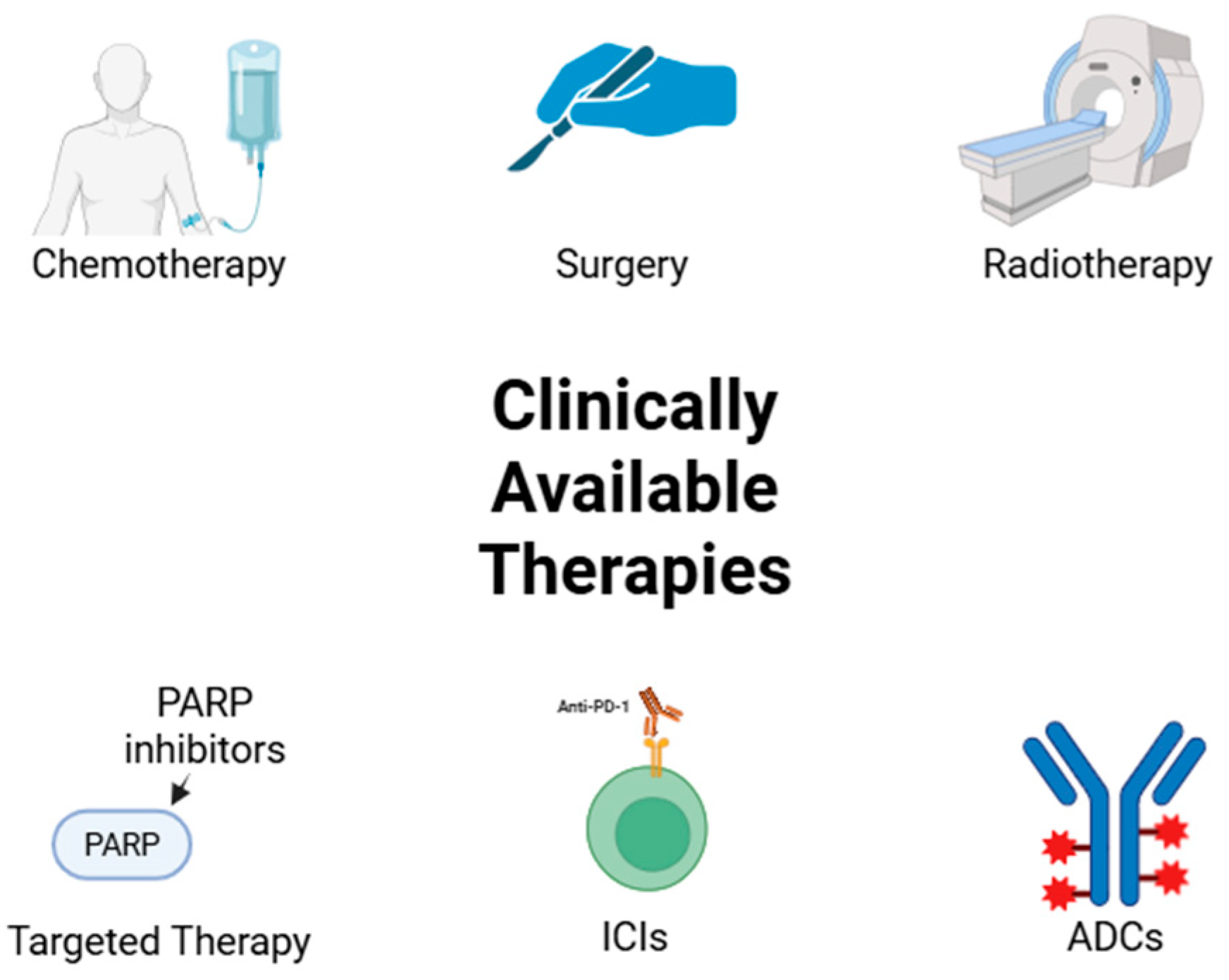
1.2. Clinically Available Therapies for TNBC
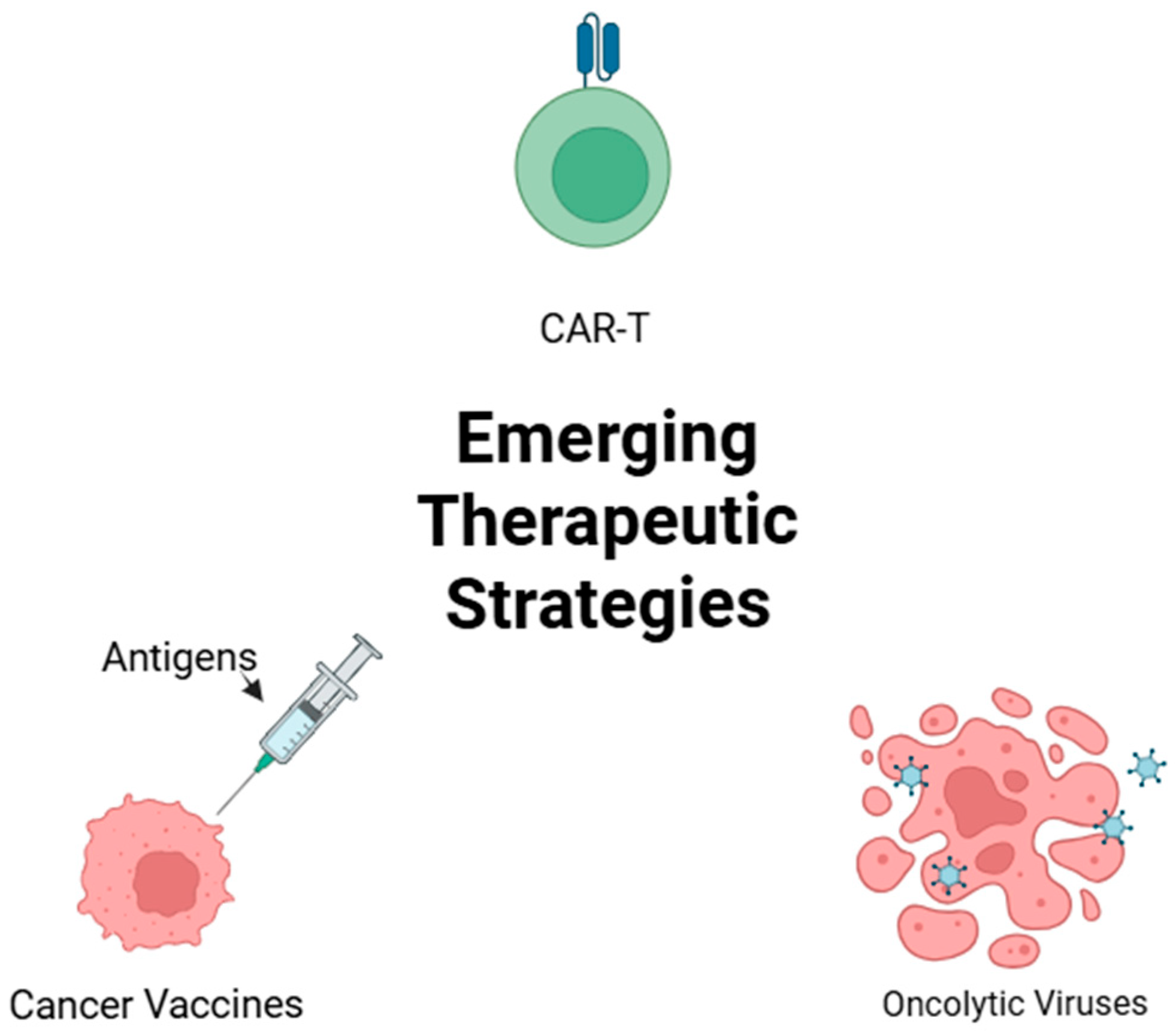
1.3. From Established to Emerging Therapeutic Strategies in TNBC
1.4. Challenges to Overcome
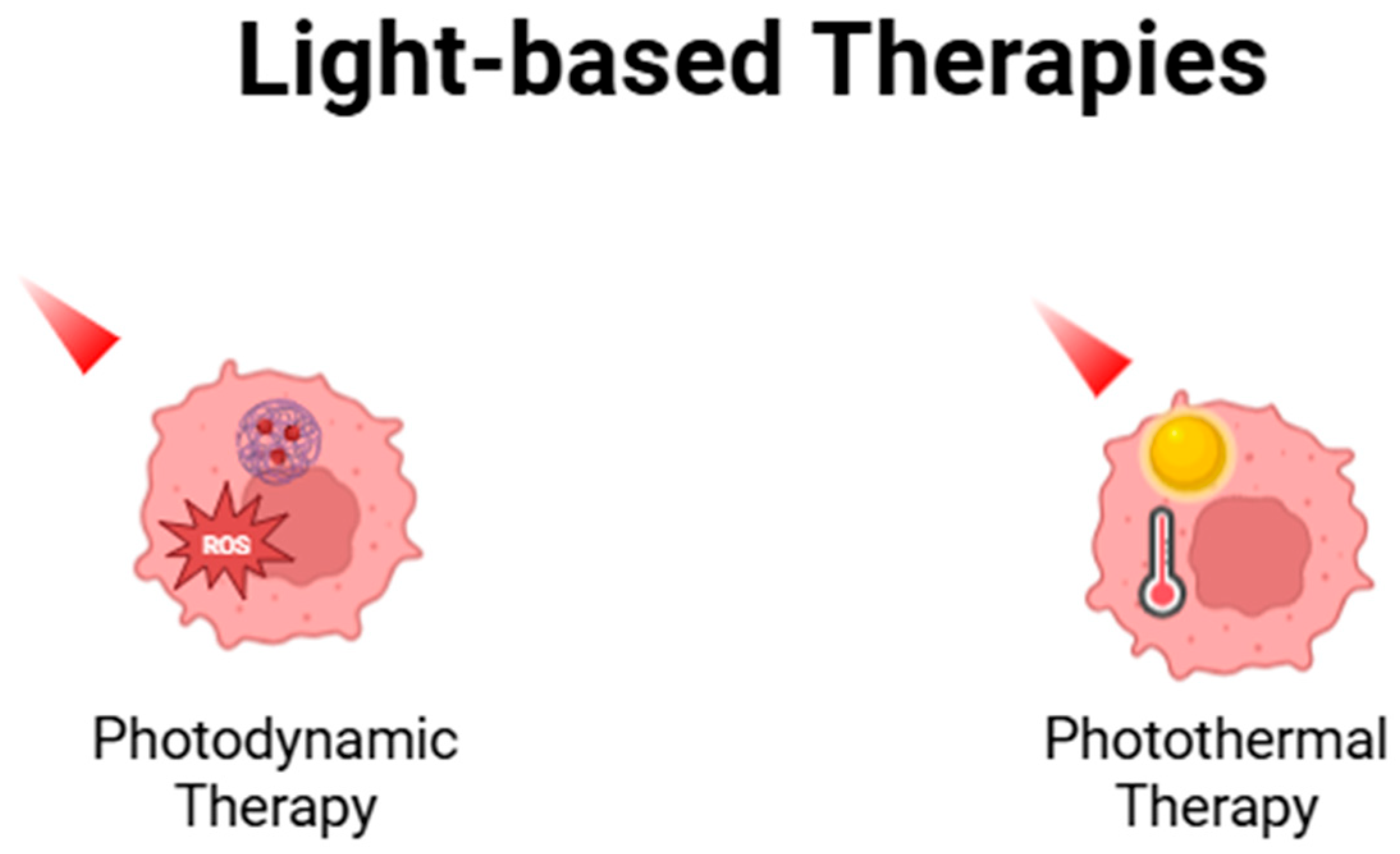
2. Light-Based Therapies
2.1. Light as a Quantum Mediator of Energy
2.2. Light Sources
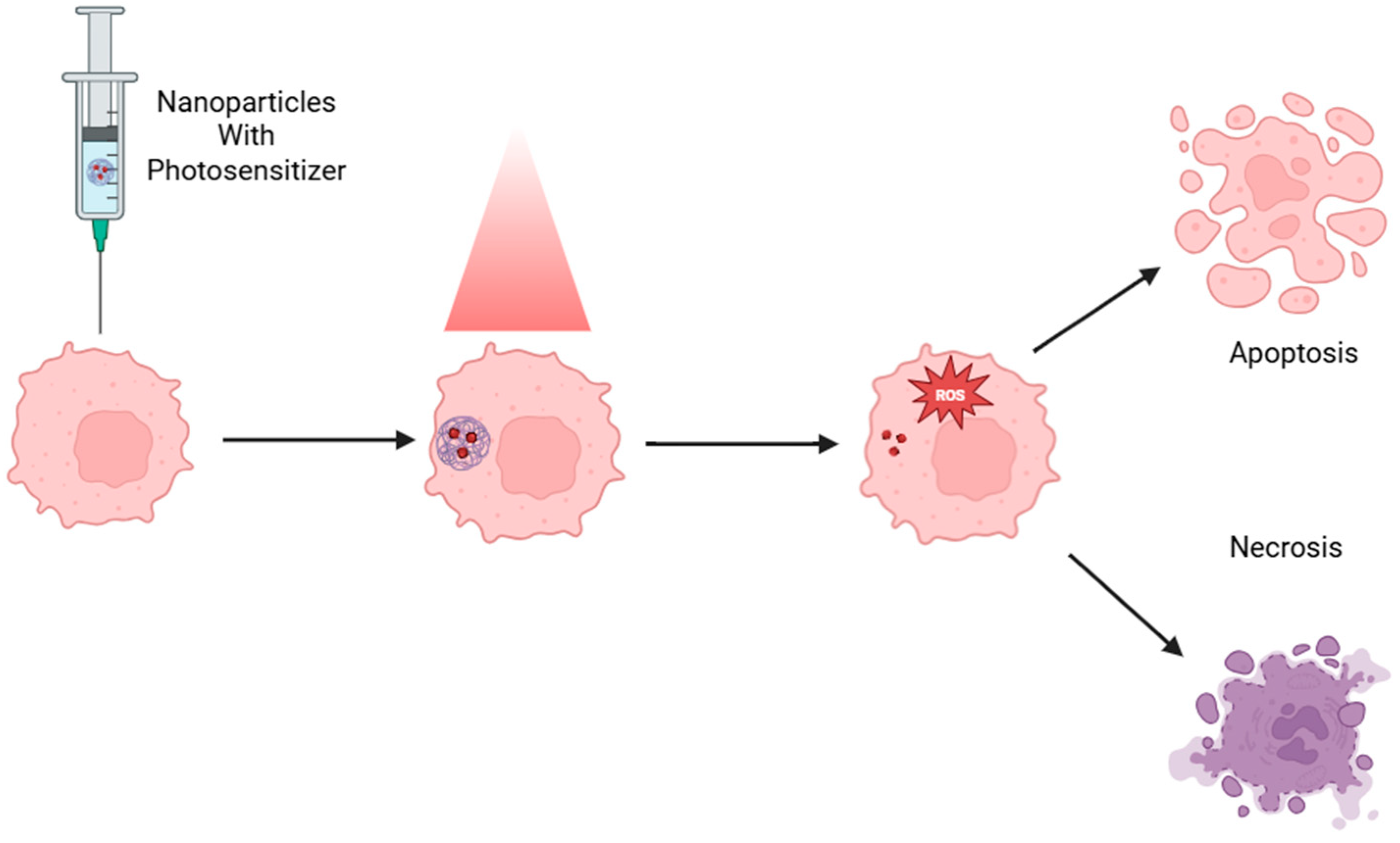
2.3. Photodynamic Therapy
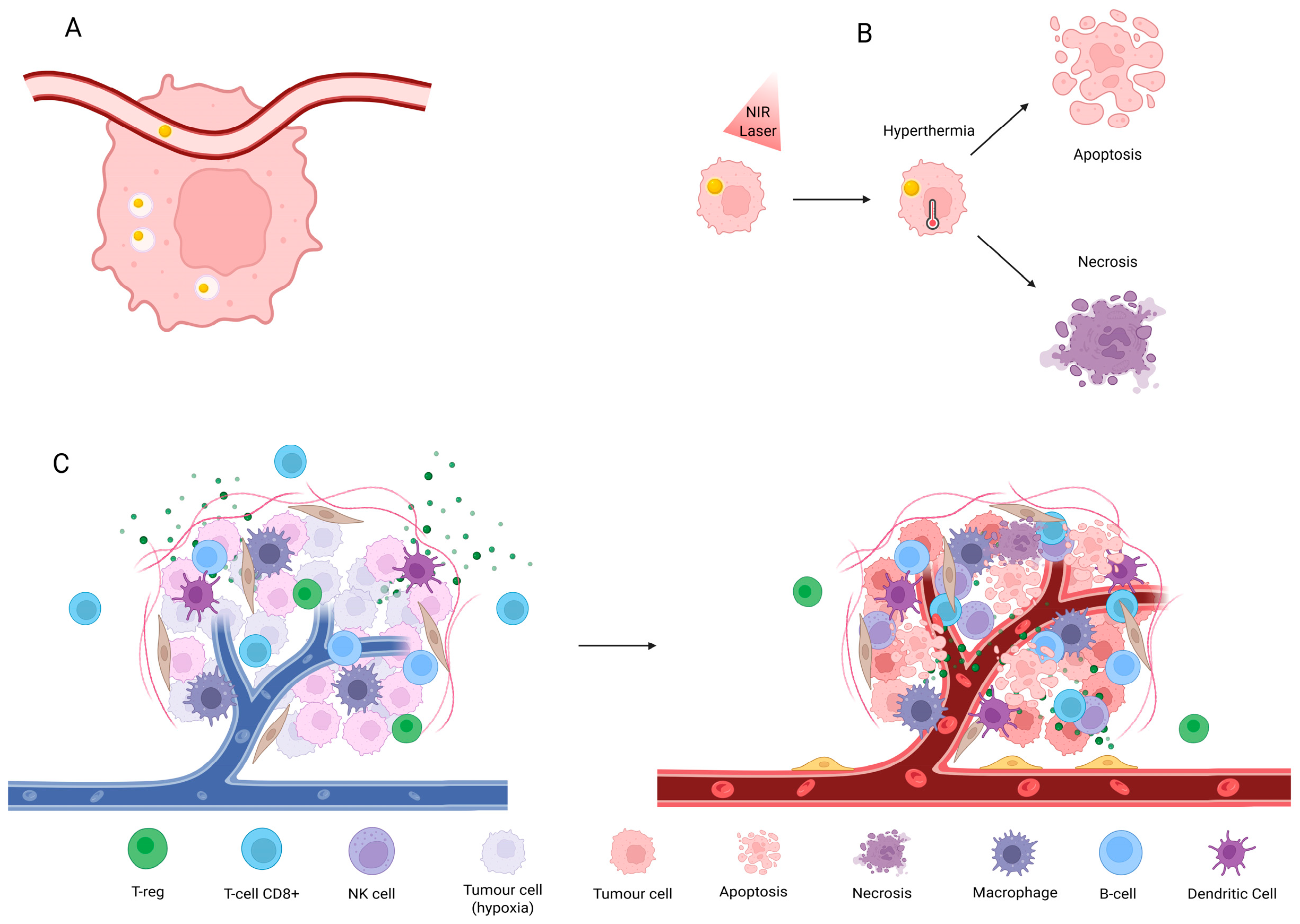
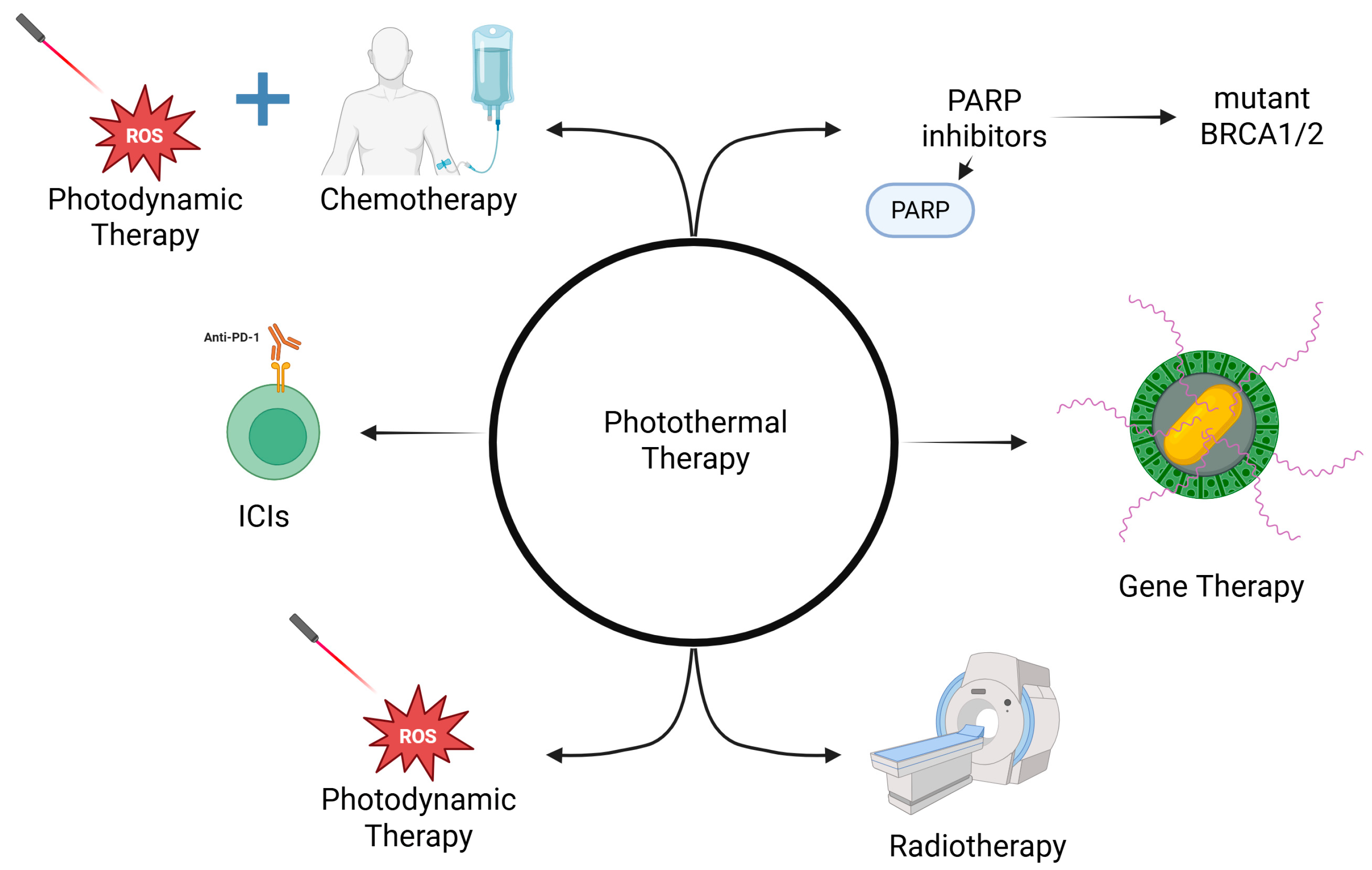
2.4. Photothermal Therapy

| Material | Photothermal Conversion Efficiency (PCE) | NIR Wavelength | Advantages | Limitations | Reference |
|---|---|---|---|---|---|
| Gold | Depends primarily on shape and polydispersity (almost 99%) | 550 to 1100 nm | Leading research metal Tunable modifications in size, morphology and surface ligands attachments Low toxicity | Lower absolute heat (spheres) High sensitivity to polydispersity (rods) Complex synthesis (stars) Aggregation | [68,73,74,75] |
| Silver | 50–80% | 970 nm | Tunable surface plasma resonance Antimicrobial activity Reduced cost | Reduced penetration depth Leaching toxicity and risk to healthy cells during the laser irradiation Instability | [90] |
| Carbon Nanotubes | 30–50% | 400 to 1100 nm | Broad NIR absorption Good penetration depth Intratumoral injection in PTT-ChT with good results | Moderate PCE IV injection diminishes their impact Toxicity of the compounds | [91] |
| Copper | 30–60% | 800–1300 nm Preferentially at 980 nm for CuS NPs | Penetration depth enhanced in NIR-II window Lower cost Biocompatibility Combination with chemodynamic therapy | Moderate PCE when used with polydopamine coating Toxicity at 980 nm in healthy tissues | [92,93,94] |
| Iron | 30–50% | 1000 to 1350 nm | Best penetration depth due to operating at NIR-II (1000–1350 nm) Biocompatibility Accumulation in tumors can be enhanced with external magnetic field. | Moderate PCE Optimization with doping to improve PCE NIR-II window increases toxicity risk in skin | [95] |
| Zirconium | 40% | 808 nm | Combination with RT | Early stage research Many uncertainties regarding regulation and safety | [96] |
3. Light-Based Nanotherapies: Illuminating New Frontiers and Facing Challenges
4. Conclusions
Author Contributions
Funding
Institutional Review Board Statement
Informed Consent Statement
Data Availability Statement
Conflicts of Interest
Abbreviations
| ADC | Antibody-Drug Conjugates |
| A375 | Melanoma cell line |
| AuNPs | Gold Nanoparticles |
| BC | Breast Cancer |
| B16F10 | Murine melanoma cell line |
| BRCA | Breast cancer gene |
| CAR-T | Chimeric Antigen Receptor T-cell |
| ChT | Chemotherapy |
| CTLA-4 | Cytotoxic T-Lymphocyte Antigen-4 |
| EGFR | Epidermal Growth Factor Receptor |
| EPR | Enhanced Permeability Retention |
| ER | Estrogen Receptor |
| ESMO | European Society for Medical Oncology |
| FDA | U.S. Food and Drug Administration |
| GV | Glembatumumab vedotin |
| HaCaT | Human keratinocytes |
| HAOA | Hyaluronic Acid-Oleic Acid |
| HCT-116 | Colon cancer cell line |
| HER-2 | Human Epidermal Growth Factor Receptor-2 |
| ICI | Immune Checkpoint Inhibitors |
| IV | Intravenous |
| IT | Immunotherapy |
| JAK | Janus Kinase |
| MCF-7 | BC cell line |
| MRI | Magnetic Resonance Imaging |
| N# | Nodule invasion |
| NK cell | Natural-killer cell |
| NIR | Near-infrared |
| NP | Nanoparticle |
| PDT | Photodynamic Therapy |
| PD-L1 | Programmed Death Ligand-1 |
| PI3K | Phosphoinositide 3-Kinase |
| PR | Progesterone Receptor |
| PARP1 | Poly ADP Ribose Polymerase-1 |
| PCE | Photothermal Conversion Efficiency |
| PS | Photosensitizer |
| PTT | Photothermal Therapy |
| ROS | Reactive oxygen species |
| RT | Radiotherapy |
| SG | Sacituzumab govitecan |
| T# | Tumor staging |
| TME | Tumor Microenvironment |
| TNBC | Triple-negative Breast Cancer |
| TT | Targeted Therapy |
| UV | Ultraviolet |
| VEGFR | Vascular Endothelial Growth Factor Receptor |
References
- Bray, F.; Laversanne, M.; Sung, H.; Ferlay, J.; Siegel, R.L.; Soerjomataram, I.; Jemal, A. Global Cancer Statistics 2022: GLOBOCAN Estimates of Incidence and Mortality Worldwide for 36 Cancers in 185 Countries. CA Cancer J. Clin. 2024, 74, 229–263. [Google Scholar] [CrossRef] [PubMed]
- Karim, A.M.; Eun Kwon, J.; Ali, T.; Jang, J.; Ullah, I.; Lee, Y.G.; Park, D.W.; Park, J.; Jeang, J.W.; Kang, S.C. Triple-Negative Breast Cancer: Epidemiology, Molecular Mechanisms, and Modern Vaccine-Based Treatment Strategies. Biochem. Pharmacol. 2023, 212, 115545. [Google Scholar] [CrossRef] [PubMed]
- Catalano, A.; Iacopetta, D.; Ceramella, J.; Mariconda, A.; Rosano, C.; Scumaci, D.; Saturnino, C.; Longo, P.; Sinicropi, M.S. New Achievements for the Treatment of Triple-Negative Breast Cancer. Appl. Sci. 2022, 12, 5554. [Google Scholar] [CrossRef]
- Zhang, Z.; Zhang, R.; Li, D. Molecular Biology Mechanisms and Emerging Therapeutics of Triple-Negative Breast Cancer. Biologics 2023, 17, 113–128. [Google Scholar] [CrossRef]
- Won, K.A.; Spruck, C. Triple-negative Breast Cancer Therapy: Current and Future Perspectives. Int. J. Oncol. 2020, 57, 1245–1261. [Google Scholar] [CrossRef]
- Han, H.S.; Vikas, P.; Costa, R.L.B.; Jahan, N.; Taye, A.; Stringer-Reasor, E.M. Early-Stage Triple-Negative Breast Cancer Journey: Beginning, End, and Everything in Between. Am. Soc. Clin. Oncol. Educ. Book 2023, 43, e390464. [Google Scholar] [CrossRef] [PubMed]
- Carvalho, F.M. Triple-Negative Breast Cancer: From None to Multiple Therapeutic Targets in Two Decades. Front. Oncol. 2023, 13, 1244781. [Google Scholar] [CrossRef]
- Popovic, L.S.; Matovina-Brko, G.; Popovic, M.; Punie, K.; Cvetanovic, A.; Lambertini, M. Targeting Triple-Negative Breast Cancer: A Clinical Perspective. Oncol. Res. 2023, 31, 221–238. [Google Scholar] [CrossRef]
- Ensenyat-Mendez, M.; Llinàs-Arias, P.; Orozco, J.I.J.; Íñiguez-Muñoz, S.; Salomon, M.P.; Sesé, B.; DiNome, M.L.; Marzese, D.M. Current Triple-Negative Breast Cancer Subtypes: Dissecting the Most Aggressive Form of Breast Cancer. Front. Oncol. 2021, 11, 681476. [Google Scholar] [CrossRef]
- James, N.; Owusu, E.; Rivera, G.; Bandyopadhyay, D. Small Molecule Therapeutics in the Pipeline Targeting for Triple-Negative Breast Cancer: Origin, Challenges, Opportunities, and Mechanisms of Action. Int. J. Mol. Sci. 2024, 25, 6285. [Google Scholar] [CrossRef]
- Bai, X.; Ni, J.; Beretov, J.; Graham, P.; Li, Y. Triple-Negative Breast Cancer Therapeutic Resistance: Where Is the Achilles’ Heel? Cancer Lett. 2021, 497, 100–111. [Google Scholar] [CrossRef]
- Pinilla, K.; Drewett, L.M.; Lucey, R.; Abraham, J.E. Precision Breast Cancer Medicine: Early Stage Triple Negative Breast Cancer—A Review of Molecular Characterisation, Therapeutic Targets and Future Trends. Front. Oncol. 2022, 12, 866889. [Google Scholar] [CrossRef] [PubMed]
- Wang, X.; Qi, Y.; Kong, X.; Zhai, J.; Li, Y.; Song, Y.; Wang, J.; Feng, X.; Fang, Y. Immunological Therapy: A Novel Thriving Area for Triple-Negative Breast Cancer Treatment. Cancer Lett. 2019, 442, 409–428. [Google Scholar] [CrossRef]
- Bijelić, A.; Silovski, T.; Mlinarić, M.; Čipak Gašparović, A. Peroxiporins in Triple-Negative Breast Cancer: Biomarker Potential and Therapeutic Perspectives. Int. J. Mol. Sci. 2024, 25, 6658. [Google Scholar] [CrossRef]
- Burstein, M.D.; Tsimelzon, A.; Poage, G.M.; Covington, K.R.; Contreras, A.; Fuqua, S.A.W.; Savage, M.I.; Osborne, C.K.; Hilsenbeck, S.G.; Chang, J.C.; et al. Comprehensive Genomic Analysis Identifies Novel Subtypes and Targets of Triple-Negative Breast Cancer. Clin. Cancer Res. 2015, 21, 1688–1698. [Google Scholar] [CrossRef] [PubMed]
- Sabit, H.; Adel, A.; Abdelfattah, M.M.; Ramadan, R.M.; Nazih, M.; Abdel-Ghany, S.; El-hashash, A.; Arneth, B. The Role of Tumor Microenvironment and Immune Cell Crosstalk in Triple-Negative Breast Cancer (TNBC): Emerging Therapeutic Opportunities. Cancer Lett. 2025, 628, 217865. [Google Scholar] [CrossRef]
- Vuletić, A.; Mirjačić Martinović, K.; Jurišić, V. The Role of Tumor Microenvironment in Triple-Negative Breast Cancer and Its Therapeutic Targeting. Cells 2025, 14, 1353. [Google Scholar] [CrossRef] [PubMed]
- Szulc, A.; Woźniak, M. Targeting Pivotal Hallmarks of Cancer for Enhanced Therapeutic Strategies in Triple-Negative Breast Cancer Treatment—In Vitro, In Vivo and Clinical Trials Literature Review. Cancers 2024, 16, 1483. [Google Scholar] [CrossRef]
- Medina, M.A.; Oza, G.; Sharma, A.; Arriaga, L.G.; Hernández, J.M.H.; Rotello, V.M.; Ramirez, J.T. Triple-Negative Breast Cancer: A Review of Conventional and Advanced Therapeutic Strategies. Int. J. Environ. Res. Public Health 2020, 17, 2078. [Google Scholar] [CrossRef]
- Ribeiro, R.; Carvalho, M.J.; Goncalves, J.; Moreira, J.N. Immunotherapy in Triple-Negative Breast Cancer: Insights into Tumor Immune Landscape and Therapeutic Opportunities. Front. Mol. Biosci. 2022, 9, 903065. [Google Scholar] [CrossRef]
- Hall, P.E.; Schmid, P. Emerging Strategies for TNBC with Early Clinical Data: New Chemoimmunotherapy Strategies. Breast Cancer Res. Treat. 2022, 193, 21–35. [Google Scholar] [CrossRef]
- Loibl, S.; André, F.; Bachelot, T.; Barrios, C.H.; Bergh, J.; Burstein, H.J.; Cardoso, M.J.; Carey, L.A.; Dawood, S.; Del Mastro, L.; et al. Early Breast Cancer: ESMO Clinical Practice Guideline for Diagnosis, Treatment and Follow-Up. Ann. Oncol. 2024, 35, 159–182. [Google Scholar] [CrossRef]
- Jain, V.; Kumar, H.; Anod, H.V.; Chand, P.; Gupta, N.V.; Dey, S.; Kesharwani, S.S. A Review of Nanotechnology-Based Approaches for Breast Cancer and Triple-Negative Breast Cancer. J. Control. Release 2020, 326, 628–647. [Google Scholar] [CrossRef] [PubMed]
- Chapdelaine, A.G.; Sun, G. Challenges and Opportunities in Developing Targeted Therapies for Triple Negative Breast Cancer. Biomolecules 2023, 13, 1207. [Google Scholar] [CrossRef]
- Mehlich, D.; Marusiak, A.A. Kinase Inhibitors for Precision Therapy of Triple-Negative Breast Cancer: Progress, Challenges, and New Perspectives on Targeting This Heterogeneous Disease. Cancer Lett. 2022, 547, 215775. [Google Scholar] [CrossRef] [PubMed]
- Zhu, S.; Wu, Y.; Song, B.; Yi, M.; Yan, Y.; Mei, Q.; Wu, K. Recent Advances in Targeted Strategies for Triple-Negative Breast Cancer. J. Hematol. Oncol. 2023, 16, 100. [Google Scholar] [CrossRef]
- Yang, R.; Li, Y.; Wang, H.; Qin, T.; Yin, X.; Ma, X. Therapeutic Progress and Challenges for Triple Negative Breast Cancer: Targeted Therapy and Immunotherapy. Mol. Biomed. 2022, 3, 8. [Google Scholar] [CrossRef]
- Hwang, S.Y.; Park, S.; Kwon, Y. Recent Therapeutic Trends and Promising Targets in Triple Negative Breast Cancer. Pharmacol. Ther. 2019, 199, 30–57. [Google Scholar] [CrossRef]
- Zhang, J.; Xia, Y.; Zhou, X.; Yu, H.; Tan, Y.; Du, Y.; Zhang, Q.; Wu, Y. Current Landscape of Personalized Clinical Treatments for Triple-Negative Breast Cancer. Front. Pharmacol. 2022, 13, 977660. [Google Scholar] [CrossRef]
- Berger, E.R.; Park, T.; Saridakis, A.; Golshan, M.; Greenup, R.A.; Ahuja, N. Immunotherapy Treatment for Triple Negative Breast Cancer. Pharmaceuticals 2021, 14, 763. [Google Scholar] [CrossRef] [PubMed]
- Bhat, Y.; Thrishna, M.R.; Banerjee, S. Molecular Targets and Therapeutic Strategies for Triple-Negative Breast Cancer. Mol. Biol. Rep. 2023, 50, 10535–10577. [Google Scholar] [CrossRef]
- Song, F.; Tarantino, P.; Garrido-Castro, A.; Lynce, F.; Tolaney, S.M.; Schlam, I. Immunotherapy for Early-Stage Triple Negative Breast Cancer: Is Earlier Better? Curr. Oncol. Rep. 2024, 26, 21–33. [Google Scholar] [CrossRef] [PubMed]
- Hu, Y.; Wang, C.; Liang, H.; Li, J.; Yang, Q. The Treatment Landscape of Triple-Negative Breast Cancer. Med. Oncol. 2024, 41, 236. [Google Scholar] [CrossRef]
- Zhang, H.; Mi, J.; Xin, Q.; Cao, W.; Song, C.; Zhang, N.; Yuan, C. Recent Research and Clinical Progress of CTLA-4-Based Immunotherapy for Breast Cancer. Front. Oncol. 2023, 13, 1256360. [Google Scholar] [CrossRef]
- Liu, L.; Wang, Y.; Miao, L.; Liu, Q.; Musetti, S.; Li, J.; Huang, L. Combination Immunotherapy of MUC1 MRNA Nano-Vaccine and CTLA-4 Blockade Effectively Inhibits Growth of Triple Negative Breast Cancer. Mol. Ther. 2018, 26, 45–55. [Google Scholar] [CrossRef] [PubMed]
- Rossi, V.; Turati, A.; Rosato, A.; Carpanese, D. Sacituzumab Govitecan in Triple-Negative Breast Cancer: From Bench to Bedside, and Back. Front. Immunol. 2024, 15, 1447280. [Google Scholar] [CrossRef]
- Choi, H.; Kim, K. Theranostics for Triple-Negative Breast Cancer. Diagnostics 2023, 13, 272. [Google Scholar] [CrossRef] [PubMed]
- Wang, R.; Huang, X.; Chen, X.; Zhang, Y. Nanoparticle-Mediated Immunotherapy in Triple-Negative Breast Cancer. ACS Biomater. Sci. Eng. 2024, 10, 3568–3598. [Google Scholar] [CrossRef]
- Razazan, A.; Behravan, J. Single Peptides and Combination Modalities for Triple Negative Breast Cancer. J. Cell. Physiol. 2020, 235, 4089–4108. [Google Scholar] [CrossRef]
- Green-Tripp, G.; Nattress, C.; Halldén, G. Targeting Triple Negative Breast Cancer With Oncolytic Adenoviruses. Front. Mol. Biosci. 2022, 9, 901392. [Google Scholar] [CrossRef]
- Xie, Y.; Hu, Y.; Zhou, N.; Yao, C.; Wu, L.; Liu, L.; Chen, F. CAR T-Cell Therapy for Triple-Negative Breast Cancer: Where We Are. Cancer Lett. 2020, 491, 121–131. [Google Scholar] [CrossRef]
- Geng, P.; Chi, Y.; Yuan, Y.; Yang, M.; Zhao, X.; Liu, Z.; Liu, G.; Liu, Y.; Zhu, L.; Wang, S. Novel Chimeric Antigen Receptor T Cell-Based Immunotherapy: A Perspective for Triple-Negative Breast Cancer. Front. Cell Dev. Biol. 2023, 11, 1158539. [Google Scholar] [CrossRef] [PubMed]
- Liu, Y.; Hu, Y.; Xue, J.; Li, J.; Yi, J.; Bu, J.; Zhang, Z.; Qiu, P.; Gu, X. Advances in Immunotherapy for Triple-Negative Breast Cancer. Mol. Cancer 2023, 22, 145. [Google Scholar] [CrossRef]
- Wu, S.Y.; Wang, H.; Shao, Z.M.; Jiang, Y.Z. Triple-Negative Breast Cancer: New Treatment Strategies in the Era of Precision Medicine. Sci. China Life Sci. 2021, 64, 372–388. [Google Scholar] [CrossRef] [PubMed]
- Zhu, Y.; Zhu, X.; Tang, C.; Guan, X.; Zhang, W. Progress and Challenges of Immunotherapy in Triple-Negative Breast Cancer. Biochim. Biophys. Acta Rev. Cancer 2021, 1876, 188593. [Google Scholar] [CrossRef]
- Yang, T.; Li, W.; Huang, T.; Zhou, J. Immunotherapy Targeting PD-1/PD-L1 in Early-Stage Triple-Negative Breast Cancer. J. Pers. Med. 2023, 13, 526. [Google Scholar] [CrossRef]
- Cai, Y.; Chai, T.; Nguyen, W.; Liu, J.; Xiao, E.; Ran, X.; Ran, Y.; Du, D.; Chen, W.; Chen, X. Phototherapy in Cancer Treatment: Strategies and Challenges. Signal Transduct. Target. Ther. 2025, 10, 115. [Google Scholar] [CrossRef]
- Konieva, A.; Deineka, V.; Diedkova, K.; Aguilar-Ferrer, D.; Lyndin, M.; Wennemuth, G.; Korniienko, V.; Kyrylenko, S.; Lihachev, A.; Zahorodna, V.; et al. MXene-Polydopamine-AntiCEACAM1 Antibody Complex as a Strategy for Targeted Ablation of Melanoma. ACS Appl. Mater. Interfaces 2024, 16, 43302–43316. [Google Scholar] [CrossRef]
- Kim, M.M.; Darafsheh, A. Light Sources and Dosimetry Techniques for Photodynamic Therapy. Photochem. Photobiol. 2020, 96, 280–294. [Google Scholar] [CrossRef]
- Sun, J.; Zhao, H.; Xu, W.; Jiang, G.Q. Recent Advances in Photothermal Therapy-Based Multifunctional Nanoplatforms for Breast Cancer. Front. Chem. 2022, 10, 1024177. [Google Scholar] [CrossRef] [PubMed]
- Novas, D.; Fortes, A.; Vieira, P.; Coelho, J.M.P. Proof of Concept of an Integrated Laser Irradiation and Thermal/Visible Imaging System for Optimized Photothermal Therapy in Skin Cancer. Sensors 2025, 25, 4495. [Google Scholar] [CrossRef]
- Garcia, D.; Coelho, J.M.P.; Vieira, P. Optical Design of a Variable Angle Irradiation System for Skin Cancer Laser Phototherapy. EPJ Web Conf. 2020, 238, 12010. [Google Scholar] [CrossRef]
- Gupta, A.; Nishchaya, K.; Saha, M.; Naik, G.A.R.R.; Yadav, S.; Srivastava, S.; Roy, A.A.; Moorkoth, S.; Mutalik, S.; Dhas, N. Recent Advancements in Nanoconstructs for the Theranostics Applications for Triple Negative Breast Cancer. J. Drug Deliv. Sci. Technol. 2024, 93, 105401. [Google Scholar] [CrossRef]
- Cao, Y.; Meng, F.; Cai, T.; Gao, L.; Lee, J.; Solomevich, S.O.; Aharodnikau, U.E.; Guo, T.; Lan, M.; Liu, F.; et al. Nanoparticle Drug Delivery Systems Responsive to Tumor Microenvironment: Promising Alternatives in the Treatment of Triple-Negative Breast Cancer. Wiley Interdiscip. Rev. Nanomed. Nanobiotechnol. 2024, 16, e1950. [Google Scholar] [CrossRef] [PubMed]
- Pawar, A.; Prabhu, P. Nanosoldiers: A Promising Strategy to Combat Triple Negative Breast Cancer. Biomed. Pharmacother. 2019, 110, 319–341. [Google Scholar] [CrossRef] [PubMed]
- Pradhan, R.; Dey, A.; Taliyan, R.; Puri, A.; Kharavtekar, S.; Dubey, S.K. Recent Advances in Targeted Nanocarriers for the Management of Triple Negative Breast Cancer. Pharmaceutics 2023, 15, 246. [Google Scholar] [CrossRef]
- Silva, C.R.; Vieira, D.P.; de Freitas, A.Z.; Ribeiro, M.S. Photodynamic Therapy as a Strategic Ally in Radiotherapy for Triple-Negative Breast Cancer: The Importance of Treatment Order. Breast Cancer Res. Treat. 2025, 210, 687–697. [Google Scholar] [CrossRef] [PubMed]
- Erk, B.; Kamanli, A.F.; Guney Eskiler, G. The Therapeutic Efficacy of 5-ALA Based Photodynamic Therapy and Chemotherapy Combination in Triple Negative Breast Cancer Cells. Lasers Med. Sci. 2024, 39, 191. [Google Scholar] [CrossRef]
- Isaac-Lam, M.F. Chlorin Conjugates in Photodynamic Chemotherapy for Triple-Negative Breast Cancer. Pharmaceuticals 2024, 17, 576. [Google Scholar] [CrossRef]
- Banerjee, S.M.; Acedo, P.; El Sheikh, S.; Harati, R.; Meecham, A.; Williams, N.R.; Gerard, G.; Keshtgar, M.R.S.; MacRobert, A.J.; Hamoudi, R. Combination of Verteporfin-Photodynamic Therapy with 5-Aza-2′-Deoxycytidine Enhances the Anti-Tumour Immune Response in Triple Negative Breast Cancer. Front. Immunol. 2023, 14, 1188087. [Google Scholar] [CrossRef]
- Liang, X.; Mu, M.; Chen, B.; Fan, R.; Chen, H.; Zou, B.; Han, B.; Guo, G. Metal-Organic Framework-Based Photodynamic Combined Immunotherapy against the Distant Development of Triple-Negative Breast Cancer. Biomater. Res. 2023, 27, 120. [Google Scholar] [CrossRef] [PubMed]
- Lopes, J.; Rodrigues, C.M.; Godinho-Santos, A.; Coelho, J.M.P.; Cabaço, L.C.; Barral, D.C.; Faísca, P.; Catarino, J.; Nunes, D.; Fortunato, E.; et al. Combination of Gold Nanoparticles with Near-Infrared Light as an Alternative Approach for Melanoma Management. Int. J. Pharm. 2025, 668, 124952. [Google Scholar] [CrossRef]
- Costa, E.; Ferreira-Gonçalves, T.; Cardoso, M.; Coelho, J.M.P.; Gaspar, M.M.; Faísca, P.; Ascensão, L.; Cabrita, A.S.; Reis, C.P.; Figueiredo, I.V. A Step Forward in Breast Cancer Research: From a Natural-like Experimental Model to a Preliminary Photothermal Approach. Int. J. Mol. Sci. 2020, 21, 9681. [Google Scholar] [CrossRef] [PubMed]
- Huang, L.; Li, Y.; Du, Y.; Zhang, Y.; Wang, X.; Ding, Y.; Yang, X.; Meng, F.; Tu, J.; Luo, L.; et al. Mild Photothermal Therapy Potentiates Anti-PD-L1 Treatment for Immunologically Cold Tumors via an All-in-One and All-in-Control Strategy. Nat. Commun. 2019, 10, 4871. [Google Scholar] [CrossRef]
- Zhao, Y.; Ding, B.; Xiao, X.; Jiang, F.; Wang, M.; Hou, Z.; Xing, B.; Teng, B.; Cheng, Z.; Ma, P.; et al. Virus-Like Fe3O4@Bi2S3 Nanozymes with Resistance-Free Apoptotic Hyperthermia-Augmented Nanozymitic Activity for Enhanced Synergetic Cancer Therapy. ACS Appl. Mater. Interfaces 2020, 12, 11320–11328. [Google Scholar] [CrossRef]
- Mei, L.; Ding, Q.; Xie, Y.; Liu, H.; Li, H.; Kim, E.; Shen, X.; Zhang, Y.; Zhang, S.; Kim, J.S. Self-Propelling Intelligent Nanomotor: A Dual-Action Photothermal and Starvation Strategy for Targeted Deep Tumor Destruction. Biomaterials 2025, 315, 122968. [Google Scholar] [CrossRef] [PubMed]
- Lopes, J.; Ferreira-Gonçalves, T.; Ascensão, L.; Viana, A.S.; Carvalho, L.; Catarino, J.; Faísca, P.; Oliva, A.; de Barros, D.P.C.; Rodrigues, C.M.P.; et al. Safety of Gold Nanoparticles: From In Vitro to In Vivo Testing Array Checklist. Pharmaceutics 2023, 15, 1120. [Google Scholar] [CrossRef]
- Ferreira-Gonçalves, T.; Nunes, D.; Fortunato, E.; Martins, R.; de Almeida, A.P.; Carvalho, L.; Ferreira, D.; Catarino, J.; Faísca, P.; Ferreira, H.A.; et al. Rational Approach to Design Gold Nanoparticles for Photothermal Therapy: The Effect of Gold Salt on Physicochemical, Optical and Biological Properties. Int. J. Pharm. 2024, 650, 123659. [Google Scholar] [CrossRef]
- Baioco, K.S.; Pereira, R.; Ferreira-Gonçalves, T.; Coelho, J.M.P.; Gaspar, M.M.; Reis, C.P. Combining Phototherapy and Gold-Based Nanomaterials: A Breakthrough in Basal Cell Carcinoma Treatment. Int. J. Mol. Sci. 2024, 25, 11494. [Google Scholar] [CrossRef]
- Reddy Baddam, S.; Ganta, S.; Nalla, S.; Banoth, C.; Vudari, B.; Akkiraju, P.C.; Srinivas, E.; Tade, R.S. Polymeric Nanomaterials-Based Theranostic Platforms for Triple-Negative Breast Cancer (TNBC) Treatment. Int. J. Pharm. 2024, 660, 124346. [Google Scholar] [CrossRef]
- Chowdhury, P.; Ghosh, U.; Samanta, K.; Jaggi, M.; Chauhan, S.C.; Yallapu, M.M. Bioactive Nanotherapeutic Trends to Combat Triple Negative Breast Cancer. Bioact. Mater. 2021, 6, 3269–3287. [Google Scholar] [CrossRef] [PubMed]
- Amaral, M.; Cruz, N.; Rosa, A.; Nogueira, B.; Costa, D.; Santos, F.; Brazão, M.; Policarpo, P.; Mateus, R.; Kobozev, Y.; et al. An Update of Advanced Nanoplatforms for Glioblastoma Multiforme Management. EXCLI J. 2021, 20, 1544–1570. [Google Scholar] [PubMed]
- Singh, P.; Joshi, A.S.; Singh, H.; Mijakovic, I. Medical Importance and Pharmacokinetics of Gold Nanoparticles in the Human Body. Mol. Cancer 2025, 24, 252. [Google Scholar] [CrossRef]
- Menendez, J.B.; Fusco, M.; Piccioni, F.; Benitez, C.A.; Rizzo, M.M.; Andreozzi, P.; Moya, S.E.; Cardinal, M.F.; Malvicini, M. Glucose-Functionalized Gold Nanoparticles for Effective Photothermal Therapy in Lung Cancer. Sci. Rep. 2025, 15, 41006. [Google Scholar] [CrossRef]
- Amaral, M.N.; Kumar, P.; Faísca, P.; Ferreira, H.A.; Coelho, J.M.P.; Gaspar, M.M.; Reis, C.P. Gold Nanoparticle-Mediated Photothermal Therapy: Expanding the Frontiers of Cancer Treatment and Theragnostics. Biomed. Pharmacother. 2025, 190, 118399. [Google Scholar] [CrossRef]
- Battogtokh, G.; Obidiro, O.; Akala, E.O. Recent Developments in Combination Immunotherapy with Other Therapies and Nanoparticle-Based Therapy for Triple-Negative Breast Cancer (TNBC). Cancers 2024, 16, 2012. [Google Scholar] [CrossRef] [PubMed]
- Chaudhuri, A.; Kumar, D.N.; Dehari, D.; Singh, S.; Kumar, P.; Bolla, P.K.; Kumar, D.; Agrawal, A.K. Emergence of Nanotechnology as a Powerful Cavalry against Triple-Negative Breast Cancer (TNBC). Pharmaceuticals 2022, 15, 542. [Google Scholar] [CrossRef]
- Schrörs, B.; Boegel, S.; Albrecht, C.; Bukur, T.; Bukur, V.; Holtsträter, C.; Ritzel, C.; Manninen, K.; Tadmor, A.D.; Vormehr, M.; et al. Multi-Omics Characterization of the 4T1 Murine Mammary Gland Tumor Model. Front. Oncol. 2020, 10, 1195. [Google Scholar] [CrossRef]
- Ferreira Gonçaves, T. Non-Invasive Photoactivated Nanodevices for Breast Cancer Treatment. Ph.D. Thesis, Universidade de Lisboa, Lisboa, Portugal, 2024. [Google Scholar]
- Shi, Y.; van der Meel, R.; Chen, X.; Lammers, T. The EPR Effect and beyond: Strategies to Improve Tumor Targeting and Cancer Nanomedicine Treatment Efficacy. Theranostics 2020, 10, 7921–7924. [Google Scholar] [CrossRef]
- Xu, H.; Hu, M.; Liu, M.; An, S.; Guan, K.; Wang, M.; Li, L.; Zhang, J.; Li, J.; Huang, L. Nano-Puerarin Regulates Tumor Microenvironment and Facilitates Chemo- and Immunotherapy in Murine Triple Negative Breast Cancer Model. Biomaterials 2020, 235, 119769. [Google Scholar] [CrossRef]
- Camorani, S.; Caliendo, A.; Morrone, E.; Agnello, L.; Martini, M.; Cantile, M.; Cerrone, M.; Zannetti, A.; La Deda, M.; Fedele, M.; et al. Bispecific Aptamer-Decorated and Light-Triggered Nanoparticles Targeting Tumor and Stromal Cells in Breast Cancer Derived Organoids: Implications for Precision Phototherapies. J. Exp. Clin. Cancer Res. 2024, 43, 92. [Google Scholar] [CrossRef]
- Lei, W.; Wang, Y.; Zheng, T.; Wu, Q.; Wen, H.; Sun, T.; Liu, J.; Xie, Z. NIR-II Photothermal Therapy Combined with Activatable Immunotherapy against the Recurrence and Metastasis of Orthotopic Triple-Negative Breast Cancer. Nanoscale 2025, 17, 6815–6826. [Google Scholar] [CrossRef] [PubMed]
- Ni, Q.; Teng, Z.; Dang, M.; Tian, Y.; Zhang, Y.; Huang, P.; Su, X.; Lu, N.; Yang, Z.; Tian, W.; et al. Gold Nanorod Embedded Large-Pore Mesoporous Organosilica Nanospheres for Gene and Photothermal Cooperative Therapy of Triple Negative Breast Cancer. Nanoscale 2017, 9, 1466–1474. [Google Scholar] [CrossRef]
- Wang, S.; Tian, Y.; Tian, W.; Sun, J.; Zhao, S.; Liu, Y.; Wang, C.; Tang, Y.; Ma, X.; Teng, Z.; et al. Selectively Sensitizing Malignant Cells to Photothermal Therapy Using a CD44-Targeting Heat Shock Protein 72 Depletion Nanosystem. ACS Nano 2016, 10, 8578–8590. [Google Scholar] [CrossRef] [PubMed]
- Wu, D.; Chen, X.; Yao, S.; He, Y.; Chen, G.; Hu, X.; Chen, Y.; Lv, Z.; Yu, J.; Jin, K.; et al. Platelet Membrane Coated Cu9S8-SNAP for Targeting NIR-II Mild Photothermal Enhanced Chemodynamic/Gas Therapy of Triple-Negative Breast Cancer. Small 2024, 20, 2400919. [Google Scholar] [CrossRef] [PubMed]
- Sun, R.; Chen, H.; Sutrisno, L.; Kawazoe, N.; Chen, G. Nanomaterials and Their Composite Scaffolds for Photothermal Therapy and Tissue Engineering Applications. Sci. Technol. Adv. Mater. 2021, 22, 404–428. [Google Scholar] [CrossRef]
- Li, C.; Cheng, Y.; Li, D.; An, Q.; Zhang, W.; Zhang, Y.; Fu, Y. Antitumor Applications of Photothermal Agents and Photothermal Synergistic Therapies. Int. J. Mol. Sci. 2022, 23, 7909. [Google Scholar] [CrossRef]
- Li, Y.; Miao, W.; Yuan, C.; Tang, J.; Zhong, N.; Jin, Y.; Hu, Y.; Tang, Y.; Wang, S. PARP Inhibitor Boost the Efficacy of Photothermal Therapy to TNBC through Enhanced DNA Damage and Inhibited Homologous Recombination Repair. Drug Deliv. Transl. Res. 2025, 15, 955–967. [Google Scholar] [CrossRef]
- Sears, J.; Swanner, J.; Fahrenholtz, C.D.; Snyder, C.; Rohde, M.; Levi-Polyachenko, N.; Singh, R. Combined Photothermal and Ionizing Radiation Sensitization of Triple-Negative Breast Cancer Using Triangular Silver Nanoparticles. Int. J. Nanomed. 2021, 16, 851–865. [Google Scholar] [CrossRef]
- Mei, C.; Wang, N.; Zhu, X.; Wong, K.H.; Chen, T. Photothermal-Controlled Nanotubes with Surface Charge Flipping Ability for Precise Synergistic Therapy of Triple-Negative Breast Cancer. Adv. Funct. Mater. 2018, 28, 1805225. [Google Scholar] [CrossRef]
- Xiao, C.; Wang, X.; Li, S.; Zhang, Z.; Li, J.; Deng, Q.; Chen, X.; Yang, X.; Li, Z. A Cuproptosis-Based Nanomedicine Suppresses Triple Negative Breast Cancers by Regulating Tumor Microenvironment and Eliminating Cancer Stem Cells. Biomaterials 2025, 313, 122763. [Google Scholar] [CrossRef] [PubMed]
- Wu, X.; Suo, Y.; Shi, H.; Liu, R.; Wu, F.; Wang, T.; Ma, L.; Liu, H.; Cheng, Z. Deep-Tissue Photothermal Therapy Using Laser Illumination at NIR-IIa Window. Nanomicro Lett. 2020, 12, 38. [Google Scholar] [CrossRef]
- Chen, J.; Ning, C.; Zhou, Z.; Yu, P.; Zhu, Y.; Tan, G.; Mao, C. Nanomaterials as Photothermal Therapeutic Agents. Prog. Mater. Sci. 2019, 99, 1–26. [Google Scholar] [CrossRef]
- Grancharova, T.; Zagorchev, P.; Pilicheva, B. Iron Oxide Nanoparticles: Parameters for Optimized Photoconversion Efficiency in Synergistic Cancer Treatment. J. Funct. Biomater. 2024, 15, 207. [Google Scholar] [CrossRef] [PubMed]
- Jiang, S.; Liu, Z.; Tian, Y.; Zhuang, M.; Piao, S.; Gao, Y.; Tam, A.; Hu, H.; Cheng, W. A Comprehensive Evaluation of ZrC Nanoparticle in Combined Photothermal and Radiation Therapy for Treatment of Triple-Negative Breast Cancer. Front. Oncol. 2021, 11, 801352. [Google Scholar] [CrossRef] [PubMed]
- Li, K.; Li, R.; Zhou, B.; Chen, J.; Lan, K.; Zhan, W.; Chen, D.; Zhang, T.; Li, X. Cascade Release Nanocarriers for the Triple-Negative Breast Cancer Near-Infrared Imaging and Photothermal-Chemo Synergistic Therapy. Front. Oncol. 2021, 11, 747608. [Google Scholar] [CrossRef]
- Su, Z.; Xiao, Z.; Huang, J.; Wang, Y.; An, Y.; Xiao, H.; Peng, Y.; Pang, P.; Han, S.; Zhu, K.; et al. Dual-Sensitive PEG-Sheddable Nanodrug Hierarchically Incorporating PD-L1 Antibody and Zinc Phthalocyanine for Improved Immuno-Photodynamic Therapy. ACS Appl. Mater. Interfaces 2021, 13, 12845–12856. [Google Scholar] [CrossRef]
- Yin, C.; Lu, X.; Fan, Q.; Huang, W. Organic Semiconducting Nanomaterials-Assisted Phototheranostics in near-Infrared-II Biological Window. View 2021, 2, 20200070. [Google Scholar] [CrossRef]
- Liu, X.; Yang, Y.; Ling, M.; Sun, R.; Zhu, M.; Chen, J.; Yu, M.; Peng, Z.; Yu, Z.; Liu, X. Near-Infrared II Light-Triggered Robust Carbon Radical Generation for Combined Photothermal and Thermodynamic Therapy of Hypoxic Tumors. Adv. Funct. Mater. 2021, 31, 2101709. [Google Scholar] [CrossRef]
- Wei, X.; Zhang, C.; He, S.; Huang, J.; Huang, J.; Liew, S.S.; Zeng, Z.; Pu, K. A Dual-Locked Activatable Phototheranostic Probe for Biomarker-Regulated Photodynamic and Photothermal Cancer Therapy. Angew. Chem. Int. Ed. 2022, 61, e202202966. [Google Scholar] [CrossRef]
- Yu, S.; Xia, G.; Yang, N.; Yuan, L.; Li, J.; Wang, Q.; Li, D.; Ding, L.; Fan, Z.; Li, J. Noble Metal Nanoparticle-Based Photothermal Therapy: Development and Application in Effective Cancer Therapy. Int. J. Mol. Sci. 2024, 25, 5632. [Google Scholar] [CrossRef] [PubMed]
- Overchuk, M.; Weersink, R.; Wilson, B.C.; Zheng, G. Photodynamic and Photothermal Therapies: Synergy Opportunities for Nanomedicine. ACS Nano 2023, 17, 7979–8003. [Google Scholar] [CrossRef] [PubMed]
- Riley, R.S.; O’sullivan, R.K.; Potocny, A.M.; Rosenthal, J.; Day, E.S. Evaluating Nanoshells and a Potent Biladiene Photosensitizer for Dual Photothermal and Photodynamic Therapy of Triple Negative Breast Cancer Cells. Nanomaterials 2018, 8, 658. [Google Scholar] [CrossRef] [PubMed]
- Yin, Y.; Wong, K.H.; Wen, L.; Chen, M. Active Iron-Drug Nanocomplexes Improve Photodynamic and Photothermal Cancer Therapy by Mitigating Tumor Hypoxia and Counteracting Tumor Heat Resistance. Adv. Healthc. Mater. 2025, 14, 2404485. [Google Scholar] [CrossRef]
- He, D.; Li, H.; Li, Y.; Xu, Z.; Wang, C.; Tang, Y.; Wu, F.; Zhen, X.; Wang, S. Tumor-Targeting Semiconducting Polymer Nanoparticles: Efficient Adjuvant Photothermal Therapy Using Ultra-Low Laser Power Inhibits Recurrences after Breast-Conserving Surgery. Nanoscale 2023, 15, 6252–6262. [Google Scholar] [CrossRef]
- Domingo-Diez, J.; Souiade, L.; Manzaneda-González, V.; Sánchez-Díez, M.; Megias, D.; Guerrero-Martínez, A.; Ramírez-Castillejo, C.; Serrano-Olmedo, J.; Ramos-Gómez, M. Effectiveness of Gold Nanorods of Different Sizes in Photothermal Therapy to Eliminate Melanoma and Glioblastoma Cells. Int. J. Mol. Sci. 2023, 24, 13306. [Google Scholar] [CrossRef]
- Li, Z.; Jiang, X.; Xiao, H.; Chen, S.; Zhu, W.; Lu, H.; Cao, L.; Xue, P.; Li, H.; Zhang, D. Long-Term Results of ERCP- or PTCS-Directed Photodynamic Therapy for Unresectable Hilar Cholangiocarcinoma. Surg. Endosc. 2021, 35, 5655–5664. [Google Scholar] [CrossRef]
- Deng, H.; Li, X.; Pan, L.; Tang, M.; Wang, B.; Zhang, Y.; Zhang, H.; Kong, X.; Wang, S.; Zhu, W. GSH-Responsive Liposomes with Heat Shock Protein Regulatory Ability for Efficient Photodynamic/Photothermal Combined Therapy of Tumors. ACS Appl. Mater. Interfaces 2024, 16, 25788–25798. [Google Scholar] [CrossRef]
- Liu, J.; Liang, L.; Gan, P.; Lin, F.; Dai, Z.; Chen, Z.; Xu, Y.; Yang, Q.; Cao, M.; Wang, S.; et al. Development of a Highly Efficient NIR-II Phototherapeutic Agent for Fluorescence Imaging-Guided Synergistic PTT/PDT/Chemotherapy of Colorectal Cancer. J. Med. Chem. 2025, 68, 7592–7604. [Google Scholar] [CrossRef]
- Kong, C.; Chen, X. Combined Photodynamic and Photothermal Therapy and Immunotherapy for Cancer Treatment: A Review. Int. J. Nanomed. 2022, 17, 6427–6446. [Google Scholar] [CrossRef]
- Lin, W.; Duan, X.; Chan, C.; Han, W. Nanoparticles for Chemotherapy, Targeted Therapy, Photodynamic Therapy, Immunotherapy, and Any Combination Thereof. U.S. Patent 11,246,877 B2, 15 February 2022. [Google Scholar]
- Shen, H.; Ferrari, M.; Li, C.; You, J. Gold-In-Silicon Nanoassembly for Thermal Therapy and Methods of Use. U.S. Patent Application 2014/0296836 A1, 2 October 2014. [Google Scholar]
- Chen, H.; Sun, D. Core-Satellite Nanocomposites for MRI and Photothermal Therapy. U.S. Patent Application 2015/0065858 A1, 5 March 2015. [Google Scholar]
- Sessler, J.L.; Sedgwick, A.C.; Thiabaud, G.; Arambula, J. Texaphyrin Derivatives for Manganese Chemotherapy, Photoacoustic Imaging, and Photothermal Therapy. U.S. Patent Application 2025/0034158 A1, 30 January 2025. [Google Scholar]
- Oh, Y.-K.; Ko, S. Biocompatible Photothermal Composition for Treatment of Cancer and Skin Diseases. U.S. Patent Application 2020/0384110 A1, 10 December 2020. [Google Scholar]
- Che, C.-M.; Zhao, P.; Tang, Z. Self-Assembled Nanoparticles for Photothermal Therapy. U.S. Patent Application 2025/0136629 A1, 1 May 2025. [Google Scholar]
- Dhar, S.; Choi, J.; Marache, S. Immune-Stimulating Photoactive Hybrid Nanoparticles. U.S. Patent Application 2014/0220143 A1, 13 December 2016. [Google Scholar]
- Kwong, G.A.; Gamboa, M.; Miller, I.C.; Zamat, A. Methods and Compositions for Remote Control of T Cell Therapies by Thermal Targeting. U.S. Patent Application 2024/0285760 A1, 29 August 2024. [Google Scholar]
- Oh, Y.-K.; Shin, Y.K.; Shim, G.; Yang, H.; Le, Q.V. Pharmaceutical Composition for Treating Cancer, Containing Lipid-Photothermal Nanoparticle Having Antibody Bound to Surface. U.S. Patent Application 2024/0293573 A1, 5 September 2024. [Google Scholar]
- Vo-Dinh, T.; Inman, B.A.; Maccarini, P.; Palmer, G.; Liu, Y.; Weitzel, D. Synergistic Nanotherapy Systems and Methods of Use Thereof. U.S. Patent Application 2018/0133319 A1, 1 March 2022. [Google Scholar]
- Food and Drug Administration. Drug Products, Including Biological Products, That Contain Nanomaterials Guidance for Industry Contains Nonbinding Recommendations; Food and Drug Administration: Silver Spring, MD, USA, 2022. [Google Scholar]
- European Medicines Agency. Nanotechnology-Based Medicinal Products for Human Use—EU-IN Horizon Scanning Report; European Medicines Agency: London, UK, 2025. [Google Scholar]
- Joyce, P.; Allen, C.J.; Alonso, M.J.; Ashford, M.; Bradbury, M.S.; Germain, M.; Kavallaris, M.; Langer, R.; Lammers, T.; Peracchia, M.T.; et al. A Translational Framework to DELIVER Nanomedicines to the Clinic. Nat. Nanotechnol. 2024, 19, 1597–1611. [Google Scholar] [CrossRef] [PubMed]


| Stage | Key Biomarkers/Mutation Testing | First-Line Therapy | Additional Treatments | Adjuvant Therapy |
|---|---|---|---|---|
| Early-stage/localized (Stage I) | ER/PR/HER2 negativity | Surgery | Whole breast RT as indicated by surgical margins. | Consider systemic ChT if nodular invasion; if gBRCA1/2 mutation-positive and add olaparib for 1 year. |
| Germline BRCA 1/2 testing | ||||
| Early-stage/localized (Stage II-III) | ER/PR/HER2 negativity | Neoadjuvant ChT (anthracycline + taxane; add platinum in high-risk cases) plus pembrolizumab; followed by surgery. | Locoregional RT as indicated by surgical margins. | If pCR achieved: pembrolizumab. If residual disease: continue pembrolizumab. Consider capecitabine; If gBRCA1/2 mutation-positive add olaparib for 1 year. |
| Germline BRCA 1/2 testing | ||||
| PD-L1 for trial eligibility | ||||
| Metastatic PD-L1 positive | PD-L1 expression | IT + ChT (Atezolizumab or Pembrolizumab + nab-paclitaxel) | Sacituzumab govitecan Or ChT (eribulin, capecitabine or vinorelbine) | - |
| ER/PR/HER2 negativity in recurrence | ||||
| Metastatic PD-L1 negative and gBRCA-mt | BRCA1/2 mutations | PARP inhibitor | - | - |
| Metastatic PD-L1 negative and gBRCA-wt | NO BRCA1/2 mutations | Taxane/Anthracycline monotherapy. | Imminent organ failure: Bevacizumab + Taxane/Capecitabine Or Anthracycline + Taxane Combination | - |
| Early relapse (≤6–12 months after neoadjuvant/adjuvant ICI) | BRCA1/2 mutations | gBRCA mutation: PARP-inhibitor Or ChT gBRCA-wt: Sacituzumab govitecan Or Cht | Progression: Sacituzumab govitecan (if not used already) Or Trastuzumab deruxtecan Or ChT (eribulin, capecitabine or vinorelbine) | - |
| Properties | Impact in PTT Efficiency | References |
|---|---|---|
| Size | <20 nm: Better conversion efficiency, but lower absolute heat. Absorption at UV (540 nm). Risk of unspecific systemic distribution to various organs. | [68,72] |
| 20–100 nm: Stable, achieve worse heat conversion efficiency, although higher absolute heat compared to smaller ones. Passive targeting and EPR effect. Tendency to aggregate. Preferential if IV administration | ||
| 100–200 nm: Biocompatible, large enough either to avoid the passive transport and small enough to avoid the RES. Decreased filtration from liver and spleen. Increased probability of clearance by monocytes in IV perfusion. Preferential if administration is in situ. | ||
| >200 nm: Tend to accumulate in organs of the reticuloendothelial system. Increased filtration from liver and spleen | ||
| Morphology | Nanospheres: Lower photothermal efficiency despite greater stability and biocompatibility. Uniformity | [72,73,74,75] |
| Nanorods: Possible adjustment due to variable shape. Photothermal efficiency is decreased due to high polydispersity conditions, leading to variable shapes and dimensions. Surfactant is employed in the synthesis, which can be a concern regarding toxicity. | ||
| Nanoshells: Tunable NIR region absorption band, due to modifying the core/shell ratio. Core can be either a dielectric material or a drug encapsulated. | ||
| Nanostars: Enhanced photothermal efficiency when compared to spheres and rods. | ||
| Surface Modification Strategies | PEGylation: Vastly increases AuNPs half-life, since PEG protects from protein adsorption and liver uptake. Targeting ligands, such as folate, with the respective receptor being overexpressed in TNBC. | [73,75,76] |
| Patent Number | Patent Title | Therapeutic Category | Key Features | Potential Clinical Application | Reference |
|---|---|---|---|---|---|
| US 11246877 B2 | NPs for ChT, TT, PDT, IT, and Combinations Thereof | Multimodal Therapy | Multifunctional NPs for ChT, TT, and IT delivery with PDT activation. | Broad-spectrum oncological use; combinatorial nanotherapy for resistant cancers. | [112] |
| US 20140296836 A1 | Gold-in-Silicon Nanoassembly for Thermal Therapy and Methods of Use | PTT | Hybrid gold–silicon nanostructures with high photothermal conversion efficiency for local tumor ablation via NIR irradiation. | Localized PTT in solid tumors (e.g., BC, prostate). | [113] |
| US 20150065858 A1 | Core–Satellite Nanocomposites for MRI and PTT | Theragnostic | Dual-function nanocomposites integrating imaging (MRI) and PTT effects, enhancing diagnosis–therapy integration. | Image-guided PTT cancer therapy. | [114] |
| US 20250034158 A1 | Texaphyrin Derivatives for Manganese ChT, Photoacoustic Imaging, and PTT. | Combined Therapy and Imaging | Texaphyrin-based agents combining chemotherapy, PTT, and photoacoustic imaging for tumor targeting. | Diagnostic and therapeutic tool for multi-resistant tumors. | [115] |
| US 20200384110 A1 | Biocompatible PTT Compositions for Cancer and Skin Diseases | PTT | Biocompatible structures that target the tumor sites and can be used for PTT. | Non-invasive cancer and dermatological therapy. | [116] |
| US 20250136629 A1 | Self-Assembled NPs for PTT | PTT | Fe NPs used in PTT to work around the issue of low PT conversion. | PTT for tumors. | [117] |
| US 20140220143 A1 | Immune-Stimulating Photoactive Hybrid Nanoparticles | PTT + IT | Hybrid nanoparticles inducing photothermal tumor lysis while enhancing immune cell activation. | IT-PTT for metastatic tumors. | [118] |
| US 20240285760 A1 | Methods and Compositions for Remote Control of T Cell Therapies via Thermal Targeting | IT + PTT | Remote thermal modulation to guide and enhance T-cell therapies using external heat stimuli. | Controlled activation of engineered T-cells in solid tumors. | [119] |
| US 20240293573 A1 | Pharmaceutical Composition for Treating Cancer Lipid–Photothermal NPs Conjugated with Antibodies | TT + PTT | Lipid-based PTT NPs functionalized with antibodies for precise tumor targeting. | Antibody-directed PTT for breast and ovarian cancers. | [120] |
| US 20180133319 A1 | Synergistic Nanotherapy Systems and Methods of Use Thereof | Combination Therapy | Multifunctional nanoplatforms integrating ChT, photo-, and IT effects. | Personalized and adaptive cancer therapy systems. | [121] |
Disclaimer/Publisher’s Note: The statements, opinions and data contained in all publications are solely those of the individual author(s) and contributor(s) and not of MDPI and/or the editor(s). MDPI and/or the editor(s) disclaim responsibility for any injury to people or property resulting from any ideas, methods, instructions or products referred to in the content. |
© 2026 by the authors. Licensee MDPI, Basel, Switzerland. This article is an open access article distributed under the terms and conditions of the Creative Commons Attribution (CC BY) license.
Share and Cite
Pereira, R.; Coelho, J.M.P.; Gaspar, M.M.; Reis, C.P. Targeting Triple-Negative Breast Cancer: A Special Focus on Phototherapy and Nanomaterials. Molecules 2026, 31, 511. https://doi.org/10.3390/molecules31030511
Pereira R, Coelho JMP, Gaspar MM, Reis CP. Targeting Triple-Negative Breast Cancer: A Special Focus on Phototherapy and Nanomaterials. Molecules. 2026; 31(3):511. https://doi.org/10.3390/molecules31030511
Chicago/Turabian StylePereira, Ricardo, João M. P. Coelho, Maria Manuela Gaspar, and Catarina Pinto Reis. 2026. "Targeting Triple-Negative Breast Cancer: A Special Focus on Phototherapy and Nanomaterials" Molecules 31, no. 3: 511. https://doi.org/10.3390/molecules31030511
APA StylePereira, R., Coelho, J. M. P., Gaspar, M. M., & Reis, C. P. (2026). Targeting Triple-Negative Breast Cancer: A Special Focus on Phototherapy and Nanomaterials. Molecules, 31(3), 511. https://doi.org/10.3390/molecules31030511