Bacteriophage Therapy: Overcoming Antimicrobial Resistance Through Advanced Delivery Methods



Abstract
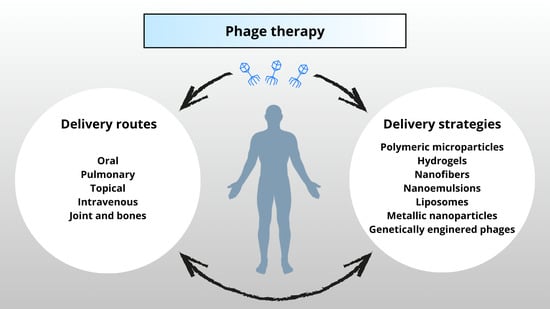
1. Introduction
2. Bacteriophages and Phage Therapy
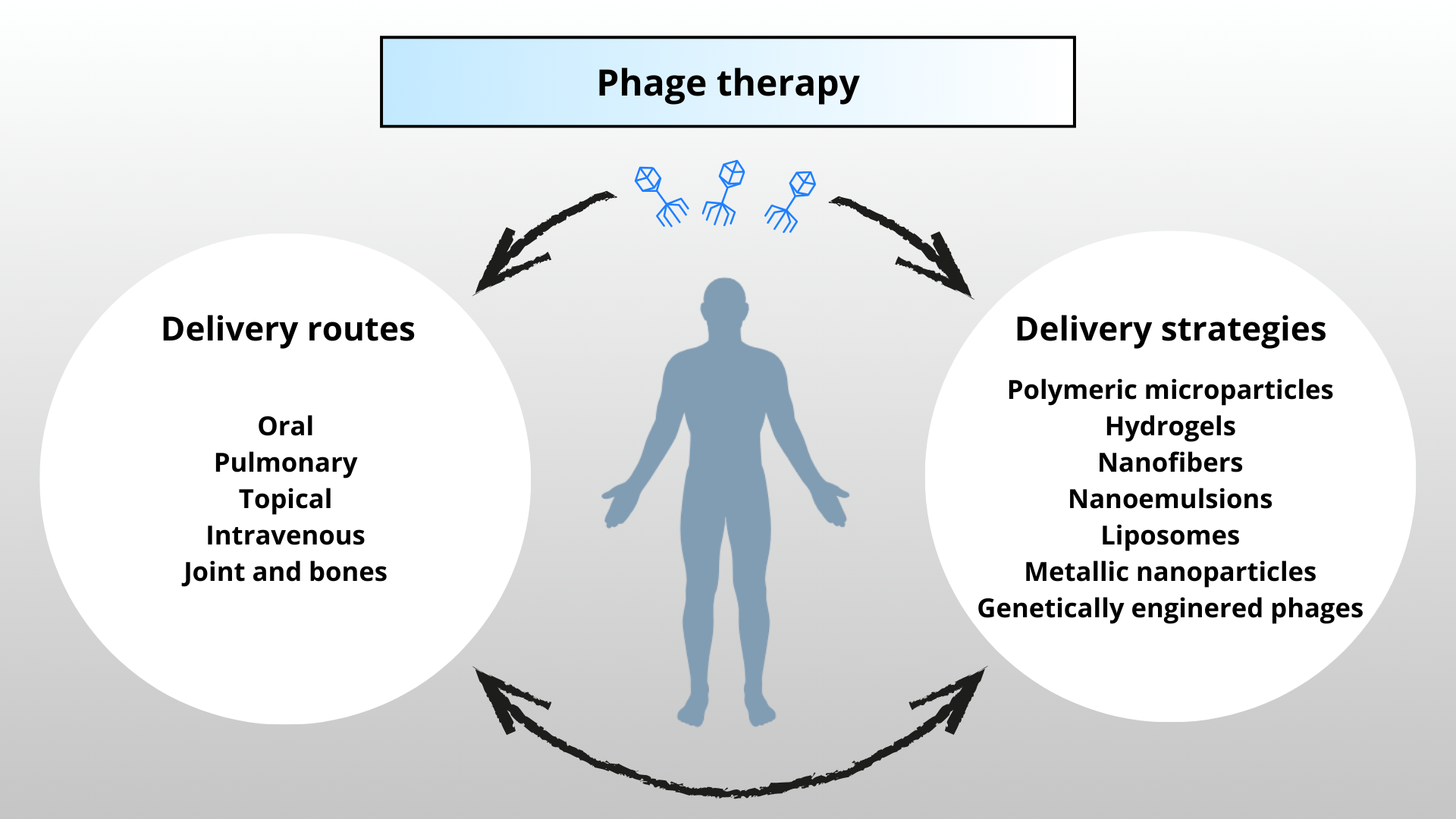
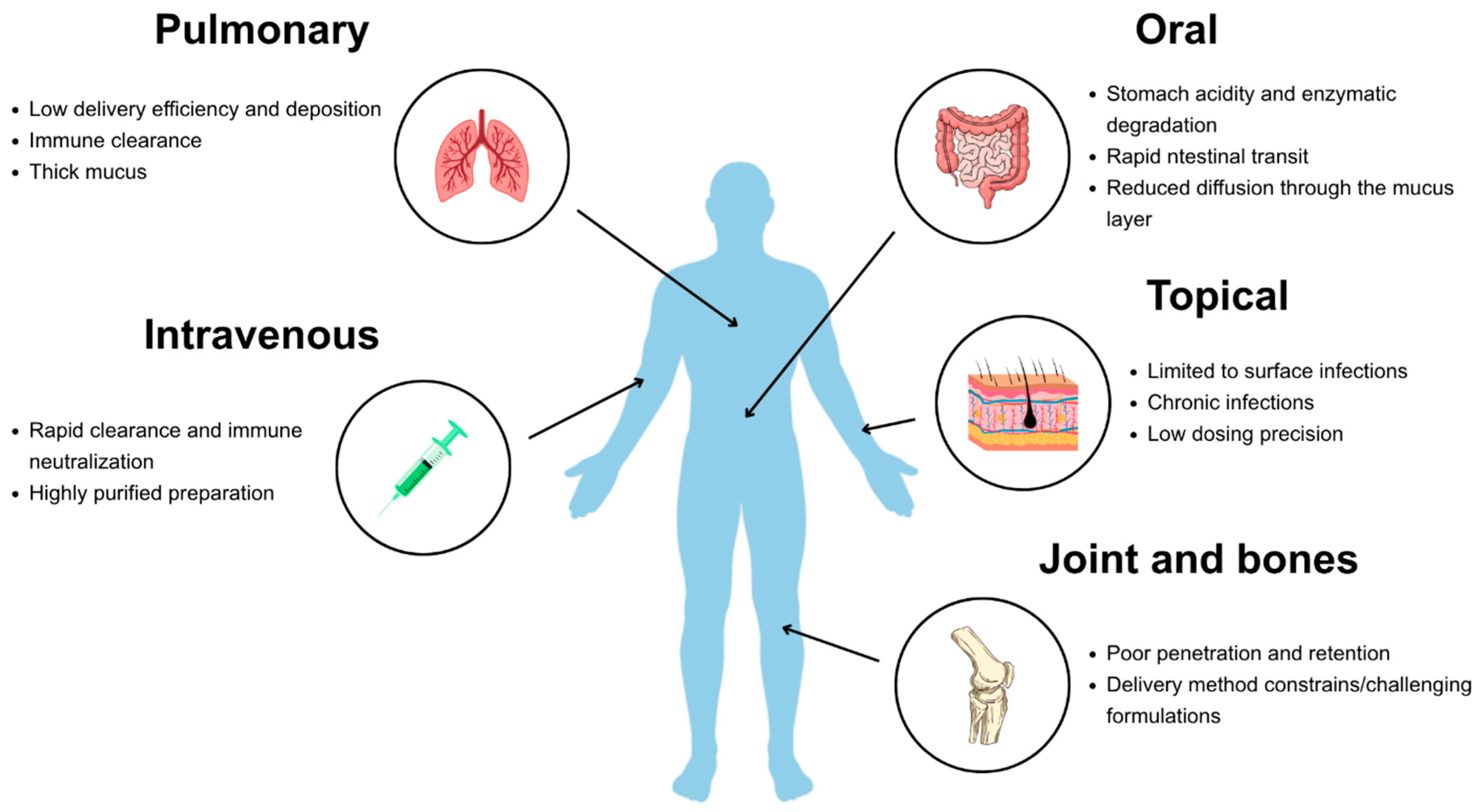
3. Phage Delivery to the Site of Infection
4. The Effectiveness and Clinical Insight from Phage Therapy
4.1. Oral Administration
4.2. Intravenous Administration

| Formulation | Phage | Infection | Model | Treatment Mode | Outcome | References |
|---|---|---|---|---|---|---|
| Liquid phage suspension | Phage cocktail AB-SA01 | Staphylococcus aureus | Human clinical trial | Phages (3 × 10⁹ PFU/mL) administered twice daily for 14 days | Safe, no adverse reactions. No phage resistance. The efficacy was not the primary endpoint | [116] |
| Phage cocktail (EFgrKN and EFgrNG) | Vancomycin-resistant Enterococcus faecium | Human case report, VRE in liver transplant patient | Phage (8.1 × 10⁷ PFU/mL and 5.2 × 10⁸ PFU/mL) administered daily for 20 days. | Safe, clinical improvement, no adverse events | [117] | |
| Phage cocktail (HP3, HP3.1, ES17 and ES19) | ESBL Escherichia coli | Human case report, prostate and urinary tract infection | Phage (3 × 10¹⁰ PFU/mL) administered twice daily for 14 days | Safe, symptom resolution, no adverse events | [118] | |
| Phage ΦAb4B | Acinetobacter baumannii | Mice bacteraemia model | Once daily (109 PFU/mL) for 7 days | 67% survival with phage alone, 91% with phage-ciprofloxacin, no acute toxicity | [119] | |
| Phage cocktail (BPsΔ33HTH_HRM10, Muddy and ZoeJΔ45) | Mycobacterium abscessus | Human case report | Phages administered (109 PFU/mL) twice daily for ≥6 months | Clinical improvement in lung function and symptoms; one case was limited by neutralizing antibodies | [120] | |
| Phage KpJH46Φ2 | Klebsiella pneumoniae | Human case report of prosthetic knee infection | 40 doses of phage (6.3 × 10¹⁰ PFU/mL) and minocycline | Resolution of infection, recovery of function, and no adverse effects | [106] | |
| Cocktail of phages (phiCDHM1, phiCDHM2, phiCDHM5 and phiCDHM6) | Clostridium difficile | Hamster model of acute infection | 0.8 mL of single phage or phage cocktail (108 PFU/mL) every 8 h until 36 h | The phage cocktail prolonged the time to onset of severe disease by ~33 h | [102] | |
| Phage PASA16 | Pseudomonas aeruginosa | Human case report of chronic bone infection | Phage (1.72 × 10¹¹ PFU/mL) and ceftazidime administered twice daily for 14 days | Good clinical outcome in >80% patients; minimal side effects | [121] | |
| Phage DS6A | Mycobacterium tuberculosis | Humanized mice model of pulmonary infection | 10 doses of phage (1011 PFU/mL) | Reduced bacterial load, improved pulmonary function, and increased body weight | [122] | |
| Cocktail of phages | Escherichia coli, Enterococcus faecium, Staphylococcus aureus, Klebsiella pneumoniae, Klebsiella aerogenes, Pseudomonas aeruginosa, Enterobacter cloacae | Human case report, AMR infections | Phage application (109 PFU/mL) every 12 h for 14 days | Good clinical outcome in 66% cases, no major adverse reactions. | [123] | |
| Phage AB-PA01 | Pseudomonas aeruginosa | Human case report, chronic respiratory infection | Phage application (4 × 10⁹ PFU/mL) every 6 h for 8 weeks | Good clinical resolution from pneumonia; no further CF pulmonary exacerbation for 3 months; no adverse events | [124] |
4.3. Administration in Contact with Bone and Joints
| Formulation | Phage | Infection | Model | Treatment Mode | Outcome | References |
|---|---|---|---|---|---|---|
| Liquid phage suspension | Phages Sb-1 and PAT14 | Methicillin-resistant Staphylococcus aureus and Pseudomonas aeruginosa | Rat model of implant-related infection | Local injection of 0.1 mL of phage suspension (107 PFU/mL) in combination with antibiotics | Significant reduction in bacterial load and biofilm disruption | [140] |
| Cocktail of seven virulent phages | Methicillin-resistant Staphylococcus aureus | Rabbit model of osteomyelitis | Injection of 15 µL of phage cocktail (1012 PFU/mL) into the infected soft tissues | Improved general condition of animals, significant reduction in inflammation and necrosis | [141] | |
| Phage ISP | Methicillin-resistant Staphylococcus aureus | Sheep model of fracture-related infection (FRI) | Phage (108 PFU/mL) local administration 3 times/day for 10 days | Well-tolerated administration, rapid phage clearance and neutralization | [67] | |
| Phage cocktail BFC1 (phage ISP, PNM and 14/1) | Staphylococcus aureus | Human case study, polymicrobial pelvic bone allograft chronic infection | Intraoperative administration of 50 mL of phage cocktail BFC1 (107 PFU/mL) to the infected site via drainage | Clinical/microbiological improvement, but recurrence if not all pathogens are covered | [142] | |
| Phage Pa53 | Pseudomonas aeruginosa | Human case study, chronic hip prosthesis infection | 10 mL of phage on the first day, then 5 mL via joint drainage for 2 weeks in association with antibiotic | Effective eradication of infection in combined treatment with meropenem, with no severe adverse effects | [143] | |
| Phage-loaded hydrogel | CRISPR-Cas9 modified phage loaded on alginate hydrogel | Staphylococcus aureus | Rat model of osteomyelitis and soft tissue infection | Phage loaded hydrogels (107 PFU/mL) injected (100 µL) into the defect space | Reduced soft tissue infection, limited bone effect | [144] |
| Phage IPS loaded in carboxylmethylcellulose (CMC) hydrogel | Staphylococcus aureus | Rabbit model of fracture-related infection (FRI) | Prevention and treatment setting, subcutaneous injections (108 PFU/mL) and phage loaded hydrogels (109 PFU/mL) | Phage in saline was effective in prophylactic mode. Phage immobilization limits the exposure to neutralizing antibodies, with no statistically significant reduction in the bacterial load | [145] | |
| Phages ΦPaer4, ΦPaer14, ΦPaer22, and ΦW2005A loaded in PEG-4MAL hydrogel crosslinked with BPM-2 | Pseudomonas aeruginosa | Mice radial defect model | 3 µL of hydrogel with phages (1.2 × 10⁸ PFU/mL each) loaded into the defected space | 4.7-fold reduction in bacterial load at 7 days postimplantation, and lowered inflammation | [134] | |
| Implants | Orthopaedic K-wires coated with Phage, linezolid and hydroxypropyl methylcellulose gel | Staphylococcus aureus | Mice model of prosthetic joint infection | Different coating variants (e.g., phage 109 PFU/mL phage mixed with HMPC and 5% w/w linezolid) were surgically placed into the joint, phage | Reduction in bacterial adherence, limited inflammation, and faster resumption of locomotion | [146] |
| Phage vB_SepM_Alex | Staphylococcus epidermis | Rat model of prosthetic joint infection | Intra-articular injections of phage (108 PFU/mL) in 5 days post-implantation | Preliminary set of pharmacokinetics: maximum phage concentration after 2 h and mean residence time of ~3 h | [147] | |
| Silver-coated plate with DAC®® gel loaded with Intesti phage cocktail | Multi-drug resistant Gram-negatives, Staphylococcus aureus | Human case study, fracture-related infection | Surgical placement of an implant in the bone defect | Infection control, good bone healing, sustained phage release | [148] | |
| Liposomes | Liposome-phage Sb-1 nanoconjugates (Lip@Phage) | Methicillin-resistant Staphylococcus aureus | Rat prosthetic joint infection model | local application (100 μL) twice daily for a duration of 14 days | Effective reduction in bacterial load, improved osteomyelitis recovery | [149] |
4.4. Aerosols and Inhalation in the Treatment of Pulmonary Infections
| Formulation | Phage | Infection | Model | Treatment Mode | Outcome | References |
|---|---|---|---|---|---|---|
| Liquid aerosol | D29 mycobacteriophage | Mycobacterium tuberculosis | Mice lung infection model | Endotracheal or nose-only inhalation of phage aerosol | Effective phage deposition in lungs (10% of phage particles), no lung inflammation | [162] |
| D29 mycobacteriophage | Mycobacterium tuberculosis | Mice lung infection model | Nose-only inhalation of phage aerosol | Significant reduction in bacterial burden with prophylactic delivery of phage | [163] | |
| Phage cocktail (2003, 2002, 3A, and phage K) | Methicillin-resistant Staphylococcus aureus clinical isolate AW7 | Rat model pneumonia | Single application of a nebulized phage cocktail at a concentration of 1010 or 1011 PFU/mL | Reduced lung bacterial burden, improved survival of infected rats (50%) | [154] | |
| Cocktail of two phages (Eliava Institute, Tbilisi) | Achromobacter xylosoxidans | Human case study, Cystic fibrosis and chronic infection | Inhalation of phage (3 × 10⁸ PFU/mL) once daily and orally twice daily, for 20 days. The treatment course was repeated a total of 4 times: at 1 month, 3 months, 6 months and 12 months after initial treatment | Increased lung function, reduced cough and dyspnea | [164] | |
| Personalized single-phage preparation | Carbapenem-resistant Acinetobacter baumanii | Chronic obstructive pulmonary disease and infection, case study | Inhalation of phage every 12 h for 13 days | Clearance of the infection | [165] | |
| Phage cocktail (JW Delta, JWT, 2-1) | Achromobacter xylosoxidans | Lung-transplant CF patient with infection, case study | Phage nebulization three times a day in two rounds | Improved lung function, no side effects, no recolonization in two years after phage therapy | [166] | |
| Phage cocktail (PP1450, PP1777 and PP1902) | Pseudomonas aeruginosa | Pneumonia model in piglets | 2 and 11 h after bacterial challenge, application of a phage cocktail of equal titres of ~1.1 × 10¹⁰ PFU/mL by inhalation | High phage concentration in the lungs, rapid reduction in bacterial density | [155] | |
| Phage KPP10 + ceftazidime/avibactam + CaEDTA | Pseudomonas aeruginosa | Mice model of chronic lung infection, | Intranasal inhalation of phage (2 ×10⁷ PFU/mL), in combination with CaEDTA and ceftazidime/avibactam | Cleared bacteria in the lungs, reduced expression of genes related to chronic infections | [167] | |
| Phage vB_AbaM_Acibel004 | Acinetobacter baumanii | Mice pneumonia model | Single application of 25 µL phages (5 × 10⁶ PFU/mL) by intratracheal aerosolization following orotracheal intubation under isoflurane anesthesia | Lower bacterial counts in lungs, lack of inflammatory and adverse effects | [168] | |
| Phage PEV31 | MDR Pseudomonas aeruginosa clinical isolate | Mice model pulmonary infection | Doses of 107 and 109 PFU by the intratracheal route | Reduced lung bacterial load by 2-log10 suppressed proinflammatory cytokines | [169] | |
| Phage PEV31 | MDR Pseudomonas aeruginosa clinical isolate | Mice model pulmonary infection | Doses of 7.5 × 10⁴, 5 × 10⁶, and 5 × 10⁸ PFU by the intratracheal route | Reduced bacterial load by 1.3–1.9 log10, dose-dependent effect of phage therapy | [170] | |
| Dry powder aerosol | Lyophilized phage-loaded PLGA microparticles | MDR Pseudomonas aeruginosa | Pulmonary delivery of 1 mg of dry-powder phage-microparticles | Mice with cystic fibrosis | Reduced bacterial counts and 100% rescue from pneumonia-associated death | [158] |
| Phage PEV20 spray-dried with lactose and leucine | MDR Pseudomonas aeruginosa | Intratracheal administration of 1–4 mg of dry-powder phage PEV (2 × 10⁷ PFU/mg) | Mice lung infection model | reduced bacterial load (~2 log) | [171] | |
| Spray-dried PEV20 with ciprofloxacin | MDR Pseudomonas aeruginosa | Intratracheal administration of powders (1 mg) of single ciprofloxacin (0.33 mg), single PEV20 (106 PFU/mg) and the combination | Mice model with acute lung infection | Significant reduction in bacterial load (~ 6 log10) using the combination of PEV20 and ciprofloxacin | [172] |
4.5. Topical Administration
| Formulation | Phage | Infection | Model | Treatment Mode | Outcome | References |
|---|---|---|---|---|---|---|
| Gel | Phage FD3 in 2,5% Carbopol gel | Cutibacterium acnes | Mice model of Cutibacterium acnes induced lesions | Daily topical application of phage-loaded gel to the lesion site | Bacterial load reduction of 1.87 log10; lesion diameter, elevation and eschar scores significantly improved; no adverse events | [212] |
| Phage cocktail (MR-5, MR-10), encapsulated in transferosomes | Methicillin-resistant Staphylococcus aureus (MRSA) SSTI | Rat soft-tissue infection model | Topical application in multiple doses | Faster MRSA clearance; higher phage titers maintained throughout treatment; infection resolved, enhanced phage stability and therapeutic efficacy compared to free phage | [93] | |
| Phage ZCKP8 gel (1:1 v/v with KY lubricating gel) | Multi-drug resistant Klebsiella pneumoniae | Rat full-thickness excisional wound model | Topical application of phage gel after 2 h infection period | Faster healing, histologically improved regenerated skin, and markedly reduced bacterial counts | [213] | |
| Gauze dressing | Phage Phi_1 | Vibrio cholerae | Infant rabbit cholera model | ~109 PFU Phi_1 given orally 6 h after infection | Reduction in bacterial counts in the intestines up to 4 log10 CFU/g. Reduced clinical signs of the disease | [101] |
| Liquid + cream | Staphylococcus bacteriophage and Pyobacteriophage cocktail | Staphylococcus aureus | Human case report of chronic skin infection | Gauze soaked with liquid phage applied to affected skin areas, followed by topical application of phage cream; 20 days of treatments for up to 6 months | Marked clinical improvement, reduced infiltration, erythema, and improved limb mobility; no allergic or adverse reactions | [214] |
| Hydrogel | Phage SAM-E.f incorporated into hydrogen (alginate, carboxymethyl cellulose and hyaluronic acid) | Enterococcus faecalis | Mouse model of wound infection | Topical application | Suppressed bacterial growth; improved wound closure and phage stability over time | [215] |
| Phage 812K1/420 loaded on Gum Karaya-based hydrogel | Methicillin-resistant Staphylococcus aureus | Porcine deep wound infection model | Treatment applied to maintain a moist wound environment and support re-epithelialization; evaluated over 8 days | Significant bacterial load reduction (~2.5 log CFU/g) within one week; decrease in local inflammation; clear re-epithelialization and wound contraction; no adverse effects | [216] | |
| Phage cocktail loaded on carboxylmethylcellulose and alginate-based hydrogel | Pseudomonas aeruginosa | Mice model of wound infection | Topical application of phage-loaded hydrogel, daily or single dose | Rapid bacterial clearance; complete skin regeneration; daily treatment is more effective than single; improved survival and histology | [217] |
5. Conclusions and Future Perspectives
Author Contributions
Funding
Institutional Review Board Statement
Informed Consent Statement
Data Availability Statement
Acknowledgments
Conflicts of Interest
References
- FAO; UNEP; WHO; World Organisation for Animal Health (WOAH) (Founded as OIE). One Health Joint Plan of Action, 2022–2026; FAO: Rome, Italy, 2022; ISBN 9789251369579.
- WHO. Global Action Plan on Antimicrobial Resistance; World Health Organization: Geneva, Switzerland, 2015; ISBN 9789241509763.
- Naddaf, M. 40 Million Deaths by 2050: Toll of Drug-Resistant Infections to Rise by 70%. Nature 2024, 633, 747–748. [Google Scholar] [CrossRef]
- Clatworthy, A.E.; Pierson, E.; Hung, D.T. Targeting Virulence: A New Paradigm for Antimicrobial Therapy. Nat. Chem. Biol. 2007, 3, 541–548. [Google Scholar] [CrossRef]
- O’Neill, J. Tackling Drug-Resistant Infections Globally: Final Report and Recommendations the Review on Antimicrobial Resistance Chaired; Wellcome Trust: London, UK, 2016; 84p, CABI 20173071720. [Google Scholar]
- Xu, C.; Kong, L.; Gao, H.; Cheng, X.; Wang, X. A Review of Current Bacterial Resistance to Antibiotics in Food Animals. Front. Microbiol. 2022, 13, 822689. [Google Scholar] [CrossRef]
- Furfaro, L.L.; Chang, B.J.; Payne, M.S. Applications for Bacteriophage Therapy during Pregnancy and the Perinatal Period. Front. Microbiol. 2018, 8, 2660. [Google Scholar] [CrossRef]
- Jones, J.D.; Trippett, C.; Suleman, M.; Clokie, M.R.J.; Clark, J.R. The Future of Clinical Phage Therapy in the United Kingdom. Viruses 2023, 15, 721. [Google Scholar] [CrossRef]
- Dąbrowska, K. Phage Therapy: What Factors Shape Phage Pharmacokinetics and Bioavailability? Systematic and Critical Review. Med. Res. Rev. 2019, 39, 2000–2025. [Google Scholar] [CrossRef]
- Kaikabo, A.A.; Sabo Mohammed, A.; Abas, F. Chitosan Nanoparticles as Carriers for the Delivery of ΦKAZ14 Bacteriophage for Oral Biological Control of Colibacillosis in Chickens. Molecules 2016, 21, 256. [Google Scholar] [CrossRef]
- Kang, D.; Bagchi, D.; Chen, I.A. Pharmacokinetics and Biodistribution of Phages and Their Current Applications in Antimicrobial Therapy. Adv. Ther. 2024, 7, 2300355. [Google Scholar] [CrossRef]
- Beschastnov, V.V.; Egorikhina, M.N.; Tulupov, A.A.; Pogodin, I.E.; Orlinskaya, N.Y.; Antoshina, V.V.; Shirokova, I.Y.; Ryabkov, M.G. Immobilization of Bacteriophages in Ex Tempore Hydrogel for the Treatment of Burn Wound Infection. Gels 2023, 9, 625. [Google Scholar] [CrossRef]
- Rotman, S.G.; Sumrall, E.; Ziadlou, R.; Grijpma, D.W.; Richards, R.G.; Eglin, D.; Moriarty, T.F. Local Bacteriophage Delivery for Treatment and Prevention of Bacterial Infections. Front. Microbiol. 2020, 11, 538060. [Google Scholar] [CrossRef]
- Hitchcock, N.M.; Devequi Gomes Nunes, D.; Shiach, J.; Valeria Saraiva Hodel, K.; Dantas Viana Barbosa, J.; Alencar Pereira Rodrigues, L.; Coler, B.S.; Botelho Pereira Soares, M.; Badaró, R. Current Clinical Landscape and Global Potential of Bacteriophage Therapy. Viruses 2023, 15, 1020. [Google Scholar] [CrossRef]
- Irby, I.; Broddrick, J.T. Microbial Adaptation to Spaceflight Is Correlated with Bacteriophage-Encoded Functions. Nat. Commun. 2024, 15, 3474. [Google Scholar] [CrossRef]
- Sulakvelidze, A.; Alavidze, Z.; Morris, J. Bacteriophage Therapy. Antimicrob. Agents Chemother. 2001, 45, 649–659. [Google Scholar] [CrossRef]
- Wittebole, X.; De Roock, S.; Opal, S.M. A Historical Overview of Bacteriophage Therapy as an Alternative to Antibiotics for the Treatment of Bacterial Pathogens. Virulence 2014, 5, 226–235. [Google Scholar] [CrossRef]
- Abedon, S.T.; Kuhl, S.J.; Blasdel, B.G.; Kutter, E.M. Phage Treatment of Human Infections. Bacteriophage 2011, 1, 66–85. [Google Scholar] [CrossRef]
- Tacconelli, E.; Carrara, E.; Savoldi, A.; Harbarth, S.; Mendelson, M.; Monnet, D.L.; Pulcini, C.; Kahlmeter, G.; Kluytmans, J.; Carmeli, Y.; et al. Discovery, Research, and Development of New Antibiotics: The WHO Priority List of Antibiotic-Resistant Bacteria and Tuberculosis. Lancet Infect Dis. 2018, 18, 318–327. [Google Scholar] [CrossRef]
- Kortright, K.E.; Chan, B.K.; Koff, J.L.; Turner, P.E. Phage Therapy: A Renewed Approach to Combat Antibiotic-Resistant Bacteria. Cell Host Microbe 2019, 25, 219–232. [Google Scholar] [CrossRef]
- Hu, J.; Ye, H.; Wang, S.; Wang, J.; Han, D. Prophage Activation in the Intestine: Insights Into Functions and Possible Applications. Front. Microbiol. 2021, 12, 785634. [Google Scholar] [CrossRef]
- Liao, H.; Liu, C.; Zhou, S.; Liu, C.; Eldridge, D.J.; Ai, C.; Wilhelm, S.W.; Singh, B.K.; Liang, X.; Radosevich, M.; et al. Prophage-Encoded Antibiotic Resistance Genes Are Enriched in Human-Impacted Environments. Nat. Commun. 2024, 15, 8315. [Google Scholar] [CrossRef]
- Reindel, R.; Fiore, C.R. Phage Therapy: Considerations and Challenges for Development. Clin. Infect. Dis. 2017, 64, 1589–1590. [Google Scholar] [CrossRef]
- Chiang, Y.N.; Penadés, J.R.; Chen, J. Genetic Transduction by Phages and Chromosomal Islands: The New and Noncanonical. PLoS Pathog. 2019, 15, e1007878. [Google Scholar] [CrossRef]
- Cook, B.W.M.; Hynes, A.P. Re-Evaluating What Makes a Phage Unsuitable for Therapy. NPJ Antimicrob. Resist. 2025, 3, 45. [Google Scholar] [CrossRef]
- Ganeshan, S.D.; Hosseinidoust, Z. Phage Therapy with a Focus on the Human Microbiota. Antibiotics 2019, 8, 131. [Google Scholar] [CrossRef]
- Abedon, S. Phage Therapy Pharmacology. Calculating Phage Dosing. In Advances in Applied Microbiology; Academic Press Inc.: Cambridge, MA, USA, 2011; Volume 77, pp. 1–40. [Google Scholar] [CrossRef]
- Siopi, M.; Skliros, D.; Paranos, P.; Koumasi, N.; Flemetakis, E.; Pournaras, S.; Meletiadis, J. Pharmacokinetics and Pharmacodynamics of Bacteriophage Therapy: A Review with a Focus on Multidrug-Resistant Gram-Negative Bacterial Infections. Clin. Microbiol. Rev. 2024, 37, e0004424. [Google Scholar] [CrossRef]
- Pires, D.P.; Meneses, L.; Brandão, A.C.; Azeredo, J. An Overview of the Current State of Phage Therapy for the Treatment of Biofilm-Related Infections. Curr. Opin. Virol. 2022, 53, 101209. [Google Scholar] [CrossRef]
- Meneses, L.; Brandão, A.C.; Coenye, T.; Braga, A.C.; Pires, D.P.; Azeredo, J. A Systematic Review of the Use of Bacteriophages for in Vitro Biofilm Control. Eur. J. Clin. Microbiol. Infect. Dis. 2023, 42, 919–928. [Google Scholar] [CrossRef]
- Oromí-Bosch, A.; Antani, J.D.; Turner, P.E. Developing Phage Therapy That Overcomes the Evolution of Bacterial Resistance. Annu. Rev. Virol. 2025, 10, 503–524. [Google Scholar] [CrossRef]
- Stacey, H.J.; De Soir, S.; Jones, J.D. The Safety and Efficacy of Phage Therapy: A Systematic Review of Clinical and Safety Trials. Antibiotics 2022, 11, 1340. [Google Scholar] [CrossRef]
- Uyttebroek, S.; Chen, B.; Onsea, J.; Ruythooren, F.; Debaveye, Y.; Devolder, D.; Spriet, I.; Depypere, M.; Wagemans, J.; Lavigne, R.; et al. Safety and Efficacy of Phage Therapy in Difficult-to-Treat Infections: A Systematic Review. Lancet Infect Dis. 2022, 22, e208–e220. [Google Scholar] [CrossRef]
- Segall, A.M.; Roach, D.R.; Strathdee, S.A. Stronger Together? Perspectives on Phage-Antibiotic Synergy in Clinical Applications of Phage Therapy. Curr. Opin. Microbiol. 2019, 51, 46–50. [Google Scholar] [CrossRef]
- Li, X.; He, Y.; Wang, Z.; Wei, J.; Hu, T.; Si, J.; Tao, G.; Zhang, L.; Xie, L.; Abdalla, A.E.; et al. A Combination Therapy of Phages and Antibiotics: Two Is Better than One. Int. J. Biol. Sci. 2021, 17, 3573–3582. [Google Scholar] [CrossRef]
- Diallo, K.; Dublanchet, A. Benefits of Combined Phage–Antibiotic Therapy for the Control of Antibiotic-Resistant Bacteria: A Literature Review. Antibiotics 2022, 11, 839. [Google Scholar] [CrossRef]
- Łusiak-Szelachowska, M.; Weber-Dąbrowska, B.; Górski, A. Bacteriophages and Lysins in Biofilm Control. Virol. Sin. 2020, 35, 125–133. [Google Scholar] [CrossRef]
- Bulssico, J.; PapukashvilI, I.; Espinosa, L.; Gandon, S.; Ansaldi, M. Phage-Antibiotic Synergy: Cell Filamentation Is a Key Driver of Successful Phage Predation. PLoS Pathog. 2023, 19, e1011602. [Google Scholar] [CrossRef]
- Fothergill, J.L.; Mowat, E.; Walshaw, M.J.; Ledson, M.J.; James, C.E.; Winstanley, C. Effect of Antibiotic Treatment on Bacteriophage Production by a Cystic Fibrosis Epidemic Strain of Pseudomonas Aeruginosa. Antimicrob. Agents Chemother. 2011, 55, 426–428. [Google Scholar] [CrossRef]
- Kim, M.; Jo, Y.; Hwang, Y.J.; Hong, H.W.; Hong, S.S.; Park, K.; Myung, H. Phage-Antibiotic Synergy via Delayed Lysis. Appl. Environ. Microbiol. 2018, 84, e02085-18. [Google Scholar] [CrossRef]
- Gu Liu, C.; Green, S.I.; Min, L.; Clark, J.R.; Salazar, K.C.; Terwilliger, A.L.; Kaplan, H.B.; Trautner, B.W.; Ramig, R.F.; Maresso, A.W. Phage-Antibiotic Synergy Is Driven by a Unique Combination of Antibacterial Mechanism of Action and Stoichiometry. mBio 2020, 11, e01462-20. [Google Scholar] [CrossRef]
- Liu, N.; Lewis, C.; Zheng, W.; Fu, Z.Q. Phage Cocktail Therapy: Multiple Ways to Suppress Pathogenicity. Trends Plant Sci. 2020, 25, 315–317. [Google Scholar] [CrossRef] [PubMed]
- Schooley, R.T.; Biswas, B.; Gill, J.J.; Hernandez-Morales, A.; Lancaster, J.; Lessor, L.; Barr, J.J.; Reed, S.L.; Rohwer, F.; Benler, S.; et al. Development and Use of Personalized Bacteriophage-Based Therapeutic Cocktails to Treat a Patient with a Disseminated Resistant Acinetobacter Baumannii Infection. Antimicrob. Agents Chemother. 2017, 61, e00954-17. [Google Scholar] [CrossRef] [PubMed]
- Dedrick, R.M.; Guerrero-Bustamante, C.A.; Garlena, R.A.; Russell, D.A.; Ford, K.; Harris, K.; Gilmour, K.C.; Soothill, J.; Jacobs-Sera, D.; Schooley, R.T.; et al. Engineered Bacteriophages for Treatment of a Patient with a Disseminated Drug-Resistant Mycobacterium Abscessus. Nat. Med. 2019, 25, 730–733. [Google Scholar] [CrossRef] [PubMed]
- Nir-Paz, R.; Gelman, D.; Khouri, A.; Sisson, B.M.; Fackler, J.; Alkalay-Oren, S.; Khalifa, L.; Rimon, A.; Yerushalmy, O.; Bader, R.; et al. Successful Treatment of Antibiotic-Resistant, Poly-Microbial Bone Infection with Bacteriophages and Antibiotics Combination. Clin. Infect. Dis. 2019, 69, 2015–2018. [Google Scholar] [CrossRef] [PubMed]
- Pirnay, J.P.; Djebara, S.; Steurs, G.; Griselain, J.; Cochez, C.; De Soir, S.; Glonti, T.; Spiessens, A.; Vanden Berghe, E.; Green, S.; et al. Personalized Bacteriophage Therapy Outcomes for 100 Consecutive Cases: A Multicentre, Multinational, Retrospective Observational Study. Nat. Microbiol. 2024, 9, 1434–1453. [Google Scholar] [CrossRef]
- Labrie, S.J.; Samson, J.E.; Moineau, S. Bacteriophage Resistance Mechanisms. Nat. Rev. Microbiol. 2010, 8, 317–327. [Google Scholar] [CrossRef]
- Hyman, P.; Abedon, S.T. Bacteriophage Host Range and Bacterial Resistance. In Advances in Applied Microbiology; Academic Press Inc.: Cambridge, MA, USA, 2010; Volume 70, pp. 217–248. [Google Scholar] [CrossRef]
- Chan, B.K.; Sistrom, M.; Wertz, J.E.; Kortright, K.E.; Narayan, D.; Turner, P.E. Phage Selection Restores Antibiotic Sensitivity in MDR Pseudomonas Aeruginosa. Sci. Rep. 2016, 6, 26717. [Google Scholar] [CrossRef]
- Burmeister, A.R.; Fortier, A.; Roush, C.; Lessing, A.J.; Bender, R.G.; Barahman, R.; Grant, R.; Chan, B.K.; Turner, P.E. Pleiotropy Complicates a Trade-off between Phage Resistance and Antibiotic Resistance. Proc. Natl. Acad. Sci. USA 2020, 117, 11207–11216. [Google Scholar] [CrossRef]
- Kolenda, C.; Jourdan, J.; Roussel-Gaillard, T.; Medina, M.; Laurent, F. Phage Susceptibility Testing Methods or “Phagograms”: Where Do We Stand and Where Should We Go? J. Antimicrob. Chemother. 2024, 79, 2742–2749. [Google Scholar] [CrossRef]
- Kline, A.; Cobián Güemes, A.G.; Yore, J.; Ghose, C.; Van Tyne, D.; Whiteson, K.; Pride, D.T. Current Clinical Laboratory Challenges to Widespread Adoption of Phage Therapy in the United States. Antibiotics 2025, 14, 553. [Google Scholar] [CrossRef] [PubMed]
- Berkson, J.D.; Wate, C.E.; Allen, G.B.; Schubert, A.M.; Dunbar, K.E.; Coryell, M.P.; Sava, R.L.; Gao, Y.; Hastie, J.L.; Smith, E.M.; et al. Phage-Specific Immunity Impairs Efficacy of Bacteriophage Targeting Vancomycin Resistant Enterococcus in a Murine Model. Nat. Commun. 2024, 15, 2993. [Google Scholar] [CrossRef]
- Hobbs, Z.; Abedon, S.T. Diversity of Phage Infection Types and Associated Terminology: The Problem with ‘Lytic or Lysogenic’. FEMS Microbiol. Lett. 2016, 363, fnw047. [Google Scholar] [CrossRef]
- Colavecchio, A.; Cadieux, B.; Lo, A.; Goodridge, L.D. Bacteriophages Contribute to the Spread of Antibiotic Resistance Genes among Foodborne Pathogens of the Enterobacteriaceae Family—A Review. Front. Microbiol. 2017, 8, 1108. [Google Scholar] [CrossRef] [PubMed]
- Pirnay, J.P.; Verbeken, G.; Ceyssens, P.J.; Huys, I.; de Vos, D.; Ameloot, C.; Fauconnier, A. The Magistral Phage. Viruses 2018, 10, 64. [Google Scholar] [CrossRef]
- Yang, Q.; Le, S.; Zhu, T.; Wu, N. Regulations of Phage Therapy across the World. Front. Microbiol. 2023, 14, 1250848. [Google Scholar] [CrossRef]
- Gordillo Altamirano, F.L.; Barr, J.J. Phage Therapy in the Postantibiotic Era. Clin. Microbiol. Rev. 2019, 32, e00066-18. [Google Scholar] [CrossRef]
- Pires, D.P.; Melo, L.D.R.; Vilas Boas, D.; Sillankorva, S.; Azeredo, J. Phage Therapy as an Alternative or Complementary Strategy to Prevent and Control Biofilm-Related Infections. Curr. Opin. Microbiol. 2017, 39, 48–56. [Google Scholar] [CrossRef] [PubMed]
- Yerushalmy, O.; Braunstein, R.; Alkalay-Oren, S.; Rimon, A.; Coppenhagn-Glazer, S.; Onallah, H.; Nir-Paz, R.; Hazan, R. Towards Standardization of Phage Susceptibility Testing: The Israeli Phage Therapy Center “Clinical Phage Microbiology”—A Pipeline Proposal. Clin. Infect. Dis. 2023, 77, S337–S351. [Google Scholar] [CrossRef]
- Bessems, L.; Chen, B.; Uyttebroek, S.; Devolder, D.; Lood, C.; Verwimp, S.; De Munter, P.; Debaveye, Y.; Depypere, M.; Spriet, I.; et al. Optimization of Bacteriophage Therapy for Difficult-to-Treat Musculoskeletal Infections: A Bench-to-Bedside Perspective. Front. Cell. Infect. Microbiol. 2024, 14, 1434397. [Google Scholar] [CrossRef] [PubMed]
- Peez, C.; Chen, B.; Henssler, L.; Chittò, M.; Onsea, J.; Verhofstad, M.H.J.; Arens, D.; Constant, C.; Zeiter, S.; Obremskey, W.; et al. Evaluating the Safety, Pharmacokinetics and Efficacy of Phage Therapy in Treating Fracture-Related Infections with Multidrug-Resistant Staphylococcus Aureus: Intravenous versus Local Application in Sheep. Front. Cell. Infect. Microbiol. 2025, 15, 1547250. [Google Scholar] [CrossRef] [PubMed]
- Lin, Y.-H.; Dharmaraj, T.; Chen, Q.; Echterhof, A.; Manasherob, R.; Zhang, L.J.; Li, Z.; de Leeuw, C.; Peterson, N.A.; Chang, T.H.W.; et al. Dosing and Delivery of Bacteriophage Therapy In a Murine Wound Infection Model. bioRxiv 2024. [Google Scholar] [CrossRef]
- Smytheman, T.; Pecor, T.; Miller, D.E.; Ferede, D.; Kaur, S.; Harband, M.H.; Abdelaal, H.F.M.; Guerrero-Bustamante, C.A.; Freeman, K.G.; Harrington, W.E.; et al. Evaluation of Host Immune Responses to Mycobacteriophage Fionnbharth by Route of Delivery. Virol. J. 2025, 22, 14. [Google Scholar] [CrossRef]
- Briot, T.; Kolenda, C.; Ferry, T.; Medina, M.; Laurent, F.; Leboucher, G.; Pirot, F. Paving the Way for Phage Therapy Using Novel Drug Delivery Approaches. J. Control. Release 2022, 347, 414–424. [Google Scholar] [CrossRef]
- Gondil, V.S.; Chhibber, S. Bacteriophage and Endolysin Encapsulation Systems: A Promising Strategy to Improve Therapeutic Outcomes. Front. Pharmacol. 2021, 12, 675440. [Google Scholar] [CrossRef]
- Malik, D.J.; Sokolov, I.J.; Vinner, G.K.; Mancuso, F.; Cinquerrui, S.; Vladisavljevic, G.T.; Clokie, M.R.J.; Garton, N.J.; Stapley, A.G.F.; Kirpichnikova, A. Formulation, Stabilisation and Encapsulation of Bacteriophage for Phage Therapy. Adv. Colloid Interface Sci. 2017, 249, 100–133. [Google Scholar] [CrossRef] [PubMed]
- Singla, S.; Harjai, K.; Katare, O.P.; Chhibber, S. Encapsulation of Bacteriophage in Liposome Accentuates Its Entry in to Macrophage and Shields It from Neutralizing Antibodies. PLoS ONE 2016, 11, e0153777. [Google Scholar] [CrossRef] [PubMed]
- Allen, T.M.; Cullis, P.R. Liposomal Drug Delivery Systems: From Concept to Clinical Applications. Adv. Drug Deliv. Rev. 2013, 65, 36–48. [Google Scholar] [CrossRef]
- Sánchez, A.; Mejía, S.P.; Orozco, J. Recent Advances in Polymeric Nanoparticle-Encapsulated Drugs against Intracellular Infections. Molecules 2020, 25, 3760. [Google Scholar] [CrossRef]
- Wang, B.; Du, L.; Dong, B.; Kou, E.; Wang, L.; Zhu, Y. Current Knowledge and Perspectives of Phage Therapy for Combating Refractory Wound Infections. Int. J. Mol. Sci. 2024, 25, 5465. [Google Scholar] [CrossRef]
- Kwon, T.H.; Lamster, I.B.; Levin, L. Current Concepts in the Management of Periodontitis. Int. Dent. J. 2021, 71, 462–476. [Google Scholar] [CrossRef] [PubMed]
- McCallin, S.; Alam Sarker, S.; Barretto, C.; Sultana, S.; Berger, B.; Huq, S.; Krause, L.; Bibiloni, R.; Schmitt, B.; Reuteler, G.; et al. Safety Analysis of a Russian Phage Cocktail: From MetaGenomic Analysis to Oral Application in Healthy Human Subjects. Virology 2013, 443, 187–196. [Google Scholar] [CrossRef]
- Sarker, S.A.; Berger, B.; Deng, Y.; Kieser, S.; Foata, F.; Moine, D.; Descombes, P.; Sultana, S.; Huq, S.; Bardhan, P.K.; et al. Oral Application of Escherichia Coli Bacteriophage: Safety Tests in Healthy and Diarrheal Children from Bangladesh. Environ. Microbiol. 2017, 19, 237–250. [Google Scholar] [CrossRef]
- Loh, B.; Gondil, V.S.; Manohar, P.; Mehmood Khan, F.; Yang, H.; Leptihn, S.; Singh, V. Encapsulation and Delivery of Therapeutic Phages. Appl. Environ. Microbiol. 2021, 87, e01979-20. [Google Scholar] [CrossRef]
- Vinner, G.K.; Richards, K.; Leppanen, M.; Sagona, A.P.; Malik, D.J. Microencapsulation of Enteric Bacteriophages in a PH-Responsive Solid Oral Dosage Formulation Using a Scalable Membrane Emulsification Process. Pharmaceutics 2019, 11, 475. [Google Scholar] [CrossRef]
- Vinner, G.K.; Rezaie-Yazdi, Z.; Leppanen, M.; Stapley, A.G.F.; Leaper, M.C.; Malik, D.J. Microencapsulation of Salmonella-Specific Bacteriophage Felix O1 Using Spray-Drying in a Ph-Responsive Formulation and Direct Compression Tableting of Powders into a Solid Oral Dosage Form. Pharmaceuticals 2019, 12, 43. [Google Scholar] [CrossRef] [PubMed]
- Kim, S.; Jo, A.; Ahn, J. Application of Chitosan-Alginate Microspheres for the Sustained Release of Bacteriophage in Simulated Gastrointestinal Conditions. Int. J. Food Sci. Technol. 2015, 50, 913–918. [Google Scholar] [CrossRef]
- Zhou, Y.; Xu, D.; Yu, H.; Han, J.; Liu, W.; Qu, D. Encapsulation of Salmonella Phage SL01 in Alginate/Carrageenan Microcapsules as a Delivery System and Its Application in Vitro. Front. Microbiol. 2022, 13, 906103. [Google Scholar] [CrossRef]
- Lundquist, P.; Artursson, P. Oral Absorption of Peptides and Nanoparticles across the Human Intestine: Opportunities, Limitations and Studies in Human Tissues. Adv. Drug Deliv. Rev. 2016, 106, 256–276. [Google Scholar] [CrossRef]
- Green, S.I.; Liu, C.G.; Yu, X.; Gibson, S.; Salmen, W.; Rajan, A.; Carter, H.E.; Clark, J.R.; Song, X.; Ramig, R.F.; et al. Targeting of Mammalian Glycans Enhances Phage Predation in the Gastrointestinal Tract. mBio 2021, 12, 1–18. [Google Scholar] [CrossRef] [PubMed]
- Barr, J.J.; Auro, R.; Furlan, M.; Whiteson, K.L.; Erb, M.L.; Pogliano, J.; Stotland, A.; Wolkowicz, R.; Cutting, A.S.; Doran, K.S.; et al. Bacteriophage Adhering to Mucus Provide a Non-Host-Derived Immunity. Proc. Natl. Acad. Sci. USA 2013, 110, 10771–10776. [Google Scholar] [CrossRef]
- Abdelsattar, A.S.; Abdelrahman, F.; Dawoud, A.; Connerton, I.F.; El-Shibiny, A. Encapsulation of E. Coli Phage ZCEC5 in Chitosan–Alginate Beads as a Delivery System in Phage Therapy. AMB Express 2019, 9, 87. [Google Scholar] [CrossRef]
- Silva Batalha, L.; Pardini Gontijo, M.T.; Vianna Novaes de Carvalho Teixeira, A.; Meireles Gouvêa Boggione, D.; Soto Lopez, M.E.; Renon Eller, M.; Santos Mendonça, R.C. Encapsulation in Alginate-Polymers Improves Stability and Allows Controlled Release of the UFV-AREG1 Bacteriophage. Food Res. Int. 2021, 139, 109947. [Google Scholar] [CrossRef]
- Pardo-Freire, M.; Domingo-Calap, P. Phages and Nanotechnology: New Insights against Multidrug-Resistant Bacteria. BioDesign Res. 2023, 5, 0004. [Google Scholar] [CrossRef]
- Richards, K.; Malik, D.J. Microencapsulation of Bacteriophages Using Membrane Emulsification in Different Ph-Triggered Controlled Release Formulations for Oral Administration. Pharmaceuticals 2021, 14, 424. [Google Scholar] [CrossRef]
- Tabare, E.; Glonti, T.; Cochez, C.; Ngassam, C.; Pirnay, J.P.; Amighi, K.; Goole, J. A Design of Experiment Approach to Optimize Spray-Dried Powders Containing Pseudomonas Aeruginosa Podoviridae and Myoviridae Bacteriophages. Viruses 2021, 13, 1926. [Google Scholar] [CrossRef]
- Fredua-Agyeman, M. Surviving Process and Transit: Controlled Freeze Drying, Storage and Enteric Coated Capsules for Targeted Delivery of Probiotic Lactobacillus Acidophilus. Heliyon 2024, 10, e28407. [Google Scholar] [CrossRef]
- Rosso, A.; Andretto, V.; Chevalier, Y.; Kryza, D.; Sidi-Boumedine, J.; Grenha, A.; Guerreiro, F.; Gharsallaoui, A.; La Padula, V.; Montembault, A.; et al. Nanocomposite Sponges for Enhancing Intestinal Residence Time Following Oral Administration. J. Control. Release 2021, 333, 579–592. [Google Scholar] [CrossRef]
- Andretto, V.; Rosso, A.; Briançon, S.; Lollo, G. Nanocomposite Systems for Precise Oral Delivery of Drugs and Biologics. Drug Deliv. Transl. Res. 2021, 11, 445–470. [Google Scholar] [CrossRef]
- Taipaleenmäki, E.; Städler, B. Recent Advancements in Using Polymers for Intestinal Mucoadhesion and Mucopenetration. Macromol. Biosci. 2020, 20, e1900342. [Google Scholar] [CrossRef] [PubMed]
- Colom, J.; Cano-Sarabia, M.; Otero, J.; Aríñez-Soriano, J.; Cortés, P.; Maspoch, D.; Llagostera, M. Microencapsulation with Alginate/CaCO3: A Strategy for Improved Phage Therapy. Sci. Rep. 2017, 7, 41441. [Google Scholar] [CrossRef]
- Chhibber, S.; Shukla, A.; Kaur, S. Transfersomal Phage Cocktail Is an Effective Treatment against Methicillin-Resistant Staphylococcus Aureus-Mediated Skin and Soft Tissue Infections. Antimicrob. Agents Chemother. 2017, 61, e02146-16. [Google Scholar] [CrossRef] [PubMed]
- Marianecci, C.; Di Marzio, L.; Rinaldi, F.; Celia, C.; Paolino, D.; Alhaique, F.; Esposito, S.; Carafa, M. Niosomes from 80s to Present: The State of the Art. Adv. Colloid Interface Sci. 2014, 205, 187–206. [Google Scholar] [CrossRef] [PubMed]
- Kuong, M.; Wang, H.; Han, F.; Fan, L.; Yao, F.; Yang, K.; Hou, X.; Li, Z.; He, W.; Shu, X.; et al. Bacteriophage Lysin-MOFs Nanomaterials for Treating Apical Periodontitis. J. Control. Release 2025, 384, 113949. [Google Scholar] [CrossRef]
- Colom, J.; Cano-Sarabia, M.; Otero, J.; Cortés, P.; Maspoch, D.; Llagostera, M. Liposome-Encapsulated Bacteriophages for Enhanced Oral Phage Therapy against Salmonella spp. Appl. Environ. Microbiol. 2015, 81, 4841–4849. [Google Scholar] [CrossRef] [PubMed]
- Shlezinger, M.; Friedman, M.; Houri-Haddad, Y.; Hazan, R.; Beyth, N. Phages in a Thermoreversible Sustained-Release Formulation Targeting E. faecalis in Vitro and in Vivo. PLoS ONE 2019, 14, e0219599. [Google Scholar] [CrossRef]
- Mao, X.; Wu, Y.; Ma, R.; Li, L.; Wang, L.; Tan, Y.; Li, Z.; Liu, H.; Han, K.; Cao, Y.; et al. Oral Phage Therapy with Microencapsulated Phage A221 against Escherichia Coli Infections in Weaned Piglets. BMC Vet. Res. 2023, 19, 165. [Google Scholar] [CrossRef]
- Zhang, B.; Wang, Y.; Wang, F.; Zhang, Y.; Hao, H.; Lv, X.; Hao, L.; Shi, Y. Microencapsulated Phage Composites with Increased Gastrointestinal Stability for the Oral Treatment of Salmonella Colonization in Chicken. Front. Vet. Sci. 2023, 9, 1101872. [Google Scholar] [CrossRef] [PubMed]
- Wolfoviz-Zilberman, A.; Kraitman, R.; Hazan, R.; Friedman, M.; Houri-Haddad, Y.; Beyth, N. Phage Targeting Streptococcus Mutans In Vitro and In Vivo as a Caries-Preventive Modality. Antibiotics 2021, 10, 1015. [Google Scholar] [CrossRef]
- Bhandare, S.; Colom, J.; Baig, A.; Ritchie, J.M.; Bukhari, H.; Shah, M.A.; Sarkar, B.L.; Su, J.; Wren, B.; Barrow, P.; et al. Reviving Phage Therapy for the Treatment of Cholera. J. Infect. Dis. 2019, 219, 786–794. [Google Scholar] [CrossRef] [PubMed]
- Nale, J.Y.; Spencer, J.; Hargreaves, K.R.; Buckley, A.M.; Trzepiński, P.; Douce, G.R.; Clokie, M.R.J. Bacteriophage Combinations Significantly Reduce Clostridium Difficile Growth In Vitro and Proliferation In Vivo. Antimicrob. Agents Chemother. 2016, 60, 968–981. [Google Scholar] [CrossRef]
- Febvre, H.P.; Rao, S.; Gindin, M.; Goodwin, N.D.M.; Finer, E.; Vivanco, J.S.; Lu, S.; Manter, D.K.; Wallace, T.C.; Weir, T.L. PHAGE Study: Effects of Supplemental Bacteriophage Intake on Inflammation and Gut Microbiota in Healthy Adults. Nutrients 2019, 11, 666. [Google Scholar] [CrossRef]
- Aslam, S.; Lampley, E.; Wooten, D.; Karris, M.; Benson, C.; Strathdee, S.; Schooley, R.T. Lessons Learned from the First 10 Consecutive Cases of Intravenous Bacteriophage Therapy to Treat Multidrug-Resistant Bacterial Infections at a Single Center in the United States. Open Forum Infect. Dis. 2020, 7, ofaa389. [Google Scholar] [CrossRef]
- Echterhof, A.; Dharmaraj, T.; Khosravi, A.; McBride, R.; Miesel, L.; Chia, J.H.; Blankenberg, P.M.; Lin, K.Y.; Shen, C.C.; Lee, Y.L.; et al. The Contribution of Neutrophils to Bacteriophage Clearance and Pharmacokinetics in Vivo. JCI Insight 2024, 9, e181309. [Google Scholar] [CrossRef]
- Cano, E.J.; Caflisch, K.M.; Bollyky, P.L.; Van Belleghem, J.D.; Patel, R.; Fackler, J.; Brownstein, M.J.; Horne, B.; Biswas, B.; Henry, M.; et al. Phage Therapy for Limb-Threatening Prosthetic Knee Klebsiella Pneumoniae Infection: Case Report and in Vitro Characterization of Anti-Biofilm Activity. Clin. Infect. Dis. 2021, 73, E144–E151. [Google Scholar] [CrossRef]
- Doub, J.B.; Ng, V.Y.; Johnson, A.J.; Slomka, M.; Fackler, J.; Horne, B.; Brownstein, M.J.; Henry, M.; Malagon, F.; Biswas, B. Salvage Bacteriophage Therapy for a Chronic MRSA Prosthetic Joint Infection. Antibiotics 2020, 9, 241. [Google Scholar] [CrossRef]
- Kaźmierczak, Z.; Majewska, J.; Milczarek, M.; Owczarek, B.; Dąbrowska, K. Circulation of Fluorescently Labelled Phage in a Murine Model. Viruses 2021, 13, 297. [Google Scholar] [CrossRef]
- Dąbrowska, K.; Miernikiewicz, P.; Piotrowicz, A.; Hodyra, K.; Owczarek, B.; Lecion, D.; Kaźmierczak, Z.; Letarov, A.; Górski, A. Immunogenicity Studies of Proteins Forming the T4 Phage Head Surface. J. Virol. 2014, 88, 12551–12557. [Google Scholar] [CrossRef]
- Rouse, M.D.; Stanbro, J.; Roman, J.A.; Lipinski, M.A.; Jacobs, A.; Biswas, B.; Regeimbal, J.; Henry, M.; Stockelman, M.G.; Simons, M.P. Impact of Frequent Administration of Bacteriophage on Therapeutic Efficacy in an A. Baumannii Mouse Wound Infection Model. Front. Microbiol. 2020, 11, 414. [Google Scholar] [CrossRef] [PubMed]
- Chhibber, S.; Kaur, J.; Kaur, S. Liposome Entrapment of Bacteriophages Improves Wound Healing in a Diabetic Mouse MRSA Infection. Front. Microbiol. 2018, 9, 561. [Google Scholar] [CrossRef]
- Singla, S.; Harjai, K.; Raza, K.; Wadhwa, S.; Katare, O.P.; Chhibber, S. Phospholipid Vesicles Encapsulated Bacteriophage: A Novel Approach to Enhance Phage Biodistribution. J. Virol. Methods 2016, 236, 68–76. [Google Scholar] [CrossRef] [PubMed]
- Lollo, G.; Hervella, P.; Calvo, P.; Avilés, P.; Guillén, M.J.; Garcia-Fuentes, M.; Alonso, M.J.; Torres, D. Enhanced in Vivo Therapeutic Efficacy of Plitidepsin-Loaded Nanocapsules Decorated with a New Poly-Aminoacid-PEG Derivative. Int. J. Pharm. 2015, 483, 212–219. [Google Scholar] [CrossRef]
- Sawant, S.S.; Ahmed, M.U.; Gantala, N.G.; Chiu, C.; Qu, L.; Zhou, Q. Development of Inhalable Bacteriophage Liposomes Against Pseudomonas Aeruginosa. Pharmaceutics 2025, 17, 405. [Google Scholar] [CrossRef]
- Chadha, P.; Katare, O.P.; Chhibber, S. Liposome Loaded Phage Cocktail: Enhanced Therapeutic Potential in Resolving Klebsiella Pneumoniae Mediated Burn Wound Infections. Burns 2017, 43, 1532–1543. [Google Scholar] [CrossRef] [PubMed]
- Petrovic Fabijan, A.; Lin, R.C.Y.; Ho, J.; Maddocks, S.; Ben Zakour, N.L.; Iredell, J.R.; Khalid, A.; Venturini, C.; Chard, R.; Morales, S.; et al. Safety of Bacteriophage Therapy in Severe Staphylococcus Aureus Infection. Nat. Microbiol. 2020, 5, 465–472. [Google Scholar] [CrossRef]
- Paul, K.; Merabishvili, M.; Hazan, R.; Christner, M.; Herden, U.; Gelman, D.; Khalifa, L.; Yerushalmy, O.; Coppenhagen-Glazer, S.; Harbauer, T.; et al. Bacteriophage Rescue Therapy of a Vancomycin-Resistant Enterococcus Faecium Infection in a One-Year-Old Child Following a Third Liver Transplantation. Viruses 2021, 13, 1785. [Google Scholar] [CrossRef]
- Terwilliger, A.; Clark, J.; Karris, M.; Hernandez-Santos, H.; Green, S.; Aslam, S.; Maresso, A. Phage Therapy Related Microbial Succession Associated with Successful Clinical Outcome for a Recurrent Urinary Tract Infection. Viruses 2021, 13, 2049. [Google Scholar] [CrossRef]
- Wang, W.-X.; Wu, J.-Z.; Zhang, B.-L.; Yu, J.-Y.; Han, L.-M.; Lu, X.-L.; Li, H.; Fu, S.-Y.; Ren, Y.-Y.; Dong, H.; et al. Phage Therapy Combats Pan Drug-Resistant Acinetobacter Baumannii Infection Safely and Efficiently. Int. J. Antimicrob. Agents 2024, 64, 107220. [Google Scholar] [CrossRef] [PubMed]
- Dedrick, R.M.; Smith, B.E.; Cristinziano, M.; Freeman, K.G.; Jacobs-Sera, D.; Belessis, Y.; Whitney Brown, A.; Cohen, K.A.; Davidson, R.M.; van Duin, D.; et al. Phage Therapy of Mycobacterium Infections: Compassionate Use of Phages in 20 Patients With Drug-Resistant Mycobacterial Disease. Clin. Infect. Dis. 2023, 76, 103–112. [Google Scholar] [CrossRef]
- Onallah, H.; Hazan, R.; Nir-Paz, R.; Brownstein, M.J.; Fackler, J.R.; Horne, B.; Hopkins, R.; Basu, S.; Yerushalmy, O.; Alkalay-Oren, S.; et al. Refractory Pseudomonas Aeruginosa Infections Treated with Phage PASA16: A Compassionate Use Case Series. Med 2023, 4, 600–611.e4. [Google Scholar] [CrossRef] [PubMed]
- Yang, F.; Labani-Motlagh, A.; Bohorquez, J.A.; Moreira, J.D.; Ansari, D.; Patel, S.; Spagnolo, F.; Florence, J.; Vankayalapati, A.; Sakai, T.; et al. Bacteriophage Therapy for the Treatment of Mycobacterium Tuberculosis Infections in Humanized Mice. Commun. Biol. 2024, 7, 294. [Google Scholar] [CrossRef]
- Green, S.I.; Clark, J.R.; Santos, H.H.; Weesner, K.E.; Salazar, K.C.; Aslam, S.; Campbell, J.W.; Doernberg, S.B.; Blodget, E.; Morris, M.I.; et al. A Retrospective, Observational Study of 12 Cases of Expanded-Access Customized Phage Therapy: Production, Characteristics, and Clinical Outcomes. Clin. Infect. Dis. 2023, 77, 1079–1091. [Google Scholar] [CrossRef]
- Law, N.; Logan, C.; Yung, G.; Furr, C.-L.L.; Lehman, S.M.; Morales, S.; Rosas, F.; Gaidamaka, A.; Bilinsky, I.; Grint, P.; et al. Successful Adjunctive Use of Bacteriophage Therapy for Treatment of Multidrug-Resistant Pseudomonas Aeruginosa Infection in a Cystic Fibrosis Patient. Infection 2019, 47, 665–668. [Google Scholar] [CrossRef]
- Gibb, B.P.; Hadjiargyrou, M. Bacteriophage Therapy for Bone and Joint Infections. Bone Jt. J. 2021, 103-B, 234–244. [Google Scholar] [CrossRef] [PubMed]
- Clarke, A.L.; De Soir, S.; Jones, J.D. The Safety and Efficacy of Phage Therapy for Bone and Joint Infections: A Systematic Review. Antibiotics 2020, 9, 795. [Google Scholar] [CrossRef]
- Suh, G.A.; Ferry, T.; Abdel, M.P. Phage Therapy as a Novel Therapeutic for the Treatment of Bone and Joint Infections. Clin. Infect. Dis. 2023, 77, S407–S415. [Google Scholar] [CrossRef]
- Kim, H.Y.; Chang, R.Y.K.; Morales, S.; Chan, H.K. Bacteriophage-Delivering Hydrogels: Current Progress in Combating Antibiotic Resistant Bacterial Infection. Antibiotics 2021, 10, 130. [Google Scholar] [CrossRef] [PubMed]
- Lee, S.C.; Kwon, I.K.; Park, K. Hydrogels for Delivery of Bioactive Agents: A Historical Perspective. Adv. Drug Deliv. Rev. 2013, 65, 17–20. [Google Scholar] [CrossRef]
- Yan, W.; Banerjee, P.; Liu, Y.; Mi, Z.; Bai, C.; Hu, H.; To, K.K.W.; Duong, H.T.T.; Leung, S.S.Y. Development of Thermosensitive Hydrogel Wound Dressing Containing Acinetobacter Baumannii Phage against Wound Infections. Int. J. Pharm. 2021, 602, 120508. [Google Scholar] [CrossRef]
- Moghtader, F.; Solakoglu, S.; Piskin, E. Alginate- and Chitosan-Modified Gelatin Hydrogel Microbeads for Delivery of E. coli Phages. Gels 2024, 10, 244. [Google Scholar] [CrossRef]
- Gao, M.; Wang, Y.; Zhuang, H.; Zhu, Y.; Chen, N.; Teng, T. Insights into the Preparation of and Evaluation of the Bactericidal Effects of Phage-Based Hydrogels. Int. J. Mol. Sci. 2024, 25, 9472. [Google Scholar] [CrossRef]
- Barros, J.A.R.; de Melo, L.D.R.; da Silva, R.A.R.; Ferraz, M.P.; Azeredo, J.C.V.d.R.; Pinheiro, V.M.d.C.; Colaço, B.J.A.; Fernandes, M.H.R.; Gomes, P.d.S.; Monteiro, F.J. Encapsulated Bacteriophages in Alginate-Nanohydroxyapatite Hydrogel as a Novel Delivery System to Prevent Orthopedic Implant-Associated Infections. Nanomedicine 2020, 24, 102145. [Google Scholar] [CrossRef] [PubMed]
- Wroe, J.A.; Johnson, C.T.; García, A.J. Bacteriophage Delivering Hydrogels Reduce Biofilm Formation in Vitro and Infection in Vivo. J. Biomed. Mater. Res. A 2020, 108, 39–49. [Google Scholar] [CrossRef]
- Ferry, T.; Batailler, C.; Petitjean, C.; Chateau, J.; Fevre, C.; Forestier, E.; Brosset, S.; Leboucher, G.; Kolenda, C.; Laurent, F.; et al. The Potential Innovative Use of Bacteriophages Within the DAC® Hydrogel to Treat Patients With Knee Megaprosthesis Infection Requiring “Debridement Antibiotics and Implant Retention” and Soft Tissue Coverage as Salvage Therapy. Front. Med. 2020, 7, 342. [Google Scholar] [CrossRef] [PubMed]
- Ismail, R.; Dorighello Carareto, N.D.; Hornez, J.C.; Bouchart, F. A Localized Phage-Based Antimicrobial System: Effect of Alginate on Phage Desorption from β-Tcp Ceramic Bone Substitutes. Antibiotics 2020, 9, 560. [Google Scholar] [CrossRef] [PubMed]
- Chen, B.; Ponce Benavente, L.; Chittò, M.; Post, V.; Constant, C.; Zeiter, S.; Nylund, P.; D’Este, M.; González Moreno, M.; Trampuz, A.; et al. Combination of Bacteriophages and Vancomycin in a Co-Delivery Hydrogel for Localized Treatment of Fracture-Related Infections. NPJ Biofilms Microbiomes 2024, 10, 77. [Google Scholar] [CrossRef] [PubMed]
- Xu, Y.; Yang, T.; Miao, Y.; Zhang, Q.; Yang, M.; Mao, C. Injectable Phage-Loaded Microparticles Effectively Release Phages to Kill Methicillin-Resistant Staphylococcus aureus. ACS Appl. Mater. Interfaces 2024, 16, 17232–17241. [Google Scholar] [CrossRef]
- Bouchart, F.; Vidal, O.; Lacroix, J.M.; Spriet, C.; Chamary, S.; Brutel, A.; Hornez, J.C. 3D Printed Bioceramic for Phage Therapy against Bone Nosocomial Infections. Mater. Sci. Eng. C 2020, 111, 110840. [Google Scholar] [CrossRef] [PubMed]
- Yilmaz, C.; Colak, M.; Yilmaz, B.C.; Ersoz, G.; Kutateladze, M.; Gozlugol, M. Bacteriophage Therapy in Implant-Related Infections. J. Bone Jt. Surg. Am. 2013, 95, 117–125. [Google Scholar] [CrossRef]
- Kishor, C.; Mishra, R.; Saraf, S.; Kumar, M.; Srivastav, A.; Nath, G. Phage Therapy of Staphylococcal Chronic Osteomyelitis in Experimental Animal Model. Indian J. Med. Res. 2016, 143, 87. [Google Scholar] [CrossRef]
- Van Nieuwenhuyse, B.; Galant, C.; Brichard, B.; Docquier, P.-L.; Djebara, S.; Pirnay, J.-P.; Van der Linden, D.; Merabishvili, M.; Chatzis, O. A Case of In Situ Phage Therapy against Staphylococcus Aureus in a Bone Allograft Polymicrobial Biofilm Infection: Outcomes and Phage-Antibiotic Interactions. Viruses 2021, 13, 1898. [Google Scholar] [CrossRef]
- Cesta, N.; Pini, M.; Mulas, T.; Materazzi, A.; Ippolito, E.; Wagemans, J.; Kutateladze, M.; Fontana, C.; Sarmati, L.; Tavanti, A.; et al. Application of Phage Therapy in a Case of a Chronic Hip-Prosthetic Joint Infection Due to Pseudomonas Aeruginosa: An Italian Real-Life Experience and In Vitro Analysis. Open Forum Infect. Dis. 2023, 10, ofad051. [Google Scholar] [CrossRef]
- Cobb, L.H.; Park, J.; Swanson, E.A.; Beard, M.C.; McCabe, E.M.; Rourke, A.S.; Seo, K.S.; Olivier, A.K.; Priddy, L.B. CRISPR-Cas9 Modified Bacteriophage for Treatment of Staphylococcus Aureus Induced Osteomyelitis and Soft Tissue Infection. PLoS ONE 2019, 14, e0220421. [Google Scholar] [CrossRef]
- Onsea, J.; Post, V.; Buchholz, T.; Schwegler, H.; Zeiter, S.; Wagemans, J.; Pirnay, J.-P.; Merabishvili, M.; D’Este, M.; Rotman, S.G.; et al. Bacteriophage Therapy for the Prevention and Treatment of Fracture-Related Infection Caused by Staphylococcus Aureus: A Preclinical Study. Microbiol. Spectr. 2021, 9, e0173621. [Google Scholar] [CrossRef]
- Kaur, S.; Harjai, K.; Chhibber, S. In Vivo Assessment of Phage and Linezolid Based Implant Coatings for Treatment of Methicillin Resistant S. aureus (MRSA) Mediated Orthopaedic Device Related Infections. PLoS ONE 2016, 11, e0157626. [Google Scholar] [CrossRef]
- Young, J.; Shariyate, M.J.; Misra, P.; Laiwala, S.; Nazarian, A.; Rodriguez, E.K. Assessment of Bacteriophage Pharmacokinetic Parameters After Intra-Articular Delivery in a Rat Prosthetic Joint Infection Model. Viruses 2024, 16, 1800. [Google Scholar] [CrossRef]
- Alt, V.; Gessner, A.; Merabishvili, M.; Hitzenbichler, F.; Mannala, G.K.; Peterhoff, D.; Walter, N.; Pirnay, J.-P.; Hiergeist, A.; Rupp, M. Case Report: Local Bacteriophage Therapy for Fracture-Related Infection with Polymicrobial Multi-Resistant Bacteria: Hydrogel Application and Postoperative Phage Analysis through Metagenomic Sequencing. Front. Med. 2024, 11, 1428432. [Google Scholar] [CrossRef] [PubMed]
- Wang, L.; Tkhilaishvili, T.; Jiang, Z.; Pirlar, R.F.; Ning, Y.; Millán Laleona, A.; Wang, J.; Tang, J.; Wang, Q.; Trampuz, A.; et al. Phage-Liposome Nanoconjugates for Orthopedic Biofilm Eradication. J. Control. Release 2024, 376, 949–960. [Google Scholar] [CrossRef]
- Khosravi, A.; Chen, Q.; Echterhof, A.; Koff, J.L.; Bollyky, P.L. Phage Therapy for Respiratory Infections: Opportunities and Challenges. Lung 2024, 202, 223–232. [Google Scholar] [CrossRef]
- Chan, B.K.; Stanley, G.L.; Kortright, K.E.; Vill, A.C.; Modak, M.; Ott, I.M.; Sun, Y.; Würstle, S.; Grun, C.N.; Kazmierczak, B.I.; et al. Personalized Inhaled Bacteriophage Therapy for Treatment of Multidrug-Resistant Pseudomonas Aeruginosa in Cystic Fibrosis. Nat. Med. 2025, 31, 1494–1501. [Google Scholar] [CrossRef] [PubMed]
- Wang, Y.; Han, R.; Ding, X.; Feng, W.; Gao, R.; Ma, A. Chronic Obstructive Pulmonary Disease across Three Decades: Trends, Inequalities, and Projections from the Global Burden of Disease Study 2021. Front. Med. 2025, 12, 1564878. [Google Scholar] [CrossRef]
- Chmiel, J.F.; Aksamit, T.R.; Chotirmall, S.H.; Dasenbrook, E.C.; Elborn, J.S.; LiPuma, J.J.; Ranganathan, S.C.; Waters, V.J.; Ratjen, F.A. Antibiotic Management of Lung Infections in Cystic Fibrosis: I. The Microbiome, Methicillin-Resistant Staphylococcus Aureus, Gram-Negative Bacteria, and Multiple Infections. Ann. Am. Thorac. Soc. 2014, 11, 1120–1129. [Google Scholar] [CrossRef] [PubMed]
- Prazak, J.; Valente, L.; Iten, M.; Grandgirard, D.; Leib, S.L.; Jakob, S.M.; Haenggi, M.; Que, Y.-A.; Cameron, D.R. Nebulized Bacteriophages for Prophylaxis of Experimental Ventilator-Associated Pneumonia Due to Methicillin-Resistant Staphylococcus aureus. Crit. Care Med. 2020, 48, 1042–1046. [Google Scholar] [CrossRef]
- Guillon, A.; Pardessus, J.; L’Hostis, G.; Fevre, C.; Barc, C.; Dalloneau, E.; Jouan, Y.; Bodier-Montagutelli, E.; Perez, Y.; Thorey, C.; et al. Inhaled Bacteriophage Therapy in a Porcine Model of Pneumonia Caused by Pseudomonas Aeruginosa during Mechanical Ventilation. Br. J. Pharmacol. 2021, 178, 3829–3842. [Google Scholar] [CrossRef]
- Nieth, A.; Verseux, C.; Barnert, S.; Süss, R.; Römer, W. A First Step toward Liposome-Mediated Intracellular Bacteriophage Therapy. Expert Opin. Drug Deliv. 2015, 12, 1411–1424. [Google Scholar] [CrossRef] [PubMed]
- Gondil, V.S.; Dube, T.; Panda, J.J.; Yennamalli, R.M.; Harjai, K.; Chhibber, S. Comprehensive Evaluation of Chitosan Nanoparticle Based Phage Lysin Delivery System; a Novel Approach to Counter S. pneumoniae Infections. Int. J. Pharm. 2020, 573, 118850. [Google Scholar] [CrossRef] [PubMed]
- Agarwal, R.; Johnson, C.T.; Imhoff, B.R.; Donlan, R.M.; McCarty, N.A.; García, A.J. Inhaled Bacteriophage-Loaded Polymeric Microparticles Ameliorate Acute Lung Infections. Nat. Biomed. Eng. 2018, 2, 841–849. [Google Scholar] [CrossRef]
- Cinquerrui, S.; Mancuso, F.; Vladisavljevic, G.T.; Bakker, S.E.; Malik, D.J. Nanoencapsulation of Bacteriophages in Liposomes Prepared Using Microfluidic Hydrodynamic Flow Focusing. Front. Microbiol. 2018, 9, 2172. [Google Scholar] [CrossRef]
- Cui, L.; Watanabe, S.; Miyanaga, K.; Kiga, K.; Sasahara, T.; Aiba, Y.; Tan, X.E.; Veeranarayanan, S.; Thitiananpakorn, K.; Nguyen, H.M.; et al. A Comprehensive Review on Phage Therapy and Phage-Based Drug Development. Antibiotics 2024, 13, 870. [Google Scholar] [CrossRef]
- Chang, R.Y.K.; Kwok, P.C.L.; Khanal, D.; Morales, S.; Kutter, E.; Li, J.; Chan, H.K. Inhalable Bacteriophage Powders: Glass Transition Temperature and Bioactivity Stabilization. Bioeng. Transl. Med. 2020, 5, e10159. [Google Scholar] [CrossRef]
- Liu, K.; Yang, W.; Dong, X.; Cong, L.; Li, N.; Li, Y.; Wen, Z.; Yin, Z.; Lan, Z.; Li, W.; et al. Inhalation Study of Mycobacteriophage D29 Aerosol for Mice by Endotracheal Route and Nose-Only Exposure. J. Aerosol Med. Pulm. Drug Deliv. 2016, 29, 393–405. [Google Scholar] [CrossRef] [PubMed]
- Carrigy, N.B.; Larsen, S.E.; Reese, V.; Pecor, T.; Harrison, M.; Kuehl, P.J.; Hatfull, G.F.; Sauvageau, D.; Baldwin, S.L.; Finlay, W.H.; et al. Prophylaxis of Mycobacterium Tuberculosis H37Rv Infection in a Preclinical Mouse Model via Inhalation of Nebulized Bacteriophage D29. Antimicrob. Agents Chemother. 2019, 63, e00871-19. [Google Scholar] [CrossRef]
- Hoyle, N.; Zhvaniya, P.; Balarjishvili, N.; Bolkvadze, D.; Nadareishvili, L.; Nizharadze, D.; Wittmann, J.; Rohde, C.; Kutateladze, M. Phage Therapy against Achromobacter Xylosoxidans Lung Infection in a Patient with Cystic Fibrosis: A Case Report. Res. Microbiol. 2018, 169, 540–542. [Google Scholar] [CrossRef]
- Tan, X.; Chen, H.; Zhang, M.; Zhao, Y.; Jiang, Y.; Liu, X.; Huang, W.; Ma, Y. Clinical Experience of Personalized Phage Therapy Against Carbapenem-Resistant Acinetobacter Baumannii Lung Infection in a Patient With Chronic Obstructive Pulmonary Disease. Front. Cell. Infect. Microbiol. 2021, 11, 631585. [Google Scholar] [CrossRef]
- Lebeaux, D.; Merabishvili, M.; Caudron, E.; Lannoy, D.; Van Simaey, L.; Duyvejonck, H.; Guillemain, R.; Thumerelle, C.; Podglajen, I.; Compain, F.; et al. A Case of Phage Therapy against Pandrug-Resistant Achromobacter Xylosoxidans in a 12-Year-Old Lung-Transplanted Cystic Fibrosis Patient. Viruses 2021, 13, 60. [Google Scholar] [CrossRef]
- Shein, A.M.S.; Wannigama, D.L.; Hurst, C.; Monk, P.N.; Amarasiri, M.; Badavath, V.N.; Phattharapornjaroen, P.; Ditcham, W.G.F.; Ounjai, P.; Saethang, T.; et al. Novel Intranasal Phage-CaEDTA-Ceftazidime/Avibactam Triple Combination Therapy Demonstrates Remarkable Efficacy in Treating Pseudomonas Aeruginosa Lung Infection. Biomed. Pharmacother. 2023, 168, 115793. [Google Scholar] [CrossRef] [PubMed]
- Wienhold, S.-M.; Brack, M.C.; Nouailles, G.; Krishnamoorthy, G.; Korf, I.H.E.; Seitz, C.; Wienecke, S.; Dietert, K.; Gurtner, C.; Kershaw, O.; et al. Preclinical Assessment of Bacteriophage Therapy against Experimental Acinetobacter Baumannii Lung Infection. Viruses 2021, 14, 33. [Google Scholar] [CrossRef]
- Chow, M.Y.T.; Chang, R.Y.K.; Li, M.; Wang, Y.; Lin, Y.; Morales, S.; McLachlan, A.J.; Kutter, E.; Li, J.; Chan, H.-K. Pharmacokinetics and Time-Kill Study of Inhaled Antipseudomonal Bacteriophage Therapy in Mice. Antimicrob. Agents Chemother. 2020, 65, e01470-20. [Google Scholar] [CrossRef]
- Chang, R.Y.K.; Chow, M.Y.T.; Wang, Y.; Liu, C.; Hong, Q.; Morales, S.; McLachlan, A.J.; Kutter, E.; Li, J.; Chan, H.-K. The Effects of Different Doses of Inhaled Bacteriophage Therapy for Pseudomonas Aeruginosa Pulmonary Infections in Mice. Clin. Microbiol. Infect. 2022, 28, 983–989. [Google Scholar] [CrossRef] [PubMed]
- Chang, R.Y.K.; Chen, K.; Wang, J.; Wallin, M.; Britton, W.; Morales, S.; Kutter, E.; Li, J.; Chan, H.-K. Proof-of-Principle Study in a Murine Lung Infection Model of Antipseudomonal Activity of Phage PEV20 in a Dry-Powder Formulation. Antimicrob. Agents Chemother. 2018, 62, e01714-17. [Google Scholar] [CrossRef] [PubMed]
- Lin, Y.; Quan, D.; Chang, R.Y.K.; Chow, M.Y.T.; Wang, Y.; Li, M.; Morales, S.; Britton, W.J.; Kutter, E.; Li, J.; et al. Synergistic Activity of Phage PEV20-Ciprofloxacin Combination Powder Formulation—A Proof-of-Principle Study in a P. Aeruginosa Lung Infection Model. Eur. J. Pharm. Biopharm. 2021, 158, 166–171. [Google Scholar] [CrossRef]
- Shortridge, D.; Pfaller, M.A.; Streit, J.M.; Flamm, R.K. Update on the Activity of Delafloxacin against Acute Bacterial Skin and Skin-Structure Infection Isolates from European Hospitals (2014–2019). J. Glob. Antimicrob. Resist. 2020, 23, 278–283. [Google Scholar] [CrossRef]
- Falcone, M.; Meier, J.J.; Marini, M.G.; Caccialanza, R.; Aguado, J.M.; Del Prato, S.; Menichetti, F. Diabetes and Acute Bacterial Skin and Skin Structure Infections. Diabetes Res. Clin. Pract. 2021, 174, 108732. [Google Scholar] [CrossRef]
- Malone, M.; Bjarnsholt, T.; McBain, A.J.; James, G.A.; Stoodley, P.; Leaper, D.; Tachi, M.; Schultz, G.; Swanson, T.; Wolcott, R.D. The Prevalence of Biofilms in Chronic Wounds: A Systematic Review and Meta-Analysis of Published Data. J. Wound Care 2017, 26, 20–25. [Google Scholar] [CrossRef]
- Batinovic, S.; Wassef, F.; Knowler, S.A.; Rice, D.T.F.; Stanton, C.R.; Rose, J.; Tucci, J.; Nittami, T.; Vinh, A.; Drummond, G.R.; et al. Bacteriophages in Natural and Artificial Environments. Pathogens 2019, 8, 100. [Google Scholar] [CrossRef] [PubMed]
- Hathaway, H.; Alves, D.R.; Bean, J.; Esteban, P.P.; Ouadi, K.; Mark Sutton, J.; Jenkins, A.T.A. Poly(N-Isopropylacrylamide-Co-Allylamine) (PNIPAM-Co-ALA) Nanospheres for the Thermally Triggered Release of Bacteriophage K. Eur. J. Pharm. Biopharm. 2015, 96, 437–441. [Google Scholar] [CrossRef]
- Nuutila, K.; Eriksson, E. Moist Wound Healing with Commonly Available Dressings. Adv. Wound Care 2021, 10, 685–698. [Google Scholar] [CrossRef]
- Vila, M.M.D.C.; Balcão, L.M.N.; Balcão, V.M. Phage Delivery Strategies for Biocontrolling Human, Animal, and Plant Bacterial Infections: State of the Art. Pharmaceutics 2024, 16, 374. [Google Scholar] [CrossRef]
- Chang, R.Y.K.; Morales, S.; Okamoto, Y.; Chan, H.K. Topical Application of Bacteriophages for Treatment of Wound Infections. Transl. Res. 2020, 220, 153–166. [Google Scholar] [CrossRef] [PubMed]
- Kaur, P.; Gondil, V.S.; Chhibber, S. A Novel Wound Dressing Consisting of PVA-SA Hybrid Hydrogel Membrane for Topical Delivery of Bacteriophages and Antibiotics. Int. J. Pharm. 2019, 572, 118779. [Google Scholar] [CrossRef] [PubMed]
- Shen, H.Y.; Liu, Z.H.; Hong, J.S.; Wu, M.S.; Shiue, S.J.; Lin, H.Y. Controlled-Release of Free Bacteriophage Nanoparticles from 3D-Plotted Hydrogel Fibrous Structure as Potential Antibacterial Wound Dressing. J. Control. Release 2021, 331, 154–163. [Google Scholar] [CrossRef]
- Zyman, A.; Górski, A.; Międzybrodzki, R. Phage Therapy of Wound-Associated Infections. Folia Microbiol. 2022, 67, 193–201. [Google Scholar] [CrossRef]
- Narayanan, K.B.; Bhaskar, R.; Choi, S.M.; Han, S.S. Development of Carrageenan-Immobilized Lytic Coliphage VB_Eco2571-YU1 Hydrogel for Topical Delivery of Bacteriophages in Wound Dressing Applications. Int. J. Biol. Macromol. 2024, 259, 129349. [Google Scholar] [CrossRef]
- Shafigh Kheljan, F.; Sheikhzadeh Hesari, F.; Aminifazl, M.S.; Skurnik, M.; Goladze, S.; Zarrini, G. Design of Phage-Cocktail–Containing Hydrogel for the Treatment of Pseudomonas Aeruginosa–Infected Wounds. Viruses 2023, 15, 803. [Google Scholar] [CrossRef]
- Campos, W.F.; Silva, E.C.; Oliveira, T.J.; Oliveira, J.M.; Tubino, M.; Pereira, C.; Vila, M.M.D.C.; Balcão, V.M. Transdermal Permeation of Bacteriophage Particles by Choline Oleate: Potential for Treatment of Soft-Tissue Infections. Future Microbiol. 2020, 15, 881–896. [Google Scholar] [CrossRef]
- Esteban, P.P.; Alves, D.R.; Enright, M.C.; Bean, J.E.; Gaudion, A.; Jenkins, A.T.A.; Young, A.E.R.; Arnot, T.C. Enhancement of the Antimicrobial Properties of Bacteriophage-K via Stabilization Using Oil-in-Water Nano-Emulsions. Biotechnol. Prog. 2014, 30, 932–944. [Google Scholar] [CrossRef]
- Rubalskii, E.; Ruemke, S.; Salmoukas, C.; Aleshkin, A.; Bochkareva, S.; Modin, E.; Mashaqi, B.; Boyle, E.C.; Boethig, D.; Rubalsky, M.; et al. Fibrin Glue as a Local Drug-Delivery System for Bacteriophage PA5. Sci. Rep. 2019, 9, 2091. [Google Scholar] [CrossRef]
- Schoeller, J.; Itel, F.; Wuertz-Kozak, K.; Gaiser, S.; Luisier, N.; Hegemann, D.; Ferguson, S.J.; Fortunato, G.; Rossi, R.M. PH-Responsive Chitosan/Alginate Polyelectrolyte Complexes on Electrospun PLGA Nanofibers for Controlled Drug Release. Nanomaterials 2021, 11, 1850. [Google Scholar] [CrossRef]
- Wang, Q.; Zhang Newby, B. Layer-by-Layer Polyelectrolyte Coating of Alginate Microgels for Sustained Release of Sodium Benzoate and Zosteric Acid. J. Drug Deliv. Sci. Technol. 2018, 46, 46–54. [Google Scholar] [CrossRef] [PubMed]
- Li, X.; Du, P.; Liu, P. Layer-by-Layer Polyelectrolyte Complex Coated Poly(Methacrylic Acid) Nanogels as a Drug Delivery System for Controlled Release: Structural Effects. RSC Adv. 2014, 4, 56323–56331. [Google Scholar] [CrossRef]
- Monge, C.; Almodóvar, J.; Boudou, T.; Picart, C. Spatio-Temporal Control of LbL Films for Biomedical Applications: From 2D to 3D. Adv. Healthc. Mater. 2015, 4, 811–830. [Google Scholar] [CrossRef] [PubMed]
- Kruk, T.; Chojnacka-Górka, K.; Kolasińska-Sojka, M.; Zapotoczny, S. Stimuli-Responsive Polyelectrolyte Multilayer Films and Microcapsules. Adv. Colloid Interface Sci. 2022, 310, 102773. [Google Scholar] [CrossRef]
- Tidim, G.; Guzel, M.; Soyer, Y.; Erel-Goktepe, I. Layer-by-Layer Assembly of Chitosan/Alginate Thin Films Containing Salmonella Enterica Bacteriophages for Antibacterial Applications. Carbohydr. Polym. 2024, 328, 121710. [Google Scholar] [CrossRef]
- Souza, G.R.; Christianson, D.R.; Staquicini, F.I.; Ozawa, M.G.; Snyder, E.Y.; Sidman, R.L.; Miller, J.H.; Arap, W.; Pasqualini, R. Networks of Gold Nanoparticles and Bacteriophage as Biological Sensors and Cell-Targeting Agents. Proc. Natl. Acad. Sci. USA 2006, 103, 1215–1220. [Google Scholar] [CrossRef]
- Hosseininasab, S.S.; Naderifar, M.; Akbarizadeh, M.R.; Rahimzadeh, M.; Soltaninejad, S.; Makarem, Z.; Satarzadeh, N.; Sadeghi Dousari, A. The Use of Phages for the Biosynthesis of Metal Nanoparticles and Their Biological Applications: A Review. J. Cell. Mol. Med. 2024, 28, e18383. [Google Scholar] [CrossRef] [PubMed]
- Singh, A.; Glass, N.; Tolba, M.; Brovko, L.; Griffiths, M.; Evoy, S. Immobilization of Bacteriophages on Gold Surfaces for the Specific Capture of Pathogens. Biosens. Bioelectron. 2009, 24, 3645–3651. [Google Scholar] [CrossRef]
- Peng, H.; Rossetto, D.; Mansy, S.S.; Jordan, M.C.; Roos, K.P.; Chen, I.A. Treatment of Wound Infections in a Mouse Model Using Zn2+ -Releasing Phage Bound to Gold Nanorods. ACS Nano 2022, 16, 4756–4774. [Google Scholar] [CrossRef] [PubMed]
- Manoharadas, S.; Altaf, M.; Alrefaei, A.F.; Devasia, R.M.; Badjah Hadj, A.Y.M.; Abuhasil, M.S.A. Concerted Dispersion of Staphylococcus Aureus Biofilm by Bacteriophage and ‘Green Synthesized’ Silver Nanoparticles. RSC Adv. 2021, 11, 1420–1429. [Google Scholar] [CrossRef]
- Szymczak, M.; Pankowski, J.A.; Kwiatek, A.; Grygorcewicz, B.; Karczewska-Golec, J.; Sadowska, K.; Golec, P. An Effective Antibiofilm Strategy Based on Bacteriophages Armed with Silver Nanoparticles. Sci. Rep. 2024, 14, 9088. [Google Scholar] [CrossRef]
- Wang, J.; Zhao, S.; Chen, J.; Liu, X.; Chen, H.; Lu, T.; Xu, M.; Guo, X.; Shen, X.; Liu, C.; et al. Phage-Ce6-Manganese Dioxide Nanocomposite-Mediated Photodynamic, Photothermal, and Chemodynamic Therapies to Eliminate Biofilms and Improve Wound Healing. ACS Appl. Mater. Interfaces 2023, 15, 21904–21916. [Google Scholar] [CrossRef]
- Patil, R.; Arora, S.; Kumar, D.; Agrawal, A.K. Multifunctional Nanocarriers in Bacteriophage Delivery: A Paradigm Shift in Treating Multidrug-Resistant Infections. WIREs Nanomed. Nanobiotechnology 2025, 17, e70021. [Google Scholar] [CrossRef] [PubMed]
- Patil, R.; Dehari, D.; Chaudhuri, A.; Kumar, D.N.; Kumar, D.; Singh, S.; Nath, G.; Agrawal, A.K. Recent Advancements in Nanotechnology-Based Bacteriophage Delivery Strategies against Bacterial Ocular Infections. Microbiol. Res. 2023, 273, 127413. [Google Scholar] [CrossRef]
- Swetledge, S.; Jung, J.P.; Carter, R.; Sabliov, C. Distribution of Polymeric Nanoparticles in the Eye: Implications in Ocular Disease Therapy. J. Nanobiotechnology 2021, 19, 10. [Google Scholar] [CrossRef]
- Costa, J.R.; Silva, N.C.; Sarmento, B.; Pintado, M. Potential Chitosan-Coated Alginate Nanoparticles for Ocular Delivery of Daptomycin. Eur. J. Clin. Microbiol. Infect. Dis. 2015, 34, 1255–1262. [Google Scholar] [CrossRef]
- Michalak, G.; Głuszek, K.; Piktel, E.; Deptuła, P.; Puszkarz, I.; Niemirowicz, K.; Bucki, R. Polymeric Nanoparticles—A Novel Solution for Delivery of Antimicrobial Agents. Med. Stud. 2016, 1, 56–62. [Google Scholar] [CrossRef]
- Palchoudhury, S.; Zhou, Z.; Ramasamy, K.; Okirie, F.; Prevelige, P.E.; Gupta, A. Self-Assembly of P22 Protein Cages with Polyamidoamine Dendrimer and Inorganic Nanoparticles. J. Mater. Res. 2017, 32, 465–472. [Google Scholar] [CrossRef]
- Rios, A.C.; Vila, M.M.D.C.; Lima, R.; Del Fiol, F.S.; Tubino, M.; Teixeira, J.A.; Balcão, V.M. Structural and Functional Stabilization of Bacteriophage Particles within the Aqueous Core of a W/O/W Multiple Emulsion: A Potential Biotherapeutic System for the Inhalational Treatment of Bacterial Pneumonia. Process Biochem. 2018, 64, 177–192. [Google Scholar] [CrossRef]
- Zargari, A.; Gill, P.; Rahimzadeh, G.; Ghadami, F.; Rafati, A.; Ebrahimnejad, P. Aloe Vera Nanofibers Contained Pseudomonas Bacteriophages Fabrication, Characterization, and Biofunction. Bionanoscience 2022, 12, 1125–1135. [Google Scholar] [CrossRef]
- Kotturi, H.; Lopez-Davis, C.; Nikfarjam, S.; Kedy, C.; Byrne, M.; Barot, V.; Khandaker, M. Incorporation of Mycobacteriophage Fulbright into Polycaprolactone Electrospun Nanofiber Wound Dressing. Polymers 2022, 14, 1948. [Google Scholar] [CrossRef]
- Rahimzadeh, G.; Saeedi, M.; Nokhodchi, A.; Moosazadeh, M.; Ghasemi, M.; Rostamkalaei, S.S.; Mortazavi, P.; Eghbali, M.; Pourbakhshian, R.; Rezai, M.S.; et al. Evaluation of In-Situ Gel-Forming Eye Drop Containing Bacteriophage against Pseudomonas Aeruginosa Keratoconjunctivitis in Vivo. BioImpacts 2021, 11, 281–287. [Google Scholar] [CrossRef] [PubMed]
- Rimon, A.; Rakov, C.; Lerer, V.; Sheffer-Levi, S.; Oren, S.A.; Shlomov, T.; Shasha, L.; Lubin, R.; Zubeidat, K.; Jaber, N.; et al. Topical Phage Therapy in a Mouse Model of Cutibacterium Acnes-Induced Acne-like Lesions. Nat. Commun. 2023, 14, 1005. [Google Scholar] [CrossRef]
- Fayez, M.S.; Hakim, T.A.; Agwa, M.M.; Abdelmoteleb, M.; Aly, R.G.; Montaser, N.N.; Abdelsattar, A.S.; Rezk, N.; El-Shibiny, A. Topically Applied Bacteriophage to Control Multi-Drug Resistant Klebsiella Pneumoniae Infected Wound in a Rat Model. Antibiotics 2021, 10, 1048. [Google Scholar] [CrossRef]
- Zhvania, P.; Hoyle, N.S.; Nadareishvili, L.; Nizharadze, D.; Kutateladze, M. Phage Therapy in a 16-Year-Old Boy with Netherton Syndrome. Front. Med. 2017, 4, 94. [Google Scholar] [CrossRef]
- Abed, S.; Beig, M.; Barzi, S.M.; Shafiei, M.; Hashemi Shahraki, A.; Sadeghi, S.; Sohrabi, A. Development of Phage-Containing Hydrogel for Treating Enterococcus Faecalis-Infected Wounds. PLoS ONE 2024, 19, e0312469. [Google Scholar] [CrossRef]
- Vacek, L.; Polaštík Kleknerová, D.; Lipový, B.; Holoubek, J.; Matysková, D.; Černá, E.; Brtníková, J.; Jeklová, E.; Kobzová, Š.; Janda, L.; et al. Phage Therapy Combined with Gum Karaya Injectable Hydrogels for Treatment of Methicillin-Resistant Staphylococcus Aureus Deep Wound Infection in a Porcine Model. Int. J. Pharm. 2024, 660, 124348. [Google Scholar] [CrossRef] [PubMed]
- Liu, L.; Yao, W.; Rao, Y.; Lu, X.; Gao, J. pH-Responsive carriers for oral drug delivery: Challenges and opportunities of current platforms. Drug Deliv. 2017, 24, 569–581. [Google Scholar] [CrossRef]
- Kim, K.P.; Cha, J.D.; Jang, E.H.; Klumpp, J.; Hagens, S.; Hardt, W.D.; Lee, K.Y.; Loessner, M.J. PEGylation of bacteriophages increases blood circulation time and reduces T-helper type 1 immune response. Microb. Biotechnol. 2008, 1, 247–257. [Google Scholar] [CrossRef]
- Wang, Y.; Sun, H. Polymeric Nanomaterials for Efficient Delivery of Antimicrobial Agents. Pharmaceutics 2021, 13, 2108. [Google Scholar] [CrossRef]
- Encinas-Basurto, D.; Martinez-Flores, P.D.; García, J.; Lopez-Mata, M.A.; García-González, G.; Rodea, G.E.; Eedara, B.B.; Mansour, H.M.; Juarez, J. Latest Advances in Inhalable Dry Powder Bacteriophage Therapy for Pulmonary Infections. Pharmaceutics 2025, 17, 1077. [Google Scholar] [CrossRef]
- Dąbrowska, K.; Abedon, S.T. Pharmacologically Aware Phage Therapy: Pharmacodynamic and Pharmacokinetic Obstacles to Phage Antibacterial Action in Animal and Human Bodies. Microbiol. Mol. Biol. Rev. 2019, 83, e00012-19. [Google Scholar] [CrossRef] [PubMed]
- Binaymotlagh, R.; Hajareh Haghighi, F.; Chronopoulou, L.; Palocci, C. Liposome-Hydrogel Composites for Controlled Drug Delivery Applications. Gels 2024, 10, 284. [Google Scholar] [CrossRef] [PubMed]


| Formulation | Phage | Infection | Model | Treatment Mode | Outcome | References |
|---|---|---|---|---|---|---|
| Liposomes | Cocktail of phages (UAB_Phi20, UAB_Phi78 and UAB_Phi87) in cationic liposomes | Salmonella typhimurium | Broiler chicken model | 100 µL of liposome-encapsulated cocktail (1010 PFU/mL) for 8 days by oral gavage | Prolonged intestinal residence time of the encapsulated phages and protection against Salmonella for at least 1 week. No signs of intestinal irritation or systemic toxicity during the treatment period | [96] |
| Hydrogels | Cocktail of phages (EFDG1 and EFLK1) formulated with poloxamer P407 | Enterococcus faecalis | Rat root canal infection model | Single topical application during endodontic treatment (from ~109 PFU/mL initially to ~103 PFU/mL after 28 days) | The reduction (95–99%) of viable Enterococcus faecalis and biofilm mass in the canal after 3 weeks | [97] |
| Polymer-phage formulation | Phage A221 encapsulated in alginate | Escherichia coli | Weaned piglets | 5 mL of encapsulated phage (109 PFU/mL) for 7 days | Reduced bacterial load in tissues and intestinal lesions. Increased body weight of animals | [98] |
| Phage SP4 encapsulated in xanthan gum | Salmonella enteritidis | Salmonellosis chicks model | 0.5 g of microcapsules (3 × 10¹⁰ PFU/g) in feed | Reduced Salmonella colonization in the intestines. Improved therapeutic effect compared to free phages | [99] | |
| Phage SMHBZ8 in hydroxypropyl cellulose | Streptococcus mutans | Murine caries model | SMHBZ8 phage suspension (~108 PFU/mL) by oral swab every 48 h for 42 days | Prevented dental carious lesion formation | [100] | |
| Liquid phage suspension | Phage Phi_1 | Vibrio cholerae | Infant rabbit cholera model | ~109 PFU Phi_1 given orally 6 h after infection | Reduction in bacterial counts in the intestines up to 4-log10 CFU/g. Reduced clinical signs of the disease | [101] |
| Cocktail of phages (phiCDHM1, phiCDHM2, phiCDHM5 and phiCDHM6) | Clostridium difficile | Hamster model of acute infection | 0.8 mL of single phage or phage cocktail (108 PFU/mL) every 8 h until 36 h | The phage cocktail prolonged the time to onset of severe disease by ~33 h | [102] | |
| Commercial capsules | Escherichia coli-targeting phage cocktail (LH01, LL5, T4D and LL12) in PreforPro®® capsules | Overall gut microbiota | Human randomized clinical trial, gastrointestinal issues | One 15 mg capsule (106 PFU/mL) per day for 28 days | No adverse events attributed to phages. Selective reduction in target pathogens without disruption of gut microbiota | [103] |
Disclaimer/Publisher’s Note: The statements, opinions and data contained in all publications are solely those of the individual author(s) and contributor(s) and not of MDPI and/or the editor(s). MDPI and/or the editor(s) disclaim responsibility for any injury to people or property resulting from any ideas, methods, instructions or products referred to in the content. |
© 2026 by the authors. Licensee MDPI, Basel, Switzerland. This article is an open access article distributed under the terms and conditions of the Creative Commons Attribution (CC BY) license.
Share and Cite
Wacnik, M.; Hauza, E.; Skaradzińska, A.; Śliwka, P. Bacteriophage Therapy: Overcoming Antimicrobial Resistance Through Advanced Delivery Methods. Molecules 2026, 31, 324. https://doi.org/10.3390/molecules31020324
Wacnik M, Hauza E, Skaradzińska A, Śliwka P. Bacteriophage Therapy: Overcoming Antimicrobial Resistance Through Advanced Delivery Methods. Molecules. 2026; 31(2):324. https://doi.org/10.3390/molecules31020324
Chicago/Turabian StyleWacnik, Marcin, Emilia Hauza, Aneta Skaradzińska, and Paulina Śliwka. 2026. "Bacteriophage Therapy: Overcoming Antimicrobial Resistance Through Advanced Delivery Methods" Molecules 31, no. 2: 324. https://doi.org/10.3390/molecules31020324
APA StyleWacnik, M., Hauza, E., Skaradzińska, A., & Śliwka, P. (2026). Bacteriophage Therapy: Overcoming Antimicrobial Resistance Through Advanced Delivery Methods. Molecules, 31(2), 324. https://doi.org/10.3390/molecules31020324