Article

Stereoselective Synthesis and Structural Confirmation of All Four 8-Hydroxyhexahydrocannabinol Stereoisomers


Faculty of Pharmaceutical Sciences, Tokyo University of Science, 6-3-1 Niijuku, Katsushika-ku, Tokyo 125-8585, Japan
*
Authors to whom correspondence should be addressed.
Molecules 2026, 31(2), 289; https://doi.org/10.3390/molecules31020289
Submission received: 9 December 2025 / Revised: 10 January 2026 / Accepted: 12 January 2026 / Published: 13 January 2026
(This article belongs to the Special Issue Application of Organic Synthesis to Bioactive Compounds, 3rd Edition)

Abstract

Hexahydrocannabinol (HHC), a hydrogenated derivative of Δ9-tetrahydrocannabinol (Δ9-THC), is a semi-synthetic cannabinoid marketed as an alternative to Δ9-THC. Its hydroxylated metabolite, 8-hydroxyhexahydrocannabinol (8-OH-HHC), exists as four stereoisomers: (6aR,8R,9R,10aR), (6aR,8S,9S,10aR), (6aR,8S,9R,10aR), and (6aR,8R,9S,10aR). However, the lack of reference standards has hindered pharmacokinetic and forensic studies. This work reports the first stereoselective synthesis and structural confirmation of all four 8-OH-HHC stereoisomers. Two strategies were employed: hydroboration–oxidation and epoxidation–reduction. Hydroboration of Δ8-THC with BH3·THF followed by oxidation predominantly produced anti-isomers (6aR,8R,9R,10aR) and (6aR,8S,9S,10aR) in moderate yields, along with small amounts of syn-isomer (6aR,8S,9R,10aR), suggesting an atypical mechanistic pathway. In contrast, syn-isomers (6aR,8S,9R,10aR) and (6aR,8R,9S,10aR) were accessed via epoxidation of Δ8-THC acetate using mCPBA and subsequent reduction with NaBH3CN/BF3·OEt2, affording the desired products with moderate selectivity. Absolute configurations were confirmed by nuclear Overhauser effect spectroscopy (NOESY). These methods will facilitate future pharmacokinetic and forensic research and support the development of improved detection strategies.

1. Introduction

Preparations of cannabis, including the flowering or fruiting tops of the cannabis plant and their resins, are widely used as recreational drugs. Globally, 4.1% of individuals aged 15–64 had used cannabis within the past year [1]. Cannabinoids are the main components of cannabis, with more than 100 types reported to date [2]. Among them, Δ9-tetrahydrocannabinol (Δ9-THC) is a psychoactive narcotic and has become the most frequently consumed illicit drug of abuse in the world [3]. Recently, a new cannabinoid, hexahydrocannabinol (HHC), a hydrogenated derivative of Δ9-THC, has entered the market as an alternative to Δ9-THC [4,5]. Although HHC has been reported to occur naturally [6], most of the currently available HHC products are obtained through relatively simple chemical transformations of natural cannabinoids. As HHC is directly produced by the catalytic hydrogenation of Δ8-THC or Δ9-THC [7], currently marketed HHC is typically a mixture of the epimers, namely (6aR,9R,10aR)-HHC and (6aR,9S,10aR)-HHC (Figure 1) [4,8].
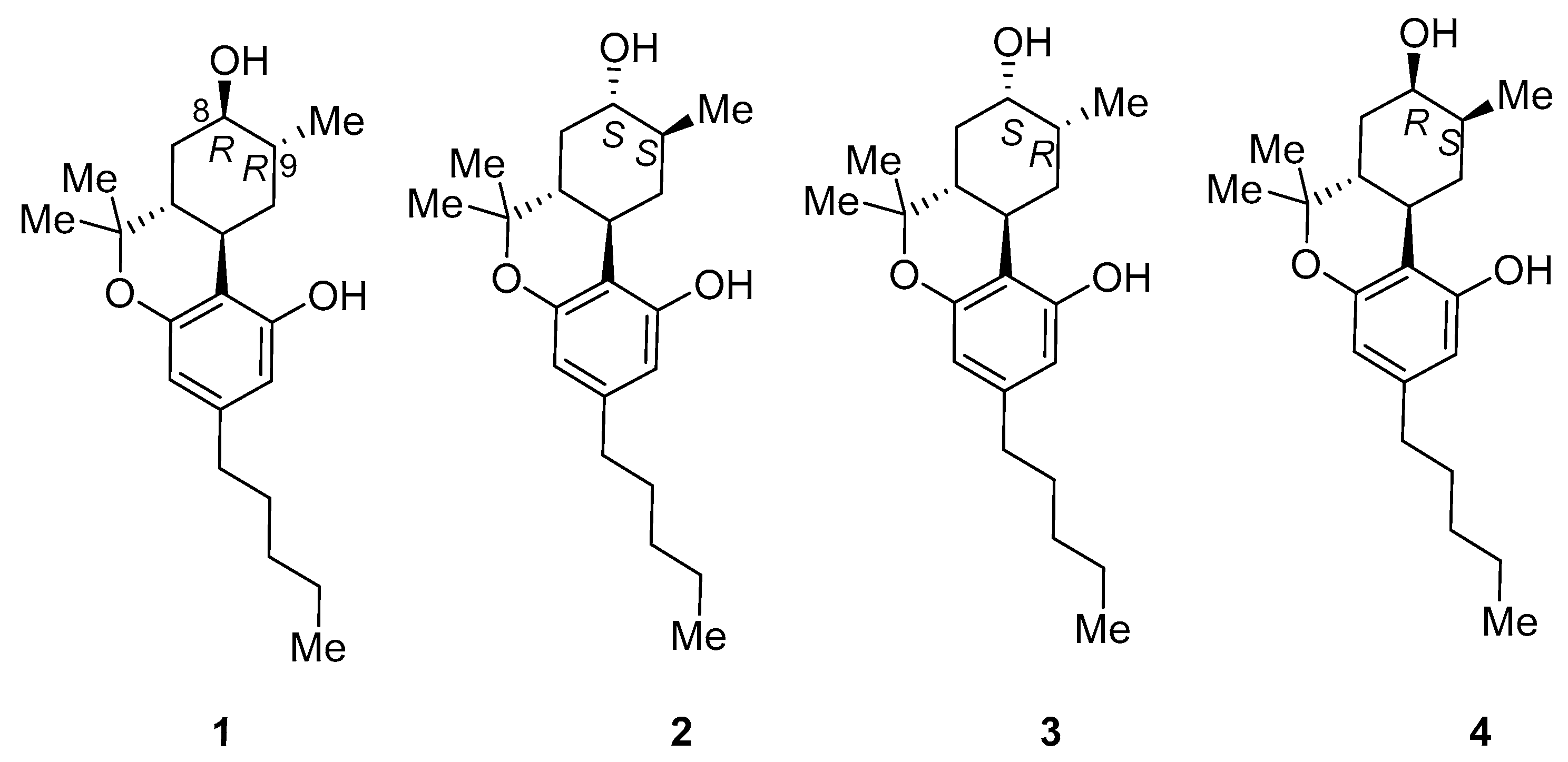
HHC metabolites have recently captured the interest of toxicology researchers and forensic analysts. Pharmacokinetic studies of HHC have identified several metabolites, among which 8-OH-HHC, in which the C8-position of HHC is hydroxylated, has been reported since 1990 [9,10,11]. Considering that commercially available HHC typically consists of a mixture of (6aR,9R,10aR)-HHC and (6aR,9S,10aR)-HHC, the resulting 8-OH-HHC metabolites are expected to form a mixture comprising (8R)OH-(6aR,9R,10aR)-HHC (1), (8S)OH-(6aR,9S,10aR)-HHC (2), (8S)OH-(6aR,9R,10aR)-HHC (3), and (8R)OH-(6aR,9S,10aR)-HHC (4) (Figure 2). In 2025, Gréen reported that three stereoisomers of 8-OH-HHC (1, 2, 4) were detected in urine specimens submitted for cannabinoid testing in varying amounts. However, compound 3 was not identified at the time, as a reference standard was not available for confirmation [12].
Reliable analysis of 8-OH-HHC requires reference standards for all four of its stereoisomers. Therefore, we decided to stereoselectively synthesize the four stereoisomers of 8-OH-HHC (1, 2, 3, 4). Our synthetic strategy uses Δ8-THC as the starting material to provide the stereoisomers through two routes: hydroboration–oxidation or epoxidation–reduction.

2. Results and Discussion

2.1. Synthesis of (8R)OH-(6aR,9R,10aR)-HHC (1) and (8S)OH-(6aR,9S,10aR)-HHC (2)

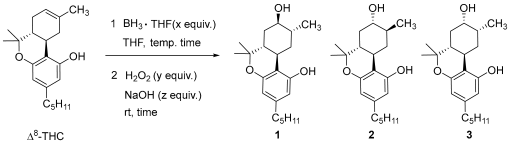
For the synthesis of the anti-stereoisomers (1, 2), we decided to examine the hydroboration reaction of Δ8-THC [13]. The starting material, Δ8-THC, was synthesized according to known synthetic methods [14]. Following the procedure reported by Mechoulam [13], 2 equivalents of BH3·THF were added to Δ8-THC in THF solution at 23 °C for 22 h. This reaction mixture was treated with excess H2O2 in a basic aqueous solution. NMR analysis revealed that the resulting crude product was a mixture of three compounds. Purification of the crude product by silica gel column chromatography afforded compound 1 in an isolated yield of 26% and compound 2 in a yield of 34%. The third compound could not be isolated because it co-eluted with compound 2, but NMR analysis revealed it to be compound 3. Considering that the hydroboration reaction proceeds via syn-addition, the formation of the anti-compounds 1 and 2 was expected. However, the appearance of compound 3 was unexpected, suggesting an atypical pathway. This observation prompted the further investigation of the hydroboration reaction conditions. Therefore, we conducted a systematic study of the effects of the hydroboration–oxidation reaction conditions on the production ratio of the three compounds (Table 1). First, Δ8-THC was treated with 2 equivalents of BH3·THF at −20 °C for 2 h (reaction 1). Then, 10 equivalents of hydrogen peroxide and 10 equivalents of sodium hydroxide were added to carry out an oxidation reaction (reaction 2) for 1 h. The resulting crude product was separated by silica-gel column chromatography to give compound 1 in 24% yield, along with compounds 2 and 3 as a mixture. The ratio of compounds 2 and 3 was determined by nuclear magnetic resonance (NMR) spectroscopy to be 5:1 (entry 1).
The reaction temperature was raised to −10 °C, and the reaction was continued for 21 h, yielding 21% of compound 1 and 34% of the mixture of compounds 2 and 3, with a 4:1 ratio (entry 2). The temperature was further increased, and the hydroboration reaction was carried out at 0 °C for 2 h. As a result, the yield of 1 was increased to 40%, and the yield of the mixture of 2 and 3 was 35%, with the ratio of 2 to 3 being 7:1 (entry 3). Attempts to suppress the formation of syn-compound 3 by increasing the amount of BH3·THF, raising the temperature, or increasing the amounts of hydrogen peroxide and sodium hydroxide were unsuccessful. The persistent formation of syn-compound 3 suggests that the reaction may proceed via a mechanism that deviates from the generally accepted one [15].
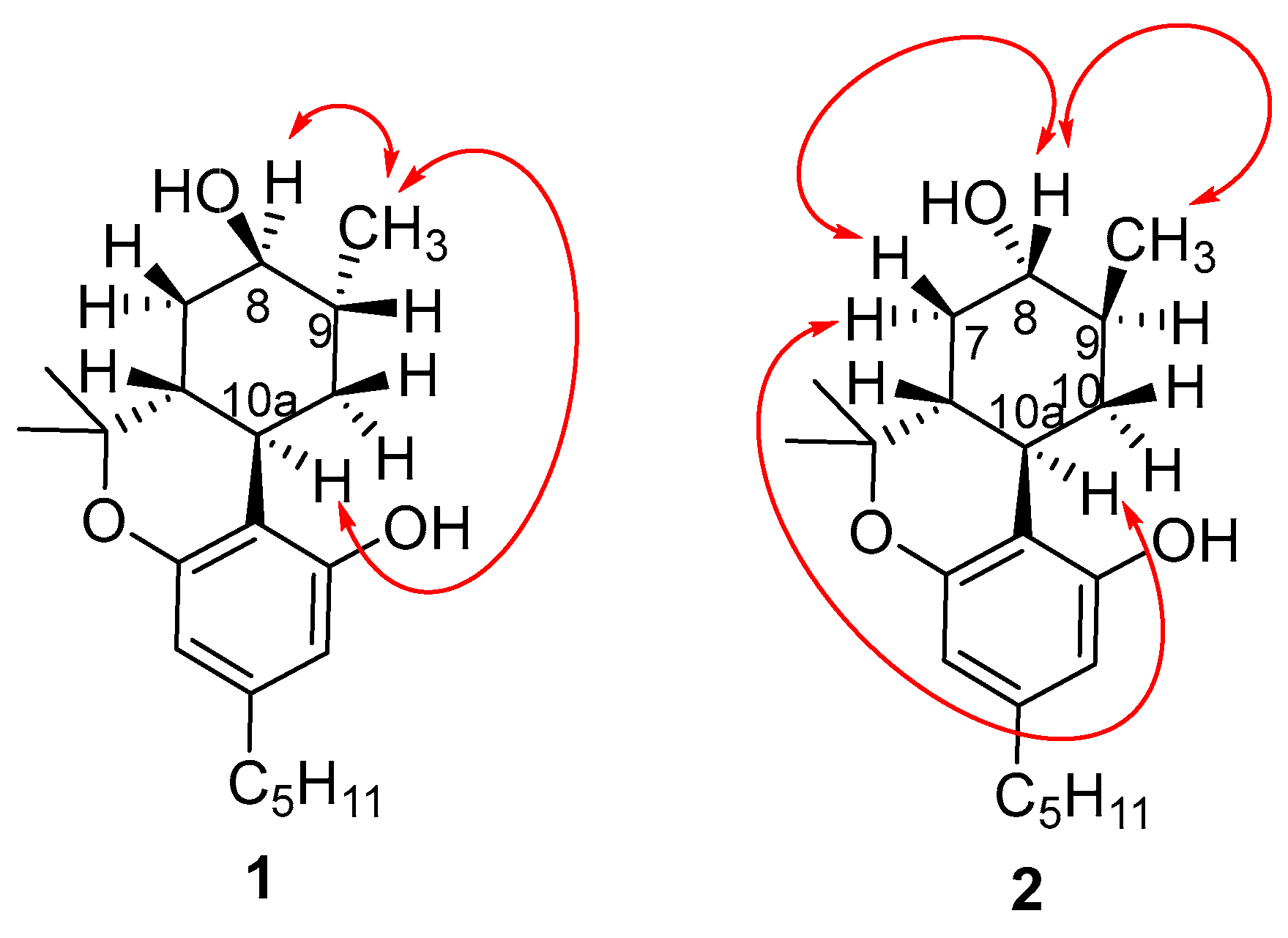
The stereochemical structures of compounds 1 and 2 were determined by nuclear Overhauser effect spectroscopy (NOESY) (Figure 3).
In compound 1, correlations were observed between the 8-H proton signal and the 9-methyl signal; the 9-methyl signal was also correlated with the 10a-H proton signal. These results revealed that the 8-OH group and the 9-methyl group were in the trans-configuration, confirming that the absolute configuration of compound 1 was (8R,9R). As to compound 2, correlations were observed between the 9-methyl signal and the 8-H proton signal, which was also correlated with one of the 7-H signals. Additionally, another 7-H proton signal was found to be correlated with the 10a-H proton signal. These results revealed that the 8-OH group and the 9-methyl group were in the trans-configuration, confirming that the absolute configuration of compound 2 was (8S,9S). Furthermore, the structure of compound 3 was consistent with the (8S,9R) isomer obtained in the synthesis described below.
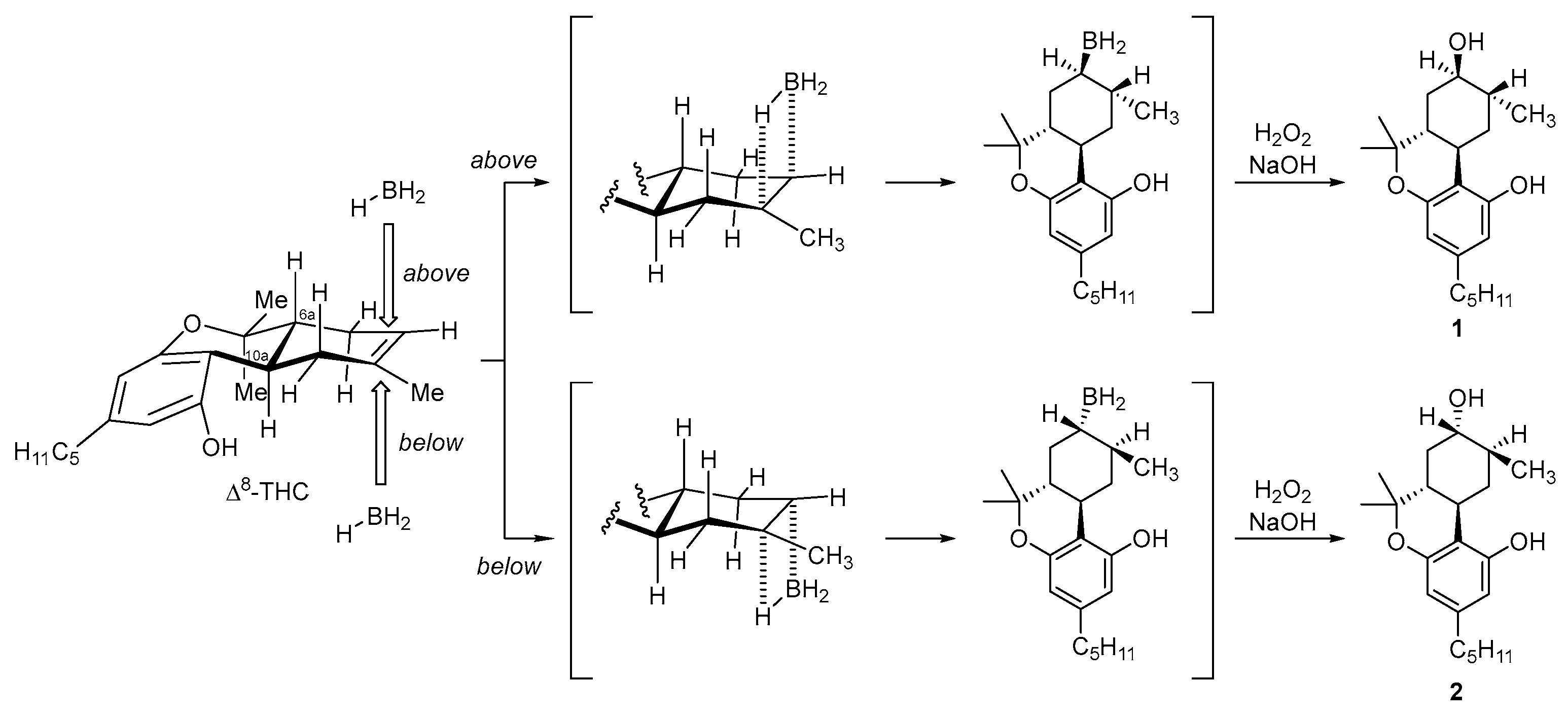
The mechanism by which compounds 1 and 2 are obtained is shown in Scheme 1. According to the well-known hydroboration mechanism, the syn-addition of BH3 occurs above or below the double bond. Considering that compounds 1 and 2 were obtained in approximately the same ratio, the addition reaction is likely to proceed with approximately the same probability from either above or below the double bond. The lack of pronounced stereoselectivity in this hydroboration reaction can be attributed to the fact that the chiral sources 6a-H and 10a-H are far from the double bond and therefore are not expected to be sterically affected.
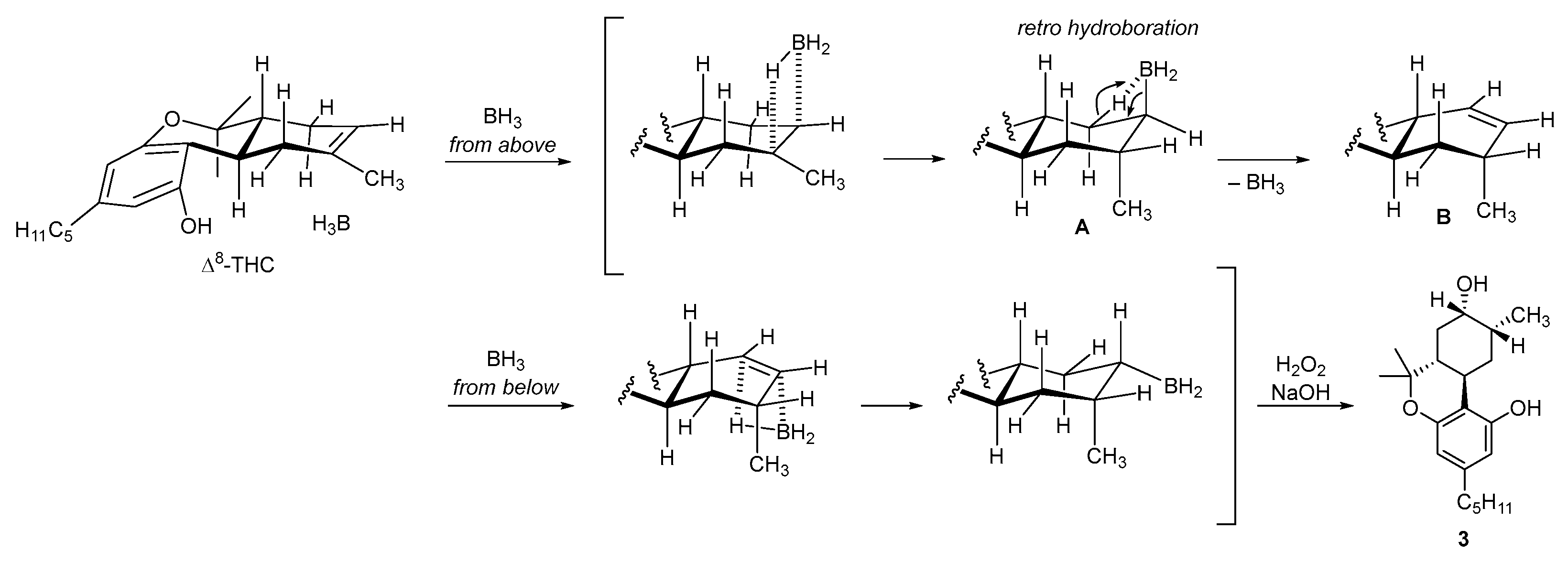
In contrast, the formation of compound 3 is inconsistent with the conventional syn-addition mechanism of hydroboration. In this context, the report by Merino and Fernández-Herrera (2020) [16], which described the generation of the trans-hydroboration products of β5 steroids, is particularly informative. They proposed that the trans-hydroboration products arise via a hydroboration–retro hydroboration mechanism. Our results can be rationalized by invoking a similar mechanism (Scheme 2). According to the conventional mechanism, a syn-addition reaction proceeds to form intermediate A, which subsequently undergoes retro hydroboration to form intermediate B. If the hydroboration of intermediate B proceeds from the face below the double bond, as shown in Scheme 2, then oxidation should give compound 3. It should be noted that syn-addition to obtain intermediate B can occur in four possible ways, depending on whether the addition occurs from the face above or below the double bond and whether or not it follows Markovnikov’s rule. In light of this mechanistic complexity, the formation of by-products other than compound 3 cannot be excluded, although such species have not yet been isolated.

2.2. Synthesis of (8S)OH-(6aR,9R,10aR)-HHC (3), (8R)OH-(6aR,9S,10aR)-HHC (4)

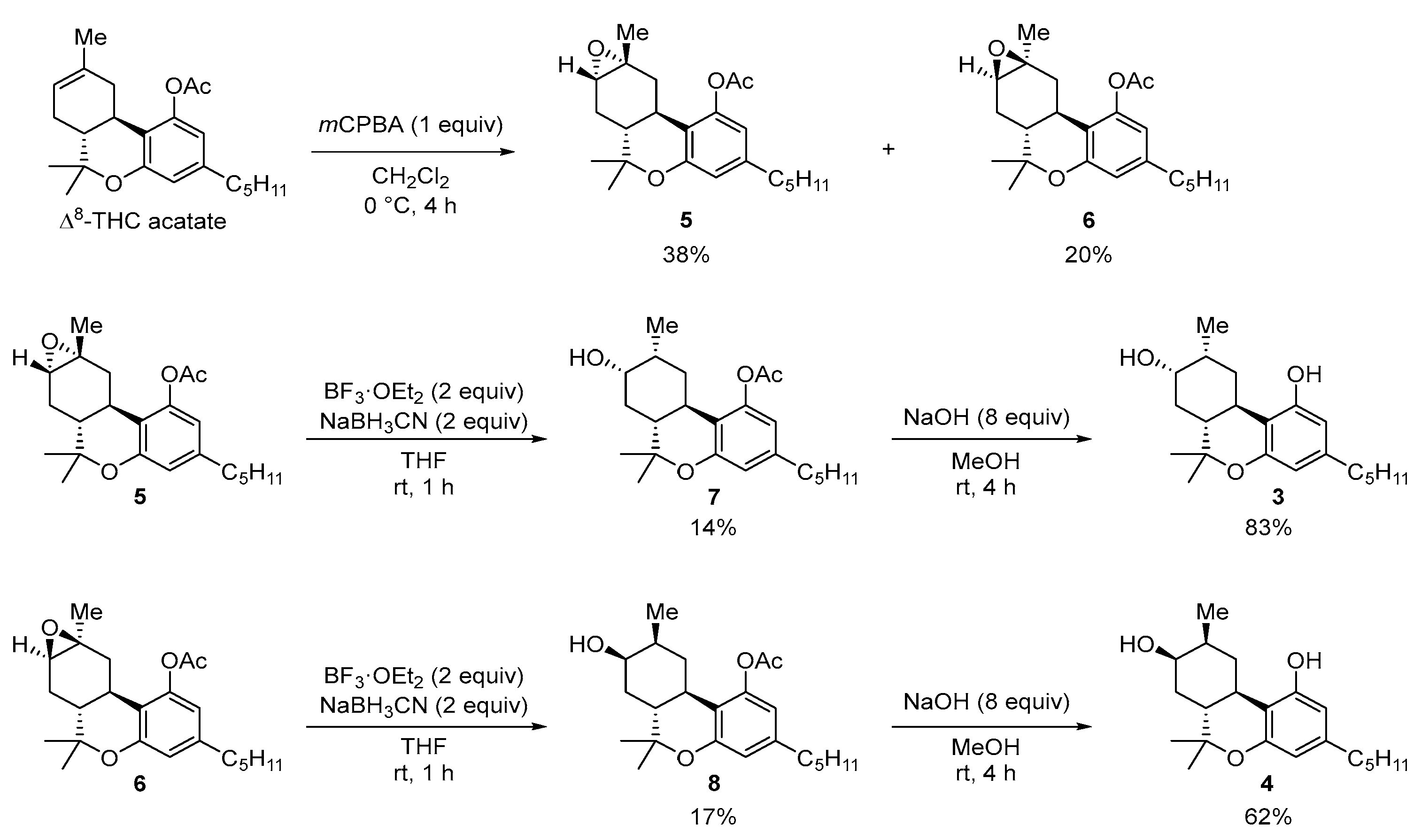
For the synthesis of the syn-stereoisomers (3, 4), we modified the Dethe method [17] and investigated the regioselective ring-opening of epoxides using a combination of NaBH3CN and BF3⋅OEt2 (Scheme 3). Δ8-THC acetate, which was prepared from Δ8-THC according to the conventional method [18], was treated with 1 equivalent of mCPBA at 0 °C in CH2Cl2 for 4 h to afford epoxide (5) in 38% yield and epoxide (6) in 20% yield [19].
The epoxy derivative 5 was reduced with 2 equivalents of NaBH3CN in the presence of 2 equivalents of BF3⋅OEt2 in THF solution at 23 °C for 1 h to provide a mixture. After purification of the crude compounds by silica-gel column chromatography, compound (7) was isolated in 14% yield as a single diastereoisomer. Compound 7 was then hydrolyzed with sodium hydroxide to give the desired syn-compound 3 in 83% yield. Similarly, the epoxy derivative 6 was reduced using the NaBH3CN/BF3⋅OEt2 system to provide a mixture, which was purified by silica-gel column chromatography, and compound (8) was isolated in 17% yield as a single diastereoisomer. The hydrolysis of compound 8 afforded the corresponding syn-compound 4 in 62% yield. Hence, the reduction of compounds 5 and 6 yielded many products, suggesting that the regio- and stereo-selectivity of this reaction was insufficient.
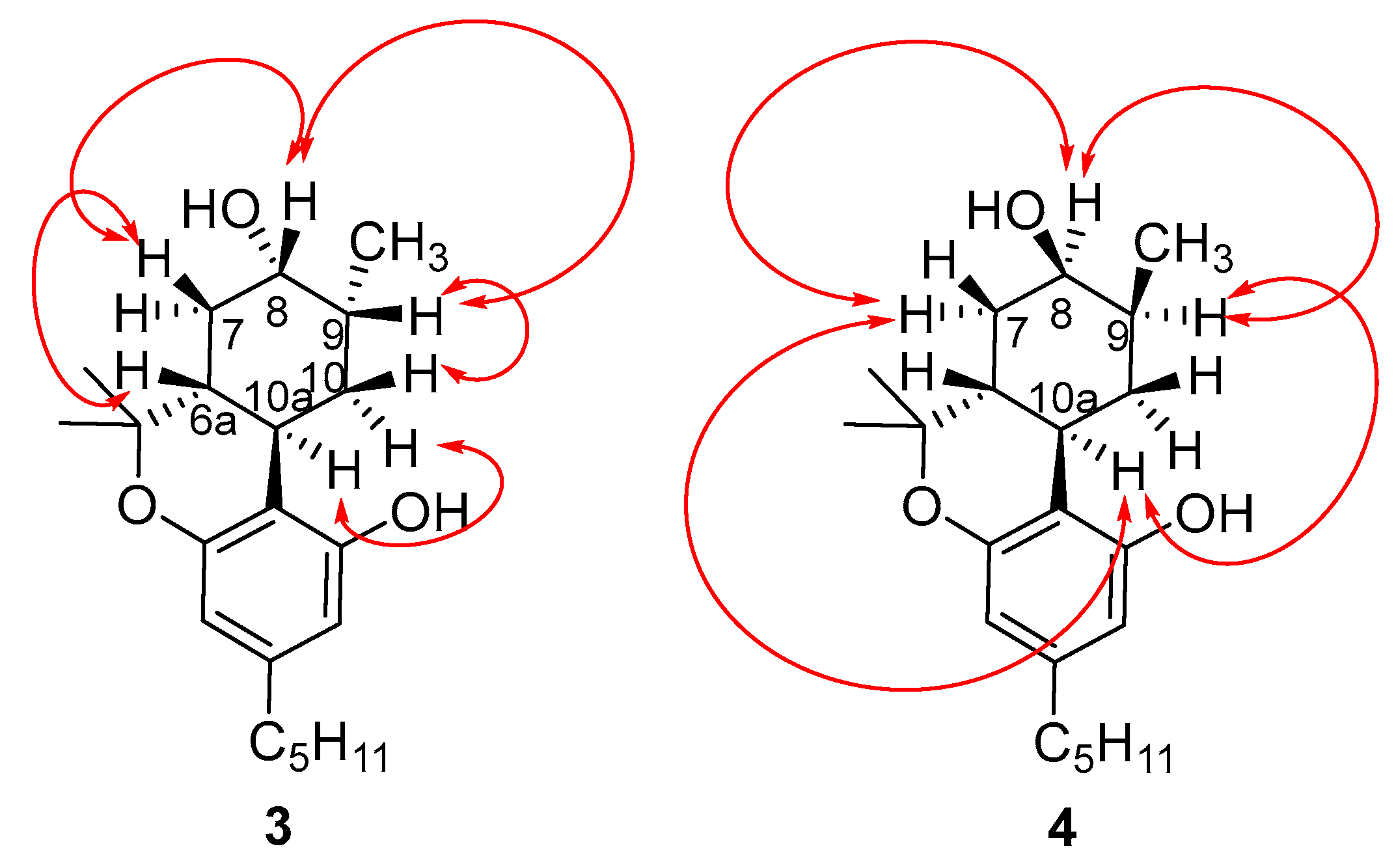
The stereochemical structures of compounds 3 and 4 were determined by the NOESY spectrum (Figure 4).
In compound 3, correlations were observed between the 9-H proton signal and the 8-H proton signal, which was also correlated with one of the 7-H proton signals. The 7-H proton signal was also correlated with the 6a-H proton signal. Additionally, correlations were observed between the 9-H proton signal and one of the 10-H proton signals, and between the other 10-H proton signal and the 10a-H proton signal. These results revealed that the 8-OH group and the 9-methyl group were in the cis configuration, confirming that the absolute configuration of compound 3 was (8S,9R). In compound 4, correlations were observed between the 8-H and 9-H proton signals; the 9-H signal was also correlated with the 10a-H proton signal. Additionally, correlations were observed between the 8-H proton signal and that of the 7-H proton signal, which was also correlated with the 10a-H proton signal. These results revealed that the 8-OH group and the 9-methyl group were in the cis configuration, confirming that the absolute configuration of compound 4 was (8R,9S).
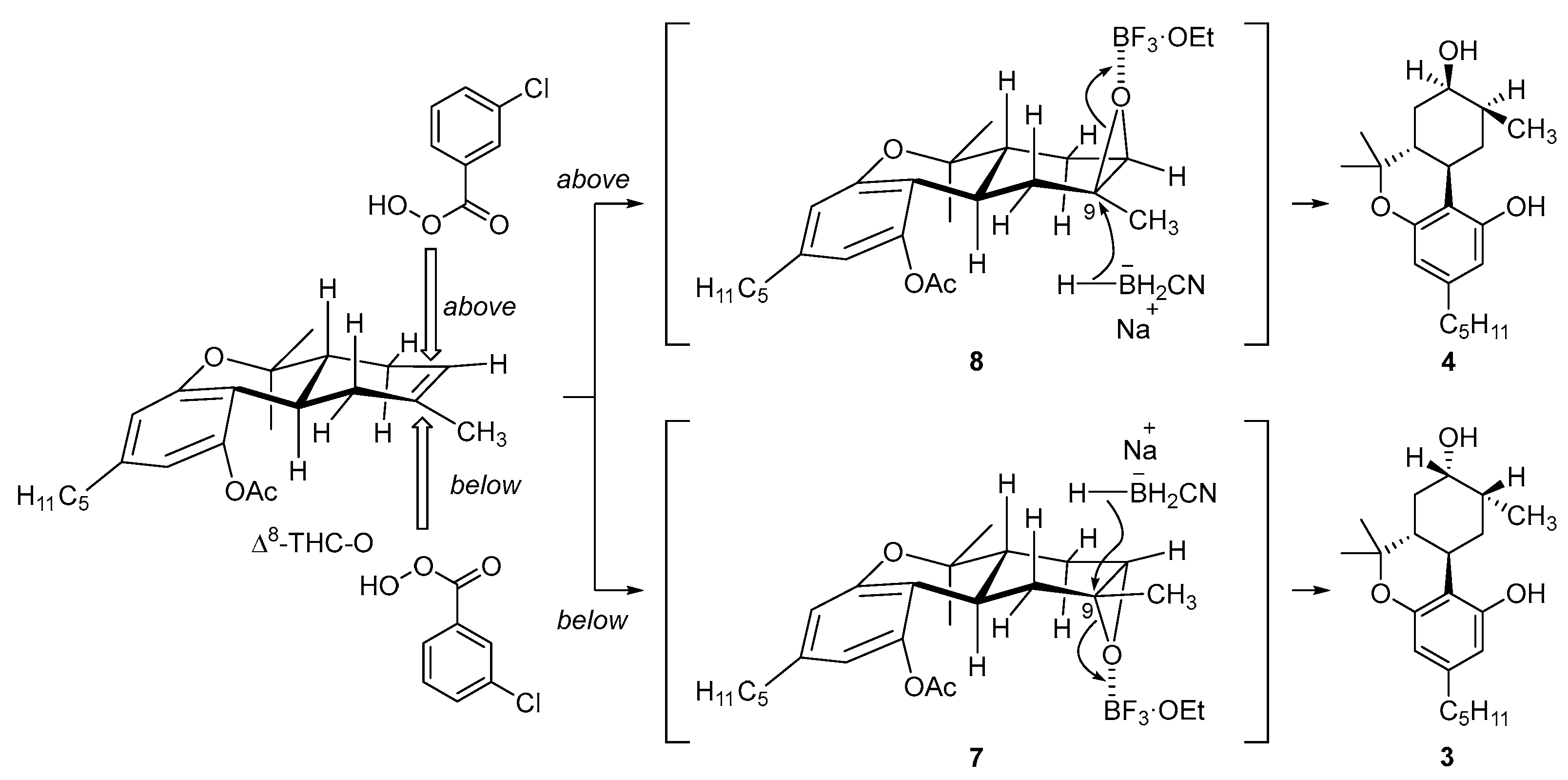
The proposed mechanism for the formation of compounds 3 and 4 is shown in Scheme 4. Following the well-known epoxidation reaction using mCPBA, the epoxide is activated by BF3⋅OEt2, after which a hydride derived from NaBH3CN attacks 9C to produce compound 3 or 4.

3. Materials and Methods

3.1. Materials

All the reagents were purchased from commercial suppliers and used as received. Δ8-THC ([α]D23 –79 (c 0.63, CHCl3)) was prepared using a previously reported method [14]. The NMR data for the Δ8-THC prepared in this manner matched those previously reported [20]. Δ8-THC acetate ([α]D23 –160 (c 0.72, CHCl3)) was prepared using a previously reported method [18]. The NMR data for the Δ8-THC acetate prepared in this manner matched those previously reported [18,21]. Δ8-THC and Δ8-THC acetate were used as synthesized neutral forms.

3.2. Analysis Information

Reaction mixtures were magnetically stirred and monitored by thin-layer chromatography (TLC) using pre-coated silica-gel plates. Column chromatography was performed using silica gel (60 μm). 1H (400 MHz) and 13C (100 MHz) NMR spectra were recorded on a JNM-ECZ400S NMR spectrometer (JEOL Ltd., Tokyo, Japan) at 296 K unless otherwise stated. Chemical shifts are given in parts per million (ppm) downfield from that of tetramethylsilane as an internal standard (0.00 ppm), and coupling constants (J) are reported in Hz. Splitting patterns are abbreviated as follows: singlet (s), doublet (d), triplet (t), multiplet (m), and broad (br). High-resolution mass spectra (HRMS) were recorded on an X500R QTOF electrospray ionization time-of-flight mass spectrometer (AB Sciex LLC, Marlborough, MA, USA). IR spectra were recorded on a Spectrum 100 FT-IR spectrometer equipped with an ATR (diamond) accessory (PerkinElmer, Inc., Waltham, MA, USA). Optical rotations were recorded on a P-1030 Polarimeter (JASCO Corporation, Tokyo, Japan).

3.3. Synthesis of 1 and 2

BH3·THF (1.0 M in THF, 0.40 mL, 0.40 mmol) was added to a stirred solution of Δ8-THC (63 mg, 0.20 mmol) in THF (2.0 mL, 0.1 M) at 23 °C under an argon atmosphere. The mixture was stirred at 23 °C for 22 h, then water (2.0 mL), 2 N NaOH aq. (2.0 mL) and 30% H2O2 aq. (2.0 mL) were added. After the mixture was stirred for 15 min, the reaction was quenched with 10% aqueous Na2S2O3, and the product was extracted with ethyl acetate (3×). The combined organic extracts were washed with brine, dried over Na2SO4, and concentrated under vacuum. The residue was purified using column chromatography (silica gel, hexane/ethyl acetate = 2/1) to obtain 1 (16.6 mg, 26%) and 2 (21.4 mg, 34%) as colorless oils.
1: Rf 0.37 (hexane/ethyl acetate = 2/1); [α]D23 –50 (c 0.49, CHCl3); 1H NMR (400 MHz, CDCl3) δ 6.25 (d, 1H, J = 1.6 Hz), 6.07 (d, 1H, J = 1.6 Hz), 4.80 (brs, 1H, OH), 3.89 (q, 1H, J = 2.8 Hz), 2.80 (td, 1H, J = 2.4, 13.6 Hz), 2.66 (dt, 1H, J = 2.8, 11.6 Hz), 2.48–2.36 (m, 2H), 2.04–1.95 (m, 2H), 1.77 (dtd, J = 1.6, 3.2, 13.6 Hz, 1H), 1.68–1.44 (m, 5H), 1.35 (s, 3H), 1.34–1.24 (m, 4H), 1.14 (d, 3H, J = 7.6 Hz), 1.09 (s, 3H), 0.88 (t, 3H, J = 7.2 Hz); 13C NMR (100 MHz, CDCl3) δ 159.2, 154.6, 142.6, 110.0, 109.8, 107.5, 76.5, 71.5, 42.3, 35.7, 35.4, 31.5, 30.60, 30.55, 30.5, 29.1, 27.4, 22.5, 19.0, 17.6, 14.0; IR (ATR) 3343, 2928, 1578, 1425, 1048 cm−1; HRMS (ESI) m/z calcd. for C21H31O3 ([M − H]): 331.2279, found: 331.2278.
2: Rf 0.29 (hexane/ethyl acetate = 2/1); [α]D23 –69 (c 0.42, CHCl3); 1H NMR (400 MHz, CDCl3) δ 6.24 (d, 1H, J = 1.2 Hz), 6.08 (d, 1H, J = 1.2 Hz), 5.06 (brs, 1H, OH), 3.33 (dt, 1H, J = 4.4, 10.4 Hz), 3.12 (td, 1H, J = 3.2, 13.2 Hz), 2.48 (dt, 1H, J = 2.8, 11.2 Hz), 2.44–2.40 (m, 2H), 2.12 (ddd, 1H, J = 2.4, 4.8, 12.0 Hz), 1.68 (brs, 1H, OH), 1.61–1.51 (m, 4H), 1.38 (s, 3H), 1.35–1.25 (m, 4H), 1.20–1.10 (m, 1H), 1.09 (s, 3H), 1.08 (d, 3H, J = 7.2 Hz), 0.88 (t, 3H, J = 7.2 Hz), 0.93–0.84 (m, 1H); 13C NMR (100 MHz, CDCl3) δ 154.8, 154.7, 142.8, 109.9, 109.3, 107.6, 76.8, 76.6, 47.5, 40.3, 36.9, 36.6, 35.4, 35.0, 31.5, 30.6, 27.7, 22.5, 19.0, 18.4, 14.0; IR (ATR) 3340, 2925, 1578, 1425, 1027 cm−1; HRMS (ESI) m/z calcd. for C21H31O3 ([M − H]): 331.2279, found: 331.2281.

3.4. Synthesis of 5 and 6

65% mCPBA (62 mg, 0.23 mmol) was added to a stirred solution of Δ8-THC acetate (92 mg, 0.26 mmol) in CH2Cl2 (10 mL, 0.026 M) at 0 °C under an argon atmosphere. After the mixture was stirred at 0 °C for 4 h, the reaction was quenched with 10% aqueous Na2S2O3, and the product was extracted with CH2Cl2 (3×). The combined organic extracts were washed with brine, dried over Na2SO4, and concentrated under vacuum. The residue was purified using column chromatography (silica gel, hexane/ethyl acetate = 4/1) and PTLC (hexane/ethyl acetate = 4/1) to obtain 5 (36.3 mg, 38%) and 6 (19.0 mg, 20%) as colorless oils.
5: Rf 0.34 (hexane/ethyl acetate = 4/1); 1H NMR (400 MHz, CDCl3) δ 6.52 (d, 1H, J = 1.6 Hz), 6.40 (d, 1H, J = 1.6 Hz), 3.11 (d, 1H, J = 5.6 Hz), 2.85 (dd, 1H, J = 3.6, 14.4 Hz), 2.56–2.43 (m, 3H), 2.31 (s, 3H), 2.18–2.06 (m, 1H), 1.63–1.53 (m, 4H), 1.49 (dd, 1H, J = 11.2, 14.4 Hz), 1.35 (s, 3H), 1.34 (s, 3H), 1.34–1.25 (m, 4H), 1.03 (s, 3H), 0.88 (t, 3H, J = 6.8 Hz); 13C NMR (100 MHz, CDCl3) δ 169.0, 154.3, 149.4, 142.7, 115.1, 115.0, 114.5, 76.5, 59.0, 58.5, 44.6, 35.8, 35.2, 31.4, 30.3, 28.1, 27.1, 26.5, 22.9, 22.4, 21.1, 18.2, 13.9; IR (ATR) 2928, 1767, 1371, 1204, 1035 cm−1; HRMS (ESI) m/z calcd. for C23H33O4 ([M + H]+): 373.2373, found: 373.2374.
6: Rf 0.31 (hexane/ethyl acetate = 4/1); 1H NMR (400 MHz, CDCl3) δ 6.54 (d, 1H, J = 1.6 Hz), 6.39 (d, 1H, J = 1.6 Hz), 3.09–3.07 (m, 1H), 2.68 (dd, 1H, J = 5.2, 15.2 Hz), 2.50–2.47 (m, 2H), 2.31 (s, 3H), 2.32–2.24 (m, 2H), 1.73–1.63 (m, 2H), 1.61–1.45 (m, 3H), 1.38 (s, 3H), 1.37 (s, 3H), 1.35–1.25 (m, 4H), 1.05 (s, 3H), 0.88 (t, 3H, J = 7.2 Hz); 13C NMR (100 MHz, CDCl3) δ 168.8, 154.3, 149.4, 143.0, 115.4, 115.3, 114.3, 59.3, 57.6, 39.3, 35.3, 34.8, 31.5, 31.2, 30.4, 28.3, 27.1, 24.9, 22.5, 21.2, 18.6, 14.0, one signal was overlapped with solvent; IR (ATR) 2928, 1765, 1370, 1193, 1031 cm−1; HRMS (ESI) m/z calcd. for C23H33O4 ([M + H]+): 373.2373, found: 373.2373.

3.5. Synthesis of 7

NaBH3CN (39 mg, 0.62 mmol) and BF3·OEt2 (0.10 mL, 0.80 mmol) were added to a stirred solution of 5 (115 mg, 0.309 mmol) in THF (10 mL, 0.03 M) at 0 °C under an argon atmosphere. After the mixture was stirred at 23 °C for 1 h, the reaction was quenched with water and the product extracted with ethyl acetate (3×). The combined organic extracts were washed with brine, dried with Na2SO4, and concentrated under vacuum. The residue was purified using column chromatography (silica gel, hexane/ethyl acetate = 2/1) to obtain 7 (16.0 mg, 14%) as a colorless oil.
7: Rf 0.43 (hexane/ethyl acetate = 2/1); 1H NMR (400 MHz, CDCl3) δ 6.55 (d, 1H, J = 1.6 Hz), 6.38 (d, 1H, J = 1.6 Hz), 3.91 (td, 1H, J = 4.8, 11.6 Hz), 2.55–2.46 (m, 4H),2.31 (s, 3H), 2.28–2.20 (m, 1H), 1.89–1.81 (m, 1H), 1.61–1.48 (m, 4H), 1.42–1.34 (m, 1H), 1.38 (s, 3H), 1.33–1.23 (m, 5H), 1.10 (s, 3H), 1.06 (d, 3H, J = 6.8 Hz), 0.88 (t, 3H, J = 6.8 Hz); 13C NMR (100 MHz, CDCl3) δ 169.2, 154.8, 149.5, 142.7, 115.6, 115.2, 114.2, 77.2, 69.8, 48.9, 43.0, 39.3, 35.3, 31.7, 31.5, 31.0, 30.4, 27.5, 23.9, 22.5, 21.2, 19.1, 14.0; IR (ATR) 3531, 2930, 1742, 1370, 1204 cm−1; HRMS (ESI) m/z calcd. for C23H35O4 ([M + H]+): 375.2530, found: 375.2525.

3.6. Synthesis of 8

Compound 8 was prepared following the standard procedure described for 7.
8: 17% yield; colorless oil; Rf 0.49 (hexane/ethyl acetate = 2/1); 1H NMR (400 MHz, CDCl3) δ 6.54 (d, 1H, J = 1.6 Hz), 6.37 (d, 1H, J = 1.6 Hz), 3.96–3.91 (m, 1H), 2.51–2.46 (m, 2H), 2.40–2.27 (m, 2H), 2.28 (s, 3H), 1.99–1.90 (m, 2H), 1.78–1.69 (m, 1H), 1.63–1.53 (m, 2H), 1.41–1.24 (m, 7H), 1.37 (s, 3H), 1.07 (s, 3H), 1.02 (d, 3H, J = 6.8 Hz), 0.88 (t, 3H, J = 6.8 Hz); 13C NMR (100 MHz, CDCl3) δ 169.0, 154.6, 149.6, 142.8, 115.3, 115.2, 114.1, 76.9, 70.0, 41.3, 36.8, 35.7, 35.33, 35.30, 32.3, 31.5, 30.4, 27.4, 22.5, 21.2, 19.0, 18.2, 14.0; IR (ATR) 3529, 2929, 1765, 1368, 1206 cm−1; HRMS (ESI) m/z calcd. for C23H35O4 ([M + H]+): 375.2530, found: 375.2522.

3.7. Synthesis of 3

A solution of NaOH (14 mg, 0.35 mmol) in MeOH (4 mL, 0.01 M) was added to 7 (16 mg, 0.043 mmol) at 23 °C under an argon atmosphere. The mixture was stirred at 23 °C for 4 h. After it was concentrated under vacuum, the residue was purified by column chromatography (silica gel, hexane/ethyl acetate = 2/1) to obtain 3 (11.8 mg, 83%) as a colorless oil.
3: Rf 0.28 (hexane/ethyl acetate = 2/1); [α]D23 –52 (c 0.66, CHCl3); 1H NMR (400 MHz, CDCl3) δ 6.25 (d, 1H, J = 1.6 Hz), 6.07 (d, 1H, J = 1.6 Hz), 4.83 (brs, 1H, OH), 3.93 (td, 1H, J = 4.8, 11.6 Hz), 3.06 (td, 1H, J = 2.8, 13.6 Hz), 2.64 (dt, 1H, J = 2.8, 11.6 Hz), 2.44–2.40 (m, 2H), 2.29–2.20 (m, 1H), 1.88–1.82 (m, 1H), 1.63 (brs, 1H, OH), 1.59–1.49 (m, 3H), 1.38 (s, 3H), 1.34–1.25 (m, 6H), 1.12 (d, 3H, J = 8.0 Hz), 1.11 (s, 3H), 0.88 (t, 3H, J = 7.2 Hz); 13C NMR (100 MHz, CDCl3) δ 155.0, 154.6, 142.7, 109.9, 109.4, 107.6, 76.6, 73.1, 47.7, 35.4, 34.5, 34.4, 31.5, 31.1, 30.6, 28.4, 27.5, 22.5, 19.2, 14.0, 11.8; IR (ATR) 3444, 2934, 1571, 1408, 1012 cm−1; HRMS (ESI) m/z calcd. for C21H31O3 ([M − H]): 331.2279, found: 331.2276.

3.8. Synthesis of 4

Compound 4 was prepared following the standard procedure described for 3.
4: 62% yield; colorless oil; Rf 0.48 (hexane/ethyl acetate = 2/1); [α]D23 –27 (c 0.33, CHCl3); 1H NMR (400 MHz, CDCl3) δ 6.25 (d, 1H, J = 1.6 Hz), 6.08 (d, 1H, J = 1.6 Hz), 4.72 (brs, 1H, OH), 3.98–3.94 (m, 1H), 2.83 (td, 1H, J = 3.2, 13.2 Hz), 2.50–2.40 (m, 3H), 2.01–1.90 (m, 2H), 1.86–1.76 (m, 1H), 1.59–1.52 (m, 3H), 1.41–1.25 (m, 5H), 1.37 (s, 3H), 1.23–1.13 (m, 1H), 1.08 (s, 3H), 1.02 (d, 3H, J = 6.8 Hz), 0.88 (t, 3H, J = 6.8 Hz); 13C NMR (100 MHz, CDCl3) δ 154.9, 154.6, 142.7, 110.1, 109.6, 107.5, 77.2, 70.4, 41.5, 36.6, 35.4, 31.9, 31.5, 30.6, 27.6, 22.5, 18.9, 18.1, 14.0, several signals were overlapped; IR (ATR) 3338, 2927, 1576, 1426, 1042 cm−1; HRMS (ESI) m/z calcd. for C21H31O3 ([M − H]): 331.2279, found: 331.2276.

4. Conclusions

Using two simple strategies, we achieved the syntheses of (8R)OH-(6aR,9R,10aR)-HHC (1), (8S)OH-(6aR,9S,10aR)-HHC (2), (8S)OH-(6aR,9R,10aR)-HHC (3), and (8R)OH-(6aR,9S,10aR)-HHC (4), which are the metabolites of (9R)-HHC and (9S)-HHC. For the synthesis of (8R)OH-(6aR,9R,10aR)-HHC (1) and (8S)OH-(6aR,9S,10aR)-HHC (2), we utilized a conventional hydroboration–oxidation reaction, which provided the desired products (8R)OH-(6aR,9R,10aR)-HHC (1) and (8S)OH-(6aR,9S,10aR)-HHC (2). In this reaction, the yields of 1 and 2 varied depending on the reaction conditions. However, unexpectedly, compound 3 was always obtained, albeit in small amounts. Although the reason for obtaining compound 3 is unknown, it is likely that the hydroboration reaction proceeded via a different mechanism. Regarding the synthesis of (8S)OH-(6aR,9R,10aR)-HHC (3) and (8R)OH-(6aR,9S,10aR)-HHC (4), regioselective reduction was attempted; however, only moderate selectivity was achieved. Nevertheless, all four diastereomers were successfully isolated, and their absolute configurations were fully determined. Further synthetic refinements and a more detailed mechanistic investigation into the formation of compounds 14, supported by DFT calculations, will be reported in future work.

Supplementary Materials

The following supporting information can be downloaded at https://www.mdpi.com/article/10.3390/molecules31020289/s1. Figures S1–S6: NMR spectra of compound 1; Figures S7–S12: NMR spectra of compound 2; Figures S13–S18: NMR spectra of compound 3; Figures S19–S24: NMR spectra of compound 4; Figures S25 and S26: NMR spectra of compound 5; Figures S27 and S28: NMR spectra of compound 6; Figures S29 and S30: NMR spectra of compound 7; Figures S31 and S32: NMR spectra of compound 8; Figures S33–S38: NMR spectra of Δ8-THC; Figures S39–S44: NMR spectra of Δ8-THC acetate. Table S1: Assignment of the peaks in the 1H and 13C NMR spectra of 1. Table S2: Assignment of the peaks in the 1H and 13C NMR spectra of 2. Table S3: Assignment of the peaks in the 1H and 13C NMR spectra of 3. Table S4: Assignment of the peaks in the 1H and 13C NMR spectra of 4.

Author Contributions

Conceptualization, K.N. and H.T.; methodology, K.N. and K.I.; investigation, K.I. and K.N.; writing—original draft preparation, K.I., K.N. and H.T.; writing—review and editing, K.N. and H.T.; project administration, H.T. All authors have read and agreed to the published version of the manuscript.

Funding

This research received no external funding.

Institutional Review Board Statement

Not applicable.

Informed Consent Statement

Not applicable.

Data Availability Statement

Data are contained within the article and Supplementary Material.

Conflicts of Interest

The authors declare no conflicts of interest.

References

  1. United Nations Office on Drugs and Crime. World Drug Report 2022; World Drug Report; United Nations: New York, NY, USA, 2022. [Google Scholar]
  2. Rock, E.M.; Parker, L.A. Cannabinoids and Neuropsychiatric Disorders; Murillo-Rodriguez, E., Pandi-Perumal, S.R., Monti, J.M., Eds.; Springer Nature: Berlin/Heidelberg, Germany, 2020; pp. 1–13. [Google Scholar] [CrossRef]
  3. Teixeira, H.M. Phytocanabinoids and synthetic cannabinoids: From recreational consumption to potential therapeutic use–A review. Front. Toxcol. 2025, 6, 1495547. [Google Scholar] [CrossRef] [PubMed]
  4. Ujváry, I. Hexahydrocannabinol and closely related semi-synthetic cannabinoids: A comprehensive review. Drug Test. Anal. 2024, 16, 127–161. [Google Scholar] [CrossRef] [PubMed]
  5. Hively, R.L.; Mosher, W.A.; Hoffmann, F.W. Isolation of trans6-Tetrahydrocannabinol from marijuana. J. Am. Chem. Soc. 1966, 88, 1832–1833. [Google Scholar] [CrossRef] [PubMed]
  6. Docampo-Palacios, M.L.; Ramirez, G.A.; Tesfatsion, T.T.; Okhovat, A.; Pittiglio, M.; Ray, K.P.; Cruces, W. Saturated cannabinoids: Update on synthesis strategies and biological studies of these emerging cannabinoid analogs. Molecules 2023, 28, 6434. [Google Scholar] [CrossRef] [PubMed]
  7. Seccamani, P.; Franco, C.; Protti, S.; Porta, A.; Profumo, A.; Caprioglio, D.; Salamone, S.; Mannucci, B.; Merli, D. Photochemistry of cannabidiol (CBD) revised. A combined preparative and spectrometric investigation. J. Nat. Prod. 2021, 84, 2858–2865. [Google Scholar] [CrossRef] [PubMed]
  8. Tanaka, R.; Kikura-Hanajiri, R. Identification of hexahydrocannabinol (HHC), dihydro-iso-tetrahydrocannabinol (dihydro-iso-THC) and hexahydrocannabiphorol (HHCP) in electronic cigarette cartridge products. Forensic Toxicol. 2024, 42, 71–81. [Google Scholar] [CrossRef] [PubMed]
  9. Harvey, D.J.; Brown, N.K. A method based on catalytic hydrogenation for the identification of monohydroxy metabolites of isomeric tetrahydrocannabinols. Rapid Commun. Mass Spectrom. 1990, 4, 67–68. [Google Scholar] [CrossRef]
  10. Di Trana, A.; Di Giorgi, A.; Sprega, G.; Carlier, J.; Kobidze, G.; Montanari, E.; Taoussi, O.; Bambagiotti, G.; Fede, M.S.; Lo Faro, A.F.; et al. Disposition of hexahydrocannabinol epimers and their metabolites in biological matrices following a single administration of smoked hexahydrocannabinol: A preliminary study. Pharmaceuticals 2024, 17, 249. [Google Scholar] [CrossRef] [PubMed]
  11. Schirmer, W.; Auwärter, V.; Kaudewitz, J.; Schürch, S.; Weinmann, W. Identification of human hexahydrocannabinol metabolites in urine. Eur. J. Mass Spectrom. Behav. 2023, 29, 326–337. [Google Scholar] [CrossRef] [PubMed]
  12. Lindbom, K.; Norman, C.; Baginski, S.; Krebs, L.; Stalberga, D.; Rautio, T.; Wu, X.; Kronstrand, R.; Gréen, H. Human metabolism of the semi-synthetic cannabinoids hexahydrocannabinol, hexahydrocannabiphorol and their acetates using hepatocytes and urine samples. Drug Test. Anal. 2025, 17, 372–386. [Google Scholar] [CrossRef] [PubMed]
  13. Mechoulam, R.; Lander, N.; Varkony, T.H.; Kimmel, I.; Becker, O.; Ben-Zvi, Z.; Edery, H.; Porath, G. Stereochemical requirements for cannabinoid activity. J. Med. Chem. 1980, 23, 1068–1072. [Google Scholar] [CrossRef] [PubMed]
  14. Mechoulam, R.; Braun, P.; Gaoni, Y. Syntheses of Δ1-tetrahydrocannabinol and related cannabinoids. J. Am. Chem. Soc. 1972, 94, 6159–6165. [Google Scholar] [CrossRef] [PubMed]
  15. Carey, F.A.; Sundberg, R.J. Advanced Organic Chemistry, Part B: Reactions and Synthesis, 4th ed.; Kluwer Academic Publishers: New York, NY, USA, 2002; pp. 226–232. [Google Scholar]
  16. Hilario-Martinez, J.C.; Murillo, F.; Garcia-Mendez, J.; Dzib, E.; Sandoval-Ramirez, J.; Munoz-Hernandez, M.A.; Bernes, S.; Kurti, L.; Duarte, F.; Merino, G.; et al. trans-Hydroboration–oxidation products in Δ5-steroids via a hydroboration-retro-hydroboration mechanism. Chem. Sci. 2020, 11, 12764–12768. [Google Scholar] [CrossRef] [PubMed]
  17. Dethe, D.H.; Erande, R.D.; Mahapatra, S.; Das, S.; Kumar, B.V. Protecting group free enantiospecific total syntheses of structurally diverse natural products of the tetrahydrocannabinoid family. Chem. Commun. 2015, 51, 2871–2873. [Google Scholar] [CrossRef] [PubMed]
  18. Inayama, S.; Sawa, A.; Hosoya, E. The oxidation of Δ1- and Δ6-tetrahydrocannabinol with selenium dioxide. Chem. Pharm. Bull. 1974, 22, 1519–1525. [Google Scholar] [CrossRef] [PubMed]
  19. Yamamoto, I.; Narimatsu, S.; Watanabe, K.; Yoshimura, H. Synthesis of 8α, 9α- and 8β, 9β-epoxyhexahydrocannabinols. Chem. Pharm. Bull. 1981, 29, 3378–3381. [Google Scholar] [CrossRef]
  20. Choi, Y.H.; Hazekamp, A.; Peltenburg-Looman, A.M.G.; Frédérich, M.; Erkelens, C.; Lefeber, A.W.M.; Verpoorte, R. NMR assignments of the major cannabinoids and cannabiflavonoids isolated from flowers of Cannabis sativa. Phytochem. Anal. 2004, 15, 345–354. [Google Scholar] [CrossRef] [PubMed]
  21. Binder, M.; Franke, I.; Schmidt, B.; Dietrich, W. 13C-NMR. Spectra of natural and semi-synthetic cannabinoids. Helv. Chim. Acta 1982, 65, 807–811. [Google Scholar] [CrossRef]
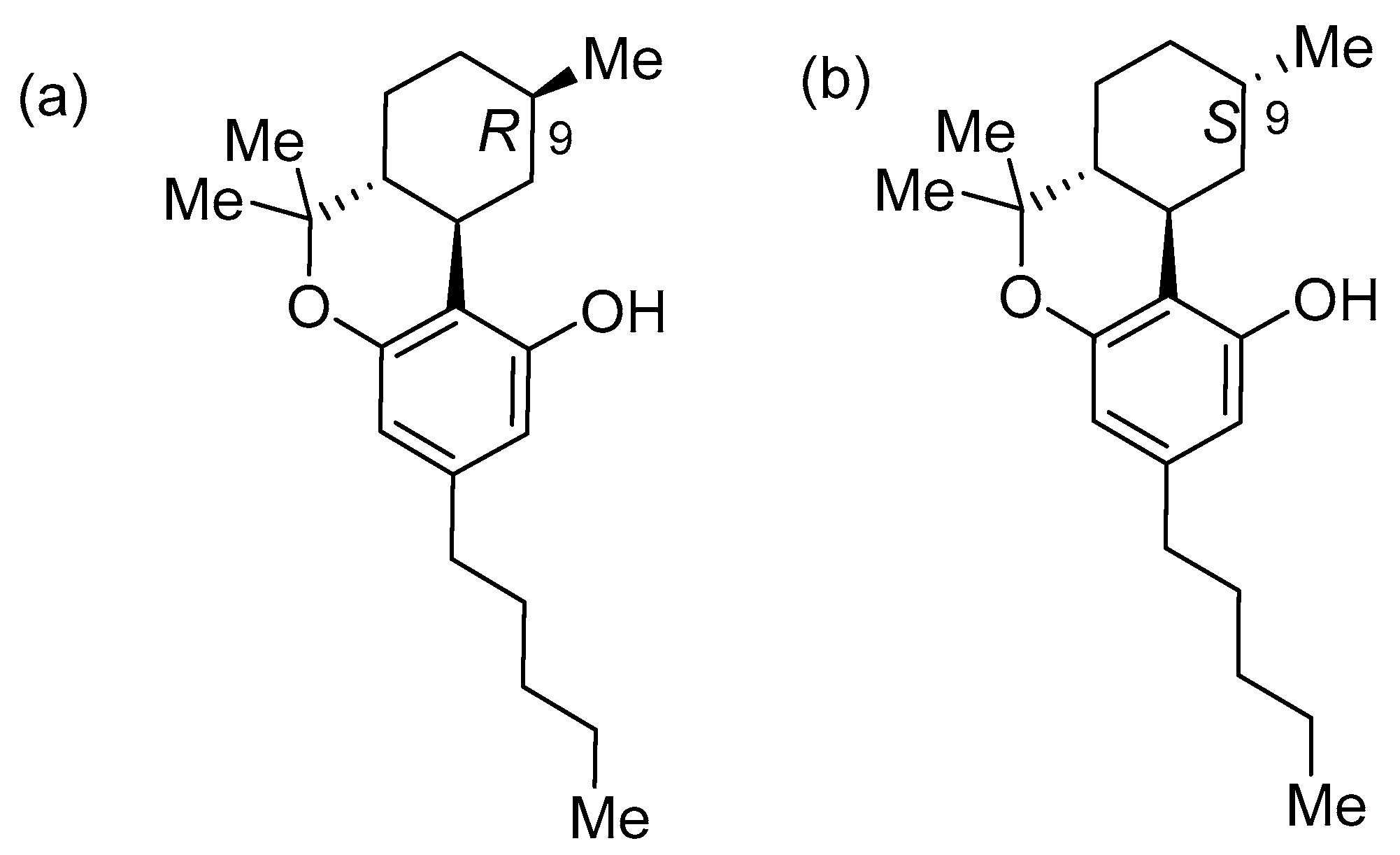
Figure 1. Structures of HHC epimers: (a) (6aR,9R,10aR)-HHC; (b) (6aR,9S,10aR)-HHC.
Molecules 31 00289 g001
Figure 2. Structures of (8R)OH-(6aR,9R,10aR)-HHC (1), (8S)OH-(6aR,9S,10aR)-HHC (2), (8S)OH-(6aR,9R,10aR)-HHC (3), (8R)OH-(6aR,9S,10aR)-HHC (4).
Molecules 31 00289 g002
Figure 3. Key correlations of NOESY spectrum of (8R)OH-(6aR,9R,10aR)-HHC (1) and (8S)OH-(6aR,9S,10aR)-HHC (2).
Molecules 31 00289 g003
Scheme 1. Reaction mechanism of hydroboration to yield compounds 1 and 2.
Molecules 31 00289 sch001
Scheme 2. Reaction mechanism of hydroboration to yield compound 3.
Molecules 31 00289 sch002
Scheme 3. Synthesis of syn-stereoisomers 3, 4.
Molecules 31 00289 sch003
Figure 4. Key correlations of the NOESY spectrum of (8S)OH-(6aR,9R,10aR)-HHC (3) and (8R)OH-(6aR,9S,10aR)-HHC (4).
Molecules 31 00289 g004
Scheme 4. Reaction mechanism of epoxidation to produce compounds 3 and 4.
Molecules 31 00289 sch004
Table 1. Optimization of the reaction conditions.
Molecules 31 00289 i001
Reaction 1Reaction 2
Entryx (Equiv.)Temp.
(°C)
Time
(h)
Y
(Equiv.)
Z
(Equiv.)
Time
(h)
1
(%)
2 + 3
(%) (Ratio)
12−202101012420 (5:1)
22−10211010302634 (4:1)
32021010154035 (7:1)
4202.5>>1010601425 (5:1)
52.503>>10>>1015268 (10:1)
62.2234>>10>>10151530 (2:1)
Disclaimer/Publisher’s Note: The statements, opinions and data contained in all publications are solely those of the individual author(s) and contributor(s) and not of MDPI and/or the editor(s). MDPI and/or the editor(s) disclaim responsibility for any injury to people or property resulting from any ideas, methods, instructions or products referred to in the content.