Article

Electrochemical Oxidation of Ti-Grad 23 Alloy for Biomedical Applications: Influence of TiO2 Formation on Their Morphology, Composition, Wettability, and Chemical Corrosion


1
Competences Centre—Interfaces-Tribocorrosion-Electrochemical Systems (CC-ITES), “Dunarea de Jos” University of Galati, 47 Domneasca Street, 800008 Galati, Romania
2
Interdisciplinary Research Centre in the Field of Eco-Nano Technology and Advance Materials CC-ITI, Faculty of Engineering “Dunarea de Jos” University of Galati, 47 Domneasca Street, 800008 Galati, Romania
3
Center for Research and Technology Transfer in the Medico-Pharmaceutical Field, “Dunarea de Jos” University of Galati, 800008 Galati, Romania
4
Department of Pharmaceutical Sciences, Faculty of Medicine and Pharmacy, “Dunarea de Jos” University of Galati, 35, Al. I. Cuza Street, 800216 Galati, Romania
*
Authors to whom correspondence should be addressed.
Molecules 2026, 31(2), 251; https://doi.org/10.3390/molecules31020251
Submission received: 23 November 2025 / Revised: 28 December 2025 / Accepted: 8 January 2026 / Published: 12 January 2026

Abstract

In this study, the influence of the electrochemical oxidation process on Ti-Grad 23 alloy (Ti6Al4V ELI) in 1 M H3PO4, under applied voltages between 200 and 275 V, at a constant time of 1 min, is analyzed. The structural, morphological, and wettability properties of the TiO2 anodic layers obtained were investigated by X-ray diffraction (XRD), energy dispersive electron microscopy (SEM-EDS), contact angle measurements, and chemical corrosion. XRD analysis showed the development and intensification of anatase and brookite phases, with increased crystallite size after electrochemical oxidation. SEM/EDS characterization confirmed the formation of an inhomogeneous porous TiO2 layer, with pore diameters ranging from 98 to 139 nm and a significant increase in oxygen content. Contact angle measurements demonstrate enhanced hydrophilicity for all oxidized samples, with progressively lower values as the applied voltage increased. Chemical corrosion tests in Ringer solution and Ringer + 40 g/L H2O2 indicated that oxidized surfaces maintain structural stability in physiological media, whereas exposure to oxidizing environments induces partial pore closure and crack formation due to localized corrosion. The optimal anodizing condition was identified at 200 V for 1 min, yielding a uniform distribution of pores and improved morpho-functional characteristics suitable for biomedical applications. The optimal electrochemical oxidation conditions were identified at 200 V for 1 min, ensuring a uniform pore distribution.

1. Introduction

Anodic oxidation is a well-established electrochemical process for the formation of oxide layers with insulating properties on metal surfaces, to increase their subsequent resistance to corrosion and wear in aggressive human environments [1,2,3,4].
The objective basis of electrochemical oxidation is to modify the surface properties of an alloy by creating an oxide layer in an aqueous electrolytic medium, using an external electric field as a driving force. Thus, the created coating can adopt either a solid form or a porous structure. However, the possibility of developing an amorphous or crystalline layer also depends on various factors, for example, the magnitude of the applied voltage, the duration of the process, and the type of post-treatment used [5,6,7].
Most studies in the field of electrochemical oxidation of metallic biomaterials are based on the exploitation of imposed conditions and parameters, such as the chemical composition of the electrolyte used, the temperature and duration of anodic oxidation, the magnitude of the applied voltage and/or the current density, but not least the type of substrate subjected to the process [4,8,9,10,11,12,13,14,15,16].
In the initial stages of development of electrochemical oxidation coatings, the essential elements, such as dilute electrolytes of sulfuric acid (H2SO4), acetic acid (C2H4O2), hydrochloric acid (HCl), or bases of sodium hydroxide (NaOH) and sodium sulfate (Na2SO4) as salt, favored the process of producing the protective TiO2 films [17].
Thus, Sul Young-Taeg et al. [18] in their experimental study demonstrated that dilute acidic or alkaline electrolytes can be used to create a compact nanoporous or microporous oxide layer. From a statistical point of view, this compact morphology of the oxide surface provides a complex and advanced interaction of the bone-implant contact [19].
Recent studies show that varying critical parameters in electrochemical oxidation can determine the surface morphologies, topographies, and biocompatibility classification of the anodic TiO2 layer. Thus, Long-Hao Li et al. [20] noted the need for a higher energy potential to disintegrate the dielectric (insulator) layer and, subsequently, to obtain a rougher surface with more hydrophilic properties of the oxide film on the surface of the titanium alloy. Fu-Yuan Teng et al. [21] studied the effect of voltages (100 V, 140 V, 180 V, and 200 V) applied in the electrochemical oxidation process of high-purity titanium samples in the electrolytic mix of H2SO4 and H3PO4. They discovered the advantage of the highest potential (in the experiment, 200 V) due to the increased roughness. The conclusion obtained is consistent with observations from other studies in the field [22,23,24,25,26,27].
Gelson B. de Souza et al. [28] using in their EC (electrochemical oxidation) study of commercially pure Ti by the galvanostatic method with a Ca-P-based electrolyte, observed in the layer obtained after the applied current density of 150 mA/cm2, the anatase crystallization phase (A) predominates with a higher hardness and modulus of elasticity compared to the surfaces of samples anodically oxidized at a density of 300 mA/cm2. However, the identification of the rutile phase (R), as well as the roughness, layer thickness, and pore size, increased concomitantly with the increased current density to 300 mA/cm2.
Carlos A.H. Laurindo et al. [29] studied the influence of high current densities (400, 700, 1000 and 1200 mA/cm2 for 15 s) in the Ca-P-based electrolyte environment, and found that when the current density exceeds a threshold of 1000 mA/cm2, the porosity and crystalline phases of rutile-type oxides (R) are considerably reduced, with the appearance of cracks in the thickness of the oxide layer. The predetermined time for electrochemical oxidation is another crucial aspect in modifying the surface properties of the anodic layer of Ti or Zr oxides. According to numerous studies, a longer anodization period results in a higher intensity of surface electric discharges, which results in the production of a larger and more crystalline anodic layer [30,31,32,33]. Usually, the formation of the nanotubular TiO2 oxide film is dependent on a longer anodization time at lower values of the applied potential. Where, for example, Baoe Li et al. [34] investigated the influence of the anodization period on the development of nanostructures in 1 M NaF medium at a potential (of 10, 20, 30 V) for 10 min, 30 min, 1 h and 4 h, and deduced that the surface roughness values of anodized Ti increase with increasing oxidation time, while the influence of voltage on the mentioned property is not significant.
However, among the conditions necessary to obtain the nanoporous oxide film, the high potential ratio at a short exposure time is observed, the values of these parameters vary, as in the case of an experiment that used a voltage of 70 V for a single minute to pass pure Ti in a 1M H2SO4 solution and obtained a three-dimensional network structure between the set of pores with the anatase phase of crystallization [35,36].
The electrolyte concentration in the electrochemical oxidation process is also an essential factor in determining the morphology or thickness of the oxide layer, thus the diameter of the nanostructures can vary, according to a research on the Ti6Al7Nb alloy in the case of using phosphoric acid solutions with different concentrations (1-3M H3PO4 with 0.4% HF by weight) [37], or using a solution containing 0.063 M CaF2 and 0.375 M NH4H2PO4 salts in the case of anodizing the Zr2.5Nb alloy [38].
Commercially pure titanium (CP-Ti) and the Ti6Al4V alloy are currently the most basic biomaterials used in the field of surgical implantology [39,40], due to their compositional variety and chemical characteristics such as excellent biocompatibility, good chemical stability in tissue environments and body fluids, or adequate mechanical properties, in particular the high Young’s modulus compared to human cortical bone [41,42].
The excellent corrosion resistance of Ti alloys is due to their affinity for oxygen, which, in turn, promotes the formation of an impermeable passive layer on their surface, largely composed of titanium oxides (TiO2, Ti2O3, and TiO) [43,44].
Due to its superior mechanical properties and corrosion resistance, Ti Grade 23 has been successfully promoted for use in orthopedic implants, such as those used for scapulohumeral and elbow joints, dental implants, tissue-engineered prostheses, cardiac pacemakers, intraocular lenses, and vascular stents. However, the tribological properties and fatigue behavior of this alloy require further improvements for use in highly loaded prostheses, such as hip and knee [45,46]. The bio-inert quality of the unprocessed titanium alloy on the contact surface does not provide complete osseointegration properties (with modest bone apposition) [47,48], with the provoking of local clinical pathologies (peri-implantitis, abscesses, etc.) [49,50], bacterial infections (with altered general conditions) [51,52], or with the subsequent need for systemic complementary therapies [53]. Another important factor is the exposure of the biomaterial to the aggressive biological environment of the body, which includes the interstitial fluid rich in electrolytes (Na+, K+, Cl, PO4) and plasma proteins. This interaction is abundant in the first stage of implant insertion or in the case of a local inflammatory process [54].
Currently, any in vitro or in vivo study of metallic biomaterials requires, as a first step, the creation of porous surfaces, which have a chemical composition and a crystalline structure appropriate to the environment in which they are to be implanted [55,56,57].
A properly developed coating should have mechanical qualities similar to the bone tissue of the patient undergoing surgery, if possible, a morphological imitation of bone structures.
The porosity of the obtained coating is essential in this context, since the size and shape of the pores directly influence the adhesion, proliferation, and differentiation of cells involved in tissue regeneration [38,58,59].
The crystalline phase of TiO2 significantly influences the biological response of titanium-based implants. In particular, the presence of the anatase phase has been associated with increased surface energy and improved hydrophilicity, favoring the adsorption of osteogenic proteins and promoting osteoblast adhesion, proliferation, and differentiation [60,61]. At the same time, the brookite phase, which is less thermodynamically stable, confers increased chemical reactivity to the surface, being reported in the literature as having a beneficial effect on reducing bacterial adhesion, by modifying the surface energy and local generation of reactive oxygen species [62].
In addition to porosity and crystalline phase, surface hydrophilicity also plays an important role in modulating the biological response of titanium implants. TiO2 surfaces with increased hydrophilicity facilitate rapid and stable adsorption of proteins from biological fluids, such as fibronectin and vitronectin, maintaining them in a conformation favorable for interaction with cellular receptors [60,63]. This process determines the efficient formation of cell adhesion complexes, leading to improved attachment, increased proliferation, and accelerated osteogenic differentiation of osteoblasts [60,63].
In addition, more hydrophilic surfaces can reduce initial bacterial adhesion by limiting hydrophobic interactions between the bacterial cell wall and the implant material, thus contributing to a decrease in the risk of microbial colonization [64].
According to Jung Park et al. [65], electrochemical oxidation is an effective method for controlling the geometry of the coating, aiming to increase the contact area between the bone and the implant or to generate a uniform bioactive layer of TiO2 nanotubes with a nanometric topography and appropriate roughness. This approach promotes implant osseointegration and prevents the subsequent formation of autoimmune reactive fibrous tissue, thus ensuring long-term orthopedic stability.
According to Raghuvir Singh et al. [66], corrosion resistance is an essential criterion in the selection of metallic biomaterials. The body fluids contained in the body (water, Cl ions, Na+ ions, proteins, and amino acids) create a corrosive environment that favors the release of toxic metal ions from alloys, which can compromise the stability of the prosthesis and cause systemic infections (in the liver, kidneys, heart, and skin) [67,68,69].
Benea L. and Celis J.P. [70] demonstrated that by modifying the surface of Ti6Al4V alloy using electrochemical oxidation in H2SO4 and coating with a chitosan layer, the corrosion resistance can be significantly improved. Tests performed in artificial Hank solution, which simulates blood plasma, showed that the combination of a porous TiO2 layer with chitosan reduces chemical reactivity and offers a promising concept for functional biomaterials. Anusha Thampi V.V. and collaborators [71] evaluated the anticorrosion properties of titanium surfaces modified by thermal spraying with Ti and Ta particles, followed by electrochemical anodization. Experiments showed that these treatments improve corrosion resistance in artificial solutions (PBS, SBF, and NaCl 0.9%), although, for anodized Ti/Ti-Ta samples in NaCl 0.9%, a lower resistance was observed [71].
The novelty of this study lies in the comprehensive evaluation of Ti-Grad 23 alloy anodized exclusively in 1 M H3PO4 under high voltages (200–275 V) for short exposure times, correlating for the first time the crystallographic evolution of TiO2 phases with pore formation, wettability enhancement and chemical corrosion behavior during 49 days in two different solution, to identify optimal oxidation conditions relevant for biomedical implant applications.
The study aims to identify the optimal anodizing conditions that enable the formation of homogeneous oxide layers with uniformly distributed pores and pronounced hydrophilic character.

2. Results and Discussions

2.1. Electrocrystallization of Ti-Grad 23 Alloy Evolution After Electrochemical Oxidation

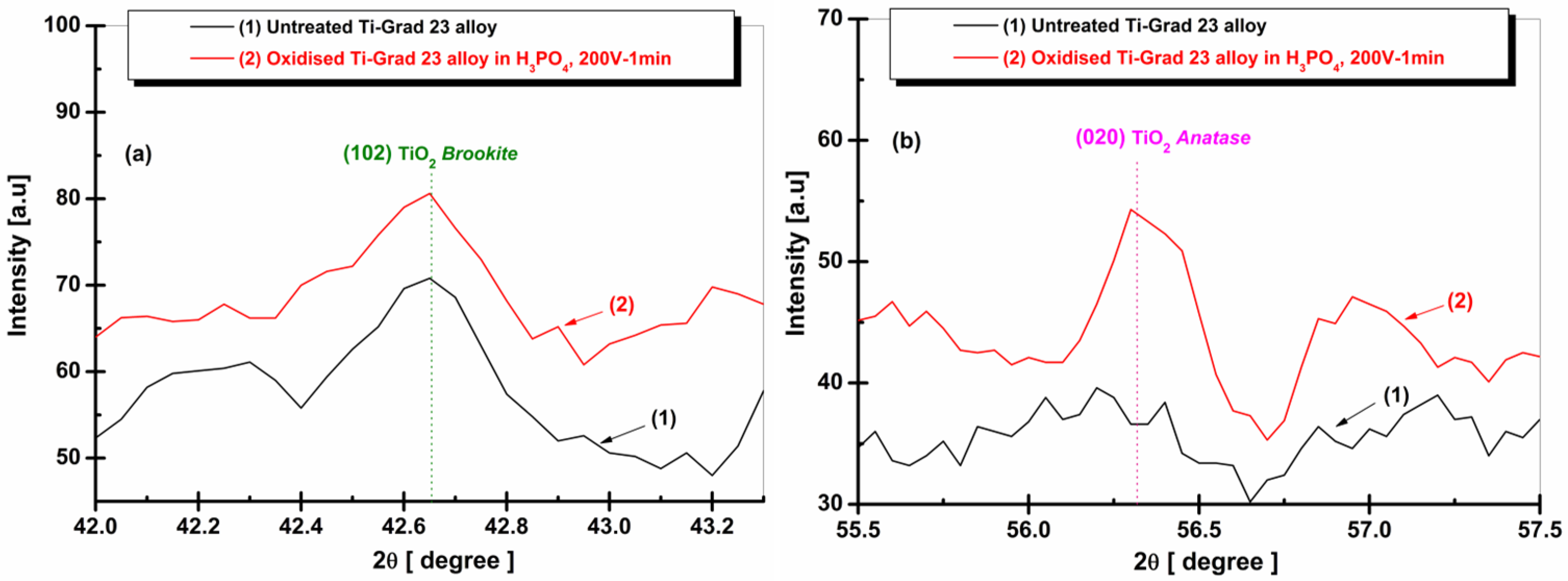
Figure 1 shows the evolution of the electrocrystallization of Ti-Grade 23 alloy after electrochemical oxidation at 200 V for 1 min in phosphoric acid in both crystallographic phases of TiO2 identified (Brookite (102) and Anatase (020)).
In Figure 1, the diffraction peaks corresponding to the Brookite (102) plane (Figure 1a) and the Anatase (020) plane (Figure 1b) show clear increases in intensity after electrochemical oxidation in H3PO4 compared to the untreated alloy. These increases indicate enhanced development and ordering of the crystalline TiO2 phases on the titanium surface, confirming that electrochemical oxidation in phosphoric acid promotes the formation of well-defined oxide structures.
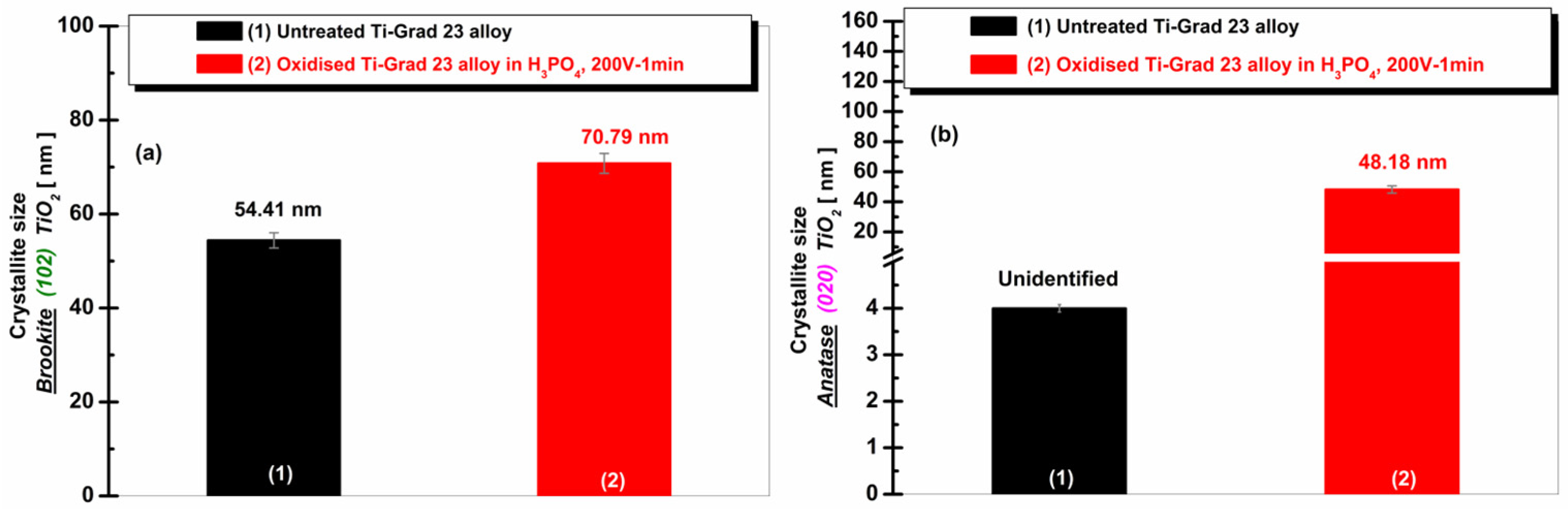
Figure 2 presents the average crystallite sizes formed on the surface of the Ti-Grade 23 alloy in the form of a column chart, allowing for a clearer visualization of the obtained values. The values were calculated using the Debye–Scherrer equation [72], shown in Equation (1).
d X R D = 0.9 λ F H W M · cos θ
According to this relationship, dXRD is the crystallite size; the wavelength λ for Co Kα radiation is 1.790300 Å; FWHM (expressed in radians) represents the full width at half maximum intensity of the diffraction peak; and θ indicates the diffraction angle.
Figure 2. Average crystallite sizes developed on untreated Ti-Grad 23 alloy (1) and those oxidized at 200 V-1 min in H3PO4 (2) for each plane and type of titanium dioxide: (a) TiO2 Brookite; (b) TiO2 Anatase.
Molecules 31 00251 g002
For the Ti-Grade 23 alloy, electrochemical oxidation in phosphoric acid leads to a noticeable increase in crystallite size for both TiO2 phases. In the case of the Brookite (102) phase, the crystallite size increases from the initial 54.41 ± 5.6 nm in the untreated alloy to 70.79 ± 4.2 nm after oxidation in H3PO4, indicating enhanced structural development of this phase. A similar trend is observed for the Anatase (020) phase, where the crystallite size reaches 48.18 ± 3.9 nm in the oxidized samples. Although the Anatase crystallites remain smaller than those of the Brookite phase, the overall increase in size confirms that oxidation in phosphoric acid promotes the growth and ordering of TiO2 crystallites on the alloy surface.

2.2. Contact Angle Evolution of Ti-Grad 23 Alloy Before and After Electrochemical Oxidation

Due to the wet biological environment, materials used in dental applications should have certain properties to avoid corrosion. The materials should also be hydrophilic for better biocompatibility performance. The adhesion properties of microorganisms on a biomaterial can be evaluated using contact angle measurements. Small water contact angles and high surface free energies indicate good adhesion properties of the material [73,74].
Contact angle studies provide information about the wetting properties of the implant material. Wettability may be one of the surface factors that should be considered when selecting biomaterials to be used for dental implants [74].
The average contact angle value obtained for untreated Ti-Grad 23 alloy and Ti-Grad 23 alloy electrochemically oxidized in phosphoric acid at 200 V, 250 V, and 275 V for 1 min is presented in Table 1.
The analysis of the data in Table 1 shows that the untreated alloy exhibits a contact angle of 87.08 ± 0.82°, which places the surface near the upper limit of the hydrophilic range. After oxidation in phosphoric acid, the contact angle decreases noticeably for all treated samples, reaching 69.67 ± 0.53° at 200 V, 65.93 ± 0.75° at 250 V, and 64.76 ± 0.38° at 275 V. In this context, the contact angle values obtained after electrochemical oxidation, which fall within the hydrophilic range, are consistent with surface characteristics reported in the literature to promote favorable protein adsorption, osteoblast adhesion, and a reduced tendency for bacterial attachment [60,63,64].
This progressive reduction in contact angle indicates a clear enhancement in surface hydrophilicity as the applied voltage increases. The improved wetting behavior can be attributed to the formation and growth of the oxidized TiO2 layer, which modifies the surface energy and promotes better interaction with the water droplet. Overall, the electrochemical oxidation process in H3PO4 leads to significantly more hydrophilic surfaces compared to the untreated alloy. Similar trends were observed in the literature by other authors [75].

2.3. Morphological and Compositional Analysis of Untreated Ti-Grad 23 Alloy Surfaces and Subsequently Obtained Oxide Films After Evaluation of Scanning Electron Microscopy (SEM-EDS) Data

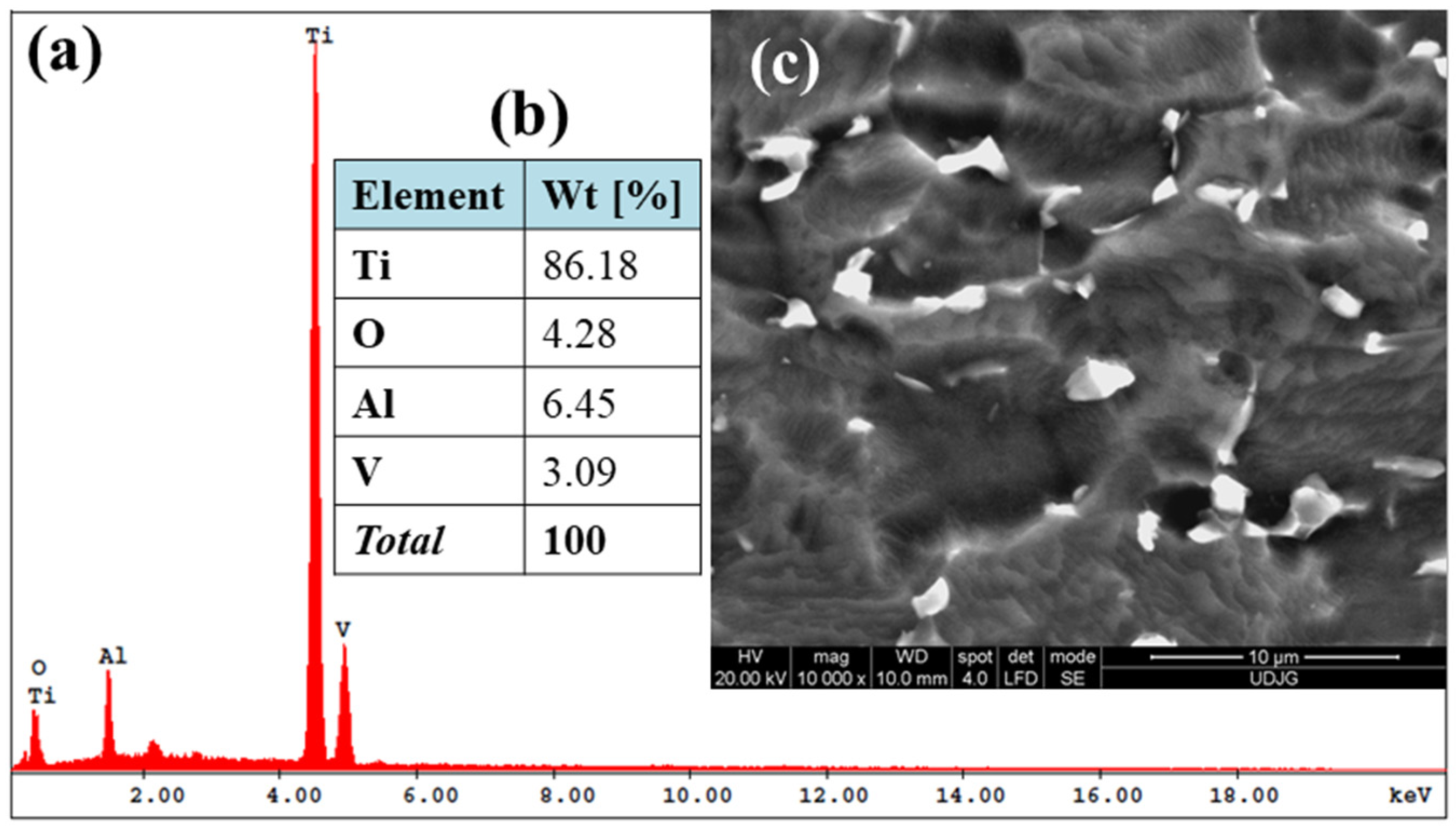
Figure 3a–c illustrates the SEM-EDS data obtained as part of the initial analysis of the morpho-compositional characteristics of the Ti-Grad 23 alloy in its untreated state. The EDS analysis (Figure 3a,b) indicates the presence of the basic elements of the Ti-Grad 23 alloy. Thus, the mass percentage values of the untreated study samples are summarized as: Ti—86.18 ± 0.43%; Al—6.45 ± 0.26%; V—3.09 ± 0.21%. The amount of TiO2 for the untreated Ti Grade 23 alloy was estimated from the oxygen mass percentage measured by EDS, using the molecular weight of TiO2 (79.866 g/mol). Therefore, the TiO2 incorporated on the surface of the untreated titanium alloy, due to the native layer formed after exposure to the atmosphere following the manufacturer’s processing, is approximately 10.68 ± 0.23%.
It should be noted that in all EDS spectra performed, the presence of the gold peak was identified in the 2.12 keV range, because all treated and untreated study samples were gold-plated in an argon environment after an induced vacuum of 10−1 Pa for 10 s, to strengthen the surface electrical conductivity. Subsequently, the compositional calculation of the elements identified by the EDS spectra was reported with the exclusion of gold (Au) from the total amount.
From Figure 3c, it can be appreciated that the surface morphology at 10,000× magnification of the Ti-Grad 23 alloy is unevenly embossed, without mechanical post-processing defects, but with the visualization of oxides in the form of opaque and inhomogeneous structures.
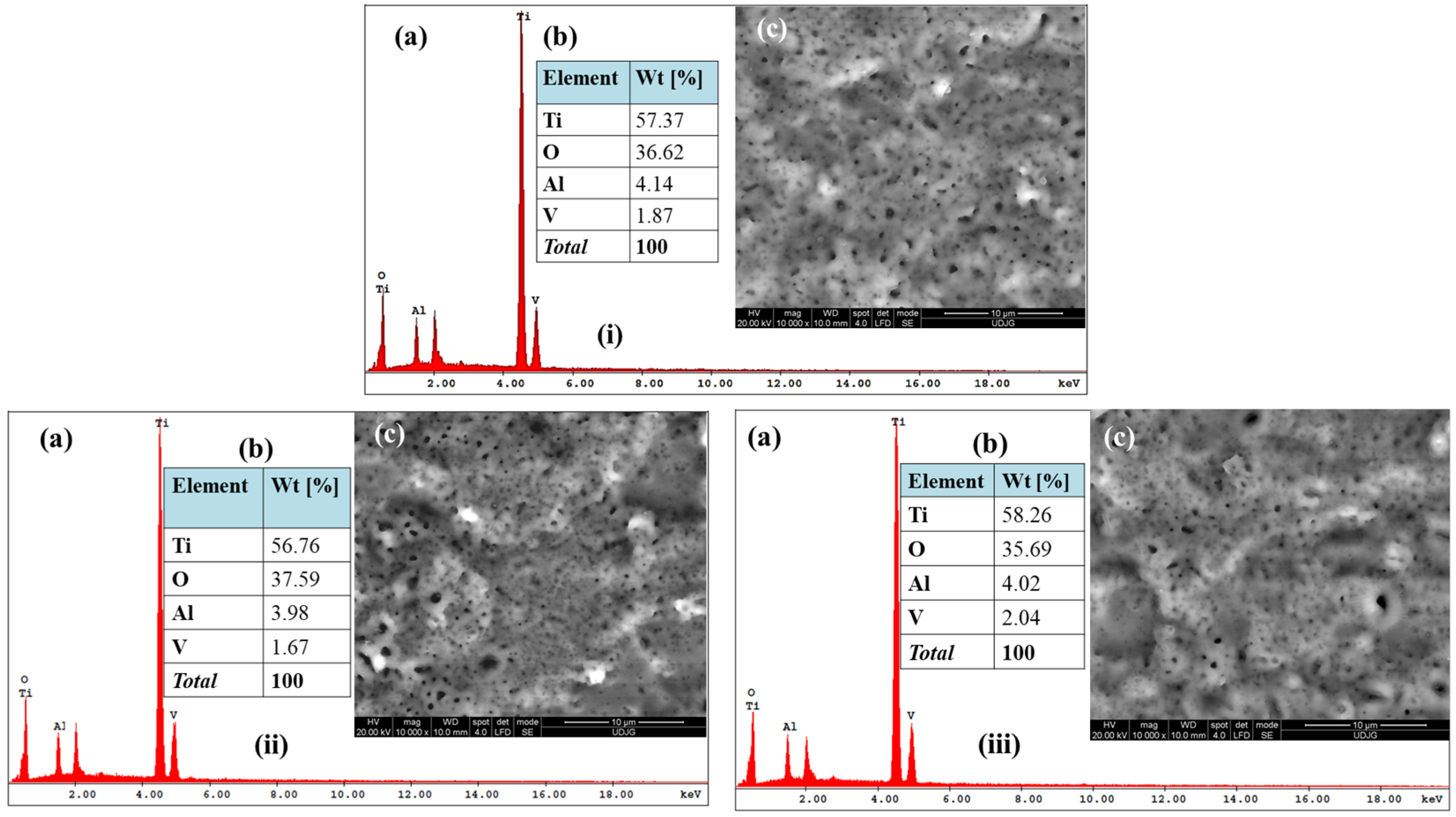
The compositional (EDX) and morphological (SEM) characteristics of Ti-Grad 23 alloy samples anodically oxidized in phosphoric acid (H3PO4) 1 mol/L are presented in Figure 4i–iii, where they are also compared after different applied potentials (200 V, 250 V, 275 V) for 1 min. Thus, it can be highlighted the significant increase in the mass percentage of oxygen for the samples oxidized in phosphoric acid compared to the untreated titanium alloy, where the estimated values in the case of titanium dioxide (TiO2) development on the modified surface are 91.45 ± 0.14% for 200 V, 93.77 ± 0.29% at 250 V and 89.10 ± 0.38% at 275 V applied potential, respectively. The differences in terms of the induced electrical potentials for oxygen growth are insignificant and do not present an evolutionary or involutive order, but a morphological structure with a lower number of defects can be noted through the presence of incompletely developed pores and with smaller variations in diameter, for the Ti-Grad 23 alloy anodically oxidized in 1M H3PO4 at 200 V for 1 min.
Similarly, it can be noted in the experimental study of Cheung K. H. et al. [76] that a mass percentage of oxygen of over 32.40% obtained after electrochemical oxidation of the Ti6Al4V alloy in 1M H3PO4 with an applied potential of 120 V for 10 min.
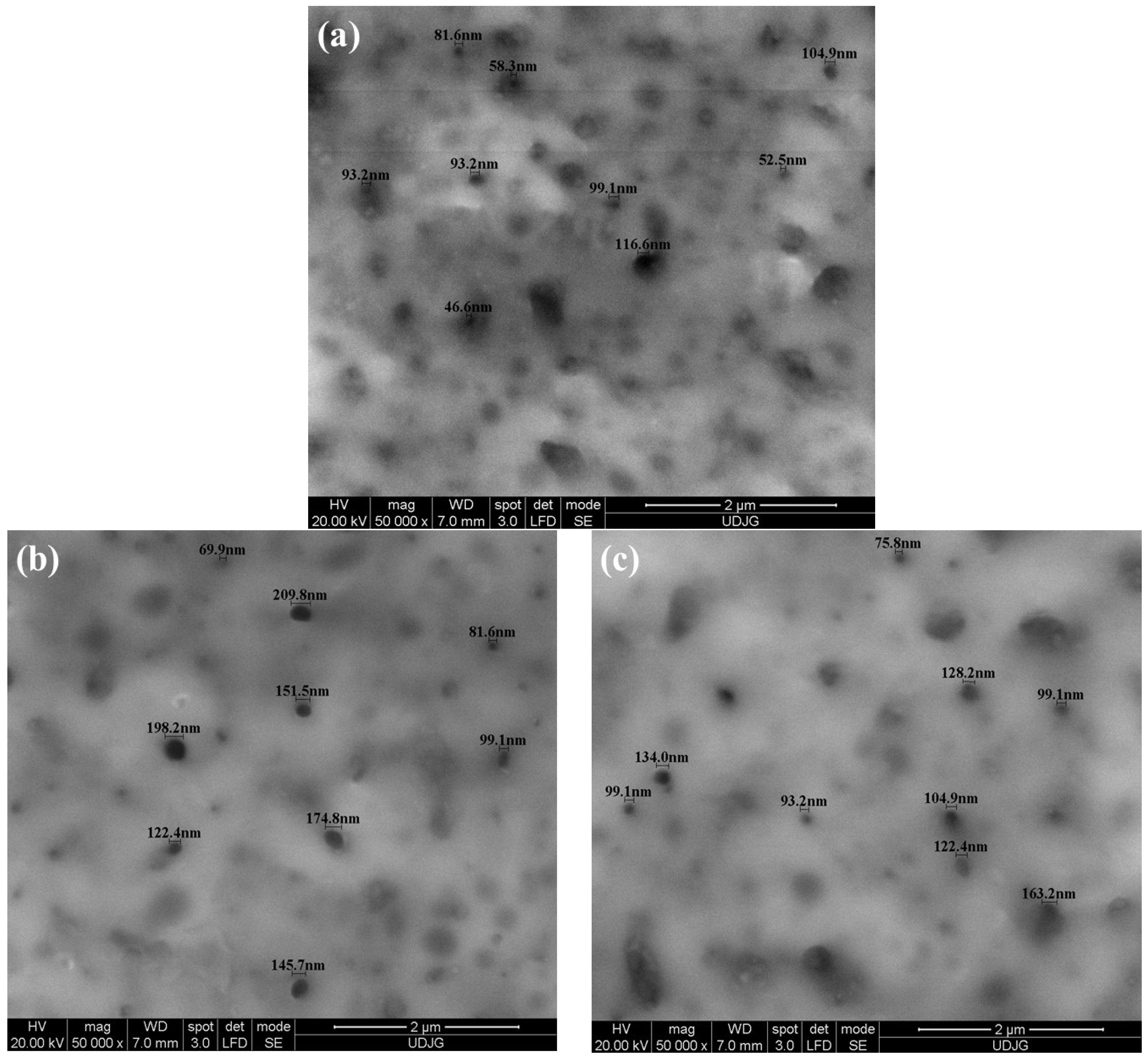
The SEM micrographs in Figure 5 show the three groups of surface morphologies obtained at 50,000× magnification, samples of the Ti-Grad 23 alloy anodized in 1 mol/L phosphoric acid for 1 min at 200 V, 250 V, and 275 V (Figure 5a–c).
The SEM micrographs presented in Figure 5 reveal a distinct evolution of the morphology of the TiO2 layer formed by electrochemical oxidation as a function of the applied voltage. For the sample oxidized at 200 V for 1 min (Figure 5a), the surface exhibits a relatively uniform pore distribution with predominantly nanometric dimensions, the average pore diameter reported in Table 2 being mainly within the sub-100 nm range. The pores are well defined and homogeneously distributed across the surface, without the presence of extended regions with different morphological features. This morphology indicates a more controlled pore formation process compared to higher applied voltages.
For the sample oxidized at 250 V (Figure 5b), fully developed pores are observed; however, they display a larger size dispersion and a more heterogeneous surface distribution. At 275 V (Figure 5c), the pore boundaries become less clearly defined, and the surface shows increased heterogeneity, with regions where pores tend to merge or lose their individual morphological identity.
Similar SEM morphological results were also reported by Neide K. et al. [77], after anodic oxidation of commercial-pure Ti in 1.4M H3PO4 at 200 V and 250 V potentials for 1 min, revealed at 200 V structures with pores and craters formed on a relatively flat base oxide surface, and at 250 V potential the film morphology changes and presents smooth regions between the pores with predominantly round shapes. Table 2 presents the average values of the diameter of the nanopores obtained in the titanium oxide (TiO2) layer on the Ti-Grad 23 alloy electrochemically oxidized in 1M H3PO4 solutions.
The average values presented in Table 2 for the diameter of pores formed on electrochemically oxidized Ti-Grade 23 alloy samples indicate an evolution of their dimensions with increasing applied potential.
According to the classification criteria, pores with nanometric dimensions (below a tenth of a micrometer) were highlighted in the samples anodically oxidized at a potential of 200 V for 1 min, the average diameter being 98.10 ± 4.6 nm.
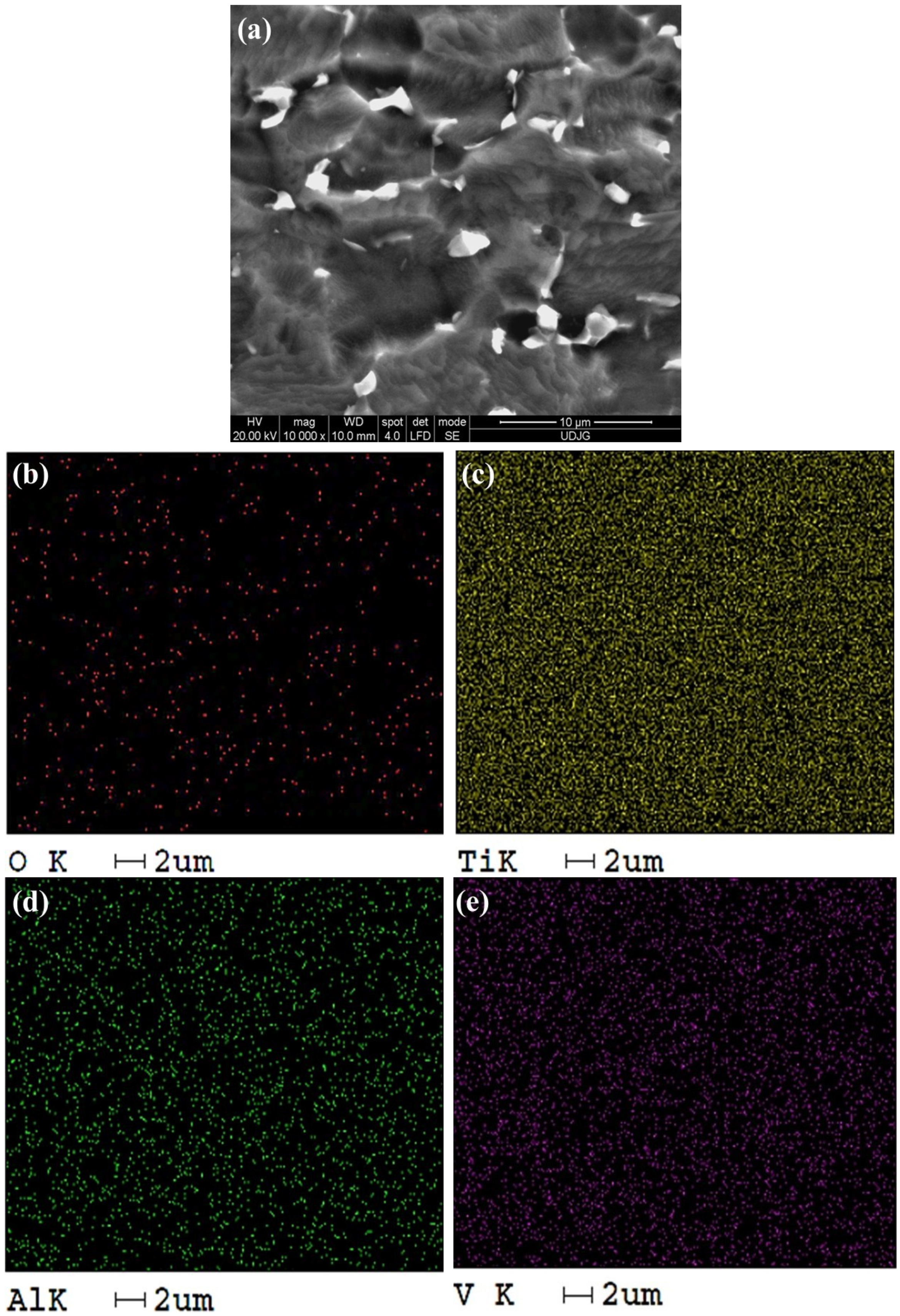
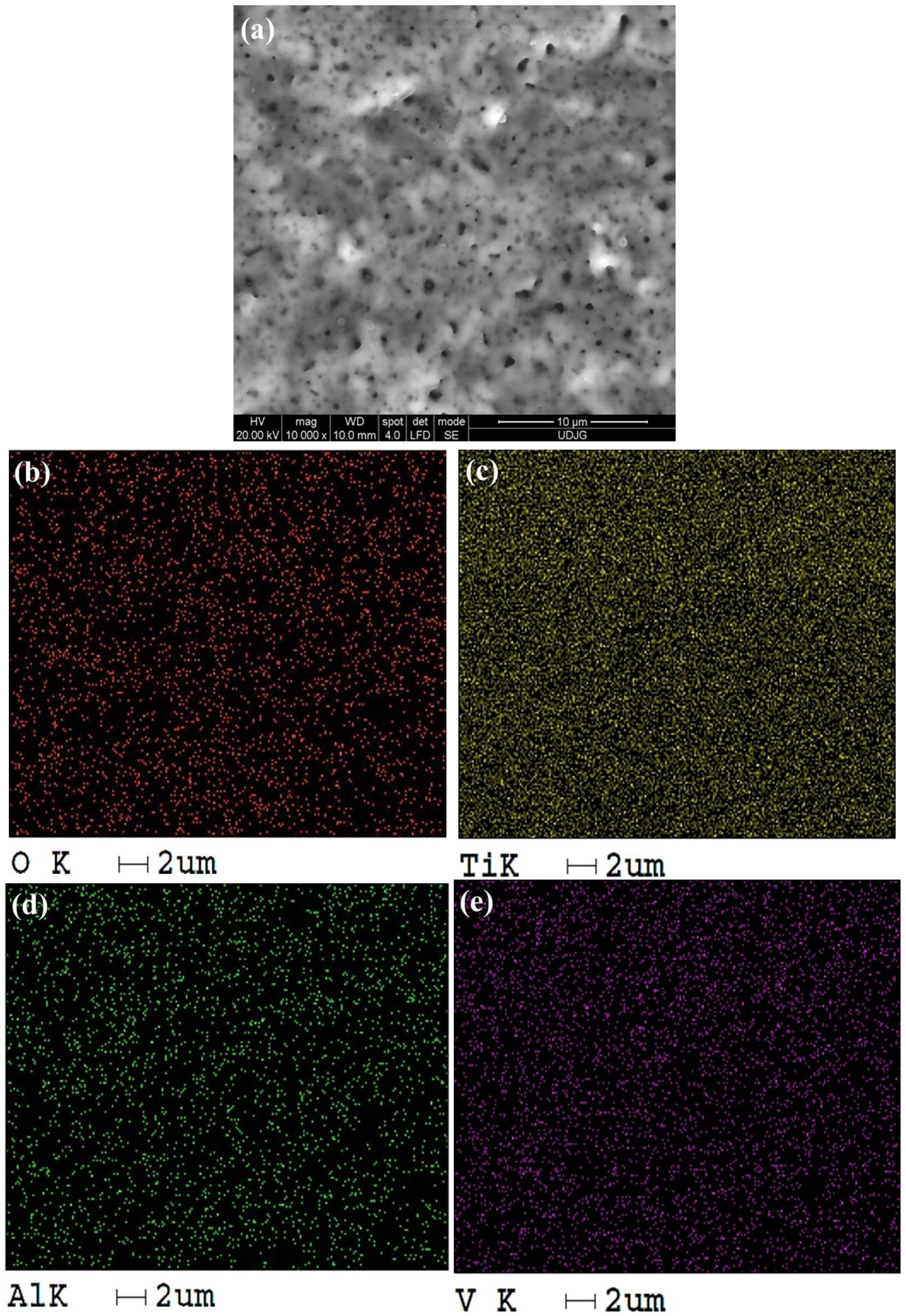
Another tool of the EDS spectral analyzer is the distribution maps of the identified elements. Therefore, in the case of Ti-Grad 23 alloy, the elements (O, Ti, Al, V) will be examined at a magnification resolution of 10,000× of the selected SEM images.
Figure 6 shows the distribution maps of the basic elements delimited on the SEM-EDS study surface of the untreated Ti-Grad 23 alloy.
In the case of Ti-Grad 23 alloy samples anodically oxidized in 1M H3PO4 at an electrical voltage of 200 V for 1 min, an increase in the oxygen distribution density can be observed compared to the untreated alloy, on the red pigmentation map in Figure 7b.
Similarly, a reduction in the distribution of the aluminum (Al) element can be observed according to the green pigmented map (Figure 7d, but this change is insignificant.
Analyzing Figure 6 and Figure 7, it was observed that the highest elemental distribution density is for titanium according to the yellow pigmented maps, thus in turn validating the mass fraction obtained after the EDS spectral analysis.
Similarly, the denser distribution of aluminum (Al) and vanadium (V) can be noted on the green and purple distribution maps, respectively (Figure 6 and Figure 7d,e), which disagrees with the mass fraction resulting from EDS analysis, due to the formation of aluminum and vanadium oxides concomitant with the increase in oxygen density on the examined surface.
Following the topography of the untreated Ti-Grad 23 alloy sample, an uneven relief without mechanical defects of finished processing can be highlighted, on the surface of which certain oxides with opaque white asymmetric structures are highlighted. After electrochemical oxidation of the Ti-Grad 23 alloy samples in phosphoric acid, an inhomogeneous film develops on these surfaces, comprising some alternating areas with small and large pores, in some places fully formed, and others without them as the voltage increases from 250 V to 275 V.
Comparative morphological analysis of the oxide layers formed in phosphoric acid as a function of the anodization potential indicates that the potential of 200 V is preferable to obtain the formation of well-defined mesoporous layers when electrochemical anodization is performed in phosphoric acid. This finding is in agreement with several scientific studies on the anodic oxidation of titanium alloys in phosphoric acid that report the formation of a corresponding porous layer for potentials from 150 V to 250 V [77,78,79,80,81].

2.4. Chemical Corrosion Assessment of Untreated Ti-Grad 23 Alloy Surfaces and Subsequently Obtained Oxide Films After Evaluation of Scanning Electron Microscopy (SEM-EDS) Data and XRD Analyses Before and After Immersion in Ringer and Ringer with 40 g/L H2O2

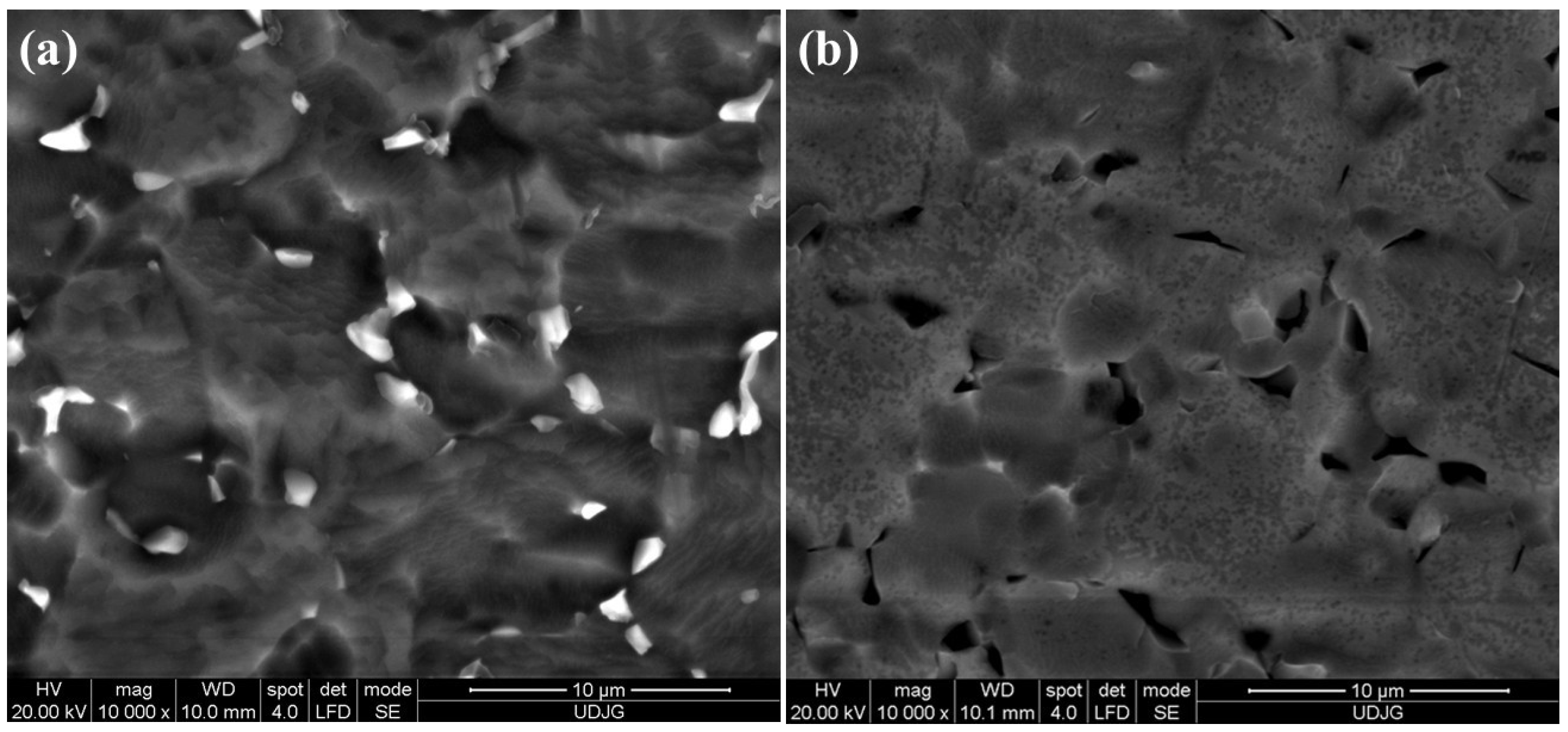
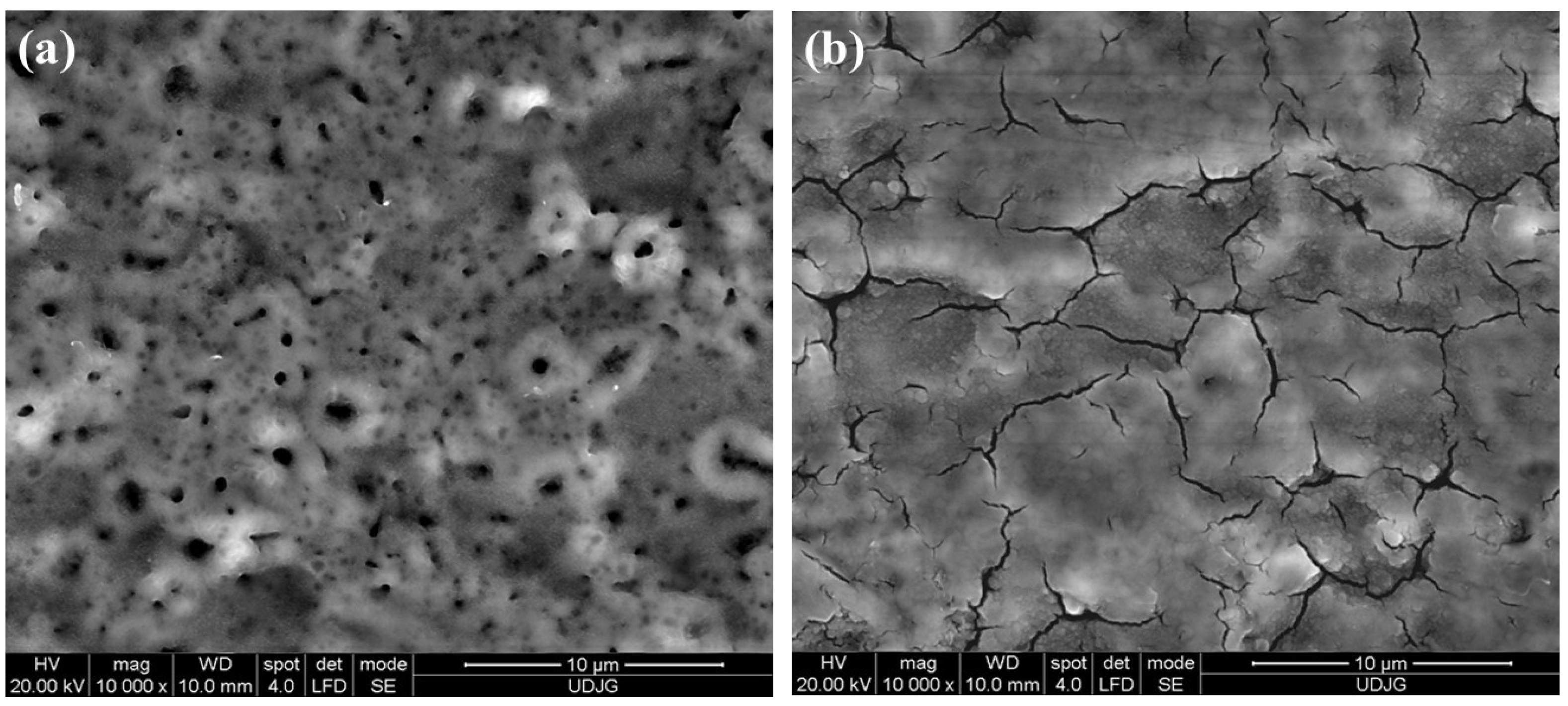
Figure 8a shows the surface morphology of the untreated Ti-Grade 23 alloy sample after 49 days of immersion in Ringer’s solution, while Figure 8b shows the corresponding morphology of the untreated Ti-Grade 23 alloy sample after 49 days of immersion in Ringer’s solution with the addition of 40 g/L H2O2.
By comparing Figure 3c before chemical corrosion with Figure 8a after chemical corrosion, it can be observed that after 49 days of immersion of the untreated alloy in Ringer’s solution, no evident morphological changes are present. In contrast, the untreated Ti-Grade 23 alloy sample immersed for 49 days in Ringer’s solution supplemented with 40 g/L H2O2 shows clear surface modifications, characterized by the formation of a more compact oxide layer.
The EDX values reported in Table 3 further support the SEM morphology described above. For the untreated Ti-Grade 23 alloy sample immersed in Ringer’s solution, the oxygen (O) content decreased by 1.78 ± 0.12 wt.% compared with the initial state (Figure 3b). A similar trend is also observed in the literature by other authors [82].
In the case of the Ringer + hydrogen peroxide solution, the compact oxide layer formed on the titanium alloy surface after immersion was confirmed by quantitative EDX analysis, which showed a substantial increase of approximately 6.62 ± 0.17 wt.% oxygen (O) relative to the initial values measured on the untreated control samples prior to chemical corrosion.
Figure 9a shows the surface morphology of the Ti-Grad 23 alloy oxidized in 1M H3PO4 solution with a potential of 200 V for 1 min after 49 days of immersion in Ringer’s solution. Figure 9b shows the corresponding morphology of the Ti-Grad 23 alloy oxidized in 1M H3PO4 solution with a potential of 200 V for 1 min after 49 days of immersion in Ringer’s solution with the addition of 40 g/L H2O2.
If the Ti-Grade 23 alloy oxidized in 1 M H3PO4 with a potential of 200 V for 1 min before immersion (Figure 4i(c)) exhibits an oxide layer with a relatively homogeneous surface characterized by alternating regions containing a few well-defined pores and a greater number of incompletely formed pores that are predominantly distributed its morphology remains unchanged after immersion in Ringer’s artificial solution (Figure 9a), as evidenced by the SEM analysis.
However, for the samples immersed in the more aggressive medium composed of Ringer’s solution and hydrogen peroxide, the pores on the surface become obliterated, and the oxide layer appears opaque and partially compact due to the formation of numerous cracks, as shown in Figure 9b. These cracks form a reticulated network with irregular shapes and sizes, and their distribution is centered on the previously fully developed pores.
The formation of this structure can be attributed to localized corrosion of the sample surface induced by hydroxyl (OH) radicals in the testing solution, a phenomenon also reported in other studies [83,84,85,86].
The EDX values recorded and presented in Table 4 further support the SEM morphology described above.
For the Ti-Grade 23 alloy oxidized in 1 M H3PO4 with a potential of 200 V for 1 min immersed in the Ringer solution, the oxygen (O) content decreased by 1.48 wt.% compared with the initial state (Figure 4i(b)).
In the case of the Ti-Grade 23 alloy oxidized in 1 M H3PO4 with a potential of 200 V for 1 min immersed in Ringer’s solution with hydrogen peroxide, the oxygen (O) weight percentage increased by approximately 1.62 ± 0.06 wt.% compared with the value recorded at the beginning of the test.
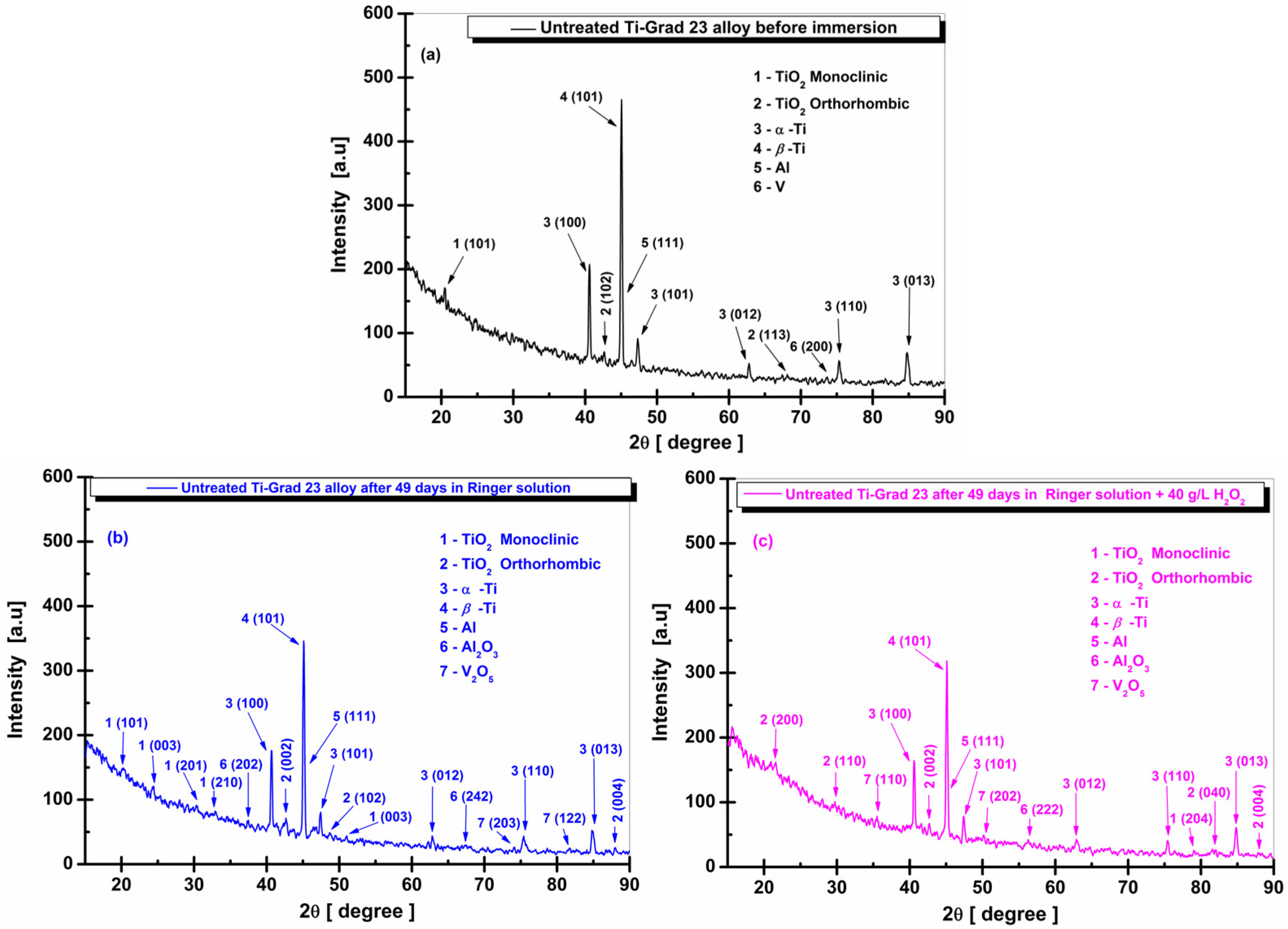
In Figure 10a, the XRD spectrum for the untreated Ti-Grade 23 alloy before chemical immersion is presented. Index (1) identifies the crystalline phase of titanium dioxide (TiO2), which belongs to the monoclinic crystal system, space group P 1 21/m 1, according to the Crystallography Open Database (COD) 96-153-9683. This phase is detected only for the crystallographic plane (101) at the corresponding 2θ angle of 20.45°.
However, the distinctive crystalline phase of titanium dioxide (TiO2) of the brookite type, with an orthorhombic crystal system and space group Pbca, represented by index (2) in Figure 10a, was identified by the crystallographic planes (102) and (113) at the 2θ angles of 42.65° and 67.46°, respectively, corresponding to COD 96-900-4138.
In the case of titanium, the crystalline phases identified are divided into α-Ti, represented by index (3) in Figure 10a, with a hexagonal crystal system and space group P63/mmc, according to COD 96-901-6191. The crystallographic planes (100), (101), (012), (110), and (013) were observed at the corresponding 2θ angles of 40.56°, 47.26°, 62.74°, 75.27°, and 84.80°.
The other representative phase, indicated by index (4) in Figure 10a, is β-Ti, for which a single plane, (101), was identified at the 2θ angle of 44.98°, registered in the database under COD 96-900-8555, with a cubic crystal system and space group Im-3m.
Based on the XRD spectrum of the untreated Ti-Grade 23 alloy before chemical immersion, index (5) in Figure 10a corresponds to a crystalline phase of aluminum (Al). The crystallographic plane (111) was detected at the 2θ angle of 45.08°, with data correlated with the Crystallography Open Database (COD) 96-431-3211, where the crystal system is cubic, and the space group is Fm-3m.
The last phase identified, represented by index (6) in Figure 10a, is vanadium (V). According to the Crystallography Open Database (COD) 96-151-2550, vanadium has a cubic crystal system and space group Fm-3m, and only the crystallographic plane (200) was observed, corresponding to the 2θ angle of 73.65°.
The crystallographic planes for α-Ti (100, 101, 110) and β-Ti (101) have also been identified in other scientific studies on the Ti6Al4V ELI (Ti-Grade 23) alloy [87,88,89,90].
From the XRD spectrum of the untreated Ti-Grade 23 samples immersed in Ringer’s solution, Figure 10b, certain microstructural changes can be observed. These include the disappearance of the crystalline phase of vanadium (V) (COD 96-151-2550) associated with the crystallographic plane (200) corresponding to the 2θ angle of 73.65°, as well as the disappearance of the crystallographic plane (113) at 67.46° of orthorhombic titanium dioxide (TiO2).
At the same time, other products of chemical corrosion were identified, including the crystalline phase of titanium monoxide (TiO) according to the Crystallography Open Database (COD) 96-110-1050, with a monoclinic crystal system and space group A 1 1 2/m, identified by the crystallographic plane (131) at 50.80°. Titanium dioxide (TiO2), with a monoclinic crystal system and space group P 1 21/m 1, was also detected based on COD 96-153-9683 through the crystallographic plane (210) corresponding to 32.65°.
For TiO2 with an orthorhombic crystal system and space group Pbcn, the crystallographic plane (004) was identified at 87.14°, according to COD 96-900-4139.
In the case of aluminum oxide formed on the tested surface of the untreated titanium alloy, the phase Al2O3 was detected through the crystallographic plane (202) at 37.42°, as listed in COD 96-110-1169, where the crystal system is cubic, and the space group is Fd-3m.
The formation of vanadium pentoxide (V2O5) was also observed, through the crystallographic plane (203) at 74.16°, in agreement with COD 96-901-1016, corresponding to a monoclinic crystal system (space group C 1 2/m 1), and through the plane (010) at 24.21°, based on COD 96-101-1175, corresponding to an orthorhombic crystal system in the space group Pmn21.
Other crystalline phases identified exhibit no notable differences in peak intensity compared to the XRD data of untreated and non-immersed titanium samples.
The batch of untreated Ti-Grade 23 alloy samples statically immersed in Ringer’s solution with hydrogen peroxide, shown in Figure 10c, also displays several of the crystalline phases mentioned for the sample immersed only in Ringer’s solution, but with similarly low representative intensities and with different crystal systems.
Based on the XRD analysis, the crystalline phase of vanadium (V) (COD 96-151-2550) was absent, and the crystallographic plane (101) at 20.45° disappeared. In its place, another plane (204) was identified at 79.10°, corresponding to titanium dioxide (TiO2) with a monoclinic crystal system and space group P 1 21/m 1, according to COD 96-153-9683. The absence of the crystallographic plane (113) at 67.46° of titanium dioxide is also evident, accompanied by the identification of the crystallographic plane (040) at 82.02°, based on COD 96-900-4138, corresponding to brookite-type TiO2 with an orthorhombic crystal system and space group Pbca.
For titanium dioxide (TiO2) of the same orthorhombic type but belonging to the space group Pbcn, the crystallographic plane (110) was identified at 29.64°, according to COD 96-153-0027. It is noteworthy that a new crystalline phase of TiO2 with a triclinic crystal system and space group P1 was formed, in agreement with COD 96-412-4499, through the crystallographic plane (012) corresponding to 21.02°.
Aluminum oxide (Al2O3) was present only in a single crystallographic plane (222) at 56.35°, according to COD 96-100-0443, which represents an orthorhombic crystal system in the space group Pna21.
For the crystalline phase of vanadium pentoxide (V2O5), the crystallographic plane (110) at 29.68° was detected, consistent with COD 96-901-1016, corresponding to a monoclinic crystal system in the space group C 1 2/m 1.
Analysis of the X-ray diffraction patterns in Figure 10b,c shows that new oxide compositions (Ti–O, Al–O, V–O) were formed as a result of corrosion processes. Thus, for the untreated Ti-Grade 23 sample immersed in Ringer’s solution, a redistribution of oxygen content occurred in the newly formed O2-containing phases with a modestly distorted crystal lattice, compared with the alloy immersed in Ringer’s solution with hydrogen peroxide, where the crystalline structure exhibits more pronounced modifications. These compounds have also been reported in other experimental studies [91,92].
As a result of these effects, the diffraction reflection intensities of all titanium phases (α, β) present in the investigated composite decreased significantly.
The X-ray diffraction pattern of the untreated Ti-Grade 23 alloy immersed in Ringer’s solution (Figure 10b) reveals the appearance of peaks corresponding to Al2O3, V2O5, and TiO2 at lower diffraction angles, suggesting the presence of oxygen diffusion layers for all constituent elements.
The behavior of the untreated Ti-Grade 23 alloy immersed in Ringer’s solution with hydrogen peroxide is reflected by the development of a passive film primarily composed of TiO2, which is subsequently enriched with aluminum and vanadium oxides (Figure 10c).
By comparing the diffraction angles of the peaks corresponding to triclinic TiO2 with those of Al2O3 and V2O5, it becomes evident that aluminum and vanadium oxides appear at higher diffraction angles than titanium dioxide. One explanation for this is the higher solubility of aluminum and vanadium ions, which leads to the preferential dissolution of Al2O3 and V2O5 oxides.
Because the repassivation process occurs rapidly in an aggressive environment containing hydrogen peroxide, the Al2O3 and V2O5 particles occupy an increasingly smaller volume, and the surface passive film exhibits a non-uniform texture with equiaxed, non-dendritic solidification.
To effectively protect the underlying metal, the oxide layer must meet certain requirements, such as good adhesion to the metal, strong crack healing capability, high thermodynamic stability in the working environment, and low vapor pressure of the oxide [93].
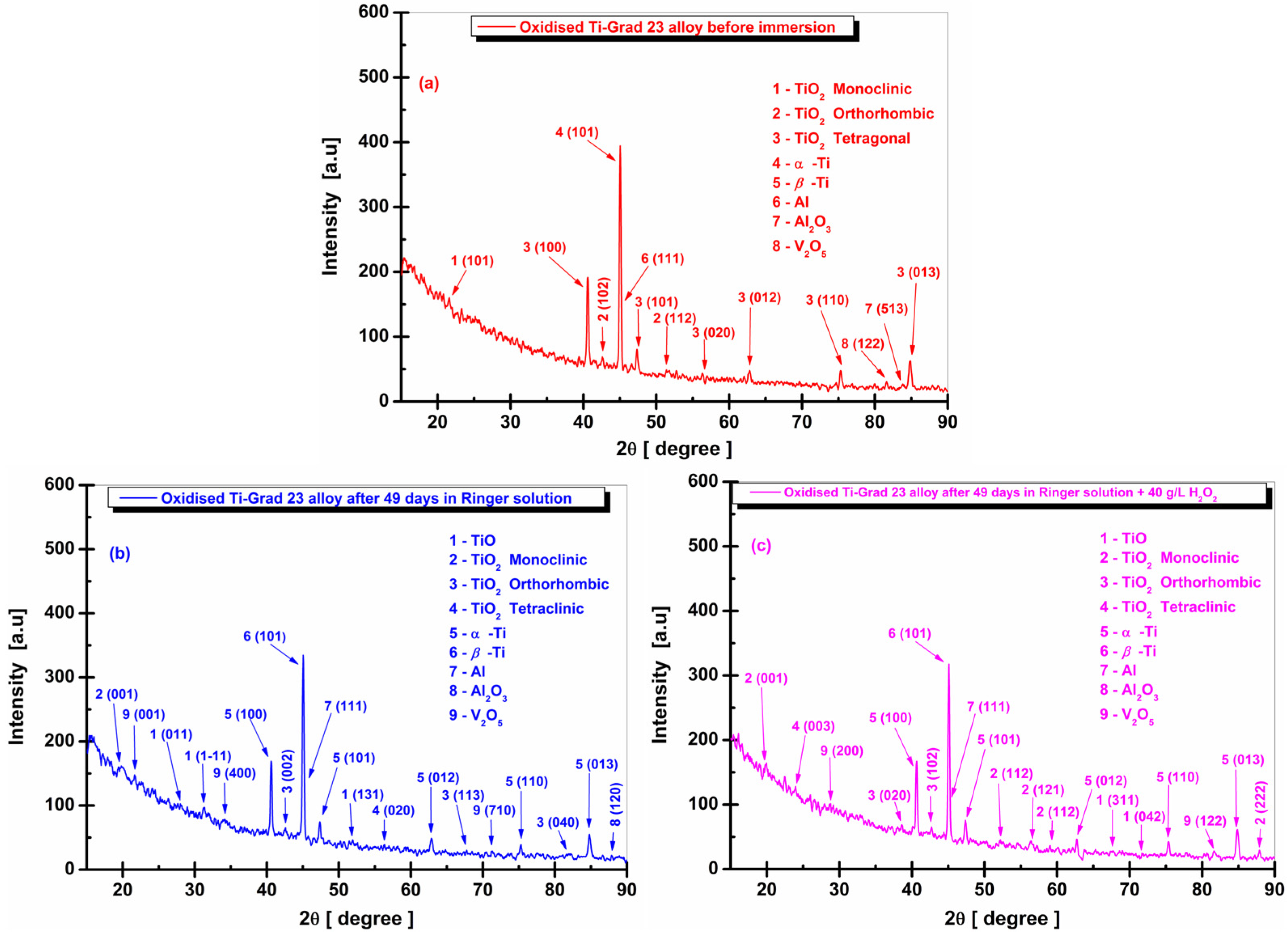
In Figure 11a, the XRD spectrum of the Ti-Grade 23 alloy sample oxidized in 1 M H3PO4 at 200 V for 1 min before immersion is presented. By comparing Figure 10a with Figure 11a, it can be observed that, in addition to the phases identified in the electrochemically non-oxidized sample, a new crystalline phase of titanium dioxide (TiO2) of the anatase type appears. This phase is detected through a single crystallographic plane (020) at the corresponding 2θ angle of 56.37°, listed in the Crystallography Open Database (COD) 96-901-5930, with a tetragonal crystal system and space group I 41/amd.
Other observed modifications include the detection of additional crystallographic planes, such as (112) at the 2θ angle of 52.80°, corresponding to orthorhombic titanium dioxide (TiO2) with space group Pbcn, according to COD 96-153-0027.
Furthermore, aluminum oxide (Al2O3)— index (7) in Figure 11a—was identified with a cubic crystal system and space group Fd-3m through the crystallographic plane (513) at 83.75° based on COD 96-110-1169.
The last phase detected is vanadium pentoxide (V2O5), indicated by index (8) in Figure 11a. This compound crystallizes in an orthorhombic system with space group Pmn21, and only the crystallographic plane (122) was identified, corresponding to the 2θ angle 81.60°, according to COD 96-101-1292.
Thus, for the oxidized Ti-Grade 23 alloy samples immersed in Ringer’s solution, Figure 11b, the XRD analysis revealed the development of a crystalline titanium oxide (TiO) phase, identified according to the Crystallography Open Database (COD) 96-901-1016, with a monoclinic crystal system and space group A 1 1 2/m. The crystallographic planes (1–11) and (131) were detected at 2θ angles of 31.26° and 51.42°, respectively.
In the case of titanium dioxide (TiO2), also monoclinic, the crystallographic plane (101) at 20.45° reported in COD 96-153-9683 is replaced by plane (001) at 19.70°, identified according to COD 96-152-8779 with space group C 1 2/m 1. Orthorhombic TiO2 with space group Pbca, referenced from COD 96-900-4138, is represented only by the crystallographic plane (102) at 42.65°.
For tetragonal TiO2 with space group I 41/amd, listed under COD 96-901-5930, the crystallographic plane (020) at 56.37° is replaced by plane (116) at 82.25°.
Aluminum oxide (Al2O3) was identified in the XRD pattern by the crystallographic plane (022) at 32.84°, based on COD 96-100-0443, corresponding to an orthorhombic crystal system.
The other crystalline phase detected, vanadium pentoxide (V2O5), exhibited only one crystallographic plane, (001), at 21.86°, consistent with COD 96-901-1016 and characterized by a monoclinic crystal system.
For the electrochemically oxidized titanium alloy immersed only in Ringer’s solution, a slight reduction in oxide intensity was observed, but without structural changes in the porous layer formed after anodization.
In Figure 11c, the Ti-Grade 23 alloy oxidized electrochemically and immersed statically in Ringer’s solution with hydrogen peroxide, unlike the XRD results obtained in Ringer alone, shows no formation of the TiO crystalline phase.
At the same time, monoclinic TiO2 displays the space group P 1 21/c 1, in agreement with COD 96-901-5356, with two crystallographic planes detected: (112) and (121) at 2θ angles of 52.10° and 56.41°, respectively.
Monoclinic TiO2 with space group C 1 2/m 1, according to COD 96-152-8779, also appears, through plane (001) at 20.05°.
Based on the analyzed XRD spectrum, orthorhombic TiO2 (space group Pbca, COD 96-900-4138) is represented by a single crystallographic plane (020) at 38.75°. A newly identified differentiation is TiO2 of triclinic symmetry, space group P1, in agreement with COD 96-412-4499, where the crystallographic plane (003) appears with low intensity at 24.05°.
Additional changes observed in these samples include the aluminum oxide phase (Al2O3), where the crystallographic plane (111) at 22.40° corresponds to a cubic crystal system with space group Fd-3m, according to COD 96-110-1169.
Similarly, vanadium pentoxide (V2O5), identified through plane (122) at 81.55°, exhibits an orthorhombic crystal system (space group Pmn21), based on COD 96-101-1292.
In chemically aggressive conditions induced by hydrogen peroxide, oxidized Ti-Grade 23 alloy undergoes rapid diffusion of Ti ions to the alloy/solution interface due to their higher concentration and affinity within the alloy. Their interaction with oxygen ions leads to the formation of a TiO2 layer with a triclinic crystal system, detected at a very low diffraction angle, suggesting an increase in lattice parameters.
Following the formation of the Ti-rich oxide film, the underlying surface layers become depleted in titanium, and the aluminum concentration begins to increase in these regions [91]. As a result of outward diffusion of Al3+, cracks form on the outer surface of the oxide film, and their edges gradually accumulate Al2O3. Meanwhile, the vanadium oxide phase is reduced, as V-containing oxides cannot be detected at the outermost surface of the naturally formed oxide layers.

3. Materials and Methods

3.1. Materials

The titanium alloy Ti-Grad 23 alloy (Ti6Al4V ELI) used in this study is supplied by Goodfellow Cambridge, Huntingdon, UK, in the form of plates (300 mm × 300 mm × 1.5 mm) according to the ASTM B265 standard, and its mechanical properties and chemical composition are presented in Table 5 and Table 6.
After cutting the sheets of Ti-Grad 23 alloy at the dimensions of 2.5 mm × 2.5 mm × 1.5 mm, the samples are chemically degreased with a NaOH solution (50 g/L), then subjected to an attack with diluted hydrochloric acid (HCl 1:1) to remove organic impurities and superficial oxidations. Then, they are rinsed with distilled water to remove residues. To allow electrical connection, each sample is tied with a copper wire and covered with epoxy resin in order to have a 5 ± 0.3 cm2 active surface area.

3.2. Formation of Anodic Oxide Layers

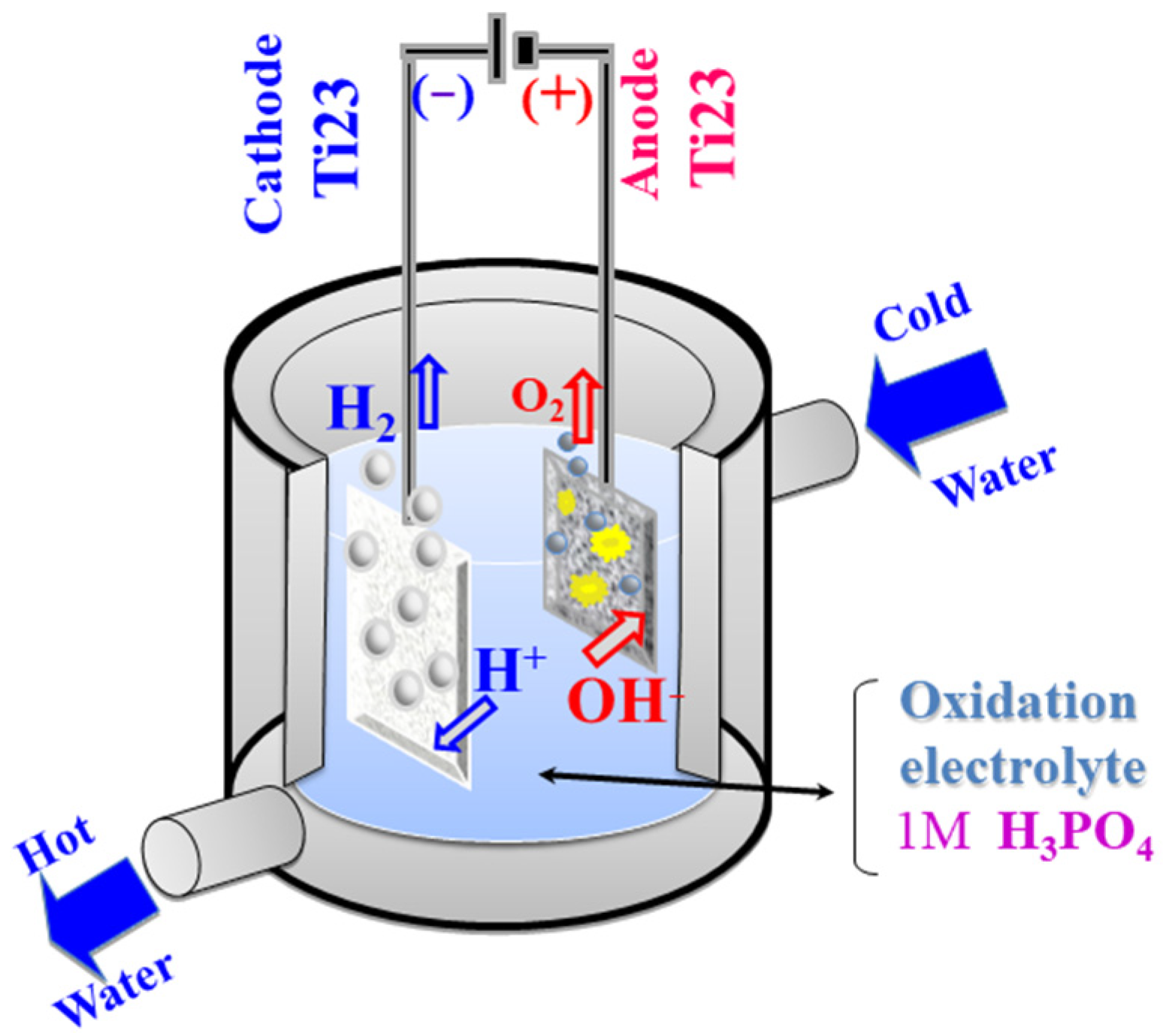
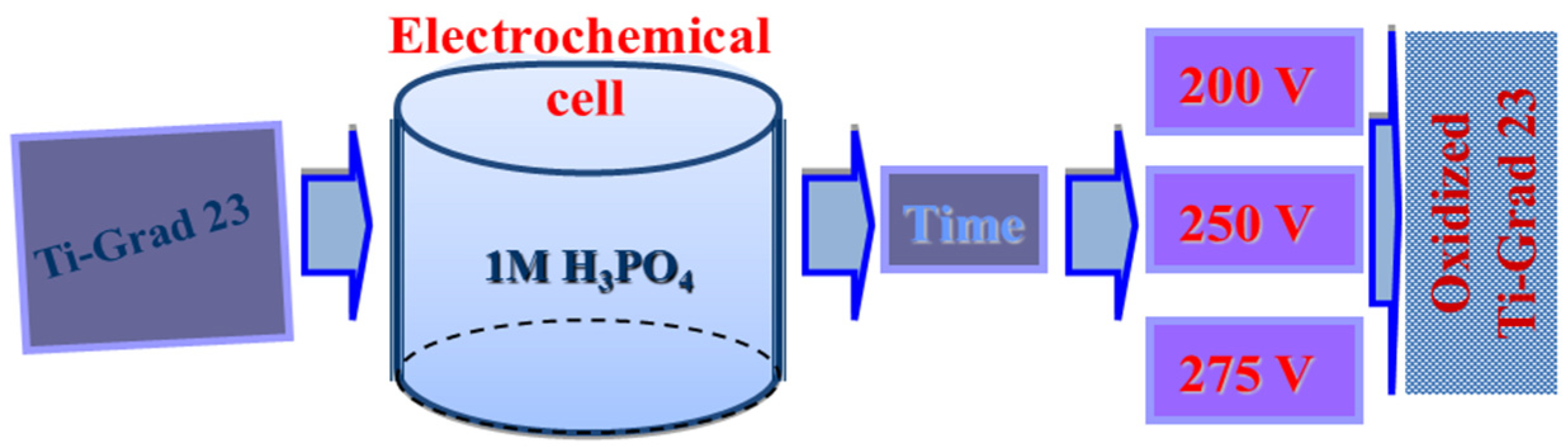
The anodic oxidation was performed using a TDK Lambda GEN300-8 programmable power supply (TDK-Lambda Corporation, Tokyo, Japan) connected to a classical two-electrode electrochemical cell (Figure 12). The cell was equipped with an external cooling system to maintain a constant electrolyte temperature during the process. The electrolytes used were acidic solutions of 350 mL 1 M H3PO4.
The working electrode (anode—Ti-Grad 23 alloy) has an active surface area of 5 ± 0.3 cm2, and the cathode (Ti-Grad 23 alloy) has an area of 5 ± 0.2 cm2, a ratio chosen to ensure uniformity of the oxidation process. Before each experiment, the electrodes were prepared by immersion in ethanol and cleaning in an ultrasonic bath for 5 min, followed by rinsing with distilled water and air drying.
The anodization processes were carried out at 22 ± 1 °C, in potentiostatic mode, by applying voltages ranging from 200–275 V and oxidation times of 1 min (Figure 13).
Although the anodization processes were investigated at different voltages (200–275 V) and different oxidation times, the results showed that the optimal parameters for obtaining pores with nanometric dimensions and uniform distribution were recorded when applying a voltage of 200 V for 1 min. All experiments were performed under identical conditions and were repeated five times to ensure the reproducibility and statistical validity of the data.

3.3. Mechanism of Anodic Oxidation Reactions

When the electrical circuit is closed, redox processes are initiated in the electrochemical cell: at the anode, oxidation of the substrate (Ti-Grad 23 alloy) occurs, releasing Ti4+ cations, while at the cathode, reduction reactions take place. The metal cations formed at the anode diffuse and react with oxygen from the water, causing the formation of a TiO2 layer on the alloy surface [1,95,96,97]. The reactions describing the main processes occurring at the interface are presented in Equations (2)–(5) [98,99]:
At the Ti/TiO2 interface:
T i T i 2 + + 2 e
At the TiO2/electrolyte interface:
2 H 2 O 2 O 2 + 4 H +
Oxygen ions react with titanium to form the following:
2 H 2 O O 2 ( g a s ) + 4 H + + 4 e
Some of the oxygen gas adheres to the electrode–electrolyte interface or is released into the atmosphere: Thus, at the end of the process, a compact layer of TiO2 is obtained on the anode surface.
T i 2 + + 2 O 2 T i O 2 + 2 e
The formation of the oxide layer is governed by the migration of O2− ions from the electrolyte to the metal/film interface and of Ti4+ ions from the metal substrate to the film/electrolyte interface [98]. The layer thickness increases almost linearly with the applied voltage, according to the relationship below (6):
d = α U
where the following applies
d—thickness of the oxide layer,
α—growth constant (1–3 nm/V),
U—applied voltage [98,99].
The growth of the layer also depends on other factors, such as the distance between the electrodes, the oxidation time, the electrolyte temperature, and the applied current. However, this linear relationship is no longer valid once the layer reaches the critical thickness corresponding to the dielectric breakdown voltage of TiO2. Beyond this limit, the oxide film becomes unstable and loses its insulating properties [98].

3.4. SEM-EDS Characterization

The morphology and composition of the oxide films formed on Ti-Grad 23 alloy were investigated with a FEI QUANTA 200 scanning electron microscope (FEI Company, Hillsboro, OH, USA) equipped with an EDS analyzer (EDAX Genesis 5.10 software). To ensure the conductivity of the samples and prevent the accumulation of electrical charges, the surfaces were previously coated with a thin layer of gold (~10 s).

3.5. Structural Analysis (XRD)

Structural analysis was performed by X-ray diffraction using the Dron-3 diffractometer, with Co Kα radiation (λ = 1.790300 Å), at working parameters of 30 kV and 20 mA, in the range 2θ = 15–90°, with a step of 0.05°/s and a total acquisition time of approximately 2 h. The diffractograms were processed with Match! 3.16 software using the Crystallography Open Database (COD).

3.6. Contact Angle Analysis

The wettability properties were evaluated by measuring the static contact angle using a drop of Ringer solution (5 μL, 37 °C) deposited on the surface of the samples. The determinations were performed with the OCA 15EC goniometer (DataPhysics Instruments GmbH, Filderstadt, Germany) and SCA20 software version 4.3.19, applying the Young-Laplace method. Five measurements were performed for each sample, and the values were reported as arithmetic means.

3.7. Description of the Chemical Corrosion

The experimental study of in vitro chemical corrosion allows the investigation of the mechanisms of metallic ion release and the assessment of morphological changes occurring on biomaterial surfaces under conditions that simulate the internal environment of the human body. Through this method, the surface reactions occurring in an artificial physiological medium can determine the quantity and composition of the oxide layer, as well as the concentration of ions released into the solution [100].
The immersion tests followed the general methodology specified in ASTM G31-72 [101] using Ringer’s solution as the immersion medium, one of the most frequently employed artificial saline solutions in biomedical research [102,103,104].
The samples used in this study consisted of anodically oxidized Ti-Grade 23 alloy in phosphoric acid at 200 V for 1 min, as well as untreated (as-received) control samples.
These samples were subsequently subjected to morphological and structural evaluation after immersion.
The samples were immersed in glass containers filled with 150 mL of simplified Ringer’s solution and in the same physiological electrolyte supplemented with 40 g/L H2O2. The concentration of hydrogen peroxide was 30%. The tests were conducted for 49 days at 37 ± 1 °C. The chemical composition and physico-chemical parameters of simplified Ringer’s solution and simplified Ringer’s solution with 40 g/L H2O2 were described in another research paper [104].
During the immersion period, the solutions were gently agitated every 3 days to ensure medium homogeneity. At the end of the experimental period, the samples were thoroughly rinsed with distilled water and dried at room temperature. For reproducibility, three samples were tested in parallel for each study group. Under physiological conditions, the prevalence of bone tissue regeneration after implantation is approximately three months, which coincides with the remodeling phase of the native human tissue response [105]. This process may vary depending on the type of tissue involved, the age, the disease state, and whether the tissue defect is acute or chronic. When the defect becomes excessively inflamed, the process shifts toward chronic inflammation characterized by macrophage activity and lymphocytic infiltration, during which the local reactive compound hydrogen peroxide (H2O2) is continuously produced [106,107,108]. Certain biomaterials with immunomodulatory properties have the potential to enhance healing through their optimal morpho-structural characteristics, which support the adhesion of anti-inflammatory factors and the recruitment of specific immune cells [106,107,108].
The use of simplified Ringer’s solution supplemented with 40 g/L H2O2 generates a severe corrosion environment, significantly different from normal physiological conditions. This experimental choice was made deliberately, the solution being used as an accelerated corrosion environment, intended to simulate extreme oxidative conditions associated with local inflammatory processes, and not to accurately reproduce the in vivo environment.
The exact quantification of H2O2 concentrations generated in the peri-implant region is difficult to achieve, as local H2O2 levels can vary significantly depending on the intensity of the inflammatory response and the activity of immune cells [109,110,111,112,113,114,115]. For this reason, in vitro corrosion studies frequently employ elevated H2O2 concentrations to accelerate degradation mechanisms and to highlight relevant differences between surface treatments within a reasonable experimental period.
According to the scientific literature, the H2O2 concentrations used in simulated corrosion studies generally range between 33 mM and 300 mM, while some studies report much higher values [109,110,111,112,113,114,115]. Fei Yu et al. [110] investigated the effect of H2O2 concentration (0%, 0.1%, 1%, 10%, and 30%) on the corrosion resistance of the Ti6Al4V alloy, demonstrating that the addition of 10% hydrogen peroxide leads to an excessively aggressive environment, promoting the formation of Ti-H2O2 complexes and a quantitative increase in Ti ions in the test solution. At the same time, a concentration of 1% H2O2 can initiate oxidative processes at the level of the titanium alloy, without causing significant changes in the physicochemical parameters of the artificial solution [110].
The concentration of 40 g/L H2O2 (≈4% w/v) used in the present study was selected as a compromise between moderately oxidative conditions (<1%) and excessively aggressive environments (>10%), and is considered representative of a “worst-case” scenario.
This approach allows a comparative evaluation of the stability and effectiveness of anodic TiO2 layers under conditions of severe oxidative stress. At the same time, it should be emphasized that the results obtained from such accelerated tests cannot be directly extrapolated to the long-term behavior of implants in the real biological environment, but rather provide useful comparative information regarding the performance of modified surfaces.
In our experimental study, a 7-week immersion period was selected for both untreated and anodically oxidized Ti-Grade 23 alloy, representing an average duration also employed in other studies investigating the synthesis and collagen remodeling stages of biomaterials implanted in vivo [116,117,118,119,120].

4. Conclusions

The electrochemical oxidation of Ti-Grad 23 alloy in 1 M H3PO4 demonstrated a clear and consistent influence on the structural, morphological, and functional characteristics of the TiO2 layers formed under high applied voltages. The anodizing process promoted the development of anatase and brookite phases, accompanied by an increase in crystallite size, confirming the structural maturation of the oxide film. SEM–EDS analysis revealed the formation of a porous but heterogeneous TiO2 layer, in which regions with well-defined pores alternated with areas containing incompletely developed pores. The pore diameter increased progressively with applied potential.
Contact angle measurements showed a marked improvement in hydrophilic behavior after anodization, with the contact angle decreasing steadily as the voltage increased.
This enhanced surface affinity for aqueous environments supports the potential of oxidized Ti-Grad 23 alloy for biomedical applications.
Chemical corrosion tests confirmed the stability of the oxide layers in physiological environments. In comparison, immersion in the Ringer solution preserved the initial morphology, exposure to the oxidizing medium containing hydrogen peroxide induced partial pore closure and the appearance of surface cracks, without compromising the continuity of the oxide film.
Overall, the optimal oxidation condition is identified as 200 V applied for 1 min, leading to more uniform pore distribution and fewer structural defects. These studies demonstrate that anodization in phosphoric acid is an effective method for tailoring the surface of Ti-Grad 23 alloy, enabling the fabrication of TiO2 layers with properties suitable for integration into biomedical implants.

Author Contributions

Conceptualization, L.B.; methodology, L.B.; software, V.N. and N.B.; validation, L.B.; formal analysis, E.R.A.; investigation, V.N., E.R.A., and N.B.; resources, L.B.; data curation, L.B.; writing—original draft preparation, L.B. and N.B.; writing—review and editing, L.B. and N.B.; visualization, L.B. and N.B.; supervision, L.B.; project administration, L.B. and N.B.; funding acquisition, N.B. All authors have read and agreed to the published version of the manuscript.

Funding

This research was funded by “Dunarea de Jos” University of Galati, Romania, grant research no. 7951/31.03.2025.

Institutional Review Board Statement

Not applicable.

Informed Consent Statement

Not applicable.

Data Availability Statement

The original contributions presented in this study are included in the article. Further inquiries can be directed to the corresponding authors.

Acknowledgments

All the experimental work was performed at the Competences Center Interfaces—Tribocorrosion and Electrochemical Systems (CC-ITES)—and at the laboratories for Applied Electrochemistry for Materials and Environmental Science and Engineering (LEASIMM) and Electrochemistry and Corrosion (EC) and other research facilities at Dunarea de Jos University of Galati. The authors would like to express their appreciation to UEFISCDI—PN-III-P4-PCE-2021-0702 for the funding support.

Conflicts of Interest

The authors declare no conflicts of interest.

References

  1. Mori, Y.; Masahashi, N.; Aizawa, T. A Review of anodized TiNbSn alloys for improvement in layer quality and application to orthopedic implants. Materials 2022, 15, 5116. [Google Scholar] [CrossRef] [PubMed]
  2. Lestari, F.P.; Sari, Y.R.; Rokhmanto, F.; Asmaria, T.; Pramono, A.W. Surface modification of Ti-6Al-4V alloy by anodization technique at low potential to produce oxide layer. J. Electronic. Electromed. Eng. Med. Inform. 2020, 2, 93–102. [Google Scholar] [CrossRef]
  3. Benea, L.; Ravoiu, A.; Neaga, V.; Axente, E.R. Using Applied Electrochemistry to Obtain Nanoporous TiO2 Films on Ti6Al4V Implant Alloys and Their Preclinical In Vitro Characterization in Biological Solutions. Coatings 2023, 13, 614. [Google Scholar] [CrossRef]
  4. Gomez Sanchez, A.; Katunar, M.; Ceré, S. Chapter ten—Structural characteristics and barrier properties of anodic zirconium oxides for biomedical applications. In Micro and Nano Technologies Nanostructured Anodic Metal Oxides Synthesis and Applications; Sulka, G.D., Ed.; Elsevier: Amsterdam, The Netherlands, 2020; pp. 321–347. [Google Scholar] [CrossRef]
  5. Jarosz, M.; Grudzień, J.; Kapusta-Kołodziej, J.; Chudecka, A.; Sołtys, M.; Sulka, G.D. Chapter seven—Anodization of titanium alloys for biomedical applications. In Micro and Nano Technologies Nanostructured Anodic Metal Oxides Synthesis and Applications; Sulka, G.D., Ed.; Elsevier: Amsterdam, The Netherlands, 2020; pp. 211–275. [Google Scholar] [CrossRef]
  6. Hang, R.; Zhao, F.; Yao, X.; Tang, B.; Chu, P.K. Self-assembled anodization of NiTi alloys for biomedical applications. Appl. Surf. Sci. 2020, 517, 146118. [Google Scholar] [CrossRef]
  7. Lausmaa, J. Mechanical, thermal, chemical and electrochemical surface treatment of titanium. In Titanium in Medicine. Engineering Materials; Brunette, D.M., Tengvall, P., Textor, M., Thomsen, P., Eds.; Springer: Berlin/Heidelberg, Germany, 2001; pp. 231–266. [Google Scholar] [CrossRef]
  8. Ribeiro, B.; Offoiach, R.; Rahimi, E.; Salatin, E.; Lekka, M.; Fedrizzi, L. On Growth and Morphology of TiO2 Nanotubes on Ti6Al4V by Anodic Oxidation in Ethylene Glycol Electrolyte: Influence of Microstructure and Anodization Parameters. Materials 2021, 14, 2540. [Google Scholar] [CrossRef] [PubMed]
  9. Kumar, A.; Kushwaha, M.K. Surface modification of titanium alloy by anodic oxidation method to improve its biocompatibility. Curr. Sci. 2021, 120, 907–914. Available online: https://www.jstor.org/stable/27310295 (accessed on 7 January 2026). [CrossRef]
  10. Bruno, L.P.; Beilner, G.; Lepienski, C.M.; de Souza, G.B.; Kuromoto, N.K.; Szameitat, E.S.; Ngu See Peng, A.; Lee, J.Y.; Alves Claro, A.P.R.; Nugent, M.J.D. Scratch-resistant and well-adhered nanotube arrays produced via anodizing process on β-titanium alloy. Mater. Today Commun. 2021, 26, 101947. [Google Scholar] [CrossRef]
  11. Louarn, G.; Salou, L.; Hoornaert, A.; Layrolle, P. Nanostructured surface coatings for titanium alloy implants. J. Mater. Res. 2019, 34, 1892–1899. [Google Scholar] [CrossRef]
  12. Yang, B.; Uchida, M.; Kim, H.M.; Zhang, X.; Kokubo, T. Preparation of bioactive titanium metal via anodic oxidation treatment. Biomaterials 2004, 25, 1003–1010. [Google Scholar] [CrossRef]
  13. Marenzi, G.; Spagnuolo, G.; Sammartino, J.C.; Gasparro, R.; Rebaudi, A.; Salerno, M. Micro-scale surface patterning of titanium dental implants by anodization in the presence of modifying salts. Materials 2019, 12, 1753. [Google Scholar] [CrossRef]
  14. Li, Y.; You, Y.; Li, B.; Song, Y.; Ma, A.; Chen, B.; Han, W.; Li, C. Improved cell adhesion and osseointegration on anodic oxidation modified titanium implant surface. J. Hard Tissue Biol. 2019, 28, 13–20. [Google Scholar] [CrossRef]
  15. Mohan, L.; Dennis, C.; Padmapriya, N.; Anandan, C.; Rajendran, N. Effect of electrolyte temperature and anodization time on formation of TiO2 nanotubes for biomedical applications. Mater. Today Commun. 2020, 23, 101103. [Google Scholar] [CrossRef]
  16. Park, H.H.; Park, I.S.; Kim, K.S.; Jeon, W.Y.; Park, B.K.; Kim, H.S.; Bae, T.S.; Lee, M.H. Bioactive and electrochemical characterization of TiO2 nanotubes on titanium via anodic oxidation. Electrochim. Acta 2010, 55, 6109–6114. [Google Scholar] [CrossRef]
  17. Diamanti, M.V.; Del Curto, B.; Pedeferri, M. Anodic oxidation of titanium: From technical aspects to biomedical applications. J Appl Biomater Biomech. 2011, 9, 55–69. [Google Scholar] [CrossRef] [PubMed]
  18. Sul, Y.T.; Johansson, C.B.; Jeong, Y.; Albrektsson, T. The Electrochemical Oxide Growth Behaviour on Titanium in Acid and Alkaline Electrolytes. Med. Eng. Phys. 2001, 23, 329–346. [Google Scholar] [CrossRef] [PubMed]
  19. Lee, T.C.; Abdullah, H.Z.; Koshy, P.; Idris, M.I. Ultraviolet-assisted biomimetic coating of bone-like apatite on anodised titanium for biomedical applications. Thin Solid Films 2018, 660, 191–198. [Google Scholar] [CrossRef]
  20. Li, L.H.; Kong, Y.M.; Kim, H.W.; Kim, Y.W.; Kim, H.E.; Heo, S.J.; Koak, J.Y. Improved biological performance of Ti implants due to surface modification by micro-arc oxidation. Biomaterials 2004, 25, 2867–2875. [Google Scholar] [CrossRef] [PubMed]
  21. Teng, F.Y.; Tai, I.C.; Wang, M.W.; Wang, Y.J.; Hung, C.C.; Tseng, C.C. The structures, electrochemical and cell performance of titania films formed on titanium by micro-arc oxidation. J. Taiwan Inst. Chem. Eng. 2014, 45, 1331–1337. [Google Scholar] [CrossRef]
  22. Saidin, S.; Jumat, M.A.; Mohd Amin, N.A.A.; Al-Hammadi, A.S.S. Organic and inorganic antibacterial approaches in combating bacterial infection for biomedical application. Mater. Sci. Eng. C 2021, 118, 111382. [Google Scholar] [CrossRef]
  23. Tang, G.X.; Zhang, R.J.; Yan, Y.N.; Zhu, Z.X. Preparation of porous anatase titania film. Mater. Lett. 2004, 58, 1857–1860. [Google Scholar] [CrossRef]
  24. Khaw, J.S.; Curioni, M.; Skeldon, P.; Bowen, C.R.; Cartmell, S. A novel methodology for economical scale-up of TiO2 nanotubes fabricated on Ti and Ti alloys. J. Nanotechnol. 2019, 2019, 1–13. Available online: https://search.emarefa.net/detail/BIM-1183763 (accessed on 7 January 2026). [CrossRef]
  25. Li, Y.; Wang, W.; Yu, F.; Wang, D.; Guan, S.; Li, Y.; Qi, M. Characterization and cytocompatibility of hierarchical porous TiO2 coatings incorporated with calcium and strontium by one-step micro-arc oxidation. Mater. Sci. Eng. C 2020, 109, 110610. [Google Scholar] [CrossRef]
  26. Pinheiro, F.A.; Mourão, C.F.; Diniz, V.S.; Silva, P.C.; Meirelles, L.; Santos Junior, E.; Schanaider, A. In-vivo bone response to titanium screw implants anodized in sodium sulfate. Acta Cir. Bras. 2014, 29, 376–382. [Google Scholar] [CrossRef]
  27. Roguska, A.; Pisarek, M.; Belcarz, A.; Marcon, L.; Holdynski, M.; Andrzejczuk, M.; Janik-Czachor, M. Improvement of the bio-functional properties of TiO2 nanotubes. Appl. Surf. Sci. 2016, 388, 775–785. [Google Scholar] [CrossRef]
  28. de Souza, G.B.; de Lima, G.G.; Kuromoto, N.K.; Soares, P.; Lepienski, C.M.; Foerster, C.E.; Mikowski, A. Tribo-mechanical characterization of rough, porous and bioactive Ti anodic layers. J. Mech. Behav. Biomed. Mater. 2011, 4, 796–806. [Google Scholar] [CrossRef] [PubMed]
  29. Laurindo, C.A.H.; Torres, R.D.; Mali, S.A.; Gilbert, J.L.; Soares, P. Incorporation of Ca and P on anodized titanium surface: Effect of high current density. Mater. Sci. Eng. C 2014, 37, 223–231. [Google Scholar] [CrossRef]
  30. Wu, L.; Wen, C.; Zhang, G.; Liu, J.; Ma, K. Influence of anodizing time on morphology, structure and tribological properties of composite anodic films on titanium alloy. Vacuum 2017, 140, 176–184. [Google Scholar] [CrossRef]
  31. Ohtsu, N.; Yokoi, K. Surface structure and photocatalytic performance of an anodic oxide layer fabricated on titanium in a nitrate/ethylene glycol electrolyte with different treatment durations. Surf. Coat. Technol. 2016, 294, 109–114. [Google Scholar] [CrossRef]
  32. Komiya, S.; Sakamoto, K.; Ohtsu, N. Structural changes of anodic layer on titanium in sulfate solution as a function of anodization duration in constant current mode. Appl. Surf. Sci. 2014, 296, 163–168. [Google Scholar] [CrossRef]
  33. Tsuchiya, H.; Schmuki, P. Thick self-organized porous zirconium oxide formed in H2SO4/NH4F electrolytes. Electrochem. Commun. 2004, 6, 1131–1134. [Google Scholar] [CrossRef]
  34. Li, B.; Li, J.; Liang, C.; Li, H.; Guo, L.; Liu, S.; Wang, H. Surface roughness and hydrophilicity of titanium after anodic oxidation. Rare Met. Mater. Eng. 2016, 45, 858–862. [Google Scholar] [CrossRef]
  35. Wu, B.; Xiong, S.; Guo, Y.; Chen, Y.; Huang, P.; Yang, B. Tooth-colored bioactive titanium alloy prepared with anodic oxidation method for dental implant application. Mater. Lett. 2019, 248, 134–137. [Google Scholar] [CrossRef]
  36. Lu, X.; Xiong, S.; Chen, Y.; Zhao, F.; Hu, Y.; Guo, Y.; Wu, B.; Huang, P.; Yang, B. Effects of statherin on the biological properties of titanium metals subjected to different surface modification. Colloids Surf. B Biointerfaces 2020, 188, 110783. [Google Scholar] [CrossRef]
  37. Krasicka-Cydzik, E. Anodic layer formation on titanium and its alloys for biomedical applications. In Titanium Alloys—Towards Achieving Enhanced Properties for Diversified Applications; Nurul Amin, A.K.M., Ed.; InTech: Rijeka, Croatia, 2012; p. 242. [Google Scholar] [CrossRef][Green Version]
  38. Maleki-Ghaleh, H.; Khalil-Allafi, J. Characterization, mechanical and in vitro biological behavior of hydroxyapatite-titanium-carbon nanotube composite coatings deposited on NiTi alloy by electrophoretic deposition. Surf. Coat. Technol. 2019, 363, 179–190. [Google Scholar] [CrossRef]
  39. Grebņevs, V.; Leśniak-Ziółkowska, K.; Wala, M.; Dulski, M.; Altundal, Ş.; Dutovs, A.; Avotiņa, L.; Erts, D.; Viter, R.; Vīksna, A.; et al. Modification of physicochemical properties and bioactivity of oxide coatings formed on Ti substrates via plasma electrolytic oxidation in crystalline and amorphous calcium phosphate particle suspensions. Appl. Surf. Sci. 2022, 598, 153793. [Google Scholar] [CrossRef]
  40. Elias, C.N.; Fernandes, D.J.; de Souza, F.M.; Monteiro, E.S.; de Biasi, R.S. Mechanical and clinical properties of titanium and titanium-based alloys (Ti G2, Ti G4 cold worked nanostructured and Ti G5) for biomedical applications. J. Mater. Res. Technol. 2019, 8, 1060–1069. [Google Scholar] [CrossRef]
  41. Eliaz, N.; Metoki, N. Calcium phosphate bioceramics: A review of their history, structure, properties, coating technologies and biomedical applications. Materials 2017, 10, 334. [Google Scholar] [CrossRef] [PubMed]
  42. Chouirfa, H.; Bouloussa, H.; Migonney, V.; Falentin-Daudré, C. Review of titanium surface modification techniques and coatings for antibacterial applications. Acta Biomater. 2019, 83, 37–54. [Google Scholar] [CrossRef]
  43. Geetha, M.; Singh, A.K.; Asokamani, R.; Gogia, A.K. Ti based biomaterials, the ultimate choice for orthopaedic implants—A review. Prog. Mater. Sci. 2009, 54, 397–425. [Google Scholar] [CrossRef]
  44. Jiménez-Marcos, C.; Baltatu, M.S.; Florido-Suárez, N.R.; Socorro-Perdomo, P.P.; Vizureanu, P.; Mirza-Rosca, J.C. Mechanical properties and corrosion resistance of two new titanium alloys for orthopaedics applications. Mater. Today Proc. 2023, 72, 544–549. [Google Scholar] [CrossRef]
  45. Ronoh, K.; Mwema, F.; Dabees, S.; Sobola, D. Advances in sustainable grinding of different types of the titanium biomaterials for medical applications: A review. Biomed. Eng. Adv. 2022, 4, 100047. [Google Scholar] [CrossRef]
  46. Kaur, M.; Singh, K. Review on titanium and titanium based alloys as biomaterials for orthopaedic applications. Mater. Sci. Eng. C 2019, 102, 844–862. [Google Scholar] [CrossRef]
  47. Najeeb, S.; Zafar, M.S.; Khurshid, Z.; Zohaib, S.; Hasan, S.M.; Khan, R.S. Bisphosphonate releasing dental implant surface coatings and osseointegration: A systematic review. J. Taibah Univ. Med. Sci. 2017, 12, 369–375. [Google Scholar] [CrossRef]
  48. Osman, R.B.; Swain, M.V. A critical review of dental implant materials with an emphasis on titanium versus zirconia. Materials 2015, 8, 932–958. [Google Scholar] [CrossRef]
  49. Wang, L.; Hu, X.; Ma, X.; Ma, Z.; Zhang, Y.; Lu, Y.; Li, X.; Lei, W.; Feng, Y. Promotion of osteointegration under diabetic conditions by tantalum coating-based surface modification on 3-dimensional printed porous titanium implants. Colloids Surf. B Biointerfaces 2016, 148, 440–452. [Google Scholar] [CrossRef] [PubMed]
  50. Ordikhani, F.; Tamjid, E.; Simchi, A. Characterization and antibacterial performance of electrodeposited chitosan–vancomycin composite coatings for prevention of implant-associated infections. Mater. Sci. Eng. C 2014, 41, 240–248. [Google Scholar] [CrossRef]
  51. Ferraris, S.; Spriano, S. Antibacterial titanium surfaces for medical implants. Mater. Sci. Eng. C 2016, 61, 965–978. [Google Scholar] [CrossRef] [PubMed]
  52. Croes, M.; Bakhshandeh, S.; van Hengel, I.A.J.; Lietaert, K.; van Kessel, K.P.M.; Pouran, B.; van der Wal, B.C.H.; Vogely, H.C.; Van Hecke, W.; Fluit, A.C.; et al. Antibacterial and immunogenic behavior of silver coatings on additively manufactured porous titanium. Acta Biomater. 2018, 81, 315–327. [Google Scholar] [CrossRef]
  53. Gao, C.; Li, C.; Wang, C.; Qin, Y.; Wang, Z.; Yang, F.; Liu, H.; Chang, F.; Wang, J. Advances in the induction of osteogenesis by zinc surface modification based on titanium alloy substrates for medical implants. J. Alloys Compd. 2017, 726, 1072–1084. [Google Scholar] [CrossRef]
  54. Schmutz, P.; Quach-Vu, N.C.; Gerber, I. Metallic medical implants: Electrochemical characterization of corrosion processes. Electrochem. Soc. Interface 2008, 17, 35. [Google Scholar] [CrossRef]
  55. Dziaduszewska, M.; Zieliński, A. Structural and material determinants influencing the behavior of porous Ti and its alloys made by additive manufacturing techniques for biomedical applications. Materials 2021, 14, 712. [Google Scholar] [CrossRef]
  56. Zhang, L.; Chen, L.; Wang, L. Surface modification of titanium and titanium alloys: Technologies, developments, and future interests. Adv. Eng. Mater. 2020, 22, 1901258. [Google Scholar] [CrossRef]
  57. Asgari, N.; Rajabi, M. Enhancement of mechanical properties of hydroxyapatite coating prepared by electrophoretic deposition method. Int. J. Appl. Ceram. Technol. 2020, 18, 147–153. [Google Scholar] [CrossRef]
  58. Alipal, J.; Mohd Pu’ad, N.A.S.; Nayan, N.H.M.; Sahari, N.; Abdullah, H.Z.; Idris, M.I.; Lee, T.C. An updated review on surface functionalisation of titanium and its alloys for implants applications. Mater. Today Proc. 2021, 42, 270–282. [Google Scholar] [CrossRef]
  59. Costa, N.A.; Correa, D.R.N.; Lisboa-Filho, P.N.; Sousa, T.S.P.; Grandini, C.R.; Rocha, L.A. Influence of the molybdenum on characteristics of oxide films produced by micro-arc oxidation on Ti-15Zr-based alloys. Surf. Coat. Technol. 2021, 408, 126856. [Google Scholar] [CrossRef]
  60. Dias-Netipanyj, M.F.; Sopchenski, L.; Gradowski, T.; Elifio-Esposito, S.; Popat, K.C.; Soares, P. Crystallinity of TiO2 nanotubes and its effects on fibroblast viability, adhesion, and proliferation. J. Mater. Sci. Mater. Med. 2020, 31, 94. [Google Scholar] [CrossRef]
  61. Hilario, F.; Roche, V.; Nogueira, R.P.; Jorge Junior, A.M. Influence of morphology and crystalline structure of TiO2 nanotubes on their electrochemical properties and apatite-forming ability. Electrochim. Acta 2017, 245, 337–349. [Google Scholar] [CrossRef]
  62. Shah, R. The Antibacterial Properties of Brookite Phase Titanium Dioxide Nanoparticles Against Methicillin-Resistant Staphylococcus Aureus. Master’s Thesis, Clemson University, Clemson, SC, USA, 2007. [Google Scholar]
  63. Rupp, F.; Scheideler, L.; Olshanska, N.; de Wild, M.; Wieland, M.; Geis-Gerstorfer, J. Enhancing surface free energy and hydrophilicity through chemical modification of microstructured titanium implant surfaces. J. Biomed. Mater. Res. A 2006, 76, 323–334. [Google Scholar] [CrossRef] [PubMed]
  64. Wassmann, T.; Kreis, S.; Behr, M.; Buergers, R. The influence of surface texture and wettability on initial bacterial adhesion on titanium and zirconium oxide dental implants. Int. J. Implant Dent. 2017, 3, 32. [Google Scholar] [CrossRef] [PubMed]
  65. Park, J.; Bauer, S.; von der Mark, K.; Schmuki, P. Nanosize and vitality: TiO2 nanotube diameter directs cell fate. Nano Lett. 2007, 7, 1686–1691. [Google Scholar] [CrossRef]
  66. Singh, R.; Dahotre, N.B. Corrosion degradation and prevention by surface modification of biometallic materials. J. Mater. Sci. Mater. Med. 2007, 18, 725–751. [Google Scholar] [CrossRef]
  67. Rho, J.Y.; Kuhn-Spearing, L.; Zioupos, P. Mechanical properties and the hierarchical structure of bone. Med. Eng. Phys. 1998, 20, 92–102. [Google Scholar] [CrossRef]
  68. Okazaki, Y.; Gotoh, E. Comparison of metal release from various metallic biomaterials in vitro. Biomaterials 2005, 26, 11–21. [Google Scholar] [CrossRef]
  69. Barchowsky, A. Systemic and immune toxicity of implanted materials. In Biomaterials Science, 4th ed.; Wagner, W.R., Sakiyama-Elbert, S.E., Zhang, G., Yaszemski, M.J., Eds.; Academic Press: Cambridge, MA, USA, 2020; pp. 791–799. [Google Scholar] [CrossRef]
  70. Benea, L.; Celis, J.P. Reactivity of porous titanium oxide film and chitosan layer electrochemically formed on Ti-6Al-4V alloy in biological solution. Surf. Coat. Technol. 2018, 354, 145–152. [Google Scholar] [CrossRef]
  71. Anusha Thampi, V.V.; Ramanathan, S. Corrosion behavior of anodized Ti-Ta binary surface alloys in various physiological fluids for implant applications. Corros. Sci. 2023, 219, 111233. [Google Scholar] [CrossRef]
  72. Bogatu, N.; Benea, L.; Buruiana, D.L.; Basliu, V.; Celis, J.P. Nanostructuring effect of nano-CeO2 particles reinforcing cobalt matrix during electrocodeposition process. Nanomaterials 2022, 12, 2923. [Google Scholar] [CrossRef]
  73. Menzies, K.L.; Jones, L. The impact of contact angle on the biocompatibility of biomaterials. Optom. Vis. Sci. 2010, 87, 387–399. [Google Scholar] [CrossRef]
  74. Strnad, G.; Chirila, N.; Petrovan, C.; Russu, O. Contact angle measurement on medical implant titanium based biomaterials. Procedia Technol. 2016, 22, 946–953. [Google Scholar] [CrossRef]
  75. Saleh, S.S.; Abdullah, H.Z. Optimization and characterization of anatase formed on anodized titanium in phosphoric acid. Materials Sci. Forum 2016, 840, 240–244. [Google Scholar] [CrossRef]
  76. Cheung, K.H.; Pabbruwe, M.B.; Chen, W.-F.; Koshy, P.; Sorrell, C.C. Thermodynamic and microstructural analyses of photocatalytic TiO2 from the anodization of biomedical-grade Ti6Al4V in phosphoric acid or sulfuric acid. Ceram. Int. 2021, 47, 1609–1624. [Google Scholar] [CrossRef]
  77. Kuromoto, N.K.; Simão, R.A.; Soares, G.A. Titanium oxide films produced on commercially pure titanium by anodic oxidation with different voltages. Mater. Charact. 2007, 58, 114–121. [Google Scholar] [CrossRef]
  78. Uttiya, S.; Contarino, D.; Prandi, S.; Carnasciali, M.M.; Gemme, G.; Mattera, L.; Rolandi, R.; Canepa, M.; Cavalleri, O. Anodic oxidation of titanium in sulphuric acid and phosphoric acid electrolytes. J. Mater. Sci. Nanotechnol. 2014, 1, S106. [Google Scholar] [CrossRef]
  79. Shabani, M.; Zamiri, R. Effect of applied voltage and substrate preparation on surface modification of anodically oxidized titanium. J. Ovonic Res. 2014, 10, 43–53. Available online: https://chalcogen.ro/43_Shabani.pdf (accessed on 7 January 2026).
  80. Jain, S.; Williamson, R.S.; Roach, M.D. Surface characterization, shear strength, and bioactivity of anodized titanium prepared in mixed-acid electrolytes. Surf. Coat. Technol. 2017, 325, 594–603. [Google Scholar] [CrossRef]
  81. Wilk, M.; Klimek, L. Oxide layers on titanium obtained by anodizing in orthophosphoric acid. Arch. Mater. Sci. Eng. 2018, 94, 11–17. [Google Scholar] [CrossRef]
  82. Mahlobo, M.G.R.; Chikosha, L.; Olubambi, P.A. Study of the corrosion properties of powder rolled Ti–6Al–4V alloy applied in the biomedical implants. J. Mater. Res. Technol. 2022, 18, 3631–3639. [Google Scholar] [CrossRef]
  83. Lee, B.H.; Do Kim, Y.; Shin, J.H.; Hwan Lee, K. Surface modification by alkali and heat treatments in titanium alloys. J. Biomed. Mater. Res. 2002, 61, 466–473. [Google Scholar] [CrossRef]
  84. Lee, C.K. Fabrication, characterization and wear corrosion testing of bioactive hydroxyapatite/nano-TiO2 composite coatings on anodic Ti–6Al–4V substrate for biomedical applications. Mater. Sci. Eng. B 2012, 177, 810–818. [Google Scholar] [CrossRef]
  85. Höhn, S.; Virtanen, S. Effect of inflammatory conditions and H2O2 on bare and coated Ti–6Al–4V surfaces: Corrosion behavior, metal ion release and Ca–P formation under long-term immersion in DMEM. Appl. Surf. Sci. 2015, 357, 101–111. [Google Scholar] [CrossRef]
  86. Lim, B.S.; Cho, H.R.; Choe, H.C. Corrosion behaviors of macro/micro/nano-scale surface modification on Ti–6Al–4V alloy for bio-implant. Thin Solid Films 2022, 754, 139314. [Google Scholar] [CrossRef]
  87. Cvijović-Alagić, I.; Cvijović, Z.; Bajat, J.; Rakin, M. Composition and processing effects on the electrochemical characteristics of biomedical titanium alloys. Corros. Sci. 2014, 83, 245–254. [Google Scholar] [CrossRef]
  88. Lan, L.; Jin, X.; Gao, S.; He, B.; Rong, Y. Microstructural evolution and stress state related to mechanical properties of electron beam melted Ti–6Al–4V alloy modified by laser shock peening. J. Mater. Sci. Technol. 2020, 50, 153–161. [Google Scholar] [CrossRef]
  89. Szymczyk-Ziółkowska, P.; Ziółkowski, G.; Hoppe, V.; Rusińska, M.; Kobiela, K.; Madeja, M.; Dziedzic, R.; Junka, A.; Detyna, J. Improved quality and functional properties of Ti–6Al–4V ELI alloy for personalized orthopedic implants fabrication with EBM process. J. Manuf. Process. 2022, 76, 175–194. [Google Scholar] [CrossRef]
  90. Suresh, S.; Sun, C.-N.; Tekumalla, S.; Rosa, V.; Nai, S.M.L.; Wong, R.C.W. Mechanical properties and in vitro cytocompatibility of dense and porous Ti–6Al–4V ELI manufactured by selective laser melting technology for biomedical applications. J. Mech. Behav. Biomed. Mater. 2021, 123, 104712. [Google Scholar] [CrossRef] [PubMed]
  91. Neacsu, E.I.; Constantin, V.; Yanushkevich, K.; Donath, C.; Anastasescu, M.; Popescu, A.M. Surface modification on Ti–6Al–4V alloy during corrosion in a high temperature ionic liquid. Rev. Chim. 2020, 71, 207–219. [Google Scholar] [CrossRef]
  92. Cvijović-Alagić, I.; Cvijović, Z.; Bajat, J.; Rakin, M. Electrochemical behaviour of Ti–6Al–4V alloy with different microstructures in a simulated bio-environment. Mater. Corros. 2016, 67, 1075–1087. [Google Scholar] [CrossRef]
  93. Leyens, C. Oxidation and protection of titanium alloys and titanium aluminides. In Titanium and Titanium Alloys: Fundamentals and Applications; Leyens, C., Peters, M., Eds.; Wiley-VCH: Weinheim, Germany, 2003; pp. 187–230. [Google Scholar] [CrossRef]
  94. Benea, L.; Neaga, V.; Bogatu, N. Corrosion reactivity in the pre-clinical study of 23 grade titanium alloy in Ringer solution. In Proceedings of the 2022 E-Health and Bioengineering Conference (EHB), Iasi, Romania, 24–26 November 2022; pp. 01–04. [Google Scholar] [CrossRef]
  95. Martinez, A.L.; Flamini, D.O.; Saidman, S.B. Corrosion resistance improvement of Ti-6Al-4V alloy by anodization in the presence of inhibitor ions. Trans. Nonferrous Met. Soc. China 2022, 32, 1896–1909. [Google Scholar] [CrossRef]
  96. Chaijaruwanich, A. Coating techniques for biomaterials: A review. CMU J. Nat. Sci. 2011, 10, 39–49. Available online: https://www.thaiscience.info/journals/Article/CMUJ/10887606.pdf (accessed on 7 January 2026).
  97. Chopra, D.; Jayasree, A.; Guo, T.; Gulati, K.; Ivanovski, S. Advancing dental implants: Bioactive and therapeutic modifications of zirconia. Bioact. Mater. 2022, 13, 161–178. [Google Scholar] [CrossRef]
  98. Liu, X.; Chu, P.K.; Ding, C. Surface modification of titanium, titanium alloys, and related materials for biomedical applications. Mater. Sci. Eng. R Rep. 2004, 47, 49–121. [Google Scholar] [CrossRef]
  99. Kim, K.H.; Ramaswamy, N. Electrochemical surface modification of titanium in dentistry. Dent. Mater. J. 2009, 28, 20–36. [Google Scholar] [CrossRef]
  100. Karimi, S. Corrosion Behavior of Metallic Bio-Implant Alloys. Ph.D. Thesis, The University of British Columbia, Vancouver, BC, Canada, April 2014. [Google Scholar]
  101. ASTM G31-72; Standard Practice for Laboratory Immersion Corrosion Testing of Metals. ASTM International: West Conshohocken, PA, USA, 2004.
  102. Liu, D.; Guo, C.; Chai, L.; Sherman, V.R.; Qin, X.; Ding, Y.; Meyers, M.A. Mechanical properties and corrosion resistance of hot extruded Mg–2.5Zn–1Ca alloy. Mater. Sci. Eng. B 2015, 195, 50–58. [Google Scholar] [CrossRef]
  103. Affi, J.; Gunawarman; Yetri, Y.; Fajri, H.; Juliadmi, D.; Nuswantoro, N.F.; Nurbaiti; Fonna, S.; Tjong, D.H.; Manjas, M. Corrosion resistance of β type titanium (TNTZ) in 3% NaCl solution. IOP Conf. Ser. Mater. Sci. Eng. 2019, 602, 012070. [Google Scholar] [CrossRef]
  104. Benea, L.; Neaga, V.; Bogatu, N.; Axente, E.R. Monitoring and evaluation of corrosion at the interface of zirconium alloy biomaterials under simulated oxidative biological environment. Int. J. Mol. Sci. 2025, 26, 10537. [Google Scholar] [CrossRef]
  105. Vamze-Liepiņa, J. Characteristics of Reactogenicity in Distant Time Periods After Implantation of Bone Tissue Substituting Biomaterials. Ph.D. Thesis, Rīga Stradiņš University, Rīga, Latvia, 2016. [Google Scholar]
  106. Velnar, T.; Bunc, G.; Klobucar, R.; Gradisnik, L. Biomaterials and host versus graft response: A short review. Biomol. Biomed. 2016, 16, 82–90. [Google Scholar] [CrossRef]
  107. Hortensius, R.A.; Harley, B.A. Naturally derived biomaterials for addressing inflammation in tissue regeneration. Exp. Biol. Med. 2016, 241, 1015–1024. [Google Scholar] [CrossRef] [PubMed]
  108. Gaharwar, A.K.; Singh, I.; Khademhosseini, A. Engineered biomaterials for in situ tissue regeneration. Nat. Rev. Mater. 2020, 5, 686–705. [Google Scholar] [CrossRef]
  109. Pan, J.; Thierry, D.; Leygraf, C. Electrochemical and XPS studies of titanium for biomaterial applications with respect to the effect of hydrogen peroxide. J. Biomed. Mater. Res. 1994, 28, 113–122. [Google Scholar] [CrossRef] [PubMed]
  110. Yu, F.; Addison, O.; Davenport, A.J. A synergistic effect of albumin and H2O2 accelerates corrosion of Ti6Al4V. Acta Biomater. 2015, 26, 355–365. [Google Scholar] [CrossRef]
  111. Takemoto, S.; Hattori, M.; Yoshinari, M.; Kawada, E.; Oda, Y. Discoloration of titanium alloy in acidic saline solutions with peroxide. Dent. Mater. J. 2013, 32, 19–24. [Google Scholar] [CrossRef][Green Version]
  112. Pan, J.; Thierry, D.; Leygraf, C. Hydrogen peroxide toward enhanced oxide growth on titanium in PBS solution: Blue coloration and clinical relevance. J. Biomed. Mater. Res. 1996, 30, 393–402. [Google Scholar] [CrossRef]
  113. Pan, J.; Thierry, D.; Leygraf, C. Electrochemical impedance spectroscopy study of the passive oxide film on titanium for implant application. Electrochim. Acta 1996, 41, 1143–1153. [Google Scholar] [CrossRef]
  114. Tengvall, P.; Elwing, H.; Sjöqvist, L.; Lundström, I.; Bjursten, L.M. Interaction between hydrogen peroxide and titanium: A possible role in the biocompatibility of titanium. Biomaterials 1989, 10, 118–120. [Google Scholar] [CrossRef]
  115. Mittal, M.; Siddiqui, M.R.; Tran, K.; Reddy, S.P.; Malik, A.B. Reactive oxygen species in inflammation and tissue injury. Antioxid. Redox Signal. 2014, 20, 1126–1167. [Google Scholar] [CrossRef] [PubMed]
  116. Dib-Zaitum, I.; Guadilla-González, Y.; Flores-Fraile, J.; Dib-Zakkour, J.; Benito-Garzón, L.; Montero, J. Effect morphology and surface treatment of the abutments of dental implants on the dimension and health of peri-implant biological space. Materials 2022, 15, 4422. [Google Scholar] [CrossRef] [PubMed]
  117. Neiva, R.; Tovar, N.; Jimbo, R.; Gil, L.F.; Goldberg, P.; Barbosa, J.P.; Lilin, T.; Coelho, P.G. The effect of laser-etched surface design on soft tissue healing of two different implant abutment systems: An experimental study in dogs. Int. J. Periodontics Restor. Dent. 2016, 36, 673–679. [Google Scholar] [CrossRef] [PubMed]
  118. Frenkel, S.R.; Simon, J.; Alexander, H.; Dennis, M.; Ricci, J.L. Osseointegration on metallic implant surfaces: Effects of microgeometry and growth factor treatment. J. Biomed. Mater. Res. 2002, 63, 706–713. [Google Scholar] [CrossRef]
  119. Jimbo, R.; Tovar, N.; Yoo, D.Y.; Janal, M.N.; Anchieta, R.B.; Coelho, P.G. The effect of different surgical drilling procedures on full laser-etched microgrooves surface-treated implants: An experimental study in sheep. Clin. Oral Implants Res. 2014, 25, 1072–1077. [Google Scholar] [CrossRef]
  120. Bae, H.E.K.; Chung, M.-K.; Cha, I.-H.; Han, D.-H. Marginal tissue response to different implant neck design. J. Korean Acad. Prosthodont. 2008, 46, 602–609. [Google Scholar] [CrossRef]
Figure 1. Comparative crystallographic planes of titanium dioxide obtained after electrochemical oxidation of Ti-Grad 23 alloy at 200 V for 1 min in H3PO4: (a) TiO2 Brookite (102); (b) TiO2 Anatase (020).
Molecules 31 00251 g001
Figure 3. SEM-EDS data set of untreated Ti-Grad 23 alloy: (a) EDS spectral analysis; (b) EDS percentage analysis of the alloy compositional elements; (c) SEM micrograph.
Molecules 31 00251 g003
Figure 4. SEM-EDX data set of anodically oxidized Ti-Grad 23 alloy samples: (i) Ti-Grad 23 oxidized (200 V-1 min) in H3PO4; (ii) Ti-Grad 23 oxidized (250 V-1 min) in H3PO4; (iii) Ti-Grad 23 oxidized (275 V-1 min) in H3PO4: (a) EDS spectral analysis; (b) EDS percentage analysis of the oxidized alloy compositional elements; (c) SEM micrograph.
Molecules 31 00251 g004
Figure 5. SEM micrographs at 50,000× magnification for electrochemically oxidized Ti-Grad 23 samples: (a) Ti-Grad 23 oxidized (200 V-1 min) in H3PO4; (b) Ti-Grad 23 oxidized (250 V-1 min) in H3PO4; (c) Ti-Grad 23 oxidized (275 V-1 min) in H3PO4.
Molecules 31 00251 g005
Figure 6. Distribution map of elements identified by EDS on the study surface of untreated Ti-Grad 23 alloy at a magnitude of 10,000×: (a) SEM image, (b) O element distribution, (c) Ti element distribution, (d) Al element distribution, (e) V element distribution.
Molecules 31 00251 g006
Figure 7. Distribution map of EDS elements identified on the study surface of Ti-Grad 23 alloy oxidized in 1M H3PO4 solution with a potential of 200 V for 1 min at a magnitude of 10,000×: (a) SEM image, (b) O element distribution, (c) Ti element distribution, (d) Al element distribution, (e) V element distribution.
Molecules 31 00251 g007
Figure 8. SEM morphology of untreated Ti-Grade 23 alloy sample after 49 days of immersion in (a) the Ringer solution and (b) Ringer solution with the addition of 40 g/L H2O2.
Molecules 31 00251 g008
Figure 9. SEM morphology of Ti-Grad 23 alloy oxidized in 1M H3PO4 solution with a potential of 200 V for 1 min after 49 days of immersion in (a) the Ringer solution and (b) Ringer solution with the addition of 40 g/L H2O2.
Molecules 31 00251 g009
Figure 10. XRD spectra for untreated Ti-Grad 23 alloy: (a) before immersion; (b) after 49 days of immersion in the Ringer solution; and (c) after 49 days of immersion in the Ringer solution with the addition of 40 g/L H2O2.
Molecules 31 00251 g010
Figure 11. XRD spectra for oxidized Ti-Grad 23 alloy in 1 M H3PO4 with a potential of 200 V for 1 min: (a) before immersion; (b) after 49 days of immersion in the Ringer solution; and (c) after 49 days of immersion in the Ringer solution with the addition of 40 g/L H2O2.
Molecules 31 00251 g011
Figure 12. The electrochemical cell used for the oxidation of Ti-Grad 23 alloy.
Molecules 31 00251 g012
Figure 13. Schematic presentation of the experimental protocol of electrochemical oxidation applied to Ti-Grad 23 alloy samples.
Molecules 31 00251 g013
Table 1. Droplet images and measured average contact angle values on untreated Ti-Grad 23 alloy and electrochemically oxidized Ti-Grad 23 alloy surfaces in 1M H3PO4.
Surface StudiedContact Image of the Droplet with the Surface of the Untreated and Oxidized Alloy StudyThe Average Contact Angle Values Obtained According to the Young–Laplace Method
[Degree]
Ti Grade 23 alloy Molecules 31 00251 i00187.08 ± 0.82°
Contact angle 0 < 90°,
Hydrophilic surface
Ti-Grad 23_H3PO4
(200 V-1 min)
Molecules 31 00251 i00269.67 ± 0.53°
Contact angle 0 < 90°,
Hydrophilic surface
Ti-Grad 23_H3PO4
(250 V-1 min)
Molecules 31 00251 i00365.93 ± 0.75°
Contact angle 0 < 90°,
Hydrophilic surface
Ti-Grad 23_H3PO4
(275 V-1 min)
Molecules 31 00251 i00464.76 ± 0.38°
Contact angle 0 < 90°,
Hydrophilic surface
Table 2. Average values of the diameter of the nanopores obtained in the titanium oxide (TiO2) layer on the Ti-Grad 23 alloy electrochemically oxidized in 1M H3PO4 solution.
Surface StudiedNanopore Diameter
[nm]
Ti-Grad 23_H3PO4
(200 V-1 min)
98.10 ± 4.6
Ti-Grad 23_H3PO4
(250 V-1 min)
113.32 ± 10.9
Ti-Grad 23_H3PO4
(275 V-1 min)
139.20 ± 13.2
Table 3. Values identified after EDX analysis for untreated Ti-Grade 23 alloy samples after 49 days of immersion in the Ringer solution and Ringer solution with the addition of 40 g/L H2O2.
Chemical ElementUntreated Ti-Grade 23 Alloy Sample After 49 Days of Immersion in the Ringer Solution
wt.%
Untreated Ti-Grade 23 Alloy Sample After 49 Days of Immersion in the Ringer Solution with the Addition of 40 g/L H2O2
wt.%
Ti87.64 ± 0.9180.95 ± 0.65
O2.50 ± 0.1510.90 ± 0.41
Al6.51 ± 0.276.13 ± 0.11
V3.35 ± 0.322.02 ± 0.09
Table 4. Values identified after EDX analysis for Ti-Grade 23 alloy samples oxidized in 1 M H3PO4 with a potential of 200 V for 1 min after 49 days of immersion in the Ringer solution and Ringer solution with the addition of 40 g/L H2O2.
Chemical ElementTi-Grade 23 Alloy Oxidized in 1 M H3PO4 Sample After 49 Days of Immersion in the Ringer Solution
wt.%
Ti-Grade 23 Alloy Oxidized in 1 M H3PO4 Sample After 49 Days of Immersion in the Ringer Solution with the Addition of 40 g/L H2O2
wt.%
Ti58.85 ± 0.8357.50 ± 0.55
O35.14 ± 0.3938.24 ± 0.24
Al4.12 ± 0.163.26 ± 0.13
V1.89 ± 0.070.99 ± 0.04
Table 5. Chemical composition of the purchased Ti-Grad 23 alloy [wt.%] [94].
CHFeONAlVTiOthers
0.030.0030.10.130.015.5–6.53.5–4.5Rest0.3
Table 6. Mechanical properties of the purchased Ti-Grad 23 alloy.
AlloyModulus of Elasticity
(Young)
[GPa]
Breaking Strength
[MPa]
Elongation
δ
[%]
Hardness
HB
[kgf/mm2]
Ti Grade 23114>8601533
Disclaimer/Publisher’s Note: The statements, opinions and data contained in all publications are solely those of the individual author(s) and contributor(s) and not of MDPI and/or the editor(s). MDPI and/or the editor(s) disclaim responsibility for any injury to people or property resulting from any ideas, methods, instructions or products referred to in the content.