3.2. Anion Tautomer Preference
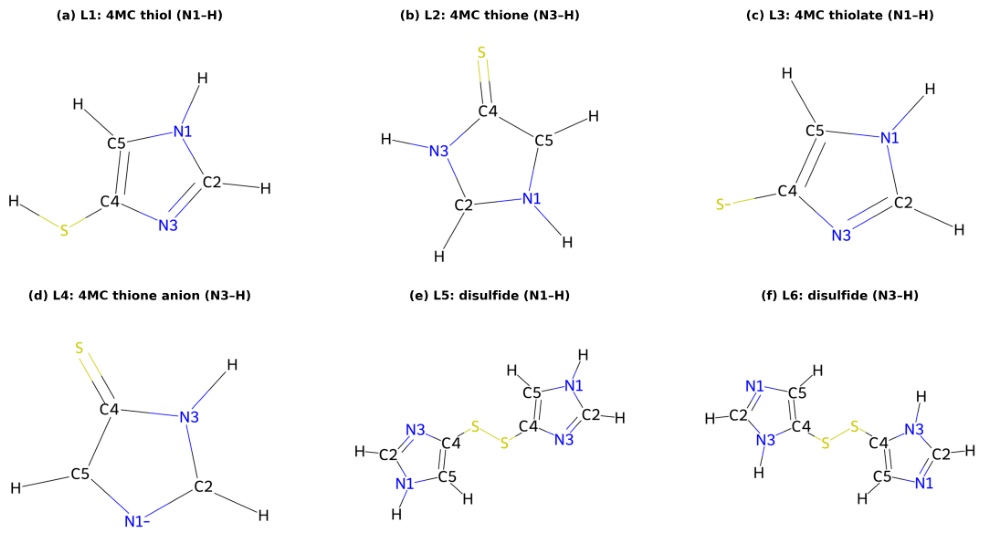
Upon deprotonation, two anionic forms are possible: the thiolate (
N1-H, S
−; L3) and the thione anion (
N3-H,
N1−; L4). The latter places the negative charge on the imidazole nitrogen
N1, which is the copper-binding site in the ovothiol model [
10]. Our calculations show that the thione anion (L4) is preferred by:
This kJ mol−1 preference for the N3-H thione anion is significant: it confirms that deprotonation occurs at N1 (not S), leaving the nitrogen lone pair available for copper coordination. The disulfide species (L5, L6) show a similarly small energy difference ( kJ mol−1), with the thione disulfide (L6) being marginally lower in energy, consistent with the thione tautomer dominance.
The preference for
N1 deprotonation over thiol formation has important mechanistic consequences. Because the anion retains the C=S thione character rather than adopting a thiolate (S
−) form, copper binding occurs through the deprotonated
N1 nitrogen and the thione sulfur, consistent with the bidentate coordination mode observed in the ovothiol Cu(I) complexes of De Luna et al. [
10]. In that study, the same
N3-H thione anion was identified as the reactive species for copper chelation, and our
kJ mol
−1 energy gap is consistent in both direction and magnitude with their reported values for ovothiol A (10 kJ mol
−1 to 20 kJ mol
−1 depending on the level of theory). This agreement indicates that the minimal 4MC scaffold reproduces the deprotonation selectivity of the full ovothiol system.
Furthermore, the persistence of thione dominance across the neutral (L2), anionic (L4), and disulfide (L6) species indicates a coherent thermodynamic thread throughout the redox cycle: the same tautomeric preference that governs the free ligand also stabilises the anion and the oxidised product. This consistency simplifies the mechanistic picture, as a single tautomeric form (thione) can be used to describe the entire Cu(II)-mediated thiol/disulfide cycle without invoking tautomerisation steps between redox events.
3.3. Cu(II) Isomer Energies and Populations
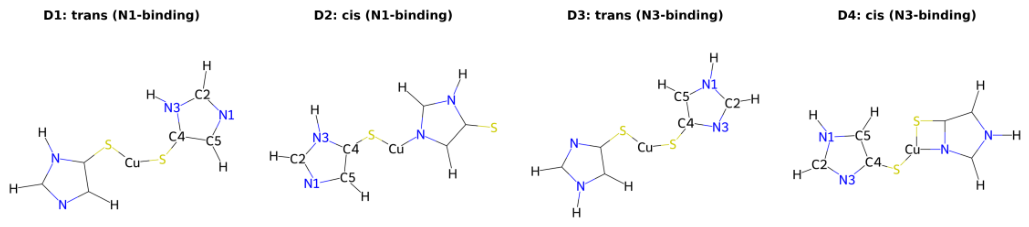
Four Cu(II) isomers were optimized, arising from the combination of
cis/
trans geometry and
N1/
N3 nitrogen binding (
Table 3;
Figure 2). Each isomer is a neutral complex of the formula Cu(II)(4MC
−)
2, in which one Cu(II) centre is bound to two monoanionic thione-anion ligands (1:2 Cu:ligand stoichiometry). Both ligands were modelled in a bidentate (S,N) chelation mode, and the optimized structures display graded coordination behaviour: the
trans isomers (D1, D3) show symmetric, near-linear S–Cu–S arrangements; the dominant
cis-(
N3) isomer D4 features one tight S,N chelate and one more loosely associated ligand, while D2 exhibits one effectively dissociated Cu–S contact (
Å) and hence an essentially monodentate coordination (
Section 3.5).
Figure 2 shows two-dimensional depictions of the optimized structures of the four isomers. No explicit solvent molecules are included in the models; solvation is treated with the IEFPCM continuum only, so the Cu(II) coordination sphere is not complemented by explicit water ligands—a limitation of the present model to keep in mind when comparing with experimental speciation. The
cis-(
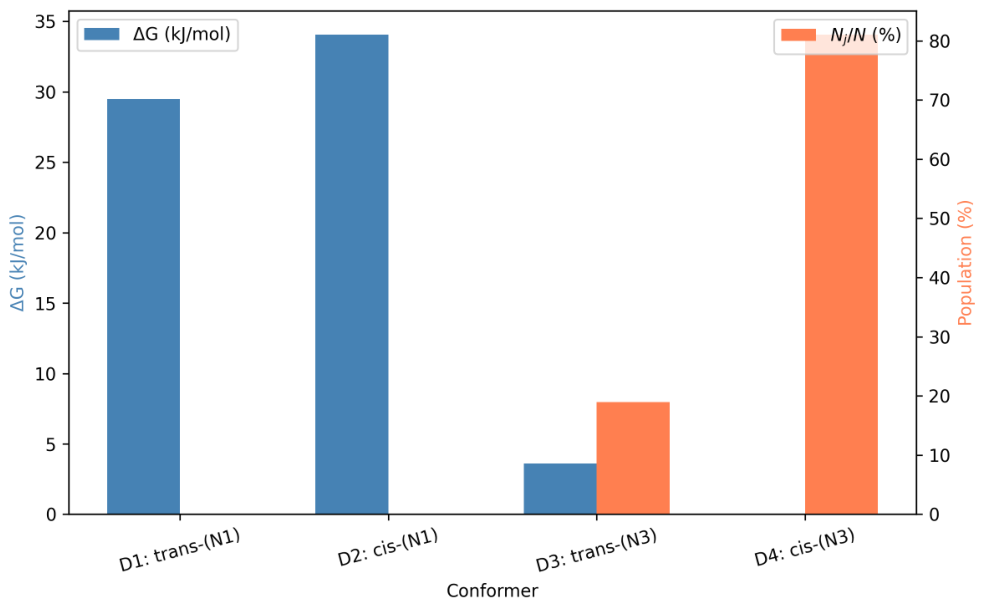
N3) isomer D4 is the global minimum, with a Boltzmann population of
%. The
trans-(
N3) isomer D3 is the only other significantly populated isomer at
%. The
N1-binding isomers (D1, D2) are more than 29 kJ mol
−1 higher in energy and have negligible populations (<
%).
The strong preference for N3-binding in the Cu(II) complexes mirrors the tautomer and anion preferences: since the N3-H thione anion is the preferred anion, copper coordination through N1 (which bears the negative charge) is the natural binding mode. The cis geometry of D4 likely provides better orbital overlap for the four-membered chelate ring (Cu–S–C–N) compared to the trans arrangement.
Figure 3 visualises the Boltzmann population distribution and highlights the overwhelming dominance of the two
N3-binding isomers. The
N1-binding isomers (D1, D2) are essentially absent at room temperature, as their 29 kJ mol
−1 energy penalty is too large to be overcome by thermal populations. The
cis/
trans energy difference among the
N3 isomers is only
kJ mol
−1 (D3 vs. D4), which is modest but sufficient to produce an 81:19 population split. This small gap suggests that the
trans-(
N3) isomer D3 may still contribute to the redox chemistry, and accordingly, the Cu(II)/Cu(I) reduction potentials are reported both for individual isomers and as a Boltzmann-weighted average (
Section 3.4). The preference for
cis over
trans can be rationalised by the chelate effect: in the
cis arrangement, the two bidentate ligands can both coordinate to copper on the same face, stabilising the four-coordinate geometry, whereas the
trans arrangement imposes greater strain on the Cu–S–C–N chelate rings.
3.5. Structural Parameters
The Cu–S bond distances range from 2.15 Å to 2.39 Å for the well-bound ligands, consistent with Cu–thiolate coordination in the literature [
7,
10]. The
trans isomers (D1, D3) display idealised linear S–Cu–S (180
∘) with symmetric Cu–S distances, while the dominant
cis isomer D4 shows asymmetric Cu–S distances (2.189 and
Å) and asymmetric Cu–N distances (2.898 and
Å), suggesting one well-bound and one more loosely associated ligand. The D2 isomer exhibits one severely elongated Cu–S2 distance (
Å), indicating effective monodentate coordination in the
cis-(
N1) geometry.
These geometric features reflect the expected coordination chemistry of the two oxidation states. The two Cu(I) complexes (C1, C2) are tricoordinate and approximately trigonal planar, as expected for d
10 copper(I) [
7]: C2 is bound by three thione sulfur donors, while C1—whose three ligands retain their thiol S–H bonds—is bound by two sulfur and one nitrogen donor, with the third sulfur forming only a weak secondary Cu···S contact (
Å). In contrast, the Cu(II) complexes (D1–D4) display a more distorted geometry characteristic of the Jahn–Teller-active d
9 configuration. The
trans isomers (D1, D3) show symmetric, near-linear S–Cu–S arrangements with the two ligands on opposite sides of the copper centre, while the
cis isomers (D2, D4) fold the two ligands onto the same side, creating a more compact but strained geometry. In D4, the dominant isomer, the asymmetry of the two Cu–S bonds is evident: one ligand is tightly bound (
Å) while the other is more loosely associated (
Å), and the weak Cu–N1 contact (
Å) in D4 reflects the long-range interaction with the deprotonated nitrogen. The D2 structure is the most striking, with one sulfur essentially dissociated (
Å), leaving copper in an effectively two-coordinate environment that helps explain its high energy and negligible Boltzmann population.
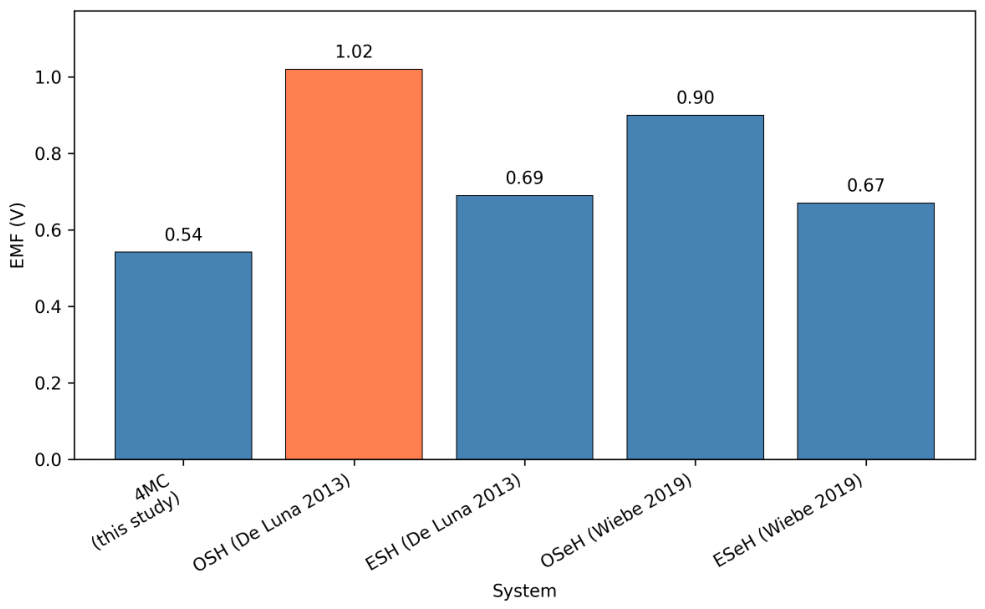
3.7. Comparison with Ovothiol Literature and Minimal Scaffold Analysis
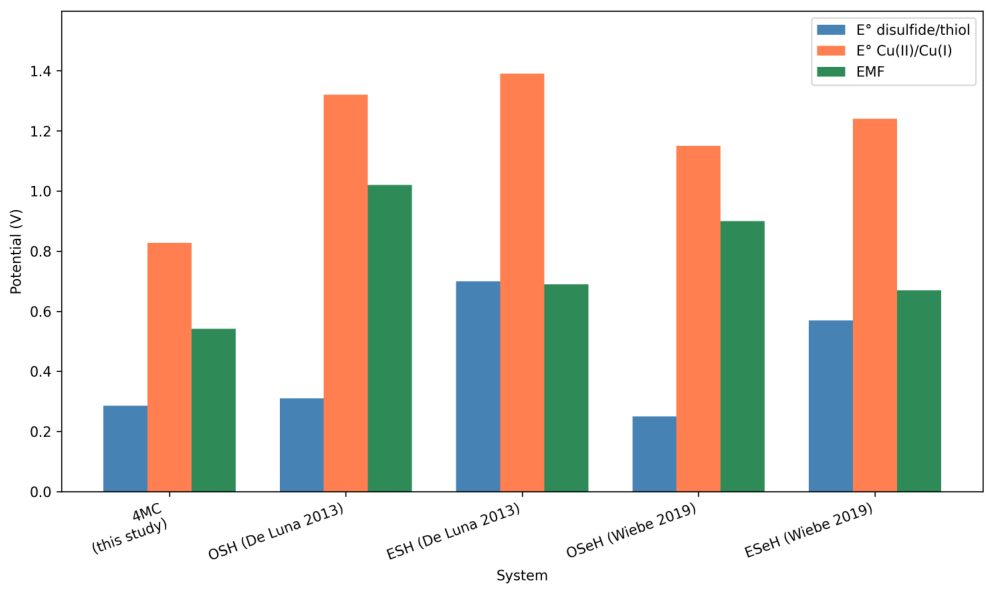
Table 6 compares the key redox parameters of 4MC with those of the naturally occurring ovothiols (OSH, ESH) and their selenium analogues (OSeH, ESeH) from the DFT studies of De Luna et al. [
10] and Wiebe et al. [
12].
For the disulfide/thiol potential, the
for 4MC falls in the lower portion of the literature range (0.25 V to 0.70 V), being closest to OSeH (
V) and OSH (
V). This is consistent with 4MC being the minimal parent scaffold: the absence of the amino acid side chain and the quaternary ammonium group reduces the stabilisation of the reduced (thiol) form relative to the oxidised (disulfide) form, lowering the reduction potential. However, the core reactivity is preserved, as 4MC remains well within the biologically relevant range for thiol/disulfide redox [
9].
For the Cu(II)/Cu(I) complex potential, the
for 4MC is lower than all ovothiol analogues (1.15 V to 1.39 V). To separate the contribution of the computational protocol from that of the minimal scaffold itself, the key parent species (L2, L6, C2, and the four Cu(II) isomers) were additionally evaluated at the M06-2X/def2-TZVP/IEFPCM level on the same BP86/def2-SVP geometries (
Table 7). The choice of functional has a large and quantifiable effect: it raises the Boltzmann-weighted Cu(II)/Cu(I) potential by
V (from
V to
V), with the Boltzmann population ordering unchanged (D4 dominant at both levels), and lowers the disulfide/thiol potential by
V (from
V to
V), giving an EMF of
V. A substantial part of the offset between the 4MC copper potential and the ovothiol literature values is therefore attributable to the functional: BP86, a pure GGA with a different self-interaction error profile which systematically underestimates this reduction potential. The remaining gap of 0.09 V to 0.33 V after the M06-2X correction is the genuine scaffold effect: (i) the absence of the quaternary ammonium side chain in 4MC, which in the full ovothiols stabilises Cu(I) through electrostatic interactions with the anionic carboxylate; (ii) the Boltzmann-weighted average includes contributions from both
N1 and
N3 binding isomers, though the
N1 isomers have negligible weight at both levels of theory.
Despite the lower absolute value, the key qualitative finding is preserved: the copper complex potential (
) is well above the aqueous Cu(II)/Cu(I) potential (
), indicating that 4MC strongly stabilises Cu(I) relative to Cu(II), as expected for thiolate coordination [
7,
8].
For the EMF and redox cycling, the EMF of
for 4MC confirms that the coupled Cu(II)-to-Cu(I) reduction with disulfide formation is thermodynamically favourable. This EMF is lower than OSH (
V) and OSeH (
V) but comparable to ESH (
V) and ESeH (
V). This places 4MC in the same reactivity regime as the ovothiols, demonstrating that the minimal mercaptoimidazole scaffold retains the essential thermodynamic driving force for copper-mediated thiol/disulfide redox cycling. This ligand–redox coupling is also of contemporary relevance beyond the ovothiol family: recent studies of copper- and photocatalytic synergistic radical cyclization strategies [
37] and of Cu-catalyzed radical C–C triple-bond cleavage and amidation [
38] highlight how the Cu(I)/Cu(II) redox couple and the choice of ligand jointly govern reactivity in modern copper catalysis, underscoring the value of understanding how a minimal ligand such as 4MC modulates the copper reduction potential.
Regarding 4MC as a minimal parent scaffold, the central finding of this study is that 4MC, the smallest possible member of the ovothiol/ergothioneine family, exhibits the same qualitative redox chemistry as its naturally occurring derivatives. The thione tautomer dominance (), the N3-H anion preference (), the N3-binding selectivity for Cu(II) (81% cis-N3 population), and the favourable EMF all mirror the behaviour of the full ovothiols.
The lower Cu(II)/Cu(I) reduction potential (
V vs. 1.15 V to 1.39 V) suggests that the additional structural features of the ovothiols, particularly the trimethylammonium group and the amino acid side chain, serve to fine-tune the copper-binding affinity upward, rather than fundamentally alter the redox mechanism. This is consistent with the design principle that the mercaptoimidazole core is the pharmacophore, while the peripheral groups provide optimisation [
20]. From a practical standpoint, this validates 4MC as a useful model compound for studying ovothiol-type redox chemistry and as a potential scaffold for the design of simplified antioxidant agents [
21,
22].
3.8. Substituent Effects: Hammett Analysis
To assess how electronic perturbations at the C2 position modulate the redox chemistry of the 4-mercaptoimidazole (4MC) scaffold, three C2-substituted derivatives were studied: CH
3 (
, electron-donating), Cl (
, weakly electron-withdrawing), and NO
2 (
, strongly electron-withdrawing) (
Table 8). For each substituent, five species were computed: the thione tautomer, the N3-H thione anion, the homodimeric disulfide, the Cu(I) complex, and the dominant D4
cis-
N3 Cu(II) isomer, mirroring the parent 4MC protocol (
Section 3.1,
Section 3.2,
Section 3.3 and
Section 3.4).
Note that the parent H row uses the D4-only
V (rather than the Boltzmann-weighted 0.828 V reported in
Section 3.4) for consistency with the derivative protocol, which computes only the D4 isomer; this gives a parent EMF of 0.535 V, slightly lower than the Boltzmann-weighted value of 0.542 V.
The disulfide/thiol couple is essentially insensitive to C2 substitution ( V, ): the three substituted derivatives span only 0.109–0.315 V, and CH3 and NO2 deviate from the parent value by less than 0.03 V. This weak response is consistent with the redox-active C4–S–S–C4 unit being separated from the C2 substituent position so that through-bond electronic communication is strongly attenuated. The Cu(II)/Cu(I) couple shows a nominally larger sensitivity ( V) but essentially no linear correlation (), suggesting that substituent effects on the copper redox are dominated by factors beyond through-bond electronics, likely geometric reorganisation of the N3–Cu coordination sphere and through-space interactions that vary nonlinearly with substituent size and polarity.
All four substituents retain a positive EMF for copper-catalysed disulfide formation (0.302–0.738 V), indicating that the thermodynamic coupling between the thiol–disulfide and copper centres persists across C2 substitution. The EMF varies non-monotonically with ( V, ): CH3 and NO2 slightly increase the driving force (+0.586 and +0.738 V vs. +0.535 V for the parent), whereas Cl reduces it (+0.302 V). The chloro derivative is again the outlier: both of its reduction potentials shift downward together ( drops by 0.41 V and by 0.18 V relative to the parent), and because the copper couple responds more strongly, the EMF decreases. This co-directional shift shows that C2 substituents tune the two redox centres with different magnitudes rather than independently, and the simple Hammett framework provides only a qualitative guide to the overall trend. The results demonstrate that C2 functionalisation of the 4MC scaffold modulates both the thiol–disulfide and copper redox potentials over a range of ca. 0.4 V in EMF without abolishing the thermodynamic driving force for redox cycling.
The electronic-structure mechanism underlying the pronounced downward shift of the chloro-substituted potentials was examined by extending the NBO analysis to the Cl-substituted copper complexes Cl-C2 and Cl-D4 and to the Cl-substituted disulfide itself (
Section 3.9). In the Cu(II) complex, Cl substitution makes the Cu–S bonding markedly more symmetric and more covalent: the two Cu–S Wiberg bond indices become nearly equal (0.139 and 0.134 vs. 0.101 and 0.185 in the parent D4, whose Cu–S distances of 2.189/2.394 Å are strongly asymmetric), and the Cu NPA charge drops from +0.532 to +0.340, indicating substantially enhanced electron donation from the thiolate sulfurs to Cu(II). In contrast, the Cu(I) complex is almost unaffected (Cu NPA charge +0.297 vs. +0.294 in the parent C2; Cu–S Wiberg indices of 0.066–0.078 unchanged). Cl substitution thus stabilises the oxidised Cu(II) state through stronger, more symmetric Cu–S covalency while leaving the reduced Cu(I) state essentially unchanged, which lowers the Cu(II)/Cu(I) reduction potential by 0.41 V. On the disulfide side, the Cl-substituted disulfide is stabilised by ca. 34 kJ mol
−1 relative to its thione pair compared with the parent, lowering
by 0.18 V; notably, the S–S bond itself is barely perturbed (Wiberg bond index 0.217 vs. 0.221 in the parent L6; sulfur NPA charges +0.067/+0.069 vs. +0.064/+0.065), indicating that this stabilisation is a ring-level substituent effect transmitted to the C4–S linkage rather than a weakening of the S–S bond. Both redox couples, therefore, shift downward for Cl, the copper couple more strongly, which accounts for the reduced but still positive EMF (+0.302 V).
For the thermodynamic driving forces,
Table 10 collects the reaction free energies (
) underlying the reduction potentials in
Table 8. Both the disulfide/thiol and Cu(II)/Cu(I) half-reactions are thermodynamically favourable (negative
) for all four substituents. The disulfide reduction free energy is nearly substituent-independent (
to
kJ mol
−1, vs.
kJ mol
−1 for the parent H), with CH
3 slightly more exergonic and Cl the least exergonic; the absence of a systematic electron-withdrawing trend mirrors the near-zero Hammett slope of this couple. The copper reduction shows a different trend: the parent H has
kJ mol
−1, while Cl has the smallest magnitude (
kJ mol
−1), explaining its anomalously low
.
The overall EMF remains positive for all four substituents (0.302–0.738 V), meaning that copper-catalysed disulfide formation is thermodynamically favourable across the whole series. C2 substitution, therefore, tunes the magnitude of the driving force—spanning a range of ca. 0.44 V between the Cl (+0.302 V) and NO2 (+0.738 V) derivatives—without disrupting the thermodynamic coupling between the thiol–disulfide and copper centres that is essential for catalytic disulfide formation. Combined with the weak Hammett correlations of the individual couples, this indicates that the substituent effects are dominated by system-specific electronic–structural responses (such as the symmetric Cu–S covalency induced by Cl) rather than by a uniform through-bond electronic effect.
For the structural parameters of the derivative copper complexes,
Table 11 reports the Cu–S bond distances for the derivative Cu(I) and Cu(II) complexes alongside the parent values. In the trigonal-planar Cu(I) complexes, the mean Cu–S distance is remarkably conserved across all four substituents (2.28–2.29 Å), indicating that the C2 substituent has minimal influence on the Cu(I) coordination geometry. The individual Cu–S bonds within each complex vary by up to 0.08 Å, reflecting the asymmetric ligand arrangement, but the average is essentially substituent-independent.
In contrast, the Cu(II) D4 complexes show a striking structural response to substitution. The parent D4 has a markedly asymmetric Cu–S coordination (2.189 vs. 2.394 Å), with the shorter bond corresponding to the
N3-coordinated ligand and the longer bond to the non-
N3 ligand. The CH
3 and Cl derivatives both show much more symmetric Cu–S distances (2.164/2.166 and 2.164/2.169 Å, respectively), suggesting that the substituent relieves the asymmetry present in the parent. The shorter Cu–S distances in the Cu(II) complexes compared to Cu(I) are consistent with the higher oxidation state and the stronger Cu–S bonding reflected in the Wiberg bond indices (
Section 3.9).
The NO
2-substituted Cu(II) complex exhibits a qualitatively different coordination mode: one Cu–S bond is maintained at 2.162 Å, but the second Cu–S distance elongates to 6.318 Å, indicating complete bond dissociation. Instead, a Cu–N contact at 2.766 Åis formed, suggesting that the strongly electron-withdrawing NO
2 group destabilises the Cu–S coordination to the point where the ligand reorients to coordinate through nitrogen. This structural disruption is consistent with the extremely low Wiberg bond index (0.017) for this Cu–S interaction and the absence of a corresponding QTAIM bond critical point (
Section 3.9). The NO
2-induced coordination change represents an extreme case of substituent effects on the copper coordination sphere and highlights the limit of the Hammett model, which assumes a uniform structural response across the series.
3.9. Electronic Structure Analysis
To characterise the bonding and electronic structure of the key species in the 4MC–Cu redox cycle, additional single-point calculations were performed at the BP86/def2-TZVP/IEFPCM(water) level for five representative species: the dominant thione tautomer L2, the preferred anion L4, the dominant Cu(I) complex C2, the dominant Cu(II) isomer D4, and the NO
2-substituted Cu(II) complex. To characterize the electronic-structure origin of the Cl outlier in the Hammett series (
Section 3.8), the NBO analysis was extended to the Cl-substituted copper complexes Cl-C2 and Cl-D4 and to the parent and Cl-substituted disulfides (L6 and Cl-L6). The analysis includes frontier orbital energies, Natural Population Analysis (NPA) charges, Wiberg bond indices, spin densities, and Quantum Theory of Atoms in Molecules (QTAIM) topological descriptors. The electronic structure data are summarised in
Table 12,
Table 13,
Table 14,
Table 15,
Table 16 and
Table 17 and
Figure 6,
Figure 7,
Figure 8,
Figure 9,
Figure 10,
Figure 11,
Figure 12 and
Figure 13.
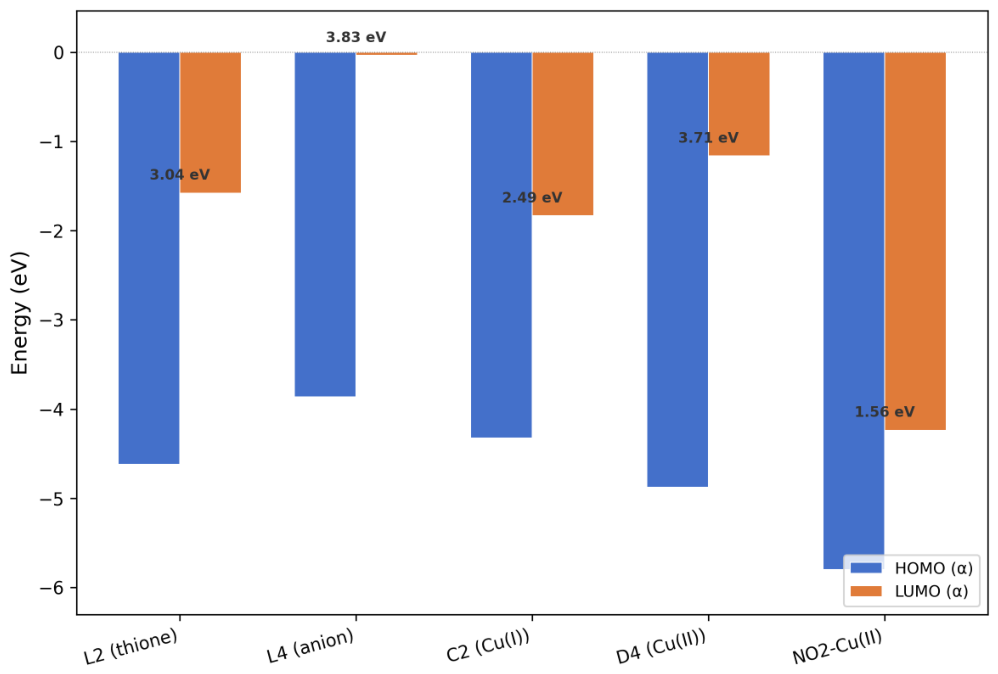
For the frontier orbital energies, the HOMO–LUMO gaps (
Figure 6,
Table 12) reveal a clear trend: the Cu(I) complex C2 has the smallest gap (2.49 eV) among the closed-shell species, consistent with its high reactivity as an electron donor in the redox cycle. The free thione L2 (3.04 eV) and anion L4 (3.83 eV) have larger gaps, reflecting their relative stability. The open-shell Cu(II) species D4 and NO
2–Cu(II) exhibit very small
-HOMO–
-LUMO gaps (0.31 and 0.18 eV, respectively), arising from the low-lying unoccupied
spin–orbital adjacent to the singly occupied molecular orbital (SOMO). The NO
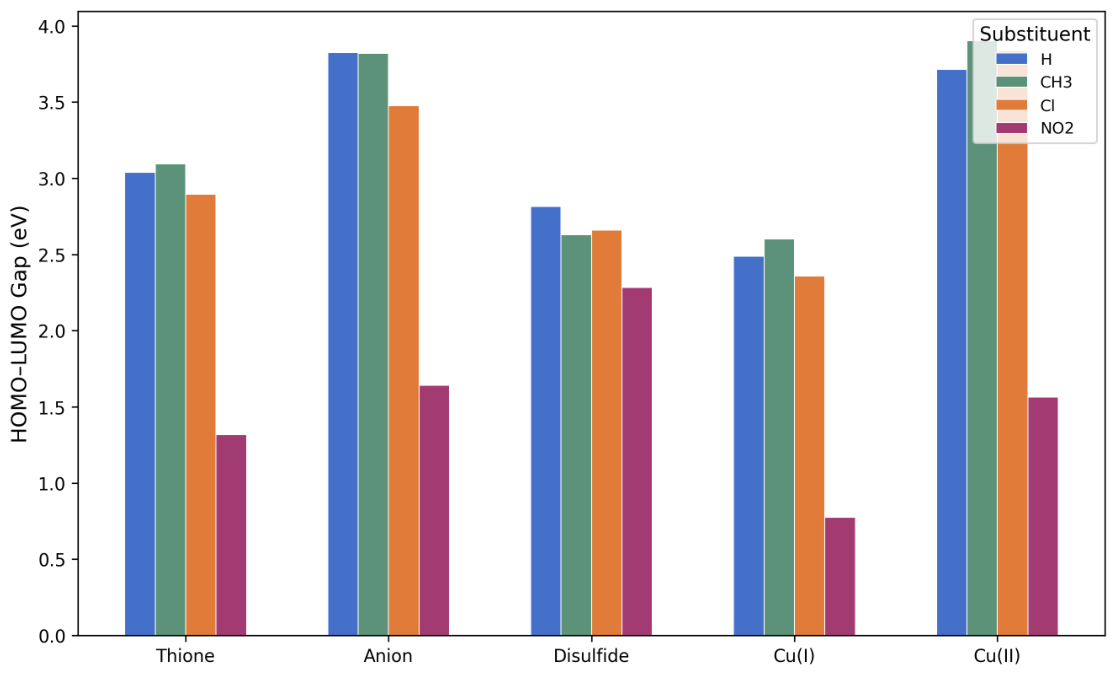
2 substituent dramatically reduces the HOMO–LUMO gap across all species categories (
Figure 7), with the NO
2-Cu(I) complex showing a particularly small gap of 0.77 eV, indicating that the electron-withdrawing nitro group significantly destabilises the frontier orbitals.
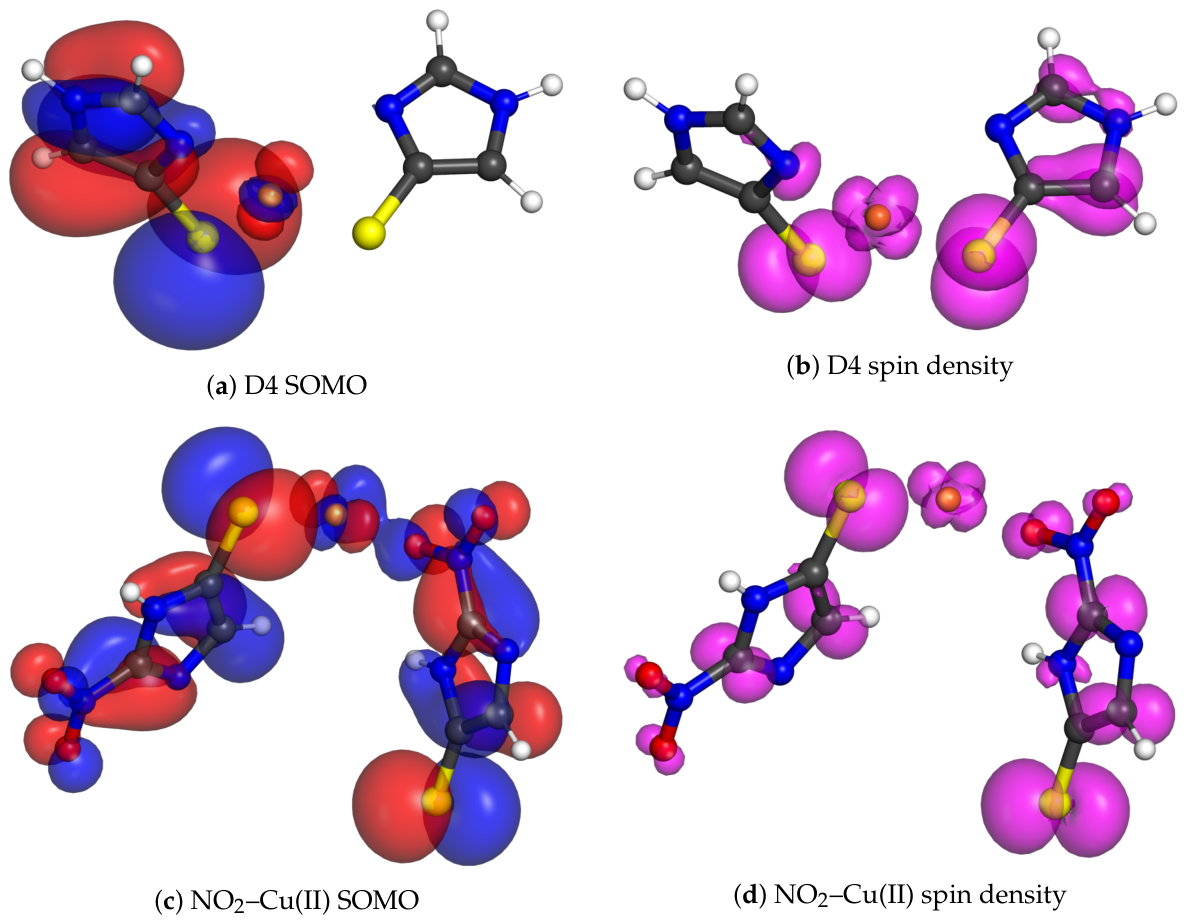
To provide a spatial picture of the frontier orbitals, we visualised the HOMO, LUMO, and singly occupied molecular orbital (SOMO) isosurfaces for the key species using PyMOL (Version 2.5.) [
40] at an isovalue of |0.02| a.u. (orbitals) and |0.002| a.u. (spin density). The orbital and spin density data were extracted from the BP86/def2-TZVP wavefunctions using Multiwfn [
30]. The molecular structure is rendered as CPK-coloured spheres (C gray, N blue, S yellow, Cu orange, H white) and is visible through the semi-transparent isosurfaces.
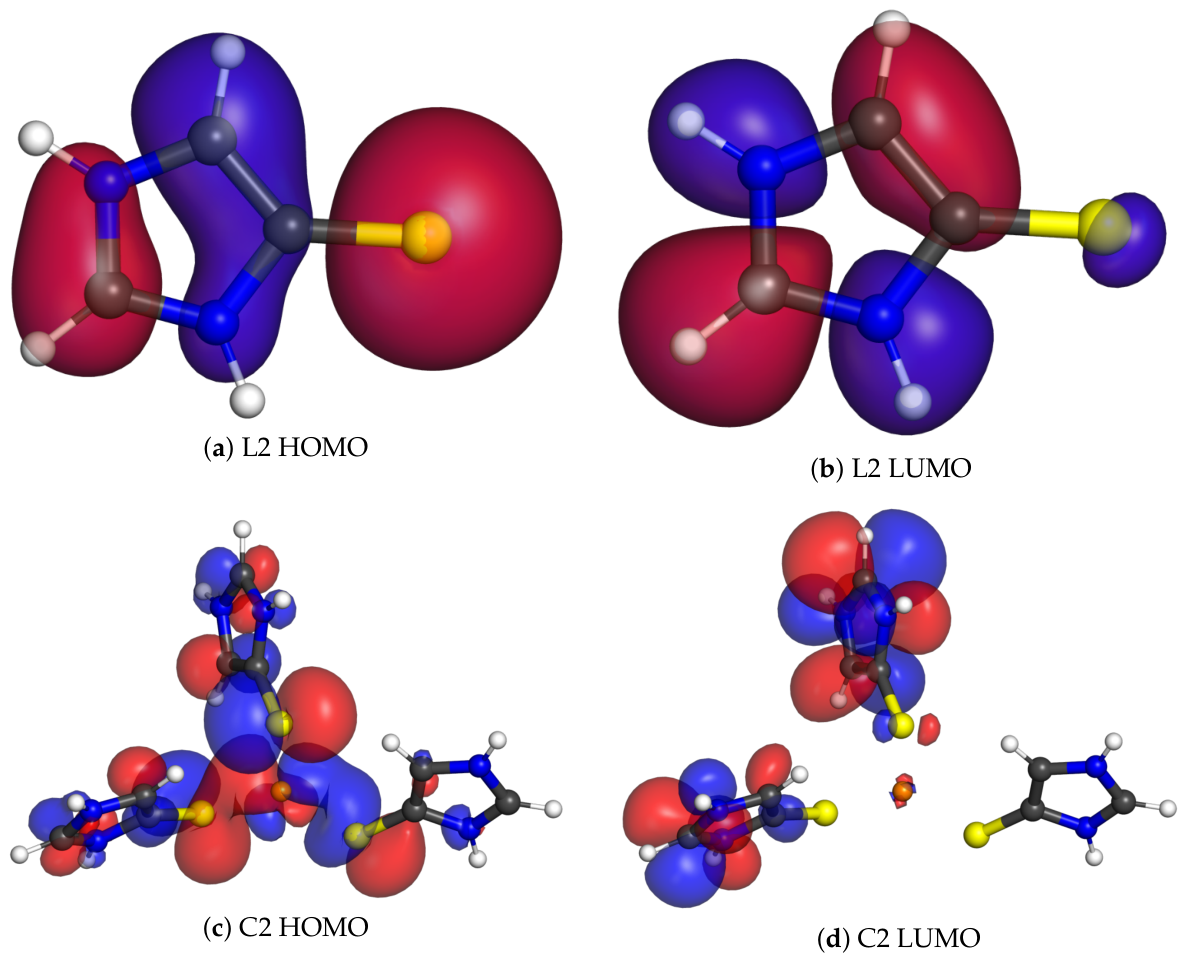
Figure 8 shows the frontier orbitals of the free thione L2 and the Cu(I) complex C2. In L2, the HOMO is localised on the sulfur atom and the
-system of the ring, while the LUMO is delocalised over the ring framework. Upon coordination to Cu(I) in C2, the HOMO acquires significant Cu–S antibonding character, and the LUMO is localised on the metal centre, consistent with the small HOMO–LUMO gap (2.49 eV) and the role of Cu(I) as an electron donor.
Figure 9 shows the SOMO and spin density for the Cu(II) species D4 and NO
2–Cu(II). The SOMO of D4 is delocalised over the Cu–S framework, consistent with the Mulliken spin density analysis (
Table 16). The spin density isosurface (
Figure 9b) clearly shows the delocalisation over Cu and the coordinated sulfur atoms, rather than being confined to the Cu
d-orbitals. In NO
2–Cu(II), the SOMO is further delocalised onto the NO
2-substituted ligand, consistent with the more dispersed spin population (
Table 16).
For the substituent effects on frontier orbitals, the HOMO–LUMO gaps for all 15 derivative species (
Table 13) reveal a systematic trend: the strongly electron-withdrawing NO
2 group dramatically reduces the gap across all five species categories, while CH
3 and Cl produce more modest changes relative to the parent. For the closed-shell thione, anion, and Cu(I) species, the NO
2 substituent reduces the gap by 1.4–1.7 eV compared to the parent, reflecting the introduction of low-lying
orbitals localised on the nitro group. The CH
3 substituent is nearly innocuous (gap changes ≤0.18 eV), while Cl produces small but noticeable gap reductions (0.13–0.35 eV), consistent with their weaker electronic effects.
For the disulfide species, the parent L6 has a gap of 2.81 eV, and the C2-substituted disulfides show only modest changes: 2.63 eV (CH
3), 2.66 eV (Cl), and 2.28 eV (NO
2). The largest reduction, for NO
2, again reflects the low-lying nitro
acceptor orbital lowering the LUMO (from −2.99 eV in the parent to −4.22 eV). The insensitivity of the disulfide gap to CH
3 and Cl substitution mirrors the near-zero Hammett slope of the disulfide/thiol couple (
Section 3.8): the frontier orbitals of the C4–S–S–C4 unit are largely decoupled from the C2 position.
For the open-shell Cu(II) complexes, the HOMO–LUMO gaps follow the same trend (NO2: 1.56 eV vs. parent: 3.71 eV), while the gaps remain small for all substituents (0.18–0.37 eV), characteristic of the low-lying unoccupied spin–orbital adjacent to the singly occupied molecular orbital (SOMO).
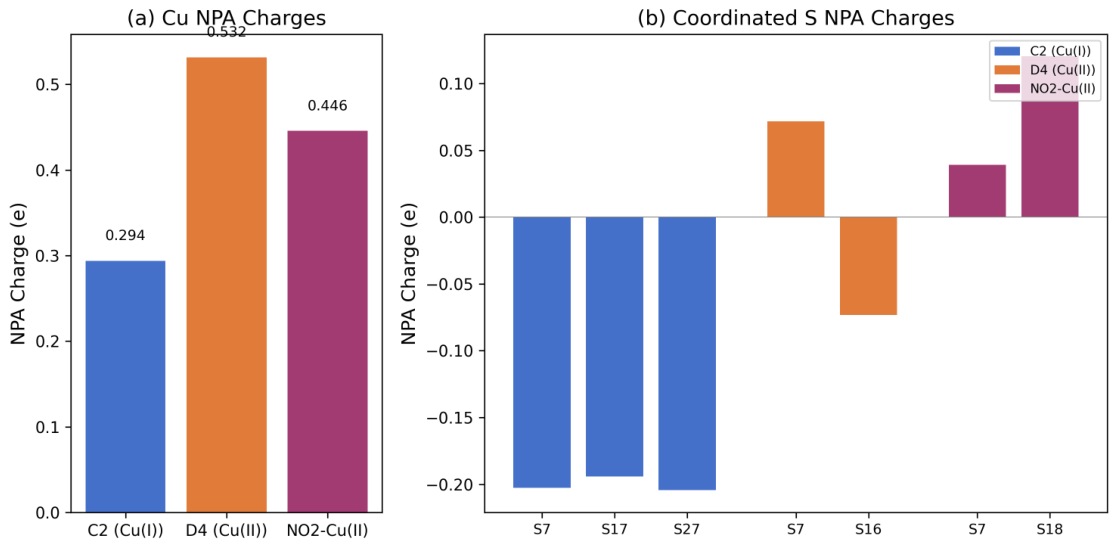
The Natural Population Analysis (NPA) charges from the NBO analysis (
Table 14,
Figure 10) reveal the charge redistribution upon copper coordination and oxidation. The Cu NPA charge increases from +0.294 in the Cu(I) complex C2 to +0.532 in the Cu(II) complex D4, consistent with the formal oxidation state change. The coordinated sulfur atoms show a dramatic change: in the free thione L2, the sulfur NPA charge is −0.437, but upon coordination to Cu(I) in C2 it becomes approximately −0.20, and in the Cu(II) species D4 and NO
2–Cu(II), the sulfur charges become near-zero or even positive (+0.07 for S7 in D4 and +0.12 for S18 in NO
2–Cu(II)), indicating substantial electron donation from sulfur to copper. The NO
2 substituent further withdraws electron density from the sulfur donors, with both S atoms in NO
2–Cu(II) carrying positive NPA charges.
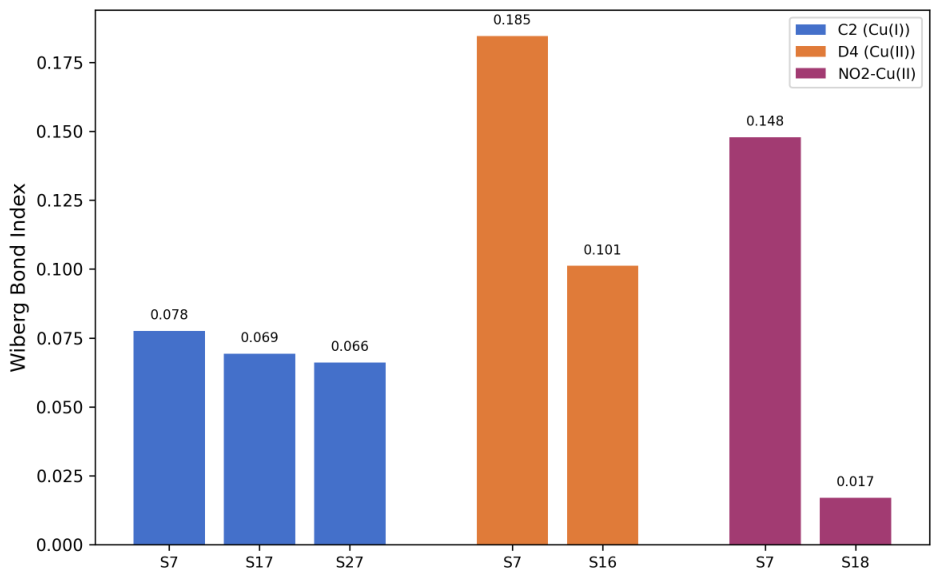
The Wiberg bond indices (WBI) for the Cu–S bonds (
Table 15,
Figure 11) provide a complementary measure of bond strength. The Cu(II) complex D4 has significantly higher Cu–S WBI values (0.101–0.185) than the Cu(I) complex C2 (0.066–0.078), consistent with the shorter Cu–S distances in D4 (2.189–2.394 Å) compared to C2 (2.249–2.326 Å) and reflecting the stronger Cu–S interaction in the oxidised form. The NO
2–Cu(II) complex shows highly asymmetric Cu–S bonding: the S7–Cu bond (WBI = 0.148) is comparable to the stronger bond in D4, while the S18–Cu bond (WBI = 0.017) is extremely weak, indicating that the NO
2 substituent disrupts the coordination symmetry. The Cl-substituted Cu(II) complex (Cl-D4) shows the opposite behaviour: markedly more symmetric and stronger Cu–S bonding than the parent D4 (WBI 0.134 and 0.139 vs. 0.101 and 0.185 for the asymmetric 2.189/2.394 Å pair in D4), together with a substantially lower Cu NPA charge (+0.340 vs. +0.532), indicating enhanced electron donation from the thiolate sulfurs to Cu(II). The Cu(I) complex is almost unaffected by Cl substitution (Cu NPA charge +0.297 vs. +0.294; Cu–S Wiberg indices unchanged,
Table 14). For the disulfides, the S–S Wiberg index is essentially unaffected by Cl substitution (0.217 in Cl-L6 vs. 0.221 in the parent L6,
Table 15), and the sulfur NPA charges are nearly unchanged (+0.067/+0.069 vs. +0.064/+0.065), confirming that the relative stabilisation of the Cl-substituted disulfide inferred from
(
Section 3.8) is a ring-level electronic effect rather than a perturbation of the S–S bond itself. The implications of this differential stabilisation of the two copper oxidation states for the Cl outlier in the Hammett series are discussed in
Section 3.8.
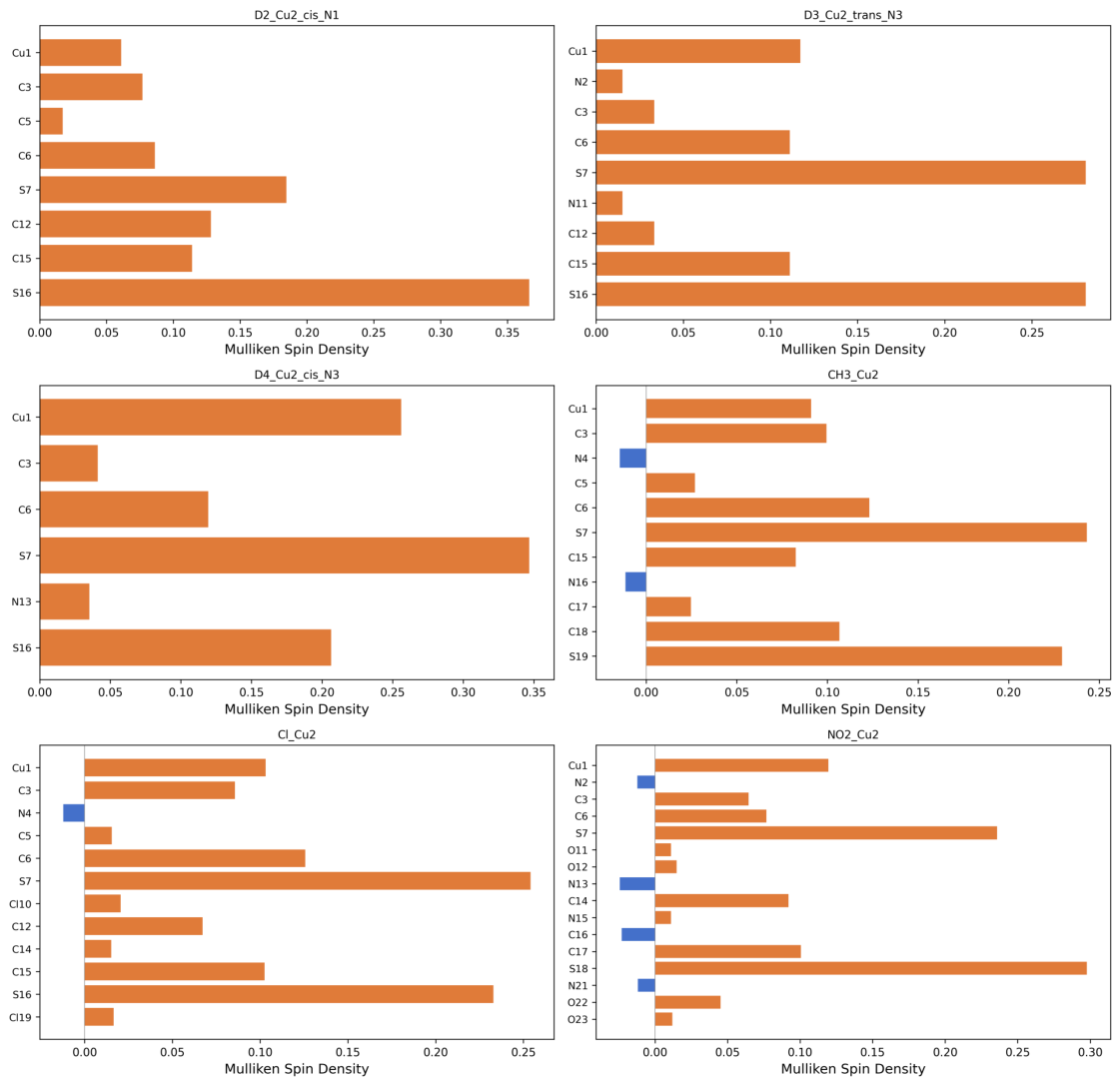
For the open-shell Cu(II) species, the Mulliken spin density distribution (
Figure 12,
Table 16) reveals that the unpaired electron is not localised on the copper
d-orbitals but is substantially delocalised over the sulfur ligands. In D4, the largest spin populations reside on S7 (0.347), Cu (0.256), and S16 (0.207), with additional delocalisation onto the carbon backbone (C6: 0.120). In NO
2–Cu(II), the spin is even more delocalised: S18 carries the highest spin density (0.298), followed by S7 (0.236) and Cu (0.120), with significant contributions from the NO
2-substituted ring (C17: 0.101, C14: 0.092). This delocalised spin distribution indicates substantial ligand-to-metal charge transfer and covalent character in the Cu–S bonding, which is not captured by a purely ionic Cu(II) (
) description.
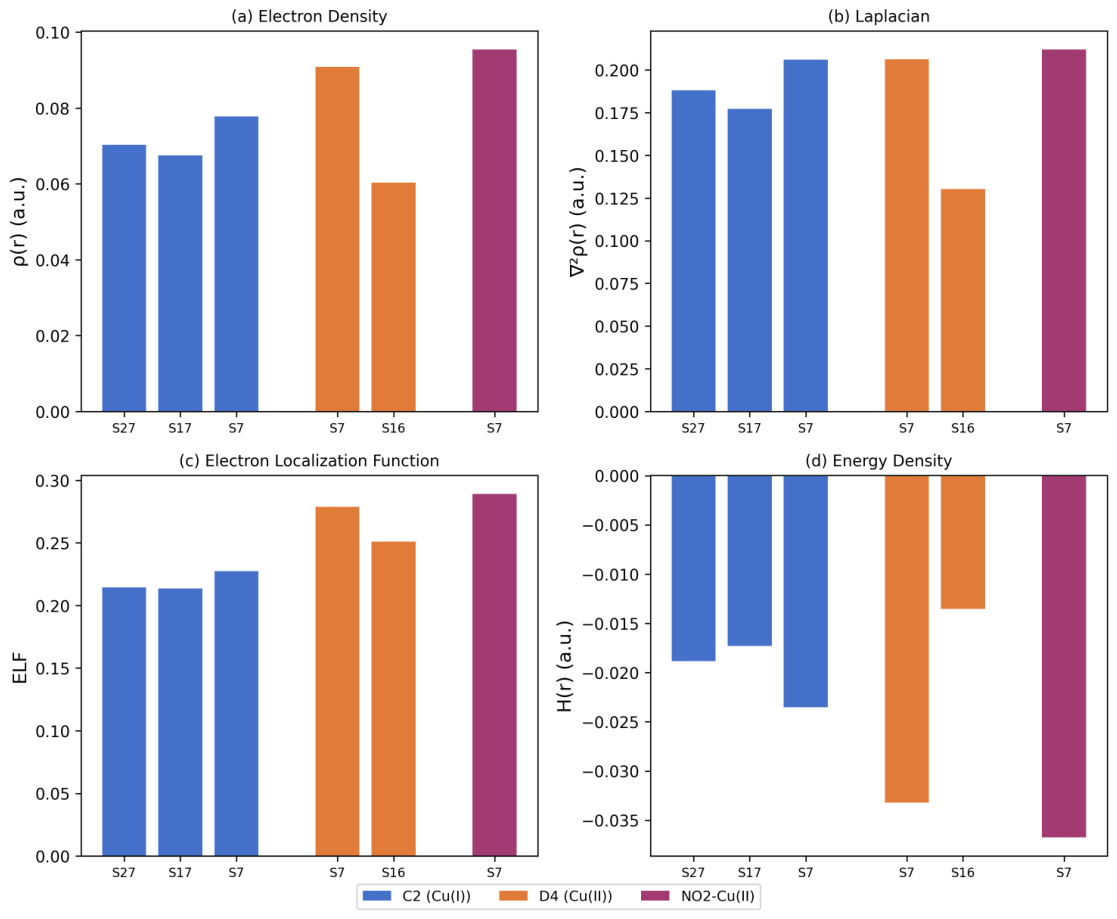
The Quantum Theory of Atoms in Molecules (QTAIM) analysis of the Cu–S bond critical points (BCPs) provides a topological characterisation of the bonding (
Table 17,
Figure 13). All Cu–S BCPs exhibit positive Laplacians (
), classifying them as closed-shell interactions, consistent with dative Cu–S bonding. However, the energy density
is negative for all Cu–S BCPs, indicating some covalent character, a signature of polar covalent bonding intermediate between pure ionic and covalent limits. The electron density at the BCP (
) is higher for the Cu(II) species (D4: 0.060–0.091; NO
2–Cu(II): 0.096) than for the Cu(I) complex C2 (0.068–0.078), confirming stronger Cu–S interactions upon oxidation. Notably, the extremely weak S18–Cu bond in NO
2–Cu(II) (WBI = 0.017) does not produce a detectable BCP, confirming that this interaction is below the topological bonding threshold.
The electronic structure analysis reveals several key features of the 4MC–Cu redox system: (i) the Cu(I) complex has the smallest HOMO–LUMO gap among closed-shell species, consistent with its role as the active electron donor; (ii) Cu–S bonding is polar covalent, with positive Laplacian but negative energy density at the BCPs; (iii) oxidation to Cu(II) strengthens the Cu–S bonds (higher WBI and ) but the unpaired electron is substantially delocalised over the sulfur ligands, not localised on Cu; (iv) the NO2 substituent disrupts the coordination symmetry, dramatically reduces the HOMO–LUMO gap, and further delocalises the spin density onto the substituted ligand; and (v) C2 substitution only modestly affects the disulfide HOMO–LUMO gap (2.28–2.66 eV vs. 2.81 eV for the parent), with the largest reduction for NO2 arising from its low-lying acceptor orbital, and leaves the S–S bond order essentially unperturbed. These findings provide a detailed electronic basis for understanding the redox cycling mechanism and substituent effects discussed in the preceding sections.