2.1. Thermodynamic Analysis
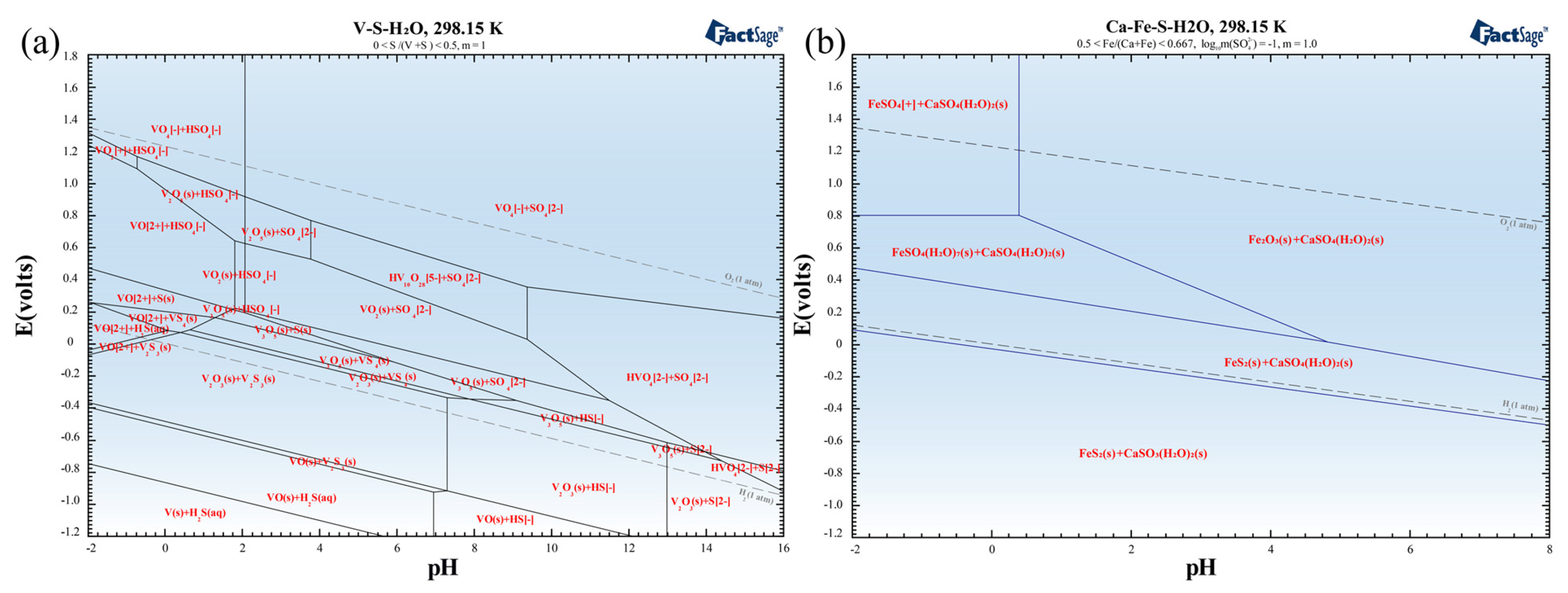
Thermodynamic analysis of the vanadium leaching system was carried out using FactSage 6.4, and the E-pH diagrams of the V-S-H
2O and Ca-Fe-S-H
2O systems at 298.15 K are presented in
Figure 1. As shown in
Figure 1a, both V
4+ and V
5+ aqueous species can be thermodynamically stable under acidic conditions, depending on the redox potential. V
4+ is mainly represented by VO
2+, whereas V
5+ can exist as VO
2+ under sufficiently oxidizing conditions. Vanadium species may also coexist with SO
42− and HSO
4− in the acidic sulfate medium, indicating that vanadium can remain in soluble forms over a relatively wide potential range. Therefore, the acidic leaching system used in this study is thermodynamically favorable for maintaining dissolved vanadium species and promoting vanadium dissolution.
To further consider the behavior of the Ca- and Fe-bearing components associated with the dicalcium ferrite phase, the E-pH diagram of the Ca-Fe-S-H
2O system was constructed, as shown in
Figure 1b. Under acidic sulfate conditions, Ca tends to occur as stable calcium sulfate-containing solid phases, while the stable forms of Fe vary with the redox potential. This result indicates that, following acid-induced decomposition of Ca-Fe-bearing phases, Ca can be stabilized in the form of calcium sulfate, whereas Fe may remain in sulfate-containing or oxide-bearing forms depending on the solution conditions.
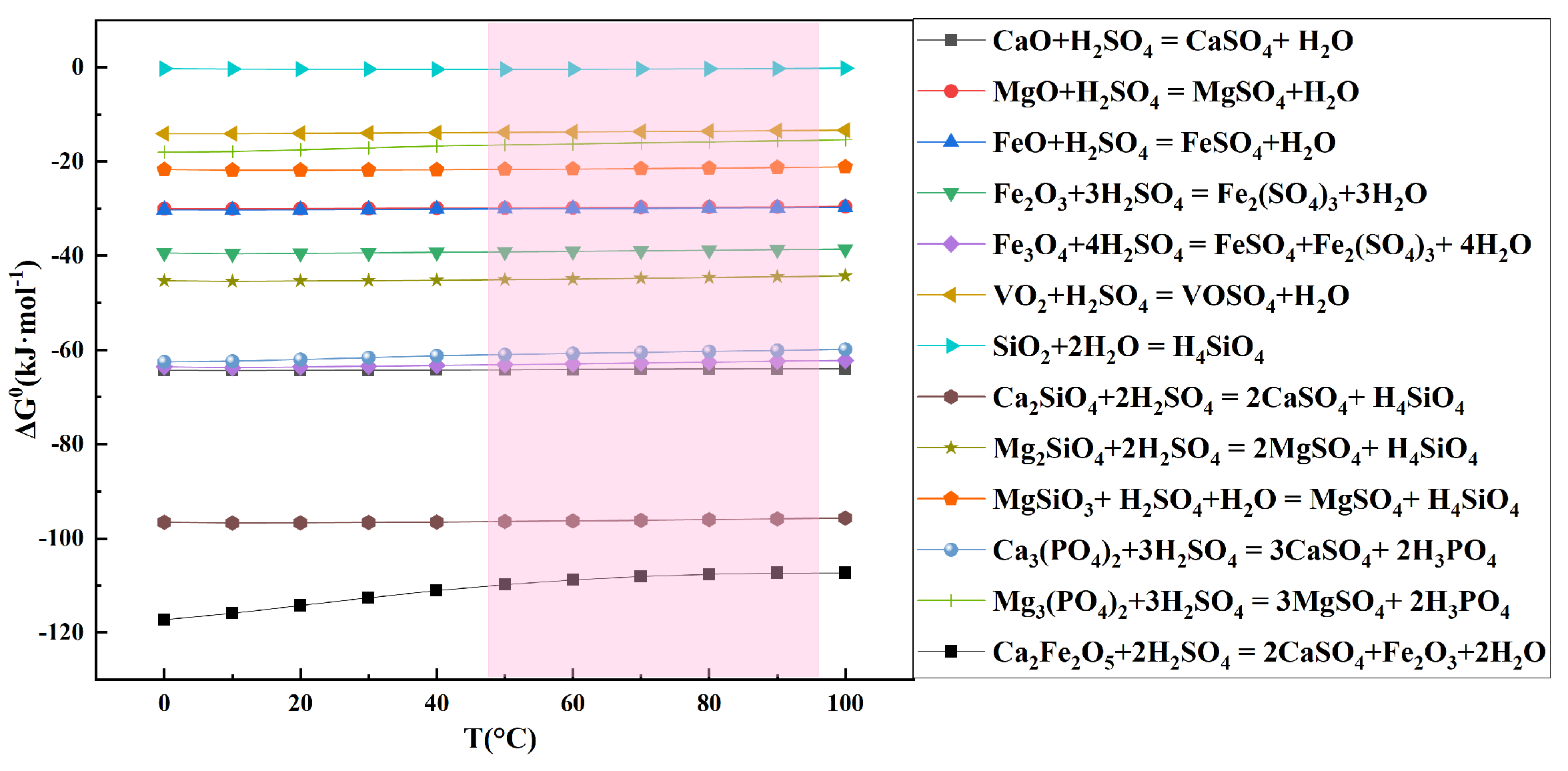
Furthermore, Δ
G of the relevant reactions in the sulfuric acid leaching system were evaluated using HSC Chemistry 6.0, and the results are presented in
Figure 2. The calculated Δ
G0 values of the considered reactions are negative within the investigated temperature range, indicating that the dissolution or transformation of the major mineral components is thermodynamically feasible. In particular, the reaction of dicalcium ferrite, an important V-bearing phase in the pre-decalcified slag, with sulfuric acid was additionally considered. The Δ
G0 value of this reaction remains negative throughout the investigated temperature range, demonstrating that the acid-induced decomposition of Ca
2Fe
2O
5 is thermodynamically favorable. During this process, Ca is converted into calcium sulfate, while decomposition of the ferrite structure can facilitate the release of vanadium associated with this phase.
2.2. Single-Factor Vanadium Extraction Experiments
Vanadium leaching rate was employed as the key evaluation index in the present work. The influence of four critical process variables, including L/S ratio, leaching time, leaching temperature, and sulfuric acid concentration, on vanadium leaching behavior was systematically examined to determine their influencing laws and optimal ranges. All leaching tests were conducted in triplicate, and the reported values are arithmetic means of three independent experiments. Error bars for vanadium leaching rates denote one standard deviation (SD, n = 3), reflecting the consistency and reproducibility of the experimental data. Results for impurity elements are presented as mean values only to show their leaching trends.
2.2.1. Effect of Sulfuric Acid Concentration on Vanadium Leaching
Sulfuric acid concentration is a key parameter governing the hydrometallurgical extraction of vanadium-bearing steel slag. It not only determines the acidity and reaction driving force of the system but also affects the dissolution behavior of the pre-decalcified slag by regulating the activity of H
+ in solution. Combined with the E-pH thermodynamic analysis of the V-S-H
2O system, a strongly acidic environment is essential for maintaining vanadium in a stable ionic form. Under fixed conditions of an L/S ratio of 8 mL·g
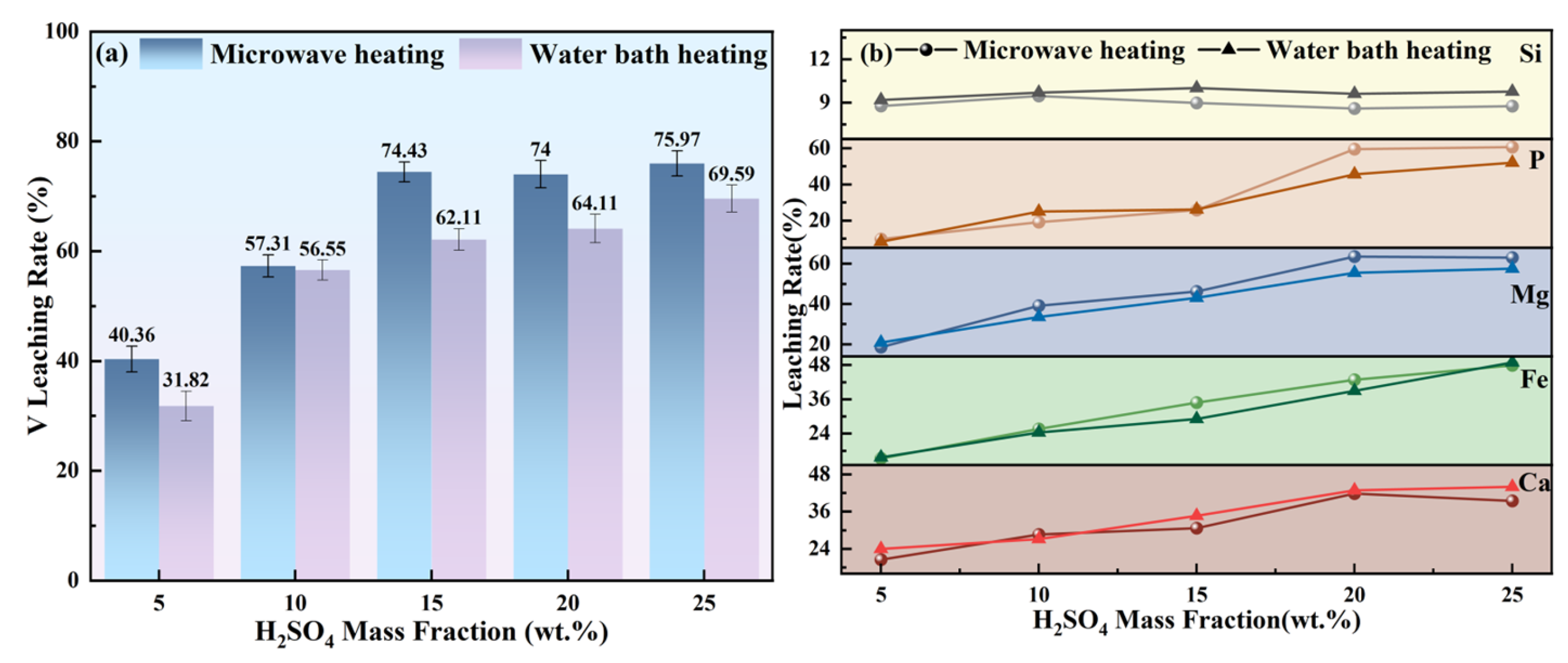
−1,70 °C, and 60 min, the influence of sulfuric acid concentration (5–25 wt.%, in 5 wt.% increments) on vanadium leaching was investigated, as shown in
Figure 3.
Figure 3a illustrates the vanadium leaching performance under different heating methods. The data reveal that the vanadium extraction initially rises before leveling off with increasing sulfuric acid concentration. When the acid concentration is below 15 wt.%, insufficient H
+ in the system limits the destruction of the crystalline structure of the pre-decalcified slag. Meanwhile, residual alkaline components such as calcium consume acid, resulting in incomplete dissolution and thus low vanadium recovery. When the sulfuric acid concentration increases to 15 wt.%, the reaction between H
+ and vanadium-bearing phases is significantly enhanced, leading to extensive lattice destruction and vanadium release as soluble ionic species into solution. Under microwave heating, the vanadium leaching rate reaches a maximum of 74.43%. Further increasing acid concentration does not significantly improve leaching performance, indicating that the system has approached thermodynamic equilibrium. Under conventional water-bath heating, the vanadium leaching rate remains consistently lower than that under microwave conditions at the same acid concentration, demonstrating the superiority of microwave-assisted heating.
Figure 3b shows the leaching trends of impurity elements under different acid concentrations. Silicon remains relatively stable, while Ca, Fe, Mg, and P all exhibit increasing trends with increasing acid concentration.
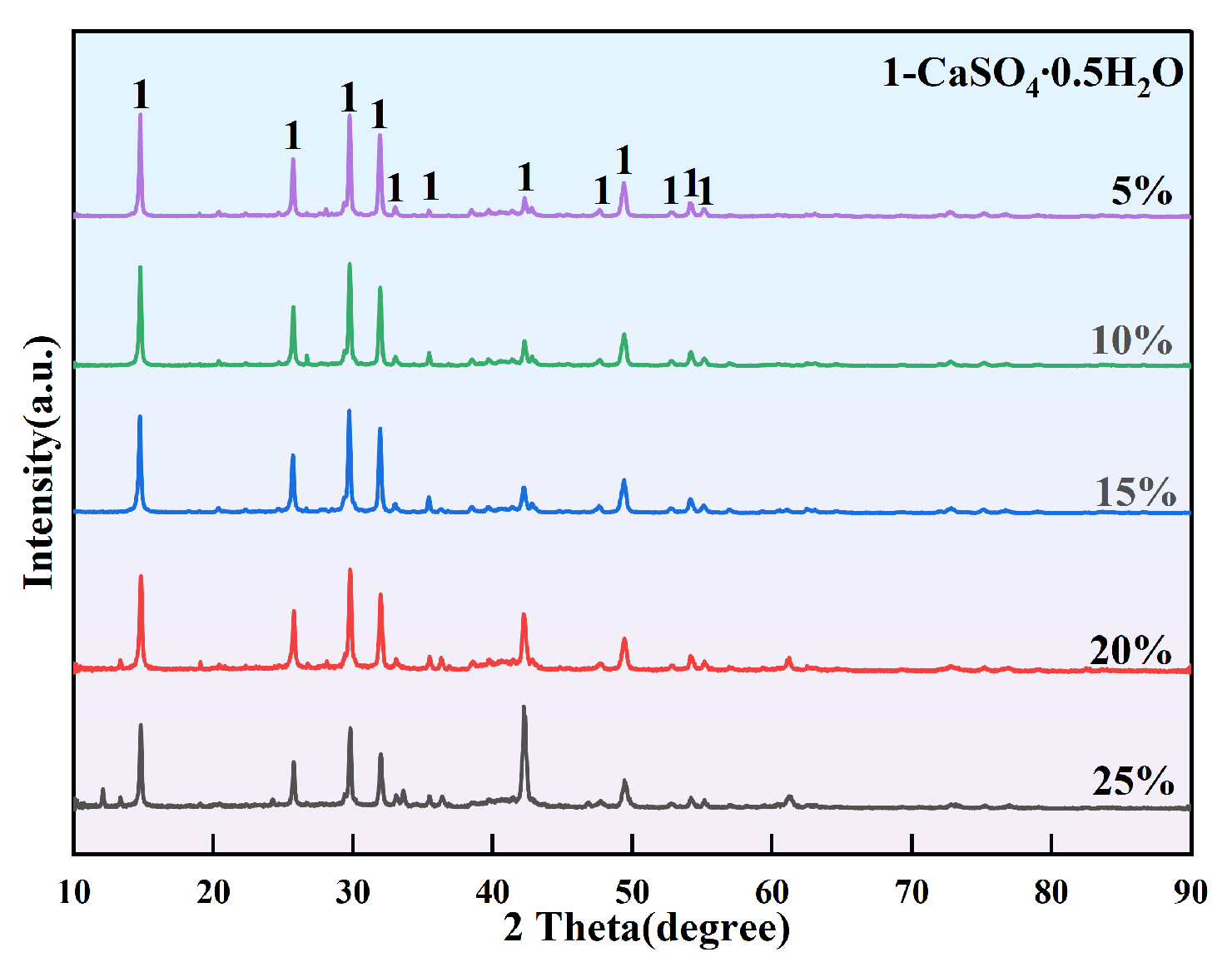
Figure 4 displays XRD patterns of leaching residues under microwave heating at varying sulfuric acid levels. The results indicate that the residues are mainly composed of calcium sulfate hemihydrate (CaSO
4·0.5H
2O), which is formed due to the precipitation reaction between Ca
2+ and SO
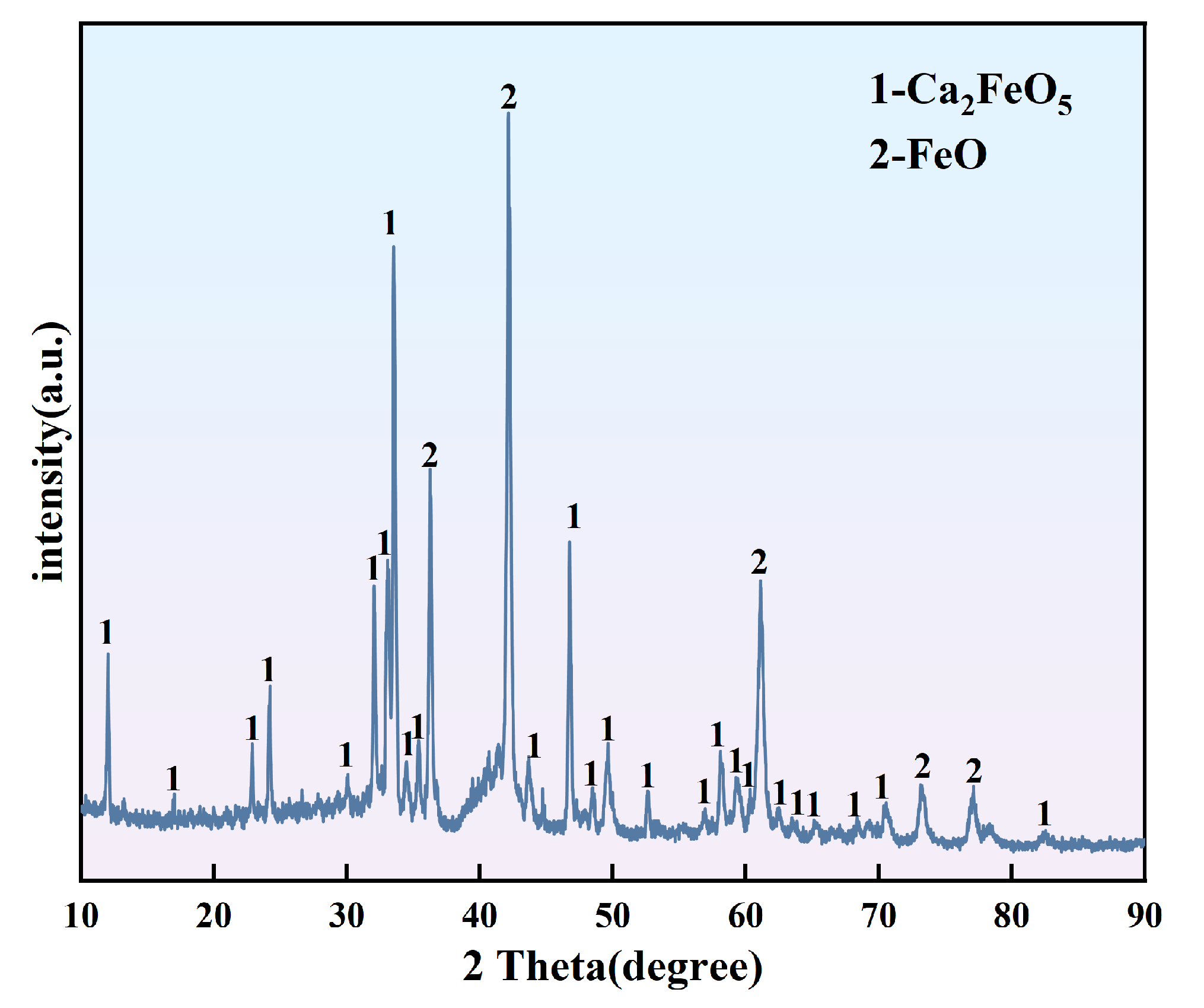
42− in a strongly acidic sulfate system and is thermodynamically stable under these conditions. No obvious diffraction peaks attributable to C
2F and FeO were detected, suggesting that these dominant mineral phases in the pre-decalcified slag were substantially decomposed during acid leaching, thereby releasing the encapsulated vanadium into solution.
Unlike conventional heating, microwave irradiation exhibits both volumetric and selective heating characteristics [
18]. In a microwave field, polar species such as water and sulfuric acid molecules absorb microwave energy through dipolar polarization and ionic conduction mechanisms, enabling volumetric and rapid heating of the system. In addition, different mineral phases exhibit distinct dielectric loss factors. Iron- and vanadium-bearing phases generally show higher microwave absorption capacity [
19], which may result in localized temperature gradients and thermal stresses and could promote microstructural disruption, thereby facilitating the exposure and dissolution of vanadium-bearing phases. Therefore, this effect is proposed as a possible mechanism for the enhanced vanadium leaching observed under microwave irradiation.
Insufficient sulfuric acid concentration results in limited H+ availability and low vanadium leaching rate. In contrast, excessively high acid concentration increases reagent consumption, equipment corrosion risk, and impurity dissolution, thereby increasing downstream neutralization and purification burden. Considering vanadium recovery efficiency, economic feasibility, and impurity control, 15 wt.% sulfuric acid under microwave heating is identified as the optimal condition.
2.2.2. Effect of Leaching Temperature on Vanadium Leaching
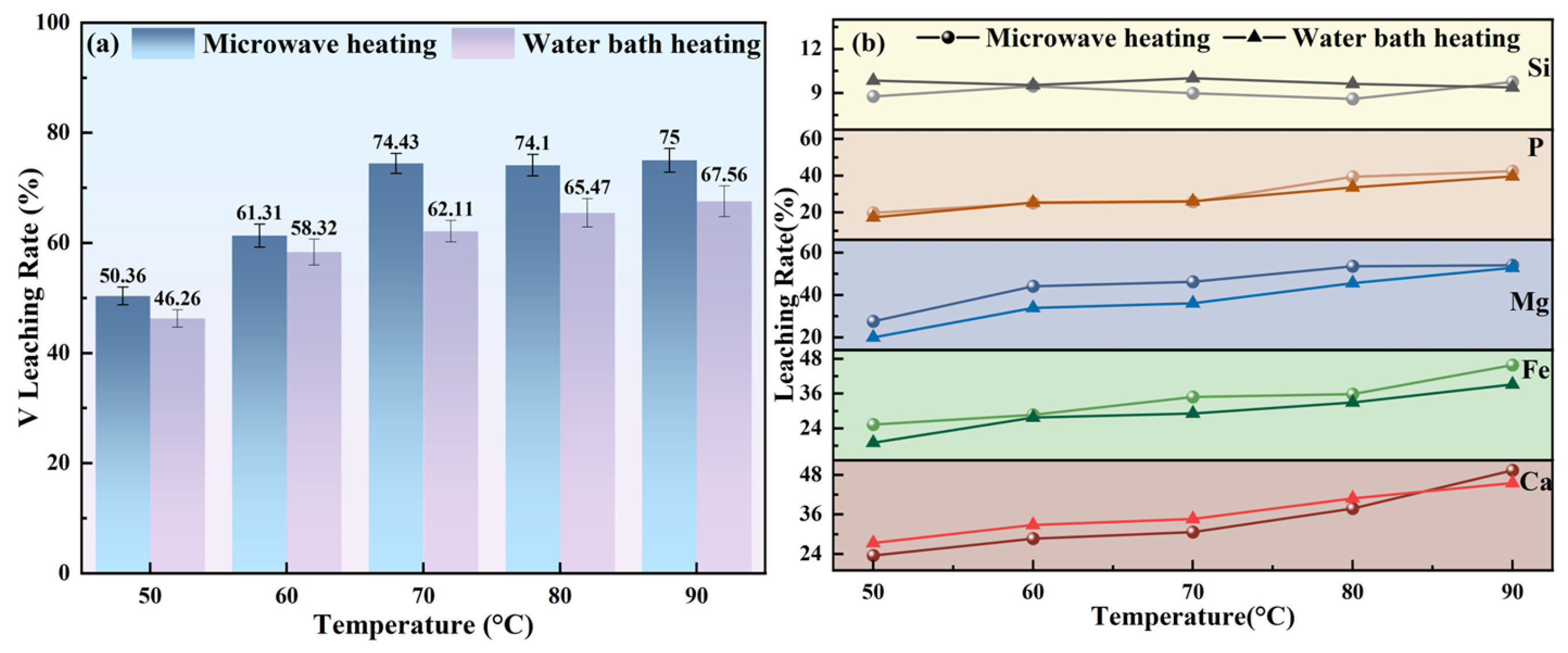
The leaching temperature influences vanadium extraction by affecting molecular motion and ion diffusion kinetics in the pre-decalcified slag. Under fixed conditions of an L/S ratio of 8 mL·g
−1, a leaching time of 60 min, and 15 wt.% sulfuric acid concentration, the effect of temperature (50–90 °C, at 10 °C intervals) on vanadium leaching behavior was investigated, as shown in
Figure 5.
Generally, increasing temperature accelerates both interfacial reaction kinetics and mass transfer processes. As illustrated in
Figure 5a, microwave-assisted vanadium extraction rises markedly as temperature increases to 70 °C. This can be attributed to the relatively low thermal energy at lower temperatures, where molecular motion in solution is limited and the interaction of V-bearing mineral phases with sulfuric acid proceeds slowly. As temperature increases, enhanced reaction kinetics and diffusion rates facilitate the exposure of previously unreacted active sites within the mineral matrix, thereby promoting vanadium dissolution.
At 70 °C, the vanadium leaching rate reaches a maximum of 74.43%. Further temperature increase does not significantly enhance vanadium extraction but instead promotes excessive dissolution of impurity elements (
Figure 5b), thereby reducing leachate selectivity.
Under conventional water-bath heating, a noticeable increase in vanadium leaching is observed up to 60 °C. Beyond this point, the leaching rate increases only slightly, peaking at 67.56% at 90 °C, which is significantly lower than that achieved under microwave irradiation at 70 °C. This difference indicates that microwave irradiation provides an additional enhancement pathway beyond conventional thermal activation.
This enhancement can be attributed to the unique energy transfer mechanism of microwave heating, which enables rapid volumetric heating and may induce localized thermal gradients within the heterogeneous slag matrix. Such effects can facilitate stress accumulation and microcrack formation, thereby weakening the structural integrity of vanadium-bearing phases and improving their accessibility to the leaching agent. In contrast, conventional heating relies primarily on external conductive heat transfer, resulting in slower and less efficient activation of the solid matrix.
Moreover, microwave irradiation not only enhances thermal activation but also promotes structural disordering and microfracturing, leading to more efficient liberation of vanadium-bearing phases embedded in calcium- and iron-rich mineral matrices.
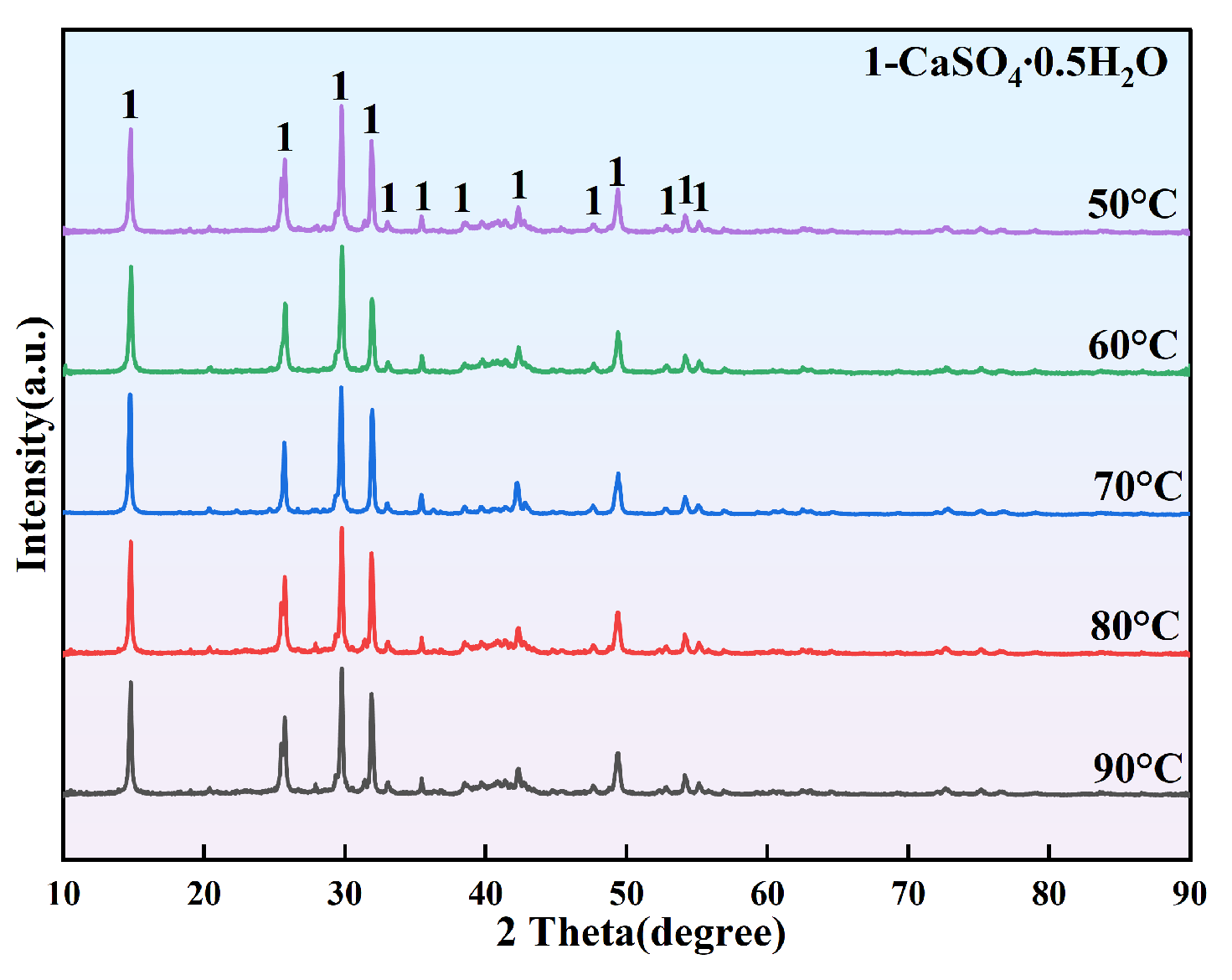
XRD analysis of residues under microwave-assisted conditions at different temperatures (
Figure 6) indicates that all products are dominated by calcium sulfate hemihydrate. The intensity of the diffraction peak at 2θ ≈ 35.4° increases progressively with increasing temperature, suggesting improved crystallinity of the precipitated phase at elevated temperatures. Compared with the raw material, no obvious diffraction peaks attributable to C
2F and FeO are observed, suggesting substantial decomposition of these original mineral phases and facilitating the transfer of vanadium into solution.
At lower temperatures, insufficient molecular kinetic energy limits vanadium release, whereas excessively high temperatures increase energy consumption and promote the dissolution of impurity ions, reducing leachate selectivity. Considering vanadium recovery rate, leachate selectivity, and process economy, 70 °C under microwave heating was identified as the optimal condition.
2.2.3. Effect of Leaching Time on Vanadium Leaching
Leaching time determines solid–liquid contact duration and is a key operating parameter governing the extent of acid attack on vanadium-bearing mineral phases, thereby affecting vanadium leaching behavior and overall leaching rate. Under fixed conditions of 15 wt.% sulfuric acid concentration, an L/S ratio of 8 mL·g
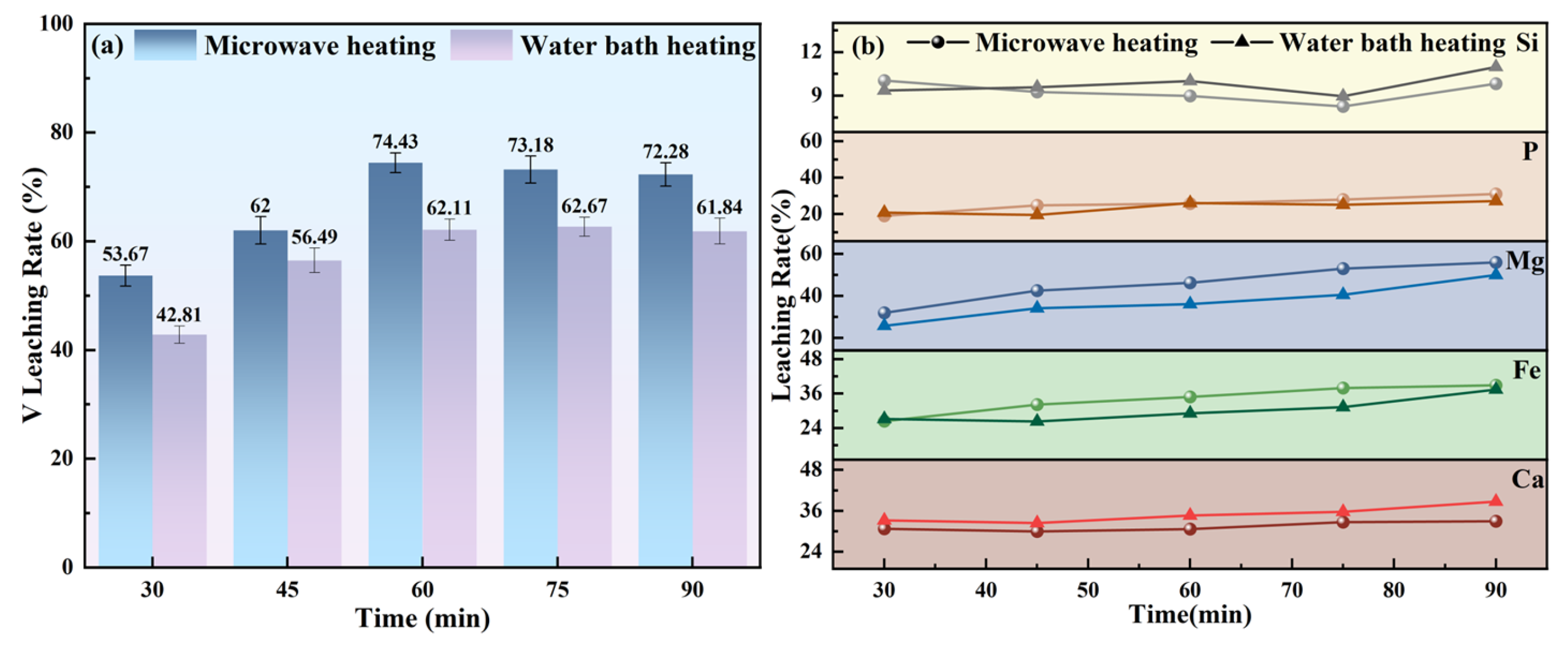
−1, and a temperature of 70 °C, the influence of leaching time (30–90 min, at 15 min intervals) on vanadium leaching behavior was investigated, as shown in
Figure 7.
As shown in
Figure 7a, under both microwave-assisted and conventional water-bath heating, vanadium extraction rises swiftly as leaching time increases up to 60 min. This is attributed to the intensified solid–liquid interfacial reactions, where readily reactive vanadium-bearing phases on the surface of the pre-decalcified slag rapidly dissolve into solution.
When the leaching time reaches 60 min, the reaction between sulfuric acid and vanadium-bearing phases is essentially completed, and the vanadium concentration in solution approaches saturation, indicating that the system has reached a quasi-thermodynamic equilibrium state. At this point, the vanadium leaching rates under microwave-assisted and water-bath heating reach 74.43% and 62.11%, respectively. Further prolonging the leaching time does not significantly improve the vanadium leaching rate. Instead, it promotes the dissolution of impurity elements such as Mg and Fe (
Figure 7b), resulting in diminished leachate selectivity and elevated downstream separation difficulty. Meanwhile, excessive reaction time reduces process throughput and increases operational cost, which is unfavorable for industrial application.
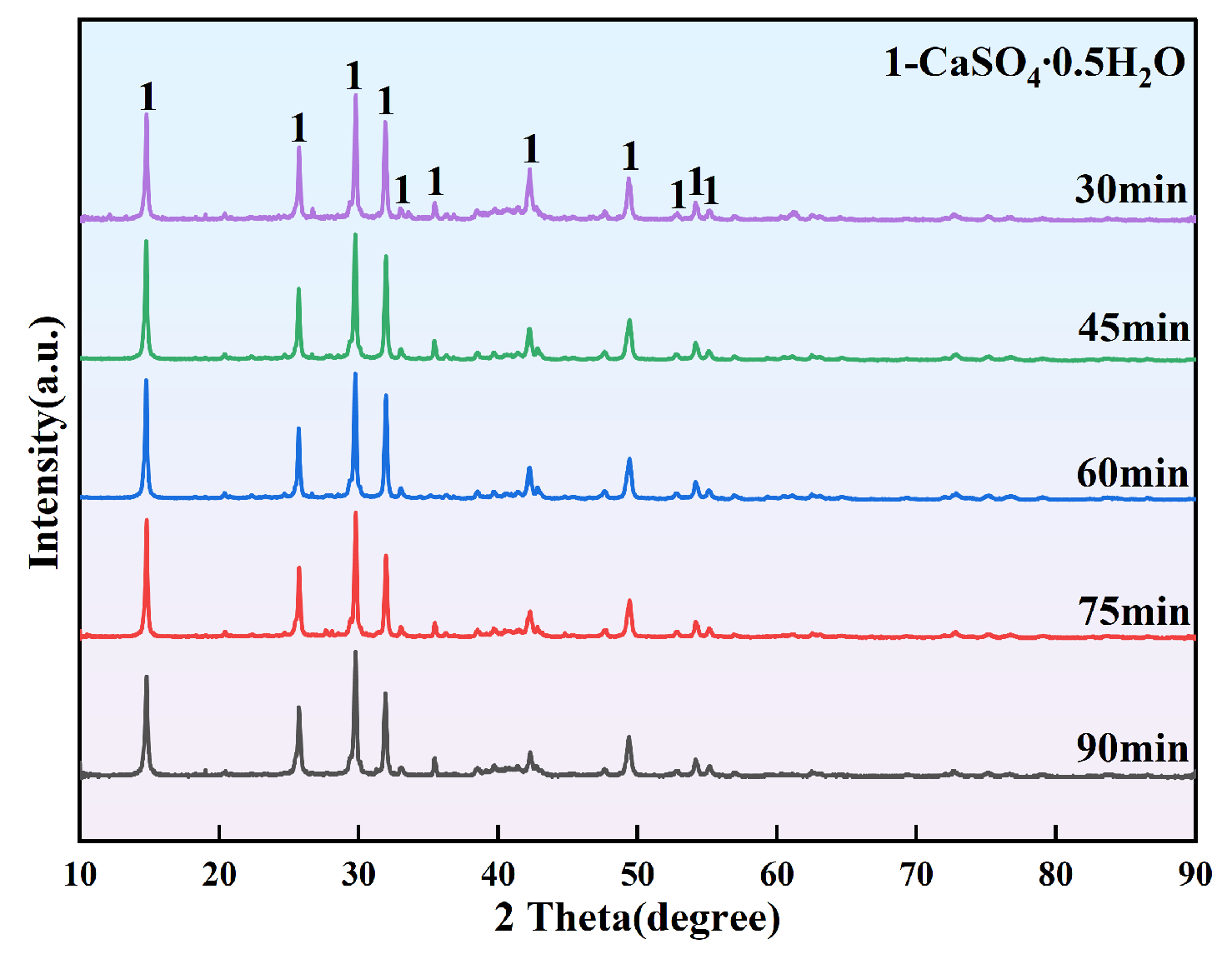
XRD analysis of residues under microwave-assisted conditions at different leaching times (
Figure 8) shows that all products are dominated by calcium sulfate hemihydrate. The relatively stable diffraction peak intensity indicates that the precipitation–dissolution equilibrium of Ca
2+ and SO
42− in solution is rapidly established during leaching. Vanadium is thus transferred into solution efficiently as the reactive phases are progressively decomposed.
At short leaching times, incomplete solid–liquid reactions lead to insufficient vanadium release, resulting in a lower leaching rate. In contrast, excessively long leaching times increase impurity dissolution and reduce leachate selectivity. Considering vanadium leaching rate, process efficiency, and impurity control, 60 min under microwave heating was identified as the optimal leaching time.
2.2.4. Effect of Liquid-to-Solid Ratio on Vanadium Leaching
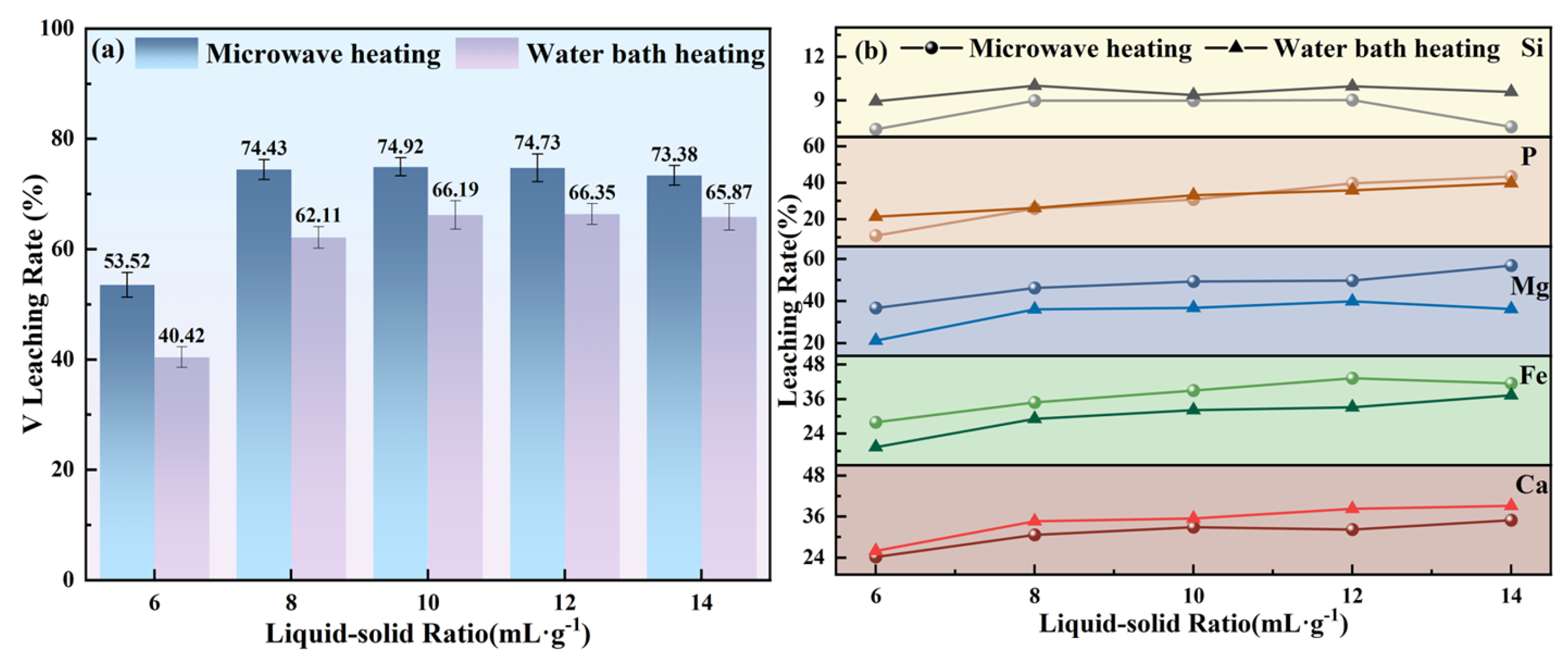
The L/S ratio affects vanadium leaching behavior by influencing solution ion concentration and mass transfer efficiency. Under fixed conditions of 15 wt.% sulfuric acid concentration, 60 min, and 70 °C, the influence of L/S ratio (6–14 mL·g
−1, interval of 2 mL·g
−1) on vanadium leaching behavior was investigated, the results are presented in
Figure 9.
As shown in
Figure 9a, under both microwave-assisted and conventional water-bath heating, the vanadium leaching rate initially increases rapidly with increasing L/S ratio and then tends to plateau. At low L/S ratios, poor solid–liquid mixing and increased mass transfer resistance limit the effective contact between sulfuric acid and the pre-decalcified slag, resulting in a relatively low vanadium leaching rate. Under microwave-assisted conditions, as the L/S ratio increased from 6 to 8 mL·g
−1, the improved dispersion of the solid phase and enhanced mass transfer promoted sufficient reaction between sulfuric acid and the slag matrix, leading to a rapid increase in the vanadium leaching rate from 53.52% to 74.43%. Further increasing the L/S ratio does not significantly improve vanadium leaching, indicating that the mass transfer conditions have reached an optimal state. At this stage, the L/S ratio is no longer the rate-limiting factor and a further increase only leads to unnecessary dilution of the leachate and reduced sulfuric acid utilization efficiency.
Under conventional water-bath heating, a similar trend is observed; however, the vanadium leaching rate is consistently lower than that under microwave irradiation across all conditions. This is attributed to the fact that water-bath heating relies mainly on macroscopic heat and mass transfer, making it more sensitive to diffusion limitations at low L/S ratios. In contrast, microwave irradiation promotes rapid volumetric heating and localized structural loosening, partially alleviating mass transfer limitations and thus enhancing vanadium dissolution efficiency.
As shown in
Figure 9b, the leaching behaviors of impurity elements under both heating methods exhibit similar trends. The leaching of Si remains relatively stable with slight fluctuations, whereas Fe, Ca, Mg, and P show varying degrees of increase with increasing L/S ratio.
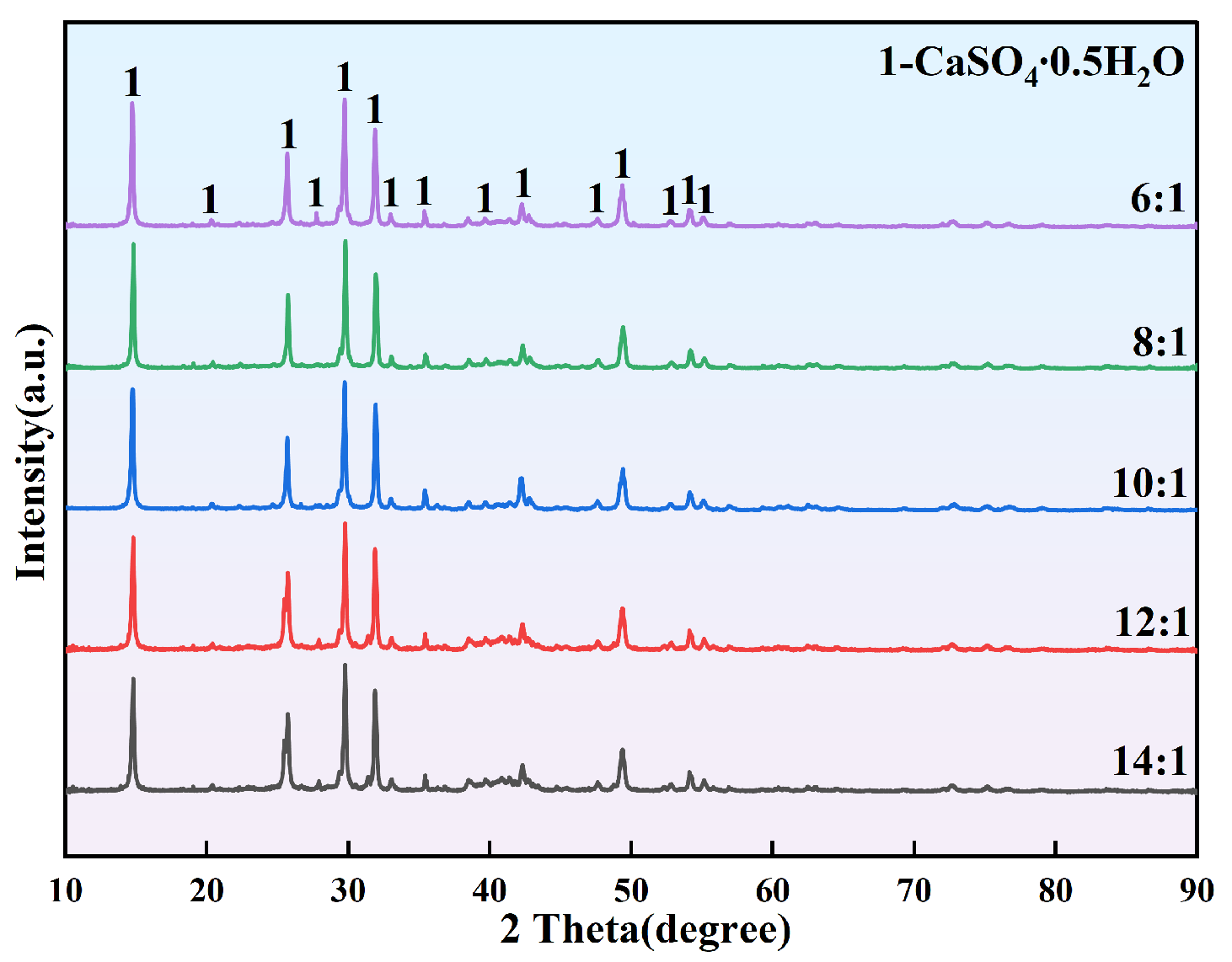
XRD analysis of residues under microwave-assisted conditions at different L/S ratios (
Figure 10) shows that all leaching residues are composed exclusively of calcium sulfate hemihydrate. The diffraction peak intensity at 2θ ≈ 35.4° first increases and then stabilizes, reaching a maximum at an L/S ratio of 8 mL·g
−1, indicating the establishment of a stable precipitation-dissolution equilibrium. No obvious diffraction peaks attributable to vanadium-bearing or Fe-rich phases are detected in the residues, suggesting substantial decomposition of these phases and the associated transfer of vanadium into solution.
At low L/S ratios, insufficient mass transfer leads to incomplete dissolution of vanadium-bearing phases, resulting in a lower leaching rate. At excessively high L/S ratios, although mass transfer is improved, sulfuric acid utilization efficiency decreases and impurity dissolution is promoted. Considering vanadium leaching rate, process economics, and impurity control, an L/S ratio of 8 mL·g−1 under microwave heating was identified as the optimum.
A comprehensive analysis of L/S ratio, leaching time, leaching temperature, and sulfuric acid concentration demonstrates that microwave-assisted leaching significantly enhances vanadium extraction under all investigated conditions compared with conventional water-bath heating, indicating a strong process intensification effect. Based on single-factor optimization, the optimum conditions for microwave-assisted leaching were established as 15 wt.% sulfuric acid, a temperature of 70 °C, a leaching time of 60 min, and an L/S ratio of 8 mL·g−1, under which a maximum vanadium leaching rate of 74.43% was achieved.
2.3. Countercurrent Leaching Process
To further enrich vanadium in the leachate, a batchwise multistage leachate-reuse procedure was employed to simulate countercurrent leaching. The leachate obtained from the initial leaching experiment under the optimal conditions was used as the leaching medium to treat a fresh batch of pre-decalcified slag at 70 °C for 60 min and an L/S ratio of 8 mL·g
−1. After each leaching stage, the solid residue was separated, and the recovered leachate was directly reused to treat another fresh batch of pre-decalcified slag under the same conditions. The mass of fresh slag and the liquid volume were maintained constant at each stage, and the leachate-reuse procedure was continued until the vanadium concentration showed no appreciable further increase. The concentrations of V and impurity elements in the leachate after each stage were determined by ICP-OES. To quantify the accumulation of each element in the circulating leachate, a normalized enrichment index (
Ei,j) and an incremental enrichment (Δ
Ei,j) were defined, as shown in Equations (1) and (2):
where
ci,j is the concentration of element
i in the leachate after stage
j (g·L
−1), and
ci,0 denotes the concentration of element
i in the leachate obtained from the initial single-stage leaching experiment,
V is the constant leachate volume (L),
m is the mass of fresh pre-decalcified slag used at each stage (g), and
wi is the mass fraction of element
i in the fresh pre-decalcified slag (dimensionless).
Ei,j represents the amount of element
i accumulated in the circulating leachate relative to the total amount of the same element contained in one batch of fresh pre-decalcified slag (%), while Δ
Ei,j represents the net incremental enrichment after stage
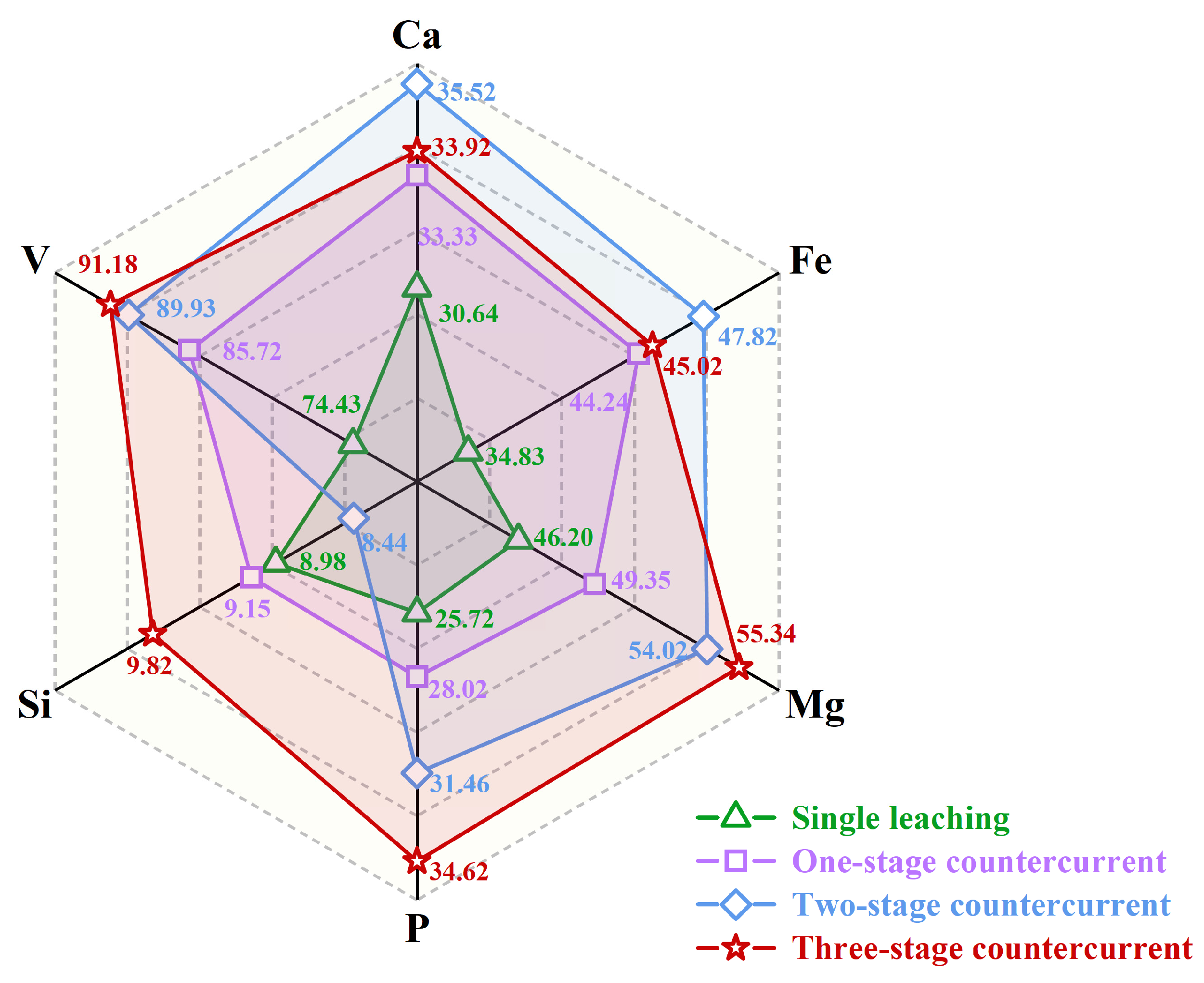
j, expressed in percentage points. The corresponding results are shown in
Figure 11.
Countercurrent leachate reuse progressively increased the accumulation of vanadium in the liquid phase. As shown in
Figure 11, the normalized enrichment index of V increased from 74.43% after the initial single-stage leaching to 85.72% after the first reuse stage, corresponding to an incremental enrichment of 11.29 percentage points. After the second reuse stage, the vanadium concentration increased to 1.57 g·L
−1 and the normalized enrichment index reached 89.93%, representing a further increase of 4.21 percentage points. In the third stage, the vanadium concentration increased only slightly to 1.59 g·L
−1, while the normalized enrichment index reached 91.18%, corresponding to an additional increase of only 1.25 percentage points.
With increasing reuse stages, the normalized enrichment indices of P and Mg generally increased, indicating their progressive accumulation in the circulating leachate. In contrast, the Si enrichment index decreased slightly during the second stage, which may be associated with silica polymerization and re-adsorption of colloidal silica onto the solid surface. The Ca enrichment index decreased in the third stage, possibly because the increasing concentrations of Ca2+ and SO42− promoted secondary precipitation of calcium sulfate. A slight decrease in Fe was also observed in the third stage, which may be related to the progressive consumption of acidity and hydrolysis or precipitation of Fe-containing species during repeated heating.
Multistage leachate reuse progressively enriched vanadium in the circulating solution while further utilizing the residual leaching capacity of the solution. However, the incremental vanadium enrichment decreased markedly with increasing stage number. In particular, extending the process from the second to the third reuse stage increased the normalized V enrichment index only from 89.93% to 91.18%, while the vanadium concentration increased by only 0.02 g·L−1. Meanwhile, the accumulation of several impurity elements continued. Considering the diminishing vanadium enrichment, increasing impurity burden, and additional operating requirements associated with an extra leaching stage, the two-stage configuration was selected as the preferred operating condition.
2.4. Characterization of the Leaching Residue
The leaching residue obtained under the optimal conditions (leaching time of 60 min, L/S ratio of 8 mL·g
−1, temperature of 70 °C, and sulfuric acid concentration of 15 wt.%) was analyzed by ICP-OES to determine the concentrations of the major elements, as summarized in
Table 1, thereby providing a quantitative assessment of vanadium leaching selectivity and impurity co-leaching.
Under the optimal conditions, the leaching rate of V reached 74.43%, which was markedly higher than those of the major impurity elements. The corresponding leaching rates of Mg, Fe, Ca, P, and Si were 46.20%, 34.83%, 30.64%, 25.72%, and 8.98%, respectively. These results indicate that vanadium exhibited preferential dissolution relative to the major matrix and impurity elements. Nevertheless, the co-leaching of Mg and Fe remained appreciable, indicating that subsequent purification of the leachate is still necessary before vanadium recovery. In contrast, Si showed the lowest leaching rate, suggesting that most Si remained in the solid residue under the selected conditions.
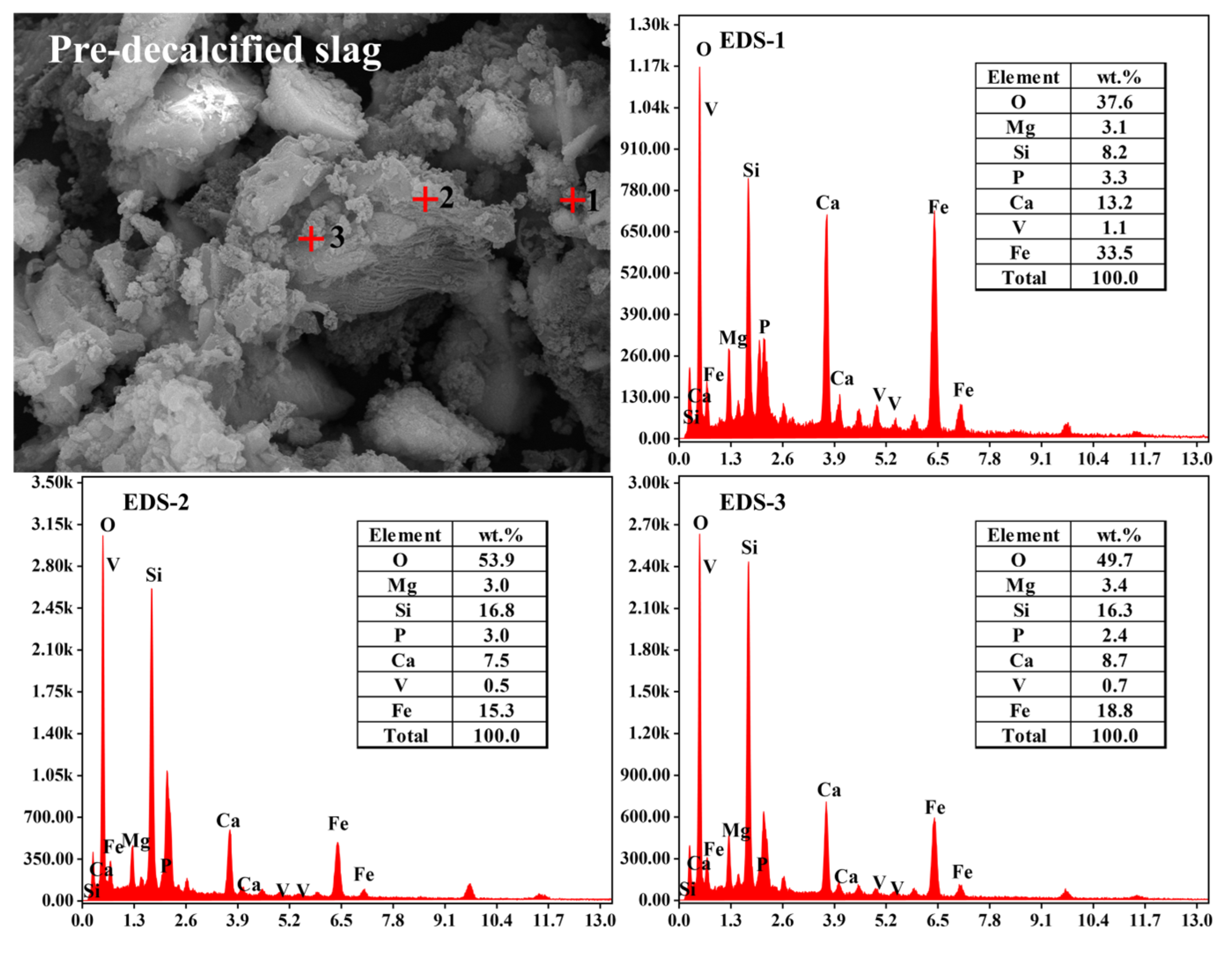
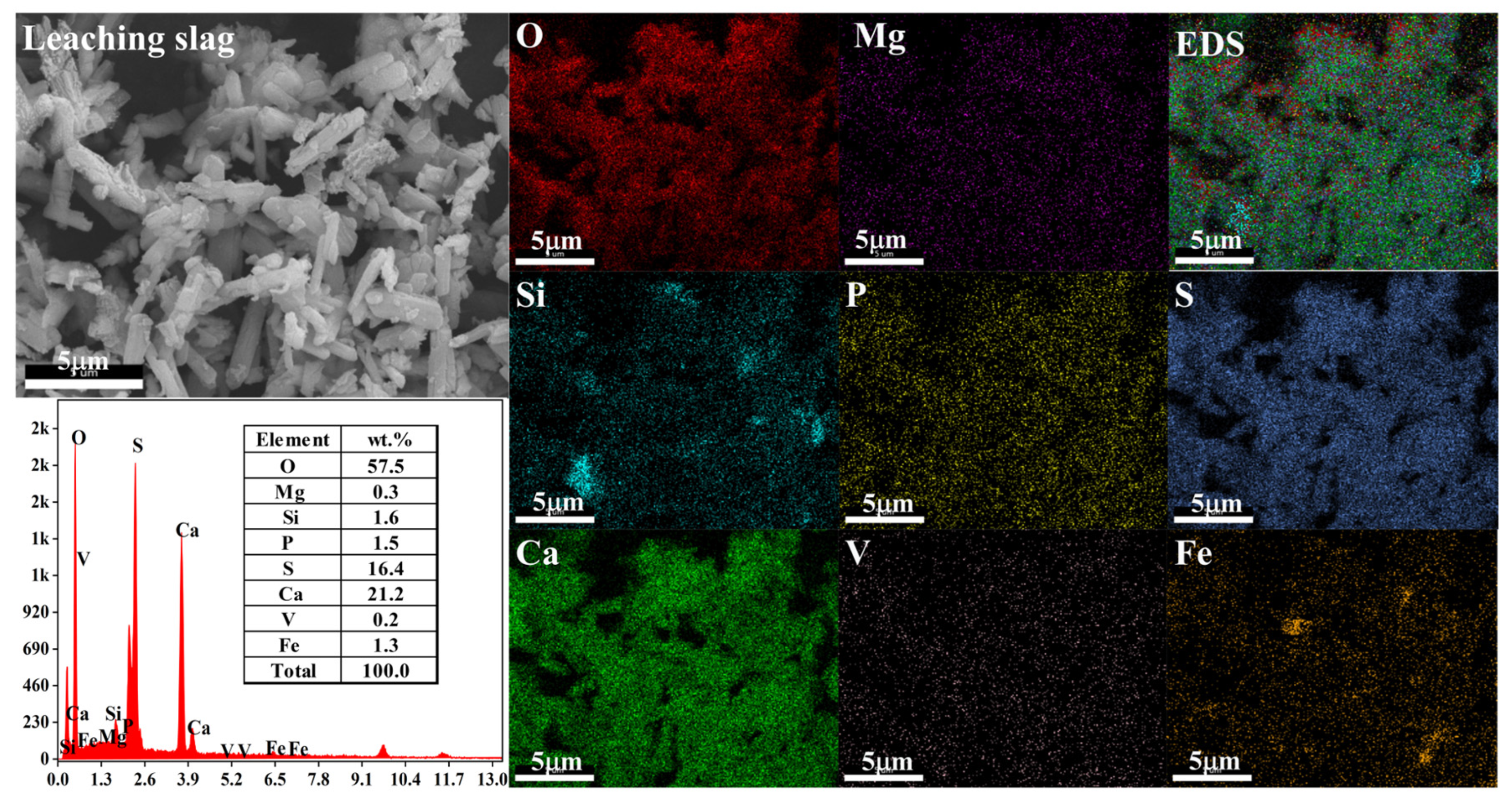
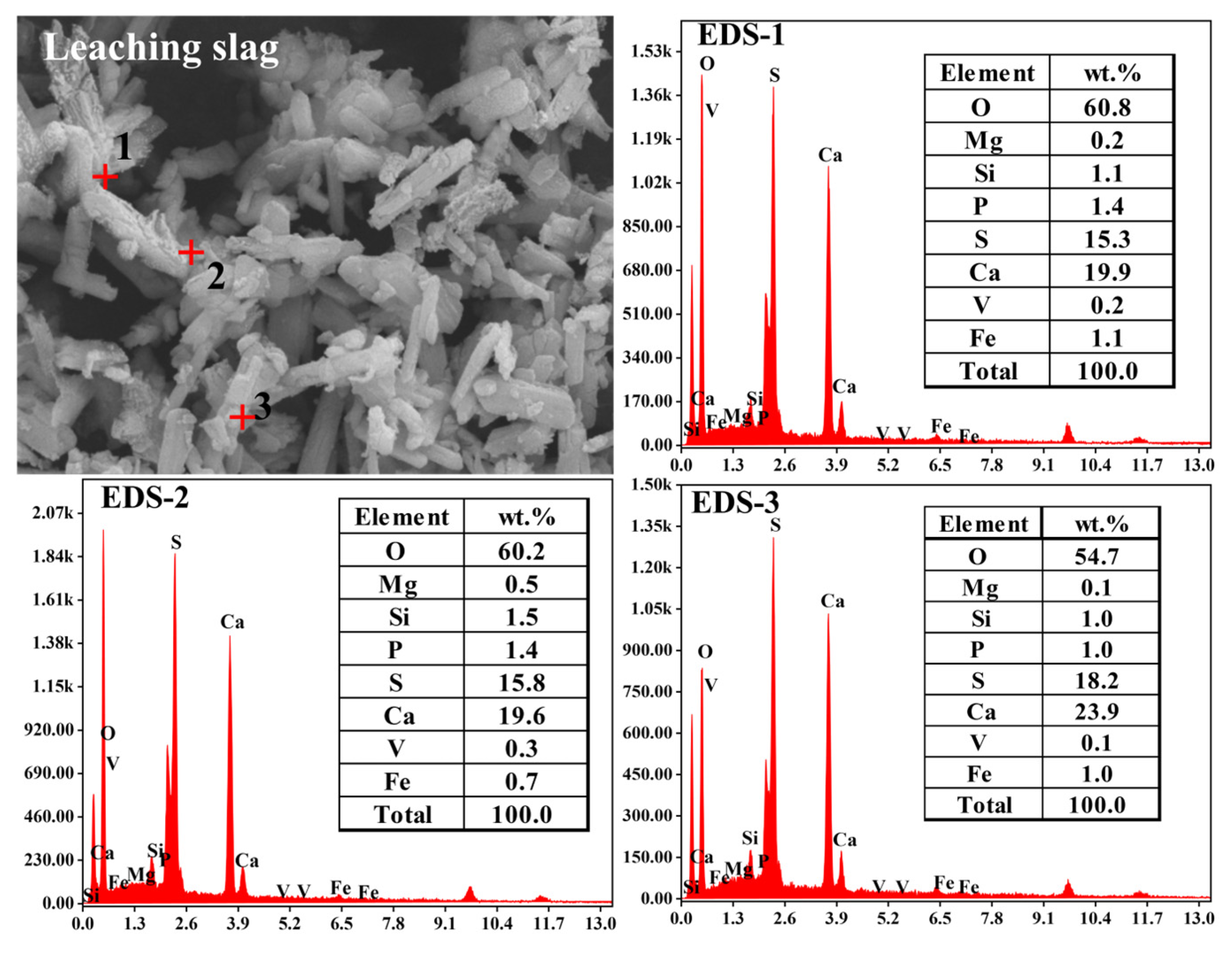
In addition, the corresponding leaching residue was further characterized by SEM-EDS to investigate its microstructural morphology and elemental distribution, as shown in
Figure 12 and
Figure 13. The residue exhibits a dense, needle-like morphology with relatively smooth surfaces. In some regions, agglomerated structures are observed, which may encapsulate unreacted core particles and hinder further vanadium dissolution. Combined SEM-EDS mapping, point analysis, and XRD results confirm that the leached product is dominated by calcium sulfate phases. Trace elements like Fe, Mg, Si, and P are also detected within the matrix, while vanadium is highly dispersed and only present at trace levels, indicating that most vanadium has been effectively transferred into the leachate.
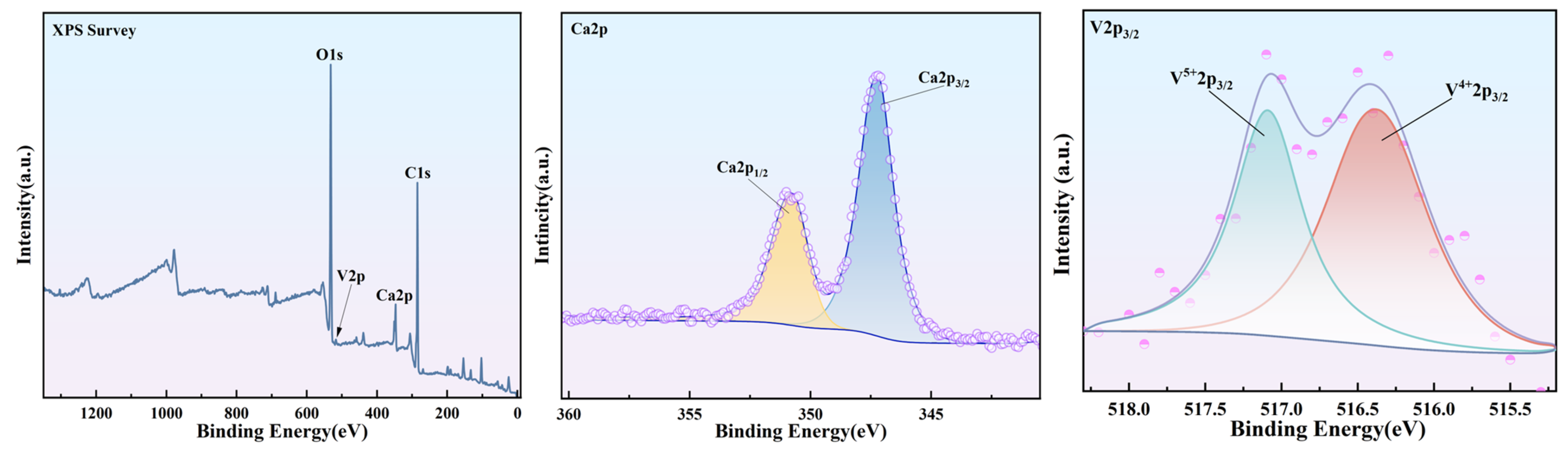
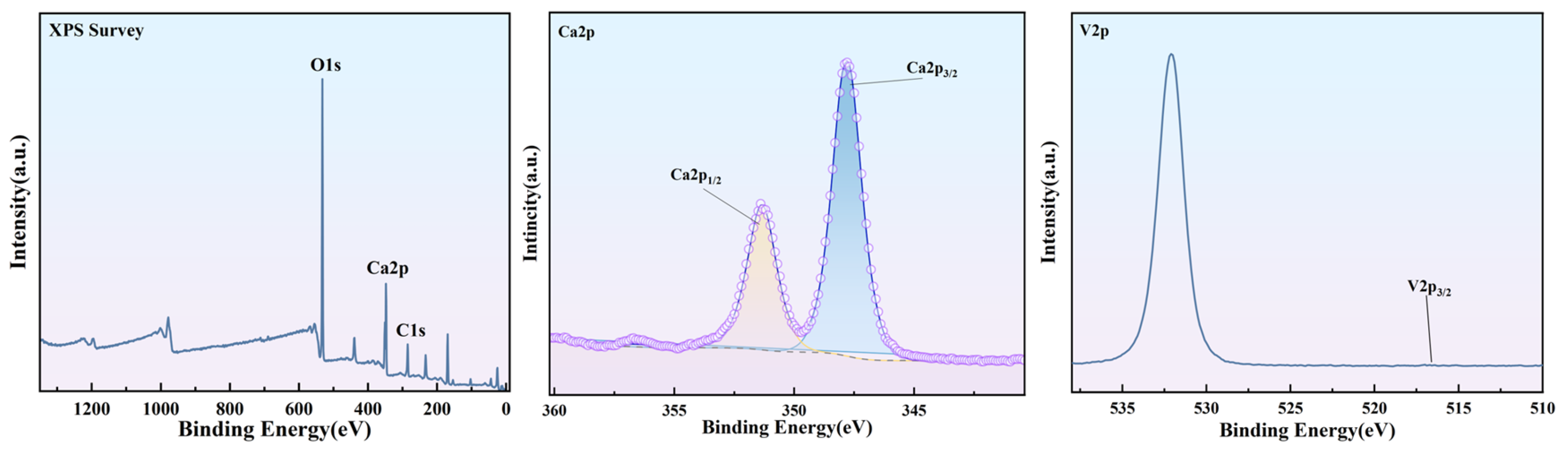
XPS analysis further confirms the efficient removal of vanadium, as shown in
Figure 14. The survey spectrum indicates a high Ca content and a very low V signal, demonstrating that vanadium is largely depleted from the solid phase. The Ca 2p spectrum exhibits a doublet at 347.8 eV (Ca2p
3/2) and 351.3 eV (Ca2p
1/2), attributable to Ca
2+ in CaSO
4 [
20], confirming that calcium is immobilized in the residue as sulfate species after leaching.
The V 2p spectrum exhibits only a very weak signal, with the V 2 p3/2 peak located at 516.4 eV. Due to the extremely low concentration approaching the detection limit, no peak deconvolution was performed. The significant attenuation of the V signal directly confirms the effective extraction of vanadium during the acid leaching process.
From a mechanistic perspective, sulfuric acid provides H+ ions that attack the residual calcium-bearing silicate phases in the pre-decalcified slag, breaking Ca-O-Si bonds and destabilizing the crystal lattice. This structural collapse releases V5+, which substitutes for Si sites or resides at phase boundaries in tetrahedral coordination environments. Simultaneously, H+ also reacts with calcium ferrite phases, breaking Ca-O-Fe bonds and exposing V4+ species originally occupying octahedral Fe sites.
Due to the different acid solubilities of dicalcium silicate and calcium ferrite, the dissolution of the former is faster, resulting in different release kinetics of vanadium from distinct host phases. Vanadium released from the solid phase may exist in different oxidation states. Under acidic and sufficiently oxidizing conditions, V4+ may be further oxidized to V5+, with V4+ and V5+ represented mainly by VO2+ and VO2+, respectively, in solution.
Beyond the leaching performance and residue characteristics discussed above, several practical considerations should also be addressed for the potential application of the proposed process. Although the proposed pre-decalcification–microwave-assisted leaching process shows promising vanadium recovery performance, several practical limitations should be considered for further application. Pre-decalcification removes a substantial fraction of Ca-containing phases before sulfuric acid leaching, which can reduce the consumption of sulfuric acid by acid-consuming matrix components and is also beneficial for subsequent vanadium extraction. Nevertheless, sulfuric acid consumption remains an important factor affecting reagent cost and downstream solution treatment. The leaching residue is mainly enriched in Ca- and S-bearing phases, particularly calcium sulfate, suggesting potential utilization as a raw material for cementitious or other construction materials [
21]. However, further evaluation of its chemical stability, residual metal contents, and environmental safety is required before practical utilization. In addition, corrosion of equipment exposed to hot sulfuric acid solutions should be considered when selecting reactor materials. For scale-up of microwave-assisted leaching, microwave penetration depth, non-uniform electromagnetic-field distribution, local overheating, and reactor geometry may affect heating uniformity and energy efficiency [
22]. Therefore, further optimization of reactor design and systematic evaluation of microwave energy consumption are necessary before industrial application.
2.5. Kinetic Analysis
To elucidate the reaction kinetics of vanadium leaching from pre-decalcified slag under microwave-assisted sulfuric acid leaching, the shrinking-core model assuming invariant particle dimensions [
23] was employed to investigate how sulfuric acid concentration and reaction temperature affect the leaching kinetics.
For heterogeneous liquid-solid reactions, three kinetic models were considered, including diffusion control through the solid product layer, chemically controlled surface reactions, and mixed control, for discerning the rate-limiting mechanism:
For internal diffusion control:
For surface chemical reaction control:
For mixed control:
where
x is the vanadium leaching rate (%),
t is the reaction time (min), and
kd is the apparent rate constant corresponding to each controlling step (min
−1).
The temperature dependence of the apparent rate constant (
kd) follows the Arrhenius equation:
Taking the natural logarithm of both sides yields:
where
Ea is the apparent activation energy (kJ·mol
−1), generally considered to be independent of temperature, R is the universal gas constant (8.314 J·mol
−1·K
−1),
T is the absolute temperature (K), A is the pre-exponential factor (s
−1).
2.5.1. Effect of Sulfuric Acid Concentration on Vanadium Leaching Rate
Under fixed conditions of an L/S ratio of 8 mL·g
−1, 60 min, and70 °C, the impact of sulfuric acid concentration (5–15 wt.%, in 2.5 wt.% increments) on the kinetic behavior of vanadium leaching was investigated.
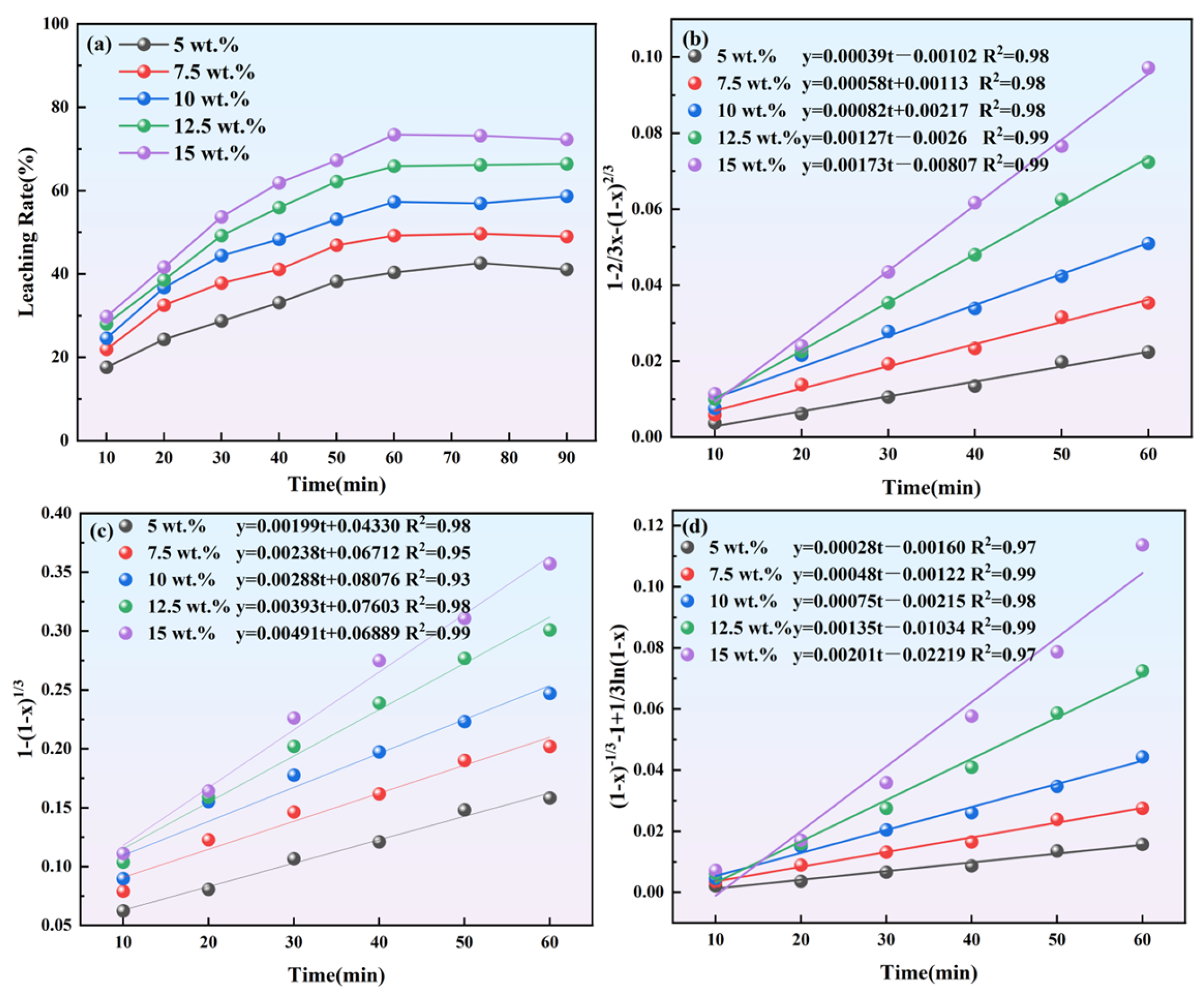
Figure 15a displays how vanadium extraction varies with acid concentration. During the initial 0–60 min stage, the vanadium leaching rate increased markedly with increasing sulfuric acid concentration, following an approximately linear dependence on acid concentration. Beyond 60 min, the leaching rate gradually reached a plateau, and no further significant variation was observed, indicating that the system had approached saturation under the given conditions. Therefore, only the data obtained within the first 60 min were used for kinetic fitting to identify the rate-limiting step.
As illustrated in
Figure 15b–d, regression results reveal that both the internal diffusion control model (
Figure 15b) and the mixed control model (
Figure 15d) exhibit strong linear correlations (R
2 > 0.95). A comparison of fitting quality shows that the internal diffusion model outperforms the mixed control model in terms of linear fitting. Although the chemical reaction control model (
Figure 15c) also yields a correlation coefficient above 0.90, its linearity is inferior to that of the other two models, indicating weaker fitting performance under the present conditions. Based on these results, the leaching process within the investigated sulfuric acid concentration range is well represented by a size-invariant shrinking-core model, in which internal diffusion constitutes the primary rate-determining step.
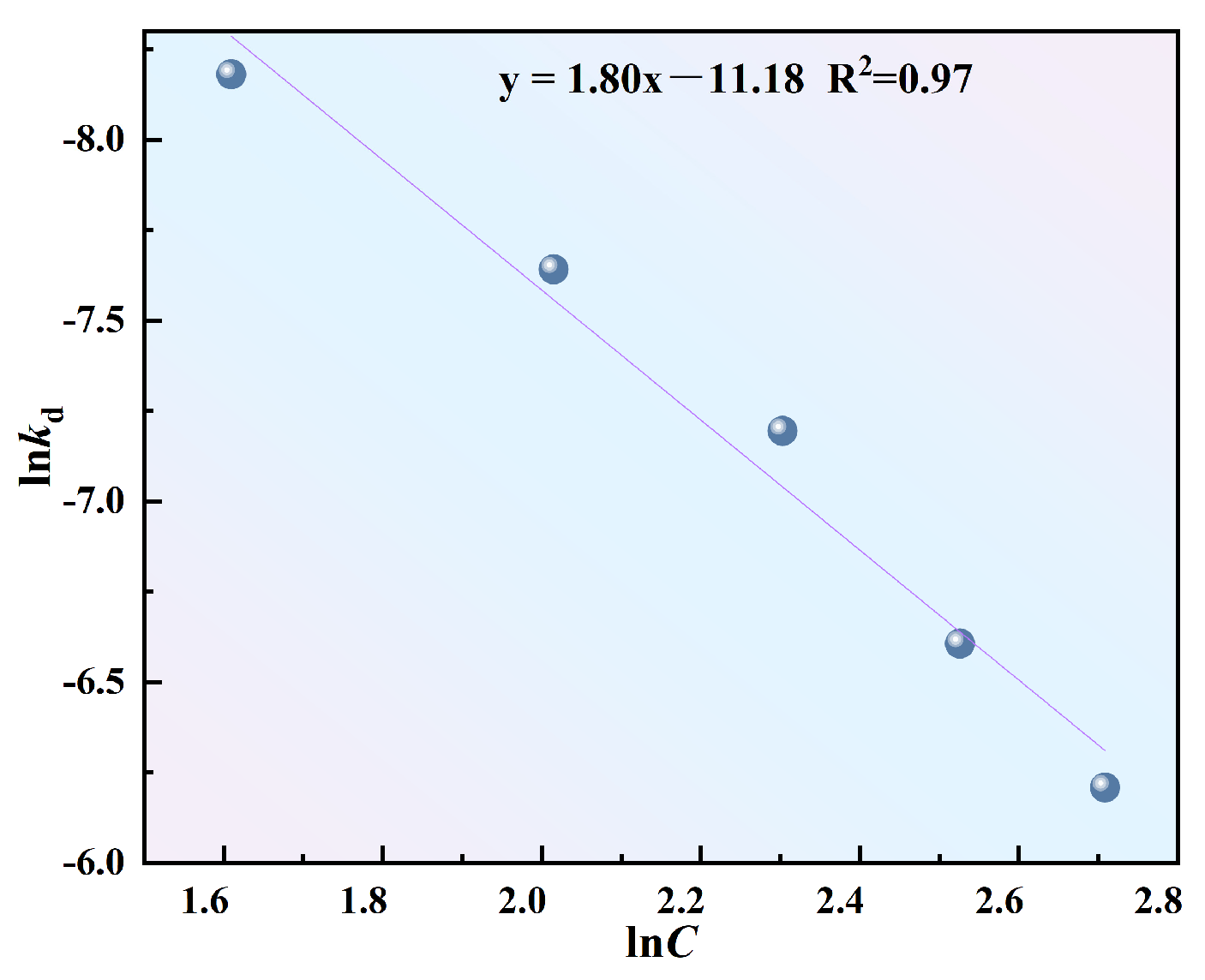
To further clarify the effect of sulfuric acid concentration on the leaching rate, the apparent rate constants
kd were calculated from the slopes of the fitted equations in
Figure 15b under different conditions. The relationship between ln
kd and lnC is shown in
Figure 16. the apparent reaction order was 1.80, and the semi-empirical kinetic expression was established as ln
kd = 1.80lnC − 11.18.
2.5.2. Effect of Leaching Temperature on Vanadium Leaching Rate
Under fixed conditions of a leaching time of 60 min, 15 wt.% sulfuric acid concentration, and an L/S ratio of 8 mL·g
−1, the effect of leaching temperature (50–70 °C, at 5 °C intervals) on the kinetic behavior of vanadium leaching was investigated.
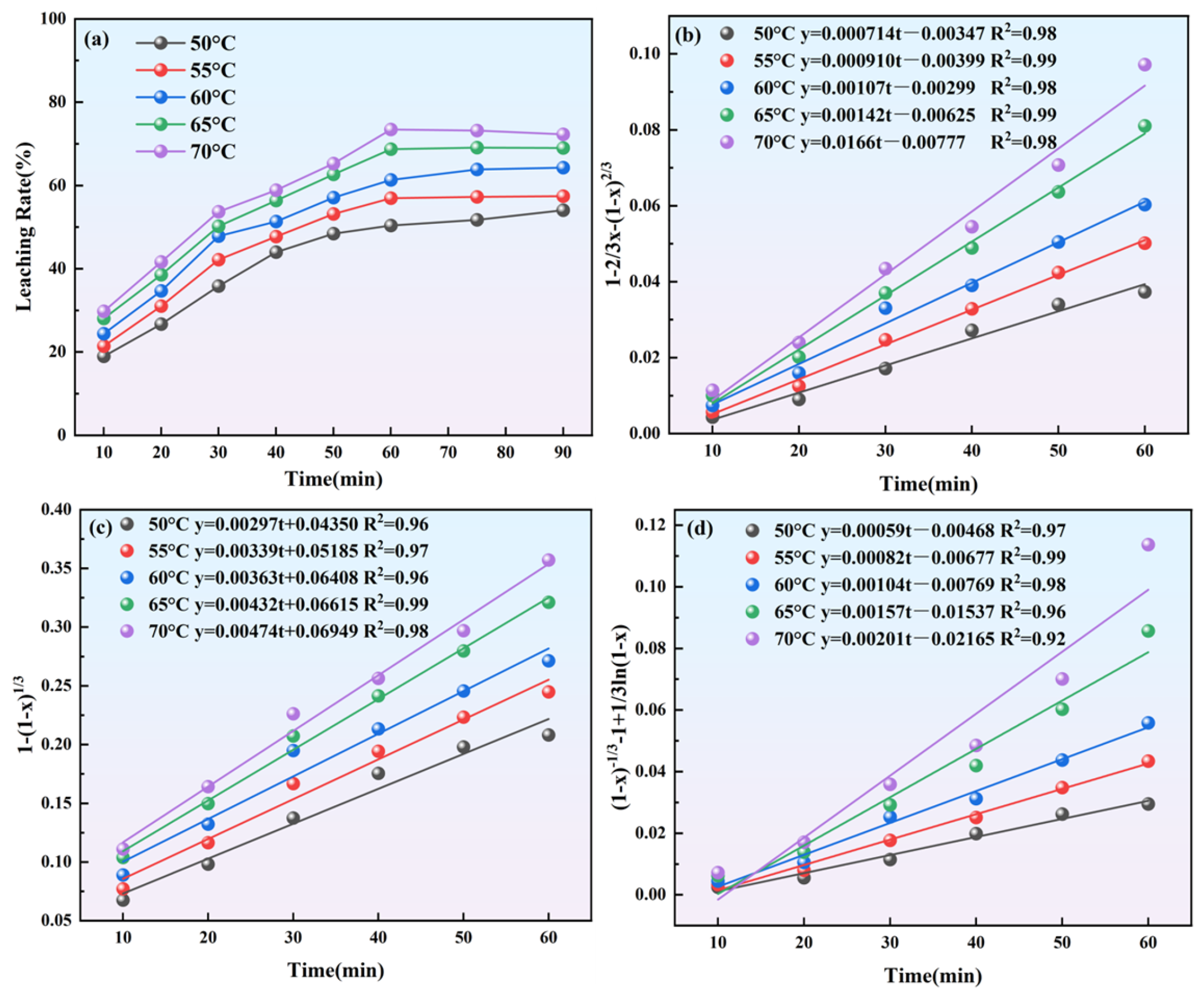
Figure 17a presents the temperature dependence of vanadium leaching.
During the initial 0–60 min stage, the vanadium leaching rate increased markedly with increasing temperature, showing an approximately linear dependence on temperature. Beyond 60 min, the leaching rate gradually reached a plateau and no further significant variation was observed, indicating that the system had approached saturation under the given conditions. Therefore, only the data within the first 60 min were selected for kinetic analysis, as illustrated in
Figure 17b–d, to determine the rate-controlling step.
As shown in
Figure 17b–d, both the internal diffusion control model (
Figure 17b) and the chemical reaction control model (
Figure 17c) exhibit strong correlations. However, the internal diffusion model shows a higher R
2 value than the chemical reaction model, indicating a better fitting performance. Although the mixed control model (
Figure 17d) also yields correlation coefficients above 0.90, its overall linearity is relatively weaker.
These results suggest that, within the investigated thermal window (50–70 °C), leaching behavior follows a constant-particle-size shrinking-core model, predominantly governed by internal diffusion.
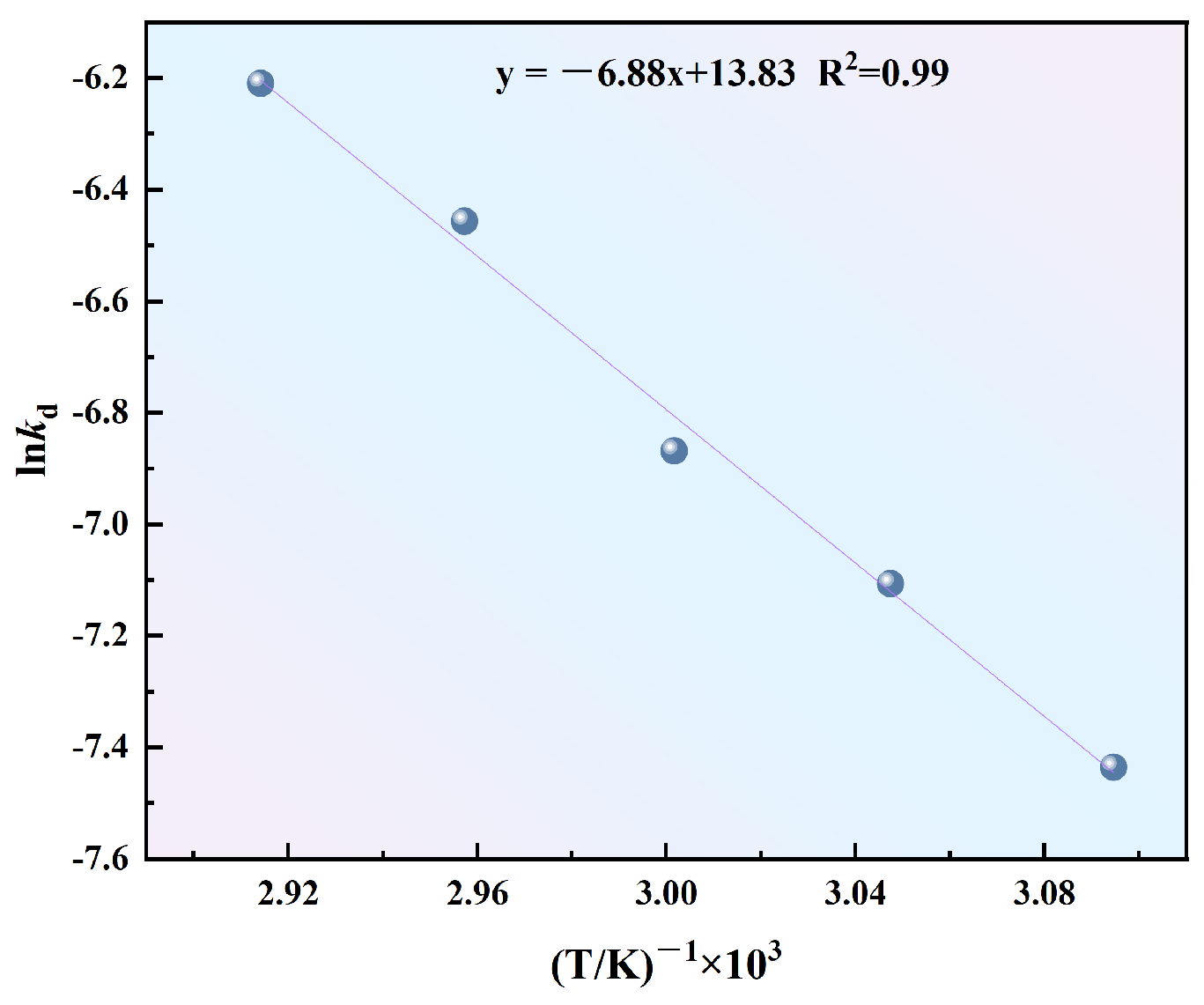
To further assess this kinetic interpretation,
Ea was determined from the Arrhenius treatment of the temperature-dependent rate constants, as shown in
Figure 18. The apparent activation energy for microwave-assisted sulfuric acid leaching was calculated to be 57.20 kJ·mol
−1. The apparent activation energy can be used as an auxiliary criterion for identifying the rate-controlling mechanism. Generally, diffusion-controlled, mixed-controlled, and chemical-reaction-controlled processes are associated with apparent activation energies of approximately 4–12, 12–40, and 40–300 kJ·mol
−1, respectively [
24]. The
Ea obtained in the present study is therefore higher than the ranges generally associated with diffusion- and mixed-controlled processes, indicating that the leaching process cannot be described solely by product-layer diffusion. Nevertheless, among the three kinetic models examined, the internal-diffusion model exhibited the highest regression coefficients, indicating that internal diffusion remained the predominant rate-controlling step. Therefore, the leaching process is more reasonably interpreted as being predominantly controlled by internal diffusion, while the contribution of the interfacial chemical reaction cannot be neglected.
Similar coupled kinetic behavior has also been reported for vanadium-bearing steel slag. Liu et al. investigated pressure acid leaching of roasted vanadium-bearing steel slag and reported an apparent activation energy of 20.87 kJ·mol
−1. Their results indicated that both interfacial transfer and diffusion through the product layer affected the vanadium leaching rate [
25]. Compared with that study, the apparent activation energy obtained in the present work is higher, indicating that the present system exhibits stronger temperature dependence. According to the kinetic-model fitting results, internal diffusion is the predominant rate-controlling step, while the interfacial chemical reaction also makes a non-negligible contribution.