Aloe ferox as a Candidate Botanical Insecticide for Stored-Grain Protection: Evidence, Knowledge Gaps, and Prospects for Sitophilus zeamais Management

 ,
,  , , , ,
  and
and
Abstract
1. Introduction
2. Literature Search Methodology
3. Biology and Economic Importance of S. zeamais
4. Botanical Insecticides in Stored-Grain Protection
5. Botanical Description and Economic Importance of A. ferox and Related Aloe Species
6. Phytochemistry of Aloe
7. Potential of A. ferox Against S. zeamais
8. Structure–Activity Relationship of Major A. ferox Constituents
8.1. Anthrones and Anthraquinones
8.2. Chromones
8.3. Flavonoids and Phenolic Compounds
8.4. Volatile Constituents
8.5. Overall Structure–Activity Implications
9. Safety and Environmental Considerations of A. ferox as a Botanical Insecticide
10. Research Gaps and Future Directions
11. Conclusions
Author Contributions
Funding
Institutional Review Board Statement
Informed Consent Statement
Data Availability Statement
Acknowledgments
Conflicts of Interest
Abbreviations
| IPM | Integrated Pest Management |
| FDA | Food and Drug Administration |
| EOs | Essential oils |
| STIs | Sexually Transmitted Infections |
| MIC | Minimum Inhibitory Concentration |
| UHPLC-MS | Ultra-High-Performance Liquid Chromatography |
| HPLC | High-Performance Liquid Chromatography |
| SAR | Structure-activity Relationship |
References
- Mpoke, R.S.; Kinyua, J.; Kimani, J.W.; Ajene, I.J.; Likhayo, P.; Khamis, F.M. Efficacy of Botanical Extract Formulations of Zanthoxylum usambarense and Warburgia ugandensis on Post-Harvest Management of Sitophilus zeamais in Maize. Sustainability 2023, 15, 10833. [Google Scholar] [CrossRef] [Scilit]
- Saikumar, T.; Manideep, S.; Paschapur, A.U.; Thrilekha, D. Botanical Pesticides: Exploring Successes, Challenges, and Future Directions in Sustainable Pest Management. J. Plant Dis. Prot. 2025, 132, 175. [Google Scholar] [CrossRef] [Scilit]
- Divekar, P. Botanical Pesticides: An Eco-Friendly Approach for Management of Insect Pests. Acta Sci. Agric. 2023, 7, 75–81. [Google Scholar] [CrossRef] [Scilit]
- Ngegba, P.M.; Cui, G.; Khalid, M.Z.; Zhong, G. Use of Botanical Pesticides in Agriculture as an Alternative to Synthetic Pesticides. Agriculture 2022, 12, 600. [Google Scholar] [CrossRef] [Scilit]
- Lengai, G.M.; Muthomi, J.W.; Mbega, E.R. Phytochemical Activity and Role of Botanical Pesticides in Pest Management for Sustainable Agricultural Crop Production. Sci. Afr. 2020, 7, e00239. [Google Scholar] [CrossRef] [Scilit]
- Shekhar, C.; Khosya, R.; Thakur, K.; Mahajan, D.; Kumar, R.; Kumar, S.; Sharma, A.K. A Systematic Review of Pesticide Exposure, Associated Risks, and Long-Term Human Health Impacts. Toxicol. Rep. 2024, 13, 101840. [Google Scholar] [CrossRef] [Scilit]
- Zhou, W.; Li, M.; Achal, V. A Comprehensive Review on Environmental and Human Health Impacts of Chemical Pesticide Usage. Emerg. Contam. 2025, 11, 100410. [Google Scholar] [CrossRef] [Scilit]
- Mancera-Rico, A.; Vázquez-Badillo, M.E.; Cerna-Chávez, E.; Sánchez-Vega, M.; González-Estrada, E. Sitophilus zeamais (Coleoptera: Curculionidae) Activity and Germination of Corn Seeds Stored under Vacuum Pressure. Agriculture 2023, 13, 2035. [Google Scholar] [CrossRef] [Scilit]
- Ojo, J.A.; Omoloye, A.A. Development and Life History of Sitophilus zeamais (Coleoptera: Curculionidae) on Cereal Crops. Adv. Agric. 2016, 2016, 7836379. [Google Scholar] [CrossRef] [Scilit]
- Tschoeke, L.F.; de Melo, J.P.; da Silva Filho, J.G.; Aquino, P.G.; Júnior, J.L.d.A.M.; Bernardo, V.B.; Santana, A.E.; Santoro, K.R.; Monteiro, V.B.; Badji, C.A. Insecticidal Activity of Schinus terebinthifolius Essential Oil for the Management of Permethrin-Resistant Sitophilus zeamais (Coleoptera: Curculionidae). J. Asia-Pac. Entomol. 2024, 27, 102301. [Google Scholar] [CrossRef] [Scilit]
- Cortese, D.; Mareco Da Silva, M.M.; de Oliveira, G.S.; Mussury, R.M.; Fernandes, M.G. Repellency and Reduction of Offspring Emergence Potential of Some Botanical Extracts against Sitophilus zeamais (Coleoptera: Curculionidae) in Stored Maize. Insects 2022, 13, 842. [Google Scholar] [CrossRef] [Scilit]
- Benson, G.A.; Oyetunde, O.A.; Adeboye, K.A.; Asebioge, O.O.; Joda, A.O.; Oyetunde, A.K.; Adeshina, G.A. An Assessment of the Relationship between Seed Nutritional Components and Resistance of Maize to Sitophilus zeamais. Cereal Res. Commun. 2024, 52, 1081–1089. [Google Scholar] [CrossRef] [Scilit]
- Suleiman, R.; Rosentrater, K.A.; Bern, C. Evaluation of Maize Weevils Sitophilus zeamais Motschulsky Infestation on Seven Varieties of Maize. J. Stored Prod. Res. 2015, 64, 97–102. [Google Scholar] [CrossRef] [Scilit]
- Khan, A.A.; Siddiqui, Y.; Siddique, K.H.; Bobo, J.A.; Ali, A. Minimising Postharvest Food Losses: A Vital Strategy to Alleviate Food Insecurity and Malnutrition in Developing Nations: A Review. Discov. Food 2024, 4, 145. [Google Scholar] [CrossRef] [Scilit]
- Stathers, T.; Holcroft, D.; Engelbert, M.; Ravat, Z.; Marion, P. The Evidence on Crop Postharvest Loss Reduction Interventions for Sub-Saharan African and South Asian Food Systems: A Systematic Scoping Review Update 2024. J. Stored Prod. Res. 2025, 114, 102727. [Google Scholar] [CrossRef] [Scilit]
- Gindaba, A.; Negeri, M.; Abdisa, B.; Nemo, R.; Kitila, C. Phytochemical Screening and Insecticidal Activities of Some Medicinal Plants against the Maize Weevil, Sitophilus zeamais (Motschulsky) (Coleoptera: Curculionidae). Sci. Rep. 2024, 14, 8678. [Google Scholar] [CrossRef] [Scilit]
- Ali, M.; Ali, A.; Ali, S.; Chen, H.; Wu, W.; Liu, R.; Chen, H.; Ahmed, Z.F.; Gao, H. Global Insights and Advances in Edible Coatings or Films toward Quality Maintenance and Reduced Postharvest Losses of Fruit and Vegetables: An Updated Review. Compr. Rev. Food Sci. Food Saf. 2025, 24, e70103. [Google Scholar] [CrossRef] [Scilit]
- Debebe, S. Post-Harvest Losses of Crops and Its Determinants in Ethiopia: Tobit Model Analysis. Agric. Food Secur. 2022, 11, 13. [Google Scholar] [CrossRef] [Scilit]
- Altunc, Y.E.; Agrafioti, P.; Lampiri, E.; Güncan, A.; Tsialtas, I.T.; Athanassiou, C.G. Population Growth of Prostephanus truncatus and Sitophilus zeamais and Infestation Patterns in Three Maize Hybrids. J. Stored Prod. Res. 2023, 101, 102091. [Google Scholar] [CrossRef] [Scilit]
- Galeano, L.J.N.; Prieto-Rodríguez, J.A.; Patiño-Ladino, O.J. Synergistic Insecticidal Activity of Plant Volatile Compounds: Impact on Neurotransmission and Detoxification Enzymes in Sitophilus zeamais. Insects 2025, 16, 609. [Google Scholar] [CrossRef] [Scilit]
- Peschiutta, M.L.; Achimón, F.; Brito, V.D.; Pizzolitto, R.P.; Zygadlo, J.A.; Zunino, M.P. Fumigant Toxicity of Essential Oils against Sitophilus zeamais (Motschulsky) (Coleoptera: Curculionidae): A Systematic Review and Meta-Analysis. J. Pest. Sci. 2022, 95, 1037–1056. [Google Scholar] [CrossRef] [Scilit]
- Saeed, M.B.; Laing, M.D. Biocontrol of Maize Weevil, Sitophilus zeamais Motschulsky (Coleoptera: Curculionidae), in Maize over a Six-Month Storage Period. Microorganisms 2023, 11, 1261. [Google Scholar] [CrossRef] [Scilit]
- Garcia-Saldana, E.A.; Vidal-Limon, A.; Bojorquez-Velazquez, E.; Ruiz-May, E.; Elizalde-Contreras, J.M.; Ibarra-Juarez, L.A.; Guerrero-Analco, J.A.; Barrera-Mendez, F.; Zamora-Briseno, J.A. Evaluation of α-Glucosidases as Potential Targets for the Control of Corn Weevil, Sitophilus zeamais (Coleoptera, Curculionidae). J. Stored Prod. Res. 2025, 112, 102650. [Google Scholar] [CrossRef] [Scilit]
- Jiménez-Galindo, J.C.; Castillo-Rosales, A.; Castellanos-Pérez, G.; Orozco-González, F.; Ortega-Ortega, A.; Padilla-Chacón, D.; Butrón, A.; Revilla, P.; Malvar, R.A. Identification of Resistance to the Corn Weevil (Sitophilus zeamais M.) in Mexican Maize Races (Zea mays L.). Agronomy 2023, 13, 312. [Google Scholar] [CrossRef] [Scilit]
- Sebayang, A.; Rohimatun; Salim; Rubiana, R.; Sipi, S.; Manwan, S.; Fattah, A.; Arrahman, A.; Yasin, M.; Saenong, M. Sitophilus zeamais (Motschulsky): The Primary Obstacles in the Maize Quality and Quantity. IOP Conf. Ser. Earth Environ. Sci. 2023, 1230, 012089. [Google Scholar] [CrossRef] [Scilit]
- Wanna, R.; Bunphan, D.; Kunlanit, B.; Khaengkhan, P.; Khaengkhan, P.; Bozdoğan, H. Chemical Composition of Essential Oil from Apium graveolens L. and Its Biological Activities against Sitophilus zeamais Motschulsky (Coleoptera: Dryophthoridae). Plants 2025, 14, 347. [Google Scholar] [CrossRef] [Scilit]
- Isman, M.B. Botanical Insecticides in the Twenty-First Century—Fulfilling Their Promise? Annu. Rev. Entomol. 2020, 65, 233–249. [Google Scholar] [CrossRef] [Scilit]
- Sori, W. Effect of Selected Botanicals and Local Seed Storage Practices on Maize Insect Pests and Health of Maize Seeds in Jimma Zone. Singap. J. Sci. Res. 2014, 4, 19–28. [Google Scholar] [CrossRef] [Scilit]
- Chugh, P.; Singh, R.K.; Mishra, S.; Khan, A.; Hazarika, S.; Haokip, S.W.; Nengparmoi, T. Recent Development and Review on Botanicals from Plants to Stored Grains. Int. J. Plant Soil Sci. 2023, 35, 929–936. [Google Scholar] [CrossRef] [Scilit]
- Sousa, P.A.; Neto, J.; Barbosa, J.V.; Peres, J.; Magro, A.; Barros, G.; Sousa, J.M.; Magalhães, F.D.; Mexia, A.; Aguiar, A.A. Novel Approach for a Controlled Delivery of Essential Oils during Long-Term Maize Storage: Clove Bud and Pennyroyal Oils Efficacy to Control Sitophilus zeamais, Reducing Grain Damage and Post-Harvest Losses. Insects 2023, 14, 366. [Google Scholar] [CrossRef] [Scilit]
- Opiyo, S.A.; Njoroge, P.W.; Ndirangu, E.G. A Review of Pesticidal Activity of Essential Oils against Sitophilus oryzae, Sitophilus granarius and Sitophilus zeamais. IOSR J. Appl. Chem. 2022, 15, 39–51. [Google Scholar]
- Patiño-Bayona, W.R.; Nagles Galeano, L.J.; Bustos Cortes, J.J.; Delgado Ávila, W.A.; Herrera Daza, E.; Suárez, L.E.C.; Prieto-Rodríguez, J.A.; Patiño-Ladino, O.J. Effects of Essential Oils from 24 Plant Species on Sitophilus zeamais Motsch (Coleoptera, Curculionidae). Insects 2021, 12, 532. [Google Scholar] [CrossRef] [Scilit]
- Lyubenova, A.; Georgieva, L.; Antonova, V. Utilisation of Plant Secondary Metabolites for Plant Protection. Biotechnol. Biotechnol. Equip. 2023, 37, 2297533. [Google Scholar] [CrossRef] [Scilit]
- Nayak, M.K.; Athanassiou, C.G.; Stejskal, V.; Arthur, F.H. Current Status and Future Prospects of Contact Insecticides in Stored-Product Protection. Annu. Rev. Entomol. 2025, 71, 229–252. [Google Scholar] [CrossRef] [Scilit]
- Breaud, C.; Lallemand, L.; Mares, G.; Mabrouki, F.; Bertolotti, M.; Simmler, C.; Greff, S.; Mauduit, M.; Herbette, G.; Garayev, E. LC-MS Based Phytochemical Profiling towards the Identification of Antioxidant Markers in Some Endemic Aloe Species from Mascarene Islands. Antioxidants 2022, 12, 50. [Google Scholar] [CrossRef] [Scilit]
- Adetunji, T.L.; Olisah, C.; Adegbaju, O.D.; Olawale, F.; Adetunji, A.E.; Siebert, F.; Siebert, S. The Genus Aloe: A Bibliometric Analysis of Global Research Outputs (2001–2020) and Summary of Recent Research Reports on Its Biological Activities. S. Afr. J. Bot. 2022, 147, 953–975. [Google Scholar] [CrossRef] [Scilit]
- Singh, K.; Ajao, A.A.; Sabiu, S. Ethnobotanical, Phytochemistry, Toxicological and Pharmacological Significance of the Underutilised Indigenous Aloe Species of West Africa. S. Afr. J. Bot. 2022, 147, 1007–1015. [Google Scholar] [CrossRef] [Scilit]
- Loots, D.T.; van der Westhuizen, F.H.; Botes, L. Aloe ferox Leaf Gel Phytochemical Content, Antioxidant Capacity, and Possible Health Benefits. J. Agric. Food Chem. 2007, 55, 6891–6896. [Google Scholar] [CrossRef] [Scilit]
- Diriba, T.F.; Deresa, E.M. Botanical Description, Ethnomedicinal Uses, Phytochemistry, and Pharmacological Activities of Genus Kniphofia and Aloe: A Review. Arab. J. Chem. 2022, 15, 104111. [Google Scholar] [CrossRef] [Scilit]
- El Sayed, A.M.; Ezzat, S.M.; El Naggar, M.M.; El Hawary, S.S. In Vivo Diabetic Wound Healing Effect and HPLC-DAD-ESI-MS/MS Profiling of the Methanol Extracts of Eight Aloe Species. Rev. Bras. Farmacogn. 2016, 26, 352–362. [Google Scholar] [CrossRef] [Scilit]
- Ismail, H.; Mohamed, A.I.; Islam, M.S. Aloe ferox Leaf Gel Extracts Attenuate Redox Imbalance in Oxidative Renal Injury and Stimulate Glucose Uptake, Whilst Inhibiting Key Enzymes Linked to Diabetes and Obesity. Sci. Afr. 2024, 26, e02425. [Google Scholar] [CrossRef] [Scilit]
- Ombito, J.O.; Salano, E.N.; Yegon, P.K.; Ngetich, W.K.; Mwangi, E.M.; Koech, G.K.K.; Yegon, K. A Review of the Chemistry of Some Species of Genus Aloe (Xanthorrhoeaceae Family). J. Sci. Innov. Res. 2015, 4, 49–53. [Google Scholar] [CrossRef] [Scilit]
- Chen, W.; Van Wyk, B.-E.; Vermaak, I.; Viljoen, A.M. Cape Aloes—A Review of the Phytochemistry, Pharmacology and Commercialisation of Aloe ferox. Phytochem. Lett. 2012, 5, 1–12. [Google Scholar] [CrossRef] [Scilit]
- Galli, C.L.; Cinelli, S.; Ciliutti, P.; Melzi, G.; Marinovich, M. Lack of in Vivo Genotoxic Effect of Dried Whole Aloe ferox Juice. Toxicol. Rep. 2021, 8, 1471–1474. [Google Scholar] [CrossRef] [Scilit]
- Hao, Y.-P.; Wang, L.; Li, Q.-W.; Fan, Y.-R.; Cheng, Y.-J.; Li, Z.-W.; Sun, G.-F.; Zhang, J.-Z.; Sun, M.-Y.; Xing, Q. Unravelling the Functional Components in Medicinal Aloe Species Based on UPLC-MS/MS Metabolomics. Food Med. Homol. 2026, 3, 9420098. [Google Scholar] [CrossRef] [Scilit]
- Nalimu, F.; Oloro, J.; Kahwa, I.; Ogwang, P.E. Review on the Phytochemistry and Toxicological Profiles of Aloe vera and Aloe ferox. Future J. Pharm. Sci. 2021, 7, 145. [Google Scholar] [CrossRef] [Scilit]
- Dong, X.; Zeng, Y.; Liu, Y.; You, L.; Yin, X.; Fu, J.; Ni, J. Aloe-emodin: A Review of Its Pharmacology, Toxicity, and Pharmacokinetics. Phytother. Res. 2020, 34, 270–281. [Google Scholar] [CrossRef] [Scilit]
- Xiao, J.; Chen, S.; Chen, Y.; Su, J. The Potential Health Benefits of Aloin from Genus Aloe. Phytother. Res. 2022, 36, 873–890. [Google Scholar] [CrossRef] [Scilit]
- Adams, Z. Comparative Phytochemical Analyses of Aloe ferox Mill. Found in Eastern and Western Cape Provinces in South Africa. Master’s Thesis, University of Fort Hare, Alice, South Africa, 2013. [Google Scholar]
- Banik, S.; Sharangi, A.B. Phytochemistry, Health Benefits and Toxicological Profile of Aloe. J. Pharmacog Phytochem. 2019, 8, 4499–4506. [Google Scholar]
- Fanali, S.; Aturki, Z.; D’Orazio, G.; Rocco, A.; Ferranti, A.; Mercolini, L.; Raggi, M.A. Analysis of Aloe-based Phytotherapeutic Products by Using nano-LC-MS. J. Sep. Sci. 2010, 33, 2663–2670. [Google Scholar] [CrossRef] [Scilit]
- Kambizi, L.; Sultana, N.; Afolayan, A. Bioactive Compounds Isolated from Aloe ferox.: A Plant Traditionally Used for the Treatment of Sexually Transmitted Infections in the Eastern Cape, South Africa. Pharm. Biol. 2005, 42, 636–639. [Google Scholar] [CrossRef] [Scilit]
- Lai, Q.; Wang, H.; Guo, X.; Abbasi, A.M.; Wang, T.; Li, T.; Fu, X.; Li, J.; Liu, R.H. Comparison of Phytochemical Profiles, Antioxidant and Cellular Antioxidant Activities of Seven Cultivars of Aloe. Int. J. Food Sci. Technol. 2016, 51, 1489–1494. [Google Scholar] [CrossRef] [Scilit]
- Magwa, M.; Gundidza, M.; Coopoosamy, R.; Mayekiso, B. Chemical Composition of Volatile Constituents from the Leaves of Aloe ferox. Afr. J. Biotechnol. 2006, 5, 1652–1654. [Google Scholar]
- Subramaniam, J.; Kovendan, K.; Kumar, P.M.; Murugan, K.; Walton, W. Mosquito Larvicidal Activity of Aloe vera (Family: Liliaceae) Leaf Extract and Bacillus sphaericus against Chikungunya Vector, Aedes aegypti. Saudi J. Biol. Sci. 2012, 19, 503–509. [Google Scholar] [CrossRef] [Scilit]
- Radwan, I.T.; Eltaly, R.I.; Baz, M.M.; Yousif, M.; Selim, A.; Taie, H.A.; Manaa, E.A.; Khater, H.F. Novel Acaricidal and Growth-Regulating Activity of Aloe vera and Rheum rhabarbarum Extracts and Their Oil/Water Nanoemulsions against the Camel Tick, Hyalomma dromedarii. Sci. Rep. 2023, 13, 16802. [Google Scholar] [CrossRef] [Scilit]
- Abebaw, B.G. Evaluation of Aloe Species–Based Botanical Treatments and Application Methods for Controlling Termite Infestations Associated with Maize Crop in Northwest Ethiopia. Int. J. Agron. 2026, 2026, 6457174. [Google Scholar] [CrossRef] [Scilit]
- Kabir, N. Evaluation of the Insecticidal Efficacy of Aloe vera L. Leaf Powder on Adult Bean Weevil (Callosobruchus maculatus (F.)). Sahel. J. Life Sci. FUDMA 2023, 1, 32–38. [Google Scholar] [CrossRef] [Scilit]
- El-Enine, A.; Habeba, M.; Metwally, E.; El-Deeb, M.; Mohamed, Z.A. Biological and Lethal Effects of Some Volatile Plant Oils, Aloe Aqueous Extract and Spinosad on Cowpea Beetle, Callosobruchus maculatus (F.). Zagazig J. Agric. Res. 2016, 43, 977–988. [Google Scholar] [CrossRef] [Scilit]
- Omotoso, O. Insecticidal and Insect Productivity Reduction Capacities of Aloe Vera and Bryophyllum pinnatum on Tribolium castaneum (Herbst). Afr. J. Appl. Zool. Environ. Biol. 2005, 7, 95–100. [Google Scholar]
- Chore, J.K.; Obonyo, M.; Wachira, F.N.; Mireji, P.O. Larvicidal Activity of Selected Aloe Species against Aedes aegypti (Diptera: Culicidae). J. Insect Sci. 2014, 14, 202. [Google Scholar] [CrossRef] [Scilit][Green Version]
- Mallavadhani, U.; Prasad, B.R.; Soujanya, P.L.; Rao, M.B.; Ratanlal, M. Aloe vera (L.) Burm. f.: A Highly Useful Indian Traditional Plant for the Management of Maize Storage Pest, Sitophilus oryzae L. (Coleoptera: Curculionidae). J. Biopestic. 2016, 9, 157. [Google Scholar] [CrossRef] [Scilit]
- Malolo, H.S.; Shechambo, L.F.; Martin, M.J. An Effective Dosage of Neem (Azadirachta indica Juss) and Aloe vera (Aloe barbadensis Miller) Extracts against Adult Aphid (Myzus persicae Sulzer) and Melon Flies (Bactrocera cucurbitae Coquillet). J. Curr. Opin. Crop Sci. 2024, 5, 157–163. [Google Scholar] [CrossRef] [Scilit]
- Patel, P.C. Pesticidal Effect of Aloe vera Extracts on Some Larvae of Crop Damaging Pests. Int. J. Appl. Univ. Res. 2017, 4, 6–9. [Google Scholar]
- Eleawa, M. Efficiency of Natural Extract, Aloe barbadensis Against Two Species of Phytophagous Mites. J. Product. Dev. 2013, 18, 447–455. [Google Scholar] [CrossRef] [Scilit]
- Al-Fuhaid, N. Repellency and Fumigant Toxicity of Aloe vera, Astragalus sarcocolla, Commiphora myrrha and Ferula assafoetida L. Gum Resin Powders and Methanol Extracts against Trogoderma granarium Everts. Int. J. Agric. Sci. 2017, 7, 597–604. [Google Scholar]
- Wei, J.; Ding, W.; Zhao, Y.-G.; Vanichpakorn, P. Acaricidal Activity of Aloe vera L. Leaf Extracts against Tetranychus cinnabarinus (Boisduval) (Acarina: Tetranychidae). J. Asia-Pac. Entomol. 2011, 14, 353–356. [Google Scholar] [CrossRef] [Scilit]
- Elayidam, U.G. Efficacy of Aqueous Extracts of Selected Plant Products against Papilio polytes L. Curr. Biot. 2014, 8, 303–308. [Google Scholar]
- Mavundza, E.J.; Maharaj, R.; Chukwujekwu, J.C.; Finnie, J.F.; Van Staden, J. Screening for Adulticidal Activity against Anopheles arabiensis in Ten Plants Used as Mosquito Repellent in South Africa. Malar. J. 2014, 13, 173. [Google Scholar] [CrossRef] [Scilit]
- Asad, M.; Khan, R.R.; Aljuboory, A.B.; Rashid, M.H.U.; Kumar, U.; Haq, I.U.; Hafeez, A.; Noureldeen, A.; Alharbi, K. Toxic and Antifeedant Effects of Different Pesticidal Plant Extracts against Beet. Phyton 2023, 92, 1161–1172. [Google Scholar] [CrossRef] [Scilit]
- Darwish, A.A.-F.; Mansy, A.S.M.; Atia, M. Evaluation of Certain Botanical Extracts and Synthetic Insecticides against Whitefly, Bemisia tabaci (Gennadius) and Cotton Aphid, Aphis gossypii L. on Cucumber (Cucumis sativus L.) under Field Condition. Alex. Sci. Exch. J. 2022, 43, 317–324. [Google Scholar] [CrossRef] [Scilit]
- Javed, A.; Tahir, S.; Anwar, T.; Ahmed, A. Comparative Toxicity and Residual Effect of Aloe Vera and Deltamethrin on Trogoderma granarium. Int. J. Biol. Biotech. 2025, 22, 491–496. [Google Scholar]
- Şen, E.; Gençer, N.S. Toxic Effects of Essential Oils against Bemisia tabaci (Gennadius, 1889) (Hemiptera: Aleyrodidae) and Its Certain Important Natural Enemies. Pak. J. Agri Sci. 2023, 60, 33–41. [Google Scholar] [CrossRef] [Scilit]
- Moyo, B.; Masika, P.J.; Dube, S.; Maphosa, V. An In-Vivo Study of the Efficacy and Safety of Ethno-Veterinary Remedies Used to Control Cattle Ticks by Rural Farmers in the Eastern Cape Province of South Africa. Trop. Anim. Health Prod. 2009, 41, 1569–1576. [Google Scholar] [CrossRef] [Scilit]
- Zhang, Y.; Zhang, Q.; Luo, J.; Ding, W. Acaricidal Active Fractions from Acetone Extract of Aloe vera L. against Tetranychus cinnabarinus and Panonychus citri. Acta Physiol. Plant. 2017, 39, 195. [Google Scholar] [CrossRef] [Scilit]
- Kalmobe, J.; Vildina, J.D.; Boursou, D.; Menga, H.N.T.; Kouam, S.F.; Ndjonka, D. Anthelmintic Activity of Crude and Separated Extract of Aloe vera (Xanthorrhoeaceae) against Bovine Adult Parasites of Onchocerca ochengi and Infected Larvae of Drug-Resistant Strains of the Free-Living Nematode Caenorhabditis Elegans. J. Parasit. Dis. 2024, 48, 891–903. [Google Scholar] [CrossRef] [Scilit]
- Shifna, C. Larvicidal Activity of Leaf Extracts Against Anopheles. Bachelor’s Thesis, Bharata Mata College, Thrikkakara, India, 2020. [Google Scholar]
- Weny, W.N.F.; Ilyas, S.; Panggabean, M. The Effectivity Test of Aloe vera Leaf Extract to Larvae Culex Species. Asian J. Pharm. Clin. Res. 2018, 11, 255. [Google Scholar] [CrossRef] [Scilit]
- Obiefule, I.; Ogbuefi, E.; Aniefuna, C.; Anyanebechi, W.; Ekeh, N. Toxicity of Pulverised Leaf Powder of Aloe barbadensis against Callosobruchus maculatus (F.) on Stored Cowpea. Int. J. Entomol. Res. 2025, 10, 95–100. [Google Scholar]
- Pereira, V.; Figueira, O.; Castilho, P.C. Flavonoids as Insecticides in Crop Protection—A Review of Current Research and Future Prospects. Plants 2024, 13, 776. [Google Scholar] [CrossRef] [Scilit]
- Simmonds, M.S. Flavonoid–Insect Interactions: Recent Advances in Our Knowledge. Phytochemistry 2003, 64, 21–30. [Google Scholar] [CrossRef] [Scilit]
- Singh, P.P.; Urvashi; Sangeetha, K.; Sharma, U.; Reddy, S.E. Insecticidal Activities and Mechanism of Action of Steroidal Saponins from Trillium govanianum Wall. Ex D. Don Against Plutella xylostella (L.) and Aphis craccivora Koch: PP Singh et al. Neotrop. Entomol. 2025, 54, 67. [Google Scholar] [CrossRef] [Scilit]
- Maliehe, T.S.; Nqotheni, M.I.; Shandu, J.S.; Selepe, T.N.; Masoko, P.; Pooe, O.J. Chemical Profile, Antioxidant and Antibacterial Activities, Mechanisms of Action of the Leaf Extract of Aloe arborescens Mill. Plants 2023, 12, 869. [Google Scholar] [CrossRef] [Scilit]
- Yadeta, A.T. A Review on Antimalarial Activities of Aloe Species Extracts. J. Commun. Dis. 2022, 54, 58–66. [Google Scholar] [CrossRef] [Scilit]
- Hazzam, K.E.; Mhada, M.; Bakrim, W.B.; Taourirte, M.; Yasri, A. Antinutritional and Insecticidal Potential of Chenopodium quinoa saponin-rich extract against Tribolium castaneum (Herbst) and Its Action Mechanism. Sci. Rep. 2025, 15, 6829. [Google Scholar] [CrossRef] [Scilit]
- Qasim, M.; Islam, W.; Ashraf, H.J.; Ali, I.; Wang, L. Saponins in Insect Pest Control. In Co-Evolution of Secondary Metabolites; Springer: Berlin/Heidelberg, Germany, 2020; pp. 897–924. [Google Scholar]
- Tlak Gajger, I.; Dar, S.A. Plant Allelochemicals as Sources of Insecticides. Insects 2021, 12, 189. [Google Scholar] [CrossRef] [Scilit]
- Kanama, S.K.; Viljoen, A.M.; Kamatou, G.P.; Chen, W.; Sandasi, M.; Adhami, H.-R.; Van Wyk, B.-E. Simultaneous Quantification of Anthrones and Chromones in Aloe ferox (“Cape Aloes”) Using UHPLC–MS. Phytochem. Lett. 2015, 13, 85–90. [Google Scholar] [CrossRef] [Scilit]
- Van Wyk, B.-E.; Van Oudtshoorn, M.V.R.; Smith, G. Geographical Variation in the Major Compounds of Aloe ferox Leaf Exudate. Planta Med. 1995, 61, 250–253. [Google Scholar] [CrossRef] [Scilit]
- Mikayoulou, M.; Mayr, F.; Temml, V.; Pandian, A.; Vermaak, I.; Chen, W.; Komane, B.; Stuppner, H.; Viljoen, A. Anti-Tyrosinase Activity of South African Aloe Species and Isolated Compounds Plicataloside and Aloesin. Fitoterapia 2021, 150, 104828. [Google Scholar] [CrossRef] [Scilit]
- Celestino, V.R.; Maranhão, H.M.; Vasconcelos, C.F.; Lima, C.R.; Medeiros, G.C.; Araújo, A.V.; Wanderley, A.G. Acute Toxicity and Laxative Activity of Aloe ferox Resin. Rev. Bras. Farmacogn. 2013, 23, 279–283. [Google Scholar] [CrossRef] [Scilit]
- EFSA Panel on Food Additives and Nutrient Sources added to Food (ANS); Younes, M.; Aggett, P.; Aguilar, F.; Crebelli, R.; Filipič, M.; Frutos, M.J.; Galtier, P.; Gott, D.; Gundert-Remy, U. Safety of Hydroxyanthracene Derivatives for Use in Food. EFSA J. 2018, 16, e05090. [Google Scholar] [CrossRef] [Scilit]
- Mbombo, B.; Ngobese, N. The Allelopathic Effect of Aloe ferox, Aloe Marlothii, Anthocleista grandiflora and Pollichia campestris Extracts on the Germination of Selected Plants. S. Afr. J. Bot. 2024, 171, 389–396. [Google Scholar] [CrossRef] [Scilit]



| Phytochemical Constituent/Class | Chemical Class | Polarity/Nature | Reported Biological Activity | Relevance to Insecticidal Activity | References |
|---|---|---|---|---|---|
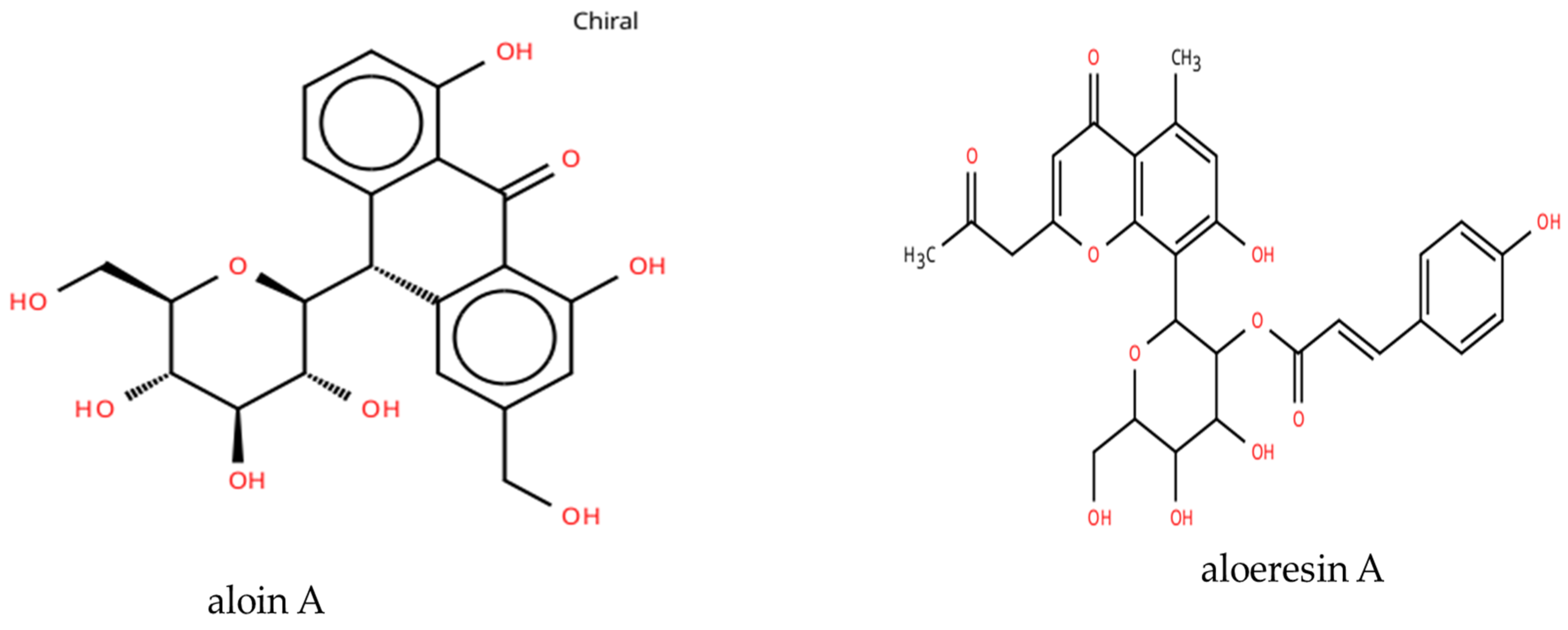
| Aloin A | Anthrone C-glycoside | Polar | Demonstrated antibacterial activity against several Gram-positive and Gram-negative bacteria, including Bacillus subtilis, B. cereus, Staphylococcus aureus, S. epidermidis, Escherichia coli, and Shigella sonnei. | Its demonstrated biological activity makes it a candidate for further insecticidal investigation; however, direct activity against S. zeamais has not been established. | [52] |
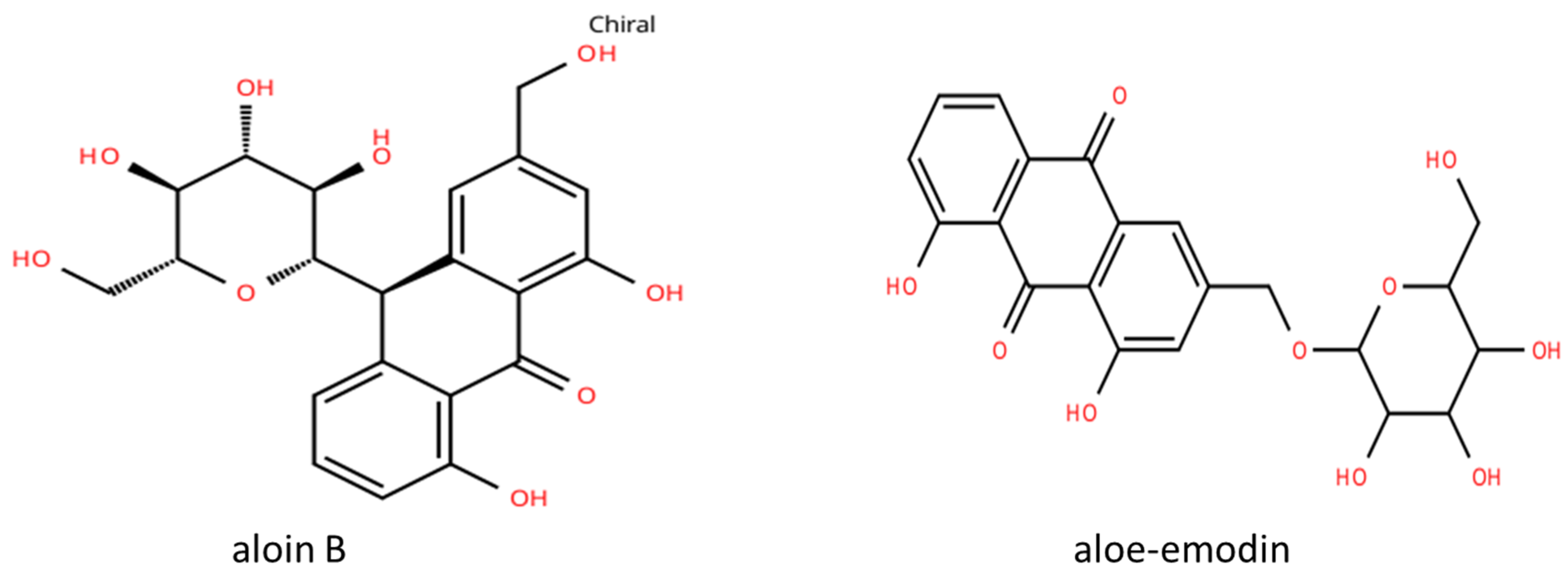
| Aloin B | Anthrone C-glycoside | Polar | Reported as one of the major constituents of A. ferox leaf exudate. | As a major constituent, it warrants investigation in insecticidal assays, although direct insecticidal activity against S. zeamais remains unconfirmed. | [43] |
| Aloe-emodin | Anthraquinone | Intermediate/moderate | Isolated from A. ferox and showed antibacterial activity against all tested organisms, with MIC values ranging from 62.5 to 250 µg/mL. | Its biological activity and anthraquinone structure support further investigation against storage insects, but direct S. zeamais activity has not been demonstrated. | [52] |
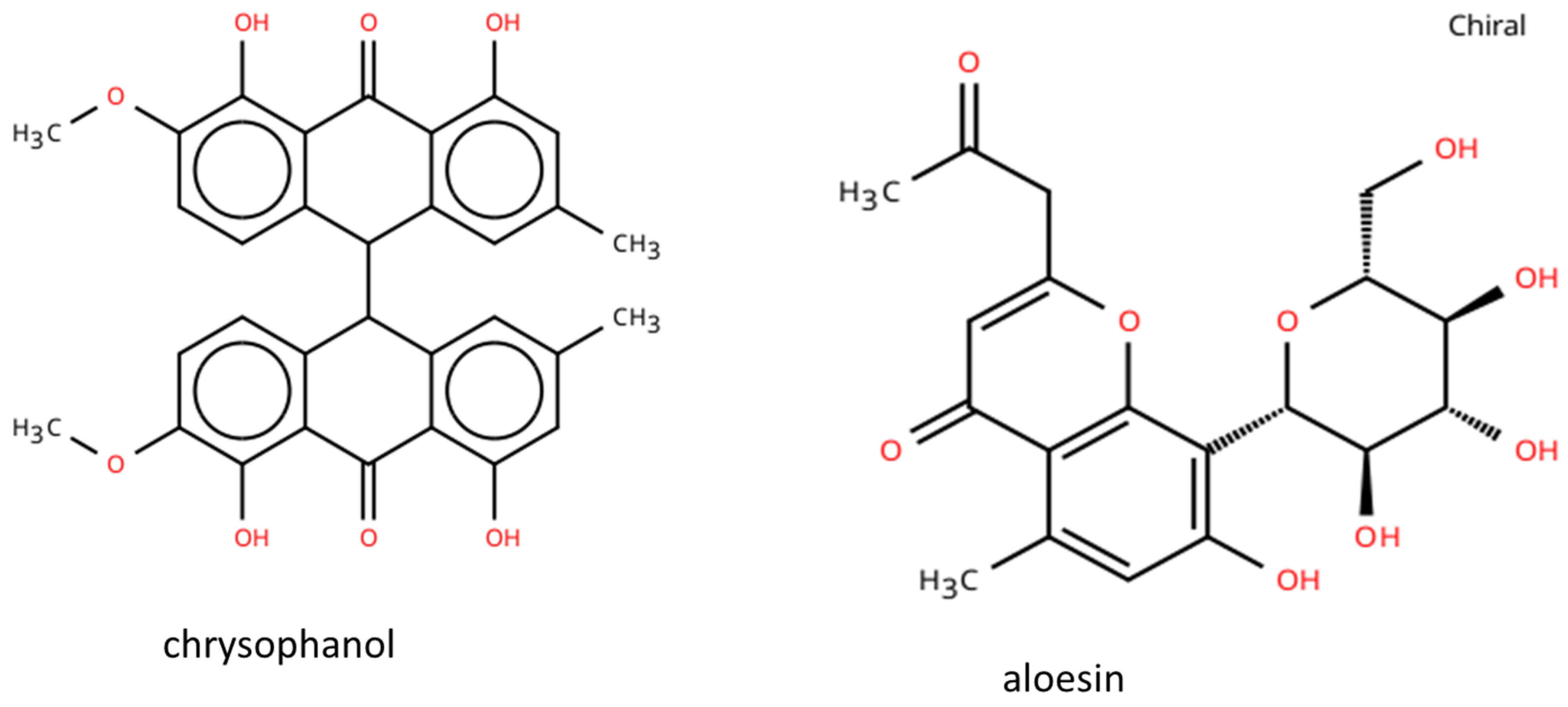
| Chrysophanol | Anthraquinone | Relatively non-polar | Isolated from A. ferox and showed antibacterial activity against B. subtilis, S. epidermidis, and E. coli. | Provides evidence that individual anthraquinones from A. ferox possess biological activity; insecticidal activity requires direct validation. | [52] |
| Aloesin | Chromone | Polar/intermediate | Reported as a characteristic constituent of A. ferox; chromone constituents of A. ferox have been associated with several biological activities. | Its occurrence as a major specialised metabolite makes it relevant for SAR (structure–activity relationship) studies; direct activity against S. zeamais remains inadequately investigated. | [43] |
| Aloeresin A | Chromone derivative | Polar | One of the major constituents of A. ferox leaf exudate and a characteristic chromone constituent of A. ferox. | Its abundance and biological activity make it an important candidate for compound-level insecticidal testing. | [43] |
| Aloeresin E | Chromone derivative | Polar/intermediate | Identified in A. ferox leaf extracts by HPLC-MS (high-performance liquid chromatography). | Expands the range of chromone constituents relevant to SAR analysis; specific insecticidal activity remains unestablished. | [46] |
| Isoaloeresin D | Chromone derivative | Polar/intermediate | Identified in A. ferox leaf extracts by HPLC-MS. | Potential contributor to extract bioactivity; direct insecticidal activity has not been demonstrated. | [46] |
| 2′-O-Feruloylaloesin | Chromone/phenolic derivative | Polar | Identified among phenolic/chromone constituents of A. ferox. | Its structural features make it relevant for SAR comparisons, but insecticidal activity remains unknown. | [46] |
| Aloe-emodin-8-O-β-D-glucopyranoside | Anthraquinone glycoside | Polar | Identified and quantified among phenolic constituents of Aloe cultivars, including A. ferox. | Glycosylation may modify polarity, absorption, and biological activity; direct insecticidal activity requires investigation. | [53] |
| Catechin | Flavan-3-ol | Polar | Identified and quantified in A. ferox leaves and contributes to the phenolic profile of the plant. | Phenolic compounds may contribute to extract bioactivity, but A. ferox-derived catechin has not been directly demonstrated to control S. zeamais. | [53] |
| Epicatechin | Flavan-3-ol | Polar | Identified and quantified in A. ferox leaves. | Relevant to the phenolic/SAR profile; direct insecticidal activity against S. zeamais remains unconfirmed. | [53] |
| Chlorogenic acid | Phenolic acid | Polar | Identified and quantified in A. ferox leaves. | May contribute to overall biological activity of extracts; specific insecticidal effects require experimental confirmation. | [53] |
| Sinapic acid | Phenolic acid | Polar | Identified in A. ferox leaves as part of its phenolic profile. | Provides an additional phenolic constituent for SAR consideration; direct insecticidal activity remains unconfirmed. | [53] |
| Lucenin II | Flavonoid C-glycoside | Polar | Identified among the flavonoid constituents of A. ferox leaves by HPLC-MS. | Relevant to flavonoid-based SAR assessment; direct insecticidal activity has not been established. | [46] |
| Vicenin II | Flavonoid C-glycoside | Polar | Identified among the flavonoids present in A. ferox leaves. | Provides a structurally distinct flavonoid for future bioactivity testing; direct activity against S. zeamais is unknown. | [46] |
| Orientin | Flavonoid C-glycoside | Polar | Identified in A. ferox leaves by chromatographic profiling. | Potential contributor to biological activity, but insecticidal activity specifically associated with A. ferox has not been demonstrated. | [46] |
| Caffeoylquinic acid derivatives | Phenolic acids | Polar | Caffeoylquinic acid derivatives have been identified among the phenolic constituents of A. ferox. | Their phenolic functionality makes them relevant to SAR discussions, although compound-specific insecticidal evidence is lacking. | [46] |
| Tannins | Polyphenolic phytochemical class | Polar | Detected in A. ferox extracts through phytochemical screening; condensed tannins and gallotannins have also been reported. | Tannins may contribute to biological activity through interactions with proteins and digestive processes, but specific insecticidal effects of A. ferox tannins require further characterisation. | [46] |
| Saponins | Glycosidic phytochemical class | Polar and non-polar (amphiphilic) | Detected in A. ferox extracts during qualitative phytochemical screening. | Saponins can have membrane-disrupting and antifeedant effects in some systems; however, direct activity of isolated A. ferox saponins against S. zeamais remains insufficiently documented. | [46] |
| Alkaloids | Nitrogen-containing phytochemical class | Polar/intermediate | Alkaloids have been detected in A. ferox through qualitative phytochemical screening. | Alkaloids are recognised for diverse biological activities, but individual alkaloids from A. ferox and their insecticidal effects require further chemical characterisation. | [46] |
| 3,6-Octatriene | Volatile hydrocarbon | Volatile/non-polar | Identified as the major volatile constituent of A. ferox leaf volatile oil (23.86%). | Its volatility makes it relevant to possible fumigant or repellent effects, but activity against S. zeamais has not been directly demonstrated. | [54] |
| 3-Cyclohexene-1-methanol | Volatile alcohol | Volatile/intermediate | Identified among the major volatile constituents of A. ferox leaf oil (7.31%). | Potentially relevant to volatile-mediated biological activity; direct insecticidal evidence is lacking. | [54] |
| Bornylene | Monoterpene hydrocarbon | Volatile/non-polar | Identified in A. ferox volatile oil (5.24%). | Its volatility makes it relevant to potential fumigant/repellent activity, but its activity against S. zeamais requires direct testing. | [54] |
| 5-Methyl-3-heptanol | Volatile alcohol | Volatile/intermediate | Identified among the volatile constituents of A. ferox leaf oil (3.92%). | May contribute to the oil’s volatile-mediated activity; compound-specific insecticidal activity remains unconfirmed. | [54] |
| 1, 3-cyclopentadiene | Volatile hydrocarbon | Volatile/non-polar | Identified among the volatile constituents of A. ferox leaf oil (4.07%). | May contribute to the oil’s volatile-mediated activity; compound-specific insecticidal activity remains unconfirmed. | [54] |
| Aloe Species/Plant Part | Target Pest (Insect Group)/Order | Solvent/Reported Bioactivity | Dose/Concentration/Exposure Time | Effect/LC50/LD50 | Experimental Condition/Evidence Level | Major Phytochemicals | Major Findings | References |
|---|---|---|---|---|---|---|---|---|
| A. vera/leaves | Aedes aegypti (mosquito/vector)/Diptera | Petroleum ether/larvicidal activity | 80, 160, 240, 320, and 400 ppm. | 162.74, 201.43, 253.30, and 300.05 ppm | Laboratory/related Aloe | Not reported | The study clearly stated that A. vera could serve as a potential larvicidal agent. | [55] |
| A. vera/leaves | Hyalomma dromedarii (tick/ectoparasite)/Ixodida | Ethanol/acaricidal and growth regulator | 25%/60 s. | 88.5% mortality rate (median lethal conc. 7.8%; median lethal time 6.09%) | Laboratory/related Aloe | Polyphenols and flavonoids | A. vera is a promising acaricide. | [56] |
| Aloe adigratana, A. vera, Aloe berger, and Aloe laterita/leaves | Termites (termite)/Blattodea | Aqueous, powder and mulch/termiticidal | Aqueous solution (2 L/9 m2), powder (2 kg/9 m2). | Up to 93.98% damaged plants per plot | Field experiment/related Aloe | Not reported | The best results were consistently obtained when Aloe adigratana was utilised as mulch. | [57] |
| A. vera/leaves | Callosobruchus maculatus (stored-product pest)/Coleoptera | Powder/insecticidal (contact toxicity) | 0 g (control), 0.5 g, 1.0 g, 1.5 g, 2.0 g, and 2.5 g/20 g of cowpea seeds at 48 h and 30 days post-treatment. | Contact toxicity. 10.33% maximum mortality at 2.0 g/20 g led to a 3.33% reduction in seed damage. LC50/LD50 (not reported) | Laboratory/related Aloe | Not reported | No mortality caused by A. vera leaf powder was found in C. maculatus after 48 h exposure. In contrast, it was concentration-dependent and reduced seed damage after 30 days of exposure. Treatment at 2.0 g resulted in the highest mortality (10.33%) and the greatest reduction in seed damage (3.33%), indicating low insecticidal efficacy. | [58] |
| A. vera/leaves | Callosobruchus maculatus (stored-product pest)/Coleoptera | Aqueous/insecticidal (biological and lethal effects) | (Concentration: 0, 0.5, 1, 1.5, 2, and 3%). Mortality evaluated at 24, 48, and 72 h. | Minimum of 13.89% mortality at 0.5% conc. after 48 h; maximum of 52.78% mortality at 3.0% conc. after 72 h. LC50/LD50 (not directly reported) | Laboratory/related Aloe | Not reported | After 72 h of treatment, there is a maximum rate of mortality (52.78%) in cowpea seeds treated with 3% aloe aqueous extract. | [59] |
| A. vera/leaf ash, leaf powder, root ash, and root powder | Tribolium castaneum (stored-product pest)/Coleoptera | Ash and powder/insecticidal and insect productivity | 1 g, 2 g, and 5 g. Mortality (within 7 days). Percentage weight loss (within 30 days). | Mortality % was based on concentration and plant part used | Laboratory/related Aloe | Not reported | The findings demonstrate that T. castaneum was adversely affected by both low and high dosages, and no insect productivity rate was observed because the insects died before they could lay eggs. | [60] |
| Aloe ngongensis, Aloe turkanensis, and Aloe fibrosa/leaves | Aedes aegypti (mosquito/vector)/Diptera | Hexane, chloroform, ethyl acetate, acetone, and methanol/larvicidal | 0.05 to 2.0 mg/mL at 24 h. | Highest activity was obtained from A. fibrosa hexane (0.05 [0.04–0.06]) | Laboratory/related Aloe | Not reported | Depending on the extraction solvent utilised, the actions appeared to be unique to various Aloe species. These results suggest the presence of mosquitocidal compounds in extracts from specific Aloe species, which may be used to develop novel insecticides. | [61] |
| A. vera/gel, root, and leaf peel | Sitophilus oryzae (stored-product pest)/Coleoptera | Methanol/repellent and contact toxicity | 0.0024 mg/cm2 for aloin A and 0.060 mg/cm2 for plant extracts in toxicity test; 0.02% w/v and 5% w/v in repellency tests). Repellency (1 h, 5 h, and 24 h exposure. Contact toxicity (14 h. days after treatment). | Standard aloin A (58.0%) mortality | Laboratory/related Aloe | Aloin A | Geographical location, plant sections, main metabolite concentration, and exposure duration all affect the percentage of repellency and toxicity of A. vera. These plant extracts could help develop an efficient biorepellent for S. oryzae in stored maize. | [62] |
| A. vera/leaves | Bactrocera cucurbitae (fruit pest) and Myzus persicae (sap-sucking crop pest)/Diptera, Hemiptera | Aqueous/insecticidal | 40, 60, and 80% at 24 h, 48 h, and 72 h post-exposure. | 100% mortality at 80% and 60% after 48 h and 72 h, respectively, for the two insects | Laboratory/related Aloe | Not reported | The findings show that A. vera extracts, compared with untreated crops, may help manage insect pests. | [63] |
| A. vera/leaves | Raphidipulpa foveicollis (leaf-feeding or defoliating insect)/Coleoptera | Aqueous/pesticidal | 0, 25, 50, 75, and 100%. 12 h., 24 h., and 48 h. | The highest mortality was 71.33% at 100% concentration | Laboratory/related Aloe | Not reported | A. vera may be beneficial in managing insect pests. | [64] |
| A. vera/leaves | Tetranychus urticae (plant-feeding mite) and Cenopalpus pulcher (plant-feeding mite)/Trombidiformes | Acetone/acaricidal | Concentration not explicitly reported at 72 h. | Acetone extract of both species has a toxicity index of 100%, while the water extract for C. pulcher has the lowest toxicity index of 25%/ LC50 T. urticae (acetone: 105 ppm, ethanol 322 ppm, and water 366 ppm). C. pulcher (acetone:80 ppm, ethanol:289 ppm, and water 320 ppm) | Laboratory/related Aloe | Not reported | The results showed that A. vera has significant potential as a botanical acaricide for controlling C. pulcher and T. urticae. | [65] |
| A. vera/leaves | Trogoderma granarium (stored-product pest)/Coleoptera | Methanol and gum resin powder/repellency and fumigant toxicity | Repellency (0.5, 0.9, 2 and 4 w/v). Fumigant (0.2, 0.4, 0.6, and 0.8%) at 24, 48, and 72 h. | Repellency mortality at 4% after 24 h was 76.7%, and the lowest mortality ranged from 11 to 24.67% at 4% after 72 h. Fumigant mortality at lower conc. after 24 h was 0% and 100% at 0.8%. After 72 h, mortality ranged from 70% (at 0.2%) to 100% (at 0.8%) | Laboratory/related Aloe | Not reported | A. vera can be beneficial in developing a natural pesticide. | [66] |
| A. vera/leaves | Tetranychus cinnabarinus (plant-feeding mite)/Trombidiformes | Acetone, methanol, absolute ethanol, petroleum ether, and ethyl acetate/acaricidal | Concentrations (2500, 1250, 625, 312.5, and 156.25 ppm) at 24 h, 48 h, and 72 h. | Strongest acaricidal activity was 100% at an LC50 of 99 ppm after 72 h, while LC50 values for ethyl acetate, water, and ethanol extracts were 113, 340, and 391 ppm, respectively | Laboratory/related Aloe | Not reported | According to the findings, A. vera has high potential for development as a botanical acaricide for controlling Tetranychus cinnabarinus. | [67] |
| A. vera/leaves | Papilio polytes (leaf-feeding or defoliating pest)/Lepidoptera | Aqueous/deterrent, antifeedant, and ovicidal | 0.5, 0.4, 0.3, 0.2, 0.1, 1.0, 3.0, 5.0, and 10.0% at 72 h. | Deterrent activity 11%, antifeedant 26%, ovicidal 8%, and adult emergence 91% | Laboratory/related Aloe | Not reported | A. vera has the lowest deterrent, antifeedant, and ovicidal activity, resulting in the highest adult emergence in comparison to other tested plants | [68] |
| A. ferox/leaves | Anopheles arabiensis (mosquito or vector)/Diptera | Dichloromethane and ethanol/adulticidal | 10 mg/mL at 1 h, and mortality recorded after 24 h. | Dichloromethane extract mortality was 98%, and ethanol extract mortality was 86%; EC50 was 4.92 mg/mL | Laboratory/direct evidence of A. ferox, but not against S. zeamais | Not reported | According to the study, A. ferox leaf dichloromethane extract may be useful as a pesticide against An. arabiensis. | [69] |
| A. vera/leaves | Spodoptera exigua (leaf-feeding or defoliating pest)/Lepidoptera | Methanol/toxicity and antifeedant | 10% at 7 days post-treatment. | Contact bioassay (13.34%) and feeding bioassay (26.67%). LC50/LD50 not reported | Laboratory/related Aloe | Not reported | The plant was effective, but less effective than the other plants used in this study. | [70] |
| A. vera/leaves | Bemisia tabaci (sap-sucking crop pest) and Aphis gossypii (sap-sucking crop pest)/Hemiptera | Aqueous/insecticidal | 10% (w/v) sprayed at the rate of 200 L per feddan/post-treatment at intervals of 1 day, 4 days, 7 days, and 14 days. | Seasonal general mean reduction percentage on B. tabaci (in 2020, 48.24% and in 2021, 48.89%). A. gossypii in 2020 was 56.74% and in 2021, 59.99% | Field experiment/related Aloe | Not reported | A. vera extract ranked second-to-last among the five tested plant extracts against B. tabaci and third against A. gossypii. | [71] |
| A. vera/leaves | Trogoderma granarium (stored-product pest)/Coleoptera | Ethyl alcohol/insecticidal | 0.16%, 0.31%, 0.63%, 1.25%, and 2.5% at 24, 48, and 72 h of post-treatment (mortality) and 1–10 days for residual toxicity effects. | The highest residual toxicity effect was 40% after days 2, 3, and 5, and the highest mortality effect was 63.33% at 1.25% on day 2 | Laboratory/related Aloe | Not reported | In laboratory settings, A. vera showed promise as a safe and efficient phytopesticide. | [72] |
| A. vera/leaves | Bemisia tabaci (sap-sucking crop pest)/Hemiptera | Essential oil/contact toxicity | %0.125, 0.25, and 0.5/24, 48, and 72 h. | The mortality effect of A. vera oil on eggs and nymphal stages of B. tabaci, O. laevigatus, E. formosa, and E. eremicus was 53.33%, 46%, 53%, 46%, and 36%, respectively | Laboratory/related Aloe | Not reported | A. vera oil was the least effective essential oil tested in this experiment used in this study. | [73] |
| A. ferox/leaves | Rhipicephalus (Boophilus) microplus, Amblyomma hebraeum, and Rhipicephalus appendiculatus (tick or ectoparasite)/Ixodida | Distilled water/acaricidal | 20 and 40% (w/v)/0, 1, 2, 3, 4, and 7 days post-application. | A. ferox caused 0% mean tick load reduction across all tested tick species | Field experiment/direct evidence of A. ferox, but not against S. zeamais | Not reported | A. ferox was not effective. | [74] |
| A. vera/leaves | Tetranychus cinnabarinus (plant-feeding mite) and Panonychus citri (plant-feeding mite)/Trombidiformes | Acetone/acaricidal | 1.0 mg/mL at 24 h and 48 h, and a range of 5 conc. tested up to 72 h. | Mortality effect on T. cinnabarinus was 80.39–92.16%. LC50 differs based on the tested insect, plant extract, and the isolate used | Field experiment/related Aloe | 3-O-alpha-D-mannopyranosyl-D-mannopyranose (OAMM) | Aloe-emodin and OAMM, isolated from an acetone extract of A. vera, showed clear acaricidal effects against P. citri and T. cinnabarinus. | [75] |
| A. vera/leaves | Onchocerca ochengi (nematode) and Caenorhabditis elegans (nematode)/Spirurida, Rhabditida | Distilled water, methanol, methylene chloride/anthelmintic activity | 0–40 µ/mL at 48 and 72 h. | LC50 was concentration-dependent | Laboratory/related Aloe | Not reported | A. vera showed in vitro nematicidal action against O. ochengi and C. elegans. An alternate anthelmintic for treating onchocerciasis | [76] |
| A. vera/leaves | Anopheles mosquito larvae (mosquito or vector)/Diptera | Gel (no extraction)/larvicidal | 0.5, 1.0, 2.0 (mg/mL) at 24 and 48 h. | Mortality was exposure- and concentration-dependent. Highest mortality was at 2 mg/mL after 24 h, while the minimum mortality was at 0.5 mg/mL after 48 h of exposure | Laboratory/related Aloe | Not reported | The study showed how effective A. vera is at controlling the larvae, making it a cost-effective method of controlling Anopheles mosquitoes’ larvae. | [77] |
| A. vera/leaves | Culex sp. (mosquito or vector)/Diptera | Ethanol/larvicidal | 20, 40, 60, 80, and 100 ppm/observation time: 180, 360, 540, 1440, and 2880 min. | Lethal concentration median (%) was 68.8 ppm at 1440 min. | Laboratory/related Aloe | Not reported | The findings of this study indicate that A. vera extract possesses larvicidal properties against Culex sp. larvae in instars III and IV. | [78] |
| A. vera/leaves | Callosobruchus maculatus (stored-product pest)/Coleoptera | Powder/insecticidal | 0.2, 0.5, 1.0, 1.5, and 2.0 (g/mL) at 24, 48, 72, 96, 120, 144, and 168 h. | Mortality was highest at 93.3% at 2.0 g/mL and lowest at 40% at 0.25 g/mL. The LD50 and LD90 were 0.34 g/mL and 1.72 g/mL, respectively. | Laboratory/related Aloe | Not reported | A. vera was found to be effective in reducing cowpea pest attacks. | [79] |
| Phytochemical/Class | Source | Target Organism/System | Endpoint Measured | Reported Mechanism/Activity | Level of Evidence for A. ferox–S. zeamais | References |
|---|---|---|---|---|---|---|
| Aloin A, Aloe-emodin and Chrysophanol | A. ferox | Bacillus cereus, B. subtilis, Staphylococcus aureus, S. epidermidis, Escherichia coli, Shigella sonnei | MIC (Minimum Inhibitory Concentration) | Antibacterial activity was demonstrated; the molecular mechanism was not established. | Direct evidence for A. ferox, but non-insect system; insecticidal mechanism unknown | [52] |
| Flavonoids | Various plant species | Various agricultural insects | Mortality, feeding, development, enzyme activity | Depending on the compound, reported effects include feeding deterrence, disruption of digestive enzymes, altered detoxification enzymes, and developmental effects. | Evidence from other insects; mechanism not established for A. ferox against S. zeamais | [80] |
| Phenolic compounds | Various plant species | Herbivorous insects | Feeding, growth and digestion | Phenolics and tannins can affect feeding and digestion through interactions with proteins and digestive processes; effects are compound- and insect-dependent. | Evidence from other plant–insect systems; mechanism remains unconfirmed for A. ferox–S. zeamais | [81] |
| Steroidal saponins | Trillium govanianum | Plutella xylostella and Aphis craccivora | Mortality, reproductive inhibition and repellency | Steroidal saponins demonstrated insecticidal, repellent, and reproductive inhibitory effects through enzyme activities (glutathione-S-transferase (GST) and carboxylesterase (CES1) | Experimental evidence in other insects; not demonstrated for A. ferox against S. zeamais | [82] |
Disclaimer/Publisher’s Note: The statements, opinions and data contained in all publications are solely those of the individual author(s) and contributor(s) and not of MDPI and/or the editor(s). MDPI and/or the editor(s) disclaim responsibility for any injury to people or property resulting from any ideas, methods, instructions or products referred to in the content. |
© 2026 by the authors. Licensee MDPI, Basel, Switzerland. This article is an open access article distributed under the terms and conditions of the Creative Commons Attribution (CC BY) license.
Share and Cite
Aina, F.B.; Buwa-Komoreng, L.; Heshula, L.U.-N.P.; Chiuta, N.E.; Adeniji, T.O.; Lamula, S.; Muchaku, S.; Slayi, M.; Mutengwa, C.S. Aloe ferox as a Candidate Botanical Insecticide for Stored-Grain Protection: Evidence, Knowledge Gaps, and Prospects for Sitophilus zeamais Management. Molecules 2026, 31, 3190. https://doi.org/10.3390/molecules31183190
Aina FB, Buwa-Komoreng L, Heshula LU-NP, Chiuta NE, Adeniji TO, Lamula S, Muchaku S, Slayi M, Mutengwa CS. Aloe ferox as a Candidate Botanical Insecticide for Stored-Grain Protection: Evidence, Knowledge Gaps, and Prospects for Sitophilus zeamais Management. Molecules. 2026; 31(18):3190. https://doi.org/10.3390/molecules31183190
Chicago/Turabian StyleAina, Florence Bukky, Lisa Buwa-Komoreng, Lelethu Unathi-Nkosi Peter Heshula, Nyasha Esnath Chiuta, Tolulope Olubunmi Adeniji, Siphamandla Lamula, Shadreck Muchaku, Mhlangabezi Slayi, and Charles Shelton Mutengwa. 2026. "Aloe ferox as a Candidate Botanical Insecticide for Stored-Grain Protection: Evidence, Knowledge Gaps, and Prospects for Sitophilus zeamais Management" Molecules 31, no. 18: 3190. https://doi.org/10.3390/molecules31183190
APA StyleAina, F. B., Buwa-Komoreng, L., Heshula, L. U.-N. P., Chiuta, N. E., Adeniji, T. O., Lamula, S., Muchaku, S., Slayi, M., & Mutengwa, C. S. (2026). Aloe ferox as a Candidate Botanical Insecticide for Stored-Grain Protection: Evidence, Knowledge Gaps, and Prospects for Sitophilus zeamais Management. Molecules, 31(18), 3190. https://doi.org/10.3390/molecules31183190