Artificial Intelligence-Powered High-Content Analysis: Methodologies and Applications in Bioactive Compound Discovery from Natural Sources

 , and
, and 
Abstract
1. Introduction
2. Methodological Fundamentals of HCA
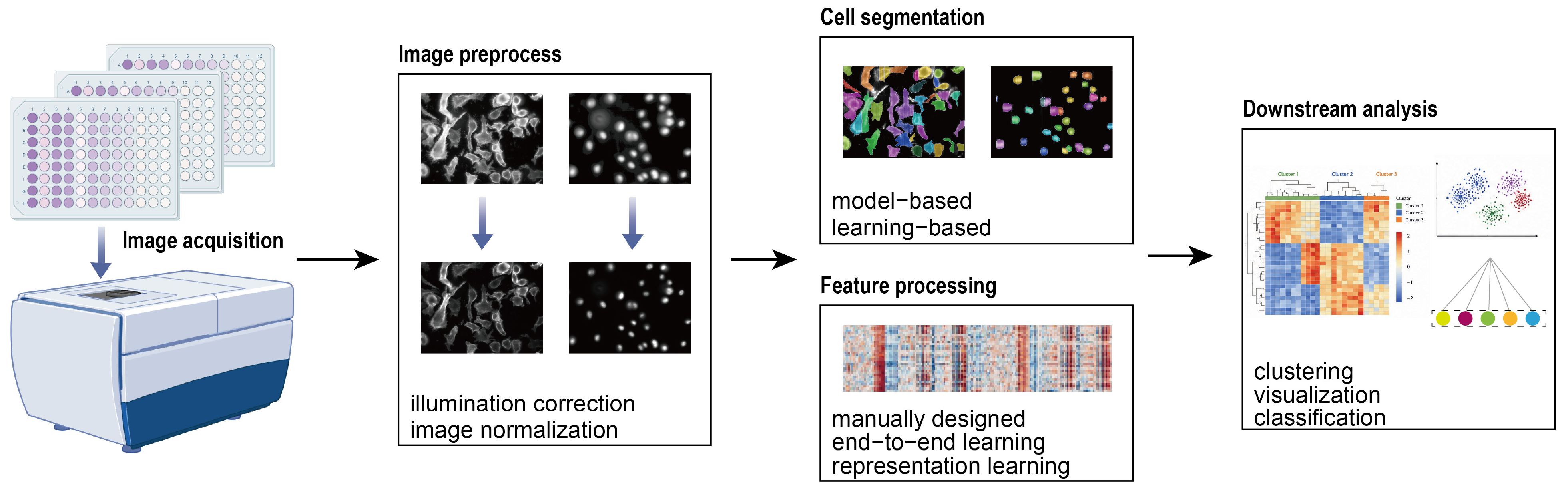
2.1. Typical High-Content Analysis
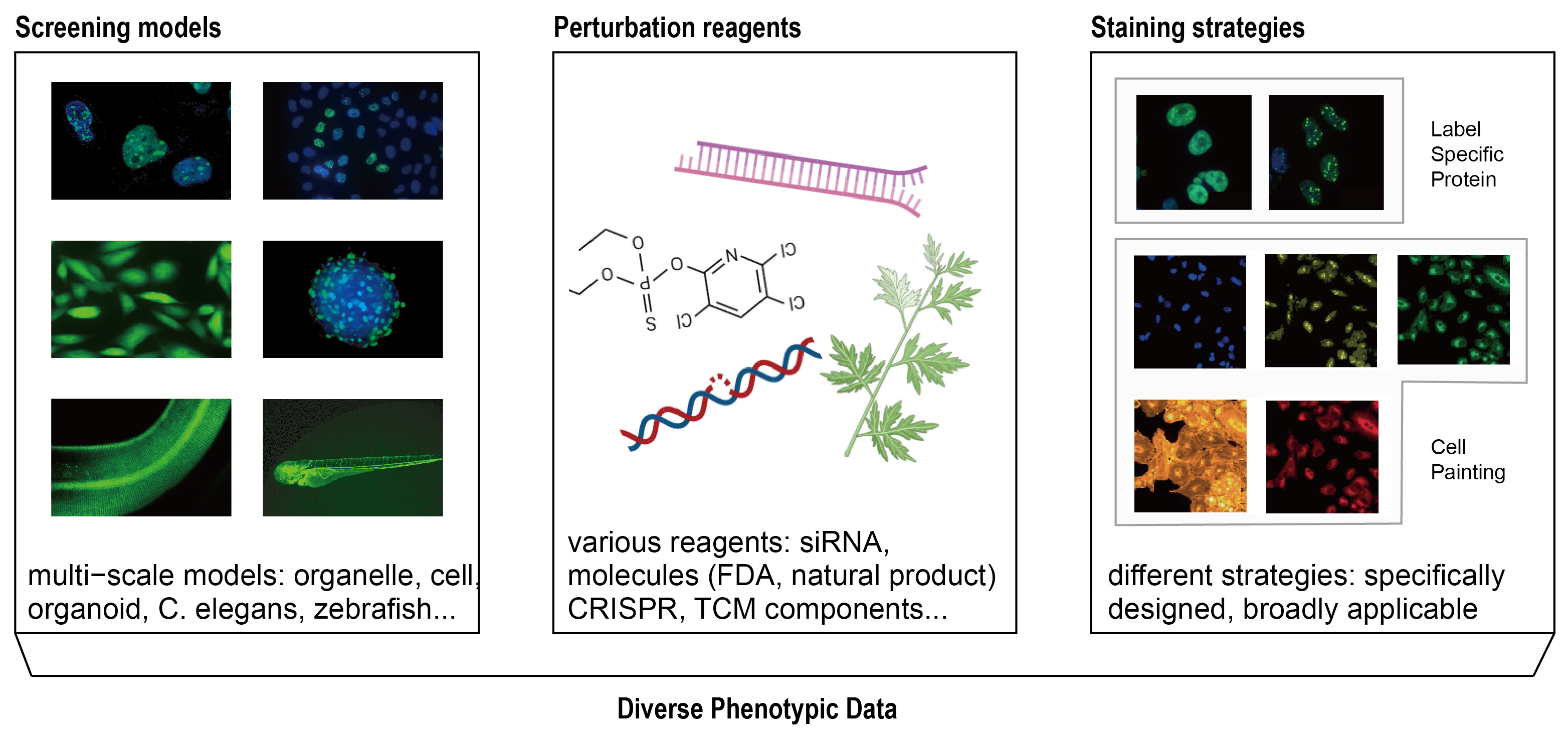
2.2. Diverse Phenotypic Data Generated by HCS
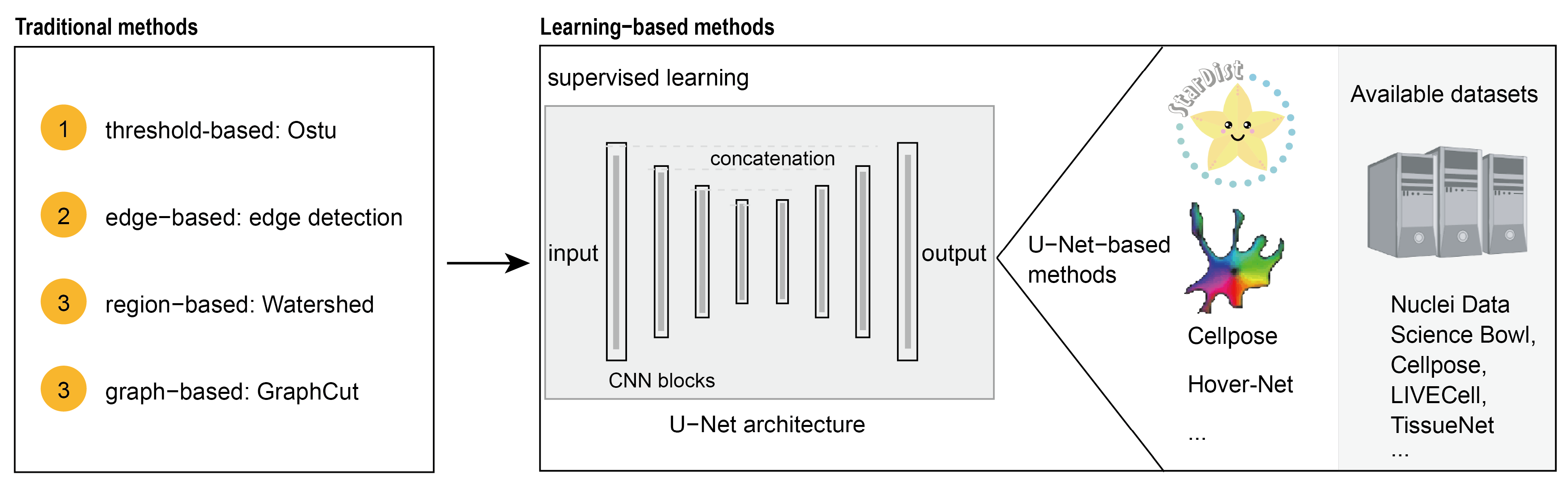
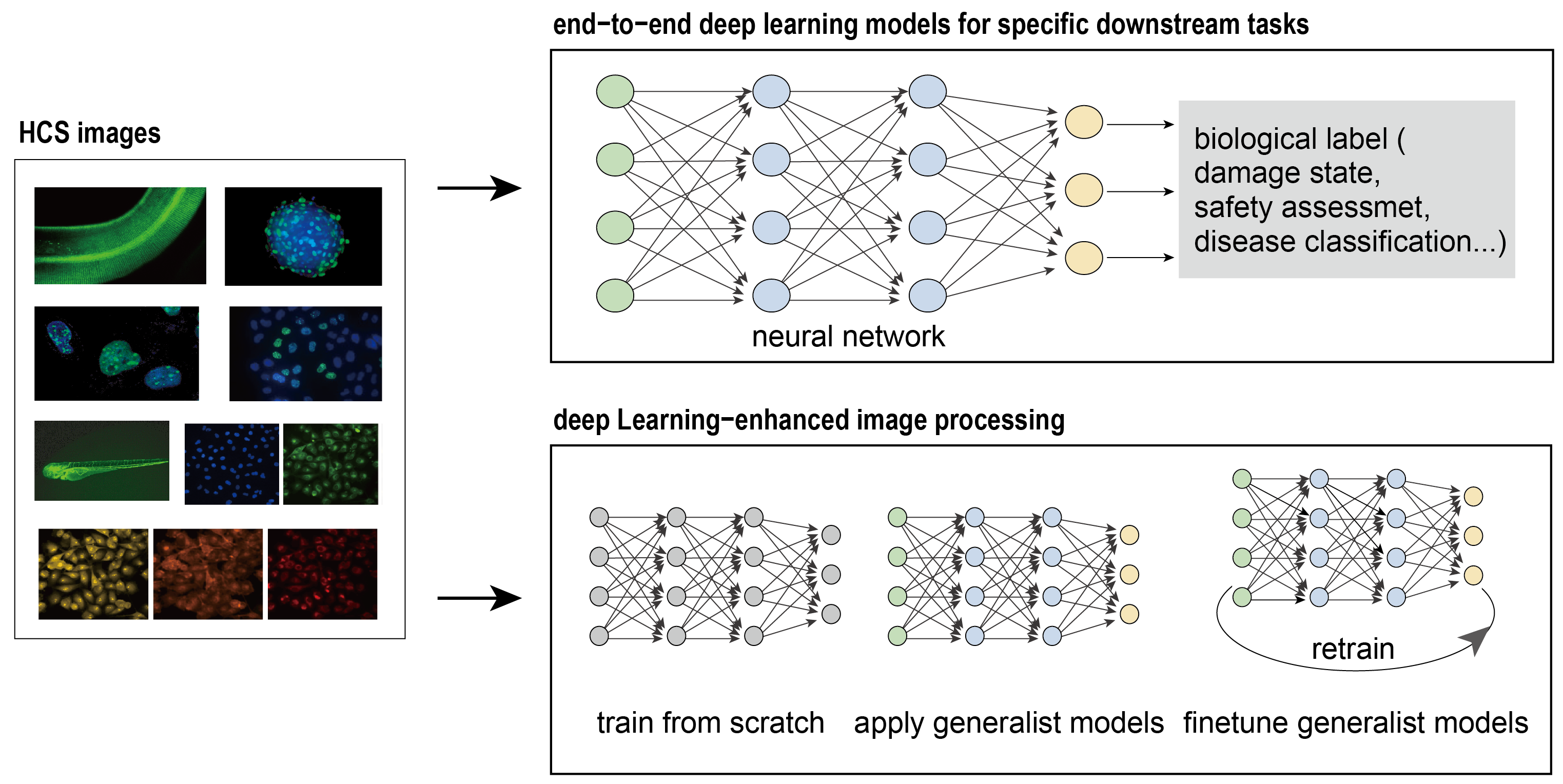
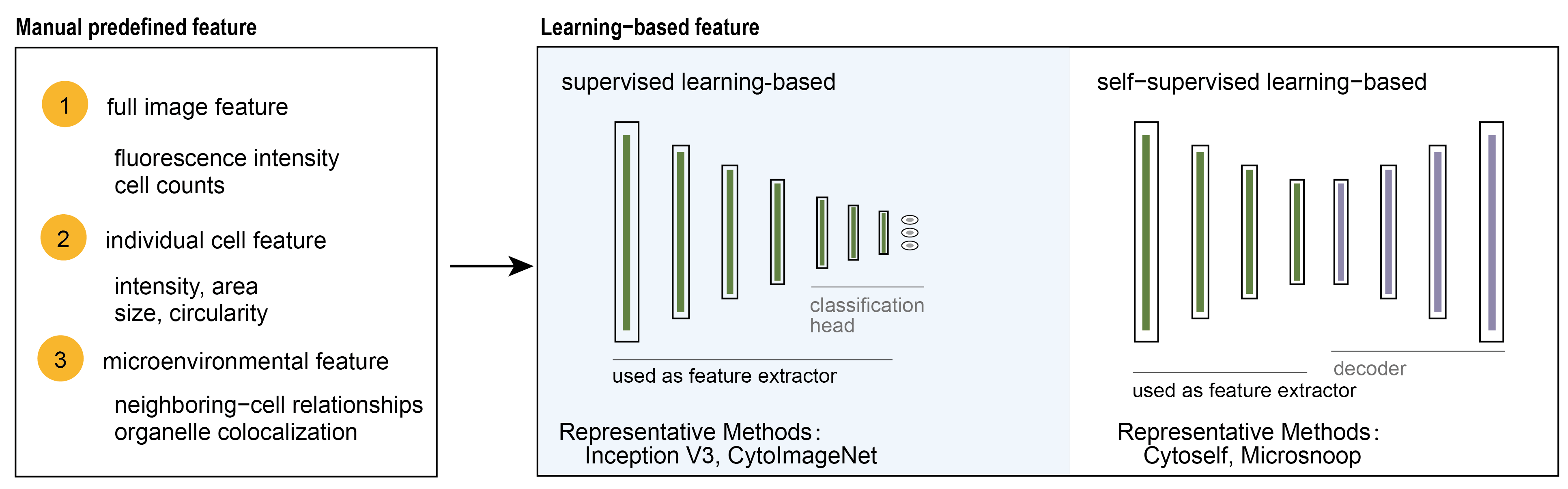
2.3. Artificial Intelligence-Powered High-Content Analysis
3. Applications in Pharmaceutical Research
3.1. Deep Learning-Based Intelligent High-Content Screening
3.2. Application in Bioactive Compounds Discovery from Natural Sources
4. Conclusions and Perspectives
Author Contributions
Funding
Institutional Review Board Statement
Informed Consent Statement
Data Availability Statement
Conflicts of Interest
References
- Hughes, R.E.; Elliott, R.J.R.; Dawson, J.C.; Carragher, N.O. High-content phenotypic and pathway profiling to advance drug discovery in diseases of unmet need. Cell Chem. Biol. 2021, 28, 338–355. [Google Scholar] [CrossRef] [Scilit] [PubMed]
- Zanella, F.; Lorens, J.B.; Link, W. High content screening: Seeing is believing. Trends Biotechnol. 2010, 28, 237–245. [Google Scholar] [CrossRef] [Scilit] [PubMed]
- Singh, S.; Carpenter, A.E.; Genovesio, A. Increasing the content of high-content screening: An overview. SLAS Discov. 2014, 19, 640–650. [Google Scholar] [CrossRef] [Scilit] [PubMed]
- Boutros, M.; Heigwer, F.; Laufer, C. Microscopy-based high-content screening. Cell 2015, 163, 1314–1325. [Google Scholar] [CrossRef] [Scilit] [PubMed]
- Lin, S.; Schorpp, K.; Rothenaigner, I.; Hadian, K. Image-based high-content screening in drug discovery. Drug Discov. Today 2020, 25, 1348–1361. [Google Scholar] [CrossRef] [Scilit] [PubMed]
- Chandrasekaran, S.N.; Ceulemans, H.; Boyd, J.D.; Carpenter, A.E. Image-based profiling for drug discovery: Due for a machine-learning upgrade? Nat. Rev. Drug Discov. 2020, 20, 145–159. [Google Scholar] [CrossRef] [Scilit] [PubMed]
- Pratapa, A.; Doron, M.; Caicedo, J.C. Image-based cell phenotyping with deep learning. Curr. Opin. Chem. Biol. 2021, 65, 9–17. [Google Scholar] [CrossRef] [Scilit] [PubMed]
- Krentzel, D.; Shorte, S.L.; Zimmer, C. Deep learning in image-based phenotypic drug discovery. Trends Cell Biol. 2023, 33, 538–554. [Google Scholar] [CrossRef] [Scilit] [PubMed]
- Mattiazzi Usaj, M.; Styles, E.B.; Verster, A.J.; Friesen, H.; Boone, C.; Andrews, B.J. High-content screening for quantitative cell biology. Trends Cell Biol. 2016, 26, 598–611. [Google Scholar] [CrossRef] [Scilit] [PubMed]
- Heynen-Genel, S.; Pache, L.; Chanda, S.K.; Rosen, J. Functional genomic and high-content screening for target discovery and deconvolution. Expert Opin. Drug Discov. 2012, 7, 955–968. [Google Scholar] [CrossRef] [Scilit] [PubMed]
- Li, S.; Xia, M. Review of high-content screening applications in toxicology. Arch. Toxicol. 2019, 93, 3387–3396. [Google Scholar] [CrossRef] [Scilit] [PubMed]
- Bellomo, F.; Medina, L.; Leo, E.; Panarella, A.; Emma, F. High-content drug screening for rare diseases. J. Inherit. Metab. Dis. 2017, 40, 601–607. [Google Scholar] [CrossRef] [Scilit] [PubMed]
- Arta, R.K.; Watanabe, Y.; Egawa, J.; Lemmon, V.P.; Someya, T. Linking autism risk genes to morphological and pharmaceutical screening by high-content imaging: Future directions and opinion. Psychiatry Clin. Neurosci. 2025, 79, 435–446. [Google Scholar] [CrossRef] [Scilit] [PubMed]
- Hu, Y.; Xue, X.; Han, T.; Li, Y.; Zhang, T.; Lu, T.; Zhang, P. An effective system for senescence modulating drug development using quantitative high-content analysis and high-throughput screening. Commun. Biol. 2025, 8, 1316. [Google Scholar] [CrossRef] [Scilit] [PubMed]
- Zhang, Z.; Gao, L.; Zheng, H.; Zhong, Y.; Li, G.; Ye, Z.; Sun, Q.; Wang, B.; Weng, Z. High-content imaging and deep learning-driven detection of infectious bacteria in wounds. Bioprocess Biosyst. Eng. 2025, 48, 301–315. [Google Scholar] [CrossRef] [Scilit] [PubMed]
- Koehn, F.E.; Carter, G.T. The evolving role of natural products in drug discovery. Nat. Rev. Drug Discov. 2005, 4, 206–220. [Google Scholar] [CrossRef] [Scilit] [PubMed]
- Harvey, A.L. Natural products in drug discovery. Drug Discov. Today 2008, 13, 894–901. [Google Scholar] [CrossRef] [Scilit] [PubMed]
- Wright, G.D. Unlocking the potential of natural products in drug discovery. Microb. Biotechnol. 2019, 12, 55–57. [Google Scholar] [CrossRef] [Scilit] [PubMed]
- Atanasov, A.G.; Zotchev, S.B.; Dirsch, V.M.; Orhan, I.E.; Banach, M.; Rollinger, J.M.; Barreca, D.; Weckwerth, W.; Bauer, R.; Bayer, E.A.; et al. Natural products in drug discovery: Advances and opportunities. Nat. Rev. Drug Discov. 2021, 20, 200–216. [Google Scholar] [CrossRef] [Scilit] [PubMed]
- Newman, D.J. Natural products and drug discovery. Natl. Sci. Rev. 2022, 9, nwac206. [Google Scholar] [CrossRef] [Scilit] [PubMed]
- Ronneberger, O.; Fischer, P.; Brox, T. U-Net: Convolutional networks for biomedical image segmentation. In Proceedings of the Medical Image Computing and Computer Assisted Intervention, Munich, Germany, 5–9 October 2015. [Google Scholar] [CrossRef] [Scilit]
- Vaswani, A.; Shazeer, N.; Parmar, N.; Uszkoreit, J.; Jones, L.; Gomez, A.N.; Kaiser, Ł.; Polosukhin, I. Attention is all you need. In Proceedings of the Neural Information Processing Systems, Long Beach, CA, USA, 4–9 December 2017. [Google Scholar] [CrossRef] [Scilit]
- Liu, Z.; Lin, Y.; Cao, Y.; Hu, H.; Wei, Y.; Zhang, Z.; Lin, S.; Guo, B. Swin Transformer: Hierarchical vision transformer using shifted windows. In Proceedings of the International Conference on Computer Vision, Montreal, QC, Canada, 10–17 October 2021. [Google Scholar] [CrossRef] [Scilit]
- He, K.; Chen, X. Masked autoencoders are scalable vision learners. In Proceedings of the Computer Vision and Pattern Recognition, Nashville, Tennessee, 19–25 June 2021. [Google Scholar] [CrossRef] [Scilit]
- Stringer, C.; Wang, T.; Michaelos, M.; Pachitariu, M. Cellpose: A generalist algorithm for cellular segmentation. Nat. Methods 2021, 18, 100–106. [Google Scholar] [CrossRef] [Scilit] [PubMed]
- Leek, J.T.; Scharpf, R.B.; Bravo, H.C.; Simcha, D.; Langmead, B.; Johnson, W.E.; Geman, D.; Baggerly, K.; Irizarry, R.A. Tackling the widespread and critical impact of batch effects in high-throughput data. Nat. Rev. Genet. 2010, 11, 733–739. [Google Scholar] [CrossRef] [Scilit] [PubMed]
- Lin, A.; Lu, A.X. Incorporating knowledge of plates in batch normalization improves generalization of deep learning for microscopy images. In Proceedings of Machine Learning Research; JMLR: Cambridge, MA, USA, 2022. [Google Scholar] [CrossRef] [Scilit]
- Chen, X.; Li, L.; Zhang, M.; Yang, J.; Lyu, C.; Xu, Y.; Yang, Y.; Wang, Y. Guidelines for application of high-content screening in traditional Chinese medicine: Concept, equipment, and troubleshooting. Acupunct. Herb. Med. 2024, 4, 1–15. [Google Scholar] [CrossRef] [Scilit]
- Smith, K.; Li, Y.; Piccinini, F.; Csucs, G.; Balazs, C.; Bevilacqua, A.; Horvath, P. CIDRE: An illumination-correction method for optical microscopy. Nat. Methods 2015, 12, 404–406. [Google Scholar] [CrossRef] [Scilit]
- Yi, F.; Moon, I. Image segmentation: A survey of graph-cut methods. In Proceedings of the International Conference on Systems and Informatics, Yantai, China, 19–21 May 2012. [Google Scholar] [CrossRef] [Scilit]
- Sommer, C.; Straehle, C.; Kothe, U.; Hamprecht, F.A. Ilastik: Interactive learning and segmentation toolkit. In Proceedings of the IEEE International Symposium on Biomedical Imaging, Chicago, IL, USA, 30 March–2 April 2011. [Google Scholar] [CrossRef] [Scilit]
- Carpenter, A.E.; Jones, T.R.; Lamprecht, M.R.; Clarke, C.; Kang, I.; Friman, O.; Guertin, D.A.; Chang, J.; Lindquist, R.A.; Moffat, J.; et al. CellProfiler: Image analysis software for identifying and quantifying cell phenotypes. Genome. Biol. 2006, 7, R100. [Google Scholar] [CrossRef] [Scilit] [PubMed]
- Chen, X.; Xun, D.; Zheng, R.; Zhao, L.; Lu, Y.; Huang, J.; Wang, R.; Wang, Y. Deep-learning-assisted assessment of DNA damage based on Foci images and its application in high-content screening of lead compounds. Anal. Chem. 2020, 92, 14267–14277. [Google Scholar] [CrossRef] [Scilit] [PubMed]
- Sanchez, M.; Bourriez, N.; Bendidi, I.; Cohen, E.; Svatko, I.; Del Nery, E.; Tajmouati, H.; Bollot, G.; Calzone, L.; Genovesio, A. Large scale compound selection guided by cell painting reveals activity cliffs and functional relationships. Commun. Biol. 2026, 9, 225. [Google Scholar] [CrossRef] [Scilit] [PubMed]
- Rohban, M.H.; Singh, S.; Wu, X.; Berthet, J.B.; Bray, M.-A.; Shrestha, Y.; Varelas, X.; Boehm, J.S.; Carpenter, A.E. Systematic morphological profiling of human gene and allele function via Cell Painting. eLife 2017, 6, e24060. [Google Scholar] [CrossRef] [Scilit] [PubMed]
- Maaten, L.; Geoffrey, H. Visualizing data using t-SNE. J. Mach. Learn. Res. 2008, 9, 2579–2605. [Google Scholar] [CrossRef] [Scilit]
- Becht, E.; McInnes, L.; Healy, J.; Dutertre, C.-A.; Kwok, I.W.H.; Ng, L.G.; Ginhoux, F.; Newell, E.W. Dimensionality reduction for visualizing single-cell data using UMAP. Nat. Biotechnol. 2019, 37, 38–44. [Google Scholar] [CrossRef] [Scilit] [PubMed]
- Cree, I.A.; Glaysher, S.; Harvey, A.L. Efficacy of anti-cancer agents in cell lines versus human primary tumour tissue. Curr. Opin. Pharmacol. 2010, 10, 375–379. [Google Scholar] [CrossRef] [Scilit] [PubMed]
- Pijnappels, D.A.; Schalij, M.J.; Ramkisoensing, A.A.; Van Tuyn, J.; De Vries, A.A.F.; Van Der Laarse, A.; Ypey, D.L.; Atsma, D.E. Forced alignment of mesenchymal stem cells undergoing cardiomyogenic differentiation affects functional integration with cardiomyocyte cultures. Circ. Res. 2008, 103, 167–176. [Google Scholar] [CrossRef] [Scilit] [PubMed]
- Kuhn, M.R.; Wolcott, E.A.; Langer, E.M. Developments in gastrointestinal organoid cultures to recapitulate tissue environments. Front. Bioeng. Biotechnol. 2025, 13, 1521044. [Google Scholar] [CrossRef] [Scilit] [PubMed]
- Lai, W.; Geliang, H.; Bin, X.; Wang, W. Effects of hydrogel stiffness and viscoelasticity on organoid culture: A comprehensive review. Mol. Med. 2025, 31, 83. [Google Scholar] [CrossRef] [Scilit] [PubMed]
- Price, F.D.; Matyas, M.N.; Gehrke, A.R.; Chen, W.; Wolin, E.A.; Holton, K.M.; Gibbs, R.M.; Lee, A.; Singu, P.S.; Sakakeeny, J.S.; et al. Organoid culture promotes dedifferentiation of mouse myoblasts into stem cells capable of complete muscle regeneration. Nat. Biotechnol. 2025, 43, 889–903. [Google Scholar] [CrossRef] [Scilit] [PubMed]
- Youhanna, S.; Kemas, A.M.; Wright, S.C.; Zhong, Y.; Klumpp, B.; Klein, K.; Motso, A.; Michel, M.; Ziegler, N.; Shang, M.; et al. Chemogenomic screening in a patient-derived 3D fatty liver disease model reveals the CHRM1-TRPM8 axis as a novel module for targeted intervention. Adv. Sci. 2025, 12, 2407572. [Google Scholar] [CrossRef] [Scilit] [PubMed]
- Torres, A.K.; Mira, R.G.; Pinto, C.; Inestrosa, N.C. Studying the mechanisms of neurodegeneration: C. elegans advantages and opportunities. Front. Cell. Neurosci. 2025, 19, 1559151. [Google Scholar] [CrossRef] [Scilit] [PubMed]
- Rani, N.; Alam, M.M.; Parvez, S. Toxicity of glyphosate accelerates neurodegeneration in Caenorhabditis elegans model of Alzheimer’s disease. Front. Toxicol. 2025, 7, 1578230. [Google Scholar] [CrossRef] [Scilit] [PubMed]
- Hernández-Silva, D.; López-Abellán, M.D.; Martínez-Navarro, F.J.; García-Castillo, J.; Cayuela, M.L.; Alcaraz-Pérez, F. Development of a short telomere zebrafish model for accelerated aging research and antiaging drug screening. Aging Cell 2025, 24, e70007. [Google Scholar] [CrossRef] [Scilit] [PubMed]
- Siddiqui, S.; Siddiqui, H.; Riguene, E.; Nomikos, M. Zebrafish: A versatile and powerful model for biomedical research. BioEssays 2025, 47, e70080. [Google Scholar] [CrossRef] [Scilit] [PubMed]
- Traxler, P.; Reichl, S.; Folkman, L.; Shaw, L.; Fife, V.; Nemc, A.; Pasajlic, D.; Kusienicka, A.; Barreca, D.; Fortelny, N.; et al. Integrated time-series analysis and high-content CRISPR screening delineate the dynamics of macrophage immune regulation. Cell Syst. 2025, 16, 101346. [Google Scholar] [CrossRef] [Scilit] [PubMed]
- Schmidt, U.; Weigert, M.; Broaddus, C.; Myers, G. Cell detection with star-convex polygons. In Proceedings of the Medical Image Computing and Computer Assisted Intervention, Granada, Spain, 16–20 September 2018. [Google Scholar] [CrossRef] [Scilit]
- Graham, S.; Vu, Q.D.; Raza, S.E.A.; Azam, A.; Tsang, Y.W.; Kwak, J.T.; Rajpoot, N. Hover-Net: Simultaneous segmentation and classification of nuclei in multi-tissue histology images. Med. Image Anal. 2019, 58, 101563. [Google Scholar] [CrossRef] [Scilit] [PubMed]
- Xun, D.; Chen, D.; Zhou, Y.; Lauschke, V.M.; Wang, R.; Wang, Y. Scellseg: A style-aware deep learning tool for adaptive cell instance segmentation by contrastive fine-tuning. iScience 2022, 25, 105506. [Google Scholar] [CrossRef] [Scilit] [PubMed]
- Lam, V.K.; Byers, J.M.; Robitaille, M.C.; Kaler, L.; Christodoulides, J.A.; Raphael, M.P. A self-supervised learning approach for high throughput and high content cell segmentation. Commun. Biol. 2025, 8, 780. [Google Scholar] [CrossRef] [Scilit] [PubMed]
- Edlund, C.; Jackson, T.R.; Khalid, N.; Bevan, N.; Dale, T.; Dengel, A.; Ahmed, S.; Trygg, J.; Sjögren, R. LIVECell-a large-scale dataset for label-free live cell segmentation. Nat. Methods 2021, 18, 1038–1045. [Google Scholar] [CrossRef] [Scilit] [PubMed]
- Greenwald, N.F.; Miller, G.; Moen, E.; Kong, A.; Kagel, A.; Dougherty, T.; Fullaway, C.C.; McIntosh, B.J.; Leow, K.X.; Schwartz, M.S.; et al. Whole-cell segmentation of tissue images with human-level performance using large-scale data annotation and deep learning. Nat. Biotechnol. 2022, 40, 555–565. [Google Scholar] [CrossRef] [Scilit] [PubMed]
- Pachitariu, M.; Stringer, C. Cellpose 2.0: How to train your own model. Nat. Methods 2022, 19, 1634–1641. [Google Scholar] [CrossRef] [Scilit] [PubMed]
- Stringer, C.; Pachitariu, M. Cellpose3: One-click image restoration for improved cellular segmentation. Nat. Methods 2025, 22, 592–599. [Google Scholar] [CrossRef] [Scilit] [PubMed]
- Pawlowski, N.; Caicedo, J.C.; Singh, S.; Carpenter, A.E.; Storkey, A. Automating morphological profiling with generic deep convolutional networks. bioRxiv 2016, 085118. [Google Scholar] [CrossRef] [Scilit]
- Perakis, A.; Gorji, A.; Jain, S.; Chaitanya, K.; Rizza, S.; Konukoglu, E. Contrastive learning of single-cell phenotypic representations for treatment classification. In Proceedings of the Machine Learning in Medical Imaging, Strasbourg, France, 27 September 2021. [Google Scholar] [CrossRef] [Scilit]
- Hua, S.B.Z.; Lu, A.X.; Moses, A.M. CytoImageNet: A large-scale pretraining dataset for bioimage transfer learning. In Proceedings of the Neural Information Processing Systems, Online, 6–14 December 2021. [Google Scholar] [CrossRef] [Scilit]
- Kobayashi, H.; Cheveralls, K.C.; Leonetti, M.D.; Royer, L.A. Self-supervised deep learning encodes high-resolution features of protein subcellular localization. Nat. Methods 2022, 19, 995–1003. [Google Scholar] [CrossRef] [Scilit] [PubMed]
- Xun, D.; Wang, R.; Zhang, X.; Wang, Y. Microsnoop: A generalist tool for microscopy image representation. Innovation 2024, 5, 100541. [Google Scholar] [CrossRef] [Scilit] [PubMed]
- Grafton, F.; Ho, J.; Ranjbarvaziri, S.; Farshidfar, F.; Budan, A.; Steltzer, S.; Maddah, M.; Loewke, K.E.; Green, K.; Patel, S.; et al. Deep learning detects cardiotoxicity in a high-content screen with induced pluripotent stem cell-derived cardiomyocytes. eLife 2021, 10, e68714. [Google Scholar] [CrossRef] [Scilit] [PubMed]
- Li, X.; Ouyang, Q.; Han, M.; Liu, X.; He, F.; Zhu, Y.; Leng, L.; Ma, J. Π-PhenoDrug: A comprehensive deep learning-based pipeline for phenotypic drug screening in high-content analysis. Adv. Intell. Syst. 2025, 7, 2400635. [Google Scholar] [CrossRef] [Scilit]
- Schiff, L.; Migliori, B.; Chen, Y.; Carter, D.; Bonilla, C.; Hall, J.; Fan, M.; Tam, E.; Ahadi, S.; Fischbacher, B.; et al. Integrating deep learning and unbiased automated high-content screening to identify complex disease signatures in human fibroblasts. Nat. Commun. 2022, 13, 1590. [Google Scholar] [CrossRef] [Scilit] [PubMed]
- Xu, M.; Cui, Q.; Su, W.; Zhang, D.; Pan, J.; Liu, X.; Pang, Z.; Zhu, Q. High-content screening of active components of traditional Chinese medicine inhibiting TGF-β-induced cell EMT. Heliyon 2022, 8, e10238. [Google Scholar] [CrossRef] [Scilit] [PubMed]
- Li, J.; Liu, H.; Yang, Z.; Yu, Q.; Zhao, L.; Wang, Y. Synergistic effects of cryptotanshinone and senkyunolide I in guanxinning tablet against endogenous thrombus formation in zebrafish. Front. Pharmacol. 2021, 11, 622787. [Google Scholar] [CrossRef] [Scilit] [PubMed]
- Chen, J.; Wang, Y.; Wang, S.; Zhao, X.; Zhao, L.; Wang, Y. Salvianolic acid B and ferulic acid synergistically promote angiogenesis in HUVECs and zebrafish via regulating VEGF signaling. J. Ethnopharmacol. 2022, 283, 114667. [Google Scholar] [CrossRef] [Scilit] [PubMed]
- Wang, M.; Liu, C.-X.; Dong, R.-R.; He, S.; Liu, T.-T.; Zhao, T.-C.; Wang, Z.-L.; Shen, X.-Y.; Zhang, B.-L.; Gao, X.-M.; et al. Safety evaluation of Chinese medicine injections with a cell imaging-based multiparametric assay revealed a critical involvement of mitochondrial function in hepatotoxicity. J. Evid.-Based Complement. Altern. Med. 2015, 2015, 379586. [Google Scholar] [CrossRef] [Scilit] [PubMed]
- Xing, X.; Yan, X.; Tan, Y.; Liu, Y.; Cui, Y.; Feng, C.; Cai, Y.; Dai, H.; Gao, W.; Zhou, P.; et al. Deep-DPC: Deep learning-assisted label-free temporal imaging discovery of anti-fibrotic compounds by controlling cell morphology. J. Adv. Res. 2025, 78, 703–716. [Google Scholar] [CrossRef] [Scilit] [PubMed]
- Sun, D.; Yang, X.; Huang, C.; Bai, Z.; Shen, P.; Ni, Z.; Huang-fu, C.; Hu, Y.; Wang, N.; Tang, X.; et al. CPHNet: A novel pipeline for anti-HAPE drug screening via deep learning-based cell painting scoring. Respir. Res. 2025, 26, 91. [Google Scholar] [CrossRef] [Scilit] [PubMed]
- Fang, J.; Wu, X.; Meng, X.; Xun, D.; Xu, S.; Wang, Y. Discovery of natural small molecules promoting collagen secretion by high-throughput screening in Caenorhabditis elegans. Molecules 2022, 27, 8361. [Google Scholar] [CrossRef] [Scilit] [PubMed]
- Seal, S.; Trapotsi, M.-A.; Spjuth, O.; Singh, S.; Carreras-Puigvert, J.; Greene, N.; Bender, A.; Carpenter, A.E. Cell Painting: A decade of discovery and innovation in cellular imaging. Nat. Methods 2024, 22, 254–268. [Google Scholar] [CrossRef] [Scilit] [PubMed]
- Chaudhari, R.; Fong, L.W.; Tan, Z.; Huang, B.; Zhang, S. An up-to-date overview of computational polypharmacology in modern drug discovery. Expert Opin. Drug Discov. 2020, 15, 1025–1044. [Google Scholar] [CrossRef] [Scilit] [PubMed]
- Manen-Freixa, L.; Antolin, A.A. Polypharmacology prediction: The long road toward comprehensively anticipating small-molecule selectivity to de-risk drug discovery. Expert Opin. Drug Discov. 2024, 19, 1043–1069. [Google Scholar] [CrossRef] [Scilit] [PubMed]
- Liu, Z.; He, K. A decade’s battle on dataset bias: Are we there yet? In Proceedings of the International Conference on Learning Representations, Singapore, 24–28 April 2025. [Google Scholar] [CrossRef] [Scilit]
- Yüksel, B.B.; Yılmazer Metin, A. Artificial intelligence breakthroughs and data futures: A retrospective and prospective review. Acad. Platf. J. Eng. Smart Syst. 2026, 14, 1–16. [Google Scholar] [CrossRef] [Scilit]
- Yeh, F.-C. DSI studio: An integrated tractography platform and fiber data hub for accelerating brain research. Nat. Methods 2025, 22, 1617–1619. [Google Scholar] [CrossRef] [Scilit] [PubMed]
- Meijer, D.; Beniddir, M.A.; Coley, C.W.; Mejri, Y.M.; Öztürk, M.; Van Der Hooft, J.J.J.; Medema, M.H.; Skiredj, A. Empowering natural product science with AI: Leveraging multimodal data and knowledge graphs. Nat. Prod. Rep. 2025, 42, 654–662. [Google Scholar] [CrossRef] [Scilit] [PubMed]
- Feuerriegel, S.; Maarouf, A.; Bär, D.; Geissler, D.; Schweisthal, J.; Pröllochs, N.; Robertson, C.E.; Rathje, S.; Hartmann, J.; Mohammad, S.M.; et al. Using natural language processing to analyse text data in behavioural science. Nat. Rev. Psychol. 2025, 4, 96–111. [Google Scholar] [CrossRef] [Scilit]
- Allmendinger, S.; Bonenberger, L.; Endres, K.; Fetzer, D.; Gimpel, H.; Kühl, N. Multi-agent AI. Electron. Mark. 2026, 36, 18. [Google Scholar] [CrossRef] [Scilit]
- Ghareeb, A.E.; Chang, B.; Mitchener, L.; Yiu, A.; Szostkiewicz, C.J.; Shved, D.; Gyimesi, G.J.; Laurent, J.M.; Wright, S.M.; Razzak, M.T.; et al. A multi-agent system for automating scientific discovery. Nature 2026, 655, 497–505. [Google Scholar] [CrossRef] [Scilit] [PubMed]




| Perturbation Reagent (Number) | Screening Model | HCA Method | Role of the AI Method | Application | Reference |
|---|---|---|---|---|---|
| Natural compound library (306) | A549 cell | Manual features (cell area, cell roundness, cell length, and cell number) | N/A | Epithelial–mesenchymal transition-related diseases | [65] |
| TCM and its components | zebrafish | Manual features (platelet circulation, number of intersegmental vessels) | N/A | cardiovascular diseases | [66,67] |
| TCM (243) | HepG2 cell | Manual features (cell number, nuclear area, mitochondrial mass, mitochondrial membrane potential, and plasma membrane permeability) | N/A | drug-induced liver injury | [68] |
| Natural compound library (315) | HeLa cell | FociNet, U-Net, VGG-19 | cell segmentation and classification | DNA damage-related diseases | [33] |
| Natural compound library (1400) | NIH-3T3 cell | Deep-DPC, Inception V4 | classification | fibrosis | [69] |
| Natural compound library (11) | A549 and HPMEC | CPHNet, SegNet, HypoNet | cell segmentation and classification | high-altitude pulmonary edema (HAPE) | [70] |
| Natural compound library (614) | C. elegans | Scellseg | cell segmentation | collagen-related diseases | [71] |
Disclaimer/Publisher’s Note: The statements, opinions and data contained in all publications are solely those of the individual author(s) and contributor(s) and not of MDPI and/or the editor(s). MDPI and/or the editor(s) disclaim responsibility for any injury to people or property resulting from any ideas, methods, instructions or products referred to in the content. |
© 2026 by the authors. Licensee MDPI, Basel, Switzerland. This article is an open access article distributed under the terms and conditions of the Creative Commons Attribution (CC BY) license.
Share and Cite
Xun, D.; Zhang, Z.; Wang, H.; Wang, Y.; Fan, X.; Wang, Y. Artificial Intelligence-Powered High-Content Analysis: Methodologies and Applications in Bioactive Compound Discovery from Natural Sources. Molecules 2026, 31, 3075. https://doi.org/10.3390/molecules31173075
Xun D, Zhang Z, Wang H, Wang Y, Fan X, Wang Y. Artificial Intelligence-Powered High-Content Analysis: Methodologies and Applications in Bioactive Compound Discovery from Natural Sources. Molecules. 2026; 31(17):3075. https://doi.org/10.3390/molecules31173075
Chicago/Turabian StyleXun, Dejin, Zuyong Zhang, Han Wang, Yingchao Wang, Xiaohui Fan, and Yi Wang. 2026. "Artificial Intelligence-Powered High-Content Analysis: Methodologies and Applications in Bioactive Compound Discovery from Natural Sources" Molecules 31, no. 17: 3075. https://doi.org/10.3390/molecules31173075
APA StyleXun, D., Zhang, Z., Wang, H., Wang, Y., Fan, X., & Wang, Y. (2026). Artificial Intelligence-Powered High-Content Analysis: Methodologies and Applications in Bioactive Compound Discovery from Natural Sources. Molecules, 31(17), 3075. https://doi.org/10.3390/molecules31173075