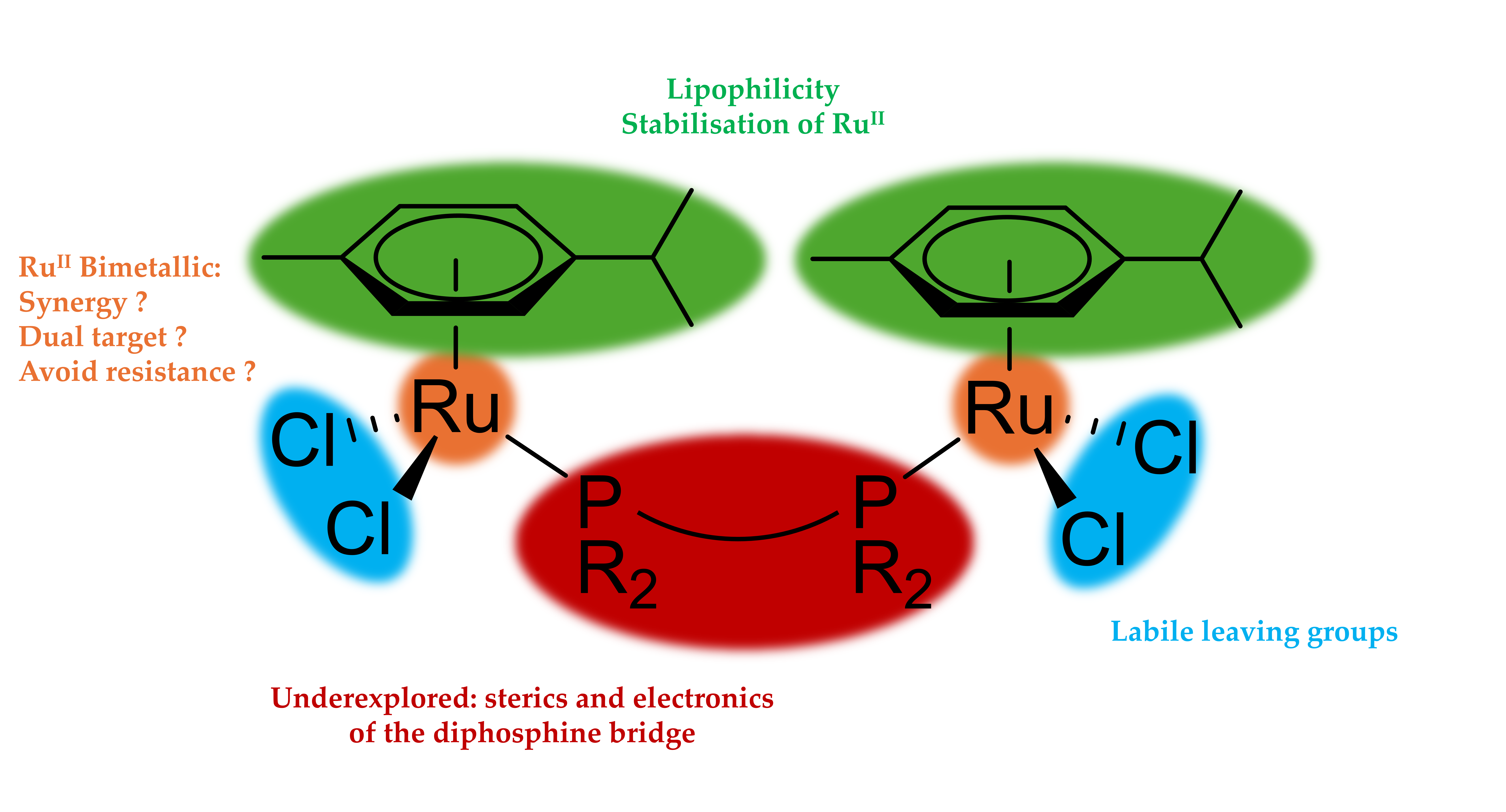
Effect of the µ-Diphosphine Bridging Ligand on the Cytotoxic Activity of Homodinuclear Ruthenium Complexes

 ,
, 
 ,
,  ,
,  and
and 
Abstract
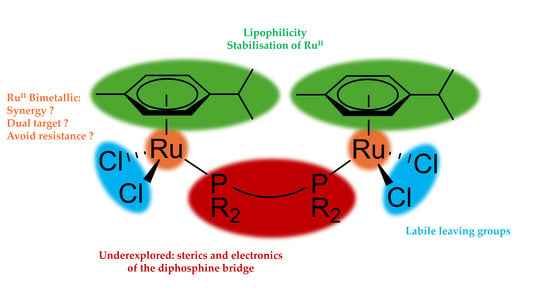
1. Introduction
2. Results and Discussion
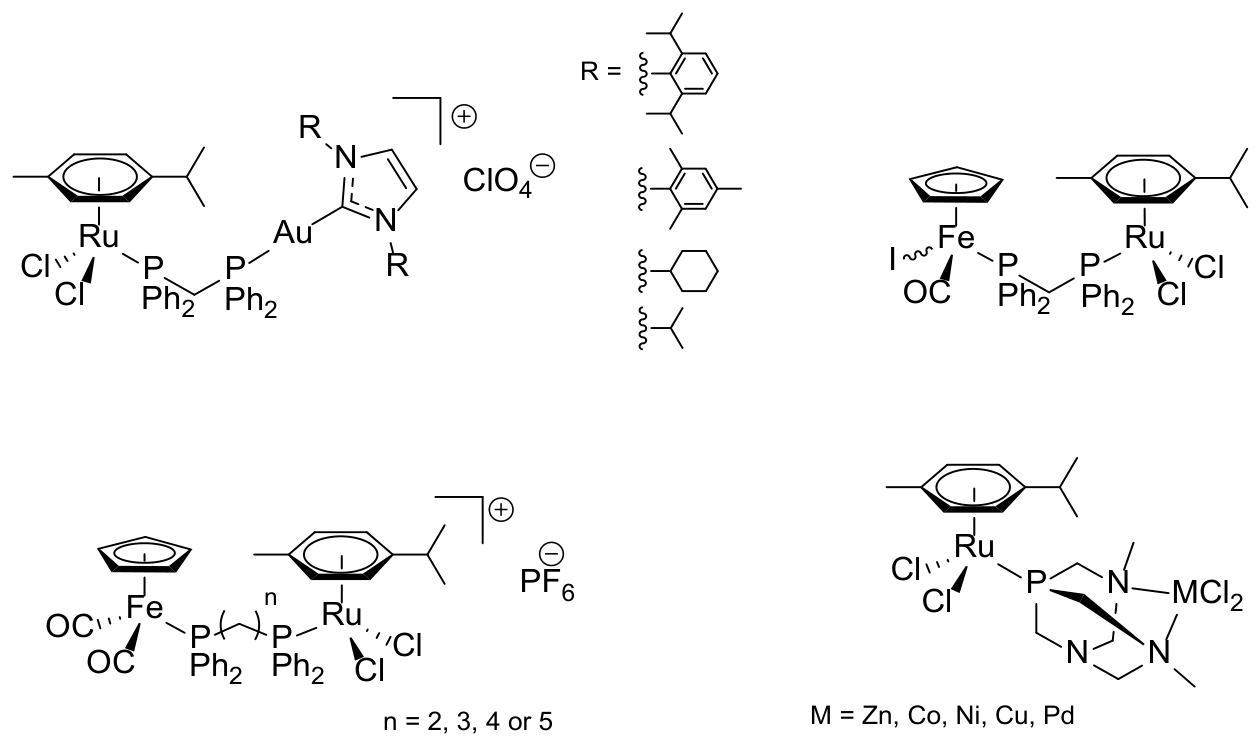
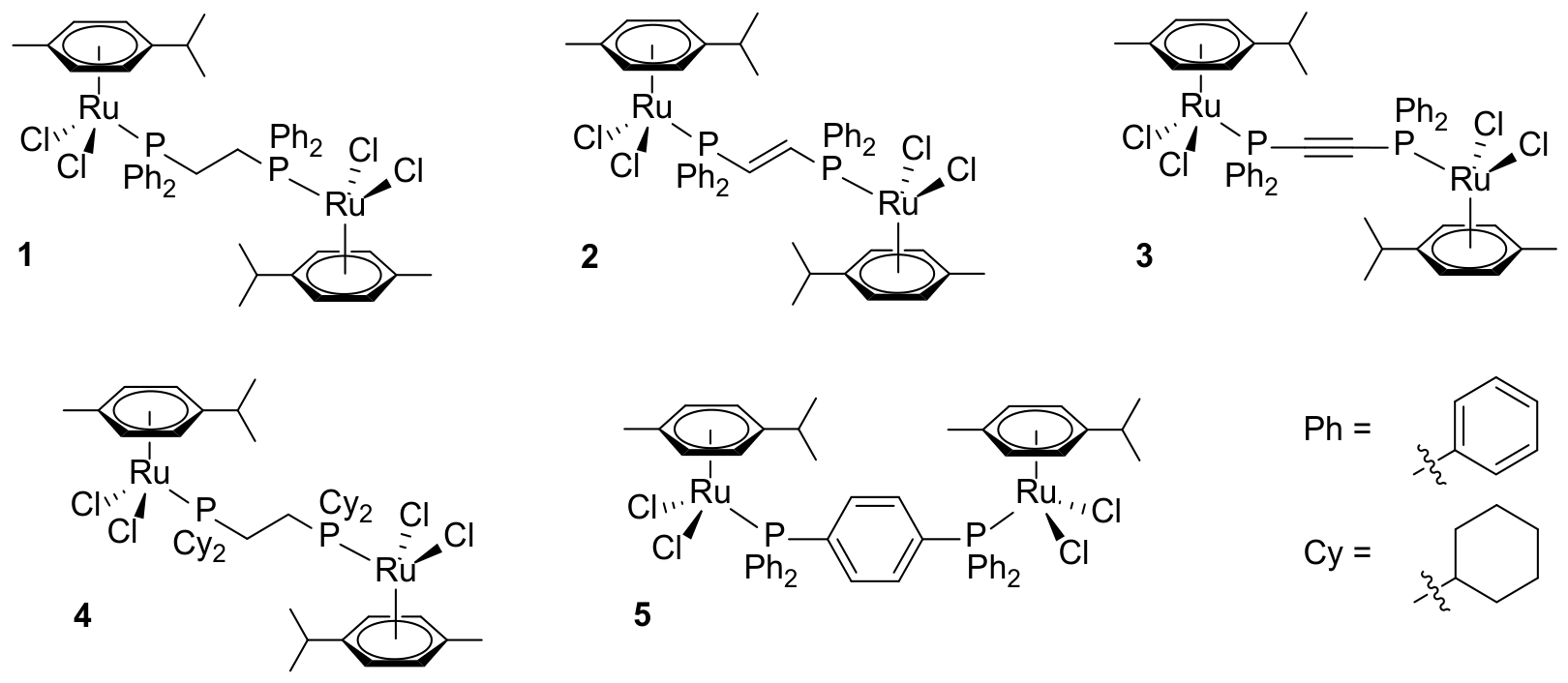
2.1. Synthesis and Spectroscopic Characterisation of the Bimetallic Complexes 1–5
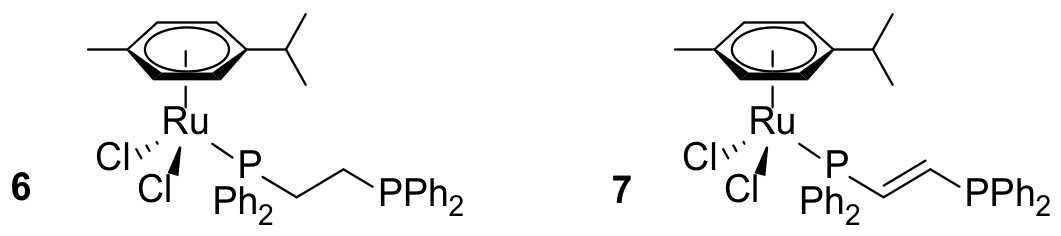
2.2. Synthesis and Spectroscopic Characterisation of the Monometallic Complexes 6 and 7
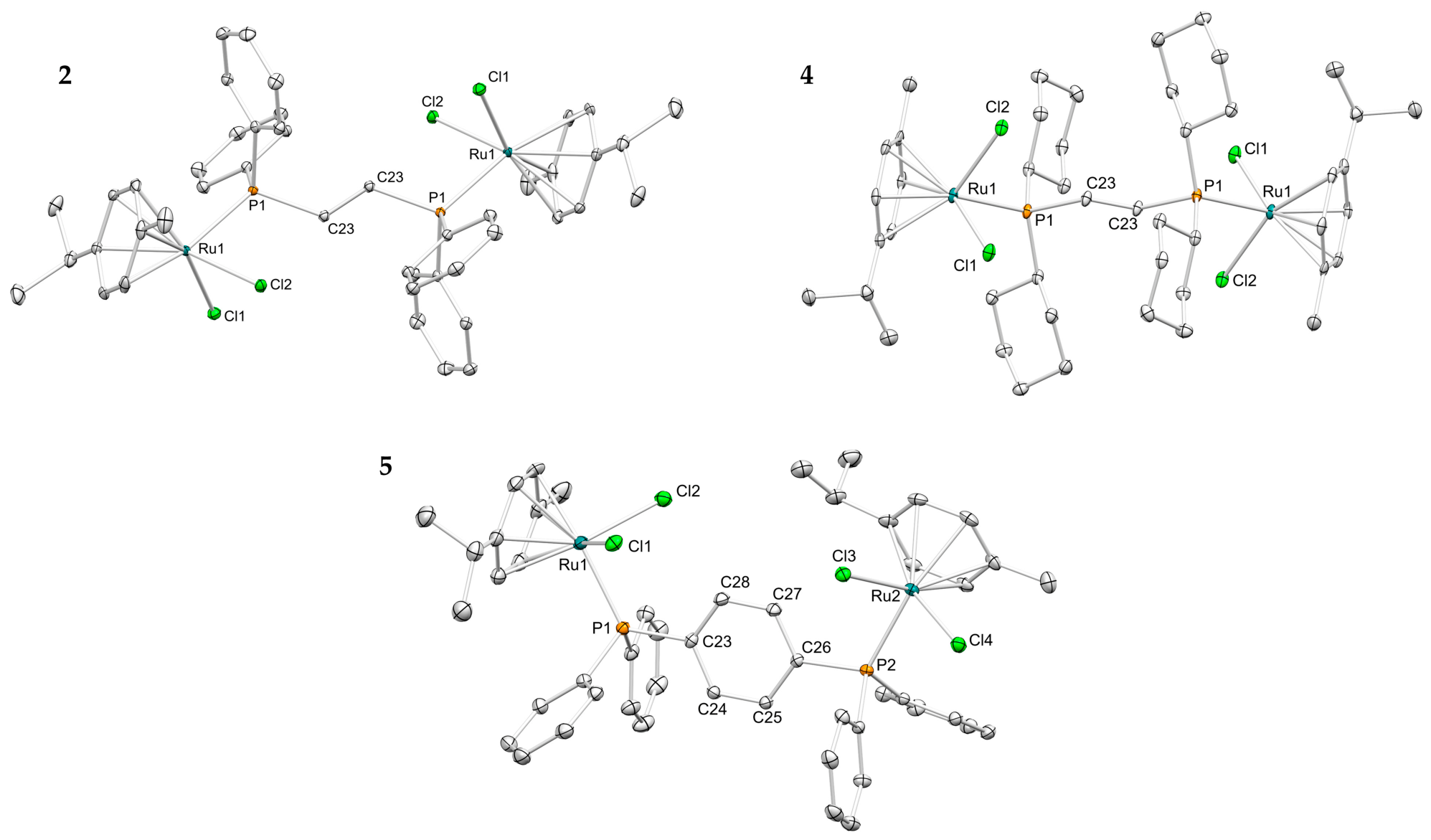
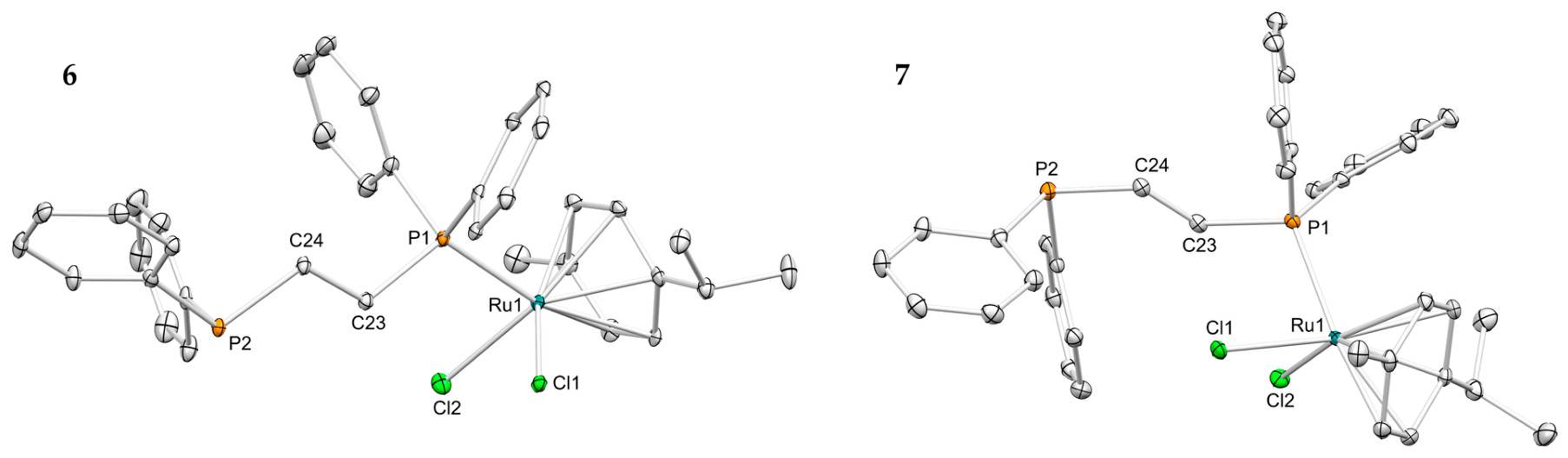
2.3. X-Ray Diffraction Analyses
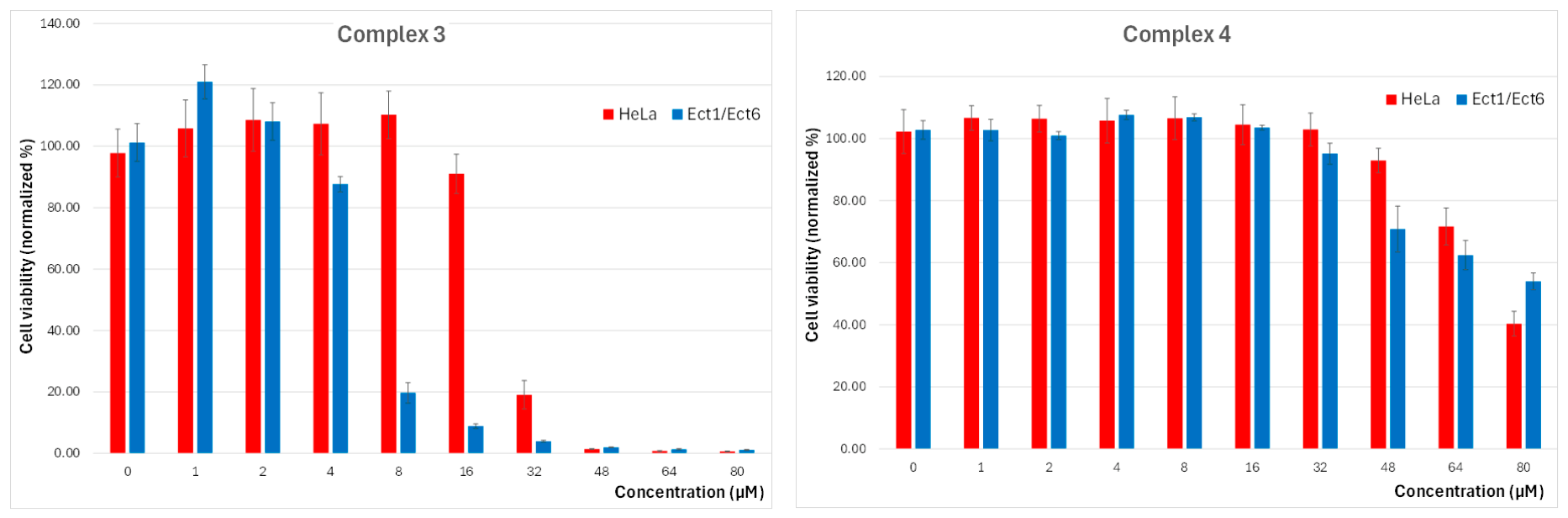
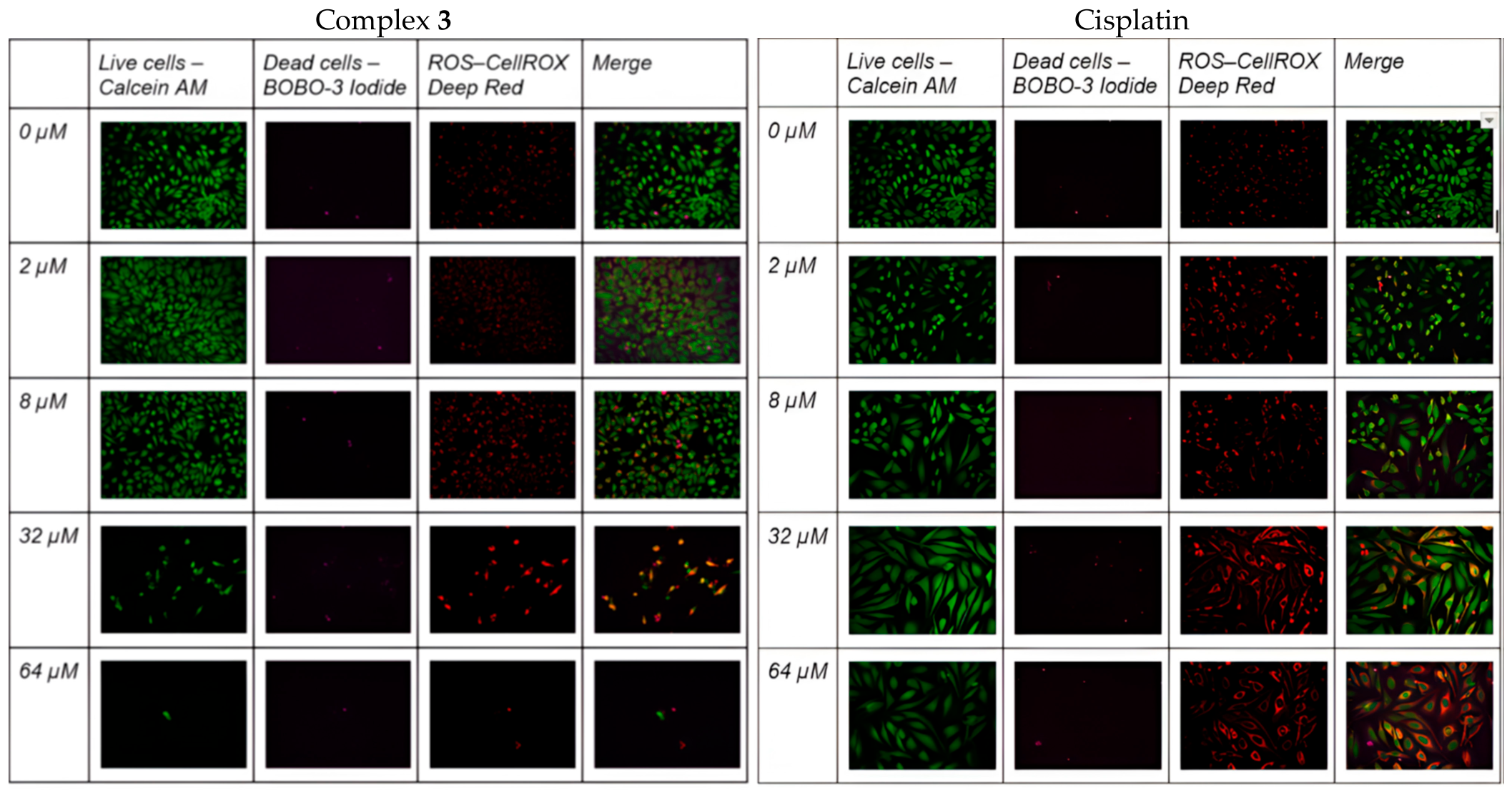
2.4. In Vitro Cell Viability in HeLa and Ect1/E6E7
2.5. Solution Stability Studies
3. Conclusions
4. Experimental Section
4.1. General Considerations
4.2. General Procedure for the Synthesis of the Novel Homobimetallic Complexes [{(p-cym)RuCl2}2(µ-Diphosphine)]
4.2.1. Characterisation of [{(p-cym)RuCl2}2(µ-tdppe)] (2)
4.2.2. Characterisation of [{(p-cym)RuCl2}2(µ-dcpe)] (4)
4.2.3. Characterisation of [{(p-cym)RuCl2}2(µ-1,4dppb)] (5)
4.3. Synthesis of [(p-cym)RuCl2(κ1-dppe)] (6)
4.4. Synthesis of [(p-cym)RuCl2(κ1-tdppe)] (7)
4.5. Cell Viability Assays
Supplementary Materials
Author Contributions
Funding
Institutional Review Board Statement
Informed Consent Statement
Data Availability Statement
Acknowledgments
Conflicts of Interest
References
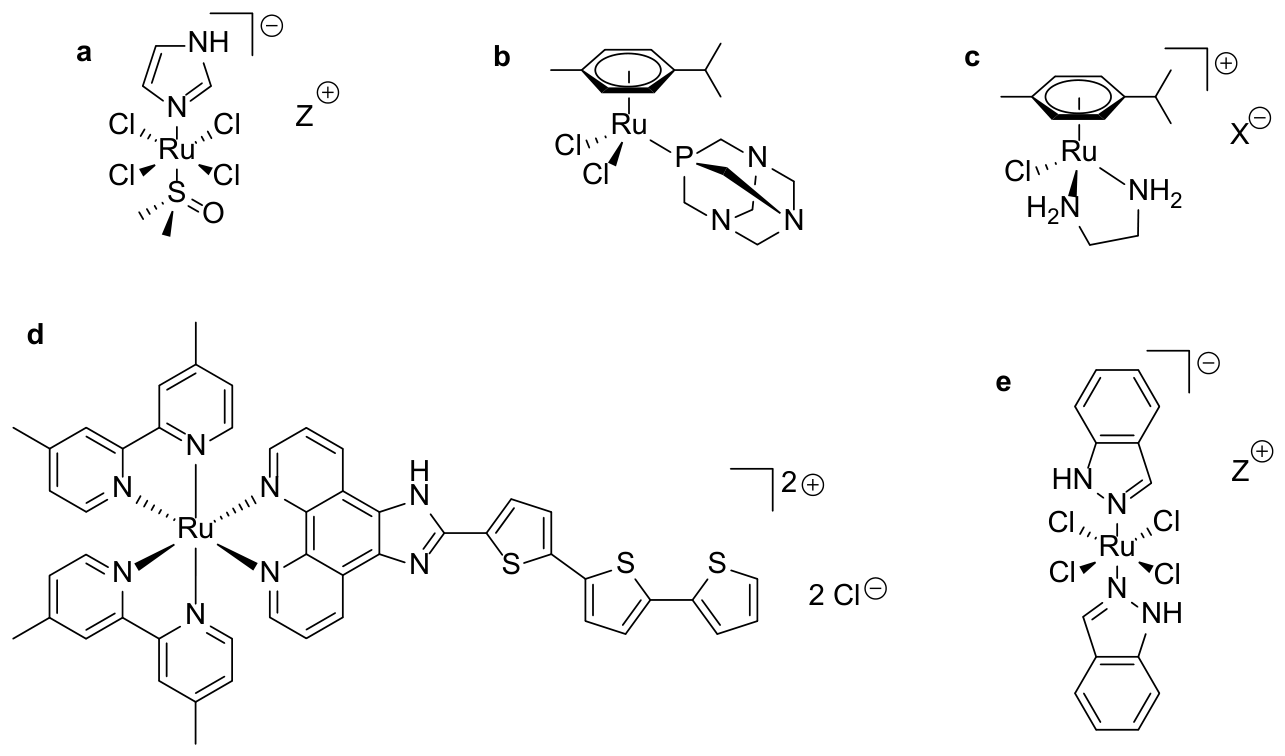
- Sava, G.; Pacor, S.; Mestroni, G.; Alessio, E. Na[trans-RuCl4(DMSO)Im], a metal complex of ruthenium with antimetastatic properties. Clin. Exp. Metastasis 1992, 10, 273–280. [Google Scholar] [CrossRef] [Scilit]
- Sava, G.; Pacor, S.; Mestroni, G.; Alessio, E. Effects of the Ru(III) complexes [mer-RuCl3(DMSO)2Im]° and Na[trans-RuCl4(DMSO)Im] on solid mouse tumors. Anticancer Drugs 1992, 3, 25–32. [Google Scholar] [CrossRef] [Scilit]
- Alessio, E.; Messori, L. NAMI-A and KP1019/1339, Two Iconic Ruthenium Anticancer Drug Candidates Face-to-Face: A Case Story in Medicinal Inorganic Chemistry. Molecules 2019, 24, 1995. [Google Scholar] [CrossRef] [Scilit]
- Paul, S.; Bera, A. Enriching BODIPY Triplet States via Ruthenium(II) Conjugation for Improved Photodynamic Therapy. J. Med. Chem. 2026, 69, 721–743. [Google Scholar] [CrossRef] [Scilit]
- Gul, A.; Ahmad, M.; Ullah, R.; Ullah, R.; Kang, Y.; Liao, W. Systematic review on antibacterial photodynamic therapeutic effects of transition metals ruthenium and iridium complexes. J. Inorg. Biochem. 2024, 255, 112523. [Google Scholar] [CrossRef] [Scilit]
- Ng, X.Y.; Fong, K.W.; Kiew, L.V.; Chung, P.Y.; Liew, Y.K.; Delsuc, N.; Zulkefeli, M.; Low, M.L. Ruthenium(II) polypyridyl complexes as emerging photosensitisers for antibacterial photodynamic therapy. J. Inorg. Biochem. 2024, 250, 112425. [Google Scholar] [CrossRef] [Scilit]
- Liu, J.; Zhang, C.; Rees, T.W.; Ke, L.; Ji, L.; Chao, H. Harnessing ruthenium(II) as photodynamic agents: Encouraging advances in cancer therapy. Coord. Chem. Rev. 2018, 363, 17–28. [Google Scholar] [CrossRef] [Scilit]
- Kessel, D. Critical PDT theory VII: The saga of ruthenium. Photodiagn. Photodyn. Ther. 2023, 42, 103615. [Google Scholar] [CrossRef] [Scilit]
- Kuznetsov, K.M.; Cariou, K.; Gasser, G. Two in one: Merging photoactivated chemotherapy and photodynamic therapy to fight cancer. Chem. Sci. 2024, 15, 17760–17780. [Google Scholar] [CrossRef] [Scilit]
- Papish, E.T.; Oladipupo, O.E. Factors that influence singlet oxygen formation vs. ligand substitution for light-activated ruthenium anticancer compounds. Curr. Opin. Chem. Biol. 2022, 68, 102143. [Google Scholar] [CrossRef] [Scilit]
- Fillaut, J.-L. Ruthenium (II) polypyridyl complexes as two-photon absorbers and sensitizers: Design, structure-properties relationships and applications. Coord. Chem. Rev. 2024, 518, 216050. [Google Scholar] [CrossRef] [Scilit]
- Knoll, J.D.; Turro, C. Control and utilization of ruthenium and rhodium metal complex excited states for photoactivated cancer therapy. Coord. Chem. Rev. 2015, 282–283, 110–126. [Google Scholar] [CrossRef] [Scilit]
- Song, R.; Zhao, R.-Y.; Yan, R.; Li, X.-L.; Zeng, L.-Z.; Cai, Z.; Chen, J.; Ren, X.; Cheng, X.; Gao, F. Nonemissive Ruthenium Complexes for Near Infrared-II Photodynamic, Photothermal, Sonodynamic, and Sonothermal Therapy Against Drug-Resistant Cancer. J. Med. Chem. 2025, 68, 17653–17666. [Google Scholar] [CrossRef] [Scilit]
- Liu, Q.; Li, C.; Li, M.; Li, Q.; Wang, Y.; Mei, L.; Xia, L.; Han, Y.; Sun, Z. Rational design of NIR-absorbing ruthenium(II) complexes with enhanced photothermal conversion for effective cancer therapy. Appl. Mater. Today 2026, 48, 103032. [Google Scholar] [CrossRef] [Scilit]
- Li, Q.; Liu, Y.; Zhao, B.; Lei, J.; Lu, S.; Gong, W.; Liang, K.; Wu, J.; Hong, X.; Xiao, Y. A single-molecular ruthenium(II) complex-based NIR-II fluorophore for enhanced chemo-photothermal therapy. Chem. Commun. 2022, 58, 6546–6549. [Google Scholar] [CrossRef] [Scilit]
- Luo, H.; Chen, J.; Rahman, A.F.M.M.; Zhu, C.; Lu, Y.; Xi, Y.; Liu, K. Dual NIR/X-ray-activatable ruthenium(II) photosensitizers with strong donor-acceptor engineering for deep-tumor theranostics. J. Mol. Struct. 2026, 1369, 146336. [Google Scholar] [CrossRef] [Scilit]
- Qin, Y.; Tang, X.; Chen, J.; Huang, J.; Wang, D.; Zhang, X.; Zhang, Y.; Wu, F.; Wang, J. An LHRH peptide-conjugated ruthenium(II) complex as tumor-targeted theranostic anticancer agent. Inorg. Chem. Commun. 2022, 136, 109166. [Google Scholar] [CrossRef] [Scilit]
- Karati, D.; Meur, S.; Mukherjee, S.; Roy, S. Revolutionizing anticancer treatment: Ruthenium-based nanoplatforms pave new paths. Coord. Chem. Rev. 2024, 519, 216118. [Google Scholar] [CrossRef] [Scilit]
- Shen, J.; Rees, T.W.; Ji, L.; Chao, H. Recent advances in ruthenium(II) and iridium(III) complexes containing nanosystems for cancer treatment and bioimaging. Coord. Chem. Rev. 2021, 443, 214016. [Google Scholar] [CrossRef] [Scilit]
- Singh, N.S.S.; Saleh, L.H.; PadmaPriya, G.; Ray, S.; Pal, A.; Arora, V.; Iliev, K.; Atamuratova, Z.; Yulchiev, D.; Smerat, A.; et al. Ruthenium-based anticancer agents: Focus on mononuclear Ru(II)–arene organometallic scaffolds and Ru(III) non-arene coordination compounds as clinical leads. J. Organomet. Chem. 2026, 1045, 123981. [Google Scholar] [CrossRef] [Scilit]
- Bhattacharya, S.; Adon, T.; Dsouza, K.; Kumar, H.Y. Exploring the Future of Metal-Based Anticancer Agents: A Comprehensive Review of Ruthenium-Based Complexes. ChemistrySelect 2025, 10, e202404147. [Google Scholar] [CrossRef] [Scilit]
- Sojka, M.; Gamez, P. Exploring the toxicity of mononuclear piano-stool Ru(II) anticancer agents: A comprehensive literature review. Coord. Chem. Rev. 2025, 543, 216902. [Google Scholar] [CrossRef] [Scilit]
- Domínguez-Jurado, E.; Lara-Sánchez, A.; Bravo, I.; Ocaña, A.; Alonso-Moreno, C. State of the art in organometallic ruthenium metallodrugs for breast cancer treatment: Advances and innovations. Coord. Chem. Rev. 2025, 523, 216252. [Google Scholar] [CrossRef] [Scilit]
- Dias, I.R.S.B.; Bezerra, D.P. Ruthenium-based drugs as cancer stem cell inhibitors. Biomed. Pharmacother. 2025, 193, 118730. [Google Scholar] [CrossRef] [Scilit]
- Kulkarni, G.S.; Lilge, L.; Nesbitt, M.; Dumoulin-White, R.J.; Mandel, A.; Jewett, M.A.S. A Phase 1b Clinical Study of Intravesical Photodynamic Therapy in Patients with Bacillus Calmette-Guérin–unresponsive Non–muscle-invasive Bladder Cancer. Eur. Urol. Open Sci. 2022, 41, 105–111. [Google Scholar] [CrossRef] [Scilit]
- Burris, H.A.; Bakewell, S.; Bendell, J.C.; Infante, J.; Jones, S.F.; Spigel, D.R.; Weiss, G.J.; Ramanathan, R.K.; Ogden, A.; Von Hoff, D. Safety and activity of IT-139, a ruthenium-based compound, in patients with advanced solid tumours: A first-in-human, open-label, dose-escalation phase I study with expansion cohort. ESMO Open 2016, 1, e000154. [Google Scholar] [CrossRef] [Scilit]
- Henke, M.M.; Richly, H.; Drescher, A.; Grubert, M.; Alex, D.; Thyssen, D.; Jaehde, U.; Scheulen, M.E.; Hilger, R.A. Pharmacokinetic study of sodium trans[tetrachlorobis(1H-indazole)-ruthenate (III)]/-indazole hydrochloride (1:1.1) (FFC14A) in patients with solid tumors. Int. J. Clin. Pharmacol. Ther. 2009, 47, 58–60. [Google Scholar] [CrossRef] [Scilit]
- Lentz, F.; Drescher, A.; Lindauer, A.; Henke, M.; Hilger, R.A.; Hartinger, C.G.; Scheulen, M.E.; Dittrich, C.; Keppler, B.K.; Jaehde, U. Pharmacokinetics of a novel anticancer ruthenium complex (KP1019, FFC14A) in a phase I dose-escalation study. Anticancer Drugs 2009, 20, 97–103. [Google Scholar] [CrossRef] [Scilit]
- Leijen, S.; Burgers, S.A.; Baas, P.; Pluim, D.; Tibben, M.; van Werkhoven, E.; Alessio, E.; Sava, G.; Beijnen, J.H.; Schellens, J.H.M. Phase I/II study with ruthenium compound NAMI-A and gemcitabine in patients with non-small cell lung cancer after first line therapy. Investig. New Drugs 2015, 33, 201–214. [Google Scholar] [CrossRef] [Scilit]
- Rademaker-Lakhai, J.M.; van den Bongard, D.; Pluim, D.; Beijnen, J.H.; Schellens, J.H.M. A Phase I and Pharmacological Study with Imidazolium-trans-DMSO-imidazole-tetrachlororuthenate, a Novel Ruthenium Anticancer Agent. Clin. Cancer Res. 2004, 10, 3717–3727. [Google Scholar] [CrossRef] [Scilit]
- Spratlin, J.L.; O’Kane, G.M.; Oh, D.-Y.; Rha, S.Y.; McWhirter, E.; Elimova, E.; Kavan, P.; Choi, M.K.; Kim, D.W.; Goodwin, R.A.; et al. BOLD-100-001 (TRIO039): A phase 2 study of BOLD-100 in combination with FOLFOX in patients with advanced mCRC previously treated with FOLFOX/CAPOX—Efficacy and safety analysis. J. Clin. Oncol. 2024, 42, 143. [Google Scholar] [CrossRef] [Scilit]
- Fernández-Gallardo, J.; Elie, B.T.; Sanaú, M.; Contel, M. Versatile synthesis of cationic N-heterocyclic carbene–gold(i) complexes containing a second ancillary ligand. Design of heterobimetallic ruthenium–gold anticancer agents. Chem. Commun. 2016, 52, 3155–3158. [Google Scholar] [CrossRef] [Scilit]
- Herry, B.; Batchelor, L.K.; Roufosse, B.; Romano, D.; Baumgartner, J.; Borzova, M.; Reifenstahl, T.; Collins, T.; Benamrane, A.; Weggelaar, J.; et al. Heterobimetallic Ru(μ-dppm)Fe and homobimetallic Ru(μ-dppm)Ru complexes as potential anti-cancer agents. J. Organomet. Chem. 2019, 901, 120934. [Google Scholar] [CrossRef] [Scilit]
- Odachowski, M.; Neven, R.; Perversi, G.; Romano, D.; Slabber, C.A.; Hadiji, M.; Honing, M.; Zhao, Y.; Munro, O.Q.; Blom, B. Ionic mononuclear [Fe] and heterodinuclear [Fe,Ru] bis(diphenylphosphino)alkane complexes: Synthesis, spectroscopy, DFT structures, cytotoxicity, and biomolecular interactions. J. Inorg. Biochem. 2023, 242, 112156. [Google Scholar] [CrossRef] [Scilit]
- Kordestani, N.; Abas, E.; Grasa, L.; Alguacil, A.; Scalambra, F.; Romerosa, A. The Significant Influence of a Second Metal on the Antiproliferative Properties of the Complex [Ru(η6−C10H14)(Cl2)(dmoPTA)]. Chem. Eur. J. 2022, 28, e202103048. [Google Scholar] [CrossRef] [Scilit]
- Kordestani, N.; Martinez-Aguilera, A.; Abas, E.; Grasa, L.; Scalambra, F.; Romerosa, A. Synthesis, characterizacion and study of novel heterobimetallic RAPTA-type Ru(II) complexes. Inorg. Chim. Acta 2026, 589, 122948. [Google Scholar] [CrossRef] [Scilit]
- Roufosse, B.; Serbu, C.; Marschner, C.; Prince, S.; Blom, B. Homo and heteromultimetallic complexes containing a group 8 transition metal and μ-diphosphine bridging ligands involved in anticancer research: A review. Eur. J. Med. Chem. 2024, 274, 116528. [Google Scholar] [CrossRef] [Scilit]
- Das, S.; Sinha, S.; Britto, R.; Somasundaram, K.; Samuelson, A.G. Cytotoxicity of half sandwich ruthenium(II) complexes with strong hydrogen bond acceptor ligands and their mechanism of action. J. Inorg. Biochem. 2010, 104, 93–104. [Google Scholar] [CrossRef] [Scilit]
- Klaimanee, E.; Nhukeaw, T.; Saithong, S.; Ratanaphan, A.; Phongpaichit, S.; Tantirungrotechai, Y.; Leesakul, N. Half-sandwich ruthenium (II) p-cymene complexes based on organophosphorus ligands: Structure determination, computational investigation, in vitro antiproliferative effect in breast cancer cells and antimicrobial activity. Polyhedron 2021, 204, 115244. [Google Scholar] [CrossRef] [Scilit]
- Chaplin, A.B.; Fellay, C.; Laurenczy, G.; Dyson, P.J. Mechanistic Studies on the Formation of η2-Diphosphine (η6-p-cymene)ruthenium(II) Compounds. Organometallics 2007, 26, 586–593. [Google Scholar] [CrossRef] [Scilit]
- Chaplin, A.B.; Scopelliti, R.; Dyson, P.J. The Synthesis and Characterisation of Bis(phosphane)-Linked (η6-p-Cymene)ruthenium(II)–Borane Compounds. Eur. J. Inorg. Chem. 2005, 2005, 4762–4774. [Google Scholar] [CrossRef] [Scilit]
- McQuade, P.; Rath, N.P.; Barton, L. [BH3·PPh2CH2C6H4CH2PPh2·Ru(p-cym)Cl2]: A New Bifunctional Compound and Prototype of a Linked Borane/Metal Cluster Species. Inorg. Chem. 1999, 38, 5468–5470. [Google Scholar] [CrossRef] [Scilit]
- Calabrese, E.J. Cancer Biology and Hormesis: Human Tumor Cell Lines Commonly Display Hormetic (Biphasic) Dose Responses. Crit. Rev. Toxicol. 2005, 35, 463–582. [Google Scholar] [CrossRef] [Scilit]
- Calabrese, E.J.; Baldwin, L.A. Chemotherapeutics and Hormesis. Crit. Rev. Toxicol. 2008, 33, 305–353. [Google Scholar] [CrossRef] [Scilit]
- Mattson, M.P. Hormesis defined. Ageing Res. Rev. 2008, 7, 1–7. [Google Scholar] [CrossRef] [Scilit]
- Brunet, A.; Bonni, A.; Zigmond, M.J.; Lin, M.Z.; Juo, P.; Hu, L.S.; Anderson, M.J.; Arden, K.C.; Blenis, J.; Greenberg, M.E. Akt promotes cell survival by phosphorylating and inhibiting a Forkhead transcription factor. Cell 1999, 96, 857–868. [Google Scholar] [CrossRef] [Scilit]
- Zhang, W.; Liu, H.T. MAPK signal pathways in the regulation of cell proliferation in mammalian cells. Cell Res. 2002, 12, 9–18. [Google Scholar] [CrossRef] [Scilit]
- Bao, J.; Huang, B.; Zou, L.; Chen, S.; Zhang, C.; Zhang, Y.; Chen, M.; Wan, J.-B.; Su, H.; Wang, Y.; et al. Hormetic effect of berberine attenuates the anticancer activity of chemotherapeutic agents. PLoS ONE 2015, 10, e0139298. [Google Scholar] [CrossRef] [Scilit]
- Mamat, N.; Abdullah, H.; Hapidin, H.; Mokhtar, N.F. Combination effect of cisplatin and gallic acid on apoptosis and antioxidant enzymes level in cervical cancer (HeLa) cells. J. Appl. Pharm. Sci. 2021, 11, 092–099. [Google Scholar] [CrossRef] [Scilit]
- Demir, Y.D.Ş.; Ahmed, I.M.; Özdemir, A.; Ark, M. Caveolae and Rho Kinase: Their implication of the senescent cell morphology and the secretion of the SASP in HeLa and A549 cancer cells. Med. Oncol. 2025, 42, 475. [Google Scholar] [CrossRef] [Scilit]
- Nakao, Y.; Mori, M.; Sekiguchi, Y.; Morita, I.; Shindoh, R.; Mandai, S.; Fujiki, T.; Kikuchi, H.; Ando, F.; Susa, K.; et al. A Human Kidney Tubuloid Model of Repeated Cisplatin-Induced Cellular Senescence and Fibrosis for Drug Screening. Adv. Healthc. Mater. 2026, 15, e01795. [Google Scholar] [CrossRef] [Scilit]
- Li, S.; Livingston, M.J.; Ma, Z.; Hu, X.; Wen, L.; Ding, H.-F.; Zhou, D.; Dong, Z. Tubular cell senescence promotes maladaptive kidney repair and chronic kidney disease after cisplatin nephrotoxicity. JCI Insight 2023, 8, e166643. [Google Scholar] [CrossRef] [Scilit]
- Nam, D.; Park, J.; Lee, J.; Son, J.; Kim, J.-E. MTOR potentiates senescent phenotypes and primary cilia formation after cisplatin-induced G2 arrest in retinal pigment epithelial cells. Cell. Signal. 2024, 124, 111402. [Google Scholar] [CrossRef] [Scilit]
- Li, W.; Wang, W.; Dong, H.; Li, Y.; Li, L.; Han, L.; Han, Z.; Wang, S.; Ma, D.; Wang, H. Cisplatin-induced senescence in ovarian cancer cells is mediated by GRP78. Oncol. Rep. 2014, 31, 2525–2534. [Google Scholar] [CrossRef] [Scilit]
- Coppé, J.-P.; Patil, C.K.; Rodier, F.; Krtolica, A.; Beauséjour, C.M.; Parrinello, S.; Hodgson, J.G.; Chin, K.; Desprez, P.-Y.; Campisi, J. A human-like senescence-associated secretory phenotype is conserved in mouse cells dependent on physiological oxygen. PLoS ONE 2010, 5, e9188. [Google Scholar] [CrossRef] [Scilit]
- Bharadwaj, D.; Mandal, M. Senescence in polyploid giant cancer cells: A road that leads to chemoresistance. Cytokine Growth Factor Rev. 2020, 52, 68–75. [Google Scholar] [CrossRef] [Scilit]
- Sheldrick, G. SHELXT—Integrated space-group and crystal-structure determination. Acta Crystallogr. Sect. A 2015, 71, 3–8. [Google Scholar] [CrossRef] [Scilit] [PubMed]
- Sheldrick, G. Crystal structure refinement with SHELXL. Acta Crystallogr. Sect. C 2015, 71, 3–8. [Google Scholar] [CrossRef] [Scilit] [PubMed]
- Dolomanov, O.V.; Bourhis, L.J.; Gildea, R.J.; Howard, J.A.K.; Puschmann, H. OLEX2: A complete structure solution, refinement and analysis program. J. Appl. Crystallogr. 2009, 42, 339–341. [Google Scholar] [CrossRef] [Scilit]
- Coleman, A.W.; Jones, D.F.; Dixneuf, P.H.; Brisson, C.; Bonnet, J.J.; Lavigne, G. Dehalogenation of binuclear arene-ruthenium complexes: A new route to homonuclear triruthenium and heteronuclear ruthenium-iron cluster complexes containing chelating phosphorus ligands. Crystal structure of Ru3(CO)10(Ph2PCH2PPh2). Inorg. Chem. 1984, 23, 952–956. [Google Scholar] [CrossRef] [Scilit]
- Estevan, F.; Lahuerta, P.; Latorre, J.; Sanchez, A.; Sieiro, C. Electrochemical study of dinuclear ruthenium(II)—Arene compounds: Electrogeneration of Ru(II)—Ru(I) species. Polyhedron 1987, 6, 473–478. [Google Scholar] [CrossRef] [Scilit]
- Daguenet, C.; Dyson, P.J. The effect of pH on the hydrogenation of benzene in an aqueous biphase using a ruthenium catalyst. Catal. Commun. 2003, 4, 153–157. [Google Scholar] [CrossRef] [Scilit]
- Moldes, I.; de la Encarnación, E.; Ros, J.; Alvarez-Larena, Á.; Piniella, J.F. Ruthenium(II) complexes containing both arene and functionalized phosphines. Synthesis and catalytic activity for the hydrogenation of styrene and phenylacetylene. J. Organomet. Chem. 1998, 566, 165–174. [Google Scholar] [CrossRef] [Scilit]



| Complex | Absorption Maxima λmax in nm (Molar Extinction Coefficients ε in L·mol−1·cm−1) | ||
|---|---|---|---|
| λ1 | λ2 | λ3 | |
| 1 | 226 (49,238) | 245 (34,229) | 370 (3619) |
| 2 | 225 (66,171) | 249 (44,362) | 375 (4438) |
| 3 | 226 (49,810) | n/a * | 384 (3248) |
| 4 | 226 (32,190) | n/a * | 361 (2971) |
| 5 | 225 (n.d. **) | 251 (34,876) | 378 (3505) |
| Complex Label | 2 | 4 | 5 | 6 | 7 |
|---|---|---|---|---|---|
| Empirical formula | C24H27Cl4PRu | C46H76Cl4P2Ru2 | C50.5H53Cl5.06P2Ru2 | C72H76Cl4P4Ru2 | C72H72Cl4P4Ru2 |
| Temperature/K | 100.00 (10) | 100.0 (3) | 100.00 (10) | 100.00 | 101 (1) |
| Crystal system | triclinic | monoclinic | triclinic | monoclinic | monoclinic |
| Space group | P-1 | P21/c | P-1 | P21/n | P21/c |
| a/Å | 11.0487 (3) | 21.3803 (2) | 10.09180 (10) | 12.59299 (10) | 9.93542 (4) |
| b/Å | 11.3414 (3) | 15.64630 (10) | 14.2482 (2) | 17.95904 (15) | 15.54235 (7) |
| c/Å | 11.9805 (3) | 13.87320 (10) | 18.8810 (3) | 15.11860 (15) | 20.93213 (10) |
| α/° | 80.712 (2) | 90 | 73.7490 (10) | 90 | 90 |
| β/° | 64.941 (2) | 96.8390 (10) | 85.0770 (10) | 106.4350 (9) | 98.6808 (4) |
| γ/° | 63.925 (2) | 90 | 87.0960 (10) | 90 | 90 |
| Volume/Å3 | 1220.96 (6) | 4607.88 (6) | 2595.80 (6) | 3279.49 (5) | 3195.31 (3) |
| Z | 2 | 4 | 2 | 2 | 2 |
| ρcalc g/cm3 | 1.603 | 1.492 | 1.412 | 1.427 | 1.460 |
| F(000) | 596.0 | 2152.0 | 1120.0 | 1448.0 | 1440.0 |
| Radiation | Mo Kα (λ = 0.71073) | Cu Kα (λ = 1.54184) | Cu Kα (λ = 1.54184) | Cu Kα (λ = 1.54184) | Cu Kα (λ = 1.54184) |
| 2Θ range for data collection/° | 5.404 to 66.184 | 7.018 to 159.982 | 6.464 to 160.496 | 7.836 to 159.388 | 8.546 to 160.628 |
| Index ranges | −16 ≤ h ≤ 16, −17 ≤ k ≤ 16, −18 ≤ l ≤ 17 | −19 ≤ h ≤ 26, −19 ≤ k ≤ 19, −17 ≤ l ≤ 17 | −12 ≤ h ≤ 12, −16 ≤ k ≤ 18, −23 ≤ l ≤ 24 | −11 ≤ h ≤ 15, −22 ≤ k ≤ 22, −19 ≤ l ≤ 18 | −11 ≤ h ≤ 12, −19 ≤ k ≤ 18, −26 ≤ l ≤ 26 |
| Reflections collected | 44,250 | 80,964 | 67,005 | 70,878 | 71,850 |
| Independent reflections | 8266 [Rint = 0.0391, Rsigma = 0.0320] | 9882 [Rint = 0.0417, Rsigma = 0.0231] | 11,124 [Rint = 0.0396, Rsigma = 0.0283] | 7093 [Rint = 0.0577, Rsigma = 0.0250] | 6989 [Rint = 0.0473, Rsigma = 0.0233] |
| Data/restraints/parameters | 8266/0/278 | 9882/0/493 | 11,124/0/567 | 7093/0/374 | 6989/0/374 |
| Goodness-of-fit on F2 | 1.051 | 1.056 | 1.045 | 1.125 | 1.057 |
| Final R indexes [I ≥ 2σ (I)] | R1 = 0.0273, wR2 = 0.0586 | R1 = 0.0378, wR2 = 0.0976 | R1 = 0.0360, wR2 = 0.0914 | R1 = 0.0363, wR2 = 0.0916 | R1 = 0.0261, wR2 = 0.0649 |
| Final R indexes [all data] | R1 = 0.0327, wR2 = 0.0602 | R1 = 0.0401, wR2 = 0.0989 | R1 = 0.0386, wR2 = 0.0930 | R1 = 0.0367, wR2 = 0.0919 | R1 = 0.0264, wR2 = 0.0651 |
| Largest diff. peak/hole/eÅ−3 | 0.90/−0.73 | 1.09/−1.59 | 1.95/−1.08 | 1.30/−1.42 | 0.84/−0.49 |
| Selected bond lengths (Å) | |||||
| Ru1-Cl1 | 2.4070 (4) | 2.4181 (7) | 2.4043 (8) | 2.4157(6) | 2.4027 (4) |
| Ru1-Cl2 | 2.4121 (4) | 2.4266 (7) | 2.4177 (8) | 2.4157 (6) | 2.4103 (4) |
| Ru1-P1 | 2.3404 (4) | 2.3946 (7) | 2.3578 (7) | 2.3537 (6) | 2.3490 (4) |
| P1-C23 | 1.8189 (14) | 1.852 (3) | 1.835 (3) | 1.834 (3) | 1.8113 (18) |
| C23-C23 1 a | 1.334 (3) | 1.522 (5) | n/a * | n/a * | n/a * |
| C23-C24 b | n/a * | n/a * | n/a * | 1.532 (3) | 1.324 (3) |
| C24-P2 b | n/a * | n/a * | n/a * | 1.860 (3) | 1.8244 (18) |
| Selected bond angles (°) | |||||
| Cl1-Ru1-Cl2 | 87.967 (13) | 86.48 (3) | 89.30 (3) | 88.36 (2) | 88.846 (15) |
| Cl2-Ru1-P1 | 83.734 (12) | 87.38 (2) | 90.07 (3) | 88.69 (2) | 84.707 (15) |
| P1-Ru1-Cl1 | 85.914 (13) | 87.88 (2) | 85.44 (3) | 82.97 (2) | 83.944 (14) |
| Ru1-P1-C23 | 116.33 (5) | 110.53 (9) | 121.75 (9) | 113.35 (8) | 112.60 (6) |
| Drug | HeLa | Ect1/E6E7 |
|---|---|---|
| Cisplatin | 35.62 ± 7.47 | 8.46 ± 0.32 |
| 1 | >80 | >80 |
| 2 | 73.73 ± 16.05 | 38.95 ± 1.89 |
| 3 | 23.32 ± 1.27 | 5.55 ± 0.16 |
| 4 | 73.34 ± 5.21 | 77.92 ± 9.50 |
| 5 | 27.59 ± 0.61 | 7.98 ± 0.31 |
Disclaimer/Publisher’s Note: The statements, opinions and data contained in all publications are solely those of the individual author(s) and contributor(s) and not of MDPI and/or the editor(s). MDPI and/or the editor(s) disclaim responsibility for any injury to people or property resulting from any ideas, methods, instructions or products referred to in the content. |
© 2026 by the authors. Licensee MDPI, Basel, Switzerland. This article is an open access article distributed under the terms and conditions of the Creative Commons Attribution (CC BY) license.
Share and Cite
Roufosse, B.; Jiménez-Monroy, K.L.; Marschner, C.; van de Laarschot, J.; Loftus, O.; Cleij, T.J.; Prince, S.; Blom, B. Effect of the µ-Diphosphine Bridging Ligand on the Cytotoxic Activity of Homodinuclear Ruthenium Complexes. Molecules 2026, 31, 2968. https://doi.org/10.3390/molecules31172968
Roufosse B, Jiménez-Monroy KL, Marschner C, van de Laarschot J, Loftus O, Cleij TJ, Prince S, Blom B. Effect of the µ-Diphosphine Bridging Ligand on the Cytotoxic Activity of Homodinuclear Ruthenium Complexes. Molecules. 2026; 31(17):2968. https://doi.org/10.3390/molecules31172968
Chicago/Turabian StyleRoufosse, Basile, Kathia L. Jiménez-Monroy, Christoph Marschner, Jill van de Laarschot, Oscar Loftus, Thomas J. Cleij, Sharon Prince, and Burgert Blom. 2026. "Effect of the µ-Diphosphine Bridging Ligand on the Cytotoxic Activity of Homodinuclear Ruthenium Complexes" Molecules 31, no. 17: 2968. https://doi.org/10.3390/molecules31172968
APA StyleRoufosse, B., Jiménez-Monroy, K. L., Marschner, C., van de Laarschot, J., Loftus, O., Cleij, T. J., Prince, S., & Blom, B. (2026). Effect of the µ-Diphosphine Bridging Ligand on the Cytotoxic Activity of Homodinuclear Ruthenium Complexes. Molecules, 31(17), 2968. https://doi.org/10.3390/molecules31172968