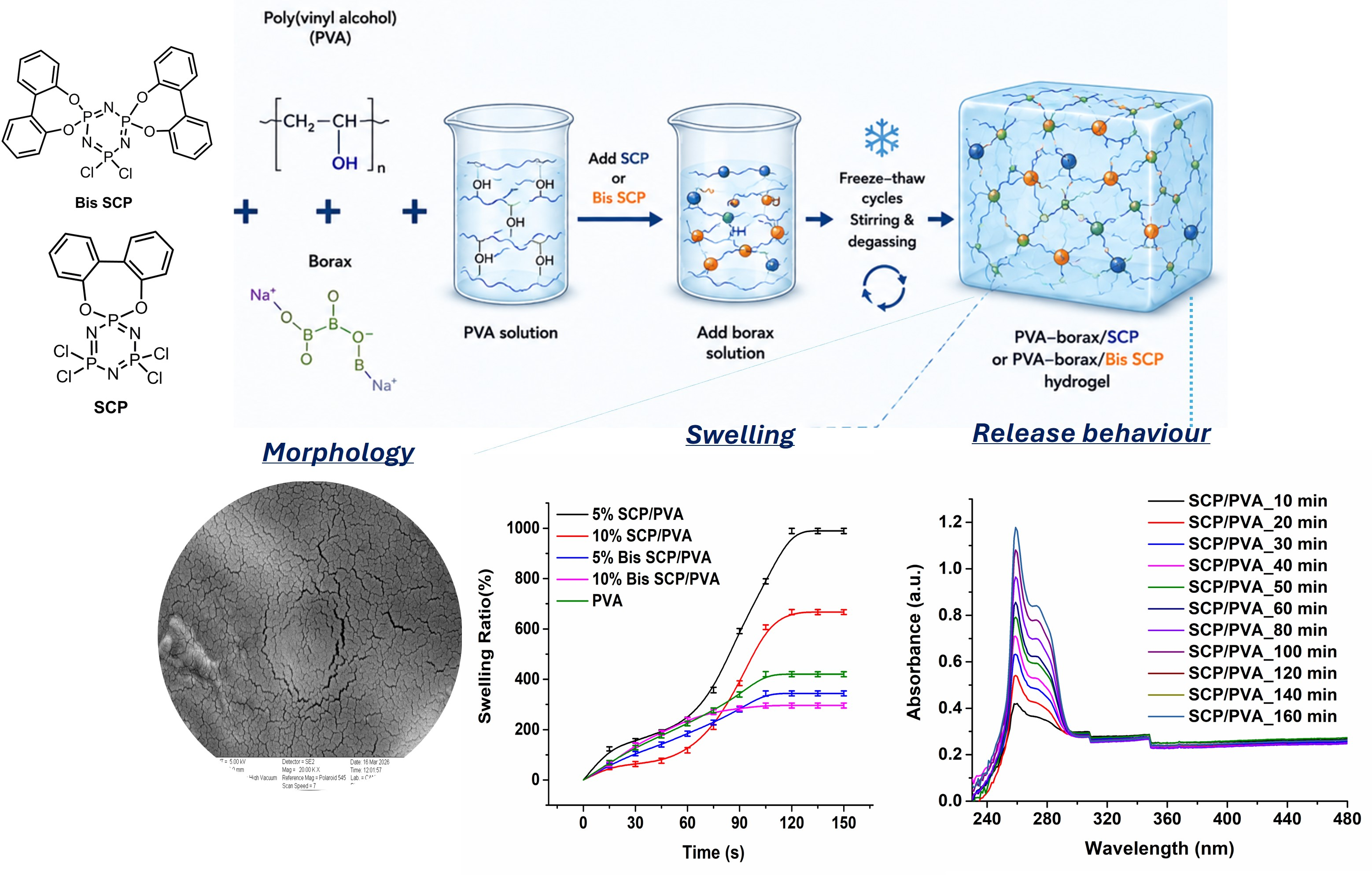
PVA–Borax Hydrogels Loaded with Mono- and Bis-Spiro-Dioxy-Biphenyl-Cyclotriphosphazenes: Fabrication, Physicochemical Properties, and Release Kinetics
Abstract
1. Introduction
2. Results and Discussion
2.1. Synthesis and Characterization of SCP and Bis SCP Compounds
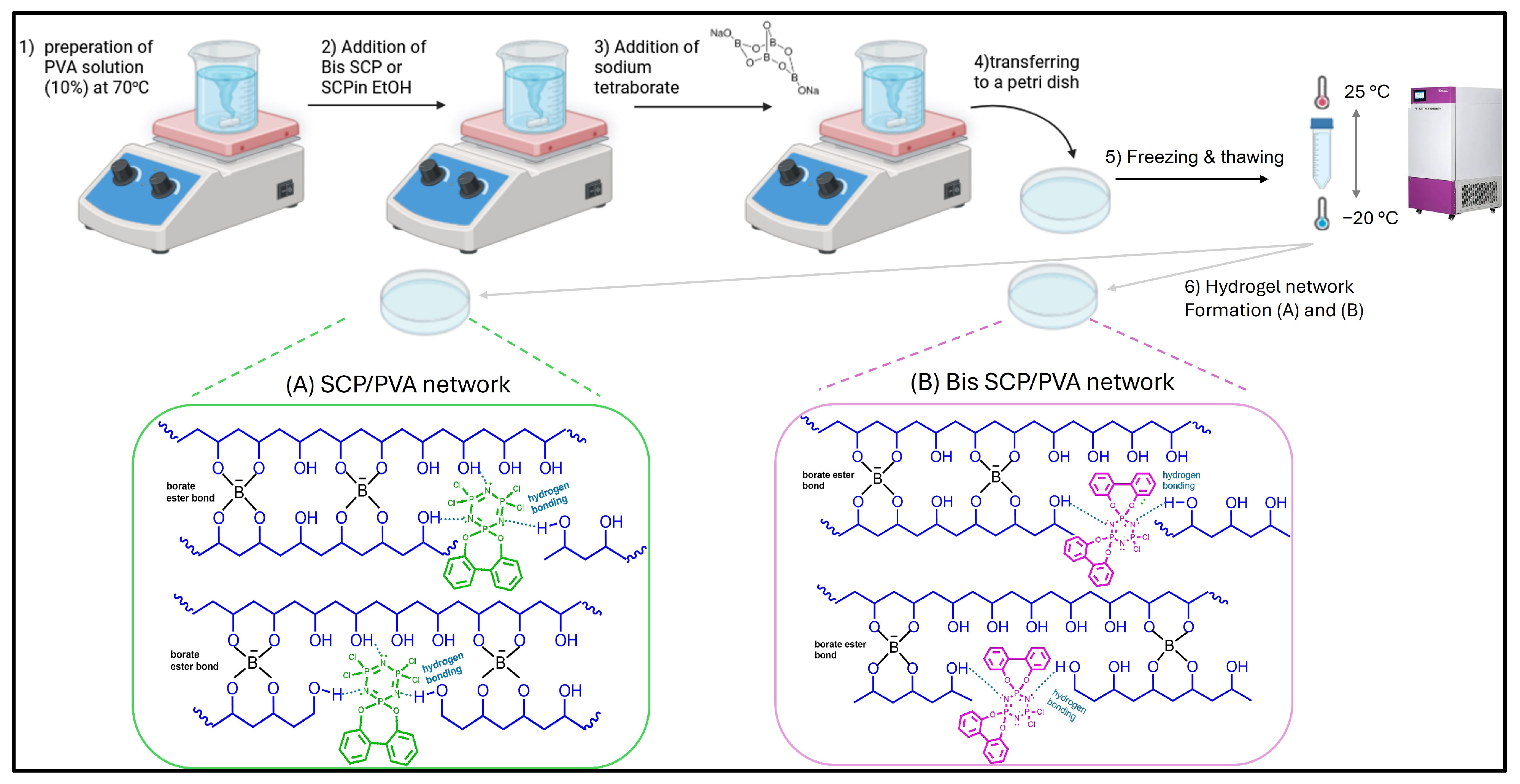
2.2. Production of SCP/PVA and Bis SCP/PVA Hydrogels
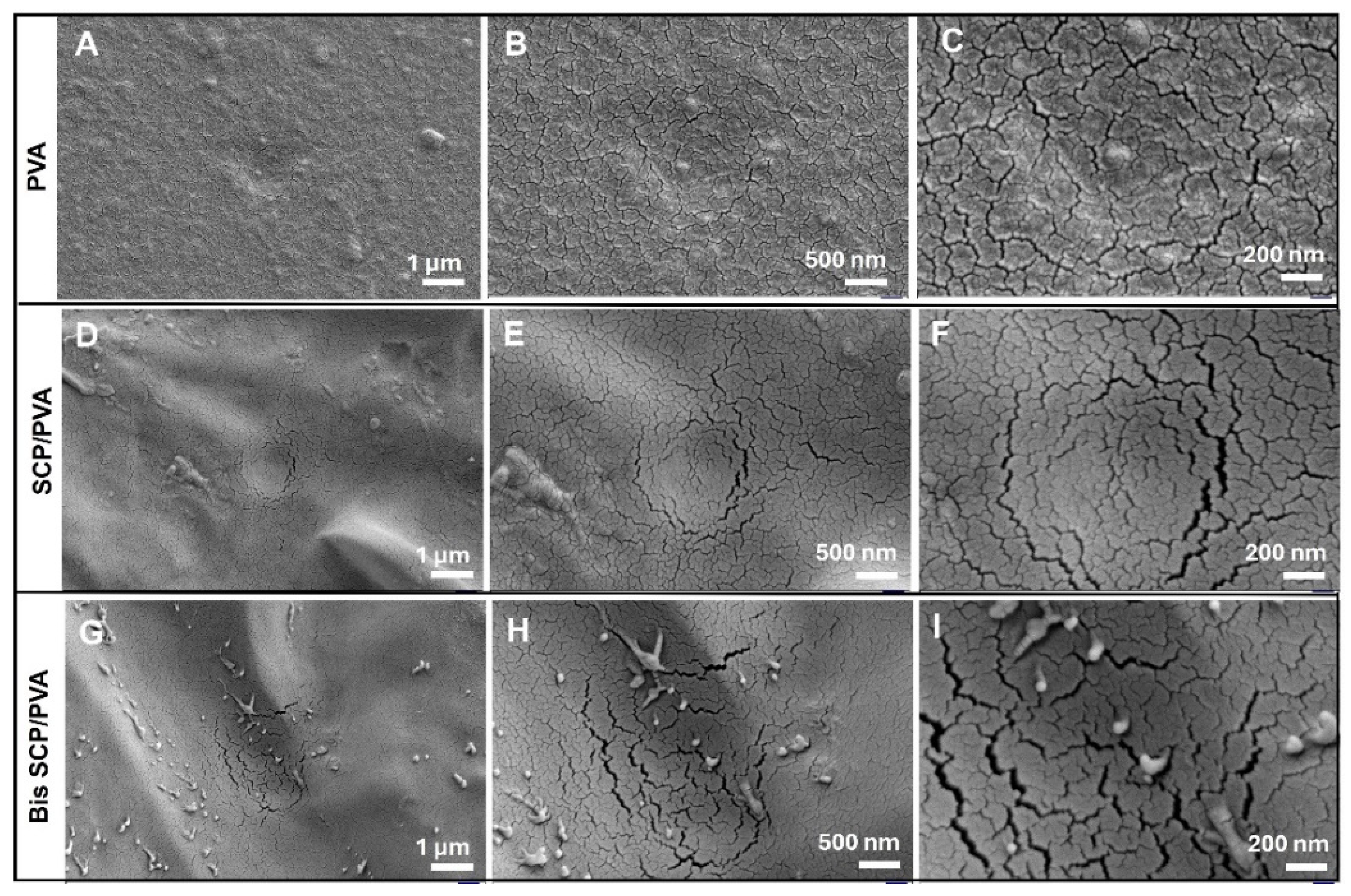
2.3. Morphology and Elemental Composition of the SCP and Bis SCP/PVA Hydrogels
2.4. FTIR
2.5. Swelling Characteristics
2.6. Viscoelastic Properties of SCP- and Bis SCP-Loaded Hydrogels
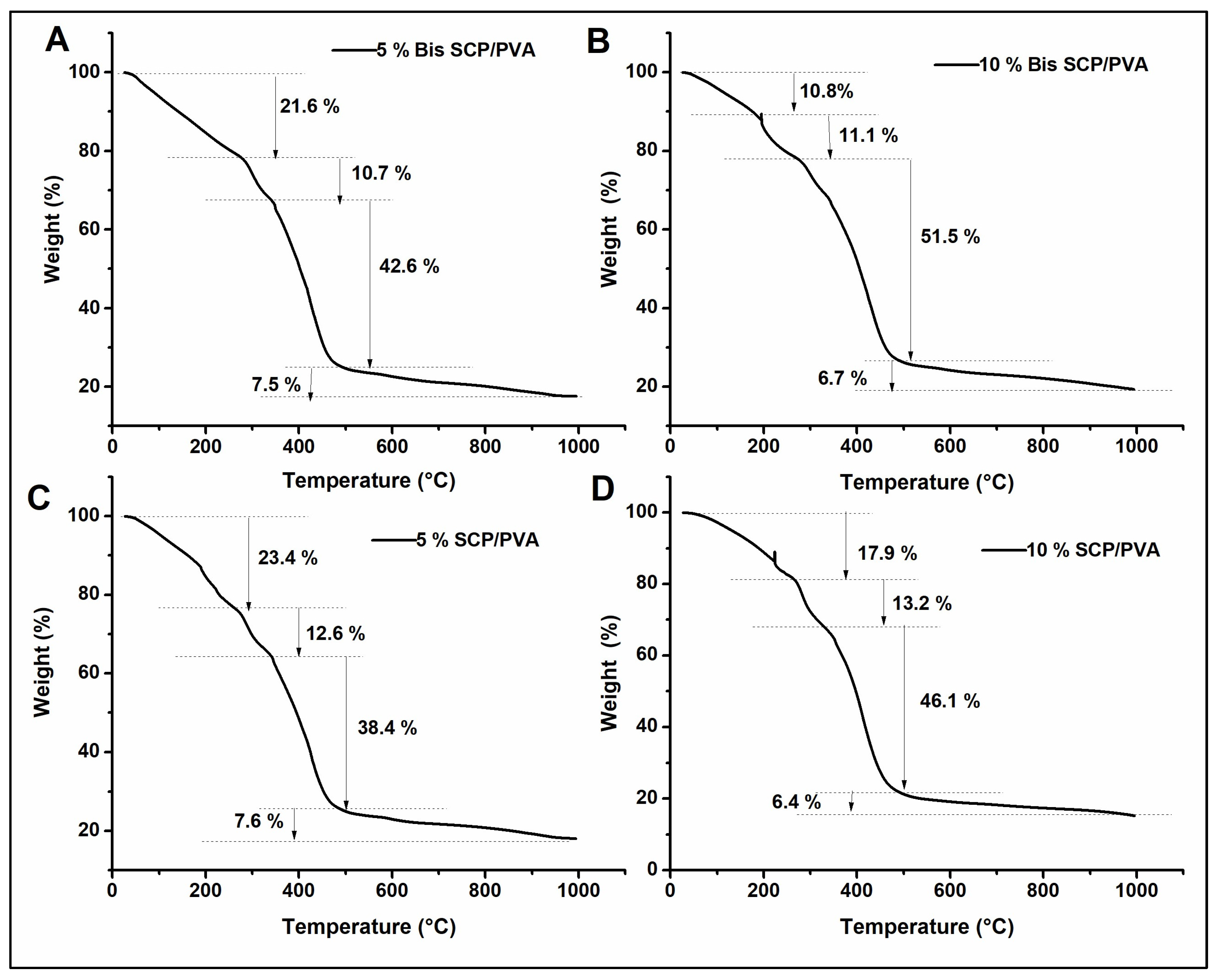
2.7. Thermal Stability of SCP- and Bis SCP-Loaded PVA Hydrogels
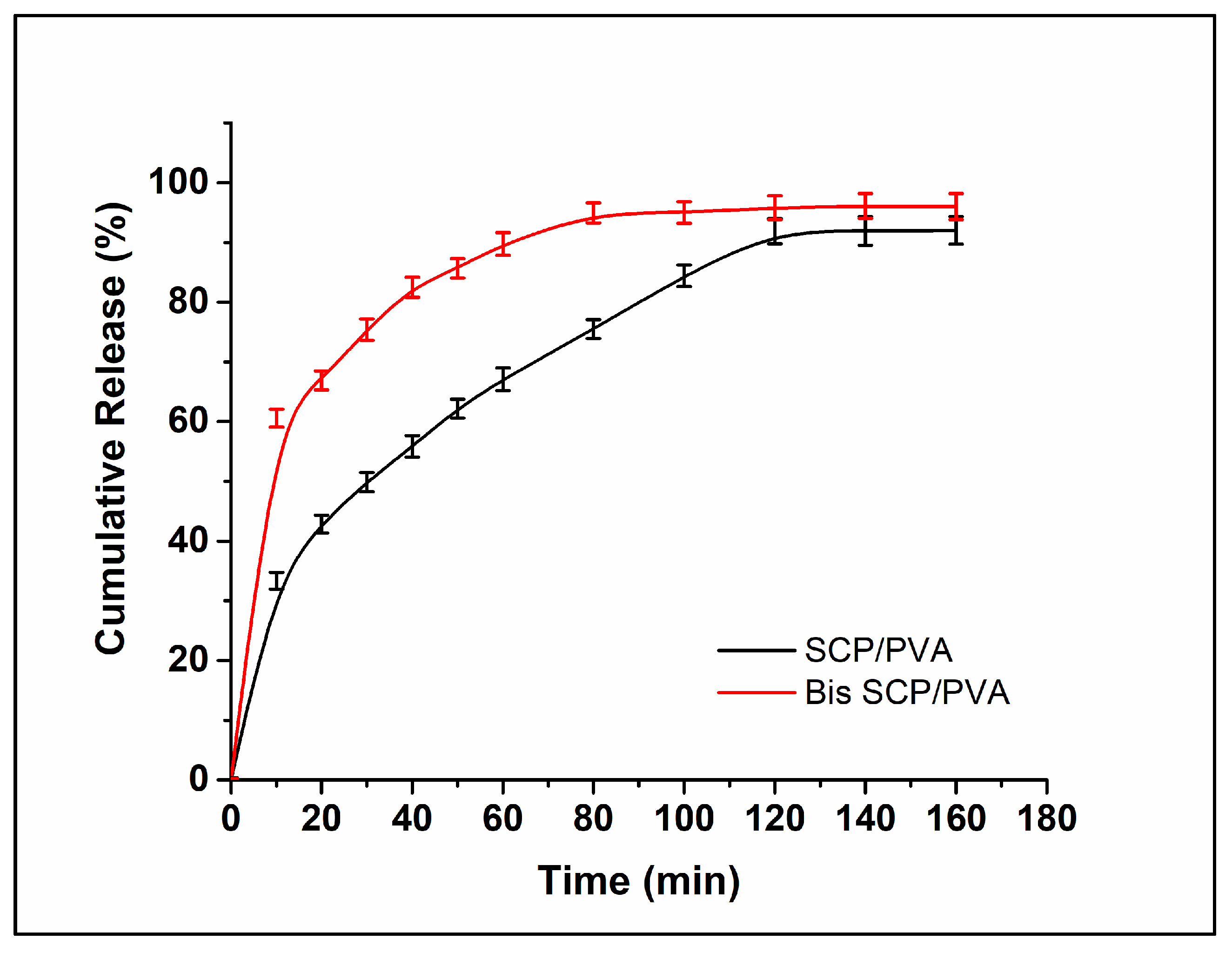
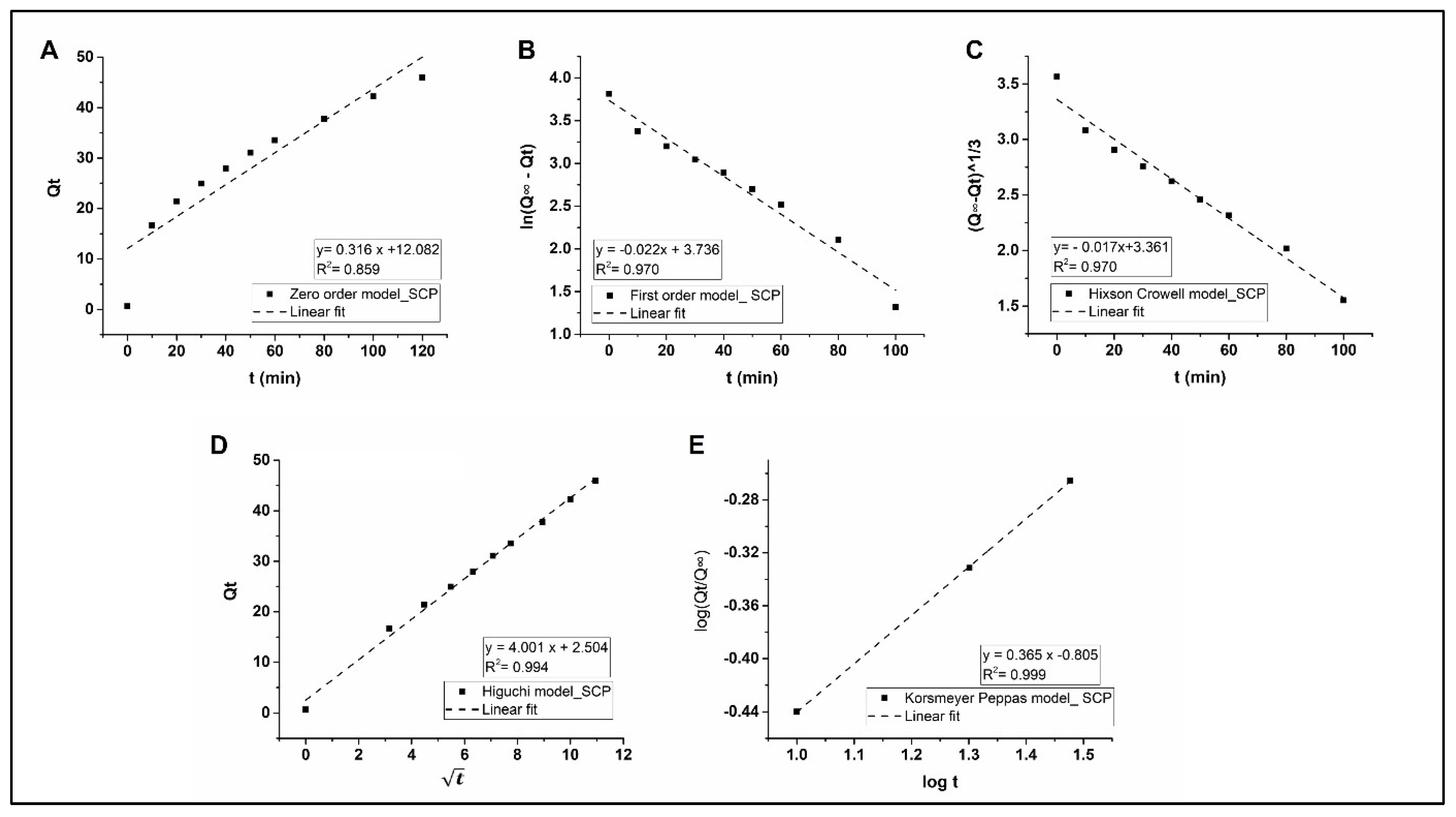
2.8. Release Kinetics of SCP- and Bis SCP from PVA Hydrogels
3. Materials and Methods
3.1. Materials
3.2. Synthesis of SCP and Bis SCP
3.3. Preparation of PVA–Borax Hydrogels
3.3.1. Pristine PVA–Borax Hydrogel
3.3.2. SCP/PVA–Borax Hydrogel
3.3.3. Bis SCP/PVA–Borax Hydrogels
3.4. Swelling Measurements
3.5. In Vitro Release Study and Release Kinetic Analysis
3.6. Characterization
4. Conclusions
Supplementary Materials
Funding
Institutional Review Board Statement
Informed Consent Statement
Data Availability Statement
Acknowledgments
Conflicts of Interest
References
- Liang, X.; Zhong, H.-J.; Ding, H.; Yu, B.; Ma, X.; Liu, X.; Chong, C.-M.; He, J. Polyvinyl Alcohol (PVA)-Based Hydrogels: Recent Progress in Fabrication, Properties, and Multifunctional Applications. Polymers 2024, 16, 2755. [Google Scholar] [CrossRef] [Scilit]
- Adelnia, H.; Ensandoost, R.; Moonshi, S.S.; Gavgani, J.N.; Vasafi, E.I.; Ta, H.T. Freeze/Thawed Polyvinyl Alcohol Hydrogels: Present, Past and Future. Eur. Polym. J. 2022, 164, 110974. [Google Scholar] [CrossRef] [Scilit]
- Chen, L.; Shao, J.; Yu, Q.; Wang, S. High-Strength, Anti-Fatigue, Stretchable Self-Healing Polyvinyl Alcohol Hydrogel Based on Borate Bonds and Hydrogen Bonds. J. Dispers. Sci. Technol. 2022, 43, 690–703. [Google Scholar] [CrossRef] [Scilit]
- Cho, S.; Hwang, S.Y.; Oh, D.X.; Park, J. Recent Progress in Self-Healing Polymers and Hydrogels Based on Reversible Dynamic B-O Bonds: Boronic/Boronate Esters, Borax, and Benzoxaborole. J. Mater. Chem. A 2021, 9, 14630–14655. [Google Scholar] [CrossRef] [Scilit]
- Zhang, Y.; Le, X.; Lu, W.; Jian, Y.; Zhang, J.; Chen, T. An “Off-the-Shelf” Shape Memory Hydrogel Based on the Dynamic Borax-Diol Ester Bonds. Macromol. Mater. Eng. 2018, 303, 1800144. [Google Scholar] [CrossRef] [Scilit]
- Liu, Y.; Chang, J.; Mao, J.; Wang, S.; Guo, Z.; Hu, Y. Dual-Network Hydrogels Based on Dynamic Imine and Borate Ester Bonds with Antibacterial and Self-Healing Properties. Colloids Surf. B Biointerfaces 2023, 230, 113528. [Google Scholar] [CrossRef] [Scilit] [PubMed]
- Sun, N.; Liu, X.; Lv, W.; Xu, C.; Zhang, A.; Sun, P. Composite Hydrogels with Rapid Self-Healing, Stretchable, Moldable and Antibacterial Properties Based on PVA/ε-Poly-l-Lysine/Hyaluronic Acid. Molecules 2024, 29, 4666. [Google Scholar] [CrossRef] [Scilit] [PubMed]
- Ma, W.; Zhang, P.; Zhao, B.; Wang, S.; Zhong, J.; Cao, Z.; Liu, C.; Gong, F.; Matsuyama, H. Swelling Resistance and Mechanical Performance of Physical Crosslink-Based Poly(Vinyl Alcohol) Hydrogel Film with Various Molecular Weight. J. Polym. Sci. Part B Polym. Phys. 2019, 57, 1673. [Google Scholar] [CrossRef] [Scilit]
- Jiang, X.; Li, C.L.; Han, Q. Modulation of Swelling of PVA Hydrogel by Polymer and Crosslinking Agent Concentration. Polym. Bull. 2023, 80, 1303–1320. [Google Scholar] [CrossRef] [Scilit]
- Ceylan, S.; Arıcı, Ş.; Ege, D.; Yang, Y. Molecular Weight-Dependent Boron Release Effect in PVA/Chitosan Cryogels and In Vitro Mineralization Evaluations by Osteoblast Cells. Biopolymers 2025, 116, e23654. [Google Scholar] [CrossRef] [Scilit] [PubMed]
- Roca-Arroyo, A.F.; Gutierrez-Rivera, J.A.; Morton, L.D.; Castilla-Casadiego, D.A. Hydrogel Network Architecture Design Space: Impact on Mechanical and Viscoelastic Properties. Gels 2025, 11, 588. [Google Scholar] [CrossRef] [Scilit] [PubMed]
- Hu, J.; Zhang, S.; Weng, Q.; Chang, G.; Jan, J. Cyclotriphosphazene-Based Crosslinked Networks with Tunable Thermal, Mechanical, and Flame-Retardant Properties. J. Taiwan Inst. Chem. Eng. 2025, 168, 105898. [Google Scholar] [CrossRef] [Scilit]
- Wang, D.; Xu, X.; Qiu, Y.; Wang, J.; Meng, L. Cyclotriphosphazene Based Materials: Structure, Functionalization and Applications. Prog. Mater. Sci. 2024, 142, 101232. [Google Scholar] [CrossRef] [Scilit]
- Yudaev, P.; Tupikov, A.; Chistyakov, E. Organocyclophosphazenes and Materials Based on Them for Pharmaceuticals and Biomedicine. Biomolecules 2025, 15, 262. [Google Scholar] [CrossRef] [Scilit] [PubMed]
- Yin, Z.Z.; Ma, J.M.; Zhao, B.; Yan, H.; Zhang, C.Y. PVA-Based Hydrogen-Bonded Supramolecular Adhesive with Core–Shell Nanoarchitectures for Multifunctional and Sustainable Applications. J. Adv. Res. 2025, 85, 615–631. [Google Scholar] [CrossRef] [Scilit] [PubMed]
- Chen, J.; Wang, L.; Yang, Y.; Xu, M.; Xie, J.; Liu, P. Optimized Synthesis of Selected 4-Oxybenzaldehyde and 2,2-Dioxybiphenyl Cyclotriphosphazene Derivatives. Phosphorus Sulfur Silicon Relat. Elem. 2020, 196, 79–85. [Google Scholar] [CrossRef] [Scilit]
- Begeç, S. Synthesis and Characterization of New Spiro Cyclotriphosphazene Derivatives. Inorg. Chem. Commun. 2022, 140, 109457. [Google Scholar] [CrossRef] [Scilit]
- Tunca, U.; Erdogmus, A.; Hizal, G. Synthesis and Characterization of Aromatic Cyclolinear Phosphazene Polyetherketones Containing Bis-Spiro-Substituted Cyclotriphosphazene Unit. J. Polym. Sci. Part A Polym. Chem. 2001, 39, 2993–2997. [Google Scholar] [CrossRef] [Scilit]
- Ni, Z.; Yu, H.; Wang, L.; Liu, X.; Shen, D.; Chen, X.; Liu, J.; Wang, N.; Huang, Y.; Sheng, Y. Polyphosphazene and Non-Catechol-Based Antibacterial Injectable Hydrogel for Adhesion of Wet Tissues as Wound Dressing. Adv. Healthc. Mater. 2022, 11, 2101421. [Google Scholar] [CrossRef] [Scilit] [PubMed]
- Zhang, Z.; Ni, Z.; Huang, Y.; Zhang, H.; Hu, Z.; Ye, D.; Shen, Y.; Jia, M.; Shi, K.; Zhu, G.; et al. Barnacle-Inspired Wet Tissue Adhesive Hydrogels with Inherent Antibacterial Properties for Infected Wound Treatment. ACS Appl. Mater. Interfaces 2023, 15, 37214–37231. [Google Scholar] [CrossRef] [Scilit] [PubMed]
- Ozay, H.; Ilgin, P.; Ozay, O. Novel Hydrogels Based on Crosslinked Chitosan with Formyl-Phosphazene Using Schiff-Base Reaction. Int. J. Polym. Mater. Polym. Biomater. 2021, 70, 246–255. [Google Scholar] [CrossRef] [Scilit]
- Ozay, H.; Sahin, O.; Koc, O.K.; Ozay, O. The Preparation and Applications of Novel Phosphazene Crosslinked Thermo and PH Responsive Hydrogels. J. Ind. Eng. Chem. 2016, 43, 28–35. [Google Scholar] [CrossRef] [Scilit]
- Yudaev, P.; Butorova, I.; Chuev, V.; Posokhova, V.; Klyukin, B.; Chistyakov, E. Wound Gel with Antimicrobial Effects Based on Polyvinyl Alcohol and Functional Aryloxycyclotriphosphazene. Polymers 2023, 15, 2831. [Google Scholar] [CrossRef] [Scilit] [PubMed]
- Carriedo, G.A.; Fernández-Catuxo, L.; García Alonso, F.J.; Gómez-Elipe, P.; González, P.A. Preparation of a New Type of Phosphazene High Polymers Containing 2,2′-Dioxybiphenyl Groups. Macromolecules 1996, 29, 5320–5325. [Google Scholar] [CrossRef] [Scilit]
- Taniguchi, T.; Urayama, K. Linear Dynamic Viscoelasticity of Dual Cross-Link Poly(Vinyl Alcohol) Hydrogel with Determined Borate Ion Concentration. Gels 2021, 7, 71. [Google Scholar] [CrossRef] [Scilit] [PubMed]
- Yin, Z.Z.; Huang, T.T.; Shao, Z.B.; Zhao, B. Development of Fire-Resistant PVA Films with Superior Toughness, Self-Healing, and Antibacterial Properties via a Phosphazene Molecule. Prog. Org. Coat. 2025, 198, 108881. [Google Scholar] [CrossRef] [Scilit]
- Wang, G.; Liu, Y.; Zu, B.; Lei, D.; Guo, Y.; Wang, M.; Dou, X. Reversible Adhesive Hydrogel with Enhanced Sampling Efficiency Boosted by Hydrogen Bond and Van Der Waals for Visualized Detection. Chem. Eng. J. 2023, 455, 140493. [Google Scholar] [CrossRef] [Scilit]
- Kwon, M.S.; Lee, D.; Seo, S.; Jung, J.; Kim, J. Tailoring Intermolecular Interactions for Efficient Room-Temperature Phosphorescence from Purely Organic Materials in Amorphous Polymer Matrices. Angew. Chem. 2014, 126, 11359. [Google Scholar] [CrossRef] [Scilit]
- Song, L.; Liu, A.; Yang, S.; Yin, J.; Wang, R. Phytic Acid and Carboxymethyl Cellulose Synergistically Reinforced Ionic Conductive Hydrogels for High-Strength and Low-Swelling Flexible Sensor Applications. Int. J. Biol. Macromol. 2025, 308, 142582. [Google Scholar] [CrossRef] [Scilit] [PubMed]
- Cheng, L.; Zhang, S.; Zhang, Q.; Gao, W.; Wang, B.; Mu, S. Fabrication of PH-Stimuli Hydrogel as Bioactive Materials for Wound Healing Applications. Heliyon 2024, 10, e32864. [Google Scholar] [CrossRef] [Scilit] [PubMed]
- Abdelhaq, F.E.Z.M.; Hasanin, M.S.; Abdel-Monem, M.O.; Dawwam, G.E.; Dacrory, S. Formulation of Synergetic Sodium Alginate-Based Hydrogel In Situ Doped ZnO and Loaded with Neomycin: Characterizations, Control Release, and Antimicrobial Activity. Inorg. Chem. Commun. 2024, 170, 113161. [Google Scholar] [CrossRef] [Scilit]
- Gao, Y.; La, H.; Min, H.; Hou, Z. Study on the Mechanical Properties of Polyacrylic Acid/Chitosan Double Network Hydrogels in Dynamic Water Content. Mater. Res. Express 2024, 11, 115308. [Google Scholar] [CrossRef] [Scilit]
- Waresindo, W.X.; Luthfianti, H.R.; Priyanto, A.; Hapidin, D.A.; Edikresnha, D.; Aimon, A.H.; Suciati, T.; Khairurrijal, K. Freeze-Thaw Hydrogel Fabrication Method: Basic Principles, Synthesis Parameters, Properties, and Biomedical Applications. Mater. Res. Express 2023, 10, 024003. [Google Scholar] [CrossRef] [Scilit]
- Jayaramudu, T.; Ko, H.U.; Kim, H.C.; Kim, J.W.; Kim, J. Swelling Behavior of Polyacrylamide—Cellulose Temperature, and PH Effects. Materials 2019, 12, 2080. [Google Scholar] [CrossRef] [Scilit] [PubMed]
- Jahromi, L.P.; Ghazali, M.; Ashrafi, H.; Azadi, A. A Comparison of Models for the Analysis of the Kinetics of Drug Release from PLGA-Based Nanoparticles. Heliyon 2020, 6, e03451. [Google Scholar] [CrossRef] [Scilit] [PubMed]
- Askarizadeh, M.; Esfandiari, N.; Honarvar, B.; Sajadian, S.A.; Azdarpour, A. Kinetic Modeling to Explain the Release of Medicine from Drug Delivery Systems. ChemBioEng Rev. 2023, 10, 1006–1049. [Google Scholar] [CrossRef] [Scilit]
- Burada, P.S.; Hänggi, P.; Marchesoni, F.; Schmid, G.; Talkner, P. Diffusion in Confined Geometries. ChemPhysChem 2009, 10, 45–54. [Google Scholar] [CrossRef] [Scilit] [PubMed]
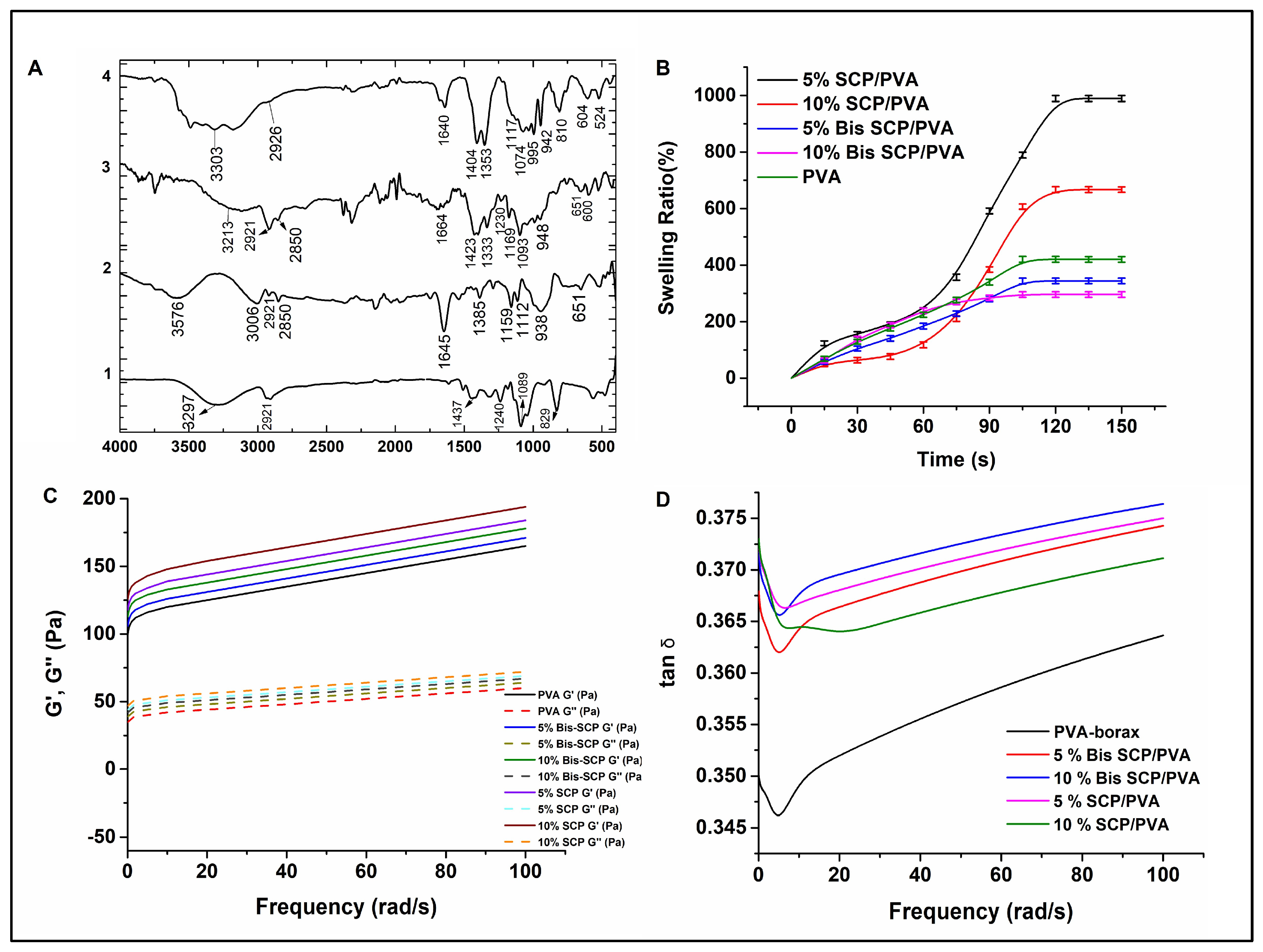

| Samples | ν(P=N) cm−1 | ν(P-O-C) cm−1 |
|---|---|---|
| Bis SCP | 1163, 1179, 1229 | 951 |
| Bis SCP/PVA/borax | 1093, 1169, 1230 | 948 |
| SCP | 1174, 1211, 1228 | 953 |
| SCP/PVA/borax | 995, 1073, 1117 | 942 |
| SCP/PVA Hydrogel | Bis SCP/PVA Hydrogel | |||
|---|---|---|---|---|
| Model | Linear Equation | R2 | Linear Equation | R2 |
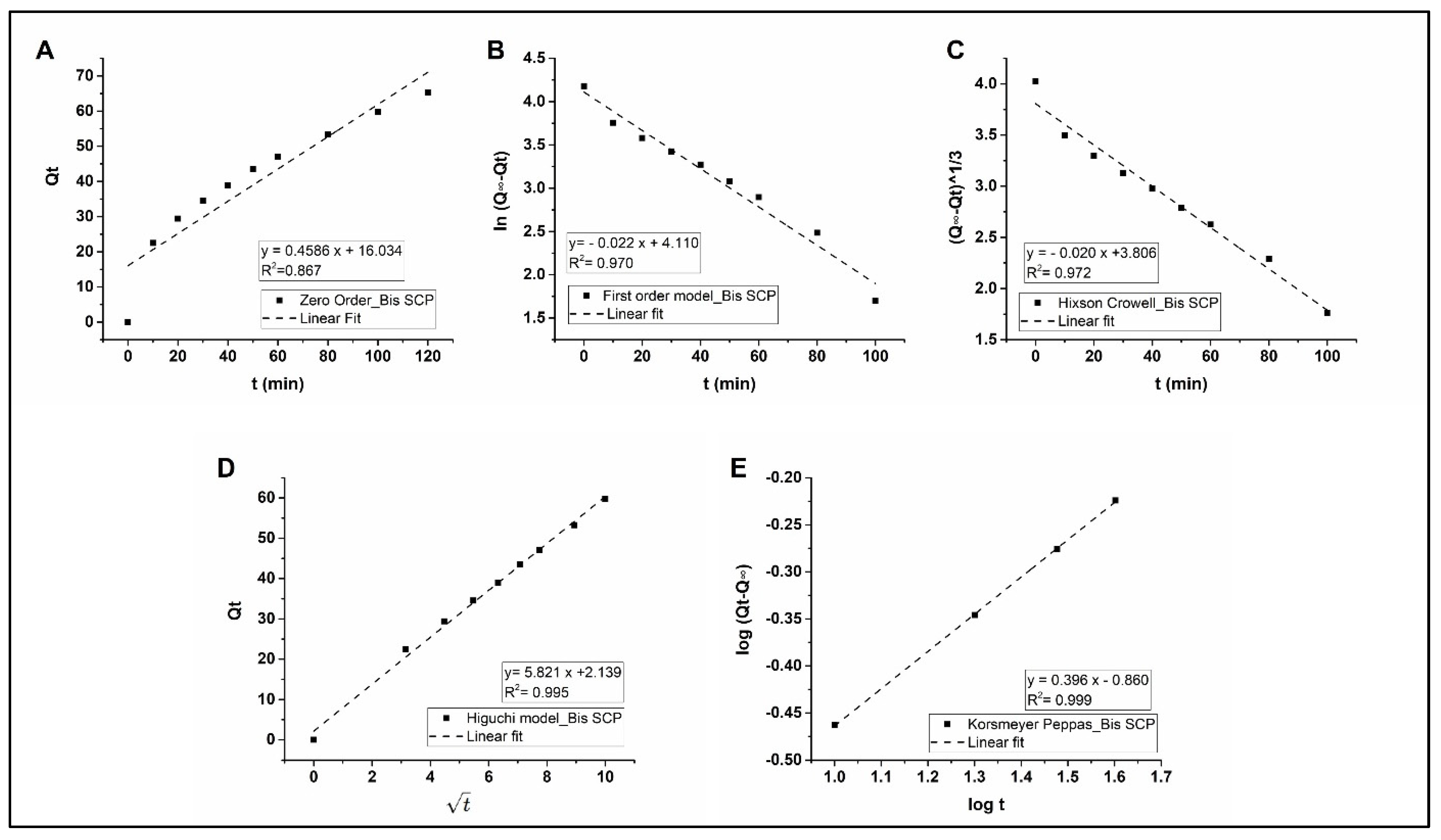
| Zero-order | Qt = 0.316t + 12.082 | 0.859 | Qt = 0.4586t + 16.034 | 0.867 |
| First-order | ln(Q∞ − Qt) = −0.022t + 3.736 | 0.970 | ln(Q∞ − Qt) = −0.022t + 4.110 | 0.970 |
| Hixson–Crowell | (Q∞ − Qt)1/3 = −0.017t + 3.361 | 0.970 | (Q∞ − Qt)1/3 = −0.020t + 3.806 | 0.972 |
| Higuchi | Qt = 4.001t1/2 + 2.504 | 0.994 | Qt = 5.821t1/2 + 2.139 | 0.995 |
| Korsmeyer–Peppas | log(Qt/Q∞) = 0.365logt − 0.805 | 0.999 | log(Qt/Q∞) = 0.396logt − 0.860 | 0.999 |
| Sample | Higuchi Constant, kH | n | Apparent Diffusion Coefficient, D(m2/s) | Mechanism |
|---|---|---|---|---|
| SCP/PVA | 4.001 | 0.365 | 7.4 × 10⁻¹¹ | Fickian diffusion |
| Bis SCP/PVA | 5.821 | 0.396 | 1.57 × 10⁻¹⁰ | Fickian diffusion |
| Model | Mathematical Equation | Linearized Form | Plot |
|---|---|---|---|
| Zero-order | (Qt = Q0 + k0t) | (Qt = k0t + Q0) | (Qt) vs. (t) |
| First-order | In(Q∞ − Qt) = InQ∞ − k1 · t | In(Q∞ − Qt) = − k1 · t + InQ∞ | In(Q∞ − Qt) vs. t |
| Hixson–Crowell | − (Q∞ − Qt)1/3 = kHC · t | (Q∞ − Qt)1/3 = −kHC · t + | (Q∞ − Qt)1/3 vs. t |
| Higuchi | Qt = kH · t1/2 | Qt = kH · t1/2 | Qt |
| Korsmeyer–Peppas | Qt/Q∞ = kKP · tn | log(Qt/Q∞) = log kKP + n · logt | log(Qt/Q∞) vs. logt |
Disclaimer/Publisher’s Note: The statements, opinions and data contained in all publications are solely those of the individual author(s) and contributor(s) and not of MDPI and/or the editor(s). MDPI and/or the editor(s) disclaim responsibility for any injury to people or property resulting from any ideas, methods, instructions or products referred to in the content. |
© 2026 by the author. Licensee MDPI, Basel, Switzerland. This article is an open access article distributed under the terms and conditions of the Creative Commons Attribution (CC BY) license.
Share and Cite
Topel, S.D. PVA–Borax Hydrogels Loaded with Mono- and Bis-Spiro-Dioxy-Biphenyl-Cyclotriphosphazenes: Fabrication, Physicochemical Properties, and Release Kinetics. Molecules 2026, 31, 2463. https://doi.org/10.3390/molecules31142463
Topel SD. PVA–Borax Hydrogels Loaded with Mono- and Bis-Spiro-Dioxy-Biphenyl-Cyclotriphosphazenes: Fabrication, Physicochemical Properties, and Release Kinetics. Molecules. 2026; 31(14):2463. https://doi.org/10.3390/molecules31142463
Chicago/Turabian StyleTopel, Seda Demirel. 2026. "PVA–Borax Hydrogels Loaded with Mono- and Bis-Spiro-Dioxy-Biphenyl-Cyclotriphosphazenes: Fabrication, Physicochemical Properties, and Release Kinetics" Molecules 31, no. 14: 2463. https://doi.org/10.3390/molecules31142463
APA StyleTopel, S. D. (2026). PVA–Borax Hydrogels Loaded with Mono- and Bis-Spiro-Dioxy-Biphenyl-Cyclotriphosphazenes: Fabrication, Physicochemical Properties, and Release Kinetics. Molecules, 31(14), 2463. https://doi.org/10.3390/molecules31142463