Development of Gluten-Free Corn Snacks Enriched with White Mulberry Fruit: Polyphenolic Composition, Antioxidant Activity and In Vitro Gastrointestinal Stability of Phenolic Compounds

 ,
,  ,
,  , , , , and
Abstract
1. Introduction
2. Results
2.1. Effect of White Mulberry Addition and Extrusion Temperature on the Polyphenol Content and Antioxidant Properties of Corn Snacks
2.2. UHPLC-DAD-MS Analysis of Polyphenolic Constituents in White Mulberry-Enriched Corn Snacks
2.3. Assessment of Antioxidant Properties
2.3.1. Determination of Iron Ion-Reducing Capacity (FRAP)
2.3.2. Results of the Determination of Cu2+-Reducing Capacity (CUPRAC)
2.3.3. Results of the Determination of the Chelating Capacity for Fe2+ Ions
2.3.4. Determination of DPPH-Free-Radical-Scavenging Capacity
2.4. Determination of Acetylcholinesterase (AChE) Inhibition Using the Ellman Method
2.5. Digestibility of the Snack’s Polyphenols Using a Two-Stage In Vitro Human Digestion Model
2.6. PCA Results
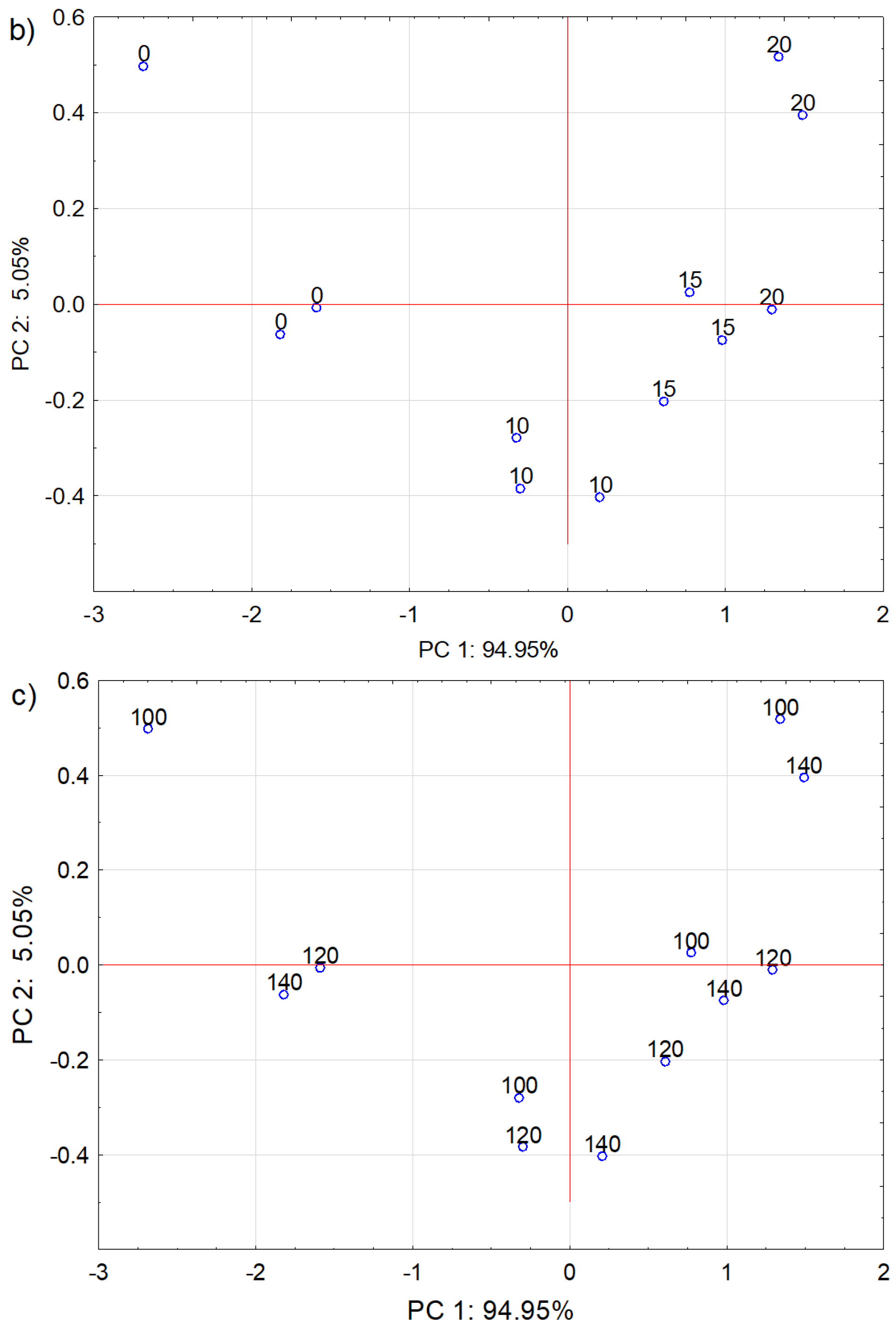
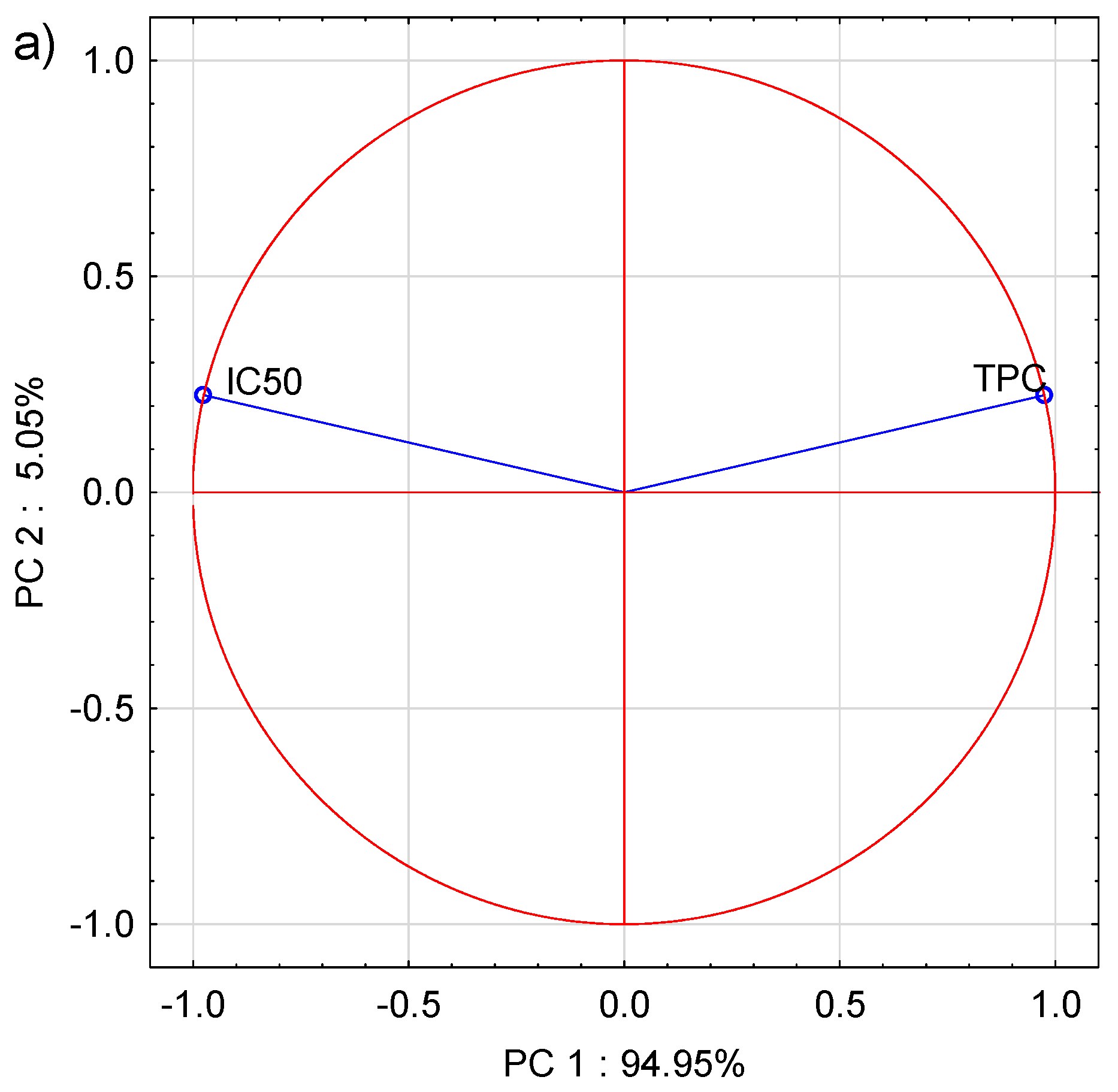
2.6.1. PCA for Total Polyphenolic Content (TPC) and IC50 for DPPH
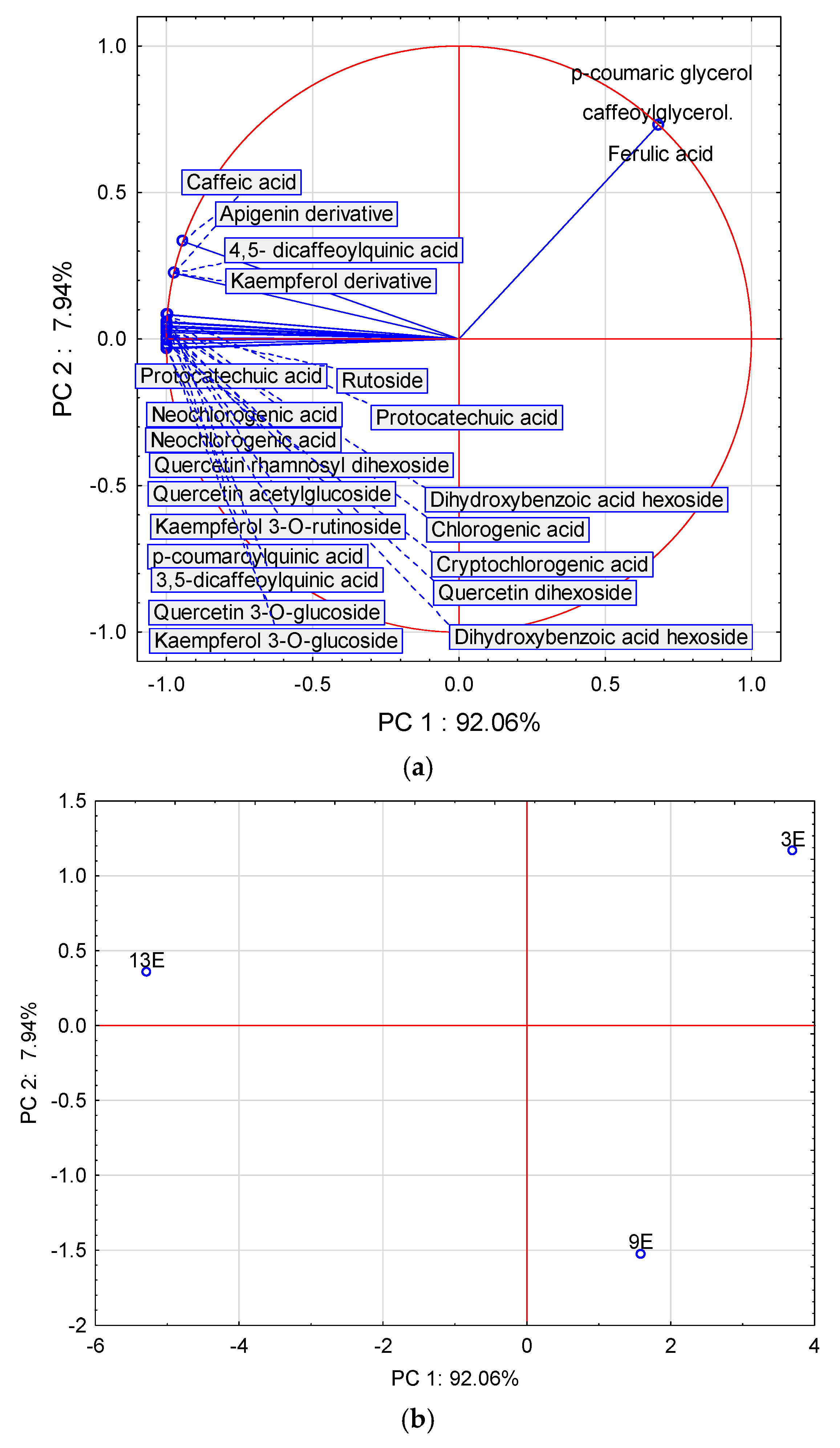
2.6.2. PCA for Chromatographic Analysis of Active Compounds
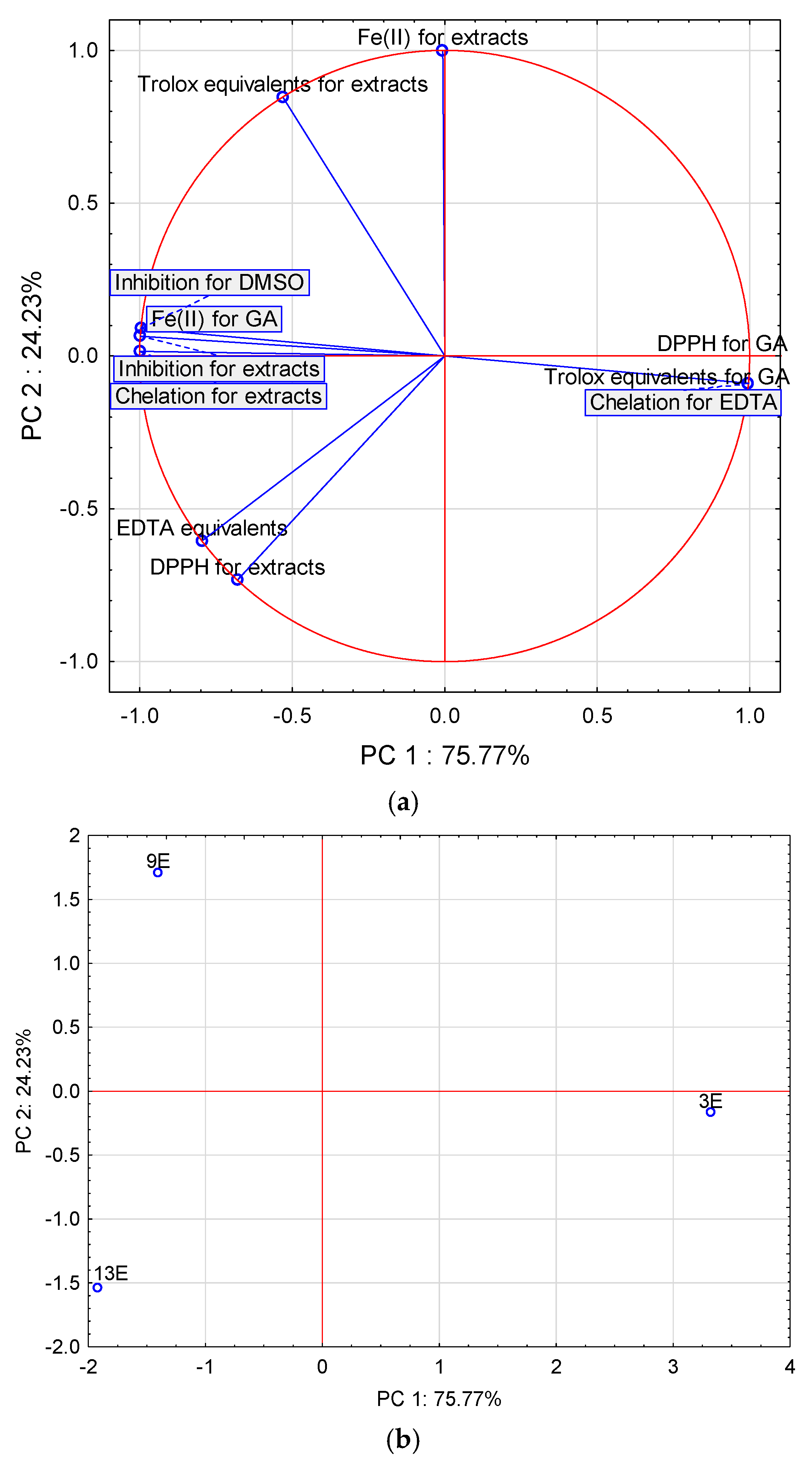
2.6.3. PCA for Assessment of Antioxidant Properties and AChE Inhibition
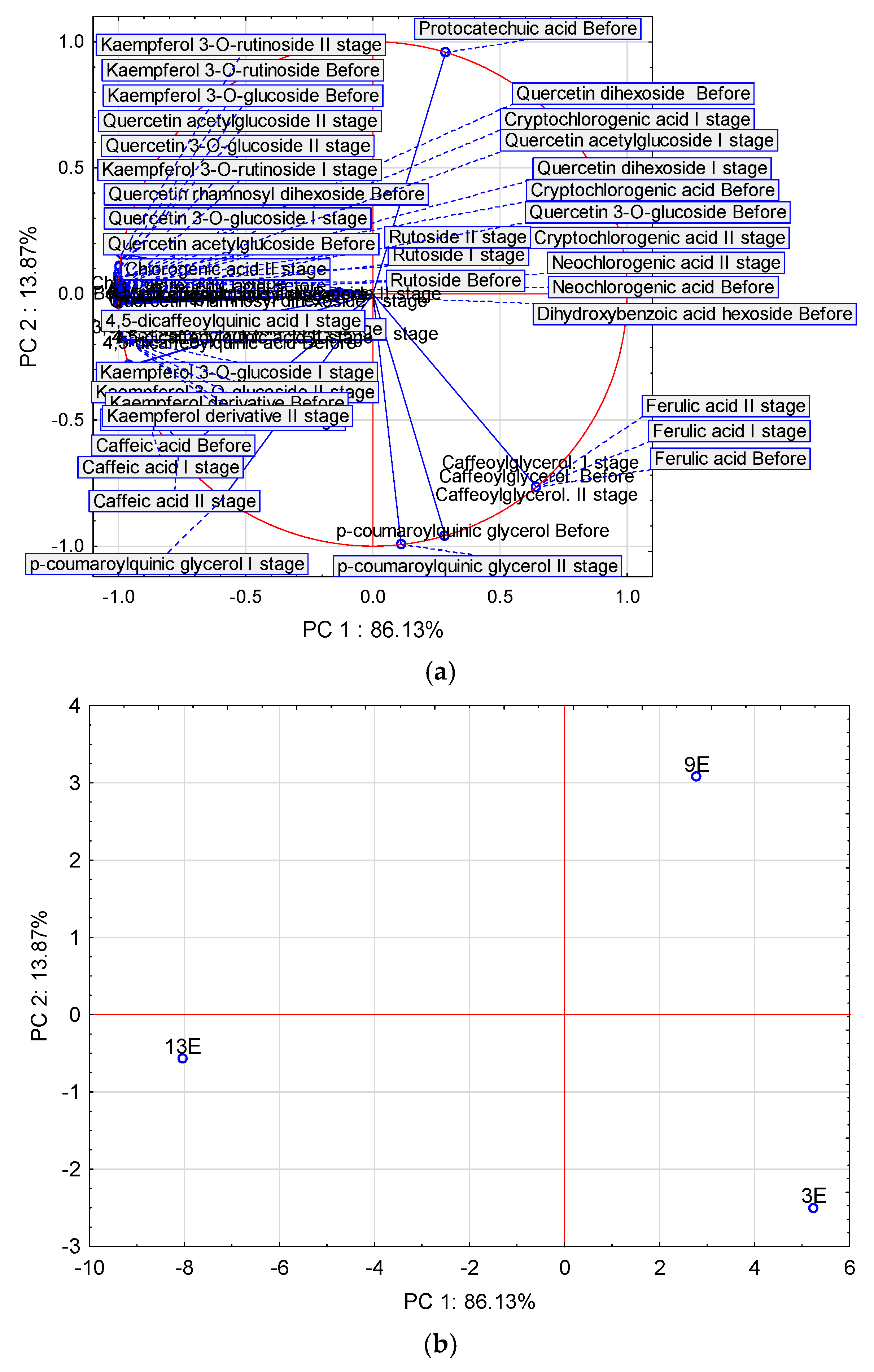
2.6.4. PCA for Digestibility of the Snack’s Polyphenols Using a Two-Stage In Vitro Human Digestion Model
3. Discussion
4. Materials and Methods
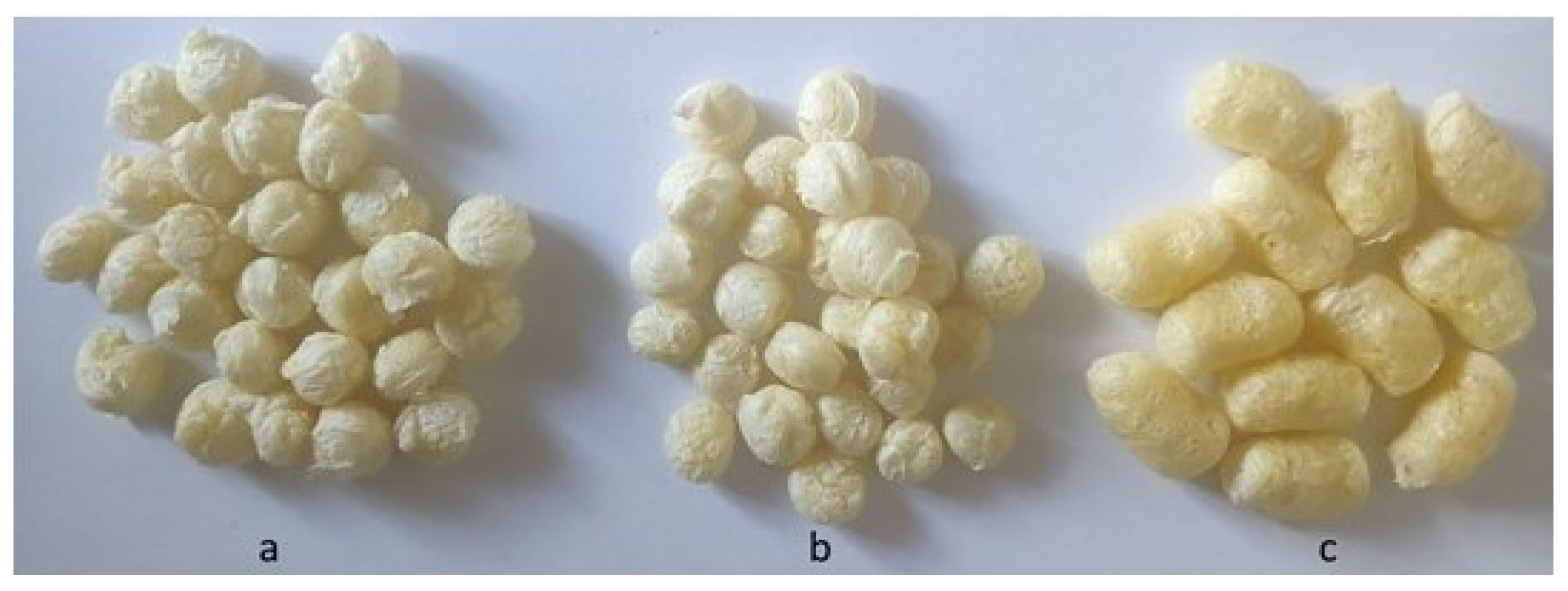
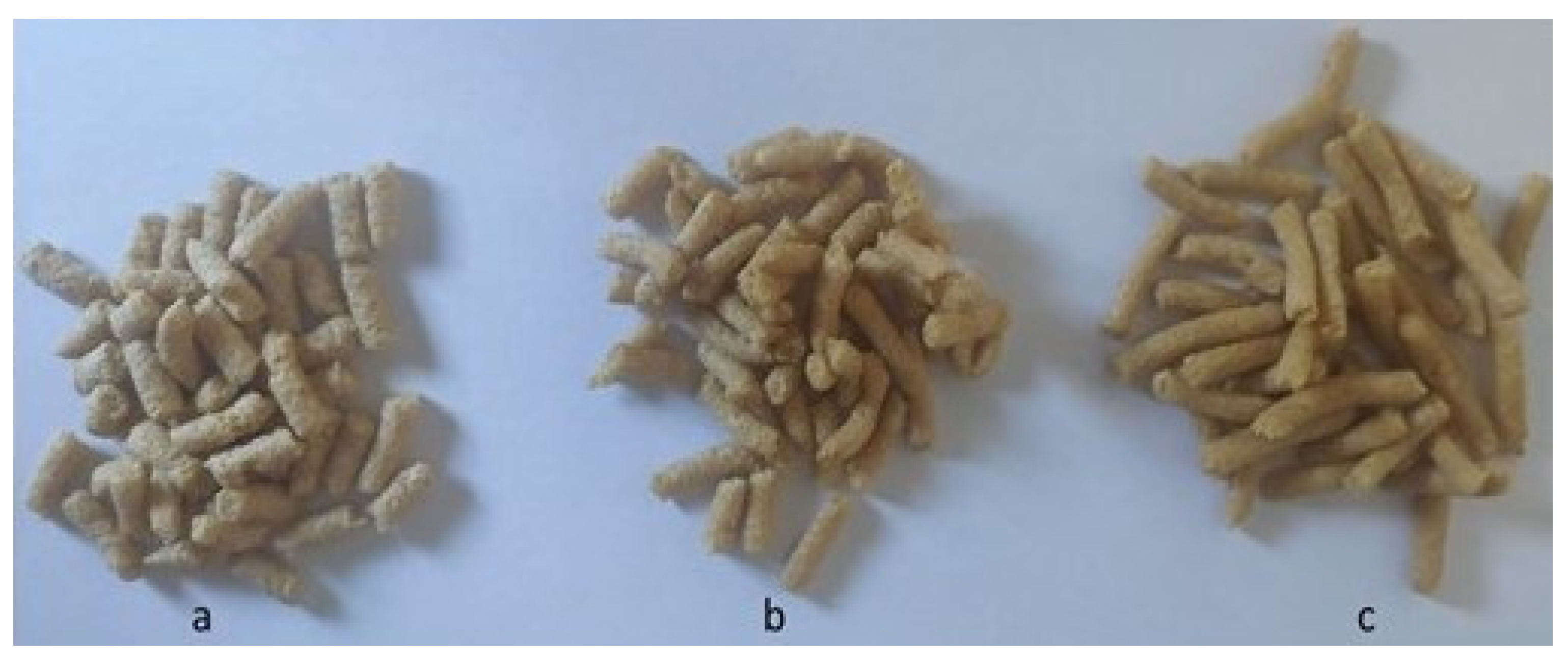
4.1. Preparation of Snacks
4.2. Preparation of Polyphenol Extracts Using the ASE Method
4.3. Determination of Total Polyphenol Content
4.4. Determination of IC50
4.5. UHPLC Analysis
4.6. Determination of Iron Ion Reducing Capacity—FRAP Method
4.7. Determination of Cu2+ Ion Reducing Capacity—CUPRAC Method
4.8. Determination of Iron (II) Ion Chelating Capacity
4.9. Determination of DPPH-Free-Radical-Scavenging Activity
4.10. Determination of AChE Inhibitory Capacity
4.11. In Vitro Two-Stage Digestion Model
4.12. Principal Components Analysis
5. Limitations of the Study
6. Conclusions
Supplementary Materials
Author Contributions
Funding
Institutional Review Board Statement
Informed Consent Statement
Data Availability Statement
Conflicts of Interest
References
- Pizzino, G.; Irrera, N.; Cucinotta, M.; Pallio, G.; Mannino, F.; Arcoraci, V.; Squadrito, F.; Altavilla, D.; Bitto, A. Oxidative Stress: Harms and Benefits for Human Health. Oxidative Med. Cell. Longev. 2017, 2017, 8416763. [Google Scholar] [CrossRef] [PubMed]
- Zhang, H.; Ma, Z.F.; Luo, X.; Li, X. Effects of Mulberry Fruit (Morus alba L.) Consumption on Health Outcomes: A Mini-Review. Antioxidants 2018, 7, 69. [Google Scholar] [CrossRef] [PubMed]
- Kasprzak-Drozd, K.; Oniszczuk, T.; Kowalska, I.; Mołdoch, J.; Combrzyński, M.; Gancarz, M.; Dobrzański, B.; Kondracka, A.; Oniszczuk, A. Effect of the Production Parameters and In Vitro Digestion on the Content of Polyphenolic Compounds, Phenolic Acids, and Antiradical Properties of Innovative Snacks Enriched with Wild Garlic (Allium ursinum L.) Leaves. Int. J. Mol. Sci. 2022, 23, 14458. [Google Scholar] [CrossRef] [PubMed]
- Carvalho, J.C.T.; Perazzo, F.F.; Machado, L.; Bereau, D. Biologic Activity and Biotechnological Development of Natural Products. Biomed. Res. Int. 2013, 2013, 971745. [Google Scholar] [CrossRef] [PubMed]
- Chen, C.; Mohamad Razali, U.H.; Saikim, F.H.; Mahyudin, A.; Mohd Noor, N.Q.I. Morus alba L. Plant: Bioactive Compounds and Potential as a Functional Food Ingredient. Foods 2021, 10, 689. [Google Scholar] [CrossRef] [PubMed]
- Batiha, G.E.-S.; Al-Snafi, A.E.; Thuwaini, M.M.; Teibo, J.O.; Shaheen, H.M.; Akomolafe, A.P.; Teibo, T.K.A.; Al-Kuraishy, H.M.; Al-Garbeeb, A.I.; Alexiou, A.; et al. Morus alba: A Comprehensive Phytochemical and Pharmacological Review. Naunyn Schmiedebergs Arch. Pharmacol. 2023, 396, 1399–1413. [Google Scholar] [CrossRef] [PubMed]
- Ann, J.-Y.; Eo, H.; Lim, Y. Mulberry Leaves (Morus alba L.) Ameliorate Obesity-Induced Hepatic Lipogenesis, Fibrosis, and Oxidative Stress in High-Fat Diet-Fed Mice. Genes. Nutr. 2015, 10, 46. [Google Scholar] [CrossRef] [PubMed]
- Kim, H.-B.; Ryu, S.; Baek, J.-S. The Effect of Hot-Melt Extrusion of Mulberry Leaf on the Number of Active Compounds and Antioxidant Activity. Plants 2022, 11, 3019. [Google Scholar] [CrossRef] [PubMed]
- Li, H.; Wang, L.; Feng, J.; Jiang, L.; Wu, J. Effects of Oral Intake Fruit or Fruit Extract on Skin Aging in Healthy Adults: A Systematic Review and Meta-Analysis of Randomized Controlled Trials. Front. Nutr. 2023, 10, 1232229. [Google Scholar] [CrossRef] [PubMed]
- Kim, M.; Nam, D.-G.; Ju, W.-T.; Choe, J.-S.; Choi, A.-J. Response Surface Methodology for Optimization of Process Parameters and Antioxidant Properties of Mulberry (Morus alba L.) Leaves by Extrusion. Molecules 2020, 25, 5231. [Google Scholar] [CrossRef] [PubMed]
- Combrzyński, M.; Soja, J.; Staniak, M.; Biernacka, B.; Wojtunik-Kulesza, K.; Gancarz, M.; Oniszczuk, T.; Kręcisz, M.; Szponar, J.; Oniszczuk, A. Influence of Extrusion Cooking Parameters on Antioxidant Activity and Physical Properties of Potato-Based Snack Pellets Enriched with Cricket Powder. Molecules 2025, 30, 4612. [Google Scholar] [CrossRef] [PubMed]
- Brzović, P.; Radman, S.; Skroza, D.; Generalić Mekinić, I. Accelerated Solvent Extraction for Effective Isolation of Sea Fennel Phenolic Antioxidants and Antimicrobials. Processes 2026, 14, 1459. [Google Scholar] [CrossRef]
- Polumackanycz, M.; Sledzinski, T.; Goyke, E.; Wesolowski, M.; Viapiana, A. A Comparative Study on the Phenolic Composition and Biological Activities of Morus alba L. Commercial Samples. Molecules 2019, 24, 3082. [Google Scholar] [CrossRef] [PubMed]
- Fatima, M.; Dar, M.A.; Dhanavade, M.J.; Abbas, S.Z.; Bukhari, M.N.; Arsalan, A.; Liao, Y.; Wan, J.; Shah Syed Bukhari, J.; Ouyang, Z. Biosynthesis and Pharmacological Activities of the Bioactive Compounds of White Mulberry (Morus alba): Current Paradigms and Future Challenges. Biology 2024, 13, 506. [Google Scholar] [CrossRef] [PubMed]
- Knez, E.; Kadac-Czapska, K.; Grembecka, M. Evaluation of Spectrophotometric Methods for Assessing Antioxidant Potential in Plant Food Samples—A Critical Approach. Appl. Sci. 2025, 15, 5925. [Google Scholar] [CrossRef]
- Patel, A.B. Simple and Rapid Colorimetric Method for Determination of Erythrocyte and Plasma Cholinesterase Activities and Comparison with the Standard Ellman’s Method. Public Health Toxicol. 2023, 3, 14. [Google Scholar] [CrossRef]
- Xu, Y.; Jia, F.; Wu, Y.; Jiang, J.; Zheng, T.; Zheng, H.; Yang, Y. The Impact of Extrusion Cooking on the Physical Properties, Functional Components, and Pharmacological Activities of Natural Medicinal and Edible Plants: A Review. Foods 2025, 24, 1869. [Google Scholar] [CrossRef] [PubMed]
- Altan, A.; Yağci, S. Physicochemical Characteristics and Structural Changes of Fermented Faba Bean Extrudates Prepared by Twin-Screw Extrusion. Food Chem. 2023, 411, 135502. [Google Scholar] [CrossRef] [PubMed]
- Šárka, E.; Sluková, M.; Henke, S. Changes in Phenolics during Cooking Extrusion: A Review. Foods 2021, 10, 2100. [Google Scholar] [CrossRef] [PubMed]
- Christodoulou, M.C.; Orellana Palacios, J.C.; Hesami, G.; Jafarzadeh, S.; Lorenzo, J.M.; Domínguez, R.; Moreno, A.; Hadidi, M. Spectrophotometric Methods for Measurement of Antioxidant Activity in Food and Pharmaceuticals. Antioxidants 2022, 11, 2213. [Google Scholar] [CrossRef] [PubMed]
- Bahadori, M.B.; Zengin, G.; Dinparast, L.; Eskandani, M. The Health Benefits of Three Hedgenettle Herbal Teas (Stachys byzantina, Stachys inflata, and Stachys lavandulifolia)—Profiling Phenolic and Antioxidant Activities. Eur. J. Integr. Med. 2020, 36, 101134. [Google Scholar] [CrossRef]
- Polumackanycz, M.; Wesolowski, M.; Viapiana, A. Morus alba L. and Morus nigra L. Leaves as a Promising Food Source of Phenolic Compounds with Antioxidant Activity. Plant Foods Hum. Nutr. 2021, 76, 458–465. [Google Scholar] [CrossRef] [PubMed]
- Milán-Noris, E.M.; Hernández-Castro, V.M.; Antunes-Ricardo, M.; Montoya-Rodríguez, A.; Sandoval-Sicairos, E.S.; Milán-Carillo, J.; Reyes-Moreno, C.; Milán-Noris, A.K. Role of Germinated–Extruded Desi Chickpea Supplementation on Antioxidant and Antidiabetic Compounds In Vitro Bioaccessibility in Functional Blue Corn Tortillas. Foods 2026, 15, 1798. [Google Scholar] [CrossRef] [PubMed]
- Ma, Z.F.; Liu, S.; Fu, C.; Zhou, S.; Lee, Y.Y. Functional Foods in Health Promotion and Disease Prevention: Innovations, Evidence and Challenges. Foods 2026, 15, 764. [Google Scholar] [CrossRef] [PubMed]
- Mînz, S.-G.O.; Fati, C.B.-N.; Olah, N.K.; Karetka, A.B.; Negrean, R.A.; Ganea, M.; Frent, O.D.; Banica, F.; Pallag, A. Comparative Phytochemical Profiling and In Vitro Investigation of the Antioxidant and Antimicrobial Potential of Arnica montana L., Melissa officinalis L. and Capsella bursa-pastoris Medik. Extracts and Their Synergistic Combinations. Molecules 2026, 31, 1735. [Google Scholar] [CrossRef] [PubMed]
- Torruco-Ortiz, Y.C.; Avilés-Betanzos, K.A.; Ramírez-Sucre, M.O.; Rodríguez-Buenfil, I.M. Simultaneous Optimization of Polyphenol Content and Antioxidant Capacity of Extracts from Habanero Pepper Leaves Obtained with Green Technologies: NADES and Ultrasound. Separations 2026, 13, 143. [Google Scholar] [CrossRef]
- Yang, J.; Liu, X.; Zhang, X.; Jin, Q.; Li, J. Phenolic Profiles, Antioxidant Activities, and Neuroprotective Properties of Mulberry (Morus atropurpurea Roxb.) Fruit Extracts from Different Ripening Stages. J. Food Sci. 2016, 81, C2439–C2446. [Google Scholar] [CrossRef] [PubMed]
- Rednic, I.; Stănciulescu, E.C.; Biţă, A.; Bejenaru, L.E.; Bejenaru, C.; Mogoşanu, G.D.; Pisoschi, C.G. Antioxidant and Neuroprotective Potential of Some Edible Fruits and Vegetable Extracts Based on Comparative Phytochemical Profiling and Bioactivity. Plants 2026, 15, 831. [Google Scholar] [CrossRef] [PubMed]
- Wojtunik-Kulesza, K.; Oniszczuk, A.; Oniszczuk, T.; Combrzyński, M.; Nowakowska, D.; Matwijczuk, A. Influence of In Vitro Digestion on Composition, Bioaccessibility and Antioxidant Activity of Food Polyphenols—A Non-Systematic Review. Nutrients 2020, 12, 1401. [Google Scholar] [CrossRef] [PubMed]
- Baeza, G.; Sarriá, B.; Bravo, L.; Mateos, R. Polyphenol Content, in Vitro Bioaccessibility and Antioxidant Capacity of Widely Consumed Beverages. J. Sci. Food Agric. 2018, 98, 1397–1406. [Google Scholar] [CrossRef] [PubMed]
- Corrêa, R.C.G.; Haminiuk, C.W.I.; Barros, L.; Dias, M.I.; Calhelha, R.C.; Kato, C.G.; Correa, V.G.; Peralta, R.M.; Ferreira, I.C.F.R. Stability and Biological Activity of Merlot (Vitis vinifera) Grape Pomace Phytochemicals after Simulated in Vitro Gastrointestinal Digestion and Colonic Fermentation. J. Funct. Foods 2017, 36, 410–417. [Google Scholar] [CrossRef]
- Eran Nagar, E.; Okun, Z.; Shpigelman, A. Digestive Fate of Polyphenols: Updated View of the Influence of Chemical Structure and the Presence of Cell Wall Material. Curr. Opin. Food Sci. 2020, 31, 38–46. [Google Scholar] [CrossRef]
- Hashempour-Baltork, F.; Torbati, M.; Azadmard-Damirchi, S.; Savage, G.P. Quality Properties of Puffed Corn Snacks Incorporated with Sesame Seed Powder. Food Sci. Nutr. 2018, 6, 85–93. [Google Scholar] [CrossRef] [PubMed]
- Olech, M.; Kasprzak, K.; Wójtowicz, A.; Oniszczuk, T.; Nowak, R.; Waksmundzka-Hajnos, M.; Combrzyński, M.; Gancarz, M.; Kowalska, I.; Krajewska, A.; et al. Polyphenol Composition and Antioxidant Potential of Instant Gruels Enriched with Lycium barbarum L. Fruit. Molecules 2020, 25, 4538. [Google Scholar] [CrossRef] [PubMed]
- Wojtunik-Kulesza, K.; Dubiel, M.; Klimek, K. Metal Ion Reduction, Chelation, and Cytotoxicity of Selected Bicyclic Monoterpenes and Their Binary Mixtures. Metabolites 2025, 15, 199. [Google Scholar] [CrossRef] [PubMed]
- Seraglio, S.K.T.; Valese, A.C.; Daguer, H.; Bergamo, G.; Azevedo, M.S.; Nehring, P.; Gonzaga, L.V.; Fett, R.; Costa, A.C.O. Effect of in Vitro Gastrointestinal Digestion on the Bioaccessibility of Phenolic Compounds, Minerals, and Antioxidant Capacity of Mimosa scabrella Bentham Honeydew Honeys. Food Res. Int. 2017, 99, 670–678. [Google Scholar] [CrossRef] [PubMed]



| Sample | Mulberry Content (%) | Production Temperature (°C) | TPC | IC50 [mg/mL] |
|---|---|---|---|---|
| 1E | 0 | 100 | 0.155 ± 0.008 | 0.950 ± 0.023 |
| 2E | 0 | 120 | 0.265 ± 0.001 | 0.674 ± 0.034 |
| 3E | 0 | 140 | 0.212 ± 0.006 | 0.704 ± 0.011 |
| 4E | 10 | 100 | 0.450 ± 0.006 | 0.408 ± 0.014 |
| 5E | 10 | 120 | 0.435 ± 0.003 | 0.386 ± 0.016 |
| 6E | 10 | 140 | 0.525 ± 0.011 | 0.296 ± 0.006 |
| 7E | 15 | 100 | 0.717 ± 0.007 | 0.272 ± 0.004 |
| 8E | 15 | 120 | 0.637 ± 0.014 | 0.261 ± 0.011 |
| 9E | 15 | 140 | 0.730 ± 0.012 | 0.219 ± 0.008 |
| 10E | 20 | 100 | 0.907 ± 0.023 | 0.259 ± 0.002 |
| 11E | 20 | 120 | 0.800 ± 0.017 | 0.176 ± 0.003 |
| 12E | 20 | 140 | 0.912 ± 0.038 | 0.212 ± 0.09 |
| 13E | mulberry fruit | - | 1.925 ± 0.053 | 0.0926 ± 0.01 |
| Rt (min) | [m/z-H]− | Mass Error (ppm) | Formula | Compound | Sample 3E |
|---|---|---|---|---|---|
| 16.21 | 353.08831 (191, 179) | 1.42 | C16H18O9 | Chlorogenic acid * | 0.34 ± 0.03 |
| 16.94 | 179.03546 | 2.65 | C9H8O4 | Caffeic acid * | 0.13 ± 0.01 |
| 18.38 | 253.07051 (179) | −4.93 | C9H14O6 | Caffeoyl glycerol * | 1.07 ± 0.06 |
| 22.58 | 237.07711 (163) | 1.1 | C12H14O5 | p-coumaric glycerol | 2.28 ± 0.10 |
| 26.04 | 193.05112 | 2.51 | C10H10O4 | Ferulic acid * | 1.30 ± 0.08 |
| Rt (min) | [m/z-H]− | Mass Error (ppm) | Formula | Compound | Sample 9E | Sample 13E |
|---|---|---|---|---|---|---|
| 7.79 | 315.07242 | 0.84 | C13H16O9 | Dihydroxybenzoic acid hexoside | 0.71 ± 0.02 | 3.45 ± 0.21 |
| 8.67 | 153.01994 | 3.95 | C7H6O4 | Protocatechuic acid * | 0.24 ± 0.01 | 1.55 ± 0.11 |
| 11.29 | 353.08821 (191, 179) | 1.14 | C16H18O9 | Neochlorogenic acid * | 3.22 ± 0.06 | 16.8±0.67 |
| 15.05 | 341.08678 (179) | −3.0 | C15H18O9 | Caffeic acid hexoside | DNQ | 1.06 ± 0.09 |
| 16.24 | 353.08867 (191, 179) | 2.44 | C16H18O9 | Chlorogenic acid * | 7.29 ± 0.22 | 39.32 ± 2.11 |
| 18.00 | 625.13863 | −3.82 | C27H30O17 | Quercetin dihexoside | 0.54 ± 0.03 | 2.26 ± 0.13 |
| 18.23 | 771.19640 | −3.28 | C33H39O21 | Quercetin rhamnosyl dihexoside | 1.08 ± 0.01 | 5.19 ± 0.31 |
| 18.72 | 353.08841 (191, 179) | 1.71 | C16H18O9 | Cryptochlorogenic acid * | 0.98 ± 0.00 | 3.91 ± 0.21 |
| 20.32 | 337.09131 (191) | −4.68 | C16H18O8 | p-coumaroylquinic acid | 0.29 ± 0.01 | 1.09 ± 0.08 |
| 24.28 | 497.1279 (269) | −4.35 | C22H26O13 | Apigenin derivative | DNQ | 0.36 ± 0.02 |
| 31.90 | 609.14844 | 3.82 | C27H30O16 | Quercetin 3-O-rutinoside * | 3.57 ± 0.15 | 16.72 ± 1.13 |
| 33.41 | 463.08814 | −0.13 | C21H20O12 | Quercetin 3-O-glucoside * | 1.12 ± 0.04 | 6.19 ± 0.34 |
| 37.48 | 505.09807 (300) | −1.37 | C23H22O13 | Quercetin acetylglucoside | 1.7 ± 0.03 | 8.62 ± 0.41 |
| 37.91 | 593.14823 (287) | −4.97 | C27H30O15 | Kaempferol 3-O-rutinoside * | 0.89 ± 0.01 | 3.85 ± 0.21 |
| 38.99 | 515.11847 (353) | −2.0 | C25H24O12 | 3,5-dicaffeoylquinic acid * | 0.29 ± 0.01 | 1.89 ± 0.11 |
| 39.16 | 447.09155 | −3.87 | C21H20O11 | Kaempferol 3-O-glucoside * | 0.31 ± 0.00 | 1.18 ± 0.08 |
| 42.77 | 515.11825 (353) | −2.42 | C25H24O12 | 4,5- dicaffeoylquinic acid * | DNQ | 0.78 ± 0.05 |
| 43.21 | 489.10257 | −2.61 | C23H22O12 | Kaempferol derivative | DNQ | 1.07 ± 0.07 |
| Sample | Fe(II) [µg/mL] | µmol TE/g d.m. |
|---|---|---|
| 3E | 15.1 a ± 0.29 | 5.23 a ± 0.23 |
| 9E | 20.11 b ± 0.42 | 15.65 b ± 0.85 |
| 13E | 11.52 c ± 0.18 | 13.43 c ± 1.22 |
| Sample | Chelation [%] for Extracts | EDTA Equivalents [µg/mL] |
|---|---|---|
| 3E | 62.60 a ± 3.74 | 104.40 a ± 3.91 |
| 9E | 96.91 b ± 4.61 | 174.50 b ± 8.05 |
| 13E | 100.00 c ± 0.66 | 330.20 c ± 2.18 |
| Sample | DPPH | |
|---|---|---|
| Scavenging [%] | IC50 [mg/mL] * | |
| 3E | 50.54 a ± 2.52 | 36.62 a ± 3.09 |
| 9E | 55.9 b ± 2.45 | 32.03 a ± 2.58 |
| 13E | 87.45 c ± 3.58 | 3.33 b ± 0.26 |
| Gallic acid | 62.16 d ± 1.19 | 0.138 c ± 0.009 |
| Sample | Inhibition [%] for Extracts |
|---|---|
| 3E | 59.88 a ± 1.81 |
| 9E | 78.82 b ± 1.14 |
| 13E | 79.37 b ± 0.65 |
| Galantamine | 85.52 c ± 4.52 |
| Sample | Stage | TPC | Retention (%) |
|---|---|---|---|
| 3E | Before digestion | 0.20 a ± 0.011 | 100.0 |
| After I stage | 0.11 b ± 0.005 | 55.0 | |
| After II stage | 0.04 c ± 0.002 | 20.0 | |
| 9E | Before digestion | 0.75 d ± 0.032 | 100.0 |
| After I stage | 0.52 e ± 0.024 | 69.3 | |
| After II stage | 0.25 f ± 0.011 | 33.3 | |
| 13E | Before digestion | 4.0 g ± 0.231 | 100.0 |
| After I stage | 2.8 h ± 0.124 | 70.0 | |
| After II stage | 1.3 i ± 0.051 | 32.5 |
| Compound | Before Digestion | Concentration After I Stage | Retention (%) After I Stage | Concentration After II Stage | Retention (%) After II Stage |
|---|---|---|---|---|---|
| Chlorogenic acid | 0.34 a ± 0.031 | 0.12 b ± 0.005 | 35.3 | 0.05 c ± 0.002 | 14.7 |
| Caffeic acid | 0.13 a ± 0.012 | 0.04 b ± 0.002 | 30.8 | 0.02 c ± 0.001 | 15.4 |
| Caffeoylglycerol | 1.07 a ± 0.064 | 0.21 b ± 0.012 | 19.6 | 0.09 c ± 0.004 | 8.4 |
| p-coumaroylquinic glycerol | 2.28 a ± 0.101 | 0.45 b ± 0.025 | 19.7 | 0.33 c ± 0.022 | 14.5 |
| Ferulic acid | 1.30 a ± 0.083 | 0.46 b ± 0.024 | 35.4 | 0.25 c ± 0.012 | 19.2 |
| Compound | Before Digestion | Concentration After I Stage | Retention (%) After I Stage | Concentration After II Stage | Retention (%) After II Stage |
|---|---|---|---|---|---|
| Dihydroxybenzoic acid hexoside | 0.71 ± 0.02 | - | - | - | - |
| Protocatechuic acid | 24.00 ± 0.01 | - | - | - | - |
| Neochlorogenic acid | 3.22 a ± 0.06 | 0.91 b ± 0.032 | 28.3 | 0.35 c ± 0.011 | 10.9 |
| Chlorogenic acid | 7.29 a ± 0.22 | 2.25 b ± 0.082 | 30.9 | 0.94 c ± 0.035 | 12.9 |
| Cryptochlorogenic acid | 0.98 a ± 0.00 | 0.45 b ± 0.023 | 45.9 | 0.11 c ± 0.005 | 11.2 |
| p-coumaroylquinic acid | 0.29 a ± 0.01 | 0.15 b ± 0.006 | 51.7 | 0.06 c ± 0.003 | 20.7 |
| Apigenin derivative | DNQ | - | - | - | - |
| Caffeic acid hexoside | DNQ | - | - | - | - |
| 3,5-dicaffeoylquinic acid | 0.29 ± 0.01 | - | - | - | - |
| 4,5-dicaffeoylquinic acid | DNQ | - | - | - | - |
| Rutoside | 3.57 a ± 0.15 | 1.22 b ± 0.051 | 34.2 | 0.41 c ± 0.022 | 11.5 |
| Quercetin dihexoside | 0.54 a ± 0.03 | 0.15 b ± 0.006 | 27.8 | - | - |
| Quercetin rhamnosyl dihexoside | 1.08 a ± 0.01 | 0.25 b ± 0.013 | 23.1 | 0.09 c ± 0.004 | 8.3 |
| Quercetin 3-O-glucoside | 1.12 a ± 0.04 | 0.45 b ± 0.023 | 40.2 | 0.15 c ± 0.006 | 13.4 |
| Quercetin acetylglucoside | 1.7 a ± 0.03 | 0.71 b ± 0.034 | 41.8 | 0.28 c ± 0.012 | 16.5 |
| Kaempferol 3-O-rutinoside | 1.12 a ± 0.04 | 0.24 b ± 0.012 | 21.4 | 0.08 c ± 0.003 | 7.1 |
| Kaempferol 3-O-glucoside | 0.31 ± 0.00 | - | - | - | - |
| Kaempferol derivative | DNQ | - | - | - | - |
| Compound | Before Digestion | Concentration After I Stage | Retention (%) After I Stage | Concentration After II Stage | Retention (%) After II Stage |
|---|---|---|---|---|---|
| Dihydroxybenzoic acid hexoside | 3.45 a ± 0.213 | 0.9 b ± 0.042 | 26.1 | - | - |
| Protocatechuic acid | 1.55 ± 0.11 | - | - | - | - |
| Neochlorogenic acid | 16.8 a ± 0.67 | 6.12 b ± 0.253 | 36.4 | 1.92 c ± 0.082 | 11.4 |
| Chlorogenic acid | 39.32 a ± 2.11 | 11.02 b ± 0.450 | 28.0 | 4.21 c ±0.174 | 10.7 |
| Cryptochlorogenic acid | 3.91 a ± 0.21 | 2.13 b ± 0.094 | 54.5 | 0.59 c ± 0.021 | 15.1 |
| p-coumaroylquinic acid | 1.09 a ± 0.08 | 0.57 b ± 0.024 | 52.3 | 0.21 c ± 0.013 | 19.3 |
| Apigenin derivative | 0.36 a ± 0.02 | 0.09 b ± 0.004 | 25.0 | - | - |
| Caffeic acid hexoside | 1.06 a ± 0.09 | 0.32 b ± 0.013 | 30.2 | 0.04 c ± 0.002 | 3.8 |
| 3,5-dicaffeoylquinic acid | 1.89 a ± 0.11 | 0.50 b ± 0.023 | 26.5 | 0.11 c ± 0.005 | 5.8 |
| 4,5-dicaffeoylquinic acid | 0.78 a ± 0.05 | 0.28 b ± 0.012 | 35.9 | 0.08 c ± 0.003 | 10.3 |
| Rutoside | 16.72 a ± 1.13 | 5.39 b ± 0.224 | 32.2 | 1.83 c ± 0.076 | 10.9 |
| Quercetin dihexoside | 2.26 a ± 0.13 | 0.76 b ± 0.034 | 33.6 | - | - |
| Quercetin rhamnosyl dihexoside | 5.19 a ± 0.31 | 1.57 b ± 0.066 | 30.3 | 0.52 c ± 0.021 | 10.0 |
| Quercetin 3-O-glucoside | 6.19 a ± 0.34 | 2.21 b ± 0.096 | 37.7 | 0.67 c ± 0.034 | 10.8 |
| Quercetin acetylglucoside | 8.62 a ± 0.41 | 3.64 b ± 0.142 | 42.2 | 0.98 c ± 0.042 | 11.4 |
| Kaempferol 3-O-rutinoside | 3.85 a ± 0.21 | 1.23 b ± 0.054 | 31.9 | 0.24 c ± 0.012 | 6.2 |
| Kaempferol 3-O-glucoside | 1.18 a ± 0.08 | 0.22 b ± 0.012 | 18.6 | 0.07 c ± 0.003 | 5.9 |
| Kaempferol derivative | 1.07 a ± 0.07 | 0.34 b ± 0.012 | 31.8 | 0.1 c ± 0.004 | 9.3 |
Disclaimer/Publisher’s Note: The statements, opinions and data contained in all publications are solely those of the individual author(s) and contributor(s) and not of MDPI and/or the editor(s). MDPI and/or the editor(s) disclaim responsibility for any injury to people or property resulting from any ideas, methods, instructions or products referred to in the content. |
© 2026 by the authors. Licensee MDPI, Basel, Switzerland. This article is an open access article distributed under the terms and conditions of the Creative Commons Attribution (CC BY) license.
Share and Cite
Kasprzak-Drozd, K.; Ziółkiewicz, A.; Wojtunik-Kulesza, K.; Gancarz, M.; Kowalska, I.; Misiurek, J.; Wójciak, M.; Sowa, I.; Oniszczuk, T.; Combrzyński, M.; et al. Development of Gluten-Free Corn Snacks Enriched with White Mulberry Fruit: Polyphenolic Composition, Antioxidant Activity and In Vitro Gastrointestinal Stability of Phenolic Compounds. Molecules 2026, 31, 2370. https://doi.org/10.3390/molecules31132370
Kasprzak-Drozd K, Ziółkiewicz A, Wojtunik-Kulesza K, Gancarz M, Kowalska I, Misiurek J, Wójciak M, Sowa I, Oniszczuk T, Combrzyński M, et al. Development of Gluten-Free Corn Snacks Enriched with White Mulberry Fruit: Polyphenolic Composition, Antioxidant Activity and In Vitro Gastrointestinal Stability of Phenolic Compounds. Molecules. 2026; 31(13):2370. https://doi.org/10.3390/molecules31132370
Chicago/Turabian StyleKasprzak-Drozd, Kamila, Agnieszka Ziółkiewicz, Karolina Wojtunik-Kulesza, Marek Gancarz, Iwona Kowalska, Justyna Misiurek, Magdalena Wójciak, Ireneusz Sowa, Tomasz Oniszczuk, Maciej Combrzyński, and et al. 2026. "Development of Gluten-Free Corn Snacks Enriched with White Mulberry Fruit: Polyphenolic Composition, Antioxidant Activity and In Vitro Gastrointestinal Stability of Phenolic Compounds" Molecules 31, no. 13: 2370. https://doi.org/10.3390/molecules31132370
APA StyleKasprzak-Drozd, K., Ziółkiewicz, A., Wojtunik-Kulesza, K., Gancarz, M., Kowalska, I., Misiurek, J., Wójciak, M., Sowa, I., Oniszczuk, T., Combrzyński, M., & Oniszczuk, A. (2026). Development of Gluten-Free Corn Snacks Enriched with White Mulberry Fruit: Polyphenolic Composition, Antioxidant Activity and In Vitro Gastrointestinal Stability of Phenolic Compounds. Molecules, 31(13), 2370. https://doi.org/10.3390/molecules31132370