4.3. Synthesis Procedure
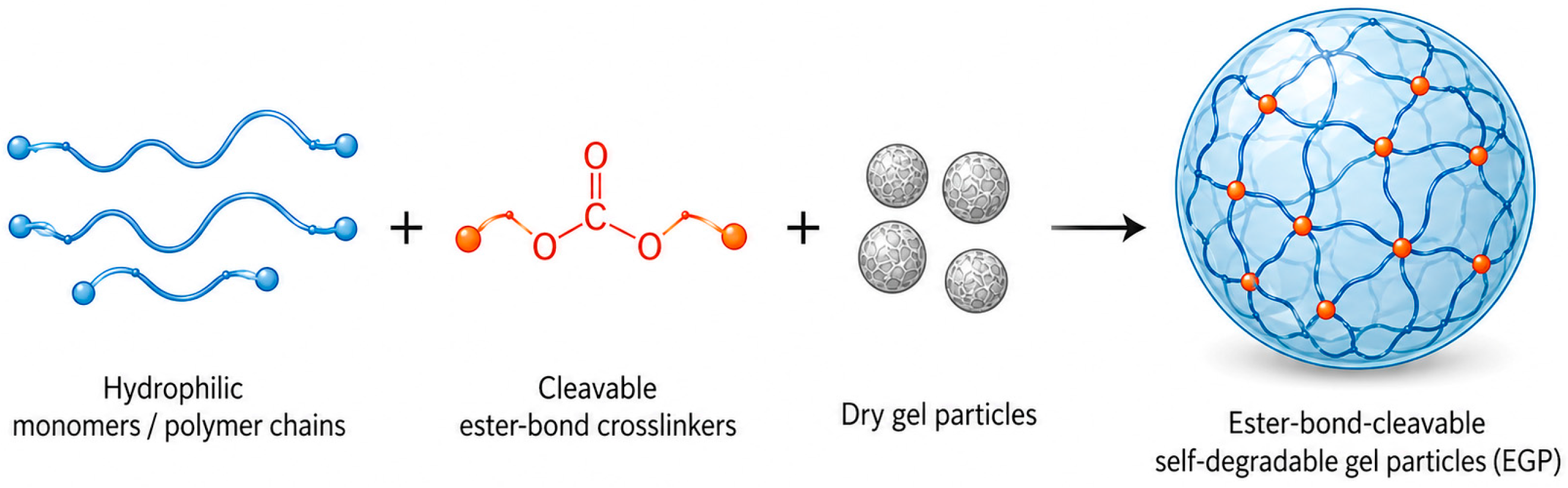
To prepare self-degradable gel particles with both fracture plugging and controlled deplugging capabilities, an aqueous free-radical crosslinking method was used to construct an ester-bond-cleavable gel network. Acrylamide (AAm), 2-acrylamido-2-methylpropanesulfonic acid (AMPS), and N-vinyl-2-pyrrolidone (NVP) were used as the main monomer, salt-tolerant functional monomer, and thermally stabilizing auxiliary monomer, respectively. Poly(ethylene glycol) diacrylate (PEGDA, Mn = 575 g/mol) was used as a hydrolysable ester-bond-containing crosslinker, while N,N′-methylenebisacrylamide (MBAA) was used to prepare the nondegradable control sample. The composition and network design of the system are illustrated in
Figure 12.
Specifically, 80.0 mL of deionized water was added to a 250 mL glass beaker and stirred at 25 °C and 300 rpm for 5 min. Subsequently, AAm (9.00 g), AMPS (3.75 g), and NVP (2.25 g) were sequentially added, giving a total monomer mass of 15.00 g. The mixture was stirred at 400 rpm for 20 min until a transparent and homogeneous solution was obtained. The pH of the solution was adjusted to 7.0–7.2 using 1.0 mol/L NaOH solution to ensure the stability of the subsequent free-radical polymerization process.
PEGDA was then added to the monomer solution at dosages of 0.15, 0.30, and 0.45 g, corresponding to 1.0, 2.0, and 3.0 wt% of the total monomer mass, respectively. The resulting samples were denoted as EGP-1, EGP-2, and EGP-3. To establish a nondegradable control group, EGP-C was prepared by replacing PEGDA with 0.045 g of MBAA. The formulations of all samples are listed in
Table 7. After the addition of the crosslinker, the solution was further stirred at 300 rpm for 15 min, followed by nitrogen purging for 20 min to remove dissolved oxygen. After deoxygenation, ammonium persulfate (APS, 0.10 g) and sodium bisulfite (NaHSO
3, 0.10 g) were added as the redox initiation system. The mixture was rapidly stirred for 2 min after initiator addition and then transferred into sealed glass molds. Polymerization was carried out in a thermostatic water bath at 45 °C for 3 h, followed by aging at room temperature for 12 h.
After polymerization, the bulk gel was removed from the mold and cut into small cubes of approximately 5 mm × 5 mm × 5 mm. The gel pieces were washed with deionized water for 24 h, during which the washing water was replaced every 6 h to remove residual monomers and soluble components. The washed gels were dried at 45 °C to constant weight, mechanically crushed, and then sieved to obtain gel particles with three particle-size fractions: 50–300 μm, 300–600 μm, and 600–1000 μm. Unless otherwise specified, the 300–600 μm fraction was used in subsequent experiments to ensure an appropriate particle–fracture matching relationship with the millimeter-scale fracture models. The dry gel particles were stored in sealed polyethylene bottles and kept in a room-temperature desiccator before use.
The synthesis yield was calculated to clarify the reproducibility of the particle preparation process. The dry-gel yield was defined as the mass of dried gel after washing and drying divided by the total solid feed mass, including monomers, crosslinkers, and initiators. The target particle-fraction yield was defined as the mass of 300–600 μm particles obtained after crushing and sieving divided by the dried gel mass. The results are summarized in
Table 8. The dry-gel yields of all samples were within a similar range of 88.7–90.8%, indicating that the selected polymerization conditions produced stable bulk gels for both PEGDA-crosslinked and MBAA-crosslinked systems. The target particle-fraction yield was more sensitive to crosslinking structure. EGP-1 produced more fine fragments because of its lower crosslinking density, whereas EGP-3 and EGP-C showed higher particle recovery due to their denser networks. EGP-2 maintained a moderate and stable target particle-fraction yield, indicating that an intermediate PEGDA crosslinking density helped balance particle integrity and fragmentation behavior during crushing and sieving.
EGP-C was used as the nondegradable control sample to distinguish PEGDA ester-bond-hydrolysis-induced network attenuation from structural changes caused by ordinary thermal aging, swelling variation, or mechanical erosion. The subsequent swelling, mechanical, degradation, and plugging experiments were all performed based on the above sample system.
4.4. Experimental Method
4.4.1. Particle Size Distribution Measurement
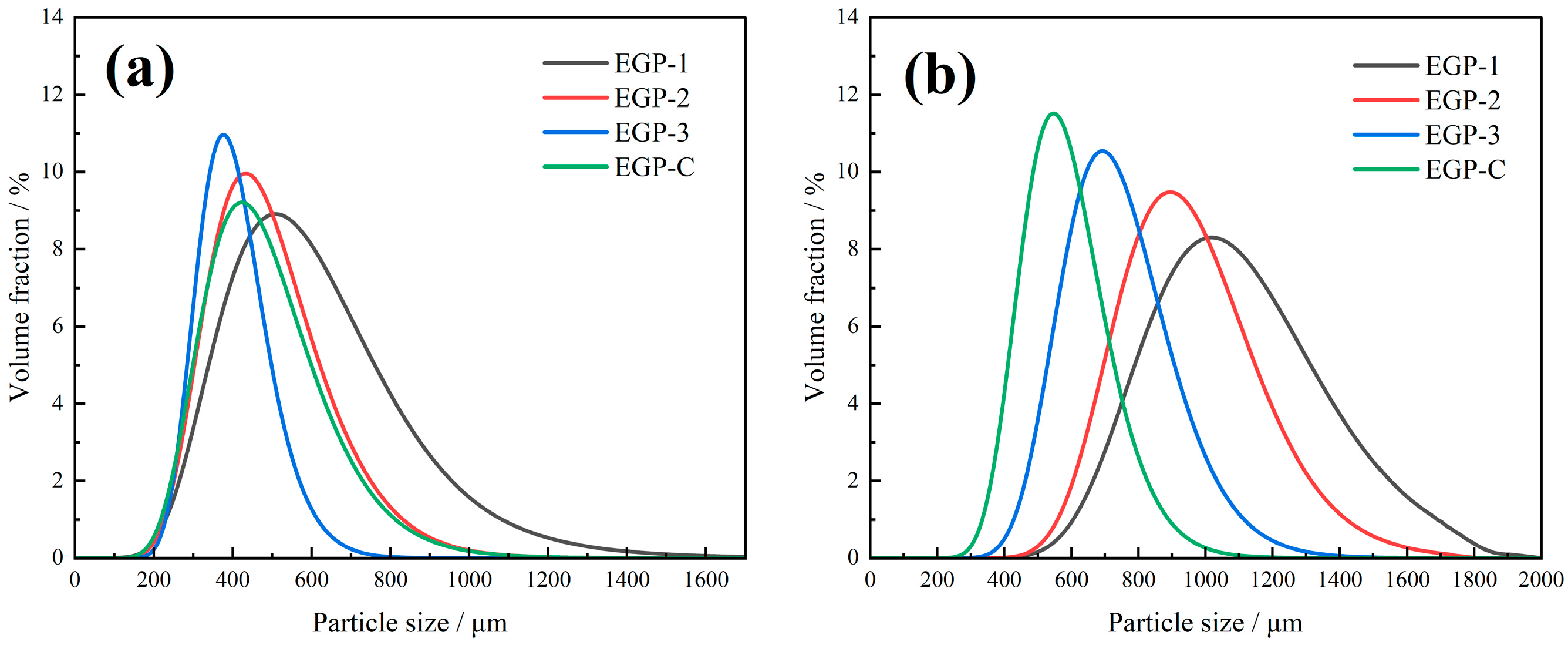
The particle size distribution of the ester-bond-cleavable self-degradable gel particles was determined using microscopic image analysis. Dry EGP-1, EGP-2, EGP-3, and EGP-C particles obtained after standard sieving were evenly spread on clean glass slides and imaged using an optical microscope. To minimize the influence of particle overlap and compression-induced deformation, the samples were not pressed before observation and were only gently shaken to achieve natural dispersion. For each sample, at least 100 particles were randomly selected for equivalent diameter analysis, and D10, D50, and D90 were calculated. D50 was used as the median particle size for subsequent particle–fracture size matching analysis.
To evaluate the particle size change after hydration, 0.10 g of dry gel particles was dispersed in 100 mL of simulated formation water and hydrated at 80 °C for 12 h. After hydration, the particles were separated using a 100-mesh sieve, and the surface free water was gently removed with filter paper. The hydrated particles were then placed on glass slides, imaged using an optical microscope, and the equivalent diameters of at least 100 particles were measured. All particle size measurements were performed in triplicate, and the results are expressed as mean ± standard deviation.
4.4.2. Hydration Swelling Test
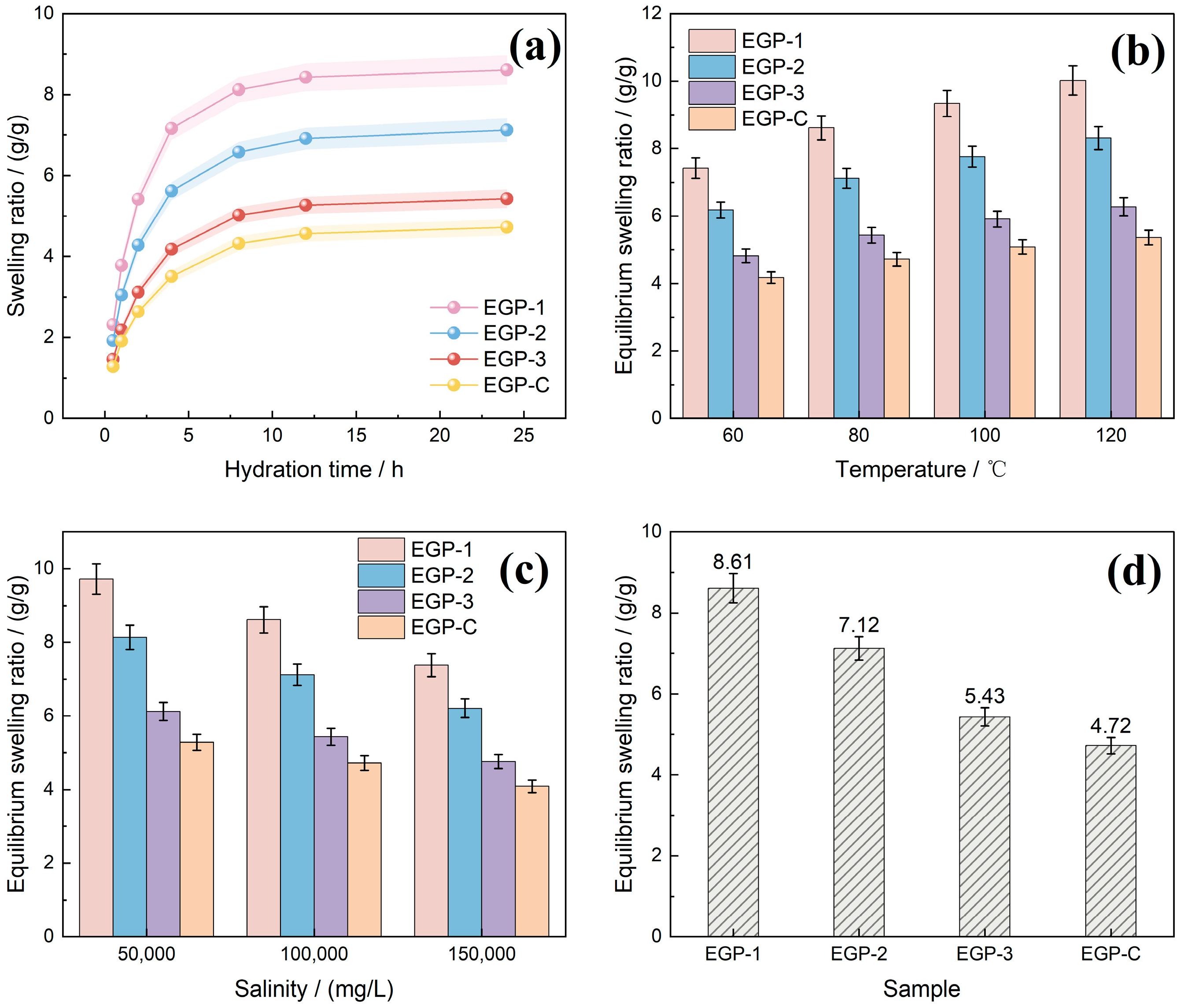
The hydration swelling behavior of gel particles in simulated formation water was evaluated using a gravimetric method. Specifically, 0.10 g of dry gel particles was added to 100 mL of simulated formation water and hydrated for different durations at preset temperatures. The test temperatures were set at 60, 80, 100, and 120 °C, and the hydration times were 0.5, 1, 2, 4, 8, 12, and 24 h. To assess the effect of salinity on particle swelling, the salinities of the simulated formation water were set at 50,000, 100,000, and 150,000 mg/L. After reaching the target hydration time, the hydrated particles were separated using a 100-mesh sieve, and the surface free water was gently removed with filter paper. The hydrated particles were then weighed immediately.
The mass swelling ratio of gel particles was calculated using Equation (1):
where
is the mass swelling ratio;
is the initial mass of dry gel particles, g; and
is the mass of hydrated gel particles after hydration for time
t, g. Each experiment was repeated three times, and the results are expressed as mean ± standard deviation.
4.4.3. Rheological Characterization
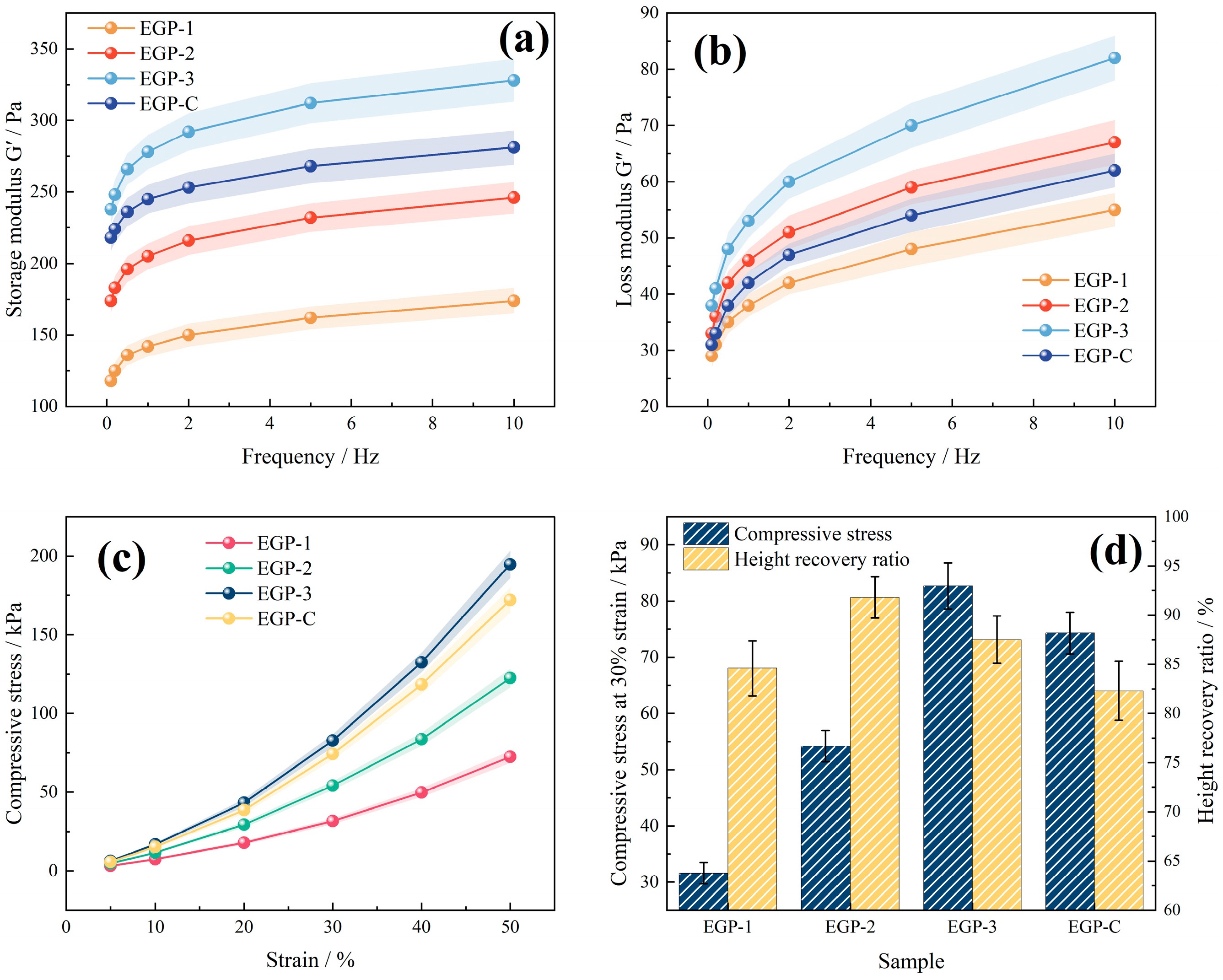
The viscoelastic properties of hydrated gel particle suspensions were characterized using a rotational rheometer. Dry gel particles were dispersed in simulated formation water at a concentration of 0.5 wt% and hydrated at 80 °C for 12 h to obtain hydrated gel particle suspensions. Before testing, the suspensions were gently stirred at 100 rpm for 5 min to ensure uniform particle dispersion and minimize the influence of sedimentation. Rheological measurements were conducted using an MCR 302 rotational rheometer (Anton Paar GmbH, Graz, Austria) equipped with a 25 mm parallel-plate geometry. The plate gap was fixed at 2.0 mm for all samples to avoid pre-compression of hydrated particles while maintaining stable particle distribution within the testing region. After the gap was set, excess sample around the plate edge was carefully removed, and a solvent trap was used to minimize water evaporation during high-temperature measurements.
During the measurement, strain sweep tests were first performed at a fixed frequency of 1 Hz to determine the linear viscoelastic region. Frequency sweep tests were then conducted within the linear viscoelastic region over a frequency range of 0.1–10 Hz. The storage modulus G′, loss modulus G″, and complex viscosity were recorded. Direct open-geometry rheological measurements were performed at 25 and 80 °C. To avoid water evaporation and boiling during high-temperature testing, the 120 °C rheological stability evaluation was conducted by sealed thermal aging rather than direct in situ measurement at 120 °C. Hydrated gel particle suspensions were sealed in high-temperature-resistant vessels and aged at 120 °C for the designed time. After aging, the samples were cooled to 80 °C and immediately measured under the same parallel-plate conditions. Thus, the G′ retention after 120 °C treatment represents the residual network strength after sealed thermal aging, rather than rheological data obtained under open boiling conditions. Each sample was tested in triplicate, and the results are expressed as mean ± standard deviation.
4.4.4. Compression and Elastic Recovery Test
Uniaxial compression tests were performed to evaluate the compressive stability and elastic recovery of hydrated gel particles. Dry gel particles were hydrated in simulated formation water at 80 °C for 12 h, separated using a 100-mesh sieve, and gently blotted to remove surface free water. The hydrated particles were then packed into a cylindrical mold with a diameter of 20 mm and a height of 20 mm. The particle bed was slightly compacted to form a stable packed structure while avoiding excessive pre-compression that could damage the initial particle structure.
Compression tests were conducted using a universal testing machine at 25 °C. The compression rate was set at 1 mm/min, and the maximum compressive strain was set at 50%. The compressive stress–strain curves were recorded, and the compressive stress at 30% strain was used as an indicator of the compressive resistance of the particle packing. To evaluate elastic recovery, the samples were unloaded after being compressed to 50% strain and then allowed to stand for 10 min before measuring the recovered height. The height recovery ratio was calculated using Equation (2):
where
is the height recovery ratio, %;
is the initial height of the particle packing before compression, mm; and
is the recovered height after unloading and standing for 10 min, mm. Each test was repeated three times, and the results are expressed as mean ± standard deviation.
4.4.5. Ester-Bond Cleavage and Self-Degradation Test
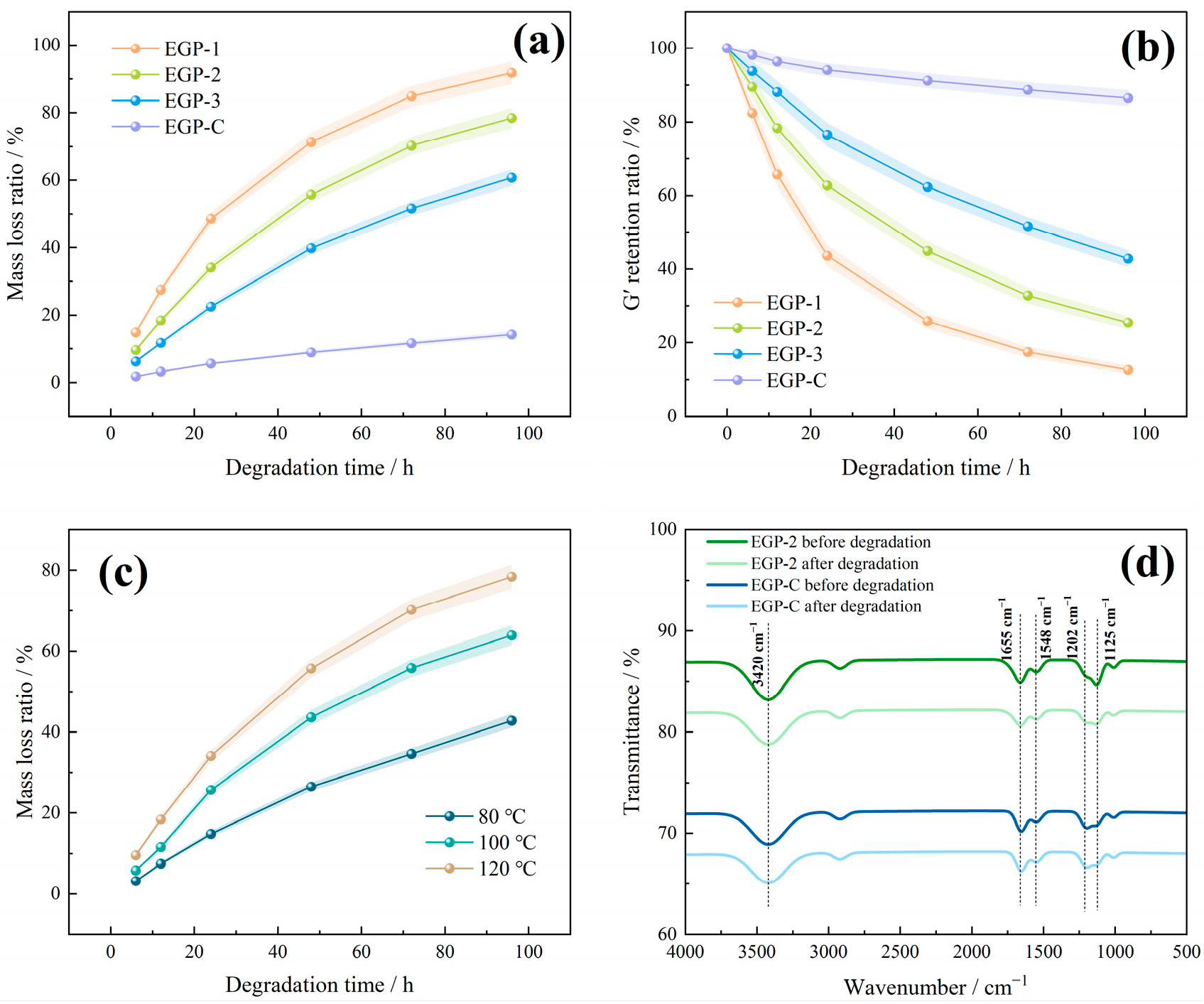
The ester-bond cleavage and self-degradation behavior of gel particles were evaluated by combining mass loss, particle size decay, rheological modulus variation, and Fourier transform infrared spectroscopy (FTIR). Specifically, 0.20 g of dry gel particles was added to 50 mL of simulated formation water and placed in sealed pressure-resistant reaction bottles for high-temperature degradation tests. The test temperatures were set at 80, 100, and 120 °C, and the degradation times were 6, 12, 24, 48, 72, and 96 h. To assess the influence of the aqueous chemical environment on ester hydrolysis, the pH values of the systems were adjusted to 5, 7, and 9.
After reaching the preset degradation time, the reaction bottles were removed and cooled to room temperature. The residual particles were collected using a 100-mesh sieve, rapidly rinsed with deionized water to remove surface salts, and dried at 45 °C to constant weight. The mass retention ratio of gel particles was calculated using Equation (3):
where
is the mass retention ratio, %;
is the initial mass of dry gel particles, g; and
is the dry mass of residual particles after degradation for time
t, g.
The mass loss ratio was calculated using Equation (4):
where
is the mass loss ratio, %.
Particle-size changes before and after degradation were determined using the microscopic image analysis procedure described in
Section 4.4.1. The G′ variation in degraded particle suspensions was measured according to the rheological protocol described in
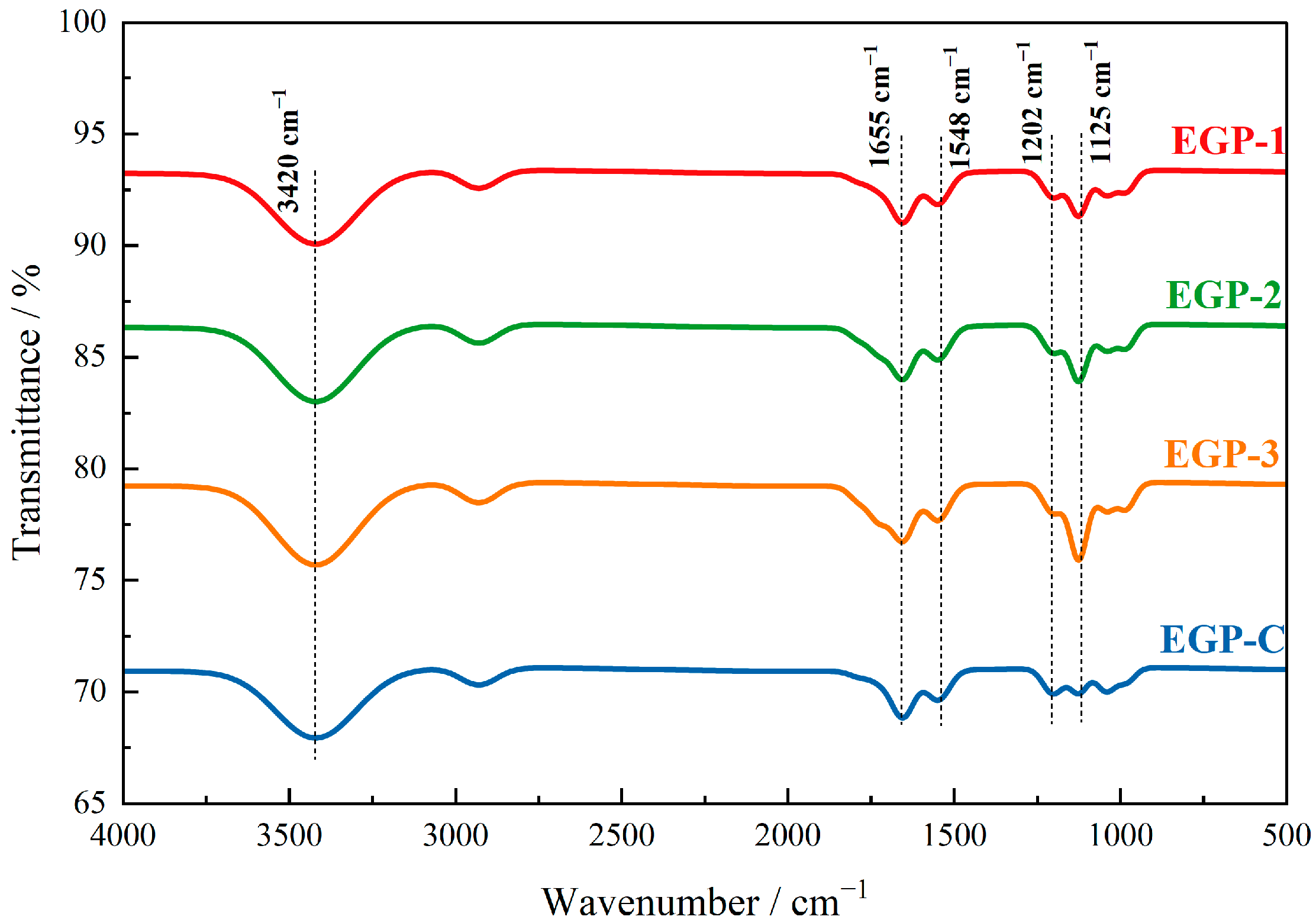
Section 4.4.3. To verify ester-bond cleavage, FTIR spectra of dried samples before and after degradation were recorded over a wavenumber range of 4000–500 cm
−1 with a resolution of 4 cm
−1 and 32 scans. The intensity changes in the ester carbonyl C=O stretching vibration peak and the C–O–C characteristic peak were compared to evaluate the influence of ester hydrolysis on the gel network structure. EGP-C was used as a nondegradable control to distinguish ester-bond-cleavage-induced network attenuation from structural changes caused by ordinary thermal aging. Each experiment was repeated three times.
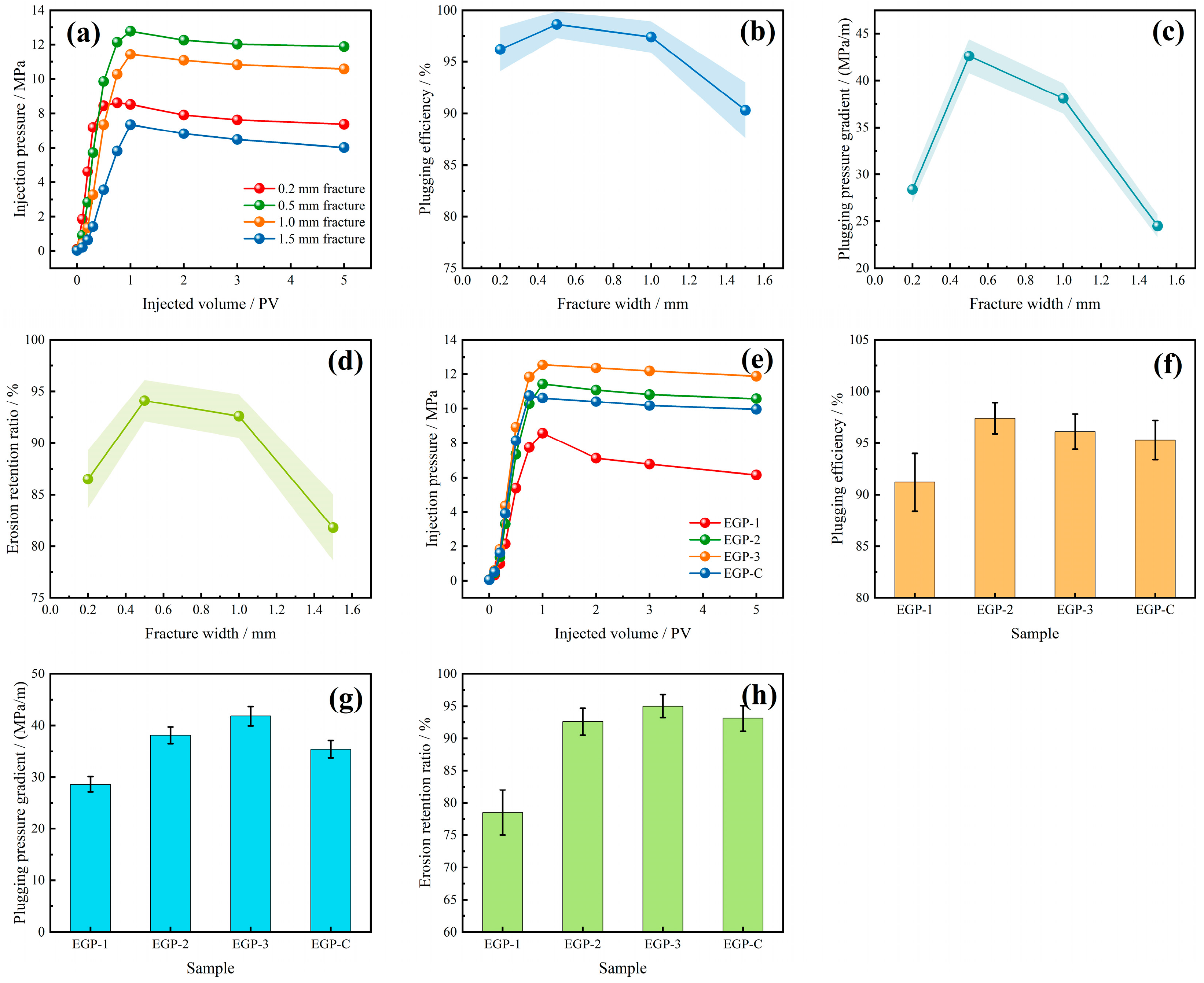
4.4.6. Single-Fracture Temporary Plugging Test
Single-fracture models were used to evaluate the temporary plugging ability of gel particles in fractures with different apertures. The experimental system consisted of a high-temperature and high-pressure holder, fractured cores or visual fracture plates, a constant-flow pump, a pressure sensor, and a liquid collection unit. The fracture apertures were set at 0.2, 0.5, 1.0, and 1.5 mm to simulate preferential flow channels with different scales. Before the test, gel particles with a particle size fraction of 300–600 μm were dispersed in simulated formation water at 0.5 wt% and hydrated at 80 °C for 12 h to obtain hydrated gel particle suspensions.
Before particle injection, the fracture model was pre-flushed with simulated formation water at a flow rate of 1.0 mL/min to remove trapped air and establish a stable initial pressure. The hydrated gel particle suspension was then injected at the same flow rate, and the inlet pressure and injected volume were continuously recorded. When the pressure reached a stable plateau or the injected particle suspension volume reached 1.0 PV, particle injection was stopped, and simulated formation water was continuously injected to evaluate the erosion resistance of the plugging structure. The breakthrough pressure, stable plugging pressure, outlet fluid state, and pressure fluctuation characteristics were recorded during the experiment.
The plugging efficiency was calculated using Equation (5):
where
is the plugging efficiency, %;
is the equivalent permeability of the fracture model before plugging, mD; and
is the equivalent permeability after plugging, mD.
The plugging pressure gradient was calculated using Equation (6):
where
is the plugging pressure gradient, MPa/m; P
is the breakthrough pressure, MPa; and
is the length of the fracture model, m.
To analyze the size matching relationship between particles and fractures, the particle–fracture matching coefficient
was defined as:
where
is the particle–fracture matching coefficient;
is the median diameter of hydrated gel particles, μm; and
is the fracture aperture, μm. Each experiment was repeated three times.
4.4.7. Multi-Fracture Selective Plugging and Flow Diversion Test
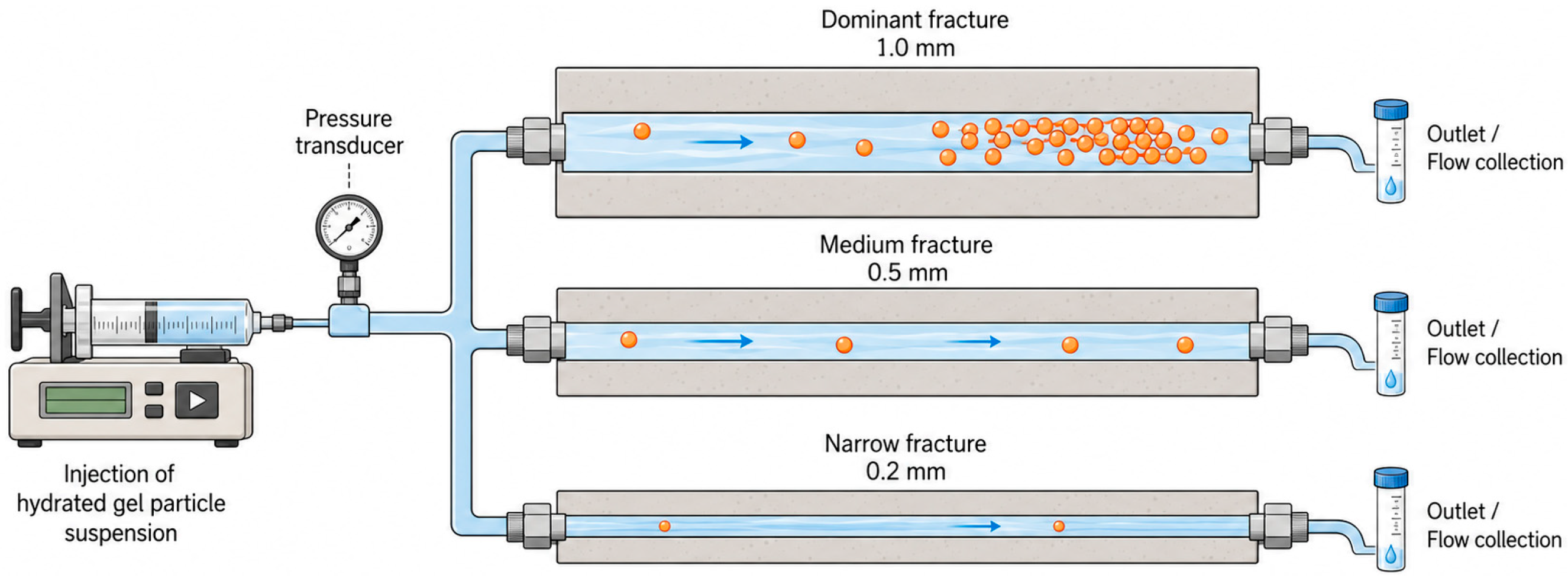
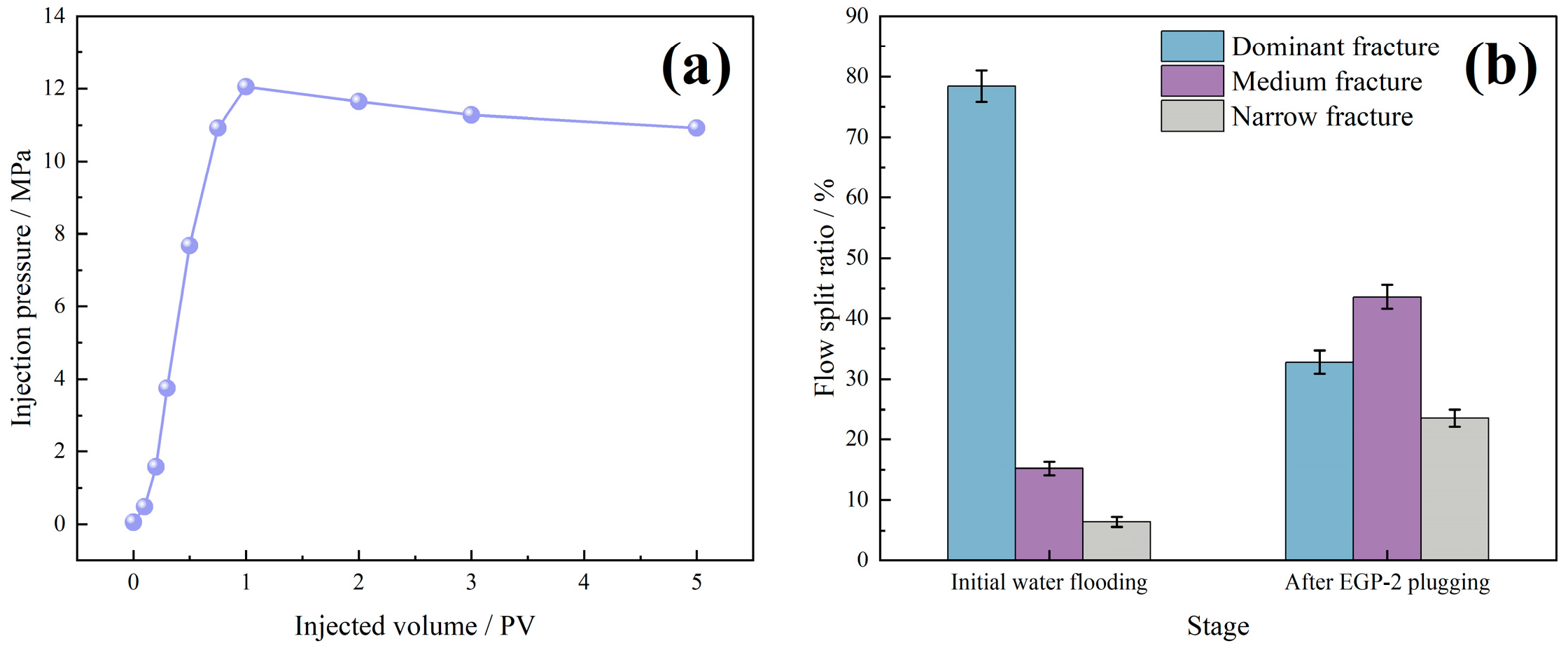
A parallel multi-fracture model was used to evaluate the selective plugging and flow diversion ability of gel particles in a multi-fracture system. The model consisted of three parallel fracture channels with apertures of 1.0, 0.5, and 0.2 mm, representing a dominant fracture, a medium fracture, and a narrow fracture, respectively. The inlets of the three fractures were connected to the same injection end, whereas the outlets were connected to independent measuring units to record the produced liquid volume and flow rate from each fracture channel in real time.
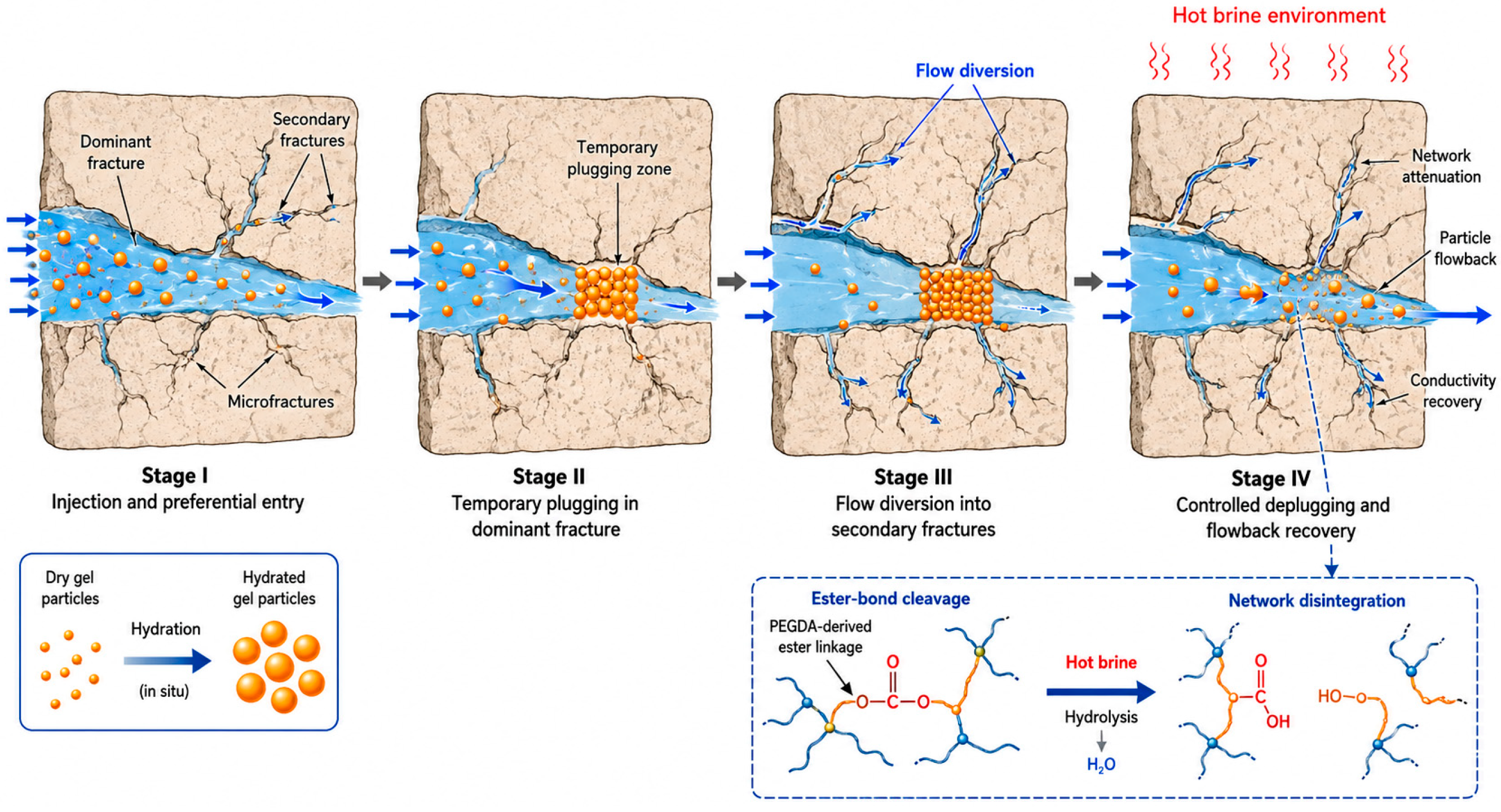
The experiment consisted of three stages. The first stage was initial water flooding, during which simulated formation water was injected at 1.0 mL/min, and the outlet flow rate of each fracture was recorded to calculate the initial flow split ratio. The second stage was gel particle temporary plugging, during which a 0.5 wt% hydrated gel particle suspension was injected into the parallel fracture model, and the inlet pressure and outlet flow rates of each fracture were continuously recorded. The third stage was subsequent water flooding, during which simulated formation water was continuously injected to evaluate the ability of fluid to divert from the plugged dominant fracture into medium and narrow fractures. The entire experiment was conducted at 80 °C, and each test was repeated three times.
The flow split ratio of each fracture channel was calculated using Equation (8):
where
is the flow split ratio of the
i-th fracture channel, %;
is the outlet flow rate of the
i-th fracture channel, mL/min; and
is the total outlet flow rate of all fractures, mL/min.
The flow diversion efficiency was calculated using Equation (9):
where
is the flow diversion efficiency, %;
is the total flow split ratio of the medium and narrow fractures after plugging, %;
is the total flow split ratio of the medium and narrow fractures during the initial water flooding stage, %; and
is the initial flow split ratio of the dominant fracture, %.
4.4.8. Controlled Deplugging, Flowback and Permeability Recovery Test
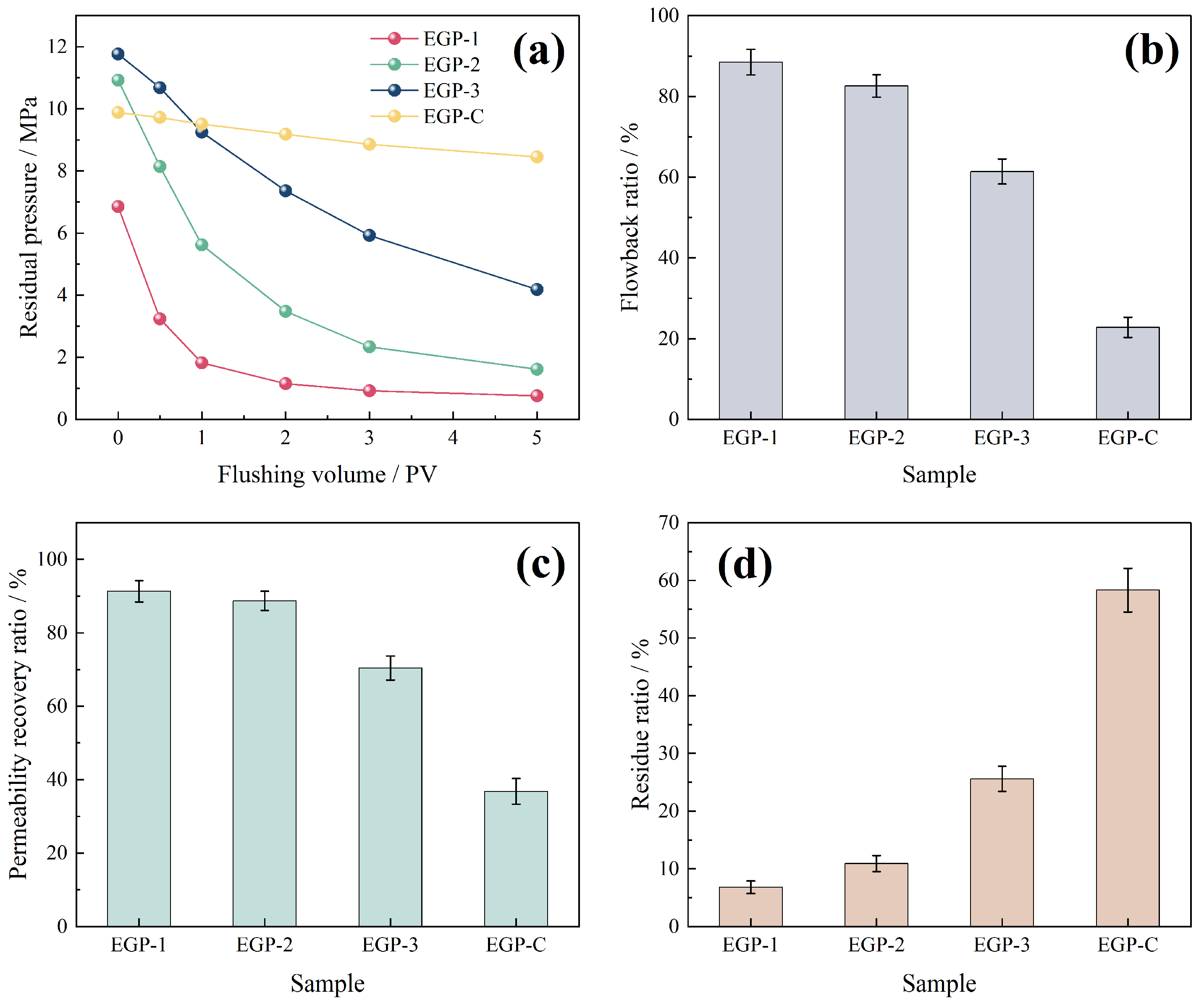
After the single-fracture or multi-fracture plugging tests, the controlled deplugging, flowback, and permeability recovery capacities of gel particles were further evaluated. The plugged fracture models were sealed and aged in a thermostatic environment using simulated formation water as the aging medium. The aging temperatures were set at 80, 100, and 120 °C, and the aging times were 12, 24, 48, 72, and 96 h. After reaching the preset aging time, the models were cooled to the experimental temperature and flushed with simulated formation water in either the forward or reverse direction at a flow rate of 1.0 mL/min. The inlet pressure, outlet liquid volume, and flowback residues were continuously recorded during the experiment.
The plugging pressure before deplugging was recorded as
, and the residual pressure after flushing to a stable state was recorded as
. The pressure recovery coefficient was calculated using Equation (10):
where
is the pressure recovery coefficient, %;
is the plugging pressure before deplugging, MPa; and
is the stable pressure after deplugging, MPa.
The permeability recovery ratio was calculated using Equation (11):
where
is the permeability recovery ratio, %;
is the equivalent permeability of the fracture model after deplugging, mD; and
is the initial equivalent permeability, mD.
The flowback ratio was calculated using Equation (12):
where
is the flowback ratio, %;
is the mass of gel particles injected into the fracture model, g; and
is the dry mass of gel particles and degradation residues collected from the flowback liquid, g.
To evaluate residual formation damage, the model was continuously flushed with simulated formation water until the pressure stabilized, and the permeability recovery of EGP-1, EGP-2, EGP-3, and EGP-C was compared. Each experiment was repeated three times.
4.4.9. Morphological Characterization of Plugging and Degradation Residues
Optical microscopy, scanning electron microscopy (SEM), and microfocused X-ray computed tomography (μCT) were used to characterize the plugging morphology of gel particles and the features of degradation residues. After the visual fracture experiments, optical microscopy was used to directly observe the particle distribution near the fracture inlet, middle section, and outlet. These observations were used to identify particle migration, bridging, accumulation, and local erosion characteristics. For fractured core models, the samples were cut along the fracture direction after the experiment, and residual particles from the inlet, middle, and outlet regions were collected for observation.
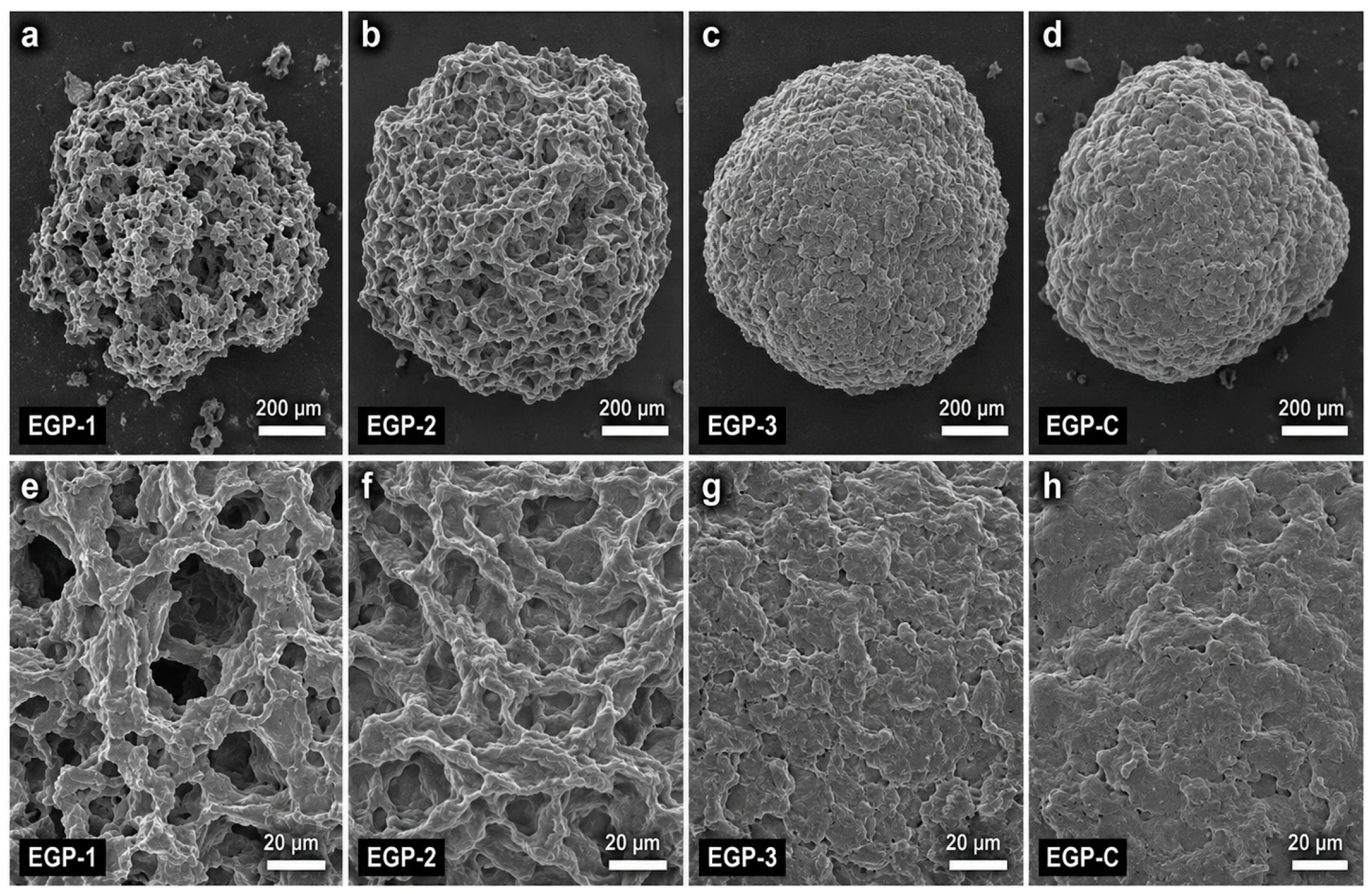
SEM was used to observe the surface morphology of dry gel particles, freeze-dried hydrated particles, and degradation residues. Hydrated samples were freeze-dried at −50 °C for 24 h, fixed onto conductive adhesive tape, and sputter-coated with gold. The surface pores, network collapse, and degradation-induced fragmentation features of the particles were observed using SEM at an accelerating voltage of 5 kV.
When necessary, μCT was used to perform three-dimensional scanning and reconstruction of the plugged fracture models. Before scanning, the fracture models were sealed and fixed, and the scanning resolution was set to 5–10 μm/voxel according to the fracture scale. Grayscale threshold segmentation was used to distinguish the fracture space, rock matrix, and particle retention region. The plugging zone length, particle accumulation volume fraction, and changes in fracture connectivity were extracted to support the analysis of the spatial plugging morphology of gel particles within fractures.
4.4.10. Data Processing and Statistical Analysis
All experiments were performed at least in triplicate, and the results are expressed as mean ± standard deviation. Particle size distribution, swelling ratio, mass loss ratio, plugging efficiency, flow diversion efficiency, pressure recovery coefficient, flowback ratio, and permeability recovery ratio were calculated based on repeated experimental results. Differences among sample groups were analyzed using one-way analysis of variance followed by Tukey’s post hoc test for multiple comparisons. For comparisons involving different formulations, fracture widths, temperatures, or salinities, statistical significance was evaluated at the same testing condition or at the selected endpoint shown in the corresponding figure. A value of p < 0.05 was considered statistically significant. In the revised figures and tables, different lowercase letters indicate statistically significant differences among groups, whereas groups sharing the same letter are not significantly different.
Before plotting, the completeness of the raw data was checked. Outliers were excluded only when they could be clearly attributed to abnormal instrument acquisition, leakage, plugging failure, or operational error, and the original records were retained for traceability. All pressure, flow rate, and mass data were maintained with corresponding raw records and calculated results to ensure the traceability of the data processing procedure.