3.1. Optimization and Performance of Self-Consolidating Rigid Materials
3.1.1. Selection of Skeleton Materials and Suspension Stability
The selection of appropriate skeleton materials is critical for the formation of an effective plugging structure, as they primarily contribute to the bridging framework within loss channels. In this study, three types of skeleton materials, including two inorganic mineral materials (aggregate 1 and aggregate 2) and one organic plant-based material (aggregate 3), were evaluated in terms of suspension stability, morphology, and high-temperature resistance.
The suspension behavior of skeleton materials in oil-based drilling fluids directly affects their transport and distribution in the loss zone. By adjusting the content of organoclay in the base fluid, the suspension stability of different skeleton materials was systematically investigated. The results indicate that increasing the organoclay content significantly improves the suspension performance, and optimal suspension stability was achieved at 3 wt% organoclay (
Table 2). Under this condition, all three materials exhibited “good” suspension behavior, ensuring uniform dispersion and minimizing sedimentation during pumping.
Table 2 Commentary (Skeleton 1–3 Explanation)
In
Table 2, “Skeleton 1–3” represent three types of skeleton materials used for preparing self-consolidating rigid particles:
Skeleton 1 and Skeleton 2: Inorganic mineral materials with high thermal stability and mechanical strength, serving as the primary structural framework for bridging in loss channels.
Skeleton 3: Organic plant-based material with lower thermal stability, included primarily for comparison.
The parameters—apparent viscosity, plastic viscosity, and yield stress—reflect the suspension stability of each skeleton material in oil-based drilling fluids. The evaluation procedure is as follows:
A fixed amount of skeleton material was dispersed in the base fluid and stirred uniformly.
The mixture was poured into a graduated cylinder and left undisturbed at room temperature for 2 h.
The mass of sedimented and suspended particles in the upper and lower portions was measured.
Based on sedimentation behavior, Skeleton materials were classified as “Poor”, “Moderate”, or “Good”.
Morphological observations further confirmed that Skeleton 1–2 maintained integrity after high-temperature aging, whereas Skeleton 3 exhibited significant degradation, indicating that Skeleton 1–2 are more suitable for high-temperature lost circulation control.
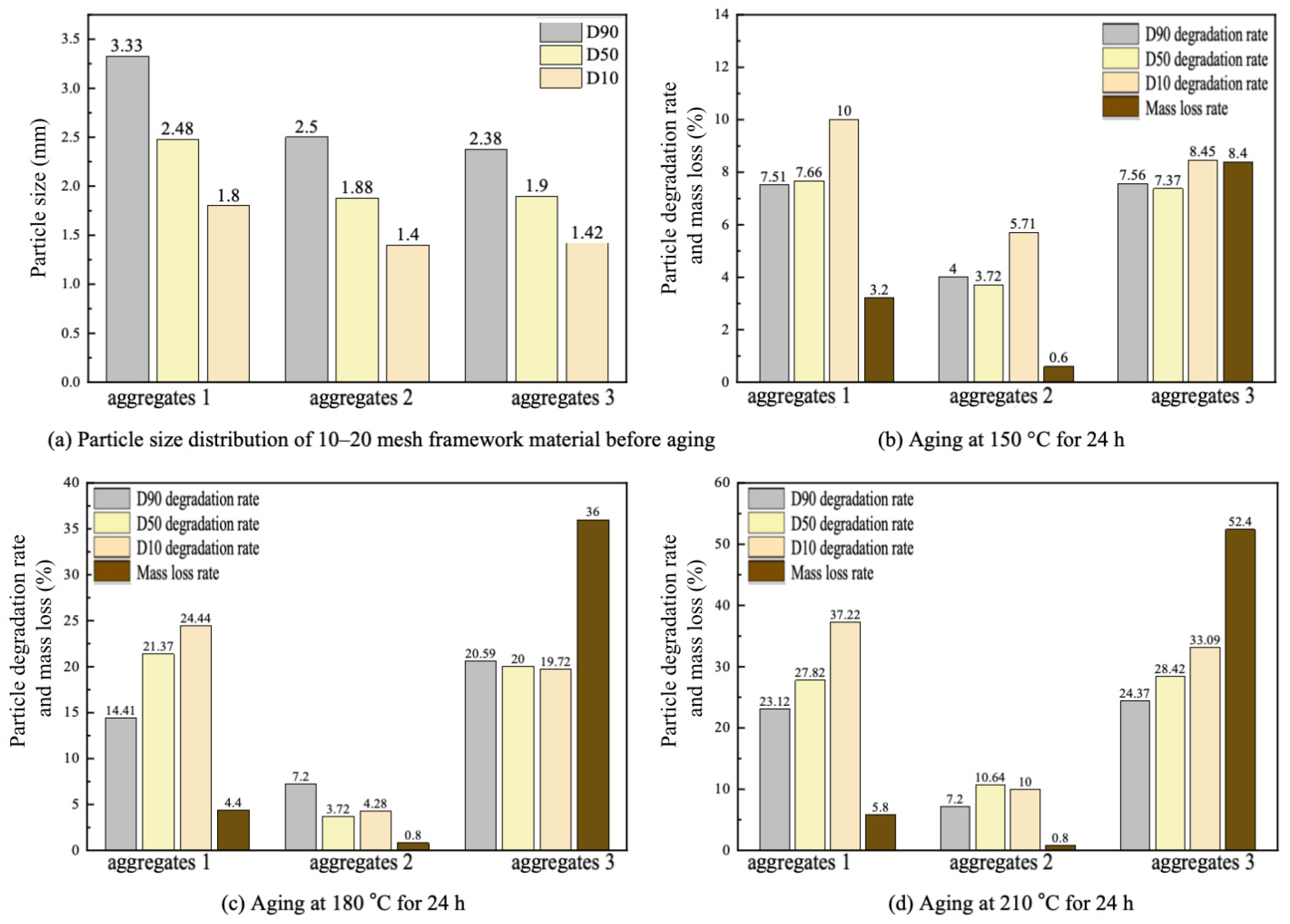
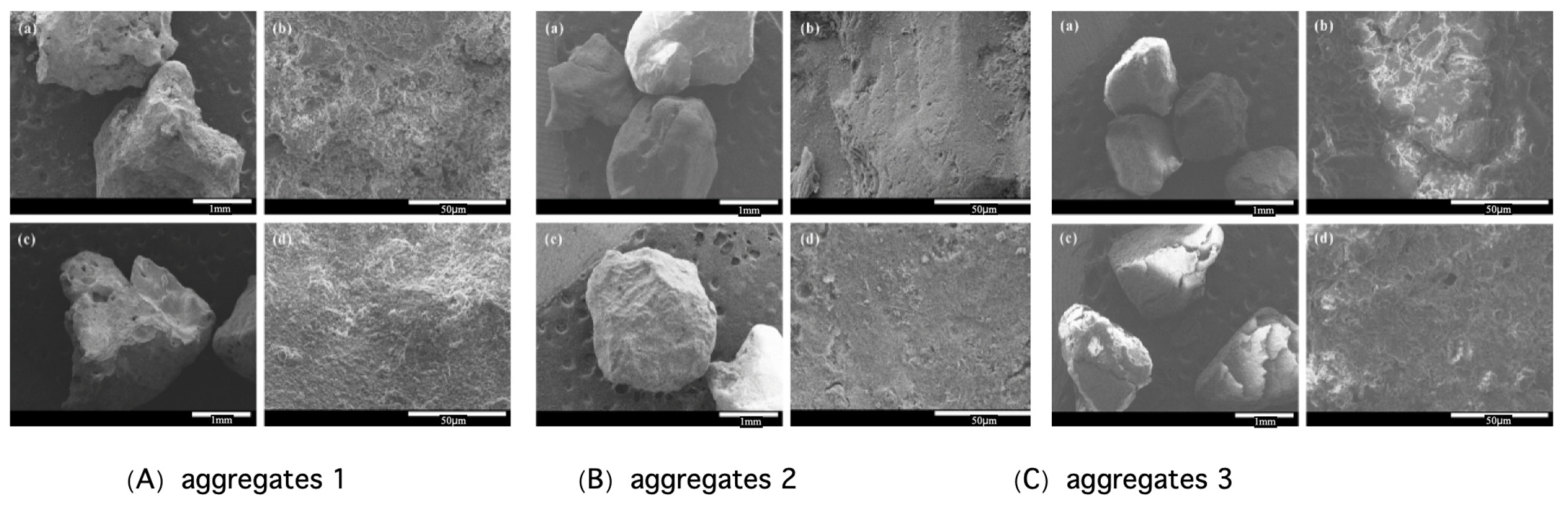
Morphological observations reveal that all selected materials possess angular geometries, which are beneficial for mechanical interlocking and bridging within fracture channels. However, their thermal responses differ significantly. After aging at elevated temperatures, inorganic materials (aggregates 1 and 2) maintained their structural integrity with negligible morphological changes, whereas the organic material (aggregate 3) exhibited severe degradation, including surface cracking and structural loosening. This difference is attributed to the inherent thermal stability of mineral structures compared to the decomposition-prone nature of organic components (
Figure 2).
These results demonstrate that inorganic skeleton materials are more suitable for high-temperature applications, providing stable structural support for subsequent consolidation.
3.1.2. Thermal Stability and Degradation Behavior
To further quantify the thermal stability of the skeleton materials, particle size degradation and mass loss were evaluated after aging at different temperatures (150–210 °C). The results show that both aggregates 1 and 2 exhibit minimal particle size degradation and mass loss at 150 °C, indicating excellent thermal stability under typical downhole conditions. In contrast, aggregate 3 shows significant degradation at elevated temperatures, including increased particle size reduction and higher mass loss.
The superior thermal resistance of aggregates 1 and 2 can be attributed to their inorganic composition, which resists thermal decomposition. Conversely, the organic structure of aggregate 3 undergoes pyrolysis and carbonization, leading to structural weakening and reduced mechanical integrity. These findings confirm that aggregates 1 and 2 are more suitable as skeleton materials for high-temperature lost circulation control, particularly in formations exceeding 150 °C (
Figure 3).
3.1.3. Optimization of Thermosetting Resin and Curing Behavior
The thermosetting resin plays a key role in enabling the self-consolidation capability of the rigid materials. Three types of resins, including one modified resin and two commercially available resins, were compared in terms of thermal stability and consolidation performance.
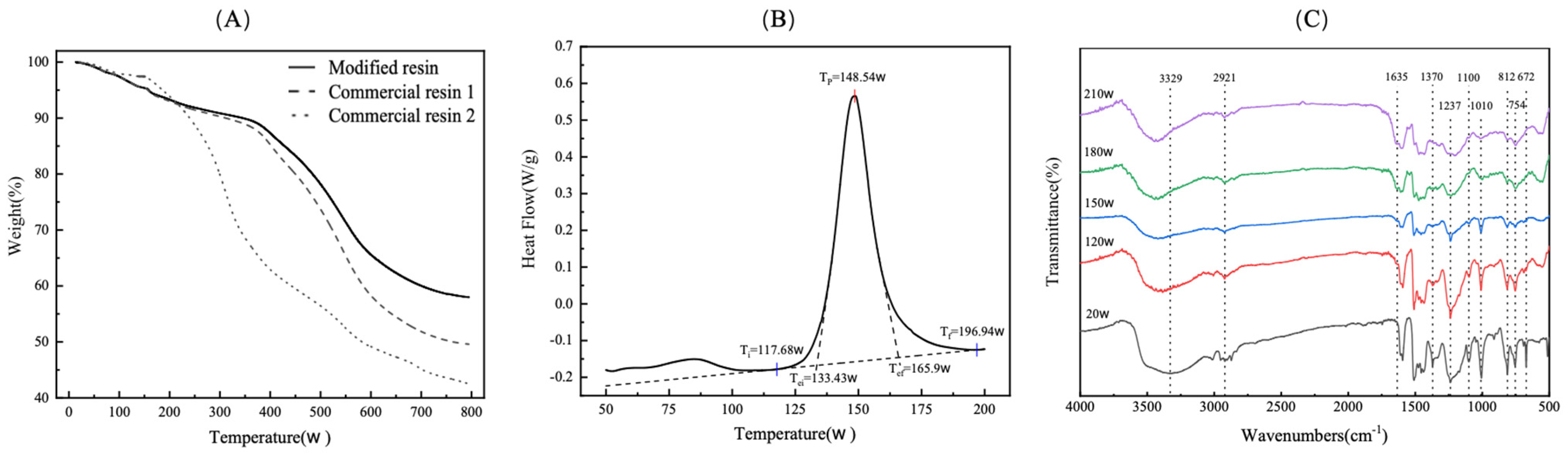
Thermogravimetric analysis (TGA) shows that the modified resin exhibits superior thermal stability, with higher decomposition temperatures and a significantly higher char yield compared to commercial resins. This indicates a more stable molecular structure and enhanced resistance to thermal degradation (
Figure 4A).
Differential scanning calorimetry (DSC) analysis reveals that the curing reaction of the modified resin occurs within a temperature range of approximately 133–166 °C, with the peak curing temperature around 150 °C. This temperature range is well aligned with typical downhole conditions, ensuring effective in-situ curing (
Figure 4B).
Fourier transform infrared spectroscopy (FTIR) further elucidates the curing mechanism. The reduction of hydroxyl and ether functional groups, along with the formation of new carbonyl structures, confirms that condensation and crosslinking reactions occur during curing. These reactions lead to the formation of a three-dimensional network structure, which is responsible for the consolidation capability (
Figure 4C).
In addition, compressive strength tests indicate that the modified resin-coated materials exhibit significantly higher consolidation strength than those coated with commercial resins, demonstrating its superior performance in both oil and drilling fluid systems (
Table 3). Base slurry (oil-based drilling fluid system used as the carrier fluid for testing composite materials).
FTIR spectra of the synthesized oil-absorbing resin and several commercially available rubbers (natural rubber, nitrile rubber, and chloroprene rubber) were analyzed to elucidate functional group composition and potential chemical interactions. The oil-absorbing resin exhibits characteristic absorption bands at 1730 cm−1 (C=O stretching of ester groups), 1456 cm−1 (C–H bending), and 1160 cm−1 (C–O–C stretching), indicating the presence of ester and ether functionalities introduced by SMA, i-BMA, and St monomers. In comparison, natural rubber shows dominant C=C stretching at 1660 cm−1 and CH2 deformation at 1450 cm−1, while nitrile rubber displays a strong –C≡N stretching band at 2240 cm−1, and chloroprene rubber exhibits C–Cl stretching at 820 cm−1.
The unique ester and styrene-derived functionalities in the synthesized resin confer both lipophilicity and partial swelling capability, which are absent in conventional rubbers. Moreover, the crosslink density indicated by the broad absorption around 3400–3500 cm−1 (–OH groups from residual PVA) suggests moderate network formation, contributing to thermal stability. This comparison demonstrates that the synthesized oil-absorbing resin possesses a distinct chemical structure optimized for oil absorption and pore-filling in lost circulation applications, differing significantly from traditional rubber materials.
The modified thermosetting resin used as a coating and binding agent is based on a phenolic epoxy hybrid backbone, functionalized to enhance thermal stability and bonding performance. Reactive groups such as epoxide rings, hydroxyl groups, and methacrylate moieties are introduced via partial esterification and free radical copolymerization, providing sites for crosslinking during thermal consolidation. The modification ensures a controlled degree of crosslinking, promoting formation of a dense polymer network upon heating. The resin exhibits a molecular weight of approximately 15,000–25,000 g/mol and a functionality of 2.5–3.0 reactive sites per molecule. FTIR, DSC, and TG analyses confirm the presence of C=O, C–O–C, and –OH groups and demonstrate curing onset at ~120 °C and decomposition onset above 280 °C, indicating enhanced thermal stability. This modified resin coats the skeleton materials uniformly, enabling mechanical bridging, in-situ consolidation, and micro-pore sealing within the self-consolidating lost circulation material.
3.1.4. Consolidation Mechanism of Self-Consolidating Materials
The self-consolidation behavior of the developed materials is primarily attributed to the thermal curing of the modified resin coated on the surface of skeleton particles. Under high-temperature conditions, the resin undergoes crosslinking reactions, forming a rigid three-dimensional network that binds adjacent particles together.
Scanning electron microscopy (SEM) observations confirm that, after curing, distinct bonding points are formed between particles, resulting in a dense and continuous consolidated structure. Unlike conventional bridging materials, which rely solely on mechanical stacking, the self-consolidating materials achieve chemical bonding between particles, significantly enhancing structural integrity (
Figure 5).
Therefore, the plugging mechanism of the rigid materials can be described as a combination of mechanical bridging and chemical consolidation. This dual mechanism effectively improves the retention capacity and resistance to fluid erosion in loss channels.
3.1.5. Effect of Key Parameters on Compressive Strength
The compressive strength of the consolidated structure is a critical indicator of plugging stability and retention capacity. Several key parameters, including particle size, coating amount, curing temperature, and curing time, were systematically investigated.
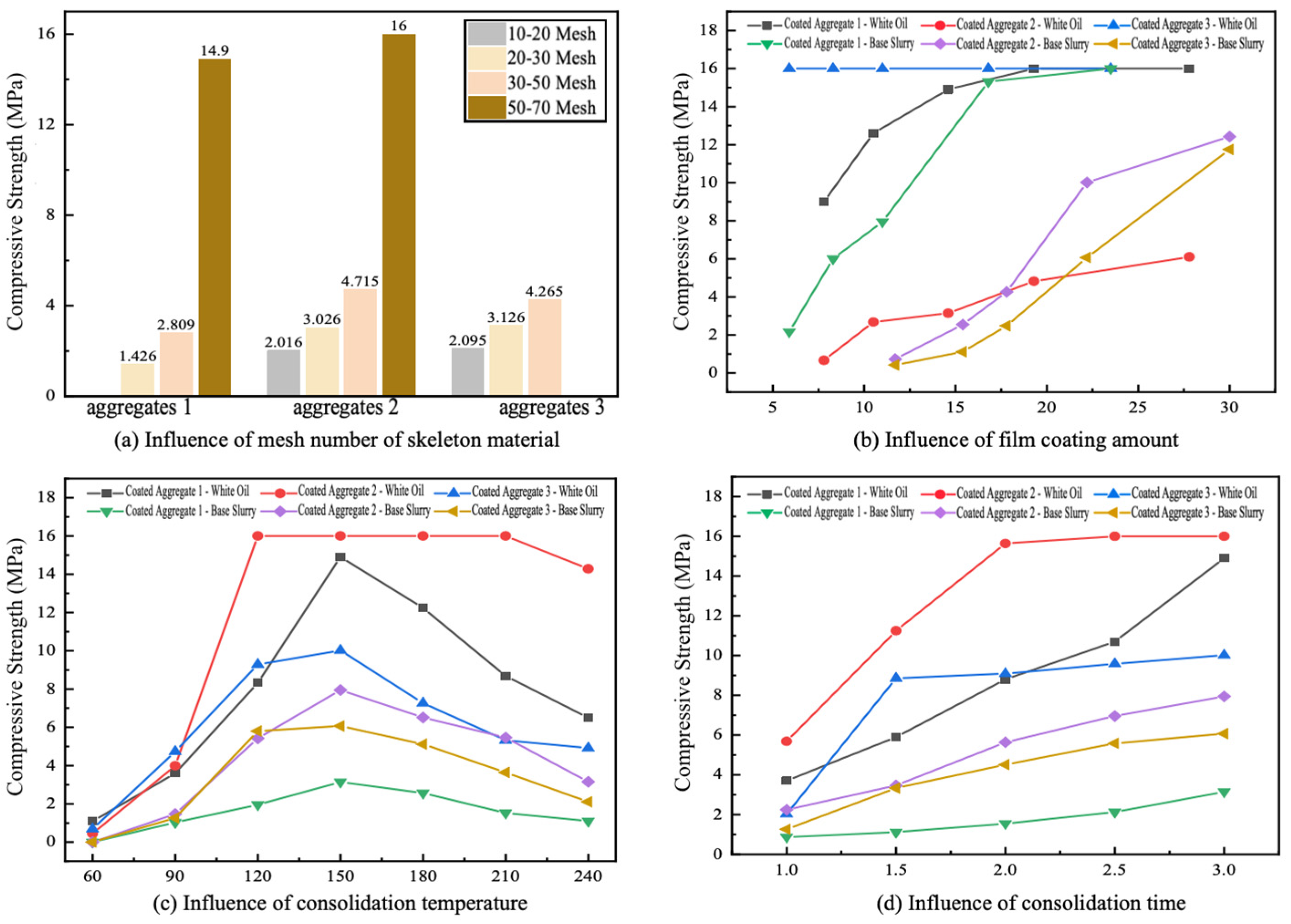
The results show that smaller particle sizes lead to higher compressive strength due to the increased specific surface area, which enhances resin coverage and interparticle bonding. However, excessively fine particles may negatively affect permeability and transport behavior (
Figure 6a).
The coating amount of resin also plays a crucial role. As the coating amount increases, the compressive strength initially increases due to improved bonding. However, beyond an optimal level, further increase in resin content leads to diminishing returns and increased material cost. Therefore, an optimal coating ratio must be determined to balance performance and efficiency (
Figure 6b).
Curing temperature exhibits a typical “increase–decrease” trend in compressive strength. At low temperatures, insufficient curing results in weak bonding, while excessively high temperatures may degrade the resin network. The optimal curing temperature is around 150 °C, consistent with the DSC results (
Figure 6c).
Similarly, curing time influences the degree of crosslinking. Adequate curing time ensures complete network formation, while excessive curing may not significantly improve strength but increases operational time (
Figure 6d).
3.1.6. High-Temperature Aging Resistance
The long-term stability of the consolidated structure under high-temperature conditions is essential for practical applications. Aging tests conducted at 150 °C for 48 h show that the consolidated samples retain considerable compressive strength, with values remaining above 2 MPa.
This result indicates that the self-consolidating materials possess excellent thermal stability and resistance to degradation under prolonged high-temperature exposure. The retained strength demonstrates that the resin network structure remains intact, ensuring sustained plugging performance in downhole environments (
Figure 7).
In addition to TGA and high-temperature aging tests, dynamic mechanical analysis (DMA) was performed to quantify the evolution of mechanical properties with temperature. Cylindrical samples of self-consolidating composites were subjected to oscillatory stress in a single cantilever mode at a frequency of 1 Hz and a heating rate of 3 °C/min from 25 °C to 200 °C. The storage modulus (E′) and loss modulus (E″) were recorded to evaluate the material’s stiffness and energy dissipation capability.
Results show that the storage modulus of samples with inorganic skeletons (Skeleton 1–2) remains above 80% of the room-temperature value up to 150 °C, whereas Skeleton 3 exhibits a sharp decrease in E’ above 130 °C, consistent with observed particle degradation (
Figure 7). Loss modulus peaks at ~160 °C indicate the onset of polymer softening, but the composite retains sufficient structural rigidity to maintain bridging and pore-filling function. These DMA results, combined with TGA and high-temperature aging, demonstrate that high char yield correlates with preserved mechanical integrity for the optimized composite LCM, validating its suitability for high-temperature downhole conditions.
Furthermore, the thermal evolution of compressive strength was evaluated by measuring strength at 25, 100, and 150 °C after 24 h thermal conditioning. Samples with Skeleton 1–2 retained more than 75–80% of their original compressive strength at 150 °C, confirming that mechanical integrity is maintained despite thermal exposure. This quantitative assessment bridges the gap between TGA-derived thermal decomposition and functional mechanical performance under operating temperatures.
3.2. Synthesis Optimization and Properties of Oil-Absorbing Resin
3.2.1. Structural and Morphological Characterization
The chemical structure, morphology, and surface wettability of the synthesized oil-absorbing resin were systematically characterized to elucidate its role in the plugging system.
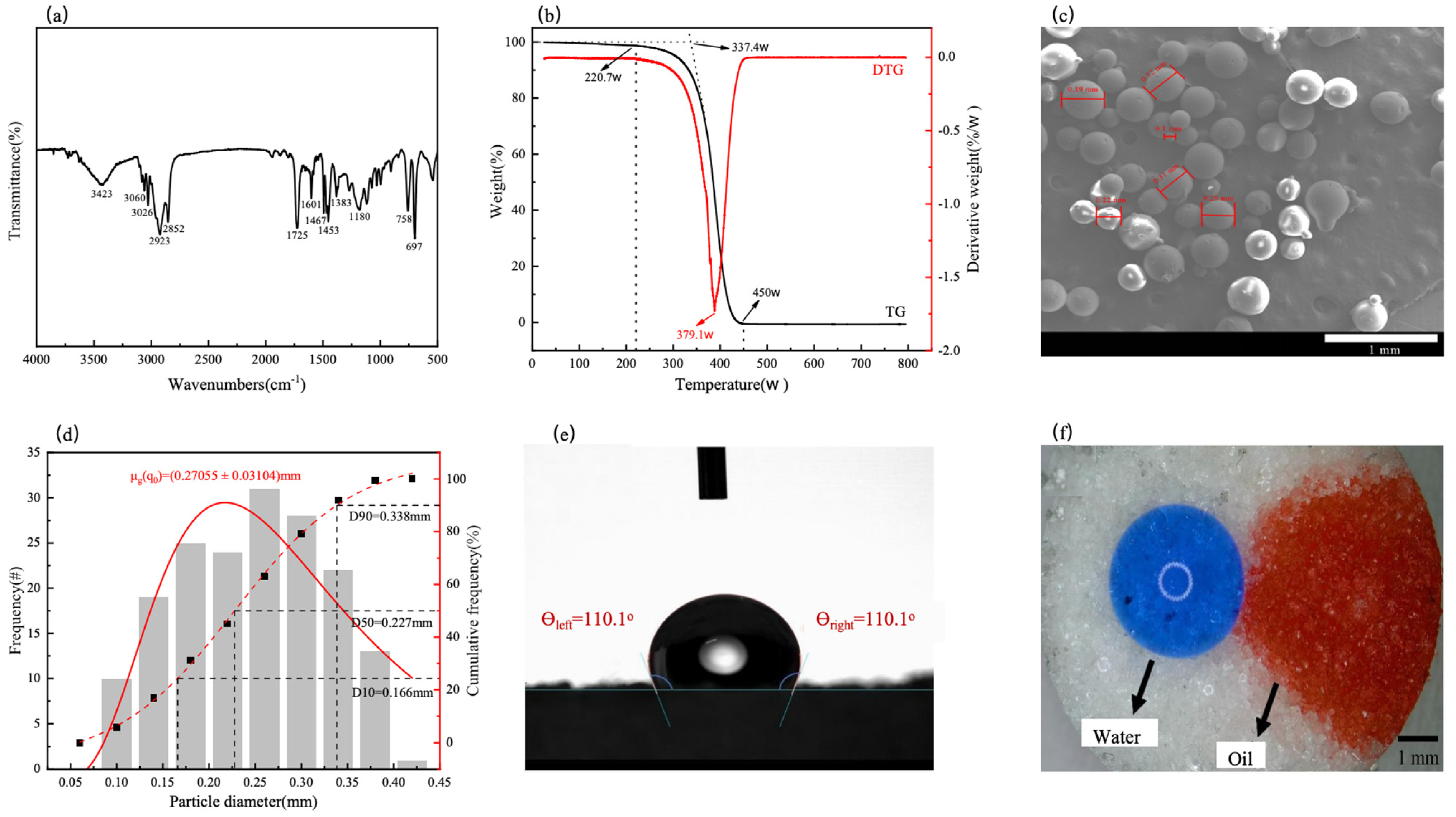
The FTIR spectra confirm the successful copolymerization of styrene (St), isobutyl methacrylate (i-BMA), and octadecyl methacrylate (SMA). Characteristic absorption peaks corresponding to aromatic C–H stretching, ester carbonyl (C=O), and long-chain alkyl groups are clearly observed, while the disappearance of C=C stretching vibrations indicates that the unsaturated double bonds participated in the polymerization reaction, leading to the formation of a three-dimensional crosslinked network structure (
Figure 8a).
Thermogravimetric analysis reveals that the resin exhibits good thermal stability, with an initial decomposition temperature of approximately 220.7 °C. Below this temperature, only negligible mass loss is observed, which is mainly attributed to the evaporation of residual solvents and bound water. Significant decomposition occurs above 300 °C due to the breakdown of polymer side chains and network structure, indicating that the resin can maintain structural stability under typical downhole conditions (
Figure 8b).
SEM observations show that the resin particles are predominantly spherical with smooth surfaces and without obvious structural defects. The particle size is mainly distributed in the range of 0.1–0.4 mm, with an average diameter of approximately 0.27 mm. Such morphology and size distribution are favorable for transport into formation pores and fractures (
Figure 8c,d).
Contact angle measurements demonstrate that the resin possesses strong hydrophobicity and lipophilicity. The water contact angle is about 110°, indicating a hydrophobic surface, while oil droplets can be rapidly absorbed. This strong oil affinity ensures good compatibility with oil-based drilling fluids and facilitates efficient oil absorption and swelling behavior (
Figure 8e,f).
3.2.2. Optimization of Synthesis Parameters
The synthesis parameters of the oil-absorbing resin were systematically optimized with oil absorption capacity as the primary evaluation index.
The stirring speed significantly affects particle morphology and dispersion stability. At low stirring speeds, insufficient shear force leads to droplet aggregation and particle agglomeration, whereas excessively high speeds result in overly small particles and may damage the internal crosslinked structure. An optimal stirring speed of 400 rpm ensures uniform spherical particles with appropriate size and stability (
Table 4).
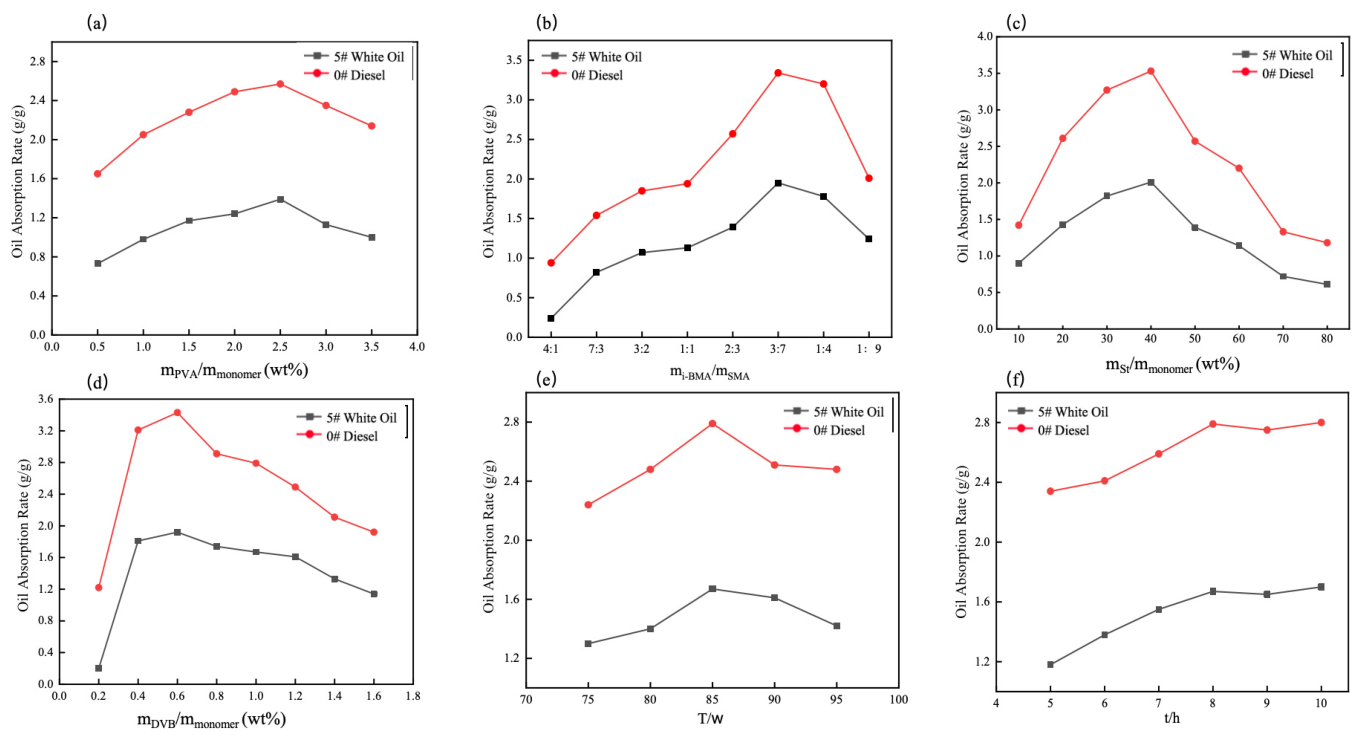
The dispersant (PVA) content plays a key role in stabilizing the suspension system. When the dispersant content is insufficient, monomer droplets tend to coalesce, resulting in poor polymerization and low oil absorption capacity. In contrast, excessive dispersant increases system viscosity and residual surface coverage, hindering oil diffusion into the polymer network. The optimal dispersant dosage is 2.5 wt%, at which the resin exhibits maximum oil absorption performance (
Figure 9a).
The monomer composition critically determines the balance between lipophilicity and network structure. Increasing the proportion of long-chain alkyl monomers (SMA) enhances oil affinity, but excessive SMA reduces the effective network volume and leads to particle adhesion. An optimal ratio of i-BMA to SMA of 2:3 achieves a balance between oil affinity and structural stability (
Figure 9b).
The introduction of the rigid monomer styrene (St) improves the mechanical strength and thermal stability of the resin by incorporating benzene ring structures into the polymer backbone. However, excessive St restricts network expansion and reduces oil absorption capacity. The optimal St content is 40 wt% of total monomers (
Figure 9c).
The crosslinking degree also plays a decisive role in swelling behavior. With increasing DVB content, the oil absorption capacity first increases and then decreases. At low crosslinking density, the network structure is insufficiently formed, whereas excessive crosslinking restricts network expansion. The optimal DVB dosage is 0.6 wt% (
Figure 9d).
Additionally, reaction temperature and time influence polymerization efficiency. The optimal reaction conditions are 85 °C and 8 h, under which the polymerization proceeds sufficiently to form a stable three-dimensional network structure (
Figure 9e,f).
To quantitatively evaluate the network structure and crosslinking density of the oil-absorbing resin, the Flory–Rehner swelling model was employed. The resin was swollen in 0# diesel oil and 5# white oil at room temperature until equilibrium. The volume swelling ratio Q was determined from the mass of resin before and after absorption.
The effective crosslinking density ν
e (mol·L
−1) was calculated according to the Flory–Rehner equation:
where φ
r is the polymer volume fraction in the swollen state, V
s is the molar volume of the solvent, and χ is the polymer–solvent interaction parameter.
The analysis revealed that increasing DVB content from 1 to 3 wt% led to a rise in crosslinking density from 0.018 to 0.035 mol·L−1, corresponding to decreased swelling ratios and increased network rigidity. Consequently, resins with higher DVB content exhibited slower initial oil uptake but improved mechanical stability during pumping and consolidation.
This quantitative analysis establishes a direct correlation between monomer composition, network rigidity, crosslink density, and observed oil absorption behavior, providing a rational explanation for the resin’s performance in lost circulation plugging applications.
3.2.3. Oil Absorption Behavior and Thermal Stability
The oil absorption performance of the optimized resin was evaluated using diesel and white oil.
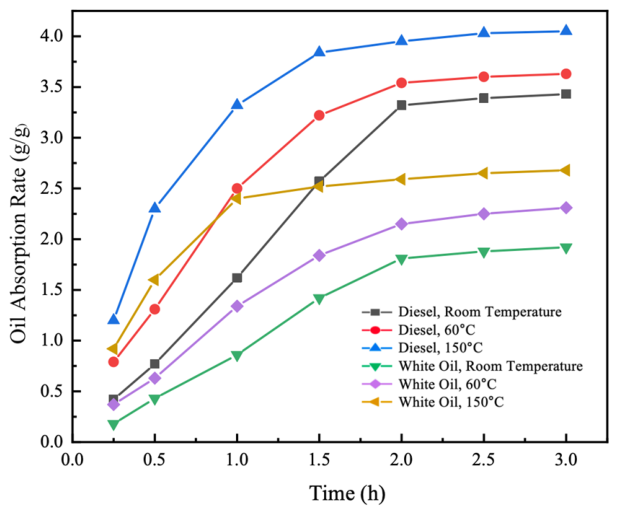
The results show that the resin exhibits high oil absorption capacity, reaching 3.43 g/g for diesel and 1.92 g/g for white oil at room temperature. The higher absorption capacity for diesel is attributed to its aromatic components, which interact more strongly with the benzene rings in the polymer structure.
The absorption process exhibits a typical swelling behavior. The initial absorption rate is relatively slow, which is beneficial for pumping and transportation in drilling operations. As time progresses, the absorption rate increases and reaches equilibrium within approximately 2 h.
Temperature significantly affects the absorption kinetics. With increasing temperature, the oil absorption rate accelerates due to enhanced molecular motion and reduced oil viscosity. However, the equilibrium absorption capacity shows only limited improvement, as the presence of rigid aromatic structures restricts excessive network expansion.
Furthermore, the resin maintains good structural integrity after oil absorption at 150 °C for 24 h, indicating excellent thermal resistance. The particles remain intact without collapse, demonstrating their suitability for high-temperature downhole environments (
Figure 10).
Overall, the resin exhibits a combination of controlled swelling behavior, high oil absorption capacity, and strong thermal stability. These properties enable it to effectively fill pores and fractures and act as a flexible plugging component, complementing rigid bridging materials and enhancing the overall sealing performance of the composite system.
3.3. Performance Evaluation of Composite Lost Circulation Materials
3.3.1. Optimization of Composite Formulation
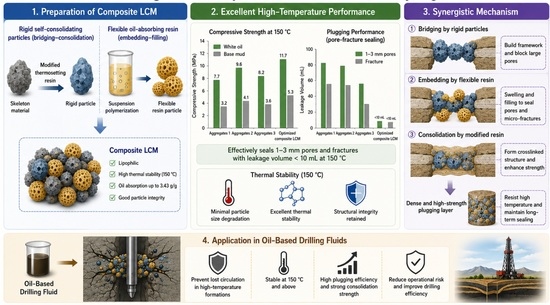
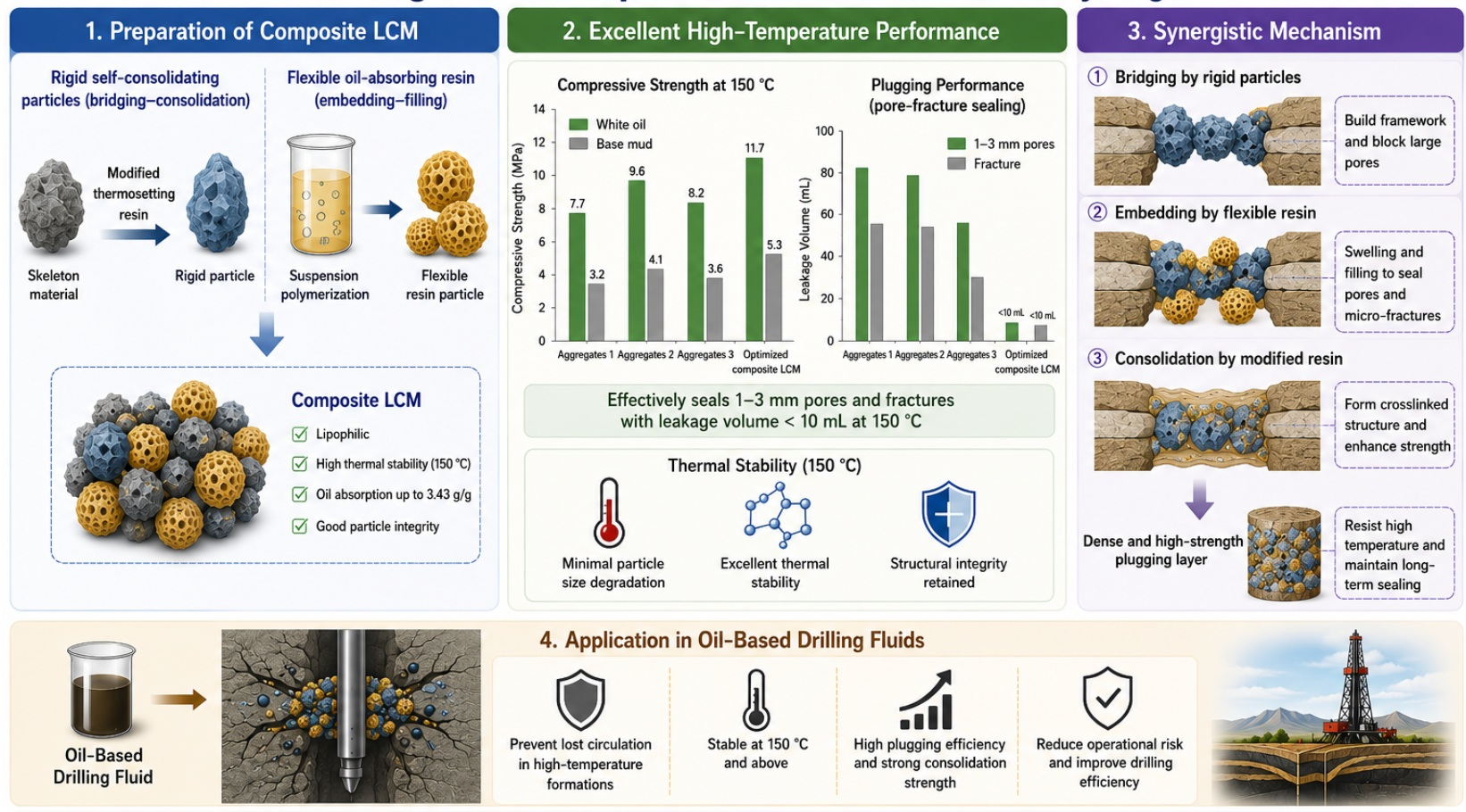
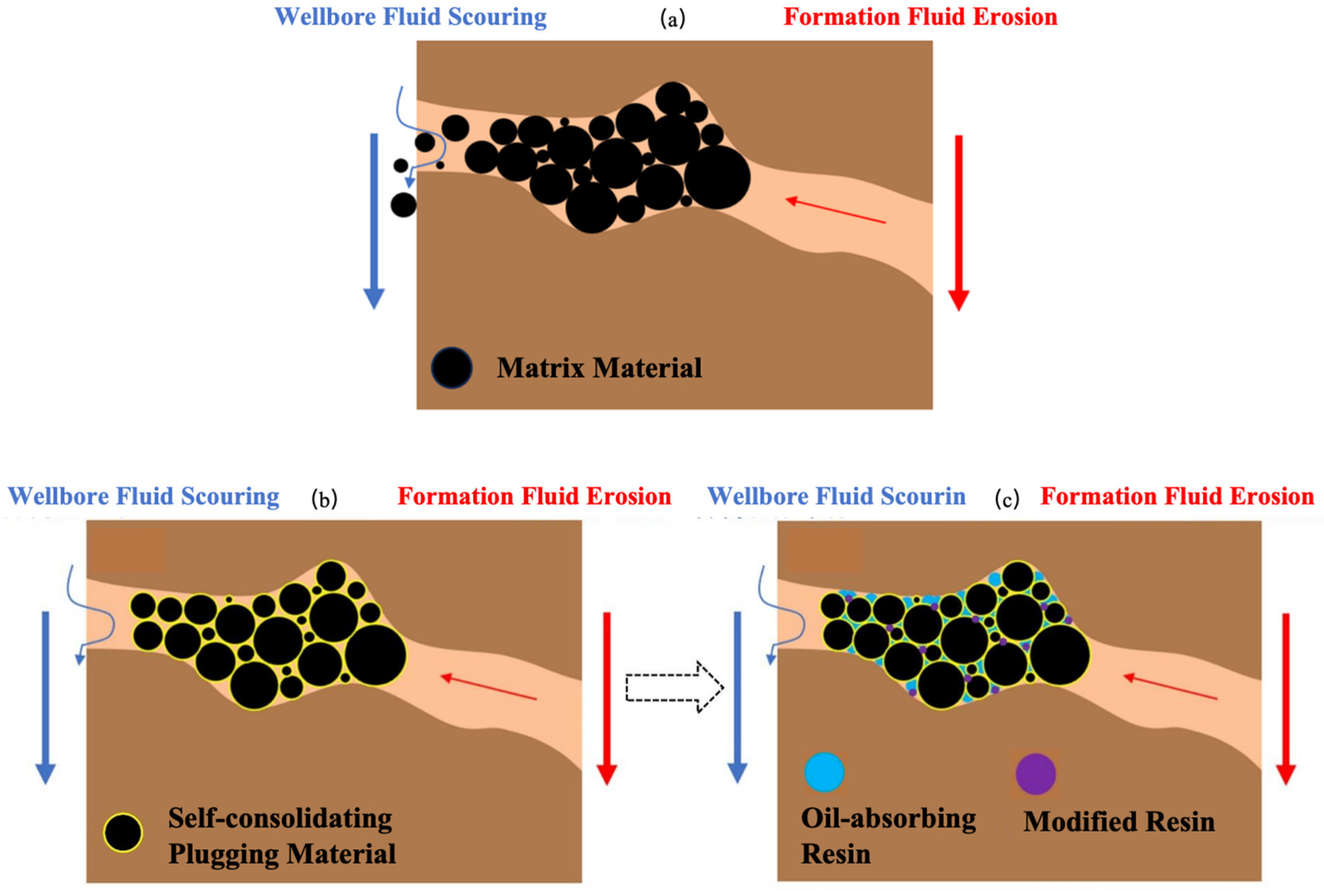
To achieve effective plugging performance under high-temperature conditions, composite lost circulation materials (LCMs) were formulated based on the concept of “rigid bridging–flexible filling–chemical consolidation” (
Figure 11).
The experimental results demonstrate that single-component systems exhibit limited plugging performance. Rigid self-consolidating materials can form an initial bridging framework; however, the absence of filling components results in large interparticle voids and poor sealing integrity. In contrast, oil-absorbing resin alone provides swelling and filling capability but lacks sufficient structural strength to withstand pressure.
Binary systems show improved performance due to partial synergistic effects. The combination of rigid materials and oil-absorbing resin enhances both bridging and filling; however, the stability of the plugging structure remains insufficient without effective consolidation under high-temperature conditions.
In contrast, ternary composite systems exhibit significantly enhanced performance. The rigid self-consolidating materials form the primary skeleton structure, the oil-absorbing resin expands to fill internal voids, and the modified resin enables thermal curing and interparticle bonding. As a result, a dense and integrated plugging layer is formed, in which particles are bonded together into a unified structure.
Therefore, the optimized formulation achieves a synergistic balance between structural support, deformability, and consolidation, which is essential for high-temperature lost circulation control.
3.3.2. Plugging Performance Under Simulated Conditions
The plugging performance of the composite LCMs was evaluated using a sand-bed apparatus with steel ball packing to simulate formation pore structures under high-temperature conditions.
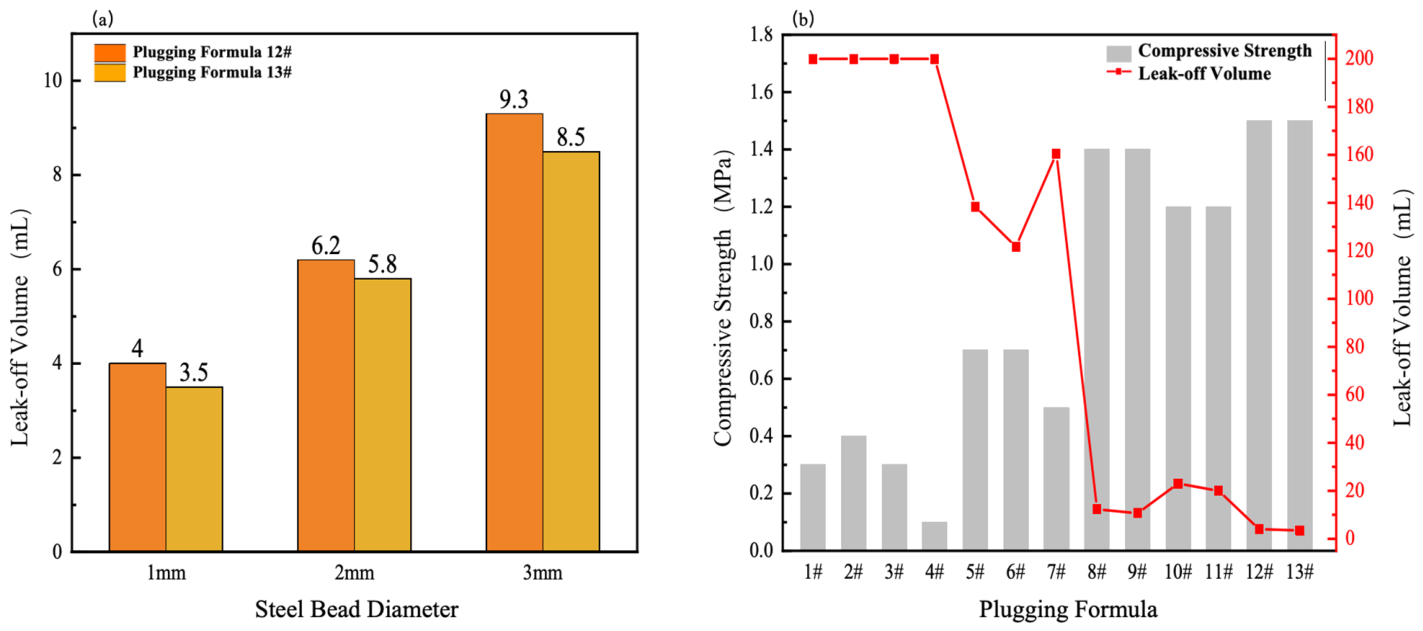
The results show that, at 150 °C, the optimized composite system can effectively seal simulated pore structures formed by 1–3 mm steel balls, corresponding to pore sizes of approximately 0.15–1.24 mm (
Figure 12a).
During the test, the plugging layer exhibits stable pressure-bearing capacity of up to 1.5 MPa, which is the maximum operating pressure of the experimental device. Meanwhile, the total fluid loss within 30 min remains below 10 mL, indicating excellent sealing efficiency (
Figure 12b).
Observation of the formed plugging layer shows that the materials can penetrate into the steel ball bed and consolidate with the packing medium, forming a dense and continuous structure. The oil-absorbing resin fills the voids between rigid particles, further enhancing sealing integrity.
These results demonstrate that the composite system can rapidly form an effective sealing structure with strong pressure-bearing capability under high-temperature conditions.
3.4. Modified Resin Curing Mechanism
In addition to the previously described formulations, two further composite plugging formulations were evaluated: Formulation 12 and Formulation 13.
Formulation 12: Consists of self-consolidating rigid particles (skeleton material 1), oil-absorbing resin, and modified resin in a mass ratio of 50:30:20. This composition targets enhanced bridging and consolidation in 1–2 mm pores under high-temperature conditions.
Formulation 13: Includes self-consolidating rigid particles (skeleton material 2), oil-absorbing resin, modified resin, and an additional organoclay additive at a mass ratio of 45:30:20:5. This formula is designed to improve suspension stability and pore-filling efficiency in 1–3 mm fractures at 150 °C.
Both formulations were mixed thoroughly to ensure uniform distribution and subjected to the same performance evaluation as other formulations, including suspension stability, compressive strength, oil absorption, and plugging efficiency.
Figure 12 presents the comparative performance of all formulations, including 12 and 13, demonstrating their effective pore sealing and consolidation behavior under simulated downhole conditions.
3.4.1. Consolidation Strength in Different Media
The consolidation performance of the composite system is closely related to the properties of the self-consolidating materials.
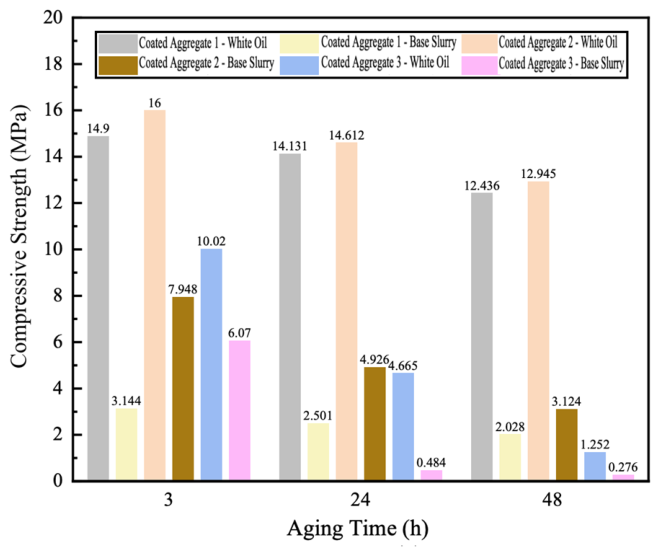
Experimental results show that the compressive strength of the consolidated structures exceeds 10 MPa in white oil and remains above 3 MPa in base slurry systems, indicating strong consolidation capability in both simple and complex fluid environments.
After aging at 150 °C for 48 h, the compressive strength of the consolidated bodies formed by coated aggregates remains above 2 MPa in drilling fluid systems, demonstrating good resistance to high-temperature degradation and long-term structural stability.
Although the presence of drilling fluid additives slightly reduces the consolidation strength, the overall mechanical integrity remains sufficient to maintain effective plugging under downhole conditions.
The compressive strength of cylindrical consolidated samples (diameter 18 mm, length 50 mm) was measured using a universal testing machine (ST-5000N) at a constant axial displacement rate of 10 mm/min. For each formulation, five replicate samples (
n = 5) were tested to ensure statistical reliability. The average compressive strength and standard deviation are reported in
Table 5.
where F
max is the maximum load at failure and A is the cross-sectional area.
Representative stress–strain curves (
Figure 5) show a sharp failure for Skeleton 1 and 2, indicating predominantly brittle behavior, while Skeleton 3 exhibits a slightly extended plateau before fracture, indicative of semi-brittle behavior. These observations provide insights into the mechanical reliability and fracture resistance of the consolidated materials under simulated downhole conditions.
The inclusion of statistical treatment (mean ± SD, n = 5) and stress–strain behavior ensures the reproducibility and reliability of the reported mechanical data, providing a quantitative basis for evaluating plugging stability.
3.4.2. Adaptability to Different Pore and Fracture Structures
The adaptability of the composite LCMs to different pore structures was evaluated based on particle size matching and bridging behavior.
The particle size distribution of the composite materials ranges from 0.22 to 0.6 mm, which is well matched with the simulated pore sizes (0.15–1.24 mm). The system satisfies the “two-thirds bridging rule”, ensuring effective bridging and packing within formation pores (
Figure 12a).
Rigid particles with different sizes form a multi-scale bridging framework, while the oil-absorbing resin expands to fill residual voids that cannot be bridged by larger particles. This combination significantly improves packing density and reduces permeability within the plugging layer.
Therefore, the composite system exhibits strong adaptability to heterogeneous pore structures and can effectively seal both relatively large pores and smaller pore channels.
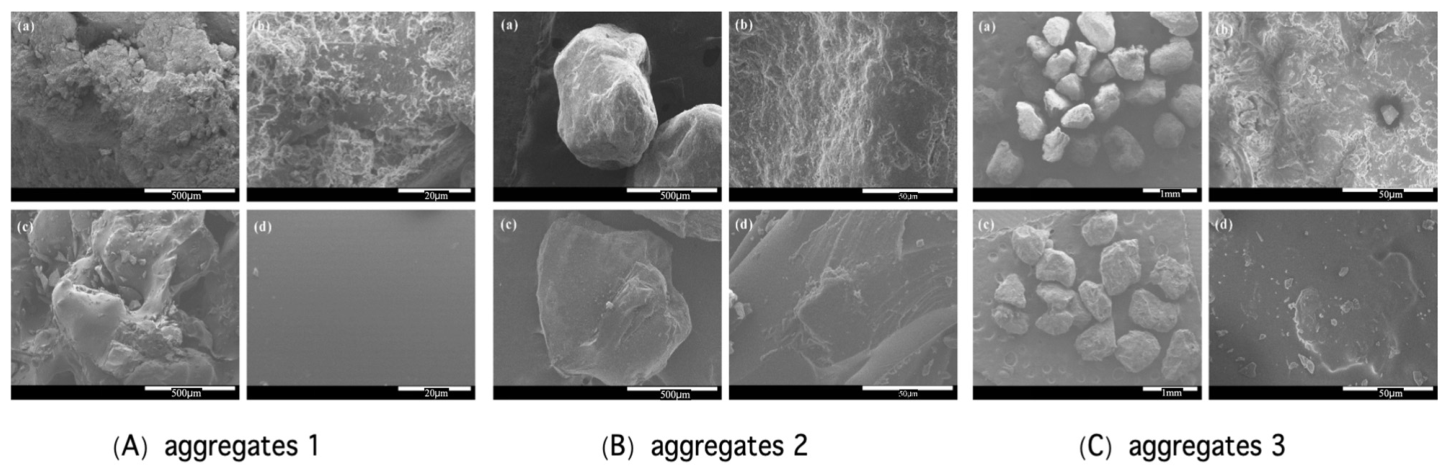
The microstructure of the composite lost circulation materials was further analyzed to elucidate the interactions between inorganic skeleton particles and polymeric resins. SEM observations reveal that the modified resin uniformly coats the surface of skeleton particles, forming a continuous thin layer (~1–3 µm), as evidenced by the high-magnification images of coated aggregates (
Figure 3).
Quantitative evaluation of the coating amount (T%) demonstrates that Skeleton 1 and 2 achieve a resin coverage of 18–22 wt%, while Skeleton 3 reaches 14 wt% (
Table 5). After thermal aging at 150 °C for 48 h, the inorganic aggregates maintain their coated layer integrity, whereas the organic aggregate exhibits partial resin detachment and surface microcracks, indicating weaker interface adhesion.
These observations suggest that the interface between resin and inorganic skeleton is predominantly physical adsorption enhanced by mechanical interlocking, while chemical bonding may occur via hydroxyl or silanol interactions at the particle surface. Although direct chemical characterization of the interface is challenging, the combination of SEM morphology, coating weight, and thermal aging resistance provides indirect evidence of strong interfacial adhesion for Skeleton 1–2. Pore-filling efficiency is high, with microvoids largely occupied by resin, and phase distribution appears homogeneous at the micron scale, ensuring effective bridging and consolidation within the composite (
Figure 3).
Overall, these results indicate that interface adhesion and uniform resin coverage are critical for mechanical stability, high-temperature resistance, and pore-sealing performance of the composite lost circulation materials.