
Review

Recent Advances in Ent-Abietane Diterpenes: Natural Sources, Biological Activities and Total Synthesis


1
School of Pharmaceutical Sciences and Yunnan Key Laboratory of Pharmacology for Natural Products, Kunming Medical University, Kunming 650500, China
2
Yunnan College of Modern Biomedical Industry, Kunming Medical University, Kunming 650500, China
*
Authors to whom correspondence should be addressed.
These authors contributed equally to this work.
Molecules 2026, 31(1), 98; https://doi.org/10.3390/molecules31010098
Submission received: 1 December 2025 / Revised: 19 December 2025 / Accepted: 22 December 2025 / Published: 25 December 2025
(This article belongs to the Special Issue Trends of Drug Synthesis in Medicinal Chemistry)

Abstract

Ent-abietane diterpenoids constitute a class of terpenes with a C20 carbon skeleton that underlie a wide range of biological activities. Ent-abietane diterpenoids, enantiomeric to the abietane counterparts, represent a family of diterpenoid natural products characterized by their distinct 6/6/6 tricyclic carbocyclic skeletons with exceptional structural complexity. An increasing number of these ent-abietane diterpenoids have recently been identified, constituting a well-defined group of naturally occurring compounds. This review provides a comprehensive summary of the natural sources, chemical structures, biological profiles and total synthesis of these ent-abietane diterpenoids from 2016 to early 2025.

Graphical Abstract

1. Introduction

Diterpenoids constitute a major class of terpenes, characterized by a C20 carbon skeleton derived from four isoprene units and remarkable structural diversity that underlies a wide range of biological activities [1,2]. To date, more than 18,000 diterpenoids have been documented and classified into different structural types, taxanes, labdanes, kaurenes and abietanes, to name but a few [3]. The discovery of Taxol (paclitaxel), a landmark anticancer drug derived from taxane family, has spurred tremendous research into diterpenoid chemistry and bioactivity [4,5,6,7].
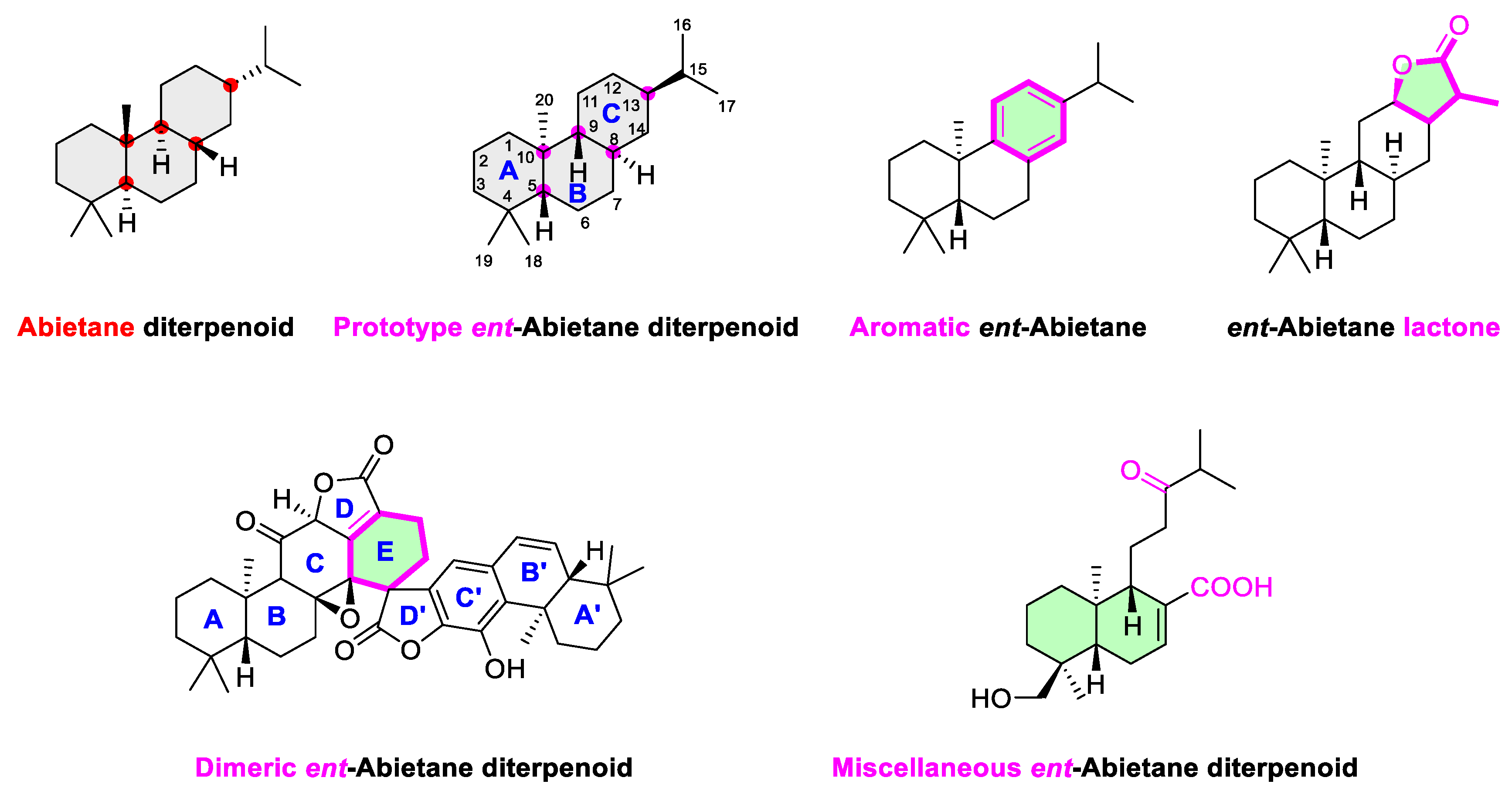
With the growing number of these diterpenoids identified in recent years, a family of diterpenoid natural products characterized by a unique 6/6/6 tricyclic carbocyclic skeletons and well-orchestrated stereospecificity has emerged and collectively referred to the ent-abietane diterpenoids [8,9,10]. The italicized prefix ent-, a contracted form of enantio-, denotes complete inversion of configuration at all chiral centers (i.e., mirror-image). In this review, compounds possessing additional chiral centers beyond C-5, C-8, C-9, C-10, and C-13 are still classified as ent-abietane diterpenoids, provided that their original carbon skeleton is enantiomeric to the standard abietane framework. Indeed, the last decade has witnessed huge progress on the discovery of ent-abietane diterpenoids, particularly ent-nor-abietanes, dimeric abietanes and rearranged abietanes. Nevertheless, an in-depth and systematic overview of ent-abietane diterpenoids, covering their natural sources, biological activities, and total syntheses reported between 2016 and early 2025, remains extremely limited compared with the extensively reviewed abietane diterpenoids [11,12,13,14,15,16,17,18].
Since the naturally occurring compound jolkinolide A was first uncovered in 1972, this group of ent-abietane diterpenoids has attracted sustained scientific interest [19]. Notably, a seminal review compiled by Zhang and co-workers summarized ent-abietane diterpenoid lactones reported prior to 2016, with particular emphasis on those ent-abietane diterpenoids originating from the genus Euphorbia [8]. Furthermore, a detailed review dedicated to the representative ent-abietane diterpenoid has also been disclosed owing to its potent pharmacological activities [20].
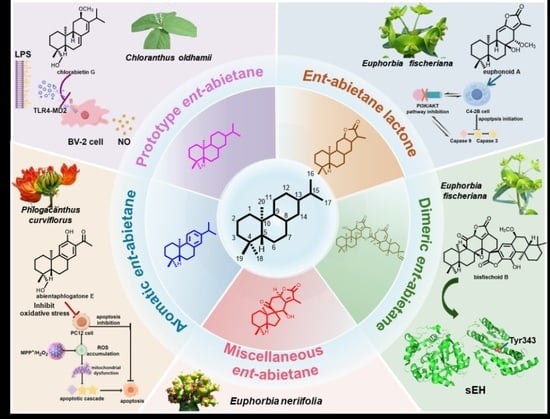
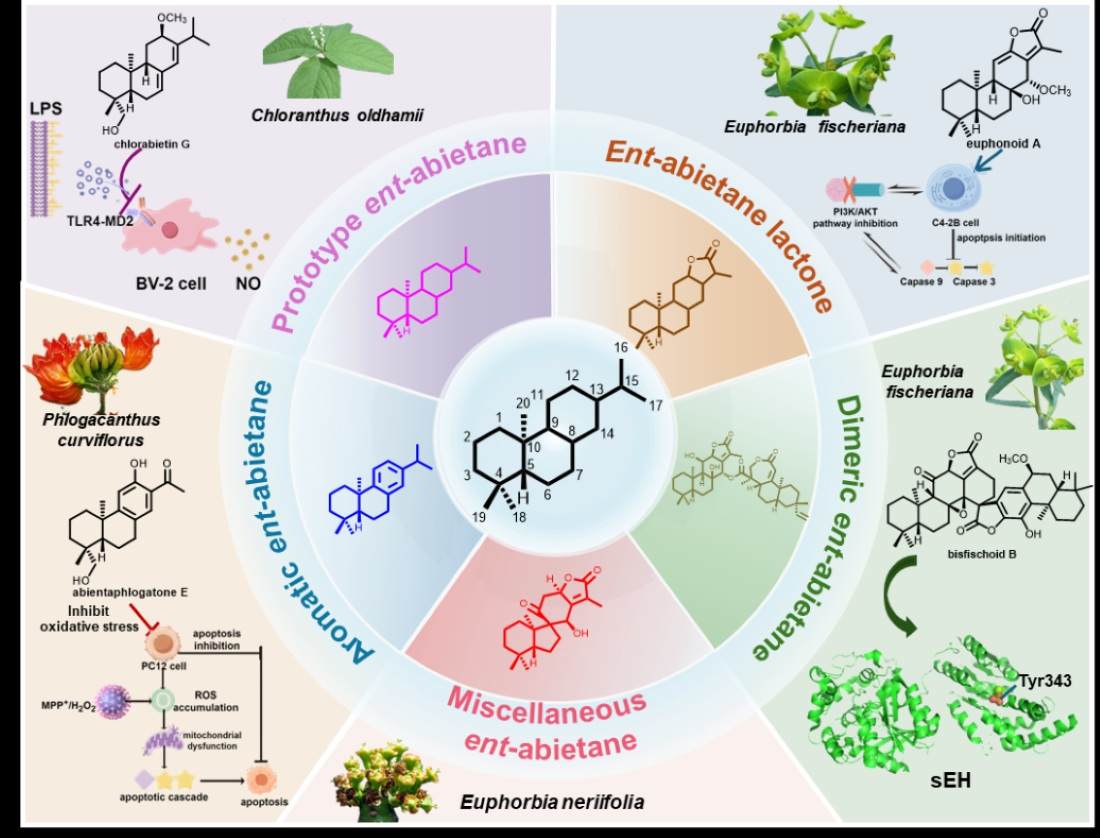
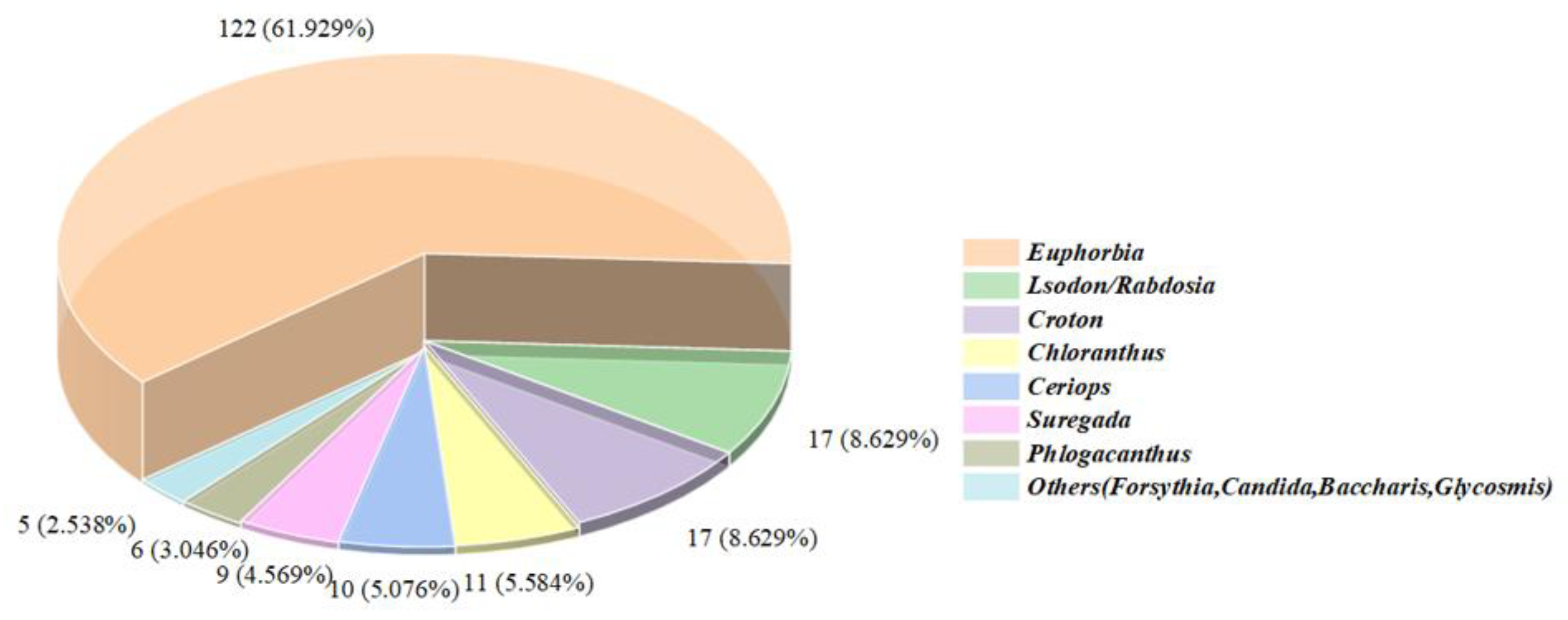
Accumulating investigations have revealed an upsurge in the discovery of structurally diverse ent-abietane diterpenoids characterized by unprecedented substitution patterns, oxidation levels, and skeletal rearrangements and distribution across many plant genera (Figure 1). To provide an updated and comprehensive overview, this review highlights key advances in 197 ent-abietane diterpenoids covering from 2016 to early 2025, encompassing their natural sources, chemical structures, biological profiles and total synthesis. The compounds in this review are categorized into five subclasses (Tables S1–S5), including those prototype, aromatic, lactonized, dimeric and miscellaneous ent-abietane diterpenoids (Figure 2).

2. Classification of Ent-Abietane Diterpenoids

2.1. Prototype Ent-Abietane Diterpenoids

Prototype ent-abietane diterpenoids are characterized by 6/6/6 tricyclic carbon scaffold and alkyl substitutions at C4, C10 and C13. Typically, compounds of this family commonly bear a dimethyl or oxidized methyl group at C4, an angular methyl group at C10 and an isopropyl or oxidized isopropyl group at C13.
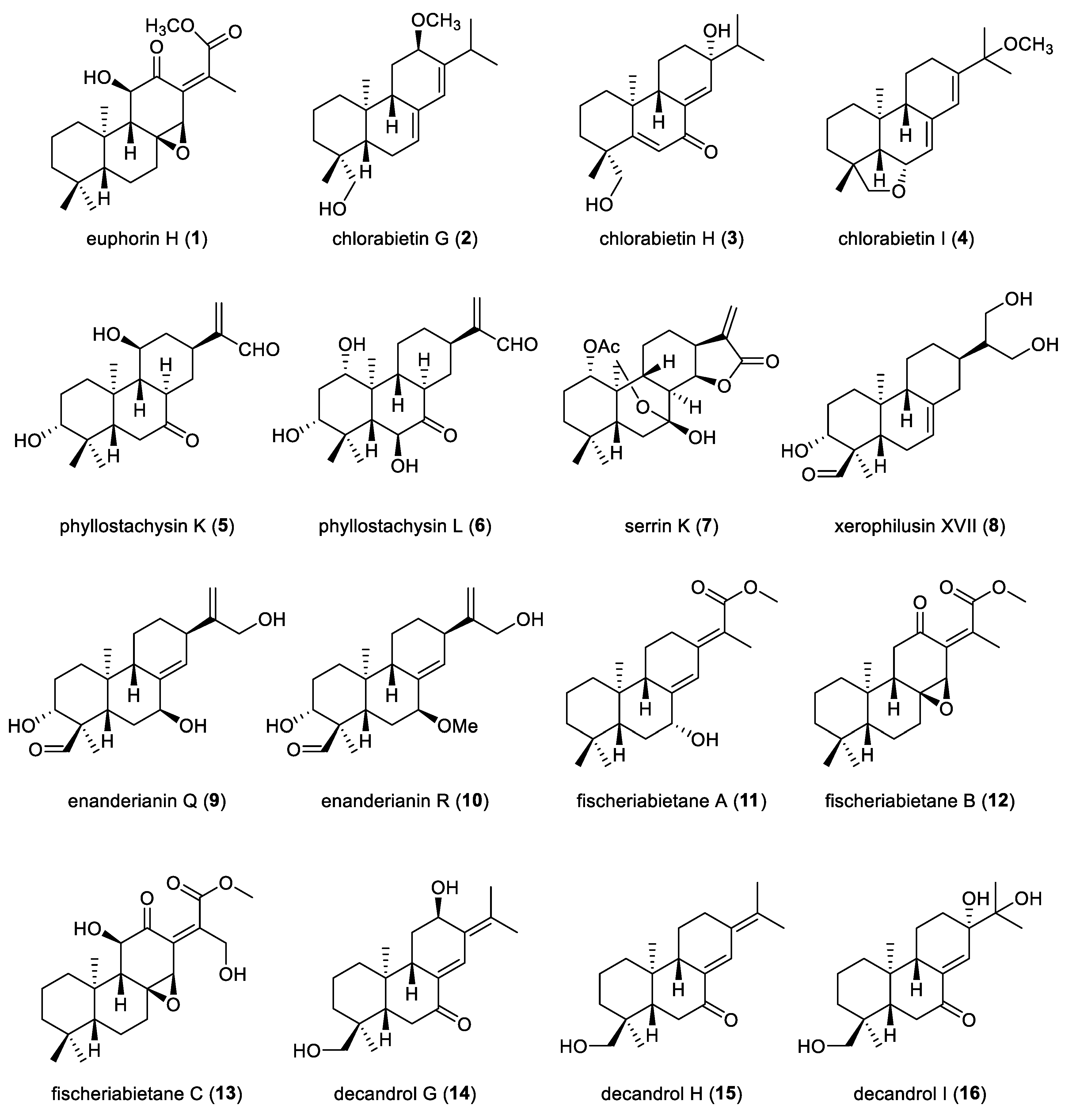
A prototype ent-abietane diterpenoid, euphorin H (1), was isolated from the roots of Euphorbia fischeriana, a prolific source of polycyclic terpenoids (Figure 3). Compound 1 inhibited the formation of mammospheres in human breast cancer MCF-7 cells at a concentration of 10 µM [21]. A phytochemical investigation of the roots of the rare and endangered plant Chloranthus oldhamii led to the isolation and identification of three ent-abietane diterpenoids G–I (24). Notably, compound 4 has been recognized as the first example of ent-abietane diterpenoid featuring a tetrahydrofuran ring that bridges C-6 and C-19. These three compounds 24 were evaluated in vitro for their anti-neuroinflammatory activity in LPS-activated murine BV-2 microglial cells. Among them, only compound 2 showed significant inhibition of NO production, with an IC50 value of 23.8 µM [22].
Two additional representative prototype ent-abietane diterpenoids, phyllostachysins K and L (5,6), were obtained from the aerial parts of Isodon phyllostachys. Detailed NMR analysis revealed that both compounds 5 and 6 share an identical core scaffold bearing an α,β-unsaturated aldehyde unit at C-13. Compounds 5 and 6 exhibited moderate cytotoxicity against a panel of human tumor cell lines, including HL-60, SMMC-7721, A-549, MCF-7, and SW-480, with IC50 values ranging from 4.1 to 29.8 μM. Furthermore, both compounds demonstrated potent inhibitory effects on nitric oxide production in LPS-stimulated RAW264.7 macrophages, with IC50 values of 1.34 μM and 2.09 μM, respectively [23]. Four diterpenoids, serrin K (7), xerophilusin XVII (8), and enanderianins Q and R (9 and 10), were extracted from the aerial parts of Isodon serra. These four compounds (710), featuring an ent-abietane skeleton, were identified from this species for the first time. Notably, compound 7 possesses a rare tetrahydropyran ring that links C-20 and C-7, an unusual structural motif within the ent-abietane family. Compound 7 exhibited significant inhibition of nitric oxide production in LPS-stimulated RAW264.7 macrophages, with an IC50 value of 1.8 μM [24].
Chemical investigation of the roots of Euphorbia fischeriana yielded three prototype ent-abietane diterpenoids, fischeriabietanes A–C (1113). Compounds 12 and 13 are proposed to be biosynthetic precursors of ent-abietane diterpenoids featuring an additional five-membered lactone ring. The theoretically calculated ECD spectrum computed for the 5R, 7R, 9S, 10R stereoisomer showed excellent agreement with the experimental ECD spectra of compound 11 over the 190–400 nm range, thereby pinpointing the absolute configuration of compound 11 as 5R,7R,9S,10R. Furthermore, compounds 12 and 13 displayed moderate antiproliferative effects against Bel-7402 and Panc-28 cancer cell lines. Specifically, compound 12 exhibited Panc-28 cells with an IC50 value of 47.2 µM. Compound 13 showed inhibitory activities with IC50 values of 12.9 µM and 20.7 µM against the Bel-7402 and Panc-28 cell lines, respectively. These results suggest that the presence of two carbonyl units at C-12 in compounds 12 and 13 may play a crucial role in exerting antitumor activity [25]. Three ent-abietanes, decandrols G–I (1416), were isolated from the roots of Ceriops decandra, an Indian mangrove. Their relative and absolute configurations were determined by HR-ESIMS, extensive 1D and 2D NMR experiments and ECD calculations [26].
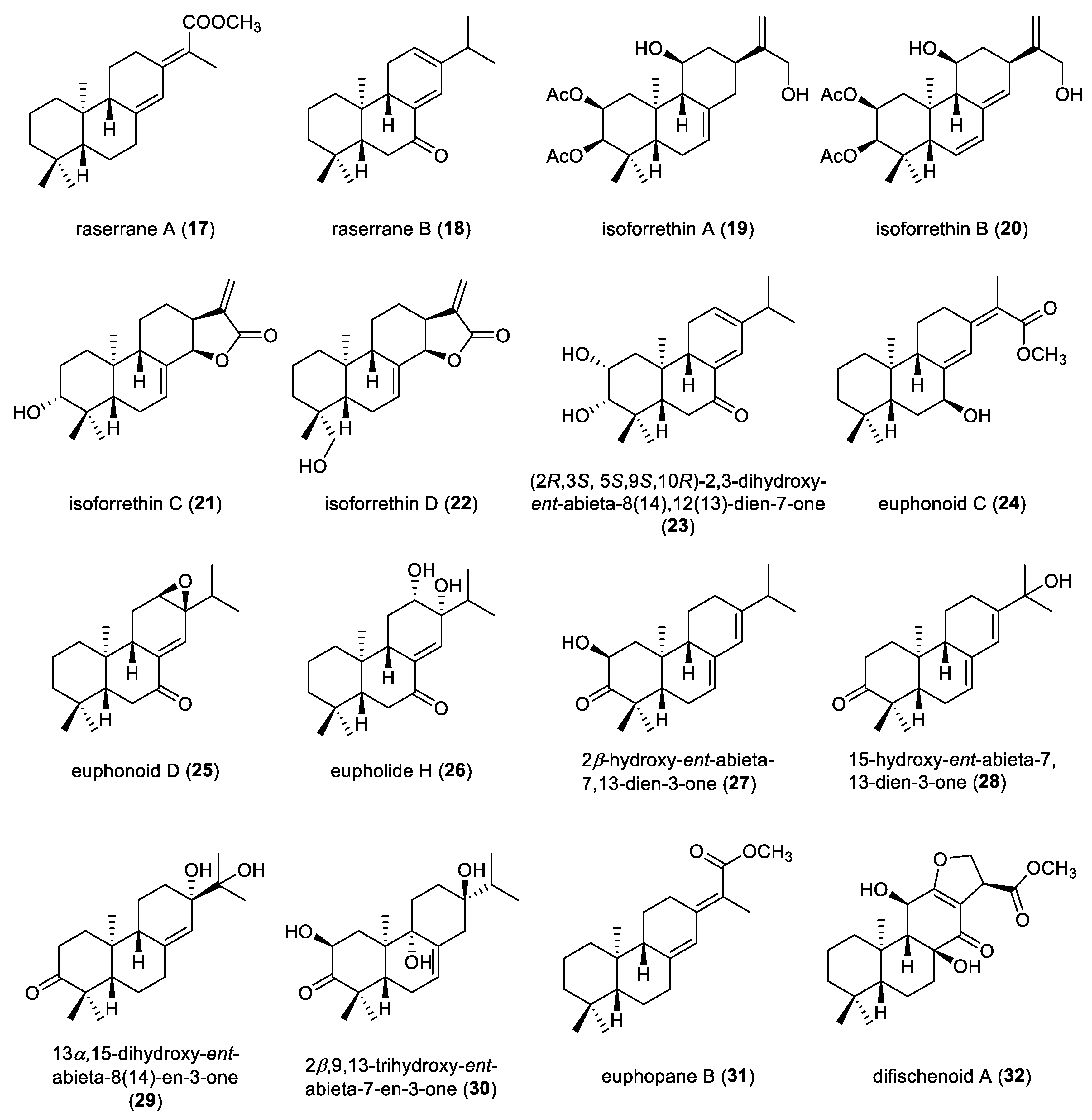
Raserranes A and B (17 and 18) were isolated from the leaves of Rabdosia serra (Figure 4). Compound 17 represents a rare example of ent-abietane diterpenoids featuring a 16-methoxycarbonyl substituent [27]. Isoforrethins A–D (1922) were isolated from the aerial parts of Isodon forrestii var. forrestii. Compound 19 was subjected to X-ray diffraction analysis, allowing for the assignment of its absolute configuration as 2S, 3R, 5S, 9S, 10R, 11S and 13R. Compounds 21 and 22 displayed cytotoxic activities against the SW-80, HL-60, MCF-7 and A-549 cancer cell lines, with IC50 values ranging from 10.1 to 20.2 µM [28]. An ent-abietane diterpenoid (23) was isolated from the aerial parts of Euphorbia thymifolia. Its structure and relative configuration were elucidated through extensive spectroscopic analysis. The absolute configuration of compound 23 was established by comparing its experimental ECD spectrum with that calculated using time-dependent density functional theory (TDDFT) at the B3LYP/6–311+G(d,p) level. The experimental ECD spectrum of compound 23 closely matched with the calculated ECD spectrum for the (2R,3S,5S,9S,10R) stereoisomer. Accordingly, compound 23 was assigned as (2R,3S,5S,9S,10R)-2,3-dihydroxy-ent-abieta-8(14),12(13)-dien-7-one [29].
Euphonoids C and D (24,25) were extracted from the roots of Euphorbia fischeriana. The absolute configurations of both compounds were confirmed via ECD calculations [30]. Eupholide H (26), a representative ent-abietane diterpenoid, was also obtained from the roots of E. fischeriana. The absolute configuration of compound 26 was elucidated by ECD calculations. Compound 26 showed moderately inhibitory activity against the proliferation of Mycobacterium tuberculosis H37Ra, with a MIC value of 50 μM [31]. Phytochemical investigation of the leaves of Croton mubango, collected in the Democratic Republic of the Congo, led to the isolation of four ent-abietane diterpenoids, 2β-hydroxy-ent-abieta-7,13-dien-3-one (27), 15-hydroxy-ent-abieta-7,13-dien-3-one (28), 13α,15-dihydroxy-ent-abieta-8(14)-en-3-one (29), and 2β,9,13-trihydroxy-ent-abieta-7-en-3-one (30) [32,33]. A plant-derived ent-abietane diterpenoid, euphopane B (31) was isolated from the roots of Euphorbia pekinensis. Its absolute configuration was rationalized by ECD calculations [34]. Compound 31 exhibited moderate cytotoxicity against human prostate cancer C4-2B cells with an IC50 value of 16.9 µM. A highly oxidized ent-abietane diterpenoid, difischenoid A (32), was obtained from the roots of wild Euphorbia fischeriana. The absolute configuration of compound 32 was unambiguously established by single-crystal X-ray diffraction analysis. Moreover, compound 32 showed cytotoxicity against Hela cells, with an IC50 value of 15.47 µM [35].
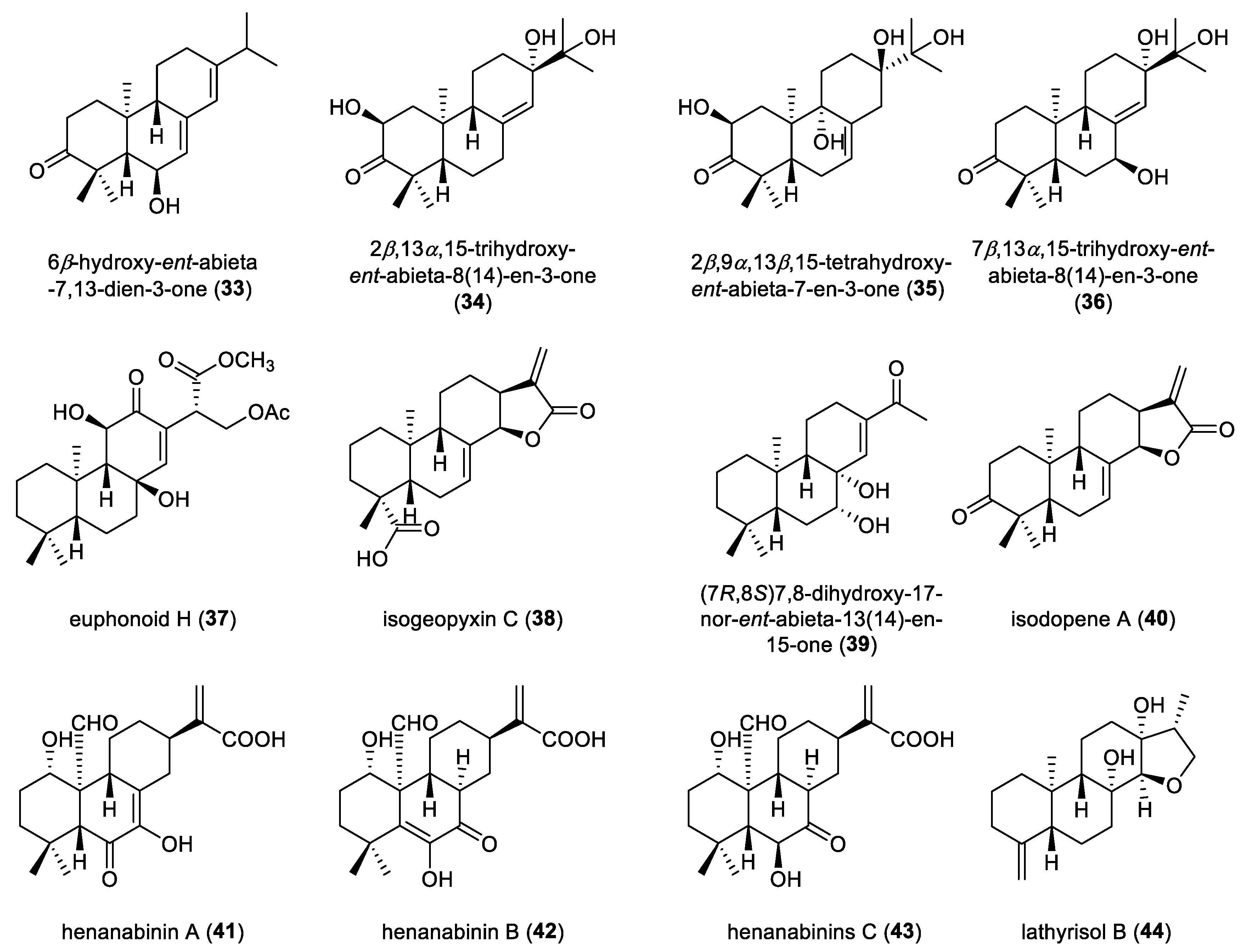
Three ent-abietane diterpenoids were isolated from the leaves of Croton cascarilloide and identified as 6β-hydroxy-ent-abieta-7,13-dien-3-one (33), 2β,13α,15-trihydroxy-ent-abieta-8(14)-en-3-one (34), and 2β,9α,13β,15-tetrahydroxy-ent-abieta-7-en-3-one (35) (Figure 5). These three compounds showed weak antimicrobial activities against the Gram-positive bacteria T25-17, C159-6 and sp.8152, with MIC values below 50 μg/mL [36]. An ent-abietane diterpenoid, namely 7β,13α,15-trihydroxy-ent-abieta-8(14)-en-3-one (36), was also extracted from the leaves of Croton lachnocarpus [37]. Phytochemical investigation of Euphorbia fischeriana resulted in the isolation of an ent-abietane diterpenoid, euphonoid H (37). Its absolute configuration was determined by ECD calculations. Compound 37 showed significant antiproliferative activity against the human prostate cancer cell lines C4-2B and C4-2B/ENZR, with IC50 values of 5.52 and 4.16 µM, respectively [38]. Isogeopyxin C (38) was identified from the fermentation broth of Geopyxis sp. XY93, an endophytic fungal strain inhibiting Isodon parvifolia. Its structural elucidation was unequivocally achieved by single-crystal X-ray diffraction analysis [39].
An ent-norabietane diterpenoid (39) was isolated from the rhizomes of Euphorbia jolkinii. Its chemical structure was identified through analysis of NMR data combined with ECD calculations, and it was assigned as (7R,8S)-7,8-dihydroxy-17-nor-ent-abieta13(14)-en-15-one [40]. Isodopene A (40), an ent-abietane diterpenoid isolated from the roots of Isodon ternifolius, showed strong inhibitory activity against DNA topoisomerase IB (TOP1) [41]. Three ent-abietane diterpenoids, henanabinins A–C (4143), were extracted from the aerial parts of Isodon rubescens. The absolute configuration of compound 41 was established by single-crystal X-ray diffraction analysis [42]. An ent-norabietane diterpenoid featuring an exocyclic olefin at C-4, lathyrisol B (44), was isolated from the roots of Euphorbia lathyrism. Its absolute configuration was established by single-crystal X-ray diffraction analysis. Compound 44 enhanced the expression of C/EBP homologous protein (CHOP) in MIA PaCa-2 human pancreatic cancer cells, an effect consistent with that of its congener lathyrisol A [43].

2.2. Aromatic Ent-Abietane Diterpenoids

Aromatic ent-abietane diterpenoids are defined as a class of C-ring aromatized ent-abietane diterpenoids and C-ring aromatized ent-norabietane diterpeniods, which are naturally occurring carbon-reduced derivatives of ent-abietane diterpenoids.
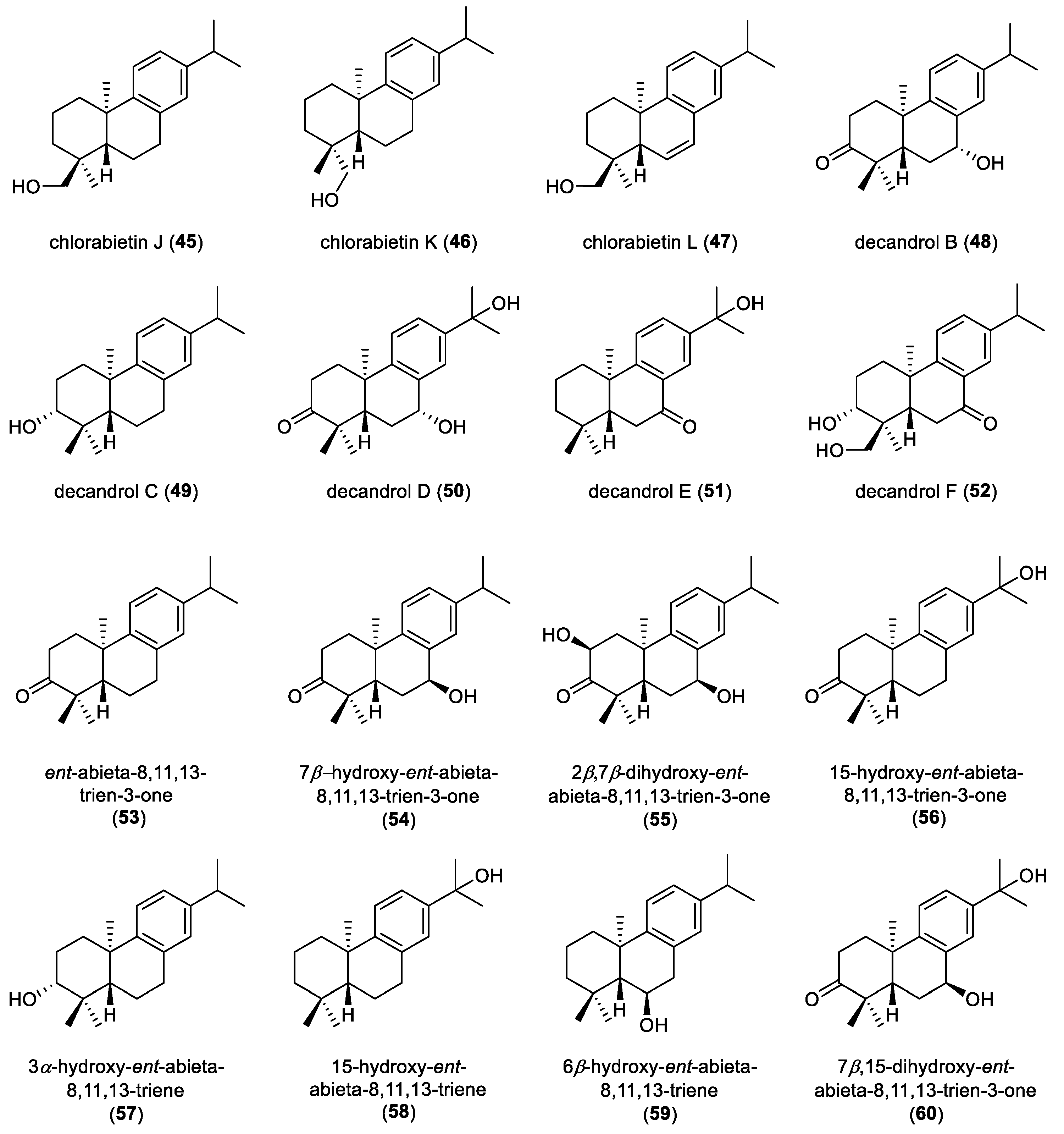
Chlorabietins J–L (4547), three aromatic ent-abietane diterpenoids isolated from the roots of Chloranthus oldhamii, were obtained as naturally occurring constituents (Figure 6). These metabolites have been proposed as a new class of chemotaxonomic marker for the genus Chloranthus [22]. Five aromatic ent-abietanes, decandrols B–F (4852), were isolated from the roots of Ceriops decandra, an Indian mangrove collected in the swamp of Godavari estuary, Andhra Pradesh. Their absolute configurations were unequivocally deduced by ECD calculations. Among them, compound 49 and 51 showed NF-κB inhibitory activity at a concentration of 100 μM [26].
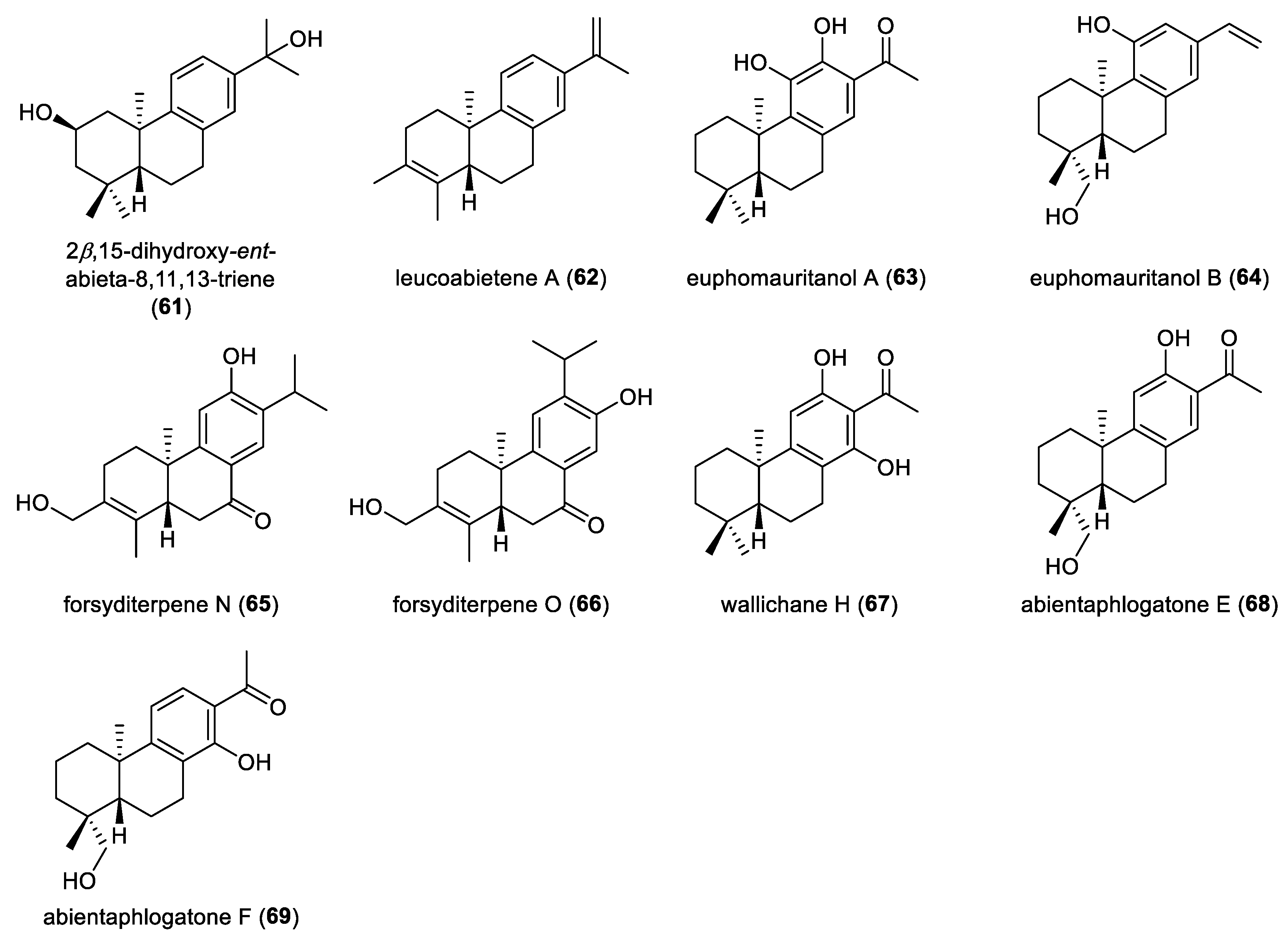
Seven aromatic ent-abietane diterpenoids were identified from the leaves of Croton mubango and characterized as ent-abieta-8,11,13-trien-3-one (53), 7β-hydroxy-ent-abieta-8,11,13-trien-3-one (54), 2β,7β-dihydroxy-ent-abieta-8,11,13-trien-3-one (55), 15-hydroxy-ent-abieta-8,11,13-trien-3-one (56), 3α-hydroxy-ent-abieta-8,11,13-triene (57), 15-hydroxy-ent-abieta-8,11,13-triene (58), and 6β-hydroxy-ent-abieta-8,11,13-triene (59) [32]. Phytochemical investigation of the leaves of Croton lachnocarpus resulted in the identification of two aromatic ent-abietane diterpenoids, 7β,15-dihydroxy-ent-abieta-8,11,13-trien-3-one (60) and 2β,15-dihydroxy-ent-abieta-8,11,13-triene (61) [37]. Leucoabietene A (62), a rearranged ent-abietane diterpenoid characterized by an aromatic C ring, was isolated from the non-polar fraction of the leaves of Leucosceptrum canum, a large woody plant to produce sesterterpenoids as its major chemical constituents (Figure 7). Compound 62 effectively reversed fluconazole resistance in fluconazole-resistant Candida albicans. When the concentration of compound 62 exceeded 32 µg/mL, the antifungal efficacy of fluconazole was restored, yielding inhibition rates greater than 88%. These findings indicate that compound 62 may function as a potent chemosensitizer capable of overcoming fluconazole resistance [44].
Chemical investigation of the monoecious succulent shrub Euphorbia mauritanica led to isolation and identification of two aromatic ent-norabietane diterpenoids, euphomauritanols A and B (63 and 64). The absolute configurations of these two compounds (63 and 64) were deduced as 5R, 10S by employing TDDFT-ECD calculations. Both compounds exhibited antiproliferative activities against murine melanoma B16-BL6 cell lines, with IC50 values of 10.28 μM and 20.22 μM, respectively. Furthermore, molecular docking within the active sites of BRAFV600E and MEK1 kinases provided a structural rational for their inhibitory effects. In addition, the in silico pharmacokinetic profiling using SwissADME indicated that both compounds possessed favorable drug-like properties and oral bioavailability [45]. From the seeds of Forsythia suspensa, two rearranged ent-abietane diterpenoids, forsyditerpenes N and O (65 and 66), were obtained. Wallichane H (67) was isolated from the whole plant of Euphorbia wallichii [46].
The isolation and characterization of two aromatic ent-norabietane diterpenoids, abientaphlogatones E and F (68 and 69), from the aerial parts of Phlogacanthus curviflorus, was uncovered. The absolute configurations of these two compounds were rationalized by ECD calculations [47]. Notably, the discovery of compounds 68 and 69 represents the first report of ent-norabietane diterpenoids in the genus Phlogacanthus. Compound 69 showed neuroprotective activity in PC12 cell injury models induced by H2O2 and MPP+, underscoring the importance of the hydroxyl substituents on the aromatic C-ring for bioactivity.

2.3. Ent-Abietane Diterpenoid Lactones

Ent-abietane diterpenoid lactones are collectively referred to those abietane diterpenoids, where the ring D harbors γ-butenolide, γ-butyrolactone or their derivatives.
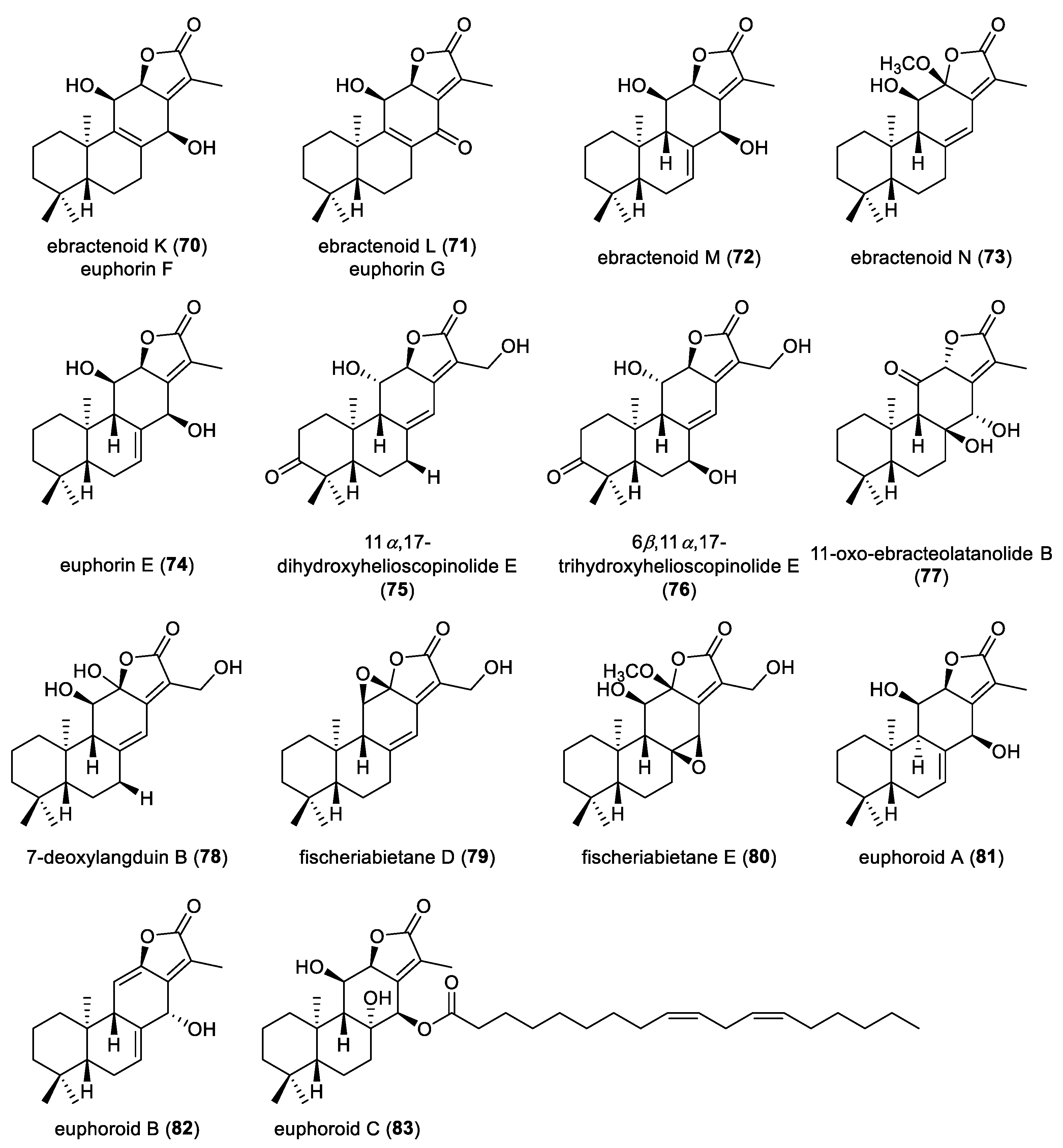
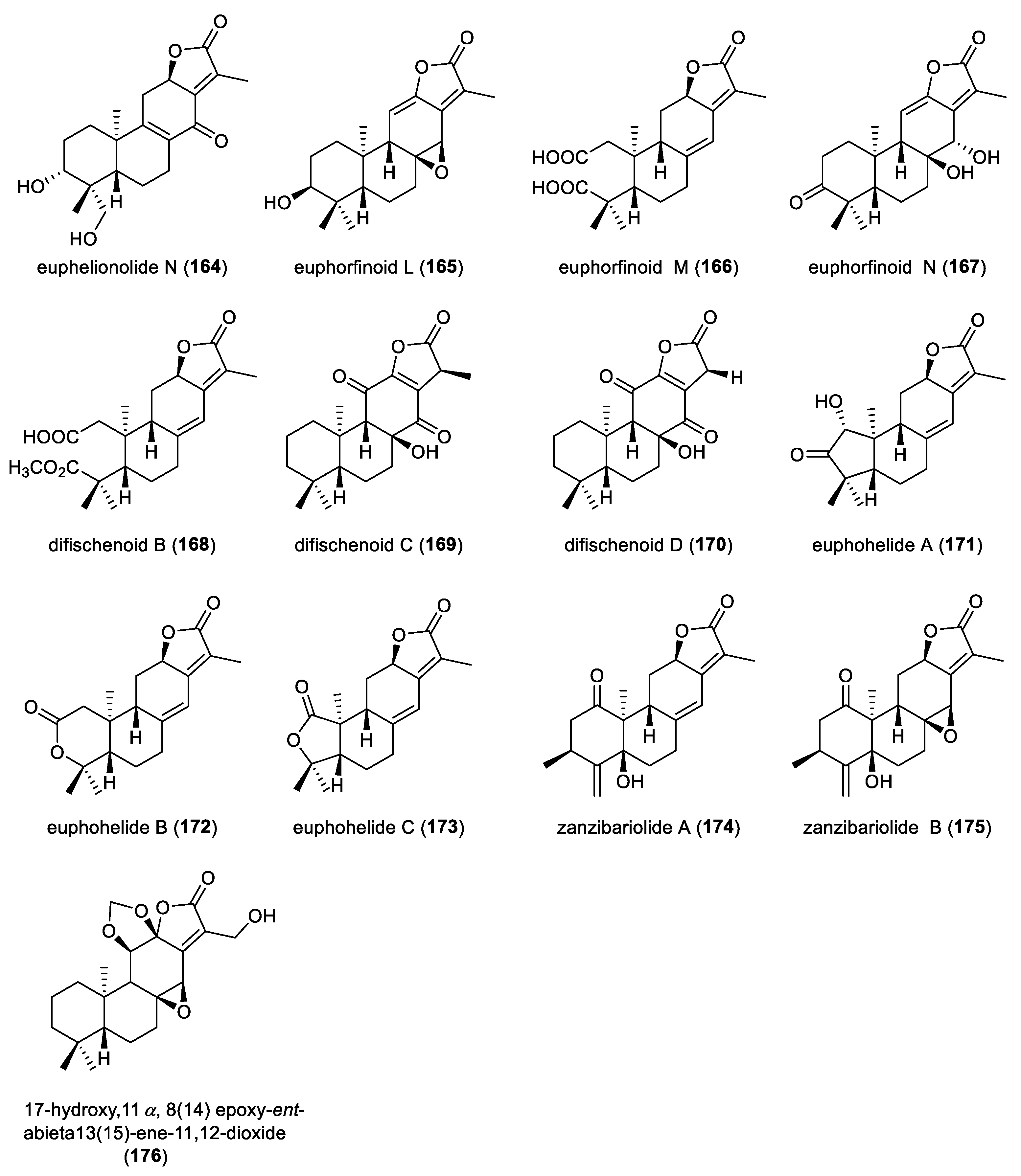
Phytochemical exploration of Euphorbia ebracteolata has expanded the structural diversity of ent-abietane diterpenoids, leading to the isolation of four metabolites, ebractenoids K–N (7073) (Figure 8). Notably, ebractenoids K and L were also reported as euphrins F and G, respectively. Compounds 71 and 73 showed potent anti-inflammatory effects by markedly suppressing LPS-induced nitric oxide production in RAW264.7 macrophages with IC50 values of 0.69 µM and 1.97 µM, respectively [48]. From the roots of Euphorbia fischeriana, an ent-abietane diterpenoid, euphorin E (74), was isolated and exhibited the formation of mammospheres in human breast cancer MCF-7 cells at a concentration of 10 µM [21]. Additional investigation of the same plant afforded four ent-abietane diterpenoid lactones, 11α,17-dihydroxyhelioscopinolide E (75), 6β,11α,17-trihydroxyhelioscopinolide E (76), 11-oxo-ebracteolatanolide B (77), and 7-deoxylangduin B (78). Their absolute configurations were identified by TDDFT-based ECD calculations [49]. Further investigation on the roots of Euphorbia fischeriana yielded two ent-abietane diterpenoid lactones, fischeriabietanes D and E (79 and 80). The absolute configurations of compound 79 were determined by ECD calculations [25].
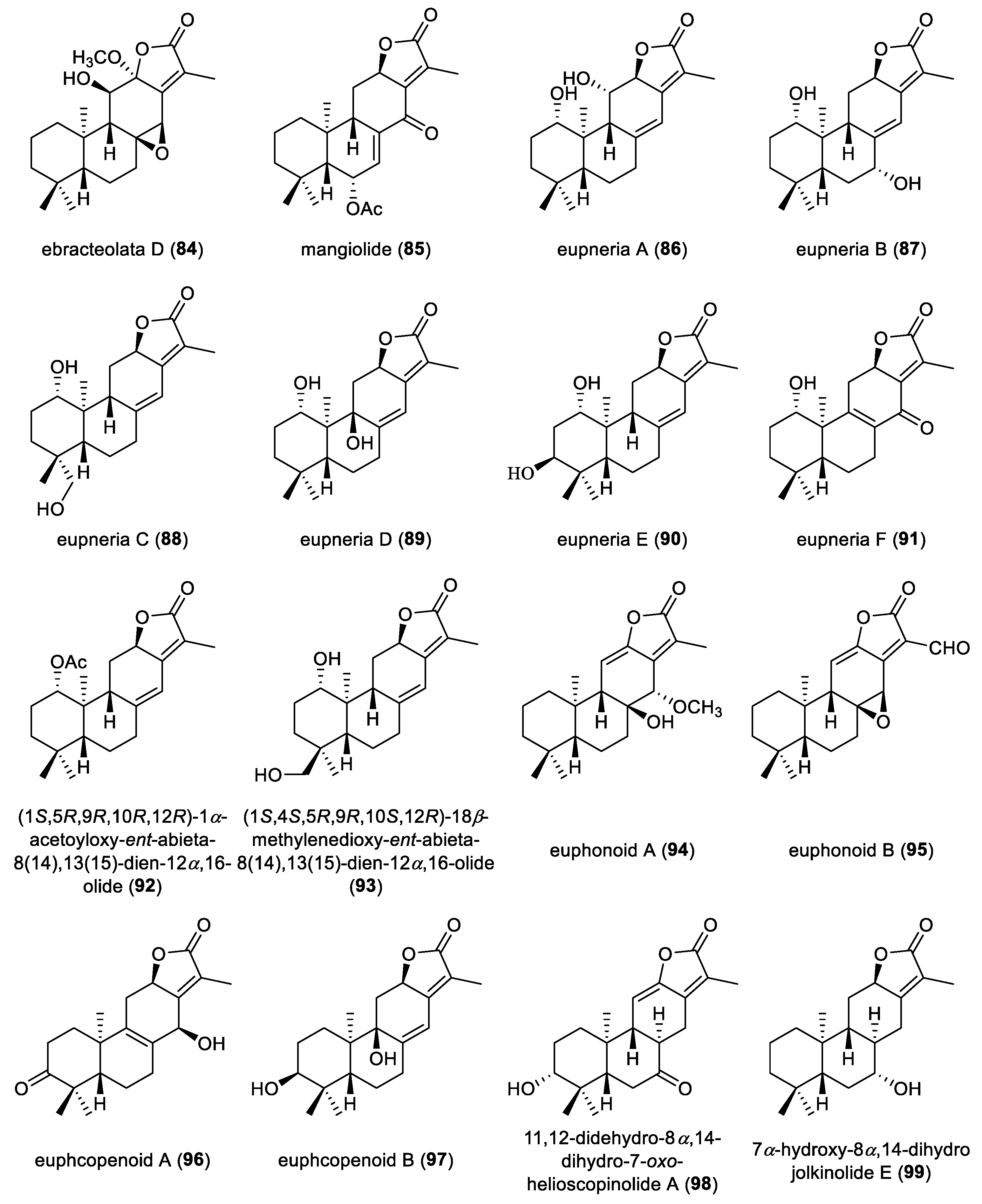
Euphoroids A–C (8183), bearing a distinctive lactone moiety, were extracted from the roots of Euphorbia ebracteolate. Chemical degradation of compound 83, followed by HPLC analysis, revealed the presence of a linoleic acid residue in its structure. These three compounds were subjected to cytotoxic evaluation against several human cancer cells. The compound 83 showed antiproliferation of four tested human cancer cells A549, MCF-7, Lovo and SH-SY5Y, with IC50 values below 30 µM [50]. Ebracteolata D (84) was obtained as an ent-abietane diterpenoid from the roots of Euphorbia ebracteolate (Figure 9) [51]. An ent-abietane diterpenoid lactone, mangiolide (85), was isolated from the stem bark of Suregada zanzibariensis via anticancer bioassay-guided fractionation. Compound 85 showed pronounced cytotoxicity against TK10 renal, UACC62 melanoma and MCF7 breast cancer cell lines, with total growth inhibition (TGI) values of 0.20, 0.16 and 0.89 μM and growth inhibition (GI50) values of 54, 80 and 134 nM, respectively [52]. Chemical investigation of Euphorbia neriifolia yielded six ent-abietane diterpenoid lactones, eupnerias A–F (8691). In the follow-up anti-inflammatory and anti-influenza virus bioassay evaluation, none of them exhibited significant activity under the tested conditions [53].
Two ent-abietane-type diterpenoids, specifically (1S,5R,9R,10R,12R)-1α-acetoyloxy-ent-abieta-8(14),13(15)-dien-12a,16-olide (92) and (1S,4S,5R,9R,10S,12R)-18β-methylenedioxy-ent-abieta-8(14),13(15)-dien-12α,16-olide (93), were isolated from the methanolic extract of Euphorbia royleana. Their absolute configurations of these two compounds were determined by ECD calculations. Compound 92 displayed strong inhibitory activity on nitric oxide production in LPS-stimulated BV-2 cells (IC50 = 12.0 μM) and molecular docking studies suggested that its anti-inflammatory activity may arise from interactions within the catalytic pocket of inducible nitric oxide synthase (iNOS) [54]. Euphonoids A and B (94,95) were isolated from the roots of Euphorbia fischeriana. X-ray crystallography analysis of compound 94 pinpointed its absolute configurations. Compound 94 exhibited significant antiproliferative activity against the human prostate cancer cell lines C4-2B and C4-2B/ENZR with IC50 values of 9.18 and 9.7 µM, respectively. Compounds 95 also displayed comparably antiproliferative activity in a parallel assay (IC50 = 13.4 and 11.1 µM) [30].
Two ent-abietane diterpenoid lactones, euphcopenoids A and B (96 and 97), were isolated from the whole plant of Euphorbia helioscopia. Their absolute configurations were deduced via ECD calculations [55]. Two ent-abietane diterpenoid lactones, 11,12-didehydro-8α,14-dihydro-7-oxo-helioscopinolide A (98) and 7α-hydroxy-8α,14-dihydro jolkinolide E (99), were isolated from the whole plant of Euphorbia peplus. Both compounds 98 and 99 were inactive at a concentration of 40 μM in the cytotoxicity assays against a panel of five human tumor cell lines [56].
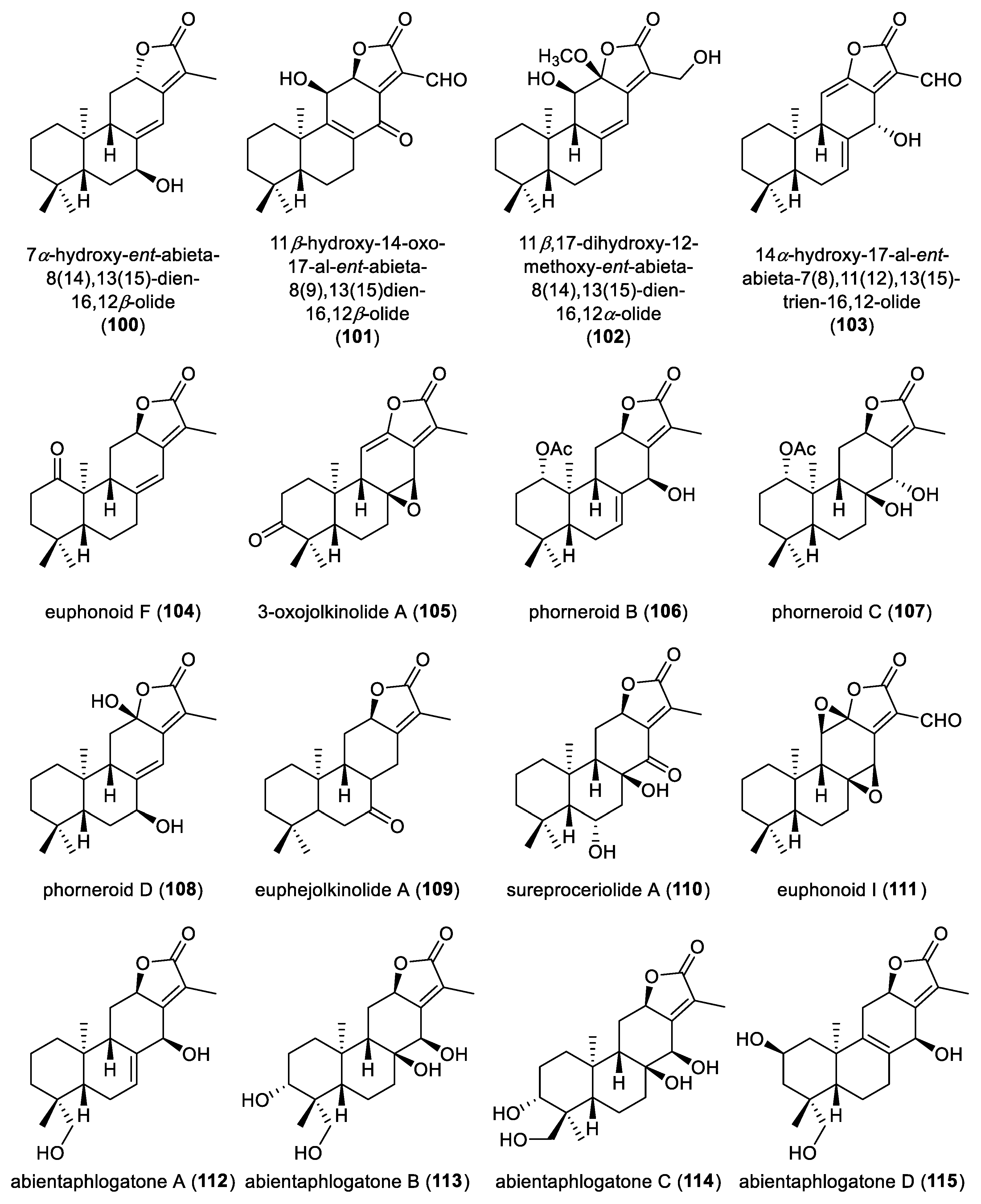
From the aerial parts of Baccharis sphenophylla, the hexane extract furnished 7α-hydroxy-ent-abieta-8(14),13(15)-dien-16,12β-olide (100) (Figure 10). Compound 100 exhibited moderate antiproliferative activity against NTCT cells, with an EC50 value of 21.3 μM. While this compound showed low toxicity towards NCTC cells, with a CC50 value exceeding 200 μM, resulting in a selectivity index (SI) value exceeding 9.4 [57]. Chemical investigation of the 95% ethanol extract the roots of Euphorbia wallichii yielded three ent-abietane diterpenoid lactones, 11β-hydroxy-14-oxo-17-al-ent-abieta-8(9),13(15)dien-16,12β-olide (101), 11β,17-dihydroxy-12-methoxy-ent-abieta-8(14),13(15)-dien-16,12α-olide (102), and 14α-hydroxy-17-al-ent-abieta-7(8),11(12),13(15)-trien-16,12-olide (103). These three isolates 101103 were evaluated for their antimicrobial activities in vitro against six pathogenic microorganisms and exhibited weak inhibition of the tested Gram-positive strains T25-17, C159-6 and sp.8152, with MIC values below 60 μg/mL [58]. An ent-abietane diterpenoid lactone, euphonoid F (104), was isolated from the aerial parts of Euphorbia antiquorum [59].
From Glycosmis pentaphylla, 3-oxojolkinolide A (105) was obtained as the first ent-abietane diterpenoid lactone reported from genus Glycosmis [60]. Three ent-abietane diterpenoid lactones, phorneroids B–D (106108), were obtained from the aerial parts of Euphorbia neriifolia. The absolute configuration of compound 108 was established through a combination of ECD calculations and single-crystal X-ray crystallographic analysis. Compounds 106 and 107 displayed moderate cytotoxicities against A549 and HL-60 tumor cell lines, with IC50 values ranging from 2.5 to 9.0 μM, with adriamycin as the positive control, while compound 108 lacked detectable activity [61].
Euphejolkinolide A (109), an ent-abietane lactone, was isolated from the whole plant of Euphorbia peplus with its absolute configuration unambiguously confirmed by single-crystal X-ray diffraction analysis. Biological evaluation revealed that compound 109 induced lysosome biogenesis and autophagy via activating the translocate of transcription factor EB (TFEB). The structure-activity relationship (SAR) analysis indicates that the carbonyl group at C-7 in compound 109 is crucial for maintaining this activity [62]. Phytochemical investigation of the leaves and roots of Suregada procera led to the identification of an ent-abietane diterpenoid lactone, sureproceriolide A (110). DFT-based ECD calculations pinpointed its absolute configuration. Compound 110 showed modest antibacterial activity against the Gram-positive bacterium Staphylococcus lugdunensis strain, with a MIC value of 31.44 μM [63]. Chemical investigation of the roots of Euphorbia fischeriana led to the identification of an ent-abietane diterpenoid lactone, euphonoid I (111). Its absolute configuration was assigned via ECD calculations. Compound 111 showed remarkable antiproliferative activity against the human prostate cancer cell lines C4-2B and C4-2B/ENZR, with IC50 values of 4.49 and 5.74 μM [38].
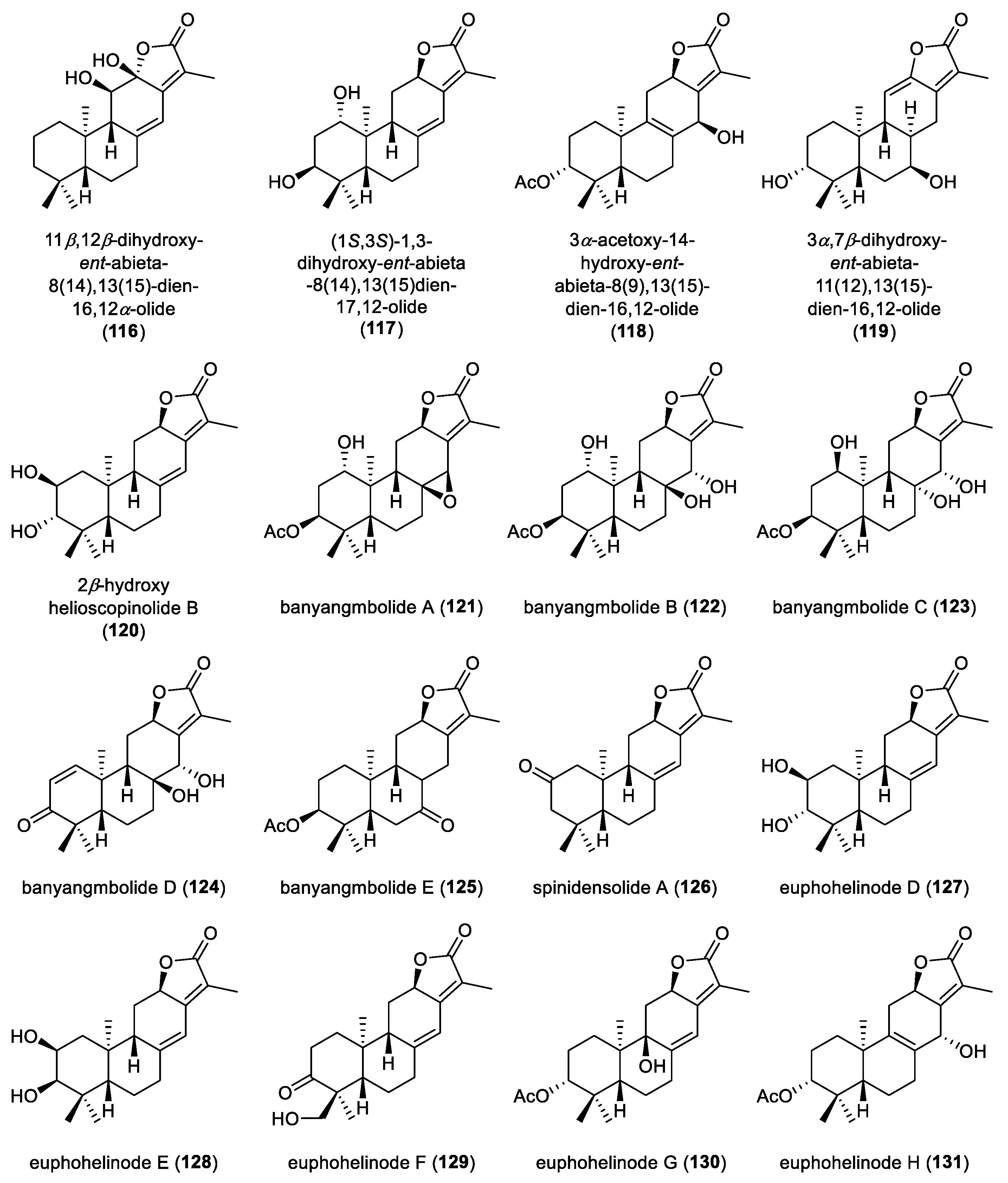
Abientaphlogatones A−D (112115), possessing an ent-abietane scaffold, were isolated from the aerial parts of Phlogacanthus curviflorus. Their absolute configurations were established by ECD calculations. In the β-hematin formation inhibition assay, compounds 113 and 115 exhibited antimalarial activities, with IC50 values of 22.85 and 14.21 μM, respectively. Moreover, compound 115 could significantly alleviate H2O2-induced injury in PC12 cells at concentrations of 20 and 50 μmol·L−1 [47]. Phytochemical investigation of the roots of Euphorbia phosphorea utilizing chromatographic separation led to the isolation of an ent-abietane diterpenoid lactone, identified as 11β,12β-dihydroxy-ent-abieta-8(14),13(15)-dien-16,12α-olide (116) (Figure 11). An ent-abietane diterpenoid lactone, (1S,3S)-1,3-dihydroxy-ent-abieta-8(14),13(15)dien-17,12-olide (117), was isolated from the dried roots of Euphorbia jolkinii. The extract of Euphorbia fischeriana yielded three ent-abietane diterpenoid lactones, namely 3α-acetoxy-14-hydroxy-ent-abieta-8(9),13(15)-dien-16,12-olide (118), 3α,7β-dihydroxy-ent-abieta-11(12),13(15)-dien-16,12-olide (119), and 2β-hydroxy helioscopinolide B (120). Among them, compound 118 exhibited moderate cytotoxic activity against the HL-60, SMMC-7721 cell lines with IC50 values of 15.3 and 29.0 μM, respectively [64]. Phytochemical analysis of an herbarium specimen of Suregada occidentalis led to the identification of five ent-abietane diterpenoids featuring α-methyl-α,β-unsaturated-γ-lactone moiety, designated as banyangmbolides A–E (121125) [65].
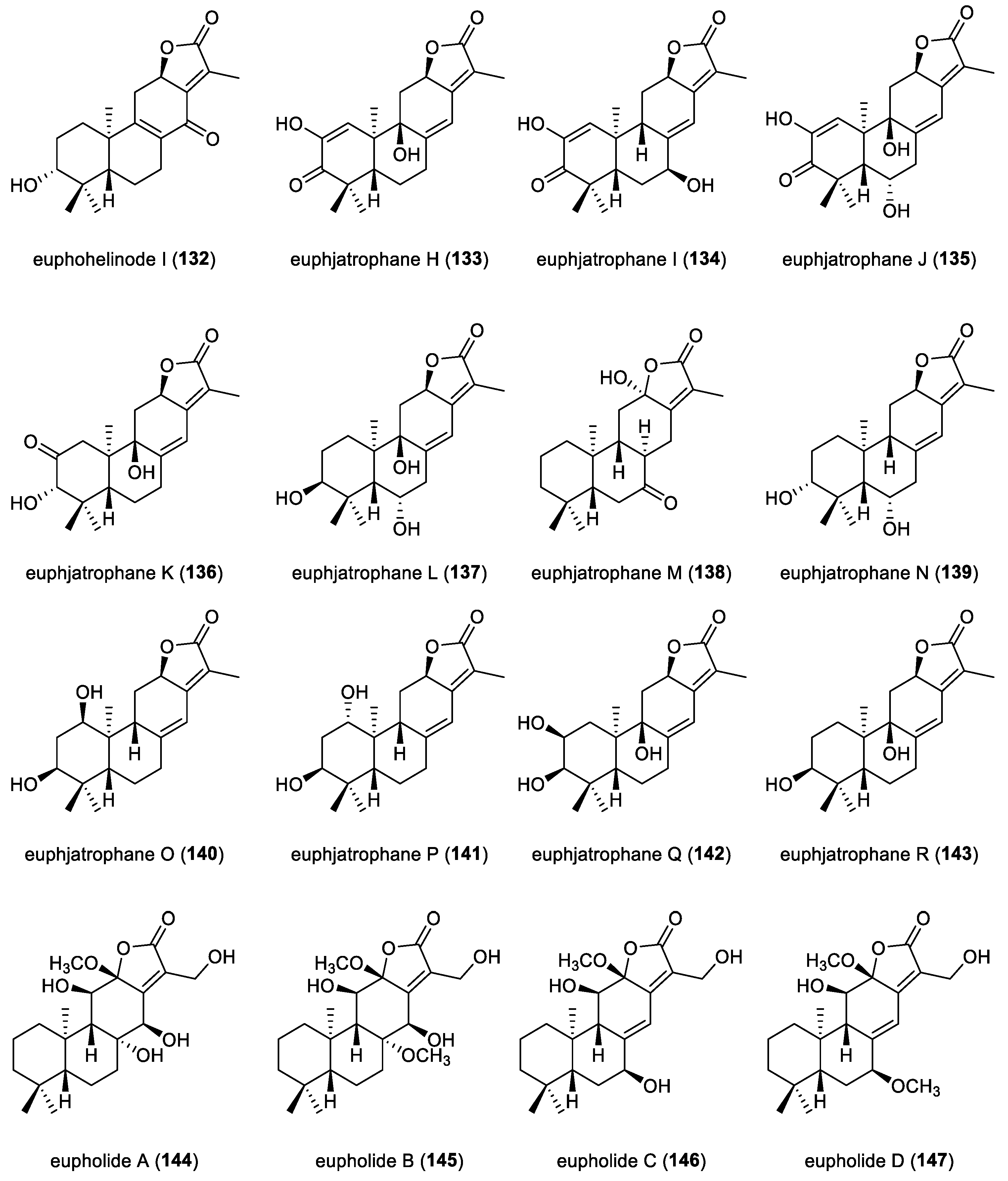
Spinidensolide A (126), an ent-abietane lactone isolated from the roots of Euphorbia spinidens, exhibited negligible antimicrobial activity [66]. Six ent-abietane lactones, euphohelinodes D–I (127132), were obtained from Euphorbia helioscopia via bioassay-guided fractionation (Figure 12). Their absolute configurations were determined by ECD calculations and the structures of compounds 130 and 131 were further confirmed by single-crystal X-ray diffraction analysis. Notably, compound 130 represents a rare ent-abietane diterpenoid characterized by a β-oriented hydroxyl group at C9. Compound 131 inhibited NO production in LPS-induced RAW264.7 macrophages, with an IC50 value of 30.23 μM. Mechanistic studies suggested that its anti-inflammatory activity was mediated through inhibition of the NF-κB signaling pathway and the downregulation of proinflammatory mediators COX-2 and iNOS [67].
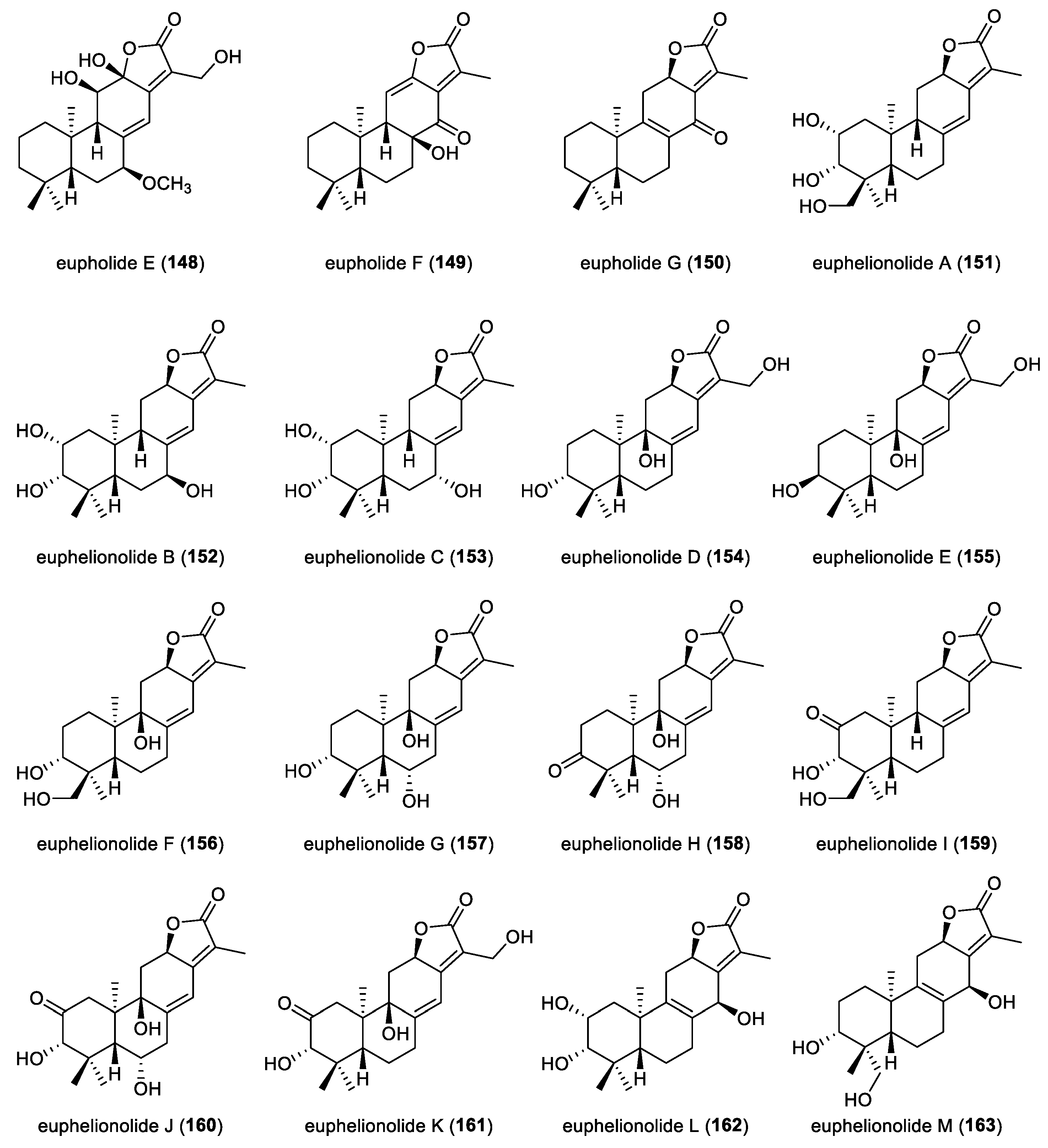
A comprehensive phytochemical investigation of the whole plant of Euphorbia peplus led to the isolation of eleven ent-abietane diterpenoid lactones, euphjatrophanes H–R (133143). The absolute configurations of compounds 133 and 134 and 136139 were unequivocally established by single-crystal X-ray diffraction analysis. In anti-inflammatory assays using RAW264.7 macrophages, compounds 138141 significantly inhibited nitric oxide production. Specifically, at a concentration of 10 μM, compounds 138, 141 and 143 markedly downregulated the mRNA expression of IL-6, IL-1β, and TNF-α in LPS-induced RAW264.7 macrophages. Compound 138 showed a dose-dependent inhibition of these proinflammatory mediators, effectively attenuated FOXO1 expression and reduced NF-κB p65 phosphorylation. Collectively, these results suggested that compound 138 is a promising lead candidate for the development of therapeutics targeting inflammation-related diseases [68]. Seven ent-abietane diterpenoid lactones, eupholides A−G (144150), were isolated from the roots of Euphorbia fischeriana (Figure 13). The absolute configurations of compounds 144 and 149 were established by single-crystal X-ray diffraction analysis. In biological evaluation, compounds 149 and 150 showed moderate inhibition of Mycobacterium tuberculosis H37Ra with a MIC value of 50 μM. Moreover, compound 150 demonstrated potent inhibition of human carboxylesterase 2 (HCE 2), with an IC50 value of 7.3 nM, highlighting it as a metabolically relevant and pharmacologically significant molecule [31].
A comprehensive phytochemical investigation of the aerial parts of Euphorbia helioscopia resulted in the isolation of fourteen highly oxygenated ent-abietane diterpenoid lactones, euphelionolides A–N (151164) (Figure 14). Compounds 156 and 164 displayed notable cytotoxicities against MCF-7 and PANC-1 cancer cell lines, with IC50 values ranging from 9.5 to 10.7 μM [69]. Euphorfinoid L (165) was isolated from the roots of the wild Euphorbia fischeriana. Compound 165 was structurally elucidated by using NMR, MS and ECD analysis. Compound 165 exhibited weak inhibitory activity against acetylcholinesterase (AChE), with an IC50 value of 147.51 μM [70]. Two ent-abietane diterpenoids, euphorfinoids M and N (166 and 167), were extracted from the roots of wild Euphorbia fischeriana. Notably, compound 166 represents a rare example of ring A-seco ent-abietane diterpenoid lactone. Compound 167 showed antiproliferative activity against Hela cell lines, with an IC50 value of 3.62 μM [71]. Three ent-abietane diterpenoids, difischenoids B–D (168–170), were isolated from the roots of wild Euphorbia fischeriana. Compound 168 was a 17-nor-ent-abietane diterpenoid. The absolute configurations of compounds 168170 were established by ECD calculations. Compound 168 showed cytotoxic activity against Hela cell lines, with an IC50 value of 3.75 μM. Mechanistic studies revealed that apoptosis induced by compound 169 was associated with increased reactive oxygen species (ROS), enhanced Ca2+ influx, and dissipation of the mitochondrial membrane potential [35].
Three ent-abietane norditerpenoid lactones, euphohelides A−C (171173), were isolated from the whole plant of Euphorbia helioscopia. Compound 171 features a distinctive 5/6/6/5 tetracyclic ent-norabietane skeleton, whereas compounds 172 and 173 harbor dilactone frameworks. Single-crystal X-ray crystallography analysis pinpointed the chemical structure of compound 171, which was also semi-synthesized in 4 steps from a plausible precursor 2α-hydroxyhelioscopinolide B. Compound 171 inhibited LPS-induced nitric oxide production in RAW264.7 macrophages (IC50 value of 32.98 μM), suggesting that its anti-inflammatory effect may involve the modulation of the NF-κB signaling pathway [72].
Chemical investigation on the leaves of Suregada zanzibariensis led to the identification of two rearranged ent-abietane diterpenoid lactones possessing a terminal double band, zanzibariolides A and B (174 and 175). Their absolute configurations were established by single-crystal X-ray diffraction analysis. Both compounds 174 and 175 were screened for their anti-herpes simplex virus type 2 (HSV-2) activities, but showed negligible antiviral effects [73]. An ent-abietane diterpenoid (176) was isolated from the roots of Euphorbia fischeriana. The absolute configuration of compound 176 was established by ECD calculations and identified as 5R, 8S, 9R, 10R, 12R, 14R. Thus compound 176 was named as 17-hydroxy,11α, 8(14) epoxy-ent-abieta-13(15)-ene-11,12-dioxide [74].

2.4. Dimeric Ent-Abietane Diterpenoids

Dimeric ent-abietane diterpenoids, also referred to ent-abietane bisditerpenoids, constitute a structurally diverse class of natural products distinguished by their varied linkage patterns [75,76,77]. Homodimers arise from the coupling of two identical monomeric units sharing the same carbon skeleton, whereas heterodimers result from the fusion of two distinct diterpenoid frameworks. These dimeric architectures often display remarkable molecular complexity and exhibit enhanced or unique biological profiles compared with their monomeric precursors [78,79,80,81,82].
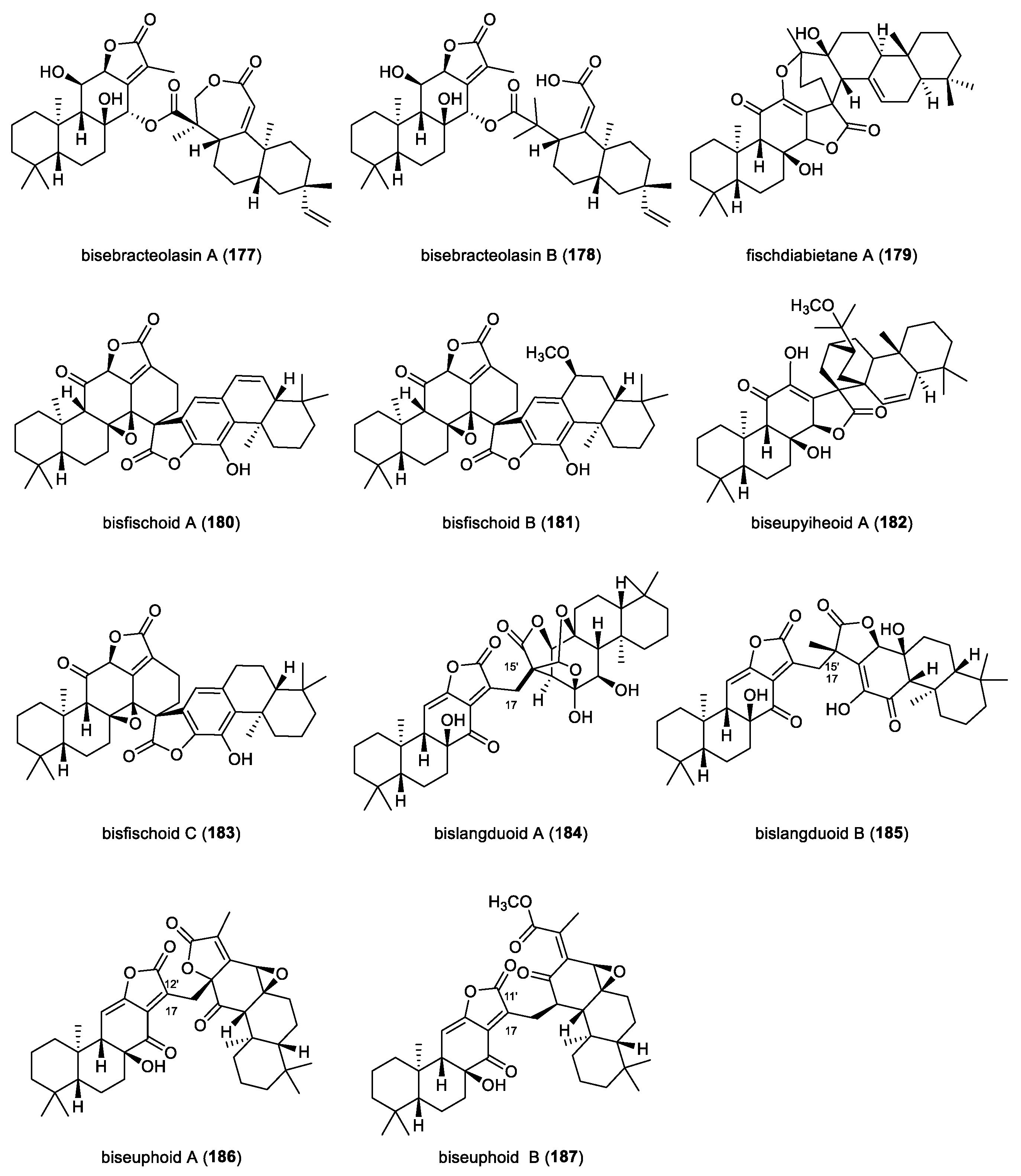
Two oxygen-bridged heterodimeric diterpenoids incorporating a monomer unit with a rare seco-rosane scaffold, bisebracteolasins A and B (177 and 178), were identified from the roots of Euphorbia ebracteolate (Figure 15). The absolute configuration of compound 177 was determined by single-crystal X-ray diffraction analysis. Both compound 177 and 178 displayed antiproliferative activities against five human cell lines HL-60, A549, SMMC-7721, MCF and SW-480, with IC50 values ranging from 2.61 to 14.09 μM. Importantly, flow cytometry analysis revealed that compound 177 induced apoptosis in SMMC-7721 cells at a concentration of 20 μM, while compound 178 did not. Notably, both dimers suppressed the growth of the CD44+ colorectal cancer stem cell line P6C, with IC50 values of 16.48 and 34.76 μM, respectively. Preliminary biological assays further revealed that compound 178 inhibited tumoursphere formation and impaired P6C migration, demonstrating its as lead compound for targeting cancer stem cell-driven tumor progression and metastasis [83].
Fischdiabietane A (179), an ent-abietane dimer endowed with an unprecedented 6/6/6/5/7/6/6/6/ ring framework, was isolated from the roots of Euphorbia fischeriana. Its structure was unambiguously established by X-ray diffraction analysis. Compound 179 represents the first ent-abietane dimer proposed to arise biosynthetically through a Diels-Alder cycloaddition. Compound 179 exhibited potent cytotoxicity toward the T47D breast cancer line, with an IC50 value of 6.51 μM, displaying nearly sixfold greater potency than the positive control cisplatin. Mechanistic studies revealed that compound 179 induced apoptosis in T47D cells via caspase-3 activation and poly(ADP-ribose) polymerase (PARP) degradation [84].
Two ent-abietane dimers putatively formed by an intermolecular [4 + 2] cycloaddition, bisfischoids A and B (180,181), were isolated from Euphorbia fischeriana. Both compounds 180 and 181 inhibited soluble epoxide hydrolase (sEH), with IC50 values of 9.9 and 10.29 μM, respectively, suggesting therapeutic potential for inflammation-related disorders. Molecular docking and molecular dynamic simulation indicated that interactions with the catalytic cavity, particularly the amino acid residue Tyr343, play a key role in their inhibitory properties of sEH [85].
Biseupyiheoid A and bisfischoid C (182 and 183) representing two unprecedented ent-abietane dimers, also derived from Euphorbia fischeriana. Compound 182 possesses a rare spirocyclic 6/6/6/5/6/6/6/6 framework incorporating a bicyclo [2.2.2] octane moiety, which was proposed to arise through intramolecular Diles-Alder cyclization. Furthermore, single-crystal X-ray diffraction analysis pinpointed its absolute configuration. Biologically, compound 182 exhibited antiproliferative activity against LoVo colon carcinoma cells, with an IC50 value of 6.7 μM, whereas dimer 183 observed negligible cytotoxicity. Flow cytometry and Western blot analysis revealed that compound 182 induced apoptosis in LoVo cells [86].
Bislangduoids A and B (184,185) represent a novel class of dimeric ent-abietane diterpenoids isolated from the traditional Chinese medicinal plant Euphorbia fischeriana (Langdu). Both dimers were assembled from two distinct ent-abietane monomers through a carbon-carbon linkage between C17 and C15′. Notably, compound 184 features a highly oxidized and architecturally complex cage-like pentacyclic core. Biosynthetically, the dimeric skeleton of compounds 184,185 are proposed to arise predominantly via Michael addition and acetal-formation reactions. Biologically, compound 184 displayed significant cytotoxicity against HepG2 hepatocellular carcinoma cells with an IC50 value of 7.4 μM, and induced apoptosis in the HepG2 cells [87].
Two ent-abietane diterpenoid dimers, biseuphoids A and B (186,187), were isolated from Euphorbia fischeriana. These dimers exhibit rare structural connectivity, with biseuphoid A featuring a C-17 to C-12′ linkage and biseuphoid B featuring a C-17 to C-11′ connection, underscoring their distinctive dimerization patterns. Key Michael addition reaction is putatively responsible for the formation of these two dimers, providing valuable insights into their biosynthetic origins. Compounds 186,187 showed inhibitory activities against soluble epoxide hydrolase (sEH), with IC50 values of 8.17 μM and 5.61 μM, respectively. Additionally, the in silico molecular dynamics simulations revealed that both compounds 186 and 187 anchor within the catalytic pocket of sEH through stable hydrogen bond interaction with key amino acid residues, including Gln384, Asn378, Pro361, Ala365, Asn366, and Asn472, providing a structural rationale for their inhibitory potency [88].

2.5. Miscellaneous Ent-Abietane Diterpenoids

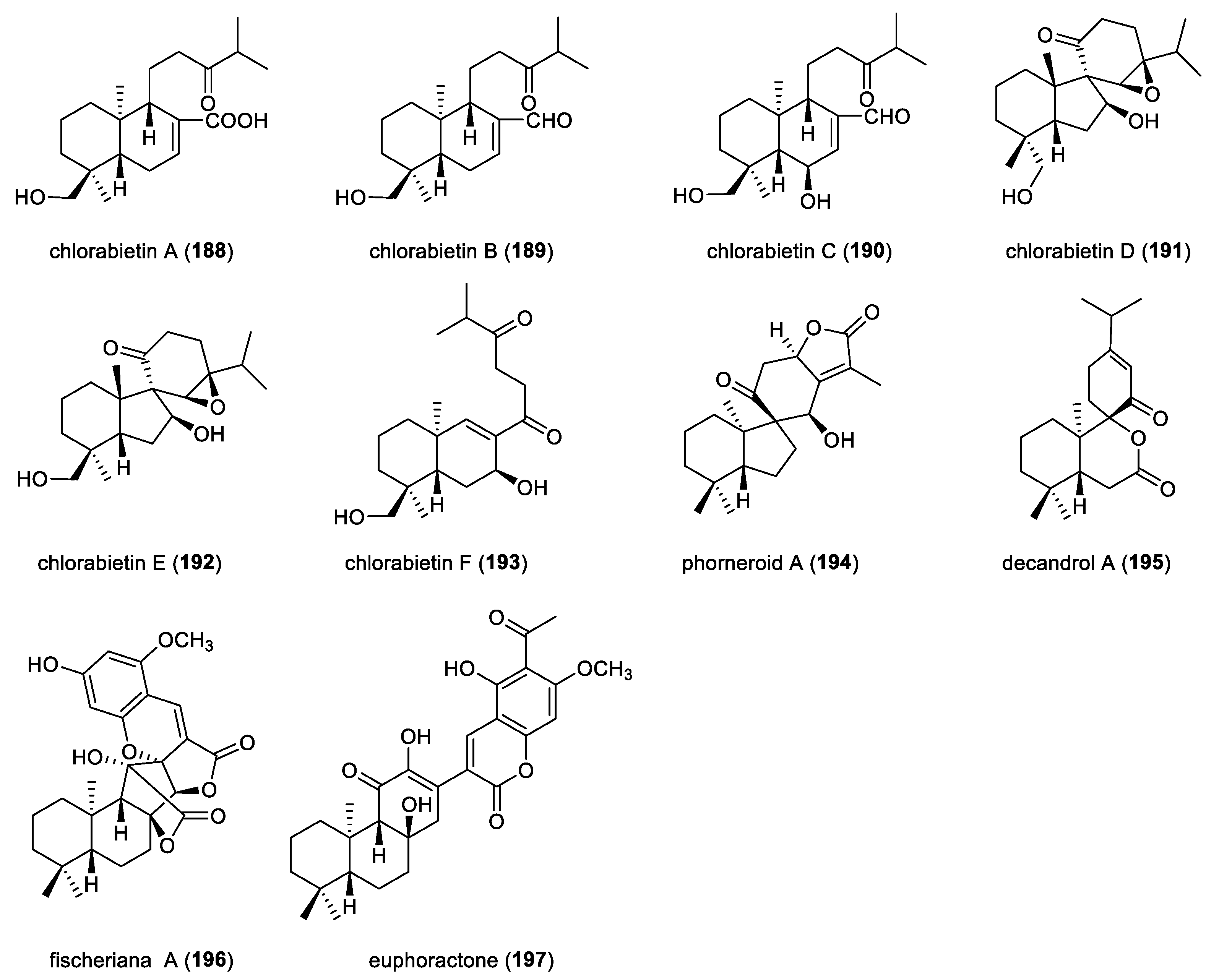
Six ent-abietane diterpenoids, chlorabietins A–F (188193), were isolated from the roots of Chloranthus oldhamii (Figure 16). The absolute configuration of compound 188 was established by X-ray crystallographic analysis. Compounds 188190 feature rare 13,14-seco-ent-abietane derivatives, while compounds 191,192 represent the first example of 9,10-seco-8-spirofused-ent-abietane diterpenoids characterized by an unusual cis-fused A/B ring junction [22]. Compound 193 is a rare chinane-type skeleton resulting from C-ring cleavage between C-13 and C-14 and is more appropriately classified as a rearranged ent-abietane diterpenoid from a biosynthetic perspective. Compounds 189,190 and 193 exhibited anti-neuroinflammatory activities by inhibiting NO production in LPS-activated murine BV-2 microglial cells, with IC50 values ranging from 16.4 to 33.8 μM.
Phorneroid A (194), obtained from the aerial parts of Euphorbia neriifolia, represents the first example of 8-spirofused 9,10-seco-ent-abietane diterpenoid lactone featuring a unique 6/5/6/5 spirocyclic framework. The absolute configuration of compound 194 was determined by ECD calculations and single-crystal X-ray crystallographic analysis. Compounds 194 exhibited moderate cytotoxicity against HL-60 tumor cell lines, with an IC50 value of 9.9 μM [61]. Decandrol A (195), a rare C9-spirofused 7,8-seco-ent-abietane diterpenoid, was isolated from the roots of Ceriops decandra, an Indian mangrove collected from the swamp of Godavari estuary. The absolute configuration of the compound 195 was determined by ECD calculations [26]. Fischeriana A (196), isolated from the roots of Euphorbia fischeriana, represents a structurally distinctive meroterpenoid bearing a heptacyclic 6/6/5/5/5/6/6 scaffold arising from the fusion of a modified ent-abietane diterpene core with a phloroglucinol unit. Its absolute configuration was determined by single-crystal X-ray diffraction analysis. Compound 196 showed cytotoxicity against the HepG2 cells, with an IC50 value of 15.75 μM, comparable to the positive control cisplatin [89]. Euphoractone (197), a meroterpenoid integrating an ent-abietane moiety with phloroglucinol unit, was also isolated from the roots of Euphorbia fischeriana. The structural characterization of compound 197 was achieved by X-ray crystallography analysis. Compound 197 exhibited inhibitory activity against H23 and H460 human lung cancer cell lines, with IC50 values of 21.07 and 20.91 μM, respectively [90].

3. Synthesis of Ent-Abietane Diterpenoids

Owing to their remarkable structural diversity and significant biological activities, ent-abietane diterpenoids have been compelling synthetic targets. A seminal review has previously summarized total synthesis of these ent-abietane diterpenoids prior to 2015 [8]. Building on the previous review, this review is dedicated to highlighting notable advances in this field from 2016 to early 2025.
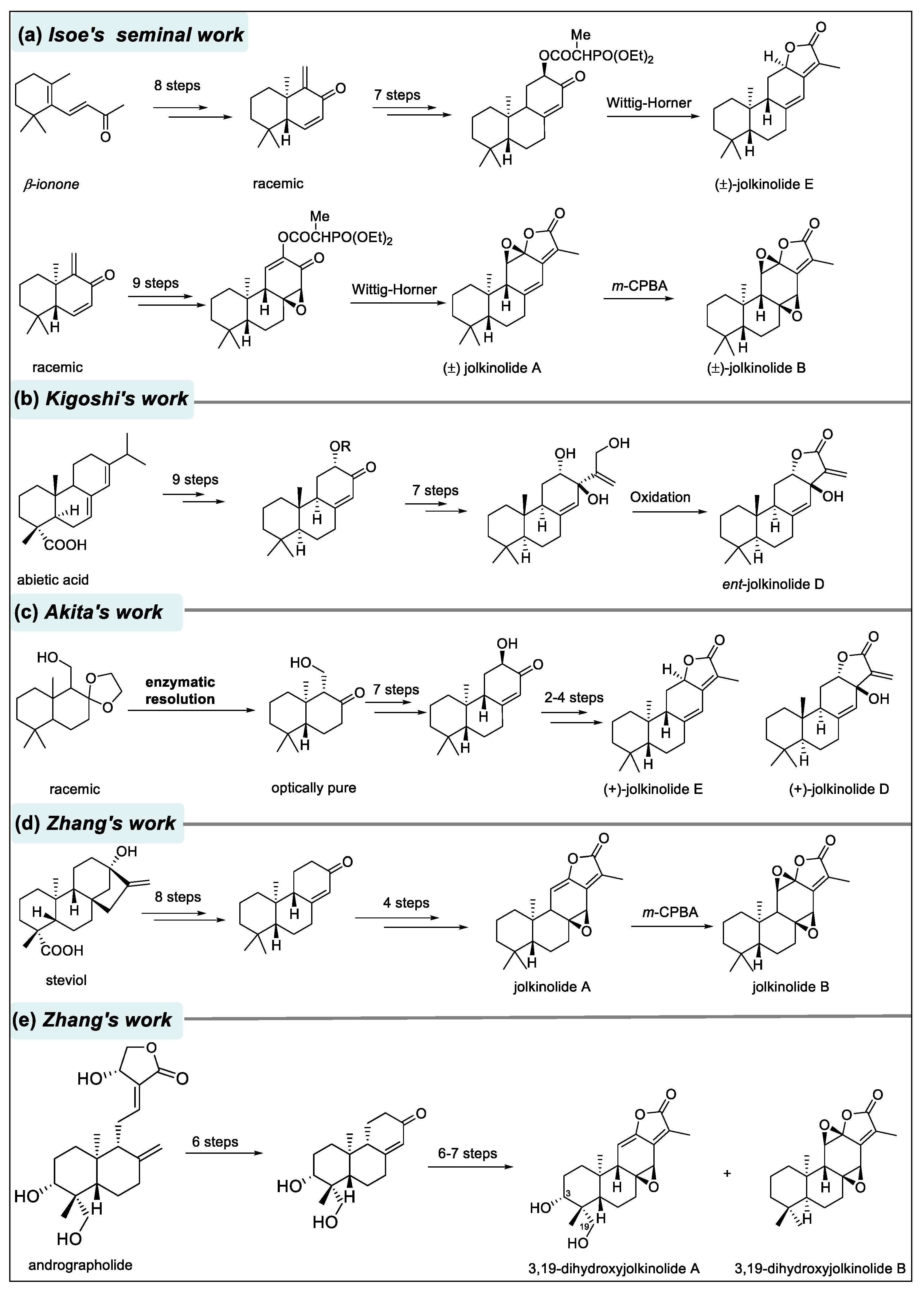
Three ent-abietane diterpenoid lactones, jolkinolides A, B and E, firstly isolated from the roots of Euphorbia jolkini in 1972, harbor a γ-butenolide motif [19]. Their intriguing structures promoted them attractive synthetic targets for organic chemistry, ultimately culminating in successful total synthesis of their racemic forms. Since the first total synthesis of jolkinolides A,B and E was achieved by Isoe and co-workers (Figure 17) [91], considerable research efforts have been directed toward the synthesis of ent-abietane diterpenoids. The following section outlines representative synthetic routes reported prior to 2015.
Kigoshi and co-workers utilized abietic acid as a chiral pool building block to access the enantiomer of jolkinolide D in 2004 [92]. It is noteworthy that the enantiomer lacked the biological activity observed for the natural jolkinolide D, mirroring the importance of stereochemistry in determining the bioactivity of diterpenoids. Subsequently, Akita and co-workers developed a chemoenzymatic route to the total synthesis of (+)-jolkinoides D and E in 2007 [93]. Zhang and co-workers accomplished total synthesis of jolkinolides A and B from readily available steviol in 2014 [94], and later synthesized jolkinolide derivatives, 3,19-dihydroxyjolkinolides using andrographolide as the starting material [95]. More recently, Tao’s team employed an intramolecular oxa-Pauson-Khand reaction (o-PKR) as the key step to effectively construct the 6/6/6/5 tetracyclic abietane diterpenoid skeleton, synthesizing the enantiomers of euphopilolide and jolkinolide E in just 11 and 12 steps, respectively [96].
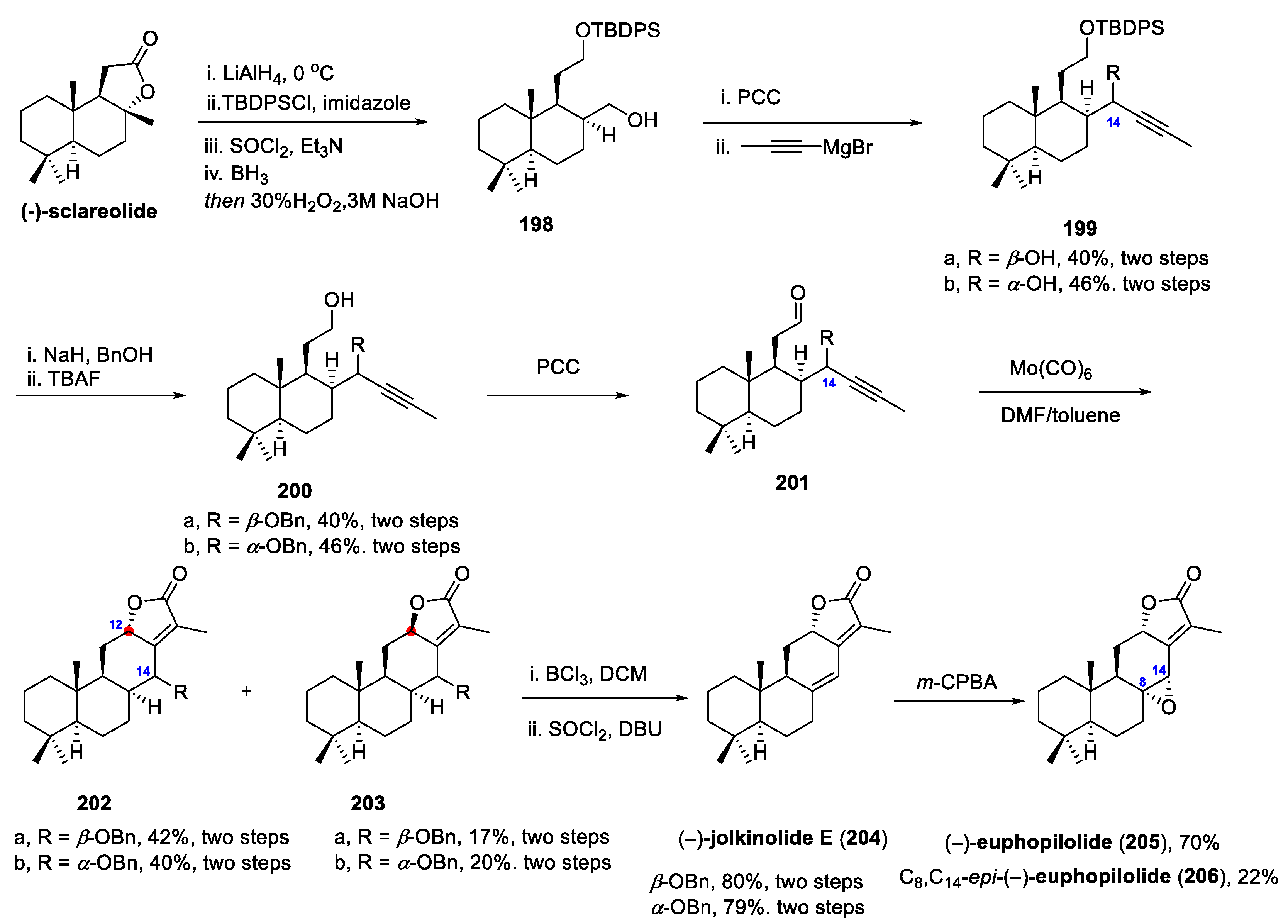
Tao and co-workers initiated their synthesis from commercially available sclareolide (Figure 18), which in four steps arrives at the alcohol 198 via reduction in the lactone moiety with lithium aluminum hydride (LiAlH4), silyl ether protection of the resulting primary alcohol and a dehydration/hydroboration/oxidation sequence. Subsequent oxidation of this alcohol 198 with PCC yielded an aldehyde, which upon a Grignard addition with 1-propynylmagnesium bromide, provided a pair of C-14 alkyne epimers (199a,199b) in good overall yield over these two steps. Subsequent synthetic studies demonstrated that configuration of at C-14 was inconsequential to the overall yield, as a later β-hydride elimination step equilibrated the epimers en route to the final target molecule, jolkinolide E.
Alkyne 199a and 199b were then elaborated to the o-PKR precursor 201 via a three-step sequence comprising benzyl protection of the secondary alcohol, removal of the TBDPS protecting group, and PCC-mediated oxidation. In practice, the key cyclization precursor 201 was found to be unstable and readily underwent an intramolecular o-PKR under stoichiometric Mo(CO)6 in a refluxing binary solvent system (DMF and toluene). This transformation furnished the desired γ-butenolide-fused tetracyclic core characteristic of ent-abietane diterpenoids as a pair of C12 epimers in 59% combined yield [97]. The major product (202a and 202b) possessed the required configuration at C12, consistent with that of the natural products. In parallel, tetracyclic butenolides (203a, 203b) were both prepared via a conceptually analogous route, thus unveiling that epimerization at C-14 had negligible impact on the efficiency of o-PKR step in this setting. Subsequent treatment of compound 202a and 202b with a Lewis acid promoted benzyl deprotection, liberating a secondary alcohol that underwent β-hydride elimination to afford the enantiomer of natural product jolkinolide E (204). Moreover, jolkinolide E was transformed into the enantiomer of euphopilolide (205) via epoxidation, yielding a separable minor diastereomer identified as C8, C14-epi-(-)-euphopilolide (206).

4. Biological Activity

Ent-abietane diterpenoids form a highly diverse family of natural terpenoids widely distributed across various plant genera, including Euphorbia, Chloranthus, Isodon, Ceriops, Croton, Suregada and Phlogacanthus. Owing to their rich structural variability and promising bioactivity profiles, these compounds have garnered considerable attention in natural product chemistry. They exhibit a wide array of biological properties, most notably, anticancer, anti-inflammatory, antibacterial, and neuroprotective activities, providing a new window for the future drug discovery [98,99,100,101].

4.1. Anticancer Activity

Anticancer activity represents one of the most prominent biological properties of ent-abietane diterpenoids, with many members exhibiting potent cytotoxic, pro-apoptotic or cancer stem cell targeting effects across a wide spectrum of tumor types. Notably, several compounds also exhibit remarkable activity against drug-resistant cancer phenotypes, underscoring their therapeutic potential.
A number of ent-abietane diterpenoids exhibit broad-spectrum cytotoxicity. Phyllostachysins K and L, for example, display moderate cytotoxicity against several cell lines including HL-60 (leukemia), SMMC-7721 (hepatocellular carcinoma), A-549 (lung cancer), MCF-7 (breast cancer), and SW-480 (colorectal cancer), with IC50 values ranging from 4.1 to 29.8 μM [23]. Similarly, isoforrethins C and D display IC50 values of 10.1–20.2 μM against SW-80 (colorectal cancer), HL-60, MCF-7, and A-549 cell lines. Among dimeric members, bisebracteolasins A and B show IC50 values in the range of 2.61–14.09 μM against a panel of cancer cell lines (HL-60, A549, SMMC-7721, MCF, and SW-480), demonstrating extensive tumor cell inhibitory activity [28].
Several ent-abietane diterpenoids demonstrate promising activity against prostate cancer cells, including drug-resistant phenotype. Euphonoid H exhibits significant antiproliferative activity against both the enzalutamide-sensitive prostate cancer cell line C4-2B and the enzalutamide-resistant cell line C4-2B/ENZR, with IC50 values of 5.52 μM and 4.16 μM, respectively [38]. Euphonoid I exhibits a comparable potency, with IC50 values of 4.49 and 5.74 μM against the aforementioned two cell lines. Euphonoids A and B also show inhibitory effects on these cell lines, with IC50 values of 9.18/9.7 μM and 13.4/11.1 μM, respectively. Euphopane B shows an IC50 value of 16.9 μM against the C4-2B prostate cancer cell line [30].
Several compounds show activity against breast cancer cells. Fischdiabietane A exhibits cytotoxicity against the T47D, with an IC50 value of 6.51 μM, displaying nearly sixfold higher than that of the positive control cisplatin. Mechanistic studies revealed that its activity involves apoptosis mediated by caspase-3 activation and PARP degradation [84]. In addition, euphorins E and H suppress mammosphere formation in MCF-7 breast cancer cells at 10 μM, suggesting a capacity to target breast cancer stem cells-like populations [21].
Hepatocellular carcinoma (HCC) is another target of ent-abietane diterpenoids. Bislangduoid A demonstrates cytotoxicity against the HepG2 hepatocellular carcinoma cell lines, with an IC50 value of 7.4 μM and induce cell apoptosis. Likewise, 3α-acetoxy-14-hydroxy-ent-abieta-8(9),13(15)-dien-16,12-olide exhibits moderate cytotoxicity against the SMMC-7721 cell line, with an IC50 value of 29.0 μM [87].
Beyond these categories, several ent-abietane diterpenoids have been reported to show cytotoxicity against additional cancer cells. Difischenoids A–B and euphorfinoids N, exhibit inhibitory effects against the HeLa cervical cancer cell line, with IC50 values of 15.47, 3.75 and 3.62 μM, respectively [35]. Biseupyiheoid A demonstrates cytotoxicity against LoVo colorectal cancer cell, with IC50 value of 6.7 μM [86]. Bisebracteolasins A and B exhibit inhibitory activity against the CD44+ colorectal cancer stem cell line P6C, with IC50 values of 16.48 and 34.76 μM, respectively [83]. Among them, bisebracteolasin A can further inhibit the tumorsphere formation and migration ability of P6C cells, suggesting therapeutic potential in suppressing cancer stem cell-mediated tumor growth and metastasis.

4.2. Anti-Inflammatory Activity

The anti-inflammatory properties of ent-abietane diterpenoids are primarily attributed to their ability to suppress the production of key inflammatory mediators and modulate central inflammatory signaling pathways, including nitric oxide, the nuclear factor-κB (NF-κB) and related cytokines, IL-6, IL-1β, and TNF-α.
A number of ent-abietane diterpenoids exhibit significant nitric oxide production in LPS-stimulated macrophage or microglial cell models. Among the most potent examples, ebractenoids L and N exhibit effects in RAW264.7 macrophages, with IC50 values of 0.69 and 1.97 μM, respectively [48]. Serrin K, phyllostachysins K and L also display strong inhibitory activity, with IC50 values of 1.8 μM, 1.34 μM, and 2.09 μM, respectively [24]. Additional contributors, euphohelinode A and euphohelide H show moderate inhibitory activity against RAW264.7 cells, with IC50 values of 32.98 and 30.23 μM, respectively [67].
Several diterpenoids show anti-inflammatory effects through inhibition of nitric oxide production and follow-up mechanistic analysis have shed light on the signal pathway responsible for these actions. Euphohelinode H is attributed to the inhibition of the NF-κB signaling pathway and the downregulation of pro-inflammatory enzymes COX-2 and iNOS [67]. Euphjatrophane M demonstrates a multifaceted regulatory profile, dose-dependently inhibiting the mRNA expression of IL-6, IL-1β, and TNF-α while concurrently reducing the expression of FOXO1 and the phosphorylation level of NF-κB p65 [68]. Decandrols C and E attenuate NF-κB activity at a concentration of 100 μM; the anti-inflammatory effects of euphohelide A are also speculated to involve NF-κB signaling pathway [26].
A subset of ent-abietane diterpenoids demonstrates notable activity in neuroinflammatory models. Chlorabietins B, C, F and G inhibit nitric oxide production in LPS-activated BV-2 microglial cells, with IC50 values ranging from 16.4 to 33.8 μM [22].

4.3. Antibacterial Activity

Ent-abietane diterpenoids displaying antibacterial activity have been reported against Mycobacterium tuberculosis, Gram-positive bacteria, and Gram-negative bacteria, with most compounds exhibiting moderate inhibitory potency.
Eupholides F–H exhibit moderate inhibitory activity against Mycobacterium tuberculosis H37Ra, with a MIC of 50 μM [31]. Several ent-abietane diterpenoids demonstrate activity against Gram-positive bacteria. Three compounds, 6β-hydroxy-ent-abieta-7,13-dien-3-one, 2β,13α,15-trihydroxy-ent-abieta-8(14)-en-3-one and 2β,9α,13β,15-tetrahydroxy-ent-abieta-7-en-3-one exhibit weak antibacterial activity against Gram-positive strains T25-17, C159-6, and sp.8152, with MIC values less than 50 μg/mL [36]. Similarly, 11β-hydroxy-14-oxo-17-al-ent-abieta-8(9),13(15)dien-16,12β-olide, 11β,17-dihydroxy-12-methoxy-ent-abieta-8(14),13(15)-dien-16,12α-olide, and 14α-hydroxy-17-al-ent-abieta-7(8),11(12),13(15)-trien-16,12-olide display MIC values under 60 μg/mL against the same bacterial strains [58]. Sureproceriolide A demonstrate moderate antibacterial activity against the Gram-positive bacterium Staphylococcus lugdunensis, with an MIC value of 31.44 μM [63].

4.4. Other Biological Activities

Beyond cytotoxic, anti-inflammatory and antibacterial effects, several ent-abietane diterpenoids show activity profiles that broaden their therapeutic potential. Abientaphlogatone D and E exhibits neuroprotective activity in PC12 cell injury models induced by H2O2 and MPP+, and SAR analysis highlights the important role of the hydroxyl group in the aromatic C-ring [47]. Dimeric ent-abietane diterpenoids, biseuphoids A and B serve as inhibitors of soluble epoxide hydrolase (sEH), with IC50 values ranging from 5.61 to 10.29 μM. In silico studies reveals that these compounds anchor within the enzyme’s catalytic pocket, forming stable hydrogen bonds with key amino acid residues such as Gln384 and Asn378. This class of compounds holds promise for the treatment of inflammation-related diseases [85]. Euphorfinoid L exhibits weak inhibitory activity against acetylcholinesterase (AChE) with an IC50 value of 147.51 μM [70].

5. Conclusions

Over the past decade, substantial progress has been made in the isolation and structural characterization of ent-abietane diterpenoids. Key advances include the expansion of plant sources from which these compounds have been obtained. Prior to 2015, most ent-abietane diterpenoids were identified from the genus Euphorbia (Euphorbiaceae). In recent years, however, ent-abietane diterpenoids have also been discovered from species belonging to the Chloranthaceae, Rhizophoraceae, Labiatae and Asteraceae families, thereby enriching the diversity of plant resources and laying a foundation for the isolation of more structurally diverse members of this class.
Furthermore, the discovery of norditerpenoids, rearranged diterpenoids and dimeric diterpenoids greatly diversifies the chemical space of this family, offering new opportunities for drug discovery. Although recent total synthesis of two ent-abietane diterpenoids have been achieved, the synthesis predominately focused on a subclass. More challenging targets, such as dimeric or rearranged diterpenoids, have yet to be conquered. Moreover, certain members of the ent-abietane diterpenoid family have exhibited promising inhibitory activity against soluble epoxide hydrolase (sEH), underscoring their potential as a valuable source for therapeutic leads.

6. Future Perspectives

The future of ent-abietane diterpenoid research hinges on adopting a multifaceted and integrative approach. Continued exploration of more structurally diverse natural products within this family holds great promise of advancing natural products-based drug discovery. Strengthening the chemical synthesis of these diterpenoids will help overcome the limited availability of materials isolated from natural sources. New synthetic strategies should allow for catalytic asymmetric total synthesis of these diterpenoids, facilitating the preparation of sufficient quantities of compounds for comprehensive biological evaluation. Despite the absence of AI-assisted synthetic studies specifically targeting ent-abietane diterpenoids, the rapid progress in data-driven organic synthesis suggests that closely related investigations may be reported in the foreseeable future.
At present, research on ent-abietane diterpenoids is routinely located at fragmented or uncoordinated efforts. Specifically, although isolation of new ent-abietane diterpenoids is frequently accompanied by preliminary biological screening, systematic scaffold simplification and functional group modification aimed at improving biological profiles remain largely underexplored. Therefore, it is necessary to shift from dispersed individual studies toward coordinated, well-supported and interdisciplinary programs in which isolation, chemical synthesis and in-depth biological investigation are seamlessly integrated. Such a unified strategy will not only broaden our understanding of this chemically rich family but also establish a new paradigm for natural product discovery and development.

Supplementary Materials

The following supporting information can be downloaded at: https://www.mdpi.com/article/10.3390/molecules31010098/s1, Table S1 Compound names, plant sources and their reported activities of prototype ent-abietane diterpenoids; Table S2 Compound names, plant sources and their reported activities of aromatic ent-abietane diterpenoids; Table S3 Compound names, plant sources and their reported activities of ent-abietane diterpenoid lactones; Table S4 Compound names, plant sources and their reported activities of dimeric ent-abietane diterpenoids; Table S5 Compound names, plant sources and their reported activities of miscellaneous ent-abietane diterpenoids.

Author Contributions

Conceptualization, J.-N.Y. and J.L.; writing original draft preparation, L.L., Y.Z. and J.-N.Y.; data analysis and collection, Y.Z.; data curation, Y.Z., H.D. and L.X.; Funding acquisition, C.-B.Z., J.-N.Y. and J.L. All authors have read and agreed to the published version of the manuscript.

Funding

This work was financially supported by the National Natural Science Foundation of China (grant No. 82504612), the Yunnan Fundamental Research Projects (grant No. 202301AU070135), the Yunnan Fundamental Research Kunming Medical University Projects (grant No. 202501AY070001-146), the First-Class Discipline Team of Kunming Medical University (grant Nos. 2024XKTDTS12, 2024XKTDPY12), the Yunnan Key Research and Development Program (grant No. 202403AC100033), and the 2024 Yunnan Xingdian Talent-Young Talent Support Program to Ji Li.

Data Availability Statement

All the data and materials provided in this manuscript were obtained from references and available upon request.

Acknowledgments

We apologize to prestigious researchers for any oversight and recognize that many essential contributions to this topic are not reflected in the reference list.

Conflicts of Interest

The authors declare no conflicts of interest.

Abbreviations

ECDelectronic circular dichroism
IC50half maximal inhibitory concentration
EC50half maximal effective concentration
LPSlipopolysaccharide
MICminimum inhibitory concentration
SARStructure–activity relationship

References

  1. Davis, E.M.; Croteau, R. Cyclization enzymes in the biosynthesis of monoterpenes, sesquiterpenes, and diterpenes. In Biosynthesis: Aromatic Polyketides, Isoprenoids, Alkaloids; Leeper, F.J., Vederas, J.C., Eds.; Springer: Berlin/Heidelberg, Germany, 2000; pp. 53–95. [Google Scholar]
  2. Peters, R.J. Two rings in them all: The labdane-related diterpenoids. Nat. Prod. Rep. 2010, 27, 1521–1530. [Google Scholar] [CrossRef] [PubMed]
  3. Hu, Z.; Liu, X.; Tian, M.; Ma, Y.; Jin, B.; Gao, W.; Cui, G.; Guo, J.; Huang, L. Recent progress and new perspectives for diterpenoid biosynthesis in medicinal plants. Med. Res. Rev. 2021, 41, 2971–2997. [Google Scholar] [CrossRef] [PubMed]
  4. Min, L.; Han, J.C.; Zhang, W.; Gu, C.C.; Zou, Y.P.; Li, C.C. Strategies and lessons learned from total synthesis of taxol. Chem. Rev. 2023, 123, 4934–4971. [Google Scholar] [CrossRef] [PubMed]
  5. Jiang, B.; Gao, L.; Wang, H.J.; Sun, Y.P.; Zhang, X.L.; Ke, H.; Liu, S.C.; Ma, P.C.; Liao, Q.G.; Wang, Y.; et al. Characterization and heterologous reconstitution of Taxus biosynthetic enzymes leading to baccatin III. Science 2024, 383, 622–629. [Google Scholar] [CrossRef]
  6. Pan, L.; Schneider, F.; Ottenbruch, M.; Wiechert, R.; List, T.; Schoch, P.; Mertes, B.; Gaich, T. A general strategy for the synthesis of taxane diterpenes. Nature 2024, 632, 543–549. [Google Scholar] [CrossRef]
  7. Schneider, F.; Samarin, K.; Zanella, S.; Gaich, T. Total synthesis of the complex taxane diterpene canataxpropellane. Science 2020, 367, 676–681. [Google Scholar] [CrossRef]
  8. Lai, J.Z.; Zhang, M.H.; Wu, Y.C.; Zhang, D.Y.; Wu, X.M.; Hua, W.Y. ent-Abietane lactones from Euphorbia. Mini Rev. Med. Chem. 2017, 17, 380–397. [Google Scholar] [CrossRef]
  9. Huang, S.X.; Pu, J.X.; Xiao, W.L.; Li, L.M.; Weng, Z.Y.; Zhou, Y.; Han, Q.B.; Peng, S.L.; Ding, L.S.; Lou, L.G.; et al. ent-Abietane diterpenoids from Isodon rubescens var. rubescens. Phytochemistry 2007, 68, 616–622. [Google Scholar] [CrossRef]
  10. Lal, A.R.; Cambie, R.C.; Rutledge, P.S.; Woodgate, P.D. Ent-pimarane and ent-abietane diterpenes from Euphorbia fidjiana. Phytochemistry 1990, 29, 2239–2246. [Google Scholar] [CrossRef]
  11. Zhan, Z.J.; Li, S.; Chu, W.; Yin, S. Euphorbia diterpenoids: Isolation, structure, bioactivity, biosynthesis, and synthesis (2013–2021). Nat. Prod. Rep. 2022, 39, 2132–2174. [Google Scholar] [CrossRef]
  12. Gonzalez, M.A. Aromatic abietane diterpenoids: Their biological activity and synthesis. Nat. Prod. Rep. 2015, 32, 684–704. [Google Scholar] [CrossRef]
  13. Etsassata, N.; Cupido, C.N.; Iwuoha, E.I.; Hussein, A.A. Abietane diterpenes as potential candidates for the management of type 2 diabetes. Curr. Pharm. Des. 2020, 26, 2885–2891. [Google Scholar] [CrossRef] [PubMed]
  14. Zhao, H.; Sun, L.; Kong, C.; Mei, W.; Dai, H.; Xu, F.; Huang, S. Phytochemical and pharmacological review of diterpenoids from the genus Euphorbia Linn (2012–2021). J. Ethnopharmacol. 2022, 298, 115574. [Google Scholar] [CrossRef] [PubMed]
  15. Kang, J.; Quynh Le, T.; Oh, C.H. Recent advances in abietane/icetexane synthesis. Tetrahedron Lett. 2022, 108, 154133. [Google Scholar] [CrossRef]
  16. Sargazifar, Z.; Ghorbanian Charami, D.; Esmaeilzadeh Kashi, M.; Asili, J.; Shakeri, A. Abietane-type diterpenoids: Insights into structural diversity and therapeutic potential. Chem. Biodivers. 2024, 21, e202400808. [Google Scholar] [CrossRef]
  17. Gáborová, M.; Šmejkal, K.; Kubínová, R. Abietane diterpenes of the genus Plectranthus sensu lato. Molecules 2022, 27, 166. [Google Scholar] [CrossRef]
  18. Jian, B.; Zhang, H.; Liu, J. Structural diversity and biological activities of diterpenoids derived from Euphorbia fischeriana Steud. Molecules 2018, 23, 935. [Google Scholar] [CrossRef]
  19. Uemura, D.; Hirata, Y. Two new diterpenoids, jolkinolides A and B, obtained from euphorbia jolkini boiss. (Euphorbiaceae). Tetrahedron Lett. 1972, 13, 1387–1390. [Google Scholar] [CrossRef]
  20. Zhang, Y.-Y.; Yan, Y.; Zhang, J.; Xia, C.-Y.; Lian, W.-W.; Wang, W.-P.; He, J.; Zhang, W.-K.; Xu, J.-K. Jolkinolide B: A comprehensive review of its physicochemical properties, analytical methods, synthesis and pharmacological activity. Phytochemistry 2022, 204, 113448. [Google Scholar] [CrossRef]
  21. Kuang, X.; Li, W.; Kanno, Y.; Yamashita, N.; Kikkawa, S.; Azumaya, I.; Nemoto, K.; Asada, Y.; Koike, K. Euphorins A-H: Bioactive diterpenoids from Euphorbia fischeriana. J. Nat. Med. 2016, 70, 412–422. [Google Scholar] [CrossRef]
  22. Xiong, J.; Hong, Z.-L.; Xu, P.; Zou, Y.; Yu, S.-B.; Yang, G.-X.; Hu, J.-F. ent-Abietane diterpenoids with anti-neuroinflammatory activity from the rare Chloranthaceae plant Chloranthus oldhamii. Org. Biomol. Chem. 2016, 14, 4678–4689. [Google Scholar] [CrossRef] [PubMed]
  23. Yang, J.; An, Y.; Wu, H.; Liu, M.; Wang, W.; Du, X.; Li, Y.; Pu, J.; Sun, H. Ent-kaurane and ent-abietane diterpenoids from Isodon phyllostachys. Sci. China Chem. 2016, 59, 1211–1215. [Google Scholar] [CrossRef]
  24. Wan, J.; Jiang, H.-Y.; Tang, J.-W.; Li, X.-R.; Du, X.; Li, Y.; Sun, H.-D.; Pu, J.-X. Ent-abietanoids isolated from Isodon serra. Molecules 2017, 22, 309. [Google Scholar] [CrossRef] [PubMed]
  25. Zhang, J.; He, J.; Wang, X.-X.; Shi, Y.-X.; Zhang, N.; Ma, B.-Z.; Zhang, W.-K.; Xu, J.-K. Ent-abietane diterpenoids and their probable biogenetic precursors from the roots of Euphorbia fischeriana. RSC Adv. 2017, 7, 55859–55865. [Google Scholar] [CrossRef]
  26. Jiang, Z.-P.; Tian, L.-W.; Shen, L.; Wu, J. Ent-abietanes from the Godavari mangrove, Ceriops decandra: Absolute configuration and NF-κB inhibitory activity. Fitoterapia 2018, 130, 272–280. [Google Scholar] [CrossRef]
  27. Liu, G.L.; Xu, W.; Liu, X.J.; Yan, X.L.; Chen, J. Two new abietane diterpenoids from the leaves of Rabdosia serra. J. Asian Nat. Prod. Res. 2020, 22, 47–51. [Google Scholar] [CrossRef]
  28. Chen, L.; Yang, Q.; Hu, K.; Li, X.-N.; Sun, H.-D.; Puno, P.-T. Isoforrethins A–D, four ent-abietane diterpenoids from Isodon forrestii var. forrestii. Fitoterapia 2019, 134, 158–164. [Google Scholar] [CrossRef]
  29. Liu, J.-L.; Yu, M.; Liao, H.-B.; Liu, T.; Tan, Y.-H.; Liang, D.; Zhang, G.-J. Sesquiterpenes and diterpenes from Euphorbia thymifolia. Fitoterapia 2019, 139, 104408. [Google Scholar] [CrossRef]
  30. Yan, X.-L.; Zhang, J.-S.; Huang, J.-L.; Zhang, Y.; Chen, J.-Q.; Tang, G.-H.; Yin, S. Euphonoids A−G, cytotoxic diterpenoids from Euphorbia fischeriana. Phytochemistry 2019, 166, 112064. [Google Scholar] [CrossRef]
  31. Li, D.-W.; Deng, X.-P.; He, X.; Han, X.-Y.; Ma, Y.-F.; Huang, H.-L.; Yu, Z.-L.; Feng, L.; Wang, C.; Ma, X.-C. Eupholides A−H, abietane diterpenoids from the roots of Euphorbia fischeriana, and their bioactivities. Phytochemistry 2021, 183, 112593. [Google Scholar] [CrossRef]
  32. Isyaka, S.M.; Langat, M.K.; Mas-Claret, E.; Mbala, B.M.; Mvingu, B.K.; Mulholland, D.A. Ent-abietane and ent-pimarane diterpenoids from Croton mubango (Euphorbiaceae). Phytochemistry 2020, 170, 112217. [Google Scholar] [CrossRef]
  33. Langat, M.K.; Djuidje, E.F.K.; Ndunda, B.M.; Isyaka, S.M.; Dolan, N.S.; Ettridge, G.D.; Whitmore, H.; Lopez, I.; Alqahtani, A.M.; Atiku, I.; et al. The phytochemical investigation of five African Croton species: Croton oligandrus, Croton megalocarpus, Croton menyharthii, Croton rivularis and Croton megalobotrys. Phytochem. Lett. 2020, 40, 148–155. [Google Scholar] [CrossRef]
  34. Yan, X.-L.; Huang, J.-L.; Tang, Y.-Q.; Tang, G.-H.; Yin, S. Euphopanes A–C, three new diterpenoids from Euphorbia pekinensis. Nat. Prod. Res. 2020, 36, 114–121. [Google Scholar] [CrossRef] [PubMed]
  35. Wei, J.C.; Gao, Y.N.; Wang, D.D.; Zhang, X.Y.; Fan, S.P.; Bao, T.R.G.; Gao, X.X.; Hu, G.S.; Wang, A.H.; Jia, J.M. Discovery of highly oxidized abietane diterpenoids from the roots of Euphorbia fischeriana with anti-tumor activities. Chin. J. Chem. 2021, 39, 2973–2982. [Google Scholar] [CrossRef]
  36. Wang, W.; Dong, L.-B. Antimicrobial ent-abietane diterpenoids from the leaves of Croton cascarilloide. J. Asian Nat. Prod. Res. 2022, 25, 68–74. [Google Scholar] [CrossRef]
  37. Wang, W.; Zhang, X.-J. Cytotoxic ent-abietane diterpenoids from the leaves of Croton lachnocarpus Benth. J. Asian Nat. Prod. Res. 2022, 25, 309–315. [Google Scholar] [CrossRef]
  38. Zhu, Q.-F.; Xu, G.-B.; Liao, S.-G.; Yan, X.-L. Ent-abietane diterpenoids from Euphorbia fischeriana and their cytotoxic activities. Molecules 2022, 27, 7258. [Google Scholar] [CrossRef]
  39. Xia, J.-N.; Hu, K.; Su, X.-Z.; Tang, J.-W.; Li, X.-N.; Sun, H.-D.; Puno, P.-T. Discovery of ent-kaurane diterpenoids, characteristic metabolites of Isodon species, from an endophytic fungal strain Geopyxis sp. XY93 inhabiting Isodon parvifolia. Fitoterapia 2022, 158, 105160. [Google Scholar] [CrossRef]
  40. Zhu, H.; Wang, J.; Hu, W.; Zhou, T.; Lin, Z.; Zhang, R.; Geng, C.-A.; Chen, X. Diterpenoids with cytotoxicity for pancreatic cancer SW1990 cells from the rhizomes of Euphorbia jolkinii boiss. Chin. J. Org. Chem. 2024, 44, 1929–1937. [Google Scholar] [CrossRef]
  41. Zhang, H.-L.; Zhang, Y.; Yan, X.-L.; Xiao, L.-G.; Hu, D.-X.; Yu, Q.; An, L.-K. Secondary metabolites from Isodon ternifolius (D. Don) Kudo and their anticancer activity as DNA topoisomerase IB and Tyrosyl-DNA phosphodiesterase 1 inhibitors. Bioorganic Med. Chem. 2020, 28, 115527. [Google Scholar] [CrossRef]
  42. Tang, X.; Xu, J.-L.; Li, X.-Y.; Zhang, Y.-Y.; Xiang, S.-Q.; Luo, X.; Liu, Z.-Q.; Meng, X.-L.; Zhou, H.; Wu, P. Diterpenoids with anti-inflammatory activities from Isodon rubescens. Fitoterapia 2025, 185, 106759. [Google Scholar] [CrossRef]
  43. Yun, Y.S.; Shimamura, M.; Fukaya, H.; Fuchino, H.; Kawahara, N.; Inoue, H. Lathyrisol B, a new nor-ent-abietane diterpenoid from roots of Euphorbia lathyris L. Phytochem. Lett. 2025, 65, 113–116. [Google Scholar]
  44. Zhang, M.-W.; Guo, K.; Zhang, Y.; Teng, L.-L.; Huang, Q.-P.; Liu, Y.; Li, S.-H. Leucoabietenes A and B, rearranged abietane and ent-abietane diterpene hydrocarbons against resistant infectious fungus and bacterium from the leaves of Leucosceptrum canum. Tetrahedron Lett. 2021, 81, 153356. [Google Scholar] [CrossRef]
  45. Essa, A.F.; El-Hawary, S.S.; Emam, S.E.; Kubacy, T.M.; El-Khrisy, E.E.-D.A.M.; Younis, I.Y.; Elshamy, A.I. Characterization of undescribed melanoma inhibitors from Euphorbia mauritanica L. cultivated in Egypt targeting BRAFV600E and MEK 1 kinases via in-silico study and ADME prediction. Phytochemistry 2022, 198, 113154. [Google Scholar] [CrossRef] [PubMed]
  46. Li, H.-Y.; Bao, M.-Y.; Xiong, H.-M.; Wang, C.-C.; Bai, L.-P.; Zhang, W.; Chen, C.-Y.; Jiang, Z.-H.; Zhu, G.-Y. Forsyditerpenes A–O, CC-type clerodane and aromatic abietane diterpenoids with anti-inflammatory activities from the seeds of Forsythia suspensa. Fitoterapia 2025, 185, 106675. [Google Scholar] [CrossRef]
  47. Li, J.; Meng, X.; Yin, C.; Zhang, L.; Lin, B.; Liu, P.; Zhu, L.; Wang, H.; Liu, H.; Zhang, X.; et al. Antimalarial and neuroprotective ent-abietane diterpenoids from the aerial parts of Phlogacanthus curviflorus. Chin. J. Nat. Med. 2023, 21, 619–630. [Google Scholar] [CrossRef]
  48. Liu, Z.-G.; Li, Z.-L.; Li, D.-H.; Li, N.; Bai, J.; Zhao, F.; Meng, D.-L.; Hua, H.-M. Ent-abietane-type diterpenoids from the roots of Euphorbia ebracteolata with their inhibitory activities on LPS-induced NO production in RAW 264.7 macrophages. Bioorganic Med. Chem. Lett. 2016, 26, 1–5. [Google Scholar] [CrossRef]
  49. Wang, C.-J.; Yan, Q.-L.; Ma, Y.-F.; Sun, C.-P.; Chen, C.-M.; Tian, X.-G.; Han, X.-Y.; Wang, C.; Deng, S.; Ma, X.-C. Ent-abietane and tigliane diterpenoids from the roots of Euphorbia fischeriana and their inhibitory effects against Mycobacterium smegmatis. J. Nat. Prod. 2017, 80, 1248–1254. [Google Scholar] [CrossRef]
  50. Han, C.; Peng, Y.; Wang, Y.; Huo, X.; Zhang, B.; Li, D.; Leng, A.; Zhang, H.; Ma, X.; Wang, C. Cytotoxic ent-abietane-type diterpenoids from the roots of Euphorbia ebracteolata. Bioorganic Chem. 2018, 81, 93–97. [Google Scholar] [CrossRef]
  51. Ma, Y.-L.; Tang, X.-H.; Yuan, W.-J.; Ding, X.; Di, Y.-T.; Hao, X.-J. Abietane diterpernoids from the roots of Euphorbia ebracteolata. Nat. Prod. Bioprospecting 2018, 8, 131–135. [Google Scholar] [CrossRef]
  52. Mangisa, M.; Tembu, V.J.; Fouche, G.; Nthambeleni, R.; Peter, X.; Langat, M.K. Ent-abietane diterpenoids from Suregada zanzibariensis Baill. (Euphorbiaceae), their cytotoxic and anticancer properties. Nat. Prod. Res. 2018, 33, 3240–3247. [Google Scholar] [CrossRef]
  53. Li, J.-C.; Zhang, Z.-J.; Yang, T.; Jiang, M.-Y.; Liu, D.; Li, H.-M.; Li, R.-T. Six new ent-abietane-type diterpenoids from the stem bark of Euphorbia neriifolia. Phytochem. Lett. 2019, 34, 13–17. [Google Scholar] [CrossRef]
  54. Wang, P.; Xie, C.; An, L.; Yang, X.; Xi, Y.; Yuan, S.; Zhang, C.; Tuerhong, M.; Jin, D.-Q.; Lee, D.; et al. Bioactive diterpenoids from the stems of Euphorbia royleana. J. Nat. Prod. 2019, 82, 183–193. [Google Scholar] [CrossRef] [PubMed]
  55. Yin, Z.; Xie, X.-L.; Yuan, J.; Zhang, Y.; Li, W. Two new ent-abietane diterpenoids from Euphorbia helioscopia. J. Asian Nat. Prod. Res. 2019, 22, 632–638. [Google Scholar] [CrossRef] [PubMed]
  56. Chen, Y.-N.; Lu, Q.-Y.; Li, D.-M.; Li, Y.-Y.; Pu, X.-X.; Li, B.-T.; Tang, X.-H.; Tang, H.-Y.; Liu, S.; Yang, L.; et al. Three new diterpenoids from Euphorbia peplus. Nat. Prod. Res. 2020, 35, 3901–3907. [Google Scholar] [CrossRef]
  57. Silva, M.L.; Costa-Silva, T.A.; Antar, G.M.; Tempone, A.G.; Lago, J.H.G. Chemical constituents from aerial parts of Baccharis sphenophylla and effects against intracellular forms of Trypanosoma cruzi. Chem. Biodivers. 2021, 18, e2100466. [Google Scholar] [CrossRef]
  58. Li, H.; Yang, P.; Zhang, E.-H.; Kong, L.-M.; Meng, C.-Y. Antimicrobial ent-abietane-type diterpenoids from the roots of Euphorbia wallichii. J. Asian Nat. Prod. Res. 2020, 23, 652–659. [Google Scholar] [CrossRef]
  59. Yuan, W.-J.; Gao, W.-F.; Zhao, J.-Y.; Zhang, Y.; Chen, D.-Z.; Li, S.-L.; Di, Y.-T.; Hao, X.-J. Diterpenes with potential treatment of vitiligo from the aerials parts of Euphorbia antiquorum L. Fitoterapia 2020, 144, 104583. [Google Scholar] [CrossRef]
  60. Chokchaisiri, S.; Apiratikul, N.; Rukachaisirikul, T. A new ent-abietane lactone from Glycosmis pentaphylla. Nat. Prod. Res. 2020, 34, 3019–3026. [Google Scholar] [CrossRef]
  61. Gao, Y.; Zhou, J.-S.; Liu, H.-C.; Zhang, Y.; Yin, W.-H.; Liu, Q.-F.; Wang, G.-W.; Zhao, J.-X.; Yue, J.-M. Phorneroids A–M, diverse types of diterpenoids from Euphorbia neriifolia. Phytochemistry 2022, 198, 113142. [Google Scholar] [CrossRef]
  62. Ran, X.; Lu, Q.-Y.; Li, Y.-Y.; Pu, X.-X.; Guo, Y.; Yuan, M.-R.; Guan, S.-P.; Sun, M.; Jiao, L.; Yao, Y.-G.; et al. Euphejolkinolide A, a new ent-abietane lactone from Euphorbia peplus L. with promising biological activity in activating the autophagy-lysosomal pathway. Heliyon 2023, 9, e13691. [Google Scholar] [CrossRef] [PubMed]
  63. Matundura, J.O.; Mollel, J.T.; Miah, M.; Said, J.; Omosa, L.K.; Kalenga, T.M.; Woordes, Y.T.; Nchiozem-Ngnitedem, V.-A.; Orthaber, A.; Midiwo, J.O.; et al. Bioactive abietenolide diterpenes from Suregada procera. Fitoterapia 2024, 179, 106217. [Google Scholar] [CrossRef] [PubMed]
  64. Fu, X.; Yu, D.; Zhu, G.; Xu, J. Three new abietane diterpenoids from the aerial parts of Euphorbia fischeriana and their cytotoxic effects. Phytochem. Lett. 2023, 55, 56–60. [Google Scholar] [CrossRef]
  65. Olaranont, Y.; Mas-Claret, E.; Cheek, M.; Prescott, T.A.K.; Onana, J.M.; Langat, M.K. Cytotoxic ent-abietane diterpenoids, banyangmbolides A-E, from the leaves of Suregada occidentalis. Heliyon 2024, 10, e25917. [Google Scholar] [CrossRef]
  66. Shakeri, A.; Mirahmadi, M.R.; Kunert, O.; Tsai, Y.-C.; Barta, A.; Hohmann, J.; Asili, J. Diverse diterpenoids and a triterpenoid from Euphorbia spinidens Bornm. ex Prokh. Fitoterapia 2024, 173, 105838. [Google Scholar] [CrossRef]
  67. Yang, H.-Y.; Huang, P.-Z.; Feng, W.-J.; Si, P.-W.; Gao, K.; Chen, J.-J. ent-Abietane-type lactones with anti-inflammatory activity from Euphorbia helioscopia. Phytochemistry 2025, 229, 114313. [Google Scholar] [CrossRef]
  68. Yan, Y.; Peng, M.-Y.; Yang, Y.; Zhang, Z.-B.; Zhang, L.-L.; Tang, L.; Qin, X.-J.; Cheng, Y.-Y.; Di, Y.-T.; Hao, X.-J. Highly oxygenated ent-abietane diterpenoid lactones from Euphorbia peplus and their anti-inflammatory activity. Bioorganic Chem. 2025, 154, 107989. [Google Scholar] [CrossRef]
  69. Wang, W.-P.; Jiang, K.; Zhang, P.; Shen, K.-K.; Qu, S.-J.; Yu, X.-P.; Tan, C.-H. Highly oxygenated and structurally diverse diterpenoids from Euphorbia helioscopia. Phytochemistry 2018, 145, 93–102. [Google Scholar] [CrossRef]
  70. Wei, J.-C.; Zhang, X.-Y.; Gao, Y.-N.; Wang, D.-D.; He, X.-L.; Gao, X.-X.; Hu, G.-S.; Wang, A.-H.; Jia, J.-M. Euphorfinoids E-L: Diterpenoids from the roots of Euphorbia fischeriana with acetylcholinesterase inhibitory activity. Phytochemistry 2021, 190, 112867. [Google Scholar] [CrossRef]
  71. Zhao, Y.; Huang, H.-H.; Wei, J.-C.; Wang, Q.; Long, G.-Q.; Wang, A.-H.; Jia, J.-M. Antiproliferative ent-abietane diterpenoids from Euphorbia fischeriana. Nat. Prod. Res. 2023, 37, 4081–4088. [Google Scholar] [CrossRef]
  72. Yang, H.-Y.; Yao, W.; Huang, P.-Z.; Xu, H.; Ma, Q.; Chen, X.; Chen, J.-J.; Gao, K. Euphohelides A–C, ent-abietane-type norditerpene lactones from Euphorbia helioscopia and their anti-inflammatory activities. J. Nat. Prod. 2023, 86, 1003–1009. [Google Scholar] [CrossRef] [PubMed]
  73. Kalenga, T.M.; Mollel, J.T.; Said, J.; Orthaber, A.; Ward, J.S.; Atilaw, Y.; Umereweneza, D.; Ndoile, M.M.; Munissi, J.J.E.; Rissanen, K.; et al. Modified ent-abietane diterpenoids from the leaves of Suregada zanzibariensis. J. Nat. Prod. 2022, 85, 2135–2141. [Google Scholar] [CrossRef] [PubMed]
  74. Adelakun, T.A.; Ding, X.; Ombati, R.M.; Zhao, N.-D.; Obodozie-Ofoegbu, O.O.; Di, Y.-T.; Zhang, Y.; Hao, X.-J. A new highly oxygenated abietane diterpenoid and a new lysosome generating phorbol ester from the roots of Euphorbia fischeriana Steud. Nat. Prod. Res. 2019, 34, 3027–3035. [Google Scholar] [CrossRef] [PubMed]
  75. Chang, Y.B.; Sun, C.P.; Wang, C.; Huo, X.K.; Zhao, W.Y.; Ma, X.C. Biogenetic and biomimetic synthesis of natural bisditerpenoids: Hypothesis and practices. Nat. Prod. Rep. 2022, 39, 2030–2056. [Google Scholar] [CrossRef]
  76. Liu, B.; Fu, S.; Zhou, C. Naturally occurring [4 + 2] type terpenoid dimers: Sources, bioactivities and total syntheses. Nat. Prod. Rep. 2020, 37, 1627–1660. [Google Scholar] [CrossRef]
  77. Lin, L.-G.; Ung, C.O.L.; Feng, Z.-L.; Huang, L.; Hu, H. Naturally occurring diterpenoid dimers: Source, biosynthesis, chemistry and bioactivities. Planta Medica 2016, 82, 1309–1328. [Google Scholar] [CrossRef]
  78. Tu, W.-C.; Huang, Y.-X.; Kong, Y.-L.; Li, B.; Wang, B.-B.; Dong, T.-H.; Chen, W.-C.; Zeb, M.A.; Li, X.-L.; Liu, M.-F.; et al. Biswulfenioidins A–E, dioxygen-bridged abietane-type diterpenoid dimers with anti-Zika virus potential from Orthosiphon wulfenioides. Org. Chem. Front. 2024, 11, 3614–3623. [Google Scholar] [CrossRef]
  79. Dai, J.-M.; Yan, B.-C.; Hu, K.; Li, X.-R.; Li, X.-N.; Sun, H.-D.; Puno, P.-T. Isoxerophilusins A and B, Two novel polycyclic asymmetric diterpene dimers from Isodon xerophilus: Structural elucidation, modification, and inhibitory activities against α-Glucosidase. Org. Lett. 2024, 26, 6203–6208. [Google Scholar] [CrossRef]
  80. Huang, L.; Zheng, G.; Feng, Y.; Jin, P.; Gao, B.; Zhang, H.; Ma, X.; Zhou, J.; Yao, G. Highly oxygenated dimeric grayanane diterpenoids as analgesics: TRPV1 and TRPA1 dual antagonists from Rhododendron molle. Chin. J. Chem. 2022, 40, 2285–2295. [Google Scholar] [CrossRef]
  81. Ren, Y.; Zheng, C.-Y.; Yao, J.-Y.; He, S.-J.; Fan, Y.-Y.; Yue, J.-M. Koilodenoids A–G, immunosuppressive spiro dimers of diterpenoids from Koilodepas hainanense: Structural elucidation and biomimetic transformation. Org. Chem. Front. 2024, 11, 1692–1699. [Google Scholar] [CrossRef]
  82. Liang, X.; Gong, Q.; Xu, Y.T.; Mu, J.X.; Tang, C.P.; Hu, B.T.; Ke, C.Q.; Yao, S.; Zhang, H.Y.; Ye, Y. Undescribed phyllocladane-type diterpenoids from Callicarpa giraldii Hesse ex Rehd. and their anti-neuroinflammatory activity. Molecules 2025, 30, 1553. [Google Scholar] [CrossRef] [PubMed]
  83. Yuan, W.-J.; Ding, X.; Wang, Z.; Yang, B.-J.; Li, X.-N.; Zhang, Y.; Chen, D.-Z.; Li, S.-L.; Chen, Q.; Di, Y.-T.; et al. Two novel diterpenoid heterodimers, bisebracteolasins A and B, from Euphorbia ebracteolata Hayata, and the cancer chemotherapeutic potential of bisebracteolasin A. Sci. Rep. 2017, 7, 14507. [Google Scholar] [CrossRef] [PubMed]
  84. He, J.; Xu, J.-K.; Guo, L.-B.; Xia, C.-Y.; Lian, W.-W.; Tian, H.-Y.; Zhang, J.; Shi, Y.-X.; Zhang, W.-K. Fischdiabietane A, an antitumoral diterpenoid dimer featuring an unprecedented carbon skeleton from Euphorbia fischeriana. J. Org. Chem. 2021, 86, 5894–5900. [Google Scholar] [CrossRef] [PubMed]
  85. Sun, C.-P.; Chang, Y.-B.; Wang, C.; Lv, X.; Zhou, W.-Y.; Tian, X.-G.; Zhao, W.-Y.; Ma, X.-C. Bisfischoids A and B, dimeric ent-abietane-type diterpenoids with anti-inflammatory potential from Euphorbia fischeriana Steud. Bioorganic Chem. 2021, 116, 105356. [Google Scholar] [CrossRef]
  86. Peng, Y.; Chang, Y.; Sun, C.; Wang, W.; Wang, C.; Tian, Y.; Zhang, B.; Deng, S.; Zhao, W.; Ma, X. Octacyclic and decacyclic ent-abietane dimers with cytotoxic activity from Euphorbia fischeriana steud. Chin. Chem. Lett. 2022, 33, 4261–4263. [Google Scholar] [CrossRef]
  87. Yu, Z.-L.; Zhou, M.-R.; Wang, W.-Y.; Chang, Y.-B.; Sun, C.-P.; Lv, X.; Wang, C.; Zhao, W.-Y.; Ma, X.-C. Cytotoxic diterpenoid dimer containing an intricately caged core from Euphorbia fischeriana. Bioorganic Chem. 2022, 123, 105759. [Google Scholar] [CrossRef]
  88. Zhao, W.-Y.; Sun, C.-P.; Chang, Y.-B.; Wang, W.-Y.; Yan, J.-K.; Lv, X.; Wang, C.; Ma, X.-C. Unprecedented diterpenoid dimers with soluble epoxide hydrolase inhibitory effect from Euphorbia fischeriana. Org. Biomol. Chem. 2022, 20, 2508–2517. [Google Scholar] [CrossRef]
  89. He, J.; Xu, J.-K.; Zhang, J.; Bai, H.-J.; Ma, B.-Z.; Cheng, Y.-C.; Zhang, W.-K. Fischeriana A, a meroterpenoid with an unusual 6/6/5/5/5/6/6 heptacyclic carbon skeleton from the roots of Euphorbia fischeriana. Org. Biomol. Chem. 2019, 17, 2721–2724. [Google Scholar] [CrossRef]
  90. Xie, R.; Li, L.; Fan, X.; Zi, J. Euphoractone, a cytotoxic meroterpenoid with an unusual ent-abietane-phloroglucinol skeleton, from Euphorbia fischeriana Steud. Chin. Chem. Lett. 2020, 31, 431–433. [Google Scholar] [CrossRef]
  91. Katsumura, S.; Kimura, A.; Isoe, S. Total synthesis of (±)−jolkinolide A, B, and E utilizing a new mild esterification followed by intramolecular Wittig-Horner reaction. Tetrahedron 1989, 45, 1337–1346. [Google Scholar] [CrossRef]
  92. Suenaga, K.; Takayanagi, Y.; Yamaura, M.; Kigoshi, H. Total Synthesis of (–)-ent-Jolkinolide D. Chem. Lett. 2004, 33, 918–919. [Google Scholar] [CrossRef]
  93. Miyake, T.; Kigoshi, H.; Akita, H. Chemoenzymatic synthesis of (+)-totarol, (+)-podototarin, (+)-sempervirol, and (+)-jolkinolides E and D. Tetrahedron Asymmetry 2007, 18, 2915–2922. [Google Scholar] [CrossRef]
  94. Zhu, C.-Z.; Wang, K.; Zhang, M.-H.; Zhang, D.-Y.; Wu, Y.-C.; Wu, X.-M.; Hua, W.-Y. Efficient synthesis of jolkinolides A and B from steviol. Synthesis 2014, 46, 2574–2578. [Google Scholar] [CrossRef]
  95. Wang, K.; Wu, Y.-C.; Yang, J.-C.; Zhang, M.-H.; El-Shazly, M.; Zhang, D.-Y.; Wu, X.-M. Synthesis of novel 3,19-dihydroxyjolkinolides and related derivatives starting from andrographolide. Synthesis 2016, 48, 2245–2254. [Google Scholar] [CrossRef]
  96. Li, X.; Chen, J.; Luo, K.; Guo, Y.; Deng, Y.; Li, X.; Chen, W.; Huang, Z.; Liu, J.; Wu, Z.; et al. Asymmetric total synthesis and anti-hepatocellular carcinoma profile of enantiopure euphopilolide and jolkinolide E. Bioorganic Chem. 2023, 139, 106688. [Google Scholar] [CrossRef] [PubMed]
  97. Wang, H.B.; Ge, T.J.; An, X.T.; Liu, X.Y.; Meng, L.L.; Yang, Y.H.; Zhou, J.Y.; Zhao, X.H.; Fan, C.A. Asymmetric total synthesis of eremophilanolide sesquiterpene xylareremophil and its congeners. Org. Lett. 2025, 27, 2081–2086. [Google Scholar] [CrossRef]
  98. Newman, D.J.; Cragg, G.M. Natural products as sources of new drugs over the nearly four decades from 01/1981 to 09/2019. J. Nat. Prod. 2020, 83, 770–803. [Google Scholar] [CrossRef]
  99. Greiner, L.C.; Pahl, A.; Heinzke, A.L.; Zdrazil, B.; Leach, A.R.; Young, R.J.; Leeson, P.D.; Waldmann, H. Pseudonatural products for chemical biology and drug discovery. J. Med. Chem. 2025, 68, 14137–14170. [Google Scholar] [CrossRef]
  100. Luo, Z.W.; Yin, F.C.; Wang, X.B.; Kong, L.Y. Progress in approved drugs from natural product resources. Chin. J. Nat. Med. 2024, 22, 195–211. [Google Scholar] [CrossRef]
  101. Butler, M.S.; Capon, R.J.; Blaskovich, M.A.T.; Henderson, I.R. Natural product-derived compounds in clinical trials and drug approvals. Nat. Prod. Rep. 2026, in press. [Google Scholar] [CrossRef]
Figure 1. The overview of the number and plant origin of ent-abietane diterpenoids.
Molecules 31 00098 g001
Figure 2. Abietane diterpenoids and five subclass of ent-abietane diterpenoids.
Molecules 31 00098 g002
Figure 3. Chemical structures of prototype ent-abietane diterpenoids (116).
Molecules 31 00098 g003
Figure 4. Chemical structures of prototype ent-abietane diterpenoids (1732).
Molecules 31 00098 g004
Figure 5. Chemical structures of prototype ent-abietane diterpenoids (3344).
Molecules 31 00098 g005
Figure 6. Chemical structures of aromatic ent-abietane diterpenoids (4560).
Molecules 31 00098 g006
Figure 7. Chemical structures of aromatic ent-abietane diterpenoids (6169).
Molecules 31 00098 g007
Figure 8. Chemical structures of ent-abietane diterpenoid lactones (7083).
Molecules 31 00098 g008
Figure 9. Chemical structures of ent-abietane diterpenoid lactones (8499).
Molecules 31 00098 g009
Figure 10. Chemical structures of ent-abietane diterpenoid lactones (100115).
Molecules 31 00098 g010
Figure 11. Chemical structures of ent-abietane diterpenoid lactones (116131).
Molecules 31 00098 g011
Figure 12. Chemical structures of ent-abietane diterpenoid lactones (132147).
Molecules 31 00098 g012
Figure 13. Chemical structures of ent-abietane diterpenoid lactones (148163).
Molecules 31 00098 g013
Figure 14. Chemical structures of ent-abietane diterpenoid lactones (164176).
Molecules 31 00098 g014
Figure 15. Chemical structures of dimeric ent-abietane diterpenoids (177187).
Molecules 31 00098 g015
Figure 16. Chemical structures of miscellaneous ent-abietane diterpenoids (188197).
Molecules 31 00098 g016
Figure 17. Overview of total synthesis of ent-abietane diterpenoids.
Molecules 31 00098 g017
Figure 18. Tao’s total synthesis of (-)-jolkinolide E and (-)-euphopilolide.
Molecules 31 00098 g018
Disclaimer/Publisher’s Note: The statements, opinions and data contained in all publications are solely those of the individual author(s) and contributor(s) and not of MDPI and/or the editor(s). MDPI and/or the editor(s) disclaim responsibility for any injury to people or property resulting from any ideas, methods, instructions or products referred to in the content.