Article

Unexpected Orange Photoluminescence from Tetrahedral Manganese(II) Halide Complexes with Bidentate Phosphanimines


by
Domenico Piccolo
1,2,
Jesús Castro
3,
Valentina Beghetto
1,4,
Daniele Rosa-Gastaldo
2 and
Marco Bortoluzzi
1,4,*
1
Dipartimento di Scienze Molecolari e Nanosistemi, Università Ca’ Foscari Venezia, 30172 Mestre, Italy
2
Dipartimento di Scienze Chimiche, Università di Padova, Via Marzolo 1, 35131 Padova, Italy
3
Departamento de Química Inorgánica, Facultade de Química, Universidade de Vigo, Edificio de Ciencias Experimentais, 36310 Vigo, Spain
4
CIRCC (Consorzio Universitario Reattività Chimica e Catalisi), Via Celso Ulpiani 27, 70126 Bari, Italy
*
Author to whom correspondence should be addressed.
Molecules 2026, 31(1), 161; https://doi.org/10.3390/molecules31010161 (registering DOI)
Submission received: 28 November 2025 / Revised: 19 December 2025 / Accepted: 22 December 2025 / Published: 1 January 2026

Abstract

Manganese(II) halide complexes with the general formula [MnX2{(PhN=PPh2)CH2}], where X is bromine or iodine and (PhN=PPh2)CH2 is the bis-phosphanimine ligand 1,1′-methylenebis-(N,1,1-triphenylphosphanimine), were prepared and isolated. The structure of the two compounds was determined by single-crystal X-ray diffraction, revealing an approximately tetrahedral geometry at the metal centre. Unlike structurally comparable compounds containing phosphine oxides or related [O=P]-donors in the coordination sphere, which commonly show green emissions, solid samples of [MnBr2{(PhN=PPh2)CH2}] and [MnI2{(PhN=PPh2)CH2}] exhibited orange emissions upon irradiation with UV light. The emission spectra resulted excitation-independent. Superimposable steady-state luminescence spectra were collected for both compounds as powders and crystals suitable for X-ray diffraction. The excitation spectra and the ligand→metal antenna effect were affected by the coordinated halide, and only [MnBr2{(PhN=PPh2)CH2}] showed bright luminescence under near-UV irradiation. Either ligand- or metal-centred transitions can account for the observed luminescence, and the luminescence decay curves were consistent with a multiplicity change from the excited to the ground state, with excited-state lifetimes in the range of hundreds of microseconds. Attempts to rationalize the unexpected luminescence were carried out based on DFT calculations.

1. Introduction

Phosphanimines are compounds of pentavalent phosphorus characterized by versatile coordination behaviour, as revealed since the 1960s by the preparation of several d-block metal complexes from Group 4 to Group 12. Selected examples of structurally characterized coordination compounds with monodentate phosphanimines are the halide complexes [CrCl2(Me3SiN=PMe3)2] [1], [CoCl2(RN=PMe3)2] (R = H, SiMe3) [2], [RhCl(COD)(CH3C6H4N=PEt3)] (COD = 1,5-cyclooctadiene; CH3C6H4 = p-tolyl) [3], [PdCl2(Me3SiN=PEt3)2] [1], [CuCl(PhN=PPh3)] [4], [Cu2Cl2(μ-Cl)2(Me3SiN=PR3)2] (R = Me, Ph) [1,5], [ZnCl2(Me3SiN=PMe3)2] [2], [CdI2(HN=PPh3)2] [6], and [Hg2Cl2(μ-Cl)2(PhN=PPh3)2] [7]. Linear copper(I) derivatives with the general formula [Cu(phosphanimine)2]+ are examples of homoleptic phosphanimine coordination compounds, and they have been found to be active catalysts for azide–alkyne coupling [8].
The presence of suitable substituents in the phosphanimine structure can afford chelating ligands. Polydentate phosphanimin-phosphines have found application in the synthesis of homogeneous catalysts active in reactions such as hydrogenation, hydrogen transfer, cross-coupling, oligomerization, and cyclization [9]. An example of structurally characterized homogeneous catalyst is [NiBr2(iPrN=PPh2–C6H4–PPh2)], where the N^P donor is 2-[propan-2-ylimino(diphenyl)-λ5-phosphanyl]phenyl(diphenyl)phosphine, able to catalyze the dimerization of ethene [10].
Several poly(phosphanimines) with donor fragments connected through either the nitrogen or the phosphorus atoms have been synthesized and applied in the preparation of d-block coordination compounds. An example of a complex with a bidentate phosphanimine characterized by X-ray diffraction is the rhodium(I) derivative [Rh{(CH3C6H4N=PPh2)2CH2}(COD)]+ [11]. Coordination compounds featuring tridentate ligands with at least one phosphanimine donor moiety are summarized in a recent review [12]. It is worth noting that bidentate phosphanimines in which the {RN=P} moieties are connected through a P-bonded methylene bridge are precursors for the preparation of related bis(phosphanimine)methanide metal complexes. The anionic ligands are stabilized by π-delocalization over the N2P2C framework and by σ-bonding between the CHP2 carbon atom and the metal centre. For instance, the reaction of NiBr2(DME) (DME = 1,2-dimethoxyethane) with (PhiPr2N=PPh2)2CH2 afforded the paramagnetic complex [NiBr2{(PhiPr2N=PPh2)2CH2}], while the reaction of the metal precursor with the conjugate base of the ligand led to the formation of the diamagnetic square-planar derivative [NiBr{(PhiPr2N=PPh2)2CH}] [13,14].
The {RN=P} group of phosphanimines is best described as a resonance hybrid between the two forms {NR=P} and {RN–P+}, with the second form gaining importance after the formation of the M–N bond [15]. The electronic features are in part comparable to those of the {O=P} fragment in phosphine oxides. Ligands containing this donor moiety are used for the preparation of luminescent manganese(II) complexes of interest in the field of advanced optics. For instance, the coordination of monodentate phosphine oxides to manganese(II) halides afforded tetrahedral coordination compounds characterized by bright green photo- and triboluminescence [16,17,18,19,20]. The wavelength of the Mn(II) emission is primarily determined by the coordination geometry [21,22], and the use of chelating bidentate phosphine oxides can lead to manganese(II) complexes with variable luminescence. Highly luminescent green-emitting tetrahedral species were reported [23,24,25,26,27,28], while metal-centred emissions in the orange–red range were observed for five-coordinated [29,30,31,32] and octahedral complexes [33,34,35,36]. The scenario broadens when considering that structural changes can be induced by varying the experimental conditions, and that bidentate phosphine oxides can behave as bridging ligands between two manganese(II) centres, with the formation of polynuclear coordination compounds [37,38,39,40].
The chemistry of manganese(II) with neutral phosphanimine ligands has been comparatively less studied. The complexes [Mn2Cl2(μ-Cl)2(Me3SiN=PEt3)2] and [MnI2(Me3SiN=PEt3)2] were prepared through the reaction of Me3SiN=PEt3 with the appropriate manganese(II) halide and structurally characterized. Thermal treatment of [MnI2(Me3SiN=PEt3)2] afforded the chelate complex [MnI2{(Et3P=N)2SiMe2}] [41]. Other manganese(II) complexes are bis(phosphanimine)methanide derivatives with the general formula [Mn{N(SiMe3)2}{(ArN=PPh2)CH}] (Ar = substituted aryl), formed by reacting the corresponding neutral bis(phosphanimine) with the bis(amido) precursor [Mn{N(SiMe3)2}2] [42,43]. These compounds were not investigated from a photophysical point of view.
Manganese(II) phosphaniminine complexes with the general formula [MnX2(NPh=PPh3)2] and organic–inorganic hybrids of the type [NHPh=PPh3]2[MnX4] (X = Cl, Br, I) were recently synthesized, and steady-state and time-resolved photoluminescence measurements were carried out [44]. In the present work, the study was extended to complexes with the general formula [MnX2{(PhN=PPh2)CH2}], where X is bromine or iodine and (PhN=PPh2)CH2 is the bis(phosphanimine) ligand 1,1′-methylenebis-(N,1,1-triphenylphosphanimine (Figure 1). The structures of the two compounds were determined by single-crystal X-ray diffraction, revealing an approximately tetrahedral geometry at the metal centre. Unlike structurally comparable compounds containing phosphine oxides in the coordination sphere, solid samples of [MnBr2{(PhN=PPh2)CH2}] and [MnI2{(PhN=PPh2)CH2}] exhibited bright orange emissions upon irradiation with near-UV light. The luminescence of the new complexes is discussed in the next sections.

2. Results and Discussion

2.1. Synthesis, Characterization, and Single-Crystal X-Ray Diffraction of the Complexes

The reaction of anhydrous MnX2 halides with a stoichiometric amount of (PhN=PPh2)CH2 in acetonitrile at room temperature afforded the complexes [MnX2{(PhN=PPh2)CH2}] (X = Br, I) with good yields. Elemental analysis data agree with the proposed formulations. The molar magnetic susceptibility values calculated using the [MnX2{(PhN=PPh2)CH2}] molecular weights were in line with high-spin d5 first-row transition metal centres (magnetic moments around 5.9 BM at 293 K).
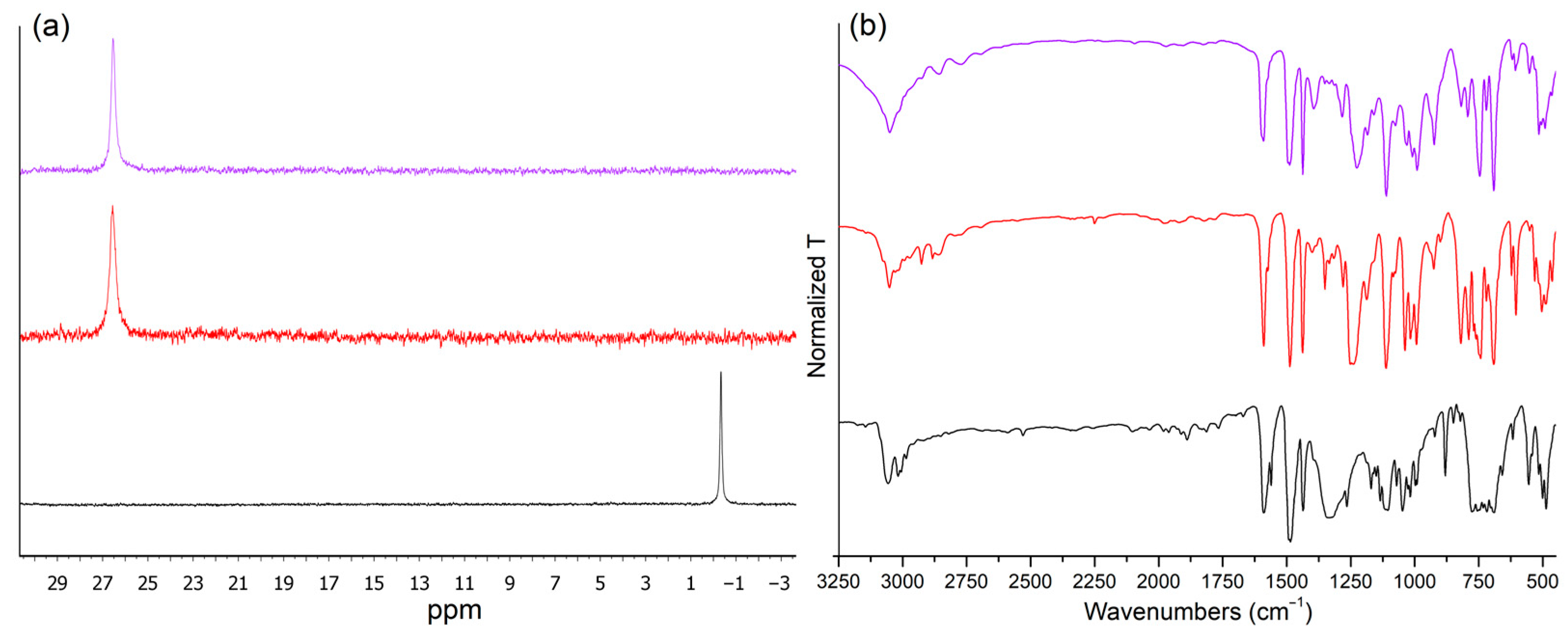
The 31P{1H} NMR spectra of both compounds in CDCl3 at 300 K were composed of a single resonance at 26.6 ppm, with full width at half maximum (FWHM) values between 35 and 50 Hz. The 31P resonance is noticeably shifted to a higher frequency compared to the free ligand (δ = −0.3 ppm under the same experimental conditions), probably because the interaction with MnX2 increases the relative weight of the (PhN+PPh2)2CH2 charge-separation ylide form. Moreover, the 31P resonance in free (PhN=PPh2)CH2 is sharper (FWHM = 15 Hz) thanks to the lack of paramagnetic centres (Figure 2). The 1H NMR spectra of the complexes were less diagnostic because of the broadness of the signals caused by paramagnetic relaxation (Figure S1), and thus it was not possible to assign the resonance corresponding to the methylene bridge (triplet, δ = 3.72 ppm, JPH = 13.4 Hz in the free ligand). Coordination effects on the phosphorus–nitrogen bonds are also evident comparing the FT-IR spectra of the free ligand and of the corresponding [MnX2{(PhN=PPh2)CH2}] complexes (Figure 2). In particular, the wide band centred at 1330 cm−1 in the FT-IR spectrum of (PhN=PPh2)CH2, assigned to νPN stretchings, is noticeably shifted to lower wavenumbers in the manganese(II) derivatives, falling in the 1250–1220 cm−1 range. Similar results were obtained by comparing the FT-IR spectra of the monodentate phosphanimine NPh=PPh3 and of the corresponding [MnX2(NPh=PPh3)2] (X = Cl, Br, I) complexes [44]. The AIM analysis [45] of the (3,−1) N=P bond critical points (BCPs) in the DFT-optimized structures of (PhN=PPh2)CH2 and of its Mn(II) complexes confirmed that the strength of the N=P bonds lowers upon coordination, with average values of potential energy density at BCP equal to −0.578 a.u. in the free ligand and −0.530 a.u. in [MnX2{(PhN=PPh2)CH2}].
The melting points of the two [MnX2{(PhN=PPh2)CH2}] complexes are similar, around 130 °C. TGA measurements under N2 atmosphere revealed that the two compounds start decomposing with mass loss at temperatures above 230 °C. The temperature threshold is strictly comparable with that obtained from TGA measurements on the free ligand (Figure S2).
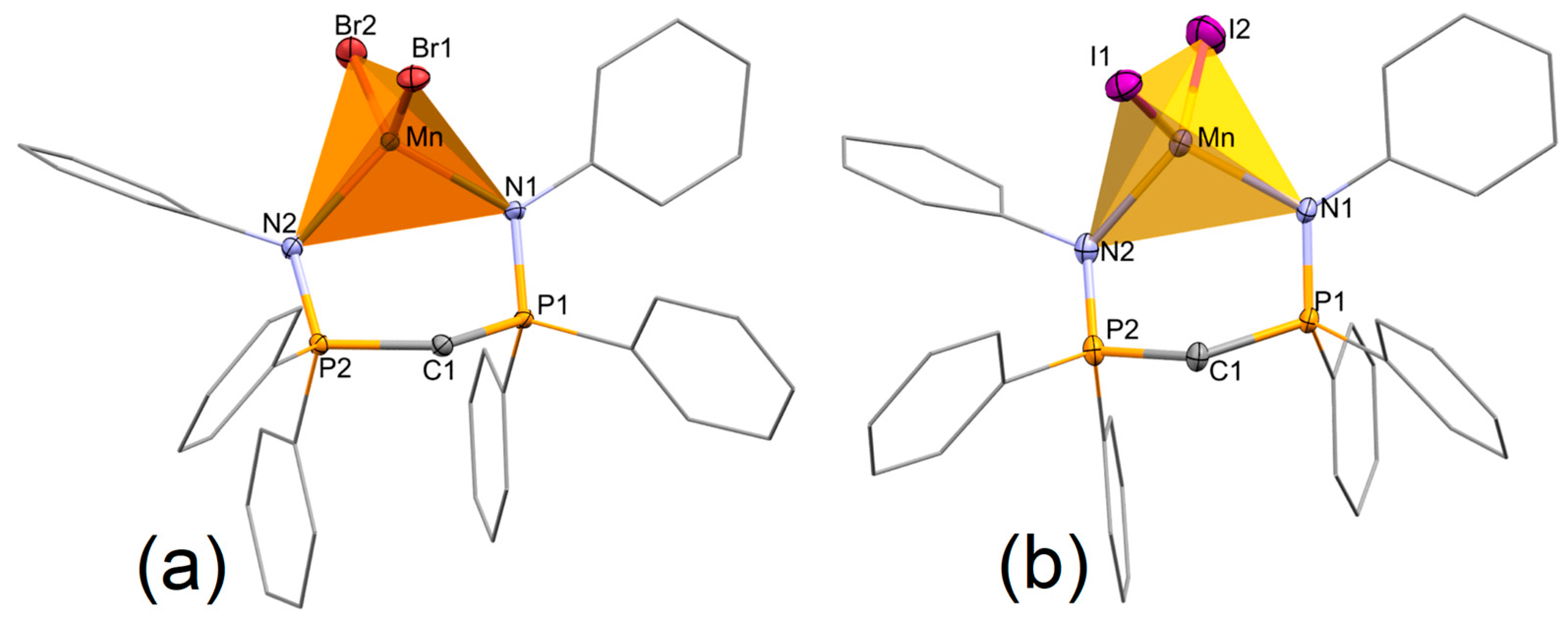
The formation of mononuclear complexes with distorted tetrahedral geometry was confirmed by X-ray diffraction on single crystals grown by slow diffusion of diethyl ether in dichloromethane solutions. Figure 3 shows the structures of the two compounds (see Figure S3 for their superimposition). Selected descriptors for the four-coordinate geometry are collected in Table S1. The differences between the two complexes are scarce, mainly related to the different lengths of the Mn–X bonds. In both compounds, there is a dichloromethane crystallization molecule that was removed from the plots shown in Figure 3. The manganese ion is tetracoordinated to two halide atoms and two nitrogen atoms of the bidentate (PhN=PPh2)CH2 ligand. Selected distances and angles are reported in the caption of Figure 3. The Mn–X bond lengths are in agreement with the change in the halogen, following the expected trend that Mn–Br bonds are shorter than Mn–I bonds [23,46]. The Mn–N distances become shorter on increasing the Mn–X bond length [X = Br, 2.117(2) and 2.126(2) Å, X = I, 2.109(4) and 2.114(4)]. The values are in line with those observed for other manganese(II) phosphanimine complexes [41] and for the bis(phosphanimine)methanide complex [Mn{N(SiMe3)2}{(PhMe3N=PPh2)CH}] (PhMe3 = mesityl) [42]. The Mn–N bond lengths are also comparable to those found in the phosphoraneiminato cubane complex [MnBr(NPEt3)]4 [47].
The most obtuse angle is the X-Mn-X angle, as occurs in other [MnX2(L^L)] complexes where the bite angle is not constrained by the structure of the bridge between the donor moieties [23,24,25,26,27,28], and it is larger for X = Br. The N–Mn–N angles, 104.65(9) and 105.26(15)° for X = Br and X = I, respectively, seem to be scarcely affected by the bidentate character of the ligand and adopt values relatively close to the O–Mn–O angles observed for related halide complexes with monodentate [O=P]-donors [46,48,49]. The N–Mn–N is meaningfully larger [123.1(7)°] in the phosphanimine complex [MnI2(Me3SiNPEt3)2] [41], probably because of the high steric hindrance of the trimethylsilyl substituents.
The six-membered metallacycle adopts a non-planar conformation resulting in a somewhat distorted screw-boat geometry. The classical parameters to define the puckering [50] are set out in the caption of Figure S4, and they are in accordance with a definition of θ around 90.0° and φ around k X 60 + 30. The intra-ring torsion angles are shown in Figure S4 to allow for conformational analysis of the rings. A closely related metallacycle was found in the tricoordinated bis(phosphanimine)methanide complex [Mn{N(SiMe3)2}{(PhMe3N=PPh2)CH}] [42], which shows slightly longer P–N bond distances (average 1.613 Å) compared to the complexes described here (average 1.601 Å). In the tricoordinated complex, the angles defined by the P(1)–C(1)–P(2) and N(1)–Mn–N(2) least-square planes and the P(1)–N(1)–P(2)–N(2) plane are, respectively, 61.25 and 54.36°, whilst in the tetracoordinated [MnX2{(PhN=PPh2)CH2}] compounds, the angles are 55.90(12) and 20.25(16)° for X = Br and 55.26(20) and 18.1(3)° for X = I. The values reveal that the manganese(II) centre is much closer to the P2N2 plane than in the tricoordinated complex. It is, however, worth noting that the P2N2 best square plane is far from the planarity, as expected for a screw-boat geometry, with root mean square deviations of 0.1029 and 0.1132 Å and P(1)–N(1)–N(2)–P(2) torsion angles of 14.4(2) and 15.9(2)° for X = Br and X = I, respectively.
[MnBr2{(PhN=PPh2)CH2}] and [MnI2{(PhN=PPh2)CH2}] crystals are isomorphs, and both contain a dichloromethane molecule in the crystal structure. The intermolecular interactions have the same nature in the two compounds and are constituted by C–H---X hydrogen bonds between two [MnX2{(PhN=PPh2)CH2}] complexes and between one [MnX2{(PhN=PPh2)CH2}] molecule and CH2Cl2, together with the interaction of a chlorine atom with a P-bonded phenyl ring. Figure S5 shows these interactions for [MnBr2{(PhN=PPh2)CH2}]. The parameters for the intermolecular interactions are set out in Table S2.

2.2. Photoluminescence of the Complexes

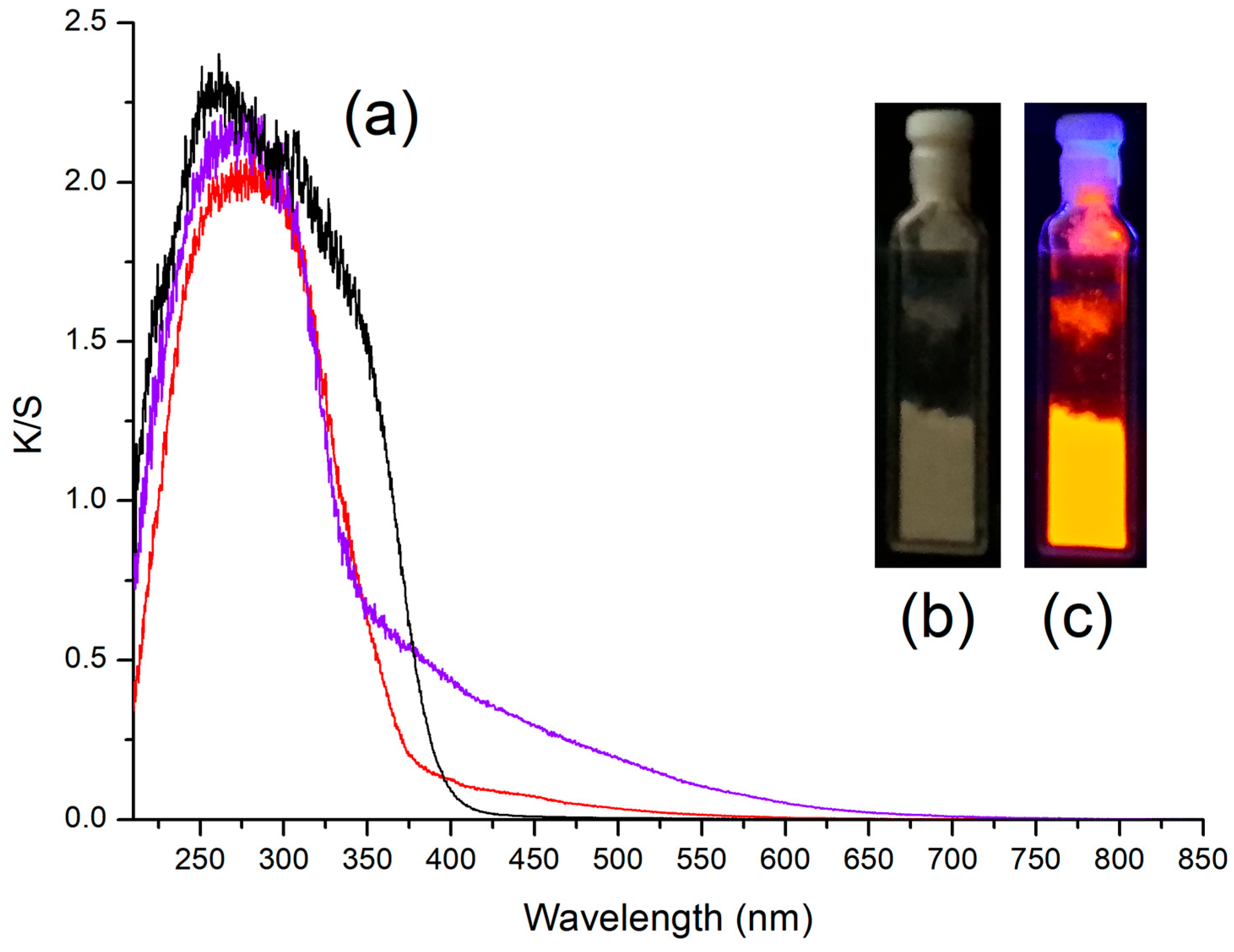
Solid samples of the [MnX2{(PhN=PPh2)CH2}] (X = Br, I) coordination compounds showed appreciable orange luminescence upon excitation with UV light, especially in the case of the bromo-complex (see for instance Figure 4). The result was unexpected, since complexes with monodentate phosphanimines having general formula [MnX2(NPh=PPh3)2] (X = Cl, Br, I) are known to show green photoluminescence [44]. Solutions of the two species in common organic solvents exhibited negligible luminescence, thus the investigations on the absorption and emission features were limited to the solid state. The Kubelka–Munk transformations of the reflectance spectra are observable in Figure 4, and compared to the spectrum of free (PhN=PPh2)CH2. The complexes show superimposable bands in the UV region, mainly attributable to the absorptions of the coordinated bis(phosphanimine) ligand, with K/S maximum at 280 nm. The onset falls around 380 nm, about 20 nm blue-shifted with respect to the free ligand. On the other hand, the visible range of the spectra is influenced by the nature of the coordinated halides. The superposition of unresolved, weak bands is present for wavelengths lower than 550 nm in the spectrum of [MnBr2{(PhN=PPh2)CH2}], attributable to the spin-forbidden 4G←6S absorptions of Mn(II) in tetrahedral field. The iodo-complex has comparatively more intense absorptions in the visible region and the wavelength range extends to about 650 nm. Cotton and Goodgame observed comparable features in the reflectance spectra of the tetrahedral phosphine oxide complexes [MnX2(O=PPh3)2] (X = Br, I). One of the possible explanations proposed by the authors for the reflectance spectrum of the iodo-complex was the occurrence of charge-transfer absorptions [51].
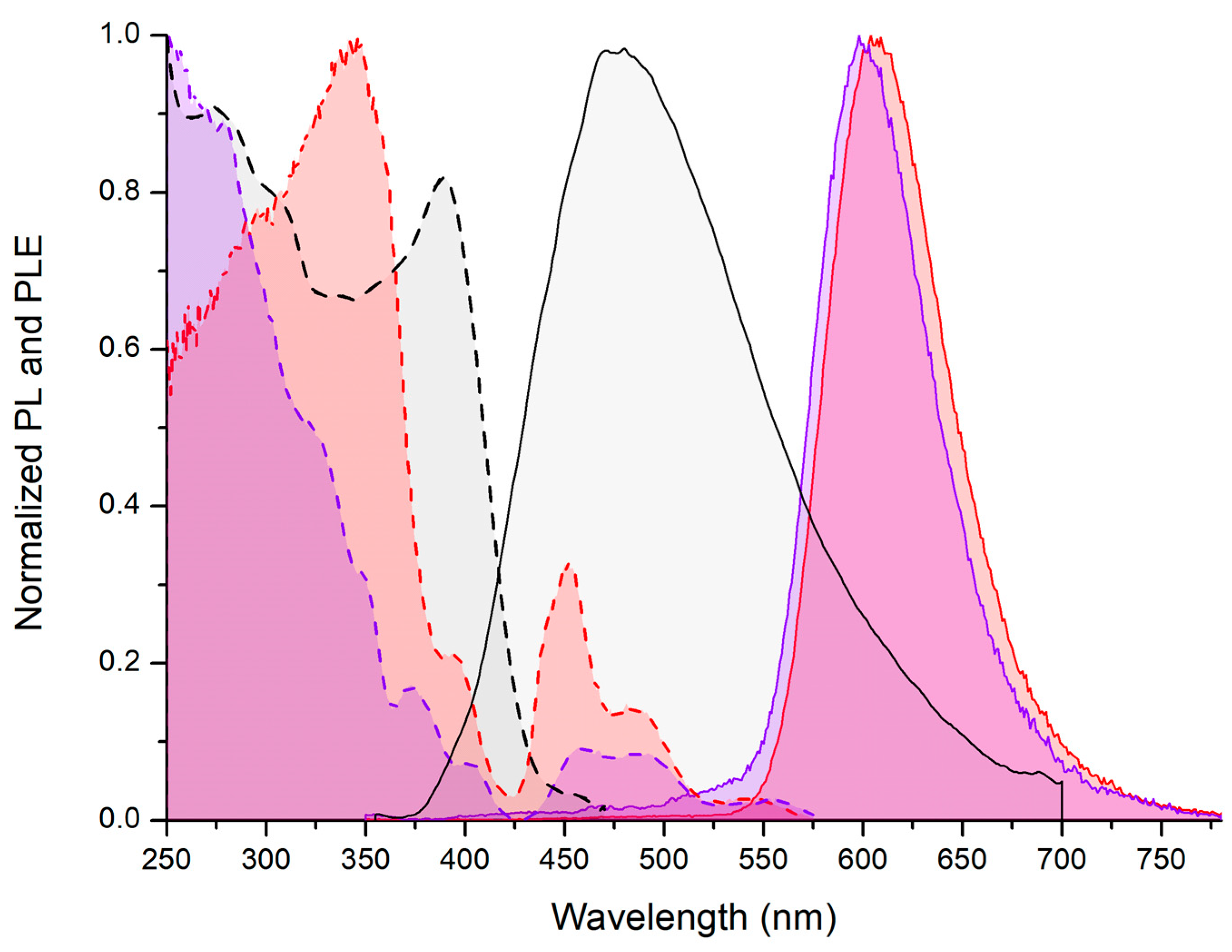
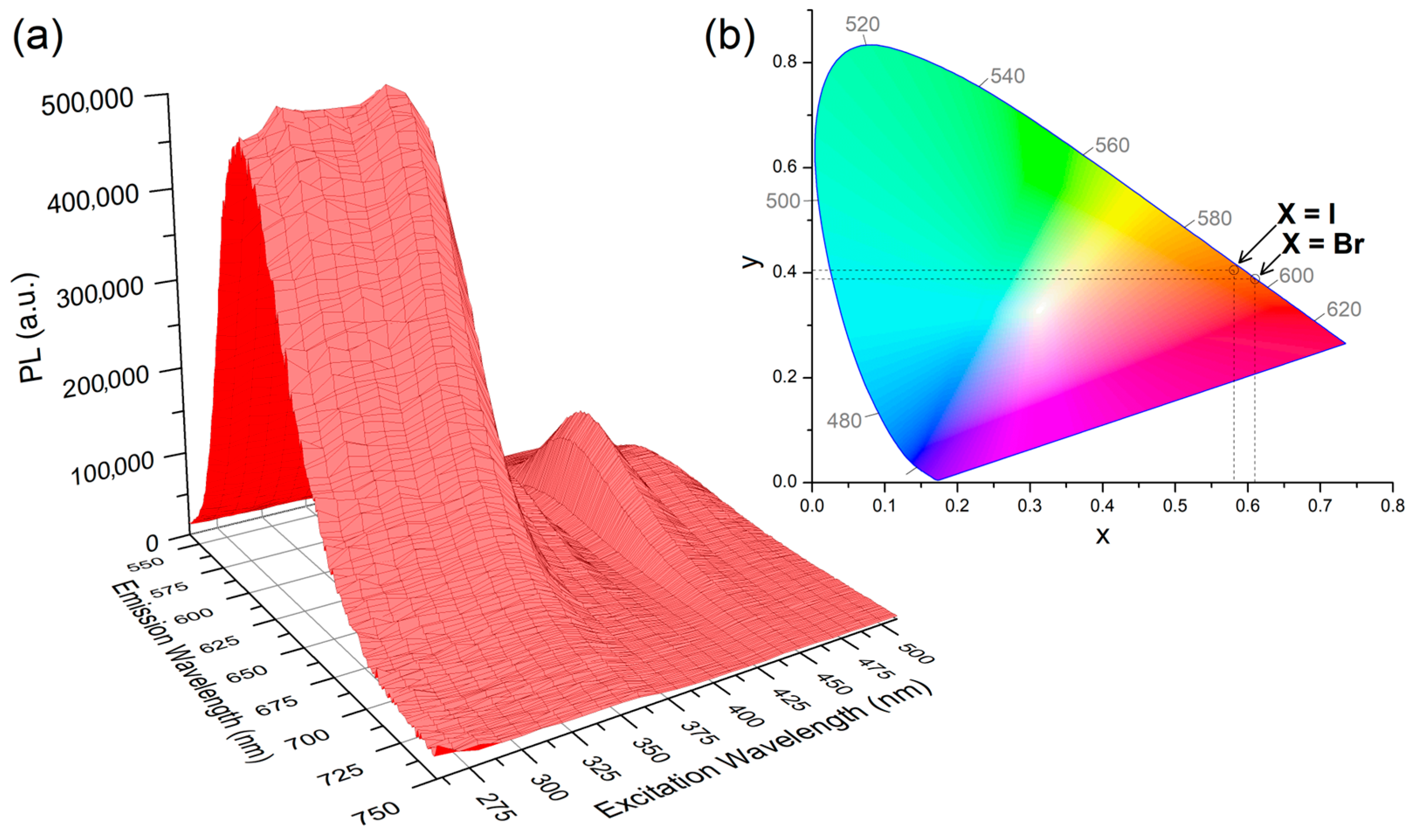
The steady-state luminescence spectra recorded for freshly prepared samples and for crystals investigated by means of X-ray diffraction resulted superimposable, confirming that the orange photoluminescence derives from tetrahedral manganese(II) complexes. The emission (PL) spectra of the two complexes are composed by a single band centred between 598 (X = I) and 607 (X = Br) nm. The FWHM is around 1900 cm−1 for both the compounds. Sharp PL bands with FWHM values in this range are coherent with manganese-centred emissions [21,22]. The CIE 1931 chromaticity coordinates are x = 0.610, y = 0.388 for [MnBr2{(PhN=PPh2)CH2}] and x = 0.581, y = 0.405 for [MnI2{(PhN=PPh2)CH2}], so the emitted colours fall in the orange region of the CIE 1931 diagram with almost unitary colour purity (Figure 5 and Figure 6). The emissions are independent from the excitation wavelength and are completely different from the weak blue fluorescence centred around 475 nm of solid samples of free (PhN=PPh2)CH2, having a FWHM value around 5300 cm−1 and lifetime in the nanoseconds range.
The excitation (PLE) spectra of the two complexes show bands between 425 and 575 nm attributable to the 4G←6S direct excitation of Mn(II), slightly red-shifted for X = I. Using the (4A+4E)4G←(6A)6S transitions centred at 450 (X = Br) and 456 (X = I) nm as references, the Stokes shift is about 500 cm−1 lower for [MnI2{(PhN=PPh2)CH2}] compared to [MnBr2{(PhN=PPh2)CH2}], possibly because the high steric bulk of the coordinated iodides reduces the geometric variations in the complex moving from the ground to the emitting states. Another metal-centred transition is present at 394 nm for [MnBr2{(PhN=PPh2)CH2}] and at 403 nm for [MnI2{(PhN=PPh2)CH2}]. The PLE spectra differ between the two compounds at shorter wavelengths. The bromo-complex is characterized by a strong ligand-centred excitation band centred at 346 nm that hides further Mn(II)-centred excitations. The PLE profile of [MnBr2{(PhN=PPh2)CH2}] resembles that of free (PhN=PPh2)CH2, but the maximum is blue-shifted, as expected from the reflectance spectra. On the contrary, metal-centred transitions are clearly observable in the PLE spectrum of the iodo-derivative with local maxima at 374, 349, and 324 nm, since the phosphaminine-centred excitations in the near-UV region are absent (Figure 5).
The ligand→Mn(II) antenna effect plays an important role only for [MnBr2{(PhN=PPh2)CH2}]. The different behaviour of the two compounds can be tentatively justified by supposing that the excitation with near-UV light of [MnI2{(PhN=PPh2)CH2}] could populate excited states different from the Mn(II) 4G manifold, such as Mn–I charge-transfer states, with subsequent non-radiative decay. Such a hypothesis is suggested by the reflectance spectra shown in Figure 4. Another possibility is that the high spin–orbit coupling associated with the coordinated iodides [52] could favour the intersystem crossing between ligand-centred excited states subjected to fast vibrational decay.
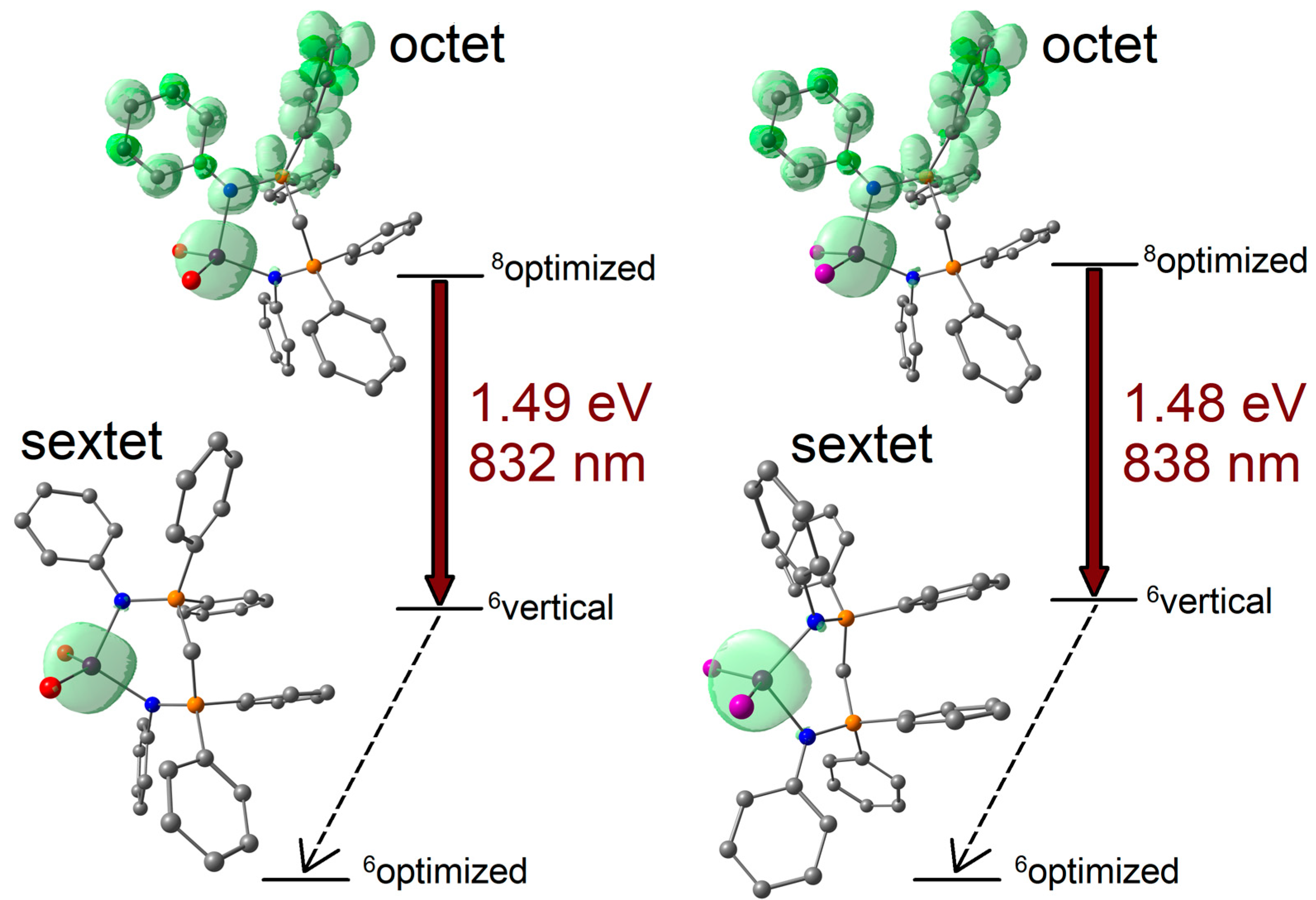
Non-green emissions from tetrahedral manganese(II) complexes are sometimes associated with the population of ligand-centred emitting states [53,54,55,56], while in other cases, suitable ligands increase the Δ/B ratio and cause a shift in the Mn(II)-centred emission to longer wavelengths [27,57]. This last possibility also appears reasonable for the [MnX2{(PhN=PPh2)CH2}] complexes, given the sharpness of the PL bands, the presence of metal-centred excitation bands in the PLE spectra, and the excitation-independent emissions. Moreover, DFT calculations on the [MnX2{(PhN=PPh2)CH2}] complexes in sextet and octet states suggest that phosphorescent emissions from ligand-centred excited states should have meaningfully lower energy with respect to the observed PL bands, with predicted wavelengths in the 830–840 nm range. The DFT-optimized structures are shown in Figure 7 together with the spin density plots that evidence how the octet states are formally constituted by (PhN=PPh2)CH2 ligands in triplet state coordinated to high-spin d5 metal centres.
The Racah B parameter, estimated on the basis of the (4A+4E)4G←(6A)6S excitation wavelength, is between 686 (X = Br) and 677 (X = I) cm−1, lower that the average value obtained for related [MnX2(NPh=PPh3)2] derivatives, 705 cm−1 [44]. The nephelauxetic ratio β is around 0.74 using 923 cm−1 as B value for the free Mn2+ ion [58]. The 4G←6S excitation bands are red-shifted with respect to those observed for green-emitting tetrahedral manganese(II) complexes [44,46,59,60], suggesting that the coordination of (PhN=PPh2)CH2 generates a relatively strong crystal field.
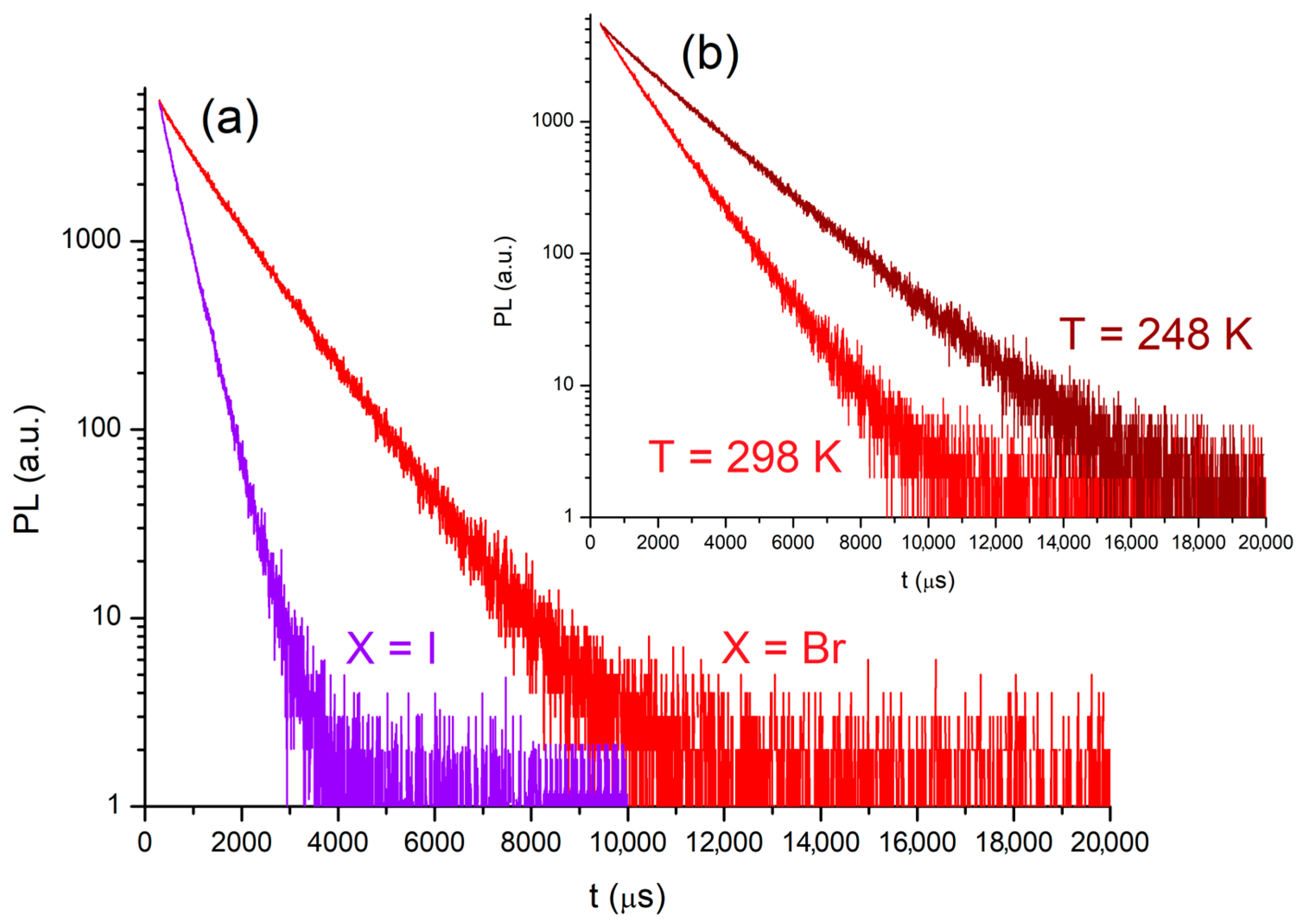
The lifetimes (τ) derived from the mono-exponential fit of the luminescence decay curves recorded at 298 K (Figure 8) are equal to 1120 μs for [MnBr2{(PhN=PPh2)CH2}] and 373 μs for [MnI2{(PhN=PPh2)CH2}], much longer than the values obtained for the monodentate phosphanimine derivatives [MnX2(NPh=PPh3)2] (X = Br, τ = 151 μs; X = I, τ = 55 μs) [44]. The τ value of [MnBr2{(PhN=PPh2)CH2}] is comparable to that measured for the tetrahedral bromo-complex [MnBr2(DBFDPO)], having the bidentate phosphine oxide 4,6-bis(diphenylphosphoryl)dibenzofuran (DBFDPO) in the coordination sphere [24,27]. The lower τ value of the iodo-complex is almost in part attributable to the acceleration of the radiative decay, ascribed to the increased degree of spin–orbit coupling [52].
Given the wider excitation range, [MnBr2{(PhN=PPh2)CH2}] was subjected to further investigations. The relative energy value computed for the DFT-optimized octet state is around 21,900 cm−1, while the onset of the PL band is at about 18,500 cm−1. The observed antenna effect is thus supported by the computational calculations. The photoluminescence quantum yield (Φ) at room temperature is about 6%, probably because of competitive vibrational decay. On the basis of the equation Φ = kr(kr + knr)−1 = τkr, the radiative (kr) and non-radiative (knr) rate constant are estimated around 5.4∙101 and 8.4∙102 s−1, respectively [61]. The radiative decay rate is about one order of magnitude slower than that of [MnBr2(DBFDPO)] (Φ = 81.4%, τ = 1.0 ms) [24]. Lowering the temperature to 248 K did not cause any appreciable variation in the PL and PLE spectra of [MnBr2{(PhN=PPh2)CH2}], but the lifetime of the emission noticeably increased to 1878 μs, a result in line with the expected decrease in knr (Figure 8).

3. Experimental Section

3.1. Materials and Methods

Anhydrous manganese(II) halides and other inorganic and organic reactants were purchased from Merck (Darmstadt, Germany). Solvents were purified prior to use according to established methods [62]. Deuterated chloroform (Euriso-Top, Saarbrücken, Germany) was used as received. Phenyl azide was synthesized from phenylhydrazine under a fume hood following a reported procedure. The distillation step was omitted, and the compound was purified by silica gel filtration using pentane as eluent [63]. Safety note: Organic azides are potentially explosive compounds. All manipulations were performed using limited quantities of reactants, with careful temperature control throughout the synthetic steps. (PhN=PPh2)CH2 was synthesized from phenyl azide and bis(diphenylphosphino)methane according to methods in the literature [64]. The moisture-sensitive compounds were prepared and stored in a MBraun MB10 glove box (Garching bei München, Germany) filled with nitrogen and equipped for both organic and inorganic syntheses.

3.2. Characterizations

Elemental analyses for carbon, hydrogen, and nitrogen were performed using an Elementar (Langenselbold, Germany) Unicube microanalyzer. Halide contents were determined by Mohr’s method [65]. Magnetic susceptibility measurements were carried out on solid samples at 298 K under a magnetic field strength of 3.5 kGauss using an MK1 magnetic susceptibility balance (Sherwood Scientific Ltd., Cambridge, UK). The measured values were corrected for diamagnetic contributions using tabulated Pascal’s constants [66]. FT-IR spectra of the species dispersed in KBr (spectroscopy grade, Merck) were recorded in the 4000–450 cm−1 range using a Perkin-Elmer (Shelton, CT, USA) Spectrum One spectrophotometer. Samples were prepared under N2 atmosphere in a glove box. 31P{1H} NMR spectra were recorded on a Bruker (Billerica, MA, USA) Avance 400 spectrometer operating at 400.13 MHz for 1H resonance. 31P chemical shifts are reported relative to external 85% H3PO4 in water. Melting points were registered using a FALC (Treviglio, Italy) 360 D instrument equipped with a camera. Thermogravimetric analyses (TGA) were carried out under N2 atmosphere with a Perkin-Elmer TGA 4000 instrument.

3.3. Synthesis of [MnX2{(PhN=PPh2)CH2}] (X = Br, I)

Anhydrous MnX2 (0.5 mmol; X = Br, 0.107 g; X = I, 0.154 g) was dissolved in 25 mL of acetonitrile. A stoichiometric amount of (PhN=PPh2)CH2 (0.5 mmol, 0.283 g) was added and the reaction mixture was kept stirring at room temperature for 12 h. The solvent was then removed by evaporation at reduced pressure and dichloromethane (25 mL) was added. The solution was purified by centrifugation. Diethyl ether (10 mL) was added after evaporation of the solvent, and the solid that separated was collected by filtration, washed with 5 mL of diethyl ether, and dried under vacuum. Yield: 0.301 g (77%) for X = Br; 0.302 g (69%) for X = I.
  • Characterization of [MnBr2{(PhN=PPh2)CH2}]. Anal. calcd. for C37H32Br2MnN2P2 (781.36 g mol−1, %): C, 56.87; H, 4.13; N, 3.59; Br, 20.45. Found (%): 56.65; H, 4.15; N, 3.57; Br, 20.36. IR (KBr, cm−1): 1591, 1489 (νCC); 1250, 1237 (νPN). χMcorr (293 K, cgsu): 1.50 × 10⁻² (μ = 5.9 BM). 31P{1H} NMR (CDCl3, 300 K): δ 26.6 (s, FWHM = 50 Hz). M.p. (°C): 130 (mass loss > 230 °C).
  • Characterization of [MnI2{(PhN=PPh2)CH2}]. Anal. calcd. for C37H32I2MnN2P2 (875.36 g mol−1, %): C, 50.77; H, 3.68; N, 3.20; I, 28.99. Found (%): 50.58; H, 3.70; N, 3.18; I, 28.88. IR (KBr, cm−1): 1591, 1489 (νCC); 1227 (νPN). χMcorr (293 K, cgsu): 1.47 × 10⁻² (μ = 5.9 BM). 31P{1H} NMR (CDCl3, 300 K): δ 26.6 (s, FWHM = 35 Hz). M.p. (°C): 132 (mass loss > 230 °C).

3.4. Single-Crystal X-Ray Structure Determinations

Crystallographic data were collected at CACTI (Universidade de Vigo) at 100 K using a Bruker D8 Venture diffractometer with a Photon II CMOS detector and Mo-Kα radiation (λ = 0.71073 Å) generated by an Incoatec (Geesthacht, Germany) high-brillance microfocus source equipped with Incoatec Helios multilayer optics. The software APEX5 version 2023.9-4 [67] was used for collecting frames of data, indexing reflections, and determination of lattice parameters, SAINT version 8.40B [68] for integration of intensity of reflections, and SADABS version 2016/2 [69] for scaling and empirical absorption correction. Further crystallographic treatment was performed with the Oscail programme v.4.7.1 [70]. The structures of the compounds were solved by using the SHELXT version 2018/2 programme [71] and refined by a full-matrix least-squares method based on F2 using the SHELXL version 2019/2 programme [72]. Non-hydrogen atoms were refined with anisotropic displacement parameters. Hydrogen atoms were included in idealized positions and refined with isotropic displacement parameters. The PLATON programme (version: 80125) [73] was used to obtain some geometrical parameters from the cif files. CCDC 2499368 and 2499369 contain the supplementary crystallographic data. These data can be obtained free of charge from the Cambridge Crystallographic Data Centre via www.ccdc.cam.ac.uk/structures (accessed on 18 November 2025). Other details about crystal data and structural refinement are given in Table S3. The optimization of the positions of the hydrogen atoms in the crystals by means of periodic DFT calculations is described in the Supplementary Materials, Table S4.

3.5. Reflectance and Photoluminescence Measurements

Reflectance and luminescence measurements were carried out on powder samples placed in air-tight quartz sample holders filled in a glove box to avoid interactions of the compounds with moisture. Reflectance spectra in the 210–850 nm range were collected at room temperature with a Jasco (Tokyo, Japan) V-770 spectrophotometer equipped with a 150 mm Jasco ILN-925 integrating sphere. Spectroscopy-grade polytetrafluoroethylene powder was used as reference. Photoluminescence emission (PL) and excitation (PLE) spectra as well as lifetime decay curves were registered using an Edinburgh Instruments (Livingston, Scotland, UK) FS5 spectrofluorometer with a Peltier-based temperature controller. Suitable long-pass filters were placed in front of the acquisition systems. The excitation and emission spectra were corrected for the instrumental functions. Time-resolved analyses were performed in multi-channel scaling mode (MCS) using an integrated pulsed xenon lamp and in time-correlated single-photon counting (TCSPC) with an Edinburgh Instruments EPLED pulsed led centred at 365 nm. The room temperature photoluminescence quantum yield (Φ) of [MnBr2{(PhN=PPh2)CH2}] at the solid state was measured with an OceanOptics (Orlando, FL, USA) HR4000CG detector fibre-coupled to an integrating sphere connected to an OceanOptics UV LED continuous source (λmax = 365 nm). The value reported is the average of three measurements.
  • Photoluminescence data for [MnBr2{(PhN=PPh2)CH2}]. PL (solid, λexcitation = 280 nm, 298 K, nm): 607 (FWHM = 1900 cm−1) 4T1(4G)→6A(6S). CIE 1931: x = 0.610; y = 0.388. PLE (solid, λemission = 610 nm, 298 K, nm): <385 (max 346) ligand-centred and metal-centred; 390–575 (local max 394, 450, 487, 543) metal-centred. τ (solid, λexcitation = 345 nm, λemission = 600 nm, μs): 1120 (T = 298 K), 1878 (T = 248 K). Φ (solid, λexcitation = 360 nm): 6%.
  • Photoluminescence data for [MnI2{(PhN=PPh2)CH2}]. PL (solid, λexcitation = 280 nm, 298 K, nm): 598 (FWHM = 1900 cm−1) 4T1(4G)→6A(6S). CIE 1931: x = 0.581; y = 0.405. PLE (solid, λemission = 610 nm, 298 K, nm): <360 ligand-centred and metal-centred; 365–575 (local max 374, 403, 456, 491, 550) metal-centred. τ (solid, λexcitation = 300 nm, λemission = 600 nm, μs): 373 (T = 298 K).

3.6. Computational Simulations of Single Molecules

The geometric optimizations of the complexes were carried out using the hybrid meta-GGA DFT functional TPSS0, with 25% HF exchange [74], in combination with Ahlrichs’ def2-TZVP basis set and relativistic ECP for iodine [75,76,77]. The D4 method for London dispersion correction was added to the calculations [78]. The “unrestricted” approach was used, and the absence of meaningful spin contamination was verified by comparing the computed <S2> values with the theoretical ones. The stationary points were characterized as true minima by means of IR simulations, carried out with the harmonic approximation [79]. Calculations were carried out using ORCA version 5.0.3 [80,81] and the results were elaborated with Multiwfn version 3.8 [82,83]. Cartesian coordinates of the DFT-optimized structures are collected in Table S5.

4. Conclusions

Manganese is an inexpensive, non-toxic, and earth-abundant element, and these features currently drive the development of manganese-based compounds of interest for advanced technologies. We reported that the formal replacement of bidentate phosphine oxides with electronically comparable bis(phosphanimine) ligands in the coordination sphere of manganese(II) can yield luminescent coordination compounds with unexpected emission features, despite the tetrahedral coordination geometry of the final products. Polydentate phosphanimines thus appear to be promising candidates for the synthesis of new sustainable luminescent coordination compounds. Further studies are necessary to improve the luminescence performances, particularly the quantum yield. Moreover, the preparation of materials for optics and lighting requires investigating the embedding of phosphanimine-based manganese(II) complexes in suitable matrices.

Supplementary Materials

The following supporting information can be downloaded at https://www.mdpi.com/article/10.3390/molecules31010161/s1. Figure S1: 1H NMR spectra of [MnX2{(PhN=PPh2)CH2}]; Figure S2: TGA curves of (PhN=PPh2)CH2, [MnBr2{(PhN=PPh2)CH2}] and [MnI2{(PhN=PPh2)CH2}]; Figure S3: Superposition of the structures of the [MnX2{(PhN=PPh2)CH2}] complexes; Table S1: Descriptors for the four-coordinate geometry for [MnX2{(PhN=PPh2)CH2}]; Figure S4: Torsion angles in the six-membered metallacycles of [MnX2{(PhN=PPh2)CH2}]; Figure S5: Supramolecular interactions in the crystal structure of [MnBr2{(PhN=PPh2)CH2}]; Table S2: Parameters for the intermolecular interactions in the crystal structures of [MnX2{(PhN=PPh2)CH2}]; Table S3: Crystal data and structure refinement for [MnX2{(PhN=PPh2)CH2}]; Table S4: Stationary points obtained after periodic DFT calculations; Table S5: Cartesian coordinates of the DFT-optimized geometries of [MnX2{(PhN=PPh2)CH2}]. Refs. [84,85,86,87,88,89,90,91,92,93] are cited in Supplementary Materials.

Author Contributions

Conceptualization, M.B. and D.P.; methodology, M.B., J.C. and D.P.; software, M.B. and J.C.; validation, M.B., D.P., J.C., D.R.-G. and V.B.; formal analysis, M.B., D.P., J.C., D.R.-G. and V.B.; investigation, M.B., J.C. and D.P.; resources, M.B., J.C., D.R.-G. and V.B.; data curation, M.B., D.P., J.C., D.R.-G. and V.B.; writing—original draft preparation, M.B., D.P. and J.C.; writing—review and editing, M.B., D.P., J.C., D.R.-G. and V.B.; visualization, M.B., J.C. and D.P.; supervision, D.R.-G. and V.B.; project administration, D.R.-G.; funding acquisition, D.R.-G. All authors have read and agreed to the published version of the manuscript.

Funding

Project funded under the National Recovery and Resilience Plan (NRRP), Mission 4 Component 2 Investment 1.3—Call for tender No. 1561 of 11.10.2022 of Ministero dell’Università e della Ricerca (MUR); funded by the European Union—NextGenerationEU, project code PE0000021, Concession Decree No. 1561 of 11.10.2022 adopted by Ministero dell’Università e della Ricerca (MUR), CUP C93C22005230007, project title “Network 4 Energy Sustainable Transition—NEST”.

Institutional Review Board Statement

Not applicable.

Informed Consent Statement

Not applicable.

Data Availability Statement

Data are contained within the article and Supplementary Materials.

Acknowledgments

CACTI (Universidade de Vigo) is acknowledged for X-ray data collection. We sincerely thank Fabio Marchetti (Università di Pisa) for the availability of the academic version of CASTEP.

Conflicts of Interest

The authors declare no conflicts of interest. The funders had no role in the design of the study; in the collection, analyses, or interpretation of data; in the writing of the manuscript; or in the decision to publish the results.

References

  1. Miekisch, T.; Mai, H.J.; Meyer zu Köcker, R.; Dehnicke, K.; Magull, J.; Goesmann, H. Silylierte Phosphanimin-Komplexe von Chrom(II), Palladium(II) und Kupfer(II). Die Kristallstrukturen von [CrCl2(Me3SiNPMe3)2], [PdCl2(Me3SiNPEt3)2] und [CuCl2(Me3SiNPMe3)]2. Z. Anorg. Allg. Chem. 1996, 622, 583–588. [Google Scholar] [CrossRef]
  2. Meyer Zu Köcker, R.; Frenzen, G.; Neumüller, B.; Dehnicke, K.; Magull, J. Synthese und Kristallstrukturen der PhosphaniminKomplexe MCl2(Me3SiNPMe3)2 mit M = Zn und Co, und CoCl2(HNPMe3)2. Z. Anorg. Allg. Chem. 1994, 620, 431–437. [Google Scholar] [CrossRef]
  3. Imhoff, P.; Elsevier, C.J.; Stam, C.H. Iminophosphorane complexes of rhodium(I) and X-ray crystal structure of [Rh(COD)Cl(Et3P=N-p-tolyl)]. Inorg. Chim. Acta 1990, 175, 209–216. [Google Scholar] [CrossRef]
  4. Maurer, A.; Fenske, D.; Beck, J.; Strähle, J.; Böhm, E.; Dehnicke, K. Kupfer(I)-chlorid-Addukte von Phosphoraniminen Die Kristallstrukturen von Ph3PNPh·CuCl und von 2,3-Bis(triphenylphosphoranylidenamino)maleinsäure-N-methylimid-Kupfer(I)-chlorid. Z. Naturforsch. B 1988, 43, 5–11. [Google Scholar] [CrossRef]
  5. Fenske, D.; Böhm, E.; Dehnicke, K.; Strähle, J. N-Trimethylsilyl-iminotriphenylphosphoran-Kupfer(II)-chlorid, [Me3SiNPPh3·CuCl2]2 Synthese und Kristallstruktur. Z. Naturforsch. B 1988, 43, 1–4. [Google Scholar] [CrossRef]
  6. Abel, E.W.; Mucklejohn, S.A.; Cameron, T.S.; Cordes, R.E. The Dimeric Phosphinimine Complex [CdI2(HN:PPh3)2]2 Containing N-H···I Hydrogen Bonds. Z. Naturforsch. B 1978, 33, 339–340. [Google Scholar] [CrossRef]
  7. Braun, T.P.; Gutsch, P.A.; Zimmer, H. Complexes of N-Aryltriphenylphosphinimines with Mercury(II) Halides. Z. Naturforsch. B 1999, 54, 858–862. [Google Scholar] [CrossRef]
  8. Venderbosch, B.; Oudsen, J.-P.H.; van der Vlugt, J.I.; Korstanje, T.J.; Tromp, M. Cationic Copper Iminophosphorane Complexes as CuAAC Catalysts: A Mechanistic Study. Organometallics 2020, 39, 3480–3489. [Google Scholar] [CrossRef]
  9. García-Álvarez, J.; García-Garrido, S.E.; Cadierno, V. Iminophosphorane–phosphines: Versatile ligands for homogeneous catalysis. J. Organomet. Chem. 2014, 751, 792–808. [Google Scholar] [CrossRef]
  10. Buchard, A.; Auffrant, A.; Klemps, C.; Vu-Do, L.; Boubekeur, L.; Le Goffa, X.F.; Le Floch, P. Highly efficient P–N nickel(II) complexes for the dimerisation of ethylene. Chem. Commun. 2007, 15, 1502–1504. [Google Scholar] [CrossRef] [PubMed]
  11. Imhoff, P.; van Asselt, R.; Elsevier, C.J.; Zoutberg, M.C.; Stam, C.H. Reactions of bis(iminophosphoranyl)methanes with chlorobridged rhodium or iridium dimers giving complexes in which the ligand is coordinated either as a σ-N,σ-N′ or as a σ-N, σ-C chelate. X-ray crystal structure of the σ-N, σ-N′ Rh(I) complex Rh{(4-CH3-C6H4-N=PPh2)2CH2}(COD)]PF6. Inorg. Chim. Acta 1991, 184, 73–87. [Google Scholar] [CrossRef]
  12. Tannoux, T.; Auffrant, A. Complexes featuring tridentate iminophosphorane ligands: Synthesis, reactivity, and catalysis. Coord. Chem. Rev. 2023, 474, 214845. [Google Scholar] [CrossRef]
  13. Al-Benna, S.; Sarsfield, M.J.; Thornton-Pett, M.; Ormsby, D.L.; Maddox, P.J.; Brès, P.; Bochmann, M. Sterically hindered iminophosphorane complexes of vanadium, iron, cobalt and nickel: A synthetic, structural and catalytic study. J. Chem. Soc. Dalton Trans. 2000, 23, 4247–4257. [Google Scholar] [CrossRef]
  14. Jain, A.; Karmakar, H.; Roesky, P.W.; Panda, T.K. Role of Bis(phosphinimino)methanides as Universal Ligands in the Coordination Sphere of Metals across the Periodic Table. Chem. Rev. 2023, 123, 13323–13373. [Google Scholar] [CrossRef]
  15. Abel, E.W.; Mucklejohn, S.A. The chemistry of phosphinimines. Phosphorus Sulfur Silicon Relat. Elem. 1981, 9, 235–266. [Google Scholar] [CrossRef]
  16. Cotton, F.A.; Daniels, L.M.; Huang, P. Correlation of structure and triboluminescence for tetrahedral manganese(II) compounds. Inorg. Chem. 2001, 40, 3576–3578. [Google Scholar] [CrossRef] [PubMed]
  17. Tang, Y.-Y.; Wang, Z.-X.; Li, P.-F.; You, Y.-M.; Stroppa, A.; Xiong, R.-G. Brilliant triboluminescence in a potential organic–inorganic hybrid ferroelectric: (Ph3PO)2MnBr2. Inorg. Chem. Front. 2017, 4, 154–159. [Google Scholar] [CrossRef]
  18. Huang, X.; Qin, Y.; She, P.; Meng, H.; Liu, S.; Zhao, Q. Functionalized triphenylphosphine oxide-based manganese(II) complexes for luminescent printing. Dalton Trans. 2021, 50, 8831–8836. [Google Scholar] [CrossRef]
  19. Berezin, A. Birefringence and polarized luminescence of a manganese(II) chloride–triphenylphosphine oxide compound: Application in LEDs and photolithography. Mater. Chem. Front. 2023, 7, 2475–2483. [Google Scholar] [CrossRef]
  20. Lu, J.; Gao, J.; Wang, S.; Xie, M.-J.; Li, B.-Y.; Wang, W.-F.; Mi, J.-R.; Zheng, F.-K.; Guo, G.-C. Improving X-ray Scintillating Merits of Zero-Dimensional Organic–Manganese(II) Halide Hybrids via Enhancing the Ligand Polarizability for High-Resolution Imaging. Nano Lett. 2023, 23, 4351–4358. [Google Scholar] [CrossRef]
  21. Qin, Y.; She, P.; Huang, X.; Huang, W.; Zhao, Q. Luminescent manganese(II) complexes: Synthesis, properties and optoelectronic applications. Coord. Chem. Rev. 2020, 416, 213331. [Google Scholar] [CrossRef]
  22. Tao, P.; Liu, S.-J.; Wong, W.-J. Phosphorescent manganese(II) complexes and their emerging applications. Adv. Opt. Mater. 2020, 8, 2000985. [Google Scholar] [CrossRef]
  23. Chen, J.; Zhang, Q.; Zheng, F.-K.; Liu, Z.-F.; Wang, S.-H.; Wu, A.-Q.; Guo, G.-C. Intense photo- and tribo-luminescence of three tetrahedral manganese(II) dihalides with chelating bidentate phosphine oxide ligand. Dalton Trans. 2015, 44, 3289–3294. [Google Scholar] [CrossRef] [PubMed]
  24. Qin, Y.; Tao, P.; Gao, L.; She, P.; Liu, S.; Li, X.; Li, F.; Wang, H.; Zhao, Q.; Miao, Y.; et al. Designing Highly Efficient Phosphorescent Neutral Tetrahedral Manganese(II) Complexes for Organic Light-Emitting Diodes. Adv. Opt. Mater. 2019, 7, 1801160. [Google Scholar] [CrossRef]
  25. Artem’ev, A.V.; Davydova, M.P.; Rakhmanova, M.I.; Bagryanskaya, I.Y.; Pishchur, D.P. A family of Mn(II) complexes exhibiting strong photo- and triboluminescence as well as polymorphic luminescence. Inorg. Chem. Front. 2021, 8, 3767–3774. [Google Scholar] [CrossRef]
  26. Tan, G.-H.; Chen, Y.-N.; Chuang, Y.-T.; Lin, H.-C.; Hsieh, C.-A.; Chen, Y.-S.; Lee, T.-Y.; Miao, W.-C.; Kuo, H.-C.; Chen, L.-Y.; et al. Highly Luminescent Earth-Benign Organometallic Manganese Halide Crystals with Ultrahigh Thermal Stability of Emission from 4 to 623 K. Small 2023, 19, 2205981. [Google Scholar] [CrossRef] [PubMed]
  27. She, P.; Zheng, Z.; Qin, Y.; Li, F.; Zheng, X.; Zhang, D.; Xie, Z.; Duan, L.; Wong, W.-Y. Color Tunable Phosphorescent Neutral Manganese(II) Complexes Through Steric Hindrance Driven Bond Angle Distortion. Adv. Opt. Mater. 2024, 12, 2302132. [Google Scholar] [CrossRef]
  28. Huo, Z.-Z.; Wang, Y.; Yang, B.; Liang, J.-Q.; Hong, X.-F.; An, Q.; Yuan, L.; Ma, H.; Zuo, J.-L.; Zheng, Y.-X. Circularly Polarized Electroluminescence from Chiral Manganese(II) Complexes. Adv. Opt. Mater. 2025, 13, 2402684. [Google Scholar] [CrossRef]
  29. Artem’ev, A.V.; Davydova, M.P.; Berezin, A.S.; Brel, V.K.; Morgalyuk, V.P.; Bagryanskaya, I.Y.; Samsonenko, D.G. Luminescence of the Mn2+ ion in non-Oh and Td coordination environments: The missing case of square pyramid. Dalton Trans. 2019, 48, 16448–16456. [Google Scholar] [CrossRef]
  30. Meng, H.; Zhu, W.; Li, F.; Huang, X.; Qin, Y.; Liu, S.; Yang, Y.; Huang, W.; Zhao, Q. Highly emissive and stable five-coordinated manganese(II) complex for X-ray imaging. Laser Photonics Rev. 2021, 15, 2100309. [Google Scholar] [CrossRef]
  31. Zhou, Z.; Meng, H.; Li, F.; Jiang, T.; Yang, Y.; Liu, S.; Zhao, Q. Highly Luminescent Nonclassical Binuclear Manganese(II) Complex Scintillators for Efficient X-ray Imaging. Inorg. Chem. 2023, 62, 5279–5736. [Google Scholar] [CrossRef] [PubMed]
  32. Zhou, Z.; Jiang, T.; Yang, Y.; Deng, Y.; Wang, M.; Ma, Y.; Liu, S.; Zhao, Q. Multifunctional Chiral Five-Coordinated Manganese(II) Complexes for White LED and X-Ray Imaging Applications. Adv. Opt. Mater. 2024, 12, 2302185. [Google Scholar] [CrossRef]
  33. Bortoluzzi, M.; Castro, J.; Trave, E.; Dallan, D.; Favaretto, S. Orange-emitting manganese(II) complexes with chelating phosphine oxides. Inorg. Chem. Commun. 2018, 90, 105–107. [Google Scholar] [CrossRef]
  34. Berezin, A.S.; Samsonenko, D.G.; Brel, V.K.; Artem’ev, A.V. “Two-in-one” organic–inorganic hybrid MnII complexes exhibiting dual-emissive phosphorescence. Dalton Trans. 2018, 47, 7306–7315. [Google Scholar] [CrossRef]
  35. Berezin, A.S.; Davydova, M.P.; Bagryanskaya, I.Y.; Artyushin, O.I.; Brel, V.K.; Artem’ev, A.V. A red-emitting Mn(II)-based coordination polymer build on 1,2,4,5-tetrakis(diphenylphosphinyl)benzene. Inorg. Chem. Commun. 2019, 107, 107473. [Google Scholar] [CrossRef]
  36. Davydova, M.P.; Bauer, I.A.; Brel, V.K.; Rakhmanova, M.I.; Bagryanskaya, I.Y.; Artem’ev, A.V. Manganese(II) thiocyanate complexes with bis(phosphine oxide) ligands: Synthesis and excitation wavelength-dependent multicolor luminescence. Eur. J. Inorg. Chem. 2020, 2020, 695–703. [Google Scholar] [CrossRef]
  37. Wu, Y.; Zhang, X.; Xu, L.-J.; Yang, M.; Chen, Z.-N. Luminescent vapochromism due to a change of the ligand field in a one-dimensional manganese(II) coordination polymer. Inorg. Chem. 2018, 57, 9175–9181. [Google Scholar] [CrossRef]
  38. Wu, Y.; Zhang, X.; Zhang, Y.-Q.; Yang, M.; Chen, Z.-N. Achievement of ligand-field induced thermochromic luminescence via two-step single-crystal to single-crystal transformations. Chem. Commun. 2018, 54, 13961–13964. [Google Scholar] [CrossRef] [PubMed]
  39. Artem’ev, A.V.; Davydova, M.P.; Berezin, A.S.; Sukhikh, T.S.; Samsonenko, D.G. Photo- and triboluminescent robust 1D polymers made of Mn(II) halides and meta-carborane based bis(phosphine oxide). Inorg. Chem. Front. 2021, 8, 2261–2270. [Google Scholar] [CrossRef]
  40. Davydova, M.P.; Meng, L.; Rakhmanova, M.I.; Jia, Z.; Berezin, A.S.; Bagryanskaya, I.Y.; Lin, Q.; Meng, H.; Artem’ev, A.V. Strong Magnetically-Responsive Circularly Polarized Phosphorescence and X-Ray Scintillation in Ultrarobust Mn(II)–Organic Helical Chains. Adv. Mater. 2023, 35, 2303611. [Google Scholar] [CrossRef]
  41. Mai, H.-J.; Wocadlo, S.; Massa, W.; Weller, F.; Dehnicke, K.; Maichle-Mössmer, C.; Strähle, J. Phosphanimin-Komplexe von Mangan(II)halogeniden. Die Kristallstrukturen von [MnCl2(Me3SiNPEt3)]2, [MnI2(Me3SiNPEt3)2] und [MnI2(Me2Si(NPEt3)2)]. Z. Naturforsch. B 1995, 50, 1215–1221. [Google Scholar] [CrossRef]
  42. Evans, D.J.; Hill, M.S.; Hitchcock, P.B. Tuning low-coordinate metal environments: High spin d5–d7 complexes supported by bis(phosphinimino)methyl ligation. Dalton Trans. 2003, 4, 570–574. [Google Scholar] [CrossRef]
  43. Hill, M.S.; Hitchcock, P.B. Three-coordinate bis(phosphinimino)methanide derivatives of ‘open shell’ [M(II)] (M = Mn, Fe, Co) transition metals. J. Organomet. Chem. 2004, 689, 3163–3167. [Google Scholar] [CrossRef]
  44. Piccolo, D.; Castro, J.; Rosa-Gastaldo, D.; Bortoluzzi, M. Luminescent Manganese(II) Iminophosphorane Derivatives. Molecules 2025, 30, 1319. [Google Scholar] [CrossRef] [PubMed]
  45. Bader, R.F.W.; Hernández-Trujillo, J.; Cortés-Guzmán, F. Chemical bonding: From Lewis to atoms in molecules. J. Comput. Chem. 2007, 28, 4–14. [Google Scholar] [CrossRef]
  46. Bortoluzzi, M.; Castro, J.; Gobbo, A.; Ferraro, V.; Pietrobon, L. Light harvesting indolyl-substituted phosphoramide ligand for the enhancement of Mn(II) luminescence. Dalton Trans. 2020, 49, 7525–7534. [Google Scholar] [CrossRef] [PubMed]
  47. Riese, U.; Faza, N.; Massa, W.; Harms, K.; Breyhan, T.; Knochel, P.; Ensling, J.; Ksenofontov, V.; Gütlich, P.; Dehnicke, K. Phosphoraneiminato Complexes of Manganese and Cobalt with Heterocubane Structure. Z. Anorg. Allg. Chem. 1999, 625, 1494–1499. [Google Scholar] [CrossRef]
  48. Bortoluzzi, M.; Castro, J. Dibromomanganese(II) complexes with hexamethylphosphoramide and phenylphosphonic bis(amide) ligands. J. Coord. Chem. 2019, 72, 309–327. [Google Scholar] [CrossRef]
  49. Bortoluzzi, M.; Castro, J.; Gobbo, A.; Ferraro, V.; Pietrobon, L.; Antoniutti, S. Tetrahedral photoluminescent manganese(II) halide complexes with 1,3-dimethyl-2-phenyl-1,3-diazaphospholidine-2-oxide as a ligand. New J. Chem. 2020, 44, 571–579. [Google Scholar] [CrossRef]
  50. Cremer, D.; Pople, J.A. General definition of ring puckering coordinates. J. Am. Chem. Soc. 1975, 97, 1354–1358. [Google Scholar] [CrossRef]
  51. Goodgame, D.M.L.; Cotton, F.A. Phosphine oxide complexes. Part V. Tetrahedral complexes of manganese(II) containing triphenylphosphine oxide, and triphenylarsine oxide as ligands. J. Chem. Soc. 1961, 3735–3741. [Google Scholar] [CrossRef]
  52. Wrighton, M.; Ginley, D. Excited state decay of tetrahalomanganese(II) complexes. Chem. Phys. 1974, 4, 295–299. [Google Scholar] [CrossRef]
  53. Bortoluzzi, M.; Ferraro, V.; Castro, J. Synthesis and photoluminescence of manganese(II) naphtylphosphonic diamide complexes. Dalton Trans. 2021, 50, 3132–3136. [Google Scholar] [CrossRef]
  54. Bortoluzzi, M.; Castro, J.; Ferraro, V. Dual emission from Mn(II) complexes with carbazolyl-substituted phosphoramides. Inorg. Chim. Acta 2022, 536, 120896. [Google Scholar] [CrossRef]
  55. Ferraro, V.; Castro, J.; Agostinis, L.; Bortoluzzi, M. Dual-emitting Mn(II) and Zn(II) halide complexes with 9,10-dihydro-9-oxa-10-phosphaphenanthrene-10-oxide as ligand. Inorg. Chim. Acta 2023, 545, 121285. [Google Scholar] [CrossRef]
  56. Ferraro, V.; Castro, J.; Bortoluzzi, M. Luminescent Behavior of Zn(II) and Mn(II) Halide Derivatives of 4-Phenyldinaphtho[2,1-d:1′,2′-f][1,3,2]dioxaphosphepine 4-Oxide and Single-Crystal X-ray Structure Determination of the Ligand. Molecules 2024, 29, 239. [Google Scholar] [CrossRef]
  57. Kong, D.-H.; Wu, Y.; Shi, C.-M.; Zeng, H.; Xu, L.-J.; Chen, Z.-N. Highly efficient circularly polarized electroluminescence based on chiral manganese(II) complexes. Chem. Sci. 2024, 15, 16698–16704. [Google Scholar] [CrossRef]
  58. Liu, X.; Dronskowski, R.; Glaum, R.; Tchougréeff, A.L. Experimental and Quantum-Chemical Investigations of the UV/Vis Absorption Spectrum of Manganese Carbodiimide, MnNCN. Z. Anorg. Allg. Chem. 2010, 636, 343–348. [Google Scholar] [CrossRef]
  59. Bortoluzzi, M.; Castro, J.; Enrichi, F.; Vomiero, A.; Busato, M.; Huang, W. Green-emitting manganese(II) complexes with phosphoramide and phenylphosphonic diamide ligands. Inorg. Chem. Commun. 2018, 92, 145–150. [Google Scholar] [CrossRef]
  60. Bortoluzzi, M.; Castro, J.; Di Vera, A.; Palù, A.; Ferraro, V. Manganese(II) bromo- and iodo-complexes with phosphoramidate and phosphonate ligands: Synthesis, characterization and photoluminescence. New J. Chem. 2021, 45, 12871–12878. [Google Scholar] [CrossRef]
  61. Yersin, H.; Rausch, A.F.; Czerwieniec, R.; Hofbeck, T.; Fischer, T. The triplet state of organo-transition metal compounds. Triplet harvesting and singlet harvesting for efficient OLEDs. Coord. Chem. Rev. 2011, 255, 2622–2652. [Google Scholar] [CrossRef]
  62. Armarego, W.L.F.; Chai, C.L.L. Purification of Laboratory Chemicals, 4th ed.; Butterworth-Heinemann: Oxford, UK, 1996; pp. 67–68, 176, 215–216. [Google Scholar]
  63. Lindsay, R.O.; Allen, C.F.H. Phenyl azide. Org. Synth. 1942, 22, 96–97. [Google Scholar] [CrossRef]
  64. Imhoff, P.; Van Asselt, R.; Elsevier, C.J.; Vrieze, K.; Goubitz, K.; Van Malssen, K.F.; Stam, C.H. Synthesis, structure and reactivity of bis(N-aryl-iminophosphoranyl)methanes. X-Ray crystal structures of (4-CH3-C6H4-N=PPh2)2CH2 and (4-NO2-C6H4-N=PPh2)2CH2. Phosphorus Sulfur Silicon Relat. Elem. 1990, 47, 401–415. [Google Scholar] [CrossRef]
  65. Deucher, N.C.; Silva de Souza, R., Jr.; Borges, E.M. Teaching Precipitation Titration Methods: A Statistical Comparison of Mohr, Fajans, and Volhard Techniques. J. Chem. Educ. 2025, 102, 364–371. [Google Scholar] [CrossRef]
  66. Bain, G.A.; Berry, J.F. Diamagnetic corrections and Pascal’s constants. J. Chem. Educ. 2008, 85, 532–536. [Google Scholar] [CrossRef]
  67. APEX5; v.2023.9-4; Bruker AXS Inc.: Madison, WI, USA, 2023.
  68. SAINT; v.8.40B; Bruker AXS Inc.: Madison, WI, USA, 2022.
  69. Krause, L.; Herbst-Irmer, R.; Sheldrick, G.M.; Stalke, D. Comparison of silver and molybdenum microfocus X-ray sources for single-crystal structure determination. J. Appl. Crystallogr. 2015, 48, 3–10. [Google Scholar] [CrossRef] [PubMed]
  70. McArdle, P. Oscail, a program package for small-molecule single-crystal crystallography with crystal morphology prediction and molecular modelling. J. Appl. Crystallogr. 2017, 50, 320–326. [Google Scholar] [CrossRef]
  71. Sheldrick, G.M. SHELXT—Integrated space-group and crystal-structure determination. Acta Crystallogr. 2015, A71, 3–8. [Google Scholar] [CrossRef]
  72. Sheldrick, G.M. Crystal structure refinement with SHELXL. Acta Crystallogr. 2015, C71, 3–8. [Google Scholar] [CrossRef]
  73. Spek, A.L. checkCIF validation ALERTS: What they mean and how to respond. Acta Crystallogr. 2020, E76, 1–11. [Google Scholar] [CrossRef]
  74. Staroverov, V.N.; Scuseria, E.; Tao, J.; Perdew, J.P. Comparative assessment of a new nonempirical density functional: Molecules and hydrogen-bonded complexes. J. Chem. Phys. 2003, 119, 12129–12137. [Google Scholar] [CrossRef]
  75. Weigend, F.; Ahlrichs, R. Balanced basis sets of split valence, triple zeta valence and quadruple zeta valence quality for H to Rn: Design and assessment of accuracy. Phys. Chem. Chem. Phys. 2005, 7, 3297–3305. [Google Scholar] [CrossRef]
  76. Weigend, F. Accurate Coulomb-fitting basis sets for H to Rn. Phys. Chem. Chem. Phys. 2006, 8, 1057–1065. [Google Scholar] [CrossRef]
  77. Peterson, K.A.; Figgen, D.; Goll, E.; Stoll, H.; Dolg, M. Systematically convergent basis sets with relativistic pseudopotentials. II. Small-core pseudopotentials and correlation consistent basis sets for the post-d group 16–18 elements. J. Chem. Phys. 2003, 119, 11113–11123. [Google Scholar] [CrossRef]
  78. Caldeweyher, E.; Ehlert, S.; Hansen, A.; Neugebauer, H.; Spicher, S.; Bannwarth, C.; Grimme, S.A. Generally applicable atomic-charge dependent London dispersion correction. J. Chem. Phys. 2019, 150, 154122. [Google Scholar] [CrossRef]
  79. Cramer, C.J. Essentials of Computational Chemistry, 2nd ed.; Wiley: Chichester, UK, 2004. [Google Scholar]
  80. Neese, F. The ORCA program system. WIREs Comput. Mol. Sci. 2012, 2, 73–78. [Google Scholar] [CrossRef]
  81. Neese, F. Software update: The ORCA program system-Version 5.0. WIREs Comput. Mol. Sci. 2022, 12, e1606. [Google Scholar] [CrossRef]
  82. Lu, T.; Chen, F. Multiwfn: A multifunctional wavefunction analyzer. J. Comput. Chem. 2012, 33, 580–592. [Google Scholar] [CrossRef]
  83. Lu, T. A comprehensive electron wavefunction analysis toolbox for chemists. Multiwfn. J. Chem. Phys. 2024, 161, 082503. [Google Scholar] [CrossRef]
  84. Álvarez, S.; Alemany, P.; Casanova, D.; Cirera, J.; Llunell, M.; Avnir, D. Shape maps and polyhedral interconversion paths in transition metal chemistry. Coord. Chem. Rev. 2005, 249, 1693–1708. [Google Scholar] [CrossRef]
  85. Cirera, J.; Alemany, P.; Álvarez, S. Mapping the Stereochemistry and Symmetry of Tetracoordinate Transition-Metal Complexes. Chem. Eur. J. 2004, 10, 190–207. [Google Scholar] [CrossRef]
  86. Yang, L.; Powell, D.R.; Houser, R.P. Structural variation in copper(I) complexes with pyridylmethylamide ligands: Structural analysis with a new four-coordinate geometry index, τ4. Dalton Trans. 2007, 9, 955–964. [Google Scholar] [CrossRef]
  87. Okuniewski, A.; Rosiak, D.; Chojnacki, J.; Becker, B. Coordination polymers and molecular structures among complexes of mercury(II) halides with selected 1-benzoylthioureas. Polyhedron 2015, 90, 47–57. [Google Scholar] [CrossRef]
  88. Perdew, J.P.; Ruzsinszky, A.; Csonka, G.I.; Vydrov, O.A.; Scuseria, G.E.; Constantin, L.A.; Zhou, X.; Burke, K. Restoring the Density-Gradient Expansion for Exchange in Solids and Surfaces. Phys. Rev. Lett. 2008, 100, 136406. [Google Scholar] [CrossRef] [PubMed]
  89. Lin, J.S.; Qteish, A.; Payne, M.C.; Heine, V. Optimized and transferable nonlocal separable ab initio pseudopotentials. Phys. Rev. B 1993, 47, 4174–4180. [Google Scholar] [CrossRef] [PubMed]
  90. Tkatchenko, A.; Scheffler, M. Accurate Molecular Van Der Waals Interactions from Ground-State Electron Density and Free-Atom Reference Data. Phys. Rev. Lett. 2009, 102, 073005. [Google Scholar] [CrossRef]
  91. Koelling, D.D.; Harmon, B.N. A technique for relativistic spin-polarised calculations. J. Phys. C Solid State Phys. 1977, 10, 3107–3114. [Google Scholar] [CrossRef]
  92. Clark, S.J.; Segall, M.D.; Pickard, C.J.; Hasnip, P.J.; Probert, M.I.J.; Refson, K.; Payne, M.C. First principles methods using CASTEP. Z. Krist. 2005, 220, 567–570. [Google Scholar] [CrossRef]
  93. Rutter, M.J. C2x: A tool for visualisation and input preparation for Castep and other electronic structure codes. Comput. Phys. Commun. 2018, 225, 174–179. [Google Scholar] [CrossRef]
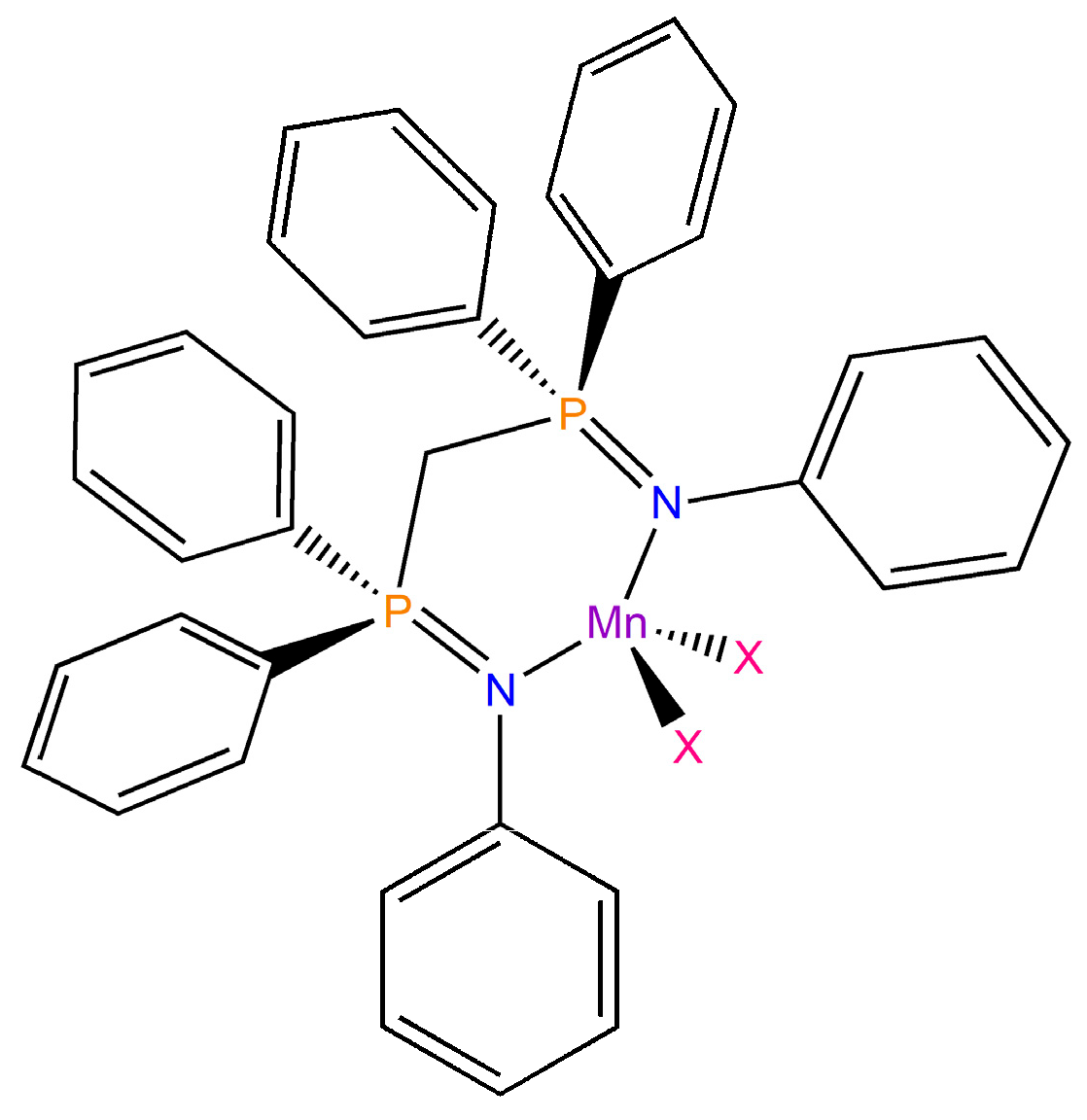
Figure 1. [MnX2{(PhN=PPh2)CH2}] (X = Br, I).
Molecules 31 00161 g001
Figure 2. 31P{1H} NMR (CDCl3, 300 K) (a) and FT-IR (KBr) (b) spectra of (PhN=PPh2)CH2 (black lines), [MnBr2{(PhN=PPh2)CH2}] (red lines), and [MnI2{(PhN=PPh2)CH2}] (violet lines).
Molecules 31 00161 g002
Figure 3. Structures of [MnBr2{(PhN=PPh2)CH2}] (a) and [MnI2{(PhN=PPh2)CH2}] (b). Selected bond lengths [Å] and angles [°]: X = Br, Mn-N(1) 2.117(2), Mn-N(2) 2.126(2), Mn-Br(1) 2.4943(5), Mn-Br(2) 2.4659(5), P(1)-N(1) 1.605(2), P(2)-N(2) 1.598(2), N(1)-Mn-N(2) 104.65(9), N(1)-Mn-Br(2) 106.64(6), N(2)-Mn-Br(2) 110.22(6), N(1)-Mn-Br(1) 103.61(7), N(2)-Mn-Br(1) 102.88(6), Br(1)-Mn-Br(2) 126.82(2); X = I, Mn-N(1) 2.109(4), Mn-N(2) 2.114(4), Mn-I(1) 2.6583(8), Mn-I(2) 2.6069(9), P(1)-N(1) 1.603(4), P(2)-N(2) 1.597(4), N(1)-Mn-N(2) 105.26(15), N(1)-Mn-I(2) 106.95(12), N(2)-Mn-I(2) 110.17(12), N(1)-Mn-I(1) 104.97(12), N(2)-Mn-I(1) 103.55(12), I(1)-Mn-I(2) 124.43(3).
Molecules 31 00161 g003
Figure 4. (a) Kubelka–Munk transformation of the reflectance spectra of (PhN=PPh2)CH2 (black line), [MnBr2{(PhN=PPh2)CH2}] (red line), and [MnI2{(PhN=PPh2)CH2}] (violet line) (a). Pictures of solid [MnBr2{(PhN=PPh2)CH2}] illuminated with indoor light (b) and UV light (c).
Molecules 31 00161 g004
Figure 5. PL (solid lines, λexcitation = 280 nm) and PLE spectra (dashed lines, λemission = 500–610 nm) of solid (PhN=PPh2)CH2 (black lines), [MnBr2{(PhN=PPh2)CH2}] (red lines), and [MnI2{(PhN=PPh2)CH2}] (violet lines) at 298 K.
Molecules 31 00161 g005
Figure 6. Photoluminescence 3D spectrum of solid [MnBr2{(PhN=PPh2)CH2}] at 298 K (a). CIE 1931 diagram with coordinates for [MnBr2{(PhN=PPh2)CH2}] and [MnI2{(PhN=PPh2)CH2}] (b).
Molecules 31 00161 g006
Figure 7. DFT-optimized structures of the [MnX2{(PhN=PPh2)CH2}] complexes at the sextet and octet states with spin density surfaces (green tones, surface isovalue = 0.005 a.u.). Relative energy values of the sextet-state geometries (6optimized), octet-state geometries (8optimized), and sextet states at the octet-state geometries (6vertical), with prediction of the ligand-centred phosphorescence. Colour map: Mn, dark violet; I, violet; Br, red; P, orange; N, blue; C, grey. Hydrogen atoms omitted for clarity.
Molecules 31 00161 g007
Figure 8. Semi-log plots of the luminescence decay curves of solid [MnBr2{(PhN=PPh2)CH2}] (red line, λexcitation = 345 nm, λemission = 600 nm) and [MnI2{(PhN=PPh2)CH2}] (violet line, λexcitation = 300 nm, λemission = 600 nm) at 298 K (a). Comparison of the luminescence decay curves of [MnBr2{(PhN=PPh2)CH2}] at 298 K (red line) and at 248 K (dark red line) (b).
Molecules 31 00161 g008
Disclaimer/Publisher’s Note: The statements, opinions and data contained in all publications are solely those of the individual author(s) and contributor(s) and not of MDPI and/or the editor(s). MDPI and/or the editor(s) disclaim responsibility for any injury to people or property resulting from any ideas, methods, instructions or products referred to in the content.