Functional foods exert beneficial modulation on specific physiological functions in the human body, thereby promoting health status or reducing disease risk. Against the backdrop of chronic diseases such as cardiovascular disease, type II diabetes, and neurodegenerative diseases increasingly becoming a global public health burden, functional foods—through their rich diversity of bioactive compounds—act synergistically at molecular, cellular, and systemic levels on key pathophysiological processes including antioxidant defense, inflammation regulation, metabolic homeostasis maintenance, gut microbial homeostasis, and cytoprotection. This results in multi-target, network-based protective mechanisms, thereby playing a significant role as a nutritional intervention in preventing and delaying the onset and progression of major chronic diseases like cardiovascular disease, type II diabetes, and neurodegenerative diseases. Research into their mechanisms of action provides a robust scientific foundation for food-based precision nutrition strategies [
9]. The following lists several bioactive components commonly found in functional foods and comparative position (as shown in
Table 1), aslo frequently studied for their association with chronic disease prevention:
3.1. β-Glucan
β-Glucan is widely present in cereals such as oats and barley, as well as edible mushrooms including shiitake and lingzhi (Ganoderma lucidum) [
10]. Its primary functions include: assisting in the reduction of cholesterol (particularly “bad” cholesterol LDL), stabilizing postprandial blood glucose levels, enhancing immune function, promoting the growth of beneficial gut bacteria, and increasing satiety [
11]. Recent research has further elucidated its multifaceted physiological functions, demonstrating significant advances particularly in the precise modulation of gut microbiota, neuroprotection, and antitumor activity [
12]. Upon ingestion, β-glucan rapidly hydrates within the digestive tract to form a highly viscous gel, significantly delaying gastric emptying and impeding chyme diffusion. This physical barrier effect effectively slows the transport rate of glucose to the intestinal epithelium, thereby improving the postprandial glycemic response and enhancing insulin sensitivity. More significantly, the abundant hydroxyl groups within its molecular structure strongly bind primary bile acids in the gut through hydrogen bonding and hydrophobic interactions, disrupting the enterohepatic circulation of bile acids and facilitating their fecal excretion. To compensate for the depletion of the bile acid pool, the liver is stimulated to upregulate the synthesis of new bile acids from cholesterol, directly depleting hepatic cholesterol reserves. Furthermore, undigested β-glucan serves as a prebiotic substrate fermented by colonic microbiota, producing short-chain fatty acids (SCFAs). Among these, butyrate serves as the primary energy source for colonic epithelial cells and maintains gut barrier integrity; propionate, upon absorption into the liver, inhibits the activity of HMG-CoA reductase, the rate-limiting enzyme in cholesterol synthesis [
13]. Notably, novel structural modulation technologies are advancing the precision of prebiotic effects: the acid hydrolysis degradation technology for hyperbranched β-glucans (e.g., PTR-HBG derived from Pleurotus tuber-regium) developed by Shi Group (0.1–0.2 mol/L HCl, 90 °C), achieves controlled molecular weight reduction via a first-order kinetic model, with its degradation products significantly enhancing SCFA production and the proliferation efficiency of probiotics such as
Bifidobacterium spp. in in vitro fermentation studies (2025) [
14]. This structural tailoring approach exemplifies a promising direction for enhancing the prebiotic efficacy of β-glucans. By moving beyond native polymers, such strategies could enable the development of next-generation functional ingredients with predictable and potent microbiota-modulating effects, potentially overcoming the variability associated with natural sources.
In cardiovascular disease prevention, β-glucan’s multiple mechanisms act synergistically on core risk factors for atherosclerosis. The cholesterol-lowering effect represents its most central mechanism: to replenish cholesterol for bile acid synthesis, the liver significantly upregulates the expression and activity of low-density lipoprotein receptors (LDL-R), thereby accelerating the uptake and clearance of circulating low-density lipoprotein cholesterol (LDL-C), leading to a significant reduction in plasma total cholesterol (TC) concentration. Concurrently, the viscous gel it forms physically impedes dietary cholesterol absorption, while propionate generated from microbial fermentation further suppresses endogenous cholesterol synthesis in the liver [
15]. This core mechanism is substantiated by extensive clinical research. For instance, a meta-analysis encompassing 21 randomized controlled trials (RCTs,
n = 1120) confirmed that in individuals with mild hypercholesterolemia, daily intake of ≥3 g β-glucan for ≥3 weeks significantly reduces serum TC (mean difference [MD] = −0.27 mmol/L, 95% CI: −0.33, −0.21,
p < 0.001) and LDL-C (MD = −0.26 mmol/L, 95% CI: −0.32, −0.20,
p < 0.001), with the lipid-lowering efficacy potentially modified by food matrix (solid products may confer greater efficacy). Another RCT in patients with hypercholesterolemia (
n = 75) demonstrated that daily intake of 6 g concentrated oat β-glucan for 6 weeks significantly reduced TC (−0.3 ± 0.1 mmol/L) and LDL-C (−0.3 ± 0.1 mmol/L,
p = 0.03 vs. control [glucose]) compared to the control group (glucose). A systematic review and meta-analysis focusing on barley-derived β-glucan (including 14 RCTs,
n = 615) similarly concluded that consumption of a diet rich in barley β-glucan (median dose ~6.5–6.9 g/day for a median duration of 4 weeks) significantly reduces LDL-C (MD = −0.25 mmol/L, 95% CI: −0.30, −0.20) and non-high-density lipoprotein cholesterol (non-HDL-C) (MD = −0.31 mmol/L, 95% CI: −0.39, −0.23), supporting the application of barley as a functional food in cardiovascular risk management [
16]. While these meta-analyses and RCTs robustly confirm the lipid-lowering effect, the observed heterogeneity in effect sizes underscores the importance of context. The modifying role of the food matrix, molecular weight, and individual gut microbiota composition suggests that future applications may benefit from a more personalized approach, matching specific β-glucan formulations to individual consumer phenotypes for optimized outcomes.
The improvement in glycemic homeostasis is achieved by delaying glucose absorption, thereby mitigating glucotoxic stress on the vascular endothelium induced by postprandial hyperglycemia and hyperinsulinemia, and reducing the risk of insulin resistance [
17]. SCFA (produced by β-glucan)-enhanced intestinal barrier function reduces the translocation of endotoxins (e.g., LPS) into the bloodstream, mitigating systemic low-grade inflammation induced by metabolic endotoxemia, collectively improving vascular endothelial function [
18]. Notably, β-glucan’s modulation of gut microbiota structure constitutes a fundamental basis for its SCFA-mediated effects, exhibiting molecular weight dependency. A randomized controlled crossover study (
n = not specified, employing a 5-week intervention + 4-week washout period) found that daily supplementation with 3 g high-molecular-weight (HMW) barley β-glucan significantly increased the abundance of Bacteroidetes phylum and Bifidobacterium genus while decreasing the abundance of Firmicutes phylum and Dialister genus. This specific microbial shift pattern was significantly correlated with improvements in cardiovascular disease risk markers (e.g., BMI, waist circumference, blood pressure, triglycerides), while low-molecular-weight (LMW) β-glucan showed no comparable effects [
19]. This clear demonstration of molecular-weight-dependent microbial shifts is a critical insight. It moves the field from considering β-glucan as a uniform prebiotic to recognizing it as a class of molecules with distinct structure-function relationships. This knowledge is pivotal for designing functional foods aimed at targeting specific microbial populations or metabolic outcomes [
20]. Recent preclinical research suggests a potential extension of this mechanism to neurodegenerative disease intervention: She Group demonstrated in an AD mouse model that highland barley β-glucan combined with Lactobacillus remodels the gut microbiota, reducing β-amyloid deposition by 39% and P-tau protein expression via the gut-brain axis, while repairing synaptic damage and significantly improving cognitive function (2025) [
21]. This preclinical study powerfully illustrates the potential of combining prebiotics (β-glucan) with probiotics (
Lactobacillus) for multi-target intervention in complex diseases like AD. However, these promising findings are derived from an animal model and require validation in human trials to assess their translational relevance. It provides a compelling rationale for investigating symbiotic formulations in human trials, particularly for conditions where systemic inflammation and gut-brain axis dysfunction are implicated.
In summary, β-glucan reduces the risks of hypercholesterolemia, hyperglycemia, and chronic inflammation through multiple targets: driving LDL-C(via upregulating LDL-R activity), inhibiting cholesterol absorption (through physical barrier formation) and synthesis (via propionate action), optimizing glycemic regulation (by delaying glucose absorption), and activating an SCFA-mediated anti-inflammatory network (modulating microbiota, producing SCFAs, exerting anti-inflammatory effects, and enhancing barrier function). Clinical evidence, including RCTs and meta-analyses, consistently demonstrates that adequate intake (typically ≥3 g/day) of oat- or barley-derived β-glucan effectively reduces TC and LDL-C levels. Simultaneously, its prebiotic properties induce beneficial alterations in gut microbiota (particularly with HMW variants), and the consequent increased production of SCFAs (especially butyrate) constitutes another critical dimension of its cardiovascular protective effects. Therefore, β-glucan represents a functional dietary ingredient with a robust scientific foundation for cardiovascular disease prevention.
3.2. Omega-3 Polyunsaturated Fatty Acids
Omega-3 polyunsaturated fatty acids (ω-3 PUFAs), particularly docosahexaenoic acid (DHA) and eicosapentaenoic acid (EPA), are critical structural and functional components of neural cells. Primarily found in fatty fish (e.g., salmon, mackerel, sardines) [
22], walnuts, flaxseeds, chia seeds, and certain plant oils (e.g., flaxseed oil, canola oil), they are essential for maintaining cardiovascular health, supporting brain function, and preserving central nervous system homeostasis [
23,
24,
25].
In the prevention of neurodegenerative diseases, ω-3 PUFAs (particularly DHA and EPA) are hypothesized to exert neuroprotective effects through multi-target, multi-level mechanisms that have been largely elucidated from cell-line and animal studies. While some clinical trials support cognitive benefits in specific populations, the translation of these mechanistic insights to broad chronic disease prevention requires further clinical validation [
26]. Firstly, by maintaining the integrity of the neuronal membrane lipid microenvironment, DHA contributes to reducing the processing of the β-amyloid precursor protein (APP) toward the amyloidogenic pathway. It may also directly interfere with Aβ oligomer formation and its toxic aggregation on neuronal membranes, while simultaneously promoting microglial clearance of Aβ [
27]. Regarding Tau protein pathology, DHA and its derivative neuroprotectin D1 (NPD1) have been demonstrated to inhibit the excessive activation of kinases such as glycogen synthase kinase-3β (GSK-3β), thereby reducing the pathological hyperphosphorylation of Tau protein and the formation of neurofibrillary tangles [
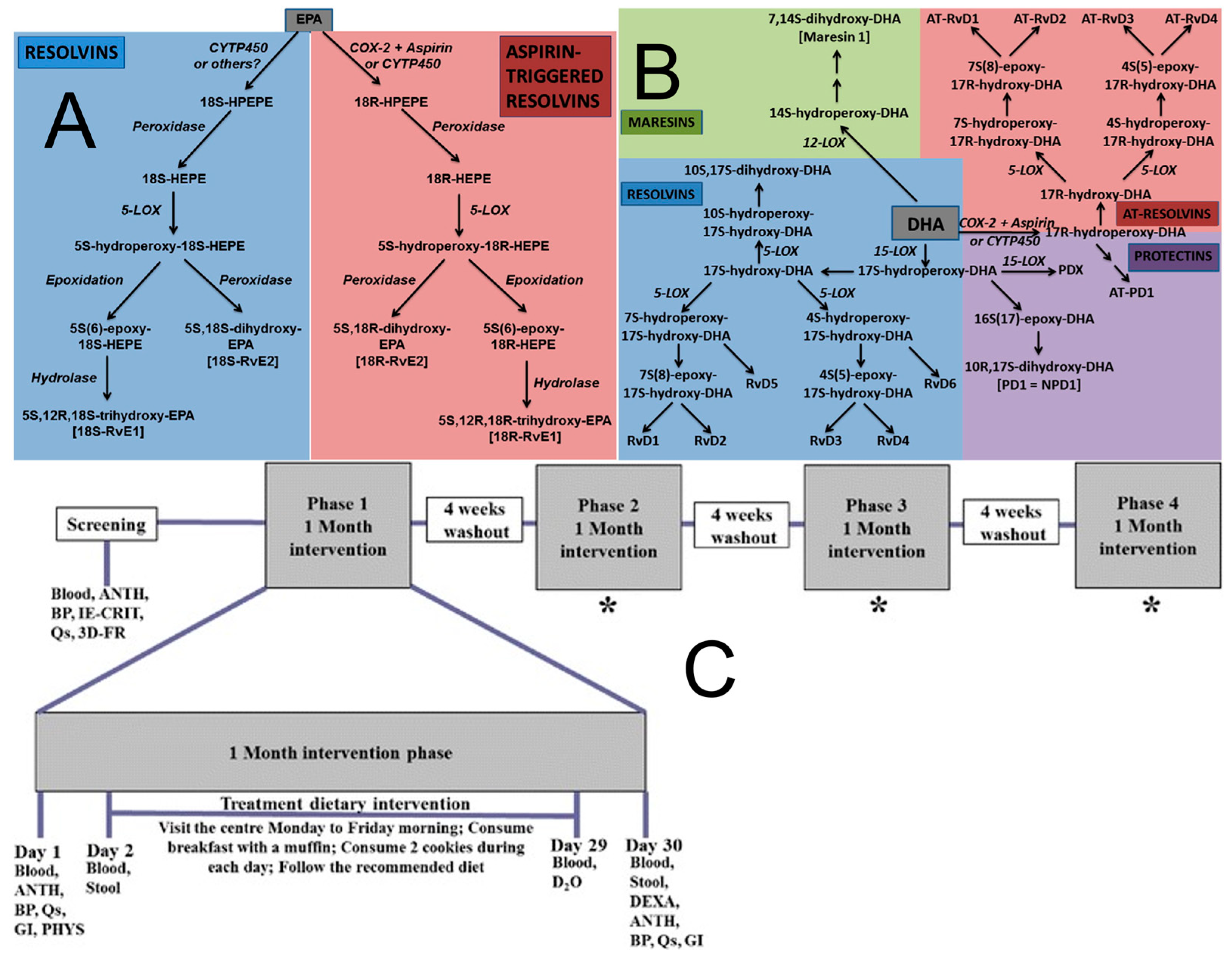
28]. Secondly, the potent anti-inflammatory and pro-resolving actions of DHA and EPA are crucial, as shown in
Figure 1A,B: they effectively inhibit the polarization of microglia towards the pro-inflammatory M1 phenotype, reduce the production of reactive oxygen species (ROS) and reactive nitrogen species (RNS), block the assembly and activation of the NLRP3 inflammasome, and promote the transition of inflammation to the resolution phase, thereby mitigating the persistent neuronal damage caused by chronic neuroinflammation [
29]. In vitro studies provide support for this mechanism: for instance, investigations using the BV-2 microglial cell model to explore the impact of different ω-6/ω-3 fatty acid ratios on neuroinflammation revealed that specific fatty acid compositions and ratios (e.g., 2:1 ω-6:ω-3) significantly reduced cell viability and modulated the cytokine secretion profile (e.g., decreased tumor necrosis factor-alpha (TNF-α)), suggesting a potential anti-inflammatory effect. Conversely, a high ω-6 ratio (15:1) induced elevated IL-17 and decreased IL-4 and IL-10, revealing the complexity of fatty acid regulation of microglial activation and cytokine networks. This intricate interplay significantly influences neuroinflammation and potentially neurodegenerative progression [
30]. Such cell-based findings elucidate possible pathways but must be interpreted with the caveat that they represent a simplified system compared to the complex human brain environment. Thirdly, ω-3 PUFAs constitute an essential component of the endogenous antioxidant defense system. They directly quench free radicals and enhance the activity of antioxidant enzymes such as superoxide dismutase (SOD) and glutathione peroxidase (GPx), protecting neurons from oxidative stress damage [
31]. Fourthly, DHA promotes the clearance of damaged organelles and misfolded proteins by upregulating the expression of autophagy-related genes and activating deacetylases such as SIRT1, thereby maintaining proteostasis. Furthermore, ω-3 PUFAs improve cerebrovascular function, enhance blood-brain barrier integrity, optimize cerebral blood flow perfusion and energy metabolism, providing optimal microenvironmental support for neurons. Notably, the cardiovascular benefits of ω-3 PUFAs may indirectly support neuroprotection. For example, as shown in
Figure 1C, a randomized single-blind crossover trial in individuals with metabolic syndrome (MetS)—a population at high risk for neurodegenerative diseases—evaluated the effects of a combined food product rich in high-oleic canola oil (HOCO)-DHA (providing 3 g/day DHA) and high-molecular-weight barley β-glucan (4.36 g/day) [
32]. Although the primary endpoints were cardiovascular disease risk factors (e.g., lipid profile, inflammatory status, blood pressure), its effects on improving vascular endothelial function, attenuating systemic inflammation and oxidative stress are crucial for maintaining cerebral blood perfusion and reducing the risk of neurovascular unit damage. This provides important evidence for understanding how ω-3 PUFAs reduce neurodegenerative risk by improving the systemic metabolic environment [
33]. Innovative preclinical research in 2025 on C9orf72 mutation-associated frontotemporal dementia (FTD) demonstrated that increasing brain omega-3 content extended survival in model organisms and patient-derived cells [
34]. This groundbreaking preclinical study highlights a novel potential mechanism and target; however, its therapeutic implications for human neurodegenerative diseases await testing in clinical trials [
34]. It highlights the potential of omega-3 PUFAs as a component of precision nutrition strategies for specific patient subpopulations, moving the field towards genetically informed nutritional interventions [
35].
Collectively, these mechanisms indicate that adequate ω-3 PUFA intake is considered beneficial for maintaining neuronal network function, delaying cognitive decline, and reducing the risk of specific neurodegenerative pathologies [
36]. This protective effect finds some support in clinical research. For instance, intervention studies in individuals at high risk for AD or with mild AD (e.g., the ADvance trial) suggest that high-dose DHA supplementation (typically ≥2 g/day), particularly during early disease stages or in specific genetic backgrounds (e.g., APOE ε4 non-carriers), may induce favorable changes in cerebrospinal fluid Aβ42 levels and p-tau protein, or attenuate the decline rate in specific cognitive domains (e.g., memory). Similarly, in Parkinson’s disease (PD) research, EPA supplementation (e.g., 1–2 g/day) has been associated with slowed motor symptom progression and improved quality-of-life scores. The underlying mechanisms may involve mitigation of neuroinflammation in the nigrostriatal pathway, reduction of peripheral and central inflammatory markers (e.g., IL-6, TNF-α), and counteraction of oxidative stress. Nevertheless, the clinical efficacy of ω-3 PUFAs is not consistently observed across all studies and may be significantly modulated by multiple factors, including individual genetic background (e.g., APOE genotype), baseline nutritional status, dose and form of intake, intervention stage (prevention versus treatment), and disease severity [
37].
The heterogeneity in clinical trial outcomes regarding the efficacy of ω-3 PUFAs, particularly in neurodegenerative and cardiovascular contexts, necessitates a deeper exploration of the underlying causes. These discrepancies complicate the formulation of broad public health recommendations. The key factors contributing to this variability are multifaceted and often interact, as summarized in
Table 2. The synthesis of factors in
Table 2 is crucial for interpreting the conflicting literature. It argues compellingly that the inconsistent results are not necessarily evidence of ineffectiveness, but rather of a complex, modifiable effect. This reframes the research question from “Do omega-3s work?” to “In whom, under what conditions, and at what dose do omega-3s work?”—a fundamental shift towards precision nutrition.
The initial omega-3 PUFA status of participants is a critical determinant. Trials enrolling individuals with low baseline levels often demonstrate significant benefits upon supplementation, whereas those involving populations with adequate or high baseline intake (e.g., regular fish consumers) may show minimal effects. This “ceiling effect” suggests that supplementation primarily benefits those with deficiencies or suboptimal intake.
Genetic polymorphisms significantly influence individual response. The APOE ε4 allele, a major genetic risk factor for Alzheimer’s disease, is consistently associated with a blunted response to DHA supplementation. APOE ε4 carriers exhibit impaired DHA incorporation into the brain and altered lipid metabolism, which may underlie the reduced efficacy observed in this subgroup. Furthermore, polymorphisms in the fatty acid desaturase (FADS) gene cluster affect the efficiency of converting plant-based alpha-linolenic acid (ALA) to EPA and DHA, influencing an individual’s reliance on pre-formed EPA and DHA from the diet or supplements.
Methodological aspects play a substantial role. Trial duration is crucial; studies of insufficient length may not capture the slow, modulative effects of omega-3 PUFAs on chronic diseases. The dose and formulation are equally important. Many early trials used doses now considered sub-therapeutic (<1 g/day EPA + DHA). Moreover, the ratio of EPA to DHA and the chemical form (e.g., triglyceride vs. ethyl ester) can affect bioavailability and bioactivity, contributing to inconsistent findings across studies.
The timing of intervention relative to disease progression is paramount. Omega-3 PUFAs are likely most effective in the primary prevention phase or very early stages of disease, acting to maintain cellular health and resilience. Initiating supplementation after significant neuronal loss or advanced atherosclerotic plaque formation has occurred may yield limited clinical benefits. The specific population studied (e.g., age, sex, overall health status) also introduces variability.
The inconsistent clinical evidence underscores the limitation of a one-size-fits-all approach to omega-3 PUFA recommendations. Generalized advice may be ineffective and inefficient. Instead, a shift towards precision nutrition strategies is warranted. Future public health guidelines could be stratified, emphasizing higher intake targets for populations with low baseline status, specific genetic backgrounds (e.g., recommending earlier and higher intake for APOE ε4 non-carriers in the context of cognitive health), or those at high risk due to comorbidities. Furthermore, recommendations should specify effective doses and consider the formulation for specific health outcomes. Ultimately, generating robust evidence for stratified guidelines requires future clinical trials to be designed with these modulating factors in mind, employing enrichment strategies for responsive populations and longer intervention periods to adequately assess preventive potential.
Figure 1.
Omega-3 Fatty Acid Metabolism and Specialized Pro-resolving Mediators. (
A) Outline of the pathways of resolvin and aspirin—triggered resolvin biosynthesis from eicosapentaenoic acid (EPA). COX, cyclooxygenase; CYIP450, cytochrome; HEPE, hydroxyeicosapentaenoic acid; HPETE, hydroperoxyeicosapentaenoic acid; LOX, lipoxygenase. Note: not all intermediates and enzymes are shown [
38]. (
B) Outline of the pathways of resolvin, protectin, aspirin-triggered resolvin and protectin, and maresin biosynthesis from docosahexaenoic acid (DHA). AT-Rv, aspirin-triggered resolvin; COX, cyclooxygenase; CYIP450, cytochrome P450 enzymes; LOX, lipoxygenase; PDX, protectin DX (10S,17S-dihydroxy-DHA) [
38]. (
C) Schematic representation of the experimental protocol. Blood 12-h fasted blood collection, ANTH anthropometric measurements, BP blood pressure, IE-CRIT inclusion and exclusion criteria, QS questionnaires (fish and seafood consumption, concomitant medications, adverse events, physical activity), 3D-FR 3-day food record collection, DEXA dual-energy X-ray absorptiometry, PHYS physician examination, GI gastrointestinal questionnaires, STOOL stool sample collection, D
2O deuterated water, * procedures are the same as in phase 1 [
30].
Figure 1.
Omega-3 Fatty Acid Metabolism and Specialized Pro-resolving Mediators. (
A) Outline of the pathways of resolvin and aspirin—triggered resolvin biosynthesis from eicosapentaenoic acid (EPA). COX, cyclooxygenase; CYIP450, cytochrome; HEPE, hydroxyeicosapentaenoic acid; HPETE, hydroperoxyeicosapentaenoic acid; LOX, lipoxygenase. Note: not all intermediates and enzymes are shown [
38]. (
B) Outline of the pathways of resolvin, protectin, aspirin-triggered resolvin and protectin, and maresin biosynthesis from docosahexaenoic acid (DHA). AT-Rv, aspirin-triggered resolvin; COX, cyclooxygenase; CYIP450, cytochrome P450 enzymes; LOX, lipoxygenase; PDX, protectin DX (10S,17S-dihydroxy-DHA) [
38]. (
C) Schematic representation of the experimental protocol. Blood 12-h fasted blood collection, ANTH anthropometric measurements, BP blood pressure, IE-CRIT inclusion and exclusion criteria, QS questionnaires (fish and seafood consumption, concomitant medications, adverse events, physical activity), 3D-FR 3-day food record collection, DEXA dual-energy X-ray absorptiometry, PHYS physician examination, GI gastrointestinal questionnaires, STOOL stool sample collection, D
2O deuterated water, * procedures are the same as in phase 1 [
30].

3.3. Dietary Fiber
Dietary fiber, defined as plant-derived carbohydrate polymers, is primarily found in plant-based foods such as whole grains (e.g., oats, brown rice), vegetables (e.g., broccoli, spinach), fruits (e.g., apples, bananas with peel), legumes (e.g., soybeans, lentils), nuts, and seeds. Its principal functions include aiding digestion, preventing constipation, increasing satiety, regulating blood glucose and cholesterol levels, and promoting gut health [
39,
40,
41]; Systematic reviews and meta-analyses of large-scale randomized controlled trials (encompassing 28 studies,
n = 1148–1394 patients) confirm that viscous fiber supplements (e.g., psyllium, guar gum, β-glucan, konjac; median dose 13.1 g/day), as adjuncts to conventional therapy, significantly improve key glycemic parameters including glycated hemoglobin and fasting blood glucose in type II diabetes patients [
42]. Insoluble dietary fiber accelerates intestinal transit by increasing fecal bulk and water retention capacity. Notably, insoluble cereal fibers (e.g., wheat- or oat-derived) demonstrate significant preventive potential for type II diabetes in epidemiological and intervention studies. Large prospective cohort studies (such as the EPIC-InterAct study,
n = 11,559 cases + 15,258 controls) and multiple meta-analyses consistently indicate that higher cereal fiber intake is associated with a significantly reduced risk of type II diabetes, with this association exhibiting dose dependency: for instance, a risk ratio (RR) of approximately 0.75 per 10 g/day increment in cereal fiber intake, or an RR of ~0.94 per 2 g/day increment [
43]. This protective effect may partially originate from their capacity to modulate bile acid metabolism, as insoluble cereal fibers mechanically bind bile acids, promoting their excretion and thereby contributing to reduced plasma cholesterol levels and inhibition of dietary fat absorption, ameliorating dyslipidemia in type II diabetes patients.
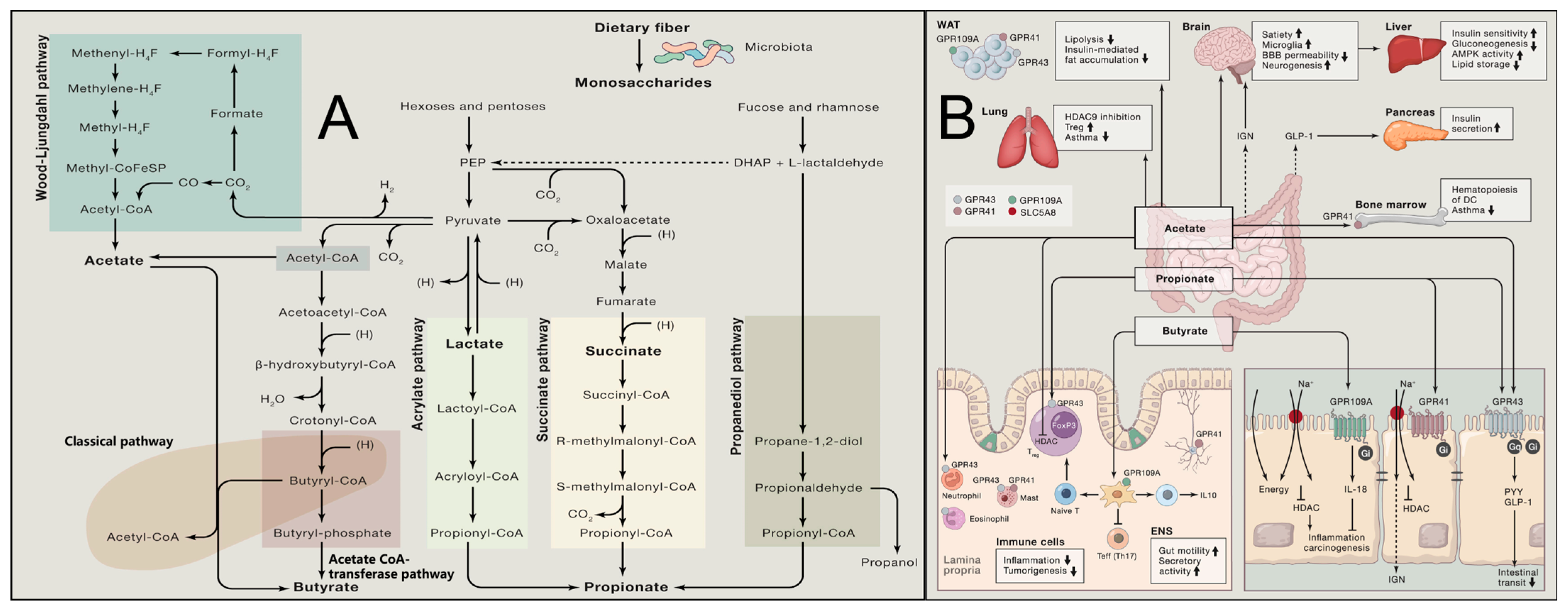
Metabolically, dietary fiber serves as the primary fermentation substrate for the colonic microbiota, generating SCFAs (including acetate, propionate, and butyrate), as shown in
Figure 2A,B [
44]. Emerging preclinical research further reveals that specific high-fiber formulations (e.g., CF30m, partially substituting macronutrients with cellulose) significantly activate key longevity and metabolic regulatory pathways such as AMPK/SIRT1 via SCFAs in model systems, thereby improving glucose and lipid metabolism and appearing to mimic some beneficial effects of caloric restriction independent of body weight changes [
45]. Whether these specific pathway activations and metabolic mimics translate directly to long-term human health benefits requires confirmation in human intervention studies. Furthermore, insoluble fibers from select botanical sources exhibit unique metabolic regulatory potential: cabbage-derived insoluble fiber (CIDF) was demonstrated (2025) to effectively reduce cholesterol levels and ameliorate insulin resistance by modulating the “Bilophila-acetate axis” [
46]. However, the understanding of mechanisms underlying traditionally considered poorly fermentable insoluble cereal fibers is evolving. Recent evidence indicates they may ameliorate insulin resistance by modulating blood amino acid metabolic profiles through effects on dietary protein digestion or absorption, while preventing excessive activation of the mammalian target of rapamycin (mTOR)/S6 kinase 1 (S6K1) signaling pathway [
47]. This mechanism helps explain the association between high cereal fiber intake and lower diabetes risk in contexts of elevated protein consumption.
The preventive mechanisms of dietary fiber against type II diabetes involve multi-target synergistic actions. SCFAs produced through colonic fermentation enhance insulin sensitivity via multiple pathways: propionate activates GPR41/43 receptors in hepatic and peripheral tissues, inducing AMPK pathway activation that promotes GLUT4 translocation-mediated glucose uptake while suppressing hepatic gluconeogenesis; butyrate reinforces intestinal barrier function to reduce endotoxin translocation and directly inhibits inflammatory factor release from adipose tissue, blocking inflammation-mediated insulin resistance. Recent cell-based and molecular research provides a preclinical elucidation of the potential cancer-preventive mechanisms of SCFAs (particularly propionate and butyrate). While these regulated cellular homeostasis pathways are of mechanistic interest, their relevance to clinical chronic disease outcomes in humans awaits confirmation in population-based or intervention studies [
48].
In obesity and metabolic disorder interventions, dietary fiber reduces energy intake by enhancing satiety, with long-term effects favoring weight control; its bile acid adsorption and excretion mechanism lowers circulating cholesterol levels, ameliorating dyslipidemia. Although weight control represents a significant mechanism, randomized controlled trials (e.g., the OptiFit trial) reveal that sustained high cereal fiber intake via supplementation (e.g., high-purity insoluble cereal fiber extracted from oat hulls: containing 70% cellulose, 25% hemicellulose, 3–5% lignin, administered twice daily for two years) can induce trends toward improved glycated hemoglobin and blood glucose concentrations—particularly in females—and suggest reduced type II diabetes incidence, even when no significant weight change difference exists between high-fiber and placebo groups. This strongly supports that the beneficial metabolic effects of high cereal fiber intake operate via mechanisms independent of weight alterations [
49].
In summary, through integrated mechanisms including delaying nutrient absorption, SCFA-mediated metabolic and inflammatory regulation, incretin secretion, and maintenance of microbial homeostasis, dietary fiber plays a core protective role in the primary prevention of T2DM. Robust epidemiological evidence (such as meta-analyses encompassing over 300,000 participants and 8500 cases) and a growing body of intervention studies (e.g., the OptiFit trial) collectively establish that cereal fiber, particularly insoluble cereal fiber, exerts a prominent effect among various dietary fibers in reducing the risk of type 2 diabetes. Significant advances have also been made in value-added utilization technologies for fiber resources; for instance, ultra-efficient solubilization techniques for fibers derived from sources such as Ganoderma lucidum, Auricularia heimuer (black wood ear fungus), and tea leaves significantly enhance the release rate and palatability of soluble dietary fiber (SDF) (reducing molecular weight below 50 kDa), resolving textural coarseness issues and paving the way for developing more acceptable and effective fiber supplements or fortified foods. Substantially increasing population-level intake of cereal fiber (e.g., through safe and effective fiber supplements or fortified foods) is anticipated to become an important public health strategy for preventing type 2 diabetes. The translation of this strong epidemiological evidence into effective public health strategy faces the challenge of dietary adherence. The development of palatable, convenient, and effective fiber-fortified foods or supplements, as alluded to with advanced solubilization techniques, is therefore not merely a technological pursuit but a critical translational step for realizing the population-level benefits demonstrated in cohorts like EPIC-InterAct.
Figure 2.
Gut Microbial Fermentation of Dietary Fibers and Systemic Actions of Short-Chain Fatty Acids. (
A) Known pathways for biosynthesis of SCFAs from carbohydrate fermentation and bacterial cross-feeding [
50]. (
B) Mechanism of action of microbially produced SCFAs [
50].
Figure 2.
Gut Microbial Fermentation of Dietary Fibers and Systemic Actions of Short-Chain Fatty Acids. (
A) Known pathways for biosynthesis of SCFAs from carbohydrate fermentation and bacterial cross-feeding [
50]. (
B) Mechanism of action of microbially produced SCFAs [
50].
3.4. Potent Antioxidant and Anti-Inflammatory Properties of Catechins
Catechins, the core components of tea polyphenols, are predominantly found in foods such as tea (especially green tea), cocoa beans, dark chocolate, apples, grapes, and berries (e.g., strawberries, blueberries). They primarily function to protect body cells, exert anti-inflammatory and antioxidant effects, and benefit heart health. Their exceptional antioxidant activity stems from their unique chemical structure featuring phenolic hydroxyl groups. These phenolic hydroxyl groups efficiently donate hydrogen atoms or electrons, directly quenching various ROS and effectively interrupting free radical chain reactions, thereby inhibiting oxidative damage to biomacromolecules. Furthermore, catechins chelate transition metal ions, preventing their participation in catalytic ROS-generating pathways such as the Fenton reaction, thus reducing oxidative stress at its source [
51]. Recent studies further reveal a breakthrough in addressing the bottleneck of poor in vivo stability of catechins: acetylated planar catechin analogs employ a “protection-release” strategy. The acetyl modification forms a molecular protective shield, maintaining stability during delivery. Upon reaching cancer cells, they are activated by esterases, releasing a superoxide radical scavenging capacity enhanced 10-fold compared to natural catechins. This preclinical strategy significantly augments targeted toxicity in experimental models, providing a novel paradigm for the design of targeted anticancer drug delivery systems that warrants future investigation. More importantly, catechins exert potent indirect antioxidant effects through activation of the Keap1-Nrf2/ARE signaling pathway: catechins modify key cysteine residues on the Keap1 protein, facilitating the dissociation of nuclear factor erythroid 2-related factor 2 (Nrf2) from Keap1 and its subsequent nuclear translocation. Nrf2 then binds to antioxidant response elements (AREs), significantly upregulating the gene expression of a suite of endogenous antioxidant enzymes and phase II detoxifying enzymes, thereby systemically enhancing cellular antioxidant defense capacity [
52]. This mechanism has found innovative application in agriculture—the Luo Group successfully developed “tea-infused rice” with endosperm-enriched functional components such as epicatechin by introducing key catechin biosynthesis genes from tea plants into rice through endosperm-specific metabolic engineering. This breakthrough not only provides a novel dietary approach for caffeine-sensitive individuals to ingest catechins through staple food but also demonstrates the technical feasibility of directed synthesis of high-value-added natural products in crops (as shown in
Table 3) [
53]. However, the long-term safety, bioavailability of the engineered catechins, and their subsequent health effects upon human consumption remain to be evaluated in dietary intervention studies.
Table 3.
Comparison of active components in the endosperm of tea rice and traditional rice [
54].
Table 3.
Comparison of active components in the endosperm of tea rice and traditional rice [
54].
| Core Component | Traditional Rice Endosperm | Tea Rice Endosperm |
|---|
| Catechins | Almost zero | Significantly enriched |
| Total curcumin content | Extremely low | The level of functional activity |
| Caffeine | No | No |
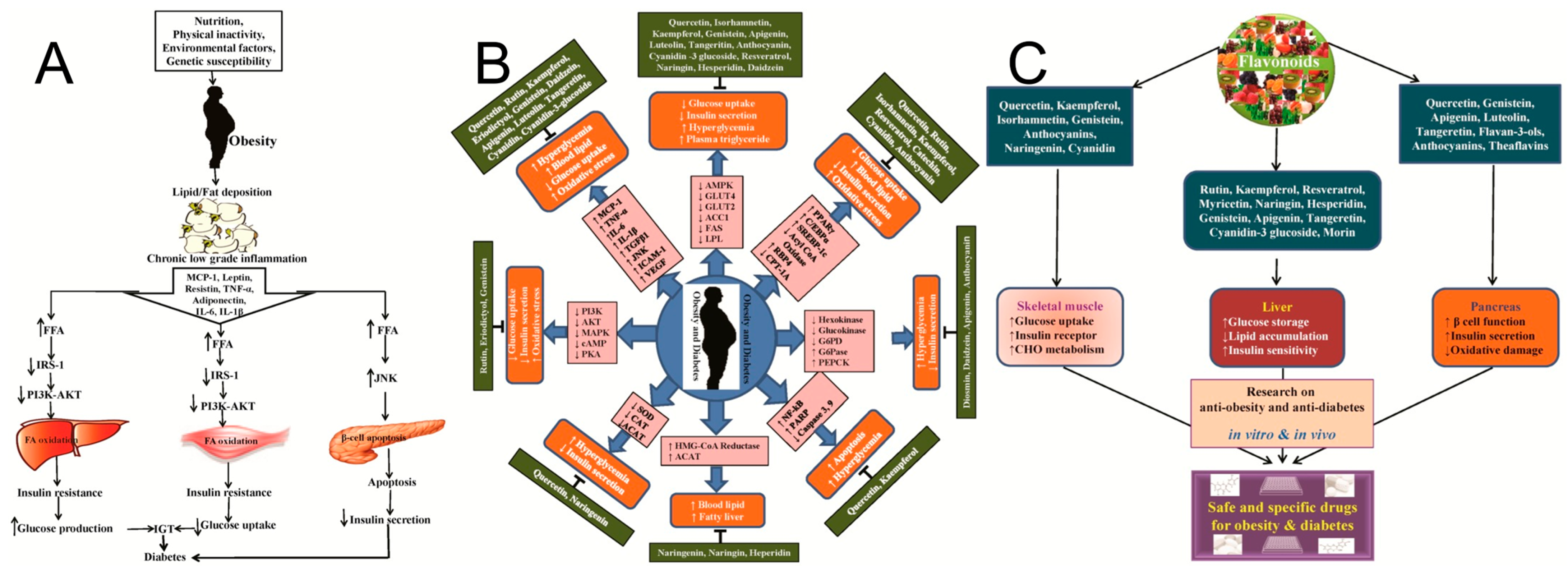
In terms of anti-inflammatory effects, catechins exert significant actions through multi-target modulation of pro-inflammatory signaling pathways: they effectively inhibit the activation of the key transcription factor NF-κB by blocking IκB kinase phosphorylation, reducing IκBα degradation, and suppressing nuclear translocation and DNA-binding activity of the NF-κB subunit p65; simultaneously, catechins also inhibit the activation of MAPK and JAK-STAT pathways. These actions lead to significant downregulation of the gene expression and secretion of multiple pro-inflammatory cytokines and chemokines. Furthermore, catechins suppress inflammasome assembly and activation, reduce caspase-1-mediated maturation of interleukin-1β (IL-1β) and IL-18, and inhibit the expression of inducible nitric oxide synthase (iNOS) and cyclooxygenase-2 (COX-2), thereby reducing excessive production of inflammatory mediators such as nitric oxide and prostaglandin E2. Obesity has a great impact on all body functions, as shown in
Figure 3A. Recent research reveals that catechins possessing C-3 galloyl and B-5 hydroxyl group structures (e.g., EGCG, ECG) exhibit marked structure-function specificity in anti-obesity effects—they specifically promote the proliferation of the probiotic Akkermansia muciniphila, modulate the LPS/insulin resistance signaling pathway, and establish a bidirectional “catechin-microbiota” amplification loop, effectively ameliorating high-fat diet-induced obesity, fatty liver, and glucose-lipid metabolic disorders [
55].
Through the potent antioxidant and anti-inflammatory effects described above, catechins intervene at the molecular and cellular levels in the common pathophysiological basis of multiple chronic diseases—chronic low-grade inflammation and persistent oxidative stress—thereby demonstrating key mechanisms of action in preventing several major chronic diseases. In cardiovascular disease prevention, catechins protect LDL from oxidative modification and decreasing foam cell formation; their anti-inflammatory effects suppress vascular endothelial cell activation, adhesion molecule expression, and monocyte infiltration, improving endothelial function while inhibiting vascular smooth muscle cell proliferation and migration, collectively attenuating atherosclerotic progression. Simultaneously, their antioxidant effects help maintain myocardial mitochondrial function and mitigate ischemia-reperfusion injury. Robust epidemiological evidence supports this protective role: the large-scale 11-year Ohsaki cohort study in Japan found that individuals consuming ≥5 cups of green tea (rich in catechins) daily exhibited significantly lower cardiovascular disease mortality (particularly stroke) compared to those consuming <1 cup daily [
56]. This effect is partially attributed to catechin-mediated improvements in vascular endothelial function and reductions in systemic oxidative stress markers (e.g., 8-OHdG, MDA). In the context of type 2 diabetes and metabolic syndrome, catechins regulate blood glucose by improving insulin sensitivity and suppressing the expression of key gluconeogenic enzymes in the liver, as shown in
Figure 3B,C; their antioxidant and anti-inflammatory actions alleviate adipose tissue inflammation, reduce hepatic steatosis and inflammation, improve insulin resistance, and promote fatty acid oxidation and energy metabolism via AMPK pathway activation. RCTs provide direct evidence: a study in prediabetic subjects demonstrated that sustained high-dose catechin intervention (e.g., >500 mg EGCG daily) for 12 weeks resulted in significant decreases in fasting blood glucose, homeostatic model assessment of insulin resistance (HOMA-IR), and serum inflammatory markers (e.g., CRP, IL-6), alongside an increase in adiponectin levels [
57]. This indicates that catechins delay diabetes progression through anti-inflammatory effects and amelioration of metabolic dysregulation. In neurodegenerative diseases, catechins cross the blood-brain barrier; their potent antioxidant capacity directly scavenges neurotoxic free radicals, inhibits Aβ amyloid aggregation and tau protein hyperphosphorylation, and suppresses aberrant activation of microglia and astrocytes along with the neurotoxic inflammatory factors they produce. This protects neurons from oxidative damage and inflammation-mediated apoptosis. Preclinical and preliminary clinical studies support their neuroprotective potential: for instance, in Alzheimer’s disease model animals, EGCG intervention significantly reduced cerebral Aβ plaque deposition and phosphorylated tau protein while improving cognitive function. A preliminary, small-scale human trial in individuals with mild cognitive impairment reported that intake of green tea catechin extract was associated with improvements in some cognitive measures and stabilized Aβ42 levels in cerebrospinal fluid. These exploratory findings warrant replication in larger, longer-term randomized controlled trials [
58]. Furthermore, catechins exert deeper effects in chronic disease prevention by influencing gene expression through epigenetic regulation. Studies confirm that catechins (particularly EGCG), acting as potent inhibitors of DNA methyltransferases (DNMTs) and histone deacetylases (HDACs), can reverse aberrant epigenetic silencing or activation of genes associated with chronic inflammation and oxidative stress (e.g., pro-inflammatory cytokine genes, tumor suppressor genes). For instance, in cancer chemoprevention research, EGCG treatment has been demonstrated to induce promoter demethylation and restore expression of various tumor suppressor genes (such as p16INK4a and RARβ); in metabolic disease models, its epigenetic regulatory role has also been shown to contribute to improving the expression of key genes in the insulin signaling pathway [
59].
In summary, catechins effectively counteract two core pathogenic mechanisms—oxidative stress and chronic inflammation—through synergistic multi-target and multi-pathway actions. The specific research instances in cardiovascular diseases, type 2 diabetes, and neurodegenerative diseases described above establish a solid molecular basis for their chemoprevention against major chronic diseases such as cardiovascular disorders, diabetes, and neurodegenerative conditions.
Figure 3.
Pathophysiological Network of Cardiometabolic Diseases and Multi-Target Intervention by Dietary Polyphenols. (
A) Schematic diagram of the link between obesity and diabetes as well as their effects in skeletal muscle, liver, and pancreas for stimulating different inflammatory cytokines, metabolic enzymes, and signaling pathways [
60]. (
B) Schematic presentation of molecular functions of different flavonoids with anti-obesity and anti-diabetic effects [
60]. (
C) Graphical presentation of anti-obesity and anti-diabetes effect of flavonoids and their subsequent effects in skeletal muscles, liver, and pancreas to induce glucose uptake, increase insulin secretion, and reduce oxidative damage and lipid accumulation [
60].
Figure 3.
Pathophysiological Network of Cardiometabolic Diseases and Multi-Target Intervention by Dietary Polyphenols. (
A) Schematic diagram of the link between obesity and diabetes as well as their effects in skeletal muscle, liver, and pancreas for stimulating different inflammatory cytokines, metabolic enzymes, and signaling pathways [
60]. (
B) Schematic presentation of molecular functions of different flavonoids with anti-obesity and anti-diabetic effects [
60]. (
C) Graphical presentation of anti-obesity and anti-diabetes effect of flavonoids and their subsequent effects in skeletal muscles, liver, and pancreas to induce glucose uptake, increase insulin secretion, and reduce oxidative damage and lipid accumulation [
60].
3.5. Synergistic Effects
In the field of nutrition and chronic disease research, the mechanisms of action of single bioactive components have been extensively elucidated. However, the multifactorial and multi-pathway nature of chronic diseases suggests that combined interventions with multiple components may produce synergistic effects through complementary mechanisms and crosstalk. This approach could potentially yield superior preventive and therapeutic outcomes. The four types of components discussed—β-glucan, omega-3 polyunsaturated fatty acids, dietary fiber, and catechins—each possess distinct strengths in anti-inflammation, antioxidant activity, metabolic regulation, and maintenance of gut homeostasis. Their combined application could theoretically establish a multi-level, network-like synergistic defense system.
Chronic low-grade inflammation is a common pathological basis for the vast majority of chronic diseases. These four components can act on different nodes of the inflammatory cascade, producing additive or synergistic inhibitory effects. β-Glucan acts as an immunomodulator. It mildly “trains” the immune system by activating pattern recognition receptors on innate immune cells like macrophages and dendritic cells. This enhances the system’s recognition and response capabilities, creating a more adaptable immune environment. Omega-3 polyunsaturated fatty acids serve as substrates. They give rise to specialized pro-resolving lipid mediators, such as resolvins and protectins. These mediators actively initiate the resolution of inflammation from the upstream, rather than merely suppressing it. Catechins primarily function downstream. They directly block the gene expression of multiple pro-inflammatory cytokines by inhibiting key pro-inflammatory transcription factors like NF-κB and AP-1. SCFAs, fermented from dietary fiber, not only exerts anti-inflammatory effects at the epigenetic level by inhibiting histone deacetylases but also enhances intestinal barrier function. This reduces endotoxin translocation, thereby minimizing the systemic inflammatory triggers at their source. Consequently, the immune “priming” by β-glucan may sensitize immune cells to the anti-inflammatory signals from omega-3 derivatives and the regulatory effects of SCFAs. Omega-3 and catechins cooperatively suppress the inflammatory response from both ends—lipid mediators and intracellular signaling pathways. The SCFAs provided by dietary fiber offer stable gut microenvironmental support for the entire anti-inflammatory network. Studies indicate that combined supplementation may be more effective than single components in reducing systemic inflammatory markers such as C-reactive protein and tumor necrosis factor-α. While the theoretical framework for synergy is well-articulated, the human evidence base remains nascent. Most supporting studies are preclinical. This gap underscores a major research priority: the need for meticulously designed human RCTs that test specific multi-component formulations against their individual constituents to unequivocally demonstrate synergistic efficacy, define optimal ratios, and identify the subpopulations most likely to benefit.
The gut microbiota and its metabolites serve as a central hub linking dietary components to host health, with the synergistic effects of the four components being particularly pronounced at this level. Dietary fiber and β-glucans are classic prebiotics, providing specialized fermentation substrates for beneficial bacteria and promoting the abundant production of SCFAs. This prebiotic effect exhibits high molecular specificity. Research indicates that human gut microbes, particularly members of the Bacteroidetes phylum, have evolved sophisticated genetic systems known as polysaccharide utilization loci (PULs) to recognize and degrade β-glucans of varying chemical structures (e.g., mixed-linkage β-glucans from cereals or β-1,3-glucans from fungi). This means that consuming diverse dietary fibers and β-glucans can selectively stimulate the growth of beneficial microbial taxa harboring the corresponding PULs, thereby directionally optimizing the structure and function of the microbiota. These specifically activated microbial communities efficiently ferment these substrates into SCFAs, function as key synergistic mediators. They not only locally nourish the intestinal epithelium and strengthen the barrier but also enter the systemic circulation to regulate glucose and lipid metabolism as well as immune function in the liver and peripheral organs. Omega-3 fatty acids and catechins can also be metabolized by specific gut microbes into more bioactive forms (e.g., phenolic acid metabolites of catechins), but their efficacy highly depends on a healthy microbial structure.
Insulin resistance and abnormal lipid metabolism are central to metabolic syndrome. Four dietary components exert a multifaceted regulation of glucose and lipid metabolism by targeting multiple physiological stages, including digestion and absorption, hepatic metabolism, and peripheral signaling. In the gastrointestinal tract, β-glucan and dietary fiber form a viscous gel. This physically delays the digestion and absorption of carbohydrates and fats, thereby reducing postprandial peaks in blood glucose and lipids. This physical barrier effect at the “entry point” is supported by molecular-level mechanistic studies. For instance, research on cereal-derived fibers shows that arabinoxylan (AX) and β-glucan (BG), particularly in a 1:1 combination, exhibit significant synergistic effects [
61]. They not only entrap starch granules to form a physical barrier, limiting access to water and enzymes, but also bind directly to the active or allosteric sites of α-amylase and α-glucosidase. This binding induces conformational changes in the enzyme proteins via static quenching, directly inhibiting their catalytic activity. This dual mechanism of physical entrapment and biochemical inhibition allows the AX/BG complex to more effectively reduce starch hydrolysis rates and postprandial glycemic responses. It provides concrete molecular evidence for the strategy of “moderating nutrient load at the gastrointestinal front.” The detailed elucidation of the synergistic inhibition of digestive enzymes by arabinoxylan and β-glucan provides a powerful molecular rationale for combining dietary fibers. Nevertheless, the translational success of this specific synergistic combination in human diets remains to be fully quantified. It moves the concept of synergy from a phenomenological observation to a mechanistically explainable interaction, strengthening the scientific foundation for developing multi-fiber functional blends aimed at glycemic control. Omega-3 polyunsaturated fatty acids (PUFAs) primarily act at the transcriptional level. By activating receptors such as peroxisome proliferator-activated receptors (PPARs), they promote fatty acid β-oxidation, inhibit hepatic de novo lipogenesis, and improve adipocyte secretory function. Catechins target the cellular energy sensor. They activate the AMP-activated protein kinase (AMPK) pathway, which promotes glucose uptake and fatty acid oxidation in skeletal muscle while inhibiting enzymes involved in fat synthesis. This cooperation represents comprehensive coverage from the gut to the cell.
In summary, β-glucans, omega-3 polyunsaturated fatty acids, dietary fiber, and catechins demonstrate clear synergistic potential in the prevention and management of chronic diseases. This synergy arises from the deep intersection and reciprocal interactions among four core mechanisms: “anti-inflammatory and immunomodulatory”, “antioxidant defense”, “gut microbiota–metabolism axis”, and “multi-target metabolic regulation”. Their combined effect transcends mere additive outcomes, forming instead a dynamic and multidimensional network of biological effects.
It should be noted that most current evidence of synergy comes from preclinical studies. While this mechanistic and preclinical evidence is compelling, its ultimate public health value and translation into effective strategies depend on a rigorous appraisal of human efficacy, safety, and real-world integration. The following section therefore expands the perspective from molecular and clinical evidence to critically examine the broader health impacts, societal perceptions, regulatory challenges, and future scientific directions for functional foods, thereby connecting mechanistic insights to their practical application and societal relevance [
62].