
Safety of NADES Extract of Glycyrrhiza Roots After Topical Application and Peroral Administration to Mice

 ,
,  , ,
, ,  , and
, and
Abstract
1. Introduction
2. Results and Discussion
2.1. Analysis of Metabolites in Extracts
2.2. In Vivo Study of the Safety of NADES Extract of Glycyrrhiza Roots
2.2.1. Skin Irritation Assessment
2.2.2. Acute Dermal Toxicity
2.2.3. Acute Peroral Toxicity
3. Materials and Methods
3.1. Materials and Reagents
3.2. NADES Preparation and Extraction of Plant Material
3.3. Analysis of Metabolites
3.4. Animals Experiments
3.5. Statistical Analysis
4. Conclusions
Author Contributions
Funding
Institutional Review Board Statement
Informed Consent Statement
Data Availability Statement
Conflicts of Interest
References
- Choi, Y.H.; van Spronsen, J.; Dai, Y.; Verberne, M.; Hollmann, F.; Arends, I.W.C.E.; Witkamp, G.J.; Verpoorte, R. Are natural deep eutectic solvents the missing link in understanding cellular metabolism and physiology? Plant Physiol. 2011, 156, 1701–1705. [Google Scholar] [CrossRef]
- Kaleta, A.; Frolova, N.; Orlova, A.; Soboleva, A.; Osmolovskaya, N.; Flisyuk, E.; Pozharitskaya, O.; Frolov, A.; Shikov, A. The Effects of selected extraction methods and natural deep eutectic solvents on the recovery of active principles from Aralia elata var. mandshurica (Rupr. & Maxim.) J. Wen: A non-targeted metabolomics approach. Pharmaceuticals 2024, 17, 355. [Google Scholar] [CrossRef]
- Wang, Z.; Wang, D.; Fang, J.; Song, Z.; Geng, J.; Zhao, J.; Fang, Y.; Wang, C.; Li, M. Green and efficient extraction of flavonoids from Perilla frutescens (L.) Britt. leaves based on natural deep eutectic solvents: Process optimization, component identification, and biological activity. Food Chem. 2024, 452, 139508. [Google Scholar] [CrossRef]
- Prakash, S.; Goswami, A.; Patil, R.; Mitra, A.; Kutty, N.N. An eco-friendly approach to extract anthocyanins from rose flowers using natural deep eutectic solvents. Ind. Crops Prod. 2024, 210, 118059. [Google Scholar] [CrossRef]
- Molnar, M.; Jakovljević Kovač, M.; Pavić, V. A Comprehensive analysis of diversity, structure, biosynthesis and extraction of biologically active tannins from various plant-based materials using deep eutectic solvents. Molecules 2024, 29, 2615. [Google Scholar] [CrossRef] [PubMed]
- Duru, K.C.; Slesarev, G.P.; Aboushanab, S.A.; Kovalev, I.S.; Zeidler, D.M.; Kovaleva, E.G.; Bhat, R. An eco-friendly approach to enhance the extraction and recovery efficiency of isoflavones from kudzu roots and soy molasses wastes using ultrasound-assisted extraction with natural deep eutectic solvents (NADES). Ind. Crops Prod. 2022, 182, 114886. [Google Scholar]
- Dai, Y.; van Spronsen, J.; Witkamp, G.J.; Verpoorte, R.; Choi, Y.H. Natural deep eutectic solvents as new potential media for green technology. Anal. Chim. Acta 2013, 766, 61–68. [Google Scholar] [CrossRef]
- Ivkovic, D.; Cvijetic, I.; Radoicic, A.; Stojkovic-Filipovic, J.; Trifkovic, J.; Krstic Ristivojevic, M.; Ristivojevic, P. NADES-Based extracts of selected medicinal herbs as promising formulations for cosmetic usage. Processes 2024, 12, 992. [Google Scholar] [CrossRef]
- Van Gheluwe, L.; Odou, S.; Yagmur, M.; Théry-Koné, I.; Phelippe, M.; Chevalley, A.; Boudesocque-Delaye, L. Single-step extraction/pre-formulation process for B-phycoerythrin using glycerol-based eutectic solvents: A step toward more sustainable production of phycobiliproteins. Sustain. Chem. Pharm. 2024, 40, 101654. [Google Scholar]
- Sed, G.; Cicci, A.; Jessop, P.G.; Bravi, M. A Novel switchable-hydrophilicity, natural deep eutectic solvent (NADES)-based system for bio-safe biorefinery. RSC Adv. 2018, 8, 37092–37097. [Google Scholar]
- Chevé-Kools, E.; Choi, Y.H.; Roullier, C.; Ruprich-Robert, G.; Grougnet, R.; Chapeland-Leclerc, F.; Hollmann, F. Natural Deep Eutectic Solvents (NADES): Green solvents for pharmaceutical applications and beyond. Green Chem. 2025, 27, 8360–8385. [Google Scholar] [CrossRef]
- Halder, A.K.; Cordeiro, M.N.D.S. Probing the environmental toxicity of deep eutectic solvents and their components: An in silico modeling approach. ACS Sustain. Chem. Eng. 2019, 7, 10649–10660. [Google Scholar] [CrossRef]
- Bystrzanowska, M.; Tobiszewski, M. Assessment and design of greener deep eutectic solvents—A multicriteria decision analysis. J. Mol. Liq. 2021, 321, 114878. [Google Scholar]
- Radošević, K.; Čanak, I.; Panić, M.; Markov, K.; Bubalo, M.C.; Frece, J.; Srček, V.G.; Redovniković, I.R. Antimicrobial, cytotoxic and antioxidative evaluation of natural deep eutectic solvents. Environ. Sci. Pollut. Res. 2018, 25, 14188–14196. [Google Scholar] [CrossRef]
- De Morais, P.; Gonçalves, F.; Coutinho, J.A.P.; Ventura, S.P.M. Ecotoxicity of cholinium-based deep eutectic solvents. ACS Sustain. Chem. Eng. 2015, 3, 3398–3404. [Google Scholar] [CrossRef]
- Pozharitskaya, O.N.; Obluchinskaya, E.D.; Shikova, V.A.; Flisyuk, E.V.; Vishnyakov, E.V.; Makarevich, E.V.; Shikov, A.N. Physicochemical and antimicrobial properties of lactic acid-based natural deep eutectic solvents as a function of water content. Appl. Sci. 2024, 14, 10409. [Google Scholar] [CrossRef]
- Paiva, A.; Craveiro, R.; Aroso, I.; Martins, M.; Reis, R.L.; Duarte, A.R.C. Natural deep eutectic solvents—Solvents for the 21st century. ACS Sustain. Chem. Eng. 2014, 2, 1063–1071. [Google Scholar] [CrossRef]
- Popović, B.M.; Gligorijević, N.; Aranđelović, S.; Macedo, A.C.; Jurić, T.; Uka, D.; Mocko-Blažek, K.; Serra, A.T. Cytotoxicity profiling of choline chloride-based natural deep eutectic solvents. RSC Adv. 2023, 13, 3520–3527. [Google Scholar] [CrossRef]
- McGrail, D.J.; McAndrews, K.M.; Brandenburg, C.P.; Ravikumar, N.; Kieu, Q.M.; Dawson, M.R. Osmotic regulation is required for cancer cell survival under solid stress. Biophys. J. 2015, 109, 1334–1337. [Google Scholar] [CrossRef] [PubMed]
- Hayyan, M.; Looi, C.Y.; Hayyan, A.; Wong, W.F.; Hashim, M.A. In vitro and in vivo toxicity profiling of ammonium-based deep eutectic solvents. PLoS ONE 2015, 10, e0117934. [Google Scholar] [CrossRef]
- Chen, J.; Wang, Q.; Liu, M.; Zhang, L. The effect of deep eutectic solvent on the pharmacokinetics of salvianolic acid B in rats and its acute toxicity test. J. Chromatogr. B Analyt. Technol. Biomed. Life Sci. 2017, 1063, 60–66. [Google Scholar] [CrossRef]
- Benlebna, M.; Ruesgas-Ramón, M.; Bonafos, B.; Fouret, G.; Casas, F.; Coudray, C.; Durand, E.; Cruz Figueroa-Espinoza, M.; Feillet-Coudray, C. Toxicity of natural deep eutectic solvent betaine:glycerol in rats. J. Agric. Food Chem. 2018, 66, 6205–6212. [Google Scholar] [CrossRef]
- da Silva, D.T.; Rodrigues, R.F.; Machado, N.M.; Maurer, L.H.; Ferreira, L.F.; Somacal, S.; da Veiga, M.L.; Vizzoto, M.; Rodrigues, E.; Barcia, M.T.; et al. Natural deep eutectic solvent (NADES)-based blueberry extracts protect against ethanol-induced gastric ulcer in rats. Food Res. Int. 2020, 138, 109718–109729. [Google Scholar] [CrossRef]
- Lanjekar, K.J.; Rathod, V.K. Green extraction of glycyrrhizic acid from Glycyrrhiza glabra using choline chloride based natural deep eutectic solvents (NADESs). Process Biochem. 2021, 102, 22–32. [Google Scholar] [CrossRef]
- Lanjekar, K.J.; Rathod, V.K. Application of ultrasound and natural deep eutectic solvent for the extraction of glycyrrhizic acid from Glycyrrhiza glabra: Optimization and kinetic evaluation. Ind. Eng. Chem. Res. 2021, 60, 9532–9538. [Google Scholar] [CrossRef]
- Dong, J.N.; Wu, G.D.; Dong, Z.Q.; Yang, D.; Bo, Y.K.; An, M.; Zhao, L.S. Natural deep eutectic solvents as tailored and sustainable media for the extraction of five compounds from compound liquorice tablets and their comparison with conventional organic Solvents. RSC Adv. 2021, 11, 37649–37660. [Google Scholar] [CrossRef]
- Ammar, S.; Contreras, M.d.M.; Gargouri, B.; Segura-Carretero, A.; Bouaziz, M. RP-HPLC-DAD-ESI-QTOF-MS based metabolic profiling of the potential Olea europaea by-product “wood” and its comparison with leaf counterpart. Phytochem. Anal. 2017, 28, 217–229. [Google Scholar] [CrossRef]
- Wang, C.C.; Cai, Z.C.; Shi, J.J.; Chen, S.Y.; Tan, M.X.; Chen, J.L.; Chen, L.H.; Zou, L.S.; Chen, C.H.; Liu, Z.X.; et al. Comparative metabolite profiling of wild and cultivated licorice based on ultra-fast liquid chromatography coupled with triple quadrupole-time of flight tandem mass spectrometry. Chem. Pharm. Bull. 2019, 67, 1104–1115. [Google Scholar] [CrossRef] [PubMed]
- Farag, M.A.; Porzel, A.; Wessjohann, L.A. Comparative metabolite profiling and fingerprinting of medicinal licorice roots using a multiplex approach of GC–MS, LC–MS and 1D NMR techniques. Phytochemistry 2012, 76, 60–72. [Google Scholar] [CrossRef]
- Paola, M.; Mariateresa, M.; Mariateresa, R.; Santo, P.; Sonia, P.; Cosimo, P. Metabolic profiling of roots of liquorice (Glycyrrhiza glabra) from different geographical areas by ESI/MS/MS and determination of major metabolites by LC-ESI/MS and LC-ESI/MS/MS. J. Pharm. Biomed. Anal. 2011, 54, 535–544. [Google Scholar] [CrossRef]
- Zheng, X.T.; Shi, P.Y.; Cheng, Y.Y.; Qu, H.B. Rapid analysis of a chinese herbal prescription by liquid chromatography-time-of-flight tandem mass spectrometry. J. Chromatogr. A 2008, 1206, 140–146. [Google Scholar] [CrossRef]
- Siracusa, L.; Saija, A.; Cristani, M.; Cimino, F.; D’Arrigo, M.; Trombetta, D.; Rao, F.; Ruberto, G. Phytocomplexes from liquorice (Glycyrrhiza glabra L.) leaves—Chemical characterization and evaluation of their antioxidant, anti-genotoxic and anti-inflammatory activity. Fitoterapia 2011, 82, 546–556. [Google Scholar] [CrossRef] [PubMed]
- Jiang, L.; Akram, W.; Luo, B.; Hu, S.; Faruque, M.O.; Ahmad, S.; Yasin, N.A.; Khan, W.U.; Ahmad, A.; Shikov, A.N.; et al. Metabolomic and pharmacologic insights of aerial and underground parts of Glycyrrhiza uralensis Fisch. ex DC. for maximum utilization of medicinal resources. Front. Pharmacol. 2021, 12, 658670. [Google Scholar] [CrossRef]
- Ji, S.; Li, Z.; Song, W.; Wang, Y.; Liang, W.; Li, K.; Tang, S.; Wang, Q.; Qiao, X.; Zhou, D.; et al. Bioactive constituents of Glycyrrhiza uralensis (licorice): Discovery of the effective components of a traditional herbal medicine. J. Nat. Prod. 2016, 79, 281–292. [Google Scholar] [CrossRef]
- Li, N.; Liu, C.; Mi, S.; Wang, N.; Zheng, X.; Li, Y.; Huang, X.; He, S.; Chen, H.; Xu, X. Simultaneous determination of oleanolic acid, p-coumaric acid, ferulic acid, kaemperol and quercetin in rat plasma by LC–MS-MS and application to a pharmacokinetic study of Oldenlandia diffusa extract in rats. J. Chromatogr. Sci. 2012, 50, 885–892. [Google Scholar] [CrossRef]
- Xue, X.; Jiao, Q.; Jin, R.; Wang, X.; Li, P.; Shi, S.; Huang, Z.; Dai, Y.; Chen, S. The combination of UHPLC-HRMS and molecular networking improving discovery efficiency of chemical components in chinese classical formula. Chin. Med. 2021, 16, 50. [Google Scholar] [CrossRef]
- Ou, S.; Kwok, K.C. Ferulic acid: Pharmaceutical functions, preparation and applications in foods. J. Sci. Food Agric. 2004, 84, 1261–1269. [Google Scholar] [CrossRef]
- Kim, J.K.; Park, S.U. A recent overview on the biological and pharmacological activities of ferulic acid. EXCLI J. 2019, 18, 132–138. [Google Scholar]
- da Silva, A.P.G.; Sganzerla, W.G.; John, O.D.; Marchiosi, R. A comprehensive review of the classification, sources, biosynthesis, and biological properties of hydroxybenzoic and hydroxycinnamic acids. Phytochem. Rev. 2023, 24, 1061–1090. [Google Scholar] [CrossRef]
- Calderón-Montaño, J.M.; Burgos-Morón, E.; Pérez-Guerrero, C.; López-Lázaro, M. A review on the dietary flavonoid kaempferol. Mini Rev. Med. Chem. 2011, 11, 298–344. [Google Scholar] [CrossRef]
- Haron, M.H.; Avula, B.; Ali, Z.; Chittiboyina, A.G.; Khan, I.A.; Li, J.; Wang, V.; Wu, C.; Khan, S.I. Assessment of herb-drug interaction potential of five common species of licorice and their phytochemical constituents. J. Diet. Suppl. 2023, 20, 582–601. [Google Scholar] [CrossRef]
- Kaiyun, T.; Xiaotong, X.; Min, L.; Yongrong, W.; Xuyi, T.; Fu, S.; Jinwen, G.; Gaoyan, K. Jiawei Duhuo Jisheng mixture mitigates osteoarthritis progression in rabbits by inhibiting inflammation: A network pharmacology and experimental approach. Comb. Chem. High Throughput Screen. 2025, 28, 2107–2131. [Google Scholar] [CrossRef]
- Zeng, L.H.; Zhang, H.D.; Xu, C.J.; Bian, Y.J.; Xu, X.J.; Xie, Q.M.; Zhang, R.H. Neuroprotective effects of flavonoids extracted from licorice on kainate-induced seizure in mice through their antioxidant properties. J. Zhejiang Univ. Sci. B 2013, 14, 1004–1012. [Google Scholar] [CrossRef]
- Eltahir, A.O.E.; Omoruyi, S.I.; Augustine, T.N.; Luckay, R.C.; Hussein, A.A. Neuroprotective effects of Glycyrrhiza glabra total extract and isolated compounds. Pharmaceuticals 2024, 17, 852. [Google Scholar] [CrossRef]
- Wahab, S.; Annadurai, S.; Abullais, S.S.; Das, G.; Ahmad, W.; Ahmad, M.F.; Kandasamy, G.; Vasudevan, R.; Ali, M.S.; Amir, M. Glycyrrhiza glabra (Licorice): A comprehensive review on its phytochemistry, biological activities, clinical evidence and toxicology. Plants 2021, 10, 2751. [Google Scholar] [CrossRef]
- Fan, J.-R.; Kuang, Y.; Dong, Z.-Y.; Yi, Y.; Zhou, Y.-X.; Li, B.; Qiao, X.; Ye, M. Prenylated Phenolic compounds from the aerial parts of Glycyrrhiza uralensis as PTP1B and α-glucosidase inhibitors. J. Nat. Prod. 2020, 83, 814–824. [Google Scholar] [CrossRef] [PubMed]
- Zarubaev, V.V.; Anikin, V.B.; Smirnov, V.S. Anti-viral activity of glycirrhetinic and glycirrhizic acids. Russ. J. Infect. Immun. 2016, 6, 199–206. [Google Scholar] [CrossRef]
- Cheng, M.; Ding, L.; Kan, H.; Zhang, H.; Jiang, B.; Sun, Y.; Cao, S.; Li, W.; Koike, K.; Qiu, F. Isolation, structural elucidation and in vitro hepatoprotective activity of flavonoids from Glycyrrhiza uralensis. J. Nat. Med. 2019, 73, 847–854. [Google Scholar] [CrossRef] [PubMed]
- Leite, C.d.S.; Bonafé, G.A.; Carvalho Santos, J.; Martinez, C.A.R.; Ortega, M.M.; Ribeiro, M.L. The anti-inflammatory properties of licorice (Glycyrrhiza glabra)-derived compounds in intestinal disorders. Int. J. Mol. Sci. 2022, 23, 4121. [Google Scholar] [CrossRef]
- Liu, J.; Jian, M.; Guo, Y.; Zhai, L.; Sun, G.; Sun, L.; Jiang, R. Glycyrrhiza glabra extract as a skin-whitening agent: Identification of active components and CRTC1/MITF pathway-inhibition mechanism. J. Ethnopharmacol. 2025, 349, 119948. [Google Scholar] [CrossRef]
- Farrukh, M.R.; Nissar, U.-A.; Kaiser, P.J.; Afnan, Q.; Sharma, P.R.; Bhushan, S.; Tasduq, S.A. Glycyrrhizic acid (GA) inhibits reactive oxygen species mediated photodamage by blocking ER stress and MAPK pathway in UV-B irradiated human skin fibroblasts. J. Photochem. Photobiol. B Biol. 2015, 148, 351–357. [Google Scholar] [CrossRef]
- Andersen, F.A. Final report on the safety assessment of glycyrrhetinic acid, potassium glycyrrhetinate, disodium succinoyl glycyrrhetinate, glyceryl glycyrrhetinate, glycyrrhetinyl stearate, stearyl glycyrrhetinate, glycyrrhizic acid, ammonium glycyrrhizate, dipotassium glycyrrhizate, disodium glycyrrhizate, trisodium glycyrrhizate, methyl glycyrrhizate, and potassium glycyrrhizinate. Int. J. Toxicol. 2007, 26, 79–112. [Google Scholar] [CrossRef]
- Hou, D.D.; Wang, X.X.; Li, S.J.; Wang, D.C.; Niu, Y.; Xu, Z.R.; Jin, Z.Q. Glycyrrhizic acid suppresses atopic dermatitis-like symptoms by regulating the immune balance. J. Cosmet. Dermatol. 2022, 21, 7090–7099. [Google Scholar] [CrossRef]
- Lee, K.K.; Omiya, Y.; Yuzurihara, M.; Kase, Y.; Kobayashi, H. Antispasmodic effect of shakuyakukanzoto extract on experimental muscle cramps in vivo: Role of the active constituents of Glycyrrhizae radix. J. Ethnopharmacol. 2013, 145, 286–293. [Google Scholar] [CrossRef] [PubMed]
- Bassyouni, R.H.; Kamel, Z.; Megahid, A.; Samir, E. Antimicrobial potential of licorice: Leaves versus roots. Afr. J. Microbiol. Res. 2012, 6, 7485–7493. [Google Scholar] [CrossRef][Green Version]
- Wang, J.; Yin, H.; Zhu, W.; He, Q.; Zhang, H.; Sun, L.; Qiao, Y.; Xiang, Y. Research on the resistance of isoviolanthin to hydrogen peroxide-triggered injury of skin keratinocytes based on Transcriptome sequencing and molecular docking. Medicine 2023, 102, e36119. [Google Scholar] [CrossRef]
- Qin, J.; Chen, J.; Peng, F.; Sun, C.; Lei, Y.; Chen, G.; Li, G.; Yin, Y.; Lin, Z.; Wu, L.; et al. Pharmacological activities and pharmacokinetics of liquiritin: A Review. J. Ethnopharmacol. 2022, 293, 115257. [Google Scholar] [CrossRef]
- Mersereau, J.E.; Levy, N.; Staub, R.E.; Baggett, S.; Zogric, T.; Chow, S.; Ricke, W.A.; Tagliaferri, M.; Cohen, I.; Bjeldanes, L.F.; et al. Liquiritigenin is a plant-derived highly selective estrogen receptor agonist. Mol. Cell. Endocrinol. 2008, 283, 49–57. [Google Scholar] [CrossRef]
- Kim, Y.W.; Zhao, R.J.; Park, S.J.; Lee, J.R.; Cho, I.J.; Yang, C.H.; Kim, S.G. Anti-inflammatory effects of liquiritigenin as a consequence of the inhibition of NF-κB-dependent iNOS and proinflammatory cytokines production. J. Cereb. Blood Flow Metab. 2008, 154, 165–173. [Google Scholar] [CrossRef]
- Ramalingam, M.; Kim, H.; Lee, Y.; Lee, Y.I. Phytochemical and Pharmacological role of liquiritigenin and isoliquiritigenin from radix Glycyrrhizae in human health and disease models. Front. Aging Neurosci. 2018, 10, 348. [Google Scholar] [CrossRef]
- Sajeev, A.; Aswani, B.S.; Alqahtani, M.S.; Abbas, M.; Sethi, G.; Kunnumakkara, A.B. Harnessing liquiritigenin: A Flavonoid-based approach for the prevention and treatment of cancer. Cancers 2025, 17, 2328. [Google Scholar] [CrossRef] [PubMed]
- Wu, Y.; Wang, Z.; Du, Q.; Zhu, Z.; Chen, T.; Xue, Y.; Wang, Y.; Zeng, Q.; Shen, C.; Jiang, C.; et al. Pharmacological effects and underlying mechanisms of licorice-derived flavonoids. Evid. Based Complement. Alternat. Med. 2022, 2022, 9523071. [Google Scholar] [CrossRef] [PubMed]
- Alizadeh, S.R.; Ebrahimzadeh, M.A. O-Glycoside quercetin derivatives: Biological activities, mechanisms of action, and structure-activity relationship for drug design, a review. Phytother. Res. 2022, 36, 778–807. [Google Scholar] [CrossRef]
- Nazari, S.; Rameshrad, M.; Hosseinzadeh, H. Toxicological effects of Glycyrrhiza glabra (licorice): A review. Phytother. Res. 2017, 31, 1635–1650. [Google Scholar] [CrossRef]
- El-Saber Batiha, G.; Magdy Beshbishy, A.; El-Mleeh, A.; Abdel-Daim, M.M.; Prasad Devkota, H. Traditional uses, bioactive chemical constituents, and pharmacological and toxicological activities of Glycyrrhiza glabra L. (Fabaceae). Biomolecules 2020, 10, 352. [Google Scholar] [CrossRef]
- OECD. Acute Dermal Toxicity. In OECD Draft Guidelines for Testing of Chemicals, No. 402, Fixed Procedures; Organization for Economic Cooperation and Development: Paris, France, 2017; Available online: https://www.oecd.org/en/publications/test-no-402-acute-dermal-toxicity_9789264070585-en.html (accessed on 20 October 2025).
- Grozdanova, T.; Trusheva, B.; Alipieva, K.; Popova, M.; Dimitrova, L.; Najdenski, H.; Zaharieva, M.M.; Ilieva, Y.; Vasileva, B.; Miloshev, G.; et al. Extracts of medicinal plants with natural deep eutectic solvents: Enhanced antimicrobial activity and low genotoxicity. BMC Chem. 2020, 14, 73. [Google Scholar] [CrossRef]
- de Sousa Bezerra, F.; Ramos, G.M.S.; de Oliveira Carvalho, M.G.; Carvalho, H.S.; de Souza, J.P.; de Carvalho Neto, S.L.; de Souza, S.M.A.G.U.; da Costa Ferraz, D.C.; Koblitz, M.G.B. Cytotoxic potential of sunflower meal NADES and liquid-liquid extracts. Food Chem. 2025, 474, 143148. [Google Scholar] [CrossRef]
- Shikov, A.N.; Shikova, V.A.; Whaley, A.O.; Burakova, M.A.; Flisyuk, E.V.; Whaley, A.K.; Terninko, I.I.; Generalova, Y.E.; Gravel, I.V.; Pozharitskaya, O.N. The Ability of acid-based natural deep eutectic solvents to co-extract elements from the roots of Glycyrrhiza glabra L. and associated health risks. Molecules 2022, 27, 7690. [Google Scholar] [CrossRef]
- Reichert, M.N.; Koewler, N.J.; Hargis, A.M.; Felgenhauer, J.L.; Impelluso, L.C. Effects of depilatory cream formulation and contact time on mouse skin. J. Am. Assoc. Lab. Anim. Sci. 2023, 62, 153–162. [Google Scholar] [CrossRef]
- European Council. Directive 2010/63/EU of the European Parliament and of the Council of 22 September 2010 on the Protection of Animals Used for Scientific Purposes. Available online: http://eur-lex.europa.eu/legal-content/EN/TXT/?uri=celex%3A32010L0063 (accessed on 20 October 2025).
- Astashkin, E.I.; Achkasov, E.E.; Berzin, I.A.; Beskova, T.B.; Boyarintsev, V.V.; Vasilev, A.N.; Grachev, S.V.; Dengina, S.E.; Kapanadze, G.D.; Karkishchenko, N.N.; et al. Manual for Laboratory Animals and Alternative Models in Biomedical Research; Karkishenko, N.N., Grachev, C.V., Eds.; Profile-2C: Moscow, Russia, 2010; p. 358. [Google Scholar]
- OECD. Irritation/Corrosion. In OECD Guidelines for Testing of Chemicals, No. 404; Organization for Economic Cooperation and Development: Paris, France, 2002; Available online: https://www.oecd.org/en/publications/2002/04/test-no-404-acute-dermal-irritation-corrosion_g1gh2929.html (accessed on 20 October 2025).
- Draize, J.H.; Woodard, G.; Calvery, H.O. Methods for the study of irritation and toxicity of substances applied topically to the skin and mucous membranes. J. Pharmacol. Exp. Ther. 1944, 82, 377–390. [Google Scholar] [CrossRef]
- Nyigo, V.; Mdegela, R.; Mabiki, F.; Malebo, H. Assessment of dermal irritation and acute toxicity potential of extracts from Synadenium glaucescens on healthy rabbits, wistar albino rats and albino mice. Eur. J. Med. Plants 2015, 10, 20763. [Google Scholar] [CrossRef]



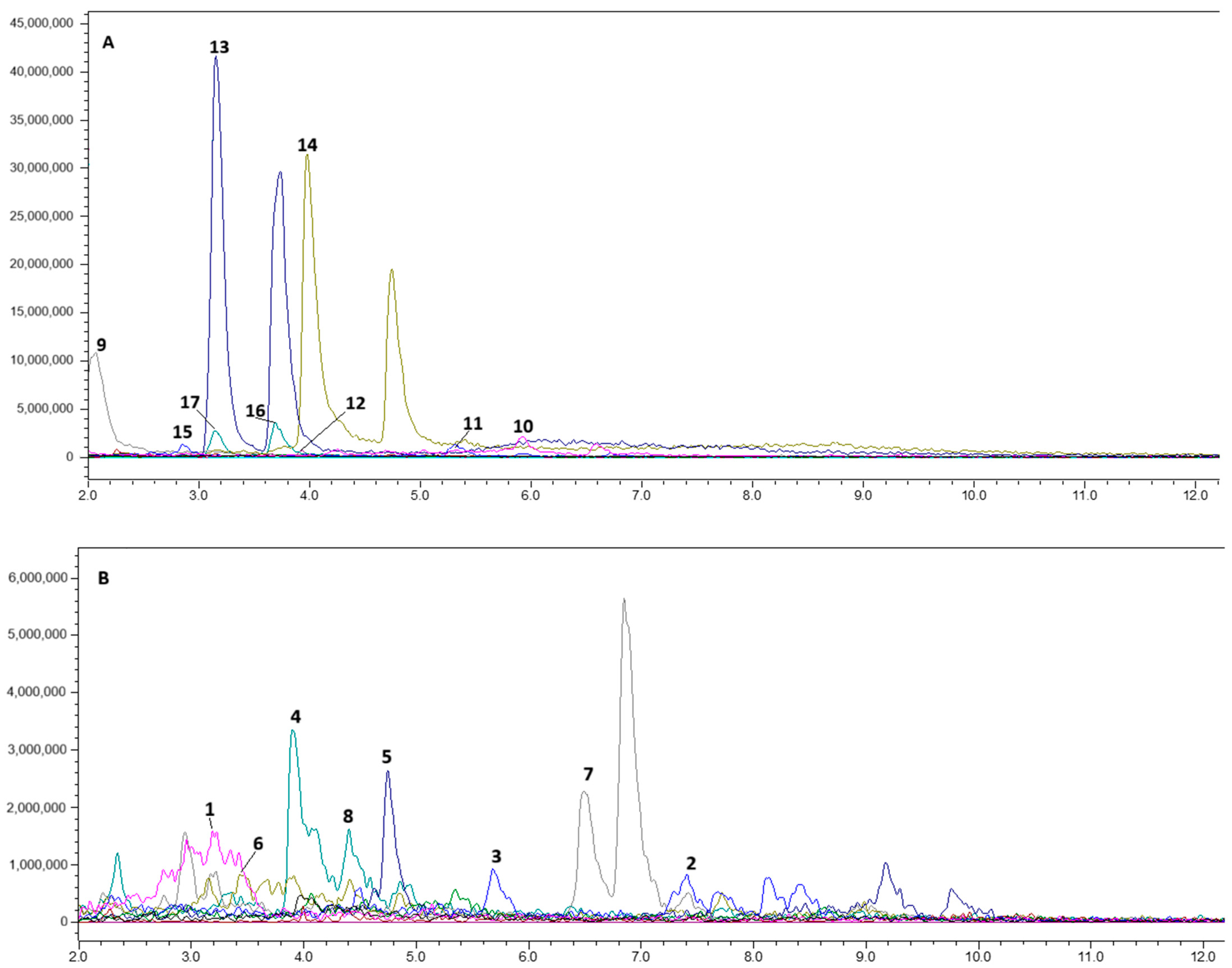
| No | Assignment | m/z Observed | Elemental Formula | Extract * | Ref |
|---|---|---|---|---|---|
| 1 | Ferulic acid | 159 [M + H]+ | C10H10O4 | W, E, N | [27] |
| 2 | Glyasperin C | 330 [M + H]+ | C21H24O5 | W, E, N | [28] |
| 3 | Glycyrrhizic acid | 826 [M + H]+ | C42H62O16 | W, E, N | [29,30] |
| 4 | Isoliquiritin | 429 [M + H]+ | C21H22O9 | W, E, N | [31] |
| 5 | Kaempferol 7-O-Glycoside | 499 [M + H]+ | C22H27O13 | W, E, N | [32] |
| 6 | Naringenin | 273 [M + H]+ | C15H12O5 | W, E, N | [32] |
| 7 | Sinapic acid | 225 [M + H]+ | C11H12O5 | N | [33] |
| 8 | Licochalcone B | 287 [M + H]+ | C16H14O5 | W, E, N | [28] |
| 9 | Glucuronic acid | 193 [M−H]− | C6H10O7 | W, N | [33] |
| 10 | Glycyuralin B | 353 [M−H]− | C20H19NO5 | W, E, N | [28,34] |
| 11 | Inflacoumarin A | 321 [M−H]− | C20H18O4 | W, E, N | [29] |
| 12 | Isoviolanthin | 577 [M−H]− | C27H30O14 | W, E, N | [29] |
| 13 | Liquiritigenin | 417 [M−H]− | C21H22O9 | W, E, N | [28] |
| 14 | Liquiritin | 255 [M−H]− | C15H12O4 | W, E, N | [29] |
| 15 | p-Coumaric acid | 163 [M−H]− | C9H8O3 | W, N | [35] |
| 16 | Quercetin 3-O-Glycoside | 463 [M−H]− | C21H20O12 | W, E, N | [36] |
| 17 | Rutin | 609 [M−H]− | C27H30O16 | W, E, N | [36] |
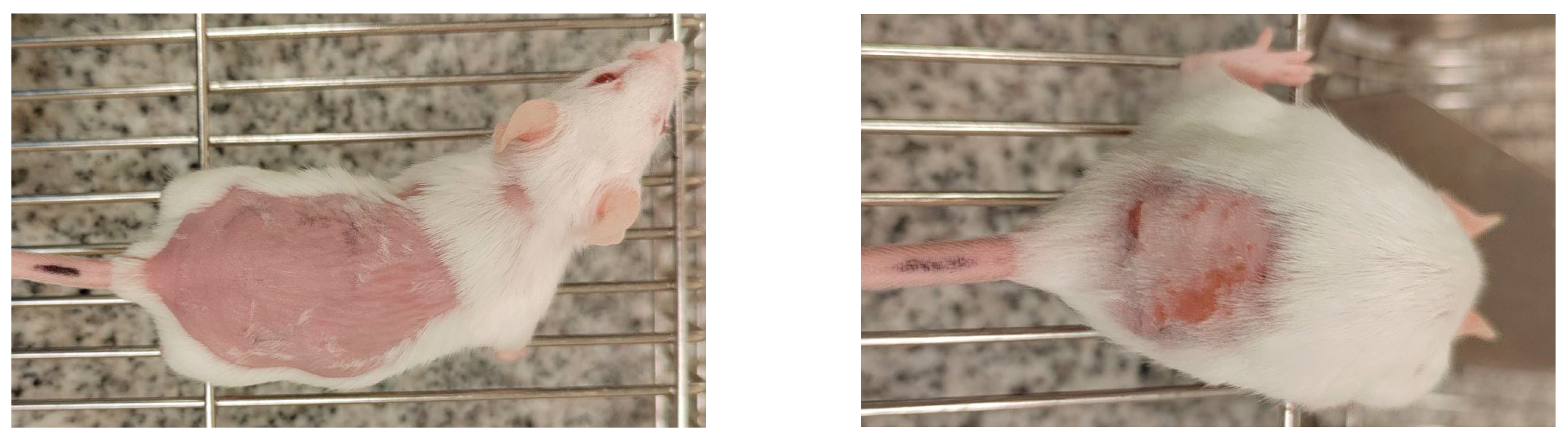
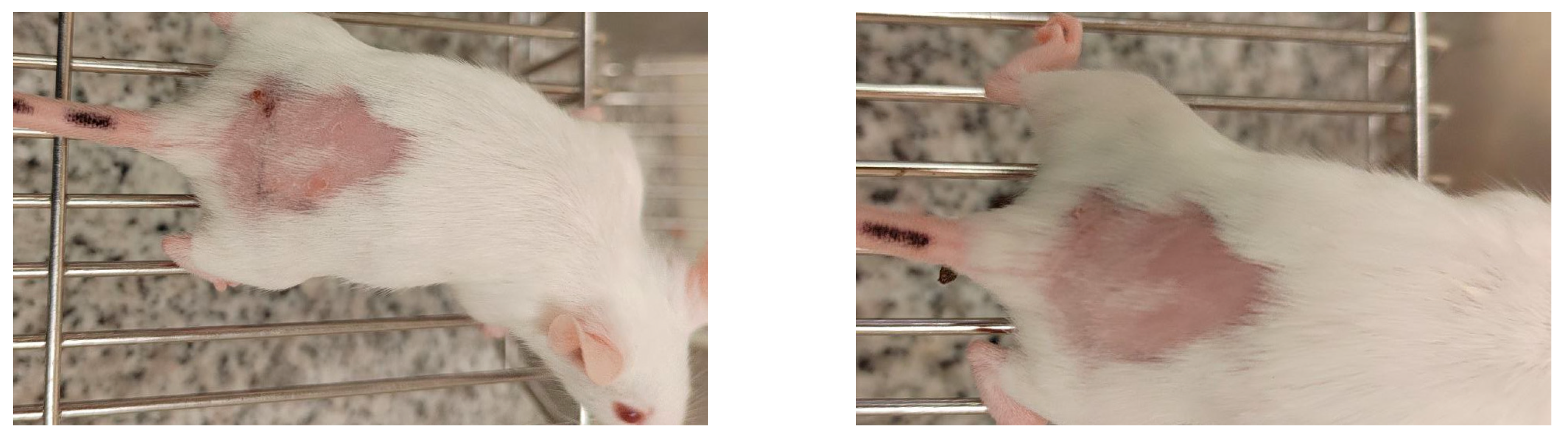
| Group | Dose, µL/Mice | Draize Scores | |||||
|---|---|---|---|---|---|---|---|
| 1 h | 3rd Day | 5th Day | |||||
| Erythema | Edema | Erythema | Edema | Erythema | Edema | ||
| Control | 50/100/150 | 0/0/0 | 0/0/0 | 0/0/0.33 | 0/0/0 | 0/0/0 | 0/0/0 |
| NADES | 50/100/150 | 0/0/0 | 0/0/0 | 0/0/2.83 | 0/0/0 | 0/0/0 | 0/0/0 |
| NADES extract of GR | 50/100/150 | 0/0/0 | 0/0/0 | 0/0/2.67 | 0/0/0 | 0/0/0 | 0/0/0 |
| Group | Dose, µL/Mice | Dynamic of Body Weight, g | ||
|---|---|---|---|---|
| 1st Day | 3rd Day | 5th Day | ||
| Control | 50 100 150 | 25.72 ± 0.77 27.05 ± 0.03 26.02 ± 0.58 | 26.44 ± 0.93 27.82 ± 0.93 27.07 ± 0.62 | 27.08 ± 0.86 27.70 ± 0.86 27.34 ± 0.75 |
| NADES | 50 100 150 | 25.14 ± 0.73 26.11 ± 0.89 26.83 ± 0.92 | 25.59 ± 0.87 26.69 ± 0.93 26.59 ± 0.69 | 25.94 ± 0.89 27.18 ± 0.76 26.48 ± 0.76 |
| NADES extract of GR | 50 100 150 | 26.43 ± 0.71 27.45 ± 0.58 26.51 ± 0.53 | 26.83 ± 0.69 28.04 ± 0.49 26.95 ± 0.53 | 27.16 ± 0.47 27.38 ± 0.46 27.68 ± 0.40 |
| Group | Dose, g/kg | Dynamic of Body Weight, g | ||
|---|---|---|---|---|
| 1st Day | 2nd Day | 3rd Day | ||
| Control | 6 | 25.92 ± 1.01 | 26.03 ± 1.03 | 26.32 ± 1.00 |
| NADES | 4 | 25.61 ± 0.44 | 25.70 ± 0.37 | 25.98 ± 0.32 |
| 6 | 25.69 ± 0.27 | 25.82 ± 0.05 | 25.95 ± 0.11 | |
| 20 | 24.77 ± 0.25 | 25.30 ± 0.37 | 25.32 ± 0.29 | |
| NADES extract of GR | 4 | 25.27 ± 0.58 | 25.46 ± 0.40 | 25.61 ± 0.35 |
| 6 | 25.74 ± 1.41 | 25.96 ± 0.99 | 26.11 ± 1.09 | |
| 20 | 28.03 ± 1.05 | 28.51 ± 0.90 | 28.57 ± 0.83 | |
Disclaimer/Publisher’s Note: The statements, opinions and data contained in all publications are solely those of the individual author(s) and contributor(s) and not of MDPI and/or the editor(s). MDPI and/or the editor(s) disclaim responsibility for any injury to people or property resulting from any ideas, methods, instructions or products referred to in the content. |
© 2025 by the authors. Licensee MDPI, Basel, Switzerland. This article is an open access article distributed under the terms and conditions of the Creative Commons Attribution (CC BY) license (https://creativecommons.org/licenses/by/4.0/).
Share and Cite
Shikova, V.A.; Pozharitskaya, O.N.; Flisyuk, E.V.; Ivkin, D.Y.; Borovikov, D.N.; Balabanova, O.L.; Shikov, A.N. Safety of NADES Extract of Glycyrrhiza Roots After Topical Application and Peroral Administration to Mice. Molecules 2025, 30, 4704. https://doi.org/10.3390/molecules30244704
Shikova VA, Pozharitskaya ON, Flisyuk EV, Ivkin DY, Borovikov DN, Balabanova OL, Shikov AN. Safety of NADES Extract of Glycyrrhiza Roots After Topical Application and Peroral Administration to Mice. Molecules. 2025; 30(24):4704. https://doi.org/10.3390/molecules30244704
Chicago/Turabian StyleShikova, Veronika A., Olga N. Pozharitskaya, Elena V. Flisyuk, Dmitry Yu. Ivkin, Dmitrii N. Borovikov, Olga L. Balabanova, and Alexander N. Shikov. 2025. "Safety of NADES Extract of Glycyrrhiza Roots After Topical Application and Peroral Administration to Mice" Molecules 30, no. 24: 4704. https://doi.org/10.3390/molecules30244704
APA StyleShikova, V. A., Pozharitskaya, O. N., Flisyuk, E. V., Ivkin, D. Y., Borovikov, D. N., Balabanova, O. L., & Shikov, A. N. (2025). Safety of NADES Extract of Glycyrrhiza Roots After Topical Application and Peroral Administration to Mice. Molecules, 30(24), 4704. https://doi.org/10.3390/molecules30244704