Discovery of Influenza Neuraminidase Inhibitors: Structure-Based Virtual Screening and Biological Evaluation of Novel Chemotypes

 , ,
, ,  ,
,  , and
, and
Abstract
1. Introduction
2. Results
2.1. Computational Studies on Neuraminidase
2.1.1. Pharmacophore Model Development and Virtual Screening
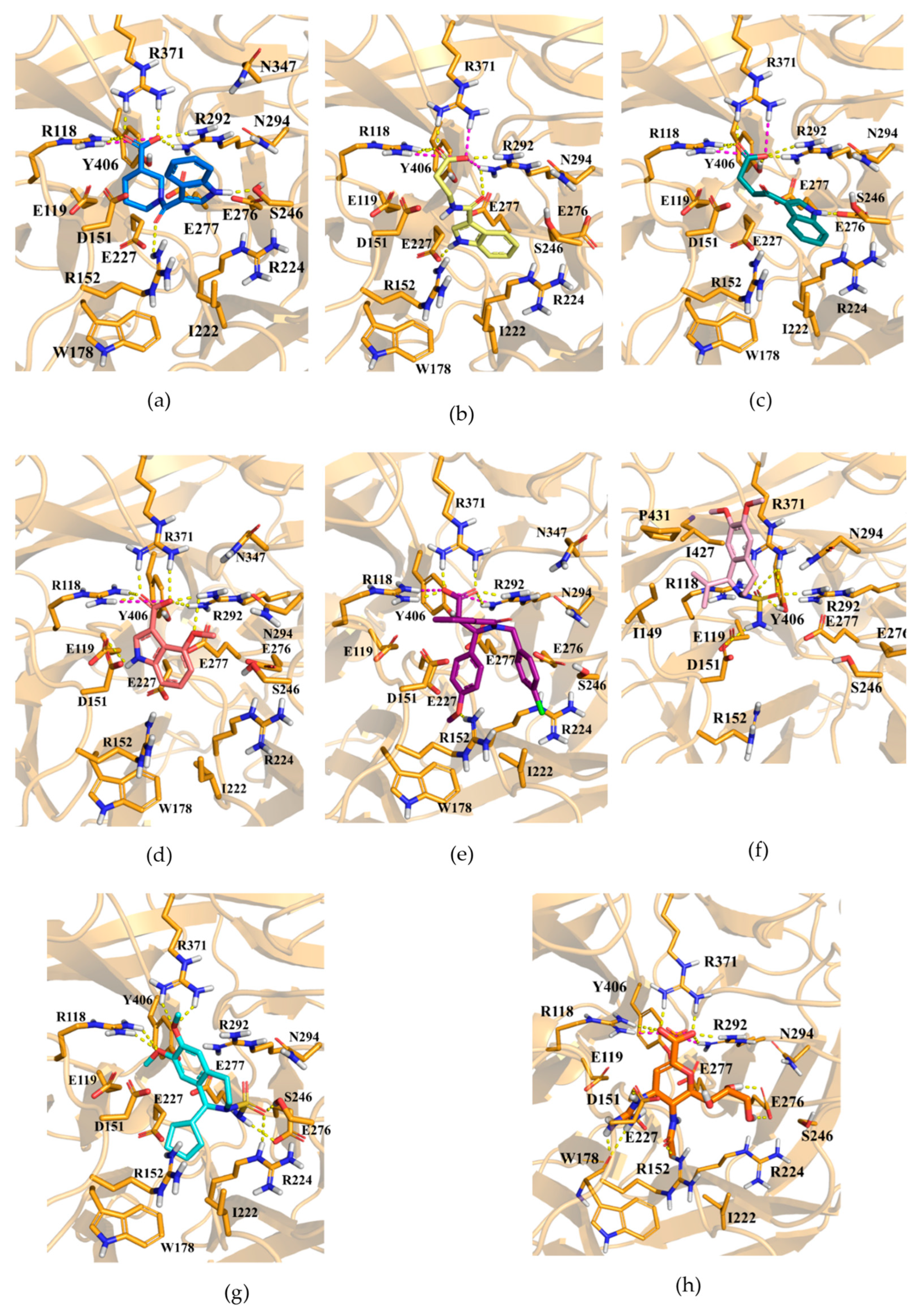
2.1.2. Flexible Docking Studies
2.2. Biological Evaluation
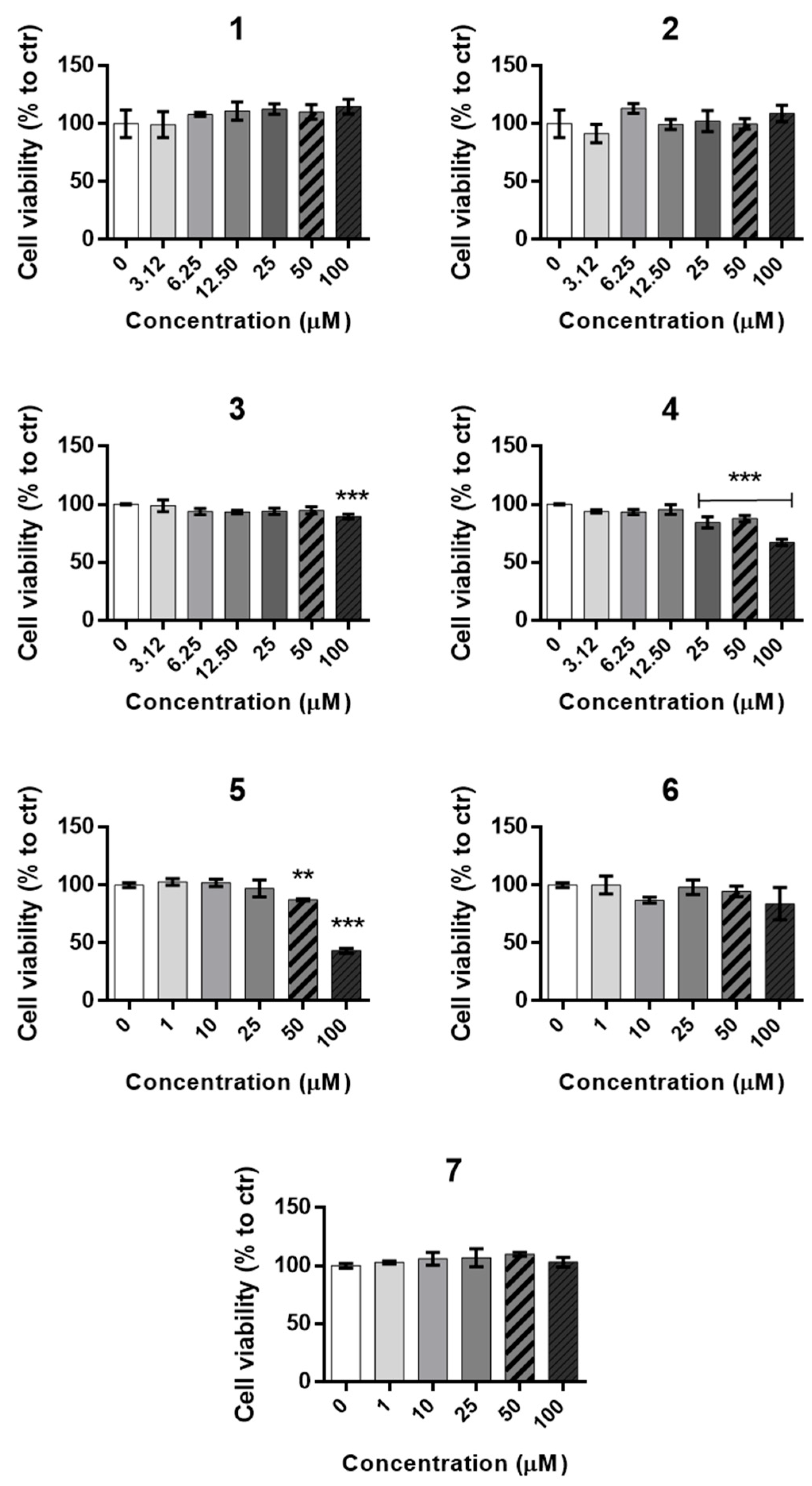
2.2.1. Cytotoxicity Evaluation
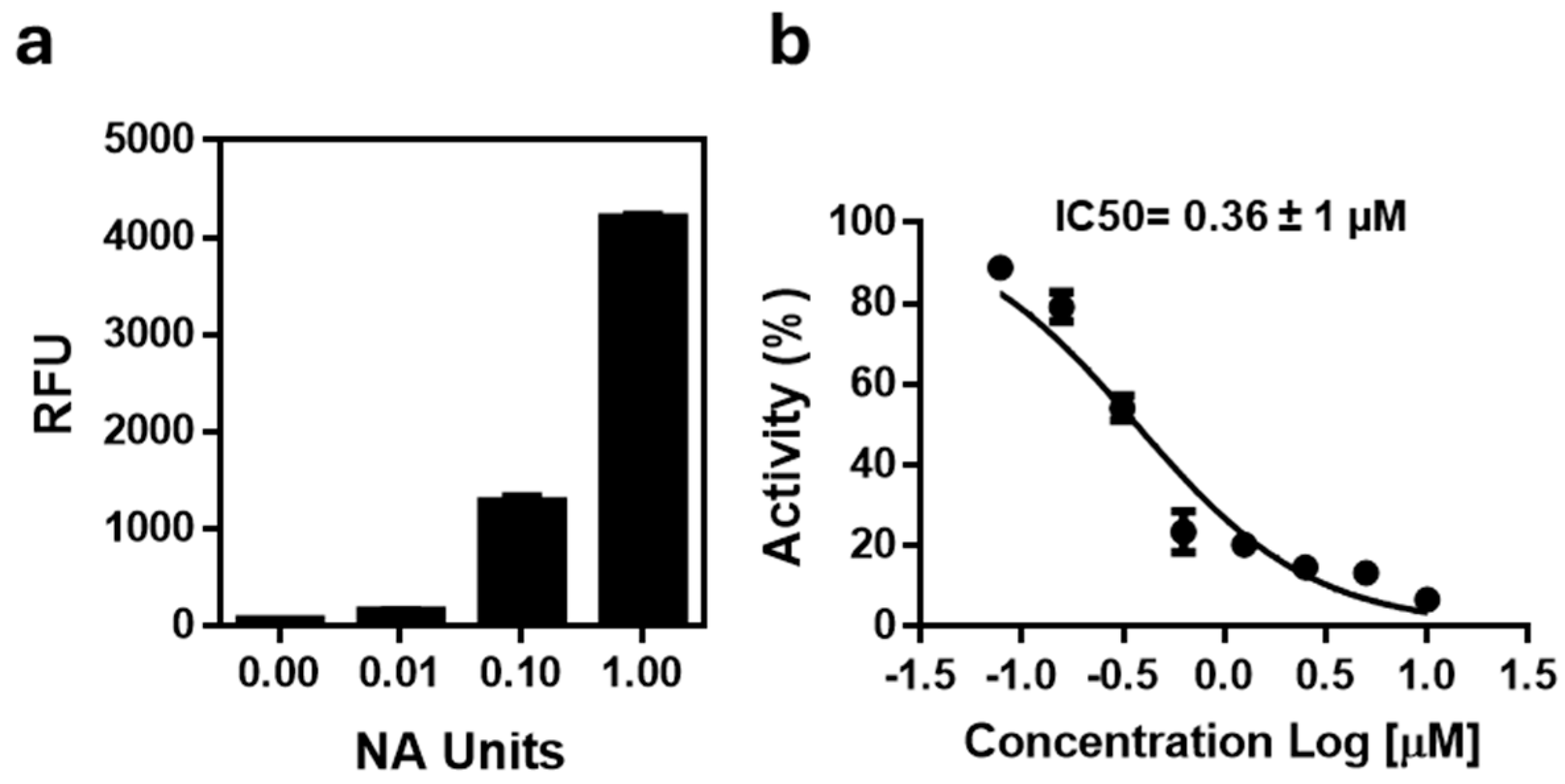
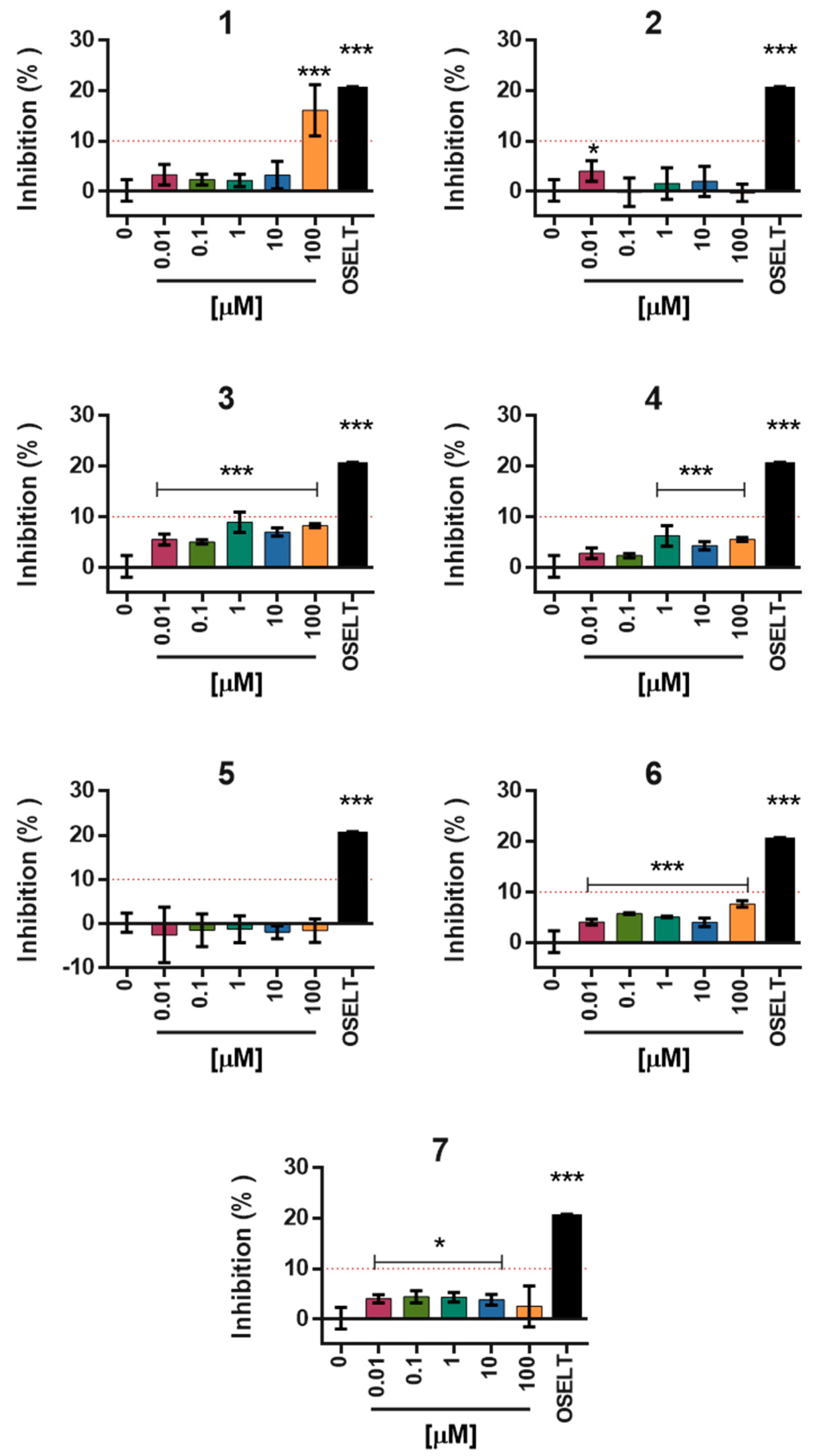
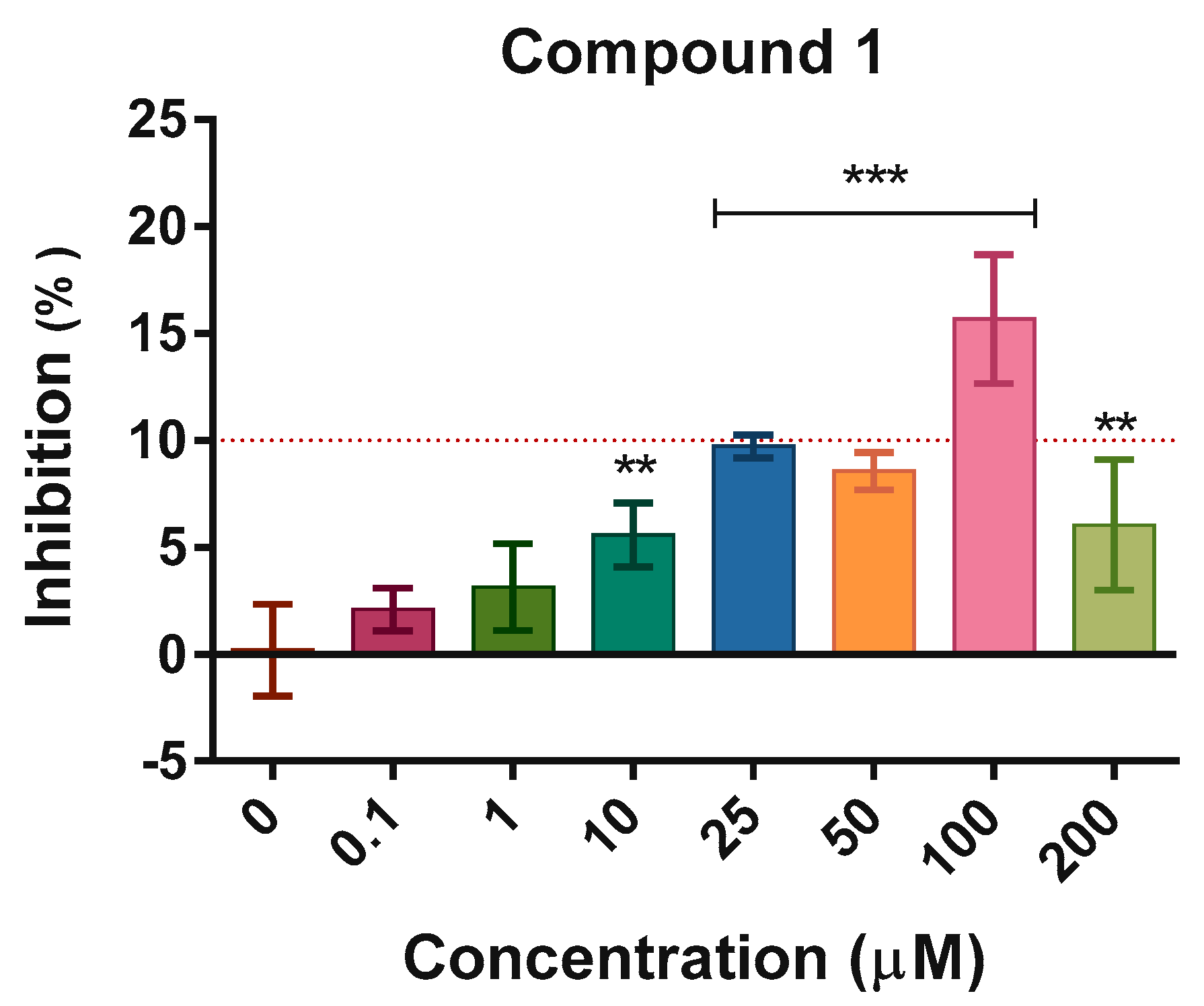
2.2.2. Screening for Neuraminidase Inhibition
3. Materials and Methods
3.1. Molecular Modeling
3.1.1. Protein Structure Preparation and Mutagenesis
3.1.2. Molecular Dynamics Simulations
3.1.3. Pharmacophore Modeling Design and Virtual Screening
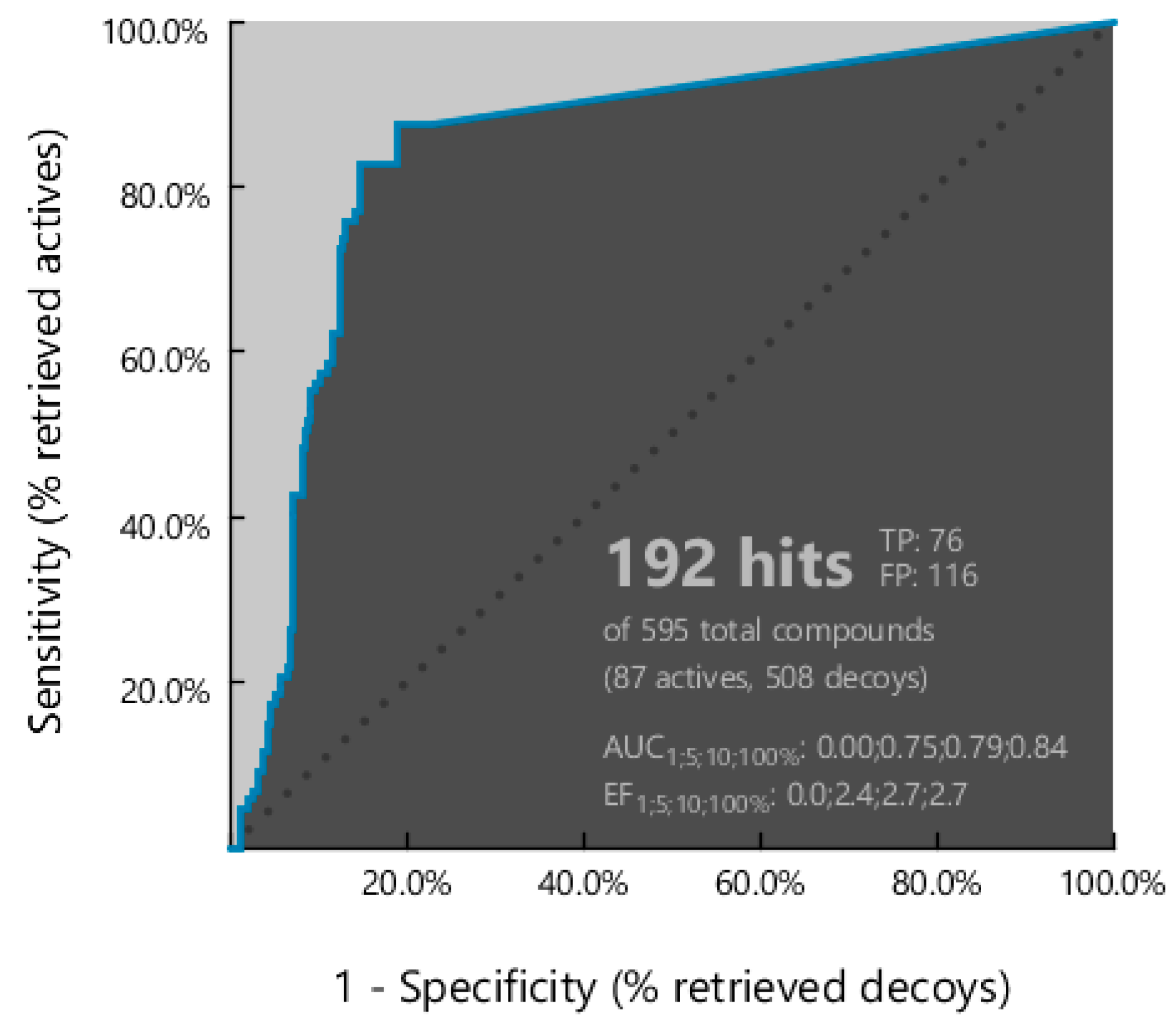
3.1.4. Library Validation
3.1.5. Ligand Preparation
3.1.6. ADMET Properties Prediction
3.1.7. Flexible Docking Studies
3.1.8. Chemical Characterization of Compounds 1–7
3.2. Biological Assay
4. Conclusions
Supplementary Materials
Author Contributions
Funding
Institutional Review Board Statement
Informed Consent Statement
Data Availability Statement
Conflicts of Interest
Abbreviations
| ACD | Advanced chemistry development |
| ADMET | Absorption, distribution, metabolism, excretion, and toxicity |
| ANOVA | Analysis of variance |
| AUC | Area under curve |
| DANA | 2-deoxy-2,3-dehydro-N-acetylneuraminic acid |
| DMSO | Dimethyl sulfoxide |
| EF | Enrichment factor |
| EMA | European Medicine Agency |
| FDA | Food and Drug Administration |
| HA | Hemagglutinin |
| IAV | Influenza A virus |
| MD | Molecular dynamic |
| MTS | 3-(4,5-dimethylthiazol-2-yl)-5-(3-carboxymethoxyphenyl)-2-(4-sulfophenyl)-2H-tetrazolium |
| MUNANA | 4-Methylumbelliferyl-N-acetyl-α-D-neuraminic acid |
| NA | Neuraminidase |
| NAIs | Neuraminidase inhibitors |
| PA | Polymerase acid protein |
| PB1 | Polymerase basic protein 1 |
| PB2 | Polymerase basic protein |
| PDB | Protein Data Bank |
| RMSD | Root mean square deviation |
| RP-TLC | Reverse-phase thin layer chromatography |
| ROC | Receiver operating characteristic |
| VS | Virtual screening |
References
- Sun, Y.; Liu, K. Mechanistic Insights into Influenza A Virus-Induced Cell Death and Emerging Treatment Strategies. Vet. Sci. 2024, 11, 555. [Google Scholar] [CrossRef] [PubMed]
- Bonomini, A.; Mercorelli, B.; Loregian, A. Antiviral strategies against influenza virus: An update on approved and innovative therapeutic approaches. Cell Mol. Life Sci. 2025, 82, 75. [Google Scholar] [CrossRef] [PubMed]
- Han, J.; Perez, J.; Schafer, A.; Cheng, H.; Peet, N.; Rong, L.; Manicassamy, B. Influenza Virus: Small Molecule Therapeutics and Mechanisms of Antiviral Resistance. Curr. Med. Chem. 2018, 25, 5115–5127. [Google Scholar] [CrossRef] [PubMed]
- Sesifredo, I.; Batalha, I.L.; Amorim, M.J. Fast and flu-rious: How to prevent and treat emerging influenza A viruses. PLoS Pathog. 2025, 21, e1013135. [Google Scholar] [CrossRef]
- Focosi, D.; Maggi, F. Avian Influenza Virus A(H5Nx) and Prepandemic Candidate Vaccines: State of the Art. Int. J. Mol. Sci. 2024, 25, 8550. [Google Scholar] [CrossRef]
- Norizwan, J.A.M.; Tan, W.S. Multifaceted virus-like particles: Navigating towards broadly effective influenza A virus vaccines. Curr. Res. Microb. Sci. 2025, 8, 100317. [Google Scholar] [CrossRef]
- Carter, T.; Iqbal, M. The Influenza A Virus Replication Cycle: A Comprehensive Review. Viruses 2024, 16, 316. [Google Scholar] [CrossRef]
- Muller, K.H.; Kakkola, L.; Nagaraj, A.S.; Cheltsov, A.V.; Anastasina, M.; Kainov, D.E. Emerging cellular targets for influenza antiviral agents. Trends Pharmacol. Sci. 2012, 33, 89–99. [Google Scholar] [CrossRef]
- Xiao, Y.; Yong, J.; Lu, S.; Lu, C.; Huang, R. Progress of Influenza Viruses and Inhibitors. Curr. Med. Chem. 2025, 32, 4055–4077. [Google Scholar] [CrossRef]
- Yong, J.; Lu, S.; Lu, C.; Huang, R. The Development History, Structural Composition, and Functions of Influenza Viruses and the Progress of Influenza Virus Inhibitors in Clinics and Clinical Trials. Mini Rev. Med. Chem. 2025, 25, 196–207. [Google Scholar] [CrossRef]
- Kumar, G.; Sakharam, K.A. Tackling Influenza A virus by M2 ion channel blockers: Latest progress and limitations. Eur. J. Med. Chem. 2024, 267, 116172. [Google Scholar] [CrossRef]
- Menendez-Arias, L.; Gago, F. Antiviral Agents: Structural Basis of Action and Rational Design. Subcell. Biochem. 2024, 105, 745–784. [Google Scholar] [CrossRef]
- Chakraborty, S.; Chauhan, A. Fighting the flu: A brief review on anti-influenza agents. Biotechnol. Genet. Eng. Rev. 2024, 40, 858–909. [Google Scholar] [CrossRef]
- McKimm-Breschkin, J.L. Influenza neuraminidase inhibitors: Antiviral action and mechanisms of resistance. Influenza Other Respir. Viruses 2013, 7 (Suppl. S1), 25–36. [Google Scholar] [CrossRef] [PubMed]
- Wu, N.C.; Ellebedy, A.H. Targeting neuraminidase: The next frontier for broadly protective influenza vaccines. Trends Immunol. 2024, 45, 11–19. [Google Scholar] [CrossRef] [PubMed]
- Bassetti, M.; Sepulcri, C.; Giacobbe, D.R.; Fusco, L. Treating influenza with neuraminidase inhibitors: An update of the literature. Expert Opin. Pharmacother. 2024, 25, 1163–1174. [Google Scholar] [CrossRef] [PubMed]
- Keil, J.M.; Rafn, G.R.; Turan, I.M.; Aljohani, M.A.; Sahebjam-Atabaki, R.; Sun, X.L. Sialidase Inhibitors with Different Mechanisms. J. Med. Chem. 2022, 65, 13574–13593. [Google Scholar] [CrossRef]
- Xu, J.; Luo, Q.; Huang, Y.; Li, J.; Ye, W.; Yan, R.; Zhou, X.; He, Z.; Liu, G.; Zhu, Q. Influenza neuraminidase mutations and resistance to neuraminidase inhibitors. Emerg. Microbes Infect. 2024, 13, 2429627. [Google Scholar] [CrossRef]
- Zhang, J.; Murugan, N.A.; Tian, Y.; Bertagnin, C.; Fang, Z.; Kang, D.; Kong, X.; Jia, H.; Sun, Z.; Jia, R.; et al. Structure-Based Optimization of N-Substituted Oseltamivir Derivatives as Potent Anti-Influenza A Virus Agents with Significantly Improved Potency against Oseltamivir-Resistant N1-H274Y Variant. J. Med. Chem. 2018, 61, 9976–9999. [Google Scholar] [CrossRef]
- Zhang, J.; Jia, R.; Jia, H.; Li, P.; Jiang, Y.; Bonomini, A.; Bertagnin, C.; Xu, Q.; Tan, Z.; Ma, X.; et al. Elaborate Structural Modifications Yielding Novel Boron-Containing N-Substituted Oseltamivir Derivatives as Potent Neuraminidase Inhibitors with Significantly Improved Broad-Spectrum Antiresistance Profiles. J. Med. Chem. 2024, 67, 22191–22217. [Google Scholar] [CrossRef]
- Smyk, J.M.; Szydlowska, N.; Szulc, W.; Majewska, A. Evolution of Influenza Viruses-Drug Resistance, Treatment Options, and Prospects. Int. J. Mol. Sci. 2022, 23, 12244. [Google Scholar] [CrossRef]
- Mahal, A.; Duan, M.; Zinad, D.S.; Mohapatra, R.K.; Obaidullah, A.J.; Wei, X.; Pradhan, M.K.; Das, D.; Kandi, V.; Zinad, H.S.; et al. Recent progress in chemical approaches for the development of novel neuraminidase inhibitors. RSC Adv. 2021, 11, 1804–1840. [Google Scholar] [CrossRef] [PubMed]
- Kumar, S.; Goicoechea, S.; Kumar, S.; Pearce, C.M.; Durvasula, R.; Kempaiah, P.; Rathi, B.; Poonam. Oseltamivir analogs with potent anti-influenza virus activity. Drug Discov. Today 2020, 25, 1389–1402. [Google Scholar] [CrossRef] [PubMed]
- Bourguet, E.; Figurska, S.; Fra Czek, M.M. Human Neuraminidases: Structures and Stereoselective Inhibitors. J. Med. Chem. 2022, 65, 3002–3025. [Google Scholar] [CrossRef]
- McAuley, J.L.; Gilbertson, B.P.; Trifkovic, S.; Brown, L.E.; McKimm-Breschkin, J.L. Influenza Virus Neuraminidase Structure and Functions. Front. Microbiol. 2019, 10, 39. [Google Scholar] [CrossRef]
- Li, Q.; Qi, J.; Zhang, W.; Vavricka, C.J.; Shi, Y.; Wei, J.; Feng, E.; Shen, J.; Chen, J.; Liu, D.; et al. The 2009 pandemic H1N1 neuraminidase N1 lacks the 150-cavity in its active site. Nat. Struct. Mol. Biol. 2010, 17, 1266–1268. [Google Scholar] [CrossRef]
- Sun, X.; Li, Q.; Wu, Y.; Wang, M.; Liu, Y.; Qi, J.; Vavricka, C.J.; Gao, G.F. Structure of influenza virus N7: The last piece of the neuraminidase “jigsaw” puzzle. J. Virol. 2014, 88, 9197–9207. [Google Scholar] [CrossRef]
- Liu, L.; Chen, G.; Huang, S.; Wen, F. Receptor Binding Properties of Neuraminidase for influenza A virus: An Overview of Recent Research Advances. Virulence 2023, 14, 2235459. [Google Scholar] [CrossRef]
- Amaro, R.E.; Swift, R.V.; Votapka, L.; Li, W.W.; Walker, R.C.; Bush, R.M. Mechanism of 150-cavity formation in influenza neuraminidase. Nat. Commun. 2011, 2, 388. [Google Scholar] [CrossRef]
- Ernst, A.M.; Zacherl, S.; Herrmann, A.; Hacke, M.; Nickel, W.; Wieland, F.T.; Brugger, B. Differential transport of Influenza A neuraminidase signal anchor peptides to the plasma membrane. FEBS Lett. 2013, 587, 1411–1417. [Google Scholar] [CrossRef]
- Yadav, Y.; Singh, K.; Sharma, S.; Mishra, V.K.; Sagar, R. Recent Efforts in Identification of Privileged Scaffolds as Antiviral Agents. Chem. Biodivers. 2023, 20, e202300921. [Google Scholar] [CrossRef]
- Marquez-Dominguez, L.; Reyes-Leyva, J.; Herrera-Camacho, I.; Santos-Lopez, G.; Scior, T. Five Novel Non-Sialic Acid-Like Scaffolds Inhibit In Vitro H1N1 and H5N2 Neuraminidase Activity of Influenza a Virus. Molecules 2020, 25, 4248. [Google Scholar] [CrossRef]
- Scior, T.; Cuanalo-Contreras, K.; Islas, A.A.; Martinez-Laguna, Y. Targeting the Human Influenza a Virus: The Methods, Limitations, and Pitfalls of Virtual Screening for Drug-like Candidates Including Scaffold Hopping and Compound Profiling. Viruses 2023, 15, 1056. [Google Scholar] [CrossRef]
- Vavricka, C.J.; Li, Q.; Wu, Y.; Qi, J.X.; Wang, M.Y.; Liu, Y.; Gao, F.; Liu, J.; Feng, E.G.; He, J.H.; et al. Structural and Functional Analysis of Laninamivir and its Octanoate Prodrug Reveals Group Specific Mechanisms for Influenza NA Inhibition. PLoS Pathog. 2011, 7, e1002249. [Google Scholar] [CrossRef]
- Dai, M.; Du, W.; Martinez-Romero, C.; Leenders, T.; Wennekes, T.; Rimmelzwaan, G.F.; van Kuppeveld, F.J.M.; Fouchier, R.A.M.; Garcia-Sastre, A.; de Vries, E.; et al. Analysis of the Evolution of Pandemic Influenza A(H1N1) Virus Neuraminidase Reveals Entanglement of Different Phenotypic Characteristics. mBio 2021, 12, e00287-21. [Google Scholar] [CrossRef]
- Strohmeier, S.; Amanat, F.; Zhu, X.; McMahon, M.; Deming, M.E.; Pasetti, M.F.; Neuzil, K.M.; Wilson, I.A.; Krammer, F. A Novel Recombinant Influenza Virus Neuraminidase Vaccine Candidate Stabilized by a Measles Virus Phosphoprotein Tetramerization Domain Provides Robust Protection from Virus Challenge in the Mouse Model. mBio 2021, 12, e0224121. [Google Scholar] [CrossRef]
- Woods, C.J.; Malaisree, M.; Long, B.; McIntosh-Smith, S.; Mulholland, A.J. Computational assay of H7N9 influenza neuraminidase reveals R292K mutation reduces drug binding affinity. Sci. Rep. 2013, 3, 3561. [Google Scholar] [CrossRef] [PubMed]
- Moeini, S.; Mohebbi, A.; Farahmand, B.; Mehrbod, P.; Fotouhi, F. Phylogenetic analysis and docking study of neuraminidase gene of influenza A/H1N1 viruses circulating in Iran from 2010 to 2019. Virus Res. 2023, 334, 199182. [Google Scholar] [CrossRef] [PubMed]
- Watts, K.S.; Dalal, P.; Tebben, A.J.; Cheney, D.L.; Shelley, J.C. Macrocycle Conformational Sampling with MacroModel. J. Chem. Inf. Model. 2014, 54, 2680–2696. [Google Scholar] [CrossRef] [PubMed]
- Bowers, K.; Chow, E.; Xu, H.; Dror, R.; Eastwood, M.; Gregersen, B.; Klepeis, J.; Kolossváry, I.; Moraes, M.; Sacerdoti, F.; et al. Molecular dynamics—Scalable algorithms for molecular dynamics simulations on commodity clusters. In Proceedings of the 2006 ACM/IEEE Conference on Supercomputing, Tampa, FL, USA, 11–17 November 2006. [Google Scholar]
- Wolber, G.; Langer, T. LigandScout: 3-d pharmacophores derived from protein-bound Ligands and their use as virtual screening filters. J. Chem. Inf. Model. 2005, 45, 160–169. [Google Scholar] [CrossRef]
- Sazonovas, A.; Japertas, P.; Didziapetris, R. Estimation of reliability of predictions and model applicability domain evaluation in the analysis of acute toxicity (LD50). SAR QSAR Environ. Res. 2010, 21, 127–148. [Google Scholar] [CrossRef]
- Jones, G.; Willett, P.; Glen, R.C.; Leach, A.R.; Taylor, R. Development and validation of a genetic algorithm for flexible docking. J. Mol. Biol. 1997, 267, 727–748. [Google Scholar] [CrossRef]
- Dorababu, A. Indole—A promising pharmacophore in recent antiviral drug discovery. RSC Med. Chem. 2020, 11, 1335–1353. [Google Scholar] [CrossRef]
- Singh, A.; Bhutani, C.; Khanna, P.; Talwar, S.; Singh, S.K.; Khanna, L. Recent report on indoles as a privileged anti-viral scaffold in drug discovery. Eur. J. Med. Chem. 2025, 281, 117017. [Google Scholar] [CrossRef]
- Tsedilin, A.; Schmidtke, M.; Monakhova, N.; Leneva, I.; Falynskova, I.; Khrenova, M.; Lane, T.R.; Ekins, S.; Makarov, V. Indole-core inhibitors of influenza a neuraminidase: Iterative medicinal chemistry and molecular modeling. Eur. J. Med. Chem. 2024, 277, 116768. [Google Scholar] [CrossRef]
- Le, K.; Tran, D.; Nguyen, A.; Le, L. A Screening of Neuraminidase Inhibition Activities of Isoquinolone Alkaloids in Coptis chinensis Using Molecular Docking and Pharmacophore Analysis. ACS Omega 2020, 5, 30315–30322. [Google Scholar] [CrossRef]
- Asadi-Samani, M.; Altememy, D.; Saffari-Chaleshtor, J.; Moradi, M.-T. Berberine as a new neuraminidase inhibitor drug: A systematic review. J. Herbmed Pharmacol. 2024, 13, 19–27. [Google Scholar] [CrossRef]
- Wu, Y.; Gao, F.; Qi, J.; Bi, Y.; Fu, L.; Mohan, S.; Chen, Y.; Li, X.; Pinto, B.M.; Vavricka, C.J.; et al. Resistance to Mutant Group 2 Influenza Virus Neuraminidases of an Oseltamivir-Zanamivir Hybrid Inhibitor. J. Virol. 2016, 90, 10693–10700. [Google Scholar] [CrossRef]
- Han, N.; Mu, Y. Plasticity of 150-loop in influenza neuraminidase explored by Hamiltonian replica exchange molecular dynamics simulations. PLoS ONE 2013, 8, e60995. [Google Scholar] [CrossRef]
- Choi, W.S.; Jeong, J.H.; Kwon, J.J.; Ahn, S.J.; Lloren, K.K.S.; Kwon, H.I.; Chae, H.B.; Hwang, J.; Kim, M.H.; Kim, C.J.; et al. Screening for Neuraminidase Inhibitor Resistance Markers among Avian Influenza Viruses of the N4, N5, N6, and N8 Neuraminidase Subtypes. J. Virol. 2018, 92, e01580-17. [Google Scholar] [CrossRef]
- Tao, J.; Wang, H.; Wang, W.; Mi, N.; Zhang, W.; Wen, Q.; Ouyang, J.; Liang, X.; Chen, M.; Guo, W.; et al. Binding mechanism of oseltamivir and influenza neuraminidase suggests perspectives for the design of new anti-influenza drugs. PLoS Comput. Biol. 2022, 18, e1010343. [Google Scholar] [CrossRef]
- Sastry, G.M.; Adzhigirey, M.; Day, T.; Annabhimoju, R.; Sherman, W. Protein and ligand preparation: Parameters, protocols, and influence on virtual screening enrichments. J. Comput.-Aided Mol. Des. 2013, 27, 221–234. [Google Scholar] [CrossRef]
- Gitto, R.; Francica, E.; De Sarro, G.; Scicchitano, F.; Chimirri, A. Solution-phase parallel synthesis of novel 1,2,3,4-tetrahydroisoquinoline-1-ones as anticonvulsant agents. Chem. Pharm. Bull. 2008, 56, 181–184. [Google Scholar] [CrossRef]
- Gitto, R.; Agnello, S.; Ferro, S.; De Luca, L.; Vullo, D.; Brynda, J.; Mader, P.; Supuran, C.T.; Chimirri, A. Identification of 3,4-Dihydroisoquinoline-2(1H)-sulfonamides as potent carbonic anhydrase inhibitors: Synthesis, biological evaluation, and enzyme--ligand X-ray studies. J. Med. Chem. 2010, 53, 2401–2408. [Google Scholar] [CrossRef]
- Leusciatti, M.; Macchi, B.; Marino-Merlo, F.; Mastino, A.; Morra, G.; Quadrelli, P. Inhibition of the RNA-Dependent RNA-Polymerase from SARS-CoV-2 by 6-Chloropurine Isoxazoline-Carbocyclic Monophosphate Nucleotides. ACS Omega 2023, 8, 36311–36320. [Google Scholar] [CrossRef]



| Compounds | 2D Structure | Pharmacophore Mapping | Matched Features |
|---|---|---|---|
| 1 |  |  |  Fit score: 77.38 |
| 2 |  |  |  Fit score: 75.91 |
| 3 | 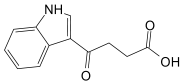 |  | 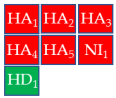 Fit score: 75.56 |
| 4 |  |  |  Fit score: 66.2 |
| 5 |  |  |  Fit score: 67.96 |
| 6 |  |  |  Fit score: 66.33 |
| 7 |  |  | 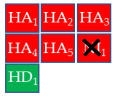 Fit score: 65.50 |
| Compound | CC50 (µM) |
|---|---|
| 1 | 1 N.D. |
| 2 | 1 N.D. |
| 3 | 670.6 |
| 4 | 244.2 |
| 5 | 152 |
| 6 | 534 |
| 7 | 1 N.D. |
Disclaimer/Publisher’s Note: The statements, opinions and data contained in all publications are solely those of the individual author(s) and contributor(s) and not of MDPI and/or the editor(s). MDPI and/or the editor(s) disclaim responsibility for any injury to people or property resulting from any ideas, methods, instructions or products referred to in the content. |
© 2025 by the authors. Licensee MDPI, Basel, Switzerland. This article is an open access article distributed under the terms and conditions of the Creative Commons Attribution (CC BY) license (https://creativecommons.org/licenses/by/4.0/).
Share and Cite
Gitto, R.; Lombardo, L.; Ravenda, A.; Broccolo, F.; Mastino, A.; De Luca, L.; Marino-Merlo, F. Discovery of Influenza Neuraminidase Inhibitors: Structure-Based Virtual Screening and Biological Evaluation of Novel Chemotypes. Molecules 2025, 30, 4636. https://doi.org/10.3390/molecules30234636
Gitto R, Lombardo L, Ravenda A, Broccolo F, Mastino A, De Luca L, Marino-Merlo F. Discovery of Influenza Neuraminidase Inhibitors: Structure-Based Virtual Screening and Biological Evaluation of Novel Chemotypes. Molecules. 2025; 30(23):4636. https://doi.org/10.3390/molecules30234636
Chicago/Turabian StyleGitto, Rosaria, Lisa Lombardo, Angela Ravenda, Francesco Broccolo, Antonio Mastino, Laura De Luca, and Francesca Marino-Merlo. 2025. "Discovery of Influenza Neuraminidase Inhibitors: Structure-Based Virtual Screening and Biological Evaluation of Novel Chemotypes" Molecules 30, no. 23: 4636. https://doi.org/10.3390/molecules30234636
APA StyleGitto, R., Lombardo, L., Ravenda, A., Broccolo, F., Mastino, A., De Luca, L., & Marino-Merlo, F. (2025). Discovery of Influenza Neuraminidase Inhibitors: Structure-Based Virtual Screening and Biological Evaluation of Novel Chemotypes. Molecules, 30(23), 4636. https://doi.org/10.3390/molecules30234636