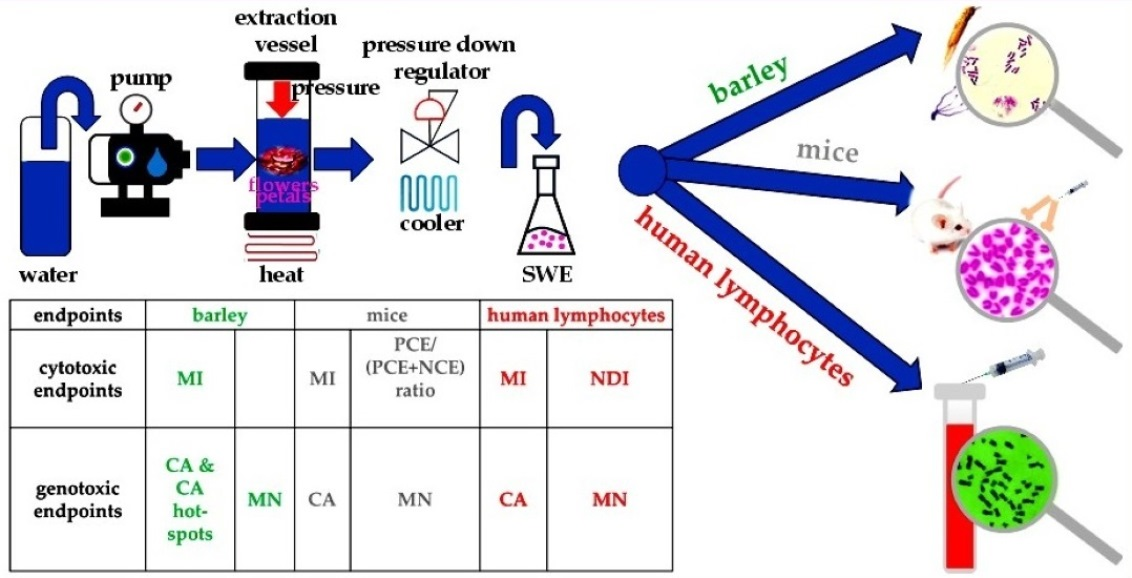
Screening of Cytotoxic and Genotoxic Activities of Subcritical Water Extracts from R. damascena and R. alba Flowers

 , , , , , , , and
Abstract
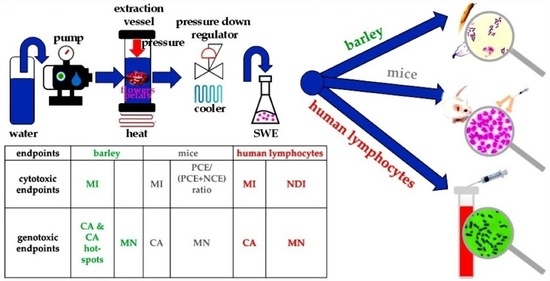
1. Introduction
2. Results
2.1. Composition Data of SWEs from R. damascena Mill. and R. alba L.
2.2. Cytotoxic Effects of Rose SWEs
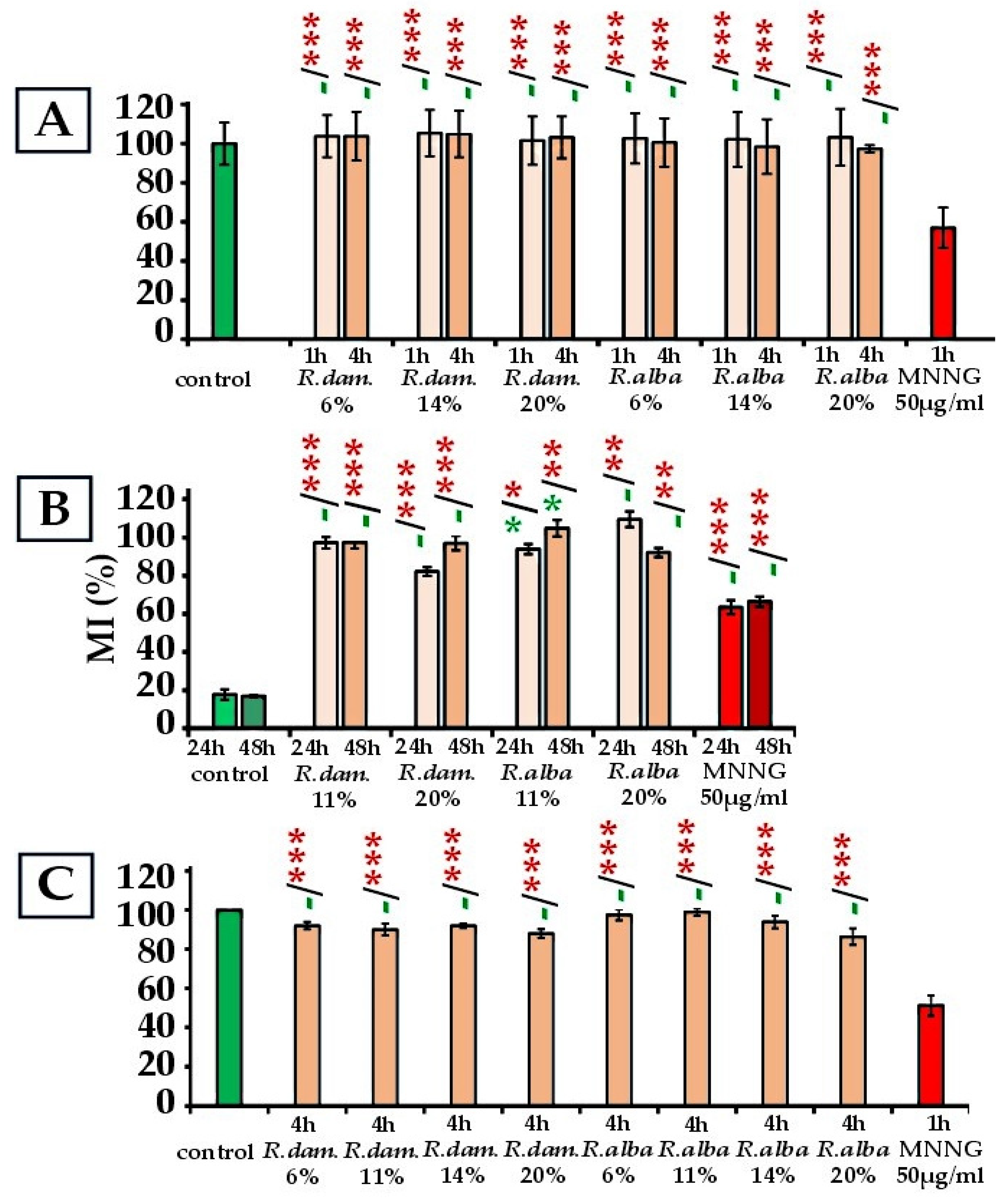
2.2.1. Mitotic Index (MI)
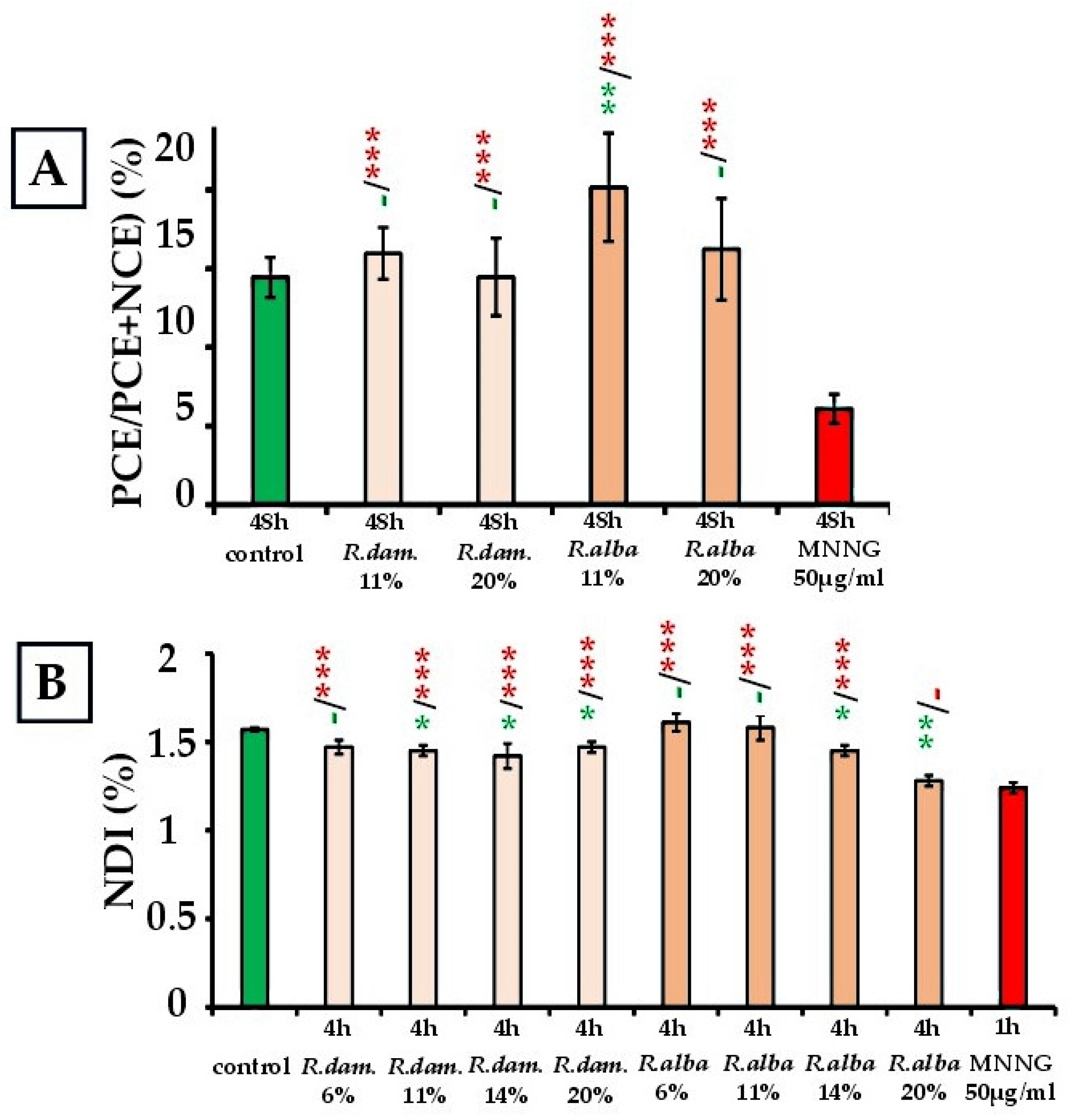
2.2.2. PCE/(PCE + NCE) Ratio
2.2.3. Nuclear Division Index (NDI)
2.3. Genotoxic Effects of Rose SWEs
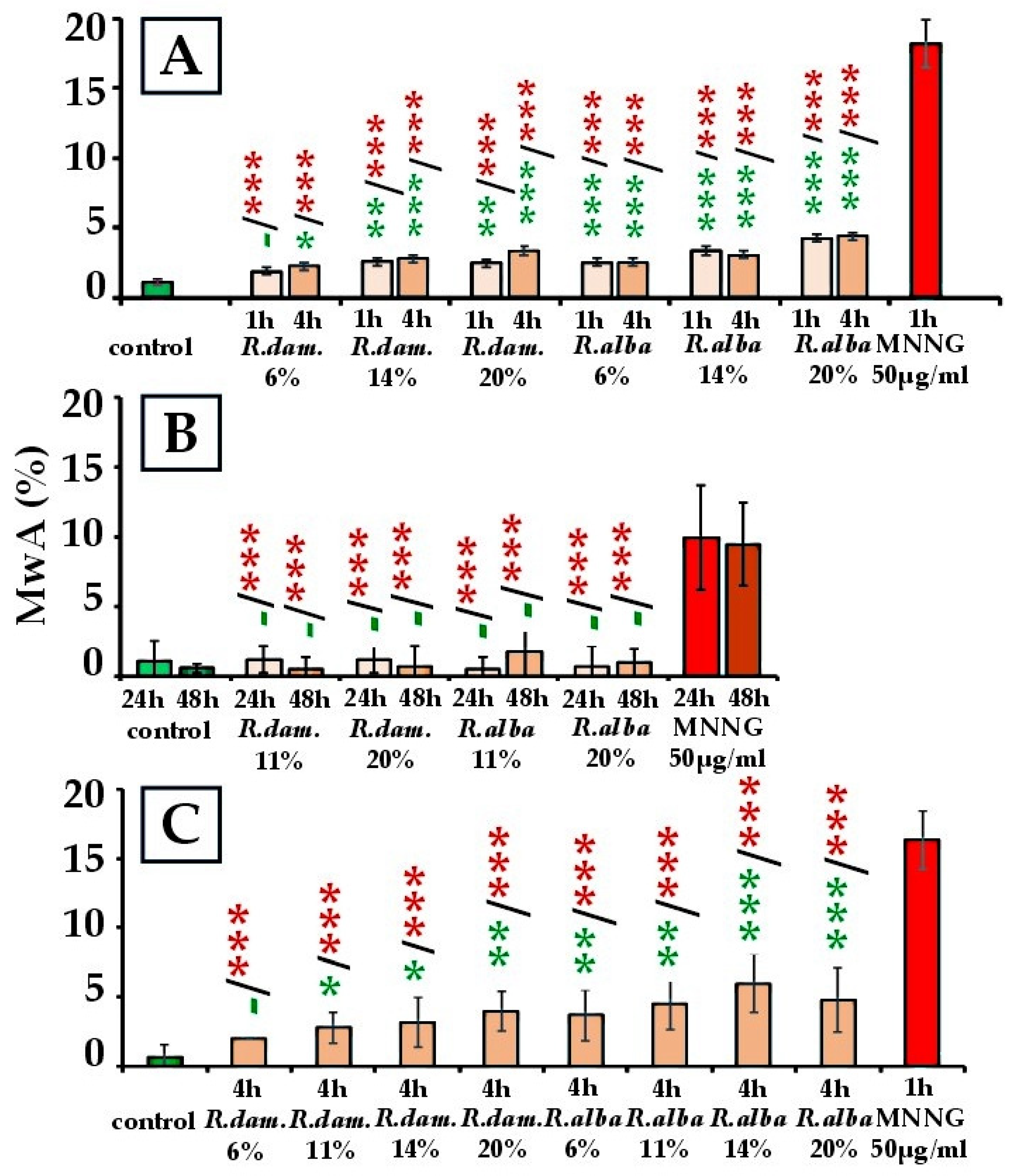
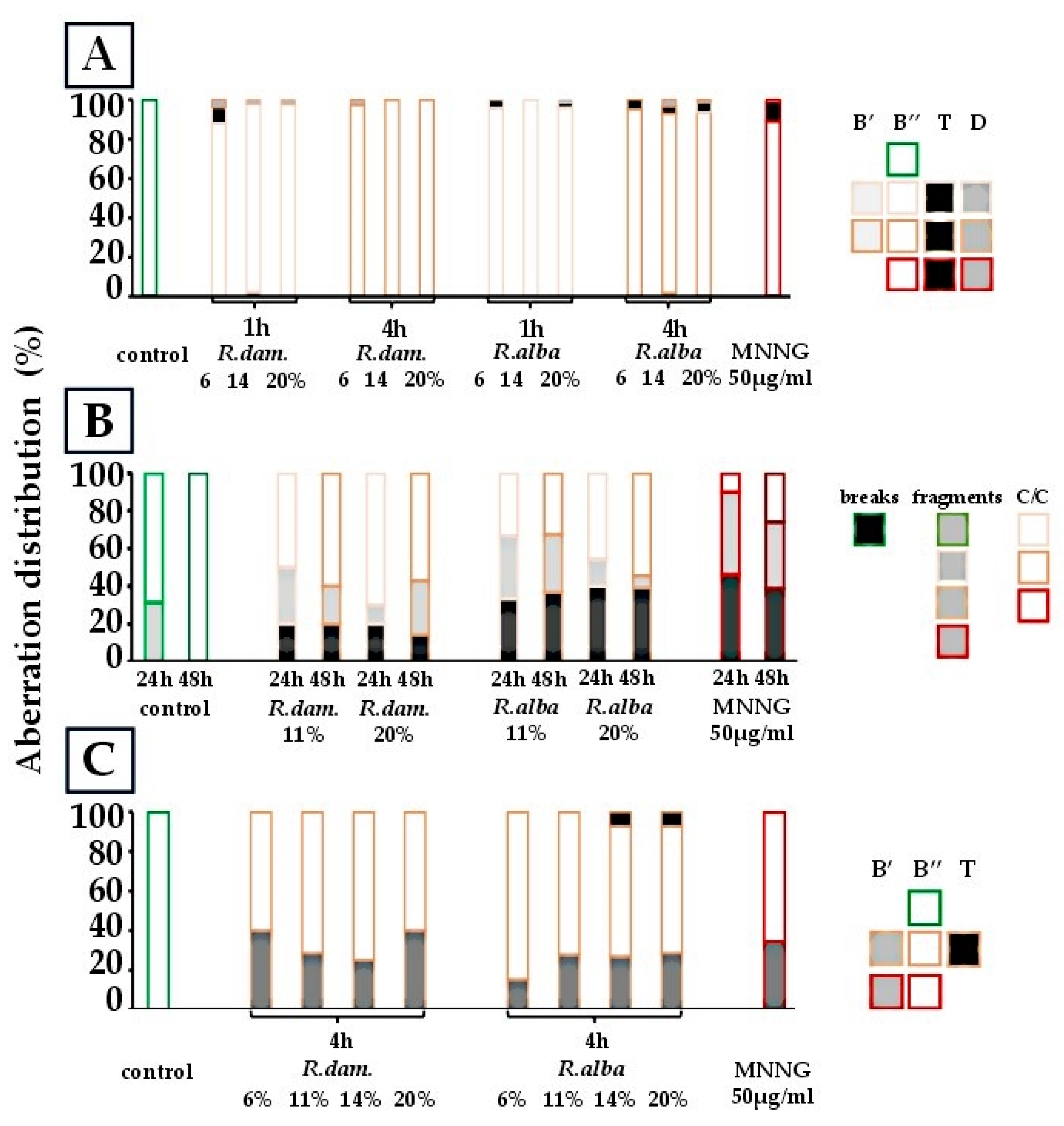
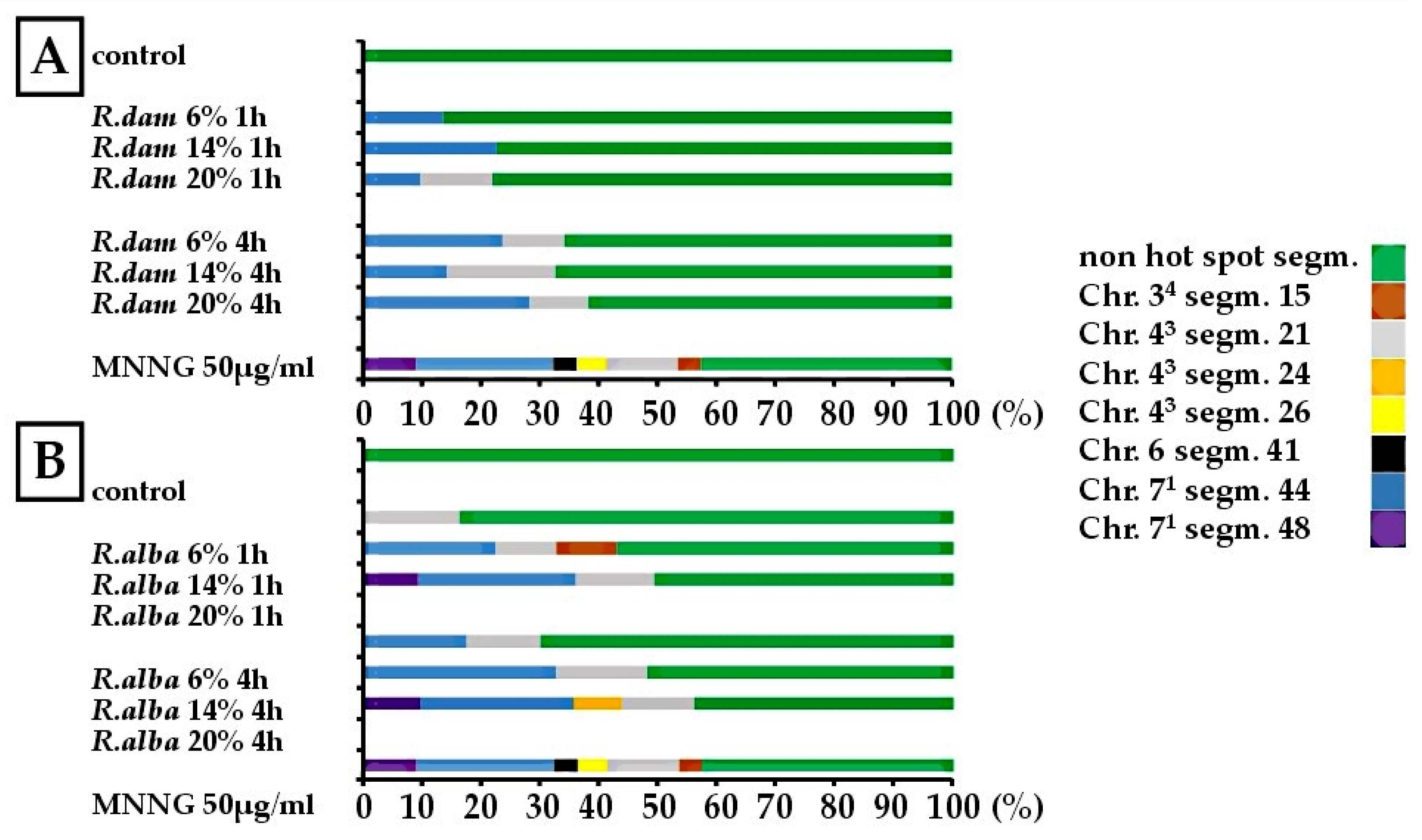
2.3.1. Induction of Chromosome Aberrations
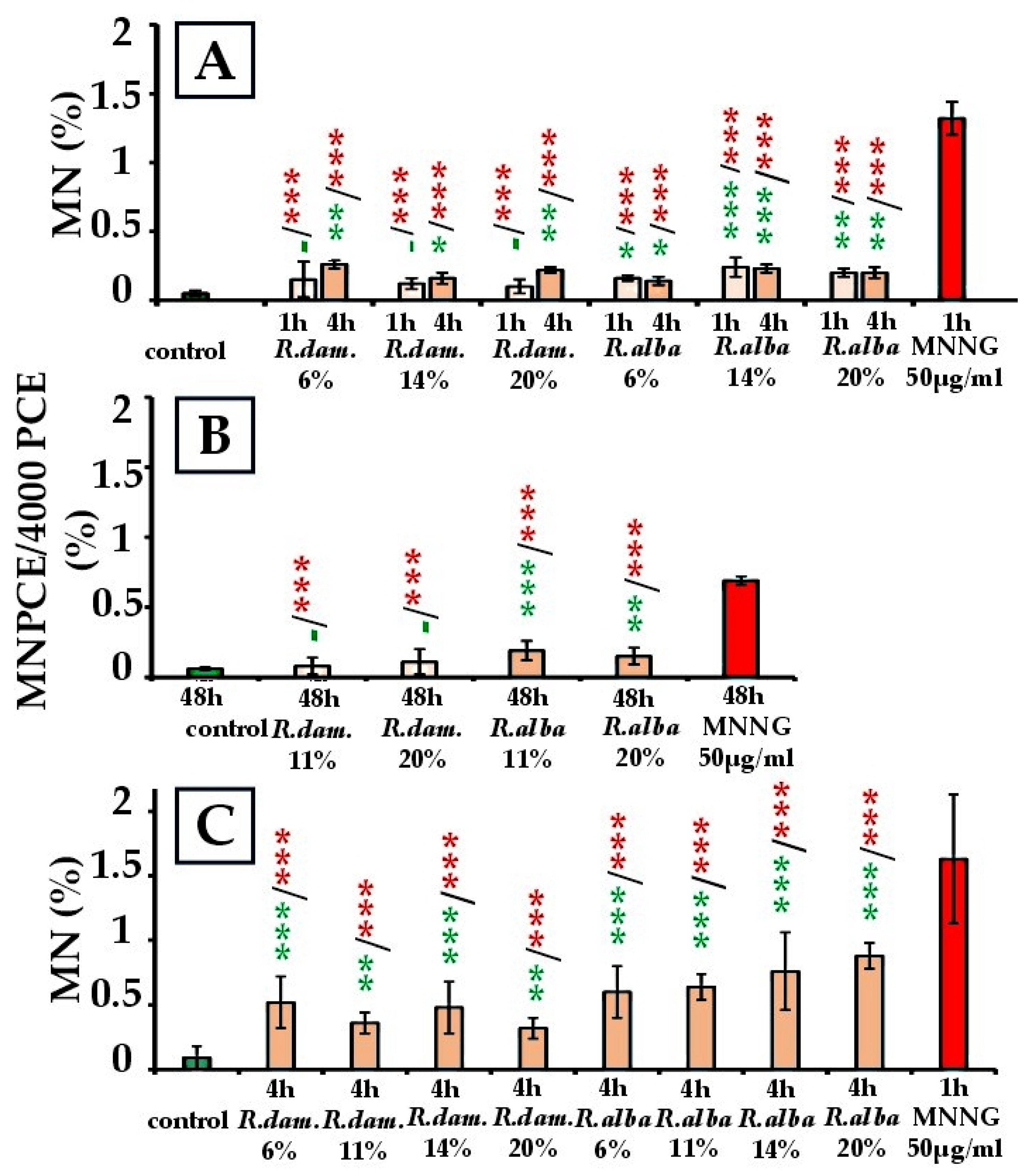
2.3.2. Induction of Micronuclei
3. Discussion
3.1. Cytotoxic Effects of Rose SWEs
3.2. Genotoxic Effects of Rose SWEs
4. Materials and Methods
4.1. Plant Material
4.2. Technology of SWE
4.3. UHPLC-HRMS Profiling and Semi-Quantification Determination of Phytochemicals
4.4. Chemicals
4.5. Design of Cytogenetic Experiments
4.5.1. Plant Test System In Vivo
4.5.2. Animal Test System In Vivo
4.5.3. Human Lymphocytes In Vitro
4.6. Cytogenetic Endpoints
4.6.1. Cytotoxicity Endpoints
- Mitotic Index (MI)
- PCE/(PCE + NCE) ratio and nuclear division index (NDI)
4.6.2. Genotoxicity Endpoints
- Assessment of Chromosomal Aberrations (CA) Induction
- Assessment of Micronuclei induction (MN)
4.7. Statistical Analysis
5. Conclusions
Author Contributions
Funding
Institutional Review Board Statement
Informed Consent Statement
Data Availability Statement
Acknowledgments
Conflicts of Interest
Abbreviations
| SWE | Subcritical water extraction |
| UHPLC-HRMS/MS | Ultra-High-Performance Liquid Chromatography coupled to High-Resolution Tandem Mass Spectrometry |
| MI | Mitotic index |
| SWEs | Subcritical water extracts |
| ROS | Reactive oxygen species |
| PCE | Polychromatic erythrocytes |
| NCE | Normochromatic erythrocytes |
| MNPCE | Micronucleated immature erythrocytes |
| NDI | Nuclear Division Index |
| MN | Micronuclei |
| CA | Chromosomal aberration |
| B” | Isochromatid break |
| B’ | Chromatid break |
| T | Translocation |
| MNNG | N-nitro-N’-nitro-N-nitrosoguanidine |
| OECD | Organisation for Economic Co-operation and Development |
References
- Akram, M.; Riaz, M.; Munir, N.; Akhter, N.; Zafar, S.; Jabeen, F.; Ali Shariati, M.; Akhtar, N.; Riaz, Z.; Altaf, S.H.; et al. Chemical constituents, experimental and clinical pharmacology of Rosa damascena: A literature review. J. Pharm. Pharmacol. 2020, 72, 161–174. [Google Scholar] [CrossRef]
- Chishti, M.; Akram, M.; Laila, U.; Zainab, R.; Ifthikar, M.; Ozdemir, F.; Kebede, I. Rosa Damascana: A review of its conventional uses Phytochemistry and Pharmacology. Glob. Acad. J. Agric. Biosci. 2023, 5, 61–67. [Google Scholar] [CrossRef]
- Kovacheva, N.; Rusanov, K.; Atanassov, I. Industrial cultivation of oil bearing rose and rose oil production in Bulgaria during 21st century, directions and challenges. Biotechnol. Biotechnol. Equip. 2010, 24, 1793–1798. [Google Scholar] [CrossRef]
- Nedeltcheva-Antonova, D.; Stoicheva, P.; Antonov, L. Chemical profiling of Bulgarian rose absolute (Rosa damascena Mill.) using gas chromatography–mass spectrometry and trimethylsilyl derivatives. Ind. Crops Prod. 2017, 108, 36–43. [Google Scholar] [CrossRef]
- Nedkov, N.; Dobreva, A.; Kovacheva, N.; Bardarov, V.; Velcheva, A. Bulgarian rose oil of white oil-bearing rose. Bulg. J. Agric. Sci. 2009, 15, 318–322. [Google Scholar]
- Dobreva, A.; Nenov, N.; Ivanov, I.; Georgiev, V.; Hambarliyska, I.; Slavov, A. Subcritical Water Extraction of Rosa alba L.—Technology and Quality of the Products. Appl. Sci. 2025, 15, 10007. [Google Scholar] [CrossRef]
- Cheng, B.C.Y.; Fu, X.-Q.; Guo, H.; Li, T.; Wu, Z.-Z.; Chan, K.; Yu, H. The genus Rosa and arthritis: Overview on pharmacological perspectives. Pharmacol. Res. 2016, 114, 219–234. [Google Scholar] [CrossRef] [PubMed]
- Solimine, J.; Garo, E.; Wedler, J.; Rusanov, K.; Fertig, O.; Hamburger, M.; Atanassov, I.; Butterweck, V. Tyrosinase inhibitory constituents from a polyphenol enriched fraction of rose oil distillation wastewater. Fitoterapia 2016, 108, 13–19. [Google Scholar] [CrossRef] [PubMed]
- Nikolova, G.; Karamalakova, Y.; Gadjeva, V. Reducing oxidative toxicity of L-dopa in combination with two different antioxidants: An essential oil isolated from Rosa Damascena Mill., and vitamin C. Toxicol. Rep. 2019, 6, 267–271. [Google Scholar] [CrossRef]
- Nikolova, G.; Karamalakova, Y.; Kovacheva, N.; Stanev, S.; Zheleva, A.; Gadjeva, V. Protective effect of two essential oils isolated from Rosa damascena Mill. and Lavandula angustifolia Mill., and two classic antioxidants against L DOPA oxidative toxicity induced in healthy mice. Regul. Toxicol. Pharmacol. 2016, 81, 1–7. [Google Scholar] [CrossRef] [PubMed]
- Mohammed, M.J.; Tadros, M.G.; Michel, H.E. Geraniol protects against cyclophosphamide-induced hepatotoxicity in rats: Possible role of MAPK and PPAR-γ signaling pathways. Food Chem. Toxicol. 2020, 139, 111251. [Google Scholar] [CrossRef]
- Georgieva, A.; Ilieva, Y.; Kokanova-Nedialkova, Z.; Zaharieva, M.M.; Nedialkov, P.; Dobreva, A.; Kroumov, A.; Najdenski, H.; Mileva, M. Redox-modulating capacity and antineoplastic activity of wastewater obtained from the distillation of the essential oils of four Bulgarian oil-bearing roses. Antioxidants 2021, 10, 1615. [Google Scholar] [CrossRef]
- Rezaie-Tavirani, M.; Fayazfar, S.; Heydari-Keshel, S.; Rezaee, M.B.; Zamanian-Azodi, M.; Rezaei-Tavirani, M.; Khodarahmi, R. Effect of essential oil of Rosa Damascena on human colon cancer cell line SW742. Gastroenterol. Hepatol. Bed Bench. 2013, 6, 25–31. [Google Scholar] [PubMed] [PubMed Central]
- Basim, E.; Basim, H. Antibacterial activity of Rosa damascena essential oil. Fitoterapia 2003, 74, 394–396. [Google Scholar] [CrossRef] [PubMed]
- Boskabady, M.H.; Shafei, M.N.; Saberi, Z.; Amini, S. Pharmacological effects of Rosa Damascena. Iran. J. Basic. Med. Sci. 2011, 14, 295–307. [Google Scholar] [PubMed] [PubMed Central]
- Wedler, J.; Rusanov, K.; Atanassov, I.; Butterweck, V. A polyphenol-enriched fraction of rose oil distillation wastewater inhibits cell proliferation, migration, and TNF-α-induced VEGF secretion in human immortalized keratinocytes. Planta Med. 2016, 82, 1000–1008. [Google Scholar] [CrossRef]
- Wedler, J.; Weston, A.; Rausenberger, J.; Butterweck, V. In vitro modulation of inflammatory target gene expression by a polyphenol-enriched fraction of rose oil distillation wastewater. Fitoterapia 2016, 114, 56–62. [Google Scholar] [CrossRef]
- Mileva, M.; Ilieva, Y.; Jovtchev, G.; Gateva, S.; Zaharieva, M.M.; Georgieva, A.; Dimitrova, L.; Dobreva, A.; Angelova, T.; Vilhelmova-Ilieva, N.; et al. Rose flowers—A delicate perfume or a natural healer? Biomolecules 2021, 11, 127. [Google Scholar] [CrossRef]
- Vilhelmova-Ilieva, N.; Dobreva, A.; Doynovska, R.; Krastev, D.; Mileva, M. Antiviral Activity of Rosa damascena Mill. and Rosa alba L. Essential Oils against the Multiplication of Herpes Simplex Virus Type 1 Strains Sensitive and Resistant to Acyclovir. Biology 2021, 10, 746. [Google Scholar] [CrossRef]
- Demirel, S. Geraniol and β-citronellol participate in the vasorelaxant effects of Rosa damascena Miller essential oil on the rat thoracic aorta. Fitoterapia 2022, 161, 105243. [Google Scholar] [CrossRef]
- Lee, Y.; Park, E.; Jang, B.; Hwang, J.; Lee, J.; Oh, E.S. Antifungal activity of Bulgarian Rosa damascena oil against vaginitis causing opportunistic fungi. Evid.-Based Complement. Alternat. Med. 2023, 5, 5054865. [Google Scholar] [CrossRef]
- Gerasimova, T.; Gateva, S.; Jovtchev, G.; Angelova, T.; Topashka-Ancheva, M.; Dobreva, A.; Mileva, M. Rosa damascena Mill. essential oil: Analysis of in vitro and in vivo genotoxic and cytotoxic potentials by employing three cytogenetic endpoints. Molecules 2025, 30, 78. [Google Scholar] [CrossRef]
- Gateva, S.; Jovtchev, G.; Angelova, T.; Gerasimova, T.; Dobreva, A.; Mileva, M. Cytogenetic studies on genoprotective effect of Rosa damascena Mill. hydrosol in plant and lymphocyte test systems. Life 2023, 13, 1753. [Google Scholar] [CrossRef] [PubMed]
- da Silva, S.F.; Cardoso, J.R.; Mendes, J.V.; Pinto, M.V. Pharmacognostic study of Rosa alba L. Rev. Eletrônica FMB 2014, 7, 136–150. [Google Scholar]
- Mileva, M.; Kusovski, V.K.; Krastev, D.S.; Dobreva, A.M.; Galabov, A.S. Chemical composition, in vitro antiradical and antimicrobial activities of Bulgarian Rosa alba L. essential oil against some oral pathogens. Int. J. Curr. Microbiol. Appl. Sci. 2014, 3, 11–20. [Google Scholar]
- Georgieva, A.; Dobreva, A.; Tsvetanova, E.; Alexandrova, A.; Mileva, M. Comparative study of phytochemical profiles and antioxidant properties of hydrosols from bulgarian Rosa alba L. and Rosa damascena Mill. J. Essent. Oil-Bear. Plants 2019, 22, 1362–1371. [Google Scholar] [CrossRef]
- Hosni, K. Rosa × alba: Source of essential minerals and volatile oils. Nat. Prod. Bioprospect. 2011, 1, 57–61. [Google Scholar] [CrossRef]
- Gateva, S.; Jovtchev, G.; Chanev, C.; Georgieva, A.; Stankov, A.; Dobreva, A.; Mileva, M. Assessment of anti-cytotoxic, anti-genotoxic and antioxidant potentials of Bulgarian Rosa alba L. essential oil. Caryologia 2020, 73, 71–88. [Google Scholar] [CrossRef]
- Ohloff, G.; Demole, E. Importance of the odoriferous principle of Bulgarian rose oil in flavour and fragrance chemistry. J. Chromatogr. A 1987, 406, 181–183. [Google Scholar] [CrossRef]
- Baydar, H.; Baydar, N.G. The effects of harvest date, fermentation duration and Tween 20 treatment on essential oil content and composition of industrial oil rose (Rosa damascena Mill.). Ind. Crops Prod. 2005, 21, 251–255. [Google Scholar] [CrossRef]
- Younis, A.; Riaz, A.; Khan, M.A.; Khan, A.A.; Pervez, M.A. Extraction and identification of chemical constituents of the essential oil of Rosa species. Acta Hortic. 2008, 766, 485–492. [Google Scholar] [CrossRef]
- Kumar, N.; Singh, B.; Kaul, V. Flavonoids from Rosa damascena Mill. Nat. Prod. Commun. 2006, 1, 623–626. [Google Scholar] [CrossRef]
- Loghmani-Khouzani, H.; Sabzi Fini, O.; Safari, J. Essential oil composition of Rosa damascena Mill cultivated in central Iran. Sci. Iran. 2007, 14, 316–319. [Google Scholar]
- Kovatcheva, N.; Zheljazkov, V.; Astatkie, T. Productivity, oil content, composition, and bioactivity of oil-bearing rose accessions. HortScience 2011, 46, 710–714. [Google Scholar] [CrossRef]
- Rusanov, R.; Kovacheva, N.; Rusanova, M.; Atanassov, I. Low variability of flower volatiles of Rosa damascena Mill. plants from rose plantations along the Rose Valley, Bulgaria. Ind. Crops Prod. 2012, 37, 6–10. [Google Scholar] [CrossRef]
- Dobreva, A.; Nedeva, D.; Mileva, M. Comparative study of the yield and chemical profile of rose oils and hydrosols obtained by industrial plantations of oil-bearing roses in Bulgaria. Resources 2023, 12, 83. [Google Scholar] [CrossRef]
- National Toxicology Program. Report on Carcinogens, 14th ed.; Methyleugenol; U.S. Department of Health and Human Services, Public Health Service: Research Triangle Park, NC, USA, 2016. Available online: https://ntp.niehs.nih.gov/go/roc (accessed on 8 September 2025).
- Wittig, C.; Scheuer, C.; Parakenings, J.; Menger, M.D.; Laschke, M.W. Geraniol suppresses angiogenesis by downregulating VEGF. PLoS ONE 2015, 10, e0131946. [Google Scholar] [CrossRef] [PubMed]
- Thakur, M.; Sharma, S.; Sharma, U.; Kumar, R. Study on the effect of pruning time on growth, yield, and quality of scented rose (Rosa damascena Mill.) varieties under acidic conditions of western Himalayas. J. Appl. Res. Med. Aromat. Plants 2019, 13, 100202. [Google Scholar] [CrossRef]
- Samadi, M.; Zainal Abidin, Z.; Yoshida, H.; Yunus, R.; Awang Biak, D.R. Towards higher oil yield and quality of essential oil extracted from Aquilaria malaccensis wood via the subcritical technique. Molecules 2020, 25, 3872. [Google Scholar] [CrossRef] [PubMed]
- Fonmboh, D.J.; Abah, E.R.; Fokunang, T.E.; Herve, B.; Teke, G.N.; Rose, N.M.; Borgia, N.N.; Fokunang, L.B.; Andrew, B.N.; Kaba, N. An overview of methods of extraction, isolation and characterization of natural medicinal plant products in improved traditional medicine research. Asian J. Res. Med. Pharm. Sci. 2020, 9, 31–57. [Google Scholar] [CrossRef]
- Antonova, D.V.; Medarska, Y.N.; Stoyanova, A.S.; Nenov, N.S.; Slavov, A.M.; Antonov, L.M. Chemical profile and sensory evaluation of Bulgarian rose (Rosa damascena Mill.) aroma products, isolated by different techniques. J. Essent. Oil Res. 2021, 33, 171–181. [Google Scholar] [CrossRef]
- Ibáñez, E.; Kubatova, A.; Senorans, F.J.; Cavero, S.; Reglero, G.; Hawthorne, S.B. Subcritical water extraction of antioxidant compounds from rosemary plants. J. Agric. Food Chem. 2003, 51, 375–382. [Google Scholar] [CrossRef]
- Herrero, M.; Cifuentes, A.; Ibáñez, E. Sub- and supercritical fluid extraction of functional ingredients from different natural sources: Plants, food-by-products, algae and microalgae—A review. Food Chem. 2013, 141, 717–726. [Google Scholar] [CrossRef]
- Plaza, M.; Turner, C. Pressurized hot water extraction of bioactives. TrAC Trends Anal. Chem. 2015, 71, 39–54. [Google Scholar] [CrossRef]
- Basak, S.; Annapure, U.S. The potential of subcritical water as a “green” method for the extraction and modification of pectin: A critical review. Food Res. Int. 2022, 161, 111849. [Google Scholar] [CrossRef] [PubMed]
- Díaz-Reinoso, B.; Rivas, S.; Rivas, J.; Domínguez, H. Subcritical water extraction of essential oils and plant oils. Sustain. Chem. Pharm. 2023, 36, 101332. [Google Scholar] [CrossRef]
- Özel, M.; Göǧüş, F.; Lewis, A. Comparison of direct thermal desorption with water distillation and superheated water extraction for the analysis of volatile components of Rosa damascena Mill. using GCxGC-TOF/MS. Anal. Chim. Acta 2006, 566, 172–177. [Google Scholar] [CrossRef]
- Mlyuka, E.; Mbifile, M.; Zhang, S.; Zheng, Z.; Chen, J. Strategic applications and the challenges of subcritical water extraction technology in food industries. Chiang Mai J. Sci. 2018, 45, 1015–1029. [Google Scholar]
- Ferreira-Santos, P.; Genisheva, Z.; Botelho, C.; Teixeira, J.A.; Rocha, C.M.R. Recovery of bioactive compounds from grape stalks by subcritical water extraction and potential applications in food, pharmaceutical and cosmetics industries. Foods 2024, 13, 555. [Google Scholar]
- Zhang, J.; Wen, C.; Zhang, H.; Duan, Y.; Ma, H. Recent advances in the extraction of bioactive compounds with subcritical water: A review. Trends Food Sci. Technol. 2020, 95, 183–195. [Google Scholar] [CrossRef]
- Halim, N.A.A.; Abidin, Z.Z.; Siajam, S.I.; Hean, C.G.; Harun, M.R. Optimization studies and compositional analysis of subcritical water extraction of essential oil from Citrus hystrix DC. leaves. J. Supercrit. Fluids 2021, 178, 105384. [Google Scholar] [CrossRef]
- Khajenoori, M.; Haghighi Asl, A.; Eikani, M.H. Subcritical water extraction of essential oils from Trachyspermum ammi seeds. J. Essent. Oil Bear. Plants 2015, 18, 1165–1173. [Google Scholar] [CrossRef]
- Yin, S.; Xu, Y.; Zou, S.; Ma, H.; Wang, K. Subcritical water extraction of bioactive compounds from plant materials: A review. Food Chem. 2021, 344, 128728. [Google Scholar] [CrossRef]
- Atanasova, A.; Petrova, A.; Teneva, D.; Ognyanov, M.; Georgiev, Y.; Nenov, N.; Denev, P. Subcritical water extraction of rosmarinic acid from lemon balm (Melissa officinalis L.) and its effect on plant cell wall constituents. Antioxidants 2023, 12, 888. [Google Scholar] [CrossRef]
- Deng, L.; Liu, Q.; Pan, Y.; He, X.; Sun, X. Subcritical water extraction of antioxidant compounds from brewer’s spent grain. Molecules 2024, 29, 1132. [Google Scholar]
- Alper, E.; Yildiz, G.; Akay, S.; Gökalp, H.Y. Subcritical water extraction of phenolic compounds from beetroot by-products and their application as food antioxidants. Food Chem. 2025, 422, 136288. [Google Scholar]
- Wei, C.; Huang, H.; Zhou, Y.; Wu, Y.; Chen, J. Integrated subcritical water extraction of bioactive compounds from ginger: Phenolics, polysaccharides, and antioxidant activity. Food Res. Int. 2025, 173, 113375. [Google Scholar]
- Somat, H.A.; Mohd Thani, N.; Wan Mustapha, W.A.; Lim, S.J.; Sofian Seng, N.S.; Abdul Rahman, H.; Mohd Razali, N.S.; Mohd Ali, M.; Mustapa Kamal, S.M. Subcritical water extraction of bioactive compounds from plant materials: Recent advances. J. Future Foods in press. 2025. [Google Scholar] [CrossRef]
- McGaw, D.; Skeene, R. Comparison of the sub-critical fluid extraction of the essential oil of turmeric (Curcuma longa L.) with that of hydrodistillation. Eng 2021, 2, 608–619. [Google Scholar] [CrossRef]
- Nastić, N.; Švarc-Gajić, J.; Delerue-Matos, C.; Barroso, F.; Soares, C.; Moreira, M.; Morais, S.; Mašković, P.; Srček, V.; Slivac, I.; et al. Subcritical water extraction as an environmentally-friendly technique to recover bioactive compounds from traditional Serbian medicinal plants. Ind. Crops Prod. 2018, 111, 579–589. [Google Scholar] [CrossRef]
- Cheng, Y.; Xue, F.; Yu, S.; Du, S.; Yang, Y. Subcritical water extraction of natural products. Molecules 2021, 26, 4004. [Google Scholar] [CrossRef]
- European Parliament and Council of the European Union. Regulation (EC) No 1272/2008 on classification, labelling and packaging of substances and mixtures (CLP). Off. J. Eur. Union 2008, L353, 1–1355. [Google Scholar]
- Lalovski, I.; Krasteva, M.; Yordanov, E.; Hristov, E.; Dimitrov, M.; Parvova, I. Safety of active substances derived from Rosa damascena and their potential biological activity in humans: A systematic review. Pharmacia 2025, 72, 1–10. [Google Scholar] [CrossRef]
- Ko, M.-J.; Cheigh, C.-I.; Chung, M.-S. Relationship analysis between flavonoids structure and subcritical water extraction (SWE). Food Chem. 2014, 143, 147–155. [Google Scholar] [CrossRef] [PubMed]
- Gong, Y.; Zhang, X.; He, L.; Yan, Q.; Yuan, F.; Gao, Y. Optimization of subcritical water extraction parameters of antioxidant polyphenols from sea buckthorn (Hippophae rhamnoides L.) seed residue. J. Food Sci. Technol. 2015, 52, 1534–1542. [Google Scholar] [CrossRef] [PubMed]
- Vo Dinh, T.; Saravana, P.S.; Woo, H.C.; Chun, B.S. Ionic liquid-assisted subcritical water enhances the extraction of phenolics from brown seaweed and its antioxidant activity. Sep. Purif. Technol. 2018, 196, 287–299. [Google Scholar] [CrossRef]
- Saravana, P.S.; Tilahun, A.; Gerenew, C.; Tri, V.D.; Kim, N.H.; Kim, G.D.; Woo, H.C.; Chun, B.S. Subcritical water extraction of fucoidan from Saccharina japonica: Optimization, characterization and biological studies. J. Appl. Phycol. 2018, 30, 579–590. [Google Scholar] [CrossRef]
- Mokgadi, J.; Turner, C.; Torto, N. Pressurized hot water extraction of alkaloids in goldenseal. Am. J. Anal. Chem. 2013, 4, 398–403. [Google Scholar] [CrossRef]
- Chi, X.; Zhang, G.; Chen, S. Subcritical water extraction of sesquiterpene lactones from Inula racemose. ChemistrySelect 2020, 5, 488–494. [Google Scholar] [CrossRef]
- Gerasimova, T.; Jovtchev, G.; Gateva, S.; Topashka-Ancheva, M.; Stankov, A.; Angelova, T.; Dobreva, A.; Mileva, M. Study on cytotoxic and genotoxic potential of Bulgarian Rosa damascena Mill. and Rosa alba L. hydrosols—In vivo and in vitro. Life 2022, 12, 1452. [Google Scholar] [CrossRef]
- Gateva, S.; Jovtchev, G.; Angelova, T.; Dobreva, A.; Mileva, M. The anti-genotoxic activity of wastewaters produced after water-steam distillation of Bulgarian Rosa damascena Mill. and Rosa alba L. essential oils. Life 2022, 12, 455. [Google Scholar] [CrossRef]
- Ahirwar, G.K.; Pal, A.; Tolwani, S.; Singh, S.; Savita, A.; Vaz, A. In-Silico and cytoprotective study of ethanolic extracts in oil-bearing Rose (Rosa Damascena Mill.) flower extracts. J. Adv. Biol. Biotechnol. 2024, 27, 1437–1446. [Google Scholar] [CrossRef]
- Khatib, H.; Rezaei-Tavirani, M.; Heidari Keshel, S.; Zamanian Azodi, M.; Omidi, R.; Biglarian, M.; Sobhi, S. Flow cytometry analysis of Rosa damascena effects on gastric cancer cell Line (MKN45). Iran. J. Cancer Prev. 2013, 6, 30–36. [Google Scholar]
- Suraweera, T.L.; Rupasinghe, H.P.V.; Dellaire, G.; Xu, Z. Regulation of Nrf2/ARE pathway by dietary flavonoids: A friend or foe for cancer management? Antioxidants 2020, 9, 973. [Google Scholar] [CrossRef]
- Deepika; Maurya, P.K. Ellagic acid: Insight into its protective effects in age-associated disorders. 3 Biotech 2022, 12, 340. [Google Scholar] [CrossRef]
- Trendafilova, A.; Staleva, P.; Petkova, Z.; Ivanova, V.; Evstatieva, Y.; Nikolova, D.; Rasheva, I.; Atanasov, N.; Topouzova-Hristova, T.; Veleva, R.; et al. Phytochemical profile, antioxidant potential, antimicrobial activity, and cytotoxicity of dry extract from Rosa damascena Mill. Molecules 2023, 28, 7666. [Google Scholar] [CrossRef] [PubMed]
- Tena, C.; Santiago, A.d.R.; Osuna, D.; Sosa, T. Phytotoxic activity of p-Cresol, 2-Phenylethanol and 3-Phenyl-1-Propanol, phenolic compounds present in Cistus ladanifer L. Plants 2021, 10, 1136. Plants 2021, 10, 1136. [Google Scholar] [CrossRef] [PubMed]
- Carrillo-Garmendia, A.; Vaca-Martinez, A.L.; Carmona-Moreno, B.L.; González-Hernández, J.C.; Granados-Arvizu, J.A.; Arvizu-Medrano, S.M.; Gracida, J.; Pérez-Serrano, R.M.; Nava, G.M.; Regalado-Gonzalez, C.; et al. Pro-oxidant influence of quercetin supplementation in Saccharomyces cerevisiae. Yeast 2025, 42, 59–69. [Google Scholar] [CrossRef]
- Bae, J.; Kim, N.; Shin, Y.; Kim, S.-Y.; Kim, Y.-J. Activity of catechins and their applications. Biomed. Dermatol. 2020, 4, 8. [Google Scholar] [CrossRef]
- Slavov, A.; Vasileva, I.; Denev, P.; Dinkova, R.; Teneva, D.; Ognyanov, M.; Georgiev, Y. Polyphenol-rich extracts from essential oil industry wastes. Bulg. Chem. Commun. 2020, 52, 78–83. [Google Scholar]
- Bakkali, F.; Averbeck, S.; Averbeck, D.; Idaomar, M. Biological effects of essential oils—A review. Food Chem. Toxicol. 2008, 46, 446–475. [Google Scholar] [CrossRef] [PubMed]
- Al-Oqail, M.; Farshori, N.; Al-Sheddi, E.; Al-Massarani, S.; Saquib, Q.; Siddiqui, M.; Al-Khedhairy, A. Oxidative stress mediated cytotoxicity, cell cycle arrest, and apoptosis induced by Rosa damascena in human cervical cancer HeLa cells. Oxid. Med. Cell. Longev. 2021, 2021, 6695634. [Google Scholar] [CrossRef]
- Zamiri-Akhlaghi, A.; Rakhshandeh, H.; Tayarani-Najaran, Z.; Mousavi, S. Study of cytotoxic properties of Rosa damascena extract in human cervix carcinoma cell line. Avicenna J. Phytomed. 2011, 1, 74–77. [Google Scholar] [CrossRef]
- Hagag, H.A.; Bazaid, S.A.; Abdel-Hameed, E.-S.S.; Salman, M. Cytogenetic, cytotoxic and GC-MS studies on concrete and absolute oils from Taif rose, Saudi Arabia. Cytotechnology 2014, 66, 913–923. [Google Scholar] [CrossRef]
- Abdel-Hameed, E.S.; Bazaid, S.A.; Hagag, H.A. Chemical characterization of Rosa damascena Miller var. trigintipetala Dieck essential oil and its in vitro genotoxic and cytotoxic properties. J. Essent. Oil Res. 2016, 28, 121–129. [Google Scholar] [CrossRef]
- Artun, F.; Karagoz, A.; Ozcan Arıcan, G.; Melikoglu, G.; Kurtoglu, S.; Kültür, Ş.; Sutlupinar, N. In Vitro anticancer and cytotoxic activities of some plant extracts on HeLa and Vero Cell lines. J. BUON 2016, 21, 720–725. [Google Scholar] [CrossRef]
- Shokrzadeh, M.; Habibi, E.; Modanloo, M. Cytotoxic and genotoxic studies of essential oil from Rosa damascene Mill., Kashan, Iran. Med. Glas. 2017, 14, 152–157. [Google Scholar] [CrossRef]
- Kalemba-Drożdż, M.; Cierniak, A. Antioxidant and genoprotective properties of extracts from edible flowers. J. Food Nutr. Res. 2018, 58, 42–50. [Google Scholar] [CrossRef]
- Verma, A.; Srivastava, R.; Sonar, P.K.; Yadav, R. Traditional, phytochemical, and biological aspects of Rosa alba L.: A systematic review. Futur. J. Pharm. Sci. 2020, 6, 114. [Google Scholar] [CrossRef]
- Babich, H.; Schuck, A.G.; Weisburg, J.H.; Zuckerbraun, H.L. Research strategies in the study of the pro-oxidant nature of polyphenol nutraceuticals. J. Toxicol. 2011, 2011, 467305. [Google Scholar] [CrossRef] [PubMed]
- Jodynis-Liebert, J.; Kujawska, M. Biphasic dose-response induced by phytochemicals: Experimental evidence. J. Clin. Med. 2020, 9, 718. [Google Scholar] [CrossRef]
- Chedea, V.S.; Tomoiagǎ, L.L.; Macovei, Ş.O.; Mǎgureanu, D.C.; Iliescu, M.L.; Bocsan, I.C.; Buzoianu, A.D.; Voşloban, C.M.; Pop, R.M. Antioxidant/pro-oxidant actions of polyphenols from grapevine and wine by-products-base for complementary therapy in ischemic heart diseases. Front. Cardiovasc. Med. 2021, 8, 750508. [Google Scholar] [CrossRef]
- Xi, X.; Wang, J.; Qin, Y.; You, Y.; Huang, W.; Zhan, J. The biphasic effect of flavonoids on oxidative stress and cell proliferation in breast cancer cells. Antioxidants 2022, 11, 622. [Google Scholar] [CrossRef]
- Žagar, T.; Frlan, R.; Kočevar Glavač, N. Using subcritical water to obtain polyphenol-rich extracts with antimicrobial properties. Antibiotics 2024, 13, 334. [Google Scholar] [CrossRef]
- Kasapoğlu, K.N.; Demircan, E.; Gültekin-Özgüven, M.; Kruger, J.; Frank, J.; Arslaner, A.; Özçelik, B. Recovery of polyphenols using pressurized hot water extraction (PHWE) from black rosehip followed by encapsulation for increased bioaccessibility and antioxidant activity. Molecules 2022, 27, 6807. [Google Scholar] [CrossRef]
- Dobreva, A.; Nedeltcheva-Antonova, D.; Nenov, N.; Getchovska, K.; Antonov, L. Subcritical extracts from major species of oil-bearing roses—A comparative chemical profiling. Molecules 2021, 26, 4991. [Google Scholar] [CrossRef] [PubMed]
- Kim, D.-S.; Lim, S.-B. Kinetic study of subcritical water extraction of flavonoids from citrus unshiu peel. Sep. Purif. Technol. 2020, 250, 117259. [Google Scholar] [CrossRef]
- Lambert, J.D.; Elias, R.J. The antioxidant and pro-oxidant activities of green tea polyphenols: A role in cancer prevention. Arch. Biochem. Biophys. 2010, 501, 65–72. [Google Scholar] [CrossRef] [PubMed]
- Jovtchev, G.; Gateva, S.P.; Stankov, A.P. Lilium compounds kaempferol and jatropham can modulate cytotoxic and genotoxic effects of radiomimetic zeocin in plants and human lymphocytes in vitro. Environ. Toxicol. 2016, 31, 751–764. [Google Scholar] [CrossRef]
- Bernatoniene, J.; Kopustinskiene, D.M. The role of catechins in cellular responses to oxidative stress. Molecules 2018, 23, 965. [Google Scholar] [CrossRef]
- Baranowska, M.; Suliborska, K.; Chrzanowski, W.; Kusznierewicz, B.; Namieśnik, J.; Bartoszek, A. The relationship between standard reduction potentials of catechins and biological activities involved in redox control. Redox Biol. 2018, 17, 355–366. [Google Scholar] [CrossRef]
- Caro, A.A.; Davis, A.; Fobare, S.; Horan, N.; Ryan, C.; Schwab, C. Antioxidant and pro-oxidant mechanisms of (+) catechin in microsomal CYP2E1-dependent oxidative stress. Toxicol. Vitr. 2019, 54, 1–9. [Google Scholar] [CrossRef] [PubMed]
- Darband, S.G.; Sadighparvar, S.; Yousefi, B.; Kaviani, M.; Ghaderi-Pakdel, F.; Mihanfar, A.; Rahimi, Y.; Mobaraki, K.; Majidinia, M. Quercetin attenuated oxidative DNA damage through NRF2 signaling pathway in rats with DMH-induced colon carcinogenesis. Life Sci. 2020, 253, 117584. [Google Scholar] [CrossRef]
- Stoenescu, A.M.; Trandafir, I. Ellagic Acid: A Review on Natural Sources and Medical Importance. Annals of the university of Craiova, Series: Biology, Horticulture, Food products processing technology. Environ. Eng. 2023, 28, 287–302. [Google Scholar] [CrossRef]
- Zhang, L.; Xu, L.-Y.; Tang, F.; Liu, D.; Zhao, X.-L.; Zhang, J.-N.; Xia, J.; Wu, J.-J.; Yang, Y.; Peng, C.; et al. New perspectives on the therapeutic potential of quercetin in non-communicable diseases: Targeting Nrf2 to counteract oxidative stress and inflammation. J. Pharm. Anal. 2024, 14, 100930. [Google Scholar] [CrossRef]
- Gupta, A.; Singh, A.K.; Kumar, R.; Jamieson, S.; Pandey, A.K.; Bishayee, A. Neuroprotective potential of ellagic acid: A critical review. Adv. Nutr. 2021, 12, 1211–1238. [Google Scholar] [CrossRef] [PubMed]
- Hussain, Y.; Abdullah; Khan, F.; Alam, W.; Sardar, H.; Khan, M.A.; Shen, X.; Khan, H. Role of quercetin in DNA repair: Possible target to combat drug resistance in diabetes. Curr. Drug Targets 2024, 25, 670–682. [Google Scholar] [CrossRef] [PubMed]
- Luzhna, L.; Kathiria, P.; Kovalchuk, O. Micronuclei in genotoxicity assessment: From genetics to epigenetics and beyond. Front. Genet. 2013, 4, 131. [Google Scholar] [CrossRef] [PubMed]
- Sánchez-De-La-Rosa, S.V.; Lazalde-Ramos, B.P.; Morales-Velazquez, G.; Zúñiga-González, G.; Gómez-Meda, B.C.; Sánchez-Rivera, S.O.; Ortiz-García, Y.M.; Guerrero Velazquez, C.; Zamora-Perez, A.L. Evaluation of genotoxic effect and antigenotoxic potential against DNA damage of the aqueous and ethanolic leaf extracts of Annona muricata using an in vivo erythrocyte rodent micronucleus assay. BioMed. Res. Int. 2022, 2022, 9554011. [Google Scholar] [CrossRef]
- Bardoloi, A.; Soren, A.D. Genotoxicity induced by medicinal plants. Bull. Natl. Res. Cent. 2022, 46, 119. [Google Scholar] [CrossRef]
- Al-Naqeb, G.; Kalmpourtzidou, A.; Giampieri, F.; De Giuseppe, R.; Cena, H. Genotoxic and antigenotoxic medicinal plant extracts and their main phytochemicals: “A review”. Front. Pharmacol. 2024, 15, 1448731. [Google Scholar] [CrossRef]
- Shaito, A.; Posadino, A.M.; Younes, N.; Hasan, H.; Halabi, S.; Alhababi, D.; Al-Mohannadi, A.; Abdel-Rahman, W.M.; Eid, A.H.; Nasrallah, G.K.; et al. Potential adverse effects of resveratrol: A literature review. Int. J. Mol. Sci. 2020, 21, 2084. [Google Scholar] [CrossRef]
- Topalov, V. The Kazanlak Rose and the Rose Production in Bulgaria; Chr. G. Danov Press: Plovdiv, Bulgaria, 1978; p. 211. [Google Scholar]
- Marinov, T.; Kokanova-Nedialkova, Z.; Nedialkov, P. UHPLC-HRMS-based profiling and simultaneous quantification of the hydrophilic phenolic compounds from the aerial parts of Hypericum aucheri Jaub. & Spach (Hypericaceae). Pharmacia 2024, 71, 1–11. [Google Scholar] [CrossRef]
- Preston, R.J.; Dean, B.J.; Galloway, S.; Holden, H.; McFee, A.F.; Shelby, M. Mammalian in vivo cytogenetic assays. Analysis of chromosome aberrations in bone marrow cells. Mutat. Res. 1987, 189, 157–165. [Google Scholar] [CrossRef] [PubMed]
- OECD. Test No. 474: Mammalian Erythrocyte Micronucleus Test; OECD Guidelines for the Testing of Chemicals, Section 4; OECD Publishing: Paris, France, 2016. [Google Scholar] [CrossRef]
- Hayashi, M. The micronucleus test—Most widely used in vivo genotoxicity test. Genes. Environ. 2016, 38, 18. [Google Scholar] [CrossRef]
- Schmid, W. The micronucleus test. Mut. Res. 1975, 31, 9–15. [Google Scholar] [CrossRef]
- Evans, H.; Kilbey, B.; Legator, M.; Nicols, W.; Ramel, C. (Eds.) Handbook of Mutagenicity Test Procedure; Elsevier Science Publishers BV: Amsterdam, The Netherlands, 1984; ISBN 9780444600981. [Google Scholar]
- Fenech, M. Cytokinesis-block micronucleus cytome assay. Nat. Protoc. 2007, 2, 1084–1104. [Google Scholar] [CrossRef] [PubMed]
- Darzynkiewicz, Z. Cytochemical probes of cycling and quiescent cells applicable to flow cytometry. In Techniques in Cell Cycle Analysis (Biological Methods), 1987th ed.; Gray, J.W., Darzynkiewicz, Z., Eds.; Humana Press: Totowa, NJ, USA, 1987; pp. 272–290. ISBN 13 978-0896030978. [Google Scholar]
- Künzel, G.; Nicoloff, H. Further results on karyotype reconstruction in barley. Biol. Zentralbl. 1979, 98, 587–592. [Google Scholar]
- Jovtchev, G.; Gateva, S.; Stergios, M.; Kulekova, S. Cytotoxic and genotoxic effects of paraquat in Hordeum vulgare and human lymphocytes in vitro. Environ. Toxicol. 2010, 25, 294–303. [Google Scholar] [CrossRef] [PubMed]
- Rieger, R.; Michaelis, A.; Schubert, I.; Doebel, P.; Jank, H. Non-random intrachromosomal distribution of chromatid aberrations induced by X-rays, alkylating agents and ethanol in Vicia faba. Mutat. Res. 1975, 27, 69–79. [Google Scholar] [CrossRef]




| SWE | R. damascena | SWE | R. alba | |||||
|---|---|---|---|---|---|---|---|---|
| № | RT | Name | Quantifier Ion | Ion Type | µg/mL ± SD | Relative % | µg/mL ± SD | Relative % |
| 1 | 5.98 | Catechin | 289.0707 | [M−H]− | 0.27 ± 0.02 | 0.05 | 5.53 ± 0.45 | 1.36 |
| 2 | 8.18 | Epicatechin | 289.0707 | [M−H]− | 0.11 ± 0.01 | 0.02 | 2.11 ± 0.17 | 0.52 |
| 3 | 8.89 | Phenylethyl- hexpent | 461.1654 | [M+HCOO]− | 12.71 ± 0.25 | 2.47 | 10.03 ± 0.56 | 2.47 |
| 4 | 9.20 | 2-phenylethanol O-hex | 329.1231 | [M−HCOO]− | 112.94 ± 0.14 | 21.97 | 60.58 ± 1.56 | 14.92 |
| 5 | 9.32 | Phenylethyl- hexpent | 461.1654 | [M+HCOO]− | 2.68 ± 0.20 | 0.52 | 1.94 ± 0.10 | 0.48 |
| 6 | 9.8 | Phenylethylhex- pent | 461.1654 | [M+HCOO]− | 7.70 ± 0.18 | 1.50 | 5.93 ± 0.44 | 1.46 |
| 7 | 12.08 | Quercetingalloyl-hexoside | 615.0981 | [M−H]− | 2.55 ± 0.12 | 0.50 | 2.55 ± 0.05 | 0.63 |
| 8 | 12.32 | Quercetingalloyl- hexoside | 615.0981 | [M−H]− | 1.75 ± 0.04 | 0.34 | 1.03 ± 0.06 | 0.25 |
| 9 | 12.60 | Ellagicacid | 300.9979 | [M−H]− | 60.86 ± 1.01 | 11.84 | 21.88 ± 0.60 | 5.39 |
| 10 | 12.73 | Rutin | 609.1450 | [M−H]− | 4.80 ± 0.28 | 0.93 | 4.17 ± 0.21 | 1.03 |
| 11 | 12.85 | Hyperoside | 463.0871 | [M−H]− | 29.05 ± 0.35 | 5.65 | 30.63 ± 0.6 | 7.55 |
| 12 | 13.15 | Isoquercitrin | 463.0871 | [M−H]− | 27.51 ± 0.48 | 5.35 | 27.20 ± 0.52 | 6.70 |
| 13 | 13.88 | Quercetingalloyl-hexoside | 615.0981 | [M−H]− | 1.27 ± 0.10 | 0.25 | 2.10 ± 0.18 | 0.52 |
| 14 | 14.17 | Quercetin HMG-O-hexoside | 607.1294 | [M−H]− | 2.04 ± 0.14 | 0.40 | 2.31 ± 0.21 | 0.57 |
| 15 | 14.25 | Kaempferol-3-O-galactoside | 447.0922 | [M−H]− | 16.86 ± 0.10 | 3.28 | 17.87 ± 0.36 | 4.40 |
| 16 | 14.44 | Kaempferol-hexoside- methylpentoside | 593.1528 | [M−H]− | 12.33 ± 0.07 | 2.40 | 11.43 ± 0.16 | 2.82 |
| 17 | 14.52 | Quercetinpentoside | 433.0765 | [M−H]− | 8.07 ± 0.43 | 1.57 | 12.16 ± 0.36 | 3.00 |
| 18 | 14.61 | Quercetinhex-deoxyhexoside | 609.1450 | [M−H]− | 7.64 ± 0.55 | 1.49 | 7.66 ± 0.58 | 1.89 |
| 19 | 14.74 | 2-phenylethanol ester of galoylhexoside | 435.1303 | [M−H]− | 23.56 ± 0.20 | 4.58 | 17.13 ± 0.19 | 4.22 |
| 20 | 14.90 | Kaempferol-3-O-glucoside | 447.0922 | [M−H]− | 83.57 ± 0.26 | 16.26 | 82.12 ± 1.28 | 20.23 |
| 21 | 15.94 | Kampferol-3-O-xyloside | 417.0836 | [M−H]− | 6.74 ± 0.03 | 1.31 | 8.10 ± 0.05 | 2.00 |
| 22 | 16.48 | Kampferol-3-O-arabinoside | 417.0836 | [M−H]− | 13.39 ± 0.13 | 2.60 | 18.87 ± 0.25 | 4.65 |
| 23 | 16.72 | Kaempferol-hexoside- methylpentoside | 593.1528 | [M−H]− | 13.50 ± 0.17 | 2.63 | 13.02 ± 0.28 | 3.21 |
| 24 | 17.17 | Kaempferol-3-O-rhamnoside | 431.0991 | [M−H]− | 14.59 ± 0.04 | 2.84 | 15.70 ± 0.20 | 3.87 |
| 25 | 17.7 | Quercetinacetyl-hex- deoxyhexoside | 651.1556 | [M−H]− | 2.23 ± 0.10 | 0.43 | 2.82 ± 0.12 | 0.69 |
| 26 | 19.49 | Quercetin | 301.0343 | [M−H]− | 11.58 ± 0.63 | 2.25 | 0.70 ± 0.02 | 0.17 |
| 27 | 19.68 | Kaempferolacetyl-hex- deoxyhexoside | 635.1607 | [M−H]− | 8.12 ± 0.58 | 1.58 | 11.53 ± 0.38 | 2.84 |
| 28 | 21.54 | Citronellolhex-pent | 495.2436 | [M+HCOO]− | 9.22 ± 0.21 | 1.79 | 5.96 ± 0.23 | 1.47 |
| 29 | 22.1 | Citronellolhex-pent | 495.2436 | [M+HCOO]− | 3.52 ± 0.25 | 0.68 | 2.31 ± 0.12 | 0.57 |
| 30 | 23.24 | Kaempferol | 285.0399 | [M−H]− | 12.88 ± 0.48 | 2.51 | 0.57 ± 0.02 | 0.14 |
Disclaimer/Publisher’s Note: The statements, opinions and data contained in all publications are solely those of the individual author(s) and contributor(s) and not of MDPI and/or the editor(s). MDPI and/or the editor(s) disclaim responsibility for any injury to people or property resulting from any ideas, methods, instructions or products referred to in the content. |
© 2025 by the authors. Licensee MDPI, Basel, Switzerland. This article is an open access article distributed under the terms and conditions of the Creative Commons Attribution (CC BY) license (https://creativecommons.org/licenses/by/4.0/).
Share and Cite
Gerasimova, T.; Gateva, S.; Jovtchev, G.; Dobreva, A.; Mileva, M.; Kokanova-Nedialkova, Z.; Gospodinova, M.; Angelova, T.; Nedialkov, P. Screening of Cytotoxic and Genotoxic Activities of Subcritical Water Extracts from R. damascena and R. alba Flowers. Molecules 2025, 30, 4294. https://doi.org/10.3390/molecules30214294
Gerasimova T, Gateva S, Jovtchev G, Dobreva A, Mileva M, Kokanova-Nedialkova Z, Gospodinova M, Angelova T, Nedialkov P. Screening of Cytotoxic and Genotoxic Activities of Subcritical Water Extracts from R. damascena and R. alba Flowers. Molecules. 2025; 30(21):4294. https://doi.org/10.3390/molecules30214294
Chicago/Turabian StyleGerasimova, Tsvetelina, Svetla Gateva, Gabriele Jovtchev, Ana Dobreva, Milka Mileva, Zlatina Kokanova-Nedialkova, Milena Gospodinova, Tsveta Angelova, and Paraskev Nedialkov. 2025. "Screening of Cytotoxic and Genotoxic Activities of Subcritical Water Extracts from R. damascena and R. alba Flowers" Molecules 30, no. 21: 4294. https://doi.org/10.3390/molecules30214294
APA StyleGerasimova, T., Gateva, S., Jovtchev, G., Dobreva, A., Mileva, M., Kokanova-Nedialkova, Z., Gospodinova, M., Angelova, T., & Nedialkov, P. (2025). Screening of Cytotoxic and Genotoxic Activities of Subcritical Water Extracts from R. damascena and R. alba Flowers. Molecules, 30(21), 4294. https://doi.org/10.3390/molecules30214294