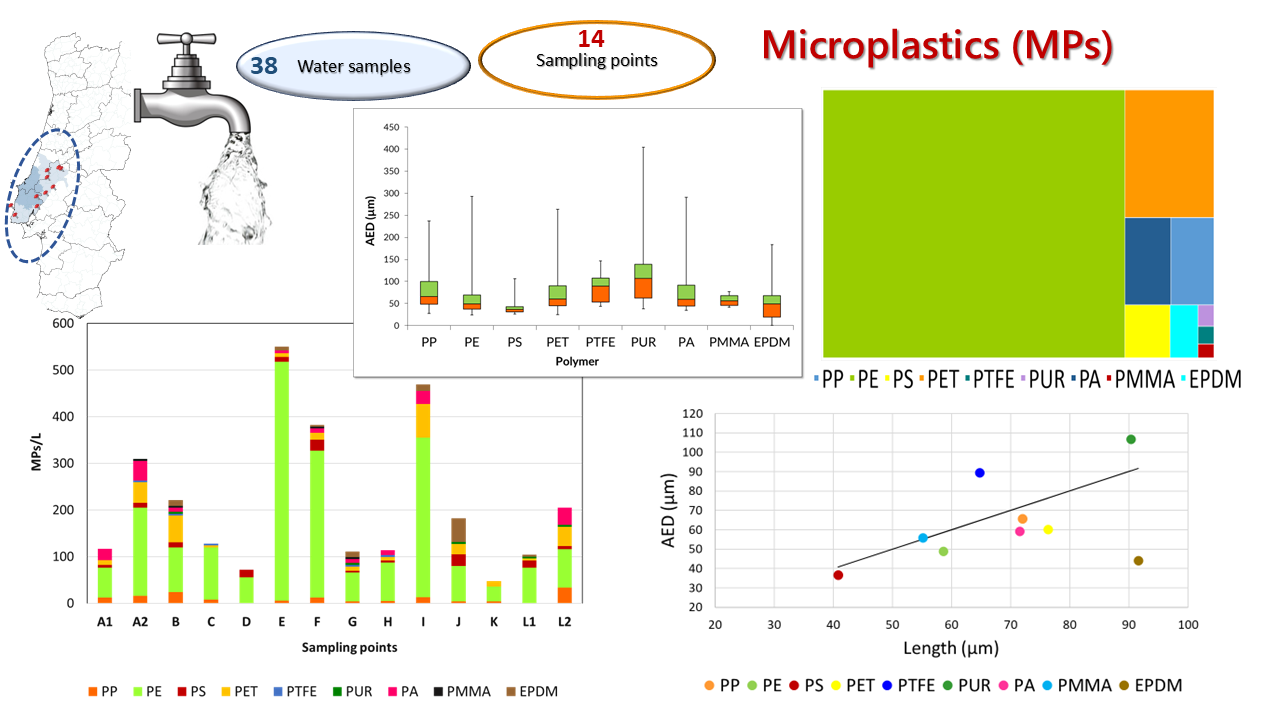
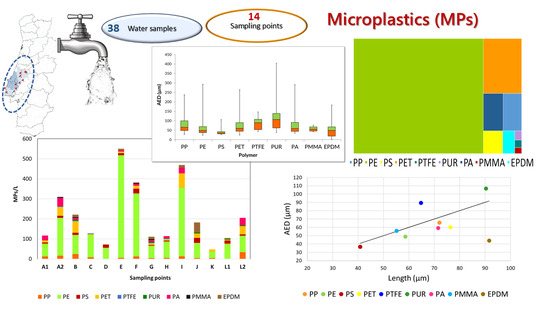
Profile and Different Approaches for Size Characterization of Microplastics in Drinking Water from the Lisbon Water Supply System




Abstract
Share and Cite
Cordeiro, R.D.M.; Cardoso, V.V.; Carneiro, R.N.; Almeida, C.M.M. Profile and Different Approaches for Size Characterization of Microplastics in Drinking Water from the Lisbon Water Supply System. Molecules 2024, 29, 4426. https://doi.org/10.3390/molecules29184426
Cordeiro RDM, Cardoso VV, Carneiro RN, Almeida CMM. Profile and Different Approaches for Size Characterization of Microplastics in Drinking Water from the Lisbon Water Supply System. Molecules. 2024; 29(18):4426. https://doi.org/10.3390/molecules29184426
Chicago/Turabian StyleCordeiro, Rodrigo D. M., Vitor V. Cardoso, Rui N. Carneiro, and Cristina M. M. Almeida. 2024. "Profile and Different Approaches for Size Characterization of Microplastics in Drinking Water from the Lisbon Water Supply System" Molecules 29, no. 18: 4426. https://doi.org/10.3390/molecules29184426
APA StyleCordeiro, R. D. M., Cardoso, V. V., Carneiro, R. N., & Almeida, C. M. M. (2024). Profile and Different Approaches for Size Characterization of Microplastics in Drinking Water from the Lisbon Water Supply System. Molecules, 29(18), 4426. https://doi.org/10.3390/molecules29184426