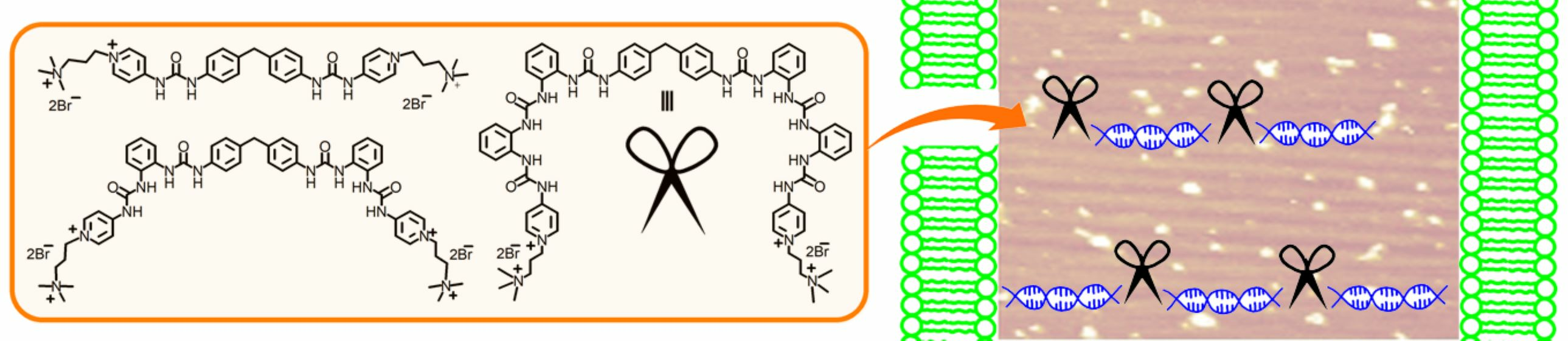
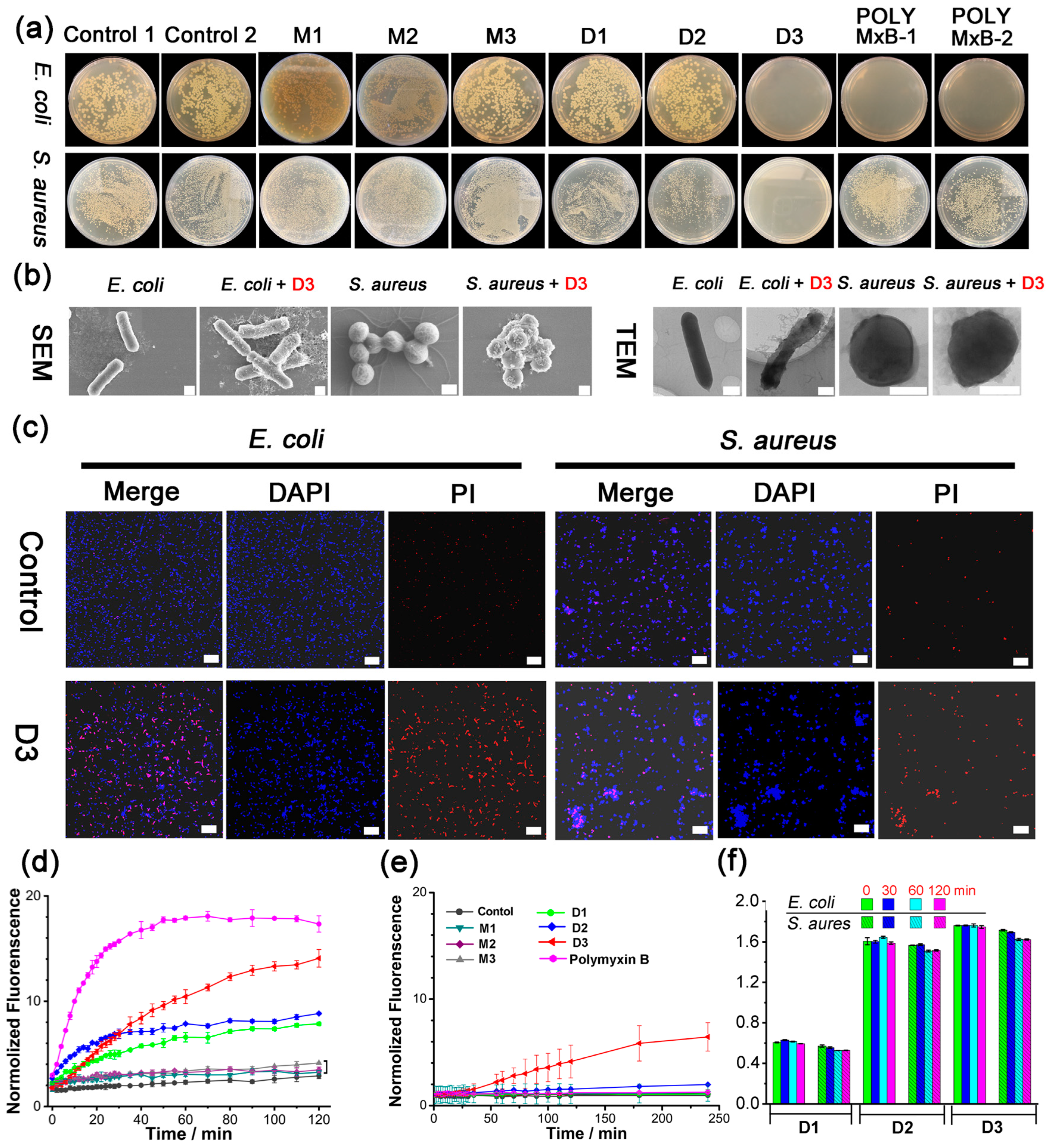
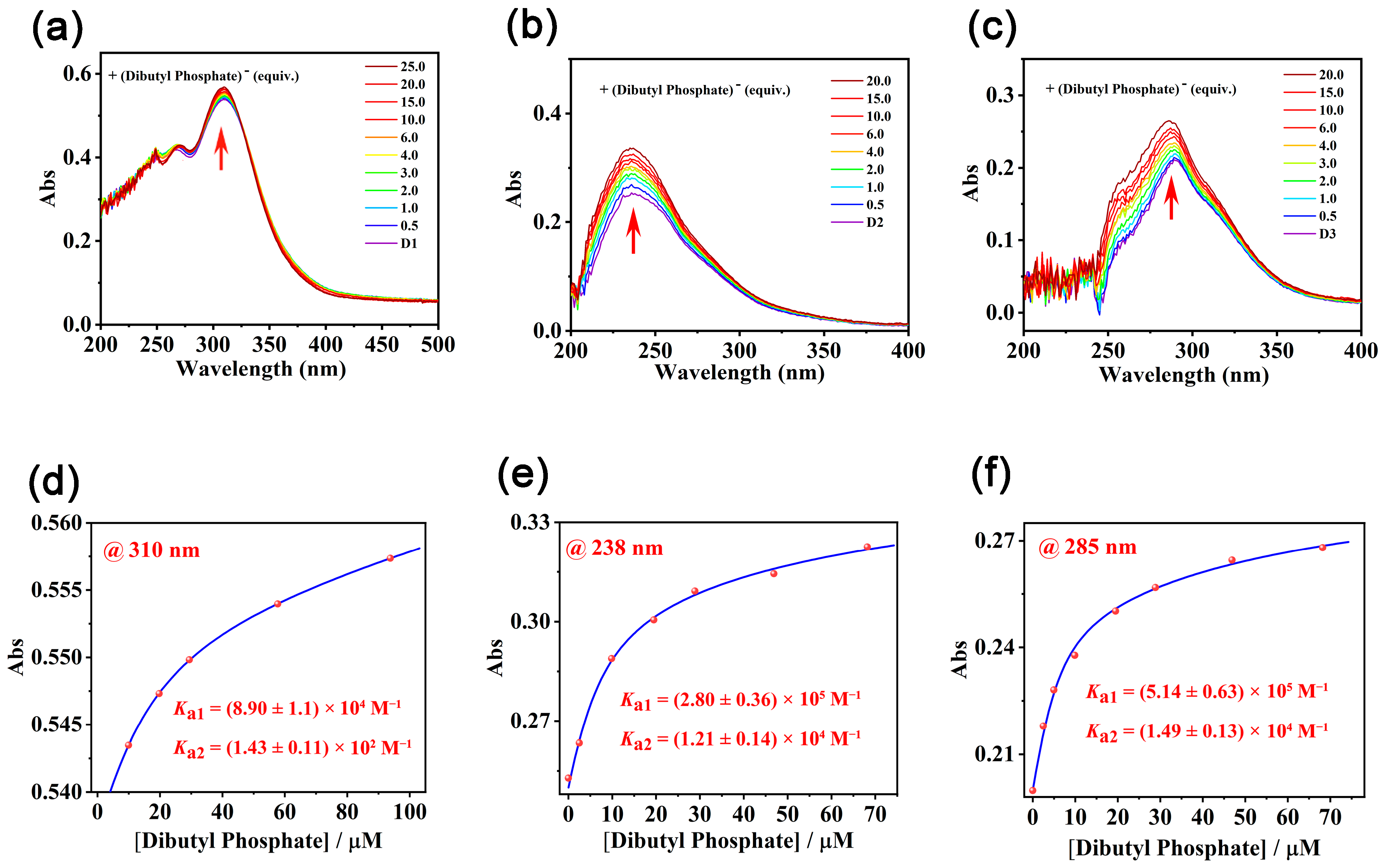
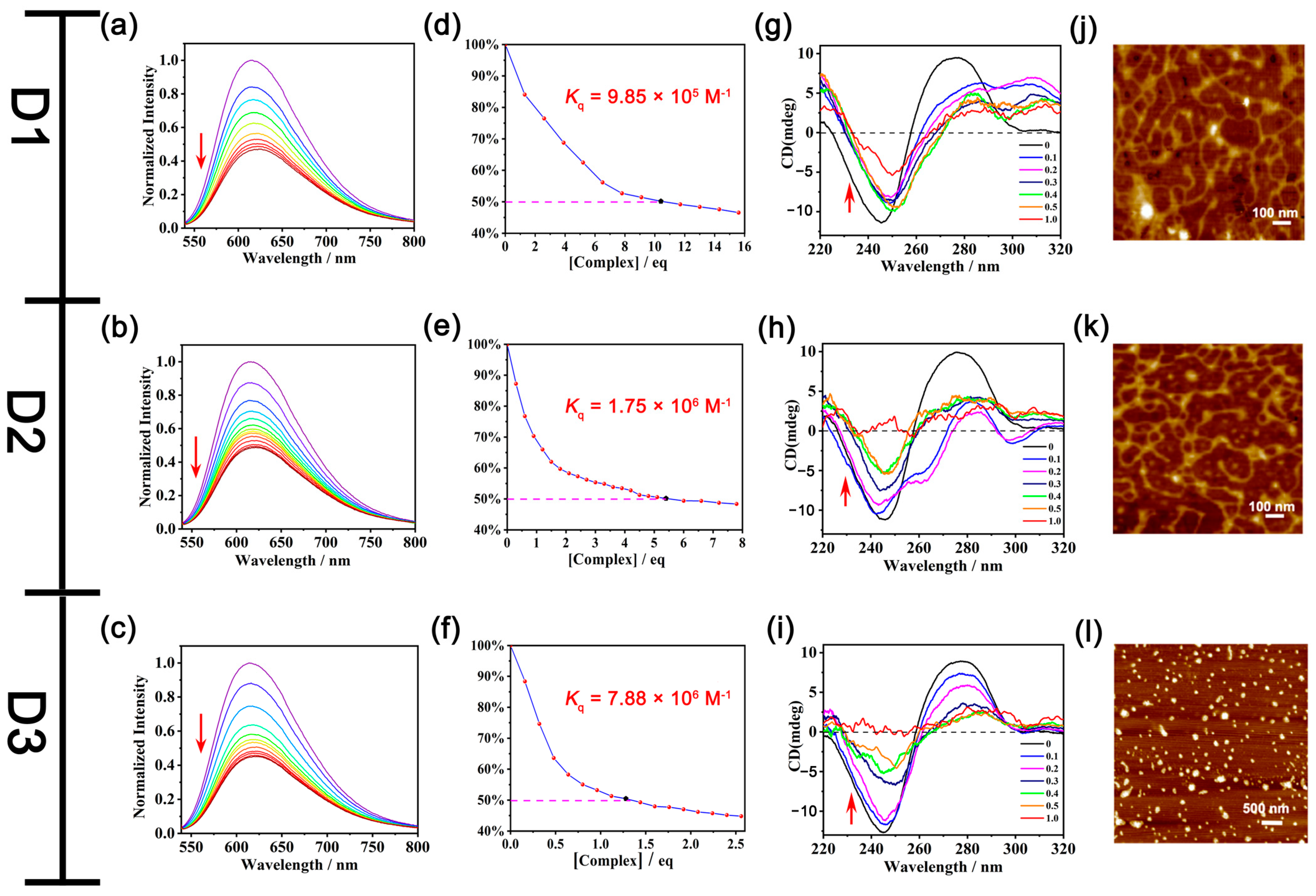
Multi-Hydrogen Bonding on Quaternized-Oligourea Receptor Facilitated Its Interaction with Bacterial Cell Membranes and DNA for Broad-Spectrum Bacteria Killing



Abstract
Share and Cite
Yan, X.; Yang, F.; Lv, G.; Qiu, Y.; Jia, X.; Hu, Q.; Zhang, J.; Yang, J.; Ouyang, X.; Gao, L.; et al. Multi-Hydrogen Bonding on Quaternized-Oligourea Receptor Facilitated Its Interaction with Bacterial Cell Membranes and DNA for Broad-Spectrum Bacteria Killing. Molecules 2024, 29, 3937. https://doi.org/10.3390/molecules29163937
Yan X, Yang F, Lv G, Qiu Y, Jia X, Hu Q, Zhang J, Yang J, Ouyang X, Gao L, et al. Multi-Hydrogen Bonding on Quaternized-Oligourea Receptor Facilitated Its Interaction with Bacterial Cell Membranes and DNA for Broad-Spectrum Bacteria Killing. Molecules. 2024; 29(16):3937. https://doi.org/10.3390/molecules29163937
Chicago/Turabian StyleYan, Xiaojin, Fan Yang, Guanghao Lv, Yuping Qiu, Xiaoying Jia, Qirong Hu, Jia Zhang, Jing Yang, Xiangyuan Ouyang, Lingyan Gao, and et al. 2024. "Multi-Hydrogen Bonding on Quaternized-Oligourea Receptor Facilitated Its Interaction with Bacterial Cell Membranes and DNA for Broad-Spectrum Bacteria Killing" Molecules 29, no. 16: 3937. https://doi.org/10.3390/molecules29163937
APA StyleYan, X., Yang, F., Lv, G., Qiu, Y., Jia, X., Hu, Q., Zhang, J., Yang, J., Ouyang, X., Gao, L., & Jia, C. (2024). Multi-Hydrogen Bonding on Quaternized-Oligourea Receptor Facilitated Its Interaction with Bacterial Cell Membranes and DNA for Broad-Spectrum Bacteria Killing. Molecules, 29(16), 3937. https://doi.org/10.3390/molecules29163937