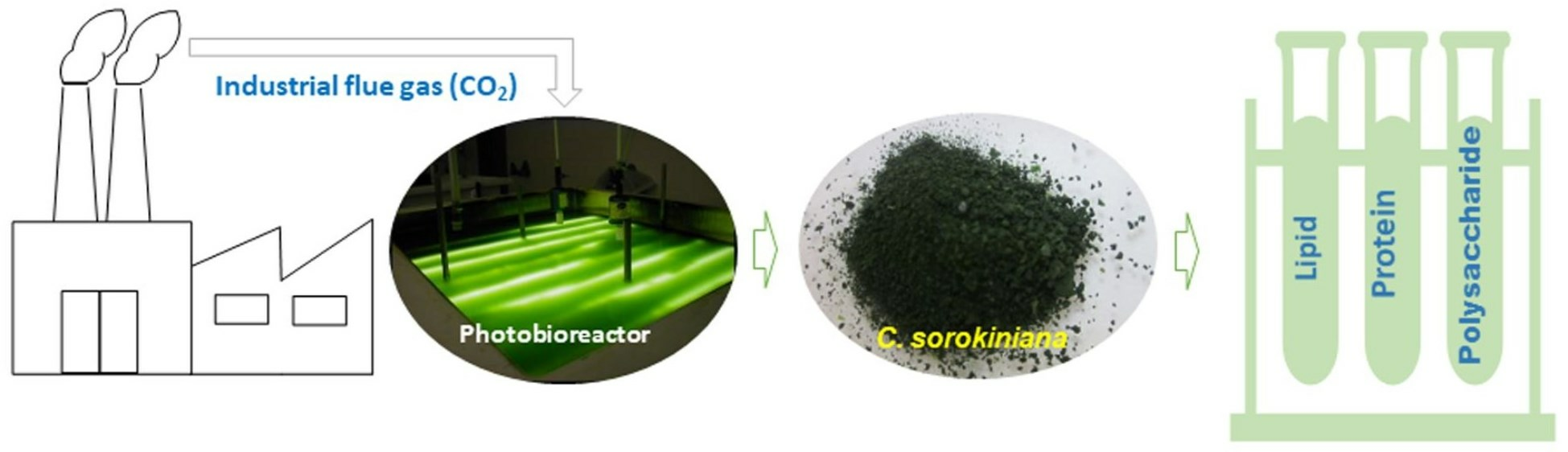
Comprehensive Analysis of Biomass from Chlorella sorokiniana Cultivated with Industrial Flue Gas as the Carbon Source

 ,
,  , and
, and Abstract
Share and Cite
Banskota, A.H.; Stefanova, R.; Hui, J.P.M.; Bermarija, T.; Stemmler, K.; McGinn, P.J.; O’Leary, S.J.B. Comprehensive Analysis of Biomass from Chlorella sorokiniana Cultivated with Industrial Flue Gas as the Carbon Source. Molecules 2024, 29, 3368. https://doi.org/10.3390/molecules29143368
Banskota AH, Stefanova R, Hui JPM, Bermarija T, Stemmler K, McGinn PJ, O’Leary SJB. Comprehensive Analysis of Biomass from Chlorella sorokiniana Cultivated with Industrial Flue Gas as the Carbon Source. Molecules. 2024; 29(14):3368. https://doi.org/10.3390/molecules29143368
Chicago/Turabian StyleBanskota, Arjun H., Roumiana Stefanova, Joseph P. M. Hui, Tessa Bermarija, Kevin Stemmler, Patrick J. McGinn, and Stephen J. B. O’Leary. 2024. "Comprehensive Analysis of Biomass from Chlorella sorokiniana Cultivated with Industrial Flue Gas as the Carbon Source" Molecules 29, no. 14: 3368. https://doi.org/10.3390/molecules29143368
APA StyleBanskota, A. H., Stefanova, R., Hui, J. P. M., Bermarija, T., Stemmler, K., McGinn, P. J., & O’Leary, S. J. B. (2024). Comprehensive Analysis of Biomass from Chlorella sorokiniana Cultivated with Industrial Flue Gas as the Carbon Source. Molecules, 29(14), 3368. https://doi.org/10.3390/molecules29143368