Next Article in Journal
Passivation Effect of the Chlorinated Paraffin Added in the Cutting Fluid on the Surface Corrosion Resistance of the Stainless Steel
Next Article in Special Issue
Nitrogen-Doped Hierarchical Porous Carbon Derived from Coal for High-Performance Supercapacitor
Previous Article in Journal
Preparation of Molecularly Imprinted Cysteine Modified Zinc Sulfide Quantum Dots Based Sensor for Rapid Detection of Dopamine Hydrochloride
Previous Article in Special Issue
Modulating the Graphitic Domains and Pore Structure of Corncob-Derived Hard Carbons by Pyrolysis to Improve Sodium Storage
 
 
Correction published on 17 December 2025, see Molecules 2025, 30(24), 4804.
Article

Constructing Molybdenum Phosphide@Cobalt Phosphide Heterostructure Nanoarrays on Nickel Foam as a Bifunctional Electrocatalyst for Enhanced Overall Water Splitting

Shunde Innovation School, University of Science and Technology Beijing, Foshan 528399, China
*
Author to whom correspondence should be addressed.
Molecules 2023, 28(9), 3647; https://doi.org/10.3390/molecules28093647

Submission received: 29 March 2023 / Revised: 17 April 2023 / Accepted: 20 April 2023 / Published: 22 April 2023 / Corrected: 17 December 2025

Abstract

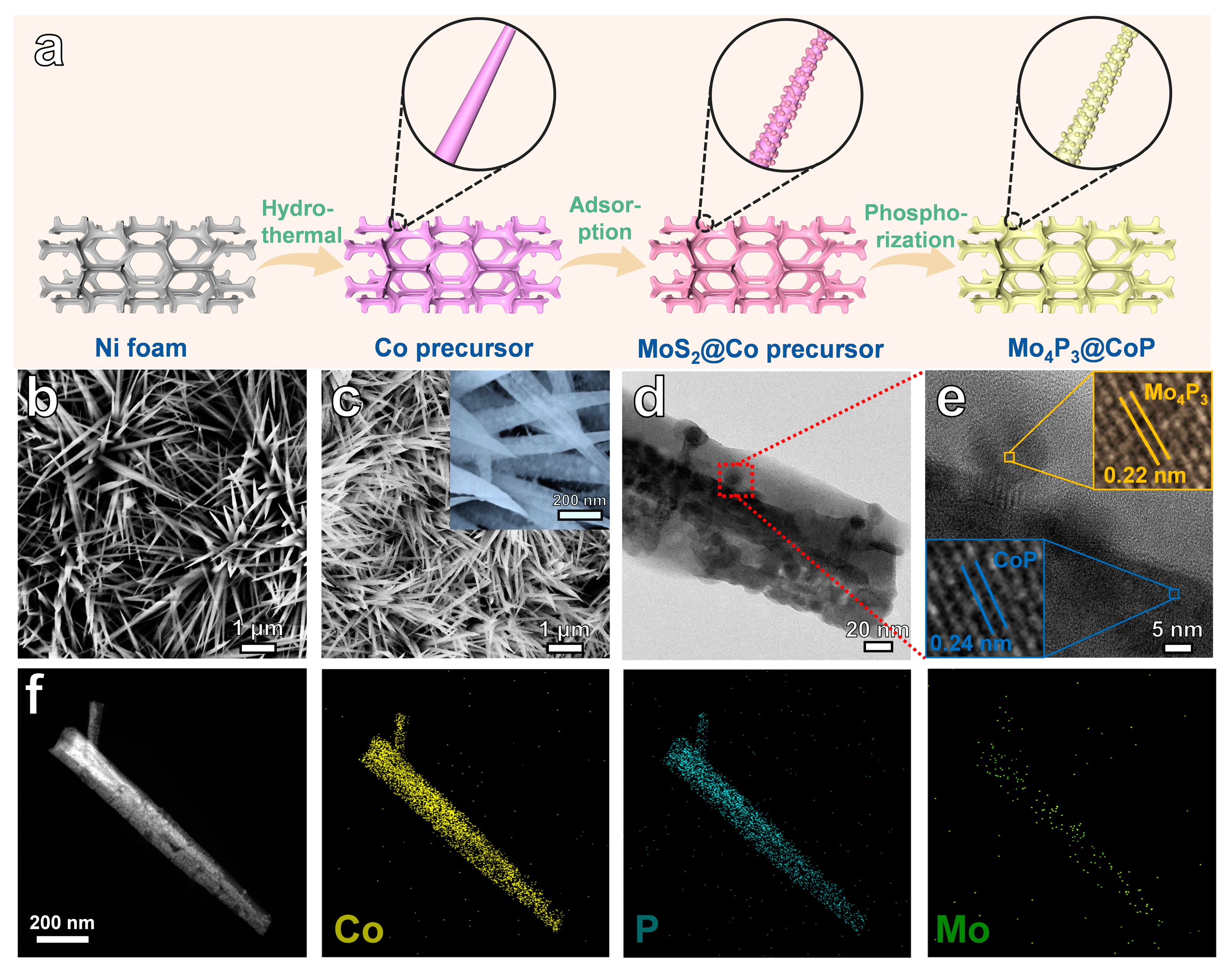
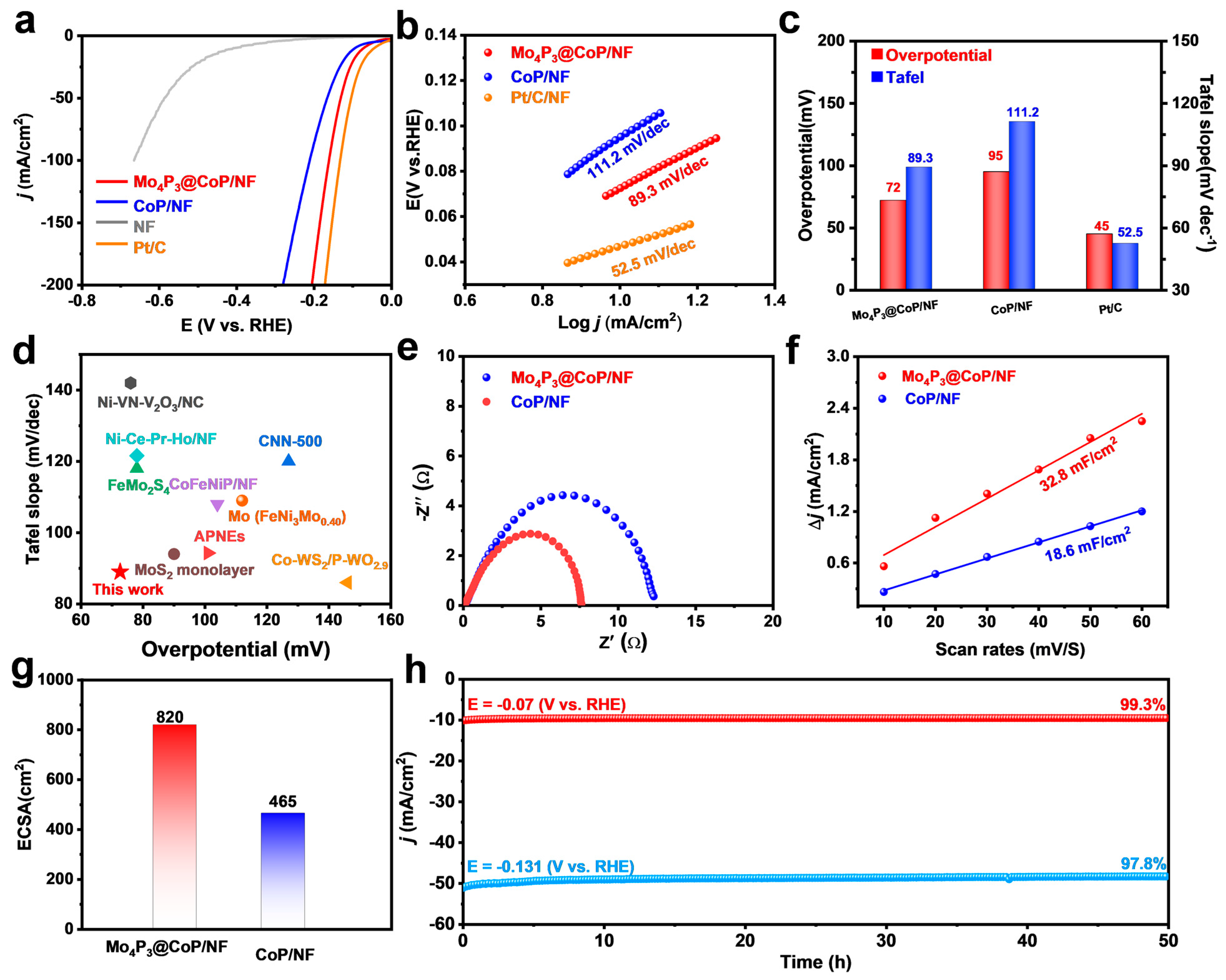
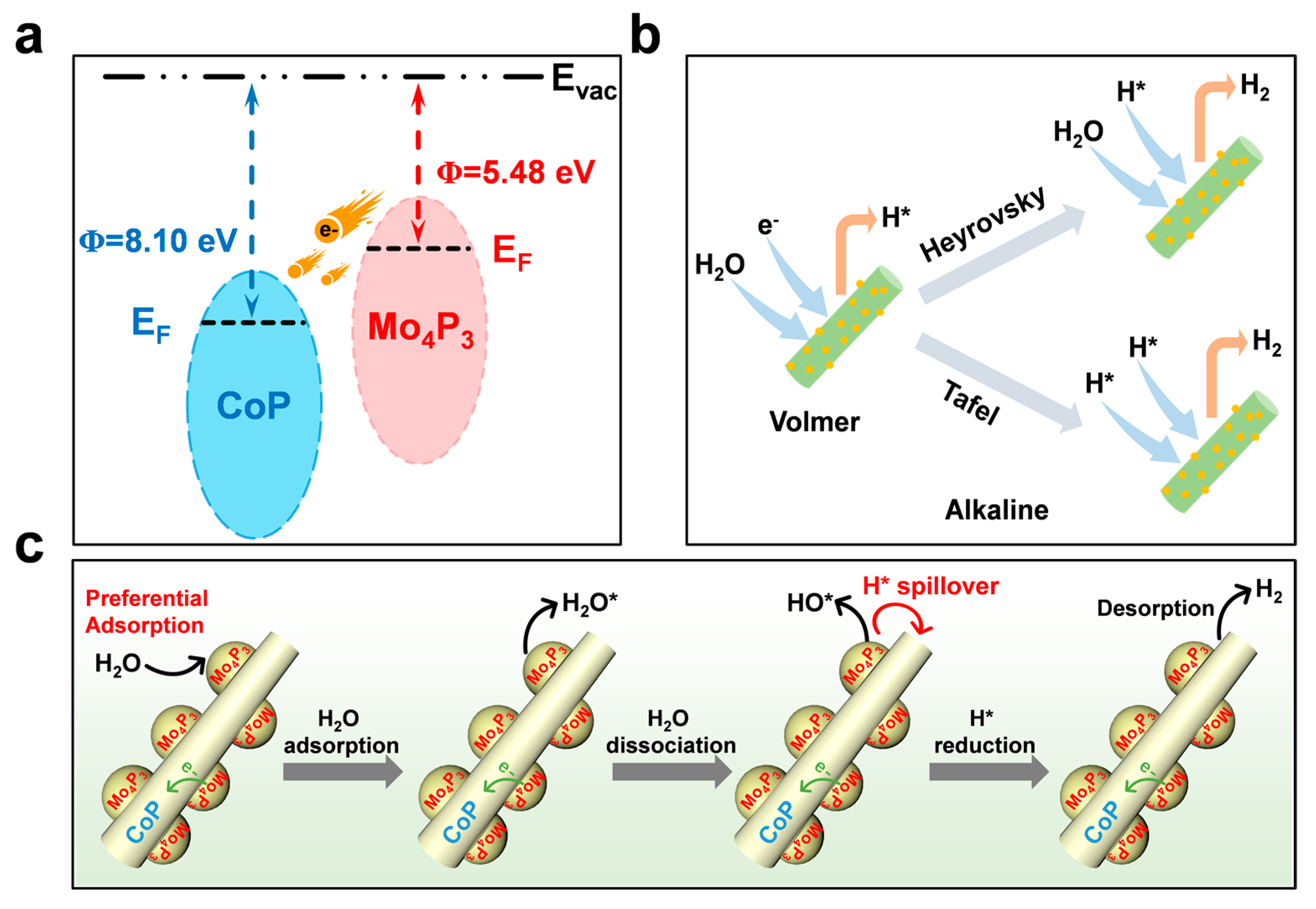
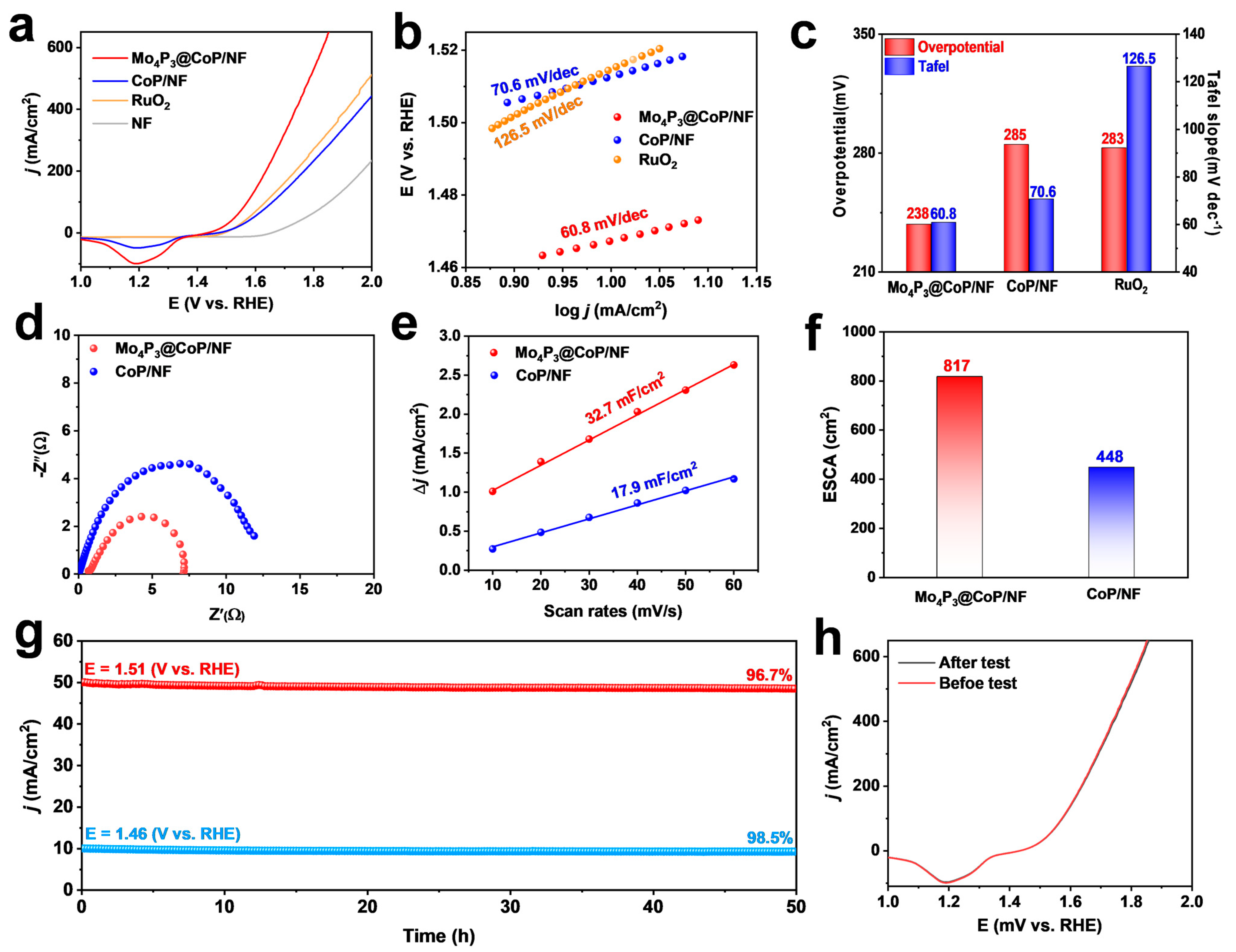
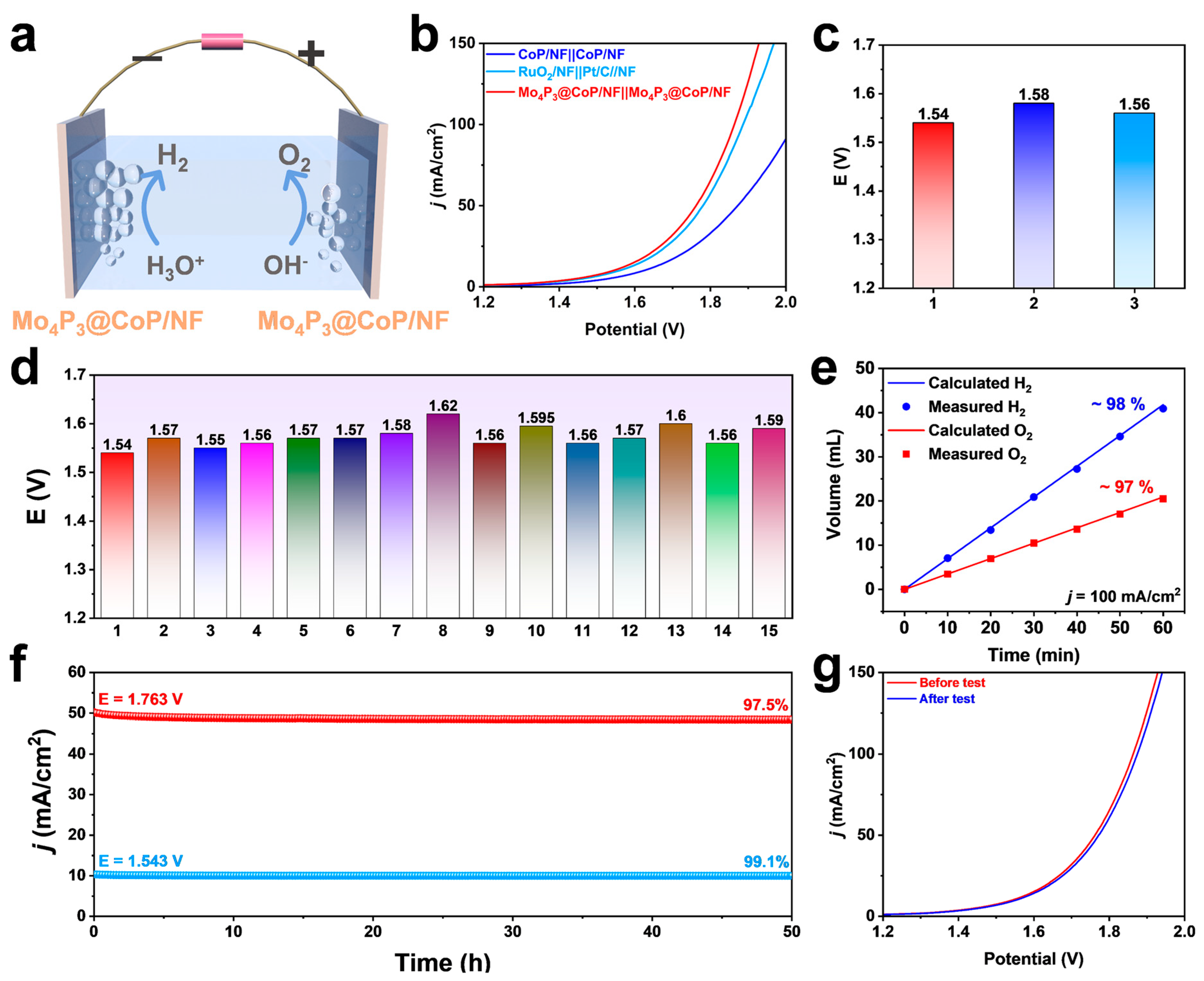
The construction of multi-level heterostructure materials is an effective way to further the catalytic activity of catalysts. Here, we assembled self-supporting MoS2@Co precursor nanoarrays on the support of nickel foam by coupling the hydrothermal method and electrostatic adsorption method, followed by a low-temperature phosphating strategy to obtain Mo4P3@CoP/NF electrode materials. The construction of the Mo4P3@CoP heterojunction can lead to electron transfer from the Mo4P3 phase to the CoP phase at the phase interface region, thereby optimizing the charge structure of the active sites. Not only that, the introduction of Mo4P3 will make water molecules preferentially adsorb on its surface, which will help to reduce the water molecule decomposition energy barrier of the Mo4P3@CoP heterojunction. Subsequently, H* overflowed to the surface of CoP to generate H2 molecules, which finally showed a lower water molecule decomposition energy barrier and better intermediate adsorption energy. Based on this, the material shows excellent HER/OER dual-functional catalytic performance under alkaline conditions. It only needs 72 mV and 238 mV to reach 10 mA/cm2 for HER and OER, respectively. Meanwhile, in a two-electrode system, only 1.54 V is needed to reach 10 mA/cm2, which is even better than the commercial RuO2/NF||Pt/C/NF electrode pair. In addition, the unique self-supporting structure design ensures unimpeded electron transmission between the loaded nanoarray and the conductive substrate. The loose porous surface design is not only conducive to the full exposure of more catalytic sites on the surface but also facilitates the smooth escape of gas after production so as to improve the utilization rate of active sites. This work has important guiding significance for the design and development of high-performance bifunctional electrolytic water catalysts.
Keywords: bifunctional electrocatalyst; overall water splitting; heterostructure; self-supporting bifunctional electrocatalyst; overall water splitting; heterostructure; self-supporting