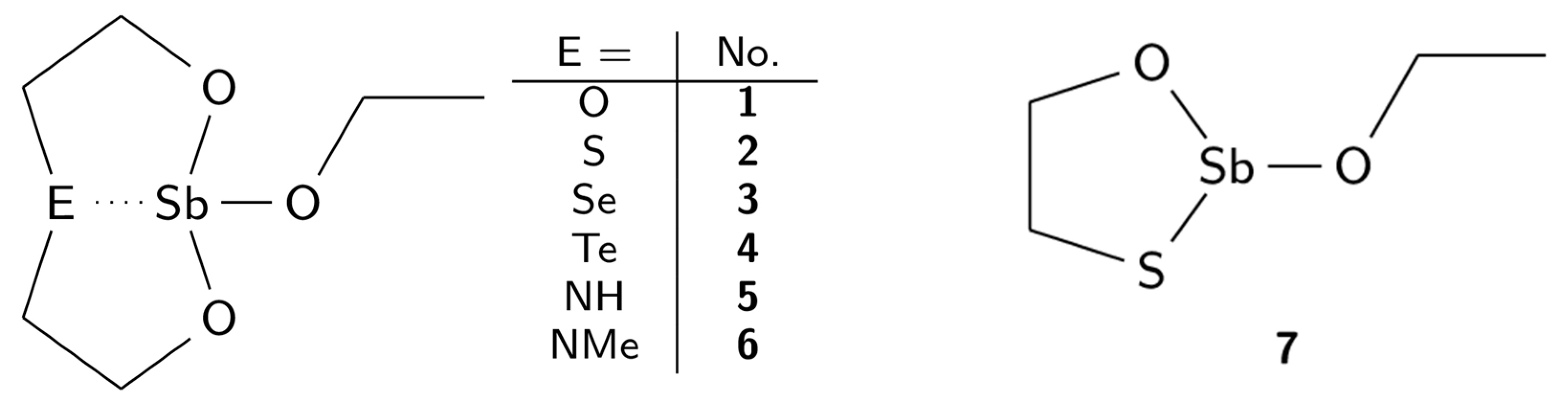
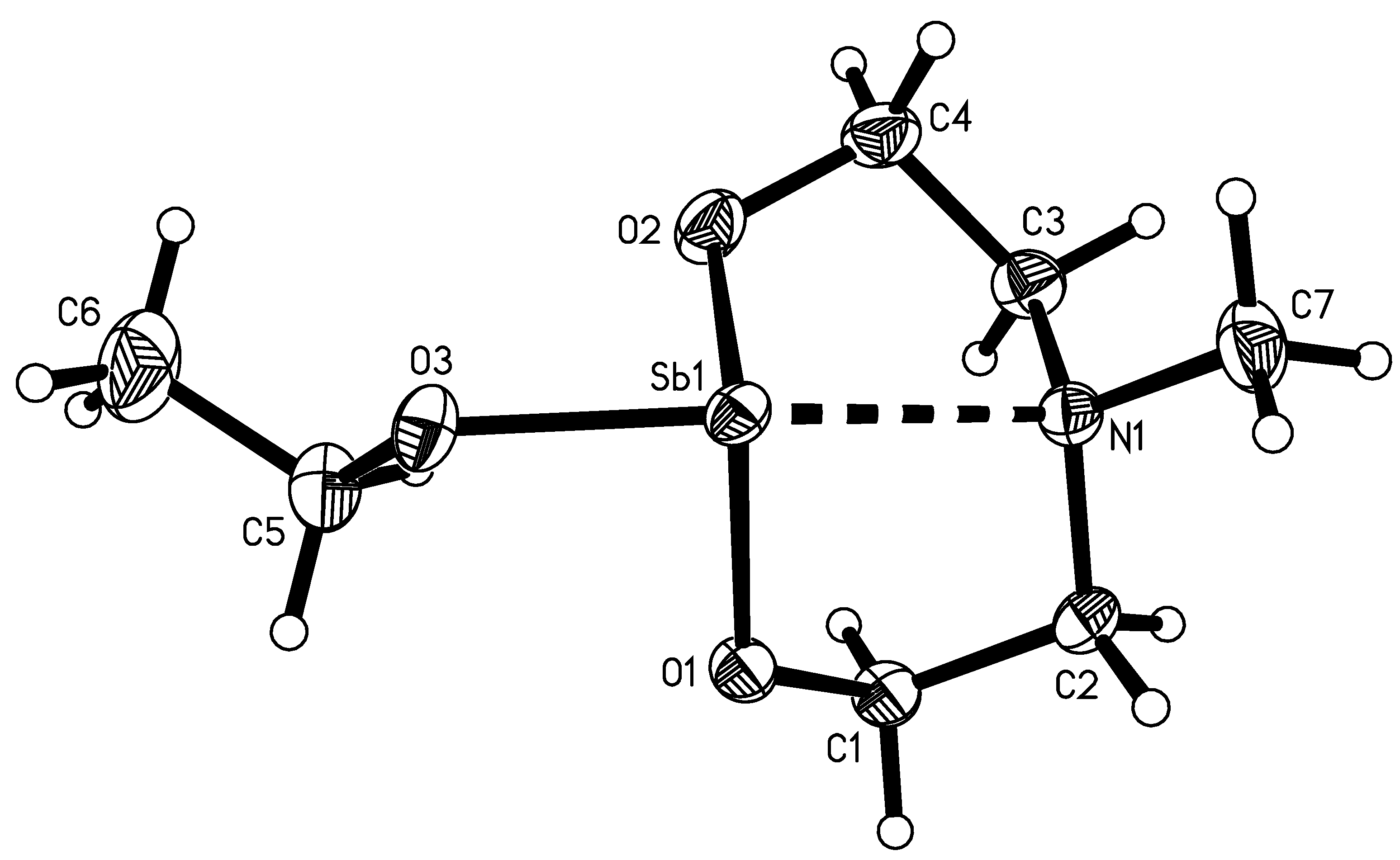
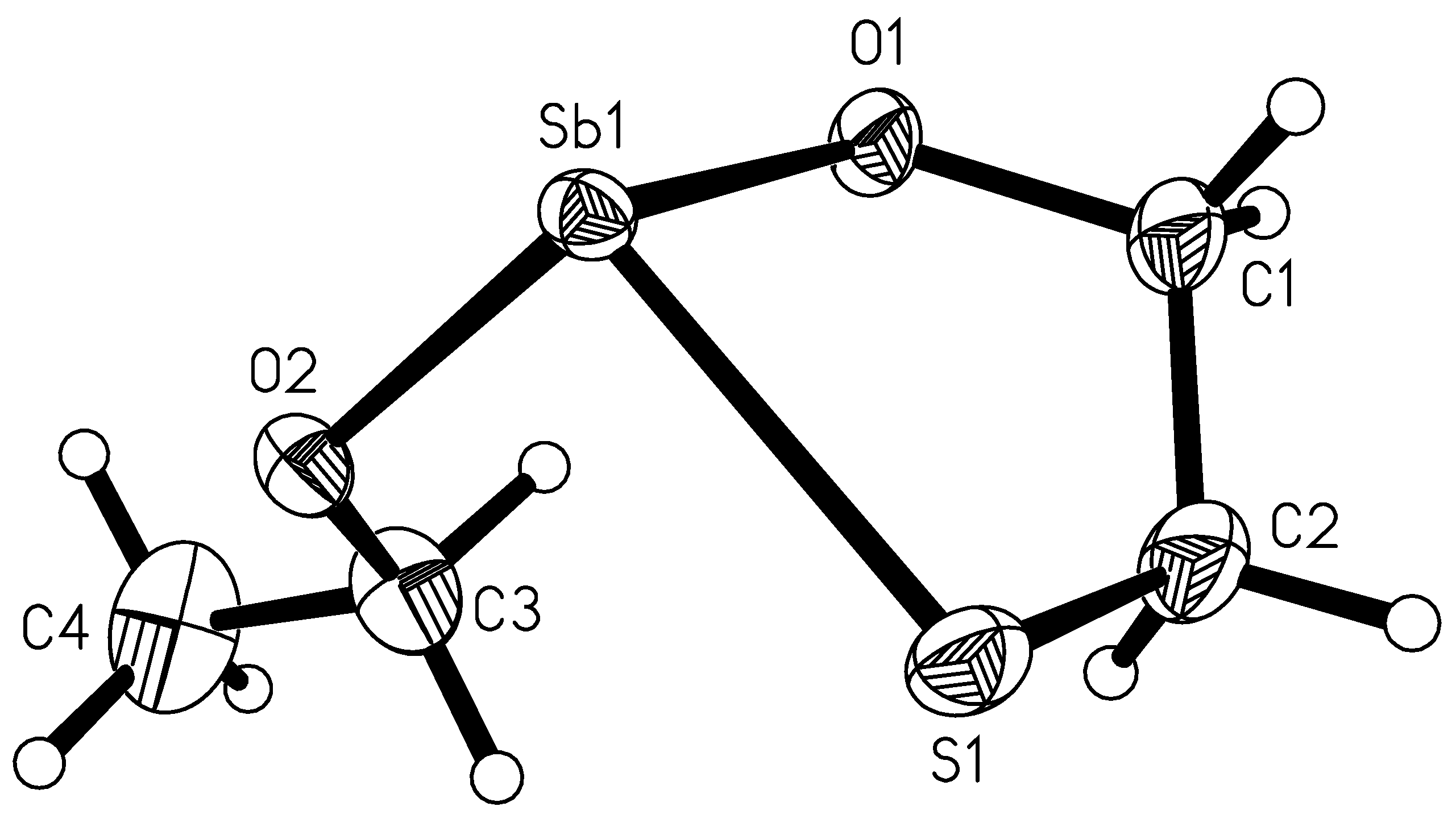
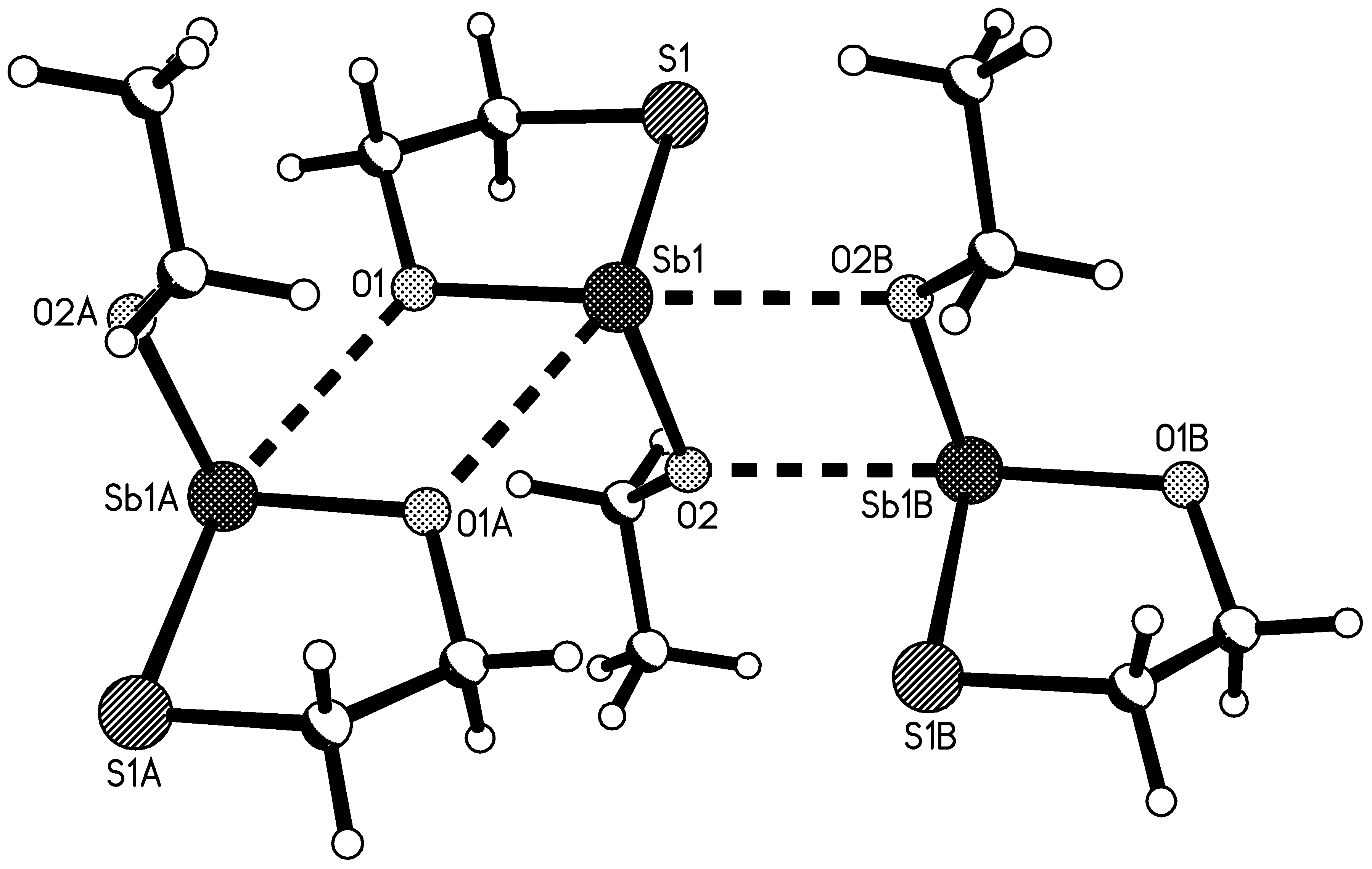
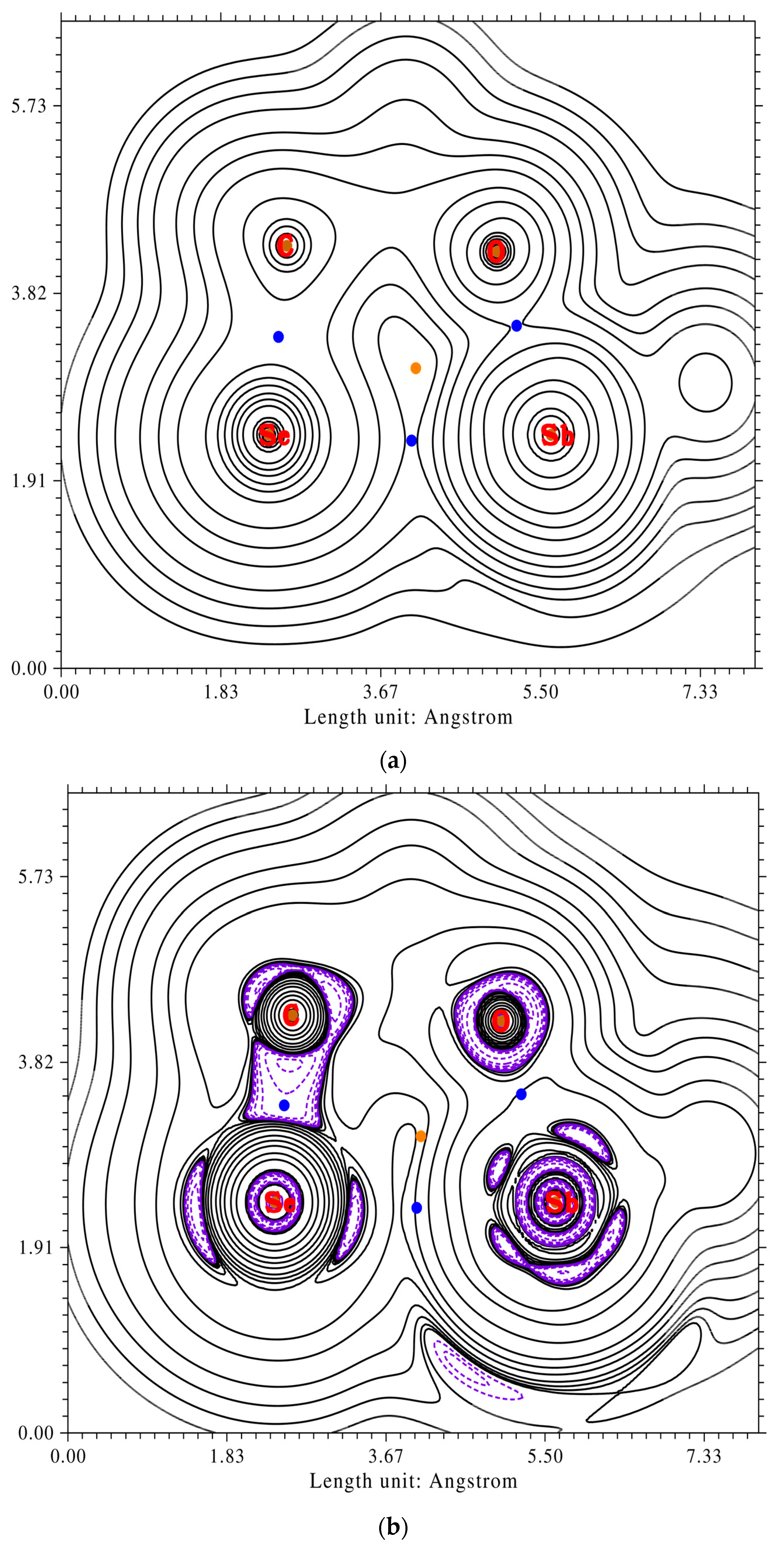
New Complexes of Antimony(III) with Tridentate O,E,O-Ligands (E = O, S, Se, Te, NH, NMe) Derived from N-Methyldiethanolamine


Abstract
Share and Cite
Böhme, U.; Herbig, M. New Complexes of Antimony(III) with Tridentate O,E,O-Ligands (E = O, S, Se, Te, NH, NMe) Derived from N-Methyldiethanolamine. Molecules 2023, 28, 4959. https://doi.org/10.3390/molecules28134959
Böhme U, Herbig M. New Complexes of Antimony(III) with Tridentate O,E,O-Ligands (E = O, S, Se, Te, NH, NMe) Derived from N-Methyldiethanolamine. Molecules. 2023; 28(13):4959. https://doi.org/10.3390/molecules28134959
Chicago/Turabian StyleBöhme, Uwe, and Marcus Herbig. 2023. "New Complexes of Antimony(III) with Tridentate O,E,O-Ligands (E = O, S, Se, Te, NH, NMe) Derived from N-Methyldiethanolamine" Molecules 28, no. 13: 4959. https://doi.org/10.3390/molecules28134959
APA StyleBöhme, U., & Herbig, M. (2023). New Complexes of Antimony(III) with Tridentate O,E,O-Ligands (E = O, S, Se, Te, NH, NMe) Derived from N-Methyldiethanolamine. Molecules, 28(13), 4959. https://doi.org/10.3390/molecules28134959