Article

Dissipation and Residues of Imidacloprid and Its Efficacy against Whitefly, Bemisia tabaci, in Tomato Plants under Field Conditions

by
Manal A. A. Abdel razik
1,*,
Zamzam M. Al Dhafar
2,3,
Aisha M. Alqahtani
2,3,
Mohamed A. Osman
2,3 and
Mohamed E. Sweelam
4
1
Pesticides Department, Faculty of Agriculture, Menoufia University, Shebin El-Kom P.O. Box 32514, Egypt
2
Department of Biology, College of Science, Imam Abdulrahman Bin Faisal University, P.O. Box 1982, Dammam 31441, Saudi Arabia
3
Basic and Applied Scientific Research Center (BASRC), Imam Abdulrahman Bin Faisal University, P.O. Box 1982, Dammam 31441, Saudi Arabia
4
Economic Entomology & Agricultural Zoology Department, Faculty of Agriculture, Menoufia University, Shebin El-Kom P.O. Box 32514, Egypt
*
Author to whom correspondence should be addressed.
Molecules 2022, 27(21), 7607; https://doi.org/10.3390/molecules27217607

Submission received: 28 September 2022 / Revised: 22 October 2022 / Accepted: 2 November 2022 / Published: 6 November 2022

Abstract

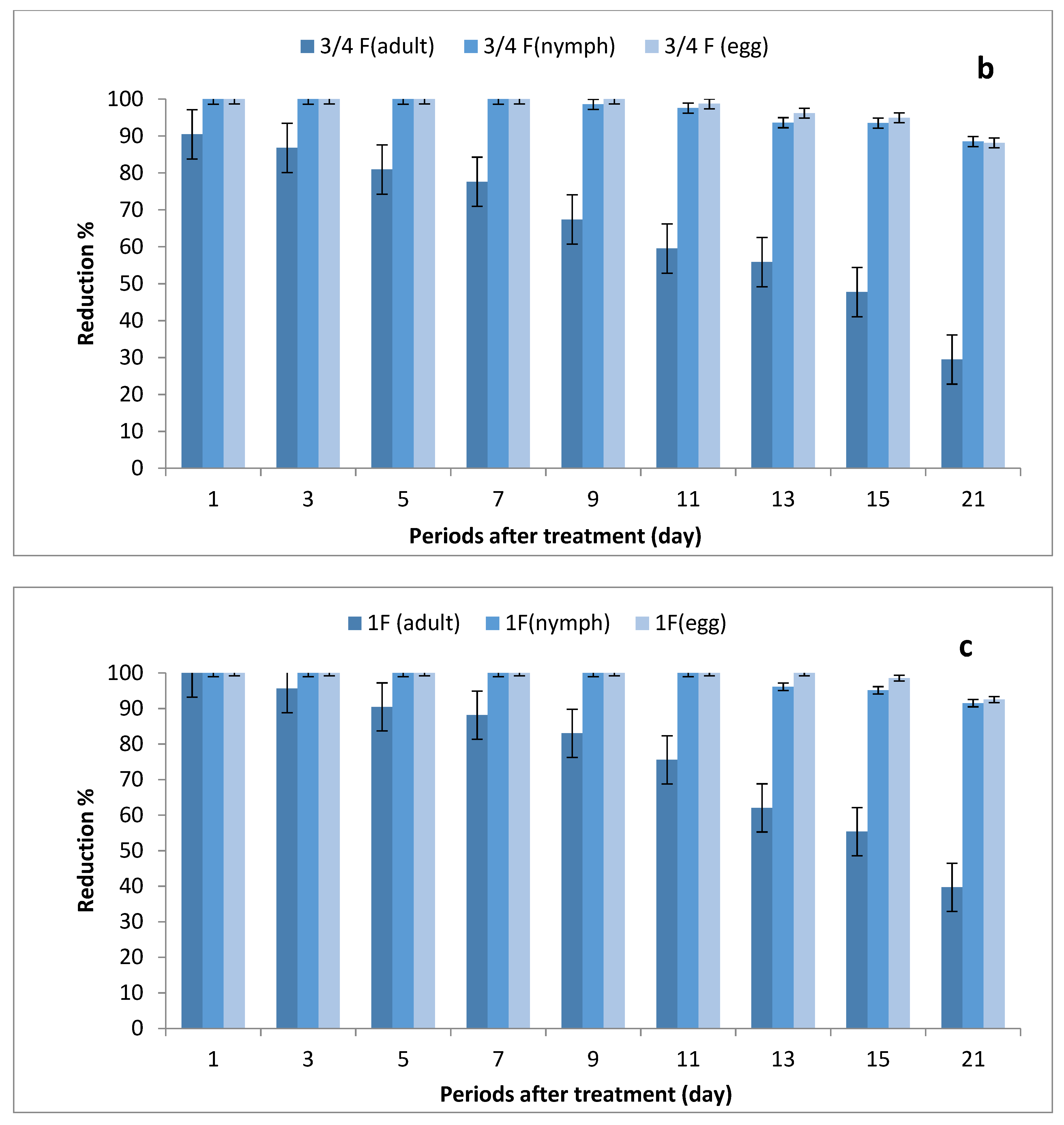
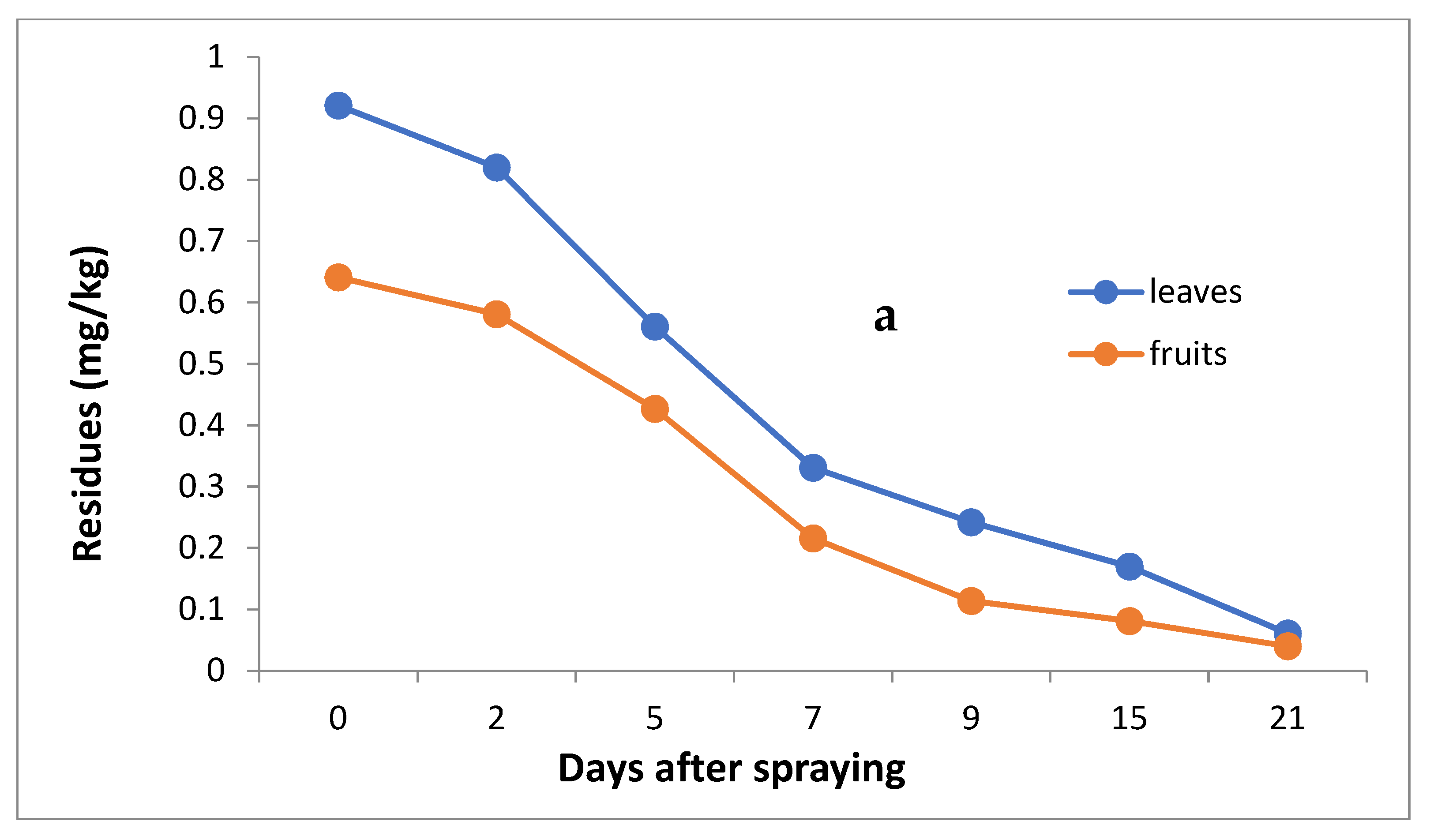
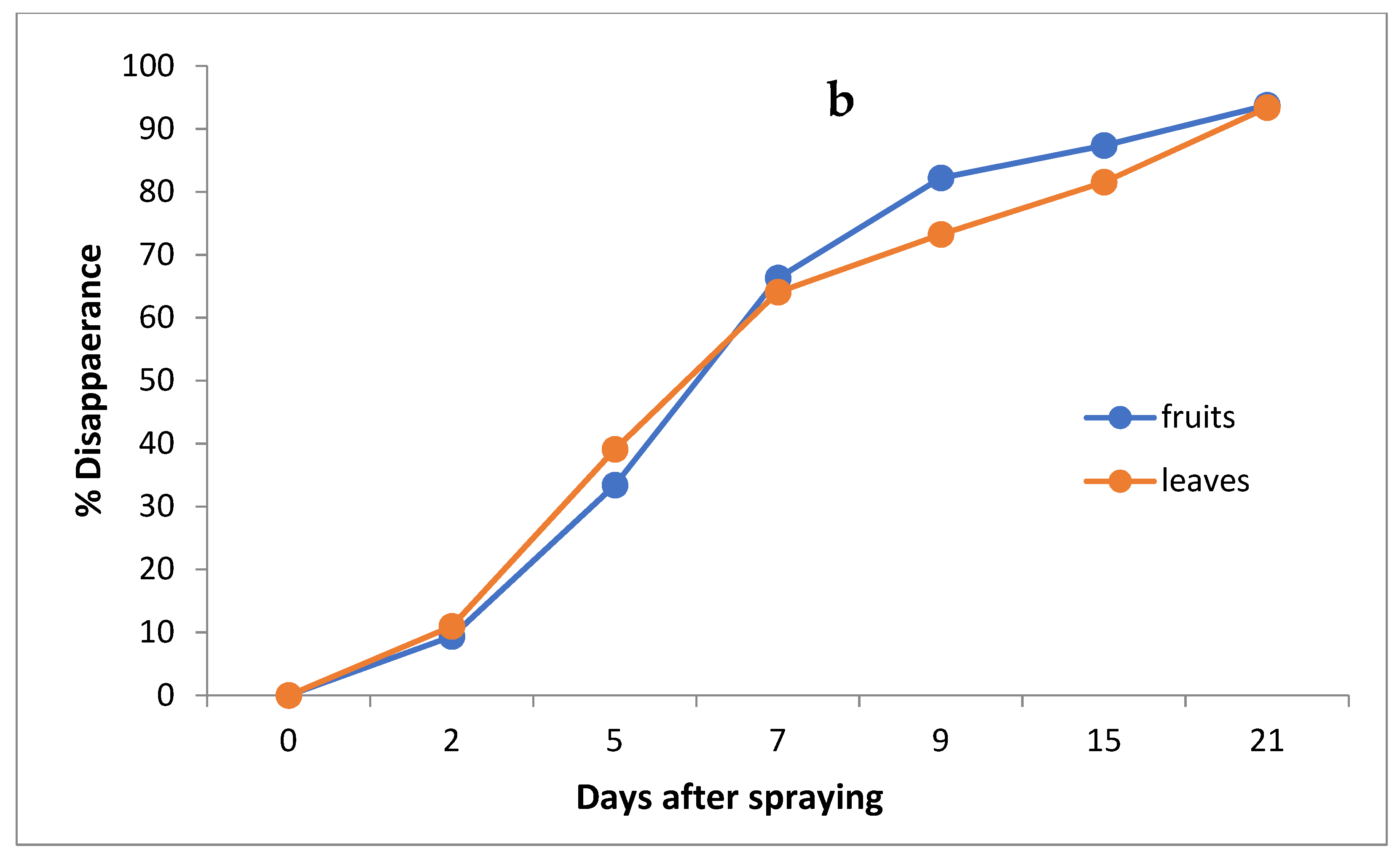
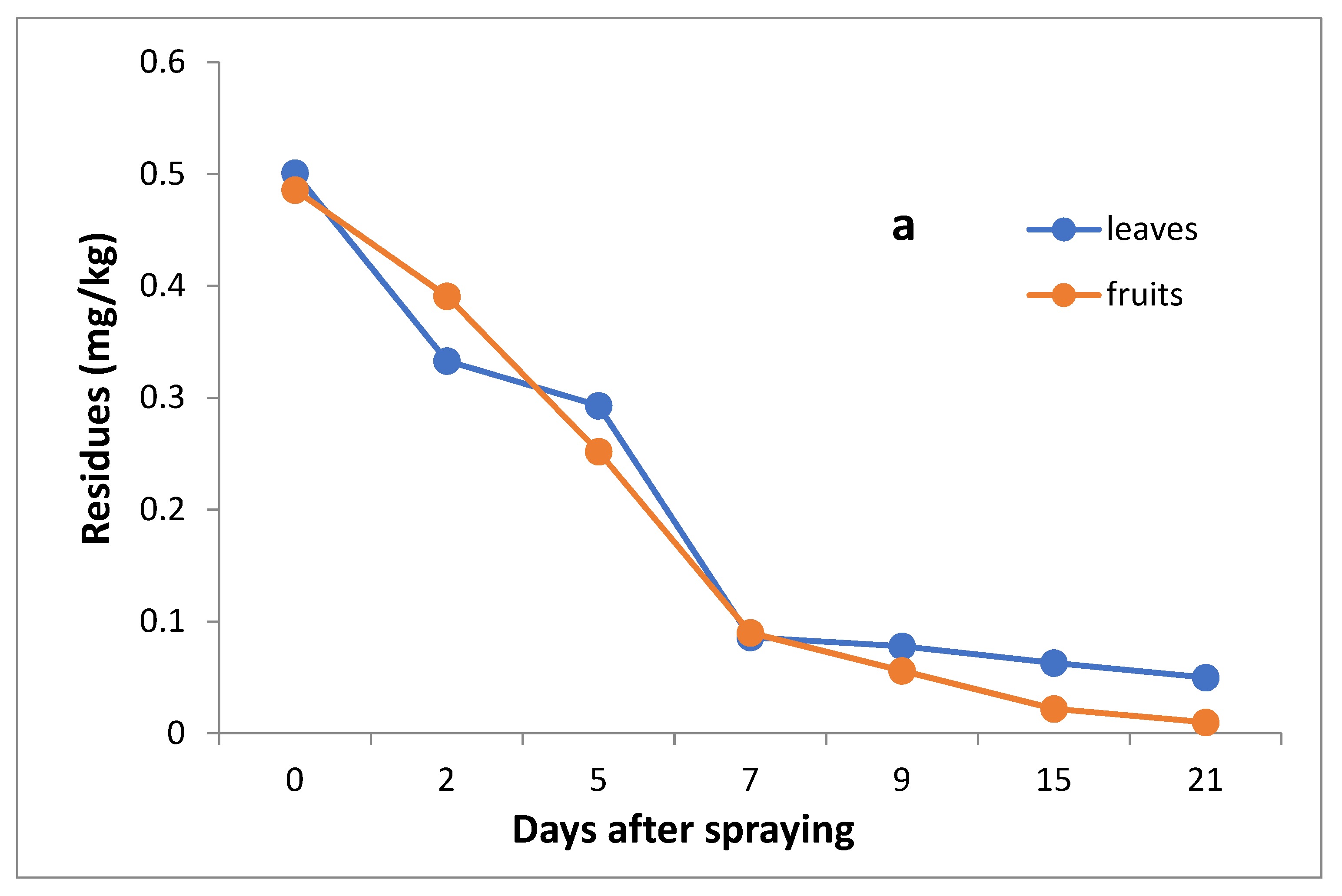
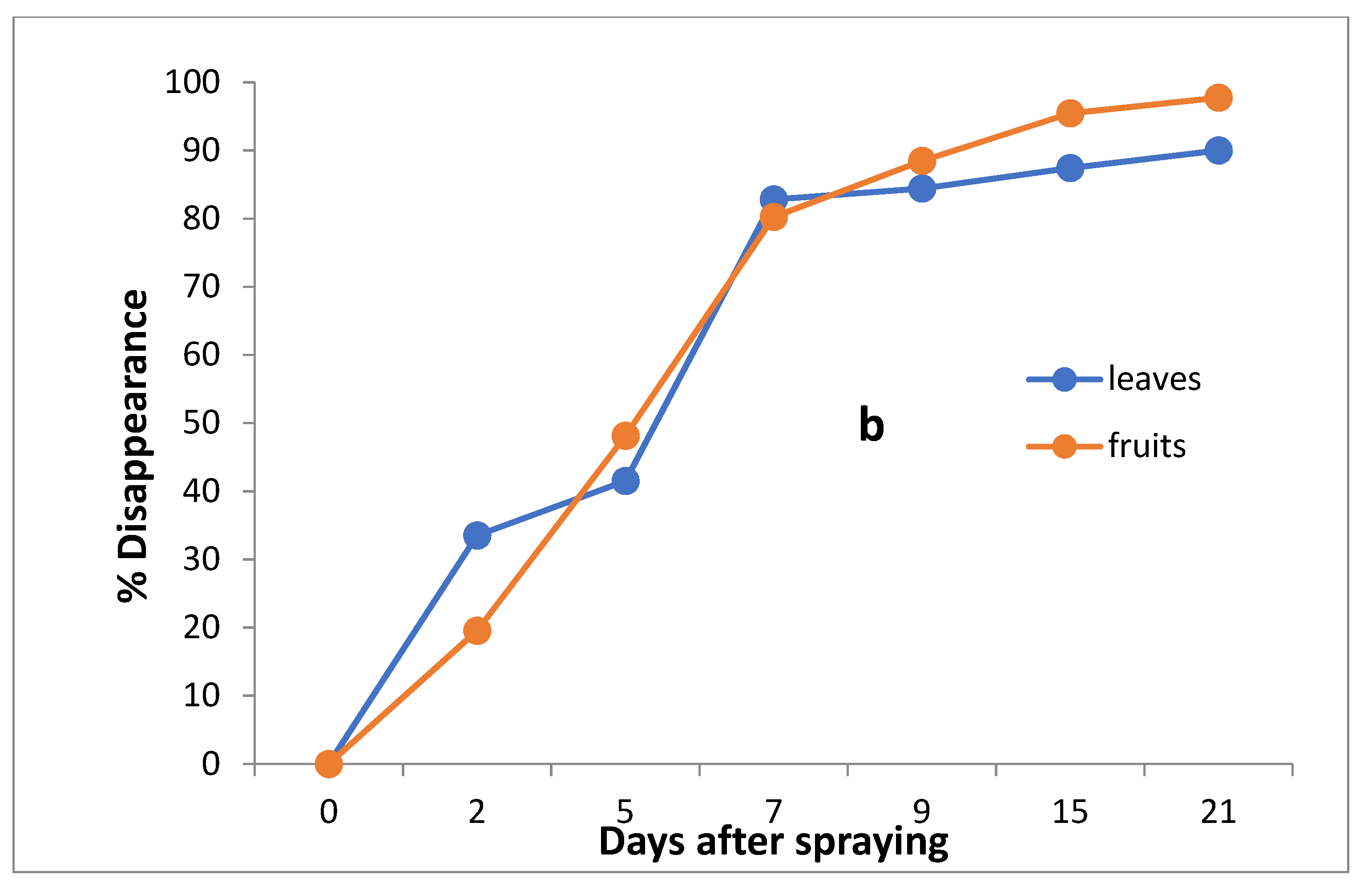
The whitefly, Bemisia tabaci, is the main pest for many field and horticultural crops, causing main and significant problems. The efficiency of imidacloprid insecticide as seed treatment and foliar spray at three rates against the whitefly, B. tabaci, was evaluated in tomato plants under field conditions; in addition, insecticide residues were determined in tomato leaves and fruits. The obtained results revealed that the seedlings produced from treated seeds with imidacloprid were the most effective treatment in decreasing whitefly stages. Reduction percentages of whitefly stages in seedlings produced from treated seeds and sprayed with ½, ¾ and 1 field rates of imidacloprid were more than that produced from untreated seeds. Tomato fruit yield in seedlings produced from treated seeds and sprayed with one recommended rate of imidacloprid was more than that of untreated seeds. The residues of imidacloprid in leaves and fruits in seedlings produced from treated seeds and sprayed with field rate were more than that of untreated seeds; additionally, the residues were higher in leaves than in fruits. The residual level in fruits was less than the maximum residual level (MRL = 1 mg kg−1) of the Codex Alimentarius Commission. The half-life (t ½) was 6.99 and 6.48 days for leaves and fruits of seedlings produced from treated seeds and 5.59 and 4.59 days for untreated seeds. Residues in tomato fruits were less than the MRL, therefore, imidacloprid is considered an unconventional insecticide appropriate for B. tabaci control that could be safe for the environment.
Keywords: neonicotinoids insecticide; sucking insects; vegetables; analysis; Solanum lycopersicum neonicotinoids insecticide; sucking insects; vegetables; analysis; Solanum lycopersicum