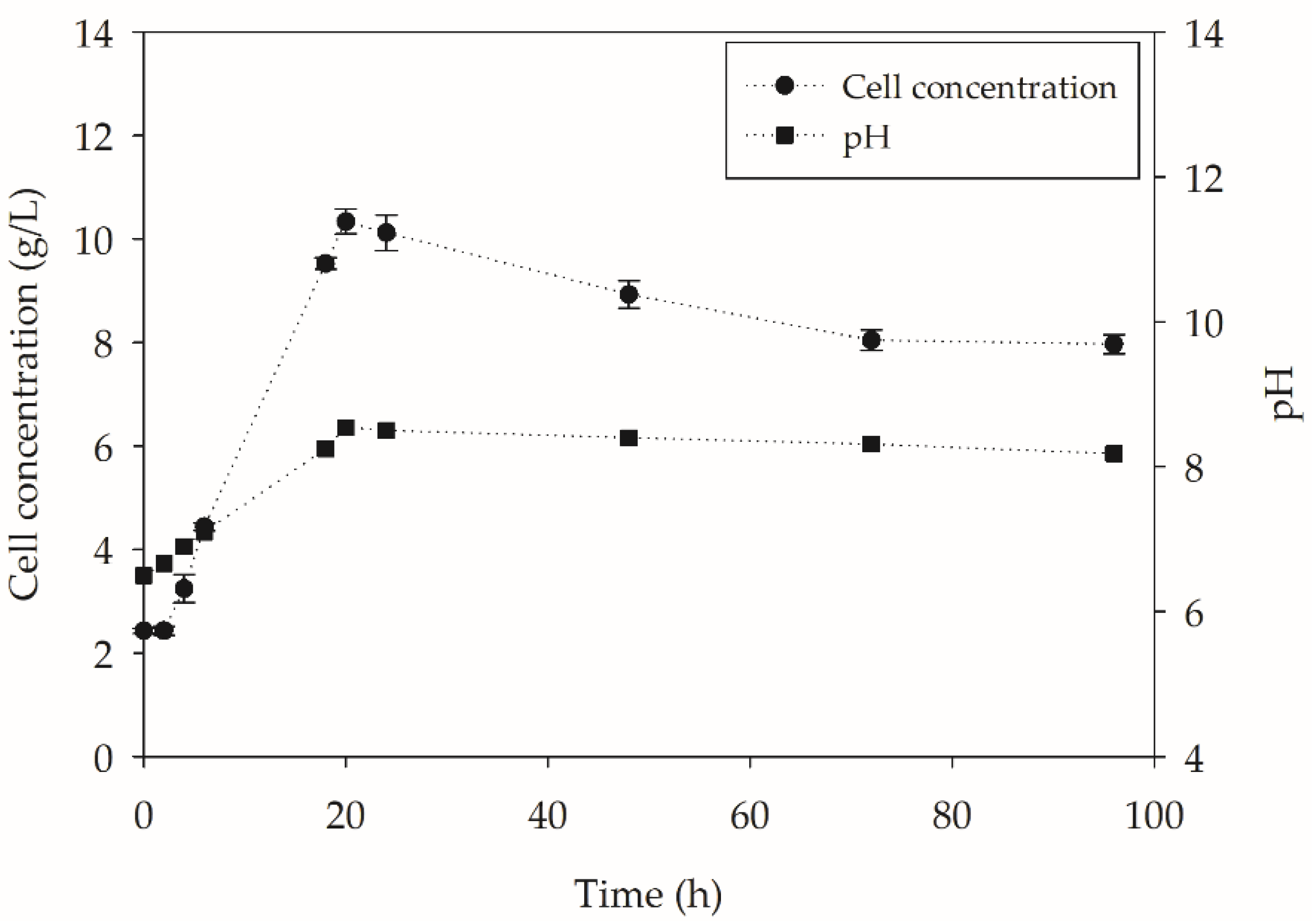
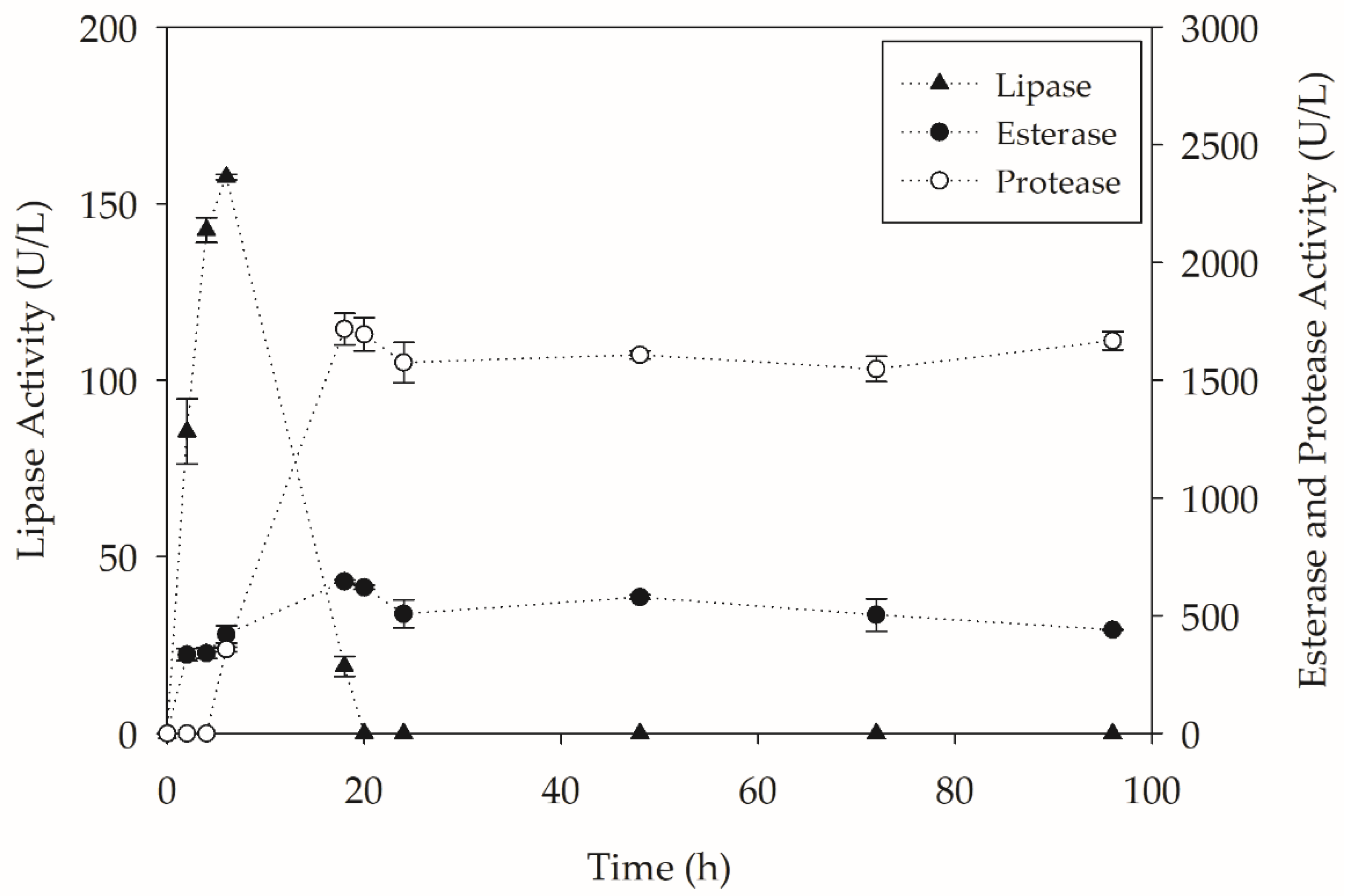
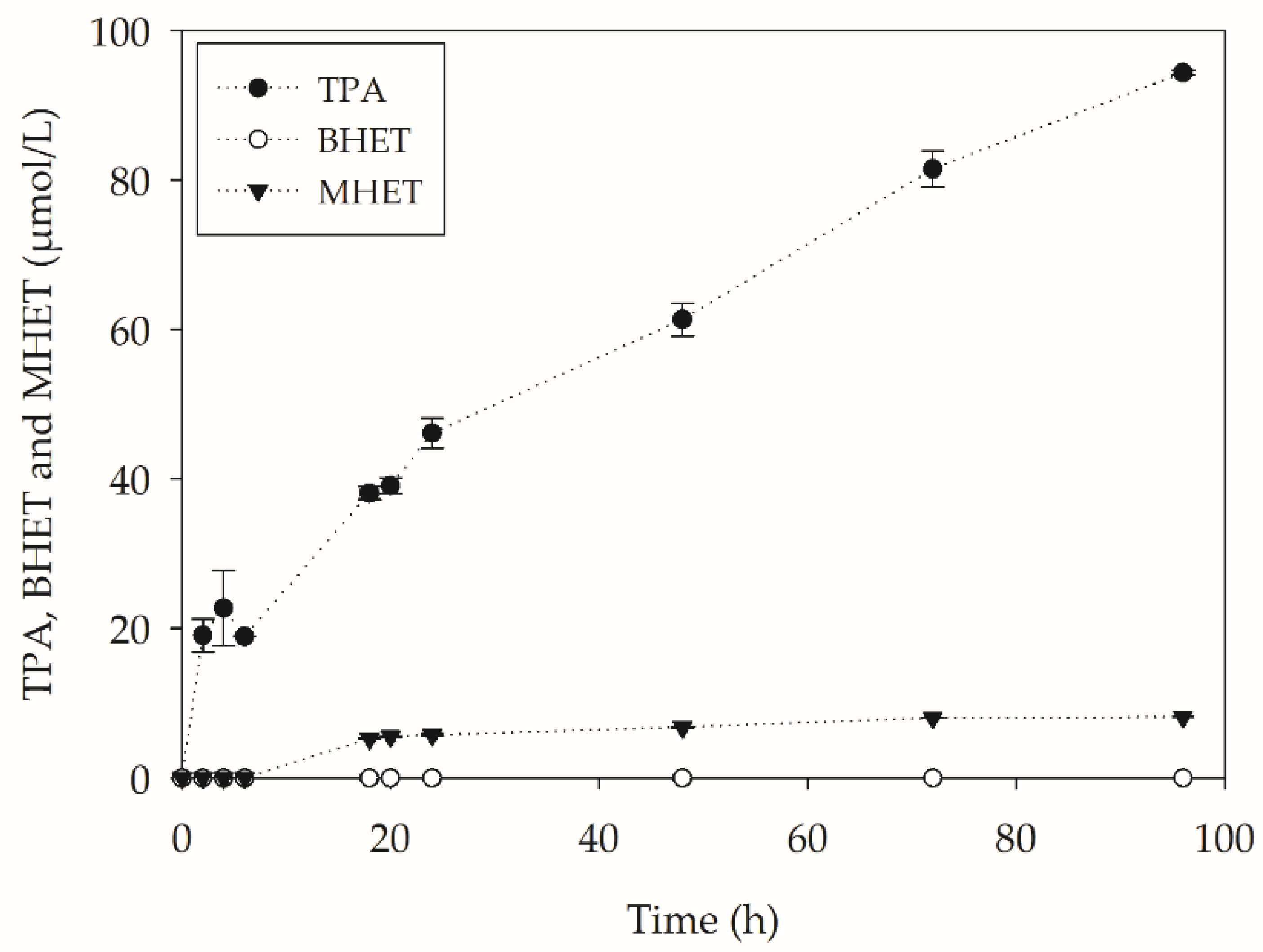
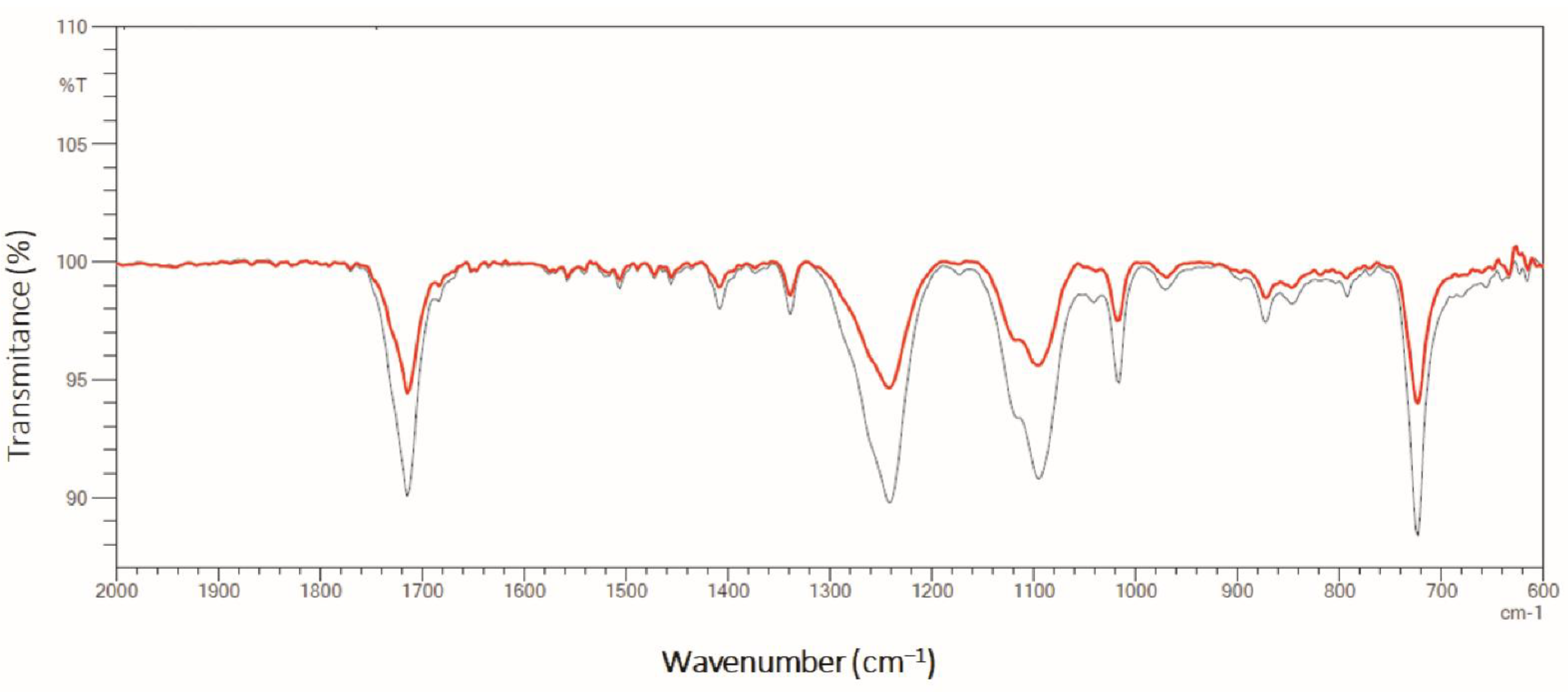
Post-Consumer Poly(ethylene terephthalate) (PET) Depolymerization by Yarrowia lipolytica: A Comparison between Hydrolysis Using Cell-Free Enzymatic Extracts and Microbial Submerged Cultivation
 , and
, and 
Abstract
Share and Cite
Sales, J.C.S.; de Castro, A.M.; Ribeiro, B.D.; Coelho, M.A.Z. Post-Consumer Poly(ethylene terephthalate) (PET) Depolymerization by Yarrowia lipolytica: A Comparison between Hydrolysis Using Cell-Free Enzymatic Extracts and Microbial Submerged Cultivation. Molecules 2022, 27, 7502. https://doi.org/10.3390/molecules27217502
Sales JCS, de Castro AM, Ribeiro BD, Coelho MAZ. Post-Consumer Poly(ethylene terephthalate) (PET) Depolymerization by Yarrowia lipolytica: A Comparison between Hydrolysis Using Cell-Free Enzymatic Extracts and Microbial Submerged Cultivation. Molecules. 2022; 27(21):7502. https://doi.org/10.3390/molecules27217502
Chicago/Turabian StyleSales, Julio Cesar Soares, Aline Machado de Castro, Bernardo Dias Ribeiro, and Maria Alice Zarur Coelho. 2022. "Post-Consumer Poly(ethylene terephthalate) (PET) Depolymerization by Yarrowia lipolytica: A Comparison between Hydrolysis Using Cell-Free Enzymatic Extracts and Microbial Submerged Cultivation" Molecules 27, no. 21: 7502. https://doi.org/10.3390/molecules27217502
APA StyleSales, J. C. S., de Castro, A. M., Ribeiro, B. D., & Coelho, M. A. Z. (2022). Post-Consumer Poly(ethylene terephthalate) (PET) Depolymerization by Yarrowia lipolytica: A Comparison between Hydrolysis Using Cell-Free Enzymatic Extracts and Microbial Submerged Cultivation. Molecules, 27(21), 7502. https://doi.org/10.3390/molecules27217502