Review

Clinical Potential of Himalayan Herb Bergenia ligulata: An Evidence-Based Study

1
Department of Life Science and Bioinformatics, Assam University, Silchar 788011, India
2
Department of Biotechnology, School of Engineering & Technology (SET), Sharda University, Greater Noida 201310, India
3
Department of Biotechnology Engineering and Food Technology, Chandigarh University, Mohali 140413, India
4
Department of Biotechnology, School of Applied & Life Sciences (SALS), Uttaranchal University, Dehradun 248007, India
5
Division of Molecular Medicine, Bose Institute, Kolkata 700054, India
6
Faculty of Biotechnology and Food Sciences, Slovak University of Agriculture in Nitra, 94976 Nitra, Slovakia
7
Department of Bio-products and Bio-systems, School of Chemical Engineering, Aalto University, 00076 Espoo, Finland
8
Department of Applied Physics, School of Science, Aalto University, 00076 Espoo, Finland
9
Department of Zoology, Gauhati University, Guwahati 781014, India
10
Laboratory of Animal Immunology and Biotechnology, Department of Animal Morphology, Physiology and Genetics, Faculty of AgriSciences, Mendel University in Brno, 61300 Brno, Czech Republic
*
Author to whom correspondence should be addressed.
Molecules 2022, 27(20), 7039; https://doi.org/10.3390/molecules27207039

Submission received: 11 August 2022 / Revised: 5 October 2022 / Accepted: 12 October 2022 / Published: 18 October 2022
(This article belongs to the Special Issue Food Bioactive Compounds: Chemical Challenges and Opportunities)

Abstract

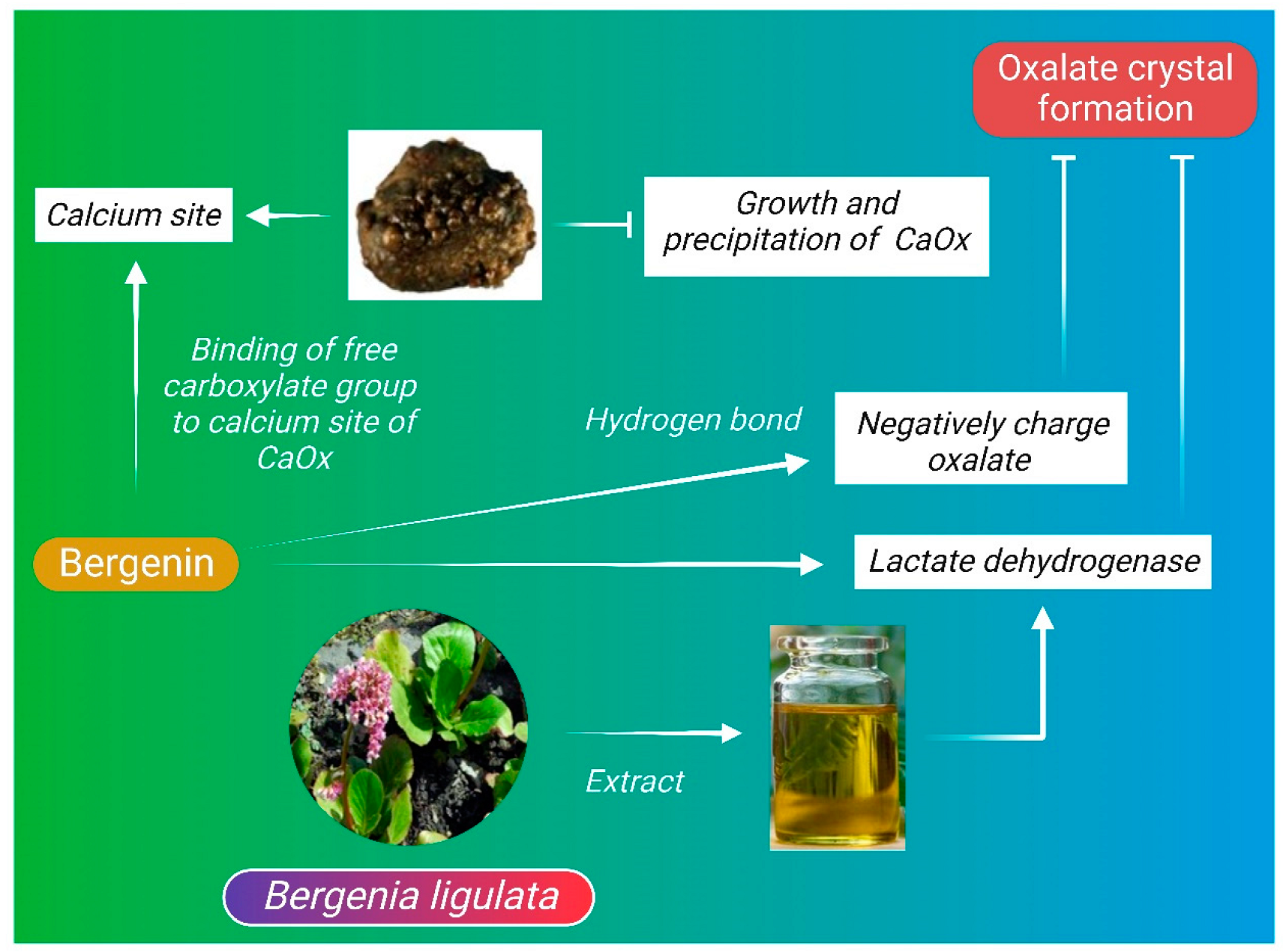
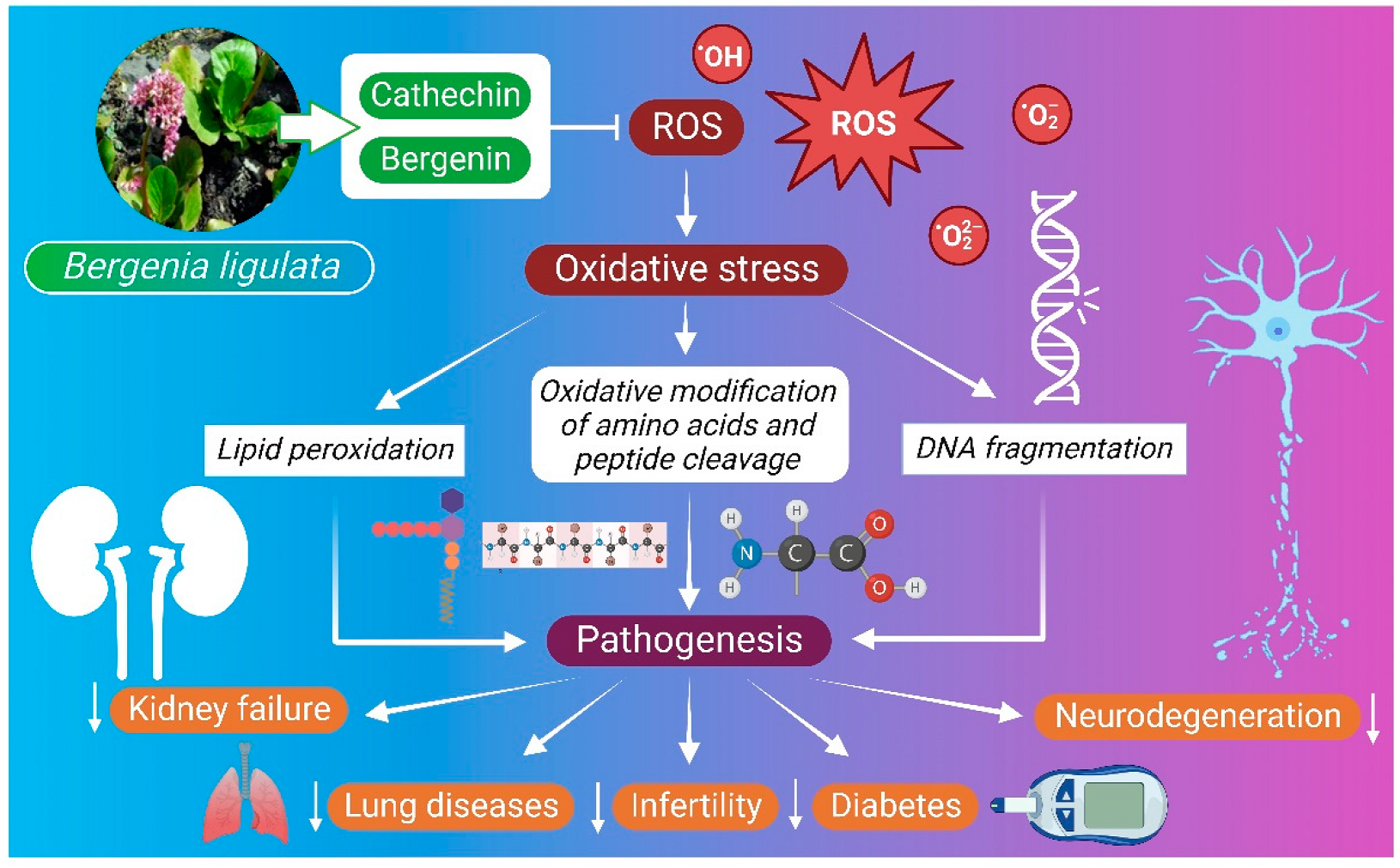
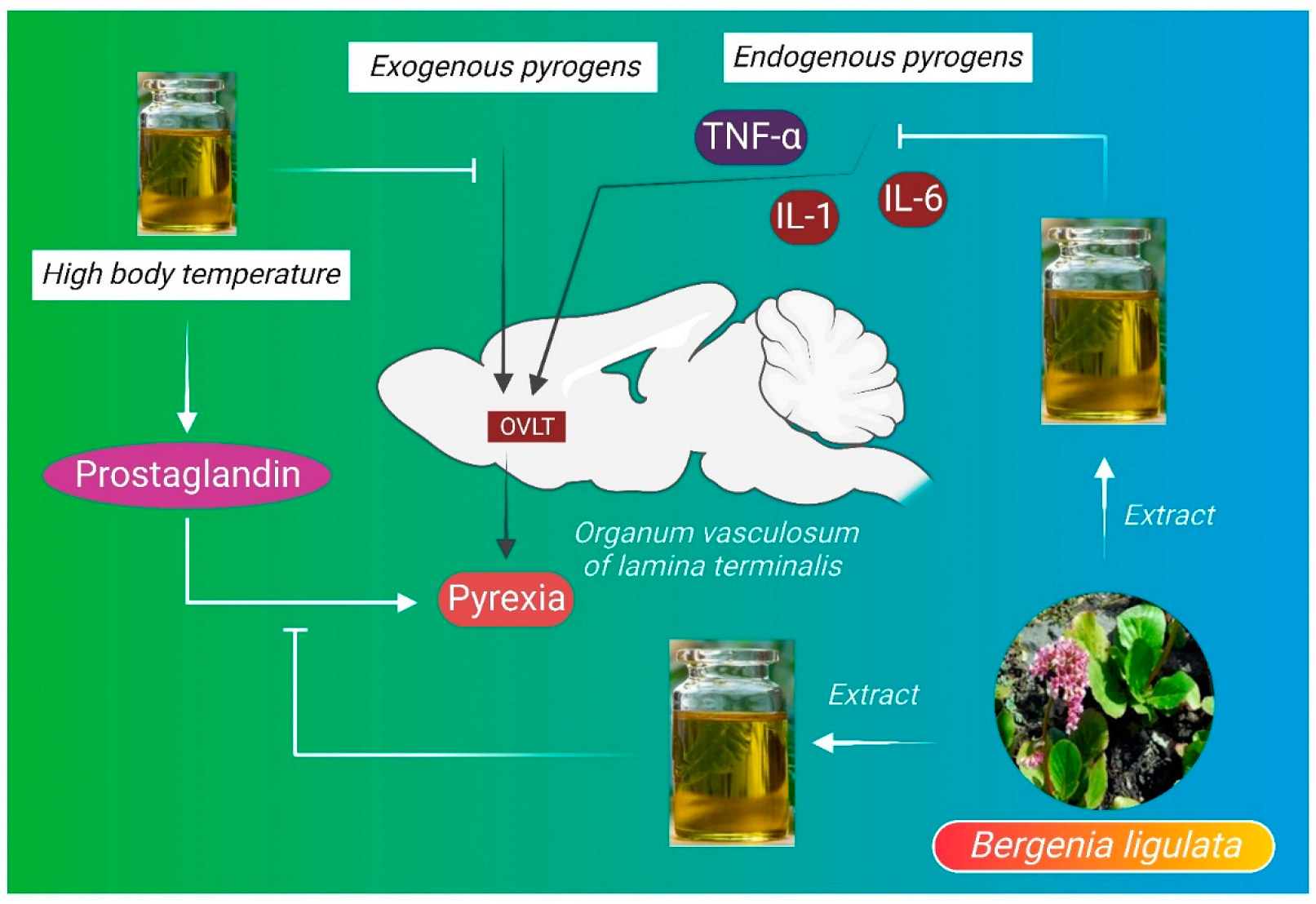
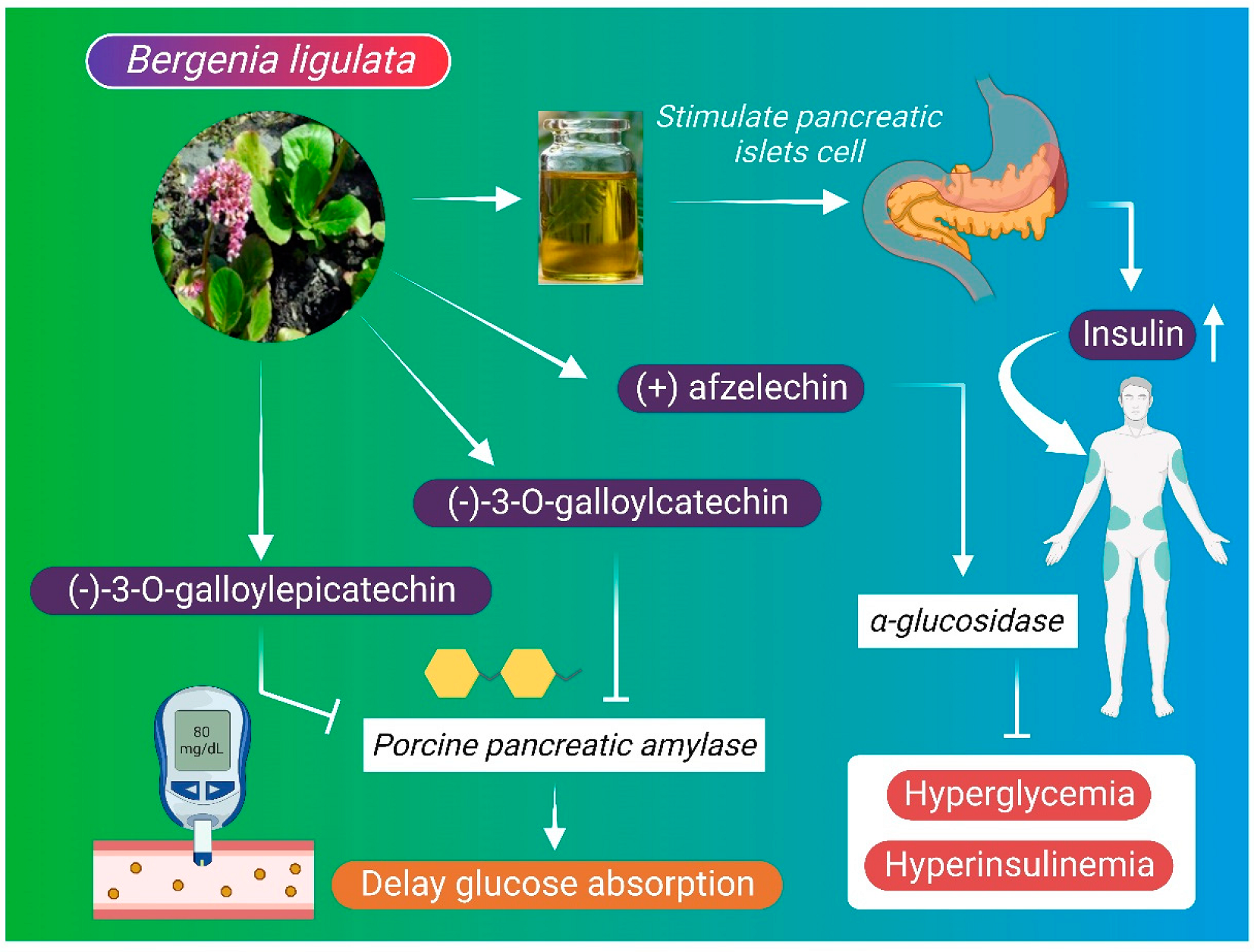
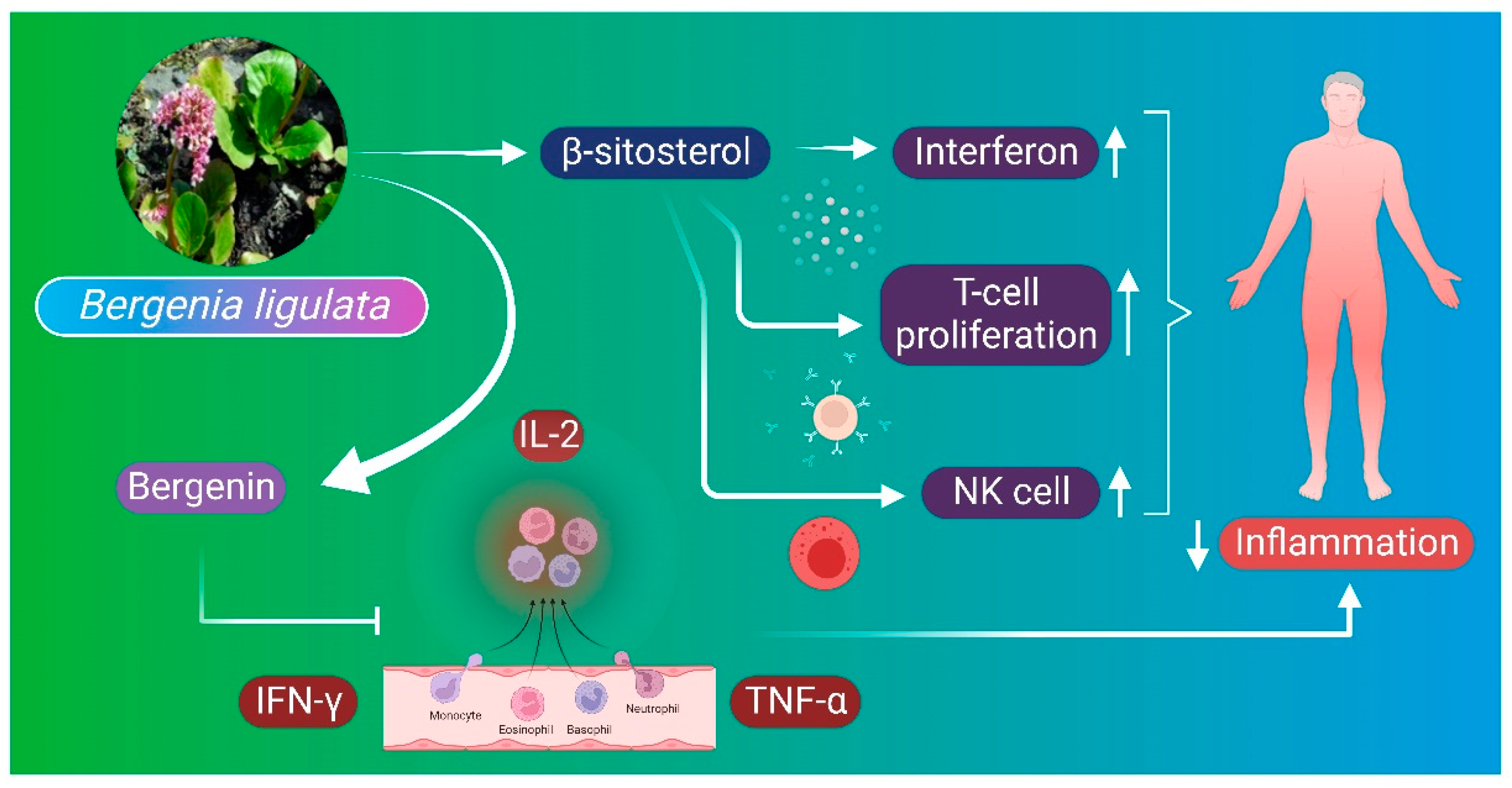
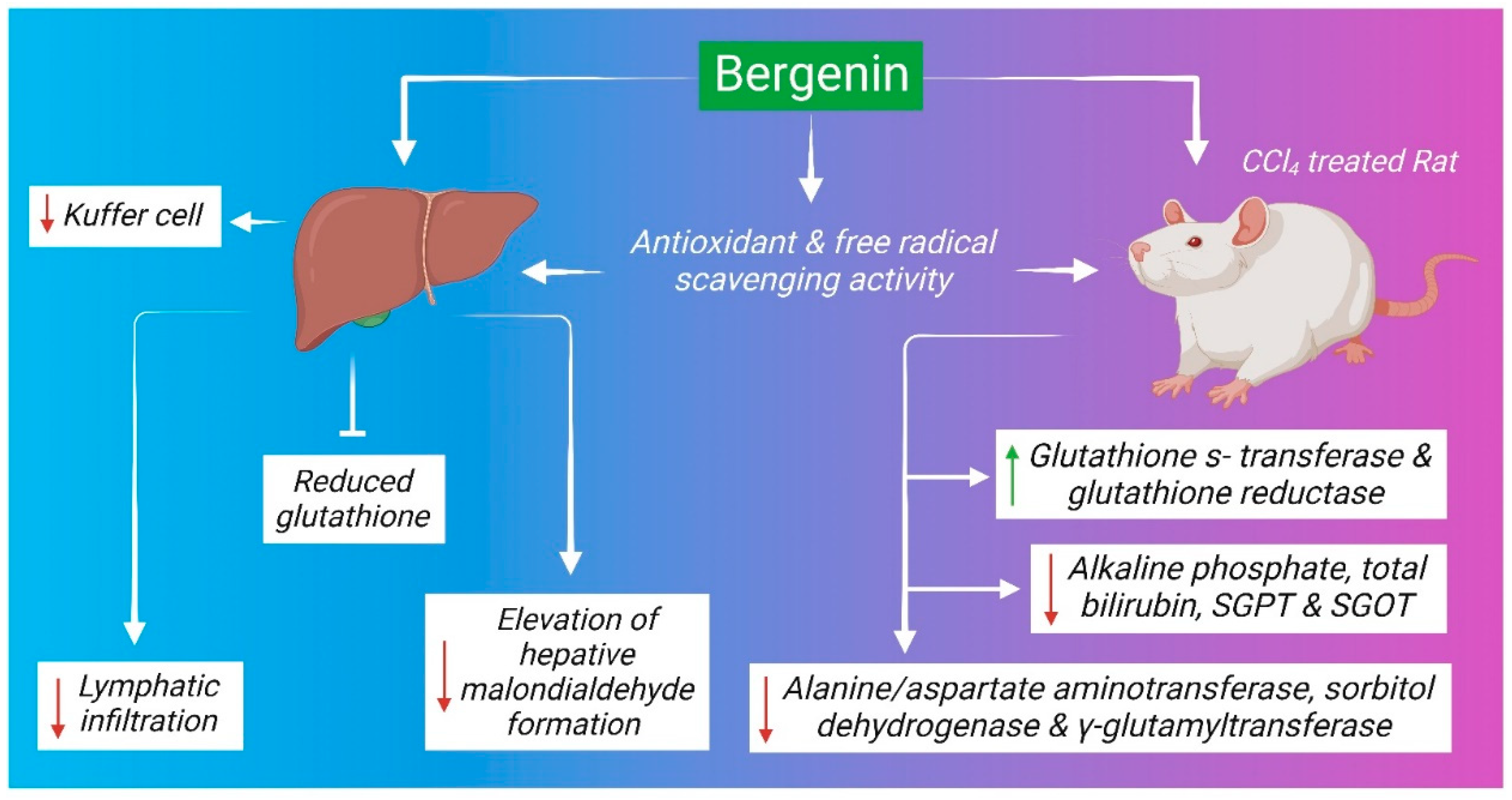
Herbal products have been used in traditional systems of medicine and by ethnic healers for ages to treat various diseases. Currently, it is estimated that about 80% of people worldwide use herbal traditional medicines against various ailments, partly due to easy accessibility and low cost, and the lower side effects they pose. Bergenia ligulata, a herb ranging from the Himalayas to the foothills, including the north-eastern states of India, has traditionally been used as a remedy against various diseases, most prominently kidney stones. The medicinal properties of B. ligulata have been attributed to bergenin, its most potent bioactive component. Apart from bergenin, the other compounds available in B. ligulata are arbutin, gallic acid, protocatechuic acid, chlorogenic acid, syringic acid, catechin, ferulic acid, afzelechin, paashaanolactone, caryophyllene, 1,8-cineole, β-eudesmol, stigmasterol, β-sitosterol, parasorbic acid, 3-methyl-2-buten-1-ol, phytol, terpinen-4-ol, tannic acid, isovalaric acid, avicularin, quercetin, reynoutrin, and sitoinoside I. This review summarizes various medicinal properties of the herb, along with providing deep insight into its bioactive molecules and their potential roles in the amelioration of human ailments. Additionally, the possible mechanism(s) of action of the herb’s anti-urolithiatic, antioxidative, antipyretic, anti-diabetic, anti-inflammatory and hepatoprotective properties are discussed. This comprehensive documentation will help researchers to better understand the medicinal uses of the herb. Further studies on B. ligulata can lead to the discovery of new drug(s) and therapeutics for various ailments.
Keywords: traditional medicine; Bergenia ligulata; bioactive compounds; anti-urolithiatic; antioxidant; anti-pyretic; anti-diabetic; anti-inflammatory; cardiovascular diseases traditional medicine; Bergenia ligulata; bioactive compounds; anti-urolithiatic; antioxidant; anti-pyretic; anti-diabetic; anti-inflammatory; cardiovascular diseases